Author: admin

  • Hiding in plain sight? A simple statistical effect may largely explain the ethnicity degree awarding gap

    Hiding in plain sight? A simple statistical effect may largely explain the ethnicity degree awarding gap

    • By Sean Brophy (@seanbrofee), Senior Lecturer at the Centre for Decent Work and Productivity, Manchester Metropolitan University.

    A persistent challenge in UK higher education is the ethnicity degree awarding gap – the difference between White and ethnic minority students receiving top degrees (firsts or 2:1s). The Office for Students (OfS) aims to entirely eliminate this gap by 2030/31, but what if most of this gap reflects success in widening participation rather than systemic barriers?

    Between 2005/6 and 2021/22, university participation grew 21% faster for Asian students and 17% faster for Black students compared to White students. This remarkable success in widening access might paradoxically explain one of the UK’s most persistent higher education challenges.

    Figure 1 presents ethnicity gaps over time compared to a White baseline (the grey line constant at zero). The data for 2021/22 shows significant gaps: 21 percentage points for Black students, 9 for Asian students, and 4 for Mixed ethnicity students compared to their White peers. Traditional explanations focus on structural barriers, cultural differences, and potential discrimination, and much of the awarding gap remains unexplained after adjusting for prior attainment and background characteristics. However, a simpler explanation might be hiding in plain sight: the gap may also reflect a statistical effect created by varying participation rates across ethnic groups.

    Ethnicity Degree Awarding Gap (2014/15 – 2021/22)

    Figure 1. Source: HESA

    Here is the key insight: ethnic minority groups now participate in higher education at remarkably higher rates than White students, which likely then drives some of the observed ethnicity awarding gaps. Figure 2 presents the over-representation of ethnic groups in UK higher education relative to the White reference group (again, the constant grey line). The participation gap has grown substantially – Asian students were 22 percentage points more likely to attend university than White students in 2021/22, with Black students 18 points higher.

    Over-representation of ethnic groups in HE compared to White baseline (2005/6-2021/22)
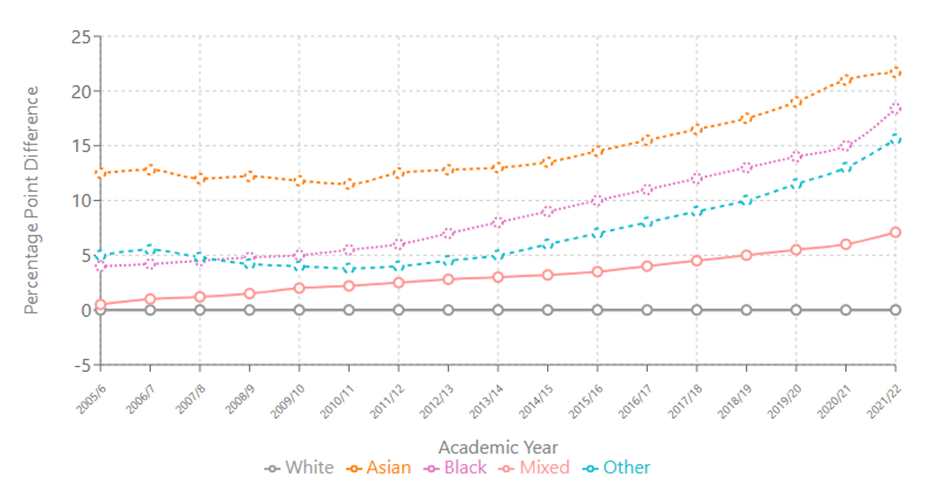
    Figure 2. Source: UCAS End Of Cycle Report 2022

    This difference in participation rates creates an important statistical effect, what economists call ‘compositional effects’. When a much larger proportion of any group enters university, that group may naturally include a broader range of academic ability. Think of it like this: if mainly the top third of White students attend university, but nearly half of ethnic minority students do, we would expect to see differences in degree outcomes – even with completely fair teaching and assessment.

    This principle can be illustrated using stylized ability-participation curves for representative ethnic groups in Figure 3. These curves show the theoretical distribution of academic ability for Asian, Black, and White groups, with the red shaded area representing the proportion of students from each group accepted into higher education in 2021/22. It would be surprising if there was no degree awarding gap under these conditions!

    Stylized ability-participation curves by ethnic group

    This hypothesis suggests the degree awarding gap might largely reflect the success of widening participation policies. Compositional effects like these are difficult to control for in studies, and it is noteworthy that, to date, no studies on the ethnicity awarding gap have adequately controlled for these effects (including one of my recent studies).

    While this theory may offer a compelling statistical explanation, future research pursuing this line of inquiry needs to go beyond simply controlling for prior achievement. We need to examine both how individual attainment evolves from early education to university, using richer measures than previous studies, and how the expansion of university participation has changed the composition of student ability over time. This analysis must also account for differences within broad ethnic categories (British Indian students, for example, show different patterns from other Asian groups) and consider how university and subject choices vary across groups.

    My argument is not that compositional effects explain everything — rather, understanding their magnitude is crucial for correctly attributing how much of the gap is driven by traditional explanations, such as prior attainment, background characteristics, structural barriers, or discrimination. Only with this fuller picture can we properly target resources and interventions where they’re most needed.

    If this hypothesis is proven correct, however, it underscores why the current policy focus on entirely eliminating gaps through teaching quality or support services, while well-intentioned, may be misguided. If gaps are the statistically inevitable result of differing participation patterns among ethnic groups, then institutional interventions cannot entirely eliminate them. This doesn’t mean universities shouldn’t strive to support all students effectively – but it does require us to fundamentally rethink how we measure and address educational disparities.

    Rather than treating all gaps as problems to be eliminated, we should:

    1. Fund research which better accounts for these compositional effects.
    2. Develop benchmarks that account for participation rates when measuring degree outcomes.
    3. Contextualize the success of widening participation with acknowledging awarding gaps as an inevitable statistical consequence.
    4. Focus resources on early academic support for students from all backgrounds who might need additional help, particularly in early childhood.
    5. Explore barriers in other post-16 or post-18 pathways that may be contributing to the over-representation of some groups in higher education.

    Source link

  • Trump appoints Biden critic Nicholas Kent as undersecretary

    Trump appoints Biden critic Nicholas Kent as undersecretary

    J. David Ake/Getty Images

    A vocal critic of the Biden administration will oversee the nation’s colleges and universities, according to a document obtained by Inside Higher Ed. 

    The president appears set to pick Nicholas Kent, Virginia’s former deputy secretary of education, to be under secretary at the federal education department—one of several appointees included on the document. Also on the list is Kimberly Richey, senior chancellor of the Florida Department of Education, who will be appointed assistant secretary for civil rights. (The White House has yet to make an official announcement, but sources say the list of appointees should be transmitted to the Senate soon.)

    Kent, who previously worked for a trade association representing for-profit colleges, will have to be confirmed by the U.S. Senate. Currently, James Bergeron is serving as acting under secretary. During his first term, Trump didn’t appoint an under secretary, so the pick is the latest signal that his team is more prepared and more focused on higher education this time around. 

    “Nicholas Kent is one of the most knowledgeable higher education experts, possessing extensive technical expertise and a profound understanding of the complexities of education policy,” Jason Altmire, president of Career Education Colleges and Universities, said in a statement Tuesday night. “He is eminently qualified for the role of Under Secretary and will work on behalf of schools and students across all sectors of higher education.”

    The batch of appointees comes a day before Trump’s pick to lead the Education Department, Linda McMahon, will appear before a senate committee for her confirmation hearing.

    Kent has worked in Virginia since August 2023, overseeing the state’s postsecondary strategy. Before that, he was the chief policy officer at CECU, which represents for-profit colleges. In his role at CECU, Kent pushed back against several of the Biden administration’s policies. Now, he’ll likely be an influential voice on higher education in the Trump administration. 

    Trump’s first three weeks in office have rocked higher education as he’s moved quickly to target diversity, equity and inclusion programs at colleges and elsewhere in the private sector and the promotion of “gender ideology.” His administration temporarily paused grant reviews at the National Institutes of Health and National Science Foundation. That pause and other moves in the last three weeks have created much uncertainty for colleges. 

    Kent will be a key figure in carrying out Trump’s orders and translating the president’s vision into policy. He’ll also bring more policy experience to the leadership team at the Education Department. Trumps’ president-elect’s nominee for education secretary, Linda McMahon has limited experience in the world of education policy, but is seen as a loyal Trump lieutenant and business mogul.

    In Virginia, Kent has worked under Gov. Glenn Youngkin, whom some have described as a Trump surrogate. Younkgin has made it a clear priority to increase the government’s influence and oversight of higher education institutions, disallow diversity, equity and inclusion programs and combat antisemitism and “anti-religious bigotry.” 

    Before that, Kent worked for for-profit colleges, advocating for cutting the red tape found in several key policies of the Biden administration.

    “The Higher Education Act specifically limits the authority of the department to pierce the corporate veil and hold individuals financially responsible,” Kent told Inside Higher Ed in April 2023. “[The Biden] administration proposes to exceed this authority through new regulations and subjective guidance.” 

    The deputy also holds a master’s degree in higher ed administration from George Washington University and has worked as both director of policy at the D.C. state superintendent of education’s office and a staff member at Accrediting Bureau of Health Education Schools. He is quite familiar with the Education Department’s complex rulemaking process and policy issues that frequently cross the desks of department officials, including Title IX, student loan repayment, accreditation and online education.

    Kent has also indirectly voiced support for Trump’s idea of abolishing the education department, or at least significantly whittling down the scope of its influence.

    “Congress established @usedgov 43 years ago today,” he wrote in a post on X. “I can’t help but wonder if lawmakers who voted for the Department of Education Organization Act envisioned a massive Federal takeover of K-12 and postsecondary education.”

    Richey, the appointee set to lead the Office for Civil Rights, also spent time in Virginia, serving as deputy superintendent overseeing the division of School Quality, Instruction and Performance at the Virginia Department of Education before she left for Florida. Prior to that, she worked in the Education Department’s Office for Civil Rights during Trump’s first term. 

    Richey has spoken out against critical race theory, the Tallahassee Democrat reported

    “The teaching of CRT’s core tenets can be destructive and have a deep impact on students,” she wrote in 2021. “No child is defined by the color of their skin. Moreover, the teaching of these devastating principles violates the basic religious tenets many of these schools claim to uphold.”

    If confirmed by the Senate, Richey will play a key role in the Trump administration’s crackdown on transgender athletes. In the last few weeks, Trump has banned transgender athletes from women’s sports, and the Office for Civil Rights has opened up several investigations related to that policy change. 

    Richey supported the administration’s position during the first term, arguing in September 2020 that transgender girls who play on the sports team that corresponds with their gender identity discriminated against female-student athletes.

    Source link

  • Earning Our AI Literacy License – Faculty Focus

    Earning Our AI Literacy License – Faculty Focus

    Source link

  • The potential of educational podcasts for commuter students

    The potential of educational podcasts for commuter students

    Engaging students in learning outside the classroom can often be a challenge, but podcasts might be a simple yet versatile tool we’re overlooking.

    As the number of commuting students rises across institutions, we recognise that students are time poor. There is, however, the potential of using travel time as an opportunity for students to work but also relax and many students use their commute time as an opportunity to prepare for teaching. Podcasting is one of the ways we can design our pedagogy to fit the busy lives of commuter students.

    Think about how you listen to podcasts, most likely while you’re doing other things like driving, cooking or walking. There’s a versatility to it.

    How many of the learning resources we offer allow students to learn on-the-go?

    Education on-the-go

    Most podcast listeners will tell you the convenience of audio-centric and on-the-go content is key to their success. BBC data suggests that about three in four podcast listeners do so while doing something else, so even podcasts that have a video option available need to be planned and created with an audio-only format in mind.

    Offering that versatility also comes at a cost. It’s important to recognise the fact that students might be on a busy bus, or looking for the timetable for their next train connection. We probably won’t have a student’s full attention, and that means that we need to carefully consider the kind of educational content that’s going to work in this format.

    Successful podcasts tend to be focused on experiential storytelling. They are usually fluid and conversational, so don’t be afraid to lean into that. Storytelling gives us emotional responses, helping students connect abstract ideas to real-world implications. A podcast will be much more successful if you give depth and meaning to something a student has already learned, rather than delivering the learning itself.

    Let’s take data analysis as an example. Instead of focusing on the technical process of analysing data, you could discuss stories of the impact of data bias or ethical dilemmas in data usage. Give your students food for thought rather than core learning, use it to turn the numbers into narrative and give a deeper meaning to your classroom content.

    It can also be a good idea to supplement your podcast with a short interactive activity, either online or at the start of your next learning session. Ask students to reflect on the podcast and their key takeaways from it. It can be a great starting point to encourage deeper learning.

    A how to guide

    Another core aspect of successful podcasts is authenticity. You don’t want your podcast to sound like a job interview. Natural conversations foster a sense of authenticity, which is key to keeping listeners engaged. A key part of this comes from the way you prepare for a podcast. Discussion points as opposed to questions allows both you and your guest to think more holistically about the topic and can make a huge difference when it comes to making the conversation flow authentically.

    We’ve found it’s best to give more flexibility and aim for shorter episodes. Splitting a conversation up into bitesize chunks gives students the option to listen to all episodes in one go, or a bit at a time. Starting with a few episodes, around 12-20 minutes each, will offer your students a lot more flexibility than a single 1-hour long podcast.

    Thankfully the technical and logistical aspects of recording podcasts have developed rapidly over the last few years and it’s very easy to get started. Advancements like text-to-speech editing and speech enhancement let you record fully online and get incredible results without any technical knowledge or high-end equipment. A lot of podcasting software now produces automatic text transcription supporting accessibility and allowing students to engage with the content in multiple formats.

    And by framing these resources as useful for students to “listen to on-the-go,” gives students permission to use and access resources in ways which work for them during their busy lives. It recognises commuter students and acknowledges busy student lives and gives them a new innovative way to engage with their studies.

    Getting started

    If you’re interested in giving it a go, here are some ideas to get you started.

    A conversation about a specific assessment: contact a student who did well on an assessment last year and ask if they would be happy to share their experiences. Students can get ideas and inspiration from how they have approached it, what worked well and what they would do differently.

    Interviews with industry experts is another way to frame a podcast. Working professionals don’t always have the time to travel to campus and prepare a lecture for your students. That might be different if they just had to join an online call for a natural conversation. Recording it as a podcast also gives you a reusable resource for future cohorts.

    Student Q&As where students can submit their own questions about a topic or assessment and discuss them in a podcast. This could be an idea to explore on your own, with another lecturer, or with professionals in the industry.

    It’s clear that using podcasts as a form of education comes with a lot of challenges, but it also offers a vast world of opportunities and flexibility for students. Where students face further challenges to engage and attend classes, it is worth considering how educational podcasts may be a mechanism so that resources work around busy and complex student lives. For commuting students, a great deal of time is spent on public transport and in maximising their time, providing resources that are engaging, useful and timely is a step in the right direction. And in designing resources specifically with commuter students in mind it recognises their experiences and allows them to engage authentically.

    And to make podcasts work for commuter students in an educational context we need to be realistic about the challenges students face and create content that works in a podcast format rather than shoehorning existing content into a new format. If we nail that, then podcasts could become a very useful tool for delivering educational content that fits around students and heightens engagement.

    Source link

  • There is declining trust in Australian unis. Federal government policy is a big part of the problem

    There is declining trust in Australian unis. Federal government policy is a big part of the problem


    As we head towards the federal election, both sides of politics are making a point of criticising universities and questioning their role in the community.

    Please login below to view content or subscribe now.

    Membership Login

    Source link

  • UNSW purchases six state-of-the-art aircraft for School of Aviation amid national pilot shortage

    UNSW purchases six state-of-the-art aircraft for School of Aviation amid national pilot shortage

    Flight instructor Arjun Jogia with one of his young trainees Ariane Fouracre. Picture: Richard Dobson

    As Australia stares down the barrel of a looming pilot shortage, more than 100 NSW university students are taking to the skies in brand new state-of-the-art training aircraft.

    Please login below to view content or subscribe now.

    Membership Login

    Source link

  • Treasurer tells big banks to ease HECS home loan rules

    Treasurer tells big banks to ease HECS home loan rules

    Treasurer Jim Chalmers said he spoke to the banks on Tuesday night. Picture: Martin Ollman

    Big banks have agreed to review the impact of university debts for degrees on home loan approvals following an intervention by Treasurer Jim Chalmers.

    Please login below to view content or subscribe now.

    Membership Login

    Source link

  • Curtain call on traditional time-intensive drama training

    Curtain call on traditional time-intensive drama training

    Recent closures of renowned actor training courses, including the Bristol Old Vic Theatre School’s undergraduate provision and the abrupt collapse of the Academy of Live and Recorded Arts, have laid bare a crisis in drama training. This isn’t only about funding shortfalls; it’s about the very structures and traditions of training, which risk shutting out those able to succeed.

    The financial strain on institutions is undeniable. The historical freeze in undergraduate tuition fees and the high-intensity delivery required in drama and other forms of intensive arts training like dance and music education have made traditional models almost unsustainable. Specialist institutions, unable to cross-subsidise, have stretched themselves to the limit – expanding course offerings, increasing intakes, internationalisation and growing postgraduate provision, where costs can be better covered. Meanwhile, government support through welcome specialist funding streams such as Institution Specific Funding have proven insufficient to address the root challenges.

    These efforts, while necessary, have unintended consequences. Over-speedy expansion creates great challenges for the quality of the learning experience, while institutional survival strategies rarely address the deeper, systemic issues at play. The question is not just how to survive in this increasingly precarious environment, but how to rethink the system entirely.

    The hidden barrier of time poverty

    The financial barriers to entering drama training are well-documented, but there is a more insidious form of exclusion that demands urgent attention: time-poverty.

    As highlighted in a recent Unipol and HEPI report, the average cost of student rent in London now exceeds the maximum maintenance loan, leaving students struggling to make ends meet. This financial reality forces many to take on part-time work, but the intensive nature of traditional actor training – 30-40 hours a week, often with irregular schedules – leaves little room for paid employment. The result? Only those who can afford not to work can afford to train.

    Traditional training models require high levels of physical presence and stamina. While these methods have been celebrated for their rigour, they exclude those with caring responsibilities, disabilities requiring time flexibility, or the need to support themselves financially. This isn’t just a financial issue – it’s a fundamental inequity in how time is valued in training.

    Addressing time-poverty isn’t about making marginal adjustments; it requires a paradigm shift. Drama schools must reimagine training models to prioritise accessibility and sustainability without compromising quality. Flexible delivery methods, guaranteed non-contact periods for work or rest, and rethinking the necessity of long, traditional schedules are all potential starting points. If we are to be equitable in the way almost all drama schools claim as a value, we must redesign what “intensity” in training means for excellent students who do not arrive with the economic means required. The current system is exclusionary.

    Some institutions are already leading the way. Identity School and Access All Areas have successfully adapted their training processes to accommodate a broader range of students. The Collective Acting Studio excels at balancing time pressures with rigorous training, redefining how intensity can be delivered. These organisations boast impressive alumni who are actively working successfully in the industry. Notably, Sally Ann Gritton, Principal of Mountview, emphasises in her book, The Independent Actor, that long, gruelling days are neither effective nor beneficial for students. These examples prove that change isn’t just possible – it’s essential if we want the arts to become more inclusive.

    Why it matters

    The stakes couldn’t be higher. The creative industries contribute over £100 billion to the UK economy annually, with drama training forming the backbone of the talent pipeline. Rose Bruford College alumna like Jessica Gunning, who recently won Emmy and Golden Globe awards, or Sara Huxley, whose work on Mr. Bates vs. the Post Office catalysed governmental action, exemplify the global impact of British arts education.

    However, the arts are more than an economic driver – they shape how we see ourselves, societal narratives, build empathy, and are key in defining our cultural identity. If access to training is restricted to the privileged, the stories we tell become narrower and less representative. Equity in the arts is not just an educational issue; it is a societal imperative.

    Nearly a decade ago, calls for greater class diversity in the arts sparked important conversations. In 2016, a report from the London School of Economics revealed that only 27 per cent of actors came from working-class backgrounds. While this discussion was absorbed into the broader issue of societal inequality, solutions remained vague and largely limited to the idea of increased funding. Today, with budgets tighter than ever, this approach feels increasingly out of reach.

    In recent years, established actors, including household names like Julie Walters and Christopher Eccleston have voiced concerns that they would no longer be able to afford the cost of training. Their warnings highlight a system where financial barriers stifle talent, despite the well-meaning calls for bursaries and other competitive financial support. The result? A cycle where potential is lost, and the arts grow less accessible.

    We need bold leadership across the sector. Institutions must collaborate to share best practice, experiment with alternative training models, and advocate for systemic support. There are innovative models, and we must deal with the friction preventing them from spreading. Policymakers and trainers must recognise that funding is only one part of the equation; addressing time-poverty is critical to ensuring a truly inclusive arts education.

    The arts are at their best when they reflect the richness of society. It’s time to move beyond tradition and reimagine drama training for a new generation—one where potential, not privilege, determines success.

    Anyone interested in being part of this conversation is welcome to contact the authors directly.

    Source link

  • FIRE statement on White House denying AP Oval Office access

    FIRE statement on White House denying AP Oval Office access

    Punishing journalists for not adopting state-mandated terminology is an alarming attack on press freedom.

    Source link