


By Dr Monika Nangia, Academic Registrar and Director of Student & Academic Services at Durham University.
In a world increasingly aware of the value of diversity, the role of women in leadership is more critical – and undervalued – than ever. Despite encouraging strides, women, particularly women of colour, continue to face systemic barriers to advancement. This is a story of resilience, inequity, and hope.
The conversation around diversity and inclusion is urgent, and storytelling has emerged as one of the most potent tools to address these challenges. It connects us on a human level, fosters empathy, and confronts biases. At its best, storytelling is transformational.
In my career, I have witnessed the transformative power of storytelling in ushering in meaningful change. The stories we carry as women – of resilience, determination, and overcoming barriers – are far more powerful than any statistic or corporate policy. These personal narratives, shared boldly, have the potential to inspire, to challenge, and to reshape how we think about leadership.
The benefits of gender-diverse leadership are unequivocal. According to Deloitte’s Global Human Capital Trends, organisations with inclusive cultures achieve 2.3 times higher cash flow per employee, 1.4 times more revenue, and are 120% more capable of meeting financial targets. Diverse boards, particularly those with greater gender and ethnic representation, also demonstrate better resilience and crisis management – evident during the COVID-19 pandemic.
But beyond numbers lies the human impact. Women leaders bring ‘cognitive diversity’, which accelerates learning and performance in complex and uncertain situations. Their leadership fosters a sense of belonging, improves employee engagement, and reduces turnover.
Yet, despite the clear advantages, women remain underrepresented at every level of leadership.
The journey to leadership for women is fraught with challenges. The ‘broken rung’ effect—where women are less likely than men to be hired or promoted into entry-level managerial roles – creates a bottleneck that compounds over time. For every 100 men promoted to manager, only 81 women make the same leap, with even fewer opportunities for women of colour.
Racial inequalities exacerbate this gap. McKinsey’s 2020 report highlights that women of colour face the steepest drop-off in career advancement at the transition from middle to senior management. Cultural expectations and resistance to authority further hinder their progress.
These systemic inequities are reflected starkly in higher education. According to the HEPI Report 2020, Mind the Gap: Gender differences in HE, while women now constitute 55% of university staff in the UK, they occupy only 29% of vice-chancellor roles. Among professors, women account for 29.7%, but Black women make up less than 1%.
Stories have a unique ability to amplify voices, challenge biases, and inspire inclusivity. Neuroscience tells us that engaging narratives release oxytocin in the brain, promoting empathy and altruistic behaviour. More than data or policy, storytelling humanises diverse experiences and catalyses change.
I’ve seen firsthand how storytelling transforms workplaces. Women leaders who share their personal journeys of resilience and ambition inspire others to envision new possibilities. Their stories break down preconceived notions, fostering an inclusive mindset that leads to behavioural change.
One colleague who spoke candidly about her experience being the only woman of colour in a senior leadership team. She described how, despite excelling in her role, her authority was often questioned, and she had to work twice as hard to gain the same respect as her peers.
Her story resonated deeply, not just because of the challenges she faced, but because of the hope and strength she embodied. By sharing her experience, she is creating a ripple effect – encouraging others to speak up, address inequities, and push for change.
Storytelling is also about accountability. In fact, it is far more important to confront the untold stories, the contributions of women whose voices have been silenced or overlooked. This is especially true for women of colour, whose experiences often fall at the intersection of gender and race-based inequities.
A combination of stories like hers, with corresponding datasets as evidence, expose the structural barriers that continue to hold women back. The ‘broken rung’ is a vivid example of this.
Another story that sticks with me is from a woman in higher education, who spoke about being overlooked for a leadership role despite being the most qualified candidate. She later discovered that her ambition had been perceived as ‘sharp-elbowed’ and intimidating – a stark contrast to how her male counterparts were described.
Hearing her story compelled me to reflect on how ambition in women is often misinterpreted, reinforcing stereotypes that undermine their credibility. At a recent workshop, a senior leader shared her journey of overcoming immense personal and professional obstacles to lead a major organisational transformation. Her authenticity and vulnerability moved the room, sparking conversations about resilience, leadership, and the need for systemic change.
The path to inclusive leadership requires intentionality. It means addressing both visible and invisible barriers, from hiring practices to cultural attitudes. The stories we share today will shape the leadership landscape of tomorrow. As women, we have the opportunity – and the responsibility – to use our narratives to drive change.
Organisations with diverse leadership teams outperform their peers not just financially but also in innovation and problem-solving. The evidence is clear: diversity is not just a moral imperative – it is a strategic advantage. But the true value of diversity goes beyond metrics. It’s about creating workplaces where everyone feels they belong, where their contributions are valued, and where they can thrive.
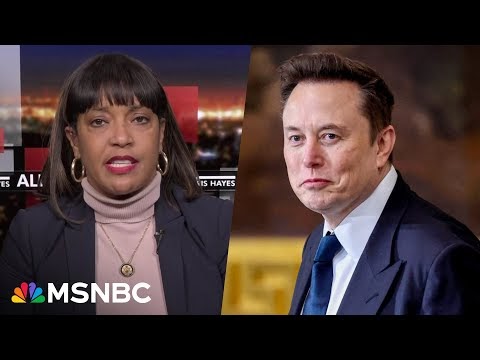

The game is up, people. Pack away your research, close the seminar rooms, forget your marking, cancel all your meetings – the higher education scam has been blown wide open.
Just one man has done what generations of revolutionaries have failed at – through the simple power of speaking his lived experience he has named and thus destroyed the secrets and lies that have underpinned higher education’s decades-long conspiracy to take over the world.
As Matt Goodwin puts it in his introduction to Bad Education:
There’s a sort of secret code of silence among professors and academics on campus – what the Mafia call omertà. No matter how bad things get, no matter how glaringly obvious the crisis becomes, no matter how visibly these once great institutions are failing our young people, you just never, ever tell people on the outside.
Well, to hell with that. I’m going to tell you everything. I’m going to pull back the curtain, lift the lid, and show you why our universities are falling apart, and how this crisis is now trickling out of the universities to weaken our wider society – our politics, culture, institutions and ways of life.
It’s quite the arresting premise – and for anyone familiar with UK higher education (the book is ostensibly about UK higher education, even though most of the over-familiar examples and references are from the US) it prompts the reader to consider the roots of the polycrisis the sector currently faces: is it a poor underpinning funding settlement that privileges meeting market needs over socio-economic needs, a failure to deal with the legacy of an elite system of prestige in an era of mass higher education, an overreliance on the journal article as a measure of academic esteem, or the long-lasting impact of the 2017 decision to allow universities unfettered access to the financial markets?
Alas, no. The problem, as diagnosed by a newly-minted visiting professor at the University of Buckingham’s Centre for Heterodox Social Sciences, is diversity initiatives.
In one glorious passage in the first chapter, we are treated to a range of “I’ve watched…” statements that serve as a thesis for the entire (short) book. He’s seen things you people wouldn’t believe:
I’ve watched this divisive, dogmatic and dangerous ideology not only infect every facet of university life but deliver, fundamentally, a bad education to our students… I’ve watched its most hardened and committed followers draw on obscure academic theories to crudely declare that all Western nations are ‘institutionally racist’… I’ve watched its followers ‘decolonize’ reading lists… I’ve watched universities betray their students, families and taxpayers by encouraging the next generation to view highly complex, multi-ethnic societies in crude, simplistic and divisive ways… I’ve watched them capture and politicize the large and expanding university bureaucracy… I’ve watched them dumb down intellectual standards on campus… I’ve watched them impose this dark and dystopian worldview on our students… And And I’ve watched this movement sacrifice free speech and academic freedom on the altar of what its followers call ‘social justice’, or ‘diversity, equality and inclusion’ (DEI).
If you were taken aback by some of the Americanisms in that short excerpt I must reassure you that – somewhat surprisingly for a book about the UK – they appear to be a deliberate stylistic choice. We’ve seen the beginnings of attacks like these before – not least from an actual minister of state (Michelle Donelan) on diversity initiatives (or things that look like diversity initiatives from a distance) at UKRI, Advance HE, and – somehow – the QAA. In those cases, the charges felt disproportionate and somehow removed from the life of UK higher education. Almost as if there was a global playbook. And, gosh, doesn’t that stuff about DEI and dogma hit differently the month that NASA was forced by the US government to remove positive language about women and minorities from its website as a “drop everything” request?
To be clear, Goodwin isn’t against diversity initiatives in all forms – he is very keen, for example on political diversity where it results in the protection of the ability of academics to promote views he (and a few high profile fellow travellers: Goodhart, Kaufmann, Stokes, Stock…) agrees with. He applauds, seemingly without irony, the establishment of the usual list of places (the University of Austin Texas, Ralston College, the Peterson Academy, the Centre for Heterodox Social Sciences at Buckingham) that openly profess only the new orthodoxy he cleaves to.
Because the sadness in all this is that he isn’t saying anything new. You can hardly open a newspaper without seeing some newly “free” academic (or opportunistic politician) claim you literally can’t speak your mind on campus any more, that students and their opinions are mollycoddled, and that there are too many administrators. It must be comforting for him to see such views widely and confidently shared, and to see politicians speak and governments legislate in response to those views, but it does rather damage his self-image as a John Galt-esque lone figure speaking truth to power.
As an expression of this particular transatlantic groupthink, Bad Education is far from the worst. He makes some (selective) use of evidence, though as anyone familiar with his “polling” will note his use of statistics isn’t great and there are some telling misreads of the data: no Matt, one in three UK academics is not on an “unstable fixed-term and zero-hours” contract in 2024, the correct figure is 0.8 per cent although you can get close to your 80,000 if you look at all (FT or PT) fixed term contracts. But the vagary suits the point he is making. He’s happy to cite thinkpieces and substacks, less keen – despite a promise to – cite data and evidence. Many of the journal articles and books he reaches for are over-familiar, and closer to journalism than research.
To give you one example, we’re given what feels like a stern rebuttal of the BBC’s “Reality Check” investigation that found only six occasions where campus speakers have been banned between 2010 and 2018. You are midway through the expected language on the chilling effect before you recall that statistics collected by the actual higher education regulator show similar numbers for later years – and while it is fair to say that free speech is a preoccupation of those who hold minority views, the fact that you have to fish very deep to find any evidence at all that anyone outside of the groupsicles perceives a problem with the way things currently are. Appeals to a silent majority – or the two people that email Matt Goodwin every time he is called out online – don’t really cut it, whatever murky underpinnings he may implore the reader to see.
So far – so much “silenced academic speaks out.” What is different is Matt Goodwin’s career trajectory. He started off his academic life as a researcher focusing on radical right-wing movements – his current era, which could be characterised as making him look more like an apologist for many of the same movements, has raised more than a few eyebrows among his colleagues and contemporaries. Has the noted chronicaller of radicalisation been radicalised?
Clearly academia did not turn out the way he expected:
“ can even remember imagining at the start of my academic career that my life as a university professor would look something like Russell Crowe’s character in A Beautiful Mind – the mathematician John Nash, who spent his days advancing the frontiers of knowledge while wandering around leafy campuses with books under his arm and students hanging on his every word (though, to be fair, Nash later went completely insane).
It’s his experience at the University of Kent (an institution he waspishly describes as “non-elite” and “teetering on the bridge of bankruptcy”) that seems to have done the damage – in particular his experience following the Brexit vote after putting forward a position he characterises as:
when a majority of my fellow citizens did vote to leave the EU I thought it important to respect their view, not least to safeguard representative democracy
Goodwin’s research shortly after the vote was focused primarily on the reasons people voted for Brexit – he’d argued before the vote that an “enthusiasm gap” (drawing on the passion of Brexit supporters being greater than the passion of Remain supporters for EU affiliation) would drive the outcome, and afterwards he worked with other researchers (in Brexit: Why Britain voted to leave the European Union) to identify immigration and identity as key drivers of the popular movement.
After a few articles along these lines in the national press, and some perhaps less measured thoughts on social media, he began to feel persecuted by fellow academics.
In the weeks, months and years that followed I experienced what I can now only describe as a sustained campaign of abuse, intimidation and harassment, equivalent to how a religious cult treats a heretic. I was accused of being an ‘apologist’ for the ‘far right’. I was denounced as a Tory stooge. I was called an extremist. Even my own head of school liked a tweet insulting me. I experienced coordinated social media ‘pile-ons’, ironically led by academics who proclaim themselves to be among the most ‘liberal’ of all.
It’s worth unpicking the pile-on narrative.
What happens is that one or two ‘gatekeepers’ let it be known to more junior academics that somebody has fallen out of favour, that somebody has violated the orthodoxy. The green light is then given for academics to pile in, usually on social media, and a coordinated campaign to try and assassinate somebody’s character and reputation begins
There is (or was, social media pile-ons feel like a moment of their time as much as social media now does) no planning involved. If you say something people believe to be unpleasant online, people will tell you that the thing you said is unpleasant, and in doing so spread your original thought to others who will also tell you that it is unpleasant. Such is the attention economics of the industry.
And early Matt wasn’t particularly unpleasant or even over-serious – this is a man who, lest we forget, ate his own (actually pretty good) Brexit book live on Sky News. An early draft of the “what happened to you?” chapter from Bad Education doesn’t even mention social media as he blames the “radicalisation of the elite class” for his growing disenchantment with scholarly life. While he’s made a conscious decision to move away from the mainstream opinions held by people with a similar set of life experiences, the early phases feel more like senior common room drama than the work of a shadowy cabal. He only really got into full scale pile ons when he published the similarly slight Values, Voice, and Virtue back in 2023.
That’s not to say that others (including some of those he approvingly cites) have had worse experiences online and offline. Clearly nobody should be receiving death threats or risks to their health as a result of their terrible opinions – though it is also clear that our right to describe opinions as “terrible” when we feel they are terrible is inalienable. But if your entire story is hung around the way you were ostracised and vilified just for speaking the truth it probably needs a bit more than just a few whines about how nobody wants to write academic papers with you any more since you gave up on any pretence of dispassionate academic rigour.
My interest in this phenomenon isn’t in the ostracisation itself (for further information on academics falling out with each other please see the entire history of academia from the School of Athens onwards) but in the way a “safe space” has emerged for former academics of a particular political stripe to band together and secure funding and media opportunities for ventures of a particular ideological bent. If Matt had left his career behind because his concern that universities weren’t doing enough for disadvantaged groups or were not active enough in bringing about social and economic changes went against a prevailing orthodoxy that we should just rub along with anyone that wants to fund us he would not be welcome in that particular gang. He wouldn’t get past the gatekeepers.
And a half-hour spent in the world he creates in his Substack, books, media appearances, and mainstream news commentary broadcast suggests that you don’t have to do much more to be in this group than to cry persecution and recirculate the same tired old tropes about liberal extremism. There’s very little sadder than a group of free-thinking iconoclasts that all say the same thing – and something as craven as Bad Education is a long way from what the old, research-focused, evidence-led Matt Goodwin once did.
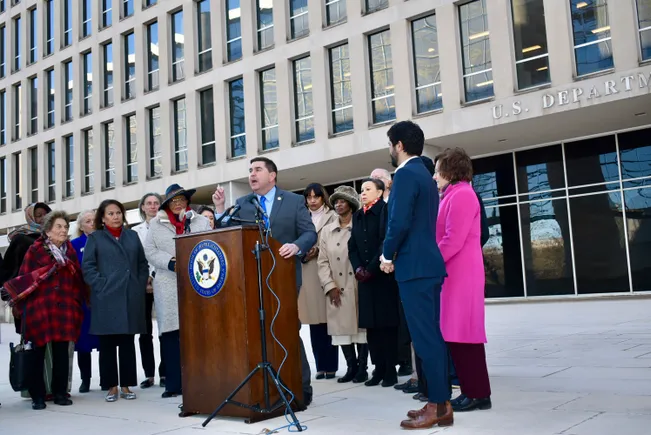
WASHINGTON — Democratic members of the House were blocked from entering the U.S. Department of Education’s headquarters in Washington, D.C., Friday after requesting a meeting with Acting Education Secretary Denise Carter to discuss their opposition to the Trump administration’s efforts to limit department programming.
About 18 members of Congress walked up to the visitor’s entrance asking to enter after holding a press conference about their concerns. A person who was not wearing a security uniform came outside and told the group they were not allowed to enter. For the next 30 minutes, lawmakers pleaded to be let in the building, with some holding up their congressional business cards and arguing they had a right to enter the federal building as legislators who oversee federal agencies.
U.S. Department of Homeland Security uniformed officers could be seen inside the glass doors.
“Each and everyone one of us have been through these doors,” said Rep. Greg Casar, D-Texas, standing near a sign reading “All Access Entrance.” “But, of course, as soon as we get word that Elon Musk and Donald Trump want to shut down the Department of Education, suddenly, they don’t want to let members of Congress in that ask questions.”
On Wednesday, 96 Democratic members of Congress sent a letter to Carter requesting an “urgent” meeting to discuss the Trump administration’s plans for what they say is to “illegally dismantle or drastically reduce” the Education Department. The department has received the letter, but no meeting has been scheduled as of Friday afternoon, according to the office of Rep. Mark Takano, D-Calif.
An Education Department spokesperson said in an email after the lawmakers’ visit that “The protest was organized by members of Congress who were exercising their First Amendment rights, which they are at liberty to do. They did not have any scheduled appointments, and the protest has since ended.”
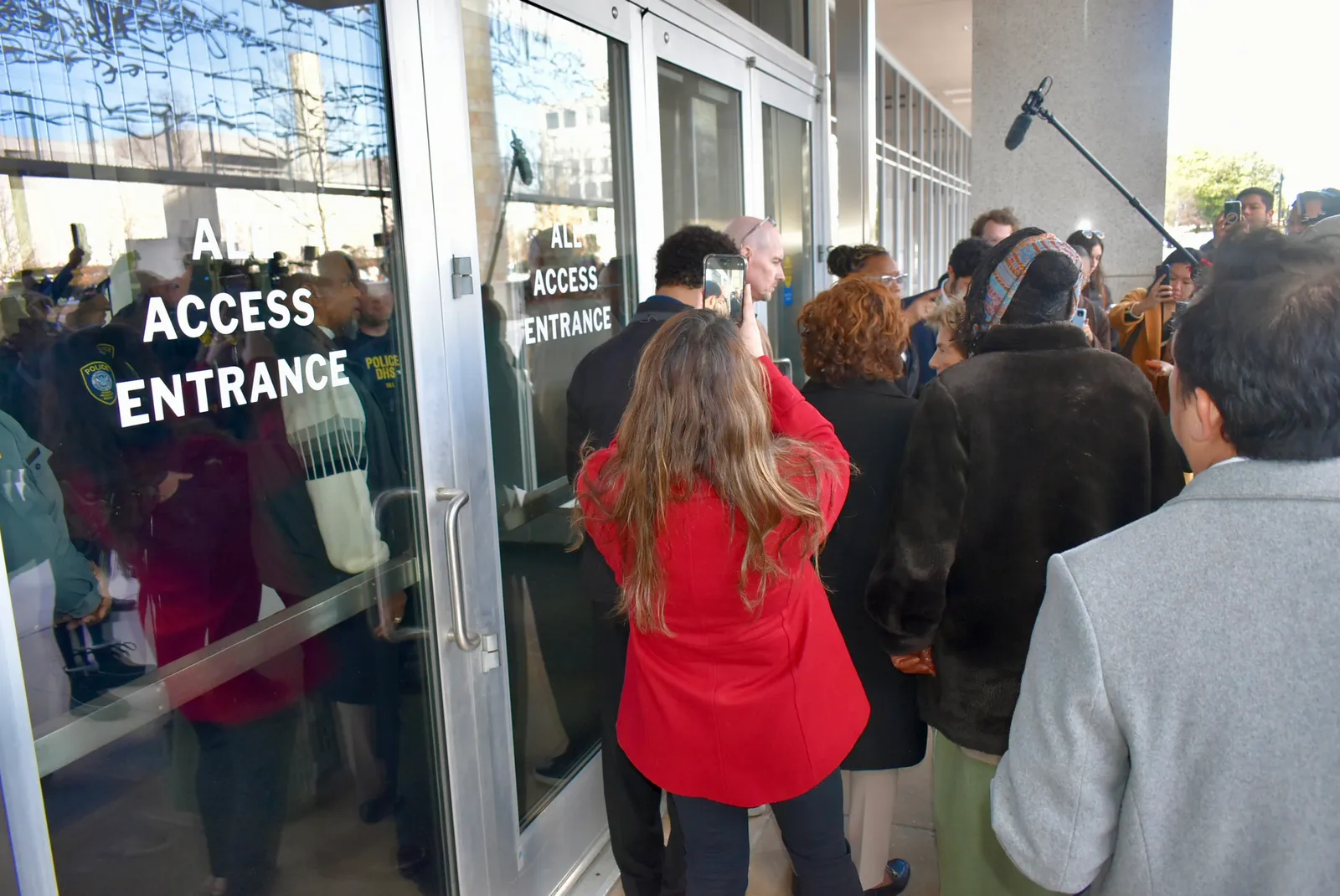
Democratic members of the U.S. House are denied entry to the U.S. Department of Education’s headquarters in Washington, D.C. on Feb. 7, 2025. They were there to voice concerns about attempts to reduce or eliminate department programs.
Kara Arundel/K-12 Dive
Carter, who is an Education Department senior official overseeing federal student aid, is in the acting role as education secretary pending Senate approval of Trump’s choice for education secretary — Linda McMahon. McMahon’s confirmation hearing is scheduled for Feb. 13.
Trump is expected to issue an executive order limiting the Education Department’s activities, although the timing of that order is unknown. Since being inaugurated Jan. 20, Trump has issued a series of executive orders geared toward education. They include restrictions on diversity, equity and inclusion programs, an expansion of school choice, and halting federal support for “gender ideology and discriminatory equity ideology.”
Most recently, he ordered K-12 schools and colleges to prevent transgender girls and women from participating on sports teams that align with their gender identity. Those that don’t comply could lose their federal funding.
Trump has said his goal is to close the Education Department. However, that would require approval from at least 60 members of the Senate. Supporters of shrinking or eliminating the Education Department say there is too much federal bureaucracy. They also say states and districts should have more control over how to spend federal funds for schools.
During the Friday press conference in front of the Education Department, Rep. Jahana Hayes, D-Conn., a former national teacher of the year, asked what would happen to the civil rights of 49 million students, including 7 million students with disabilities, if the Education Department shuts down. She also asked about the $1.6 trillion in student financial aid the department manages.
“If you want to have some true oversight of the department, I’m here for it, but what you will not do is shut down this department and deny access to all of those children who need it while we’re in Congress,” Hayes said.
Another former educator turned lawmaker, Rep. John Mannion, D-N.Y., said, “When we’re talking about dismantling the Department of Education, what we’re talking about is larger class sizes, those kids not getting those individualized services, the removal of athletics, art, science, music.”
“These people and I will not stand here silently as they steal taxpayer dollars from special education students,” Mannion said.
Democratic lawmakers this week have also tried to enter the Washington, D.C., offices of the Environmental Protection Agency and the U.S. Agency for International Development without success, according to statements from lawmakers and news reports.
Also on Thursday, Rep. Bobby Scott, D-Va., ranking member of the House Education and Workforce Committee, asked the Government Accountability Office to immediately assess the security of IT systems at the Education Department, the U.S. Department of Labor, and the U.S. Department of Health and Human Services following reports that the temporary Department of Government Efficiency, which is headed by billionaire Elon Musk, has accessed data from various government agencies.
Democratic leaders in Congress sent Carter a letter Wednesday asking about DOGE’s involvement in Education Department’s internal systems that contain personally identifiable information.
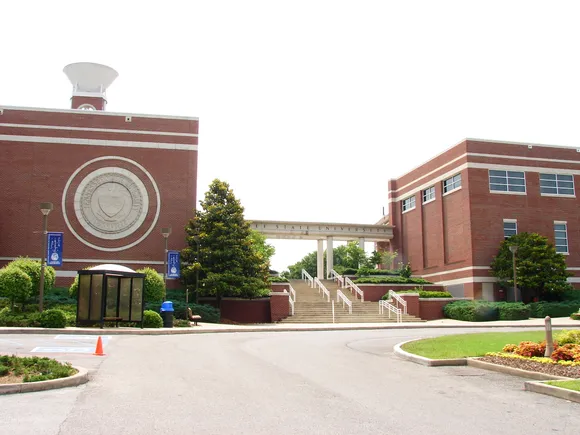
TSU’s financial troubles are steep and immediate. An FAQ page on the university’s website acknowledges that the financial condition has reached crisis levels stemming from missed enrollment targets and operating deficits. This fall, the university posted a projected deficit of $46 million by the end of the fiscal year.
The university identified inefficient processes in financial aid, advising and enrollment systems, that contributed to its woes. It also said those problems were exacerbated by 2024’s messy federal rollout of the Free Application for Federal Student Aid.
Additionally, and perhaps most damaging, the university launched a full scholarship program for some students without a plan to fund it throughout students’ journey to graduation. It paid $37 million toward the scholarship in fiscal 2022 using federal pandemic emergency funds. When that money ran dry, TSU had to issue tens of millions of dollars in institutional financial aid, causing it to heavily discount its tuition.
The scholarship helped attract students, with fall enrollment hitting 8,198 students in 2023, compared to 7,774 in 2018. But the university couldn’t ultimately afford to maintain those aid levels.
Taking aim at the university’s management, Tennessee lawmakers last March passed a Republican-led bill to replace all of the university’s trustees and restructure its board, over the objection of Democrats.
Emergency state funding last fall kept the institution operating, but Tucker said TSU will need more to not just turn around — but to stay open.
“It’s a fact that we can’t pay our bills,” Tucker said, noting also that the university would likely not be open today without state help.
But Tennessee also owes TSU money, according to a federal assessment.
In a letter to Tennessee Gov. Bill Lee in 2023, then-U.S. Education Secretary Miguel Cardona and U.S. Agriculture Secretary Tom Vilsack said the institution had been hurt by “longstanding and ongoing underinvestment” as a public land-grant HBCU. By their estimate, inequitable funding gaps led Tennessee State to miss out on $2.1 billion over 30 years.
Tucker dismissed the idea of suing the state for the $2.1 billion, arguing that the legal process could take years — while the university’s financial needs are immediate. Legal action could also potentially anger the legislators whose support TSU needs to help provide funding. Moreover, the institution could lose a legal challenge, he added.
Tucker — the university’s second interim president in less than a year — argued for focusing instead on the state funding gap identified by the Legislature in 2021. That gap amounts to over $540 million.
Since identifying the amount, Tennessee lawmakers lined up a one-time $250 million sum for the university to invest in infrastructure. Tucker said the university could use a portion of those funds to keep it afloat through the first year of a five-year plan.
Along with state help, TSU and its board are considering financial exigency, a restructuring process that allows an institution experiencing budgetary distress to lay off tenured faculty and shut down academic programs.
In a special meeting of TSU’s board on Jan. 31, a consultant with the National Association of College and University Business Officers presented a detailed workshop on how exigency works.
Tucker said Tuesday that officials were considering exigency but that it wasn’t in the university’s immediate plans.
WASHINGTON — Democratic members of the House were blocked from entering the U.S. Department of Education’s headquarters in Washington, D.C., Friday after requesting a meeting with Acting Education Secretary Denise Carter to discuss their opposition to the Trump administration’s efforts to limit department programming.
About 18 members of Congress walked up to the visitor’s entrance asking to enter after holding a press conference about their concerns. A person who was not wearing a security uniform came outside and told the group they were not allowed to enter. For the next 30 minutes, lawmakers pleaded to be let in the building, with some holding up their congressional business cards and arguing they had a right to enter the federal building as legislators who oversee federal agencies.
U.S. Department of Homeland Security uniformed officers could be seen inside the glass doors.
“Each and everyone one of us have been through these doors,” said Rep. Greg Casar, D-Texas, standing near a sign reading “All Access Entrance.” “But, of course, as soon as we get word that Elon Musk and Donald Trump want to shut down the Department of Education, suddenly, they don’t want to let members of Congress in that ask questions.”
On Wednesday, 96 Democratic members of Congress sent a letter to Carter requesting an “urgent” meeting to discuss the Trump administration’s plans for what they say is to “illegally dismantle or drastically reduce” the Education Department. The department has received the letter, but no meeting has been scheduled as of Friday afternoon, according to the office of Rep. Mark Takano, D-Calif.
An Education Department spokesperson said in an email after the lawmakers’ visit that “The protest was organized by members of Congress who were exercising their First Amendment rights, which they are at liberty to do. They did not have any scheduled appointments, and the protest has since ended.”
Democratic members of the U.S. House are denied entry to the Education Department’s headquarters in Washington, D.C., on Feb. 7, 2025. They were there to voice concerns about attempts to reduce or eliminate department programs.
Kara Arundel/K-12 Dive
Carter, who is an Education Department senior official overseeing federal student aid, is in the acting role as education secretary pending Senate approval of Trump’s choice for education secretary — Linda McMahon. McMahon’s confirmation hearing is scheduled for Feb. 13.
Trump is expected to issue an executive order limiting the Education Department’s activities, although the timing of that order is unknown. Since being inaugurated Jan. 20, Trump has issued a series of executive orders geared toward education. They include restrictions on diversity, equity and inclusion programs, an expansion of school choice, and halting federal support for “gender ideology and discriminatory equity ideology.”
Most recently, he ordered K-12 schools and colleges to prevent transgender girls and women from participating on sports teams that align with their gender identity. Those that don’t comply could lose their federal funding.
Trump has said his goal is to close the Education Department. However, that would require approval from at least 60 members of the Senate. Supporters of shrinking or eliminating the Education Department say there is too much federal bureaucracy. They also say states and districts should have more control over how to spend federal funds for schools.
During the Friday press conference in front of the Education Department, Rep. Jahana Hayes, D-Conn., a former national teacher of the year, asked what would happen to the civil rights of 49 million students, including 7 million students with disabilities, if the Education Department shuts down. She also asked about the $1.6 trillion in student financial aid the department manages.
“If you want to have some true oversight of the department, I’m here for it, but what you will not do is shut down this department and deny access to all of those children who need it while we’re in Congress,” Hayes said.
Another former educator turned lawmaker, Rep. John Mannion, D-N.Y., said, “When we’re talking about dismantling the Department of Education, what we’re talking about is larger class sizes, those kids not getting those individualized services, the removal of athletics, art, science, music.”
“These people and I will not stand here silently as they steal taxpayer dollars from special education students,” Mannion said.
Democratic lawmakers this week have also tried to enter the Washington, D.C., offices of the Environmental Protection Agency and the U.S. Agency for International Development without success, according to statements from lawmakers and news reports.
Also on Thursday, Rep. Bobby Scott, D-Va., ranking member of the House Education and Workforce Committee, asked the Government Accountability Office to immediately assess the security of IT systems at the Education Department, the U.S. Department of Labor, and the U.S. Department of Health and Human Services following reports that the temporary Department of Government Efficiency, which is headed by billionaire Elon Musk, has accessed data from various government agencies.
Democratic leaders in Congress sent Carter a letter Wednesday asking about DOGE’s involvement in Education Department’s internal systems that contain personally identifiable information.

AUSTIN, Texas, Feb. 7, 2025 — After a lawsuit from the Foundation for Individual Rights and Expression and Davis Wright Tremaine, a district court today stopped enforcement of a Texas law that would have blocked access to broad categories of protected speech for minors and forced websites to collect adults’ IDs or biometric data before they can access social media sites.
Northern District of Texas Judge Robert Pitman granted FIRE’s motion for a preliminary injunction against provisions of the Securing Children Online through Parental Empowerment Act (SCOPE Act) requiring content monitoring and filtering, targeted advertising bans, and age-verification requirements, ruling that these measures were unconstitutionally overbroad, vague, and not narrowly tailored to serve a compelling state interest.
“The court determined that Texas’s law was likely unconstitutional because its provisions restricted protected speech and were so vague that it made it hard to know what was prohibited,” said FIRE Chief Counsel Bob Corn-Revere. “States can’t block adults from engaging with legal speech in the name of protecting children, nor can they keep minors from ideas that the government deems unsuitable.”
The SCOPE Act would have required social media platforms to register the age of every new user. Platforms would have been forced to track how much of their content is “harmful” to minors and, once a certain percentage is reached, force users to prove that they are 18 or older. In other words, the law would have burdened adults who wanted to view content that is fully legal for adults, serving as an effective ban for those who understandably don’t trust a third-party website with their driver’s license or fingerprints.
The law also required websites to prevent minors from being exposed to “harmful material” that “promotes, glorifies, or facilitates” behaviors like drug use, suicide, or bullying. That definition was far too vague to pass constitutional muster: whether speech “promotes” or “glorifies” an activity is inherently subjective, and platforms had testified that they would be forced to react by censoring all discussions of those topics.
Today’s ruling should serve as yet another warning to states tempted to jump on the unconstitutional bandwagon of social media age verification bills.
“At what point… does alcohol use become ‘substance abuse?’” asked Judge Pitman in his ruling. “When does an extreme diet cross the line into an ‘eating disorder?’ What defines ‘grooming’ and ‘harassment?’ Under these indefinite meanings, it is easy to see how an attorney general could arbitrarily discriminate in his enforcement of the law.”
FIRE sued on August 16 on behalf of three plaintiffs who use the Internet to communicate with young Texans and keep them informed on issues that affect them. A fourth plaintiff, M.F., is a 16-year-old rising high school junior from El Paso who is concerned that Texas is blocking his access to important content.
Lead plaintiff Students Engaged in Advancing Texas represents a coalition of Texas students who seek to increase youth visibility and participation in policymaking.
Texans browsing your favorite websites, beware. If the state has its way, starting next month, the eyes of Texas may be upon you.
“Young people have free speech rights, too,” said SEAT Executive Director Cameron Samuels. “They’re also the future voters and leaders of Texas and America. The SCOPE Act would make youth less informed, less active, and less engaged on some of the most important issues facing the nation.”
Earlier, Judge Pitman enjoined the content moderation requirements while ruling on a separate lawsuit from the Computer & Communications Industry Association and Netchoice. Judge Pitman ruled in August that Texas “cannot pick and choose which categories of protected speech it wishes to block teenagers from discussing online.”
“This is a tremendous victory against government censorship, especially for our clients—ordinary citizens—who stood up to the State of Texas,” said Adam Sieff, partner at Davis Wright Tremaine. “The Court enjoined every substantive provision of the SCOPE Act we challenged, granting even broader relief than its first preliminary injunction. We hope this decision will give other states pause before broadly restricting free expression online.”
Texas lawmakers perhaps could have predicted today’s ruling. Age verification laws have been enjoined by courts across the country in states like California, Arkansas, Mississippi, Ohio, and even initially in Texas, in another law currently before the Supreme Court for review.
“Today’s ruling should serve as yet another warning to states tempted to jump on the unconstitutional bandwagon of social media age verification bills,” said Corn-Revere. “What these laws have in common is that they seek to impose simplistic one-size-fits-all solutions to address complicated problems.”
The Foundation for Individual Rights and Expression (FIRE) is a nonpartisan, nonprofit organization dedicated to defending and sustaining the individual rights of all Americans to free speech and free thought — the most essential qualities of liberty. FIRE educates Americans about the importance of these inalienable rights, promotes a culture of respect for these rights, and provides the means to preserve them.
CONTACT:
Alex Griswold, Communications Campaign Manager, FIRE: 215-717-3473; [email protected]

In 2014, American colleges faced an existential crisis — campuses erupted over controversial speakers as the heckler’s veto increasingly replaced debate. In response, the University of Chicago drafted a landmark statement reaffirming the school’s commitment to free speech.
Since then, more than 110 colleges and universities have adopted the “Report of the Committee on Freedom of Expression,” commonly known as the Chicago Statement or the Chicago principles, transforming the landscape of higher education in the country.
In a star-studded, all-day symposium last month, the University of Chicago celebrated the 10-year anniversary of the iconic Statement and its famous assertion, “It is not the proper role of the university to attempt to shield individuals from ideas and opinions they find unwelcome, disagreeable, or even deeply offensive.”
The mood was celebratory, reflective, and at times foreboding as panelists shared insights into the drafting and implementation of the principles, debated the future of free speech in academia, and explored the impact of artificial intelligence on expression.
In his opening remarks, university President Paul Alivisatos reflected on the “crisis” in higher education regarding academic freedom, and that it is nearly “impossible” to have a serious discussion about the topic without mentioning the Chicago Statement. While the causes of this crisis are varied, Alivisatos pointed to the principles as a tonic to cure the ills of higher education. Reflecting on the cultural moment in which the principles were drafted, he reminded the audience of a widely cited line from the statement:
“Education should not be intended to make people comfortable, it is meant to make them think.”
He concluded by inviting other universities to join UChicago in its “compelling vision” for the preservation of free expression.
A longtime leader in the fight for free speech, the university welcomed several members of the original drafting committee to discuss the legacy of the principles. The drafters expressed surprise by how quickly the principles spread to other campuses, but were proud of the impact they’ve had. The real focus of the committee, though, was to codify what Alivisatos described as the institution’s unique “culture built on the wellspring of free expression,” rather than something entirely new.
The challenge to universities is much greater today than it was 10 years ago.
Geoffrey Stone, the First Amendment scholar and chair of the committee, spoke of the “fundamental challenge” universities face in encouraging students and faculty to speak their minds. Kenneth Warren, professor of English, echoed this by speaking of faculty members “who are taking on the deep responsibility of exploring difficult questions.”
The conversation was engaging and frank — all faculty members acknowledged challenges and remained open to the possibility that mistakes may be made along the way — sentiments true to the ethos of the principles themselves.
Since 2015, nearly 100 colleges and universities have adopted some version of the Chicago Statement on the principles of free expression.
Columbia University Provost Angela Olinto, another member of the original committee, highlighted the practical value of an institution adhering to a free speech statement and embracing institutional neutrality. She explained how these principles help administrators defend speech by giving them guidelines to reference in response to censorious mobs — a benefit that FIRE has long championed. She then explained that once an institution defends an individual’s right to speak freely, it is important that the speaker in turn seize the opportunity to do so.
As the panel noted, FIRE has endorsed the Chicago Statement since the very beginning and has maintained the widely referenced list of adoptions nationwide. At a time when free speech and academic freedom face constant threats, we hope to see more institutions join the ever-growing list of those committed to fostering the free exchange of ideas.
“The challenge to universities is much greater today than it was 10 years ago,” Stone told FIRE in an interview following the panel. “Put simply, speech that one finds offensive and even hurtful in public discourse must be protected, and those who disagree must be given reasonable opportunities to respond.”
He added, “This can be challenging, but it is essential if we are to preserve the most fundamental values of higher education at this very challenging time.”
Want to learn more about the Chicago Statement? View FIRE’s resources, including the list of institutions that have adopted the statement, fast facts, and more. If you’d like to work with our team to encourage adoption on your campus, reach out to FIRE’s Policy Reform team at [email protected].
Over 7,000 of these student and exchange visitors that overstayed their visas came from India, house representatives heard in a committee hearing on immigration enforcement in the US on January 22.
“Thirty-two countries have student/exchange visitor overstay rates of higher than 20%,” Jessica Vaughan, director of policy studies at the anti-immigration think-tank, the Center for Immigration Studies, told the committee.
However, sector leaders have argued that Vaughan’s testimony contained “some serious and inaccurate generalisations” and relied on “faulty statistics for her claim about the student visa overstay rate,” according to NAFSA‘s director of immigration policy, Heather Stewart.
“International students are the most tracked non-immigrants in the US and a clear and comprehensive understanding of student visa misuse is needed if the field is to arrive at effective and appropriate solutions,” said Stewart.
After India, Vaughan highlighted China, Colombia and Brazil as each having more than 2,000 of their citizens overstay student/exchange visas in 2023, urging Congress to eliminate OPT and impose penalties for institutional sponsors, among a host of regulations.
“The F and M visa categories have [the] highest overstay rates of any of the broad categories of temporary admission,” Vaughan told committee members, with F visas used for academic study and M visas for vocational study.
According to recent DHS figures, the total overstay rate for student and exchange visitors in 2023 was 3.67% with a suspected in-country overstay rate of 2.86%, dropping slightly to 2.69% solely for F-1 students, with all metrics excluding Mexico and Canada.
Countries with highest student/exchange overstay rates by numbers (2023):
| Country | Suspected in-country overstays | Total overstays | Total overstay rate |
| India | 5,818 | 7,081 | 4.67% |
| China | 3,012 | 5,255 | 2.1% |
| Colombia | 2,792 | 3,223 | 8.29% |
| Brazil | 1,692 | 2,198 | 4.6% |
While India, China, Colombia and Brazil recorded the largest numbers of student overstays in 2023, their overstay rate as a percentage of overall student populations in the US were relatively low.
It is perhaps unsurprising that India and China, whose combined student populations made up 54% of total international enrolments at US institutions in 2023/24, also saw the highest levels of visa overstays.
| Country | Total overstay rate |
| Equatorial Guinea | 70.18% |
| Chad | 55.64% |
| Eritrea | 55.43% |
| Congo (Kinshasa) | 50.06% |
| Djibouti | 43.75% |
| Burma | 42.17% |
| Yemen | 40.92% |
| Sierra Leone | 35.83% |
| Congo (Brazzaville) | 35.14% |
| Togo | 35.05% |
| Global (excl. Mexico + Canada) | 3.67% |
Notably, the ‘in-country overstay rate’ refers to the percentage of individuals suspected to still be physically present in the US after their visa expired, while the ‘total overstay rate’ includes both those still in the country and those who may have eventually left after overstaying their visa, but were not recorded as departing.
Sector members have raised concerns about the “troubling” scale of the problem uncovered by the report, ranging from benign violations of legitimate students to “cases of wilful fraud”, said Eddie West and Anna Esaki-Smith, two leading US educators.
NAFSA, however, has disputed the figures as “unreliable”, claiming that the report “overstates” the issue and urged stakeholders to take caution when taking the figures out of context.
Indeed, DHS concedes that “infrastructural, operational and logistical challenges” in the exit environment make it difficult to identify students who do not depart via air or who transition from F-1 status to H-1B, legal permanent residency and other statuses.
What’s more, DHS data revealed a 42% decline in the suspected overstay rate for student and exchange visitors across a 15-month period ending in January 2024, indicating a lag time for the system to register students’ changing situations.
“Not only do visa issuance policies need to be adjusted and interior enforcement boosted, in addition Congress should amend the law in several important ways,” Vaughan told the hearing.
In a statement raising some concern about Vaughan’s testimony, she recommended that “the concept of dual intent should not apply to student visa applicants”.
Under current law, it does not.
While the Optional Practical Training (OPT) program has been widely proven to benefit American workers as well as international graduates, Vaughan blamed the initiative for spawning “an industry of diploma mills and fake schools”, calling for it to be eliminated or “much, much more closely regulated”.
Vaughan also recommended stricter regulations on H1-B specialty occupation visas, a move which Stewart warned would “immediately” make the US look less attractive to international students who “strongly consider” post-study employment opportunities when deciding where to study abroad.
During Donald Trump’s presidential campaign, he surprised some of the sector.
The second-time US president spoke out in support of the H1-B visa during his presidential campaign amid a row about the work pathway among prominent Republicans.
The US is the only one out of the ‘Big Four’ study destinations – US, UK, Australia and Canada – to publish data on international student overstay rates.