Blog

  • Franklin & Marshall College Names Dr. Andrew Rich as 17th President

    Franklin & Marshall College Names Dr. Andrew Rich as 17th President

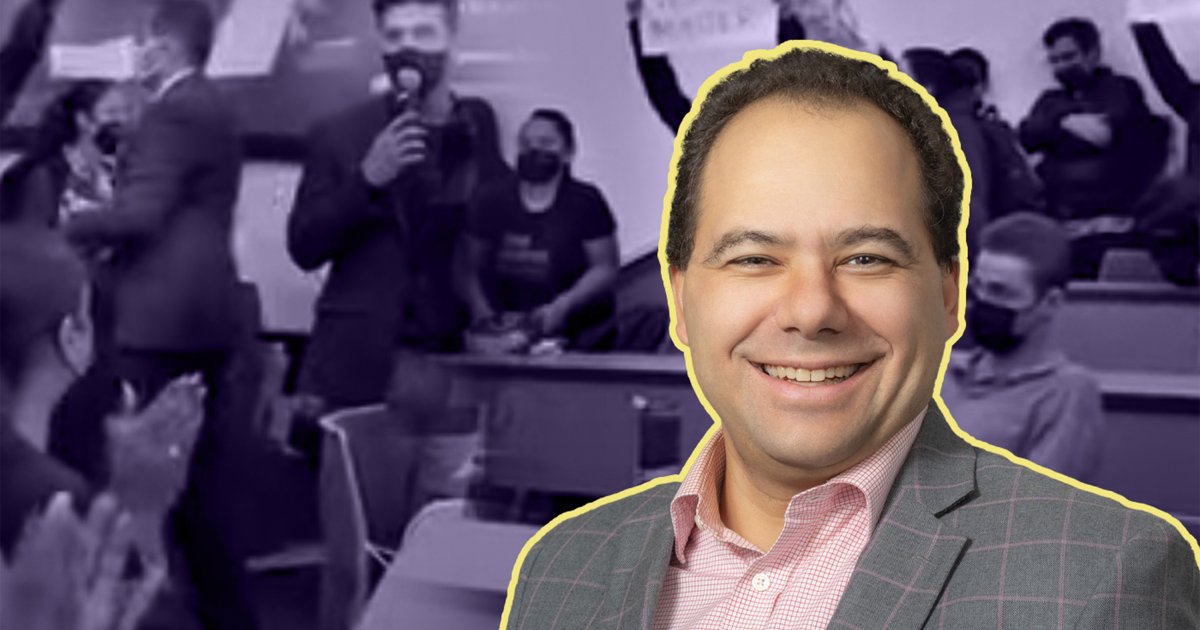
    FDr. Andy Richranklin & Marshall College has appointed Dr. Andrew “Andy” Rich, current dean of the Colin Powell School for Civic and Global Leadership at City College of New York (CCNY), as its 17th president following a unanimous vote by the Board of Trustees. Rich will take office in July, succeeding outgoing president Dr. Barbara K. Altmann, who has led the institution since 2018.

    During his six-year tenure at the Colin Powell School, Rich demonstrated exceptional ability in institutional growth and fundraising, according to officials at the private school located in Lancaster, Pennsylvania. He spearheaded a 40 percent enrollment increase, bringing the student body to 4,000, while simultaneously launching innovative student success initiatives. Under his leadership, the school established eight new fellowship programs and created an Office of Student Success offering comprehensive mentoring, professional development, and career services.

    One of Rich’s notable achievements at CCNY was the formation of a Public Service Career Hub, which more than doubled student placement in public service internships and jobs. The initiative’s success earned the 2023 Exemplary Model Award from the American Association of University Administrators. Rich also led a transformative fundraising campaign that generated over $85 million in new investments for scholarships, student services, faculty positions, and academic initiatives.

    “I am excited to become an F&M Diplomat,” said Rich. “For more than 235 years, Franklin & Marshall has been a beacon for excellence in liberal arts education. We prepare students for fulfilling lives, inspiring them to achievements that enrich every sector of society.”

    Prior to his role at CCNY, Rich served as CEO and executive secretary of the Harry S. Truman Scholarship Foundation from 2011 to 2019, where he oversaw the prestigious federal program supporting future public service leaders. His connection to F&M includes oversight of two recent Truman Scholars from the college: Makaila Ranges, a 2022 graduate and Akbar Hossain, who graduated in 2013. Rich also served as president and CEO of the Roosevelt Institute, a national think tank and leadership development organization, from 2009 to 2011.

    Eric Noll, chair of the College’s Board of Trustees, praised Rich’s appointment:

    “He will build on Barbara Altmann’s successful presidency with his sharp strategic sensibilities and deep appreciation for our excellent liberal arts college and its importance in our society’s future,” he said.

    Rich’s academic credentials include a bachelor’s degree in political science from the University of Richmond, where he was awarded a Truman Scholarship, and a doctorate in political science from Yale University. He has taught at both CCNY and Wake Forest University and is known for his scholarship on think tanks and foundations in American politics, having authored Think Tanks, Public Policy, and the Politics of Expertise.

    Source link

  • IBM’s Armand Ruiz Presents Vision for AI Agents in the Workplace

    IBM’s Armand Ruiz Presents Vision for AI Agents in the Workplace

    In a recent presentation to RNL’s AI Leadership Council, Armand Ruiz, Vice President of Product – AI Platform at IBM, shared his vision for the future of work and the role of AI agents in making it more efficient.

    According to Ruiz, AI agents will become a key component of the future of work, enabling tasks to be completed autonomously and freeing up humans to focus on higher-level thinking. “The real promise of AI is in agents, which can actually do work and take action,” he said. “We’re moving into a world where we have multi-agent assistance, where multiple agents work together to achieve a common goal.”

    Ruiz also highlighted the importance of addressing the challenges of security, governance, and compliance in the use of AI agents in enterprise settings. “We cannot allow these agents to leak sensitive and confidential information, delete files or send data to the wrong recipients,” he emphasized.

    In terms of the future of work, Ruiz predicted that most General AI interactions will be in the form of autonomous agents, with 2/3 or 3/4 of the General AI workforce consisting of agents. He cited the example of GitHub, where an agent can automatically fix bugs and issues, freeing up developers to focus on higher-level tasks.

    Ruiz also discussed the potential impact of AI agents on education, citing the example of a tool that can take notes and create an outline from handwritten notes. “We’re moving into a world where AI will develop AI by itself, and AI will develop agents automatically,” he said.

    Regarding the recent developments in deep learning, Ruiz said that the market’s reaction to the release of the DeepSeek model was an overreaction. “We’ve been pushing for open innovation and open source at IBM, and it’s not surprising that someone else has come into the market with a similar model,” he said. “This will actually increase the demand for chips and energy and will unlock more consumption of AI and more use cases.”

    When asked about the potential impact on decisions related to data centers, Ruiz said that the increased demand for chips and energy will lead to a surge in consumption of AI, particularly in inference workloads. “We see a lot of micro inference going on, and it requires more compute than a regular model,” he explained.

    The presentation sparked a lively discussion among the attendees, with several questions and comments from the audience. Ruiz emphasized the importance of addressing the challenges of governance, compliance, working with a trusted partner who understands what you are trying to accomplish with AI, and the need for education and training in the use of these tools.

    As the presentation came to a close, Stephen Drew, COO of RNL and chair of the AI Leadership Council, reflected on the importance of working with companies that understand the unique needs of higher education and are committed to the responsible use of AI. “As institutions like RNL continue to navigate the complex landscape of AI and its applications, we are focused on working with our partner universities to help them establish AI governance frameworks, educate their teams on responsible AI, and incorporating AI into our services so our clients benefit from the efficiencies AI offers along with the higher education expertise at RNL,” he said.

    Learn more about RNL’s AI governance services and how they can support your institution’s AI initiatives here.

    Source link

  • Cancel culture, legal education, and the Supreme Court with Ilya Shapiro

    Cancel culture, legal education, and the Supreme Court with Ilya Shapiro

    Over the years, elite institutions shifted from
    fostering open debate to enforcing ideological conformity. But as
    guest Ilya Shapiro puts it, “the pendulum is swinging back.” He
    shares his firsthand experience with cancel culture and how the
    American Bar Association’s policies influence legal education.
    Shapiro also opines on major free speech cases before the Supreme
    Court, including the TikTok ownership battle and Texas’ age
    verification law for adult content.

    Shapiro is a senior fellow and director of
    constitutional studies at the Manhattan Institute. He previously
    (and briefly) served as executive director and senior lecturer at
    the Georgetown Center for the Constitution and as a vice president
    at the Cato Institute. His latest book, “Lawless:
    The Miseducation of America’s Elites
    ,” is out now.

    Enjoy listening to our podcast? Donate to FIRE today and
    get exclusive content like member webinars, special episodes, and
    more. If you became a FIRE Member
    through a donation to FIRE at thefire.org and would like access to
    Substack’s paid subscriber podcast feed, please email
    [email protected].


    Read the transcript.

    Timestamps:

    00:00 Intro

    02:58 Shapiro’s Georgetown controversy

    15:07 Free speech on campus

    26:51 Law schools’ decline

    40:47 Legal profession challenges

    42:33 The “vibe shift” away from cancel culture

    56:02 TikTok and age verification at the Supreme
    Court

    01:03:37 Anti-Semitism on campus

    01:09:36 Outro

    Show notes:

    – “The
    illiberal takeover of law schools
    ” City Journal (2022)

    – “Poll
    finds sharp partisan divisions on the impact of a Black woman
    justice.
    ” ABC News (2022)

    – “Why
    I quit Georgetown.
    ” Ilya Shapiro, The Wall Street Journal
    (2022)

    – “Georgetown’s
    investigation of a single tweet taking longer than 12 round-trips
    to the moon.
    ” FIRE (2022)


    Students for Fair Admissions v. Harvard
    (2023)


    Lamont v. Postmaster General
    (1965)

    TikTok Inc
    v. Garland
    (2025)


    Free Speech Coalition v. Paxton
    (2024)

    Ginsberg
    v. New York
    (1968)


    International Holocaust Remembrance Alliance (IHRA) working
    definition of antisemitism
    (last updated 2025)

    Source link

  • Former Rep. Justin Amash joins FIRE’s Advisory Council

    Former Rep. Justin Amash joins FIRE’s Advisory Council

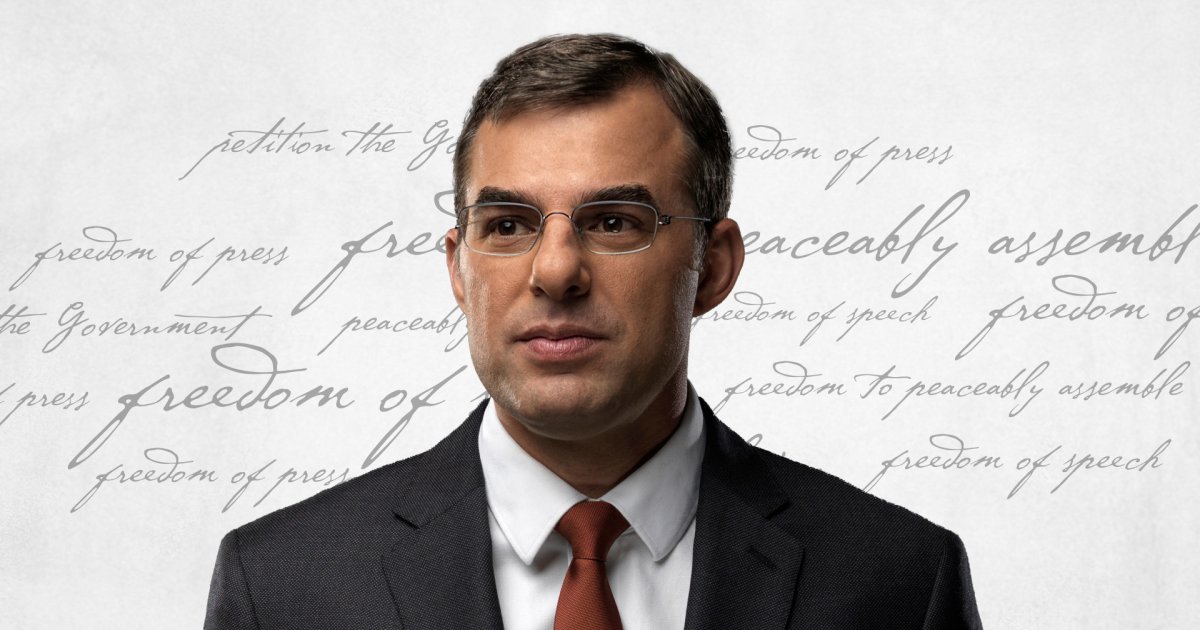
    When former Representative Justin Amash announced that he would not be seeking reelection to the House of Representatives in 2020, a lot of people wondered what he was going to do next. Voters in western Michigan first elected him to the House in 2010, and Amash won reelection four times. In office, he developed a reputation as a principled independent who wasn’t afraid of calling out members in his own party — including the president — when he thought their actions threatened Americans’ civil liberties.

    Since leaving Congress, Amash has remained an outspoken advocate for the individual freedoms protected under the Constitution, especially free speech.

    “The value of free speech comes from encountering views that are unorthodox, uncommon, or unaccepted. Humans learn and grow by engaging with ideas that challenge conventional thinking,” he wrote on Twitter back in 2022. “Free speech is a barren concept if people are limited to expressing views already widely held.”

    FIRE is excited to announce that Amash has joined our Advisory Council, where his expertise in constitutional law and federal policymaking will support FIRE’s mission to defend and sustain the individual rights of all Americans to free speech and free thought — the most essential qualities of liberty.

    Amash remains politically active and is a vocal opponent of all efforts — from both the left and the right — to undermine constitutional protections and individual liberty. 

    Amash was born in Grand Rapids, Michigan, and has spent most of his life there. His father, a Palestinian refugee, and his mother, a Syrian immigrant, inspired his dedication to the cause of liberty. 

    “When I was a child, they spoke often about the value of freedom and how blessed we were to live in America,” says Amash.

    A graduate of the University of Michigan, with a bachelor’s degree in 2002 and juris doctor in 2005, Amash practiced law until his election to the Michigan House of Representatives in 2008, where he served one term before being elected to Congress in 2010, where he served until 2021.

    While in office, much of Amash’s work focused on civil liberties issues and protecting constitutionally secured rights. He was the chairman of the House Liberty Caucus — a nonpartisan congressional caucus supporting limited, constitutional government — and he was a member of the Second Amendment Caucus and co-chair of the Fourth Amendment Advisory Committee. His sponsored legislation included bills to rein in warrantless government surveillance, eliminate civil asset forfeiture, and end qualified immunity for government officials who violate constitutional rights. Since leaving office, Amash has also called for repealing the Espionage Act, which the federal government has used to punish protected free speech for more than 200 years.

    Amash was known for explaining his votes online as part of a commitment to government transparency and accountability. Amash remains politically active and is a vocal opponent of all efforts — from both the left and the right — to undermine constitutional protections and individual liberty. His commentary can be found on X and Substack, and his words have recently appeared in Reason MagazineThe Free Press, and other outlets.

    Source link

  • 20 Michigan towns with unconstitutional public comment policies that could cost them

    20 Michigan towns with unconstitutional public comment policies that could cost them

    • National free speech group FIRE flags 20 cities and towns that restrict citizens’ First Amendment rights
    • Another city — Eastpointe, MI — learned the hard way that censorship doesn’t pay, ponying up $83K after violating four citizens’ rights at a city council meeting

    DETROIT, Feb. 6, 2025 — The Foundation for Individual Rights and Expression today urged 20 Michigan cities and towns — including Grand Rapids, Saginaw, and several around Detroit — to reform public comment policies that unconstitutionally censor their citizens.

    “Public office doesn’t come with the power to muzzle the people you serve,” said FIRE Director of Public Advocacy Aaron Terr. “These cities should immediately repeal their unconstitutional public comment rules to avoid being dragged into court. Otherwise they won’t just be violating the First Amendment — they’ll be writing checks to the constituents they tried to silence.”

    The First Amendment and recent court rulings affirm citizens’ right to criticize government officials and otherwise speak their minds during the public comment periods of city council meetings. Rules that unduly restrict this right are illegal, undemocratic, and prevalent in Michigan.

    Local governments can impose reasonable, well-defined, viewpoint-neutral restrictions on public comments at their meetings. They can, for example, prohibit genuinely disruptive conduct — such as speaking out of turn or making true threats. But the rules in these 20 towns go too far, banning large swaths of protected speech. Many bar “personal attacks” on government officials, some are plain bizarre, and all are unconstitutional.

    • Clinton Township bans talk of excrement, “disrespectful” references to the supernatural, and “personal attacks.” 
    • The use of “vulgar, obscene . . . or otherwise inappropriate language or gestures” is prohibited at Southgate City Council meetings.
    • Romulus City Council bans remarks with racial, ethnic, religious, sexual or national origin “overtones.” 
    • “Abusive” and “personally directed” public comments are prohibited at Park Township government meetings.
    • Rochester Hills City Council bans “inappropriate” public comments at its meetings.

    Similar rules have not fared well in court. In 2018, a man was ejected from an Ohio school board meeting after criticizing the board for suppressing opposition to pro-gun views. He sued and the U.S. Court of Appeals for the Sixth Circuit — which has jurisdiction over the Great Lakes State — sided with him. Its decision invalidated bans on “antagonistic,” “abusive,” and “personally directed” public comments at local government meetings.

    Four years later, FIRE put those principles to work when we represented several Eastpointe, MI, residents in their suit against the city and its mayor. Then-Mayor Monique Owens used a rule barring comments directed at city council members as justification to shout down and silence four constituents who tried to criticize her during public-comment periods. Last year, Eastpointe reached a settlement with the residents that required the city to stop enforcing the unconstitutional rule, pay each plaintiff $17,910, and pay additional attorneys’ fees.

    When municipal bodies fail to respect constituents’ First Amendment rights, they can expect to hear from FIRE.

    • A Surprise, AZ, mom was forcibly ejected from a city council meeting for criticizing the city attorney’s pay raise, and FIRE is now representing her in a lawsuit.  
    • After a Uvalde, TX, dad was banned from school grounds for questioning the qualifications of a school district police officer at a school board meeting, FIRE got the school district to lift the ban. 
    • A man was ejected from an Edison, NJ, city council meeting for violating its ban on “props” — by holding a copy of the U.S. Constitution and a small American flag. Thanks to FIRE’s advocacy, the council quickly repealed the ridiculous ban.

    FIRE is happy to help local governments bring their public comment policies into compliance with the First Amendment, free of charge. In 2023, FIRE successfully worked with Bay City, MI, to eliminate its unconstitutional restrictions on public comments that were “derogatory,” “vulgar,” or “demeaning” to city officials or employees.

    “The First Amendment doesn’t protect politicians’ egos,” Terr said. “It protects the public’s right to hold them accountable.”

    The Foundation for Individual Rights and Expression (FIRE) is a nonpartisan, nonprofit organization dedicated to defending and sustaining the individual rights of all Americans to free speech and free thought — the most essential qualities of liberty. FIRE educates Americans about the importance of these inalienable rights, promotes a culture of respect for these rights, and provides the means to preserve them.

    CONTACT

    Jack Whitten, Communications Campaign Specialist, FIRE: 215-717-3473; [email protected]

    Source link

  • The Great Brain Race, 15 years later with Ben Wildavsky

    The Great Brain Race, 15 years later with Ben Wildavsky

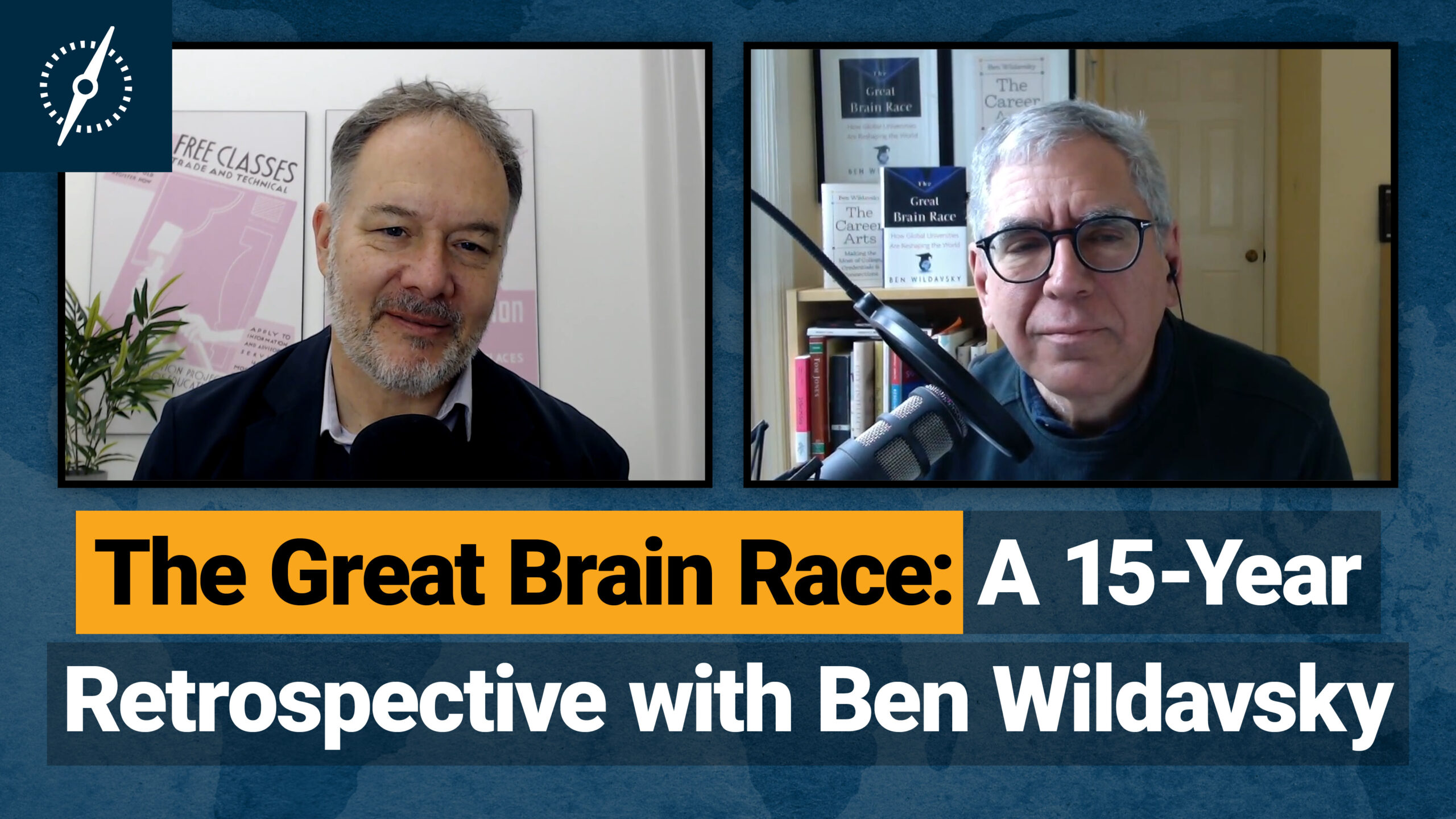
    Sometimes books can be time machines. A few months ago, I started re-reading Ben Wildavsky’s excellent ‘The Great Brain Race: How Global Universities are Reshaping the World‘. First published by Princeton University Press in 2010. And it took me literally to another planet. An optimistic one where higher education and globalization went hand in hand to enrich the lives of students everywhere and which powered universities to new heights of competition and discovery. When the book came out, I remember reading all of this and being somewhat skeptical. But with all of the nonsense of the past decade or so in global higher education, frankly, it all sounds pretty good to me right now.

    Ben is, of course, a prolific author, and he’s written a great deal on the topic of higher education, most recently, ‘The Career Arts: Making the Most of Colleges, Credentials, and Connections‘. I could have asked Ben to come on to speak about pretty much any of them, but boy, did I want to talk about The Great Brain Race because it’s such a nostalgia sugar high.

    And so, on what is roughly the 15th anniversary of its publication, Ben agreed to come on and enlighten us about what seemed new and fresh back in 2010, things like global rankings and lavishly funded branch campuses, and let me ask him annoying questions, about whether and how it’s all gone wrong. And I’m very happy that he did.

    And so enough for me, let’s throw things over to Ben.


    The World of Higher Education Podcast
    Episode 3.19 | The Great Brain Race, 15 years later with Ben Wildavsky

    Transcript

    Alex Usher (AU): Ben, 15 years ago, you wrote The Great Brain Race. What was the thesis? What trends were you trying to illustrate?

    Ben Wildavsky (BW):  I was trying to take the much-discussed phenomenon of globalization—which, of course, we heard a lot about, including in bestsellers like The World is Flat by Tom Friedman—and apply that to higher education. I felt there was already so much evidence, both emerging and well-established, that globalization had made a significant impact on higher ed.

    I wanted the book to be both descriptive and, to some extent, prescriptive. I set out to highlight what I saw as a remarkable but somewhat under-discussed phenomenon: the massive mobility of students around the world. And beyond that, the mobility of faculty as well.

    Actually, David Lodge just passed away last week—he wrote a wonderful trilogy of academic novels that had an impact on me because he was such a sharp observer. But basically, I was looking at the mobility of students, faculty, and research. And to some extent, even the mobility of campuses themselves, with the rise of branch campuses and the increasing influence of global university rankings, which acted as a way to keep score.

    So, at its core, the book’s thesis was that much like I believe in markets and free trade as beneficial for the world economically, I also made the case for what I called free trade in minds—arguing that the global exchange of knowledge and talent has overwhelmingly positive effects. That idea sometimes faces backlash, often based on what I called academic mercantilism—the notion that countries should cling to their share of knowledge and fear if others start producing more PhDs.

    But I argued that knowledge is not a zero-sum game. In fact, we should welcome the expansion of education worldwide. If more people gain access to better education, it benefits the world as a whole.

    AU: You start the book by talking about the global war for talent. I have to say, I haven’t heard that term in a few years. We’re now in a world of tariffs and growing concerns about immigration. You actually interviewed me about this about a year ago. So, are we still in a global war for talent or not?

    BW: You know, I think there are two ways to answer that. I don’t know that we hear the rhetoric about the war for talent as much anymore, but if you talk to people in the global corporate world, they are still acutely aware of their need for well-trained workers. On the consumer side—on the student side—there’s still a strong demand for building human capital. And the evidence that education is critical for economic advancement seems as strong as ever.

    So, whether or not we still use the phrase war for talent, I don’t know. But look at what’s happening right now—we’re recording this on the verge of the second Trump administration. There’s a huge internal battle among Republicans over H-1B visas, which are issued to highly skilled university graduates. The assumption is that these graduates have talent since they’ve studied at American universities, and many foreign students want to stay and work in the U.S.

    This tension has existed in the Republican Party for a long time. Not to get sidetracked, but when I started working in Washington in 1995 for National Journal, the first article I wrote was about Republican infighting over free trade. Back then, people like Pat Buchanan represented the more economic nationalist wing of the party. That strain has become much more dominant in the Trump era. However, you still have figures like Elon Musk and others in Silicon Valley—people who see the clear benefits of allowing talented foreign graduates to stay in the U.S. and contribute to the innovation economy.

    So, again, whether or not we still use the term war for talent, I think there’s a strong awareness of the connection between education, experience, and economic growth.

    AU: So, to the extent that there is—or was—a war for talent 15 years ago, one of the ways people thought a country like the U.S. could win was by building what they called world-class universities. Our mutual friend, Jamil Salmi, even wrote a book with that title, right? And quite famously, I guess, just before your book came out. But the record of actually achieving world-class status is pretty small, isn’t it? Obviously, you have Harvard, Stanford, and Yale—places that were built 150 years ago and reached that status at least 50 years ago. Who has actually become a world-class university since then? A few in China, maybe the National University of Singapore, maybe Paris-Saclay through the merger process. Why do you think we haven’t seen more of this? Is achieving world-class status simply too difficult?

    BW: That’s a great question. To some extent, it depends on expectations—should we have seen an equal distribution of world-class universities around the globe by now, proportional to population or economic development? I don’t think so. I see it more as an aspirational goal.

    Many places—China, Germany with its Excellence Initiative, and others—clearly recognized the need to build high-quality research universities modeled on the U.S. system. And of course, as you know, and as you’ve discussed with other guests—and as I mention in my book—that U.S. model itself was originally based on the German Humboldtian Research University of the 19th century. So, there’s been this back-and-forth influence over time.

    But I think the more important question isn’t necessarily how many institutions have achieved world-class status. Sure, you can point to the National University of Singapore, some Chinese universities, and Paris-Saclay. But what really stands out—something Jamil Salmi wrote about so well—is why certain institutions have succeeded.

    Take the National University of Singapore. It embraced the merit principle, while the University of Malaya took a more insular approach—implementing admission quotas for certain ethnic groups instead of competing globally for top talent. NUS made a conscious decision to compete on a level playing field of excellence.

    So, I’m not trying to dodge the question, but I think in academia, not every institution is aiming for world-class status. Many universities focus on serving the masses, which is valuable in its own right. But at the top level, whether or not you break into the top 10 or top 20, if research excellence is your North Star, then that, to me, is a triumph of the aspirational principle of being world-class.

    AU: One way people tried to keep score in the world-class university race was through rankings. You dedicate a whole chapter to global rankings in your book. At the time, I remember thinking that this seemed newer to Americans than to everyone else. The U.S. started rankings back in the 1980s with U.S. News & World Report, but those rankings focused on very different factors. Now, we have more and more rankings—it feels like a new one comes out every couple of months. But do these rankings actually matter? Have they become more consequential over time, or not? Because I don’t get the sense that they’re driving policy the way they used to. And in your country, in the U.S., I don’t see much awareness of how far down the rankings the second- and third-tier American universities have fallen. The top-tier schools are still at the top, but the U.S. used to have 40% of the top 500 universities—now it’s maybe 20–25%. A lot of those second-tier institutions have dropped off, yet there’s been no reaction in the U.S. Why do you think global rankings have had less impact than expected?

    BW: Honestly, Alex, I can’t say I follow this as closely as I once did. But looking at the U.S. side of things, we’ve always been—famously or infamously—insular when it comes to higher education.

    We tend to focus more on how states compare to one another or on issues like student access to top institutions, especially economic access, which I think is a valid concern. But we don’t really worry about how our universities stack up internationally in the rankings. That’s partly a reflection of noblesse oblige—we’ve been such a dominant global force in higher education for so long that there hasn’t been a real sense of urgency.

    Despite the backlash against globalization and growing protectionist trends, the U.S. still remains the top destination for international students. And unlike many countries that have just one or two standout universities, we have what people in sports would call a deep bench—not just a few great universities, but dozens of truly world-class institutions.

    So, when I mention noblesse oblige, I’m half-joking, but the reality is that there’s never been much concern about losing that top-tier status. At the highest levels, sure, people care about reputation, but the U.S. doesn’t have a centralized Ministry of Education or a national funding mechanism that directly ties money to rankings, the way some other countries do.

    Our mutual friend Ellen Hazelkorn has written a lot about how rankings can create problematic policy incentives, but that’s just never been a major factor in the U.S. In other countries, I’m not sure how much weight rankings still carry, but I think there’s probably still a sporting interest in the latest Times Higher Education or QS rankings—seeing where universities land each year.

    That said, the idea that universities can directly link funding decisions to ranking outcomes—and that improving a ranking will necessarily lead to positive consequences—seems to be something people are increasingly skeptical about. From what I can tell, there’s a lot more agnosticism about rankings than there used to be.

    AU: Back in 2010, one of the things you were really interested in was the still-new rise of branch campuses. I think you spent time in Education City in Doha and spoke with John Sexton of NYU in Abu Dhabi. At the time, you saw these as representing a new stage of globalization—I think that’s the phrase you used in the book. How do you think these branch campuses have turned out? And what do you make of Texas A&M recently cutting and running from Education City?

    BW: Well, before getting into Texas A&M, I’d rather start with the broader picture. I certainly don’t want to be defensive about it—things change over time. But I don’t think I ever presented branch campuses as the next stage of globalization or the ideal model for every university. I saw them as part of a period of experimentation, and I think I made that pretty clear.

    These campuses were an effort to see what worked in different contexts—and, frankly, financial factors played a huge role. NYU wouldn’t be in Abu Dhabi without significant funding from the Emirates. The same goes for Georgetown, Texas A&M (when it was there), and the other universities in Qatar. A lot of money was poured into these initiatives.

    There was never really an argument that these campuses emerged purely from market forces. The free market alone wasn’t driving these incentives. But some of these institutions—especially the better-known ones—had strong global reputations. There was demand for their degrees from the same students who were eager to study in the U.S. because of the prestige of American research universities.

    For some students—particularly women in the Emirates—studying closer to home was especially appealing. Cultural norms made it more difficult for them to travel abroad, and even today, there are restrictions. So having branch campuses nearby offered opportunities that wouldn’t have otherwise been available.

    You still see NYU operating in both Abu Dhabi and Shanghai, even though John Sexton is now emeritus. Education City has lost Texas A&M, but as far as I know, none of the other American universities have left.

    AU: No, none of the other American ones have left.

    BW: That’s right. But to some extent, each case is unique. Qatar is in a complex geopolitical position—it presents itself as a mediator in the Israel-Hamas conflict while also having provided significant support to Hamas over the years. While many people are suffering in both Israel and Gaza, some Hamas leaders are living in luxury in Qatar.

    Now, I don’t know the exact reasons why Texas A&M left, but the optics of maintaining a campus there are certainly problematic—especially for a state institution from Texas. You could argue Qatar wants to have it both ways: pursuing forward-thinking educational initiatives, which I applaud, while also being a problematic actor in other ways. That tension likely played a role.

    It’s actually surprising that China, despite being a highly problematic state in different ways, has managed to maintain relatively strong relationships with American universities. There aren’t as many partnerships as there once were, but many U.S. institutions still have a presence there.

    AU: Those branch campuses were at least as much an experiment in cultural power as they were in education, right? That’s what people were after—a halo effect. That was certainly what the Emir of Abu Dhabi was aiming for.

    BW: I think that’s a fair point. And I should add—there’s still ongoing tracking of branch campuses worldwide. My former colleagues at SUNY, the State University of New York, have a great site that monitors the number of branch campuses across different universities.

    Kevin Kinser and others have been involved in that work, though I don’t know the exact numbers today. But I don’t think branch campuses have shrunk dramatically—it’s just that expansion hasn’t continued at the same rapid pace as before.

    AU: I guess a similar area at the time was global for-profit universities. These were still quite new back then. The dominant player at the time was Laureate, though there have been new entrants and a lot of movement in that market since. I was struck by one sentence in your book—let me read it to you: “The multinational for-profit firm could turn out to be the vehicle best suited for providing broad-scale access to practical higher education, benefiting students who might otherwise have had far fewer opportunities.” Do you think that statement still holds in 2025?

    BW: Great question. In a funny way, what comes to mind is that across all sectors, there’s a huge interest in what’s now called experiential learning. The idea of practical postsecondary education is as relevant as ever. And that doesn’t just mean vocational training—it’s something beyond secondary education, but still career-oriented.

    In fact, this is a topic I’m working on for a new book. There’s a major push to develop education that’s both advanced and directly connected to workforce needs. And that’s happening not just in the for-profit sector, but in the public and mainstream higher education sectors as well.

    So, perhaps you could argue that what I described in my book has been discovered more broadly. Despite some backlash against certain forms of higher education in the U.S., globally, there’s still a strong push to expand educational opportunities beyond secondary school. The OECD continues to track educational attainment by country, and there’s concern in many places about falling behind.

    As for whether the for-profit sector has unique advantages, I’m not sure. But in the parts of the sector I still follow, things like pathway programs—which help international students gain exposure to Western universities, either in their home country or abroad—are still popular. For-profit providers like Kaplan, which I do some consulting work with, remain very active in that space. They’re particularly effective at recruiting students and providing them with the preparation they need. It’s a win-win: students want access to universities, and universities want to fill seats. That’s one area where for-profits continue to play a role.

    I’m less familiar with what’s happening in Latin America today, but when I was researching for my book, I was particularly struck by places like Brazil. There, the idea of free public education at elite universities sounded noble. People in the U.S. often ask, Why don’t we have free public higher education? But when you look closer, the students who attend these elite public universities often come from wealthy families who could afford expensive secondary schooling.

    So, in practice, free higher education often ended up being free for the wealthy. Meanwhile, for-profit universities, which some critics saw as problematic, were actually serving middle- and lower-middle-class students—offering practical programs in fields like nursing, IT, and business.

    Again, I haven’t kept up as closely with what’s happening now, but I’d say that the demand for career-focused education has been increasingly absorbed by the mainstream higher ed sector as well.

    AU: A part of what’s happened is that the vocationalization of higher education has shifted more to the master’s level—or at least the post-baccalaureate level. That’s where a lot of these private, global universities are focusing now. It’s that master’s degree space—a practical degree, like you said. It’s post-bachelor’s, so there’s something both global and vocational about it, but it might not align with the way we typically think about access.

    Listen, when I reread your book, I had a smile on my face the whole time because I thought, Oh my God, this is such an optimistic book! You don’t really see optimistic books about globalization or higher education anymore. I’m not sure anyone has written one that optimistic since you did—maybe you were the last one. So let me ask: Do you think you were overly optimistic? Or did something specific happen that derailed the future you envisioned? Is it as simple as saying, Xi Jinping, Donald Trump, and Vladimir Putin ruined everything? What happened?

    BW: Well, I love that shorthand as a way of describing where we are today—but I don’t actually think it gives a full picture of what’s happened. And I proudly wear the optimist badge.

    I don’t think I was excessively optimistic. Of course, I could point to plenty of caveats and shades of gray in the book—I made it clear that this was a work in progress.

    Our mutual friend, Phil Altbach—who’s really the dean of global higher ed scholars, and a wonderful guy—was actually quite direct with me about this. He was kind enough to blurb my book, but he also made it very clear that he thought I was way too optimistic. He tends to have a more jaundiced view of some of these developments.

    That said, I don’t think I was being a Pollyanna about it. I never argued that every development was wonderful. But I do see globalization in higher education as similar to free trade. If you were writing about free trade—now, I’m not comparing myself to Adam Smith or John Stuart Mill—but if you were setting out the principles of free trade, you’d focus on the long-term economic benefits.

    There are always setbacks, political arguments, and waves of protectionism—like the tariffs and nationalist policies we saw during the Trump administration, which, frankly, some Democrats also supported. But none of that changes the fundamental principle that free trade is economically beneficial.

    In the same way, I still believe that global higher education is expanding in ways that are, ultimately, beneficial. When I wrote the book, there were about 3 million students studying abroad for a year or more. By 2019, that number had doubled to around 6 million. The OECD had projected 8 million by 2025. I don’t know exactly where we are now, but we’re certainly in the ballpark.

    So just in sheer numbers, this expansion is happening. People are getting more educated. Claudia Goldin, the Nobel Prize-winning economist, described the 20th century as the human capital century, and I think that trend is continuing—both in places like the U.S. and Canada and on a global scale.

    Yes, you can point to a million different setbacks. There have been waves of backlash against international students in the U.K., Canada, Australia, and sometimes in the U.S. Governments implement bad policies that create temporary setbacks. But if you look at the big picture, the historical trajectory suggests that people will keep seeking opportunities to get ahead.

    What I argued in the book is that people want to get ahead based on what they know and what they can learn—not based on where they’re from or how much money they have.

    Of course, in the first waves of internationalization, wealthier students had the most access to global education. But in the long run, I believe in a more meritocratic world—one where more and more people can improve their circumstances through education, with fewer barriers standing in their way.

    That’s not just idealism—I think it’s a reality that’s unfolding, incrementally, for more and more people.

    AU: The arc of higher education is long, but it bends toward globalization?

    BW: I would say so, yes.

    AU: How do we make it bend faster? If we come back here in 15 years, what do you think will have changed to speed things up? Or will anything? What’s your sense of how things will evolve over the next few years?

    BW: To some extent, it depends on things like global economic growth. If the global economy continues—maybe with some fits and starts—but generally moves forward, and if the world becomes wealthier, then I think people will continue to recognize that human capital is king. Education and economic development are deeply connected, and as long as that remains true, people will keep seeking out educational opportunities.

    In their own countries, I hope we’ll continue to see expanded access to education, higher completion rates, and greater equity across race and class. Obviously, in the U.S., we’ve had big fights over affirmative action, but regardless of what happens on that front, people will still want more education and opportunity. And I think the same will be true globally.

    So, the real question is: What can we do to stay out of the way? How do we prevent unnecessary restrictions on international students? How do we ensure there’s a sustainable funding model? On that point, I’m somewhat agnostic—there are relatively low-cost, mass-access universities that provide real opportunities, and there are incredibly expensive elite universities. I think we probably need both.

    AU: Ben Wildavsky, thanks so much for joining us.

    BW: Thanks so much for having me. It was a great conversation.AU: And that just leaves me to thank our excellent producers, Tiffany MacLennan and Sam Pufek, and you—the reader, viewer, or listener—for joining us. If you have any questions or comments about today’s episode, don’t hesitate to get in touch at [email protected]. And don’t forget to subscribe to our YouTube channel—sign up and never miss an episode of The World of Higher Education. Join us next week when our guest will be Duncan Ross, former Chief Data Officer at Times Higher Education. He’ll be talking with us about the world of global university rankings. Bye for now.

    *This podcast transcript was generated using an AI transcription service with limited editing. Please forgive any errors made through this service.

    Source link

  • ‘Father of Environmental Justice’ Robert Bullard on the Work Behind a Movement (Time)

    ‘Father of Environmental Justice’ Robert Bullard on the Work Behind a Movement (Time)


    Higher Education Inquirer : ‘Father of Environmental Justice’ Robert Bullard on the Work Behind a Movement (Time)


    ‘Father of Environmental Justice’ Robert Bullard on the Work Behind a Movement (Time)


    “This
    isn’t happenstance,” remarked
    Gloria Walton, former TIME Earth Award
    honoree, on the environmental justice movement being recognized as a
    powerful force.

    “It is a reality created by the energy and love of frontline communities
    and grassroots organizations who have worked for decades,” Walton said,
    as she presented an Earth Award to the man known as the “Father of
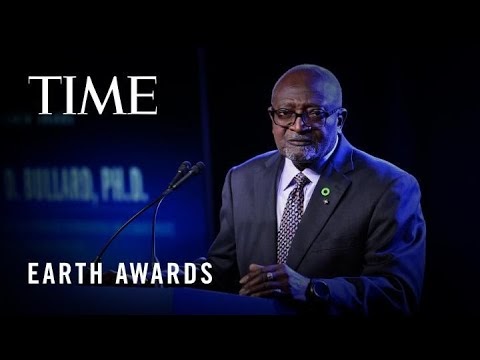
    Environmental Justice,” Robert Bullard.

    Bullard, who was appointed to the White House Environmental Justice
    Advisory Council in 2021, spoke of the long fight he’s waged for
    environmental justice in his acceptance speech. He discussed the
    challenges that he faced in 1979, when he conducted a study in support
    of the landmark case Bean v. Southwestern Waste Management Corps.— the
    first lawsuit to challenge environmental racism in the United States.

    “I am a sociologist and my sociology has taught me that it is not enough
    to gather the data, do the science and write the books,” he said. “In
    order for us to solve this kind of crisis, we must do our science, we
    must gather our data, we must collect our facts, and we must marry those
    facts with action.”


    Source link

  • Trump attacks DEI; faculty pick between silence, resistance

    Trump attacks DEI; faculty pick between silence, resistance

    Republicans in red states have been attacking diversity, equity and inclusion in higher education for years. But when Donald Trump retook the White House and turned the federal executive branch against DEI, blue-state academics had new cause to worry. A tenured law professor in the University of California system—who wished to remain anonymous for fear of retaliation and harassment—said they read one of the executive orders that Trump quickly issued on DEI and anticipated trouble.

    “Seeing how ambiguous it is with respect to how they are defining diversity, equity and inclusion, and understanding that the ambiguity is purposeful, I decided to take off from my [university website] bio my own specialty in critical race theory, so that I would not be a target either of the [Trump] administration or of the people that they are empowering to harass,” the professor said.

    The professor said they also told their university they’re not interested in teaching a class called Critical Race Theory for the rest of the Trump administration. They said they faced harassment for teaching it even before Trump returned to the presidency. “A lot of law schools also have race in the law classes, we have centers that are focused on race,” the professor said. “And so all of these kinds of centers and people are really, really concerned—not just about their research, but really, again, about themselves—what kind of individualized scrutiny are they going to get and what’s going to happen to them and their jobs.”

    Given all that, self-protection seemed important. “Things are going to get much worse before they get better,” the professor said, adding that “people are very scared to draw attention to their work if they’re working on issues of race. People like me are pre-emptively censoring themselves.”

    Other faculty, though, say they’re freshly emboldened to resist the now-nationalized DEI crackdown. One with tenure declared it’s time to “take it out and use it.” Inside Higher Ed interviewed a dozen professors for this article, including some at institutions that have seen changes since Trump’s return to office, to see how the crackdown is, or isn’t, affecting them and their colleagues. Their responses range from defiance to self-censorship beyond what Trump’s DEI actions actually require, but all share concern about what’s yet to unfold.

    Diversity, Equity and Confusion

    Trump’s efforts to eradicate DEI began on Inauguration Day, with the returning president issuing an executive order that called for terminating “all discriminatory programs, including illegal DEI” across the federal government. The dictate went on to state that these activities must be stamped out “under whatever name they appear.”

    That order didn’t specifically mention higher education, but the one Trump signed the following day did. It directed all federal agencies “to combat illegal private-sector DEI” programs, demanding that each agency identify “potential civil compliance investigations”—including of up to nine universities with endowments exceeding $1 billion.

    That was Week One. Week Two began with news of a DEI-related funding freeze whose scope was simultaneously sweeping and confusing. A White House Office of Management and Budget memo told federal agencies to pause grants or loans. The office said it was trying to stop funding activities that “may be implicated by the executive orders,” including DEI and “woke gender ideology.”

    Federal judges swiftly blocked this freeze. The Trump administration rescinded the memo. Nevertheless, the White House press secretary wrote on X that “This is NOT a rescission of the federal funding freeze.”

    The White House didn’t respond to a request for comment for this article. While college and university DEI administrators and offices may feel the brunt of the anti-DEI crusade as these positions and entities are eliminated, the campaign could also cast a pall over faculty speech and teaching.

    “This administration does not seem to care about the Constitution or about the existing law,” the anonymous law professor said, adding that “I think, unlike ever before in my own lifetime, I don’t feel safe or secure or I don’t feel the safety of the Constitution in the way that I have in the past.”

    Vice President JD Vance has called professors “the enemy.” The professor said this “has really empowered a lot of civil society to see us as the problem.”

    But Jonathan Feingold, an associate professor at the Boston University School of Law who’s on the cusp of earning tenure and says he’ll continue to teach critical race theory, is counseling against what he and others have called “anticipatory obedience” to Trump.

    “What I am seeing anecdotally reported across the country is universities either scrubbing websites or even potentially shuttering programs or offices,” Feingold said. But he said of the Jan. 21 anti-DEI executive order that “with respect to DEI, there is nothing in it that I see that requires universities to take any action. It certainly is rhetorically jarring and should be understood as a threat, but I don’t see anything that should compel institutions to do anything.”

    “The executive order does not define what Trump is saying is unlawful,” Feingold said. He noted it “almost always is attaching to DEI the term ‘illegal’ or ‘unlawful’ or ‘discriminatory’—which, I believe, is a recognition that DEI-type policies of themselves are not unlawful.” He said the order “rehearses the same racist-laden, homophobic-laden, anti-DEI talking points that the Trump administration loves to go to, but, if you read it closely, it reveals that even the Trump administration recognizes that under existing federal law, most of the DEI-type programs that universities have around the country are wholly lawful.”

    The bottom of that executive order also lists a few carve-outs that may limit the impact on classrooms. The exceptions say the order doesn’t prevent “institutions of higher education from engaging in First Amendment–protected speech,” nor does it stop educators at colleges and universities from, “as part of a larger course of academic instruction,” advocating for “the unlawful employment or contracting practices prohibited by this order.”

    While Feingold said the order doesn’t have teeth, he nevertheless thinks “it’s a very, very dangerous moment right now for faculty members to do their job because the administration is making very clear that it is not OK with any political opposition.” But, he said, “Voluntary compliance is a foolish strategy, given that Trump has telegraphed that he views an independent, autonomous higher education as an enemy. And so I think it’s foolish to think that scrubbing some words on a website are going to satiate what appears to be a desire to suppress any sort of dissenting speech.”

    Still, scrubbing is happening.

    Scrubbing Words

    A few days after Trump’s executive orders, Northeastern University, also in Boston, changed the page for its Office of Diversity, Equity and Inclusion to instead say “Belonging at Northeastern.” Northeastern spokespeople didn’t explain to Inside Higher Ed why the institution took this step; its vice president for communications said in a statement that “while internal structures and approaches may need to be adjusted, the university’s core values don’t change. We believe that embracing our differences—and building a community of belonging—makes Northeastern stronger.”

    In an interview with Inside Higher Ed, Kris Manjapra, the university’s Stearns Trustee Professor of History and Global Studies, declined to speak specifically to what’s happening at Northeastern “because I just don’t have a clear sense of what’s happening.” But, nationally, Manjapra said, “We are witnessing a series of challenges to academic freedom” and witnessing the rise of “what seems to be a fascist coalition, and we are clearly seeing the beginning of reprisals against different institutions that are essential to the functioning of democracy.”

    “Although the current language of the attack is being framed as the crackdown on DEIA,” Manjapra said, using the longer initialism for diversity, equity, inclusion and accessibility, he said he thinks that’s a “shroud” for what will likely “become a wider attack on the very foundations of what we do at universities—fundamentally, the practice of scientific inquiry and pursuit of ethical reflection.” He also said there’s a larger “attack on democracy and on civil society” in the offing.

    “Part of my research has been on the context of German-speaking Europe, and what was happening in the 1920s, in the 1930s, in Germany, and it’s chilling to see patterns from the past return—especially the attack on universities and on free speech and on books,” Manjapra said.

    But he said he’s not being chilled; quite the opposite. “The only change that may happen is that I will just be speaking more boldly,” Manjapra said. He said this is “an attack on the very essence of our purpose as academics. And in the face of that attack, the only thing that can be done is to face it head-on.”

    In the Midwest, a Republican-controlled state that already cracked down on DEI now appears to be going further, according to one faculty member. An untenured Iowa State University assistant professor—who said he wished to remain anonymous for fear of exposing colleagues to retaliation and for fear of colleagues limiting their future communication—said he attended a town hall meeting for his college last week after Trump’s executive orders. While state legislators had already banned DEI offices across Iowa’s public universities, the assistant professor said his dean now said more action was required.

    “Our directive is to eliminate officers and committees with DEIA missions in governance documents and remove language from strategic plan documents about DEIA objectives, and plans for both those are underway across the university,” the professor said. He said, “We know from state politics that state legislators and the governor’s office are going to be looking for workarounds, so they’re not just interested in the literal language, they’re going to be looking probably to see if there’s any way that people are trying to linguistically skirt the specific requirements.”

    The professor said his dean guessed “we have something like two weeks to make these changes.” In an emailed response to Inside Higher Ed’s questions, an Iowa State spokesperson said simply that the university “continues to work with the Iowa Board of Regents to provide guidance to the campus community on compliance with the state DEI law,” without mentioning any role Trump’s recent actions may be playing.

    As for his own teaching, the Iowa professor said, “I don’t intend to change my own curriculum.” He said, “There are classes that I regularly teach that the current content of which would almost certainly get me into trouble.” He said, “I’m asking myself now, ‘What would I be willing to lose my job for?’ and, ‘What would our administrators and university leadership be willing to lose their jobs for?’”

    On Thursday, a communications officer for the Georgia Institute of Technology’s School of Interactive Computing sent out an email saying that “Georgia Tech communicators, including myself, have been directed to delete all content that contains any of the following words that are in the context of DEI from any Georgia Tech affiliated website,” including “DEI,” all the words that make up DEI, “inclusive excellence” and “justice.”

    “Unfortunately, this will result in the deletion of dozens of stories that I and previous communications officers have written,” he wrote. He also said that the faculty hiring page had been taken down and would remain down until faculty and staff “submit new copy” for that page.

    Faculty shared this communication online, expressing concerns and debating what it meant. Dan Spieler, an associate psychology professor at Georgia Tech, said the threats of universities not getting research grant funding “has the potential to blow a massive hole in Georgia Tech’s budget—a massive hole in, like, everyone’s budget.” So, he said that, among administrators, “my guess is that there’s a lot of discussion about how do we stay off the radar, how do we keep the grants flowing?”

    (In an emailed statement to Inside Higher Ed, a Georgia Tech spokesperson said, “As a critical research partner for the federal government, Georgia Tech will ensure compliance with all federal and state rules as well as policies set by the Board of Regents of the University System of Georgia to continue accelerating American innovation and competitiveness. Efforts to examine and update our web presence are part of this ongoing work.”)

    At institutions with weak faculty governance such as Georgia Tech, Spieler said, “administrators will largely have free rein, at least in the first pass” for deciding how to respond. But, when it comes to his own teaching, he said, “I’m not going to change a goddamn thing, because I have tenure and if you don’t take it out and use it once in a while, then, you know, what’s the point?”

    “I think we’re going to find out who truly was actually interested and committed to ideals like diversity, equity and inclusion, and who was just paying lip service to it,” he said.

    Dànielle DeVoss, a tenured professor and department chair of writing, rhetoric and cultures at Michigan State University—which made headlines over canceling and then rescheduling a Lunar New Year event after Trump retook the presidency—said, “I think we’re in the midst of a deliberate, strategic campaign of generating fear and anxiety.” She suggested faculty and administrators may have to respond to Trump’s DEI crackdown differently.

    “I suspect university-level messaging has to be much more nuanced,” DeVoss said. “I mean, we’re a public institution. Individual faculty and academic middle managers like myself have, I think, more wiggle room to be activists and advocates. But our top-level administration, their responsibility is to protect our institution, our funding, our budgets.” However, she said, “faculty have academic freedom, and of course freedom of speech, protecting our individual actions.”

    Source link

  • N.C. community colleges launch program modeled on CUNY ASAP

    N.C. community colleges launch program modeled on CUNY ASAP

    The North Carolina Community College System is launching NC Community Colleges Boost, a new program to move students into high-demand careers in the state. The program is modeled after the City University of New York’s Accelerated Study in Associate Programs, or CUNY ASAP, known for offering extensive wraparound supports for low-income students to increase their completion rates, including personalized academic advising and covering various college costs.

    The program will launch at eight community colleges across the state in 2025 and at seven more colleges the following year, with the help of the CUNY ASAP National Replication Collaborative, which has helped other institutions create their own versions of the heavily studied and rapidly spreading program. Participating North Carolina students will have to be in fields of study that lead to high-demand careers in the state, among other eligibility criteria.

    The CUNY ASAP model is “the gold standard for increasing completion in higher education,” North Carolina Community College System president Jeff Cox said in an announcement Wednesday. “In the NC Community Colleges Boost implementation, we have taken that model and aligned it with North Carolina’s workforce development goals as specified in the PropelNC initiative,” the system’s new funding model intended to better align funding with workforce needs.

    The effort is supported by a grant of about $35.6 million from the philanthropy Arnold Ventures, the largest private grant ever received by the North Carolina Community College System.

    “This program has increased graduation rates, reduced time to graduation, and lowered the cost per graduate across many individual colleges in several states,” Cox said of CUNY ASAP. “Here in North Carolina, we have every reason to expect similar results.”

    Source link

  • Interest in QuestBridge students on the rise

    Interest in QuestBridge students on the rise

    As colleges and universities look for new ways to diversify their student bodies and increase access to low-income students, one national program is emerging as an increasingly popular tool in those efforts.

    QuestBridge, a national match program that places high-achieving low-income students at selective partner colleges, saw early-admission rates for its applicants rise by 17 percent this year, according to data released in December. A total of 2,627 students from QuestBridge’s program were accepted early to the Class of 2029, and that number will likely grow as regular-decision acceptance letters roll in.

    And that growth will likely continue into the future after the 21-year-old organization recently added three new university partners to its roster: Bates College, the University of Richmond and, most notably, Harvard University—the last Ivy League institution to join forces with the organization.

    QuestBridge students go through a competitive application process to become finalists: Only 7,288 were selected this cycle out of more than 25,000 applicants. The finalists rank their top choices out of the organization’s 55 partner colleges, and QuestBridge matches them with a full scholarship at the highest-ranking institution on their list that accepts them.

    A spokesperson for QuestBridge chalked up this cycle’s record-breaking early acceptances to typical growth. But the numbers are hard to ignore: QuestBridge went from having 1,755 early admits in 2023 to 2,627 in 2025, during which time it only added two partner universities.

    Institutions say that QuestBridge helps deliver talented students from diverse backgrounds, filling in where their resources fall short. That’s become especially important since the Supreme Court’s decision in June 2023 banning affirmative action. In fact, universities’ interest in QuestBridge scholars surged last year, too, right after the ruling, when admit rates went up by a whopping 28 percent and the program added Cornell University and Skidmore College as partners.

    The vast majority of QuestBridge’s partner schools practiced affirmative action before the court decision. After a slew of selective colleges reported declines in Black and Hispanic enrollment this fall, they have been looking for race-neutral recruitment and admissions tools to enhance incoming classes’ diversity, including expanded financial aid programs and a commitment to first-generation students.

    Bryan Cook, director of higher education policy at the Urban Institute and the author of an ongoing study on the wide-reaching effects of the Supreme Court decision, said that whether colleges were looking to boost racial diversity or expand on efforts to admit more low-income students post–affirmative action, QuestBridge fits the bill.

    “My sense from talking to admissions professionals across the country is that they’re utilizing every tool available to them to identify diverse students,” Cook said. “Before [the Supreme Court decision], QuestBridge was a good resource but maybe not necessary,” so “it’s not surprising to see an uptick after the fact.”

    Some of the colleges with the steepest declines in underrepresented student enrollment are doubling down on QuestBridge during this early admissions cycle. Brown University, which saw a 10 percent decline in Black, Hispanic and Indigenous students, admitted 90 QuestBridge finalists early, up from 64 the prior year. Tufts University had a six-percentage-point drop in underrepresented students this fall and admitted 42 QuestBridge applicants early, up from 30 in 2023–24. The Massachusetts Institute of Technology, which reported a nine-point drop in minority students, admitted 100 QuestBridge students early, nearly double the 56 it accepted last year and comprising more than 10 percent of its early-action cohort this cycle. Black, Hispanic and Indigenous enrollment also fell by 10 percentage points this fall at Cornell, which is welcoming its first class of QuestBridge scholars this cycle.

    QuestBridge, crucially, is not a race-based program—if it were, it might earn the scrutiny being given other race-conscious scholarships and admission-adjacent initiatives. Instead, its criteria are income-based; this past year, 90 percent of applicants came from families who earn less than $65,000. While the organization’s website breaks down data on certain applicant characteristics—81 percent first-generation, 37 percent Southerners, 5 percent noncitizens—it offers no information on racial demographics. As recently as 2020, the organization did publish those breakdowns; that year, about 41 percent of finalists were white, 24 percent were Asian American, 14 percent Latino and 9 percent Black.

    “As an organization focused on socioeconomic status, we do not currently publish race data, although there have not been significant shifts in our demographics by race pre and post the [Supreme Court] decision,” a QuestBridge spokesperson wrote in an email.

    Chazz Robinson, education policy adviser at the left-of-center think tank Third Way, said the affirmative action ban isn’t the only important context for the rise in QuestBridge admits. Heightening scrutiny of wealthy colleges has increased pressure to boost financial aid programs and increase socioeconomic diversity—both problems that QuestBridge can be part of addressing.

    “There’s growing concern from students about costs. There’s growing questions for administrators about value, about the students they’re serving,” Robinson said. QuestBridge “can be part of building the case that they’re helping students from struggling backgrounds achieve socioeconomic mobility.”

    In a statement, Harvard admissions director William Fitzsimmons said the partnership reflected the university’s commitment to “bringing the most promising students to Harvard from all socioeconomic backgrounds.”

    Leigh Weisenburger, dean of admission and vice president for enrollment at Bates, said the new partnership isn’t specifically aimed at increasing racial diversity, but it is part of the university’s commitment to increasing “all kinds of diversity.”

    “Given the law, I don’t want to misconstrue [the QuestBridge partnership] as an attempt to racially diversify our class,” she said. “While we can’t consider race any longer, we obviously are continuing to do everything in our power to feed our prospect applicant pools in access-oriented ways.”

    Extending Recruiters’ Reach

    Stephanie Dupaul, vice president for enrollment management at the University of Richmond, wrote in an email to Inside Higher Ed that the university had been entertaining a partnership with QuestBridge for “many years.” She emphasized the program’s potential to amplify the university’s recruitment range geographically and reach high schools outside its normal recruitment zone.

    “We were particularly interested in their connections with rural students who might not have exposure to schools like Richmond,” she wrote.

    Weisenburger also stressed the benefits of QuestBridge’s broad geographic reach.

    “Bates is on the smaller scale of many of the institutions with whom QuestBridge partners and so for us to be present in Oklahoma as much as we’re present in California, as much as we’re present in rural Vermont, just isn’t feasible,” she said. “This allows us to be in those students’ conversations.”

    Geographic gaps aren’t the only recruitment concern for selective private colleges. Bates, like many small New England liberal arts colleges, has historically struggled to diversify its student body, which is currently about 72 percent white; its most diverse cohort yet, admitted last year, was made up of 32 percent domestic students of color. Bates’s student body is also disproportionately wealthy. Fewer than half of students receive any kind of need-based aid, and a 2023 New York Times report ranked Bates as tied for last in socioeconomic diversity out of a pool of 283 colleges. The Times report also found that only 8 percent of Bates students receive Pell Grants, and the share of Pell recipients in the student body fell by five percentage points from 2011 to 2023.

    Weisenburger said that while Bates has always striven to welcome a wide variety of students to its Lewiston, Me., campus, finding the resources to not only recruit those students but support them once they arrive on campus can be a challenge. And though she maintains Bates has a better history of diversity than many of its peers, Weisenburger acknowledged the college has a reputation for being “undiverse and privileged.”

    “We do have limited resources, looking at the college’s overall operating budget and our financial aid budget, and so we have to think really strategically and critically about how we’re going to best use those funds,” Weisenburger said. “That’s where QuestBridge for us just seems obvious.”

    Cook said that QuestBridge, with only a few thousand finalists a year, is not a cure for colleges’ diversity woes. But as admissions offices scramble to plug the hole left by the affirmative action ban, he said, partnering with outside organizations like QuestBridge can be a good short-term solution—and based on growing interest in the program, colleges may be thinking the same thing.

    “A lot of admissions professionals are still trying to figure out what are the best tools and options available to achieve the type of diverse student bodies they want. And most of them, to my knowledge, have not found a magic bullet,” he said. “I wouldn’t say that QuestBridge is a replacement for doing the hard work of figuring out other strategies. But understanding that’s not going to happen overnight, why not use it to help in the interim?”

    Source link