
This blog was kindly authored by Professor Ronald Barnett, Emeritus Professor at the Institute of Education, University of London and President Emeritus of the Philosophy and Theory of Higher Education Society, and Secretary of the Global Forum for Re-Humanizing Education.
The gloves have now to come off. I have been too gentle in my critiques over the past 40 years.
We live in a world marked by egregious power wielded in non-educational ways. The term ‘cognitive capitalism’ – much mooted over the past 20 years – barely does justice to the situation.
This plays out in higher education and universities in very many ways, just two of which are (the perniciousness of) learning outcomes and the discourse of skills. Together these exert an iron grip not only on our understanding of higher education but moreover on its practices and the formation of its students. We are moving to a ‘skillification’ of society.
In the 1930s, Critical Theory – in the shadow of advancing Fascism – inveighed against ‘instrumental reason’. Now the situation is much worse – we have instrumentalism without any reason.
For forty years, I have myself pressed these concerns in trying to advance the philosophy and theory of higher education as a field. Some of my early books carried titles such as ‘The Limits of Competence‘, ‘A Will to Learn‘ and ‘Beyond All Reason’.
Now, in a robotic, AI, Trumpian, and ever-controlled, surveilled and measurement-crazy era oriented towards profit and growth, these concerns take on heightened proportions. And the domination of the ‘skills’ agenda is symptomatic. Of the increase of ‘skills’, there shall be no end. It now has a vice-like grip around what is taken for ‘higher education’.
I challenge anyone who is in or around the policy/ managerial/ leadership networks to write even an 800-word article on higher education without using the term ‘skills’. It has become – to use a term of art these days – the dominant ‘imaginary’, a framework, a perspective, an iron cage with totally inflexible bars, that brooks no escape.
Consider the concept of understanding. Fifty years ago, there was talk of higher education being concerned with ‘knowledge and understanding’. It was not enough to know things, for one’s knowing had to be backed up by one’s own appropriations, one’s own insights, one’s own feeling and commitments to that knowing, and so make that knowing authentically one’s own. Then the concept of understanding was dropped, as ‘knowledge and skills’ took over. Then it became ‘skills and knowledge’. And now it is just ‘skills, skills, skills’ and in that order.
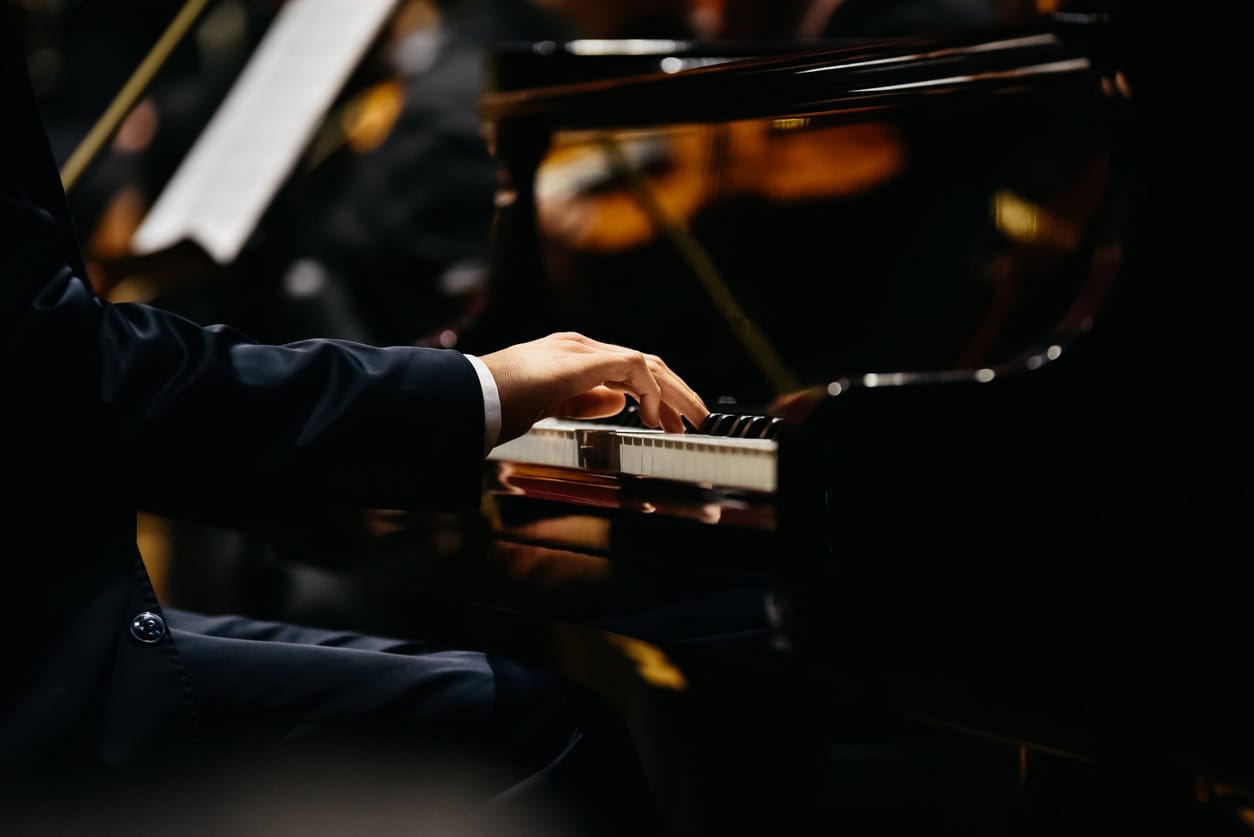
For those who continue to believe that these reflections on my part are antique, consider this. When one goes to a piano recital, one wants to be assured that the pianist has many advanced skills, honed over years and even decades. But that is taken for granted. That is not why one goes to hear and to see a particular pianist. One goes to be in the company of a certain kind of humanity, of graciousness, of generosity, of subtlety, of interpretation, of inter-connectiveness with the audience, of a will on their part to communicate. It’s not skills that mark out the great pianists but their human qualities and dispositions; their sheer being as a human being.
And the determination to corral all of this under the rubric of ‘skills’ is testimony to the loss of wisdom, care, concern, and empathy – for others in all their plights and for the whole Earth and all its non-human inhabitants – that is so vital for the whole life of this planet.
Note, too, that those skills on the part of the pianist were honed NOT through skills but through an assemblage of qualities and dispositions. One may have all the skills in the world, but unless they are accompanied by qualities and dispositions – not least the disposition to keep going forward in a difficult world – those skills count for nought. (I have spelt out all this at some length in some of my books.)
It is noticeable that in all the talk of skills, we see nothing of the skills of activism, of demonstration, of counter-insurgency, of contestation, of resistance and so forth – so vividly apparent in many of the student movements across the world. So, for all their apparent breadth in the playing up of skills, it is skills only of a certain kind that are sought; skills that seek to counter the dominant forces of the world are silenced. So there is a major interest structure behind the tilt to skills. It is far from neutral. It acts to serve and to heighten the already dominant interest structures in the world.
This is a desperately serious situation. At just the moment across the world that we need an expansion of human qualities and a recognition of the fundamental dispositions of human and educational life (and ‘qualities’ and ‘dispositions’ differ profoundly – see the arguments in my books – AND both are opposed to skills), we retreat behind technicism, roboticism, and electronic networks (which are totally opaque), which serve the interests of the great powers. (The AI corporations will not reveal the nature of their logarithms, so the whole notion of critical thinking is stymied – one cannot be fully critical of that which lies deliberately hidden.)
By the way, it is wrong to believe that the great powers have no interest in universities and higher education: they are bewitched by universities and higher education and seek to do all they can to corral them in their (the former’s) instrumental interests. This is why we are witnessing the abandonment of ‘critical thinking’ as a trope in higher education ‘debate’. (Just see how little it appears, if at all, in university websites.)
The world is in great difficulties, and higher education and universities are only aiding these movements in the abandonment of a language of qualities, dispositions, care, understanding, criticality, wisdom, carefulness and so on. (Again, ‘higher education’ and ‘university’ are different concepts, although they are treated as synonymous. Both are crucial but in being elided, we neglect the capacity of universities as sites of the formation of criticality in themselves, beyond the students’ study programmes.)
The current movements, if left uncontained, herald a new kind of techno-fascism descending onto higher education. This is a grave moment for the world: some universities are recognising the threat. but the situation is so serious that nothing short of a mass mobilisation of universities across the world – a counter-revolution indeed – is called for. I have been too gentle in my commentaries over the past 40 years – in playing the game, in negotiating, in epistemic ‘diplomacy’, in paying due attention to noises off. Perhaps a new kind of diplomacy, more strident, more assertive, is needed now.