
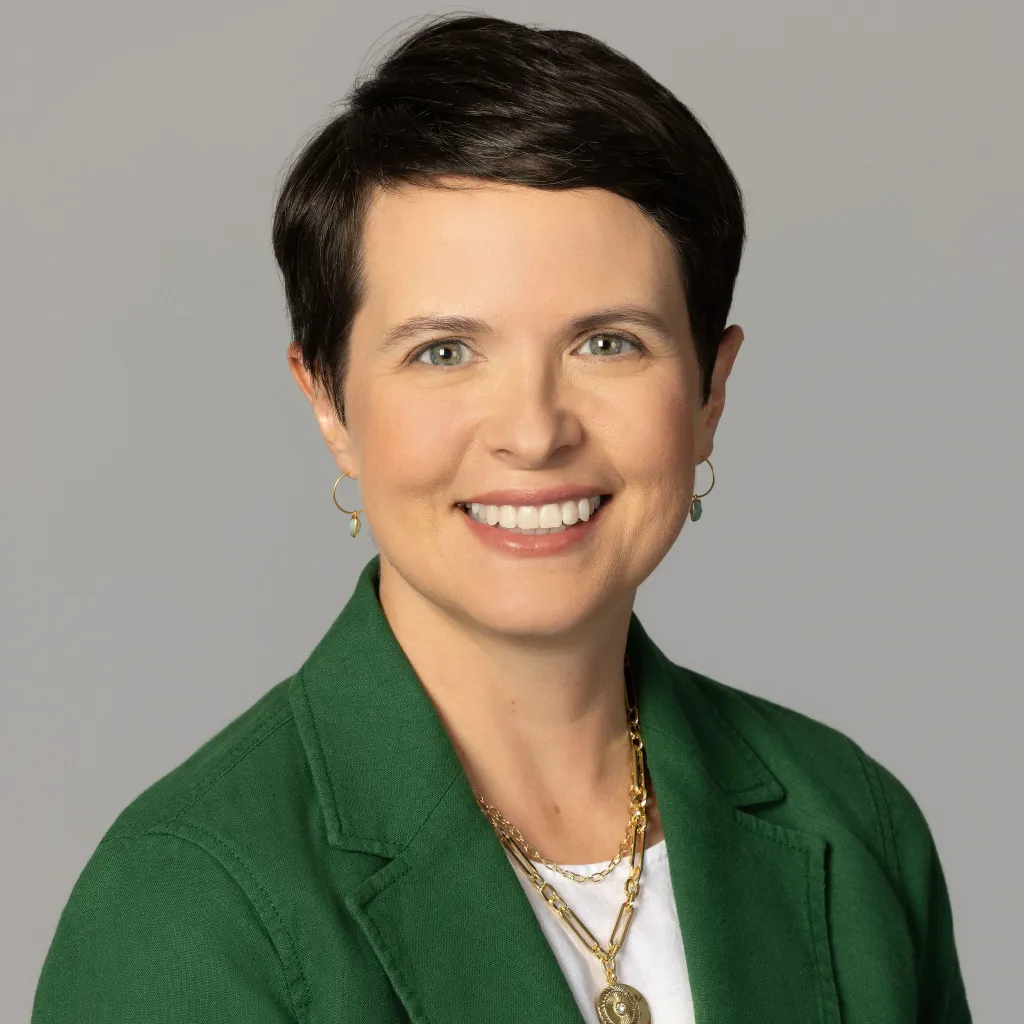
The research funding landscape has changed in 2025. Dr. Julia Barzyk of Wise Investigator returns to The Social Academic Podcast to talk about the state of funding in America and building a system of support for yourself as an academic.
What funding recommendations or approaches have shifted? What has stayed the same? Find out in How to Get Research Funding with Dr. Julia Barzyk on The Social Academic podcast with Jennifer van Alstyne.
3 Reasons for Hope in 2026
Quotes from the interview with Dr. Julia Barzyk
Community Resilience
“We’ve seen in this past year: the resilience of the research community. We’ve seen the shared values that we all have and there’s too many of us, there’s too much good work going on for that all to just be washed away.”
You Have Value
“The work that you’ve done is important… Even if some people now are telling you that it doesn’t have value, you know it has value, other people are going to recognize it has value.”
For Your Future
“We will come to a different equilibrium or a different state at some point in the future… there’s still a light at the end of the tunnel I believe.”
Interview
Jennifer van Alstyne: I’m back with Dr. Julia Barzyk of Wise Investigator, and this episode of The Social Academic is all about how to get research funding in 2025, in 2026. Things have changed and some things are the same too. Let’s start there. Julia, would you introduce yourself?
Julia Baryzk: Yeah, thanks Jennifer. I’m Julia Barzyk. My business is Wise Investigator. We help university researchers get funding from their research. Prior to doing what I do now, which I’ve been doing for going up on three years, but I was a program manager at the US Army Research Office, which is a major funding organization. I took what I learned over all of those years and applied that to create a program that helps faculty learn the hard and soft skills or the hidden curriculum of what they need to know to be successful in winning funding for their research.
Jennifer: Julia came on The Social Academic a couple of years ago where we talked about that hidden curriculum. For those of you who are catching the replay, check that out. But today, gosh, things have changed and the feelings about research funding this year are a little bit more fraught than in previous years. And so I’m curious, what changes are you seeing in the new funding landscape?
Julia: Well, like you said, it is more challenging. A lot of programs have been cut and there’s a lot of uncertainty about the future of programs that still exist and what direction the investments could go. One thing that I have been encouraging faculty to do, which I encourage them before this year as well, but is to consider a broad range of funders. So not to stay tied to a certain idea of, “Okay, I get funded by NSF,” or “I’m funded by NIH.” It’s always a good idea to consider a range of options and to reconsider those year to year or every six months. And so now we’re really seeing that payoff for people who’ve kept an open mind and for those who maybe had a little or more narrow view for them now to consider, “Okay, maybe it’s time to take a step back and try to get a wider view of what my opportunities could be,” because it is more challenging.
Subscribe to The Social Academic blog.
The form above subscribes you to new posts published on The Social Academic blog.
Want emails from Jennifer on building your online presence? Subscribe to her email list.
Looking for the podcast? Subscribe on Spotify.
Prefer to watch videos? Subscribe on YouTube.
Jennifer: I’ve met a lot of faculty researchers who are like, “All of my funding is NIH,” or “All of my funding is NSF.” And so I’m curious if you’re one of those people who’s been in that kind of continued funding trajectory, how do you start to branch out? Where do you even look if you’ve always thought that this is the place where your funding will come from.
Julia: At your institution, they should have some search tools. One could be called Pivot, another is Grant Forward. There’s many other tools out there, and so you can do a basic search there. Now that sounds very straightforward and basic, but a lot of people haven’t gotten to that in recent months. It’s just one of those things we know we should be doing, but it is important but not urgent. It doesn’t necessarily happen on a regular basis. Use your keywords, do a search there, click and see what’s available to you. And when you do a search like that, think broadly also there too because you might be scrolling through some results and you say, “Oh, that’s for a postdoc fellowship. I’m not going to click on that because I’m an assistant professor. I don’t want to apply for a postdoc.” But keep that open mind and maybe click on that anyway because you might learn something useful about, “Oh, this organization is doing work in this area.
They do have money to hire a postdoc. Yes, I’m not going to apply for a postdoc position, but there may be useful contact information in there.” Really do click on those results rather than go through and say, “Oh, that’s not me. That’s not me.” Another thing too after you do use a tool like that is just to go onto a regular search through Google or Chat GPT and just start entering in your terms and look for things that had been recently funded and look and see what comes up because you can get results there that are very helpful that may not be showing up on another search. It’s not really anything super sophisticated, it’s more just making sure you’re using the tools that you have on a regular basis.
Jennifer: Oh, okay, so a regular basis. Is there, every three months or every six months kind of thing that you recommend?
Julia: Definitely every three months. And if you can set up an alert through some of those software tools where they’re going to send you something every week or every month and just make sure that interval is deliberate. What’s going to work for you? Are you going to be overwhelmed if it’s sending you things daily or weekly? Might you prefer to get it once a month? So that’s just for you and your work style. Whatever works for you, do it more than once every six months, but check it regularly.
Jennifer: There are so many people who’ve lost their funding or maybe they received it, but the funds aren’t actually coming through. And so I’m curious for the people who are really feeling the anxiety, the frustration, the worry, the kind of stress that maybe they haven’t experienced when it comes to their funding before, what do you recommend for people who are feeling all the feelings?
Julia: Well, if they have experienced a loss of funding or an actual negative consequence rather than just having that fear because people can fall into either category. But to remember that they haven’t done anything wrong, first of all. They were in a research area or they are in a research area that they chose because that meant something to them. They also could have been driven towards that area because of previous calls, because in past years, certain applications were prioritized. People usually go into these areas for a variety of reasons or a confluence of reasons, something they care about, there’s a call for it. They were doing all the right things and they find themselves in women’s health. We hear many people who were driven to a career in that area throughout their lives because of something even in their childhood, etc. They haven’t done anything wrong, and it can feel discouraging of course, and even a person can question, have I done something wrong?
Like if they’re laid off from a job. Because it’s just such a traumatic experience really, that it’s only natural to feel like maybe we’re at fault in some way, but that’s not the case. That’s the first thing I think for those people who are discouraged and maybe facing some real consequences. Now to keep in mind beyond that, I can say this now that I’m in my late forties. This too shall pass. It’s definitely not to minimize anything that’s happening right now, but it will pass. We will come to a different equilibrium or a different state at some point in the future. We’ve seen in this past year the resilience of the research community. We’ve seen the shared values that we all have and there’s too many of us, there’s too much good work going on for that all to just be washed away. Certainly it is, it has been impacted, continue to be impacted, but there’s still a light at the end of the tunnel I believe.
So keep that in mind and that can be difficult if you’re early in your career and you haven’t had too many ups and downs and you feel like this is a really critical point of my career. Perhaps I’m on the job market for a faculty position, or I just got into one and I really need to ramp up. These things never come at a good time and it’s not going to be a good time for anybody, but keep in mind that it will pass and the work that you’ve done is important. Make sure you’re documenting that and recognize its value. Even if some people now are telling you that it doesn’t have value, you know it has value, other people are going to recognize it has value. Document your work, take the opportunity, share what you can about it through your own channels like we’re doing right now. We do have access to an audience or future colleagues, et cetera, collaborators that we can access ourselves. And you and I are both big advocates for taking advantage of the opportunities that social media and the internet, et cetera allows. While you may not have the success you’re looking for in winning funds for those topics right now, it doesn’t mean that you have to drop those topics completely.
Subscribe to The Social Academic blog.
The form above subscribes you to new posts published on The Social Academic blog.
Want emails from Jennifer on building your online presence? Subscribe to her email list.
Looking for the podcast? Subscribe on Spotify.
Prefer to watch videos? Subscribe on YouTube.
Jennifer: I guess that was really, you just answered the question that I think I was really wondering: do I need to change what I do? Do I need to pivot? Do I need to not just change my wording but change my trajectory? And it sounds like there’s a number of things that we can do now and documentation of what we have completed and what was important to us and what we care about and have shared with the world in various ways is something that we can do to advocate for the work that has already been done. But for people who are like, I have a sensitive research subject. Maybe it’s women’s health, maybe it’s trans health, maybe it’s something that’s really, the administration here in the United States is not funding. What kind of recommendation do you have for what’s next?
Julia: Well, two different ways it can go is, and this is not going to fit for everybody, but it would for some perhaps, is to think about what is the fundamental science, say we’re talking science here, or really fundamental question, to speak more broadly, that I want to address here. Because you may have been thinking about it in terms of the application because you care about the application, because the application area was a priority in the past, and there may be a more fundamental question that you can still work towards. For example, my career in geoscience, I saw all the different waves of, oh, we care about climate science now and now we don’t so much and now we care about it again. I got very used to encouraging researchers to say, “Hey, what is the fundamental question that you want to ask here? Keep the focus on that when you write your proposals.” And when you publish your papers later, of course you may want to highlight that this work has implications for what we know about climate change, but you could also write a paper that’s just more focused on, well, how is this surface absorbing heat and keep it more limited to that.
And without doing anything misleading, without misrepresenting your work, it’s just fundamental research that could stay more fundamental rather than focusing on the application. Because there were often people who understandably would read about, “Oh, the army cares about climate change now, so I’m going to come in and put these keywords in my proposal thinking that’s going to help me.” And when people do that, on the flip side you say, “Well, okay, does this person really know this topic? Are they just dropping in these buzzwords?” And if someone had gotten the habit of maybe leaning a bit that way, consider can I dial it back and just focus on the core of what I want to do? Now for some people that’s not going to be possible because the applications may be very intrinsically linked to the research, but for some it could be, so at least it involves or it should deserve some consideration. Also, going to the research office staff at your institution. They are going to be an excellent resource because they are keeping up on everything, the current climate and the current guidance and policies, et cetera, that they’re going to be able to guide you better than really anybody else in terms of a strategy of, ‘how I’m going to talk about my work.’
Jennifer: I guess that brings me to my next question, which is about talking about it. I have clients and there’s so many researchers around the world who are like, I am not only doing the research, but I’m wanting to advocate for it. I’m wanting to be more public about the way that I speak about it or to even speak on behalf of research funding here in America. How do you kind of find your comfort level, or are there mistakes to avoid when you are sharing more publicly?
Julia: Well, there’s not going to be a wrong answer, so it’s going to be very individual. And that’s just going to depend on how somebody feels personally about the issue, where they are in their career, how vulnerable of a situation they may be in, and they may feel one way on one day and then another way on the next day or the next week. And that’s totally fine. I think it’s wise for all of us to keep in mind how much we want to share that leans over into personal, and there’s not a wrong answer here, but for example, speaking of myself, I really want to help PIs, I want to help faculty. I feel that for me to put out on social media a lot of personal content, it’s not that I’m so shy or I don’t want to share, but I feel it detracts from the focus on the people that I’m trying to help.
So that’s not a political reason or anything like that. It’s just another strategy to say, “How can I stay focused on what my main message, what I want that to be and be deliberate about that.” People could use that kind of framework too, to say again, it’s not right or wrong, but do they want to have a presence online that’s focused pretty narrowly on a research topic or maybe something more broad or something in between? Anything is fine, but I guess it’s just being deliberate about that. And again, you can talk to your research office. If you feel the need to, you could ask to speak to an attorney at your institution because there are people who will be able to give you guidance. You shouldn’t, if you feel like you may be doing something risky, then ask an expert is my advice.
Subscribe to The Social Academic blog.
The form above subscribes you to new posts published on The Social Academic blog.
Want emails from Jennifer on building your online presence? Subscribe to her email list.
Looking for the podcast? Subscribe on Spotify.
Prefer to watch videos? Subscribe on YouTube.
Jennifer: Oh, I like that. And there are people at your university who will be able to help, even if they are not the right person, they can help you connect with the person who can maybe answer your questions. Do reach out and I would say that also the university isn’t always your friend. If you’re thinking that there’s something that is particularly controversial, you’re unsure whether it’s going to cause blowback or not, talk about it with some people that you do trust. Talk about it with some people that you feel comfortable telling you no or telling you what they think the consequences might be, because we don’t always consider that before something goes out. And I don’t want you to be on the flip side of a viral post that maybe wasn’t as important to you as you thought it was going to be when you first wrote it.
Yeah, intentionality is so important when it comes to sharing online. I’m also thinking about people who are like, “I’m happy to go on the news. I want to not just be a spokesperson for myself, but for research at my university.” And so reaching out to those offices, creating closer relationships with the people who work there could help you be the first person in line for opportunities like that because the university probably would love for more people who want to have that kind of platform and be a little bit more of, I want to say like a thought leader, but that’s not quite the right word, an advocate publicly. And so there’s ways that you can get training for it and support for it from those offices as well. That’s great. Thank you, Julia. I would love to hear more about Wise Investigator because it’s been a couple of years since we really caught up about all of the ways that you’re helping folks. And I know that you’re helping people with different types of funding as well. And so I guess my first question is, what types of funding are there for people to explore that they could maybe get support from you for?
Julia: Sure. The big one is the federal funders. That’s the one everybody thinks of first. And we have excellent coaches with expertise in a range of virtually all of the federal funders. The expertise is not limited to my expertise by any means, which is pretty heavy with Department of Defense, but we also have had clients win money from states and from foundations. The skills that we support the clients in acquiring are broadly applicable. We worked with a client in psychology and they won a foundation award. And that was from a foundation that none of us had ever worked with before, but we had success with that because once you acquire these skills and you know how to put a strong proposal together and you do the legwork on the front end of making the right connections. In this case, the client needed to find an official mentor to be part of that application and they did find someone using some of the strategies that we taught involving LinkedIn. And that was a success story from a client where we didn’t have experience with that particular funder. For anybody who’s looking to develop those foundational skills and they’re not coming in and saying, “I want to win this early career award.” They’re saying, “I want to have success with funding.” Then we’re going to take that step back with them. And of course we’re going to consider what have you tried, what’s worked, what’s not worked, what would be some good target opportunities for you? But it’s really stepping back, getting your vision straight, getting the lay of the land and just a really broad perspective on all the opportunities and then figuring out what’s going to work for me right now. Because for example, we sometimes have prospective clients or clients who are very interested in Department of Defense early career awards, and those opportunities are announced once a year, usually in the spring.
This time it was the summer, but during the time that we were waiting for the new announcement to come out, we had clients who submitted proposals to those funding organizations and got funded before the early career announcements came out. They didn’t get the early career award, but in both cases, well, in one case, the dollar amount was very similar to what the early career award offers and the other, I believe it was a tiny bit greater. These are big, big wins, and when you get a big win like that, nobody’s going to care, “Oh, it wasn’t the Young Investigator Program.” You got an award from a major funder for a lot of money, single PI. We don’t want to say, to just follow the guidance of someone who’s doesn’t really quite see the whole picture and say, “Oh, I’m going to wait until June to submit this proposal,” when there could be opportunities for you right now. You might even get a result before that announcement comes out in June, say.
Subscribe to The Social Academic blog.
The form above subscribes you to new posts published on The Social Academic blog.
Want emails from Jennifer on building your online presence? Subscribe to her email list.
Looking for the podcast? Subscribe on Spotify.
Prefer to watch videos? Subscribe on YouTube.
Jennifer: That is beautiful. And so I am curious, is it ever too early to start working with you and is it ever too late? Because I meet people who are postdocs that are applying to grants that are winning grants, and so I’m curious, when can we start being intentional about research funding?
Julia: Oh yeah. Well, we actually we’re able to support a couple clients with a new program that’s not really offered, advertised on my website, but this was a very abbreviated engagement because when people are in a postdoc position, the problem is they usually don’t have access to professional development funding. But we were able to help these individuals who were in postdoc type positions prepare for their interviews when they had gotten as far on their own, they got as far as being invited to these interviews for faculty positions. And then we came in right before those interviews and said, let’s work together for a few hours on learning what you want to tell these people when you’re in the interview. So that frankly, you sound like you know what you’re talking about. Because if you just go in and you say, “I’m going to apply to National Science Foundation.” Well, so is everybody else, and we all know what NSF is, and even around the world, people know what NSF is.
If you know about NSF and the couple programs that you may have even been funded by when you’re in grad school, yeah, that’s great, but when you can speak more deeply. In just a few hours by going through that search, which I told you about a little while ago, and not just kind of dumping that on the client, but walking through it with them to talk through it with them and say, “Okay, this is what this means.” Even for example, articulating an example of that timeline I just referenced with the early career award thing so that when these people go in for their interviews, they can say, “Well, I know this program usually runs on this type of timeline. It’s usually rolling. This one comes out around then, here’s the name of the program officer. I’ve already been in contact with them.” Then you’re sounding really mature in your knowledge and your view on things.
And compared to a candidate that might come in and just say, “I’m going to apply to NSF.” That person, the person who’s been briefed with all of this, it’s really just a couple hours of work because when you’re in that position, you don’t have to go through the whole process of applying for the funding. You’re just representing yourself as a knowledgeable participant in the process, which you are. So one of those people is still on the market. The other one was hired and started their new position and is a client in our full program. Because once they got into that role, they said, “Yeah, now I have startup funds. I want to do this program.” It is never too early. For the people who are still in a trainee position, I realize that funding can be an issue. It could be for the majority, it’s probably not,
but for some people there could be money within your institution to support you in a variety of different programs, including ours perhaps. It doesn’t hurt to start asking. Your PI could have money that they may be willing to support you on something like this. Just ask. And then of course, if you’ve been hired into a faculty position, then as soon as you can start learning this stuff, the better because why suffer for a few years in confusion and disappointment when you can, you know that you’re learning right from day one. I’m learning the information that I need and my career is worth it. I’m worth it to have this personalized support. it is never too soon or too late to get that support. We do support some clients who are tenured under a different kind of service arrangement, but the core are these assistant professors.
Jennifer: I think that is so powerful and an opportunity that I would say the vast majority of researchers just don’t know even exists or that it could be something that, especially for those on the job market, could benefit the way that they talk about the people in their field, the way that they’re going to engage with them and where the funding support for their research is already in their mind going to potentially come from. I think that is so fascinating. I’m really glad that we chatted about that because that program isn’t on your website, and I would love to do a blog post about some of the best uses for startup funds. I’m definitely going to include that. I love it. For the full program, I’m curious, most people it sounds like are getting university funds to cover that. Is that correct?
Julia: Yes. They either have their startup funds and if they’re coming in for engineering, they will have hundreds of thousands of dollars of startup funds. And at the time that we’re recording this, right now, the program is $6,500, which is a really excellent value because I work from a home office. Our team is working from their home offices. We don’t have any kind of real estate in the Washington, D.C. area or middle management or anything like that. All of the value goes right to our clients, and that’s why they get a very high value for the cost of the service.
Jennifer: I love it.
Julia: That can be covered easily if they have, say a typical engineering startup package. Now, if they’re at a teaching university, they may well not have that kind of a startup package at all. They may have a $5,000 startup package.
We’ve been able to help clients in that situation. They have gotten money from elsewhere in their institution. Even a smaller school will be able to foot the bill for something that’s less than $10,000 because that is a small amount of money to these universities, even to the smaller schools.
Jennifer: Can you repeat that for everyone?
Julia: Yeah. It’s a small amount of money for these institutions. It really is. And that’s not, again, to minimize that they are under some budgetary constraints. All the institutions right now, and they’re taking those circumstances very seriously as they should. But there is still money being spent. There is still money going out the door. And this is another important point too, is that when people come into these positions and they have access to money, either startup funds or some other professional development funds, my advice is to really spend that money.
That is not your money. That’s the university’s money. When I was managing a program for the government, it was easy for people to say, “My program, my program.” Well, that was not my money. It was the taxpayers’ money. Or you could say it was the Army’s money, but that money needs to be spent. And so if they have conferences they want to commit to or flights they can book or they can get a pay upfront for a package of editing services and any kind of professional development support like that, they could be setting themselves up so if the university says, “Oh, we’re going to put a hold on travel spend or we’re going to require some new approvals for you to spend these funds,” you might have already been able to secure some support. It’s definitely a different strategy than managing your personal finances where the more savings, the better. The money was meant to be invested in you. It’s not just meant to be stockpiled.
Subscribe to The Social Academic blog.
The form above subscribes you to new posts published on The Social Academic blog.
Want emails from Jennifer on building your online presence? Subscribe to her email list.
Looking for the podcast? Subscribe on Spotify.
Prefer to watch videos? Subscribe on YouTube.
Jennifer: I really appreciate that. And I have received emails from so many people that are like, I have X number of weeks to spend the rest of my startup funds. Can I do website? And I’m always like, yes, but also usually that setup takes a little while, so let’s get started right now. And so thinking about that early, thinking about that when you’re accepting your position, thinking about that when you’re getting started and knowing that Wise Investigator is able to help you with the research funding aspect of your career. This is super powerful. lI’m so glad that we got to chat about all the research funding things. Any other tips or tidbits? Do you have a message to share with people who are seeking research funding this year?
Julia: Well, I would say that it’s always a good idea to get support, whether that’s from your research office, whether it’s from our business or another consultant. And one of the most interesting observations related to that I’ve made over the last couple of years is I may have, say on a given day, perhaps I have two calls with prospective clients, and one of them will be in a difficult situation and they might be describing a plan that from what I hear in those 30 to 40 minutes that we’re chatting does not sound fully on track to me, right? I’m saying, I don’t know. This isn’t really adding up. They’re talking about putting a lot of time into writing a proposal that maybe isn’t the best fit or they’re not ready for right now. And then in the same day, I may talk to another individual who says, I just won the NSF career award, or I just had this big success and yeah, I’d like to hear about what you do. And then in the coming weeks when people are making a decision, do they want to take this support? The person who’s having the more success is the one who enrolls in the program.
We are very grateful to be able to support those clients who are already having success. But it also can break my heart a little bit because I know that this other person is really in need of a course correction, and I know that we can help there, but I think a lot of it is the mindset that a person is in towards getting support. And I understand because of how I was raised and the culture that I grew up in, it had a lot of self-reliance, was a big virtue say. The idea was you should be able to do these things yourself. You’re competent. You have maybe a PhD and you’ve done this before. I’m talking about making the websites. Well, you can code or you can put slides together, so why couldn’t you put a website together? And it’s like, yeah, in isolation, sure.
If somebody had four to six weeks on their own with nothing else to do, they probably could put something nice together. But we’re in the real world here. And that’s something that I would like to encourage anybody who’s listening and they’re saying, I feel like I have to do this all on my own. It’s kind of a badge of honor, or I’m not getting the result that I want, but I feel like if I just keep pushing and doing the same thing, things will change. Those are kind of the red flags to alert you maybe a course a correction is in order. And the people who are getting this help are people who are already having a lot of success and they want to continue.
Jennifer: That really reminds me of my clients. I mean, I definitely have people who are like, “I don’t have anything and I’m not going to do it myself. Please do it for me.” But a lot of the people who come to me for websites, they’re already career academics. They already have won their grants and their awards and published books, and they’re realizing, “Oh wait, I need to share all of this cool stuff that I’ve done because actually it’s kind of all scattered around the internet.” And I love working with folks like that, but I really wish that people wouldn’t wait until they have so much to share because we can build this over time. It doesn’t need to be perfect when it launches. It doesn’t need to be exactly the way it’s going to be forever because frankly, that probably is no longer going to be representative of you in 2, 4, 6 years from now.
And I always think of websites as this could be with you for a lifetime if that’s something that’s beneficial for you. I love when people are like, this is something that is part of me and how people will get to know me for years to come, but there’s so much feeling like I need to do this myself. I should be able to do this myself. I should make the time to do this myself. And the truth is it’s so much easier, faster, and more beneficial for you when you don’t do it yourself. I mean, if you want to do it yourself, please, by all means do. I’m cheering you on, but there’s things that we can get support on and asking for help, being open to receiving support is number one. What are some other tips for that? Because you mentioned that growing up support was, self-reliance was really a value for, it sounds like your family, whereas for me, asking for help was definitely, you should always reach out to the community. And so I feel like we had maybe opposite recommendations and I’m curious what that means for how you think faculty should seek support on their campus for research funding.
Julia: Well, I think if they look at their situation with a bit more of an entrepreneurial mindset, then you can maybe sidestep some of that cultural conditioning or how we were brought up and say, “Look, I have my own little business here.” And what do you need to be successful in business is you need leverage and leveraging the skills of others and the time that others can invest in your work. That’s huge. So perhaps stepping out of that, is it right or is it wrong? And just saying, I’m in charge of a small team now. Perhaps it’s just one or two students and my lab space that I’m still getting set up, but it’s going to grow. And even if it remains to be a small operation, it’s still your little operation. That is a mature mindset to say, “I realize I can’t do everything. I don’t want to do everything and I’m going to make the most of the resources that are available to me and kind of step away from a moralistic or values driven approach,” because we’re all going to come to that with a lot of subjectivity and just baggage from cultural conditioning and stuff like that.
Jennifer: Exactly. Julia, this has been a great conversation and I’m going to continue to send people your way for Wise Investigator support for research funding. Is there anything else you’d like to add before we wrap up today?
Julia: I’m going to give one little tactical piece I wanted to mention. When people are rewriting different sections of their proposal, perhaps like a broader impacts, it can be very challenging to know what language to use right now. And for someone like me and you, we have facility with language, we like writing, we were raised in the US so we followed the cultural trends over the years. And so we understand at a core level when someone hears a word or a phrase like social justice or diversity versus low income or first generation college student or things like that, these all have certain connotations that can be in favor or out of favor. And it could be very difficult for many PIs to understand, I’m going to use air quotes here, but which are the good words or loud things now or not.
If you are feeling like you don’t understand that kind of language, that is normal because there’s a lot of nuance, there’s a lot of history behind these terms, and there’s a lot associated with them, so just ask again the research office. Don’t submit things where you feel like, “Oh, I just revised this broader impact section and now I think it’s aligned with how they want it now.” Really, even if I were writing something like that, and I consider myself very well versed in these terms, I would still send that to another person and say, please just do the reality check here and see how this reads because it would be a real shame to do all this work on a proposal. You have this one section that you went in alone on and you’re misusing terms that you don’t fully understand. That’s a little tactical piece. Don’t feel like you should understand all of that. Ask somebody for help, and they will guide you towards expressing what you want to express in the most neutral and honest language that you can.
Jennifer: How long does that take? Because I feel like there’s a lot of last minute proposal writers, and so I’m curious how much time should you reach out in advance to make sure that research office has a chance to review it and get back to you?
Julia: Yeah, it doesn’t take long, but it takes forethought. If you can just get that to them, say two weeks before your internal deadline, then they’re not going to need a lot of time to help you. But when you’re sending that Friday at 11:00 AM or something and people are headed home for the weekend and you’re hoping you have this back Monday, then that’s very difficult. A lot of these things, it’s not a big deal, but you’ve got to get it to somebody ahead of time. that might be a case where you say, “Oh, normally I get to this section at the end and I already have something kind of written. Instead of just starting in on the project narrative or description right now, why don’t I just paste this part out to copy this part out, paste it in an email, send it over to my research office and let them work on it,” while you’re working on the other part.
Jennifer: I love it. This has been so actionable, full of valuable advice. I can’t wait to share it across social media and the newsletter. For everyone who’s listening, please go connect with Julia Barzyk. She has an amazing free newsletter about research funding. I’m going to drop the link in the chat. Thank you all for being here. I’m Jennifer van Alstyne, and this has been The Social Academic.
Julia: Thank you.
Subscribe to The Social Academic blog.
The form above subscribes you to new posts published on The Social Academic blog.
Want emails from Jennifer on building your online presence? Subscribe to her email list.
Looking for the podcast? Subscribe on Spotify.
Prefer to watch videos? Subscribe on YouTube.
Bio
Julia Barzyk is a former program manager at a major federal funding organization and the founder of Wise Investigator, where she and her team of coaches help early-career faculty win single-investigator awards. Through individualized, one-on-one coaching that demystifies the “hidden curriculum” of the funding process, their clients have secured $6M+ in federal, state, and foundation support in just over two years. Seventy-five percent are funded within 18 months, with an average award of $365K. Julia’s insider perspective, combined with her team’s breadth and depth of expertise and hands-on support, drives the program’s results.