This guest blog was kindly authored by Dr Charlotte Ryland, Director of the Translation Exchange.
‘Languages are not just a skillset, they’re a mindset.’
I still remember where I was when a teacher friend made this comment, a few years ago, because it highlighted something I’d been worrying at for a long time. I felt that languages education for young learners undervalued the process of language learning itself, by underrating what it means to be a linguist. That value needed to be completely reframed: to move far beyond the notion that language learning gives you a set of useful communicative skills – the ‘utility argument’ – towards a more holistic and ambitious vision of the linguist’s mindset.
Fast forward to this summer, and a HEPI report by Megan Bowler highlighted a programme that I co-founded as doing just that: ‘[Think Like a Linguist offers] 12-13 year olds clear demonstrations of the value of a linguistic “mindset” and its real-world applications’.
That notion of the ‘real-world application’ is essential to how we think and talk about language learning and needs unpicking. I founded a languages outreach and advocacy centre (based at The Queen’s College, Oxford) because I was frustrated by existing languages outreach mechanisms run by universities. This frustration came in part from what I perceived as an over-emphasis on precisely those ‘real-world applications’: the outreach programmes I encountered tended to rely heavily on imagined futures – Keep learning your vocab and practising your grammar, then you’ll see! A life of travel, international business careers, slightly higher salaries awaits you! Yet this approach did not seem to be working for the year groups whose minds needed to be changed.
The cliff-edge for languages – in England and Wales – is now GCSE options, with over 50% of pupils opting out at the age of 13/14, i.e. at their first opportunity to do so. Languages presents university outreach with a special case, then: with a need to engage much younger learners than has traditionally been the case. Ideally, we start at upper primary and focus on lower secondary school learners, before pupils begin to think seriously about their GCSE options. My approach to working with this demographic has been to take a ‘show, not tell’ approach – to involve learners from age 8 in rich, creative, cultural activities that enable them to experience first-hand the pleasure and purpose of being a linguist.
That focus on showing is key to how we should treat the real-world applications, too. It is not enough to give pupils a learning experience based solely on communicative skills, while trying to tell them that this education will secure them a good job in our competitive, AI-soaked 21st-century economy. They don’t buy it, and the uptake statistics for formal language learning bear this out. Instead, we need to show those learners how relevant and in-demand the ‘linguistic mindset’ they develop will be, by integrating into the learning experience the broadest conception of what it means to be a linguist.
Higher Education institutions can do this. And they’ll do so much more effectively if they work together. They have access to a huge community of language graduates, who have between them generations of experience in the widest range of professions. With this community, the broadest conception of the linguistic mindset becomes tangible. In my experience, it falls into your lap the minute you ask one of these graduates about the impact of their languages education on their career path and life experience.
A standard response runs like this: they move quickly through the frontline benefits around communication in other languages – taking them as a given – and light instead on what Bowler refers to as ‘the irreplaceable advantages of the “linguistic mindset”’. For a lawyer, it includes the capacity to cope with frustration, to tolerate and work through uncertainty; for a consultant, it is being able to build trusted relationships and read between the lines. A civil servant might reference their ability to synthesise and analyse a large amount of information, seeking out potential biases and multiple perspectives. The list goes on and is underlined by the striking words of a 13-year-old participant in Think Like a Linguist: ‘I learnt that there is more to languages than speaking and listening. It’s also about thinking in your own way.’
If we have access to a form of education that stands to raise a generation of individuals able to think for themselves, and to do so on the global stage, then what are we waiting for?
The readiness of languages graduates to share these insights is one of the sector’s greatest assets. We need a national conversation about the value of languages for individuals and for society, fuelled by these stories and taking full account of the challenges currently being set us by AI. Duolingo have set us on an excellent path, with evidence in their user statistics and polling that the UK is a country of languages enthusiasts. As Duolingo’s UK Director Michael Lynas notes in his introduction to Bowler’s report, we need not be dogged by the negativity that often frames conversations about languages: instead, we must build on the tangible positives.
For this national conversation to make an impact, collaboration will be key. Shared learning from effective university outreach programmes to date can provide a basis for this conversation. And The Languages Gateway, a new cross-sector initiative dedicated to collating resources and supporting strategic collaboration, can host it. Further backing for this national conversation from higher education institutions and central government will support the Gateway in its work to raise the national profile of languages to where it belongs: delivering ‘irreplaceable’ value to 21st-century global Britain.
Of all the current headwinds faced by the higher education sector, one of the most challenging is a lack of expertise and experience in the area of structural change.
In an environment where radical collaboration and merger are increasingly seen – rightly or wrongly – as a solution to the sector’s financial challenges, the expertise needed to broker and execute a successful merger or other collaboration seems to be patchy.
As, arguably, are the somewhat different competences required to steward the longer term strategic integration of two or more distinct institutions, each with their own teaching and research portfolios and cultures. The answer to the question “who has done this before?” can only be answered in the affirmative by a handful of people.
This issue was acknowledged in Mills & Reeve’s joint report with Wonkhe Connect More with the following insight from a one of the heads of institution we interviewed:
We all have a skills matrix for boards and for courts and for councils. I think, increasingly, that needs to reflect people who’ve got some expertise and some background in this space…I don’t think there are many vice chancellors who would necessarily have the skills, the knowledge, and the background. Really, this is new territory, potentially, for us, it’s new turf.
Of course, it wasn’t always thus. One of the ironies of the current dearth of experience is that large numbers of providers are themselves the product of historic mergers and collaborations. Taking the long view, the history of many providers is a complex genealogy, a narrative of mergers past and more recent.
In part, the steady decline in institutional experience of these things was the natural result of a relatively benign financial environment. It’s easy to forget in the current climate but the period of low inflation and cheap borrowing meant that, at an institutional level, there was little impetus to challenge the operating model and, of course, the introduction of a marketised funding model meant that competition, rather than collaboration, was very much the order of the day.
That marketised model was also accompanied by a marked shift in approach from the regulator. While HEFCE adopted a relatively low-key approach to mergers and collaboration – generally leaving the impetus to come together to institutions themselves – it did publish guidance on mergers and had a collaboration and restructuring fund to assist institutions to explore and implement structural change.
Crucially, HEFCE was widely accepted to be a neutral broker who would help facilitate institutions coming together – and it had the funding to help smooth the path. By contrast, OfS, in its response to a question from the House of Lords Industry and Regulators Committee, made it clear that it does not consider itself to have “the remit, powers or funding to intervene to prevent closure or to facilitate mergers or acquisitions.”
Skills gap
Where, then, does that leave providers? Typically, there is a reliance on the institution’s executive team, in particular, the vice chancellor, to steer the merger. But most higher education executives are not from the business world with experience in mergers and to a significant degree they have a conflict of interest. There is also a need to continue with their day jobs and manage business as usual in case the merger doesn’t happen.
The next most obvious port of call is to look for expertise among their own governing bodies, and, specifically, their external members. After all, one of the main motivations of having lay external members is to draw upon their expertise and to fill gaps which (understandably enough) exist within the skill sets of senior management teams and the institution more widely.
The problem, however, is that merger and radical collaboration require a very particular set of skills. It’s very easy for universities to get starry-eyed about a governor just because they happen to be an investment banker, an accountant, or have experience of public sector mergers in the NHS, for example. But the skills required in a university merger or a complex debt restructuring are very specific and even a governing body which is well-stocked with members from across different professional services and backgrounds cannot assume that its trustees have the requisite expertise to drive forward a merger of two institutions.
Of course, an institution can buy in a certain level of expertise. But what perhaps can’t always be replicated by professional advice are the experience and war stories of those who have lived and breathed mergers and collaborations from the inside – particularly from the education and adjacent sectors. In Mills & Reeve’s joint report with KPMG UK – Radical collaboration: a playbook – we drew out some of those lived experiences in the form of case studies. However, written case studies need to be seasoned with real-life personal experience. What is really needed when scoping a potential merger or other kind of radical collaboration is access to a “hive mind” of critical friends.
An HE Commissioner model
Other sectors have taken a strategic approach to developing this expertise. The Further Education Commissioner is the most obvious parallel. Between 2015 and 2019 the FE sector saw 57 mergers, three federations, three joint FE and HE institutions and 23 academy conversions. If most of UK higher education no longer has institutional memory of mergers, FE has it in bucket loads.
The FE Commissioner and their team offer a range of services to FE colleges – ranging from informal chats and financial health checks, through to more formal invention assessments. Their team – a mix of former leaders and finance professionals from within the sector – have genuinely seen and done it all before. Higher education deserves the same deep pool of knowledge to draw on, especially if the worst case scenario of institutional insolvency and/or disorderly market exit is to be avoided.
For this to work successfully in HE there would need to be some level of funding and a decision as to whether a commissioner’s role might sit within DfE or OfS. Our sense – particularly given the size and complexity of universities and the involvement of key stakeholders such as banks and private placement bondholders – is that there will still be a large role played by private sector consultants, lawyers, and accountants. However, there is room for a more collegiate level of engagement from DfE and OfS than arguably exists at present.
As well as pooling expertise on how to collaborate, placing an HE commissioner role on a formal footing might also allow it to broker conversations between providers seeking to work together more closely – something which, in our experience, is done very hesitantly at present, both because of the fear of breaching competition rules and, more generally, because every potential collaboration partner is, in a very real sense, also a competitor.
What can’t be underestimated is how urgently this function is needed. Providers are capable of doing this alone, as recent examples such as the Anglia Ruskin/Writtle and St George’s/City mergers testify. However, how much better for the long-term future of the sector it would surely be if providers had ready access to some critical friends and some “protected” spaces to have conversations about how best to achieve and implement forms of radical collaboration.
This article is published in association with Mills & Reeve.
Creating online courses that truly engage learners is no small feat. That’s why the iSpring Course Creation Contest has become such an exciting platform for educators, students, and learning professionals in Australia and around the globe. It’s more than a competition, it’s a hands-on, skill-building experience that inspires creativity, encourages collaboration, and gives participants the chance to shine.
This year, the contest attracted 1,097 applications from 100 countries, culminating in 109 impressive final projects. The contest offered a practical way for newcomers, considering their career in ID design, to explore iSpring Suite, a powerful authoring tool for building slide-based and scrollable courses. Participants went through an intensive onboarding program to learn not only how to use the software, but also how to craft courses that are interactive, visually compelling, and pedagogically sound.
For students and educators in Australia, especially those enrolled in instructional design programs, this kind of hands-on experience is a real advantage. It helps them build the practical skills and confidence needed to excel in a field that’s rapidly growing and evolving.
Learning Through Collaboration
One of the most exciting aspects of the contest was the community. Participants weren’t working in isolation, they received guidance from past winners and expert judges, including industry leaders: Nicole Lugara, Clark Quinn, David Kelly, Holly Owens, Mike Taylor, Robin Sargent, and ten other experts. This feedback helped participants refine their projects and grow their skills.
The collaborative environment encouraged participants to exchange ideas, discuss challenges, and learn from one another that mirrored the real-world teamwork existing in instructional design.
Demonstrating Creativity and Skills
Contestants could create content in two categories: slide-based courses and scrollable courses. They were evaluated on learning objectives, content consistency, design, learner engagement, compliance, and creativity.
Celebrating the Winners
Here are the winners in both categories and a glimpse of their outstanding work:
Winners in the slide-based course category
Winners in the scrollable course category
These projects showcase creativity, technical skill, and a deep understanding of instructional design — one of the most in-demand skills in today’s era of digital education. They prove that great ideas, when paired with the right tools, can turn learning into an engaging and impactful experience.
Winners not only received cash prizes and certificates, but also recognition that strengthens their professional portfolios and encourages others to join and explore the new field of eLearning.
Learning That Lasts Beyond the Contest
The iSpring contest isn’t just a one-time event — it’s a launchpad for ongoing professional growth. From live Q&A sessions to structured training and expert feedback, participants gained insights and skills they can apply long after the competition ends. For educators and students alike, this kind of practical experience is invaluable in a world where online learning and instructional technology are constantly evolving.
Your Turn to Shine
If you’re ready to explore new tools, strengthen your instructional design skills, and connect with a global eLearning community, start your journey with a free trial of iSpring Suite. Whether it’s building your first course or taking your portfolio to the next level, the next contest is just around the corner, and it’s your chance to shine.
Create, connect, and inspire, because the future of online learning is waiting for bold ideas like yours.
The U.S. Department of Education has terminated nearly every employee in the Office of Special Education and Rehabilitative Services in a sweeping wave of layoffs that began Friday, according to the union representing agency staff—a move that advocates say will devastate services for millions of students with disabilities.
While the agency has not provided official numbers, reports from staff and managers indicate that most employees below the leadership level in the division were eliminated, said Rachel Gittleman, president of the American Federation of Government Employees Local 252. Employees in the college access program known as TRIO, housed in a different office, were also let go.
The union has challenged the firings in court, arguing they “double down on the harm to K-12 students and schools across the country,” Gittleman told USA TODAY.
Education Department spokespeople did not respond to requests for comment. However, Education Secretary Linda McMahon has previously stated that safeguarding students with disabilities and ensuring their access to legally mandated educational resources is a top priority. “I would like to see even more funding go to the states for that,” she told CNN in March.
In a Friday court filing, the Justice Department confirmed that more than 460 Education Department employees had been laid off, cutting roughly one-fifth of the agency’s workforce. The terminations, which have affected more than half a dozen federal agencies, are part of a broader Trump administration effort to pressure congressional Democrats to end the ongoing government shutdown. Nearly 90% of the Education Department remains furloughed.
The agency eliminated nearly every employee responsible for administering funding under the Individuals with Disabilities Education Act (IDEA)—the primary federal law supporting students with disabilities. The staffer expressed uncertainty about how these programs will continue to function.
Secretary McMahon has suggested that oversight of IDEA funding might be better positioned within the Department of Health and Human Services rather than at the Education Department, though officially moving it would require congressional action.
The mass firings have drawn sharp criticism from education equity advocates who warn of dire consequences for vulnerable students.
“The Trump administration’s attack on public education continued this weekend as students with disabilities are at risk of losing the services, supports, and oversight that protect their civil rights,” said Denise Forte, president and CEO of The Education Trust.
“The administration’s unfathomable decision to fire all employees who administer the Individuals with Disabilities Education Act (IDEA) abandons the 7.5 million students with disabilities and their families,” Forte continued. “Roughly 15% of public school students have a disability, and federal enforcement of IDEA is crucial to ensuring that these students receive a free and appropriate public education.”
Forte said that the layoffs will have particularly significant consequences for students of color with disabilities, who already face greater barriers to accessing services and are subjected to disproportionately harsher discipline.
“This is a direct assault on all parents of and students with disabilities and all students and families who know that an excellent education system is a diverse and inclusive one,” Forte said. “I call on the Trump administration to reverse these cuts immediately.”
The firings come amid widespread disruption across the Education Department, which has also experienced problems with financial aid administration following earlier rounds of layoffs.
Ireland is quickly becoming one of the world’s most attractive destinations for international students. The changing global landscape, coupled with a shift in focus away from the big four, has allowed Ireland to come to the fore as an exciting option for those considering studying overseas.
With its thriving tech ecosystem, progressive visa policies, and competitive education costs, Ireland is positioning itself as a smart and strategic alternative to traditional study hubs like the US and the UK.
Leading in tech-focused growth
Ireland’s reputation as Europe’s Silicon Valley is drawing growing numbers of students seeking cutting-edge degrees in technology, science, and innovation. As digital transformation accelerates, Ireland’s universities have evolved their programmes to meet future job market demands. For students aspiring to work in AI, cybersecurity, or data science, Ireland’s blend of academic excellence and industry access has become a clear competitive advantage.
Visa and immigration: the competitive edge
While traditional destinations such as the US and UK experience policy slowdowns and increased visa scrutiny, Ireland is seizing the opportunity to attract globally mobile talent.
Ireland has the upper hand on the UK, as recent policy shifts, such as restrictions on student dependents, proposed 6% levy being passed onto international students and reduction of the Graduate Visa from two years to 18 months, have cast uncertainty on whether the UK will provide accessible opportunities and pathways into employment after graduation.
A recent example of this in action came last week, as many international students had been accepted on courses provided by University College London but were left in limbo for nearly a week, having paid thousands of pounds in costs and sought visa and immigration expertise to manage their application as the number of places available had reached capacity.
While the Home Office granted expedited approval of the visas, caps on international student numbers and additional layers of uncertainty and complication elsewhere could be contributing to Ireland recording the highest ever enrolment level of international students in 2024.
Ireland has the upper hand on the UK, as recent policy shifts, such as restrictions on student dependents… have cast uncertainty on whether the UK will provide accessible opportunities and pathways into employment after graduation
Attesting to this, in 2024, the number of international students from India fell in Canada, the US and by approximately 30% in the UK. Conversely, Ireland has gone from strength to strength, with enrolment figures growing by nearly 50% between 2023 and 2024, making it one of the fastest-growing destinations for Indian students to gain a degree overseas.
As an outlier in the context of the traditional big four study destinations, Ireland offers a streamlined and accessible visa system. Students who complete their degrees can apply for a two-year post-study work visa, allowing them to gain valuable professional experience and explore long-term career opportunities.
Equally appealing is Ireland’s open approach to international enrolment; there are no restrictive quotas or caps on overseas student numbers, meaning that those with the right qualifications have a genuine opportunity to study and build their future in Ireland.
Career opportunities and cost-effective education
According to the 2025 Report on Studying in Ireland, students from mainland China now make up 10.9% of Ireland’s international student body, making China the third-largest source country. The report credited Ireland with being preferential to Chinese students, its university diplomas are globally recognised, while 55% are drawn by strong work visa policies and a thriving job market.
Adding to its appeal, Ireland offers a more cost-effective pathway to a world-class education. With average tuition and living expenses ranging between €30,000–€40,000 per year, roughly 30-40% lower than in the US or UK, Ireland provides access to prestigious universities and globally recognised qualifications without the financial barriers often associated with other leading destinations.
What is next for Ireland? Expanding Ireland’s global footprint
There has been a clear pursuit over the past 18 months from UK universities towards setting up international hubs and campuses across Asia and Middle East to recuperate costs from the fall of international students, a bid to develop new global partnerships and retain prestige.
While demand from international students is not waning in Ireland, will institutions embrace similar strategic moves to explore ways to strengthen their global? UK universities such as the University of Southampton have opened a campus in Delhi, and earlier in 2025, Northern Ireland’s Queen’s University Belfast was approved by regulators to open a branch campus in India.
Ireland has begun to make moves in this area, with the Technological University of the Shannon opening student liaison offices in Asia, Africa, and Latin America in 2021 to increase student recruitment.
As Ireland strengthens its position as a destination for global talent, the natural next step may be for its institutions to expand their presence overseas, ensuring the country’s influence in higher education continues to grow well beyond its borders.
The PIE Live Ireland is being held on October 14. Secure your tickets now.
Two American academics were among the three winners of this year’s Sveriges Riksbank Prize in Economic Sciences in Memory of Alfred Nobel. They were given the prestigious award “for having explained innovation-driven economic growth,” the Royal Swedish Academy of Sciences announced Monday morning.
Joel Mokyr, the Robert H. Strotz Professor of Economics at Northwestern University, will receive half the roughly $1.6 million prize “for having identified the prerequisites for sustained growth through technological progress,” according to the announcement.
Peter Howitt, a professor emeritus of economics at Brown University, will split the other half of the award money with Philippe Aghion of Collège de France and INSEAD and the London School of Economics and Political Science, “for the theory of sustained growth through creative destruction.”
“The laureates’ work shows that economic growth cannot be taken for granted,” said John Hassler, chair of the committee for the Prize in Economic Sciences. “We must uphold the mechanisms that underlie creative destruction, so that we do not fall back into stagnation.”
By Dean Hoke, October 13, 2025 – In the small towns of America, where factories have closed and downtowns often stand half-empty, a small college can be the heartbeat that keeps a community alive. These institutions—sometimes enrolling only a few hundred students—serve as economic anchors, cultural centers, and symbols of hope for regions that might otherwise face decline.
From the farmlands of Indiana to the mountain towns of Appalachia, small colleges generate economic energy far beyond their campus gates. They attract students, faculty, and visitors, stimulate local business, and provide the trained workforce that rural economies desperately need. They also embody something deeper: a sense of identity and connection that sustains civic life.
Economic Impact: Anchors in Fragile Economies
Small colleges are powerful, if often overlooked, economic engines. Their presence is felt in every paycheck, every restaurant filled with students and parents, and every local business that relies on their purchasing power.
Across the United States, nearly half of all public four-year colleges, over half of all public two-year colleges, and a third of private four-year colleges make up the 1,100 rural-serving institutions as identified by the Alliance for Research on Regional Colleges (ARRC). These colleges educate 1.6 million students, accounting for more than a quarter of total U.S. enrollments. Yet their role extends far beyond classrooms and degrees.
Rural-serving institutions are frequently among the largest employers in their counties, especially where other industries have faded. In areas where 35% or more of working-age adults are unemployed, 83% of local colleges are rural-serving, making them pillars of economic stability. Unlike large universities in metropolitan areas, their spending is highly localized—on utilities, food service, maintenance, and partnerships with small vendors.
Economic models underscore their importance. The Brookings Institution found that high-performing four-year colleges contribute roughly $265,000 more per student to local economies than lower-performing institutions, while two-year colleges add about $184,000. In many rural towns, every institutional dollar recirculates multiple times, magnifying its effect.
Beyond direct payroll and procurement, small colleges attract outside dollars. Students and visitors rent housing, dine locally, and shop downtown. Athletic events, alumni weekends, and summer programs bring tourists who fill hotels and restaurants. The IMPLAN consulting group estimated that when a college closes, the average regional loss equals 265 jobs, $14 million in labor income, and $32 million in total economic output—a devastating hit in thin rural economies.
Human Capital and Workforce Development
If small colleges are the economic engines of rural communities, they are also the primary producers of human capital. They educate the teachers, nurses, business owners, and civic leaders who sustain local life.
The Federal Reserve Bank of Richmond describes community colleges as “anchor institutions” that shape regional labor markets. Many partner with local employers to design training programs that meet specific workforce needs—often at minimal cost to businesses. In one case study, a rural college collaborated with an advanced manufacturing firm to tailor instruction for machine technicians, ensuring a steady local labor supply and convincing the company to expand rather than relocate.
Rural-serving colleges are also critical in addressing educational disparities. Only 22% of rural adults hold a bachelor’s degree, compared with 37% of non-rural Americans. This gap translates directly into income inequality: according to the U.S. Department of Agriculture’s Economic Research Service, nonmetro workers with a bachelor’s degree earned a median of $52,837 in 2023, compared with substantially higher earnings for their urban counterparts. In states such as Indiana, Ohio, and Pennsylvania, rural degree attainment lags 10 to 15 percentage points behind state averages.
Beyond Economics: RSIs as Equity Infrastructure
Rural-serving institutions are more than economic engines—they are critical equity infrastructure, often providing the only realistic pathway to higher education for students the system has historically marginalized.
RSIs enroll far higher proportions of high-need students than their urban counterparts. Nearly 50% of undergraduates at RSIs receive Pell Grants, compared to 34% nationally. These institutions also serve disproportionate numbers of first-generation students, working adults, and students from underrepresented communities who lack access to flagship universities.
For many rural students, the local college isn’t a choice—it’s the only option. Geographic isolation, family obligations, and financial constraints make residential college attendance impossible. Research shows that every ten miles from the nearest college reduces enrollment probability by several percentage points. For students without transportation, without broadband for online learning, or without family support to relocate, the local institution is existential.
When rural colleges close, equity suffers most. Displaced students, if they re-enroll at all, face higher debt burdens and lower completion rates. Wealthier students can transfer to distant institutions; low-income students stop out. Communities of color, already underserved, lose ground.
Policymakers often evaluate colleges through narrow metrics: completion rates and graduate earnings. But this ignores mission differentiation. RSIs serve students that flagship universities would never admit, in places that for-profit colleges would never enter, at prices that private colleges could never match. Investing in rural-serving institutions isn’t charity—it’s infrastructure investment in equity, ensuring every region has pathways to economic mobility. If America is serious about educational equity, it must recognize RSIs as essential public infrastructure, not discretionary spending.
Despite these barriers, rural institutions remain lifelines for upward mobility. They offer affordable tuition, flexible programs for working adults, and pathways for first-generation students who might otherwise forgo higher education.
However, the pressures are real. Rural students face tighter finances, higher borrowing costs, and fewer grant opportunities. Nearly half of rural undergraduates receive Pell Grants, but average aid remains lower than that at urban institutions. Many graduates leave rural areas to find higher-paying jobs, a “brain drain” that weakens local economies. Yet for those who stay—or return later—their impact is outsized, driving new business formation, civic leadership, and generational stability.
Example: Goshen College and Elkhart County, Indiana — A Model of Mutual Benefit
The following example illustrates the positive interdependence of a small college and its surrounding community—how shared growth, service, and opportunity can strengthen both the institution and the region it calls home.
Few examples better demonstrate this relationship than Goshen College in northern Indiana. Founded in 1894 by the Mennonite Church, Goshen sits in Elkhart County, a region best known for its manufacturing and recreational vehicle industries. While the area has long been an economic hub, its continued success depends heavily on education and workforce development—both areas where Goshen College has quietly excelled for more than a century.
Goshen employs more than 300 full-time and part-time faculty and staff, making it one of the city’s largest private employers. Its local purchasing—from food services to maintenance and printing—injects millions of dollars annually into the county’s economy. The student body, drawn from across the Midwest and around the world, supports rental housing, restaurants, and small businesses throughout the region.
According to the 2024 Independent Colleges of Indiana Economic Impact Study, Goshen College contributes roughly $33 million each year to the regional economy through employment, operations, and visitor spending. Beyond the numbers, the college enriches community life. The Goshen College Music Center and Merry Lea Environmental Learning Center are regional treasures, hosting performances, lectures, and research programs that attract thousands of visitors annually. During the COVID-19 pandemic, the college partnered with local health officials to serve as a testing and vaccination site—further demonstrating its civic commitment. Its nursing, environmental studies, and teacher preparation programs continue to meet critical workforce needs across Elkhart County and beyond.
Goshen College stands as a model of how a small private college and its community can thrive together. Its example underscores a broader truth: when rural colleges remain strong, the benefits extend far beyond campus—bolstering jobs, sustaining income, and enriching the civic and cultural life that define their regions.
Social and Cultural Role: The Heart of Civic Life
Beyond numbers, the social and cultural influence of rural colleges may be their most irreplaceable contribution. In many counties, the college auditorium doubles as the performing arts center, the gym as the public gathering space, and the library as a community hub.
Rural colleges host art shows, festivals, lectures, and athletics that bring people together across generations. They sponsor service projects, tutoring programs, and food drives that connect students with their neighbors. For residents who might otherwise feel isolated or overlooked, the local college provides a sense of belonging and civic pride.
Research from the National Endowment for the Arts underscores that local arts participation strengthens community bonds and well-being. Rural colleges amplify that effect by providing both venues and expertise. Their faculty often lead community theater, music ensembles, or public workshops—bringing culture to places that might otherwise lack access.
The COVID-19 pandemic vividly demonstrated this social bond. While large universities shifted to remote learning with relative ease, small rural colleges had to improvise with limited broadband access and fewer resources. Yet many became essential service providers—hosting testing centers, distributing food, and maintaining human contact in otherwise isolated communities.
In these moments, small colleges revealed what they have always been: not just educators, but neighbors and caretakers.
Challenges: Fragility and the Risk of Decline
Despite their immense value, small rural colleges operate under fragile conditions. Their scale limits efficiency, their funding sources are volatile, and demographic shifts threaten their enrollment base.
Enrollment Declines and Demographic Pressures.
A steep decline in traditional-age students is projected to start by 2026, with the number of new high school graduates expected to fall by about 13 percent by 2041, according to The Chronicle of Higher Education, March 3, 2025, article “What is the Demographic Cliff”. For rural colleges already competing for a shrinking pool of students, this decline threatens their enrollment base and financial viability. Many have already experienced double-digit enrollment drops since the Great Recession. Rural public bachelor’s/master’s institutions enroll 5% fewer students today than in 2005, while community colleges struggle to recover from pandemic-era losses.
Financial Constraints. Small colleges rely heavily on tuition revenue and relatively modest endowments. According to the Urban Institute, the median private nonprofit four-year college holds about $33,000 in endowment assets per student, compared with hundreds of thousands of dollars per student at elite universities such as Amherst or Princeton. For many rural private colleges, endowment resources are often well below this national median. Their financial models depend heavily on tuition and auxiliary income, leaving them vulnerable when enrollment softens. Fundraising capacity is also limited: alumni bases are smaller and often less affluent than those of major research universities, making sustained growth in endowment and annual giving more difficult to achieve.
Operational Challenges. Compliance, accreditation, and technology costs weigh disproportionately on small staffs. Many rural colleges lack the personnel to pursue major grants or expand programs quickly. Geographic isolation compounds difficulties in recruiting faculty and attracting external partnerships.
Brain Drain and Opportunity Gaps. Even when colleges succeed in educating local students, retaining them can be difficult. Many leave for urban areas with higher wages and broader opportunities. The irony is painful: the better a rural college fulfills its mission of empowerment, the more likely it may lose its graduates.
Closures and Community Fallout. When a small college shuts its doors, the ripple effects are severe. Studies estimate average regional losses of over $20 million in GDP and hundreds of jobs per closure. Local businesses—cafés, landlords, bookstores—suffer immediately. Housing markets soften, municipal tax revenues drop, and cultural life diminishes. It can take a decade or more for a community to recover, if it ever does.
Reversing the Talent Flow: Retention Strategies That Work
The brain drain challenge is not insurmountable. Several states and institutions have pioneered retention strategies that show measurable results.
Loan forgiveness programs specifically targeting rural retention have gained traction. Kansas’s Rural Opportunity Zones offer up to $15,000 in student loan repayment for graduates who relocate to designated counties. Maine provides annual tax credits up to $2,500 for graduates who live and work in-state. Early data suggests these programs can shift settlement patterns, particularly in high-demand fields like nursing and teaching.
The most effective models involve tri-party partnerships: colleges provide education and career counseling, employers offer competitive wages and loan assistance, and municipalities contribute housing support or tax relief. In one Ohio example, a regional hospital, community college, and county government created a “stay local” nursing pathway that reduced turnover by 40% over five years.
Place-based scholarships are also emerging as retention tools. “Hometown Scholarships” provide enhanced aid for students from surrounding counties who commit to working regionally after graduation. When paired with community-engaged learning and local internships throughout the curriculum, these programs cultivate regional identity—shifting the narrative from “I have to leave to succeed” to “I can build a meaningful career here.”
Federal policy could amplify these efforts. A Rural Talent Corps modeled on the National Health Service Corps could leverage student loan forgiveness to address workforce shortages while stabilizing rural economies. The brain drain will never disappear entirely, but intentional investment can shift the calculus from inevitable loss to manageable flow.
Policy Pathways and Strategies for Resilience
Sustaining small colleges—and the communities they support—requires creativity, collaboration, and policy attention.
1. Deepen Local Partnerships. Rural colleges thrive when they align closely with regional needs. Employer partnerships, dual-enrollment programs, and apprenticeships can connect education directly to local labor markets. In Indiana and Ohio, several colleges now co-design health care and manufacturing programs with regional employers, ensuring steady pipelines of skilled workers.
2. Form Regional Alliances. Small institutions can collaborate rather than compete. Shared academic programs, cross-registration, and joint purchasing agreements can reduce costs and expand offerings. Examples such as the New England Small College Innovation Consortium show how collective action can extend capacity and visibility.
3. Diversify Revenue and Mission. Rural colleges can strengthen financial resilience by expanding adult education, microcredentials, and workforce training. Many are converting underused buildings into community hubs, co-working spaces, or conference centers. Others are developing online and hybrid programs to reach place-bound learners in neighboring counties.
4. Increase State and Federal Support. Federal recognition of Rural-Serving Institutions within the Higher Education Act could unlock targeted funding similar to programs for Minority-Serving Institutions. States should adapt funding formulas to reflect mission-based outcomes—rewarding colleges that serve low-income, first-generation, and local students rather than penalizing them for small scale.
5. Encourage Philanthropic Investment. Foundations and donors have historically overlooked rural institutions in favor of urban flagships. Increasing awareness of their impact could mobilize new giving streams, particularly from community foundations and regional philanthropists.
6. Invest in Infrastructure. Broadband access, housing, and transportation are essential to sustaining rural higher education. Expanding digital infrastructure allows colleges to deliver online learning, attract remote faculty, and connect to global markets.
Looking Ahead: The Role of Small Colleges in Rural Renewal
As rural America seeks to reinvent itself in the 21st century, small colleges are uniquely positioned to lead that renewal. They combine local trust with national expertise, and they possess the physical, intellectual, and moral infrastructure to drive change from within.
Their future will depend on adaptability. Colleges that align programs with regional industries, embrace digital learning, and form strategic alliances can thrive despite demographic headwinds. Institutions that cling to older models may struggle.
Yet the measure of success should not be enrollment size alone. A rural college’s value lies in its multiplier effect—on jobs, community life, and civic identity. For many counties, it is the last remaining institution still rooted in the public good.
Conclusion: Investing in Irreplaceable Infrastructure
Small colleges in rural America are far more than schools. They are community builders, employers, cultural anchors, and symbols of local resilience. Their closure can hollow out a county; their success can revive one.
The rural-serving institutions identified by ARRC represent a quarter of U.S. enrollments but touch nearly half the nation’s geography. They serve regions facing population loss, persistent poverty, and limited opportunity—yet they continue to educate, employ, and inspire.
The choice facing policymakers, philanthropists, and citizens is simple: either we invest in these engines of opportunity, or we risk watching the lights go out in hundreds of rural towns.
The question is no longer whether we can afford to support small rural colleges but whether America can afford not to.
Sources and References
Alliance for Research on Regional Colleges (ARRC).Identifying Rural-Serving Institutions in the United States (2022).
Brookings Institution.The Value of Higher Education to Local Economies (2021).
Federal Reserve Bank of Richmond.Community Colleges as Anchor Institutions: A Regional Development Perspective (2020).
National Student Clearinghouse Research Center.High School Benchmarks 2022: National College Progression Rates.
National Endowment for the Arts.Rural Arts, Design, and Innovation in America (2017).
Lumina Foundation.Stronger Nation: Learning Beyond High School Builds American Talent (2024).
National Skills Coalition.Building a Skilled Workforce for Rural America (2021).
IMPLAN Group, LLC.Measuring the Economic Impact of Higher Education Institutions (2023).
U.S. Census Bureau.Educational Attainment in the United States: 2023 (American Community Survey Tables).
Bureau of Labor Statistics.Employment and Earnings by Educational Attainment, 2023.
Goshen College.Economic Impact Report 2022 and institutional data from the Office of Institutional Research.
Dean Hoke is Managing Partner of Edu Alliance Group, a higher education consultancy, and a Senior Fellow for the Sagamore Institute located in Indianapolis, Indiana. He formerly served as President/CEO of the American Association of University Administrators (AAUA). Dean is a champion for small colleges in the US. and is committed to celebrating their successes, highlighting their distinctions and reinforcing how important they are to the higher education ecosystem in the US. Dean is the creator and co-host for the podcast series Small College America.
Every morning in the District of Columbia, nearly 100,000 students step into 251 public schools with hopes and ambitions for their future. After years of pandemic disruption, recent results show clear signs of progress in how students are recovering and advancing.
In our roles as deputy mayor for education and state superintendent, we see something remarkable taking shape — a citywide education system leading the nation in how to reimagine what’s possible for every child.
This year’s statewide assessment results tell a clear story of momentum. On the D.C. Comprehensive Assessment of Progress in Education, students made the largest gains in English Language Arts and math proficiency since the pandemic. Forty percent of schools raised proficiency by at least 5 points in one of these subjects, and more than 60% showed measurable progress in both. Across the city, 137 of 223 tested schools boosted English scores, while 141 schools improved in math.
ELA proficiency has now surpassed pre-COVID levels, increasing from 37.5% in 2019 to 37.6% in 2025. Math proficiency reached a record high since COVID, rising from 19.4% in 2022 to 26.4% this year. This is evidence that students are not only recovering, but moving forward at a faster pace than before the pandemic.
National data confirms this progress. The Harvard Center for Education Policy and Research’s 2024 Education Recovery Scorecard ranked D.C. first in the nation for learning recovery in both math and reading for grades 3 to 8 between 2022 and 2024. In that two-year period, D.C. students gained back the equivalent of half a grade level in math and a quarter of a grade level in reading. Just a few years ago, D.C. ranked 32nd in math recovery since 2019; today, it leads the country.
Federal relief dollars helped make this possible. D.C. received more than $600 million in K-12 pandemic recovery funds, about $6,800 per student — nearly double the national average of $3,700. Research shows that targeting these dollars toward tutoring, summer learning and other evidence-based strategies contributed directly to the rebound.
Together, these results demonstrate what families and educators across the city already feel in classrooms: Students are making meaningful, historic gains in learning.
Several factors are driving this progress. Since 2015, local per-student funding has increased from $16,032 to $28,040 — a 75% rise — with more money provided for serving students with the greatest needs.
D.C.’s early education stands above national enrollment levels, with 95% of 4-year-olds and 82% of 3-year-olds citywide enrolled in pre-K. At the high school level, more students are graduating in four years than in 2010-11, with nearly a 20- point increase since 2010-11, growing from 58.6% to 76.1%. These students now graduate with college credits, industry certifications and real-world experience in high-demand fields through career and technical Education programs, dual enrollment and our growing network of citywide Advanced Technical Centers, preparing them for success in their next chapter.
The Education Through Employment Pathways initiative enables the Office of the Deputy Mayor for Education to connect data from pre-K-12 with postsecondary outcomes to better identify which programs propel students forward in college and careers, helping D.C. make future investments accordingly.
Teachers are a cornerstone of this progress. Thanks to big investments in recent years, D.C. Public School educators now earn an average salary of $109,000, among the highest in the nation, with comparable pay in charter schools. Investments in professional development, coaching, structured literacy training, high-quality instructional materials in literacy and math and high-impact tutoring have also helped to strengthen classroom instruction, so students feel challenged, supported and inspired. At the same time, D.C. is tackling barriers outside the classroom, securing school-based mental health supports, providing safe passage to schools and expanding the District’s Out of School Time programming. As a result, chronic absenteeism overall has declined 18.3% between 2021-22 and 2023-24, while profound chronic absenteeism — a student missing 30% or more of school days — is down 34.2% over the same time period.
The vast majority of families receive one of their top choices of district and charter schools through a universal enrollment lottery, helping drive D.C.’s national leadership in parent satisfaction. This system, combined with investments in quality and variety, has helped drive the city’s sustained enrollment growth since the 2008-09 school year and added more than 5,000 students after COVID. This is at a time when many large districts across the country experienced declines.
D.C.’s education success isn’t just about test scores. It’s about the child who now walks into class with confidence because tutoring makes reading click. It’s about the high schooler graduating with a resume that includes a paid internship and college credits already earned. It’s about showing the nation that D.C. students — no matter their background or income — can succeed at the highest levels.
D.C.’s experience shows how large urban education systems can rebound and thrive when funding is deep and sustained, resources meet student needs, teachers are well supported and compensated, and learning starts early.
While challenges remain, the data show encouraging momentum that is worth studying nationally. D.C.’s educational vision invariably focuses on ensuring every child is prepared for higher education and a family-sustaining career, while making certain that the city continues to be the nation’s talent capital.
D.C.’s public education leaders can keep proving to the nation what happens when a city dreams big for every student, invests strategically and stays the course: Students and schools will surpass expectations.
Paul Kihn is deputy mayor for education in the District of Columbia. Dr. Antoinette Mitchell is state superintendent of education for the District of Columbia.
By embracing Universal Design for Learning (UDL) principles in purchasing decisions, school leaders can create learning spaces that not only accommodate students with disabilities but enhance the educational experience for all learners while delivering exceptional returns on investment (ROI).
Strangely enough, the concept of UDL all started with curb cuts. Disability activists in the 1960s were advocating for adding curb cuts at intersections so that users of wheelchairs could cross streets independently. Once curb cuts became commonplace, there was a surprising secondary effect: Curb cuts did not just benefit the lives of those in wheelchairs, they benefited parents with strollers, kids on bikes, older adults using canes, delivery workers with carts, and travelers using rolling suitcases. What had been designed for one specific group ended up accidentally benefiting many others.
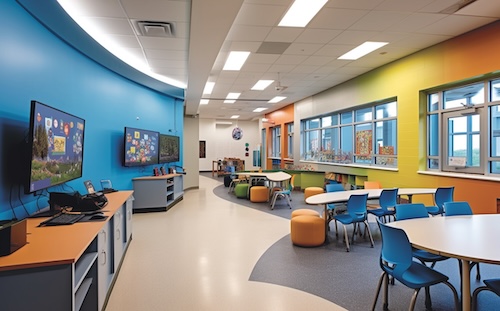
UDL is founded on this idea of the “curb-cut effect.” UDL focuses on designing classrooms and schools to provide multiple ways for students to learn. While the original focus was making the curriculum accessible to multiple types of learners, UDL also informs the physical design of classrooms and schools. Procurement professionals are focusing on furniture and technology purchases that provide flexible, accessible, and supportive environments so that all learners can benefit. Today entire conferences, such as EDspaces, focus on classroom and school design to improve learning outcomes.
There is now a solid research base indicating that the design of learning spaces is a critical factor in educational success: Learning space design changes can significantly influence student engagement, well-being, and academic achievement. While we focus on obvious benefits for specific types of learners, we often find unexpected ways that all students benefit. Adjustable desks designed for wheelchair users can improve focus and reduce fatigue in many students, especially those with ADHD. Providing captions on videos, first made available for deaf students, benefit ELL and other students struggling to learn to read.
Applying UDL to school purchasing decisions
UDL represents a paradigm shift from retrofitting solutions for individual students to proactively designing inclusive environments from the ground up. Strategic purchasing focuses on choosing furniture and tech tools that provide multiple means of engagement that can motivate and support all types of learners.
Furniture that works for everyone
Modern classroom furniture has evolved far beyond the traditional one-size-fits-all model. Flexible seating options such as stability balls, wobble cushions, and standing desks can transform classroom dynamics. While these options support students with ADHD or sensory processing needs, they also provide choice and movement opportunities that enhance engagement for neurotypical students. Research consistently shows that physical comfort directly correlates with cognitive performance and attention span.
Modular furniture systems offer exceptional value by adapting to changing needs throughout the school year. Tables and desks that can be easily reconfigured support collaborative learning, individual work, and various teaching methodologies. Storage solutions with clear labeling systems and accessible heights benefit students with visual impairments and executive functioning challenges while helping all students maintain organization and independence.
Technology that opens doors for all learners
Assistive technology has evolved from specialized, expensive solutions to mainstream tools that benefit diverse learners. Screen readers like NVDA and JAWS remain essential for students with visual impairments, but their availability also supports students with dyslexia who benefit from auditory reinforcement of text. When procuring software licenses, prioritize platforms with built-in accessibility features rather than purchasing separate assistive tools.
Voice-to-text technology exemplifies the UDL principle perfectly. While crucial for students with fine motor challenges or dysgraphia, these tools also benefit students who process information verbally, ELL learners practicing pronunciation, and any student working through complex ideas more efficiently through speech than typing.
Adaptive keyboards and alternative input devices address various physical needs while offering all students options for comfortable, efficient interaction with technology. Consider keyboards with larger keys, customizable layouts, or touchscreen interfaces that can serve multiple purposes across your student population.
Interactive displays and tablets with built-in accessibility features provide multiple means of engagement and expression. Touch interfaces support students with motor difficulties while offering kinesthetic learning opportunities for all students. When evaluating these technologies, prioritize devices with robust accessibility settings including font size adjustment, color contrast options, and alternative navigation methods.
Maximizing your procurement impact
Strategic procurement for UDL requires thinking beyond individual products to consider system-wide compatibility and scalability. Prioritize vendors who demonstrate commitment to accessibility standards and provide comprehensive training on using accessibility features. The most advanced assistive technology becomes worthless without proper implementation and support.
Conduct needs assessments that go beyond compliance requirements to understand your learning community’s diverse needs. Engage with special education teams, occupational therapists, and technology specialists during the procurement process. Their insights can prevent costly mistakes and identify opportunities for solutions that serve multiple populations.
Consider total cost of ownership when evaluating options. Adjustable-height desks may cost more initially but can eliminate the need for specialized furniture for individual students. Similarly, mainstream technology with robust accessibility features often costs less than specialized assistive devices while serving broader populations.
Pilot programs prove invaluable for testing solutions before large-scale implementation. Start with small purchases to evaluate effectiveness, durability, and user satisfaction across diverse learners. Document outcomes to build compelling cases for broader adoption.
The business case for UDL
Procurement decisions guided by UDL principles deliver measurable returns on investment. Reduced need for individualized accommodations decreases administrative overhead while improving response times for student needs. Universal solutions eliminate the stigma associated with specialized equipment, promoting inclusive classroom cultures that benefit all learners.
Leslie Stebbins, Research4Ed
Leslie Stebbins is the director of Research4Ed. She has more than twenty-five years of experience in higher education and K-12 learning and design. She has an M.Ed. from the Technology Innovation & Education Program at the Harvard Graduate School of Education and a Master’s in Library and Information Science from Simmons College.
Latest posts by eSchool Media Contributors (see all)
Social emotional learning — lessons in soft skills like listening to people you disagree with or calming yourself down before a test — has become a flashpoint in the culture wars.
The conservative political group Moms for Liberty opposes SEL, as it is often abbreviated, telling parents that its “goal is to psychologically manipulate students to accept the progressive ideology that supports gender fluidity, sexual preference exploration, and systemic oppression.” Critics say that parents should discuss social and emotional matters at home and that schools should stick to academics. Meanwhile, some advocates on the left say standard SEL classes don’t go far enough and should include such topics as social justice and anti-racism training.
While the political battle rages on, academic researchers are marshalling evidence for what high-quality SEL programs actually deliver for students. The latest study, by researchers at Yale University, summarizes 12 years of evidence, from 2008 to 2020, and it finds that 30 different SEL programs, which put themselves through 40 rigorous evaluations involving almost 34,000 students, tended to produce “moderate” academic benefits.
Related: Our free weekly newsletter alerts you to what research says about schools and classrooms.
The meta-analysis, published online Oct. 8 in the peer-reviewed journal Review of Educational Research, calculated that the grades and test scores of students in SEL classes improved by about 4 percentile points, on average, compared with students who didn’t receive soft-skill instruction. That’s the equivalent of moving from the 50th percentile (in the middle) to the 54th percentile (slightly above average). Reading gains were larger (more than 6 percentile points) than math gains (fewer than 4 percentile points). Longer-duration SEL programs, extending more than four months, produced double the academic gains — more than 8 percentile points.
“Social emotional learning interventions are not designed, most of the time, to explicitly improve academic achievement,” said Christina Cipriano, one of the study’s four authors and an associate professor at Yale Medical School’s Child Study Center. “And yet we demonstrated, through our meta-analytic report, that explicit social emotional learning improved academic achievement and it improved both GPA and test scores.”
Cipriano also directs the Education Collaboratory at Yale, whose mission is to “advance the science of learning and social and emotional development.”
The academic boost from SEL in this 2025 paper is much smaller than the 11 percentile points documented in an earlier 2011 meta-analysis that summarized research through 2007, when SEL had not yet gained widespread popularity in schools. That has since changed. More than 80 percent of principals of K-12 schools said their schools used an SEL curriculum during the 2023-24 school year, according to a survey by the Collaborative for Academic, Social, and Emotional Learning (CASEL) and the RAND Corporation.
The Yale researchers only studied a small subset of the SEL market, programs that subjected themselves to a rigorous evaluation and included academic outcomes. Three-quarters of the 40 studies were randomized-controlled trials, similar to pharmaceutical trials, where schools or teachers were randomly assigned to teach an SEL curriculum. The remaining studies, in which schools or teachers volunteered to participate, still had control groups of students so that researchers could compare the academic gains of students who did not receive SEL instruction.
The SEL programs in the Yale study taught a wide range of soft skills, from mindfulness and anger management to resolving conflicts and setting goals. It is unclear which soft skills are driving the academic gains. That’s an area for future research.
“Developmentally, when we think about what we know about how kids learn, emotional regulation is really the driver,” said Cipriano. “No matter how good that curriculum or that math program or reading curriculum is, if a child is feeling unsafe or anxious or stressed out or frustrated or embarrassed, they’re not available to receive the instruction, however great that teacher might be.”
Cipriano said that effective programs give students tools to cope with stressful situations. She offered the example of a pop quiz, from the perspective of a student. “You can recognize, I’m feeling nervous, my blood is rushing to my hands or my face, and I can use my strategies of counting to 10, thinking about what I know, and use positive self talk to be able to regulate, to be able to take my test,” she said.
The strongest evidence for SEL is in elementary school, where the majority of evaluations have been conducted (two-thirds of the 40 studies). For young students, SEL lessons tend to be short but frequent, for example, 10 minutes a day. There’s less evidence for middle and high school SEL programs because they haven’t been studied as much. Typically, preteens and teens have less frequent but longer sessions, a half hour or even 90 minutes, weekly or monthly.
Cipriano said that schools don’t need to spend “hours and hours” on social and emotional instruction in order to see academic benefits. A current trend is to incorporate or embed social and emotional learning within academic instruction, as part of math class, for example. But none of the underlying studies in this paper evaluated whether this was a more effective way to deliver SEL. All of the programs in this study were separate stand-alone SEL lessons.
Advice to schools
Schools are inundated by sales pitches from SEL vendors. Estimates of the market size range wildly, but a half dozen market research firms put it above $2 billion annually. Not all SEL programs are necessarily effective or can be expected to produce the academic gains that the Yale team calculated.
Cipriano advises schools not to be taken in by slick marketing. Many of the effective programs have no marketing at all and some are free. Unfortunately, some of these programs have been discontinued or have transformed through ownership changes. But she says school leaders can ask questions about which specific skills the SEL program claims to foster, whether those skills will help the district achieve its goals, such as improving school climate, and whether the program has been externally evaluated.
“Districts invest in things all the time that are flashy and pretty, across content areas, not just SEL,” said Cipriano. “It may never have had an external evaluation, but has a really great social media presence and really great marketing.”
Cipriano has also built a new website, improvingstudentoutcomes.org, to track the latest research on SEL effectiveness and to help schools identify proven programs.
Cipriano says parents should be asking questions too. “Parents should be partners in learning,” said Cipriano. “I have four kids, and I want to know what they’re learning about in school.”
This meta-analysis probably won’t stop the SEL critics who say that these programs force educators to be therapists. Groups like Moms for Liberty, which holds its national summit this week, say teachers should stick to academics. This paper rejects that dichotomy because it suggests that emotions, social interaction and academics are all interlinked.
Before criticizing all SEL programs, educators and parents need to consider the evidence.
The Hechinger Report provides in-depth, fact-based, unbiased reporting on education that is free to all readers. But that doesn’t mean it’s free to produce. Our work keeps educators and the public informed about pressing issues at schools and on campuses throughout the country. We tell the whole story, even when the details are inconvenient. Help us keep doing that.