Author: admin

  • Some social emotional lessons improve how kids do at school, Yale study finds

    Some social emotional lessons improve how kids do at school, Yale study finds

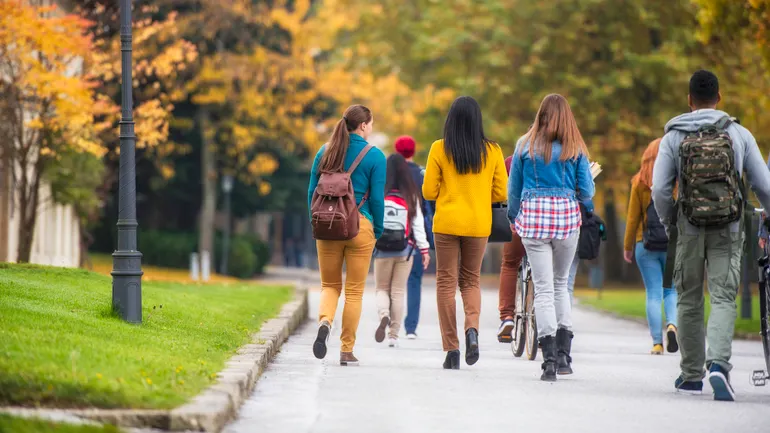
    Social emotional learning — lessons in soft skills like listening to people you disagree with or calming yourself down before a test — has become a flashpoint in the culture wars. 

    The conservative political group Moms for Liberty opposes SEL, as it is often abbreviated, telling parents that its “goal is to psychologically manipulate students to accept the progressive ideology that supports gender fluidity, sexual preference exploration, and systemic oppression.” Critics say that parents should discuss social and emotional matters at home and that schools should stick to academics. Meanwhile, some advocates on the left say standard SEL classes don’t go far enough and should include such topics as social justice and anti-racism training. 

    While the political battle rages on, academic researchers are marshalling evidence for what high-quality SEL programs actually deliver for students. The latest study, by researchers at Yale University, summarizes 12 years of evidence, from 2008 to 2020, and it finds that 30 different SEL programs, which put themselves through 40 rigorous evaluations involving almost 34,000 students, tended to produce “moderate” academic benefits.

    Related: Our free weekly newsletter alerts you to what research says about schools and classrooms.

    The meta-analysis, published online Oct. 8 in the peer-reviewed journal Review of Educational Research, calculated that the grades and test scores of students in SEL classes improved by about 4 percentile points, on average, compared with students who didn’t receive soft-skill instruction. That’s the equivalent of moving from the 50th percentile (in the middle) to the 54th percentile (slightly above average). Reading gains were larger (more than 6 percentile points) than math gains (fewer than 4 percentile points). Longer-duration SEL programs, extending more than four months, produced double the academic gains — more than 8 percentile points. 

    “Social emotional learning interventions are not designed, most of the time, to explicitly improve academic achievement,” said Christina Cipriano, one of the study’s four authors and an associate professor at Yale Medical School’s Child Study Center. “And yet we demonstrated, through our meta-analytic report, that explicit social emotional learning improved academic achievement and it improved both GPA and test scores.”

    Cipriano also directs the Education Collaboratory at Yale, whose mission is to “advance the science of learning and social and emotional development.”

    The academic boost from SEL in this 2025 paper is much smaller than the 11 percentile points documented in an earlier 2011 meta-analysis that summarized research through 2007, when SEL had not yet gained widespread popularity in schools. That has since changed. More than 80 percent of principals of K-12 schools said their schools used an SEL curriculum during the 2023-24 school year, according to a survey by the Collaborative for Academic, Social, and Emotional Learning (CASEL) and the RAND Corporation. 

    Related: A research update on social-emotional learning in schools

    The Yale researchers only studied a small subset of the SEL market, programs that subjected themselves to a rigorous evaluation and included academic outcomes. Three-quarters of the 40 studies were randomized-controlled trials, similar to pharmaceutical trials, where schools or teachers were randomly assigned to teach an SEL curriculum. The remaining studies, in which schools or teachers volunteered to participate, still had control groups of students so that researchers could compare the academic gains of students who did not receive SEL instruction. 

    The SEL programs in the Yale study taught a wide range of soft skills, from mindfulness and anger management to resolving conflicts and setting goals. It is unclear which soft skills are driving the academic gains. That’s an area for future research.

    “Developmentally, when we think about what we know about how kids learn, emotional regulation is really the driver,” said Cipriano. “No matter how good that curriculum or that math program or reading curriculum is, if a child is feeling unsafe or anxious or stressed out or frustrated or embarrassed, they’re not available to receive the instruction, however great that teacher might be.”

    Cipriano said that effective programs give students tools to cope with stressful situations. She offered the example of a pop quiz, from the perspective of a student. “You can recognize, I’m feeling nervous, my blood is rushing to my hands or my face, and I can use my strategies of counting to 10, thinking about what I know, and use positive self talk to be able to regulate, to be able to take my test,” she said.

    Related: A cheaper, quicker approach to social-emotional learning?

    The strongest evidence for SEL is in elementary school, where the majority of evaluations have been conducted (two-thirds of the 40 studies). For young students, SEL lessons tend to be short but frequent, for example, 10 minutes a day. There’s less evidence for middle and high school SEL programs because they haven’t been studied as much. Typically, preteens and teens have less frequent but longer sessions, a half hour or even 90 minutes, weekly or monthly. 

    Cipriano said that schools don’t need to spend “hours and hours” on social and emotional instruction in order to see academic benefits. A current trend is to incorporate or embed social and emotional learning within academic instruction, as part of math class, for example. But none of the underlying studies in this paper evaluated whether this was a more effective way to deliver SEL. All of the programs in this study were separate stand-alone SEL lessons. 

    Advice to schools

    Schools are inundated by sales pitches from SEL vendors. Estimates of the market size range wildly, but a half dozen market research firms put it above $2 billion annually. Not all SEL programs are necessarily effective or can be expected to produce the academic gains that the Yale team calculated. 

    Cipriano advises schools not to be taken in by slick marketing. Many of the effective programs have no marketing at all and some are free. Unfortunately, some of these programs have been discontinued or have transformed through ownership changes. But she says school leaders can ask questions about which specific skills the SEL program claims to foster, whether those skills will help the district achieve its goals, such as improving school climate, and whether the program has been externally evaluated. 

    “Districts invest in things all the time that are flashy and pretty, across content areas, not just SEL,” said Cipriano. “It may never have had an external evaluation, but has a really great social media presence and really great marketing.” 

    Cipriano has also built a new website, improvingstudentoutcomes.org, to track the latest research on SEL effectiveness and to help schools identify proven programs.

    Cipriano says parents should be asking questions too. “Parents should be partners in learning,” said Cipriano. “I have four kids, and I want to know what they’re learning about in school.”

    This meta-analysis probably won’t stop the SEL critics who say that these programs force educators to be therapists. Groups like Moms for Liberty, which holds its national summit this week, say teachers should stick to academics. This paper rejects that dichotomy because it suggests that emotions, social interaction and academics are all interlinked. 

    Before criticizing all SEL programs, educators and parents need to consider the evidence.

    Contact staff writer Jill Barshay at 212-678-3595, jillbarshay.35 on Signal, or [email protected].

    This story about SEL benefits was produced by The Hechinger Report, a nonprofit, independent news organization focused on inequality and innovation in education. Sign up for Proof Points and other Hechinger newsletters.
    The Hechinger Report provides in-depth, fact-based, unbiased reporting on education that is free to all readers. But that doesn’t mean it’s free to produce. Our work keeps educators and the public informed about pressing issues at schools and on campuses throughout the country. We tell the whole story, even when the details are inconvenient. Help us keep doing that.

    Join us today.

    Source link

  • Inside North Carolina’s direct admissions program

    Inside North Carolina’s direct admissions program

    This audio is auto-generated. Please let us know if you have feedback.

    This fall, North Carolina is one of the latest states rolling out a direct admission program that offers high school seniors acceptance to a range of public and private colleges. 

    Through direct admissions, colleges proactively admit students based on high school academic performance metrics such as GPA, SAT scores, or the amount of credits they received. 

    Around the start of the school year, more than 62,000 public high school seniors in North Carolina were offered direct admission to select colleges through the NC College Connect Program. Eleven of the University of North Carolina System’s 16 colleges, 29 private colleges and all 58 of the state’s community colleges are participating. 

    The UNC System first piloted NC College Connect last year in partnership with state agencies, the governor’s office and North Carolina’s community college system. The system launched the program to increase access to higher education in the state, Shun Robertson, UNC’s senior vice president for strategy and policy, said in an email. 

    For many high school seniors, “the process of applying to college, transferring between institutions, and navigating the maze of financial aid feels like an insurmountable series of hurdles,” said Robertson. “Eliminating these barriers has been a high priority.”

    Over the past decade, direct admissions policies have increased the likelihood that in-state students both apply to college and apply to more colleges, said John Lane, vice president for academic affairs at the State Higher Education Executive Officers Association, in an email. In turn, that shift has effectively increased college enrollment, he said.

    “Direct admissions policies and programs are impactful because they eliminate the complications and uncertainties of longstanding college application processes,” said Lane. “Instead, students are proactively admitted.”

    UNC’s program

    The UNC System piloted its direct admissions initiative last fall and notified over 70,000 high school seniors with GPAs of 2.8 or higher of their eligibility for the program, Robertson said. 

    Those seniors could apply to six UNC institutions and all 58 state community colleges for the 2025-26 academic year by sharing on an online portal their email address, their potential major, and when they’d like to start college, he said. 

    UNC System officials haven’t been able to review outcome data yet for the pilot program, a spokesperson said. But over 5,000 students responded to the letter during the pilot, the spokesperson said. 

    The system simplified the program this fall. Students won’t have to formally apply to get into one of the colleges on their list, rather they are provided direct admission to institutions based on their GPA and whether they meet the program’s requirements, Robertson said. Then they just need to submit a program form to accept their admission, he said. 

    Students accepting admission to community colleges must still fill out applications, but they will already be admitted, according to the initiative’s website. 

    The program also expanded to include private colleges in the state and added more UNC institutions, said Robertson. The University of North Carolina Chapel Hill, the system’s highly selective flagship, remains excluded from the program.

    Some of the private institutions in the program have additional direct admission qualification requirements, such as foreign language course requirements. 

    UNC System officials hope direct admissions will help the state’s institutions enrollment numbers long term by tapping into a growing college-aged student population. 

    Like most of the country, North Carolina is expected to see a decline in high school graduates between 2025 and 2030, according to a report last year from the Western Interstate Commission for Higher Education. However, that pool of students is expected to grow again in North Carolina after that year. 

    WICHE predicts that North Carolina will be one of 12 states, along with the District of Columbia, to have growing numbers of high school students between 2023 and 2041. Overall, North Carolina should see a 6% increase in high school graduates over that period, per WICHE projections.

    Source link

  • Pepperdine Closes Exhibit Featuring “Overtly Political” Art

    Pepperdine Closes Exhibit Featuring “Overtly Political” Art

    Henry Adams/Pepperdine Graphic

    Last month Pepperdine University in Malibu, Calif., opened an art exhibit titled “Hold My Hand In Yours,” which was scheduled to run for six months in the on-campus Frederick R. Weisman Museum of Art. But On Oct. 6, the university closed the exhibit after artists learned their work had been removed or altered for being “overtly political.”

    The exhibition, curated by Weisman Museum director Andrea Gyorody, centered on the imagery of hands in paintings, drawings, sculpture and videos, among other media, with a focus on hands as a means of labor and care, according to the museum’s website.

    Last week, one of the artists in the show learned her video had been turned off at the university’s request, and a sculpture had been modified to hide text that said “Save the Children” and “Abolish ICE,” Hyperallergic reported. The creators requested their pieces be removed from the museum, and several other contributors followed suit in solidarity with the affected artists and in opposition to the university.

    Pepperdine administrators alleged the pieces went against the museum’s policy to “avoid overtly political content consistent with the university’s nonprofit status,” Michael Friel, senior director of communication and public relations at Pepperdine, told Inside Higher Ed in an email.

    In addition to removing pieces, the university inquired about posting signage that notifies visitors that “the artwork does not necessarily reflect the views of the university,” Friel noted. “That process has not been successful.” With the addition of the artists pulling their work, the museum decided to close the gallery. All compensation agreements are being honored and inconvenienced artists have received an apology, according to Friel.

    “For the past week, the administration’s rationale for the initial censorship and removal has been murky and opaque, and honestly, still unclear to me. It didn’t have to be this way,” Stephanie Syjuco, an artist who was featured in the show, wrote on Instagram.

    The Weisman Museum is housed under the university’s advancement office. “Our intent is to maintain the highest standards of excellence as we celebrate artistic expression through the visual arts,” Friel said.

    In 2019, Pepperdine censored a senior art student’s gallery because the art featured nude bodies; officials placed the art in a mobile gallery instead of in the Weisman Museum, which featured work by the artist’s peers.  


    Source link

  • East Africa’s Queer communities show progress and hope

    East Africa’s Queer communities show progress and hope

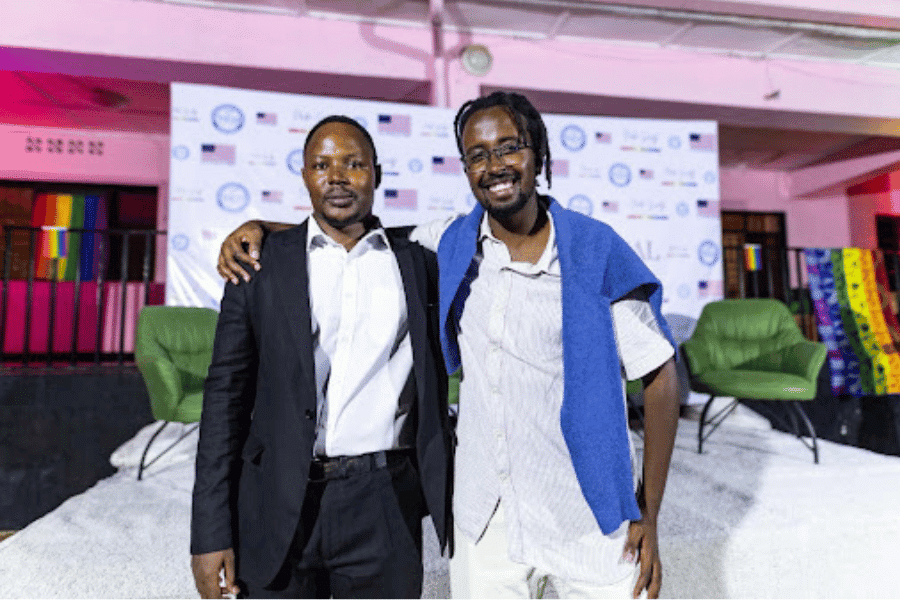
    Around the world, Queer rights are being challenged, attacked and denied. Governments are cutting budgets for important health and other programmes. 

    But in parts of Africa, there are distinct signs of progress. Organizations that serve and advocate for Queer communities in Eastern Africa now see hope for the future. That’s the case even in Uganda where “aggravated homosexuality” has carried the death penalty since 2023.

    “It is still a very hard environment but we are doing much better than a lot of people think,” said Brian Aliganyira, founder and executive director of the Ark Wellness Hub, an organization based in Kampala, Uganda, that helps LGBT community members who have difficulty accessing health services in public hospitals due to both anti-Queer laws and ongoing community stigma and discrimination.

    “We are doing better in terms of fighting back and supporting communities, not necessarily better in terms of protection, rights and freedoms,” Aliganyira said. 

    In Kenya, homosexual acts are illegal. Rodney Otieno, who is the co-founder and policy director for the Queer & Allied Chamber of Commerce Africa of Nairobi (QACC), described the creation of a “Queer ecosystem” that mobilises resources, builds social enterprises, creates sustainable economic pathways for people of the Queer community and attracts impact investments – using money for good causes even as it generates wealth. The QACC now boasts over 3,000 members in Kenya, plus others across Africa.

    Language and discrimination

    Otieno and the four other East African community leaders interviewed for this article generally prefer to use the more fluid term “Queer” rather than “LGBTQ” or any of its many variations. 

    Kevin Ngabo, a Queer activist and social justice advocate, said that local languages often lack positive or even neutral words to describe queer identities — only stigmatizing ones.

    “‘Queer’ gives us an umbrella that feels both flexible and affirming, allowing people to belong without being boxed in by rigid categories,” Ngabo said. “It’s a way of saying: I am different and that difference is valid.”,

    Ngabo was born and raised in Rwanda before moving to Nairobi, Kenya late last year.

    In Rwanda, there are no anti-discrimination laws but the government does not recognize same-sex marriages. 

    Pride in one’s identity

    A Queer rights activist in Kigali, who asked not to be identified, said that young people are feeling more comfortable with their identities. “GenZers are taking up more space as their authentic selves,” the activist said. “They are even getting more understanding and affection from their families. It is not ‘weird’ anymore. This will become the norm.”

    The Kigali activist has recently been involved in both a Pride Party and a Queer film festival, which attracted over 600 paying participants from around the region. 

    Queer community leaders point out different elements of both recent progress and hopes for sustainable success in the future beyond the constant imperative to keep community members safe and to try to get discriminatory laws repealed.

    “We need to continue to work together, make good use of our limited resources, be clear about what we are doing, raise awareness and be diplomatic when dealing with the authorities” says another anonymous Queer activist and feminist in Rwanda.

    Ngabo in Nairobi believes that Queer people across the region need to develop a strong sense of community and be “stubborn when they are told they can’t do something, and take space and stand up for what they believe in.”

    Finding allies to your cause

    Aliganyira in Kampala agrees that people should not run away from their ongoing challenges with safety, respect and equal opportunity and instead continue to show courage, resilience and perseverance to defend their current rights and expand them in future.

    A Queer activist in Rwanda stressed the need to work with allies and others to create more education and training to promote awareness, understanding and empathy.

    Ngabo shared some advice: “Start small and start where you are,” he said. “Speak up when you hear harmful stereotypes. Make space for people to share their stories without fear. Support Queer-led groups, attend events, or even just show up for your friends when they need someone safe to lean on.”

    Allyship isn’t always grand, he said. “It’s often in the quiet, consistent choices to affirm someone’s humanity,” he said.

    Queer community leaders say they are generally optimistic about the future.

    “In five to 10 years’ time, the narrative will change completely,” said Otieno in Nairobi.

    Changing people’s perceptions

    Young queer activists are being empowered and learning how to take on leadership roles in government and in other decision-making spaces, said one Rwandan activist.

    Another Rwandan activist envisions a future where same sex couples will be able to get married, adopt kids and access medical services freely.  

    “Things will improve if we are smart,” the activist said. “I hope we will see more safe spaces, more affirming healthcare (especially in mental health), more economic inclusion, and more media and policy-making representation. In the end though, dignity is more important than law changes.”

    Ngabo in Nairobi agrees: “We want respect,” he said. “We want to feel safe. We don’t want equality. We want equal opportunities. We want to thrive.”

    Real progress means being able to live authentically without having to conform, he said. “Stronger protections under the law, safe spaces to gather, visibility in public life, and most importantly, Queer people leading the narrative about our own lives,” Ngabo said. “These are what a brighter future looks like to me.”

    Even in Uganda, Aliganyira believes things can still change for the better.

    Uganda was once considered the safest place for Queer people in East Africa before the 1990s, he said.

    “Uganda can undo what it has done and get beyond fear and uncertainty,” he said. “It’s up to everyone to come together and overcome division.”


    Questions to consider:

    1. Why do LGBTQIA+ community members in East Africa prefer to call themselves “Queer”?

    2. What are the key elements of a brighter future for the East African Queer communities?

    3. What can you do yourself to stand up for human rights as an ally or a member of a Queer community where you live?


    Source link

  • Student suicides: why stable data still demand urgent reform 

    Student suicides: why stable data still demand urgent reform 

    Author:
    Emma Roberts

    Published:

    This HEPI guest blog was kindly authored by Emma Roberts, Head of Law at the University of Salford. 

    New figures from the Office for National Statistics (ONS) show that student suicide rates in England and Wales for the period 2016 to 2023 remain stable – but stability is no cause for complacency. The age-adjusted suicide rate among higher education students stands at 6.9 deaths per 100,000, compared with 10.2 per 100,000 for the general population of the same age group. Over the seven years of data collection, there were 1,163 student deaths by suicide – that is around 160 lives lost every year. 

    The rate being lower than the wider population is encouraging and may reflect the investment the sector has made in recent years. Universities have developed more visible wellbeing services, invested in staff training and created stronger cultures of awareness around mental health. The relative stability in the data can be seen as evidence that these interventions matter. But stability is not a resolution. Each student suicide is a preventable tragedy. The data should therefore be read not as reassurance, but as a call to sustain momentum and prepare for the challenges that lie ahead. 

    What the ONS data tells us 

    The figures highlight some familiar patterns. Male students remain at significantly higher risk than female students, accounting for nearly two-thirds of all suicides. Undergraduate students are at greater risk than postgraduate students, while students living at home have the lowest suicide rate. The data also shows that rates among White students are higher than for Black or Asian students, though the sample sizes are small, so these figures may be less reliable. 

    In terms of trend, the highest rate was recorded in the 2019 academic year (8.8 per 100,000). Since then, the rate has fallen back but remains stubbornly consistent, with 155 deaths recorded in the most recent year. The ONS notes that these figures are subject to revision due to coroner delays, meaning even the latest year may be under-reported. 

    The key point is that the problem is not worsening, but it is also not going away. 

    A changing student demographic 

    This year’s recruitment trends have introduced a new variable. Several high-tariff providers (universities with the highest entry requirements) have reduced entry requirements in order to secure numbers. This can open up opportunities for students who might otherwise not have had access to selective institutions. But it does raise important questions about preparedness. 

    Students admitted through lower tariffs may bring with them different kinds of needs and pressures: greater financial precarity, additional academic transition challenges, or less familiarity with the social and cultural capital that selective universities sometimes assume. These are all recognised risk factors for stress, isolation and, in some cases, mental ill-health. Universities with little prior experience of supporting this demographic may find their existing systems under strain. 

    Building on progress, not standing still 

    Much good work is already being done. Many universities have strengthened their partnerships with local National Health Service (NHS) trusts, introduced proactive wellbeing campaigns and embedded support more visibly in the student journey. We should recognise and celebrate this progress. 

    At the same time, the ONS data is a reminder that now is not the moment to stand still. Stability in the numbers reflects the effort made – but it should also prompt us to ask whether our systems are sufficiently flexible and resilient to meet new pressures. The answer, for some institutions, may well be yes. For others, particularly those adapting to new student demographics, there is a real risk of being caught unprepared. 

    What needs to happen next 

    There are several constructive steps the sector can take: 

    • Stress-test provision:  
      Assess whether wellbeing and safeguarding structures are designed to support the needs of the current, not historic, intake. 
    • Broaden staff capacity:  
      Ensure that all staff, not just specialists, have the awareness and training to spot early warning signs so that distress does not go unnoticed. 
    • Strengthen partnerships:  
      Align more closely with local NHS and community services to prevent students falling between two in-demand systems. 
    • Share practice sector-wide:  
      Collectively learn across the sector. Good practice must be disseminated, not siloed. 

    These are not dramatic or expensive interventions. They are achievable and pragmatic steps that can reduce risk while broader debates about legal and regulatory reform continue

    Conclusion 

    The ONS data shows that student suicide is not escalating. But the rate remains concerningly consistent at a level that represents an unacceptable loss of life each year. The progress universities have made should be acknowledged, but the danger of complacency is real. As recruitment patterns shift and new student demographics emerge, the sector must ensure that safeguarding and wellbeing systems are ready to adapt. 

    Every statistic represents a life lost. Stability must not become complacency – it should be a call to action, a chance to consolidate progress, anticipate new challenges and keep the prevention of every avoidable death at the heart of institutional priorities. 

    Source link

  • The Importance of Connection in the Age of AI – Faculty Focus

    The Importance of Connection in the Age of AI – Faculty Focus

    Source link

  • The Importance of Connection in the Age of AI – Faculty Focus

    The Importance of Connection in the Age of AI – Faculty Focus

    Source link

  • A joined up post-16 system requires system-level thinking combined with local action

    A joined up post-16 system requires system-level thinking combined with local action

    There have been so many conversations and speculations and recommendations aired about the forthcoming post-16 skills and education white paper that you’d be forgiven for thinking it already had been published months ago.

    But no, it’s expected this week some time – possibly as early as Monday – and so for everyone’s sanity it’s worth rehearsing some of the framing drivers and intentions behind it, clearing the deck before the thing finally arrives and we start digesting the policy detail.

    The policy ambition is clear: a coherent and coordinated post-16 “tertiary” sector in England, that offers viable pathways to young people and adult learners through the various levels of education and into employment, contributing to economic growth through providing the skilled individuals the country needs.

    The political challenge is also real: with Reform snapping at Labour’s heels, the belief that the UK can “grow its own” skills, and offer opportunity and the prospect of economic security to its young people across the country must become embedded in the national psyche if the government is to see off the threat.

    The politics and policy combine in the Prime Minister’s announcement at Labour Party Conference of an eye-catching new target for two thirds of young people to participate in some form of higher-level learning. That positions next week’s white paper as a longer term systemic shift rather than, say, a strategy for tackling youth unemployment in this parliament – though it’s clear there is also an ambition for the two to go hand in hand, with skills policy now sitting across both DfE and DWP.

    Insert tab a into slot b

    The aspiration to achieve a more joined up and functioning system is laudable – in the best of all possible worlds steering a middle course between the worst excesses and predatory behaviours of the free market, and an overly controlling hand from Whitehall. But the more you try to unpick what’s happening right now, the more you see how fragmented the current “system” is, with incentives and accountabilities all over the place. That’s why you can have brilliant FE and HE institutions delivering life-changing education opportunities, at the same time as the system as a whole seems to be grinding its gears.

    Last week, a report from the Association of Colleges and Universities UK Delivering a joined-up post-16 skills system showcased some of the really great regional collaborations already in place between FE colleges and universities, and also set out some of the barriers to collaboration including financial pressures causing different providers to chase the same students in the same subjects rather than strategically differentiating their offer; and different regulatory and student finance systems for different kinds of learners and qualifications creating complexity in the system.

    But it’s not only about the willingness and capability of different kinds of provider to coordinate with each other. It’s about the perennial urge of policymakers to tinker with qualifications and set up new kinds of provider creating additional complexity – and the complicating role of private training and HE provision operating “close to market” which can have a distorting effect on what “public” institutions are able to offer. It’s about the lack of join-up even within government departments, never mind across them. It’s also about the pervasiveness of the cultural dichotomy (and hierarchy) between perceptions of white-collar/professional and blue-collar/manual work, and the ill-informed class distinctions and capability-based assumptions underpinning them.

    Some of this fragmentation can be addressed through system-wide harmonisation – such as the intent through the Lifelong Learning Entitlement (LLE) to implement one system of funding for all level 4–6 courses, and bringing all courses in that group under the regulatory purview of the Office for Students. AoC and UUK have also identified a number of areas where potential overlaps could be resolved through system-wide coordination: between OfS, Skills England, and mayoral strategic authorities; between the LLE and the Growth and Skills Levy; and between local skills improvement plans and the (national) industrial strategy. It would be odd indeed if the white paper did not make provision for this kind of coordination.

    But even with efforts to coordinate and harmonise, in any system there is naturally occurring variation – in how employers in different industries are thinking about, reporting, and investing in skills, and at what levels, in the expectations and tolerance of different prospective students for study load, learning environment, scale of the costs of learning, and support needs, and in the relationship between a place, its economy and its people. The implications of those variations are best understood by the people who are closest to the problem.

    The future is emergent

    Complex systems have emergent properties, ie the stuff that happens because lots of actors responded to the world as they saw it but that could not necessarily have been predicted. Policy is always generating unforeseen outcomes. And it doesn’t matter how many data wonks and uber-brains you have in the Civil Service, they’ll still not be able to plot every possible outcome as any given policy intervention works its way through the system.

    So for a system to work you need good quality feedback loops in which insight arrives in a timely way on the desks of responsible actors who have the capability, opportunity and motivation to adapt in light of them. In the post-16 system that’s about education and civic leaders being really good at listening to their students, their communities and to employers – and investing in quality in civic leadership (and identifying and ejecting bad apples) should be one of the ways that a post-16 skills system can be made to work.

    But good leaders need to be afforded the opportunity to decide what their response will be to the specifics of the needs they have identified and be trusted, to some degree, to act in the public interest. So from a Whitehall perspective the question the white paper needs to answer is not only how the different bits of the system ought to join up, but whether the people who are instrumental in making it work themselves have the skills, information and flexibility to take action when it inevitably doesn’t.

    Source link

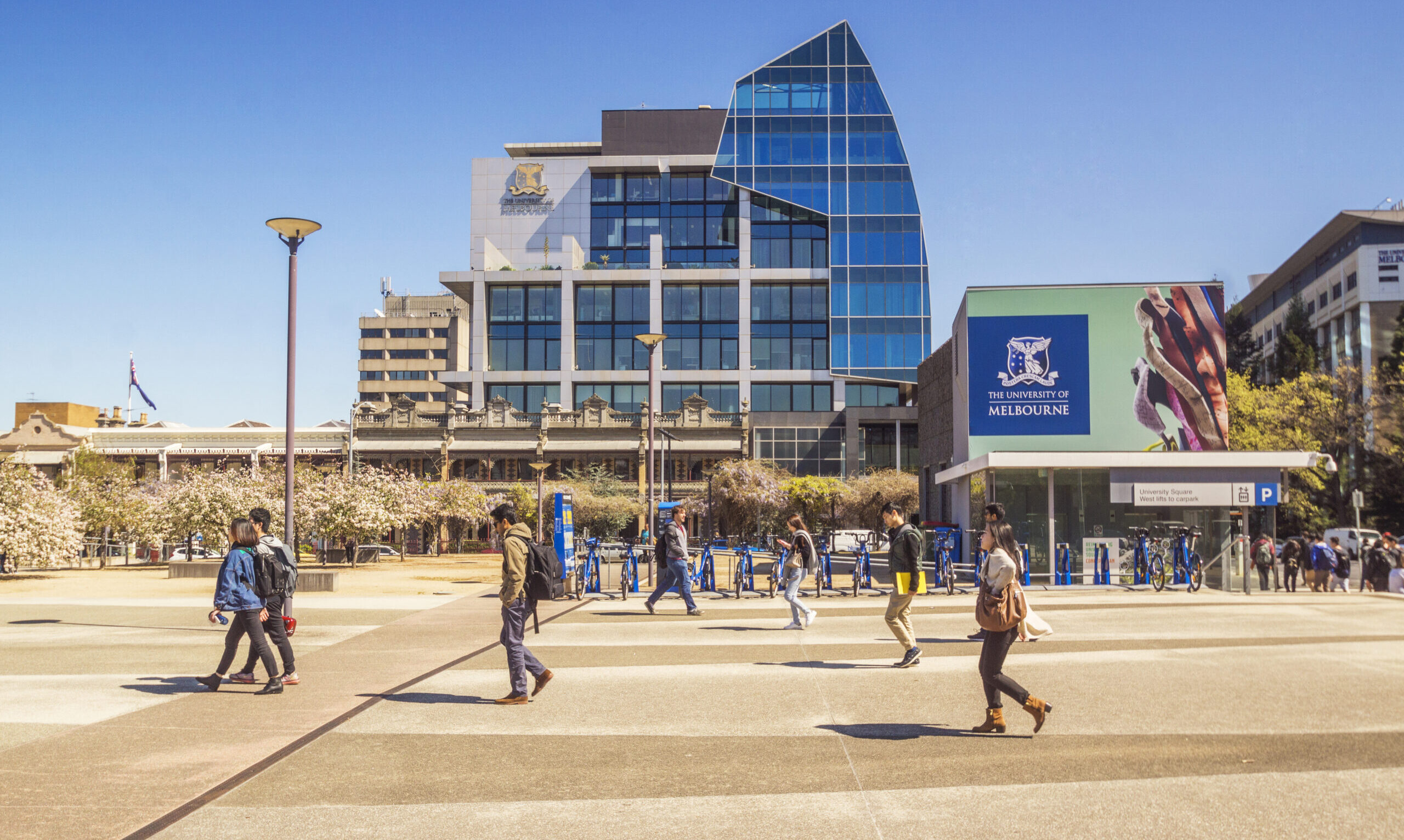
  • One Aus university in top 50 THE rankings – Campus Review

    One Aus university in top 50 THE rankings – Campus Review

    Australia’s universities have charged up the global leaderboard in a year where many of their international peers lost ground, according to a world-renowned tertiary rankings list.

    Please login below to view content or subscribe now.

    Membership Login

    Source link

  • Universities in the age of intelligent machines – Campus Review

    Universities in the age of intelligent machines – Campus Review

    When Geoffrey Hinton, the so-called ‘godfather of AI’, declared in 2016 that ‘we should stop training radiologists now,’ his warning caused a stir.

    Please login below to view content or subscribe now.

    Membership Login

    Source link