Author: admin

  • How districts help students gain real-life skills

    How districts help students gain real-life skills

    This audio is auto-generated. Please let us know if you have feedback.

    WASHINGTON — In Illinois’ Lake Forest School Districts 67 and 115, educators are incorporating real-life skills — such as adaptability, critical thinking, communication and other 21st century competencies — into their curricula in efforts to help students succeed in K-12 and beyond.

    The work is emphasized through activities like a blog for families and educators on resilience and growth mindset and a Portrait of a Learner construct that describes the competencies students need to demonstrate in addition to academic excellence.

    These real-life skills are “not nice to haves. They are musts,” said Matthew Montgomery, who is superintendent of both districts. “They are as important as a rich foundational experience of mathematics or the classics in literature. We cannot treat them as soft skills anymore.”

    Montgomery, along with about 150 other district leaders, educators, researchers and neuroscientists gathered last week at a Real Skills for Real Life Summit to discuss what host AASA, The School Superintendent Association called the “new basics for learning.”

    Speakers told the summit attendees that incorporating development of these skills into the school day must be intentional, collaborative and driven by student input. The work is rooted in building a sense of belonging and compassion, as well as encouraging students to take safe risks, they said.

    “Kids want to be listened to and they want to be heard. They want to be respected, connected, and they want to feel cared for. They want to have fun,” said Ryan Rydzewski, communications officer at The Grable Foundation, a nonprofit focused on children’s successful development. 

    Speakers and attendees offered practical ways schools can hone real-life skills in students, including:

    • Add joy and laughter into learning moments. 
    • Model and normalize making mistakes.
    • Offer students choice in how they engage in learning and how they demonstrate their knowledge.
    • Help teachers understand their own executive functioning skills and growth mindsets.
    • Guide students through holding themselves accountable for their choices.

    Mary Helen Immordino-Yang, a professor of education, psychology and neuroscience at the University of Southern California, said real-life skills like self awareness, curiosity, executive functioning, agency and relationship-building are critical to a student’s learning process.

    “We in education systems traditionally think of academic knowledge and scholarly knowledge as being separate from the experience of being a person — and psychologically and, it turns out, neurologically, that is not correct,” Immordino-Yang said.

    Rydzewski acknowledged that the work to build real-life skills can be hard and complex. Montgomery agreed, saying the Portrait of a Learner used in the Lake Forest districts is consistently being reexamined and improved upon based on student needs. The districts’ partnerships with students, families, educators, board members and others are imperative to this work, he said.

    “We do not have it figured out,” Montgomery said. “I actually hope I never have it figured out, because that means there’s no work to do, but we are getting closer to defining what we are trying to work on and what matters to us.”

    Source link

  • California governor signs Cal State direct admissions program into law

    California governor signs Cal State direct admissions program into law

    This audio is auto-generated. Please let us know if you have feedback.

    Dive Brief:

    • Qualifying high school seniors in California will be automatically admitted to a California State University campus beginning with the 2026-27 academic year under a bill Gov. Gavin Newsom signed into law this week. 
    • Under the program, eligible students will automatically receive letters notifying them that they have been directly admitted to Cal State campuses with enrollment capacity based on their academic records
    • The program expands a pilot announced last year limited to high school students in California’s Riverside County. Out of 17,000 students who received admission offers to Cal State for the fall 2025 term, 13,200 completed the required paperwork, according to state Sen. Christopher Cabaldon, who co-sponsored the bill.

    Dive Insight:

    California’s new legislation, called SB 640, aims to boost college access and help reverse enrollment declines at some of Cal State’s 23 campuses. 

    A September news release from Cabaldon’s office noted two campuses with the biggest declines were in his district: CSU Maritime Academy — which recently merged with Cal Poly San Luis Obispo — and Sonoma State University, which announced deep budget and program cuts at the beginning of this year.

    Direct admission removes the applications hurdle that stops some students from going to college, and relieves the fear that they won’t get in anywhere,” Cabaldon said after SB 640 cleared California’s Legislature last month. 

    The lawmaker cited a 2022 academic study of Idaho’s direct admissions program, implemented in 2015, that found the initiative increased first-time undergraduate enrollments by 4% to 8% — an average increase of 50 to 100 students per campus. It also boosted in-state enrollment levels by approximately 8% to 15%, the study found. 

    Enrollment gains from the direct admissions program were concentrated mainly in community colleges, though it had “minimal-to-no impacts” on the enrollment of Pell Grant-eligible students, according to the study. At the time of publication, one of the researchers noted the lack of change was not surprising, given that the program did not focus on any particular student group.

    Meanwhile, a 2023 study of 33,000 students found a Common App direct admissions initiative geared toward marginalized student groups increased applications among Black, Latinx, multiracial, first-generation and low-income students.

    California joins a growing number of states incorporating direct admissions into the acceptance process for their public colleges. That list includes North Carolina, which this year offered 62,000 public high school students admissions into one of dozens of institutions through the NC College Connect Program, an expansion of a pilot launched last year.

    The process of applying to college, transferring between institutions, and navigating the maze of financial aid feels like an insurmountable series of hurdles,” Shun Robertson, the University of North Carolina’s senior vice president for strategy and policy, told Higher Ed Dive earlier this fall.Eliminating these barriers has been a high priority.”

    Institutions in Minnesota, Wisconsin, Hawai’i, Connecticut, Illinois, Indiana, Utah and West Virginia also offer direct admissions programs.

    Source link

  • Arkansas wants to jail librarians. The First Amendment won’t allow it.

    Arkansas wants to jail librarians. The First Amendment won’t allow it.

    Arkansas is trying to save one of the most extreme book censorship laws in recent memory, one that would allow jailing librarians and booksellers for keeping materials on their shelves that fall under the statute’s broad definition of “harmful to minors.” 

    The state’s Act 372 not only makes it possible for librarians to be jailed for providing teenagers with Romeo and Juliet, but also allows anyone to “challenge the appropriateness” of any book in a library.

    After the law passed, a coalition of booksellers, librarians, libraries, library patrons, and professional associations persuaded a federal judge to stop the law from taking effect in Fayetteville Public Library v. Crawford County. But the state appealed. FIRE in turn submitted a friend-of-the-court brief urging the U.S. Court of Appeals for the Eighth Circuit to affirm the permanent injunction against Act 372.

    How Act 372 operates

    Arkansas’s law compels public libraries to adopt policies allowing “any person affected” by a book to challenge its “appropriateness,” forcing libraries to remove or sequester the book in an area “not accessible to minors” if the challenge succeeds. The law provides no definitions for crucial terms like “appropriateness” or “accessible,” leaving librarians to guess how to comply and inviting challenges based on personal or political objections. 

    Worse still, the process creates a one-way ratchet in favor of censorship by granting challengers the right to appeal decisions to keep a book in place while having no appeal procedure when a book is removed or segregated. ​​FIRE advocates for a fair system — call it “due process for books” — where libraries use an impartial and objective process for reviewing challenged books’ educational value and age appropriateness. And a system that permits only one side to appeal a ruling while denying appeals by the other is inherently unfair, as we’ve noted in campus Title IX hearings. Act 372’s unbalanced system empowers hecklers to reshape public collections according to their tastes, undermining libraries’ historic role as repositories of diverse ideas and viewpoints.

    These issues are worsened by a broad and unconstitutional definition of “harmful to minors.” That section threatens librarians and booksellers with up to a year in jail if they furnish, present, provide, make available, give, lend, show, advertise, or distribute to a minor any material considered harmful—without distinguishing between materials inappropriate for young children and those suitable for older teens. By grouping all minors into one category and failing to define key terms, Act 372 effectively criminalizes access to classic and educational works that may include mature themes. 

    Why Act 372 is unconstitutional

    FIRE has consistently stated it’s entirely proper for public school libraries to consider whether books are age-appropriate for their collections based on various factors. But Act 372 falls far short of that commonsense standard by employing a broad definition that applies to all public libraries, as well as private bookstores, and by treating all minors the same, from first graders to high school seniors. 

    To understand why Act 372’s “harmful to minors” definition does not meet constitutional standards, one must consider the Supreme Court’s precedents in this area. For decades, the Court has been cautious to ensure that merely labeling sexually suggestive materials as obscene does not give the government blanket authority to censor speech. That’s because works that are obscene are considered unprotected speech—for both adults and minors—and essentially freely regulable or sanctionable. But what about sexually explicit material that is not obscene and thus protected?

    In Ginsberg v. New York, the Court recognized the state’s limited power to restrict minors’ access to sexually explicit content, while emphasizing it remains constitutionally protected for adultsIn Miller v. California, the Court formulated a rigorous test for obscenity that ensured works with serious literary, artistic, political, or scientific value would not meet the test simply because they involve sex. Taken together, GinsbergMiller, and cases flowing from them acknowledge that states may use a variable obscenity test based on the viewer’s age, while ensuring that adults can access non-obscene materials. 

    The Supreme Court further clarified the issue in Virginia v. American Booksellers Association, where it cautioned against laws that aim to protect minors but could potentially limit free speech. The law in question survived only after the Virginia Supreme Court narrowed its definition of “harmful to juveniles” to cover works judged as harmful to older teens, and only when someone knowingly put that material where kids could easily see it. Without this clarification, the law would have been unconstitutionally overbroad and vague.

    The standard for obscene-for-minors or “harmful to minors” material has thus generally coalesced around a version of the Miller obscenity test tailored to the underaged to require that: the material taken as a whole must appeal primarily to a prurient interest in sex as to minors; it must portray hardcore sexual conduct in a manner patently offensive to the average adult under contemporary community standards for minors; and it must lack serious literary, artistic, political or scientific value for minors.

    Unlike the Virginia Supreme Court, the Arkansas Supreme Court adopted a much broader interpretation of “harmful to minors” that treats all minors under 18 the same. As a result, libraries and local bookstores could be penalized simply for providing older minors with access to books that would be objectionable only to the youngest children. In other words, books older minors have a right to read under the First Amendment.

    This would require librarians to put classics like Romeo and Juliet or Catcher in the Rye behind adults-only walls. Further, Act 372’s challenge system also subjects the availability of library books to a “heckler’s veto” by anyone who objects to the material. But the very purpose of public libraries is to provide everyone access to a broad marketplace of ideas. If Act 372 stands, librarians will be forced to choose between their professional duty to provide the community with a wide range of books and the threat of imprisonment if any of those books might be inappropriate for a 5-year-old.

    What’s at stake

    FIRE is asking the Eighth Circuit to affirm the district court’s ruling striking down Arkansas’s Act 372, because if the state can jail librarians for letting kids read books, it won’t stop at Arkansas. The First Amendment doesn’t allow governments to censor ideas under the guise of “protecting children,” and we’re fighting to make sure it never does.

    Source link

  • Trump Fires More Education Dept. Employees

    Trump Fires More Education Dept. Employees

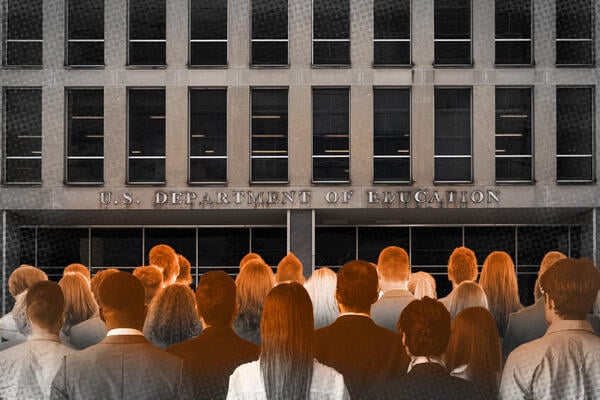
    Photo illustration by Justin Morrison/Inside Higher Ed | Tierney L. Cross/Getty Images | BraunS and Prostock-Studio/iStock/Getty Images

    Staff members at the Department of Education will be affected by the mass layoffs taking place across the federal government, a spokesperson said Friday.

    Russell Vought, director of the Office of Management and Budget, has threatened the layoffs for weeks, citing the government shutdown. Vought wrote on social media Friday that his promised reduction in force had begun.

    A department spokesperson then confirmed in an email to Inside Higher Ed that “ED employees will be impacted by the RIF.” The spokesperson did not clarify how many employees will be affected or in which offices. Other sources say no one who works in the Office of Federal Student Aid will be laid off.

    Trump administration officials said in a court filing that an estimated 466 employees were given reduction-in-force notices. About 1,100 to 1,200 employees at the Department of Health and Human Services also got laid off. Overall, more than 4,200 workers across eight agencies were fired.

    At the Education Department, the estimated layoffs will leave the department with just over 2,001 employees. The agency, which President Trump wants to close, already lost nearly half its career staff members during a first round of mass layoffs in March. In the wake of those layoffs, former staffers warned that the cuts would lead to technical mishaps, gaps in oversight and a loss of institutional knowledge. College administrators have also reported delays and issues in getting communications and updates from the department, though agency officials say critical services have continued.

    The federal workers’ union and multiple outside education advocacy groups challenged the first round of layoffs in court. Lower courts blocked the RIF, but the Supreme Court overturned those rulings in July. Affected staff members officially left the department in August.

    Another lawsuit challenged this latest round when Vought threatened the layoffs – before the pink slips had even been distributed today. It was filed at the end of September.

    The union representing Education Department employees as well as sources with connections to staffers who were still working at the department as of Friday morning said that the latest round of cuts will at least affect staff members from the offices of elementary and secondary education and communications and outreach. A union representative added that all of the employees in the communications office’s state and local engagement division were laid off.

    A senior department leader, who spoke on condition of anonymity, told Inside Higher Ed that the layoffs were directed by OMB and came as a surprise.

    “Last week the [education] secretary’s office had said no RIFs at all,” the senior leader explained. “We heard on Tuesday that OMB sent over a list of people for ED to RIF … ED apparently edited it and sent it back.”

    In neither case were cuts planned for the Office of Federal Student Aid, which manages the Pell Grant and student loans, the senior leader added.

    Rachel Gittleman, president of the union that represents Education Department employees, promised in a statement to fight the layoffs.

    “This administration continues to use every opportunity to illegally dismantle the Department of Education against congressional intent,” Gittleman said. “They are using the same playbook to cut staff without regard for the impacts to students and families in communities across the country … Dismantling the government through mass firings, especially at the ED, is not the solution to our problems as a country.”

    Through late September and into the first 10 days of the shutdown, both Vought and President Trump used the threat of further RIFs to try to convince Democrats in the Senate to acquiesce and sign the Republicans’ budget stopgap bill. But Democrats have stood firm, refusing to sign the bill unless the GOP meets their demands and extends an expiring tax credit for health insurance.

    Health and Human Services Department spokesperson Andrew G. Nixon wrote in an email to Inside Higher Ed earlier on Friday that “HHS employees across multiple divisions” received layoff notices. But he didn’t provide an interview or answer written questions about whether the layoffs include employees at the National Institutes of Health, a major funder of university research.

    Nixon wrote that “HHS under the Biden administration became a bloated bureaucracy” and “all HHS employees receiving reduction-in-force notices were designated non-essential by their respective divisions. HHS continues to close wasteful and duplicative entities, including those that are at odds with the Trump administration’s Make America Healthy Again agenda.”

    Democrats and some Republicans have warned against the layoffs. Sen. Susan Collins, a Maine Republican who chairs the powerful appropriations committee, opposed the layoffs in a statement while also blaming Democrats in the shutdown.

    “Arbitrary layoffs result in a lack of sufficient personnel needed to conduct the mission of the agency and to deliver essential programs, and cause harm to families in Maine and throughout our country,” she said.

    But Democrats in particular have argued that firing federal workers during a shutdown is unconstitutional.

    “No one is making Trump and Vought hurt American workers—they just want to,” Sen. Patty Murray, a Washington State Democrat and vice chair of the appropriations committee, said in a statement Friday afternoon. “A shutdown does not give Trump or Vought new, special powers to cause more chaos or permanently weaken more basic services for the American people … This is nothing new, and no one should be intimidated by these crooks.”

    Rep. Bobby Scott, a Virginia democrat and ranking member of the House Education and Workforce Committee, pointed out in a statement that the administration has had to rehire employees who were fired earlier this year.

    “In addition to wasting millions of taxpayer dollars to fire and rehire government employees, arbitrarily firing government employees means there are fewer people to help administer essential programs,” he said. “Moreover, I fear the lasting impact of mass firings will be an incredible loss of invaluable institutional knowledge. Furthermore, random and chaotic layoffs will make it difficult to recruit qualified employees in the future.”

    Ryan Quinn contributed to this report.

    Source link

  • MIT rejects Trump’s preferential funding offer

    MIT rejects Trump’s preferential funding offer

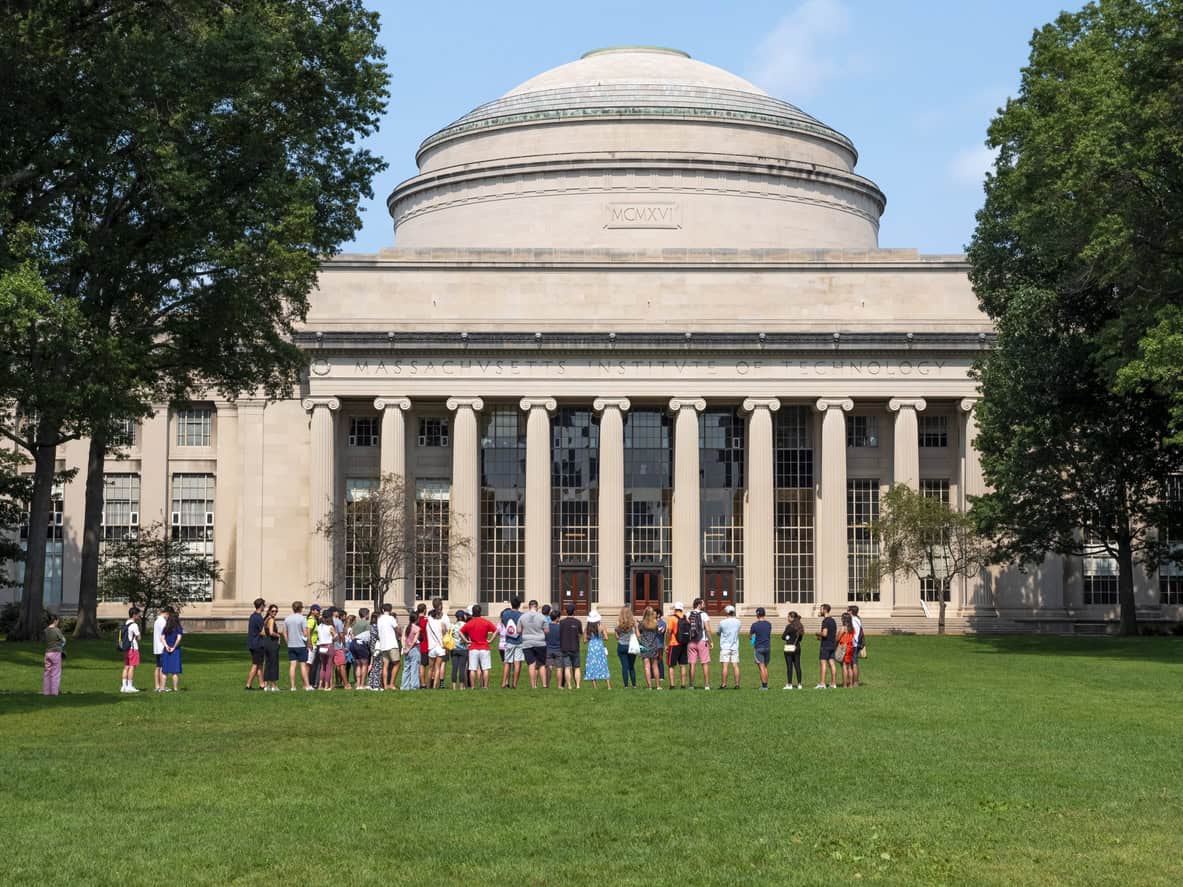
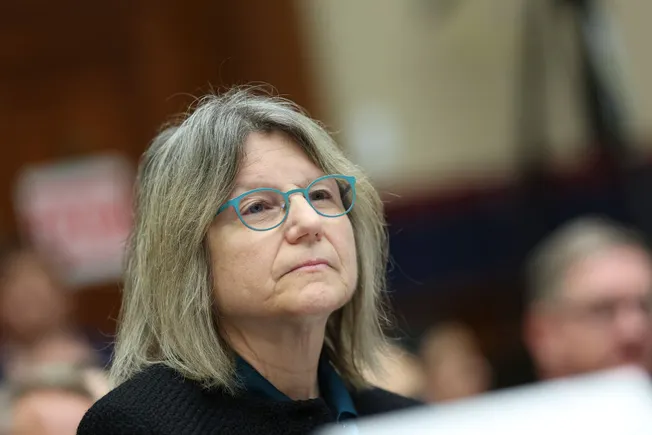
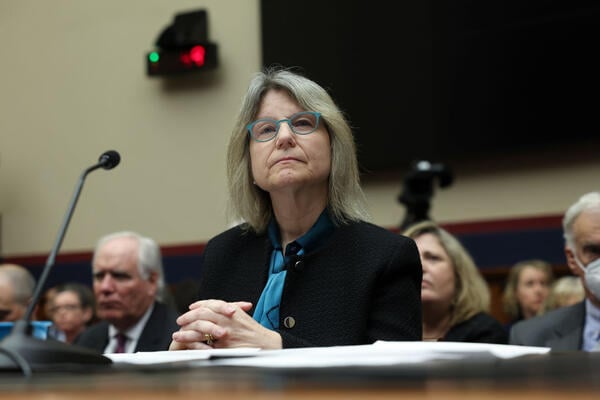
    MIT president Saly Kornbluth said the agreement went against freedom of expression and the university’s independence, and that it was “fundamentally” inconsistent with MIT’s “core belief that scientific funding should be based on scientific merit alone”. 

    Last week, the Trump administration sent a compact to nine US colleges laying out sweeping demands including capping international enrolments, banning the use of race or sex in hiring and freezing tuition for five years. In return, schools that signed on would receive competitive advantages from the government.  

    In a letter to US education secretary Linda McMahon, Kornbluth said: “We must hear facts and opinions we don’t like – and engage respectfully with those whom we disagree.” 

    Under the terms of the compact, signatories must abolish university units that “punish” or “belittle” conservative ideas, and all college employees “must abstain in their official capacity from actions or speech related to politics”.  

    If adopted by the institutions, it would set a 15% cap on international undergraduate students including a 5% limit for any given country. It also stipulates that universities must hand over international student information, including discipline records, upon the request of the government.  

    MIT is the first of the nine institutions to officially respond to the administration before the October 20 deadline. Stakeholders said the White House is likely aiming to expand the compact if institutions engage.  

    The day after it was sent, the University of Texas swiftly announced it was “honoured” to be a part of Trump’s proposal, though the remaining institutions were notably quiet on the agreement, which has received strong pushback from faculty leadership and administrators. 

    Faculty senates at the University of Virginia and the University of Arizona voted to oppose the compact with overwhelming majorities, while Dartmouth College president said in a statement she was “deeply committed” to the university’s values and would always defend its “fierce independence”.  

    In Tennessee, academic and workers unions have called on Vanderbilt University to reject what they called “Trump’s Fascist Compact”, with a petition from Graduate Workers United garnering almost 1,000 signatures as of October 8.  

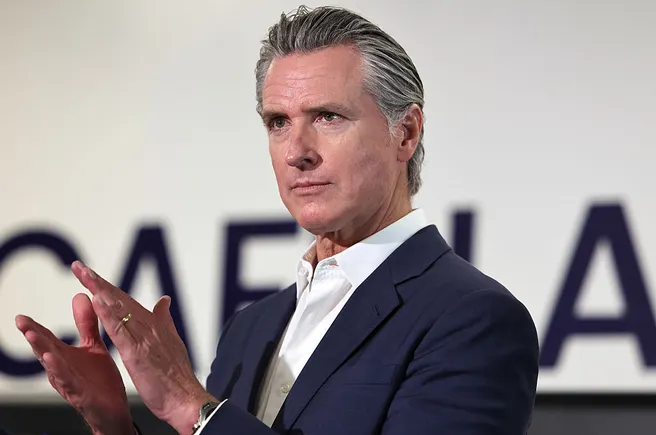
    Elsewhere, California governor Gavin Newsom quickly responded saying: “California universities that bend to the will of Donald Trump and sign this insane ‘compact’ will lose billions in state funding – IMMEDIATELY.”

    “California will not bankroll schools that sign away academic freedom,” he wrote on October 2, sending a clear sign to the University of Southern California (USC), the only Californian college to receive the proposal so far.  

    Alongside MIT, the compact demands were thrust upon: Vanderbilt University, Dartmouth College, the University of Pennsylvania, the University of Southern California, the University of Texas, the University of Arizona, Brown University and the University of Virginia. 

    California universities that bend to the will of Donald Trump and sign this insane ‘compact’ will lose billions in state funding – IMMEDIATELY

    Gavin Newsom, Governor of California

    While it remains unclear how the recipients were chosen, stakeholders have noted that the list includes high prestige universities as well as public flagships, likely to generate maximum sectoral and media impact.  

    “The compact forces all nine institutions to reveal their positions; it sets the narrative for media reporting and public discussion of the points in the compact; and starts a public sorting of university responses to these policy priorities,” Boston College professor Chris Glass told The PIE News. 

    Whether MIT’s response emboldens the universities to reject the proposal remains to be seen, but even without the signatures, “the compact creates lasting ripples, as universities, accreditors, and state officials recalibrate for future policy fights,” said Glass.  

    The compact’s international student cap is yet another clear sign of Trump’s anti-immigration stance, though experts have noted that none of the nine universities have undergraduate international student populations that exceed the 15% limit.  

    While U Penn and USC are both close to the threshold with international undergraduate populations around the 14% mark, the universities of Virginia, Arizona and Texas at Austin all enrol less than 6% international undergraduates, according to analysis by Soka University of America professor Ryan Allen. 

    As such, Glass speculated the cap was intended to signal to universities beyond the nine, especially those above the 15% threshold, that they may face future scrutiny. 

    “Just by introducing the cap, the administration sets the terms of debate and sends a strong message – to its base, to all universities in the US, and to prospective international students,” he said.

    As per Allen’s analysis, just 14 of the top 114 US universities have undergraduate international populations that exceed the proposed limit.

    If it is implemented, the impact of the cap by itself might not be significant, “but this is part of an overall message that the US does not want international students … It’s tough to grapple with in the classroom because our students are feeling that message,” said Allen. 

    Typically, international students make up a larger proportion of postgraduate than undergraduate enrolments, though universities rarely disaggregate the two in overall student counts.  

    And yet: “Undergrad admissions are much more contentious and political than grad school. So, the idea that international students are somehow taking seats from Americans is much more salient in that space,” said Allen.  

    Source link

  • MIT becomes first college to reject Trump’s higher education compact

    MIT becomes first college to reject Trump’s higher education compact

    This audio is auto-generated. Please let us know if you have feedback.

    The Massachusetts Institute of Technology on Friday rejected the Trump administration’s proposed compact that offers priority for federal research funding in exchange for making sweeping policy changes. 

    MIT is the first institution to formally reject the compact, which the administration sent to nine research universities on Oct. 1. 

    The nine-page compact’s wide-ranging terms include freezing tuition for five years, capping international student enrollment to 15% of the institution’s undergraduate student body, and changing or eliminating units on campus that “purposefully punish, belittle, and even spark violence against conservative ideas.” 

    MIT already meets or exceeds many of the proposed standards in the compact, university President Sally Kornbluth said in a Friday message to U.S. Education Secretary Linda McMahon. However, the compact includes other principles that would restrict the university’s free expression and independence, Kornbluth said. 

    And fundamentally,” Kornbluth added, “the premise of the document is inconsistent with our core belief that scientific funding should be based on scientific merit alone.”

    The White House did not immediately respond to a request for comment on Friday. 

    Kornbluth’s letter to the Trump administration

    In her message, which she shared publicly, Kornbluth pointed to several MIT policies that she said were already in step with the compact. For instance, the proposed agreement dictates that colleges mandate standardized testing for applicants, and MIT reinstated its SAT and ACT requirement in 2022 after pausing it due to the coronavirus pandemic. 

    Similarly, Kornbluth noted that MIT limits international enrollment to about 10% of its undergraduate population — below the Trump administration’s proposed cap of 15%. 

    The compact also focuses on affordability, including through a standard that would require colleges with large endowments to not charge tuition to students enrolled in “hard science programs,” with exceptions for those from well-off families. 

    Kornbluth shared MIT’s own affordability initiatives, including not charging tuition to incoming undergraduate students from families earning under $200,000. She noted that 94% of undergraduate degrees awarded at MIT are in science, technology, engineering and mathematics fields. 

    But the MIT president opposed other compact provisions over concerns that they would restrict free expression at the university — which she underscored as a core MIT value.  

    “We must hear facts and opinions we don’t like — and engage respectfully with those with whom we disagree,” Kornbluth wrote.

    The compact’s terms have raised alarms from free speech advocates since becoming public. 

    Tyler Coward, lead counsel for government affairs at the Foundation for Individual Rights and Expression, said that the compact contains troubling language, pointing to the provision to eliminate departments that “belittle” or “spark violence” against conservative beliefs. 

    “Let’s be clear: Speech that offends or criticizes political views is not violence,” Coward wrote in an Oct. 2 statement. “Conflating words with violence undermines both free speech and efforts to combat real threats.”

    Widespread opposition to the compact

    The eight other colleges that received the compact are Brown University, Dartmouth College, the University of Arizona, the University of Pennsylvania, the University of Southern California, the University of Texas at Austin, the University of Virginia and Vanderbilt University. 

    The compact has drawn widespread opposition from employee groups and students. 

    Faculty senates at two institutions — the University of Arizona and UVA — have voted to oppose the agreement. It has also drawn campus protests and petitions to urge administrators to reject the proposal. 

    Democratic state lawmakers have likewise pushed colleges to reject the agreement. 

    In California, Gov. Gavin Newsom threatened to pull state funding from colleges that sign the deal. A pair of Pennsylvania lawmakers took a similar tack by moving to bar state-funded colleges from signing onto the compact. And in Virginia, leaders of the Democrat-controlled state Senate threatened funding consequences if UVA agreed to the compact. 

    “This is not a partnership,” the Virginia lawmakers said in an Oct. 7 letter to UVA leadership. “It is, as other university leaders have aptly described, political extortion.”

    Source link

  • Canada: 47k int’l students flagged for potential visa non-compliance

    Canada: 47k int’l students flagged for potential visa non-compliance

    Aiesha Zafar, assistant deputy minister for migration integrity at IRCC, told the House of Commons Standing Committee on Citizenship and Immigration that 8% of international students reviewed were potentially “non-compliant”, meaning they were not attending classes as required by the terms of their study visa.

    “In terms of the total number of students we asked for compliance information from, that results in potentially 47,175. We have not yet determined whether they are fully non-compliant, these are initial results provided to us by institutions,” stated Zafar, who was questioned by Conservative MP Michelle Rempel Garner about where these students are currently, if they are not complying with their visa terms.

    Determining full non-compliance of the international students, however, is not straightforward, as institutions report data at varying intervals, and students may change schools, graduate, or take authorized leaves.

    Zafar noted that IRCC shares all the data it continually collects with the Canada Border Services Agency (CBSA), which is responsible for locating and removing non-compliant visa holders.

    “Any foreign national in Canada would be under the purview of the CBSA, so they have an inland investigation team,” Zafar told the committee when Garner questioned how the IRCC is able to track and remove students who are in violation of their visas.

    The 47,000 non-compliance cases are a backlog, evidence that fraud detection is strengthening, not weakening, Canadian standards
    Maria Mathai, M.M Advisory Services

    According to Maria Mathai, founder of M.M Advisory Services, which supports Canadian universities in the South Asian market, the figure of over 47,000 students who could be non-compliant being portrayed as a “crisis” misses the real story — that Canada’s immigration system is actively adapting.

    “Front-end Provincial Attestation Letter (PAL) screening now blocks thousands who would have entered before, and ongoing oversight is catching legacy issues. The 47,000 non-compliance cases are a backlog, evidence that fraud detection is strengthening, not weakening, Canadian standards,” Mathai told The PIE News.

    Mathai acknowledged that past PAL allocations contributed to compliance challenges, with regions like Ontario, which hosts the largest share of international students, directing most of its PALs to colleges with higher default rates.

    However, the situation is expected to change with IRCC now imposing strict provincial caps on the number of study permits each province can issue.

    “By surfacing these imbalances now, the new framework is encouraging provinces and institutions to adapt entry practices based on evidence and learning,” stated Mathai.

    Canada’s international student compliance regime, in effect since 2014, was established to identify potentially non-genuine students.

    It includes twice-yearly compliance reporting conducted in partnership with Designated Learning Institutions (DLIs), Canadian colleges, institutes, and universities authorised to host international students.

    While IRCC’s 2024 report noted no recourse against non-reporting DLIs, new rules now allow such institutions to be suspended for up to a year.

    Moreover, Canada’s struggle with international students not showing up for classes is not new, with reports earlier this year indicating nearly 50,000 instances of “no-shows”, international students who failed to enrol at their institutions, in the spring of 2024.

    While the “no-show” cohort included 4,279 Chinese students, 3,902 Nigerian students, and 2,712 Ghanaian students, Indian students accounted for the largest share at 19,582. It highlights a broader issue of immigration fraud originating from India, which Zafar identified as one of the top countries for such cases during her September 23 committee testimony.

    Over a quarter of international students seeking asylum in Canada also came from India and Nigeria.

    According to Pranav Rathi, associate director of international recruitment at Fanshawe College, which hosts one of the largest numbers of Indian students in Ontario, a “rigorous approach” has led to about 20% of Indian applications being declined to ensure only qualified candidates proceed.

    “Each application is carefully reviewed, and checked for aggregate scores, backlogs, and authenticity of mark sheets. We keep ourselves updated with the recognised institution list published by UGC,” stated Rathi.

    “It is mandatory for a student to provide English language tests approved by IRCC and we also verify English proficiency through IELTS or equivalent test reports to confirm readiness for study in Canada.”

    Rathi suggested that one reason Indian students often appear among potentially non-compliant or “no-show” cases is a systemic issue that previously allowed them to change institutions after receiving a study permit.

    He added that schools now need to take a more active role, particularly when students apply through education agents.

    “Institutions should ensure that their representatives are transparent, well-trained, and follow ethical recruitment practices that align with institutional and regulatory standards,” stated Rathi.

    “Ongoing collaboration between institutions and government bodies to monitor market trends and share insights can help build a more transparent and sustainable international education system.”

    Many Canadian institutions are now facing headwinds, with course offerings and research funding being cut as Canada’s study permit refusal rate has climbed to its highest level in over a decade.

    Canadian politicians have also intensified scrutiny of institutions across the country.

    Just days after the IRCC testimony on non-compliant students, a federal committee hearing led by MP Garner saw Conestoga College president John Tibbits questioned on issues ranging from his $600,000 salary to allegations of “juicing foreign student permits” amid growing concerns that healthcare, housing, and jobs that “don’t have capacity” in Ontario.

    “Colleges, including Conestoga, have been subject to scrutiny about the role international [students] play in housing, affordability and community pressures. I welcome the opportunity to reaffirm that Conestoga’s approach has always been about service. Our mission has always been to ensure the communities we serve have access to the skilled labour force they need to survive,” stated Tibbits, while addressing the committee on Thursday.

    “Looking ahead, we believe this is the time to stabilize the system to build an international student program that is sustainable, fair, globally competitive and focused on Canada’s economic priorities,” he added, as reported by CTV News.


    Source link

  • ACE, Other Higher Ed Groups Endorse Strada Framework for Connecting College and Career

    ACE, Other Higher Ed Groups Endorse Strada Framework for Connecting College and Career

    The American Council on Education (ACE) has joined a coalition of higher education organizations—including the American Association of Community Colleges, the American Association of State Colleges and Universities, the Association of American Colleges and Universities, and NASPA—in endorsing Strada Education Foundation’s Principles for Quality Education-to-Career Guidance.

    The framework lays out a clear vision for how colleges and universities can help students connect their education to meaningful careers. It calls for guidance that is equity-centered, driven by student agency, and informed by evidence and labor market data.

    “By centering education-to-career guidance on equity, student agency, and evidence, these principles strengthen ACE’s work in shaping responsive policy, supporting nontraditional learners, and advancing flexible, career-aligned pathways,” said ACE President Ted Mitchell.

    Strada’s five guiding principles are:

    1. Centered on education-to-career outcomes
    2. Driven by student agency
    3. Foundational and universal
    4. Rooted in relationships
    5. Informed by data and evidence

    The framework builds on Strada’s 2024 report Quality Coaching: Helping Students Navigate the Journey from Education to Career, which outlined the essential components of effective coaching to help students persist, complete, and secure college-level jobs after graduation.

    —Hollie Chessman


    If you have any questions or comments about this blog post, please contact us.

    Source link

  • Texas targets antifa because Trump said so, I guess

    Texas targets antifa because Trump said so, I guess

    Last week, after President Trump issued a National Security Presidential Memo that targeted groups for heightened federal security based on their ideologies, I wrote:

    A missive from the most powerful man in the world carries so much force that it is, inevitably, a blunt instrument. When the president uses his pen to take aim at anything, it will cause a chilling effect. […] What will the overreactions to this new memo look like?

    Enter Texas Attorney General Ken Paxton, who issued a press release on October 7 announcing that his office, “building on President Trump’s bold actions,” had “launched undercover investigations into various groups affiliated with left-wing political violence known to be operating in Texas.”

    The release gives three examples of the kind of violence Texas is looking to root out: A shooting at an ICE facility in Dallas, a shooting at an ICE facility in Alvarado, and the assassination of Charlie Kirk. Of those three incidents, two of the attackers — Kirk’s assassin and the Dallas shooter — appear to have been working alone, at least as far as anyone knows today. 

    The Alvarado shooting, which has already led to at least 15 arrests, clearly seems to have involved a coordinated group. Indeed, infiltrating that group might have prevented the attack, which would be a good reason to infiltrate such groups. But that’s not what the press release announces.

    Instead, the attorney general’s announcement shares the same problem as Trump’s memo. Namely, it focuses on targeting an ideology rather than an action. It’s not unlawful to identify as antifa because we don’t criminalize ideologies in this country, for good reason. Freedom means very little if it doesn’t encompass the freedom to hold the ideas many of us believe to be wrong.

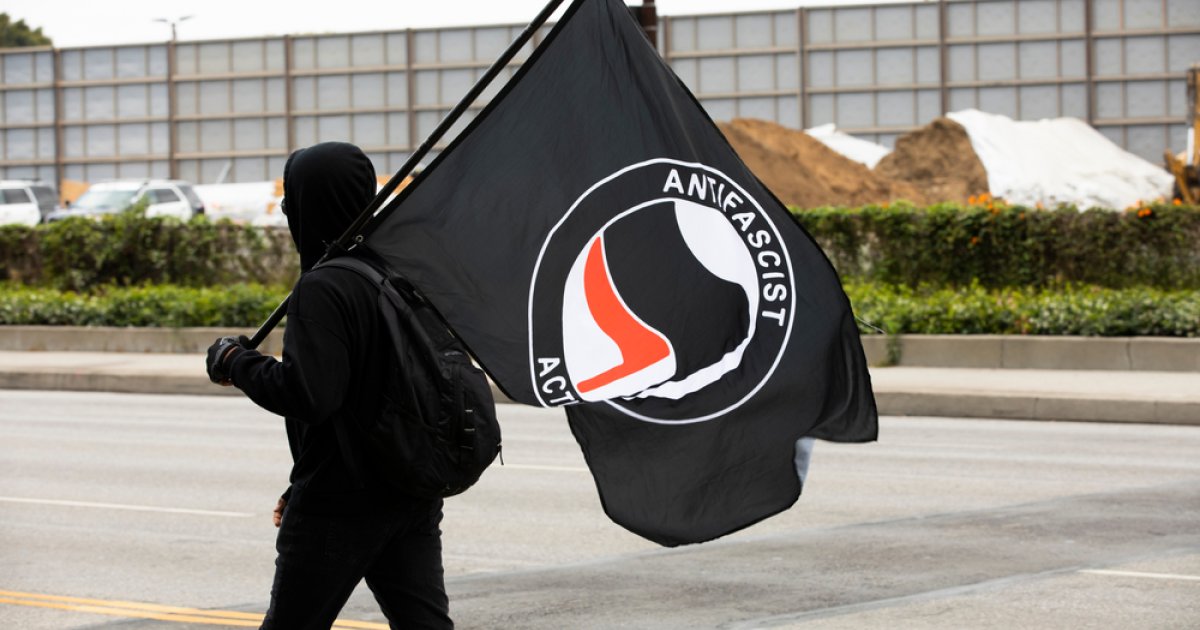
    If Texas law enforcement tries to infiltrate every group that identifies as antifa-adjacent, it’s going to be infiltrating a lot of knitting circlesvegan clubs, and faculty groups (including a FIRE client), the vast majority of which would catch the vapors if forced to watch a video of violence, let alone contemplate performing it with their own hands. 

    And even if they had the manpower, it would still be unlawful to target these groups simply for their beliefs. So presumably, law enforcement is going to narrow its scope to focus on a particular kind of antifa-aligned group — the kind that is actively planning to commit violent acts.

    But if law enforcement is capable of identifying which groups want to commit violent acts, then why bring ideology into it?

    The legendary and well-respected law enforcement agencies in the state of Texas would, I am sure, try to stop a far-right terror attack just as soon as they would a far-left terror attack. So what’s the point of targeting an ideology in this press release? 

    It makes the actions that follow constitutionally suspect by suggesting an unconstitutional motive: the targeting of political opponents. There’s no good reason to do it and a really good reason not to do it: If a group is targeted unlawfully, the evidence might be inadmissible, if it is, in fact, engaged in criminal activity.

    The only reason to bring ideology into it, as far as I can tell, is the inspiration of the president’s memo. A blunt instrument, indeed.

    Source link

  • MIT Rejects Proposed Federal Compact

    MIT Rejects Proposed Federal Compact

    Photo by Kevin Dietsch/Getty Images

    Massachusetts Institute of Technology has rejected the Trump administration’s proposal to sign on to the “Compact for Academic Excellence in Higher Education,” which would mandate sweeping changes across campus in exchange for preferential treatment on federal funding.

    MIT is the first of the nine universities invited to join the compact to publicly reject the proposal that has ignited fierce pushback from other higher ed leaders, faculty and experts who see the document as a way to strip institutions of their autonomy. The Trump administration also asked Brown University, Dartmouth College, the University of Arizona, the University of Pennsylvania, the University of Southern California, University of Texas at Austin, the University of Virginia and Vanderbilt University to sign. Most have provided vague statements saying that they are reviewing the compact, though Texas officials have expressed some enthusiasm about the offer.

    MIT President Sally Kornbluth announced the move in a Friday morning letter to the campus community, which included a copy of her response to Education Secretary Linda McMahon.

    Kornbluth highlighted in the response to McMahon a number of areas emphasized by the White House in the compact, such as focusing on merit, keeping costs low for students and protecting free expression. 

    “These values and other MIT practices meet or exceed many standards outlined in the document you sent. We freely choose these values because they’re right, and we live by them because they support our mission—work of immense value to the prosperity, competitiveness, health and security of the United States. And of course, MIT abides by the law,” Kornbluth wrote.

    She also noted that MIT disagreed with a number of the demands in the letter, arguing that it “would restrict freedom of expression and our independence as an institution” and that “the premise of the document is inconsistent” with MIT’s belief that funding should be based on merit.

    “In our view, America’s leadership in science and innovation depends on independent thinking and open competition for excellence,” Kornbluth wrote. “In that free marketplace of ideas, the people of MIT gladly compete with the very best, without preferences. Therefore, with respect, we cannot support the proposed approach to addressing the issues facing higher education.”

    This is a breaking news article and will be updated.

    Source link