Author: admin

  • Focus Friday: October 10 | HESA

    Focus Friday: October 10 | HESA

    Hi everyone,

    Tiffany here.

    A quick reminder that there is a Focus Friday session today (October 10) from 12:30–1:30pm Eastern on the Student Experience.

    I’ll be joined by Wasiimah Joomun (Executive Director, Canadian Alliance of Student Associations), Brendan Roberts (Executive Director, Students Nova Scotia), and Olamipo Ogunnote (Director of Advocacy and Strategic Partnerships, Ontario Student Voices) for a conversation on student experience—from campus culture and communication to what feels most different about being a student today.

    If you haven’t registered yet, it’s not too late. Register here.

    The format is simple: we’ll start with a few questions to our invited guests, then open the floor for a coffee-chat style discussion. Bring your ideas, hang out, and learn something new.

    Looking Back

    Two weeks ago, we launched our first Focus Friday with a big question: What will Canada’s post-secondary system need to look like to thrive by 2035?

    I was joined by Jackie Pichette from RBC Thought Leadership and Sunny Chan from the Business + Higher Education Roundtable (BHER), two people who’ve spent the past few months travelling the country with us, listening to hundreds of ideas about the future of higher ed. Together, we tried to pull those threads into a single conversation about where we go next.

    A few themes stood out:

    Both Jackie and Sunny agreed that Canada’s post-secondary system has to get much more comfortable with change. As Sunny put it, we’re still “a little scared of big changes.” From funding models to internal governance, we need more room, and more courage, to experiment. Jackie imagined a future where the morning news is full of stories about new programs and partnerships instead of program cuts. “I hope ten years from now I hear stories about innovation, not layoffs,” she said.

    That optimism came with some realism, too. Jackie talked about how Canada’s national priorities such as defence, AI, and energy, depend on colleges and universities producing the talent to match. Right now, she said, the gap between what’s needed and what’s being trained is wider than it should be.

    Sunny offered the employer perspective. Work-integrated learning has gone from a nice-to-have to an expectation, but the challenge now is building lasting partnerships instead of one-off placements. “The most successful collaborations,” she said, “aren’t projects with an end date—they’re embedded relationships.

    Another topic that kept coming up was AI. Jackie argued that AI literacy should be treated like critical thinking—something every student gains, regardless of discipline. Some institutions, like Ohio State University, have already made AI fluency mandatory for all students. Canadian institutions can’t afford to wait too long to follow suit.

    Of course, none of this happens without money and trust. Jackie pointed out that institutions need both more flexible funding and stronger financial aid if they’re going to modernize responsibly. And both speakers reflected on the erosion of public confidence in higher education. Sunny framed it simply: “If institutions can better tell their impact stories, it makes it easier for employers to champion them.”

    Looking ahead to 2035, both ended on a hopeful note. Jackie hopes that by then, lifelong learning will finally be the default where people can stack, pivot, and return to education without starting from scratch. Sunny envisions institutions that serve whole communities, not just students aged 18 to 22, acting as anchors of both economic and civic life.

    Want to listen or watch this discussion? You can find it on YouTube.

    Looking Ahead

    We’ll be turning next to enrolment. How it’s changing, what’s staying the same, and what institutions are learning along the way. That conversation happens on October 24, and registration is already open (see below, in a big green box).

    In the meantime, keep sharing your ideas in the registration form or reach out anytime at [email protected].

    I’m looking forward to seeing many of you this afternoon, and again in two weeks.

    Cheers,

    Tiff

    Source link

  • K-12 districts are fighting ransomware, but IT teams pay the price

    K-12 districts are fighting ransomware, but IT teams pay the price

    Key points:

    The education sector is making measurable progress in defending against ransomware, with fewer ransom payments, dramatically reduced costs, and faster recovery rates, according to the fifth annual Sophos State of Ransomware in Education report from Sophos.

    Still, these gains are accompanied by mounting pressures on IT teams, who report widespread stress, burnout, and career disruptions following attacks–nearly 40 percent of the 441 IT and cybersecurity leaders surveyed reported dealing with anxiety.

    Over the past five years, ransomware has emerged as one of the most pressing threats to education–with attacks becoming a daily occurrence. Primary and secondary institutions are seen by cybercriminals as “soft targets”–often underfunded, understaffed, and holding highly sensitive data. The consequences are severe: disrupted learning, strained budgets, and growing fears over student and staff privacy. Without stronger defenses, schools risk not only losing vital resources but also the trust of the communities they serve.

    Indicators of success against ransomware

    The new study demonstrates that the education sector is getting better at reacting and responding to ransomware, forcing cybercriminals to evolve their approach. Trending data from the study reveals an increase in attacks where adversaries attempt to extort money without encrypting data. Unfortunately, paying the ransom remains part of the solution for about half of all victims. However, the payment values are dropping significantly, and for those who have experienced data encryption in ransomware attacks, 97 percent were able to recover data in some way. The study found several key indicators of success against ransomware in education:

    • Stopping more attacks: When it comes to blocking attacks before files can be encrypted, both K-12 and higher education institutions reported their highest success rate in four years (67 percent and 38 percent of attacks, respectively).
    • Following the money: In the last year, ransom demands fell 73 percent (an average drop of $2.83M), while average payments dropped from $6M to $800K in lower education and from $4M to $463K in higher education.
    • Plummeting cost of recovery: Outside of ransom payments, average recovery costs dropped 77 percent in higher education and 39 percent in K-12 education. Despite this success, K-12 education reported the highest recovery bill across all industries surveyed.

    Gaps still need to be addressed

    While the education sector has made progress in limiting the impact of ransomware, serious gaps remain. In the Sophos study, 64 percent of victims reported missing or ineffective protection solutions; 66 percent cited a lack of people (either expertise or capacity) to stop attacks; and 67 percent admitted to having security gaps. These risks highlight the critical need for schools to focus on prevention, as cybercriminals develop new techniques, including AI-powered attacks.

    Highlights from the study that shed light on the gaps that still need to be addressed include:

    • AI-powered threats: K-12 education institutions reported that 22 percent of ransomware attacks had origins in phishing. With AI enabling more convincing emails, voice scams, and even deepfakes, schools risk becoming test grounds for emerging tactics.
    • High-value data: Higher education institutions, custodians of AI research and large language model datasets, remain a prime target, with exploited vulnerabilities (35 percent) and security gaps the provider was not aware of (45 percent) as leading weaknesses that were exploited by adversaries.
    • Human toll: Every institution with encrypted data reported impacts on IT staff. Over one in four staff members took leave after an attack, nearly 40 percent reported heightened stress, and more than one-third felt guilt they could not prevent the breach.

    “Ransomware attacks in education don’t just disrupt classrooms, they disrupt communities of students, families, and educators,” said Alexandra Rose, director of CTU Threat Research at Sophos. “While it’s encouraging to see schools strengthening their ability to respond, the real priority must be preventing these attacks in the first place. That requires strong planning and close collaboration with trusted partners, especially as adversaries adopt new tactics, including AI-driven threats.”

    Holding on to the gains

    Based on its work protecting thousands of educational institutions, Sophos experts recommend several steps to maintain momentum and prepare for evolving threats:

    • Focus on prevention: The dramatic success of lower education in stopping ransomware attacks before encryption offers a blueprint for broader public sector organizations. Organizations need to couple their detection and response efforts with preventing attacks before they compromise the organization.
    • Secure funding: Explore new avenues such as the U.S. Federal Communications Commission’s E-Rate subsidies to strengthen networks and firewalls, and the UK’s National Cyber Security Centre initiatives, including its free cyber defense service for schools, to boost overall protection. These resources help schools both prevent and withstand attacks.
    • Unify strategies: Educational institutions should adopt coordinated approaches across sprawling IT estates to close visibility gaps and reduce risks before adversaries can exploit them.
    • Relieve staff burden: Ransomware takes a heavy toll on IT teams. Schools can reduce pressure and extend their capabilities by partnering with trusted providers for managed detection and response (MDR) and other around-the-clock expertise.
    • Strengthen response: Even with stronger prevention, schools must be prepared to respond when incidents occur. They can recover more quickly by building robust incident response plans, running simulations to prepare for real-world scenarios, and enhancing readiness with 24/7/365 services like MDR.

    Data for the State of Ransomware in Education 2025 report comes from a vendor-agnostic survey of 441 IT and cybersecurity leaders – 243 from K-12 education and 198 from higher education institutions hit by ransomware in the past year. The organizations surveyed ranged from 100-5,000 employees and across 17 countries. The survey was conducted between January and March 2025, and respondents were asked about their experience of ransomware over the previous 12 months.

    This press release originally appeared online.

    Latest posts by eSchool Media Contributors (see all)

    Source link

  • Carnegie Mellon lays off 75 employees at engineering institute amid federal funding shifts

    Carnegie Mellon lays off 75 employees at engineering institute amid federal funding shifts

    This audio is auto-generated. Please let us know if you have feedback.

    Dive Brief:

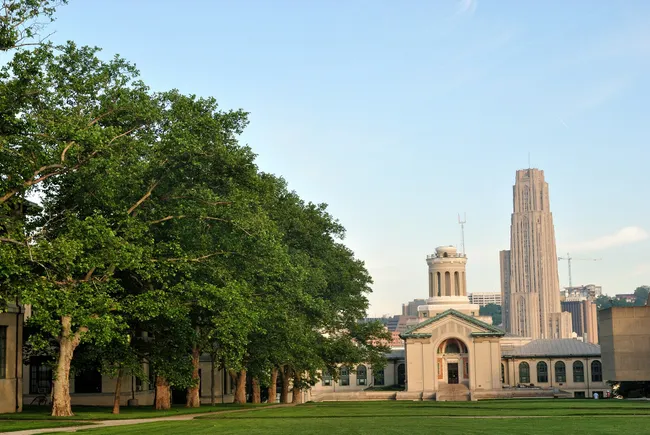
    • Carnegie Mellon University has laid off 75 employees in its Software Engineering Institute as it wrestles with disruptions to federal funding, according to a community message Wednesday from Vice President for Research Theresa Mayer.
    • Mayer tied the cuts — which amount to 10% of SEI’s workforce — to the engineering institute’s “unique financial structure as a federally funded research and development center as well as the shifting federal funding priorities that are shaping the research landscape.”
    • Carnegie Mellon as a whole is in a “strong financial position” for fiscal 2026, university President Farnam Jahanian said in August, noting that the Pittsburgh institution cut its expenses by $33 million.

    Dive Insight:

    Jahanian said in an August community message that Carnegie Mellon is poised to get through the current fiscal year without a deficit, which is more than some of its peer institutions can say. 

    But the university faces stiff financial headwinds — and what its president described as “existential challenges” — from the Trump administration’s disinvestment in scientific and academic research. 

    To tighten its budget, Carnegie Mellon has paused merit raises, reduced nonessential expenditures, limited new staff and faculty hiring, and has reduced staff in certain units through voluntary retirements and employee reductions.  

    In the August message, Jahanian described “signs of a marked decline in the pipeline of new federal research awards nationally and at Carnegie Mellon.” He added that university officials expect more cutbacks in federal agencies’ research budgets under a Republican-led Congress. 

    The university’s Software Engineering Institute, which Mayer described as integral to Carnegie Mellon’s overall research enterprise, is one of the institution’s biggest recipients of federal research funding. Sponsored by the U.S. Department of Defense, SEI develops new technologies and studies complex software engineering, cybersecurity and AI engineering problems, in large part to advance the strategic goals of federal agencies. 

    The institute took in $148.8 million in grants and contracts revenue in fiscal 2024. 

    Prior to this month’s job cuts, officials at the institute took “extensive steps to avoid this outcome, including implementing cost-saving measures in recent months,” Mayer said Wednesday. “Despite these efforts, SEI was unable to reallocate or absorb costs, so staff reductions were unavoidable.”

    Along with a slackening grant pipeline, Jahanian’s August message pointed to the possibility of reduced funding for research overhead costs. 

    The Trump administration has sought to unilaterally cap reimbursement rates for indirect research costs at 15% across multiple agencies, though these policies have been blocked by courts

    Carnegie Mellon is a plaintiff in one of the lawsuits that led to the 15% cap being permanently blocked at the National Institutes of Health, though the Trump administration has appealed the ruling. The university is also represented in lawsuits against other agencies through its membership in the Association of American Universities. 

    If a 15% cap were implemented on research overhead, that would create an additional $40 million annual shortfall for Carnegie Mellon, according to Jahanian. Indirect research costs include overhead expenses such as laboratories and support staff. 

    Beyond federal funding woes, Jahanian also noted in August that Carnegie Mellon’s projected $365 million in graduate tuition revenue for the current fiscal year is about $20 million short of initial estimates due to “lower-than-expected enrollment.”

    While Jahanian didn’t offer reasons for the shortfall, he did note that going forward Carnegie Mellon was examining its balance of undergraduate to graduate and international to domestic students to “ensure long-term stability.”

    Other universities have experienced major declines in their international enrollment amid the Trump administration’s disruptions to the visa approval process and aggressive immigration policies. 

    Officials at DePaul University, in Chicago, said recently that new international graduate student enrollment fell by 62% year over year this fall, contributing heavily to a budget crunch at the institution. 

    One group has predicted that international enrollment could drop by as much as 150,000 students this fall. 

    In recent years, Carnegie Mellon’s enrollment has grown, as has its graduate student ranks. Between 2018 and 2023, overall enrollment increased 11.2% to 15,596 students and graduate enrollment grew 11.7% to 8,307 students.

    Source link

  • Virginia lawmakers threaten state funding consequences if UVA signs Trump compact

    Virginia lawmakers threaten state funding consequences if UVA signs Trump compact

    This audio is auto-generated. Please let us know if you have feedback.

    Dive Brief:

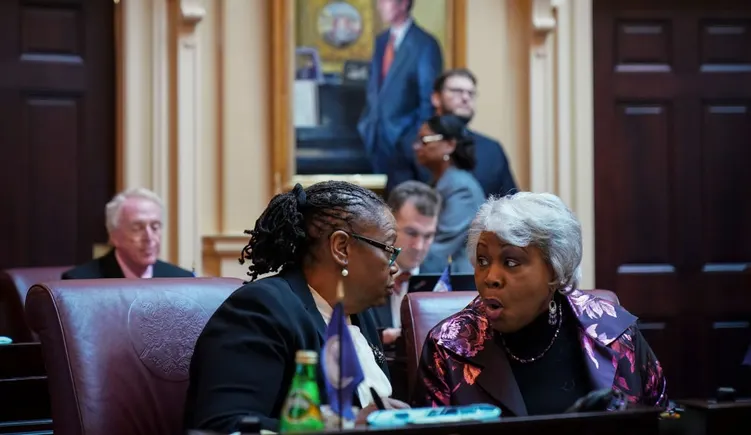
    • Three leading Virginia state senators this week urged University of Virginia’s top officials to immediately reject the Trump administration’s proposed higher education compact and threatened the institution’s state funding if they signed on.
    • In an Oct. 7 letter to UVA leaders, Democratic state Sens. Scott Surovell, L. Louise Lucas and Mamie Locke called the federal government’s conditions “an unprecedented federal intrusion into institutional autonomy and academic freedom.” 
    • Agreeing to those terms would invite further federal interference at the university, the trio said, citing the Trump administration’s recent ouster of UVA’s president. If UVA agrees to the compact, they warned, the institution will face “significant consequences in future Virginia budget cycles.”

    Dive Insight:

    The Trump administration’s compact would offer UVA, along with eight other research universities, preferential access to federal research funding if they agree to its wide-ranging and unprecedented conditions. 

    Some of those terms are straightforward, such as a five-year tuition freeze, a standardized testing requirement for admissions and a 15% cap on international students’ share of undergraduate enrollment.

    Others are less clear cut, including required public audits of the viewpoints of employees and students, institutional neutrality on most political and social events, and a commitment to changing — or ending — institutional units that purposefully “punish” or “belittle” conservative ideas.

    All of the proposed conditions of the agreement “are fundamentally incompatible with the mission and values of a premier public research university,” the lawmakers told UVA Interim President Paul Mahoney and Rachel Sheridan, head of the institution’s governing board. 

    For instance, the state senators raised alarms about one element of the compact that would bar signatories with large endowments from charging tuition for students enrolled in “hard science programs.”

    That would force students in humanities and social sciences “to subsidize” those enrolled in STEM programs, representing “a bizarre federal intrusion into institutional financial planning that devalues essential fields of study,” they wrote. 

    “This is not a partnership,” the lawmakers said. “It is, as other university leaders have aptly described, political extortion.”

    Surovell, Lucas and Locke wield significant legislative power as the state Senate majority leader, president pro tempore and chair of the Senate Democratic Caucus, respectively. They underlined this influence in their letter, vowing “to ensure that the Commonwealth does not subsidize an institution that has ceded its independence to federal political control.”

    The three senators pointed specifically to the forced departure of former UVA President Jim Ryan, who abruptly resigned in June amid federal pressure to step down over the university’s diversity efforts during his seven-year tenure. 

    In his announcement, Ryan said he wouldn’t fight back against the Trump administration and attempt to keep his job because staying would cost UVA research funding and student aid and hurt its international students.

    Federal officials ousted Ryan, the state senators said, “not for any failure of leadership, but because they disagreed with the University’s approach to diversity and inclusion.” They categorized Ryan as a successful leader who was made into a political sacrifice — one that didn’t stave off further interference.

    “President Ryan’s resignation was meant to spare the University from federal retaliation, yet here we are again, facing even more aggressive demands on institutional autonomy,” they told UVA leaders. “The lesson is unmistakable — appeasing this Administration only emboldens further encroachment.”

    UVA faculty similarly called for institutional leaders to rebuke the compact. In a 60-2 vote, the university’s faculty senate approved a resolution on Oct. 3 whose preamble called the proposal dangerous to UVA and a likely violation of state and federal law.

    The Trump administration gave the nine universities until Oct. 20 to offer feedback on the compact and until Nov. 21 to sign the agreement.

    Source link

  • You have a story idea. Now what?

    You have a story idea. Now what?

    If you have already eaten a lot of cake another piece will make you sick. Maybe you are trying to stay healthy and sugary foods aren’t healthy. But maybe you have eaten healthy all week and deserve a treat. Or it is a new cake recipe your friend came up with. Or it’s your birthday. All those are great reasons to have that piece of cake now.

    Identify a “news angle”

    The achievement of your healthy diet, or the new recipe or your birthday are like news angles. They are the reason you will eat cake now. They also answer the question: What’s so special about this piece of cake?

    If you think of a story topic like this cake, the angle will define which direction the topic will take.

    You could tell your editor that your angle is that the carbon tax is new and experts think it might not be as effective in cutting emissions as politicians promise. Or the carbon tax is the latest in a series of taxes imposed by the government and people are so sick of taxes, they might vote in an anti-tax political party in the next election. Or maybe next week is a big anniversary for the environmental group that pushed for the tax in the first place — it’s kind of like their birthday.

    If your pitch was basically, “I think the carbon tax would make a great story,” your editors would likely pass on it. But maybe these pitches would catch their attention: 

    • A carbon tax just passed in Denmark marks a new way of lowering carbon emissions and other governments and political parties are watching to see if it works. If it doesn’t, it could set back the push for clean energy not only in Denmark, but across Europe.
    • The carbon tax in Denmark is a gamble on the part of the country’s environmental advocates. Increasing numbers of voters believe they are already overtaxed. If it isn’t as effective as promised it could push people to vote for conservative, anti-tax politicians.
    • Next month is the twentieth anniversary of Denmark’s Green Party. But amid the celebrations is some real concern. The environmental movement has placed a big bet on the new carbon tax — which has garnered significant opposition. 

    If it’s difficult to find an angle for your topic, start telling people around you about your topic and about what you’ve discovered through your research. What kinds of questions do they ask about it? What do they seem to be interested in? Do they ask you something that makes you think, hmm, that’s a good question! If so, then you’ve found your angle. 

    Narrow your focus

    There might be so many angles you end up all over the place. Editors won’t okay a story that they think will come in as a confusing mess. So it is also important to narrow your focus. In telling stories we are often tempted to tell people everything, but listeners and readers have short attention spans and limited appetites. How much cake can you eat in one sitting? 

    So think about what you want the focus of your story to be. It’s about a carbon tax. But is your focus on the effectiveness of it in lowering emissions? In that case you want to interview climate scientists. Is the focus about the politics of the tax? Then you want to talk to political experts. Maybe the story is about the cost of the tax on the economy. Then you will want to talk to economists and everyday taxpayers. 

    Before pitching the story, consider the one thing the story will be about, how you will focus on it and why that is important or interesting or relevant to the audience of the publication or show.

    Don’t worry that your focus is too narrow. You can use something small happening in a small place to tell a big story.

    What happens in Denmark could be emblematic of what is happening elsewhere or will likely happen elsewhere. The effects of one tax in one place could help explain the challenges of funding climate solutions in general. 

    Identify the problem and who it affects.

    The smaller the story, the easier it is for people to consume it and understand it and that is what your editors will look for in a pitch. 

    It is important to identify what is at stake and who will be affected by the problem at the heart of your story – the “stakeholders”. In a story about a carbon tax, are the people most affect the companies who pollute? Is it the taxpayers? Is it the environmentalists frustrated by the lack of action on climate change? Is it the politicians who risk losing the next election or the opposition candidates who might win office?

    Finally, do some initial research so you can present to the editors some information that shows the importance of the story and come up with a plan for how you will report it. Before an editor okays a story they want to be confident you can actually do it. 

    Here is how to construct a strong pitch:

    1. State what the problem is and why this is an important story now.: Remember to narrow your focus. Editors won’t likely okay pitches that are too vague or broad. 
    2. State how you plan to find a possible solution
    3. State the main data and the important context – What it is that makes this story important or particularly interesting or relevant to the audience.
    4. Who the problem affects.
    5. The news angle: Why is it relevant now
    6. How you plan to go about reporting the story– the data or reports you will seek the people you plan to interview.
    7. The big question your story will answer.

    Be concise

    Here is the real challenge: You have to keep it all short. Your pitch needs to show your editor that you don’t waste words and that you won’t turn in a story that’s a long, tedious, confusing read. Try to keep it to less than 300 words. 

    Be clear. Say only what you need to say. Don’t make your pitch flowery or use exclamation points. Keep to facts and keep out assumptions or biases. Don’t try too hard to convince. If the story idea is a good one it should convince on its own. 

    Finally, let’s give you an example. Imagine you are my editor and I am pitching a story about how to pitch a story. Here is my pitch. It is 194 words. 

    Young people around the world are itching to tell stories about the problems they see around them. But they find the pitching process intimidating. They’ve got big ideas but don’t know how to come up with an idea out of those big ideas that would grab the attention of an editor. Their story pitches end up too broad, vague and with too many angles.

    The result is that important stories don’t get told. I plan to talk to editors about the pitching process and identify the elements that make a strong pitch and the common problems they see in weak pitches. I will also rely on information put together by News Decoder’s Engaging Youth in Environmental Storytelling (EYES) project. 

    The story is timely because 19 October is World Mental Health Day and reporting and telling non-fiction stories is a great way for young people to think through the big problems they face and that they see in the world around them and to talk to experts who can help them put it all into context. 

    Ultimately, my story will answer this question: Why do some stories get published but other, equally important stories don’t?


    Source link

  • Learn SPSS Online for MBA Projects: Free Resources Inside

    Learn SPSS Online for MBA Projects: Free Resources Inside

    How to do regression analysis in spss

    Regression Analysis is a analysis process where the relationship between one dependent variable is evaluated with one or more independent variables. Regression Analysis are mainly used for prediction and forecasting. To define as an example, a doctor can quantify how much each factor will contribute to the overall risk of patients.

    Regression Analysis is a analysis process where the relationship between one dependent variable is evaluated with one or more independent variables. 

    Types of Regression Analysis

    1. Simple Linear Regression: Used for evaluating the relationship of one dependent variable with one independent variable.

    Formula: Y=a+bX+

    Where:

    Y=Dependent Variable (Outcome)

    X=Independent variable (Predictor)

    a= Intercept (Value of Y when X=0)

    b=Slope (how much Y changes for a one unit increase in X)

    = Error Term.

    1. Multiple Linear Regression: It is used for evaluating two or more independent variable to predict a dependent variable.

    Formula:Y=a+b_1 X_1+b_2 X_2+⋯+b_n X_n+ϵ

    Performing Regression Analysis in SPSS

    In SPSS performing regression analysis is extremely easy as it used a menu driven interface which allows user to perform the analysis in a few clicks. Once the dataset is imported in the system the user has to select the dependent and independent variables. The software will immediately calculate regression coefficient, R-squared values and the model fit statistics.

    Source link

  • Which Higher Ed Cases Will SCOTUS Take On?

    Which Higher Ed Cases Will SCOTUS Take On?

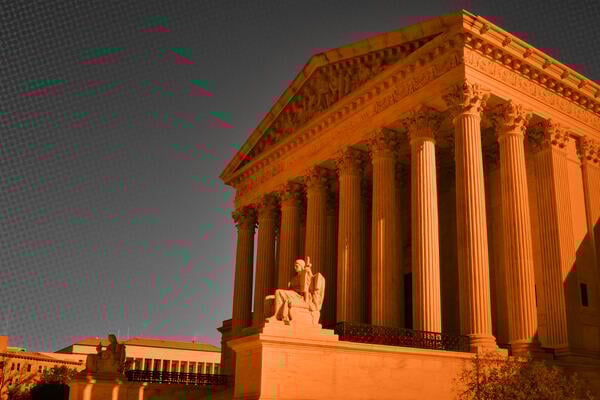
    As the Supreme Court begins its new term this week, legal experts predict that higher education will be a frequent subject for the justices. Yet only two college-related cases—both of which center on transgender rights—are currently listed on the main docket.

    That’s in large part because of a less formal but increasingly popular second list of cases known as the shadow docket.

    Historically, the shadow docket, also called the emergency docket, was used on rare occasions for just that—emergencies. In situations when the lack of a ruling from the highest court could lead to immediate, irreversible consequences, this alternate route allowed the justices to move quickly and issue an interim decision without going through traditional processes such as briefings, oral arguments or written opinions. But over the course of the past three administrations, use of this secondary docket has skyrocketed, creating a lack of predictability and an immense sense of uncertainty for the public.

    Normally, it can take months for a case’s petition to be processed, and then once a case is on the docket it can take even longer for it to be heard and ruled upon. This leaves the parties directly involved—and all who may be affected by the decision—time to prepare and create contingency plans for the potential outcomes. But when the shadow docket is used, cases can be introduced and receive a ruling in a matter of weeks, if not days, often without any explanation.

    Higher education institutions have already seen the repercussions this can have: Using the shadow-docket process, SCOTUS has overturned lower-court rulings on critical issues including the continuation of federal research funding and major cuts to staffing at the Department of Education.

    “Some of these are existential issues about whether universities can continue to function in the way in which they functioned for the past half century,” said former Brandeis University president Fred Lawrence, a higher education legal expert and distinguished lecturer at Georgetown Law. “If erring on the side of caution means shutting down your research operation, then you are unrecognizable to yourself. So it creates a very, very difficult situation for higher education to function.”

    While it remains unclear how and when various cases will reach the Supreme Court, Lawrence and others say they have a fairly good idea of what those cases will likely concern. Issues including visa policies for international students and scholars, First Amendment rights, academic freedom, and federal funding are likely to be on the line.

    Here’s a quick summary of the cases—on and off the main docket—that experts say colleges and universities should keep a close eye on.

    Transgender Athletes

    On the first day of his second term in office, President Donald Trump signed an executive order banning “gender ideology” and declaring that the government would only recognize two sexes, male and female. Less than a month later, he signed a second order banning transgender women from participating in women’s sports.

    For now, both declarations—and their implications for collegiate sports—are up for consideration by the highest court through two cases, West Virginia v. B.P.J and Little v. Hecox.

    Though the former concerns a transgender girl in high school and the latter a transgender woman at Boise State University, the cases are otherwise largely the same. Both involve runners who attempted to participate in track and cross-country but were barred from doing so by state law. And up until a little over a month ago, both were set to be heard before the court at some point this term.

    But on Sept. 2 Hecox filed a motion urging the Supreme Court to dismiss her case. In the six-page filing, Hecox’s lawyers explained that due to illness, her father’s recent passing and the “negative public scrutiny” stemming from the litigation, she no longer wished to participate in women’s sports, rendering the case moot.

    Still, given the court’s conservative supermajority and their penchant for siding with the Trump administration, some wonder if Hecox’s plea to the court is an attempt to avoid an unfavorable final decision. (Hecox won her case at both the district and circuit court levels.)

    Jill Siegelbaum, a former assistant general counsel at the Department of Education and now a partner at Sligo Law Group, said that she understands both the theoretical idea that Hecox could be fearing a loss and the more personal rationale for dismissing the case.

    “Every single attorney involved in that case is well aware of who is sitting on the court and the decisions that the court has recently made in the area of transgender rights,” she said. “But I can also say that on its own, simply the fear for her emotional, physical and mental health that would come from further publicity about this case … would certainly be, in my opinion, a reasonable basis for withdrawing.”

    So far, it’s unclear whether the court will respect Hecox’s request. But even if the case were dismissed, Siegelbaum and others said, West Virginia v. B.P.J., will almost certainly remain, eventually leading to a ruling on the same overarching issue—interpreting Title IX’s equal protection clause.

    Sarah Hartley, a partner and co-chair of the higher education team at BCLP, a law firm headquartered in St. Louis, stressed that regardless of the outcome, the ruling’s implications for colleges and universities could be influenced by what questions the justices ask and how they write their opinions.

    “Depending on how the decision is worded, it could have broader impacts than just sport. It could address bathrooms, locker rooms—any number of different things that Title IX and other antidiscrimination laws historically have protected,” she said.

    Hartley added that in her view, lack of access to even recreational activities could be a major blow to the mental health of an already “highly marginalized community.”

    “Imagine it affecting your club sports at universities or in high schools, or in gym class when there’s any sex segregation,” she said. “As someone who’s particularly concerned with the access to sport because of all the positive impacts it can have, I think the trickle-down effect … will be a big deal.”

    Shadow Docket

    Higher education legal experts are also keeping a close eye on the shadow docket, as well as on cases that were already addressed on the emergency docket, were sent back to the lower court and now are steadily working their way back up to the Supreme Court for a final merit ruling.

    Jessica Ellsworth, a partner at Hogan Lovells and adviser for the American Council on Education, said she thinks the shadow docket cases are the ones that have a “real impact” on higher education.

    She added that multiple stays have already been granted on issues like Trump’s ability to terminate congressionally appropriated funds, slash government agencies’ staffs and tighten immigration policies that affect college enrollment. In doing so, the Supreme Court blocked injunctions from the lower courts, allowing the Trump administration to carry out policies before the justices have fully analyzed the facts of the case, considered friend-of-the-court briefs or heard the arguments of each party.

    Moving forward, “I suspect that we will see First Amendment challenges make their way to the court related to ongoing efforts by the administration to force changes across universities and use threats of cutting off funding to compel those changes,” Ellsworth said. “As a result, it’s important for higher education to keep an eye on both the merits and emergency docket for the foreseeable future.”

    Hartley from BCLP noted that transgender rights issues are also on the shadow docket through the case Trump v. Orr, which weighs a transgender or nonbinary individual’s ability to obtain a passport that matches their gender identity. If this ruling is interpreted to extend to IDs beyond passports, it could lead to all kinds of inconsistency between gender presentation and government identification, creating significant hurdles for many university operations, she said.

    “You could see complaints that a student who’s male presenting is living in a female dorm, which could then give rise to invasive investigations and force a student to disclose things that they might want to make otherwise private,” she explained.

    And while any number of these cases could eventually make it back to the Supreme Court for a final ruling, Lawrence from Georgetown said it’s too soon to predict what will make the cut; just a week into the new term, “the Supreme Court has barely put together its docket for the year,” he said.

    But even if these issues do make it back for a full merit review, he added, it may be too late. So far, the Supreme Court has struck down the injunctions blocking Trump from carrying out his policies on every higher ed case that has reached the shadow docket. And in many cases, he said, doing that is like allowing a development company to tear down a historic home before a court has ruled on whether it sits on protected land. Even if the court eventually rules that the property should have been shielded, once the house is gone, it will be impossible to restore.

    “If you don’t provide that temporary remedy, then there may be no point to a remedy at all,” Lawrence explained.


    Source link

  • Universities Are Curators of Knowledge, Not Chaos (opinion)

    Universities Are Curators of Knowledge, Not Chaos (opinion)

    In a year already defined by polarization and violence, the assassination of Charlie Kirk at Utah Valley University plunged higher education into crisis. The killing of one of the nation’s most prominent conservative activists on a college campus has been weaponized by political factions, prompting administrative crackdowns and faculty firings. What were once familiar battles in the campus culture wars have escalated into something more dangerous: a struggle over the very conditions of inquiry, where violence, scandal and political pressure converge to erode academic freedom. And now, a proposed “compact” with higher education institutions would seek to condition federal funding on requirements that colleges ensure a “broad spectrum of viewpoints” in each academic department and that they abolish “institutional units that purposefully punish, belittle, and even spark violence against conservative ideas.”

    At the center of this struggle lies a persistent illusion: that the university should provide a platform for “every perspective.” Critics claim campuses suppress conservative voices or silence dissenting students, arguing institutions should resemble open marketplaces where all viewpoints compete for attention. Enticing as this rhetoric may be, the expectation is both unworkable and misguided. No university can present every possible outlook in equal measure, nor should it. The mission of higher education is more demanding: to cultivate, critique and transmit knowledge while attending to perspectives that have shaped history and public life. The contrast between an endless marketplace of opinion and the rigorous pursuit of knowledge is crucial to understanding what universities are for.

    Karl Mannheim once distinguished between ideology and knowledge, cautioning against their uncritical conflation. That warning remains essential. Universities are not platforms for unchecked ideology but institutions dedicated to showing how knowledge emerges through observation, interpretation, critique and debate. Perspectives matter, but exposure alone is insufficient; they must be contextualized and weighed against evidence. Free speech and academic freedom overlap but are not the same. Free speech protects individuals from state repression in public life. Academic freedom protects scholars in their pursuit of inquiry and ensures students gain the tools to test claims critically. The distinction is central: The university has an obligation not to amplify all voices equally, but to cultivate discernment.

    This does not mean shielding students from offensive or discredited ideas. On the contrary, a serious education requires grappling with perspectives that once commanded influence, however abhorrent they may now appear. Students of American history must study the intellectual justifications once advanced for slavery—not because they deserve validation, but because they shaped institutions and legacies that continue to structure society. Students of religious history should encounter theological controversies that once divided communities, whether or not they resonate today, because they explain enduring traditions and conflicts. To include such perspectives is not to offer them equal standing with contemporary knowledge, but to illuminate their historical weight and consequences.

    Confusing exposure with endorsement—or opinion with knowledge—risks leaving students adrift in noise. Universities are not megaphones for any thesis but arenas where students learn how to evaluate sources, test claims and trace the consequences of ideas over time. Academic freedom does not mean a free-for-all. Instead, it allows scholars to curate, critique and contextualize knowledge—including ideas that are controversial, even offensive or (as in the study of slavery or fascism) historically consequential. Education that multiplies opinions without cultivating methods of judgment undermines critical capacity; education that fosters discernment equips students to enter public debates wisely and responsibly.

    Recent events in higher education reveal how fragile these principles have become. Violence itself intimidates expression, but administrative and political overreaction magnifies the threat. Faculty have been disciplined for social media posts. In Texas, a lecturer was dismissed for teaching about gender identity. In California, University of California, Berkeley administrators released to federal authorities the identities of more than a hundred students and faculty whose names appeared (as accused, accuser or affected party) in complaints about antisemitism. Faculty watch colleagues punished unjustly, while students—especially international and marginalized ones—face surveillance and potential charges. Across the country, dissent is mistaken for hate, controversial speech treated as threat and scandal avoidance prioritized over defending expressive rights.

    Academic freedom has long enjoyed special constitutional protection, granting professors wide latitude in teaching and research. But this protection depends on public trust: the sense that higher education fosters critical inquiry rather than partisan indoctrination. When professors behave as ideologues or exercise poor judgment in public, that trust erodes. Yet the greater danger comes not from individual missteps but from capitulating to the demand that every perspective deserves equal standing—or from letting violence and political pressure set the boundaries of what may be said. Higher education should not resemble a bazaar of endless opinion but a community dedicated to the disciplined creation, transmission and critique of knowledge. By training students not to hear every voice equally but to weigh evidence and evaluate claims, universities preserve both their scholarly mission and their democratic role. Institutions that cave to intimidation, or that mistake neutrality for abdication, abandon their responsibility to defend inquiry.

    Equally important, universities serve as legitimating institutions. To place a perspective within their walls signals that it merits serious study, that it has crossed the threshold from private belief to public knowledge. This conferral of legitimacy makes curatorial responsibility critical. Treating perspectives as interchangeable voices distorts the university’s purpose, but so does admitting or excluding them solely under political pressure. Both compromises undermine credibility. External actors understand this and exploit universities’ legitimating authority, pressing institutions to provide platforms that elevate discredited or dangerous views into claims of scholarly validation. The responsibility of the university is not to magnify every claim in equal volume but to steward the line between ideas worth engaging and those demanding correction or refusal. Only in this way can institutions preserve their academic mission and their democratic contribution.

    The way forward is neither unbounded opinion nor fearful silence. It is the principled defense of creating, critiquing and reimagining knowledge through inquiry guided by evidence and protected from violence and censorship. To retreat from this responsibility is to weaken not only higher education but democracy itself.

    Gerardo Martí is the William R. Kenan Jr. Professor of Sociology at Davidson College.

    Source link

  • “New Collaborations Needed” as U.S. Cuts Global Health Funds

    “New Collaborations Needed” as U.S. Cuts Global Health Funds

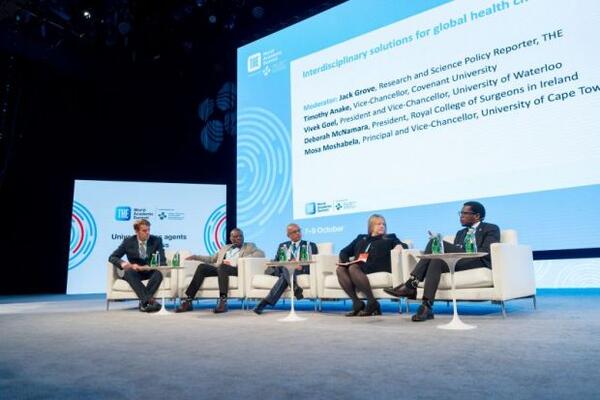
    Universities focused on global health will have to collaborate more with each other and with industry and philanthropic organizations in the face of the Trump administration’s multibillion-dollar aid cuts, according to academic leaders from around the world.

    Funding covering projects tackling conditions such as AIDS, tuberculosis and Ebola has been upended since Donald Trump returned to power in January, and speakers at Times Higher Education’s World Academic Summit said that it would be impossible to replace the lost dollars overnight.

    Mosa Moshabela, vice chancellor of the University of Cape Town, said that his institution had been one of the largest recipients of National Institutes of Health funding outside the U.S., supporting projects in areas such as HIV and tuberculosis prevention, and that his institution had been “impacted a lot” by the White House’s decisions.

    “We realize the danger of having placed all our eggs in one basket, pretty much,” said Moshabela, himself a leading public health researcher.

    “We know that, in terms of scale of funding, we’re not necessarily going to have one source that can replace the amount [we received] from the NIH, but by spreading our partnerships we can still achieve similar results—and we are strengthening our partnerships in the Middle East, in Asia, across the globe, and also looking at new donors that are coming through.”

    Moshabela said that Cape Town was also putting pressure on the South African government to increase research spending, highlighting that it currently spent only 0.6 percent of gross domestic product in this area, despite a long-standing target for the outlay to reach a minimum of 1.5 percent.

    “Even between universities, we are adopting the principle of cooperation over competition,” Moshabela continued.

    “For a long time, we were competing for the same sources of funding, but now what we’re trying to do as a strategy is to cooperate more rather than compete over sources of funding.”

    Vivek Goel, vice chancellor of Canada’s University of Waterloo, agreed that it would take time to fill the funding gap left by U.S. cuts.

    “I don’t think it’s realistic to expect that overnight we are going to fill those gaps,” he said. “I think we became very reliant on a certain model … I think in collaboration between governments, philanthropy, industry and our institutions we can come up with new ways of working that can replace that work [on global health, but] not necessarily all of that funding.”

    Goel, another public health researcher, highlighted that it was not just U.S. funding that was being lost, pointing to research that was funded by Canadian sources or philanthropic organizations but that depended on clinics or infrastructure operated by the United States Agency for International Development. Researchers may also lose access to Centers for Disease Control data, he warned.

    Drawing down funding for global health research in the future will require a change of mindset, Moshabela argued, such as focusing on solutions with wider commercial benefit to attract the support of pharmaceutical companies and working to develop broader ecosystems and not just clinical interventions to win funding from philanthropists.

    Deborah McNamara, president of RCSI University of Medicine and Health Sciences, said that Western universities should approach the funding challenges “with humility.”

    “Our partners in the Global South have been doing more with less for a very, very long time,” she noted.

    “I think we’ve all observed over time waste in development funding, and in the surgical arena certainly we often discover [that] at hospitals that we work with they have large amounts of donated equipment that perhaps can’t be maintained, can’t be run, [and] isn’t operational.

    “By listening more we can reduce the waste that happens and direct [funding] more effectively.”

    Source link

  • College Degree Aspirations on the Decline

    College Degree Aspirations on the Decline

    As public skepticism about the value of a college degree persists, the number of students who expect to earn one is also on the decline. 

    Between 2002 and 2022, the percentage of students surveyed who said they expected to earn a bachelor’s degree or higher fell from 72 percent to 44 percent, according to a research brief the Pell Institute for the Study of Opportunity in Education published Tuesday. 

    During the same time frame, the percentage of first-generation students who aspired to earn a degree fell from 60 percent to 33 percent; among students with at least one college-educated parent, degree aspirations dropped from 83 percent to 53 percent. 

    “The decline in college aspirations among first-generation students is deeply concerning,” Kimberly Jones, president of the Council for Opportunity in Education, which oversees the Pell Institute, said in a news release. “These students have long faced systemic barriers to higher education, and this data underscores the urgent need for renewed investment in outreach, support, and affordability—including through programs like TRIO and the Pell Grant.”

    But in his quest to shrink the size of the federal government, President Donald Trump has proposed cutting funding for TRIO—a set of federally funded programs that support low-income, first-generation college students and students with disabilities as they navigate academic life. 

    Major cuts to the federal government also mean it will be harder to produce reports like the one the Pell Institute released this week. That’s because such studies rely on data from now-discontinued longitudinal surveys that were administered by the National Center for Education Statistics; the Trump administration fired all but a handful of NCES employees earlier this year. 

    “Without the continuation of these programs, it will be much harder to track the progress of high school, first-generation, and college students and to learn how to improve education outcomes,” Sean Simone, vice president of research at COE, said in the news release. 

    Source link