Author: admin

  • What the saga of Oxford Business College tells us about regulation and franchising

    What the saga of Oxford Business College tells us about regulation and franchising

    One of the basic expectations of a system of regulation is consistency.

    It shouldn’t matter how prestigious you are, how rich you are, or how long you’ve been operating: if you are active in a regulated market then the same rules should apply to all.

    Regulatory overreach can happen when there is public outrage over elements of what is happening in that particular market. The pressure a government feels to “do something” can override processes and requirements – attempting to reach the “right” (political or PR) answer rather than the “correct” (according to the rules) one.

    So when courses at Oxford Business College were de-designated by the Secretary of State for Education, there’s more to the tale than a provider where legitimate questions had been raised about the student experience getting just desserts. It is a cautionary tale, involving a fascinating high-court judgment and some interesting arguments about the limits of ministerial power, of what happens when political will gets ahead of regulatory processes.

    Business matters

    A splash in The Sunday Times back in the spring concerned the quality of franchised provision from – as it turned out – four Office for Students registered providers taught at Oxford Business College. The story came alongside tough language from Secretary of State for Education Bridget Phillipson:

    I know people across this country, across the world, feel a fierce pride for our universities. I do too. That’s why I am so outraged by these reports, and why I am acting so swiftly and so strongly today to put this right.

    And she was in no way alone in feeling that way. Let’s remind ourselves, the allegations made in The Sunday Times were dreadful. Four million pounds in fraudulent loans. Fake students, and students with no apparent interest in studying. Non-existent entry criteria. And, as we shall see, that’s not even as bad as the allegations got.

    De-designation – removing the eligibility of students at a provider to apply for SLC fee or maintenance loans – is one of the few levers government has to address “low quality” provision at an unregistered provider. Designation comes automatically when a course is franchised from a registered provider: a loophole in the regulatory framework that has caused concern over a number of years. Technically an awarding provider is responsible for maintaining academic quality and standards for its students studying elsewhere.

    The Office for Students didn’t have any regulatory jurisdiction other than pursuing the awarding institutions. OBC had, in fact, tried to register with OfS – withdrawing the application in the teeth of the media firestorm at the end of March.

    So everything depended on the Department for Education overturning precedent.

    Ministering

    It is “one of the biggest financial scandals universities have faced.” That’s what Bridget Phillipson said when presented with The Sunday Times’ findings. She announced that the Public Sector Fraud Authority would coordinate immediate action, and promised to empower the Office for Students to act in such cases.

    In fact, OBC was already under investigation by the Government Internal Audit Agency (GIAA) and had been since 2024. DfE had been notified by the Student Loans Company about trends in the data and other information that might indicate fraud at various points between November 2023 and February 2024 – notifications that we now know were summarised as a report detailing the concerns which was sent to DfE in January 2024. The eventual High Court judgement (the details of which we will get to shortly) outlined just a few of these allegations, which I take from from the court documents:

    • Students enrolled in the Business Management BA (Hons) course did not have basic English language skills.
    • Less than 50 per cent of students enrolled in the London campus participate, and the remainder instead pay staff to record them as in attendance.
    • Students have had bank details altered or new bank accounts opened in their name, to which their maintenance payments were redirected.
    • Staff are encouraging fraud through fake documents sent to SLC, fake diplomas, and fake references. Staff are charging students to draft their UCAS applications and personal statements. Senior staff are aware of this and are uninterested.
    • Students attending OBC do not live in the country. In one instance, a dead student was kept on the attendance list.
    • Students were receiving threats from agents demanding money and, if the students complained, their complaints were often dealt with by those same agents threatening the students.
    • Remote utilities were being used for English language tests where computers were controlled remotely to respond to the questions on behalf of prospective students.
    • At the Nottingham campus, employees and others were demanding money from students for assignments and to mark their attendance to avoid being kicked off their course.

    At the instigation of DfE, and with the cooperation of OBC, GIAA started its investigation on 19 September 2024, continuing to request information from and correspond with the college until 17 January 2025. An “interim report” detailing emerging findings went to DfE on 17 December 2024; the final report arrived on 30 January 2025. The final report made numerous recommendations about OBC processes and policies, but did not recommend de-designation. That recommendation came in a ministerial submission, prepared by civil servants, dated 18 March 2025.

    Process story

    OBC didn’t get sight of these reports until 20 March 2025, after the decisions were made. It got summaries of both the interim and final reports in a letter from DfE notifying it that Phillipson was “minded to” de-designate. The documentation tells us that GIAA reported that OBC had:

    • recruited students without the required experience and qualifications to successfully complete their courses
    • failed to ensure students met the English language proficiency as set out in OBC and lead provider policies
    • failed to ensure attendance is managed effectively
    • failed to withdraw or suspend students that fell below the required thresholds for performance and/or engagement;
    • failed to provide evidence that immigration documents, where required, are being adequately verified.

    The college had 14 days to respond to the summary and provide factual comment for consideration, during which period The Sunday Times published its story. OBC asked DfE for the underlying material that informed the findings and the subsequent decision, and for an extension (it didn’t get all the material, but it got a further five days) – and it submitted 68 pages of argument and evidence to DfE, on 7 April 2025. Another departmental ministerial submission (on 16 April 2025) recommended that the Secretary of State confirm the decision to de-designate.

    According to the OBC legal team, these emerging findings were not backed up by the full GIAA reports, and there were concerns about the way a small student sample had been used to generalise across an entire college. Most concerningly, the reports as eventually shared with the college did not support de-designation (though they supported a number of other concerns about OBC and its admission process). This was supported by a note from GIAA regarding OBC’s submission, which – although conceding that aspects of the report could have been expressed more clearly – concluded:

    The majority of the issues raised relate to interpretation rather than factual accuracy. Crucially, we are satisfied that none of the concerns identified have a material impact on our findings, conclusions or overall assessment.

    Phillipson’s decision to de-designate was sent to the college on 17 April 2025, and it was published as a Written Ministerial Statement. Importantly, in her letter, she noted that:

    The Secretary of State’s decisions have not been made solely on the basis of whether or not fraud has been detected. She has also addressed the issue of whether, on the balance of probabilities, the College has delivered these courses, particularly as regards the recruitment of students and the management of attendance, in such a way that gives her adequate assurance that the substantial amounts of public money it has received in respect of student fees, via its partners, have been managed to the standards she is entitled to expect.

    Appeal

    Oxford Business College appealed the Secretary of State’s decision. Four grounds of challenge were pursued with:

    • Ground 3: the Secretary of State had stepped beyond her powers in prohibiting OBC from receiving public funds from providing new franchised courses in the future.
    • Ground 1: the decision was procedurally unfair, with key materials used by the Secretary of State in making the decision not provided to the college, and the college never being told the criteria it was being assessed against
    • Ground 4: By de-designating courses, DfE breached OBCs rights under Article 1 of the First Protocol to the European Convention on Human Rights (to peaceful enjoyment of its possessions – in this case the courses themselves)
    • Ground 7: The decision by the Secretary of State had breached the public sector equality duty

    Of these, ground 3 was not determined, as the Secretary of State had clarified that no decision had been taken regarding future courses delivered by OBC. Ground 4 was deemed to be a “controversial” point of law regarding whether a course and its designation status could be a “possession” under ECHR, but could be proceeded with at a later date. Ground 7 was not decided.

    Ground 1 succeeded. The court found that OBC had been subject to an unfair process, where:

    OBC was prejudiced in its ability to understand and respond to the matters of the subject of investigation, including as to the appropriate sanction, and to understand the reasons for the decision.

    Judgement

    OBC itself, or the lawyers it engaged, have perhaps unwisely decided to put the judgement into the public domain – it has yet to be formally published. I say unwisely, because it also puts the initial allegations into the public domain and does not detail any meaningful rebuttal from the college – though The Telegraph has reported that the college now plans to sue the Secretary of State for “tens of millions of pounds.”

    The win, such as it is, was entirely procedural. The Secretary of State should have shared more detail of the findings of the GIAA investigation (at both “emerging” and “final” stages) in order that the college could make its own investigations and dispute any points of fact.

    Much of the judgement deals with the criteria by which a sample of 200 students were selected – OBC was not made aware that this was a sample comprising those “giving the greatest cause for suspicion” rather than a random sample, and the inability of OBC to identify students whose circumstances or behaviour were mentioned in the report. These were omissions, but nowhere is it argued by OBC that these were not real students with real experiences.

    Where allegations are made that students might be being threatened by agents and institutional staff, it is perhaps understandable that identifying details might be redacted – though DfE cited the “”pressure resulting from the attenuated timetable following the order for expedition, the evidence having been filed within 11 days of that order” for difficulties faced in redacting the report properly. On this point, DfE noted that OBC, using the materials provided, “had been able to make detailed representations running to 68 pages, which it had described as ‘comprehensive’ and which had been duly considered by the Secretary of State”.

    The Secretary of State, in evidence, rolled back from the idea that she could automatically de-designate future courses without specific reason, but this does not change the decisions she has made about the five existing courses delivered in partnership. Neither does it change the fact that OBC, having had five courses forcibly de-designated, and seen the specifics of the allegations underpinning this exceptional decision put into the public domain without any meaningful rebuttal, may struggle to find willing academic partners.

    The other chink of legal light came with an argument that a contract (or subcontract) could be deemed a “possession” under certain circumstances, and that article one section one of the European Convention on Human Rights permits the free enjoyment of possessions. The judgement admits that there could be grounds for debate here, but that debate has not yet happened.

    Rules

    Whatever your feelings about OBC, or franchising in general, the way in which DfE appears to have used a carefully redacted and summarised report to remove an institution from the sector is concerning. If the rules of the market permit behaviour that ministers do not like, then these rules need to be re-written. DfE can’t just regulate based on what it thinks the rules should be.

    The college issued a statement on 25 August, three days after the judgement was published – it claims to be engaging with “partner institutions” (named as Buckinghamshire New University, University of West London, Ravensbourne University London, and New College Durham – though all four had already ended their partnerships with the remaining students being “taught out”) about the future of the students affected by the designation decision – many had already transferred to other courses at other providers.

    In fact, the judgement tells us that of 5,000 students registered at OBC on 17 April 2025, around 4,700 had either withdrawn or transferred out of OBC to be taught out. We also learn that 1,500 new students, who had planned to start an OBC-delivered course after 2025, would no longer be doing so. Four lead providers had given notice to terminate franchise agreements between April 2024 and May of 2025. Franchise discussions with another provider – Southampton Solent University – underway shortly before the decision to de-designate, had ended.

    OBC currently offers one course itself (no partnership offers are listed) – a foundation programme covering academic skills and English language including specialisms in law, engineering, and business – which is designed to prepare students for the first year of an undergraduate degree course. It is not clear what award this course leads to, or how it is regulated. It is also expensive – a 6 month version (requiring IELTS 5.5 or above) costs an eyewatering £17,500. And there is no information as to how students might enroll on this course.

    OBC’s statement about the court case indicates that it “rigorously adheres to all regulatory requirements”, but it is not clear which (if any) regulator has jurisdiction over the one course it currently advertises.

    If there are concerns about the quality of teaching, or about academic standards, in any provider in receipt of public funds they clearly need to be addressed – and this is as true for Oxford Business College as it is for the University of Oxford. This should start with a clear plan for quality assurance (ideally one that reflects the current concerns of students) and a watertight process that can be used both to drive compliance and take action against those who don’t measure up. Ministerial legal innovation, it seems, doesn’t quite cut it.
    Source link

  • Introducing the SPFI Sentinel: Free speech stories by — and for — student journalists

    Introducing the SPFI Sentinel: Free speech stories by — and for — student journalists

    Thirteen hundred student newsrooms across the country prove each day that the news doesn’t wait until graduation to break. And no one’s closer to the ground where free speech debates are blazing on college campuses than student journalists. 

    So far this year, FIRE’s Student Press Freedom Initiative has received 84 calls for help from student journalists. In 2024, there were 140. As they cover the battle for free speech on campus, they face their own fights for press freedoms, often combating censorship without the recognition they deserve. 

    That’s why we created the SPFI Sentinel. With the Sentinel, we’re celebrating the student journalists on the front lines of the First Amendment by recognizing their unflinching reporting and sharing their stories with 1,300 other student newsrooms in the U.S.

    The following are the featured journalists for the 2025 edition of the Sentinel.

    Nikita Osadchiy, The Heights, Boston College:

    I’m Nikita Osadchiy, an assistant news editor at The Heights. With nearly a year on our editorial board and amid a presidential administration intent on battering higher education nationwide, the need for accountability journalism has never felt more urgent. Newspapers serve as watchdogs, holding institutions — academic or otherwise — to the principles from which journalism itself springs. When those institutions fail, it is the press’s mission to confront them, expose wrongdoing, and reaffirm the public’s right to truth. Student journalism has been the chance to preserve integrity where it falters and to give voice where silence would otherwise prevail.

    Dylan Hembrough, The Alestle, Southern Illinois University Edwardsville:

    I’m Dylan Hembrough, editor-in-chief of The Alestle at Southern Illinois University Edwardsville. I’m a second-year pharmacy student and in my third year as editor-in-chief. I got into journalism because I love to write, and that has blossomed into a passion for disseminating information and giving people the unfiltered truth they deserve.

    Glenn Hedin, The Michigan Daily, University of Michigan:

    My name is Glenn Hedin, and I am a student journalist. I report on university governance and campus activism, and I like to tell myself that if powerful people aren’t mad at me then I’m doing something wrong. Free speech in America is eroding fast, with even major media institutions preemptively capitulating to censorship. Journalists need to rise to this occasion by intensely scrutinizing powerful institutions and seeking out silenced voices to listen to. Student journalists play a part there, and I hope that when I’m old I’ll be able to look back and say that I did mine well.

    Barrett Dolata, The Michigan Daily, University of Michigan:

    My name is Barrett Dolata and I am a student journalist pursuing my final year of a BA in English, with a minor in art and design at the University of Michigan. Student journalism holds a special place for me because it gives voice to the students and community members I pass every day in Ann Arbor. What makes it particularly unique is the immersion, as we’re not distant observers writing about issues from the outside. We’re experiencing many of these same challenges and moments right alongside the people we’re covering, which brings a depth to our reporting that wouldn’t be possible otherwise.

    Chloe Platt, The Spectator, Seattle University:

    I’m Chloe Platt (she/her), a Seattle-based journalist, poet, and writer whose work is rooted in empathy and poetic connectivity. As editor-in-chief of The Spectator, Seattle University’s student newspaper, I held fast to the belief that journalism is both a vessel for amplifying vulnerable voices and a force for challenging oppressive systems. I carry this conviction into my professional work, viewing student journalism as essential in shaping critically minded, outspoken storytellers who see narrative as a tool for social change.

    To these and all of the other talented journalists across the nation, SPFI has one message: We have your back. 

    As the 2025 academic year begins, we encourage any journalists facing censorship on campus to contact our 24-hour hotline at  717-734-SPFI (7734) for guidance, resources, and answers to your legal questions. For information on topics like defamation and privacy law, visit SPFI’s clickable guide to common media law and First Amendment Questions: Can I Publish This?

    Source link

  • Getting Curious About Network Mapping – Teaching in Higher Ed

    Getting Curious About Network Mapping – Teaching in Higher Ed

    I’ve just embarked on Harold Jarche’s Personal Knowledge Mastery (PKM) Workshop (October–November 2025). The first invitation Jarche gives is to examine our networks. We begin with a naming exercise: the top four people who come to mind in response to prompts like:

    • Who do you most frequently communicate with to get work done?
    • Who do you approach for career or work advice?
    • Who are the main people you socialize with informally?
    • Who do you contact when facing complex work problems?

    After listing names, we reflect on their demographics, roles, ages, and how much diversity (or lack thereof) we see in our knowledge network. Jarche encourages us to spot gaps and opportunities for expanding who we include.

    Because the prompt focuses on recent months, I observed that some of the questions hit harder than others, given what I’ve been up to, lately. For example, I haven’t been actively job-searching for a long while, so the aspect of the career advice question focused on who I reach out to when considering whether to accept a job or leave my organization felt a bit hypothetical. But answering using a longer time span than solely these last few months nudged me to think about past seasons in which those questions were more pressing.

    Serendipitous Invitations and Saying Yes

    One outcome of doing the naming exercise is that it reminded me of an invitation to co-facilitate a book study with two other friends. The topic was not related to my formal role at work. The three of us had joked throughout the month-long study about whether we chose the worst possible evening for it. I teach a multi-hour block on Monday afternoons and my fellow facilitators also had all sorts of things going on in their professional and personal contexts. And yet, we were ultimately all glad to have said yes to the commitment.

    It ended up being challenging, yet hopeful: people with shared values, diverse perspectives, different paradigms, and a desire to consider our role in the work to live out what we believe. It made me appreciate intentionally saying no to lesser priorities so that I can say yes to what matters most.

    After browsing and reflecting on some of the supporting materials that Jarche includes about network mapping, I realized that this experience may be emblematic of “The Strength of Weak Ties,” an idea brought forth by Mark S. Granovetter back in 1973. Granovetter defines the strength of a tie as a composite of time spent, emotional intensity, intimacy (mutual confiding), and reciprocal services. He shows that as tie strength increases, so does overlap in one’s social circle (i.e. your strong ties tend to know each other). Weak ties, being more distant, often serve as bridges between clusters in a network. He reveals about the strength of ties:

    Most intuitive notions of the “strength” of an interpersonal tie should be satisfied by the following definition: the strength of a tie is a (probably linear) combination of the amount of time, the emotional intensity, the intimacy (mutual confiding), and the reciprocal services which characterize the tie.

    Granovetter also shares the understandable emphasis on strong ties, yet also cautions us about what is lacking in our personal and societal development, were we to focus exclusively on strong ties. He writes:

    Treating only the strength of ties ignores, for instance, all the important issues involving their content. What is the relation between strength and degree of specialization of ties, or between strength and hierarchical structure?

    The article is pretty dense reading and I am only skimming the surface here, no doubt not quite getting the richness of what he shares.

    The Teaching in Higher Ed Network

    I’ve long been grateful for my Teaching in Higher Ed podcast and the network is has helped me to cultivate since June of 2014. Over the 11+ years, it’s connected me with people across disciplines and invited discussions about assessment, AI, pedagogy, digital literacy, and more..

    By the way: Harold Jarche has been a guest on Teaching in Higher Ed (Episode 213). It was an honor to speak with him, after having followed his work for such a long time. In that episode, he says, “You can’t turn data into information until you have the knowledge to understand the data.”  That line struck me again as I think about how PKM is about sense-making, not just accumulation of information.

    My Most Frequently-Mentioned Name

    As I reviewed my responses, the name that surfaced most often was Dave (my husband). That shouldn’t surprise me: we met while earning our master’s degrees, later pursued doctoral work together, and share many disciplinary interests. He is also someone who regularly challenges my thinking while supporting me. His name appeared in questions about deep matters, who I talk to when launching something new, someone I informally socialize with, a person I want to talk to about complex problems, and finally to get career advice from.

    Informal Socializing: Breaking the Rule

    One of the prompts asked: Who do you socialize with informally?

    I confess: I broke the rule of listing specific names. First off, I really don’t socialize informally very often, at all. Most time I spend with others is somehow geared toward an aim of some kind. My informal socializing is mostly with my immediate family (Dave and our two, curious children).

    I also reflected on the recent optional activity I did with the students enrolled in my personal leadership and productivity class, while answering the questions posed by Jarche for this activity. They have an assignment to plan their 85th birthday party, which is based off of a prompt offered by Stephen Covey in the 7 Habits of Highly Effective People. After students reflect, they can optionally sign up for a time to join me on campus or online for a time to celebrate and reflect together on what they learned.

    That, plus I bring cupcakes and play Stevie Wonder’s Happy Birthday song (which thus far, 100% have agreed is the best of the birthday songs).

    Reflections & Next Moves

    A few reflections and intentions as I begin Jarche’s PKM workshop this week:

    • New seasons evolve my network ties. My closer-knit network in recent months reflect my focus during that time. In a different season, I would have listed different people.
    • Mix strong and weak ties. I already see how much value my core, close relationships (like Dave) bring. But I also am thankful for the times when my podcast allows me to reach outward, diversify, and surface my weaker ties that bring novelty and new perspectives.
    • Nurture the giving habit. As Rob Cross (in his work on networks) says, effective networks often grow when people give first and who go beyond the superficial.

    I have enjoyed this opportunity to reflect on my networks and look forward to continuing to explore some of the resources that Harold includes. I’m also ready to get to learn more about the others participating in the PKM workshop these next couple of months. If I know anything about PKM and about Harold, it is what will become “us” as a cohort that will make the biggest difference in our learning.

    Plus that whole thing about getting out of something what you put into it…

    Source link

  • From Partnerships and Mergers to Reinvention – Edu Alliance Journal

    From Partnerships and Mergers to Reinvention – Edu Alliance Journal

    Webinar December 3, 2025 | 1:00 PM (Eastern) Presented by Small College America with support from Edu Alliance and the American Association of University Administrators

    We Need Your Questions: To make this conversation meaningful, we need your perspective. We’re asking higher education leaders to take five minutes to complete a short, confidential survey before the event. WEBINAR SURVEY LINK

    By Dean Hoke, October 6, 2025: Mergers and closures are not new to higher education. In the 1970s alone, nearly 225 institutions either closed or merged—roughly 7% of all degree-granting institutions at the time. I experienced this personally when my alma mater permanently closed in 2020. Like thousands of alumni, I grieved the loss of a place that had shaped my life. But I also understood something many did not: this wasn’t an isolated tragedy—it was part of a larger historical cycle of growth, contraction, and reinvention.

    In the early 1990s, I was directly involved as President of a public television station that merged with a local public radio station. The process was emotional and complex, requiring open communication, transparency, and leadership from every level. As of today, both of these stations exist within one organization and are doing well. Those lessons stayed with me throughout my career in higher education.

    During my tenure as President/CEO of the American Association of University Administrators (AAUA), it became evident that higher education was entering a new era of financial strain and demographic pressure. Colleges were being forced to explore collaboration and consolidation not as strategic options—but as survival imperatives.

    At the AAUA national conference, we hosted two candid conversations about this reality:

    • A four-hour off-the-record roundtable session titled “Mergers and Acquisitions: Navigating Higher Ed’s Complex Landscape,” which included two leading higher education attorneys, the head of an acquisition firm specializing in higher education, and the Provost of a university that was being merged.
    • A public session featuring Dr. Chet Haskell (Antioch University) and Dr. Wendy Heckler (Otterbein University), who shared their groundbreaking work on the Coalition for the Common Good.

    Why This Webinar Matters

    According to Inside Higher Education’s 2025 Survey of College and University Presidents, one in three presidents at private nonprofit institutions report that their boards and senior leadership teams have had serious discussions about merging or consolidating. Even more telling:

    • 17% believe a merger or acquisition involving their institution is somewhat or very likely in the next five years.
    • 33% expect they may acquire another institution during that same period.

    These numbers underscore a critical truth: every institution should be preparing for the possibility of structural change—even those that appear stable today.

    That’s why this conversation matters now. It’s not about predicting which colleges will survive. It’s about helping leaders understand how to respond when the discussion moves from theoretical to real—when preservation of mission and identity must be balanced with financial reality.

    The Upcoming Webinar

    Against this backdrop, Small College America, with the support of Edu Alliance and AAUA, will host a live 90-minute webinar:

    “Navigating Higher Education’s Existential Challenges: From Partnerships and Mergers to Reinvention” Tuesday, December 3, 2025 | 1:00 PM Eastern

    This will not be another PowerPoint presentation filled with charts and trends. Instead, a panel of leaders who have lived through mergers, partnerships, and reinvention will share what they learned from the inside.

    Panelists include:

    • Dr. Chet Haskell, Former Provost, Antioch University, and key architect of the Coalition for the Common Good
    • Dr. Barry Ryan, Retired President, Woodbury University, who recently led his institution through a merger with University of Redlands
    • AJ Prager, Managing Director at Hilltop Securities, specializing in Higher Education Mergers & Acquisitions and Strategic Partnerships
    • Higher education legal expert to be announced

    Dean Hoke and Kent Barnds, co-hosts of Small College America, will moderate the conversation. Our focus is on the human side of institutional transformation—the conversations that happen behind closed doors, the decisions that test leadership resolve, and the strategies that allow communities to emerge stronger.

    Registration for this free webinar will begin on November 3rd.

    Who Should Attend

    This webinar is designed for:

    • Presidents, provosts, and trustees facing questions of sustainability or succession.
    • CFOs and senior administrators managing budget pressures or enrollment cliffs.
    • Board members and advisors preparing for strategic decision-making.

    If you’ve heard phrases like “structural deficit,” “strategic alternatives,” or “path to viability” in your recent meetings, this discussion is for you.

    Why We Need Your Voice

    To make this conversation meaningful, we need your perspective. We’re asking higher education leaders to take five minutes to complete a short, confidential survey before the event. Your input will directly shape the webinar by:

    • Identifying the most urgent questions institutions are facing.
    • Prioritizing real-world concerns rather than theoretical discussions.
    • Allowing panelists to address the issues keeping leaders awake at night.

    This is your opportunity to ensure that the session reflects the realities of your campus—not assumptions from the outside. Your identity will remain anonymous; our goal is to understand the questions, not who’s asking them.

    Survey closes November 29 to allow time for integration into the program.

    Take the survey today: WEBINAR SURVEY LINK

    Source link

  • UCL granted extra CAS numbers after exceeding allocation limit

    UCL granted extra CAS numbers after exceeding allocation limit

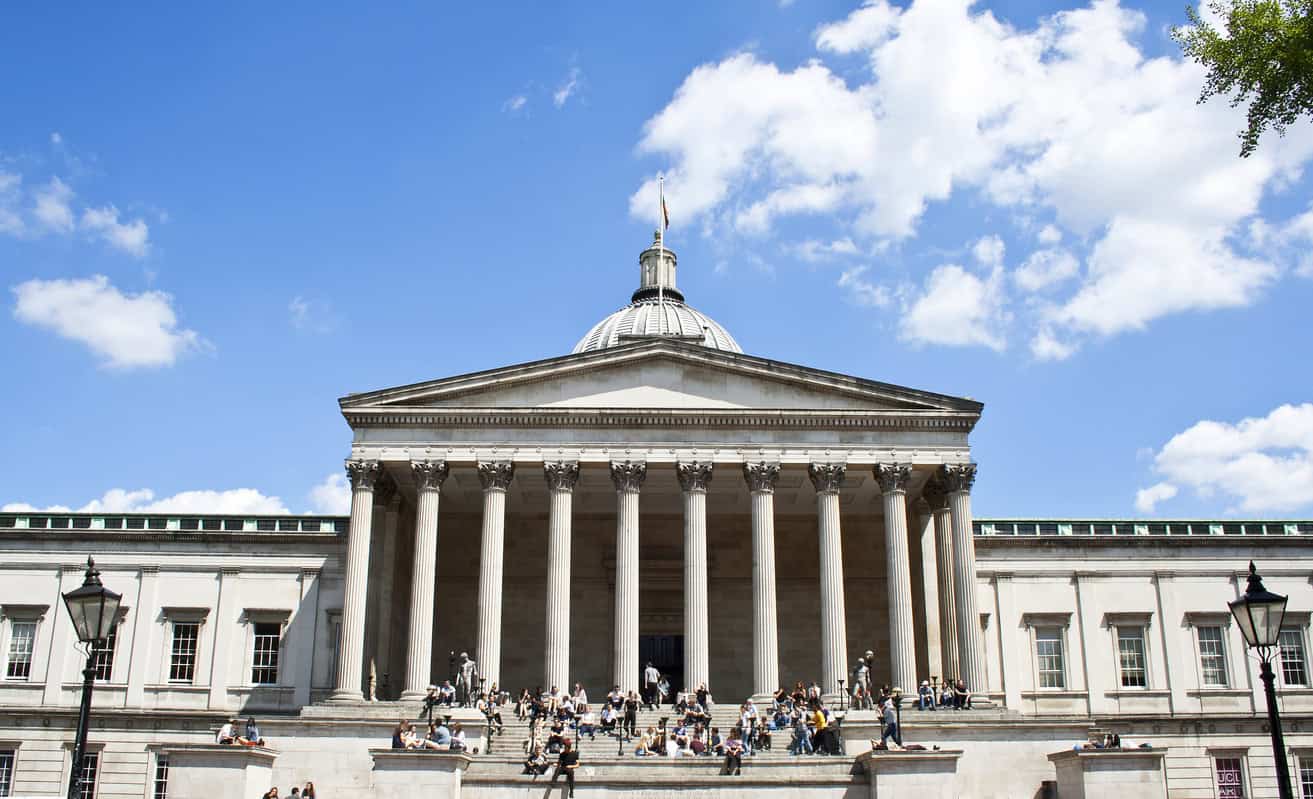
    Last week, The Guardian reported that hundreds of international students were contacted by UCL after the institution exceeded its allocation of Confirmations of Acceptance for Studies (CAS) – an electronic document issued by the Home Office and required for student visa applications.

    Students were told they would have to defer their studies to 2026, with many students fearing they’d be left out of pocket, having already spent significant funds on travel and accommodation.

    At the time, the university attributed the issue to an “extraordinary surge in demand”. This week, however, it has apologised for the disruption and assured affected international students that they can now begin their studies at UCL, following the allocation of additional CAS numbers.

    “We wholeheartedly apologise to all those who have been impacted by the recent uncertainty and we are incredibly grateful for their patience. Our teams are now working quickly to contact students directly with updates and support,” said a spokesperson for the university.

    “We also thank the Home Office for working swiftly to assist us in obtaining the additional CAS numbers we requested.”

    The university has offered to pay GBP £1,000 for students to make applications through UK Visa and Immigration’s ‘super priority service’.

    Our teams are now working quickly to contact students directly with updates and support
    UCL spokesperson

    Last week, UCL said it experienced “significantly more applications and acceptances of offers than anticipated” leading to it exceeding the number of CAS allocated by the Home Office. The university’s planning is based on historical data and expected trends, which take account of attrition rates and other factors, a spokesperson told The Guardian.

    UCL has a significant international student body – in 2024/5, the university had a total of 51,793 students, of which 52% were from overseas.

    The institution is expected to be one of the hardest hit institutions by the UK government’s proposed levy on higher education, which could see universities taxed on the income they make from international student fees.

    According to recent analysis from the Higher Education Policy Institute (HEPI), the greatest financial losses are expected to fall on major metropolitan universities with high proportions of international students. UCL – which derives 79% of its tuition fee income from non-UK students – could face losses of up to £42 million.


    Source link

  • Notes on Research Policy, Here and Abroad

    Notes on Research Policy, Here and Abroad

    Hi all. I thought I would take some time to have a chat about how research policy is evolving in other countries, because I think there are some lessons we need to learn here in Canada.

    One piece of news that struck me this week came from Switzerland, where the federal government is slashing the budget of the Swiss National Science Foundation (SNSF) by 20%. If the Swiss, a technological powerhouse of a nation, with a broad left-right coalition in power and a more or less balanced budget, are cutting back on science like this, then we might all have to re-think the idea that being anti-Science is just a manifestation of right-wing populism. Higher education as a whole has some thinking to do.

    And right now, two countries are in fact re-thinking science quite a bit. In the UK, the new head of UK Research and Innovation (roughly, that country’s One Big Granting Council), has told institutions that they might need to start “doing fewer things but doing them well”, to which the President of Universities UK and vice-chancellor of Manchester Metropolitan University Malcom-Press added that he was “hearing from government is that [they] don’t want to be investing in areas of research where we don’t have the quality and we don’t have the scale.” And, the kicker: “You can’t have hobbyist research that’s unfunded going on in institutions. We can’t afford it.”

    Over to Australia, where a few months ago the government set up a Strategic Examination of Research and Development, which released a discussion paper, held consultations and got feedback (which it published) and has now released six more “issue” papers for consultation which detail government thinking in many different and more detailed ways. If this sounds magical to you, it is because you are from Canada, where the standard practice for policymaking is to do everything behind closed doors and treat stakeholders like mushrooms (in the dark with only fecal matter for company) instead of a place where policy-making is treated as a serious endeavour in which public input and expert advice is welcomed. 

    For today’s purposes however, what matters is not process but policy. The review is seriously considering a number of fairly radical ideas, such as creating a few national “focus areas” for research funding, which would attract higher rates of overhead and requiring institutions to focus their efforts in one of these priority areas via mission-based compacts (which are sort of like Ontario’s Multi-Year Agreements, only they are meaningful) so as to build scale and specialization. 

    Whew.

    One thing that strikes me as odd about both the UK and Australian line of thinking is the idea that institutional specialization matters all that much. While lots of research is done at the level of the individual lab, most “big science” – the stuff people who dream about specialization have in mind when the talk about science – happens in teams which span many institutions, and more often than not across national borders as well. I get the sense that the phenomenon of institutional rankings have fried policy makers’ brains somewhat: they seem to think that the correct way to think about science is at the level of the institution, rather than labs or networks of laboratories. It’s kind of bananas. We can be glad that this kind of thinking has not infected Canadian policy too much because the network concept is more ingrained here.

    Which brings me to news here at home. 

    The rumour out of Ottawa is that in the next few months (still not clear if this is going to be fall 2025 or Spring 2026) there will be an announcement of a new envelope of money for research. But very definitely not inquiry-driven research. No, this is money which the feds intend to spend as part of the increase in “defence” spending which is supposed to rise to 2% of GDP by 2025-2026 and 5% by 2035. So, the kinds of things it will need to go to will be “security”, likely defined relatively generously. It will be for projects in space, protection of critical infrastructure, resiliency, maybe energy production, etc.  I don’t think this is going to be all about STEM and making widgets – there will be at least some room for social science in these areas and maybe humanities, too, though this seems to me a harder pitch to make. It is not clear from what I have heard if this is going to be one big pie or a series of smaller pies, divided up wither by mission or by existing granting council. But the money does seem to be on its way.

    Now before I go any further, I should point out that I have not heard anyone say that these new research envelopes are actually going to contain new money beyond what was spent in 2024-25.  As I pointed out a couple of weeks ago, that would be hard to square with the government’s deficit-fighting commitments.

    In fact, if I had to guess right now, the best-case scenario would be that the Liberals will do this by taking some or all of the 88% of the Budget 2024 research commitment to the tri-councils and push it into these new envelopes (worst-case scenario: they nuke the 88% of the 2024 Budget commitment they haven’t yet spent and claw back money from existing commitments to make these new envelopes). 

    So, obviously no push here for institutional specialization, but where our debate echoes those of the UK and Australia is that all three governments seem to want to shift away from broad-based calls for inquiry driven research and toward more mission-based research in some vaguely defined areas of national priority.  I know this is going to irritate and anger many people, but genuinely I don’t see many politically practical alternatives right now. As I said back here: if defending existing inquiry-driven tri-council budgets is the hill the sector chooses to die on, we’re all going to be in big trouble. 

    No one will forcing individual researchers or institutions to be part of this shift to mission-driven research, but clearly that’s where the money is going to be. So, my advice to VPs Research is: get your ducks in a row on this now. Figure out who in your institution does anything that can even tangentially be referred to as “security-enhancing”. Figure out what kinds of pitches you might want to make.  Start testing your elevator pitches. There will be rewards to first movers in this area.

    Source link

  • A decade of giving teens the last word

    A decade of giving teens the last word

    They are important not only for the students writing these stories but for teens all over the world reading or listening to these stories. They see their own anxieties and concerns reflected.

    As managing director at News Decoder, Maria Krasinski has seen how empowering personal reflection stories are when published. 

    “These stories build students’ self-awareness, confidence and empathy,” Krasinski said. “Seeing their stories published is an empowering act that validates their lived experiences and tells them that their voices are worth being heard.”

    She said that what News Decoder does is ask students to pause, analyze and articulate what they learned from an experience. “That creative process strengthens not only their storytelling skills, but also their ability to make sense of the world and step into public conversation,” she said. 

    A decade of publishing student stories

    News Decoder has been doing this for 10 years. Some of the first stories we published were personal reflections sent in by students.

    Back in May 2016, a high school student studying for a year in France wrote a personal reflection article after having encountered a number of her peers from Turkey at a conference in Luxembourg. During the conference they learned that a suicide bomber had killed three people in Istanbul.

    “I can’t even begin to imagine the heartbreak and panic they felt when they found out,” she wrote. 

    She then explored the concept of senseless violence:

    “I’m afraid that I’m beginning to become desensitized to the tragedies that strike all around the world,” she wrote. “When I got home from the conference and brought up the topic of the Turkish bombings, my host mom asked me how that news was different from any other day’s news, and then asked me to pass the pepper.”

    Students reach profound conclusions.

    In the article, she worked through her complicated thoughts and feelings and came to this conclusion: 

    “If we allow ourselves to be desensitized to all the bad, the good will stop motivating us as well.”

    Back in 2017, News Decoder’s founder Nelson Graves wrote that students make use of the News Decoder platform to make their voices heard. 

    “News-Decoder offers students a chance to put their best foot forward, to push the envelope, to confront different viewpoints and to work with professional correspondents,” he said. 

    For 10 years News Decoder has used storytelling to engage students in the process of learning. Through our educational programs, students are encouraged to ask big questions, identify problems they see around them and talk to people to get their questions answered — classmates, neighbours, family and experts.

    All the while, we ask students to compare their lived experiences and the problems they see around them, with what is happening elsewhere in the world. If they see inequities in their communities, how does that manifest in other countries? In doing this, they find out how connected they are to all the people seeing and experiencing these same problems. 

    Seeing the world through a global lens

    Amina McCauley is program manager for News Decoder’s EYES project — Empowering Youth Through Environmental Storytelling. She said that the global connection is important.

    “I think that young people rarely get the chance to articulate their values in a global context,” McCauley said. “Writing a personal reflection allows them to understand themselves better through this different lens.”

    The empowerment comes when they master the art of communicating what they learn to the wider world. 

    We want News Decoder students, and anyone we work with, to be able to respond when they hear or see something they think is wrong, but to be able to do so not just quickly but thoughtfully. 

    We’d like you to join our network and help us do that. If you are a teacher or school administrator, explore our school programs and consider bringing us into your schools. If you are a journalist consider donating articles and time to engage with students across the world. And if you have the means, consider donating funds to our nonprofit. 

    Why should ignorant people and bullies have the last word? 


    Source link

  • Week In Review: Mental health grants return and FCC rolls back E-rate expansion

    Week In Review: Mental health grants return and FCC rolls back E-rate expansion

    We’re rounding up last week’s news, from the government shutdown’s impact on schools to differentiated teacher compensation.

    Source link

  • Tapping Alumni to Be Career Mentors for Students

    Tapping Alumni to Be Career Mentors for Students

    For students at Gettysburg College in Pennsylvania, alumni mentors are becoming embedded in their experience. A recently launched mentorship program pairs each rising junior with a graduate from the college to provide advice and encouragement as they finish their last two years of college.

    The initiative, part of Gettysburg’s reimagining of career development, helps students build a professional network before they leave college and hopefully eases the transition into life after graduation, said Billy Ferrell, director of external relations in Gettysburg’s Center for Career Engagement.

    What’s the need: Professional mentors can be an asset for early-career professionals, offering insights into navigating the workforce and their specific industry, as well as personal support and encouragement. But a majority of Americans say they don’t have a mentor, according to a 2023 survey by the University of Phoenix, and one-third of respondents said a lack of mentorship has held them back in their careers.

    Within higher education, many students are asking their institutions for assistance in identifying role models.

    A spring 2024 Student Voice survey by Inside Higher Ed found that 29 percent of students believe their college or university should focus more on connecting students to alumni and other potential mentors. And a 2023 student survey found that 45 percent of students think their career center should help them find a professional mentor.

    However, only a fraction of students have participated in a formal mentoring program, either through their college or outside the institution, according to a 2021 survey by Inside Higher Ed.

    How it works: Gettysburg’s Alumni Mentoring Program launched this fall with the Class of 2027, who coincidentally were the first class to participate in the college’s guided co-curricular pathways, Ferrell said.

    Students could opt to add an alumni mentor to their advising team, which already includes a faculty adviser, career adviser and co-curricular adviser, who coaches students on their pathway. Alumni advising is focused on the student’s career but could include job exploration, the postcollege transition, networking and industry-specific trends, Ferrell said.

    The goal is for students to learn “real world” skills to navigate life after college, according to the college’s website.

    Students will meet with their mentor at least once a month starting in October and conclude in March, Ferrell said.

    Gettysburg recruited mentors through email campaigns, social media posts and the alumni magazine, Ferrell said. Interested alumni signed up through connectGettysburg, the college’s career networking platform, and completed a short intake survey. Students completed a similar questionnaire and a computer algorithm made the mentor match, Ferrell said.

    Mentors participated in an online training module to prepare them to take on an advising role. Additionally, the college established a handbook for mentor pairs to outline expectations for the relationship and offer topical sessions for students to choose from to guide conversations with mentors.

    These resources can address a common barrier to mentorship for students: a lack of awareness of what the relationship entails. A 2021 survey by Inside Higher Ed found that among students who lacked a mentor, 45 percent didn’t know what they would ask a mentor and 27 percent didn’t know what they would do with one.

    What’s next: Eighty-one juniors and alumni are participating in the initial program, and Gettysburg will survey students and alumni throughout the term to gauge the effectiveness of the initiative and ensure students are getting the kind of support they’re looking for, Ferrell said.

    Next year, Gettysburg will expand the program to junior and senior-level students.

    Source link

  • Colleges Must Pursue All Legal Paths for Diversity (opinion)

    Colleges Must Pursue All Legal Paths for Diversity (opinion)

    Two years ago, the Supreme Court dealt a devastating blow to opportunity in America when it gutted access to higher education for underrepresented groups. That decision was not only legally misguided but also turned a blind eye to the deep inequities that have long shaped our education system. Our colleges and universities scrambled to find lawful tools to ensure that their student bodies still reflected the breadth of talent and promise in this country.

    One of those tools was Landscape, a program recently canceled by the College Board that gave admissions officers data about a student’s high school and neighborhood while explicitly excluding race or ethnicity.

    Standardized test scores and GPAs never tell the whole story. Median family income, access to Advanced Placement courses, local crime rates and other key indicators help admissions officers see the full picture and provide crucial context to help identify high-achieving students from disadvantaged communities. These are students whom universities might otherwise overlook. Tools that give context level the playing field—not by lowering standards, but by lifting students up according to their merit and the obstacles they have overcome.

    The Supreme Court, even in striking down diversity initiatives, still made clear that universities could explore race-neutral alternatives to achieve equity. The use of socioeconomic and geographic factors is exactly such an alternative. Despite U.S. Attorney General Pamela Bondi’s recent nonbinding guidance warning against the use of geographic indicators as “proxies” for race, make no mistake: Abandoning consideration of these elements of an applicant’s background is not a legal requirement but a political choice, reflecting fear rather than courage.

    Without tools that account for the barriers students face, colleges will fall back on practices that overwhelmingly favor the privileged, shutting out low-income and first-generation students who have already beaten the odds. This spoils opportunity for millions, and our campuses and our nation will suffer for it. Diversity is not a box to check; it is a vital engine of education and democracy. Classrooms that bring together students from different walks of life prepare all graduates to lead a diverse society, foster innovation and strengthen our communities.

    We cannot allow the Supreme Court’s decision—and the chilling effect in its wake—to undo decades of progress. And we cannot allow educational institutions to abdicate their responsibility in this moment of crisis. The data that provides broader context for applicants remains available, but without the will to use it, too many doors will remain closed for the students who need them most.

    America has always promised to reward hard work and perseverance, no matter where you come from. That promise rings hollow if we allow the wealthy and well connected to monopolize educational opportunity. Colleges and universities must honor that promise by continuing to seek out and support students who have succeeded against the odds. Fairness demands it, equal opportunity requires it and the future of our country depends on it.

    The authors all serve as state attorneys general: New York Attorney General Letitia James, Connecticut Attorney General William Tong, Delaware Attorney General Kathy Jennings, Illinois Attorney General Kwame Raoul, Minnesota Attorney General Keith Ellison, New Jersey Attorney General Matthew Platkin, Vermont Attorney General Charity Clark and Washington Attorney General Nick Brown.

    Source link