Author: admin

  • ANNE D’ALLEVA | The EDU Ledger

    ANNE D’ALLEVA | The EDU Ledger

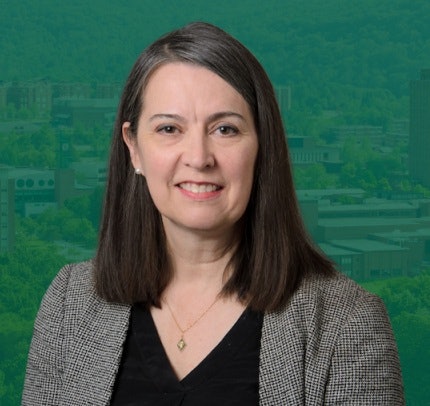
    Anne D’Alleva has been named president of Binghamton University. D’Alleva is currently the provost and executive vice president for academic affairs at the University of Connecticut.

    D’Alleva has led UConn’s academic enterprise, including strategic planning, budgetary management, faculty development and curriculum innovation across the university’s 14 schools and colleges. She leads initiatives that support student success, faculty excellence and institutional impact.

    D’Alleva is the first woman to serve as provost in UConn’s history and previously served as dean of the School of Fine Arts since 2015 and first joined the UConn faculty as a joint appointment to Art History and Women’s, Gender and Sexuality Studies in 1999. D’Alleva holds a bachelor’s degree in art histo- ry from Harvard University, and her master’s and Ph.D. in art history from Columbia University with a graduate certificate in feminist theory.

    Source link

  • How We Outperformed National Reading Scores – And Kept Students at Grade Level – The 74

    How We Outperformed National Reading Scores – And Kept Students at Grade Level – The 74


    Get stories like this delivered straight to your inbox. Sign up for The 74 Newsletter

    As reading scores remain a top concern for schools nationwide, many districts are experimenting with ability-based grouping in the early grades. The idea is to group students in multiple grade levels by their current reading level — not their grade level. A classroom could have seven kindergartners, 10 first graders, and three second graders grouped together for reading because they all read at the same level.

    While this may work for some schools, in our district, Rockwood School District in Missouri, we’ve chosen a different path. We keep students together in their class during whole-class instruction — regardless of ability level — and provide support or enrichment by creating flexible groups based on instructional needs within their grade level.

    We’re building skilled, confident readers not by separating them, but by growing them together.

    Children, like adults, learn and grow in diverse groups. In a Rockwood classroom, every student contributes to the shared learning environment — and every student benefits from being part of it.

    Our approach starts with whole-class instruction. All students, including English multilingual learners and those working toward grade-level benchmarks, participate in daily, grade-level phonics and comprehension lessons. We believe these shared experiences are foundational — not just for building literacy, but for fostering community and academic confidence.

    After our explicit, whole-group lessons, students move into flexible, needs-based small groups informed by real-time data and observations. Some students receive reteaching, while others take on enrichment activities. During these blocks, differentiation is fluid: A student may need decoding help one day and vocabulary enrichment the next. No one is locked into a static tier. Every day is a new opportunity.

    Students also engage in daily independent and partner reading. In addition, reading specialists provide targeted, research-based interventions for striving readers who need additional instruction.

    We build movement into our instruction, as well — not as a brain break, but as a learning tool. We use gestures for phonemes, tapping for spelling and jumping to count syllables. These are “brain boosts,” helping young learners stay focused and engaged.

    We challenge all students, regardless of skill level. During phonics and word work, advanced readers work with more complex texts and tasks. Emerging readers receive the time and scaffolded support they need — such as visual cues and pre-teaching or exposing students to a concept or skill before it’s formally taught during a whole-class lesson. That can help them fully participate in every class. A student might not yet be able to decode or encode every word, but they are exposed to the grade-level standards and are challenged to meet the high expectations we have for all students.

    During shared and interactive reading lessons, all students are able to practice fluency and build their comprehension skills and vocabulary knowledge. Through these shared experiences, every child experiences success.

    There’s a common misconception that mixed-ability classrooms hold back high achievers or overwhelm striving readers. But in practice, engagement depends more on how we teach rather than who is in the room. With well-paced, multimodal lessons grounded in grade-level content, every learner finds an entry point.

    You’ll see joy, movement, and mutual respect in our classrooms — because when we treat students as capable, they rise. And when we give them the right tools, not labels, they use them.

    While ability grouping may seem like a practical solution, research suggests it can have a lasting downside. A Northwestern University study of nearly 12,000 students found that those placed in the lowest kindergarten reading groups rarely caught up to their peers. For example, when you group a third grader with first graders, when does the older child get caught up? Even if he learns and progresses with his ability group, he’s still two grade levels behind his third-grade peers.

    This study echoes what researchers refer to as the Matthew Effect in reading: The rich get richer, and the poor get poorer. Lower-track students are exposed to less complex vocabulary and fewer comprehension strategies. Once placed on that path, it’s hard to catch up. Once a student is assigned a label, it’s difficult to change it — for both the student and educators.

    In Rockwood, we’re confident in what we’re doing. We have effective, evidence-based curricula for Tier I phonics and comprehension, and every student receives the same whole-class instruction as every other student in their grade. Then, students receive intervention or enrichment as needed.

    At the end of the 2024–25 school year, our data affirmed what we see every day. Our kindergarteners outperformed national proficiency averages in every skill group — in some cases by more than 17 percentage points, according to our Reading Horizons data. Our first and second graders outpaced national averages across nearly every domain. We don’t claim to have solved the literacy crisis — or know that our model will work for every district, school, classroom or student — but we’re building readers before gaps emerge.

    We’ve learned that when every student receives strong Tier I instruction, no one gets left behind. The key isn’t separating kids by ability. It’s designing instruction that’s universally strong and strategically supported.

    We recognize that every community faces distinct challenges. If you’re a district leader weighing the trade-offs of ability grouping, consider this: When you pull students out of the room during critical learning moments, the rich vocabulary, the shared texts and the academic conversation, you are not closing the learning gap, but creating a bigger one. Those critical moments build more than skills; they build readers.

    In Rockwood, our data confirms what we see every day: students growing not only in skills, but also in confidence, stamina and joy. We’re proving that inclusive, grade-level-first instruction can work — and work well — for all learners.


    Get stories like these delivered straight to your inbox. Sign up for The 74 Newsletter

    Source link

  • Small District to Pay $7.5 Million to Settle Lawsuit Over Sexual Abuse Decades Ago – The 74

    Small District to Pay $7.5 Million to Settle Lawsuit Over Sexual Abuse Decades Ago – The 74


    Get stories like this delivered straight to your inbox. Sign up for The 74 Newsletter

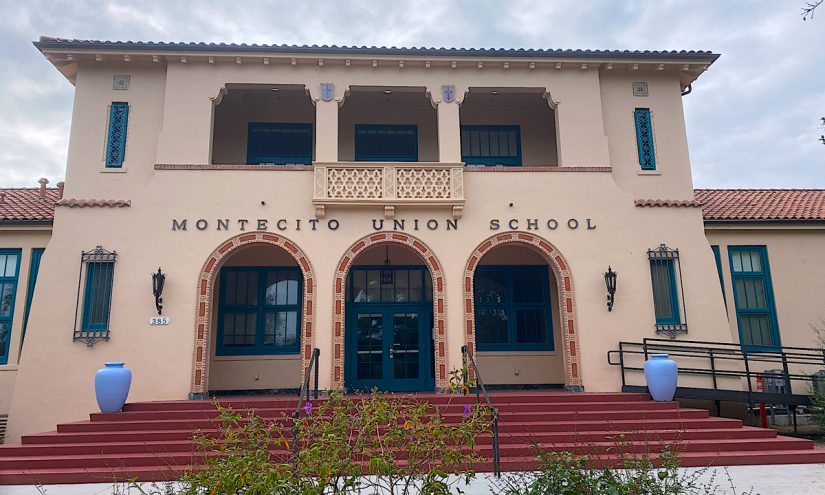
    On the eve of what was expected to be a long and gut-wrenching trial, a small school district in Santa Barbara County has settled a sexual abuse lawsuit for $7.5 million with two brothers, now 65 and 68 years old, who claimed a long-dead principal molested them in the 1970s.  

    The brothers had sought $35 million for the harm they said they suffered, an attorney for the youngest brother said.

    The settlement equals about 40% of the 350-student district’s 2025-26 budget, although the district did not disclose the terms and timetable for the payment. The district’s superintendent acknowledged in a statement that there would be an impact on the budget. 

    Board members of the Montecito Union School District announced the settlement over the weekend. The trial was scheduled to start Monday.

    The case was brought under a 2019 state law, Assembly Bill 218, that removed a statute of limitations for filing claims that employees of public agencies, including school districts and city and county governments, sexually abused children placed in their care.

    Estimates suggest settlements and jury awards could cost California school districts as much as $3 billion by one projection, and possibly a lot more. Los Angeles County alone has agreed to pay $4 billion to settle abuse claims with more pending, mostly involving plaintiffs who were once in foster care.

    With many larger lawsuits with multiple victims yet to be settled or go to trial, the financial impacts are hard to predict. Small districts are worried that multimillion-dollar verdicts could devastate budgets, if not lead to insolvency. Insurance costs, meanwhile, have soared by more than 200% in five years, according to a survey of districts.

    In the Montecito case, the brothers were seeking $35 million in damages combined, John Richards, a lawyer representing one of them, said outside of court Monday.

    Montecito is not alone in facing decades-old accusations. The San Francisco Unified School District is embroiled in an ongoing suit involving a teacher who allegedly molested a student in the mid-1960s, records show.

    School boards association helps with legal fees

    The Montecito case drew the attention of the California School Boards Association, which gave the district a $50,000 grant to help with legal costs, said spokesman Troy Flint.

    Flint said Montecito Union Superintendent Anthony Ranii has “been a staunch advocate for AB 218 reform because he understands how this well-intentioned law carries such significant unintended consequences that compromise the educational experience of current and future students.”

    Montecito Union “is just one example of what potentially awaits school districts and county offices of education statewide,” Flint added.

    The settlement came just weeks after state Assembly members let a measure that would have restored a statute of limitations to such cases, Senate Bill 577, go without a vote in the final days of the legislative session. Its sponsor, Sen. John Laird, D-Santa Cruz, said he would bring it back next year.

    At a brief hearing Monday, Santa Barbara County Superior Court Judge Thomas P. Anderle called the Montecito matter “a case of real consequence.” He had scheduled 17 days for trial, court records show. The district’s lawyers did not attend the hearing.

    The brothers’ lawsuit was filed in 2022 and alleged that Montecito Union’s former superintendent and principal, Stanford Kerr, molested them in the early 1970s, including raping one of them. Kerr died in 2013 at 89. He never faced criminal charges.

    A third plaintiff who also claimed Kerr abused him settled earlier with the district for $1 million. He had described a full range of abuse covering many types of conduct, which included rape, court filings state.

    Just recompense for years of suffering

    The brothers, identified in court documents as John Doe 1 and John Doe 2, pushed forward, Richards said, hoping to be compensated for years of agony. The younger of the two, Richards said, has suffered a lifetime of substance abuse, which is blamed on Kerr’s assaults. 

    “The money is nice,” Richards said, but the younger brother also seeks “social acknowledgment that what happened to (him) was terrible. He has a long way to go,” in recovering.

    The district admitted no liability in making the settlement.

    Montecito Union has no insurance coverage going back to the period the brothers said the abuse occurred — 1972 to 1978, Ranii said in a statement.

    “We were prepared to mount a vigorous defense,” he said. But the possibility of a jury awarding far more than the district could afford pushed the idea of a settlement after years of pretrial maneuvering.

    The superintendent’s statement did not directly address the brothers’ claims. It also did not mention Kerr.

    “We are deeply mindful of the enduring pain caused by sexual abuse and feel for any person who has experienced such abuse,” Ranii said in the statement.

    A large award in the event of a trial would have “diminished our ability to serve students now and well into the future,” Ranii said. “Continued litigation created exceptional financial vulnerability. Settling now allows us to stabilize operations and remain focused on today’s students.”

    Montecito is an unincorporated oceanfront community just south of Santa Barbara in the shadows of the Santa Ynez Mountains. Its residents include Oprah Winfrey and Prince Harry and Meghan Markle. The district is one of the state’s richest, with more than $40,000 per student in funding due to tax receipts from high-value properties. 

    The district will manage the costs through a hiring freeze, staff reductions “when natural attrition occurs,” and redirecting “funds previously designated for capital repair,” Ranii said. The settlement allows the district to avoid layoffs, he said.

    The brothers’ case was built around the testimony they would have given about Kerr’s abuses, Richards said. There was no physical evidence. At one point, a district employee went to the brothers’ home and forced their parents to sign a document requiring them to make sure the boys came right home after school and avoided Kerr, according to court filings.

    Richards said the district did not produce such a document in discovery. It had no records that the boys ever attended the school, he said, although their photos appear in yearbooks. The district also had no records that Kerr ever faced accusations of abuse or sexual misconduct.

    Two school board members from Kerr’s time as superintendent said in depositions taken for the brothers’ suit that they would have taken action had they known he was abusing students, Richards said. But with the case settled, the elderly former members won’t be called to testify.

    All that remains is a final hearing that the judge scheduled for Nov. 19 to make sure the payment has been received “and that the check’s been cashed,” he said.

    Editor-at-Large John Festerwald contributed to this story.

    This story was originally published by EdSource. Sign up for their daily newsletter.


    Get stories like these delivered straight to your inbox. Sign up for The 74 Newsletter

    Source link

  • ICE Nabs Iowa School Leader – The 74

    ICE Nabs Iowa School Leader – The 74

    School (in)Security is our biweekly briefing on the latest school safety news, vetted by Mark KeierleberSubscribe here.

    The top campus security story this week is the resignation of Iowa’s largest school district superintendent, who was detained by federal immigration authorities on allegations he was living and working in the U.S. without authorization. 

    In a “targeted enforcement operation” a week ago, Immigration and Customs Enforcement agents arrested Ian Roberts, a 54-year-old native of Guyana, who has led Des Moines Public Schools since 2023.

    The fast-moving chain of events raises questions about why ICE agents specifically sought the arrest of the public official and the city’s first Black schools superintendent, whom federal officials said had a previously unreported final order of removal issued by an immigration judge on May 29. Yesterday, he was accused of federal firearm charges for possessing a gun at the time of his arrest.

    The Trump administration has already tied Roberts’ detainment to the president’s broader crackdown on affirmative action. The Justice Department announced Tuesday it would investigate Des Moines Public Schools to determine if it engaged in race-based hiring. 

    In 2021, the district’s former human resources manager said that out of Des Moines Public Schools’ 4,000 staff members, some 400 were Black. His comments were made as the district reflected on hiring Iowa’s first Black teacher 75 years earlier.

    The unraveling of Roberts’ career is also a story of purported deception. The school board, whose vetting practices have come under scrutiny, released a letter this week saying it is “also a victim,” after Roberts was accused of falsifying records about his immigration status and academic credentials.

    Roberts, an Olympic runner for his native Guyana who came to the U.S. in 1999 on a student visa, previously served in leadership roles at school districts in Pennsylvania and Missouri and at a major charter school network. 

    Get up to speed with this step-by-step explainer by the Des Moines Register.


    In the news

    A TikTok post led to the arrest of a Kennewick, Washington, 14-year-old who officials say had guns, a color-coded map of his high school and a manifesto outlining plans to carry out a campus shooting. | Tri-City Herald

    In California, authorities say an anonymous tip thwarted a potential school shooting after a student posted “detailed threats” on social media including a “mapped-out plan.” | NBC News
    The Education Department announced it would withhold more than $65 million in federal grants to the New York City, Chicago and Fairfax, Virginia, school districts for upholding equity policies designed to support transgender and Black youth. | The New York Times

    Campus speech at the forefront: More than 350 complaints have been submitted to the Texas education department against public school employees accused of publishing social media posts that praised the assassination of conservative activist Charlie Kirk. | Fort Worth Report

    • The Los Angeles Unified School District faces accusations that its social media policy, which allows educators to ban parents from campus for making threatening or racist online comments about school officials, violates the First Amendment. | LAist
    • ‘Truly scandalous’: The Trump administration engaged in the “unconstitutional suppression of free speech” when federal immigration enforcement officials arrested and sought to deport international college students for their pro-Palestinian activism. | The Washington Post
    • A new PEN America report warns of a “disturbing normalization of censorship” in public schools where book bans have risen sharply in the last few years. The 1962 novel A Clockwork Orange by Anthony Burgess topped the list. | NPR 
    • Lawrence, Kansas, school officials were accused of censoring high school journalists and intimidating their adviser in violation of state law after current and former students filed a federal lawsuit alleging the district’s use of a digital student surveillance tool violated their privacy and press freedom rights. | Student Press Law Center
      • The student activity monitoring tool Gaggle, which flags keywords like “kill” and “bomb,” “has helped our staff intervene and save lives,” the Lawrence district says. But students say the system subjected them to false allegations. | The Washington Post
      • The 74 throwback: Meet the gatekeepers of students’ private lives. | The 74

    ‘Places of care, not chaos’: California Gov. Gavin Newsom signed into law new rules that require federal immigration enforcement officers to show a warrant or court order before entering a school campus or questioning students. | EdSource

    Minnesota’s red flag gun law, which allows authorities to confiscate firearms from people with violent plans, has been used to prevent school shootings but its use is inconsistent, an investigation found. | The Minnesota Star Tribune

    A middle school boy from New York was arrested on allegations of catfishing classmates by impersonating a girl online, convincing male classmates to send him sexually revealing photographs and extorting them for cash or gift cards. | The New York Times

    Sign-up for the School (in)Security newsletter.

    Get the most critical news and information about students’ rights, safety and well-being delivered straight to your inbox.

    The Trump administration plans to overhaul a student loan forgiveness program for employees at nonprofits that officials claim are engaged in “illegal activities” — a justification that could be used to target organizations that serve immigrants and transgender youth. | The Associated Press

    A Michigan school district, where four elementary school girls said they were groped by a classmate on the playground, is accused of waiting eight days to report the incident to the police. | Lansing State Journal


    ICYMI @The74

    As the LGBTQ Youth Population Doubles, Number of Bills Targeting Them Triples

    Goblins AI Math Tutoring App Clones Your Teacher’s Looks and Voice

    From Screen Time to ‘Green Time’: Going Outside to Support Student Well-Being


    Emotional Support

    The 74 will meet for a company summit in Minneapolis next week. Matilda wasn’t invited, but she couldn’t care less.


    Get stories like these delivered straight to your inbox. Sign up for The 74 Newsletter
    Source link

  • Weekend Reading: How will universities respond to the 6 per cent international student levy?  

    Weekend Reading: How will universities respond to the 6 per cent international student levy?  

    Author:
    Vincenzo Raimo

    Published:

    This guest blog was kindly authored by Vincenzo Raimoan independent international higher education consultant 

    The UK government’s proposed 6 per cent levy on international tuition fees has added yet another layer of complexity to the already fragile international student recruitment landscape. The levy is intended to fund the introduction of targeted maintenance grants for home students, but for universities it represents an additional cost that could reshape recruitment strategies and, in some cases, make international activity unviable. 

    Higher education providers will not all respond in the same way. Their choices will be shaped by their position in the market, their pricing power, and their cost of acquisition (CoA) – the real cost of recruiting through to enrolment of each international student. 

    In a previous blog I set out five institutional archetypes in international student recruitment: Prestige Players, Volume Hunters, Strategists, Opportunists, and Outsourcers. These archetypes can help us think through the likely responses to the levy, and where the risks and opportunities lie. 

    Levy Responses: From Resilience to Retreat 

    • Pass-throughs (High Brand, Low CoA): These are the strong Prestige Player institutions with the brand power to raise fees by 6 per cent (or more) without losing applicants. For them, the levy will likely be passed straight on to students. In fact, some may look back and wonder why they had not already increased fees earlier. The impact on recruitment will be minimal. 
    • Squeezed Prestige (High Brand, High CoA): Some universities occupy a less comfortable position. They may have strong brands, but their recruitment costs are high often due to heavy scholarship spending and dependence on expensive marketing and recruitment strategies. They can pass on some of the levy, but margins will erode. Expect this group to look carefully at their agent portfolios, renegotiate commission deals, and cut back on scholarships. Opportunists often sit here, swinging between good years and bad. 
    • Absorbers (Low Brand, Low CoA): A number of institutions will choose to absorb the levy, keeping international fees flat to remain competitive. Margins will tighten, but recruitment volumes are likely to remain stable. These are often Strategists or Outsourcers, who have already kept their CoA under control through efficiency or partnerships. They will see absorbing the levy as a necessary cost of staying in the game. 
    • Exits (Low Brand, High CoA): For some, the levy may be the final straw. Institutions already dependent on discounting and agent commissions who charge low international fees to chase volume, may no longer see international recruitment as viable. Volume Hunters are the most exposed here. Their models are built on fragile margins, and the levy risks pushing them into unsustainable territory. For some, exit will not mean giving up on international students altogether. But it may mean dramatically scaling back, consolidating markets, and retreating from high-risk geographies. 

    Alternative Paths 

    Alongside these responses, two further groups are worth highlighting. 

    • Innovators: Some universities will take the levy as a trigger to rethink their model entirely. Expect more to explore transnational education, offshore hubs, or pathway partnerships as a way of diversifying income and reducing exposure to UK-based fee inflation. Innovation may prove the most sustainable long-term response, if vice-chancellors and governing bodies have the stomach for it. 
    • Niche/Selective Recruiters: For specialist institutions – arts, theology, agriculture, or mission-driven providers – international student recruitment has never been about volume. For them, the levy is simply the cost of doing business. They will continue to recruit selectively, valuing diversity and global presence more than surplus. 

    What Does This Mean for the Sector? 

    The archetype framework helps us see that there is no single sector response. Institutions will react in line with their pricing power, cost base, and strategic orientation. Prestige Players may pass through the levy with little concern. Absorbers will hold their nerve and tighten margins. Volume Hunters, by contrast, risk being forced out of the game altogether. 

    For these institutions, scaling back international recruitment will not just be a strategic shift but a financial shock. The loss of international fee income raises an uncomfortable question of how they will fill the gap – whether by yet more cost cutting, chasing riskier sources of income, or considering more fundamental changes to their operating models.   

    The levy therefore brings the deeper issue into sharp focus: the sustainability of international student recruitment. Chasing volume is no longer enough. Institutions must use this moment to confront the costs of recruiting and support these students, rethink pricing, and reconsider the value they offer. Those that do so will be far better placed to build resilient, sustainable futures in international education.  

    Source link

  • Newsom vows to pull state funding from California colleges that sign Trump’s compact

    Newsom vows to pull state funding from California colleges that sign Trump’s compact

    This audio is auto-generated. Please let us know if you have feedback.

    Dive Brief:

    • California Gov. Gavin Newsom on Thursday threatened to pull state funding from colleges that signed a proposed compact from the Trump administration seeking to impose sweeping policy changes in return for priority in research funding. 
    • If any California university signs this radical agreement, they’ll lose billions in state funding,” Newsom said in a statement. “California will not bankroll schools that sell out their students, professors, researchers, and surrender academic freedom.”
    • First reported by the Wall Street Journal, federal officials offered the compact to the University of Southern California and eight other high-profile research universities this week.

    Dive Insight:

     Since taking office, President Donald Trump and his administration have waged a legal and financial campaign against colleges in an effort to transform them ideologically. It comes after Trump on the campaign trail described colleges as “dominated by Marxist maniacs and lunatics” and full of academics “obsessed with indoctrinating America’s youth.” 

    With the compact, the administration has gone from using mainly sticks — typically in the form of civil rights investigations and canceled research grants — to using carrots as a means of pushing institutions to make reforms.

    The Trump administration offered to prioritize colleges for research grants and other funding if they agree to give the government unprecedented control over internal institutional decisions and governance. 

    That includes:

    • Taking a position of institutional neutrality on events that don’t directly impact the college.
    • Committing not to consider race, gender, religion and other characteristics “explicitly or implicitly” in admissions. (The compact would grant exceptions for religious and single-sex institutions to limit admissions based on religious belief and gender, respectively.)
    • Conducting broad, public assessments of the viewpoints of employees and students.
    • Changing governance structures and potentially dissolving or taking over departments that “purposefully punish, belittle, and even spark violence against conservative ideas.”
    • Adopting policies that recognize “academic freedom is not absolute” and prevent “discriminatory, threatening, harassing, or other behaviors that abridge the rights of other members of the university community.”
    • Capping international undergraduate enrollment at 15% of the broader student body while screening out “students who demonstrate hostility to the United States, its allies, or its values.”
    • Freezing tuition for five years.
    • Requiring applicants to take standardized tests such as the SAT.
    • Committing to using “lawful force” and “swift, serious, and consistent sanctions” to handle protests that “delay or disrupt class instruction or disrupt libraries or other traditional study locations.”

    The compact would also require colleges with endowments worth $2 million or more per student to waive tuition for students studying hard sciences, though the memo didn’t define the field. 

    Along with USC, eight other colleges received the administration’s memo detailing the compact: the University of Arizona, Brown University, Dartmouth College, Massachusetts Institute of Technology, the University of Pennsylvania, the University of Texas, Vanderbilt University and the University of Virginia.

    The compact has drawn alarm and stern rebukes throughout the higher education world. 

    “College and university presidents cannot bargain with the essential freedom of colleges and universities to determine, on academic grounds, whom to admit and what is taught, how, and by whom,” the American Association of Colleges and Universities said in a statement Friday.

    Denise Forte, president and CEO of the policy analysis and advocacy organization EdTrust, described the compact in a statement as an “existential threat to all institutions of higher learning and the latest example of the federal government overexerting its power to intimidate colleges and universities viewed as ideological enemies.”

    In a joint statement Thursday, top leaders of the American Association of University Professors and the American Federation of Teachers described the compact as offering preferential treatment “in exchange for allegiance to a partisan ideological agenda” and said that it “stinks of favoritism, patronage, and bribery.” They urged all governing boards and administrators to reject the agreement.

    American Council on Education President Ted Mitchell in an interview with The New York Times described the compact as a power play “designed to divide the higher education community.” 

    And then there is Newsom, who has been among the most vocal Democrats opposing Trump, especially since the president sent the National Guard into Los Angeles this summer, a move that a judge later ruled illegal.

    In a press release, Newsom’s office described the compact as tying access to federal research funding to “radical conservative ideological restrictions on colleges and universities.” The governor also specifically threatened to “instantly” pull colleges’ eligibility for Cal Grants, a form of state aid for students from low- and middle-income families.

    USC on Friday confirmed it had received and was reviewing the administration’s letter, but the university did not offer further comment.

    Most of those institutions have remained quiet about their plans, if any, to sign or reject the agreement. A leader from one, however, voiced enthusiastic openness to the compact. 

    In a widely shared statement, Kevin Eltife, chair of the University of Texas Board of Regents, said that the system was “honored” that its flagship in Austin was selected among the nine to receive the compact. 

    We enthusiastically look forward to engaging with university officials and reviewing the compact immediately,” said Eltife, a former Republican state senator.  

    Source link

  • Federal judge dismisses legal challenge to gainful employment rule

    Federal judge dismisses legal challenge to gainful employment rule

    This audio is auto-generated. Please let us know if you have feedback.

    Dive Brief: 

    • A federal judge dismissed a case Thursday that challenged the legality of the Biden administration’s gainful employment rule, which aims to ensure that graduates of career education programs earn enough to pay off their student loan debt. 
    • U.S. District Judge Reed O’Conner — a George W. Bush appointee — rejected arguments from cosmetology school groups that the gainful employment rule overstepped the U.S. Department of Education’s authority and violated their constitutional rights. 
    • Although the Biden-era rule survived the legal challenge, the Trump administration is considering potential changes to the gainful employment regulations in the coming months. 

    Dive Insight: 

    The Biden administration finalized the gainful employment rule in 2023. Under the rule, career education programs must prove that they provide graduates with an earnings bump and don’t leave borrowers with more debt than they can manage. 

    To do so, the gainful employment rule establishes two separate tests. Under one, the median program graduate must pay no more than 8% of their annual earnings or 20% of their discretionary income toward their debt. Under the other, at least half of a program’s graduates must outearn workers in their state with only a high school diploma. 

    College programs that fail either of these metrics in two out of three consecutive years risk losing access to federal financial aid. The rule primarily impacts programs at for-profit colleges, but also applies to certificates at all institutions. 

    Thursday’s ruling addresses two consolidated lawsuits against the rule. The cosmetology school groups had argued that the Education Department had overstepped its authority when issuing the regulations, as the Higher Education Act doesn’t define gainful employment.

    However, O’Connor wrote that the Education Department’s rule follows the plain meaning of the statute. 

    “Although the 2023 Rule is in the form of an equation, it no less does the same work as the words ‘gainful employment,’ by ensuring the programs lead to profitable jobs, instead of loan deficits,” O’Connor wrote. 

    The plaintiffs had also alleged that they would be unfairly penalized by the rule, arguing that a large share of income in the cosmetology industry goes unreported because it is earned through cash tips. Because of that, they said, the Education Department’s calculations would fail to accurately capture how much their graduates earn. 

    O’Connor rejected those arguments, noting that the Education Department had cited studies showing that underreporting is not widespread. 

    National Student Legal Defense Network, an advocacy and legal group for students, praised the ruling Thursday. 

    “Higher education is supposed to offer students a path to a better life, not a debt-filled dead end,” Student Defense Vice President and Chief Counsel Dan Zibel said in a statement. “The 2023 Gainful Employment Rule reflects a common-sense policy to ensure that students are not wasting time and money on career programs that provide little value.”

    Jason Altmire, president and CEO of Career Education Colleges and Universities, an association that represents the for-profit college sector, decried Thursday’s ruling but sounded optimistic about forthcoming regulatory changes under the Trump administration. 

    “Although we strongly disagree with the ruling today, we look forward to this issue being revisited by the current Department of Education,” Altmire said in a statement that day. “We are confident the Biden Gainful Employment Rule will be revised to incorporate a fairer accountability measure that will apply equally to all schools, ensuring all students can benefit.”

    Source link

  • UNC Professor Accused of Advocating Political Violence Reinstated

    UNC Professor Accused of Advocating Political Violence Reinstated

    Marin Herold/iStock/Getty Images Plus

    Dwayne Dixon, a professor at the University of North Carolina at Chapel Hill, was reinstated Friday after the university performed a “thorough threat assessment,” Dean Stoyer, vice chancellor for communications and marketing, said in a statement. 

    Dixon was placed on leave Monday following allegations that he was an advocate for political violence.

    “The Carolina Behavioral Threat Assessment and Management Team consulted with the UNC System security office and with local law enforcement, undertaking a robust, swift and efficient review of all the evidence. We have found no basis to conclude that he poses a threat to University students, staff, and faculty, or has engaged in conduct that violates University policy,” Stoyer said in a statement. “As a result, the University is reinstating Professor Dixon to his faculty responsibilities, effective immediately.”

    Dixon is a teaching associate professor of Asian and Middle Eastern studies at UNC Chapel Hill, and he’s been active at counterprotests to alt-right rallies, including at the Unite the Right rally in Charlottesville, Va., in 2017. He’s also a strong advocate for gun rights and used to be a member of the Silver Spring Redneck Revolt, a chapter of the now-disbanded antifascist, antiracist, anticapitalist political group Redneck Revolt. Andrew Kolvet, a spokesperson for the late Charlie Kirk’s Turning Point USA, called for Dixon to be fired in an X post because of these affiliations.

    Source link

  • Book bans becoming the new norm for districts, report says

    Book bans becoming the new norm for districts, report says

    Dive Brief:

    • In the fourth school year since book bans proliferated on local school board levels, districts are now also facing federal and state pressures to ban books, according to a report released Oct. 1 by PEN America, a nonprofit that advocates for free speech. 
    • The organization noted that federal efforts to influence education issues are repeating state and local book banning rhetoric, which it calls a “a new vector of book banning pressure.” For example, the parental rights movement behind book banning is being repeated at the federal level in executive orders leading to the reversal of diversity, equity and inclusion initiatives and LGBTQ+ inclusion. 
    • The escalating book censorship campaigns usurp educators’ time that would otherwise be used for instruction, can subject them to harassment, and also leads to them spending long hours cataloging books and dedicating more administrative time to comply with bans, the report said. Districts are also incurring “significant” legal costs navigating lawsuits. 

    Dive Insight:

    There were 6,870 instances of book bans across 23 states and 87 public school districts in the 2024-25 school year, according to PEN America. That totals 22,810 cases of book bans across 45 states and 451 public school districts since the organization began tracking the issue in July 2021.

    PEN America’s definition of “bans” includes books that have been taken off the shelf pending investigation, and any other steps taken against books as a result of parent, community or government pushback leading to limited student access.

    “From a birds’ eye view, school districts today are surrounded by multiple and persistent local, state, and now federal pressures to ban books, with diminishing reasons not to,” the report said. 

    At the federal level, the Trump administration’s U.S. Department of Education in January rescinded Biden-era guidance. That guidance had warned school districts that they could violate civil rights law by implementing book bans, and it said that removing “age-inappropriate” books from schools is a parent and community decision that the federal government “has no role in.” 

    At the same time, the department dismissed 11 civil rights complaints related to book bans.

    It also eliminated the position of a book ban coordinator, created by the Biden administration in 2023 to develop training for schools on navigating book bans. 

    Four years after the initial wave of book bans swept localities, communities and educators “have been conditioned to expect book challenges and bans as part of the U.S. education system,” PEN America said in a statement. 

    “A disturbing ‘everyday banning’ and normalization of censorship has worsened and spread over the last four years,” said Kasey Meehan, director of PEN America’s Freedom to Read program, in an Oct. 1 statement. “The result is unprecedented.” 

    Districts are responding by removing books to comply out of fear of losing funding, staff being fired or harassed, and sometimes having police involvement, the organization said. 

    In an August 2024 report, the Knight Foundation found in a survey of over 4,500 adults that two-thirds of Americans oppose book restrictions in schools and even more are confident in public schools’ book selection. More Americans said in that survey that it was more concerning to restrict students’ access to books with educational value than it was to provide them with access to books that have inappropriate content.

    However, a majority (6 in 10) also said that age appropriateness — as opposed to parents’ political views, religious beliefs or moral values — was a legitimate reason to restrict students’ book access. The survey included responses from over 1,100 pre-K-12 parents.

    Source link