Author: admin

  • Readers Respond on Advising The Girl

    Readers Respond on Advising The Girl

    (Program note: In order to reduce the competition for attention, this column’s Monday and Thursday schedule has been changed to Monday and Friday.)

    Monday’s post outlined The Girl’s many academic strengths and mourned some changes in the field that make pursuing her preferred career a high-risk enterprise. She’s a wildly talented reader and writer—insightful, distinctive and often funny—who would make a great English professor if the world still offered jobs like those in any meaningful number. She’s looking closely at an information science option. I asked my wise and worldly readers if they had any thoughts on advice I could offer her.  

    Luckily, I have the best readers ever. Folks responded thoughtfully and graciously. Some highlights and patterns:

    • Readers within the library world responded with variations on “We love our jobs, but they’re getting scarcer, too.”
    • Even there, though, hope could be found. A few pointed out that having a master’s degree in a discipline can be a selling point with academic libraries. They often suggested getting a foot in the door at a university library, then using the free tuition offered to staff to get the master’s in English. I have to admit that free tuition is a nifty benefit.
    • They also pointed out that working full-time in a college or university library doesn’t preclude teaching the occasional English course on the side. Adjuncting for a living is brutal, but a course on the side—when the basic needs are met elsewhere—can be gratifying.

    One wise and worldly reader took issue with the assumption that graduate programs are about getting jobs. As he put it,

    “I tell students that, so long as you are going to grad school in a funded program, if no job in academia results, then you’ve had the privilege of spending fiveish years doing something that few people get to ever do. And then, in terms of career prospects, you’re right back where you were when you finished your B.A. Being in a funded grad program will allow you to tread water, financially speaking. So yes, you will be behind your friends from undergrad who went straight into careers and began building up equity in their homes and their 401(k)s, but that is the sacrifice one makes to get to spend time in grad school.”

    Concur in part and dissent in part. (That’s language from the Supreme Court, from back when they used to explain their decisions.) It’s certainly true that the kind of extended reading of academic texts that grad students do is rare outside of the academy. And on good days, there can be real intellectual excitement. But I also remember a lot of posturing, preening, bluffing and one-upmanship that seemed as petty as would be found anywhere else. And while it’s true that a fellowship is a rare privilege, it’s also true that the opportunity cost of subsistence-level living for five or more years is shockingly high. So yes, it can be intellectually rewarding, but I suspect there are other ways to get that without being quite so broke.

    Another reader reframed the issue, putting the field of study at the center:

    “If I really believe in the importance of transmitting human culture across generations, then should I maintain that it’s worth doing only when it’s economically expedient? Would I have any real credibility with my students if I seemed to tell them, out of one side of my mouth, that reading Walden and Moby-Dick is a valuable use of their time and a potential source of future wisdom and happiness, and then also tell them, out of the other side of my mouth, that they should make career choices that are at odds with what they’re gleaning from these books—and also, by the way, not be bothered if those books disappear from their children’s and grandchildren’s civilization?”

    It struck me as a variation on the much older idea of a calling. I’m sympathetic to that at some level—when I don’t write for a while, I feel out of tune—but I’ve seen the idea of a calling used to justify appalling levels of exploitation. While TG is wildly talented, she’s also pragmatic; her politics, like mine, are about rejecting poverty across the board, rather than romanticizing it. I consider her clear-sightedness a real strength. She wants to make an adult living, and I don’t blame her one bit.

    On the opposite end, one reader suggested that she pick up some training in automotive repair, start working in a shop, and use her communication skills to move up over time. It’s an interesting theoretical point, and it brought back fond memories of Car Talk, but I don’t see her doing that. (She confirmed my hunch.)

    High school teaching also showed up as a frequent option. Even as professor gigs seemingly vanish into the ether, many states have teacher shortages. As dual enrollment gains ground, opportunities for teaching at least introductory college-level courses may become easier to find. High school is a very different environment, but the option exists.

    Several readers’ stories (or their children’s stories) started with traditional academic pathways and veered into institutional research (the in-house research office on campuses) or instructional design. Both fields draw on a general knowledge of the ways that higher ed works, and a rapport with faculty is helpful in both. The job market for instructional designers appears to be much healthier than the market for either librarians or humanities faculty. That may be because instructional design can lead to corporate training jobs, as well as jobs in the academy. A wider scope of potential options is not a bad thing.

    Others made the point in various ways that career paths aren’t linear. One mentioned a daughter with a Ph.D. in physics who went on to become a successful patent attorney. Another started trying to be a librarian, switched to the tech world, got a Ph.D. in philosophy and now helps engineers with their people skills.

    I had to smile at this argument, because I know it’s true. If you had told me, in the midst of my doctoral program, that I’d spend much of my career in community college administration, I would have looked at you quizzically. Yet here we are. Degrees matter most at the early stage; by a decade or two into a career, it’s not unusual for the job title to be pretty distant from the degree. But TG is at the early stage, so it still matters.

    Thanks to everyone who wrote! I was gratified by the generosity of spirit that everyone showed. Best. Readers. Ever.

    Source link

  • NIH Fires 4 Directors After Putting Them on Leave

    NIH Fires 4 Directors After Putting Them on Leave

    Wesley Lapointe/The Washington Post via Getty Images

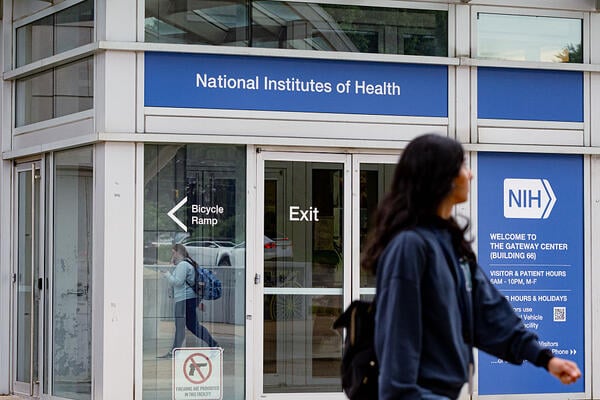
    Four directors at the National Institutes of Health who were placed on administrative leave earlier this year have now been fired, Science reported.

    The ousted leaders led the National Institute of Allergy and Infectious Diseases, the National Institute of Child Health and Human Development, the National Institute on Minority Health and Health Disparities, and the National Institute of Nursing Research. Tara Schwetz, the deputy director for program coordination, planning and strategic initiatives, was also fired. The directors were put on leave in the spring around the same time that the administration laid off thousands at the Department of Health and Human Services.

    Science reported that the directors felt they were targeted as part of the administration’s crackdown on diversity, equity and inclusion and for political reasons. Jeanne Marrazzo, the former NIAID director, took over for Anthony Fauci, a frequent target for Republicans who took issue with his approach to the COVID-19 pandemic. Marrazzo filed a whistleblower complaint in early September that in part accused NIH leadership of downplaying the value of vaccines, The New York Times reported.

    “It’s not surprising, but it’s still incredibly disappointing,” Marrazzo told Science. “I would have been quite happy to serve under the new administration as long as we were allowed to do our jobs.”

    Source link

  • Mike Gavin Resigns to Lead DEI Defense Coalition

    Mike Gavin Resigns to Lead DEI Defense Coalition

    Mike Gavin, the founder of Education for All, a grassroots group of community college administrators fighting legislative attacks on diversity, equity and inclusion, will step down as president of Delta College in January. He has been in the post since 2021. 

    Gavin informed the Delta College Board of Trustees last week that he would resign to lead a national coalition focused on defending equity in higher ed. 

    “My whole career has been focused on equity and how higher ed is situated in the democratic experiment, so when I was asked to do the next thing, I felt compelled to do it,” Gavin told Inside Higher Ed

    “I was not looking for a job. Delta has been amazing. The faculty and staff are some of the most insightful and student-centered I’ve ever seen,” he said. 

    More information about the coalition, including its priorities and funding model, will be released soon, he added. 

    Since the early days of the second Trump administration, Gavin has been a leading voice in defending DEI work in higher ed, especially at community colleges. Participation in Education for All surged at the beginning of the year as college leaders sought advice on protecting programs and navigating compliance with Trump administration mandates. 

    “My scholarship rests on the great thinkers of our past, from Benjamin Franklin to James Baldwin. It is also grounded in the belief that our country depends on a higher education sector that must be free from partisan interference, in order to democratize higher education for all,” Gavin wrote in a letter to the Delta College community.  

    Delta College trustees said they will begin the process of appointing Gavin’s successor in the coming weeks. 

    Source link

  • From Detection to Development: How Universities Are Ethically Embedding AI for Learning 

    From Detection to Development: How Universities Are Ethically Embedding AI for Learning 

    This HEPI blog was authored by Isabelle Bristow, Managing Director UK and Europe at Studiosity, a HEPI Partner.  

    The Universities UK Annual Conference always serves as a vital barometer for the higher education sector, and this year, few topics were as prominent as the role of Generative Artificial Intelligence (GenAI). A packed session, Ethical AI in Higher Education for improving learning outcomes: A policy and leadership discussion, provided a refreshing and pragmatic perspective, moving the conversation beyond academic integrity fears and towards genuine educational innovation. 

    Based on early findings from new independent research commissioned by Studiosity, the session’s panellists offered crucial insights and a clear path forward. 

    A new focus: from policing to pedagogy 

    For months, the discussion around Gen-AI has been dominated by concerns over academic misconduct and the development of detection tools. However, as HEPI Director Nick Hillman OBE highlighted, this new report takes a different tack. Its unique focus is on how AI can support active learning, rather than just how students are using it. 

    The findings, presented by independent researcher Rebecca Mace, show a direct correlation between the ethical use of AI for learning and improved student attainment and retention. Crucially, these positive effects were particularly noticeable among students often described as ‘non-traditional’. This reframes the conversation, positioning AI not as a threat to learning but as a powerful tool to enhance it, especially for those who need it most. 

    The analogy that works 

    The ferocious pace of AI’s introduction to the sector has undoubtedly caught many off guard. Professor Marc Griffiths, Pro-Vice Chancellor for Regional Partnerships, Engagement & Innovation at UWE Bristol, acknowledged this head-on, advocating for a dual approach of governance and ‘​​​​sand-boxing’ (the security practice of isolating and testing to make sure an application, system or platform is safe)  of new technologies. Instead of simply denying access, he argued, we must test new tools and develop clear guardrails for their use. 

    In a welcome departure from ​​​​​​​​the widely used but ultimately flawed calculator analogy (​​read more here Generative AI is not a ‘calculator for words’. 5 reasons why this idea is misleading), Professor Griffiths offered a more fitting one: the overhead projector. Like PowerPoint today, the projector was a new technology that was a conduit for content, but it never replaced the core act of teaching and learning itself. AI, he posited, is simply another conduit. It is what we put into it, and what we get out of it, that matters. 

    Evidenced insights and reframing the conversation 

    The panel also grappled with the core questions leaders must ask themselves. Stephanie Harris, Director of Policy at Universities UK posed two fundamental challenges: 

    • How can I safeguard my key product that I am offering to students? 
    • How can I prepare my students for the workforce if I don’t yet know how AI will be used in the future? 

    She stressed the importance of protecting the integrity of the educational experience to prevent an ‘erosion of trust’ between students and institutions. In response to the second question, both Steph and Marc emphasised the answer lies not in specific tech skills, but in timeless critical thinking skills that will prepare students not just for the next three years, but for the next 15. The conversation also touched upon the need for universities to consider students under 16 as the future pipeline, ensuring our policies and frameworks are future-proof. Steph mentioned further prompts for leaders to think about as listed in a UUK-authored, OfS blog Embracing innovation in high education: our approach to artificial intelligence – which was given a commonsense shorthand by Steph as ‘have fun, don’t be stupid!’.  

    The session drove home the importance of evidence-based insights. Dr David Pike, Head of Digital Learning at the University of Bedfordshire, shared key findings from his own research comparing student outcomes for Studiosity users versus those of non-Studiosity users, stating that the results were ‘very clear’ that students did improve at scale. He provided powerful data showing significant measurable academic progress, along with a large positive correlational impact on retention and progression. Dr. Pike concluded that, given this demonstrated positive impact, we should be calling the technology ‘Assisted Intelligence,’ because when used correctly, that is exactly what it is. 

    A guiding framework of values 

    To navigate this new landscape, Professor Griffiths laid out seven core values that must underpin institutional policy on AI: 

    1. Academic integrity: Supporting learning, not replacing it. 
    1. Equity of access: Addressing the real challenge of paywalls. 
    1. Transparency: Clearly communicating how students will be supported. 
    1. Ethical Responsibility 
    1. Empowerment and Capability Building 
    1. Resilience 
    1. Adaptability 

    These values offer a robust framework for leaders looking to create policies that are both consistent and fair, ensuring that AI use aligns with a university’s mission. 

    The policy challenge of digital inequality 

    The issue of equity of access was explored in greater detail by Nick Hillman, who connected the digital divide to the broader student funding landscape. He pointed out that no government had commissioned a proper review on the actual cost of being a student since 1958. With modern student life costing upwards of £20,000 annually if a student wants to involve themselves fully in student life. He made a powerful case for increased maintenance support to match an increased tuition fee, which would also help prevent further disparity between those who can afford premium tech tools and those who cannot. This highlights that addressing digital inequality is not just a technical challenge; it is a fundamental policy one too. 

    In closing 

    The session’s core message was clear: while the rise of AI has been rapid, the sector’s response does not have to be only reactive. By embracing a proactive, values-led approach that prioritises ethical development, equity and human-centric learning, universities can turn what was once seen as a threat into a powerful catalyst for positive change. 

    Studiosity is AI-for-Learning, not corrections – to scale student success, empower educators, and improve retention with a proven , while ensuring integrity and reducing institutional risk. 

    Source link

  • There Are No “Shy Students”, Only Poor Learning Environments – Faculty Focus

    There Are No “Shy Students”, Only Poor Learning Environments – Faculty Focus

    Source link

  • Podcast: Labour Conference 2025 | Wonkhe

    Podcast: Labour Conference 2025 | Wonkhe

    This week on the podcast, as the dust settles on Labour conference in Liverpool, we unpack what Keir Starmer’s new higher education participation target really means – and whether universities have the capacity and funding to meet the moment.

    We also get into the surprise return of targeted maintenance grants – funded controversially by the levy on international student fees, and we reflect on the wider political atmosphere at the conference – from policy signals to sector perceptions, and what all this might tell us about Labour’s emerging offer and forthcoming White Paper.

    With Gary Hughes, Chief Executive at Durham Students’ Union, Eve Alcock, Director of Public Affairs at QAA, Michael Salmon, News Editor at Wonkhe and hosted by Jim Dickinson, Associate Editor at Wonkhe.

    The PM’s announcement on higher level participation is a win for the HE sector

    The fifty per cent participation target is no more. Again.

    Grants return, the levy stays

    Maybe the levy just moves money to where it’s needed most

    The Augar review is back, baby. Just don’t about talk yourself

    Students are being othered again – and everyone loses out

    Have universities got the capacity and cash to respond to the government’s agenda?

    How much should the new maintenance grant be?

    Universities should be central to rebuilding communities

    Students are working harder than ever – because they have to

    I have a lot of questions about the LLE

    Who’s ready for a debate at 930am on a Sunday?

    The education policy trap: will the Augar review avoid the mistakes of the past?

    You can subscribe to the podcast on Apple Podcasts, YouTube Music, Spotify, Acast, Amazon Music, Deezer, RadioPublic, Podchaser, Castbox, Player FM, Stitcher, TuneIn, Luminary or via your favourite app with the RSS feed.

    Source link

  • OfS rebalances the free speech/harassment see-saw on antisemitism

    OfS rebalances the free speech/harassment see-saw on antisemitism

    The Union of Jewish Students (UJS) has published a fascinating new episode of “Yalla”, its podcast for Jewish students.

    Hosted by Louis Danka, who is the new President of UJS, the September 2025 episode features an extensive interview with Arif Ahmed, OfS’ Director for Freedom of Speech and Academic Freedom.

    The conversation comes weeks after the regulator’s new higher education free speech guidance came into force on August 1, 2025, alongside enhanced harassment protections.

    What makes the interview especially interesting is what it doesn’t mention – Ahmed’s reversal on the IHRA definition of antisemitism.

    In February 2021, Ahmed wrote in a HEPI blog that he was strongly against Gavin Williamson’s requirement that universities adopt the IHRA definition of anti-Semitism, arguing it obstructs perfectly legitimate defence of Palestinian rights and chills free speech:

    I hope the Secretary of State reconsiders the need for it; but these new free speech duties ought to rule it out in any case.

    We’re all allowed to change our minds on things. The issue is the extent to which the law, or the regulation he’s now in charge of, offers clarity on the volte-face.

    And while there’s plenty of helpful material in there on how OfS might approach casework and complaints, it does raise all sorts of questions about expectations – and OfS’ strategy for communicating what in some cases amounts to significant additions and clarifications to its guidance.

    What the podcast says

    The interview centres on what I’ve previously described as the twin sandbags on the regulatory see-saw – the Higher Education (Freedom of Speech) Act 2023 and the E6 condition on harassment and sexual misconduct.

    A central theme throughout is UJS’ contention of a deteriorating campus environment for Jewish students. Ahmed acknowledges there has been “a big rise in antisemitic incidents in recent years, on campus, in the country more generally” and describes this as a source of “grave concern” for OfS.

    The discussion then considers how this manifests practically on campuses. Ahmed describes, for example, scenarios where Jewish students may feel unable to attend lectures due to protest activity, or where “protests outside Jewish accommodation” create hostile environments.

    He first emphasises that while “political ideas expressed in the protests may be perfectly awful and expressible,” universities can still regulate their “time, place and manner” – such that core functions can keep going.

    Hence on protest regulation, Ahmed says:

    …if you have protests that take place in such a way that Jewish students don’t feel able to attend lectures … it may also be right for the university say, well, you can’t do it here, and you can’t do it in this place, and you can’t have it every day outside a lecture theatre.

    He also points to protests outside Jewish accommodation as another context where restrictions could be justified.

    Ahmed’s contemporary position on IHRA is explained as follows:

    …we ourselves have adopted the IHRA definition, and we do think it can be a very useful tool for understanding modern antisemitism.

    He adds that there is “no obstacle, in principle” for universities adopting a particular definition, and “certainly not” the IHRA working definition.

    He clarifies that it is “absolutely compatible” with the guidance, provided it’s being used properly as a way to understand antisemitism rather than to suppress lawful and legitimate debate. That latter caveat may represent the only vestige of his previous concerns about IHRA chilling Palestinian rights advocacy.

    The published guidance takes an uncompromising stance on Holocaust denial, where Ahmed explains this was made explicit after consultation feedback seeking clarity:

    …we will not under any circumstances protect Holocaust denial, so nothing that we do in our complaint scheme or otherwise will protect that speech.

    With the more obvious stuff out of the way, the subsequent nuanced discussion involves distinguishing between legitimate political discourse and antisemitic harassment, particularly around coded language.

    Ahmed addresses scenarios like “Zionists off our campus” signs, explaining that context is crucial. On coded antisemitism, Ahmed explains:

    …very often when people use the expression “Zionist”, for instance, it can actually be used as a kind of euphemistic expression meaning Jewish people, and in the circumstances where that’s so it seems very much more likely to be something that’s targeted at individuals because of their race, because of their religion.

    He then distinguishes between attacking ideas versus targeting individuals, noting that speech “directed at ideas” differs from speech that makes individuals feel excluded because of their protected characteristic.

    Ahmed is at pains to point out that freedom of speech encompasses religious expression, making Jewish students’ ability to practice their faith a free speech issue. He also describes scenarios where Jewish students might hide religious symbols like Stars of David due to campus hostility. He then explains the religious expression dimension:

    …if you have an atmosphere on campus which is allowed to grow, which grew, Jewish students are intimidated out of expressing their own religion, that’s that’s an affront to their freedom of speech.

    The interview also explores “chilling effects” – where students self-censor rather than face consequences. Ahmed describes situations where students with pro-Israel views or Jewish religious expression might “decide not to say it in the first place” due to fears about academic consequences or social ostracism.

    Nevertheless, he repeatedly stresses that harassment determinations require objective analysis, not just subjective feelings. He explains that the legal test involves whether:

    …a reasonable person would think that was… creating an intimidating atmosphere for people because of their race, because of their religion.

    And on that point:

    …it’s not enough, for speech to count as harassment, that the person at the receiving end feels offended; what’s important is that a reasonable person would think that was so.

    He concludes by stressing that freedom of speech “historically… most protects minorities and those… for whom their voice and their words are the only things that they have.”

    What the papers say

    The Jewish News coverage of Ahmed’s podcast exemplifies how the reassuring rhetoric translates into heightened community expectations.

    The headline itself – “Free speech tsar tells universities: stop intimidation of Jewish students” – frames Ahmed’s nuanced legal discussion as a clear directive for immediate action.

    The article’s language amplifies Ahmed’s confidence, presenting his tentative statements (“it may also be right for the university to say”) as firm commitments (“universities must take firm steps”) and his regulatory expectations (“we would expect universities to take action”) as binding obligations.

    The coverage also amps up specific protections – Jewish students’ ability to attend lectures, enter accommodation, and express their religion – without conveying the complex legal determinations universities might need to navigate to provide that protection.

    Ahmed’s discussion of “coded language” becomes a promise that universities can identify and restrict antisemitic euphemisms, while his IHRA compatibility statements are presented as resolving rather than acknowledging ongoing tensions between free speech and antisemitism prevention.

    Most tellingly, UJS President Louis Danker’s response reveals both the raised expectations and their fragility. While expressing satisfaction that “the Office for Students shares our concerns,” he acknowledges that “the ambiguity of the guidance will be challenged by crucial test cases in the coming months.”

    This tension, between reassurance about shared concerns and worry about guidance ambiguity, captures the potential problem that OfS has created – confident promises built on uncertain legal foundations that will inevitably face testing in precisely the complex scenarios that the framework struggles to address.

    What the podcast doesn’t say

    The central question is whether the reassuring statements to Jewish students align with what universities can actually deliver under existing legal frameworks.

    If we take holocaust denial, for example, Ahmed demonstrates clear understanding:

    Article 17 says that none of these rights can be used, essentially to destroy other people’s rights. So speech that aims to destroy others rights… the courts have found, for instance, that many instances of Holocaust denial they’ve looked at, fall under it.

    That explanation appears to be legally accurate. Article 17 is sometimes called the “abuse clause” of the European Convention – it strips protection from speech that aims to destroy the rights of others, such as Holocaust denial.

    But the guidance leaves the explanation out, simply declaring Holocaust denial unprotected without explaining why – or when. That omission matters, because Article 17 normally operates alongside Article 10(2) – another part of the Convention that allows restrictions on speech if they are necessary and proportionate to protect others.

    As a reminder, the OfS guidance’s three-step framework treats human rights considerations as sequential rather than integrated:

    Step 1 asks simply whether speech is “within the law” – defined as speech not prohibited by primary legislation, legal precedent, or secondary legislation. Crucially, university regulations and contracts don’t count as “law” here. If not, don’t allow it. If it is, move to Step 2.

    Step 2 considers whether there are “reasonably practicable steps” to enable the speech. Universities should consider factors like legal requirements (including any formal duties), maintaining essential functions, and physical safety – but explicitly cannot consider the viewpoint expressed, whether it’s controversial, or reputational impact. If steps can be taken, take them. If not, move to Step 3.

    Step 3 – which is only reached if no reasonably practicable steps exist – then asks whether any restrictions are “prescribed by law” and proportionate under the European Convention. This involves checking if there’s a specific legal rule authorising the restriction, and runs through a four-part proportionality test weighing the importance of the objective against the severity of limiting the right.

    That proportionality test looks something like this:

    • Is the objective important enough? – The reason for restricting speech must be sufficiently weighty to justify limiting a fundamental right.
    • Is the restriction rationally connected? – The measure must actually help achieve the objective, not just be vaguely related to it.
    • Is this the least restrictive option? – Could you achieve the same goal with less impact on free speech? If yes, you must use the less intrusive approach.
    • Does the benefit outweigh the harm? – Even if the first three tests are met, you must still balance the severity of restricting speech against how much the restriction actually helps achieve your objective. The restriction fails if the damage to free expression outweighs the benefit gained.

    As I’ve noted before on here, the published approach seems to conflict with Minasyan v Armenia (2019), where the European Court of Human Rights struck down Armenia’s handling of a protest case. The Armenian courts had first checked whether protesters broke domestic criminal law, and only afterwards asked whether their free speech rights were engaged.

    Strasbourg was clear – you can’t separate those steps. The balancing of rights under Article 10(2) has to be done at the outset. So when the guidance asks universities to check domestic criminal law first and only consider broader human rights implications as an afterthought, the sequential framework seems to repeat the flaw that Strasbourg condemned.

    Meanwhile, Ahmed seems to correctly state the objective harassment test:

    …it’s not enough. Speech to count as harassment, that the person at the receiving end feels offended… what’s important is that a reasonable person would think that was so.

    But his practical applications consistently reference subjective experiences without clear frameworks for objective assessment. He discusses Jewish students feeling “unable to attend lectures” or “intimidated out of expressing their own religion” – but then offers up little on how universities should distinguish between justified concerns and unfounded complaints.

    The “reasonable person” test sounds simple, but in practice it is one of the hardest questions courts face. Would an average observer see this as harassment, taking into account context, repetition, and effect?

    Judges often split over the answer, even with days of evidence. Expecting university or SU staff to make that call in real time, during a protest or at a room-booking stage, is asking staff to perform complex human rights analyses on the fly. Clarity on what he might expect is reasonable in those scenarios would help.

    Ahmed’s discussion of antisemitic language also illustrates the analytical burden placed on those enforcing or explaining rules day to day:

    …very often when people use the expression Zionist, for instance, they can actually, can actually be used as a kind of euphemistic expression meaning Jewish people.

    Determining when “Zionist” functions as coded antisemitism requires careful analysis of speaker intent, contextual factors, and impact on targeted individuals. These are determinations that typically require evidence about speaker’s background and previous statements, analysis of the specific context and setting, an assessment of audience understanding and reaction, and an evaluation of the targeting effects on specific individuals.

    Day to day, staff may well lack both the investigative capacity and legal expertise to perform those sorts of analyses reliably. Ahmed acknowledges the complexity – “it might depend on context” – but doesn’t offer anything like a practical methodology for making the determinations.

    The UK Supreme Court in Elan-Cane (2021) stressed that domestic bodies should not push human rights analysis beyond what the European Court of Human Rights has already recognised. Lord Reed warned against overstepping into areas Strasbourg had not yet endorsed.

    Ahmed’s framework arguably asks universities to do exactly that – making human rights calls (on protests, coded language, or harassment) that even the courts approach with extreme caution.

    If legally trained judges with full procedural protections must be cautious about extending human rights analysis, how can staff be expected to perform similar determinations through internal processes? Is OfS fit to do so when it gets a complaint in? And what are the penalties for getting it wrong?

    Rights collision

    Another silence in the interview is how to handle the collision of rights. He clearly anchors harassment to protected characteristics like race and religion, and he treats Zionism as an idea that can be lawfully discussed – while warning it is sometimes used as a euphemism for “Jew” in context. He doesn’t quite say “Zionism is a protected belief” in terms, though that would be the likely legal position under Equality Act case law. The same goes for anti-Zionism.

    Under UK equality law, political and philosophical beliefs qualify for protection if they meet what’s known as the Grainger criteria – that is, the belief must be genuinely held, relate to a weighty aspect of human life, attain a certain level of seriousness and cogency, and be worthy of respect in a democratic society.

    Courts have already recognised beliefs such as environmentalism, gender-critical feminism, and ethical veganism under this test. Anti-Zionism looks like it would qualify on the same basis, provided it is expressed as a coherent political or philosophical position rather than as a proxy for antisemitism.

    What he does not explain is what universities should do when the protections appear to come into direct conflict or quite how a university is supposed to differentiate between the political or philosophical position and the proxy.

    Let’s imagine a student holding a placard reading “Zionism is racism” and another responding that “anti-Zionism is antisemitism.” Both statements can amount to the expression of protected beliefs under the Equality Act. Both students might also claim they are being harassed by the other.

    Courts take weeks to sift through context, intent, and impact in such cases – weighing not just Article 10 free speech but also Article 9 (religion), Article 8 (private life) and Article 11 (assembly).

    On balance, “Zionists off campus” feels like it targets a group of people. Those banned from painting it on a banner may feel their speech is being chilled. “Zionism off campus” feels more like a protected piece of political expression. Some reading that may feel harassed. Complaints in either event are likely.

    Recent cases show how fraught these clashes can be. In Forstater v CGD Europe, the tribunal upheld that gender-critical beliefs were protected, even though many found them offensive – but also emphasised that protection for a belief does not mean protection for every manifestation of it.

    In Mackereth v DWP, the tribunal held that a doctor’s refusal to use trans patients’ pronouns could lawfully be limited, despite his Christian beliefs being protected. The principle is clear – both Zionism and anti-Zionism can be protected, but the way they are expressed may still lawfully be restricted if it harasses others.

    What’s missing from Ahmed’s account is the extent to which universities are expected to perform that fine distinction in real time, and at which stage of a process they’re expected to do so.

    What now?

    The danger in all of this is a form of regulatory false advertising – promising protection through frameworks that universities cannot properly execute without risking legal challenge or practical failure.

    The focus on context is welcome, but it doesn’t solve the core problem – the absence of a practical framework for when and how to balance competing rights. Without it, institutions risk inconsistency, overreach, or paralysis – either censoring lawful political expression or failing to protect students from harassment.

    The reassuring tone also suggests clearer legal boundaries than actually exist. When he says that universities “would expect to take action” about intimidatory speech, he presents complex, fact-specific determinations as straightforward administrative decisions.

    It’s a false certainty that may mislead universities into thinking they have clear authority to restrict speech, and could simultaneously raise student expectations about protection that may prove impossible to deliver.

    Then the style compounds the problem. In the podcast and coverage of it, Jewish students hear confident reassurances; in the consultation response annex, Article 17 is quietly acknowledged; in public guidance, proportionality is all but absent from the “within the law” test.

    The impression is of a regulator telling each audience what it wants to hear by pointing at one end of the see-saw, rather than grappling with the hard edges of the case law in ways that may temper expectations rather than raise them.

    And given both the free speech guidance and the E6 guidance drives home the need to get these messages into the heads of students themselves, there’s certainly nothing in there on how universities are supposed to explain all of this to students.

    It leaves universities (and by proxy their SUs) stuck in the impossible position that they have been for months.

    They remain caught between those heavy sandbags without mechanisms to resolve them, having expectations raised on both ends in ways that may not be as simple in practice, and offering little confidence that a good stab at making the calls, carried out in good faith, will result in anything other than Kafka’s regulator appearing with a fine either way.


    Source link

  • Visa oversubscription at UCL may be more than just a PR problem

    Visa oversubscription at UCL may be more than just a PR problem

    Richard Adams’ reporting for the Guardian sets out the immediate fallout.

    Hundreds of international students, including around 200 from China, are stranded after UCL admitted it had run out of Confirmation of Acceptance for Studies (CAS) allocations.

    The Guardian reports that many have already spent thousands on flights and accommodation – others are already in the UK and now face deportation.

    Comments like this one on Reddit illustrate the issue:

    On September 22nd, I suddenly received a notice from UCL, telling me that the issuance of CAS had been suspended… the only option they’ve given is to defer my enrolment to 2026. I’ve already rented a flat and the money is non-refundable.

    The reputational damage may spread from UCL. A YouTube video entitled “UK university cancels CAS letters” lists causes like overbooking and compliance checks without actually mentioning UCL. And a look at Chinese-language spaces suggests that story has gone semi viral – re-told and amplified with screenshots said to be from affected cohorts.

    UCL told us that it’s urgently working with the Home Office to secure additional CAS numbers and is doing everything it can to resolve this as quickly as possible:

    In the meantime, we are contacting affected students directly to explain the situation, offer our sincere apologies, and provide support including the option to defer their place to next year.

    The short-term picture is reputational damage and urgent negotiations with the Home Office. But potentially, the longer-term problem is consumer law – and the conflicting risks and incentives that our immigration regime and the consumer protection regime creates.

    Push me pull you

    Universities, of course, have to apply to the Home Office for CAS (Confirmation of Acceptance for Study) numbers. The number allocated is based on how many international students each university expects to admit.

    They have to aim to be as accurate as possible – they’re not permitted to significantly over-estimate these figures as a precaution.  The problem this year for UCL is as follows:

    We’ve experienced significantly more applications and acceptances of offers than anticipated, and as a result, we have exceeded the number of Confirmation of Acceptance for Studies (CAS) numbers allocated to us by the Home Office. Our planning is based on historical data and expected trends which take account of attrition rates and other factors.

    For all universities, the numbers are always estimates. This is because, in any one year, more offer holders than expected may accept their place, or more students may meet the academic requirements than in previous years – both of which increase demand for CAS allocations.

    The question then is how to manage the risks – not least because as well as worries about over-recruiting, as per the Legal Migration white paper, UKVI will soon be demanding a visa refusal rate of less than 10 per cent and a course enrolment rate of at least 90 per cent of CASs issued.

    UUKi’s advice on that looks like this:

    Universities may wish to consider reviewing their deposit requirements alongside their diversification plans to help ensure applicants are genuine students and intent on studying. This could include introducing or increasing deposits or introducing earlier deposit deadlines.

    It’s not hard to see how immigration policy pushes universities towards locking students in once they apply, and then having to take steps to limit the impact if a surprising number then accept and/or meet any offer made.

    The problem is that those steps may not be compatible with protections students are supposed to have. In other words, it may not be quite as simple as it looks to transfer the risks being loaded onto universities onto students.

    CMA’s earlier warnings

    You may remember that after the pandemic admissions crunch caused by those mutant algorithms, the CMA issued specific advice reminding universities that:

    Universities and colleges should not make binding offers which they know they may not be able to honour, and should avoid terms which allow them wide discretion to withdraw offers once accepted.

    Then in updated CMA guidance to universities in 2023, the same themes recur:

    Institutions must provide prospective students with clear, accurate, comprehensive, unambiguous and timely information about courses, teaching, teaching locations and any limiting conditions.

    And echoing its Statement on Admissions, the guidance stresses that terms allowing a university excessive discretion to withdraw or change the service must be fair:

    HE providers should not use terms which allow wide discretion to vary or cancel aspects of the educational service after an offer has been accepted, or to limit or exclude liability for failure to provide what was promised.

    Non-refundable deposits

    Like most universities, UCL’s Tuition Fee Deposits Policy 2025 says deposits are:

    …typically non-refundable if the offer-holder simply chooses not to enrol or is unable to enrol for reasons within their control.

    Refund routes are narrow – visa refusal, academic failure, programme cancellation, scholarship funding – and discretionary. Refunds may also be reduced by bank charges or currency fluctuations.

    The CMA’s unfair terms guidance (CMA37) says that deposits must reflect a trader’s pre-estimate of the loss, not operate as punitive lock-ins.

    Paragraph 5.14 warns that forcing consumers to forfeit prepayments:

    …is open to serious objection where it bears no relation to the business’s actual costs.

    Where universities use deposits to insure against under-recruitment, the price is often borne by students – in ways consumer law regards as unfair.

    UCL told us that:

    Tuition Fee Deposits are not intended to deter withdrawals and represent a genuine estimate of the loss suffered where an individual doesn’t enrol. UCL specifically sets out that Tuition Fee Deposits aren’t non-refundable in all circumstances.

    Acts of god

    Meanwhile, UCL’s terms and conditions allow it to cancel programmes and treat “under or over demand for courses or modules” as an “event outside our control.”

    In the undergraduate version, Section 15 lists over or under-subscription alongside things like government restrictions and industrial action as circumstances for which UCL “will not be responsible or liable for failure to perform.”

    And under Section 5, UCL may withdraw or cancel a programme and will then “use commercially reasonable endeavours” to offer a suitable alternative or permit withdrawal.

    The CMA’s HE consumer law advice is explicit that providers must not draft broad discretionary rights to withdraw courses after offers have been accepted. Terms must be narrow, transparent, and balanced – and force majeure cannot be used to cover risks the provider should reasonably plan for.

    In what appears to be the CMA’s view, oversubscription is not an act of God – it’s a business choice.

    UCL’s terms also cap its liability for breach of contract at twice the tuition fee, and exclude responsibility for consequential losses – including travel, accommodation, and visa fees.

    But under the Consumer Rights Act 2015, suppliers can’t exclude liability for foreseeable losses arising from their own breach – and the CMA warns against blanket exclusions of precisely these losses.

    If students have rented expensive private halls or bought non-refundable flights on the strength of UCL’s assurances, those look potentially like foreseeable losses. Trying to exclude them may not survive scrutiny under the fairness test.

    The university told us that:

    UCL does not seek to limit or exclude liability that it cannot lawfully limit or exclude and accepts a fair and reasonable allocation of liability in the terms.

    The exacerbating issue is that evidence on student forums appears to show that UCL knew weeks before the term that there could be a capacity issue.

    UCL states that first-year undergraduates who meet the published criteria – such as applying by the deadline and firmly accepting their offer – are “guaranteed” a place in UCL accommodation.

    But posts on student forums suggest that by early September some applicants were being told the guarantee had effectively become a “priority” allocation because of high demand, leaving students scrambling for private halls after cheaper options had gone.

    It means that many are now locked into costly private housing contracts, without a contractual route to compensation because the contract expressly excludes accommodation losses.

    The university’s UG terms say:

    UCL does not accept any liability for loss that does not flow naturally from a breach of its obligations under these Terms. This is often referred to as indirect or consequential loss. In addition, particular types of loss that UCL does not accept liability for, whether direct or indirect and whether considered a possibility at the time the contractual relationship came into effect, are loss of earnings (including delay in receipt of potential earnings), loss of opportunity, loss of profit and loss of your data.

    That could also be a classic example of an unfair exclusion clause under the Consumer Rights Act.

    All of this lands at a time when UCL is, as a first target in a likely series of claims, already preparing to defend itself in the High Court against claims from students over pandemic and strike disruption. That trial, due to begin in early 2026, may test amongst other things whether the “force majeure” clauses that universities have relied on to exclude liability are enforceable at all.

    The CMA has long said that force majeure clauses covering a university’s own staff strikes are likely unlawful, and OfS has echoed concerns in its guidance. In UCL’s case, the test claims may explore whether something truly uncontrollable in March 2020 became predictable – and therefore compensable – over time.

    That context matters because UCL’s oversubscription response leans on similar legal logic – that over-demand is “outside its control” and liability for students’ losses is capped. Regulators, adjudicators and courts could now be asked whether these contract clauses are actually fair.

    A risky model

    Recruiting large numbers of international students is inherently volatile. Visa policies change, attrition rates fluctuate, and global demand can surge unexpectedly. But while the business model may be risky, in theory the law prevents the transfer of that risk onto students via hefty deposits, discretionary refunds, cancellation rights or liability caps.

    In other words, an airline can take the risk of overbooking a flight – but if it does, you have the right to compensation – as well as a choice between a refund or an alternative flight.

    In many ways, UKVI and Home Office policy pushes universities towards the sorts of risk management practices that consumer law was designed to rule out.

    But the problem may not only be universities sometimes over-recruit. It may be that they do so on terms that attempt to ensure they are protected, while students are not.

    It’s not yet clear whether UCL is committing to compensation – or seeking to rely on the terms that would, on the face of it, allow it to avoid compensating.

    But if the pandemic/strikes litigation establishes that universities cannot contract away responsibility with sweeping force majeure clauses, oversubscription could become the next flashpoint in regulation and the courts – with real implications across the sector.

    ======

    A UCL spokesperson said:

    This year, UCL has seen an extraordinary surge in demand from international students, a reflection of our global reputation and the value students place on a UCL education.

    We’ve experienced significantly more applications and acceptances of offers than anticipated, and as a result, we have exceeded the number of Confirmation of Acceptance for Studies (CAS) numbers allocated to us by the Home Office. Our planning is based on historical data and expected trends which take account of attrition rates and other factors.

    We are urgently working with the Home Office to secure additional CAS numbers and are doing everything we can to resolve this as quickly as possible. In the meantime, we are contacting affected students directly to explain the situation, offer our sincere apologies, and provide support including the option to defer their place to next year.

    We also recognise that some of our recent communications have caused confusion and uncertainty, and we are sincerely sorry for that. We are committed to supporting every student impacted by this and are grateful for their patience and understanding as we work to find a solution.

    An Office for Students spokesperson said:

    All registered universities and colleges must show that they’ve given due regard to CMA guidance about how to comply with consumer protection law in developing and implementing their policies, procedures, and terms and conditions. Students invest a significant amount of time and money in their studies and it’s important that their consumer rights are protected when making this investment.

    Source link

  • Higher education postcard: Warsash Maritime School

    Higher education postcard: Warsash Maritime School

    Ahoy there!

    We’ve seen before how the University of Southampton was founded by a bequest from Henry Robinson Hartley. Today we’re going to look at a college which grew out of the university, and then became part of another one.

    Hartley died in 1850, but his bequest was not finally clear of the courts until 1858, and the town could then think how to create the institution he had suggested. The advice of the government was sought, and in April 1859 Professor Lyon Playfair – secretary to the Department of Science – proposed that the new institution should include a school of trade and navigation. His argument was reported in the Hampshire Advertiser on 15 May 1858:

    Did the council listen to this advice? They did not. And so the Hartley Institute – the nascent University of Southampton – did not have a school of navigation.

    Or not yet anyway. In 1909 Captain Gilchrist opened the South of England Navigation School to prepare students for the Board of Trade’s maritime examinations. And in 1932, the school – now known as Gilchrist’s Navigation School – was incorporated into University College Southampton as the Department of Nautical Training. At a celebratory luncheon with the Southampton Master Mariners’ Club, the university college principal Kenneth Vickers said that “it was preposterous to think that a university was going to teach a man his practical job when he got to it.”

    The department taught the theoretical foundations of navigation and seamanship, enabling its students to progress to apprenticeships on merchant vessels and, in due course, to take the exams to become qualified second mates.

    In the second world war the school continued to train sailors for the merchant marine, but also taught for the navies of the allied countries. It moved in 1942 to Warsash, a site further down the Solent, which was shared with a Royal Navy training site teaching the use of landing craft. (Fun fact: Royal Navy land bases are called HMS – HMS being His Majesty’s Ship. In this case the base was called HMS Tormentor.)

    After the war HMS Tormentor was decommissioned, but its site and buildings were added to the school of navigation. And by the late 1950s new accommodation was built at the school, to replace the WW2 pre-fabs. And it is the design for this that you can see on the card.

    In 1970 the school ceased to be part of the University of Southampton. My guess is that this was related to how technical education was funded: this would have been a move into local authority control. And in 1984 the school merged with the Southampton College of Technology, forming the Southampton Institute of Higher Education. And this in time became what is now Southampton Solent University, but more of that another time.

    The school is now known as the Warsash Maritime Academy, and operates both from a city centre site and, I think, in part still from the waterside site at Warsash. There’s a fabulous site maintained by alumni which includes memories from former students – well worth a browse when you have a little time to spare.

    The card was written and posted on Wednesday 18 May 1966. Very unusually, it is a typed message. A busy senior staff member, perhaps, who had access to secretarial support?

    And here’s a jigsaw of the postcard – I found it a slightly more challenging one this week. Enjoy!

    Source link

  • ED Put Political Out-of-Office Reply on Staff Emails

    ED Put Political Out-of-Office Reply on Staff Emails

    Photo illustration by Justin Morrison/Inside Higher Ed | Tierney L. Cross/Getty Images | nevodka/iStock/Getty Images

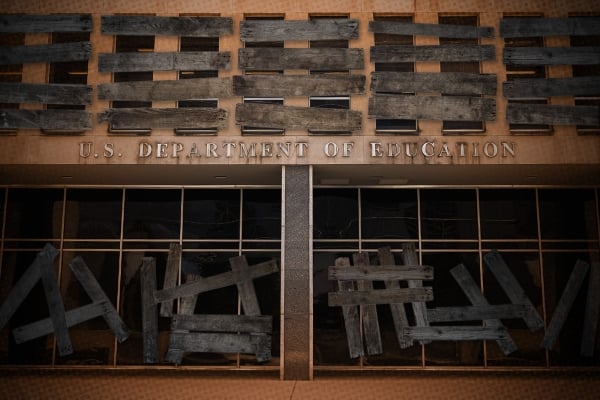
    Wednesday morning, as the government shutdown began, chief officers at the Department of Education distributed a standard out-of-the-office statement to all furloughed staff members and instructed them to copy and paste it into their email. So that’s what they did.

    But just hours later, those same nonpartisan staffers began to hear that the message they’d pasted into their email account was not the message being received by the public.

    “On Wednesday evening, my supervisor reached out to me on my personal equipment and said, ‘You’re going to want to log in and change your out-of-office status,’” one department staffer told Inside Higher Ed on the condition of anonymity out of fear of losing her job.

    When she followed her supervisor’s direction and logged in, the automatic message she saw was not the one she had saved earlier that morning.

    Rather than the original note, which had said, “There is a temporary shutdown … due to a lapse in appropriations,” the new message said, “Unfortunately, Democrat Senators are blocking passage of [a bill] … which has led to a lapse in appropriations.”

    This is one of the more than 10 emails Inside Higher Ed received as automatic responses including the same political message. Although Keast was appointed by Trump, most of the staffers we contacted were not.

    The outgoing message had been changed internally without her consent. And this staffer was not alone. Inside Higher Ed emailed 10 separate Education Department staffers Thursday, all of whom had been placed on furlough, and each one bounced back with identical responses. One senior leader from the department, who also spoke anonymously, said that to his knowledge the politically charged message was set as the out-of-office notification for all furloughed employees.

    (The Department of Education did not immediately provide comment. In fact, the emails sent to both deputy press secretary Ellen Keast and the general press team account were met with the same automatic response.)

    The first staffer said that while she was caught off guard by the override at first, it made sense the more she thought about it. Similar messages blaming Democratic senators for the shutdown had already been put at the top of HUD.gov, the landing page for all things Department of Housing and Urban Development, and other federal websites.

    As of Thursday evening, the HUD website noted, “The Radical Left in Congress shut down the government. HUD will use available resources to help Americans in need.”

    Republicans control the White House, the House and the Senate. In the Senate, they need the votes of at least seven Democratic senators to reach the 60-vote threshold necessary to overcome a filibuster.

    “I was really surprised, because we had gotten such explicit instructions on what to use for our out-of-office message,” the staffer said. But “when I saw that message from my supervisor, I assumed it had been changed to something more political than the original neutral one.”

    She has already logged back in multiple times to change the automatic response back to the neutral language. But each time, within hours, the department has overridden her changes.

    “It’s what [is being sent] to people who contact me, and they could reasonably misunderstand it as coming from me, and I don’t feel comfortable as a federal employee communicating a political message like that,” she said.

    A second staffer told Inside Higher Ed that he has worked through multiple shutdowns prior but not experienced anything like this.

    “It’s just wild to see your name attached to a message that you had nothing to do with,” he said. “It feels like a violation … You know that you don’t have any expectation of privacy when you’re working for the federal government. But it’s a different thing to say that you don’t have autonomy over your own words.”

    The second staffer noted that in his view, not only did this seem to be a violation of his personal rights, but also a violation of federal law.

    The Hatch Act, passed in 1939, was intended to ensure that nonpartisan federal workers who worked across administrations remained just that—nonpartisan. And according to documents from the Office of Special Counsel website, the Hatch Act “limits certain political activities of federal employees,” like using official authority for political purposes, soliciting political donations, wearing partisan political gear at work and posting or sharing partisan content on government systems.

    “It’s crazy to see the law violated on your behalf,” the second staffer said.

    None of the department employees Inside Higher Ed spoke with intended to file an individual lawsuit, nor had they heard anything from their union about a collective legal response. But one shared that Democracy Forward, a nonprofit legal organization that has sued the Trump administration several times this year, will be going to court over the matter as soon as Friday.

    Source link