We’ve seen before how the University of Southampton was founded by a bequest from Henry Robinson Hartley. Today we’re going to look at a college which grew out of the university, and then became part of another one.
Hartley died in 1850, but his bequest was not finally clear of the courts until 1858, and the town could then think how to create the institution he had suggested. The advice of the government was sought, and in April 1859 Professor Lyon Playfair – secretary to the Department of Science – proposed that the new institution should include a school of trade and navigation. His argument was reported in the Hampshire Advertiser on 15 May 1858:
Did the council listen to this advice? They did not. And so the Hartley Institute – the nascent University of Southampton – did not have a school of navigation.
Or not yet anyway. In 1909 Captain Gilchrist opened the South of England Navigation School to prepare students for the Board of Trade’s maritime examinations. And in 1932, the school – now known as Gilchrist’s Navigation School – was incorporated into University College Southampton as the Department of Nautical Training. At a celebratory luncheon with the Southampton Master Mariners’ Club, the university college principal Kenneth Vickers said that “it was preposterous to think that a university was going to teach a man his practical job when he got to it.”
The department taught the theoretical foundations of navigation and seamanship, enabling its students to progress to apprenticeships on merchant vessels and, in due course, to take the exams to become qualified second mates.
In the second world war the school continued to train sailors for the merchant marine, but also taught for the navies of the allied countries. It moved in 1942 to Warsash, a site further down the Solent, which was shared with a Royal Navy training site teaching the use of landing craft. (Fun fact: Royal Navy land bases are called HMS – HMS being His Majesty’s Ship. In this case the base was called HMS Tormentor.)
After the war HMS Tormentor was decommissioned, but its site and buildings were added to the school of navigation. And by the late 1950s new accommodation was built at the school, to replace the WW2 pre-fabs. And it is the design for this that you can see on the card.
In 1970 the school ceased to be part of the University of Southampton. My guess is that this was related to how technical education was funded: this would have been a move into local authority control. And in 1984 the school merged with the Southampton College of Technology, forming the Southampton Institute of Higher Education. And this in time became what is now Southampton Solent University, but more of that another time.
The school is now known as the Warsash Maritime Academy, and operates both from a city centre site and, I think, in part still from the waterside site at Warsash. There’s a fabulous site maintained by alumni which includes memories from former students – well worth a browse when you have a little time to spare.
The card was written and posted on Wednesday 18 May 1966. Very unusually, it is a typed message. A busy senior staff member, perhaps, who had access to secretarial support?
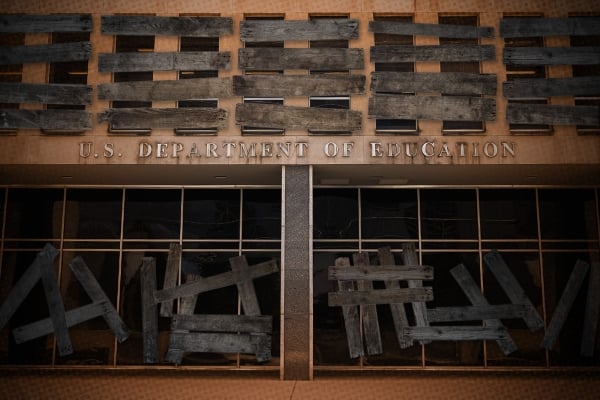
The department is largely closed due to the government shutdown. In the meantime, the Trump administration is using furloughed workers’ emails to make a political statement.
Photo illustration by Justin Morrison/Inside Higher Ed | Tierney L. Cross/Getty Images | nevodka/iStock/Getty Images
Wednesday morning, as the government shutdown began, chief officers at the Department of Education distributed a standard out-of-the-office statement to all furloughed staff members and instructed them to copy and paste it into their email. So that’s what they did.
But just hours later, those same nonpartisan staffers began to hear that the message they’d pasted into their email account was not the message being received by the public.
“On Wednesday evening, my supervisor reached out to me on my personal equipment and said, ‘You’re going to want to log in and change your out-of-office status,’” one department staffer told Inside Higher Ed on the condition of anonymity out of fear of losing her job.
When she followed her supervisor’s direction and logged in, the automatic message she saw was not the one she had saved earlier that morning.
Rather than the original note, which had said, “There is a temporary shutdown … due to a lapse in appropriations,” the new message said, “Unfortunately, Democrat Senators are blocking passage of [a bill] … which has led to a lapse in appropriations.”
This is one of the more than 10 emails Inside Higher Ed received as automatic responses including the same political message. Although Keast was appointed by Trump, most of the staffers we contacted were not.
The outgoing message had been changed internally without her consent. And this staffer was not alone. Inside Higher Ed emailed 10 separate Education Department staffers Thursday, all of whom had been placed on furlough, and each one bounced back with identical responses. One senior leader from the department, who also spoke anonymously, said that to his knowledge the politically charged message was set as the out-of-office notification for all furloughed employees.
(The Department of Education did not immediately provide comment. In fact, the emails sent to both deputy press secretary Ellen Keast and the general press team account were met with the same automatic response.)
The first staffer said that while she was caught off guard by the override at first, it made sense the more she thought about it. Similar messages blaming Democratic senators for the shutdown had already been put at the top of HUD.gov, the landing page for all things Department of Housing and Urban Development, and other federal websites.
As of Thursday evening, the HUD website noted, “The Radical Left in Congress shut down the government. HUD will use available resources to help Americans in need.”
Republicans control the White House, the House and the Senate. In the Senate, they need the votes of at least seven Democratic senators to reach the 60-vote threshold necessary to overcome a filibuster.
“I was really surprised, because we had gotten such explicit instructions on what to use for our out-of-office message,” the staffer said. But “when I saw that message from my supervisor, I assumed it had been changed to something more political than the original neutral one.”
She has already logged back in multiple times to change the automatic response back to the neutral language. But each time, within hours, the department has overridden her changes.
“It’s what [is being sent] to people who contact me, and they could reasonably misunderstand it as coming from me, and I don’t feel comfortable as a federal employee communicating a political message like that,” she said.
A second staffer told Inside Higher Ed that he has worked through multiple shutdowns prior but not experienced anything like this.
“It’s just wild to see your name attached to a message that you had nothing to do with,” he said. “It feels like a violation … You know that you don’t have any expectation of privacy when you’re working for the federal government. But it’s a different thing to say that you don’t have autonomy over your own words.”
The second staffer noted that in his view, not only did this seem to be a violation of his personal rights, but also a violation of federal law.
The Hatch Act, passed in 1939, was intended to ensure that nonpartisan federal workers who worked across administrations remained just that—nonpartisan. And according to documents from the Office of Special Counsel website, the Hatch Act “limits certain political activities of federal employees,” like using official authority for political purposes, soliciting political donations, wearing partisan political gear at work and posting or sharing partisan content on government systems.
“It’s crazy to see the law violated on your behalf,” the second staffer said.
None of the department employees Inside Higher Ed spoke with intended to file an individual lawsuit, nor had they heard anything from their union about a collective legal response. But one shared that Democracy Forward, a nonprofit legal organization that has sued the Trump administration several times this year, will be going to court over the matter as soon as Friday.
The Trump administration has asked nine universities to sign on to a proposed compact, mandating certain changes in exchange for preferential treatment on federal funding.
First reported by The Washington Post and confirmed, with additional details, by The Wall Street Journal, the proposal seeks an agreement with nine institutions that are being asked to commit to a 10-point memo referred to as the “Compact for Academic Excellence in Higher Education.”
Among the various conditions, institutions are reportedly being asked to:
Ban consideration of race or sex in hiring and admissions processes
Freeze tuition for a five-year period
Limit international undergraduate enrollment to 15 percent of the student body
Commit to institutional neutrality
Require applicants to take standardized tests, such as the SAT or ACT
Clamp down on grade inflation
Ensure a “vibrant marketplace of ideas on campus”
Restrict employees from expressing political views on behalf of the institution
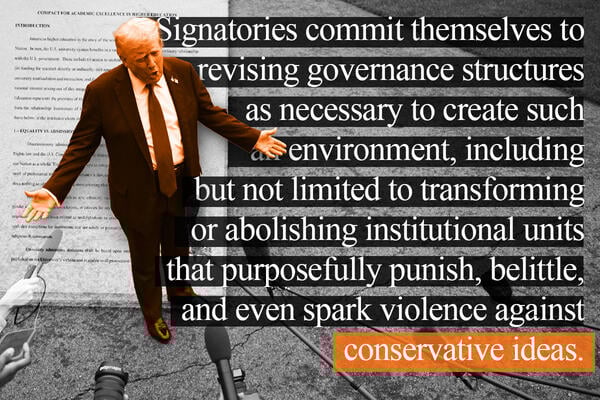
Shut down departments that “punish, belittle” or “spark violence against conservative ideas”
Anonymously poll students and employees on compact compliance and publish the results
Another requirement mandates that signatories “deploy their endowments to the public good,” such as by not charging tuition to students “pursuing hard science programs (with exceptions, as desired, for families of substantial means)” for universities with more than $2 million per undergraduate student in endowment assets. Universities would also be required to post more details about graduates’ earnings and refund tuition to those who drop out in their first semester.
After leveraging funding freezes and other tactics to pressure colleges to make changes, the compact reflects a different approach from the administration while still geared toward the same goal—remaking higher education in Trump’s image. May Mailman, a Trump adviser, hinted at the plan in a New York Times interview a week before the proposal emerged, saying it could be a way for universities to affirm they are “doing the right things.”
“The Trump administration does not want to be all Whac-a-Mole or all negative, but these are the principles that universities and the Trump administration and, frankly, private donors can ascribe to to say, ‘This makes a great university,’” she told the Times.
Institutions reportedly invited to join are: Brown University, Dartmouth College, the Massachusetts Institute of Technology, the University of Arizona, the University of Pennsylvania, the University of Southern California, University of Texas at Austin, the University of Virginia and Vanderbilt University.
Those that agree will receive “multiple positive benefits,” including “substantial and meaningful federal grants,” according to a copy of the memo published by The Washington Examiner.
But failure to comply with the agreement would come with steep consequences. Noncompliant universities would “lose access to the benefits of this agreement” for a year. Subsequent violations would lead to a two-year punishment. And the federal government could claw back “all monies advanced by the U.S. government during the year of any violation.” Private donations would also be required to be returned, upon request.
The Department of Justice would be tasked to enforce the agreements.
Institutional Responses
Most universities did not respond to requests for comment from Inside Higher Ed. But Texas officials seem eager to sign on, sharing a statement indicating their enthusiasm for the compact.
University of Texas system Board of Regents chairman Kevin P. Eltife wrote in the statement that the flagship was “honored” to be among the institutions “selected by the Trump Administration for potential funding advantages” under the proposed compact, which it is currently reviewing.
“Higher education has been at a crossroads in recent years, and we have worked very closely with Governor [Greg] Abbott, Lt. Gov. [Dan] Patrick and Speaker [Dustin] Burrows to implement sweeping changes for the benefit of our students and to strengthen our our [sic] institutions to best serve the people of Texas,” Eltife wrote. “Today we welcome the new opportunity presented to us and we look forward to working with the Trump Administration on it.”
University of Virginia spokesperson Brian Coy told Inside Higher Ed by email that interim president Paul Mahoney “created a working group under the leadership of Executive Vice President and Provost Brie Gertler and Executive Vice President and Chief Operating Officer J.J. Davis to advise him” on UVA’s response to the letter but has not yet made a decision to sign or not.
USC simply said in a statement, “We are reviewing the Administration’s letter.”
Both the White House and the Department of Education initially responded to requests for comment with automatic replies because of the federal government shutdown, which began Wednesday. A press office official later responded only to confirm The Wall Street Journal’s reporting.
Outside Perspectives
News of the proposal prompted a flurry of criticism within academic circles.
American Association of University Professors president Todd Wolfson blasted the idea in a Thursday statement and called on governing boards to reject it.
“The Trump administration’s offer to give preferential treatment to colleges and universities that court government favor stinks of favoritism, patronage, and bribery in exchange for allegiance to a partisan ideological agenda. This compact is akin to a loyalty oath. Adherence by university administrations would usher in a new era of thought policing in American higher education,” Wolfson wrote.
The executive committee of Penn’s AAUP chapter also opposed the proposal.
The Foundation for Individual Rights and Expression also criticized it in a post on X, writing that “the compact includes troubling language” specifically pointing to the call to eliminate academic departments critical of conservative ideas, which it cast as undermining free speech.
“A government that can reward colleges and universities for speech it favors today can punish them for speech it dislikes tomorrow. That’s not reform. That’s government-funded orthodoxy,” FIRE officials wrote.
Trinity Washington University president Pat McGuire called the proposal “political extortion.”
Brendan Cantwell, a higher education professor at Michigan State University, told Inside Higher Ed there are multiple issues with the proposal, including vague language about political speech that could allow universities or the federal government to single out faculty members for publicly discussing topics within their expertise. He added that “enforcement is so vague” that it would be easy for the federal government to declare universities out of compliance with the agreement.
Cantwell suggested, “This is probably a bigger deal than the Columbia [settlement] because it’s creating an incentive structure” that spurs universities to go along or opens them up to retaliation from the federal government, making it risky whether a university signs on or not.
(Columbia agreed to far-reaching changes to admissions, hiring, disciplinary processes and more in July, including a $221 million fine, when it reached a deal with the federal government to settle over findings that it failed to properly police antisemitism on campus. Columbia did not admit to wrongdoing, but administrators have acknowledged the need for reforms.)
Brian L. Heuser, a Vanderbilt professor and long-standing member of the university’s Faculty Senate, urged fellow senators and other faculty colleagues to organize against the idea in an email shared with Inside Higher Ed. Heuser called the compact “a dangerous departure from the core values that should underpin our institutions—namely, free inquiry, open debate, and institutional autonomy” and argued that it endangers academic freedom, among other concerns.
But some conservatives have lauded the idea and want ED to push harder.
“Secretary [Linda] McMahon deserves credit for working to disincentivize the use of race or sex in college admissions,” U.S. Sen. Todd Young, an Indiana Republican, wrote in a social media post. “We must go further—federally accredited institutions should eliminate ALL preferences grounded in ancestry, such as legacy status, or other factors unrelated to merit.”
Why These 9?
While it is unclear how the federal government landed on the nine schools as candidates for the proposal, one official told The Wall Street Journal the Trump administration believed they would be “good actors.” But contextual clues offer insights into why some may have been picked.
Of the nine, only five presidents signed on to a letter published earlier this year by higher education organizations pushing back on government overreach and political interference, which ultimately gathered 662 signatures. Of those five presidents, one has since resigned: Jim Ryan at UVA, who faced pressure from the Trump administration after it claimed the university failed to fully dismantle diversity, equity and inclusion programs.
Two institutions—Brown and Penn—previously struck deals with the federal government.
Others have drawn attention for political reasons. At Vanderbilt, Chancellor Daniel Diermeier has emerged as a leading voice advocating for institutional neutrality and has clashed with other campus leaders, arguing that higher education is in desperate need of reform, agreeing with frequent conservative criticisms of the sector. And Texas—one of three public institutions on the list—has an overwhelmingly conservative board, and both the system and flagship are led by former Republican elected officials.
Hello! This is Christina Samuels, the early education editor here at Hechinger.
By now, I hope you’ve had a chance to read my colleague Jackie Mader’s story about the important role that Head Start plays in rural communities. While Jackie set her story in western Ohio, she also interviewed Head Start parents and leaders in other parts of the country and collected their views for a follow-up article.
In a fortunate bit of timing, the advocacy group First Five Years Fund published the results of a survey it commissioned on rural Americans and their feelings on child care access and affordability. Like the people Jackie interviewed, the survey respondents, more than half of whom identified as supporters of President Donald Trump, said they had very positive views of Head Start. The federally funded free child care program received positive marks from 71 percent of rural Republicans, 73 percent of rural independents and 92 percent of rural Democrats.
The survey also found that 4 out of 5 respondents felt that finding quality child care is a major or critical problem in their part of the country. Two-thirds of those surveyed felt that spending on child care and early education programs is a good use of taxpayer dollars, and a little more than half said they’d like to see more federal dollars going to such programs.
First Five Years Fund was particularly interested in getting respondents to share their thoughts on Head Start, said Sarah Rubinfield, the managing director of government affairs for First Five Years Fund. The program has been buffeted by regional office closures and cuts driven by the administration’s Department of Government Efficiency.
“We recognize that these are communities that often have few options for early learning and care,” Rubinfield said.
In the survey, rural residents said they strongly supported not just the child care offered by Head Start, but the wraparound services such as healthy meals and snacks and the program’s support for children with developmental disabilities. Though Head Start programs are federally funded, community organizations are the ones in charge of spending priorities.
“Rural voters want action. They support funding for Head Start and for child care. They want Congress to do more,” Rubinfield said. Though the “big beautiful bill” signed into law in July expands the child care tax credit for low-income families, survey respondents “recognized that things were not solved,” she added.
The First Five Years Fund survey was released just a few days before a congressional standoff led to a government shutdown. The shutdown is not expected to touch Head Start immediately, said Tommy Sheridan, the deputy director of the National Head Start Association, in an interview with The New York Times. The 1,600 Head Start programs across the country receive money at different points throughout the calendar year; eight programs serving about 7,500 children were slated to receive their federal funding on Oct. 1, Sheridan told the Times. All should be able to continue operating, as long as the shutdown doesn’t last more than a few weeks, he said.
“We’re watching with careful concern but trying not to panic,” Rubinfield said. “We know the impacts may not be immediate, but the longer this goes on, the harder the impacts may be for families and programs.”
This story about rural Americans was produced by The Hechinger Report, a nonprofit, independent news organization focused on inequality and innovation in education. Sign up for the Hechinger newsletter.
The Hechinger Report provides in-depth, fact-based, unbiased reporting on education that is free to all readers. But that doesn’t mean it’s free to produce. Our work keeps educators and the public informed about pressing issues at schools and on campuses throughout the country. We tell the whole story, even when the details are inconvenient. Help us keep doing that.
Ever call a service provider only to get bounced between departments, retelling your story to every new agent, each one promising a fix that never comes? You hang up frustrated, unheard, and uncertain.
This same dynamic plays out in higher ed every day. A prospective student tells an admissions counselor, “I need to finish my graduate degree in one year.” That context gets lost in the handoff. The student success team never hears it. Course sequencing doesn’t line up. Frustration builds. Momentum stalls.
That isn’t just a communication slip. It’s a broken promise.
Too often, institutions treat the student journey as a series of separate phases — marketing handles outreach, admissions manages enrollment, and student success supports retention — but students don’t experience their education in phases. They experience it as one journey.
And when we don’t design for that, we create invisible gaps that undermine trust, break continuity, and erode outcomes.
This isn’t a marketing problem. Or an admissions problem. Or even a student success problem. It’s an alignment problem.
The real challenge is that internal teams aren’t playing from the same sheet of music. Without shared data, shared metrics, and shared goals, it’s impossible to have a meaningful conversation about where the student journey breaks down.
It also makes improvement feel like guesswork. One team pushes harder on applications. Another tries to boost first-term persistence. But without a full-funnel view, efforts remain disjointed and hard to scale.
To grow enrollment and retention sustainably, you need institutional alignment around the full journey, from first click to graduation.
Full-Funnel Enrollment Planning as a Solution for Growth
A full-funnel strategy doesn’t just connect dots — it puts everyone on the same map. Sustainable enrollment growth requires moving beyond early-stage efforts and focusing on a unified enrollment strategy that carries a prospective student from interest all the way through graduation. That means marketing, admissions, and student success teams need to share the same data, vision, and goals. Here’s what that looks like in practice.
Connect Marketing, Admissions, and Student Success
Replace handoffs with collaboration. That means shared access to student data, from first inquiry to graduation. When teams see the same big picture, outreach becomes more relevant, timing improves, and support gets proactive.
Build a Shared Road Map With Clear Metrics
Institutions need to establish a single road map that charts the student journey from inquiry to enrollment to graduation and attach measurable goals to each phase, such as enrollment yield, first-term persistence, and long-term retention rates. A shared scorecard keeps the discussion focused on the big-picture student journey, rather than team silos.
This shared dataset should be analyzed to detect patterns and trends. Where are students dropping out of the funnel? Which programs retain the best-fit learners? Which messages produce the best engagement? The insights you glean from your analysis can help you tweak targeting and support.
Align Around Student Fit Early
Retention starts with recruitment. When marketing and admissions teams are aligned with student success, they can spot patterns of persistence and adjust targeting accordingly. It’s not just about getting more students in the door — it’s about attracting students who will thrive.
Structure Cross-Team Check-Ins
Yes, it means more meetings, but structured, purposeful alignment sessions across departments can surface insights you’d otherwise miss. Better yet, tie every meeting to shared key performance indicators (KPIs) and use that data to drive strategy.
Treat Technology as a Bridge, Not a Band-Aid
Modern customer relationship management (CRM) platforms give you visibility into every stage of the funnel. Real-time reporting and alerts enable teams to identify issues — where students are disengaging, where more support is needed, which outreach messages are failing to resonate — and respond quickly before they become systemic.
Reframing Retention as a Targeting Opportunity
Strong retention doesn’t begin in week eight of the semester. It begins the moment a prospective student clicks “Learn More.” Strategies for success include the following:
Target right-fit students using behavioral and demographic data.
Tailor outreach to meet the expectations of adult and online learners.
Use predictive insights to intervene before a student disengages.
When you design a journey that prioritizes clarity, continuity, and fit, your enrollment and retention numbers start to reflect that.
Key Takeaways
With the value of higher ed under scrutiny and students facing more choices than ever, institutions must start treating the student journey like a customer journey.
That means designing around measurable satisfaction at every stage. Rallying around shared information. And giving every team a role in both the promise and the delivery of student success.
Because when students fall through the cracks, they don’t just feel confused. They feel let down.
Enrollment growth requires an end-to-end student journey approach, not a single-stage fix.
Full-cycle planning drives stronger enrollment and better retention.
Alignment among internal teams is the foundation for sustainable results.
It’s Time to Close the Gaps
At Archer Education, we partner with institutions to connect marketing, enrollment, and student success into one seamless journey. We help you build full-cycle strategies that grow enrollment, increase retention, and, most importantly, deliver on your promises to students.
Ready to start the conversation? Let’s talk.
Contact our team to learn more about our tech-enabled strategy, marketing, enrollment, and retention services.
Universities and colleges today face a highly competitive recruitment environment. Declining enrollment trends, shifting demographics, and the rise of alternative education options mean institutions must work harder than ever to connect with prospective students. Traditional outreach methods alone are no longer enough.
That’s where digital marketing for universities comes in. By leveraging the right mix of online strategies, higher education institutions can build brand awareness, generate qualified leads, and foster lasting relationships with students. From content marketing and SEO to social media and data-driven analytics, digital tools give schools the power to meet prospective students where they are: online.
In this blog post, we’ll break down eight proven digital marketing strategies tailored for universities. Along the way, we’ll answer common questions—like what exactly digital marketing in education means and how much universities invest in it—to give you a clear, actionable roadmap for success.
Struggling with enrollment?
Our expert digital marketing services can help you attract and enroll more students!
Understanding Digital Marketing in Higher Education
What is digital marketing in education? Digital marketing in education is the use of online channels—such as websites, SEO, social media, email, and digital ads—to promote programs, connect with prospective students, and engage alumni. Unlike other sectors, the “product” is not just a service but an experience and long-term investment, so messaging must inform, inspire, and build trust.
Why is digital marketing for universities so critical now? The stakes are high. With declining enrollments and growing skepticism about the value of a degree, institutions are investing heavily in outreach. According to SimpsonScarborough’s 2019 State of Higher Ed Marketing report, universities typically allocate between $429 and $623 per enrolled student each year to marketing efforts. The University of Maryland Global Campus, for example, committed $500 million over six years, half dedicated to digital ads.
Digital channels offer clear advantages: precise targeting, interactive storytelling, and measurable results. More importantly, they allow two-way communication—helping schools nurture relationships from first contact through enrollment, turning digital marketing into both a recruitment engine and a trust-building tool.
Below, we outline 8 proven digital marketing strategies for universities and colleges. These strategies have been tested in the education sector and shown to drive results – whether it’s increasing website traffic, applications, or student engagement. Along the way, we’ll highlight real-world examples (with sources) from reputable institutions to illustrate how each strategy can be put into practice.
1. Content Marketing and Search Engine Optimization (SEO)
In higher education, content is king. Universities that create valuable, student-focused content build trust and attract more applicants. Effective content marketing means answering the questions students and parents are already asking—through program pages, blogs, testimonials, videos, guides, and virtual tours.
SEO ensures this content gets discovered. When prospects search “best MBA in Canada” or “colleges with digital marketing programs,” optimized titles, headings, and keywords help your institution appear in results. Consistent updates, quality backlinks, and keyword-rich program pages boost visibility even further.
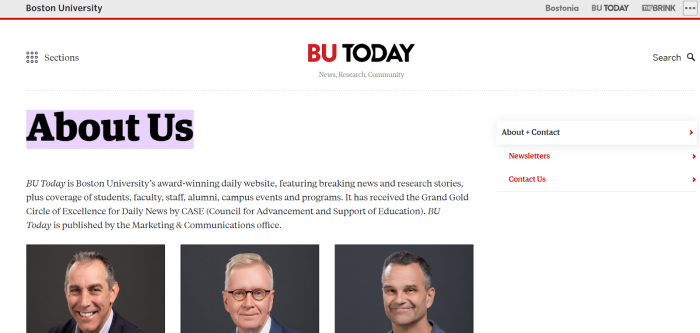
Example: Boston University runs an extensive content hub (“BU Today”) that publishes daily stories about student life, wellness, careers, research and more. This on-site news magazine – featuring contributions from students, faculty, staff, and alumni – builds trust and drives organic traffic by answering the questions prospective students are asking. BU Today’s engaging content strategy not only informs and inspires readers, but also strengthens the university’s visibility in search results through fresh, keyword-rich stories.
Students spend countless hours on social media, making it one of the most powerful tools for higher ed marketing. Platforms like Instagram, TikTok, YouTube, and LinkedIn allow universities to showcase campus life, share authentic stories, and build community long before students arrive on campus.
Tailor content to each platform: Instagram thrives on visual storytelling, TikTok on fun, viral content, YouTube on long-form video, and LinkedIn on alumni success. Meeting students where they are ensures your message resonates.
Authenticity wins: Many schools hand over the reins to students for “takeovers.” For instance, Babson College used Instagram takeovers for Q&As, giving prospects a candid look at campus life. Spelman College maximizes Instagram’s features—Stories, Highlights, and IGTV—to create a polished yet authentic presence that builds trust.
TikTok’s rise: Universities like Oxford and Indiana University leverage TikTok trends to humanize their brand and showcase student enthusiasm, boosting engagement dramatically.
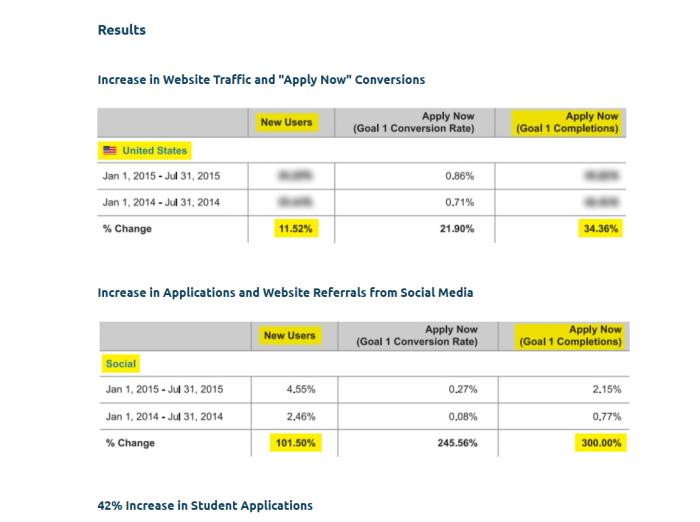
The payoff is real: John Cabot University increased applications by 42% after ramping up its social media presence. Done right, social platforms don’t just market a school—they cultivate belonging and amplify word-of-mouth.
Example: John Cabot University, an American-accredited university in Rome, overhauled its social media strategy to engage prospective students and saw remarkable results. By partnering with Higher Education Marketing and tailoring content to its audience, JCU achieved a 300% increase in applications coming directly from social media and a 42% overall rise in student applications. In practice, this involved creating more audience-targeted posts and campaigns that funneled followers to the admissions site – demonstrating how active social engagement can translate into measurable recruitment gains.
Organic content builds long-term visibility, but paid digital advertising delivers immediate reach. Pay-Per-Click (PPC) ads—on Google, Facebook, Instagram, LinkedIn, or YouTube—allow universities to target demographics, locations, and search intent with precision.
Search ads help institutions appear at the top of results for competitive terms like “MBA program online” or “study in Canada.” Even major universities bid on their own branded keywords to capture applicants searching directly for admissions. These ads often lead to optimized landing pages designed to convert interest into inquiries.
Social ads provide granular targeting. The takeaway? With smart targeting, strong creative, and optimized landing pages, PPC can deliver measurable results in recruitment, even on modest budgets.
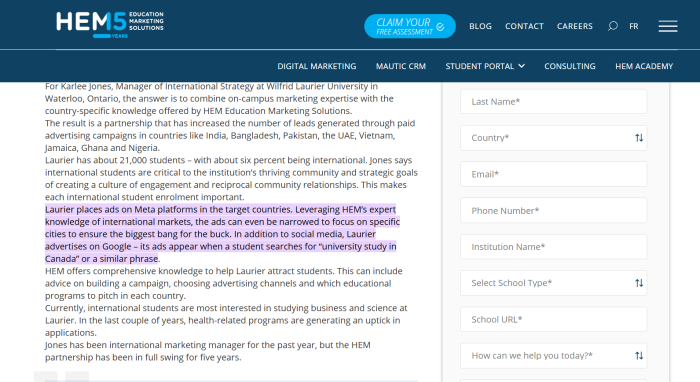
Example: Laurier employs highly targeted PPC advertising to reach international prospects in key markets. In partnership with HEM, Laurier runs country-specific campaigns on Google and Meta (Facebook/Instagram), even narrowing ads to specific cities to maximize relevance. For example, prospective students in India, Nigeria or Vietnam might see ads for Laurier programs, and search ads ensure Laurier appears for queries like “study in Canada university.” This precise targeting has boosted Laurier’s lead generation from countries such as India, Bangladesh, Ghana and more, illustrating how PPC can efficiently capture students in different regions.
Email remains one of the highest-ROI tools for higher ed recruitment. When a prospect shares their email, it creates an opportunity for personalized, direct communication that nurtures them through the enrollment journey.
Lead nurturing works best through sequenced emails—welcoming inquiries, highlighting programs, showcasing campus life, and reminding applicants to complete next steps. Segmentation and personalization make campaigns more effective: tailoring messages by program, audience type, or student behavior ensures relevance and boosts engagement.
Automation tools like HubSpot or Slate allow universities to trigger timely follow-ups—such as reminders for incomplete applications or pre-visit info before a campus tour. Done well, email serves as the connective tissue of digital strategy—tying content, events, and ads into one cohesive student journey.
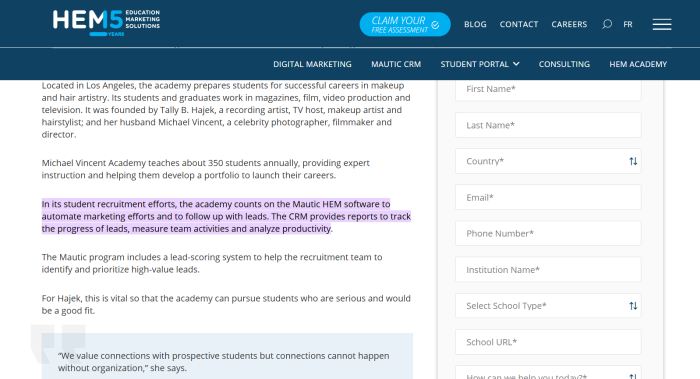
Example: Michael Vincent Academy, a private vocational school in Los Angeles, streamlined its recruitment process by implementing a customized CRM with marketing automation. The academy uses an automated system (HEM’s Mautic CRM) to follow up with every inquiry, score leads, and send sequenced emails. Routine tasks – from welcome emails to application reminders – are now handled automatically, allowing staff to spend more time on personal outreach to high-value prospects. The impact is significant: key elements of the follow-up workflow are now automated, improving efficiency and ensuring no prospective student falls through the cracks.
Pro Tip: Don’t overload inboxes—send 1 email every 7–10 days, keep designs mobile-friendly, and always include a clear call-to-action.
5. Website Optimization and User Experience (UX)
Your website is your digital campus, often the first impression prospective students have. A well-optimized site improves engagement and conversion by guiding visitors smoothly through their journey.
Mobile-first design is non-negotiable. With most students researching on phones, responsive layouts, fast load speeds, and intuitive navigation are critical. Google also rewards mobile-friendly sites in search rankings.
Clear navigation helps diverse audiences—prospective undergrads, grads, parents, international students—find relevant information quickly. Saint Louis University, for example, introduced an interactive admissions page with customizable “pathways,” simplifying content discovery and personalizing the student journey.
Engaging media like photos, videos, and virtual tours immerse visitors in campus life, while CTAs such as “Request Info” or “Apply Now” nudge them toward action.
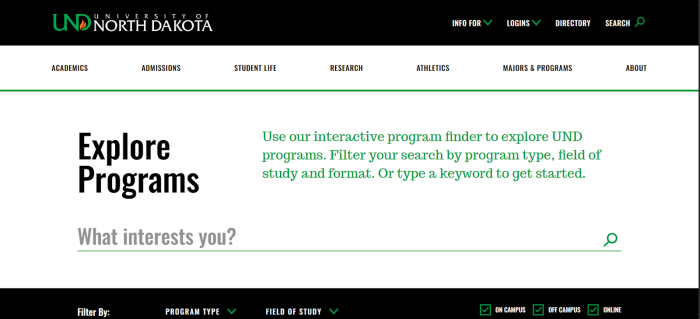
Example: University of North Dakota undertook a comprehensive website refresh that yielded strong results in both engagement and conversions. The new site introduced a powerful “Program Finder” tool giving prospective students one central place to discover academic programs by interest. The homepage and navigation were reorganized around key audiences (prospective undergrads, grad students, parents, etc.), making it easier for each group to find relevant info. UND also weaves in student stories and news in a way that reflects student life and values, rather than just facts. This focus on UX paid off: after launch, UND saw organic traffic climb and a 62% jump in undergraduate inquiries year-over-year, all while many peer institutions saw declines. It underscores that a fast, intuitive, mobile-friendly site can be a university’s best recruitment tool.
Pro Tip: Audit your site regularly—outdated info or broken links can undo even the best design.
6. Search Engine Marketing (SEM) and Local SEO
Search engine marketing ensures your institution is visible when prospective students actively look for programs. Beyond broad SEO, local optimization and targeted campaigns make a significant difference.
Local SEO helps capture location-based searches like “MBA in Toronto” or “universities near me.” Universities should claim and update their Google Business profiles, add campus photos, respond to reviews, and use city/region keywords across their site. For multi-campus schools, create individual location pages optimized with local terms.
Long-tail keywords are equally powerful. Students often search specific queries like “best undergraduate business programs for entrepreneurship.” Creating FAQ pages, blog posts, or landing pages around these terms captures highly motivated prospects. Likewise, many universities now optimize program pages with alumni career outcomes and salary data to rank for career-focused searches.
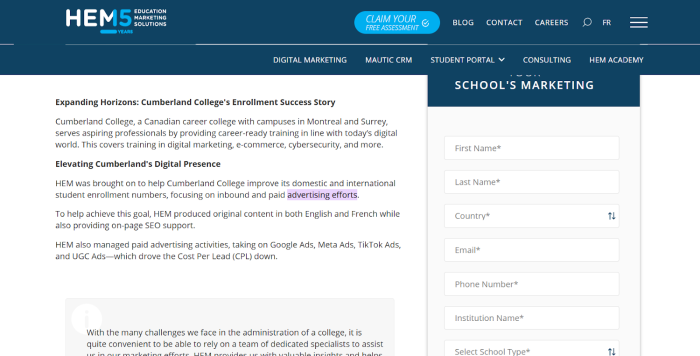
Example: Cumberland College, a career college in Montréal, used SEM and on-page SEO to significantly boost its visibility and inquiries. With expert help, Cumberland optimized its website content (in English and French) and refocused its keyword strategy – plus ran complementary Google Ads – to capture more search traffic. The impact was dramatic over a short period: organic web visitors rose by 27.5%, and overall leads (inquiries) jumped by 95% after the campaign, compared to the previous year. Even more striking, leads coming specifically from organic search increased nearly five-fold (a 386% increase) as Cumberland climbed higher in search results.
Pro Tip: Align SEM campaigns with the admissions cycle—boost spend before deadlines to capture undecided applicants.
7. Video Marketing and Virtual Engagements
In the digital era, video has become an incredibly powerful medium of digital marketing for colleges, and universities are uniquely positioned to leverage it. From campus tour videos and student vlogs to recorded webinars and live-streamed events, video marketing allows prospective students to experience a taste of campus life and academics from anywhere in the world. It’s engaging, shareable, and often more memorable than text.
Campus tours and virtual experiences: When students cannot visit in person (due to distance or as we saw during pandemic lockdowns), a virtual tour is the next best thing. Many universities now feature immersive 360-degree virtual campus tours on their websites. These let users “walk” through the quad, peek into classrooms, dorms, and labs, all from their computer or phone. It’s an interactive way to showcase facilities and atmosphere. Even a simple narrated campus tour video on YouTube can be effective – guiding viewers through major spots on campus while current students or staff explain highlights.
Storytelling through students: Prospective students trust their peers. “Day in the life” vlogs or testimonial clips highlighting internships and career outcomes resonate strongly. Short, authentic videos often outperform highly produced pieces.
Example: Montgomery County Community College (USA) grabbed attention with an award-winning recruitment video campaign. Their 30-second video spot, “You in Motion,” is a high-energy montage that inspires viewers to envision their success at the college. In that half-minute, the video communicates key value props – an affordable, top-notch education; extensive support resources; and a wide range of programs – all set to uplifting visuals of campus and student achievements. The campaign succeeded in exciting prospective students and driving home the message that at Montco you can “make your own momentum”. It’s a prime example of how concise, well-produced video content can boost a school’s appeal and conversion rates.
Source: YouTube
Takeaway: Video marketing builds trust through storytelling, making your institution both relatable and aspirational.
8. Data Analytics and Continuous Optimization
A major advantage of digital marketing for colleges is the ability to measure performance in real time. Universities that actively track and optimize campaigns consistently outperform those that rely on static strategies.
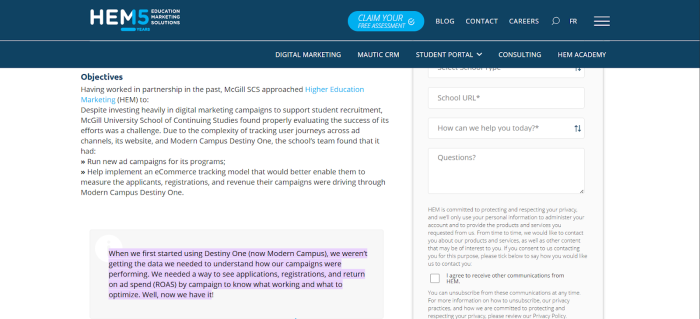
With tools like Google Analytics, CRMs, and marketing automation, schools can monitor conversions such as info requests, applications, and event signups, while attributing results to specific channels. For example, McGill University’s School of Continuing Studies implemented eCommerce-style tracking with HEM, enabling them to connect digital ad spend directly to applications and enrollment outcomes.
Example: McGill’s School of Continuing Studies struggled to connect its digital ad spend to actual enrollments – until it implemented an advanced analytics solution. Working with HEM, McGill SCS set up eCommerce-style tracking (via its Destiny One online registration system) to measure exactly how ads and web campaigns translated into applications, registrations, and revenue. This involved configuring Google Analytics and tag manager to capture each student touchpoint and conversion. The result was a newfound ability to make data-driven decisions on marketing: McGill can now see ROI by campaign and optimize accordingly, rather than guessing.
Optimization goes beyond tracking. A/B testing landing pages, refining email subject lines, or adjusting ad targeting can deliver significant lifts in conversions. Ultimately, analytics turn insights into action. By continuously refining campaigns based on real results, institutions ensure smarter spending, better engagement, and stronger recruitment outcomes.
Bringing It All Together
Digital marketing is no longer optional for universities—it’s the foundation of how students discover, evaluate, and choose their educational path. From content marketing and social media engagement to PPC, email nurturing, and data-driven optimization, each strategy plays a role in building trust and guiding prospects through the enrollment journey.
The institutions that succeed are those that take an integrated approach: aligning their website, campaigns, and student communications to deliver a consistent, authentic experience. Real-world examples—from Boston University’s content hub to McGill University’s data-driven enrollment gains—show how strategy translates into measurable results.
Ultimately, digital marketing is about connection. By telling authentic stories, engaging students where they are, and continuously refining based on analytics, universities can cut through the noise, reach the right audiences, and build relationships that last well beyond enrollment.
Done right, digital marketing doesn’t just attract students—it creates advocates who carry your institution’s story forward.
Struggling with enrollment?
Our expert digital marketing services can help you attract and enroll more students!
FAQs
Q: What is digital marketing in education?
A: Digital marketing in education is the use of online channels—such as websites, SEO, social media, email, and digital ads—to promote programs, connect with prospective students, and engage alumni. Unlike other sectors, the “product” is not just a service but an experience and long-term investment, so messaging must inform, inspire, and build trust.
Q: Why is digital marketing for universities so critical now?
A: The stakes are high. With declining enrollments and growing skepticism about the value of a degree, institutions are investing heavily in outreach.
Q: How much do universities spend on digital marketing?
A: Universities now spend between $429 and $623 per enrolled student, per year on marketing.
Another one bites the dust. That’s what the headline should be this week.
On Monday, YouTube agreed to pay $24.5 million to President Trump and several others, settling a lawsuit over YouTube’s suspension of their accounts following the events at the U.S. Capitol on Jan. 6, 2021.
This marks the third major social media company to capitulate to the Trump administration this year. In June, Meta settled for $25 million, followed by X, who agreed to a $10 million settlement less than a month later. Unfortunately, this is in addition to media companies like Paramount Global, who bent the knee to Trump for $16 million this past July, and ABC News, who settled for $15 million late last year. That’s also not to mention the universities that caved after government pressure and bullying. Columbia, for example, agreed to a $221 million settlement with the Trump administration in July. And Harvard, after a long fight, is also reportedly approaching a $500 million settlement this week.
If you care about free speech, this should really piss you off. These companies and institutions traded principle — and, most importantly, the opportunity to stand on their First Amendment rights — for profit and short-term peace of mind.
How do we know? Because in many cases, such as that of Paramount Global, the settlement was a thinly veiled prerequisite to FCC approval of a major — and lucrative — business deal the company was after.
We also know it because many of the lawsuits themselves were, to quote FIRE Chief Counsel Bob Corn-Revere, “forehead-slappingly stupid”— such as Trump’s claim against CBS (which is what held up the Paramount deal).
The complaint against YouTube is merely the latest example of this baseless legal posturing. It rests on two counts: First, that YouTube violated the First Amendment by suspending Trump and his fellow plaintiffs’ accounts. Second, that Section 230 of the Communications Decency Act is an unconstitutional source of immunity for companies like YouTube to engage in censorship.
Both counts are without merit.
YouTube is a private company with its own First Amendment rights
Throughout the complaint, Trump and his fellow plaintiffs argue that YouTube was doing the bidding of the Biden White House and Democratic members of congress, effectively turning the platform into a government actor. As a result, the complaint argues, YouTube became subject to First Amendment restrictions on censoring “constitutionally protected speech on the Internet, including by and among its approximately 2.3 billion users that are citizens of the United States.”
To the untrained ear, this may actually sound reasonable. After all, YouTube is a place where millions of people communicate with one another and receive information about the news of the day. But none of that changes the fact that YouTube is also a private company with its own First Amendment rights — which includes the right not to publish or platform content or speakers it disfavors. When you recognize that, the entire argument in this complaint falls apart.
The complaint attempts to justify its contention by noting that the platform was “encouraged and immunized by Congress” to suspend the accounts of Trump and the other plaintiffs. (Part of this so-called immunity comes from 1996’s Section 230, which the complaint also attacks. We’ll get into that in a moment.) “In censoring the specific speech at issue in this lawsuit and deplatforming Plaintiff, Defendants were acting in concert with federal officials, including officials at the CDC and the (Biden) White House,” the complaint reads. “As such, Defendants’ censorship activities amount to state action.” Unfortunately for Trump and his fellow plaintiffs, that’s not how the law works.
According to the complaint, the Biden administration engaged in coercive and indirect tactics to pressure these social media companies to censor and deplatform views the administration didn’t like — otherwise known as jawboning. This, as we’ve arguedbefore, does violate the First Amendment. A year ago in NRA v. Vullo, the Supreme Court agreed, unanimously affirming what had been ruled in 1963’s Bantam Books v. Sullivan: The government can’t do indirectly what the First Amendment prevents them from doing directly.
However, if Trump and his fellow plaintiffs are arguing that the Biden administration jawboned YouTube, they’re suing the wrong people. While jawboning is a violation of the First Amendment, it doesn’t magically transform the coerced party into a government actor. It certainly doesn’t cause a private company to lose its own First Amendment rights. There are multiple tests for when a private person or entity becomes a state actor, but in order to justify this claim in this context, the complainants would have to show concerted action — in other words, the platform consciously acted as the government. The allegation that the platform sometimes gave into government pressure doesn’t satisfy that standard.
Section 230 is not unconstitutional
The second count in the complaint attempts to further justify the first, but inadvertently emphasizes why both are baseless. “Defendants would not have deplatformed” Trump and his fellow plaintiffs, the complaint reads, “but for the immunity purportedly offered by Section 230.” That is nonsense. The platforms did not need “immunity” in deciding to deplatform anyone because nothing in the law compels them to carry particular speakers.
In a nutshell, Section 230 says that platforms like YouTube, X, and Facebook cannot be held legally liable for the content posted on their sites by their users. The law also further protects platforms’ right to curate and moderate that content as they see fit, like a bookseller would.
For years, politicians on both sides of the aisle have railed against and mischaracterized Section 230 for their own partisan reasons. This complaint against YouTube is no different:
Section 230… [was] deliberately enacted by Congress to induce, encourage, and promote social media companies to accomplish an objective — the censorship of supposedly “objectionable” but constitutionally protected speech on the Internet — that Congress could not constitutionally accomplish itself.
The complaint argues that Section 230 is little more than a tool for jawboning. As a result, the complaint “seeks a declaration that Section 230…[is] unconstitutional insofar as [it purports] to immunize from liability social media companies and other Internet platforms for actions they take to censor constitutionally protected speech.”
This is, to put it bluntly, wrong.
First of all, Section 230 was passed in 1996, long before the advent of social media. The idea that it was “enacted by Congress to induce, encourage, and promote” censorship on social media would require a time machine to make true. Second, Section 230 actually works as a safeguard against jawboning — granting publishers and platforms an additional layer of protection against government pressure when it comes to content moderation (and from private causes of action, too). And I say “additional” here because the First Amendment already protects the right of these platforms to use their own editorial discretion, as the Supreme Court held just last year in Moody v. NetChoice.
In other words, Section 230 doesn’t grant these platforms any rights the First Amendment does not. Rather, it further protects those rights from baseless legal action — such as the complaint YouTube just paid $24.5 million to avoid fighting.
And this is why it’s so disappointing that YouTube caved.
These companies cower at their — and our — peril
Just as with Paramount, ABC, Meta, X, and even Trump’s “SLAPP” lawsuit against the Iowa pollster J. Ann Selzer and TheDes Moines Register (who, thankfully, have not rolled over), the YouTube settlement is another example of what we’ve been calling the extortion-industrial complex: The Trump administration’s intention to seize control of America’s media industry through the use and abuse of government powers.
Add to that the administration’s unlawful and unconstitutional attempts to nationalize private institutions of higher education, and we have a serious problem on our hands. These actions, and the majority of the targets’ unwillingness to fight back, pose a major threat to our most foundational freedoms. If our colleges and universities are forced to toe the ideological line of whoever is in power, and if our media companies operate under the boot of the state, we lose both the free inquiry given to us by academic freedom and the open discourse given to us by a free press.
What makes all this worse is that the lawsuits are based on obviously meritless claims that would never withstand scrutiny if they actually went to court. The Trump administration has been mauling these institutions with paper tigers, and the institutions have decided to cower in fear rather than fight. Sure, in the short term, the settlements may help to achieve government favor. The mergers may go through. The federal funding may resume or continue to flow. Costly legal battles may be at least temporarily avoided. But meanwhile, “the freedom of Speech may be taken away,” as George Washington once said, “and dumb and silent we may be led, like sheep, to the Slaughter.”
That’s the cost of these companies’ cowardice: The First Amendment freedoms we all depend on to protect our individual rights and keep our democracy going. When those are given up, there’s no getting them back. We should all be fighting like hell to keep them.
On Oct. 1, the Wall Street Journal reported that the White House is asking colleges to sign an agreement to secure preferential treatment for government funding. FIRE is working to obtain the full agreement, but initial reporting already indicates it raises threats to free speech and academic freedom.
The following statement can be attributed to Tyler Coward, FIRE lead counsel for government affairs.
Freedom thrives when the people, not bureaucrats, decide which ideas are worthy of discussion, debate, or support.
As FIRE has long argued, campus reform is necessary. But overreaching government coercion that tries to end-run around the First Amendment to impose an official orthodoxy is unacceptable. And the White House’s new Compact for Academic Excellence in Higher Education raises red flags.
The compact includes troubling language, such as calling on institutions to eliminate departments deemed to “purposefully punish, belittle, and even spark violence against conservative ideas.” Let’s be clear: Speech that offends or criticizes political views is not violence. Conflating words with violence undermines both free speech and efforts to combat real threats.
The compact also requires university employees to refrain from “actions or speech related to politics.” If the language merely barred high-ranking employees from engaging in partisan political activity on behalf of the university, it would reflect existing and generally permissible IRS restrictions. But the compact’s reported wording goes further by suggesting a blanket prohibition on all staff engaging in political speech. For public institutions, that is deeply problematic. Public university faculty have the First Amendment right to speak about politics in their teaching and scholarship. Outside of their official duties, faculty and non-faculty university employees retain full First Amendment rights to speak off-the-clock as private citizens on matters of public concern. Banning them from doing so would be flatly unconstitutional.
A government that can reward colleges and universities for speech it favors today can punish them for speech it dislikes tomorrow. That’s not reform. That’s government-funded orthodoxy.
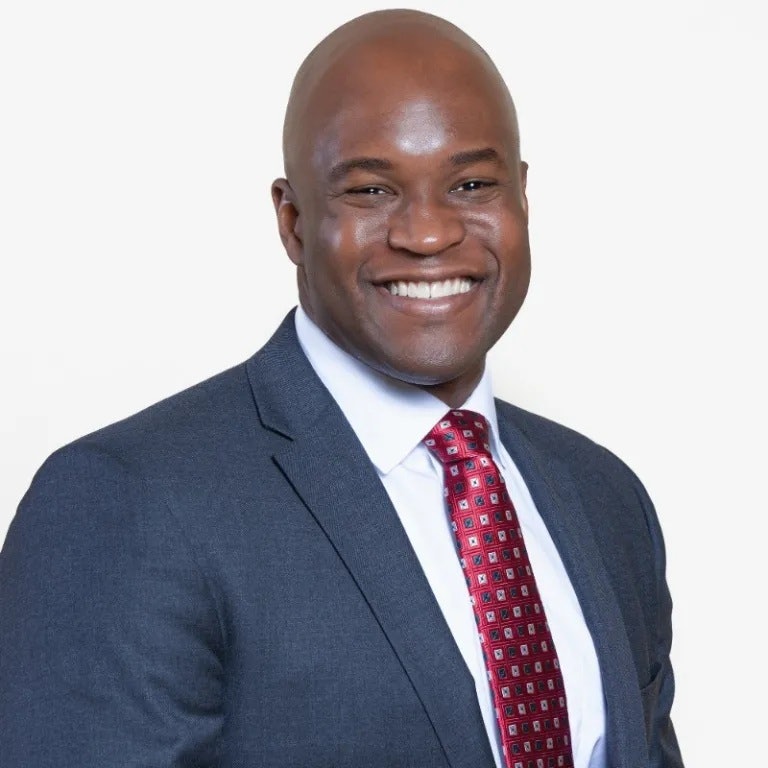
Tyrone M. JimmisonTyrone M. Jimmison has been named senior associate vice president for advancement at Meharry Medical College has been named senior associate vice president for advancement at Meharry Medical College.
Jimmison has a background in advancement leadership and held senior roles at the University of Houston, the University of Rochester, University of Washington Medicine, the University of Texas, and Texas Christian University. His work in fundraising, strategic planning, and donor engagement has consistently driven growth and strengthened institutional missions in complex academic medical environments.
In his most recent role as chief development officer at the University of Houston, Jimmison led fundraising strategy for nine schools and units, directly managing a team of major gift officers and aligning development priorities with academic leadership. His work has resulted in major institutional successes at the University of Roch- ester, including a $12 million individual gift and contributions toward a $2.6 billion Accelerate Campaign at the Uni- versity of Washington Medicine.
Jimmison holds a bachelor’s degree in exercise physiology from the University of Mount Union and a master’s degree in education from Texas Christian University.
The Trump administration has escalated its confrontation with higher education institutions by sending detailed policy demands to nine universities, conditioning their continued access to federal funding on compliance with the president’s political objectives.
The unprecedented move, delivered via letters signed by Education Secretary Linda McMahon and other senior officials, presents a 10-page “compact” that outlines sweeping requirements affecting tuition pricing, international student enrollment, gender policy, and campus speech.
The compact mandates that participating institutions freeze tuition rates for five years, place restrictions on international student enrollment, and adopt administration-approved definitions of gender. Universities must also commit to preventing any policies that the administration characterizes as punishing conservative viewpoints.
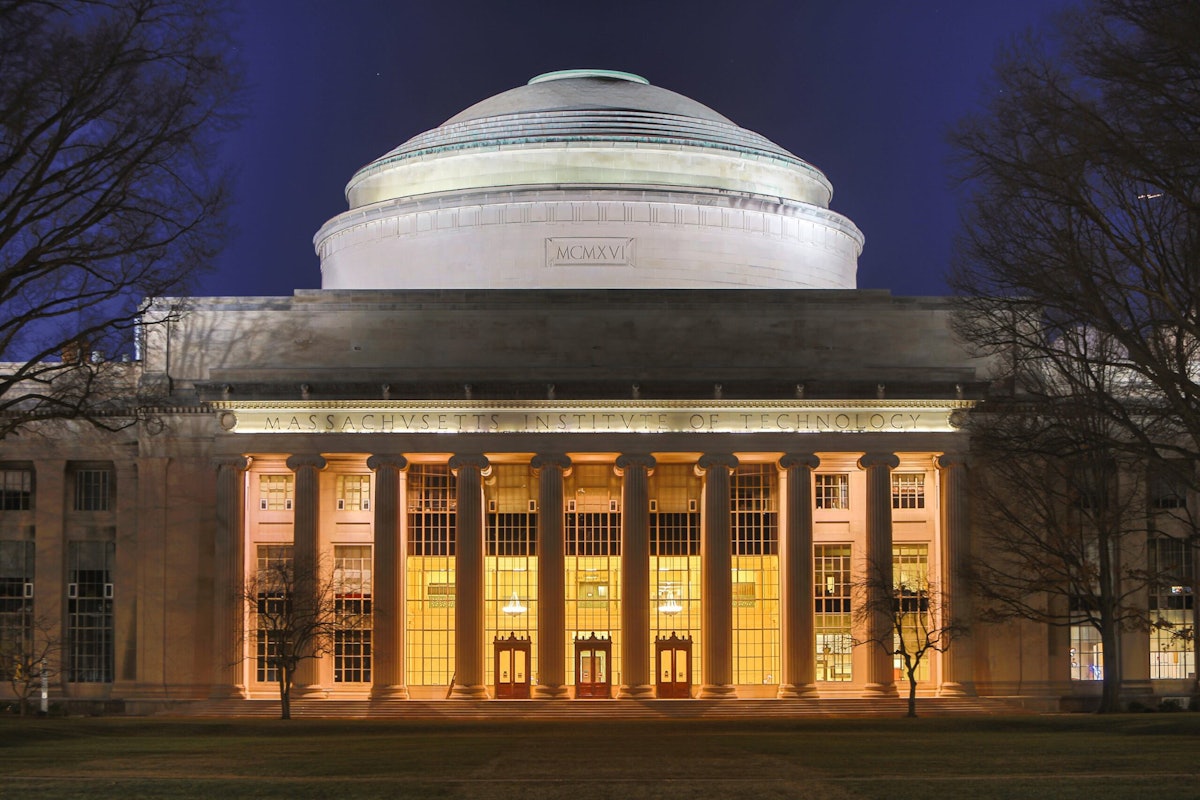
The nine institutions that received letters on Wednesday include Dartmouth College, Brown University, Massachusetts Institute of Technology, University of Southern California, University of Arizona, University of Virginia, University of Pennsylvania, University of Texas, and Vanderbilt University.
According to The New York Times, May Mailman, the White House’s senior adviser for special projects and a letter signatory, indicated the administration remains open to dialogue with contacted universities. “We hope all universities ultimately are able to have a conversation with us,” Mailman stated.
The demands represent a significant threat to institutional autonomy and could have far-reaching implications for diversity, equity, and inclusion efforts on college campuses. The restrictions on international student enrollment raise particular concerns about the future of global education exchange and the presence of international scholars who contribute substantially to research and campus diversity.
The administration’s approach effectively creates a two-tiered system where compliance brings preferential treatment in federal grant competitions. As one senior White House official told The Washington Post, universities would technically remain eligible for grants, but compliant institutions would gain a “competitive advantage.”
This compact represents the latest escalation in the administration’s sustained campaign targeting higher education. Previous actions have included funding freezes, threats to revoke tax-exempt status, and attempts to eliminate universities’ authorization to host international students.
The administration has particularly focused on policies related to international students, pro-Palestinian campus activism, transgender student athletes, and diversity, equity, and inclusion programming.
Harvard University stands alone among major research universities in actively resisting the administration’s demands through litigation. In an April open letter to the Harvard community, President Alan Garber articulated the stakes for academic freedom: “No government—regardless of which party is in power—should dictate what private universities can teach, whom they can admit and hire, and which areas of study and inquiry they can pursue.”
However, on Tuesday, President Trump claimed a deal with Harvard was nearing completion. The administration has already announced agreements with the University of Pennsylvania, Columbia University, and Brown University earlier this year.