Author: admin

  • What educators need to know

    What educators need to know

    Key points:

    Literacy has always been the foundation of learning, but for middle school students, the stakes are especially high. These years mark the critical shift from learning to read to reading to learn.

    When students enter sixth, seventh, or eighth grade still struggling with foundational skills, every subject becomes harder–science labs, social studies texts, even math word problems require reading proficiency. For educators, the challenge is not just addressing gaps but also building the confidence that helps adolescents believe they can succeed.

    The confidence gap

    By middle school, many students are keenly aware when they’re behind their peers in reading. Interventions that feel too elementary can undermine motivation. As Dr. Michelle D. Barrett, Senior Vice President of Research, Policy, and Impact at Edmentum, explained:

    “If you have a student who’s in the middle grades and still has gaps in foundational reading skills, they need to be provided with age-appropriate curriculum and instruction. You can’t give them something that feels babyish–that only discourages them.”

    Designing for engagement

    Research shows that engagement is just as important as instruction, particularly for adolescents. “If students aren’t engaged, if they’re not showing up to school, then you have a real problem,” Barrett said. “It’s about making sure that even if students have gaps, they’re still being supported with curriculum that feels relevant and engaging.”

    To meet that need, digital programs like Edmentum’s Exact Path tailor both design and content to the learner’s age. “A middle schooler doesn’t want the cartoony things our first graders get,” Barrett noted. “That kind of thing really does matter–not just for engagement, but also for their confidence and willingness to keep going.”

    Measuring what works

    Educators also need strong data to target interventions. “It’s all about how you’re differentiating for those students,” Barrett said. “You’ve got to have great assessments, engaging content that’s evidence-based, and a way for students to feel and understand success.”

    Exact Path begins with universal screening, then builds personalized learning paths grounded in research-based reading progressions. More than 60 studies in the past two years have shown consistent results. “When students complete eight skills per semester, we see significant growth across grade levels–whether measured by NWEA MAP, STAR, or state assessments,” Barrett added.

    That growth extends across diverse groups. “In one large urban district, we found the effect sizes for students receiving special education services were twice that of their peers,” Barrett said. “That tells us the program can be a really effective literacy intervention for students most at risk.”

    Layering supports for greater impact

    Barrett emphasized that literacy progress is strongest when multiple supports are combined. “With digital curriculum, students do better. But with a teacher on top of that digital curriculum, they do even better. Add intensive tutoring, and outcomes improve again,” she said.

    Progress monitoring and recognition also help build confidence. “Students are going to persist when they can experience success,” Barrett added. “Celebrating growth, even in small increments, matters for motivation.”

    A shared mission

    While tools like Exact Path provide research-backed support, Barrett stressed that literacy improvement is ultimately a shared responsibility. “District leaders should be asking: How is this program serving students across different backgrounds? Is it working for multilingual learners, students with IEPs, students who are at risk?” she said.

    The broader goal, she emphasized, is preparing students for lifelong learning. “Middle school is such an important time. If we can help students build literacy and confidence there, we’re not just improving test scores–we’re giving them the skills to succeed in every subject, and in life.”

    Laura Ascione
    Latest posts by Laura Ascione (see all)

    Source link

  • HHS moves to cut Harvard off from all federal grants and contracts

    HHS moves to cut Harvard off from all federal grants and contracts

    This audio is auto-generated. Please let us know if you have feedback.

    Dive Brief:

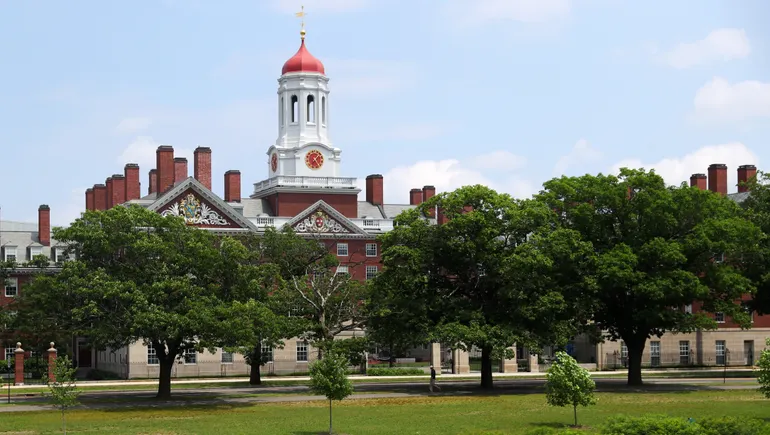
    • Harvard University could lose access to all federal grants and contracts under proceedings initiated by the U.S. Department of Health and Human Services on Monday.
    • The agency’s Office for Civil Rights has referred the university for suspension and debarment, the process by which the agency can cut off entities from federal grants and contracts if it determines that wrongdoing renders them “not responsible enough to do business” with the government.
    • The move represents the latest federal effort to bend Harvard to the Trump administration’s will through financial pressure. The administration has sought to use multiple federal agencies to gain increased influence over the higher education sector, singling out Harvard as a prime target.

    Dive Insight:

    On Monday, HHS’ OCR recommended excluding Harvard from federal funding, arguing the move would protect the public interest. The agency cited its June notice that formally accused Harvard of being in “violent violation” of Title VI by being “deliberately indifferent” to harassment of Jewish and Israeli students on its campus.

    Title VI forbids institutions that accept federal funds from discriminating based on race, color or national origin.

    HHS can pursue the debarment process when an entity — in this case Harvard — does not voluntarily agree with the agency’s terms to return to compliance with Title VI, according to Paula Stannard, director of HHS’ OCR. HHS and three other federal agencies on the Trump administration’s Joint Task Force to Combat Anti-Semitism in June called for Harvard to “institute adequate changes immediately” but did not publicly detail what those changes should be.

    Stannard said Monday that Harvard has the right to a formal hearing during the suspension and debarment process.

    “An HHS administrative law judge will make an impartial determination on whether Harvard violated Title VI by acting with deliberate indifference towards antisemitic student-on-student harassment,” Stannard said. 

    Harvard has 20 days to request the hearing. The university did not immediately respond to a request for comment on Tuesday.

    Suspension and debarment applies to all federal grants and contracts, not just those from HHS. And agencies across the federal government can initiate suspension and debarment proceedings. If sustained, debarment is not permanent and typically lasts under three years, according to a 2022 HHS report.

    Monday’s announcement is unrelated to HHS’ joint civil rights investigation with the U.S. Department of Education into Harvard and the Harvard Law Review. The agencies opened the probe in April, citing allegations of “race-based discrimination permeating the operations” of the student-run journal.

    Months before HHS formally determined Harvard had violated Title VI, the Trump administration’s antisemitism task force froze over $2.2 billion of the university’s grants and contracts. 

    The halt came after Harvard President Alan Garber publicly rebuked the Trump administration’s call for increased federal control of the institution. Its demands included that the university hire a third party to audit the viewpoints of Harvard students and employees, halt all diversity, equity and inclusion efforts, and reduce the power of certain faculty and administrators involved in activism.

    A federal judge ruled in early September that the Trump administration violated the university’s First Amendment rights and didn’t follow proper steps when it suspended the funding. No evidence indicated that “fighting antisemitism was Defendants’ true aim in acting against Harvard,” the judge wrote. 

    The judge’s decision barred the Trump administration from cutting off Harvard’s federal funding in retaliation for the university exercising its free speech rights or without following the procedural requirements of Title VI. However, the judge noted that her ruling didn’t prevent the Trump administration from “acting within their constitutional, statutory, or regulatory authority.”

    Trump administration officials appealed the decision and said it would keep Harvard “ineligible for grants in the future.”

    Source link

  • Purdue Ends GEAR UP Program After Federal Grant Cut

    Purdue Ends GEAR UP Program After Federal Grant Cut

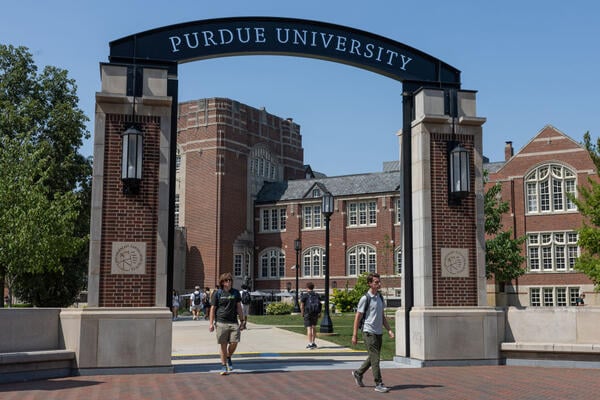
    Purdue University is ending its GEAR UP program after the Trump administration canceled a $34.9 million federal grant to support its activities, WFYI reported. The program provided college-prep programming for more than 13,000 low-income students in Indiana, according to a 2024 press release from Purdue’s College of Education.  

    The grant, awarded last year, was expected to run through 2031. But the U.S. Department of Education told Purdue in a Sept. 12 termination letter that the grant application flouted the department’s policy of “prioritizing merit, fairness, and excellence in education” and ran afoul of civil rights law. The letter referenced parts of the application, including plans to provide DEI training to hiring managers and professional development in “culturally responsive teaching.”

    The program is “inconsistent with, and no longer effectuates, the best interest of the Federal Government,” the letter read. The GEAR UP program shut down on Tuesday. Purdue did not appeal the grant termination, WFYI reported.

    The Education Department has canceled at least nine GEAR UP grants, EducationWeek reported, though it continued awards for other programs last week.

    Source link

  • Academic Staff Need Academic Freedom, Too (opinion)

    Academic Staff Need Academic Freedom, Too (opinion)

    Late last spring, something disturbing happened in my classroom. For the first time in 15 years of teaching, I opened by telling my students I wasn’t sure if I was allowed to speak. The class was an introduction to the philosophy of education, and months earlier I’d scheduled this day for our opening discussion on critical pedagogy. But in light of charged campus climates and broader legal threats facing institutions nationwide, I realized that as an academic staff member who engages in teaching and research, I was particularly vulnerable.

    What followed was one of the more important classes I’ve taught, though not about the subject I’d planned. We spent the hour investigating our institution’s academic freedom policies, asking questions of whom those policies included and excluded. We discovered the troubling reality: Although I was expected to facilitate complex educational discussions, I lacked clear protections to do so safely.

    My situation reflects a growing crisis in higher education that has received little attention. While much has been written about the vulnerabilities of contingent faculty, there has been almost no discussion of the academic freedom needs of one of higher education’s most rapidly growing workforces: third-space professionals.

    The Rise of the Third Space

    Over the past two decades, universities have dramatically expanded what researcher Celia Whitchurch terms “third-space” professionals: staff who blend academic and administrative functions but operate in the ambiguous territory between traditional faculty and staff roles.

    These roles aren’t new or unprecedented. The American Association of University Professors has long recognized that librarians, despite often holding staff status, require academic freedom protections given their integral role in teaching and research. What’s new is the scale and diversity of academic work now performed by nonfaculty academic professionals.

    This growth represents the contemporary evolution of a workforce shift that began in the 1970s, when academic support roles developed in response to diverse students entering colleges through open admissions policies. The 1990s brought expansion into new fields like faculty development and community-based learning, as colleges recognized these roles could enhance teaching practices institutionwide. Most recently, colleges have seen explosive growth in data-driven student success and enrollment management roles.

    What unites these professionals is their expertise in designing and delivering on the academic mission of the university, with special emphasis on student success. They lead pedagogical and curricular initiatives, make decisions about learning interventions, analyze data that reveals uncomfortable truths about institutional performance, and advocate for evidence-based policy revisions. They also regularly teach college courses, write and receive major grants, and publish in peer-reviewed journals. In essence, they do academic work, but without academic protections.

    Why Academic Freedom Matters for Third-Space Work

    The problem is easy to name but difficult to address. Institutions have radically restructured how academic work gets done based on the shifting needs of students and priorities of institutions, without a reciprocal restructuring of how academic work gets supported or protected. Third-space professionals need academic freedom protections for four key reasons.

    1. Educational decision-making: These professionals make pedagogical and curricular choices about student learning interventions, program design and educational strategies. Without academic freedom, they face pressure to implement approaches based on administrative convenience, pressure from faculty or donor preferences, rather than evidence-based best practices. What happens, for instance, when a faculty member feels the writing center’s approach to writing pedagogy conflicts with their own vision for writing in their classroom?
    2. Data interpretation and reporting: Student success professionals analyze retention, graduation and achievement data that may reveal uncomfortable truths about institutional performance or equity gaps. They need protection when their findings challenge institutional narratives or suggest costly reforms. What happens when an institutional researcher’s analysis shows that a flagship retention program isn’t working, but the administration has just featured it in a major donor presentation?
    3. Policy advocacy: Their direct work with students gives them insights into institutional policies and processes that harm student success. They should be able to advocate for necessary changes without fear of retaliation, even when those changes conflict with administrative priorities or departmental preferences. What happens when an academic adviser discovers that the prerequisite structure in a major is creating unnecessary barriers for students, but changing it would require difficult conversations with powerful department heads?
    1. Research and assessment: Many third-space professionals conduct and publish research on student success interventions, learning outcomes and institutional effectiveness. This scholarship requires the same protections as traditional academic research. What happens when assessment reveals the ineffectiveness of first-year seminar teaching, but presenting findings could damage relationships with faculty colleagues?

    The Problem of Selective Recognition

    Universities have already recognized that faculty work has diversified and requires differentiated policy structures. Many institutions now distinguish between research professors (focused on scholarship and grant acquisition), teaching professors (emphasizing teaching practice) and professors of practice (bringing professional expertise into academic settings). Each category receives tailored policies for promotion, performance evaluation and professional development that align with their distinct contributions.

    Yet on the staff side, institutions continue to operate as if all nonfaculty work is identical. A writing center director publishing on linguistic justice, an assistant dean of students developing crisis-intervention protocols for student mental health emergencies and a facilities director managing building maintenance are all governed by the same generic “staff” policies. This isn’t just administratively awkward: It’s a fundamental misalignment between how work actually happens and how institutions recognize and protect that work.

    Applying Consistent Logic

    The way forward isn’t revolutionary, but simply the application of the same logic that most universities already use for faculty. Rather than the outdated single “staff” category, colleges and universities need at least three distinct categories that reflect how staff work actually happens.

    1. Academic staff: Professionals engaged in teaching, research, curriculum design and educational assessment, including learning center directors, faculty developers, institutional researchers, professional academic advisers and academic program directors. These roles require academic freedom protections, scholarly review processes and governance representation.
    2. Student life staff: Professionals focused on co-curricular support, belonging and student life, including residence life coordinators, activities directors and counseling staff. These roles need specialized professional development and advancement pathways that recognize and support their expertise in student development.
    3. Operational staff: Professionals handling business functions, facilities and administrative operations. These roles can continue with traditional staff policies and support structures.

    This framework enables differentiated policy environments and support structures across multiple areas. Critically, academic freedom policies can be tailored to protect inquiry for staff who engage in this kind of work, while recognizing that other staff have different professional needs.

    The expansion of third-space/academic staff roles represents higher education’s recognition that effective student success requires diverse forms of expertise working collaboratively. But without policy frameworks that acknowledge and protect this academic work, institutions risk undermining the very innovations they’ve created. When the professionals responsible for student success cannot engage in free inquiry, challenge ineffective practices or advocate for evidence-based approaches, everyone loses—especially students.

    Aaron Stoller is associate vice president for student success and a lecturer in education at Colorado College.

    Source link

  • Toward a Trauma-Informed Writing Process (opinion)

    Toward a Trauma-Informed Writing Process (opinion)

    “Your writing isn’t academic enough.”

    A single sentence from a faculty mentor cut deeper than I expected—because it wasn’t the first time my voice had been questioned. I spent decades believing I was not good enough to become a writer. Not because I lacked skill or insight, but because I was writing through a deep wound I didn’t yet understand.

    That statement was a flashpoint, but the wound began long before:

    • When I, as a shy Guatemalan immigrant child, felt I was lacking academically and learned to shrink my voice.
    • When I was told that my ways of knowing—grounded in culture, emotion, embodiment—didn’t belong in academic writing.
    • When I absorbed the perfectionism and shame that academia breeds.

    For years, I edited myself into invisibility—performing an academic voice that was praised for its polish and precision but stripped of everything that made it mine.

    And I am not alone.

    The Invisible Wounds We Carry

    In my work as a writing consultant and developmental editor, I hear the same story over and over: Brilliant scholars—often from historically excluded communities—are convinced they are bad writers when, in reality, they are carrying unprocessed writing trauma.

    We rarely name it as such. But that is what it is:

    • The trauma of repeatedly being told your voice is wrong or not “rigorous.”
    • The trauma of navigating academic culture that rewards conformity over authenticity.
    • The trauma of absorbing deficit narratives about your language, identity or intellectual worth.

    Academic spaces can be punishing, performative and isolating. Add in past wounds—whether from classrooms, reviewers, supervisors or broader systems—and writing becomes more than putting words on a page. It becomes a battleground.

    I once had a client who burst into tears during a one-on-one session with me. She opened the document she had avoided for weeks. The moment her fingers hovered over the keyboard, she said, her chest tightened. She felt dizzy, like the room was closing in.

    “I can’t do this,” she whispered.

    What was she working on? A simple literature review. But there was nothing simple about it.

    Her body remembered: her first-year doctoral seminar, where she was told her writing wasn’t academic enough. Being cut off in class. Watching her white male peer echo her words and be praised for his “insight.”

    Writing didn’t feel liberating. It felt like re-enactment.

    Her tears weren’t a breakdown. They were a breakthrough. Her nervous system was doing exactly what it was designed to do: keep her safe.

    I’ve experienced that spiral, too. Sitting in front of a blank screen, begging my brain to write something!—only to be met with my inner chorus:

    • I teach people how to write—what’s my problem?
    • I’m not going to say anything that hasn’t already been said.
    • This is going to take forever—and I’d rather not disappoint myself.
    • I’m not really a good writer. I’m just faking it.

    Even after years of writing—journals, academic papers, dissertation, books—it still doesn’t feel easy. I have to work at it each day. Writing, for me, is like a relationship. At first, it’s exciting. Words flow; ideas spark. But eventually, the doubts creep in. You start to ghost your own document.

    But real relationships, and real writing, require showing up. Even when you’re tired. Even when it’s hard. Even when it feels like your worst critic lives inside your own head.

    This Isn’t All in Your Head—It’s All in Your Body

    These blocks that haunt you as you imagine writing aren’t signs that you shouldn’t write the thing. These are survival strategies your nervous system uses to protect you. And yes—they show up at your desk.

    This is all to say that, in my experience, writing blocks tend to be trauma responses—not character flaws or technical writing issues. Now, are there times when folks are challenged by things like time management? Of course. But to me, that is just a symptom of something deep-seated.

    We’re told to “just sit down and write,” as if our struggle is solely or partly a matter of discipline, time management or motivation. But often, it’s not that we don’t want to write. We actually really want to write. It’s that our body—our entire nervous system—is sounding an alarm.

    Not safe. Not ready. Not now.

    The response varies. It’s not one-size-fits-all. But it’s always trying to protect us.

    Let’s break these responses down.

    1. Fight: You argue with your work. Nothing sounds good enough. Every sentence feels off. You rewrite the same paragraph 10 times and still hate it. You pick fights with your draft like it owes you money. You hover over the “delete” key like a weapon. You get lost in perfectionist loops, convinced that your argument is weak, your evidence lacking, your phrasing too soft, too bold, too elementary, too you.

    This is the part of you that learned, somewhere along the way, that the best defense is a good offense. If you criticize your writing first, no one else can beat you to it.

    It’s a form of protection dressed as hypervigilance.

    It’s exhausting. And it’s not your fault.

    1. Flight: You avoid it completely. The minute you open the document, your chest tightens. So instead, you check your email, clean the kitchen, research grants for a project you haven’t even started, reformat your CV for the fifth time or suddenly become very concerned about the state of your inbox folders. Every task feels urgent—except the one you actually need to do.

    It doesn’t mean you don’t care. It means your system is trying to escape danger. And in academia, writing often is danger, because of what it represents—exposure, judgment, potential rejection—and what it can lead to: excommunication, cancellation, even deportation.

    Flight says, “If I don’t go near the source of pain, I won’t have to feel it.” But avoidance doesn’t erase fear. It buries it. And that buried fear just grows heavier.

    1. Freeze: You stare at the screen, paralyzed. You’ve carved out time, made the tea, lit the candle—and still, nothing happens. The cursor blinks like it’s mocking you. You reread the same sentence 30 times. You open a new tab, then another. You scroll, refresh, skim, click—but you’re not absorbing anything.

    Your body might go still, but inside, it’s chaos: looping thoughts, spiraling doubts, blankness that feels like suffocation.

    This is shutdown. Your brain says, “Too much.” So it hits pause.

    It might look like laziness, but it’s actually self-preservation.

    1. Fawn: You overfocus on pleasing others.

    This one’s sneaky. You’re writing. You’re producing. But you’re doing it in someone else’s voice. You try to imagine what your adviser would say. You filter every word through Reviewer 2’s past critiques. You write with a white, cis-hetero-masculine ghost looking over your shoulder.

    You say what you think you should say. You cite whom you think you have to cite. You mute your own voice to keep the peace.

    You’re not writing to be heard. You’re writing to be accepted.

    Fawning isn’t about submission. It’s about safety. It’s about staying small so you don’t become a target. But in doing so, you slowly disappear from your own work.

    What if your block isn’t failure?

    What if it’s your body’s way of saying:

    “This way of writing doesn’t feel safe.”

    “These expectations aren’t sustainable.”

    “You are not a machine. You are a whole human.”

    Writing as a Site of Healing, Not Harm

    If we understand writing blocks as trauma responses, then the answer isn’t more pressure or productivity hacks.

    The answer is care.

    A trauma-informed writing practice prompts us to shift our questions:

    • Instead of “Why am I procrastinating?” ask, “What am I protecting myself from?”
    • Instead of “How can I write more?” ask, “What would make this feel safer?”
    • Instead of “Why can’t I just get it done?” ask, “What do I need to feel supported right now?”

    This practice is about making room for your whole self at the writing table.

    It includes:

    • Slowing down to listen to your resistance. What is it trying to tell you? What stories or fears are surfacing?
    • Creating emotional safety before expecting output. That might mean grounding rituals, community check-ins or simply naming your fear out loud.
    • Reframing writing as healing, not harm. What if writing wasn’t about proving your worth but about reclaiming your voice? What if it became a place to process, reflect, resist—and even rest?

    Because here’s the truth: You can’t punish yourself into productivity.

    You can’t shame your voice into clarity.

    But you can write your way into wholeness—slowly, gently, in your own time.

    Resistance Is Wisdom

    Let’s stop treating our writing resistance as evidence of failure. What if it’s an invitation to listen? A clue to your next move? A doorway into a new way of knowing? Let’s not avoid resistance but lean into it, face it and treat it with compassion.

    Ask yourself,

    • What if my block isn’t a wall, but a mirror?
    • What if my voice needs tenderness, not toughness?
    • What if my writing can be a place where I feel more like myself, not less?

    Maybe the goal isn’t to “push through” your writing block.

    Maybe it’s to create the conditions where it feels safe enough to speak your voice.

    You don’t need to force yourself to write like someone you’re not.

    You don’t need to perform brilliance to be taken seriously.

    You don’t need to sacrifice your health on the altar of productivity.

    You need practices that restore your voice, not erase it.

    You need writing that nourishes, not punishes.

    A trauma-informed writing practice invites your whole self to the page. It makes room for and challenges you to lean into the imperfection, reflection and vulnerability. It reframes writing not as punishment but as possibility.

    Toward a More Human Academy

    In this political moment—where academic freedom is under attack, DEI initiatives are being dismantled and scholars are being silenced for telling the truth—we can’t afford to ignore how trauma shapes whose voices get heard, cited or erased.

    Trauma-informed writing is a form of resistance.

    It’s how we push back against systems that demand performance over presence, conformity over courage.

    It’s how we cultivate an academy where all voices—especially those long excluded—can write with power, truth and unapologetic authenticity.

    I’m still healing my own writing wounds. Maybe you are, too.

    But here’s what I know now: Writing wounds don’t heal overnight.

    They heal when we meet them with compassion—every time we dare to put words on a page.

    Aurora Chang is the founder of Aurora Chang Consulting LLC, where she provides developmental editing, holistic faculty support and writing consulting rooted in compassion and authenticity. A former professor and faculty developer, she now partners with academics to reclaim their voices, sustain their careers and write with purpose.


    Source link

  • First-Year Survey Data Prompts New Partnerships, Coms Strategy

    First-Year Survey Data Prompts New Partnerships, Coms Strategy

    Participation in extracurricular activities and campus events is tied to student retention, but a significant number of students don’t get plugged in. A 2024 survey by Inside Higher Ed and Generation Lab found that 26 percent of respondents had never attended a campus event and 35 percent weren’t involved in activities outside the classroom.

    About three in 10 college students said they’d be more involved on campus if they were more aware of the available extracurricular opportunities. Staff at the University of Arizona recognized this awareness gap and, for the past decade, have surveyed incoming students to identify their interests and provide them with tailored resources.

    The New Student Information Form provides campus leaders with actionable data and information about the students joining the Wildcat community.

    Survey Says

    According to a 2024 survey of student success leaders by Inside Higher Ed and Hanover Research, 44 percent of respondents said their institution is highly effective at collecting data for student success and 40 percent said their college effectively uses student success data to inform decisions and initiatives. One-third of respondents said their institution has built a culture of data around student success.

    How it works: The University of Arizona first launched the NSIF in 2012 to understand student interests and their previous experiences with extracurricular activities in high school, said Jenny Nirh, director of collaboration, communications and outreach of student success at Arizona. In 2021, the form was revamped by the student success office with a focus on anticipated student resource needs and other personal information that could be relevant to academic success, such as caregiver status.

    In a typical year, between 85 and 90 percent of incoming first-year and transfer students complete the form, representing as many as 8,000 students, said senior analyst Laura Andrews, who is responsible for NSIF. In 2024, 6,500 first-year students responded to the NSIF, an 88 percent response rate.

    When asked where they wanted to get plugged in during their first year, two-thirds of respondents indicated they were interested in internships, while 58 percent selected student employment and the same share chose academic clubs.

    Over the past five years, staff have seen students report the same anticipated needs. In 2024, the greatest share of students said they expect to need at least some help accessing and managing financial aid (63 percent) and academic supports (56 percent).

    In addition to focusing on their interests, the survey asked students about their perceptions of college and the campus community. While a majority of respondents expressed excitement about being a student at Arizona, one in five indicated they were unsure about their ability to fit in and a similar number said they were uncertain whether their peers would assist them if they needed help.

    A question about caretaking responsibilities was added in 2023 to identify those students and connect them with childcare or caregiving resources available on campus, Nirh said.

    Data in action: Using NSIF data, staff have been able to respond to individuals’ needs and create strategic initiatives within various departments and offices that ensure no student is left behind. Now, the student success department tailors communications to students based on responses and promotes relevant support services.

    Each college at the university is given a breakdown of survey results for their incoming students, including their interests and expectations. The report is often distributed to department heads and faculty or used for student outreach purposes.

    Using data, staff found that Pell Grant recipients were more likely than the general campus population to say they wanted help navigating financial aid (19 percentage points higher) and student employment (12 percentage points higher). In addition, first-generation students were 10 percentage points more likely than the average student to say they needed support asking for help. The Thrive Center within the student success division uses this data in their first-generation support initiative, First Cats, and in their efforts to boost financial wellness.

    The Housing and Residence Life Division conducts an end-of-year survey of residents about their support needs and whether students sought help; staff received similar responses to those articulated by incoming students in the NSIF months earlier. However, students said they were less likely to seek help for their personal development—including mental health, time management and socialization—than for navigating campus life.

    If your student success program has a unique feature or twist, we’d like to know about it. Click here to submit.

    Source link

  • Spending Soars, Rankings Fall at New College of Florida

    Spending Soars, Rankings Fall at New College of Florida

    More than two years into a conservative takeover of New College of Florida, spending has soared and rankings have plummeted, raising questions about the efficacy of the overhaul.

    While state officials, including Republican governor Ron DeSantis, have celebrated the death of what they have described as “woke indoctrination” at the small liberal arts college, student outcomes are trending downward across the board: Both graduation and retention rates have fallen since the takeover in 2023.

    Those metrics are down even as New College spends more than 10 times per student what the other 11 members of the State University System spend, on average. While one estimate last year put the annual cost per student at about $10,000 per member institution, New College is an outlier, with a head count under 900 and a $118.5 million budget, which adds up to roughly $134,000 per student.

    Now critics are raising new questions about NCF’s reputation, its worth and its future prospects as a public liberal arts college.

    A Spending Spree

    To support the overhaul, the state has largely issued a blank check for New College, with little pushback from officials.

    While some—like Florida Board of Governors member Eric Silagy—have questioned the spending and the state’s return on investment, money keeps flowing. Some critics say that’s because the college is essentially a personal project of the governor.

    “With DeSantis, I think his motivation for the takeover was that he was running for president and he needed some educational showcase. And he picked us because we were an easy target,” one New College of Florida faculty member said, speaking on the condition of anonymity.

    But now, two-plus years and one failed presidential run later, money continues to flow to the college to help establish new athletics programs and recruit larger classes each year. Part of the push behind such recruiting efforts, the faculty member said, is because of retention issues.

    “It’s kind of like a Ponzi scheme: Students keep leaving, so they have to recruit bigger and bigger cohorts of students, and then they say, ‘Biggest class ever’ because they have to backfill all the students who have left,” they said.

    Nathan Allen, a New College alum who served as vice president of strategy at NCF for almost a year and a half after the takeover but has since stepped down, echoed that sentiment, arguing that administrators are spending heavily with little return on investment and have failed to stabilize the institution. He also said they’ve lost favor with lawmakers, who have expressed skepticism in conversations—even though New College is led by former Speaker of the Florida House Richard Corcoran, a Republican.

    “I think that the Senate and the House are increasingly sensitive to the costs and the outcomes,” Allen said. “Academically, Richard’s running a Motel 6 on a Ritz-Carlton budget, and it makes no sense.”

    While New College’s critics have plenty to say, supporters are harder to find.

    Inside Higher Ed contacted three NCF trustees (one of whom is also a faculty member), New College’s communications office, two members of the Florida Board of Governors (including Silagy) and the governor’s press team for this article. None responded to requests for comment.

    A Rankings Spiral

    Since the takeover, NCF has dropped nearly 60 spots among national liberal arts colleges in the U.S. News & World Report Best Colleges rankings, from 76th in 2022 to 135th this year.

    Though critics have long argued that such rankings are flawed and various institutions have stopped providing data to U.S. News, the state of Florida has embraced the measurement. Officials, including DeSantis, regularly tout Florida’s decade-long streak as the top state for higher education, and some public universities have built rankings into their strategic plans. But as most other universities in the state are climbing in the rankings, New College is sliding, a fact unmentioned at a Monday press conference featuring DeSantis and multiple campus leaders.

    Corcoran, the former Republican lawmaker hired as president shortly after the takeover, did not directly address the rankings slide when he spoke at the briefing at the University of Florida. But in his short remarks, Corcoran quibbled over ranking metrics.

    “The criteria is not fair,” he said.

    Specifically, he took aim at peer assessment, which makes up 20 percent of the rankings criteria. Corcoran argued that Florida’s institutions, broadly, suffer from a negative reputation among their peers, whose leaders take issue with the conservative agenda DeSantis has imposed on colleges and universities.

    “This guy has changed the ideology of higher education to say, ‘We’re teaching how to think, not what to think,’ and we’re being peer reviewed by people who think that’s absolutely horrendous,” Corcoran said.

    An Uncertain Future

    As New College’s cost to the state continues to rise and rankings and student outcomes decline, some faculty members and alumni have expressed worry about what the future holds. While some believe DeSantis is happy to keep pumping money into New College, the governor is term limited.

    “It’s important to keep in mind that New College is not a House or Senate project; it’s not a GOP project. It’s a Ron DeSantis project. Richard Corcoran has a constituency of one, and that’s Ron,” Allen said.

    Critics also argue that changes driven by the college’s administration and the State University System—such as reinstating grades instead of relying on the narrative evaluations NCF has historically used and limiting course offerings, among other initiatives—are stripping away what makes New College special. They argue that as it loses traditions, it’s also losing differentiation.

    Rodrigo Diaz, a 1991 New College graduate, said that the Sarasota campus had long attracted quirky students who felt stifled by more rigid academic environments. Now the administration and state are imposing “uniformity,” he said, which he argued will be “the death of New College.”

    And some critics worry that death is exactly what lies ahead for NCF. The anonymous faculty member said they feel “an impending sense of doom” at New College and fear that it could close within the next two years. Allen said he has heard a similar timeline from lawmakers.

    Even Corcoran referenced possible closure at a recent Board of Governors meeting.

    In his remarks, the president emphasized that a liberal arts college should “produce something different.” And “if it doesn’t produce something different, then we should be closed down. But if we are closed down, I say this very respectfully, Chair—then this Board of Governors should be shut down, too,” Corcoran said, noting that many of its members have liberal arts degrees.

    To Allen, that remark was an unforced error that revealed private conversations about closure are likely happening behind closed doors.

    “I think Richard made the mistake of not realizing those conversations haven’t been public. He made them public, but the Board of Governors is very clearly talking to him about that,” he said.

    But Allen has floated an alternative to closure: privatization.

    Founded in 1960, New College was private until it was absorbed by the state in 1975. Allen envisions “the same deal in reverse” in a process that would be driven by the State Legislature.

    “I think that the option set here is not whether it goes private or stays public, I think it’s whether it goes private or closes,” Allen said. “And I think that that is increasingly an open conversation.”

    (Though NCF did not respond to media inquiries, Corcoran has voiced opposition to such a plan.)

    Allen has largely pushed his plan privately, meeting with lawmakers, faculty, alumni and others. Reactions are mixed, but the idea seems to be a growing topic of conversation on campus. The anonymous faculty member said they are increasingly warming to the idea as the only viable solution, given that they believe the other option is closure within the next one to three years.

    “I’m totally convinced this is the path forward, if there is a path forward at all,” they said.

    Diaz said the idea is also gaining momentum in conversations with fellow alumni. He called himself “skeptical but respectful” of the privatization plan and said he has “a lot of doubt and questions.” But Diaz said that he and other alumni should follow the lead of faculty members.

    “Now, if the faculty were to jump on board with the privatization plan, then I think that people like myself—alumni like myself, who are concerned for the future of the college—should support the faculty,” Diaz said. “But the contrary is also true. If the faculty sent up a signal that ‘We don’t like this, we have doubts about this,’ then, in good conscience, I don’t think I could back the plan.”

    Source link

  • AI Hallucinations May Soon Be History

    AI Hallucinations May Soon Be History

    We all are witness to the incredibly frenetic race to develop AI tools, which publicly kicked off on Nov. 30, 2022, with the release of ChatGPT by OpenAI. While the race was well underway prior to the first public release, we have been able to follow, version by version, the updates from OpenAI (GPT), Google (Gemini) and Anthropic (Claude), which are among the many versions of AI for personal and commercial use. This competition has been fast and furious. One of the most disturbing issues that has surfaced along the way has been the proclivity of generative AI to hallucinate.

    In 2023, IBM dug into the hallucination issue:

    “Generally, if a user makes a request of a GenAI tool, they desire an output that appropriately addresses the prompt (that is, a correct answer to a question). However, sometimes AI algorithms produce outputs that are not based on training data, are incorrectly decoded by the transformer or do not follow any identifiable pattern. In other words, it ‘hallucinates’ the response. The term may seem paradoxical, given that hallucinations are typically associated with human or animal brains, not machines. But from a metaphorical standpoint, hallucination accurately describes these outputs, especially in the case of image and pattern recognition (where outputs can be truly surreal in appearance).”

    Roland Moore-Colyer reported in Live Science earlier this year that instances of hallucinations seemed to become more difficult to detect as the prompts became more advanced:

    “However, AI hallucinations present a problem when it comes to delivering accurate and correct information, especially if users take the information at face value without any checks or oversight. ‘This is especially problematic in domains where decisions depend on factual precision, like medicine, law or finance,’ Watson said. ‘While more advanced models may reduce the frequency of obvious factual mistakes, the issue persists in more subtle forms. Over time, confabulation erodes the perception of AI systems as trustworthy instruments and can produce material harms when unverified content is acted upon.” And this problem looks to be exacerbated as AI advances. “As model capabilities improve, errors often become less overt but more difficult to detect.’”

    A variety of attempts were made to correct the hallucination issue. Most notable was that many AI models added an architecture to optimize and enhance AI responses titled retrieval augmented generation (RAG). IBM explains in this article:

    “RAG allows GenAI models to access additional external knowledge bases, such as internal organizational data, scholarly journals and specialized datasets. By integrating relevant information into the generation process, chatbots and other natural language processing (NLP) tools can create more accurate domain-specific content without needing further training.”

    On Sept. 14, OpenAI researchers published a not-yet-peer-reviewed paper, “Why Language Models Hallucinate,” on arXiv. Gemini 2.5 Flash summarized the findings of the paper:

    Key Findings from the Paper

    Systemic Problem: Hallucinations are not simply bugs but a systemic consequence of how AI models are trained and evaluated.

    Evaluation Incentives: Standard evaluation methods, particularly binary grading systems, reward models for generating an answer, even if it’s incorrect, and punish them for admitting uncertainty.

    Pressure to Guess: This creates a statistical pressure for large language models (LLMs) to guess rather than say “I don’t know,” as guessing can improve test scores even with the risk of being wrong.

    Fundamental Flaw: The paper highlights a fundamental flaw in the industry’s approach to evaluating AI progress, prioritizing raw accuracy over reliability and factual correctness.

    This is much like the test-taking strategy in certain standardized tests, for which subjects are advised to guess rather than not answering a question for which they don’t have a reliable answer. Hence, in order to achieve the best outcome, models invent answers that could be plausible, but for which they don’t have solid evidence. That, of course, undermines the validity of the response and the credibility of the tool.

    This, clearly, is unsatisfactory. With the realization of this shortcoming in the training protocol for the models, the companies have begun tweaking their products to respond that they are unable to answer. However, we are also seeing the increasing prevalence of “deep research”–capable models such as GPT-5 and Gemini 2.5 Pro. These are able to dig deeper and deeper, uncovering more and more sources that can hold the desired answer.

    Here’s an example that is prompted by my lifelong enthusiasm for baseball. In previous “Online: Trending Now” columns, I have advocated we all provide more context and greater detail in our prompts. But, in this case, I presented a simple one-sentence prompt without context to three leading frontier generative AI apps: “Who called a players’-only meeting during a rain delay on a Wednesday night in Cleveland?” I included no mention of what sport, what team, what season, etc. Claude Sonnet 4 responded,

    “I’d need more context to answer this question accurately. There have been many baseball games with rain delays on Wednesday nights in Cleveland over the years, and players’-only meetings during such delays aren’t always widely reported or memorable events.

    Could you provide more details about:

    • What year or approximate timeframe this occurred?
    • Which team(s) were involved?
    • Any other context about the situation or why this meeting was significant? With more specific information, I’d be better able to help identify who called the meeting and the circumstances surrounding it.”

    Note that Claude, without deep research, did not hallucinate. It did recognize this was likely baseball, and it said it needed more information. Certainly, that is better than making up an answer such as we might have seen in previous months and years.

    GPT-5 thought for 11 seconds and came up with the right answer in a succinct response.

    Gemini 2.5 Pro thought for about the same length of time, digging through multiple sources, found the answer and confirming sources, then responded in more detail,

    Jason Heyward Rallied Cubs with Players’-Only Meeting During Historic World Series Rain Delay

    During a tense rain delay in the decisive Game 7 of the 2016 World Series, Chicago Cubs right fielder Jason Heyward called a players’-only meeting that has since become a legendary moment in the franchise’s storied history. The brief stoppage in play occurred on a Wednesday night in Cleveland after the ninth inning, with the Cubs and the then–Cleveland Indians locked in a tie. With the weight of a 108-year championship drought on their shoulders, Heyward gathered his teammates in the weight room behind the visitor’s [sic] dugout at Progressive Field … Following the delay and Heyward’s impromptu meeting, the Cubs came out in the top of the tenth inning and scored two runs. The Indians would rally for one run in the bottom of the frame, but the Cubs ultimately held on to win 8-7, securing their first World Series title since 1908.

    Know that hallucinations are fading from generative AI. We can be more confident in the recently released deep research models. This provides the kind of reliable research that we depend upon in higher education.

    Source link

  • ED Digs Its Heels in Over Student Loan Caps

    ED Digs Its Heels in Over Student Loan Caps

    After two days of talks, Department of Education officials have made it clear that they won’t budge over some new student loan regulations.

    Specifically, the department has said it won’t negotiate its proposed definition of a professional program, at least for now. That definition limits the category to 10 specific degrees, including law, medicine and theology.

    “At this point, we would like to keep the language where it is,” Tamy Abernathy, the department’s director of policy coordination, said Tuesday morning. “It’s not an exhaustive list, but it is fixed at this point in time, with the caveat that if it needs to be negotiated at a future date, it would be.”

    If the department stands firm on this position, dozens of health-care graduate programs, like clinical psychology and occupational therapy, would not be on the list and could be subject to a $20,500 annual cap on student loans. If these programs were to be deemed professional, federal student loans would be capped at $50,000 a year and $200,000 over all. (Graduate programs are capped at $100,000 over all.)

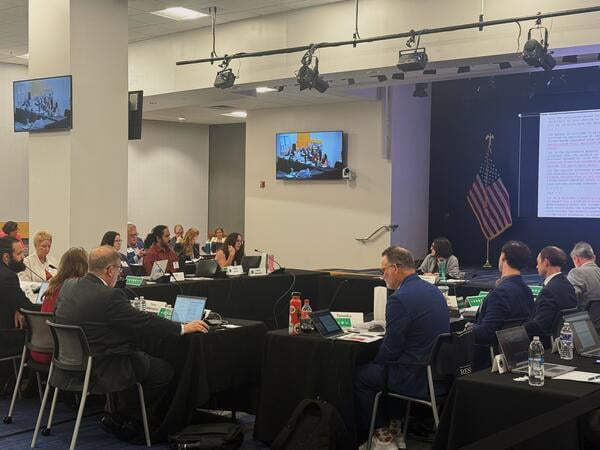
    With a lower cap, the programs could see steep enrollment drops and some might have to close, experts say. But members of the advisory committee tasked to weigh in on the department’s proposals pushed back over the first two days, and some are hopeful that the tone of conversation will shift for the remainder of the week.

    At the very end of Tuesday’s meeting, committee members submitted their own definition for professional programs, which has not been released to the public but will be discussed Wednesday. The committee is scheduled to meet through Friday and then for another week in November before voting on the regulatory changes. If the committee doesn’t reach unanimous consensus, the department can propose its own draft regulations, which will be subject to public comment.

    Education Under Secretary Nicholas Kent said in a statement to Inside Higher Ed shortly after Tuesday’s meeting that the department is continuing to negotiate in good faith but is aiming “to curb excessive graduate student borrowing in the federal student loan program.”

    “At this time, we remain persuaded that limiting the list of eligible programs to those defined in current regulation—while remaining open to expanding that list through future rule making—is the better approach for both students and taxpayers,” Kent said. “We are committed to working with negotiators and the public to hear and thoughtfully consider differing perspectives.”

    This round of rule making is just one part of the department’s larger effort to quickly interpret Congress’s sweeping overhaul of federal student aid through the One Big Beautiful Bill Act, which was signed into law in July. When it comes to student loans in particular, ED has to clarify each of the law’s provisions and implement them before the July 1, 2026, deadline.

    Higher ed experts say that heated debate over how to define professional versus graduate programs reflects how the loan caps are likely one of OBBBA’s most consequential changes for the sector.

    The department’s “limited list of programs designated as professional could have big implications for students,” said Karen McCarthy, vice president of public policy for the National Association of Student Financial Aid Administrators. “It could push some students into the private student loan market, which has fewer borrower protections than federal student loans, or limit access for [others] who are unable to obtain private loans. This could lead to lower numbers of graduates in highly critical career fields such as mental health, nursing and education.”

    An Appetite for Change?

    The department’s latest proposal, as of Tuesday, was similar to the existing statutory definition cited by Congress in the new legislation, which says a professional program must prove a student has the skills necessary beyond a bachelor’s degree to pursue a certain licensed profession.

    But the statutory definition from the Higher Education Act of 1965 includes a nonexhaustive list of examples; the department’s proposal is finite. The HEA definition says, “Examples of a professional degree include, but are not limited to,” whereas the department’s proposal says, “These programs are designated as professional” and then lists 10 degrees: in pharmacy, dentistry, medicine, osteopathy, law, optometry, podiatry, veterinary medicine, chiropractic medicine and theology.

    Abernathy explained that despite removing the phrase “including but not limited to,” the department’s proposal is not exhaustive, as it gives the secretary flexibility to designate additional professional degrees through rule making in the future. So while the department does not “have an appetite” to change the definition now, that doesn’t mean it wouldn’t be able to later, she said.

    But several committee members were not satisfied with that explanation. Scott Kemp, a student loan advocate for the Virginia higher ed council and the committee member representing state officials, said he came to the table with the understanding that the department was open to changing that list now.

    “We’re already in rule making right now, and there’s an opportunity to do that here,” he said. “I guess the understanding is that that door has been closed. But for our constituents who disagree with this list and have been giving us an earful about it, what would it take to have the secretary designate a rule-making process to discuss the list?”

    Andy Vaughn, president of a for-profit graduate school in California and the representative for proprietary institutions, said that in his view the most “glaring omission” from the list is mental health practitioners.

    “We rarely have a week in our country where some national story about mass violence doesn’t hit our news feeds, and every time that happens, mental health is the foundational, seminal place that we point to,” Vaughn said. “So including mental health license programs—one way or the other—is really critical, because this is going to decimate the pipeline of mental health professionals.”

    In a later interview with Inside Higher Ed, he added that while he agrees the overall price of tuition is too high, it’s “really hard” to get certain high-cost programs, especially those that take three or more years, under the $100,000 limit for programs that are not deemed professional.

    And even if the department were to come back to the table to amend the list at a later date, he believes it would be “too late,” as enrollment for many high-demand programs would have already dramatically declined.

    “It’s hard to say with certainty what exactly happens if professional designation is not granted,” he said. “But I can tell you with certainty it’s not going to increase the pipeline.”

    Vaughn, Scott and eight other committee members representing taxpayers, state officials and various types of universities broke out into a private caucus twice during Tuesday’s meeting to further discuss the definition. By the end of the day, they’d drafted a new proposal that will drive the conversation with department officials tomorrow.

    “The department has said they’re willing to have this conversation, but I believe we must,” Vaughn said.

    Source link

  • OCR Can Move Forward With RIFs, Appeals Court Says

    OCR Can Move Forward With RIFs, Appeals Court Says

    Saul Loeb/AFP via Getty Images

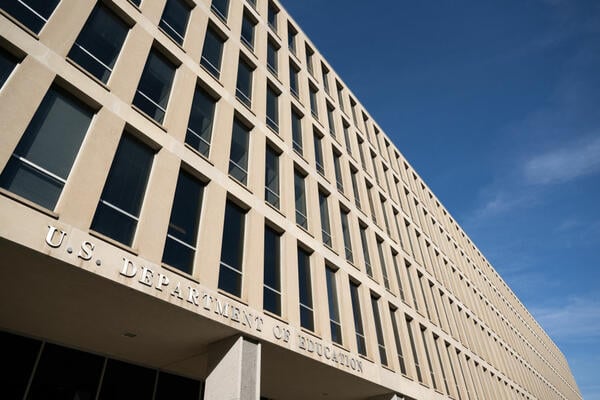
    After months of uncertainty, a federal appeals court ruled Monday that the Education Department can move forward with firing half of the 550 employees at its Office for Civil Rights. 

    In March, the department enacted a reduction-in-force plan to eliminate nearly half of its employees, including 276 at OCR, as part of wider effort to dismantle the 45-year-old agency. Those RIFs prompted multiple lawsuits against the department, including New York v. McMahon and the Victim Rights Law Center v. Department of Education; while the former challenged RIFs across the entire department, the latter case was restricted to the RIFs within OCR. 

    Federal district judges issued injunctions in both cases during the litigation process. Then, in July, the U.S. Supreme Court ruled in the McMahon case that the department could proceed with firing half its staff. Despite that ruling, a federal judge in Massachusetts refused to vacate the injunction preventing the department from firing the staff at OCR, arguing that the cases—and therefore their related rulings—remained separate. 

    The government appealed that decision and requested a stay of the RIF injunction. On Monday the United States Court of Appeals for the First Circuit granted that request, giving OCR the green light to fire half its staff.   

    “We note the district court’s careful analysis concluding that the Department’s decision to reduce by half the staff of OCR, a statutorily-created office, imperils Congress’s mandate that OCR ‘enforce federal civil rights laws that ban discrimination based on race, sex, and disability in the public education system,’” the court’s opinion read. “In this stay posture and at this preliminary stage of the litigation, however, we cannot conclude that this case differs enough from McMahon to reach a contrary result to the Supreme Court’s order staying the injunction in McMahon.”

    Source link