Author: admin

  • Before you click on that incredible deal…

    Before you click on that incredible deal…

    Scammers are everywhere on the internet, masquerading to obtain your personal information. Many social media users or website creators pose as government entities or other authorities to offer you things that seem too good to be true or use scare tactics, like fake warnings about things like late fines or missed court dates, to prompt online users into sharing personal information. 

    In an era of misinformation, how do we know when a website is real? 

    One way is to research a website’s domain. A domain name is the part of a website address preceded by .com, .net or other popular suffixes. It’s essentially just the base website name without the “https://” and “www.”

    “Measuring a website’s credibility might take time,” said Jordan Lyle, a senior reporter for Snopes.com. “Young journalists should know their stuff when it comes to domains and redirects.” 

    Snopes.com is one of the internet’s oldest fact-checking websites. He has more than 25 years of experience in managing websites and knows how to determine whether a site is legit. 

    Investigating internet sites

    Alex Kasprak, a former investigative journalist at Snopes.com, has conducted numerous investigations using information gleaned from Domain Name Server (DNS) registers. DNS registers contain information about a particular website, its URL and IP address — a unique number on every tech device you might use. 

    With the information he found, Kasprak has been able to uncover unreported connections between news websites and their funders and between scammers and their beneficiaries. 

    “DNS tools are a great first step into any investigation that involves the identity of people behind websites or possible undisclosed connections between them,” Kasprak said.

    Taking the expertise from these two investigative reporters, News Decoder has compiled the toolkit below to help perform a credible and comprehensive examination for publishing. 

    Are there red flags?

    Scam websites have certain red flags. They might lack legal documentation, for example, including terms of service and privacy policies. 

    Another sign is sloppiness and mistakes. Try skimming through various pages on the site to look for typos, glaringly incorrect information, vague contact information, skewed formatting and other things that seem unprofessional. 

    Lyle said that a website that promotes a specific giveaway might lack any biographical or contact information about the people promoting the product or offer.

    “Sometimes, scammers will include a mailing address that, upon searching for it, turns out to be a fulfillment center or a business that allows LLCs to anonymously register with that business’ physical office as a virtual address, shielding the scam’s operators from being identified,” Lyle said. 

    Conduct a website domain search.

    Kasprak said that the Internet Corporation for Assigned Names and Numbers (ICANN) operates as a phonebook for the internet.

    “In this analogy, the phone numbers are Internet Protocol (IP) addresses  — a string of numbers formatted like 0.0.0.0 — and the ‘names’ are the actual domain names [e.g. news-decoder.com] to which those IP addresses are associated,” Kasprak said. “Like a human with a phone, domain names can change IP addresses several times.”

    The first step for tracing the origins of a website involves what’s known as a “WHOIS” search — a specific type of domain search listing information about the creation of a domain. 

    WHOIS is a public database that lists several contact numbers, names or organisations associated with a given IP address or domain name. Many people these days use services that allow one to register a website anonymously, making the results have limited value. Older records, or those from some non-Western nations, often include actual names or corporate contacts, explained Kasprak. 

    A WHOIS search, which can be conducted at godaddy.com/whois, queries the public WHOIS database. 

    Lyle said he often looks at the date a person officially purchased and registered a domain name.. “For example, in the case of researching potential scams, if a domain name was recently registered, that’s a red flag indicating the website might be untrustworthy and could confirm the potential scam as legitimate,” he said.

    Look at the site history.

    Another great tool to pair with “WHOIS” searches is the Internet Archive’s Wayback Machine. When performing a “WHOIS” search on godaddy.com/whois, check to see when the domain was created. That year should match the Wayback Machine’s records of creation date, as well as show if the website had other owners with completely different websites. 

    “Also, know that the domain information listed in a WHOIS search might be the most recent data, but not the original data,” Lyle said. “Check the Wayback Machine to see if the website existed long ago in another form.”

    Scammers might also create fake domains to pretend to be a legitimate business, adjusting the URL link slightly to trick users. A fake Home Depot ad on Facebook, for example, didn’t lead to homedepot.com when clicked through, but instead to “h0medepott.com”; an “o” was changed to a zero and a second “t” was added to the end of the URL. 

    “Scammers have created fake domains almost matching the genuine business domain for banks, as well as for USPS, for example,” Lyle said. “Sometimes, scammers won’t even bother to create similar domain names and instead simply rely on people not looking at the URL.” 

    Some scammers go so far as to copy the web design of a company — logo and all — to trick consumers. These types of scam websites often offer giveaways that seem too good to be true, such as free money, super inexpensive offers for goods or services or non-existent programs for student loan forgiveness.

    “Of course, the biggest red flag would be an offer that seems too good to be true,” Lyle said. “If an offer seems too good to be true, it probably is. And I will go a step further: In 2025, if an offer seems too good to be true, it is. Avoid it.”

    For journalists all this should becoming standard practice when using information off the internet in news stories. 

    “Basically, you want to make sure you did everything you could with your research before publishing your article,” Lyle said. “And that you attempted to go above and beyond expectations other publishers might have for their articles’ comprehensive credibility.”


    Questions to consider:

    1. What are some common red flags that a website might be fake or trying to scam you?

    2. What is a DNS register and how is it useful to identify a potential scam?

    3. If a friend sent you an unknown link, what steps would you take before clicking? How would you explain your choice to click or not?


     

    Source link

  • I asked students why they go to school–this answer changed how I design campuses

    I asked students why they go to school–this answer changed how I design campuses

    This story was originally published by Chalkbeat. Sign up for their newsletters at ckbe.at/newsletters.

    At first, the question seemed simple: “Why do we go to school?”

    I had asked it many times before, in many different districts. I’m a planner and designer specializing in K-12 school projects, and as part of a community-driven design process, we invite students to dream with us and help shape the spaces where they’ll learn, grow, and make sense of the world.

    In February of 2023, I was leading a visioning workshop with a group of middle schoolers in Southern California. Their energy was vibrant, their curiosity sharp. We began with a simple activity: Students answered a series of prompts, each one building on the last.

    “We go to school because …”

    “We need to learn because …”

    “We want to be successful because …”

    As the conversation deepened, so did their responses. One student wrote, “We want to get further in life.” Another added, “We need to help our families.” And then came the line that stopped me in my tracks: “We go to school because we want future generations to look up to us.”

    I’ve worked with a lot of middle schoolers. They’re funny, unfiltered, and often far more insightful than adults give them credit for. But this answer felt different. It wasn’t about homework, or college, or even a dream job. It was about legacy. At that moment, I realized I wasn’t just asking kids to talk about school. I was asking them to articulate their hopes for the world and their role in shaping it.

    As a designer, I came prepared to talk about flexible furniture, natural light, and outdoor learning spaces. The students approached the conversation through the lens of purpose, identity, and intergenerational impact. They reminded me that school isn’t just a place to pass through — it’s a place to imagine who you might become and how you might leave the world better than you found it.

    I’ve now led dozens of school visioning sessions, no two being alike. In most cases, adults are the ones at the table: district leaders, architects, engineers, and community members. Their perspectives are important, of course. But when we exclude students from shaping the environments they spend most days in, we send an implicit message that this place is not really theirs to shape.

    However, when we do invite them in, the difference is immediate. Students are not only willing participants, they’re often the most honest and imaginative contributors in the room. They see past the buzzwords like 21st-century learning, flexible furniture, student-centered design, and collaborative zones, and talk about what actually matters: where they feel safe, where they feel seen, where they can be themselves.

    During that workshop when the student spoke about legacy, other young participants asked for more flexible learning spaces, places to move around and collaborate, better food, outdoor classrooms, and quiet areas for mental health breaks. One asked for sign language classes to better communicate with her hard-of-hearing best friend. Another asked for furniture that can move from inside to outside. These aren’t requests that tend to show up on state-issued planning checklists, which are more likely to focus on square footage, capacity, and code compliance, but they reflect an extraordinary level of thought about access, well-being, and inclusion.

    The lesson: When we take students seriously, we get more than better design. We get better schools.

    There’s a popular saying in architecture: Form follows function. But in school design, I’d argue that form should follow voice. If we want to build learning environments that support joy, connection, and growth, we need to start by asking students what those things look and feel like to them — and then believe them.

    Listening isn’t a checkbox. It’s a practice. And it has to start early, not once construction drawings are finalized, but when goals and priorities are still being devised. That’s when student input can shift the direction of a plan, not just decorate it.

    It’s also not just about asking the right questions, but being open to answers we didn’t expect. When a student says, “Why do the adults always get the rooms with windows?” — as one did in another workshop I led — that’s not a complaint. That’s a lesson in power dynamics, spatial equity, and the unspoken messages our buildings send.

    Since that day, about a year and a half ago, when I heard, “We want future generations to look up to us,” I’ve carried that line with me into every planning session. It’s a reminder that students aren’t just users of school space. They’re stewards of something bigger than themselves.

    So if you’re a school leader, a planner, a teacher, or a policymaker, invite students in early. Make space for their voices, not just as a formality but as a source of wisdom. Ask questions that go beyond what color the walls should be. And don’t be surprised when the answers you get are deeper than you imagined. Be willing to let their vision shift yours.

    Because when we design with students, not just for them, we create schools that don’t just house learning. We create schools that help define what learning is for. And if we do it right, maybe one day, future generations will look up to today’s students not just because of what they learned, but because of the spaces they helped shape.

    Chalkbeat is a nonprofit news site covering educational change in public schools.

    For more news on district and school management, visit eSN’s Educational Leadership hub.

    Latest posts by eSchool Media Contributors (see all)

    Source link

  • Students Who Lack Academic Confidence More Likely to Use AI

    Students Who Lack Academic Confidence More Likely to Use AI

    Colleges and universities have sought to equip students with the skills to use generative artificial intelligence tools thoughtfully and ethically, but a recent study finds students often outsource thinking to chatbots.

    Research from the University of Southern California Center for Generative AI and Society found that the average student who uses generative AI services does so to get a direct answer, not to learn. Students who feel less confident in a course or who do not engage with their peers are also more likely to turn to technology for help.

    The findings point to a need for greater learning support for students, including teaching them improved internet search skills, providing more faculty assistance on how to use generative AI and instilling a sense of belonging in the classroom.

    State of play: As generative AI tools become more common, a large share of students say they engage with AI regularly. Two-thirds of students say they use generative AI chatbots weekly, according to a 2025 study from Tyton Partners.

    Faculty have expressed concern that students are circumventing thinking and learning by using artificial intelligence tools, but students claim they’re using AI to advance their educations. A recent survey by Inside Higher Ed and Generation Lab found that 85 percent of students said they’d used generative AI for coursework in the past year; 55 percent said they used it for brainstorming, half asked it questions as if it were a tutor and 46 percent used it to study for quizzes or exams.

    Nearly all students Inside Higher Ed surveyed said colleges and universities should respond to threats against academic integrity, with over half of students requesting clear, standardized policies about when and how to use AI or for colleges to provide additional flexibility around AI for transparent student use.

    The study: USC researchers surveyed 1,000 U.S. college students to understand when and how they’re using generative AI, compared to other help sources. Researchers distinguished between instrumental help-seeking behaviors—such as getting clarification on a topic covered in class—versus executive help-seeking as a means to an end, like getting quick answers to complete an assignment.

    Students said they were most likely to turn to the internet or an instructor for learning assistance, ranking tutors and peers below generative AI. For executive help, students similarly turned to the internet most often, but then looked to generative AI or a peer before instructors or tutors.

    To researchers, the trend indicates that students feel more comfortable turning to technology than human sources for help.

    National data on how and when students engage with technology versus human supports is mixed; one analysis from the Center for Studies in Higher Education at the University of California, Berkeley, found that post-pandemic, fewer students reported helping their classmates. However, Tyton Partners found that 84 percent of students said they first turn to people, including a peer or instructor, when they need help in a course, and only 17 percent primarily use AI tools.

    USC’s research also found that certain students were less likely to depend on AI; those who had better internet search skills or perceived themselves as competent in their courses were less likely to turn to generative AI tools for help.

    Conversely, students who were averse to asking peers for support or perceived themselves as less competent were much more likely to engage with generative AI. Students who trusted generative AI, similarly, were more likely to use the tools to find answers.

    A recent survey from WGU Labs found that students from marginalized backgrounds, including first-generation students and students of color, were more likely to say they’re open to AI tools for academic support. WGU Labs’ report theorized this trend could be tied to what they see as a lack of support in other traditional forms offered by institutions.

    However, pedagogy can have an impact on how students interact with AI; if the professor encourages thoughtful generative AI use, students are more likely to engage in learning-oriented behaviors, rather than just ask for answers from chatbots. Researchers believe this speaks to the social impact professors can have on how students use AI.

    Source link

  • University of Maine Cancels Wind Power Summit

    University of Maine Cancels Wind Power Summit

    The University of Maine cancelled its annual summit on floating offshore wind power as federal support for renewable energy wanes, Maine Public reported.

    The university decided against holding the American Floating Offshore Wind Technical Summit, or AFLOAT, “in recognition of changing federal policies and priorities,” university spokesperson Samantha Warren said in a statement. The university’s Advanced Structures and Composites Center has hosted the summit since 2020.

    The state of Maine came out with an energy plan this year that includes offshore wind as a pivotal part of meeting renewable energy goals. But the Trump administration has shown opposition to such projects—the federal government suspended a $12.5 million grant to the University of Maine’s floating offshore wind power program this spring. The university nonetheless moved forward with the grant project, launching an experimental floating wind turbine a month later.

    The university has no plans at this time to revive AFLOAT in the future, Warren told Maine Public. But the university plans to hold private meetings with relevant parties, like industry, research and government leaders, “given growing interest in commercializing its cutting-edge technology, which has promising applications that advance the nation’s economy and security well beyond ocean energy.”

    Source link

  • UChicago Sells Off Research Center

    UChicago Sells Off Research Center

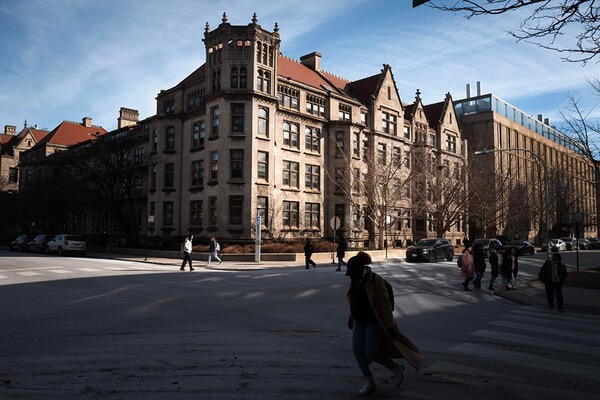
    The University of Chicago is selling a celebrated research center as the generously endowed university navigates layoffs and program cuts amid a heavy debt load, Financial Times reported Monday.

    UChicago is reportedly selling the Center for Research in Security Prices, founded in 1960, for $355 million to Morningstar, a research and investment firm also located in Chicago. The center, known as CRSP, developed a market database more than 65 years ago that “allowed investors to measure historic rates of return for U.S. stocks,” according to its website, which notes that its data has been used in more than 18,000 peer-reviewed studies and by hundreds of entities.

    CRSP formally became a limited liability company in 2020 but remained wholly owned by UChicago and maintained its affiliation with the university and the Booth School of Business.

    The sale comes as financial issues are adding up for the university. UChicago has borrowed heavily in recent years and seen substandard returns on its $10 billion endowment. University officials recently announced plans to pause admission to multiple Ph.D. programs and to cut 400 staff jobs as the private institution grapples with a debt load that has grown to $6 billion.

    UChicago is currently trying to shed $100 million in expenses.

    The Trump administration’s cancellation of dozens of federal grants in recent months has also hurt the university’s bottom line. UChicago president Paul Alivisatos wrote in late August that the “profound federal policy changes of the last eight months have created multiple and significant new uncertainties and strong downward pressure on our finances.”

    Source link

  • The Em Dash Debate We Should Be Having (opinion)

    The Em Dash Debate We Should Be Having (opinion)

    It seems a day does not go by without seeing someone confidently assert on social media that an em dash is not an indicator of AI-written text. Those social media posts are in response to an ongoing debate about whether or not the em dash is a dead giveaway of writing produced by generative AI. Some writers and academics resent that their cherished em dash is getting a bad rap. As one writes, “You can take my em dash from my cold, dead hands.”

    As a writer who does not use AI, I understand the frustration with the recent em-dashes-are-a-sign-of-AI-use bandwagon. I certainly do not want to be accused of using AI whenever I use an em dash. And as an English composition instructor who wants students to write without using AI, I understand how easy it can be to latch on to a purported way of quickly identifying AI-generated writing.

    But rather than get angsty about it as a writer or accusatory as an instructor, I am choosing to view the current em dash–AI kerfuffle as serendipitous. AI might be new, but a controversy about em dash usage is not, and the current debate provides an opportunity to try and temper its overuse—again.

    A year before what is recognized as the birth of the World Wide Web, Robert Bringhurst, in The Elements of Typographic Style, took a shot across the bow at em dash usage. An em, in typesetting vernacular, is a square measurement where, as Bringhurst explains, “One em is a distance equal to the type size”: therefore “the em is a sliding measure.” In other words, an em is not a fixed horizontal length; it is a horizontal space proportional to the point size. So if someone is using 12-point type, then one em would be 12 points horizontally. Half of an em is called an en. So when using 12-point type, an en is six points horizontally.

    In post-typesetting days, Bringhurst recommends that spaced en dashes – like this – be used—instead of nonspaced em dashes like this—to set off phrases within a sentence. Although he did see valid uses for the em dash, such as for written dialogue, Bringhurst contends that “the em dash is the nineteenth-century standard” and “too long for use with the best text faces” in modern times. According to Bringhurst, just as we no longer put two spaces after a period at the end of a sentence (a holdover from typesetting and later typewriter days), the em dash “belongs to the padded and corseted aesthetic of Victorian typography.”

    While Bringhurst’s suggestion was to replace ungainly em dashes with en dashes to offset sentence interruptions, continuing debates over the em dash focus on limiting such interruptions in the first place.

    In 2011, Philip Corbett of The New York Times noted an increasing use of the em dash in newspaper articles. The problem? The em dash “can seem like a tic; worse yet, it can indicate a profusion of overstuffed and loosely constructed sentences, bulging with parenthetical additions and asides.”

    That same year, Noreen Malone, writing for Slate, demonstrated how the em dash “discourages truly efficient writing” and “disrupts the flow of a sentence.” Granted, a purpose of the em dash is to interrupt, but the problem was not just that people were interrupting their writing a lot, but that they were also using it in place of better-suited punctuation. Rather than figuring out the best punctuation to use for specific writing situations and purposes, people were using the em dash as the jack-of-all-trades but master of none. Would it be best to use a comma, semicolon, period or colon? Who cares? Just throw in the exotic em dash.

    Now, as a direct result of its overuse as a substitute for more apt punctuation and its ubiquity in the written material that became the training data for LLMs, it is no surprise that the em dash is frequently showing up in AI-generated writing. There is no indication, as far as I am aware, that AI is intentionally trying to wrest the em dash from those who use it ethically and responsibly. But AI is fortuitously forcing us to grapple with the cavalier use of the em dash across recent decades. So what can writers and teachers do about it?

    As writers, we have a roster of punctuation marks from which to draw upon for specific purposes, and our choices can bring better clarity to our writing and demonstrate writerly skill. As Andi Zeisler points out in “AI can’t have my em dash,” em dashes “don’t really need to be there,” “aren’t integral to sentence structure” and “are decidedly extra.” That does not mean that writers must lay down all their em dashes and surrender them to AI. But as writers, we should be connecting thoughts smoothly and taking care to use just the right punctuation for a specific purpose while resisting the allure of an em dash that might save us the expert work of choosing the precisely placed period, comma, parenthesis, semicolon or colon.

    As teachers, we should not automatically think a student used AI when we see an em dash. I reject the notion that em dashes are a telltale of AI-written text. Whenever I suspect that something I am reading was written by AI, it is due to the writing style, not the presence of an em dash. Regardless, whether its use is attributable to AI or simply disjointed or imprecise writing, the presence of an em dash provides an opportunity to teach students how to better connect their thoughts in their writing and more carefully consider when and how to use the best punctuation for different situations.

    Richard Mitchell (a.k.a. the Underground Grammarian) once wrote, about the word “input,” that “a word that means almost anything means almost nothing” and “no longer makes any useful distinction.” The same can be said about the em dash. It might be that the em dash is necessary in select situations, but in most others it is not.

    Brenda Thomas has worked in various roles in online higher education, including as an adjunct faculty member and instructional designer, at several colleges and universities since 2015.

    Source link

  • Featured Gig: eLearning Developer at UConn

    Featured Gig: eLearning Developer at UConn

    One of my goals for growing this Featured Gig series is to highlight early-career opportunities. When I saw on LinkedIn that UConn is searching for an e-learning developer, I reached out to Desmond McCaffrey, director of UConn Online, to learn more about the role.

    Q: What is the university’s mandate behind this role? How does it help align with and advance the university’s strategic priorities?

    A: The university is committed to expanding and enhancing its online and mixed-mode offerings as part of its strategic priorities. The e-learning developer 1 plays a central role in this effort by collaborating with instructional designers, faculty and staff to design and deliver high-quality courses that meet compliance requirements and research-based standards. Beyond content development, the role supports faculty growth and creates opportunities to integrate new technologies, experiment with innovative solutions and strengthen both teaching and learning. This work ensures that students benefit from inclusive, engaging and flexible educational experiences in an evolving digital environment.

    Q: Where does the role sit within the university structure? How will the person in this role engage with other units and leaders across campus?

    A: The e-learning developer is part of eCampus and UConn Online, units within the Center for Excellence in Teaching and Learning dedicated to supporting online and mixed-mode education. While the role works closely with colleagues in eCampus and CETL, it also engages with University IT Services, the University Library and faculty and staff across departments, schools and colleges. Developers contribute as members of cross-unit production teams and committees while also managing individual projects. Along the way, they collaborate on innovative pilots, explore and integrate emerging technologies, and engage with faculty and students to improve learning experiences and to help shape the university’s evolving digital learning ecosystem.

    Q: What would success look like in one year? Three years? Beyond?

    A: By the end of year one, success means moving beyond basic proficiency into advanced contribution, bringing creative solutions to course design and development, collaborating effectively across units, and helping faculty integrate best practices in accessibility and inclusion. The developer demonstrates growing confidence in evaluating and applying new technologies, employs strong communication skills, and distinguishes effective pedagogical, while building trust as a reliable partner on course and program teams.

    By three years and beyond, the e-learning developer is recognized as an innovator and campuswide contributor. They not only design inclusive, high-quality courses and learning objects but also pilot new tools and approaches, engage with faculty to improve learning experiences, and share insights through research and conference presentations. Their role evolves into mentorship and leadership, guiding projects and shaping conversations about digital learning strategy. At this stage, they are seen as a trusted resource and emerging leader who connects pedagogy, technology, and innovation to strengthen UConn’s online teaching and learning environment.

    Q: What kinds of future roles would someone who took this position be prepared for?

    A: This role provides a strong foundation for advancement into positions such as e-learning developer 2 or 3, instructional designer, faculty development specialist, or educational technology support professional, depending on the individual’s background and career goals. It also opens pathways into broader leadership roles in online education and digital learning. Along the way, developers gain hands-on experience by building courses, experimenting with new technologies, engaging with faculty and contributing to research and conference presentations—positioning them for long-term growth at the intersection of learning, technology and innovation.

    Please get in touch if you are conducting a job search at the intersection of learning, technology and organizational change. If your gig is a good fit, featuring your gig on Featured Gigs is free.

    Source link

  • Trump May Attempt to Tie Grant Allocation to Capitulation

    Trump May Attempt to Tie Grant Allocation to Capitulation

    Brendan Smialowski/AFP/Getty Images

    The Trump administration may be moving away from using individual investigations to try to force colleges into compliance with the president’s agenda and instead encourage compliance by giving institutions that demonstrate adherence to his policies a competitive advantage in obtaining research funding, according to The Washington Post.

    The new plan, which Post reporters heard about from two anonymous White House officials, would change the grant-application process and give a leg up to institutions that conform to President Donald Trump’s agenda regarding admissions, hiring and other campus policies. 

    If the plan takes effect, the Trump administration will no longer have to go after universities one by one through investigations and corresponding penalties, but rather can induce compliance from hundreds of institutions at once.

    “It’s time to effect change nationwide, not on a one-off basis,” one official told the Post.

    The current award-selection process for federal research grants is based primarily on scientific merit. Critics say that overriding such a standard would be a demonstrable example of executive overreach and a violation of academic freedom.

    “I can’t imagine a university in America that would be supportive of this,” said Ted Mitchell, president of the American Council on Education. 

    Source link

  • Back to the Future? What could system reform of higher education look like? 

    Back to the Future? What could system reform of higher education look like? 

    Author:
    Mike Boxall

    Published:

    This HEPI blog was kindly written by Mike Boxall, writing in a personal capacity.  

    According to the latest survey by PA Consulting, over 90% of university vice-chancellors endorse a call for ‘fundamental system reforms’ to secure the survival of their sector against what they universally regard as an unprecedented combination of existential threats and challenges. Yet the responses seen from across the sector to date have been distinctly conventional and, in a literal sense, conservative: cost-cutting, portfolio rationalisation, recruitment freezes and redundancies, and forgone investments. While undoubtedly necessary in some cases to stave off short-term financial crises, such measures hardly represent transformational innovations; indeed, almost half the survey respondents predicted that their institutions would look and feel much the same in ten years’ time as today. As one vice-chancellor put it:  

    We have been propping up a 20th-century system that is no longer fit for the purposes of the early 21st century 

    Meanwhile, policymakers in the Department of Education and the Office for Students are busily preparing contingency measures against the heightened risk of multiple institutional failures and institutions plan for continued retrenchment. Big questions remain unanswered: Why might ‘fundamental system reforms’ be needed? What could (or should) a fundamentally reformed higher education system look like? And how might it be brought about in an era of continued fiscal and policy austerity? 

    Unlike just about every other sector facing seismic shifts in their markets and operating environments, universities have remained uniformly committed to what many regard as self-limiting and increasingly outdated business models: 

    • Reliance on providing essentially similar subject-based courses to limited cohorts of school-leavers, largely neglecting the more diverse learning needs of much larger populations of in-career professionals and their employers. 
    • Adherence to misleadingly named ‘full-time’ study schedules typically limited to 30 weeks a year or less, with single annual entry points and campuses and facilities largely empty of students and staff for almost half the year. 
    • A deficit-based business model in which devolved expenditure plans are set (and spent) separately from confirmed earnings, often resulting in unexpected year-end shortfalls and relying on cross-subsidies from international student fees to balance budgets. 
    • Over 150 autonomous and self-determining universities competing with one another for shares of largely fixed or even shrinking markets and funding sources, with success judged more in terms of reputational standings than by the quality and social value of their services. 

    It must be acknowledged that, despite these self-imposed limitations, the current university system has defied repeated prophesies of its demise. It has survived largely intact for many decades, with few provider closures or even forced mergers, and continues to recruit almost 1.5 million domestic and international students each year, generating over £55 billion in revenues. A handful of global institutions with annual incomes exceeding £1 billion or more may be considered too big and important to fail, and indeed these few continue to do relatively well, often at the direct expense of less-favoured rivals.  However, many, perhaps even most, others face a future of chronic struggles to cover inexorably rising costs and to protect their shares of markets eroded by new competitors and alternative options for students, employers, knowledge users and public programmes. Survival for these providers through continued efficiency drives might be possible, but it won’t be fun; nor will it be sufficient to secure the pivotal roles of universities in educating and informing an increasingly complex and precarious world. 

    The roles and contributions of universities in today’s and tomorrow’s learning society are no less important than in the past, but they will be different. In particular, they have a unique responsibility for sustaining human and social intelligence in the face of impersonal AI and related technological advances. To fulfil this role, universities must move beyond the limitations of their legacy models, expanding their roles within national and localised ecosystems to promote: 

    • Lifelong and continuous learning and professional development for all adults, from post-secondary to late-career stages, and from initial formation to periodic upskilling and personal renewal, facilitated and supported through the Lifelong Learning Entitlement and related schemes  
    • Cumulative and personalised learning attainments, embracing the rounded acquisition and development of knowledge, competences, experience and personal development, incorporating micro-credentials and stackable awards on the lines proposed by the OECD 
    • Variety and choice of accessible pathways through different modes of provision for useful learning as and when sought by individuals and employers, embracing universities, colleges, training providers and online services, as is being developed in Greater Manchester  
    • Funding and economic structures based on the value and benefits of different modes of learning provision, shared equitably between individuals, employers, civic authorities and the State, on the lines explored by the UNESCO Innovative Funding for Education project. 

    While fully articulated and integrated learning and skills ecosystems built on these principles may seem a long way off, the examples cited show that prototypes can already be seen in localised initiatives and emerging proposals across the international tertiary formation landscape. A variety of models built around these principles might emerge, displaying the characteristics of complex adaptive systems: self-organising and dynamic networks of diverse partners and stakeholders, producing emergent results in response to changing experiences.   

    Unpredictable and sometimes surprising outcomes of these kinds cannot easily be planned or fitted into pre-determined blueprints. They are thus unsuited to the normal pattern of government policy interventions. Rather, the role of government should be to provide the enabling conditions and supportive frameworks (including funds) within which self-organising solutions can emerge. A good start would be to reduce the fragmentation of policy, funding and regulatory constraints to innovation and enterprise across existing learning and skills provision. The Commission on Tertiary Education and Research (Medr) in Wales offers a laudable start towards that end, now being emulated in the Republic of Ireland and in New Zealand

    System-wide reforms on this scale do not in any way diminish the importance or critical roles of universities in serving fast-changing national needs for advanced education and skills. What they would do would be to shift the debate on the health of higher education provision from its current focus on enabling universities to continue doing what they have always done, on their own terms, to redefining and consolidating their roles at the heart of sectoral or place-related advanced learning ecosystems.  In spirit, if not in forms, this would represent returns to the principles on which most universities (both pre- and post-1992) were first established and which many would argue are needed even more today. 

    Source link

  • Learning to debate is an important facet of education, but too often public school students are left out 

    Learning to debate is an important facet of education, but too often public school students are left out 

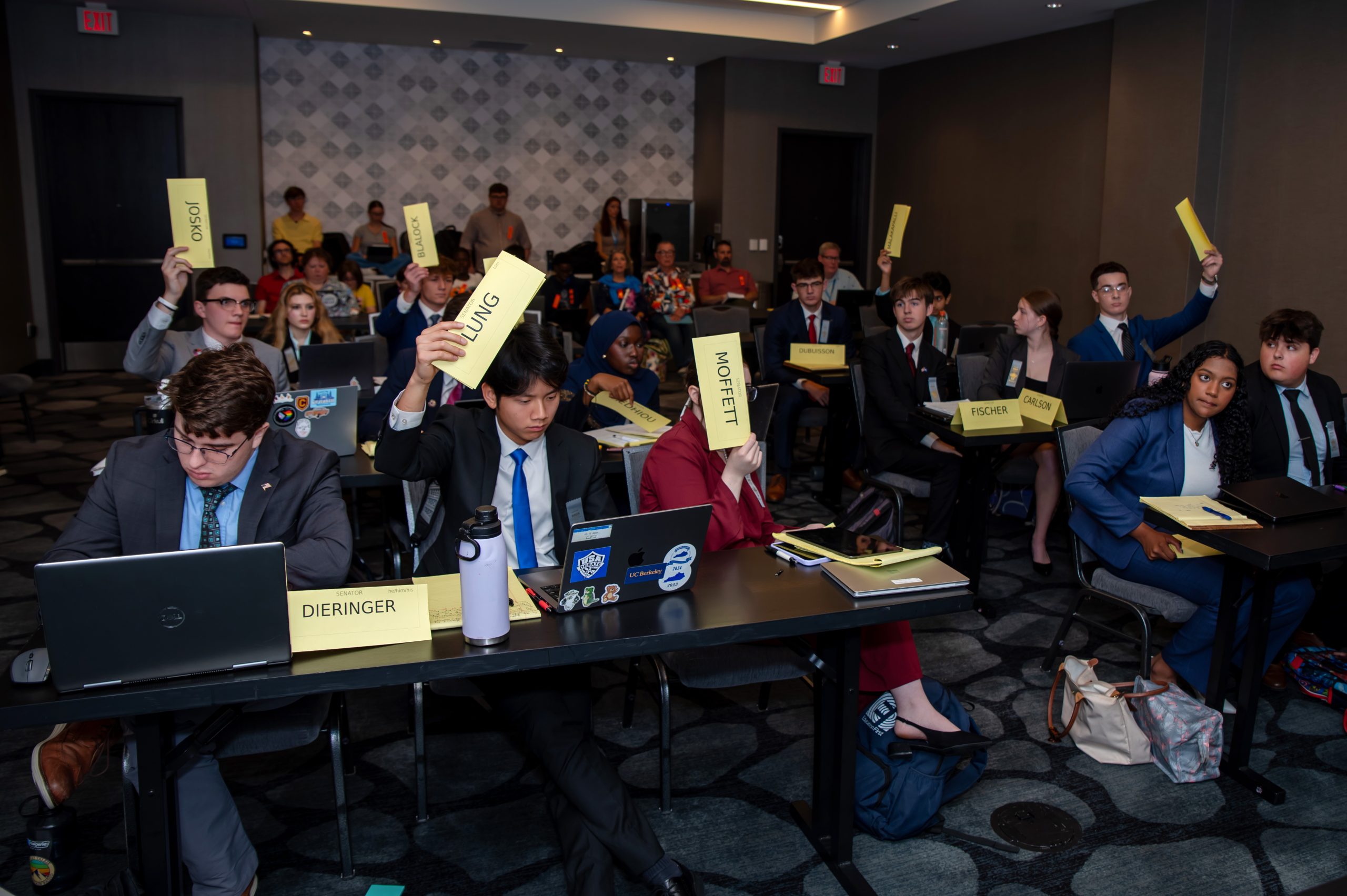
    Ever since I first stepped onto the debate stage, I have been passionate about speech and debate. For the last three of my high school years, I have competed and placed nationally at major tournaments in Dallas, Los Angeles, Chicago, Atlanta and Las Vegas, among many others. Debate demands an incredible amount of research, preparation and practice, but those aren’t the biggest challenges for me.  

    I attend a public high school in California that lacks a formal debate program or coach, which has forced me to choose between quitting an activity I love and competing independently without any school support.  

    I chose the latter. And that means I prepare alone in the dark, navigate complex registration processes and, most importantly, pay hefty fees. 

    As many of us know, debate is an effective way to strengthen students’ comprehension, critical thinking and presentation skills. Debate allows students to explore ideas in a myriad of topics, from biotechnology to nuclear proliferation​​​​, and find their unique passions and interests. 

    Yet for many students, a lack of school support is a major entry barrier. It has turned debate into another private-school-dominated space, where private-school students receive access to higher quality research and on-the-spot coaching on argument structure and prose, like a football coach adjusting strategy on the sidelines. Additionally, most prestigious tournaments in the U.S. prohibit non-school-affiliated debaters like me from competing altogether.  

    Related: A lot goes on in classrooms from kindergarten to high school. Keep up with our free weekly newsletter on K-12 education.  

    These circumstances de facto prevent lower-income debaters from becoming successful in the activity. And that is why I believe that all schools should incorporate speech and debate classes into their core curriculums. Existing history and English teachers could act as debate coaches, as they do in many private schools. School districts could even combine programs across high schools to save resources while expanding access (Mountain View High School and Los Altos High School in California have pursued this strategy).  

    Over the past two decades, the debate community has engaged in efforts to democratize access to speech and debate through the creation of new formats (for example, public forum), local debate associations and urban debate leagues, among others.  

    However, many of these initiatives haven’t been successful. These newer formats, initially intended to lessen the research burden on debaters, have shifted toward emphasizing strict evidence standards and complex debate jargon. This shift has made debate less, not more, accessible, and led to more students from private schools — who were quickly able to ​​​​out-prepare those from public​​ schools — entering and dominating the competition.  

    Local debate associations and​​​​ competitive leagues for neighboring schools have provided more students with opportunities to participate. Still, debate via these organizations is limited, as they don’t provide direct coaching to member schools or rigorous opportunities for students, and prohibit certain students and programs from competing.  

    Similarly, urban debate leagues (for example, the Los Angeles Metropolitan ​​​​Debate League) have been incredibly successful in expanding debate access to lower-income and minority students; however, these programs are concentrated in major metropolitan cities, face opposition from some school districts and rely on donor funding, which can be uncertain.  

    In my debate rounds, I have analyzed pressing social problems such as global warming and economic inequality through a policymaking lens; in some rounds I defended increased wealth taxes, and in others I argued against bans on fossil fuels. Without debate, I wouldn’t be so conscious of the issues in my community. Now, as I enter college, I’m looking forward to continuing debate and leveraging my skills to fight for change.  

    Related: High school students find common ground on the debate stage 

    Speaking of college, in the competition for admission to the most selective colleges, extracurricular involvement can be a deciding factor, and debate is an excellent way to stand out, at least for those students with proper support.  

    However, when students from rural and low-income communities lack access to the same opportunities as students from more metropolitan and higher-income communities, we risk exacerbating the educational achievement gap to our collective detriment.  

    In the meantime, debate tournaments should reduce entry barriers for nontraditional debaters and for students from public schools without coaches and extra support.  

    Without these initiatives, too many rural and low-income students will be excluded from an amazing activity, one that is especially important in today’s polarizing and divisive climate.  

    Aayush Gandhi is a student at Dublin High School. He is an avid writer and nationally ranked Lincoln-Douglas debater.  

    Contact the opinion editor at [email protected].  

    This story about debate programs was produced by The Hechinger Report, a nonprofit, independent news organization focused on inequality and innovation in education. Sign up for Hechinger’s weekly newsletter.  

    The Hechinger Report provides in-depth, fact-based, unbiased reporting on education that is free to all readers. But that doesn’t mean it’s free to produce. Our work keeps educators and the public informed about pressing issues at schools and on campuses throughout the country. We tell the whole story, even when the details are inconvenient. Help us keep doing that.

    Join us today.

    Source link