University of Southern California professor Helen Choi had a pretty basic assignment for her students this fall: Read a book.
To be sure, Choi’s pedagogical choice isn’t novel for many faculty; 71 percent of professors use print materials in some capacity in their classroom, a Bay View Analytics survey found.
But Choi teaches Advanced Writing for Engineers, a course focused on teaching STEM students how to write across disciplines. Many of them “think nothing of shoveling a writer’s work into a chatbot for a summary,” Choi said. So this fall, Choi is encouraging students to close their laptops and spend time with Karen Hao’s book Empire of AI, about the evolution and tech behind AI.
Choi chronicled her decision in a Substack article titled, “I’m Making My Students Read a Book!” The post caught the attention of some faculty on Bluesky, including Vance Ricks, a Northeastern computer science and philosophy professor. Ricks had similarly selected Empire of AI for his master’s-level students to read this term.
Both Choi and Ricks hope to encourage their students to relearn how to read critically and engage in robust conversations with their peers. And after finishing the books, Choi and Ricks’s students will get the chance to reflect together on the book during a virtual meeting, where they will discuss the role of AI in their lives.
What’s the need: In the past, Choi would assign short online articles for students to inform their writing responses. “The questions I was getting from students indicated to me that the engagement with the underlying materials wasn’t as deep as I wanted,” Choi said. “Sometimes it was just straight up reading comprehension.”
In 2024, only 34 percent of students were considered proficient, which NAEP classifies as connecting key details within and across texts and drawing complex inferences about the author’s purpose, tone or word choice. Thirty-two percent of 12th graders ranked below “basic,” unable to locate and identify relevant details in the text to support literal comprehension.
In addition to helping students apply deeper learning and thinking skills, Choi hopes having print material will allow them to step away from their laptops and connect with peers in a more meaningful way.
In the classroom: Choi and Ricks have assigned the 482-page book to be read over four to five weeks, with students responsible for annotating and reflecting on the assigned sections on a weekly basis. Neither assigns content-based quizzes or reviews, relying on student discussions to reveal participation with the text.
At the start of the term, both Choi and Ricks said they spent time in class discussing why they were requiring a physical book, and specifically Hao’s book.
“You have to justify why you’re doing this abnormal thing,” Choi said.
Students seemed to get it and were excited about the opportunity, both professors said.
“They’re genuinely eager to have those conversations and engage in that sort of reflection,” Ricks said.
The assignment has, however, required some additional attention and time on their part to help students grasp reading.
“I’ve spent more time than I had anticipated literally walking around the book and saying, like, ‘This is an epigraph; why are the quotes here? What’s a prologue? What’s the index?’ Things like that,” Choi said.
Both professors said they’ve had to adjust their expectations for how quickly students would be able to complete the text. The book itself also proved more difficult than anticipated for students who speak English as a second language, so Choi and Ricks are considering ways to better support these students in the future.
The impact: “So far, students have shared that they are enjoying Hao’s book because it is relevant to their fields and lives outside of school,” Choi said. Their written responses to the reflection prompts also show improvement in clarity and organized reasoning.
In Ricks’s class, the print format has proven a fruitful learning experience in and of itself. “Just hearing from students about how they are engaging physically with the book, tactilely, in terms of the smell of the pages or the sound of turning the pages—all of those things, let alone the material that the book is about,” Ricks said.
The two classes will meet over Zoom on Sept. 26 for a student-led discussion on the book’s materials and themes.
While the overall goal is to promote better reading and writing for her students, Choi said the exercise has also been a bright spot in her courses.
“It’s really fun for me to teaching reading as part of writing,” she said. “It’s about the students, but I think having a joyful teaching experience is important for the classroom experience. Every day I’m pretty excited about having this book, and seeing the students with books makes me super happy.”
In June, in an escalation of the Trump administration’s pressure on Harvard University to bow to its demands, a federal Office for Civil Rights announced that the institution was violating federal law.
The office released a nearly 60-page report accusing Harvard of “deliberate indifference” to ongoing discrimination against Jewish and Israeli students, which is illegal under Title VI of the Civil Rights Act of 1964. “OCR’s findings document that a hostile environment existed, and continues to exist, at Harvard,” the office said in an accompanying news release.
But this wasn’t the Education Department’s Office for Civil Rights. It was an office of the same name within the Health and Human Services Department that’s been playing a more public role as part of Trump’s crackdown on higher ed. Officials who served in previous administrations said agencies used to generally defer to the Education Department when it came to civil rights issues in higher ed. But since Trump retook office, colleges and universities are facing increased pressure from probes by HHS and other agencies enforcing the new administration’s right-wing interpretation of civil rights.
HHS OCR said it began its Harvard investigation in February by looking into the university’s medical school, after alleged antisemitism during the May 2024 graduation ceremony. But, in April, it widened its probe to “include Harvard University as a whole and to extend the timeframe of review to include events and information from October 7, 2023, through the present.” (The HHS OCR has jurisdiction over institutions that accept HHS funding, including National Institutes of Health research grants and Medicaid dollars.)
And this wasn’t the HHS OCR’s only investigation into parts of Harvard that didn’t appear related to health or medicine. The news release noted the “findings released today do not address OCR’s ongoing investigation under Title VI into suspected race-based discrimination permeating the operations of the Harvard Law Review journal.” And Harvard is just one of several universities that this non–Education Department OCR has targeted since Trump retook the White House in January.
Civil rights advocates say the HHS OCR has become just one more pawn in Trump’s strategy to target universities and end protections and programs that aid minority groups. For universities, Trump’s HHS OCR represents a new threat to their funding if they’re accused of promoting diversity, equity and inclusion; fostering antisemitism; or letting transgender women play on women’s sports teams.
It’s unnecessary to do what the administration is doing now, unless one is operating like a mob boss.”
—Catherine Lhamon, former head of OCR at the Education Department
The office’s investigations and public denunciations add to the work of the ED OCR, which the Trump administration has also shifted to focus on the same issues. The two OCRs announced a joint finding of violations against Columbia University, but they’ve also trumpeted independent probes into other institutions.
“As we feared, the Trump administration is abusing civil rights tools to advance a radical and divisive agenda that aggressively hoards access to education, living wage jobs, and so much more,” the NAACP Legal Defense Fund said in a statement. “Unfortunately, HHS and many other federal agencies are being used as one of the vehicles to carry out that agenda.”
The Legal Defense Fund said, “Colleges and universities are being targeted precisely because of the critical role they play in opening the doors of opportunity and preparing the next generation to lead our multi-racial democracy. By attacking institutions that help level the playing field for Black students and other students of color, the Trump administration is ultimately weakening our democracy and our economy as a whole.”
Former officials at the Justice Department, to which HHS OCR can forward cases if the targets of investigations don’t comply, told Inside Higher Ed that HHS OCR historically deferred probes into universities to the Education Department.
Catherine Lhamon, former director of the Education Department’s OCR under Presidents Biden and Obama, said, “There are 13 federal agencies with external civil rights enforcement, of which HHS is one, and it’s relatively large.” She said they’re pieces of Trump’s broader strategy.
“The administration has used every agency in a contemporaneous, simultaneous assault on universities,” Lhamon said, multiplying the amount of federal funding it can threaten.
The HHS OCR’s announced investigations under Trump show it’s investigating similar issues to the Education Department OCR—or what’s left of that office after the administration’s cuts. Lhamon said the practice for decades has been for the agency with principal expertise over an area to investigate that area—hence why universities were mostly investigated by the Education Department OCR.
“It’s unnecessary to do what the administration is doing now, unless one is operating like a mob boss,” Lhamon said.
An HHS spokesperson said, “We’re leading implementation of the president’s bold civil rights agenda,” which includes four focuses: upholding religious conscience rights, fighting antisemitism, ending race-based discrimination embedded in DEI programs and “defending biological truth” in sex-discrimination enforcement. She also said that fighting antisemitism, for instance, is a priority across the whole administration, “so our office is going to be a part of that and going to participate to the fullest extent that we can.”
It remains unclear how much of the HHS OCR’s daily workload is now devoted to Trump’s targeting of higher ed. HHS OCR did investigate higher ed institutions even before Trump took office, the HHS spokesperson said.
“We may be being more public about it now,” the spokesperson said, “particularly because that’s where the issue areas with respect to this administration are.”
She said the office also continues to investigate non–higher ed–related medical providers and non–civil rights issues that it has responsibility for despite the office’s name—such as information privacy under the Health Insurance Portability and Accountability Act.
The spokesperson said the HHS OCR news releases don’t tell the full story of what the office is currently investigating because—out of the roughly more than 40,000 complaints it receives annually—it doesn’t normally disclose which complaints lead to probes “to protect the integrity of the investigation.” The office also launches some investigations without receiving complaints, she said.
“In the past we’ve not announced through press releases that we’ve opened major investigations,” she said.
She didn’t provide Inside Higher Ed a list of the office’s current investigations. She also didn’t say how many employees HHS OCR has. HHS’s fiscal year 2026 budget request said that “in FY 2010, there were 111 investigators onboard, and in FY 2022, this number fell to 60, while simultaneously HHS received the highest number of complaints in its history (51,788).” (For comparison, the ED OCR, in a FY 2024 report, said it had received its highest-ever volume of complaints, but the number was only 22,687.)
Since taking power, the Trump administration has been slashing the federal workforce—the administration laid off nearly half of the Education Department’s OCR staff in March. It’s unclear how much HHS OCR has been cut. The FY 2026 budget request said the HHS OCR “has faced a continually growing number of cases in their backlog, rising to 6,532 cases by the end of FY 2024.” And that was before the office launched these new probes based on Trump’s priorities.
The HHS OCR receives roughly more than 40,000 complaints annually, a spokesperson said.
Kayla Bartkowski/Getty Images
A String of Investigations
Since Trump’s Jan. 20 inauguration, HHS OCR has announced a spate of higher ed investigations, mostly without naming the institutions. The spokesperson said most are ongoing.
In early February, it announced investigations of four unnamed medical schools, also citing reports of antisemitism during their 2024 commencements. (That was the same month the Harvard investigation began, HHS OCR later said, so Harvard was likely among the four.)
On Feb. 21, Trump told Maine governor Janet Mills during a televised White House event that her state must bar transgender women from women’s sports or lose federal funding, to which Mills replied, “See you in court.” In response to this, the HHS OCR issued a news release that same day announcing an investigation into “the Maine Department of Education, including the University of Maine System,” due to reports that the “state will continue to allow biological males to compete in women’s sports.” (The HHS spokesperson said the investigation eventually found that the most relevant issues were unrelated to higher ed.)
In March, the office announced investigations into four unnamed “medical schools and hospitals” over “allegations and information” concerning medical education or scholarships “that discriminate on the basis of race, color, national origin, or sex.” The news release didn’t have much further detail but referenced a Trump executive order targeting “illegal” diversity, equity and inclusion programs. Later that month—again citing the anti-DEI order—it announced it was investigating “a major medical school in California” over whether it “gives unlawful preference to applicants based on their race, color, or national origin.”
In April, it announced it was investigating an “HHS-funded organization” over whether it excludes “certain races” from a “health services research scholarship program.” Later in April, it launched an “online portal where whistleblowers can submit a tip or complaint regarding the chemical and surgical mutilation of children”—the Trump administration’s phrase for gender-affirming care. Simultaneously, it announced it’s investigating “a major pediatric teaching hospital” for allegedly firing a whistleblower nurse who “requested a religious accommodation to avoid administering puberty blockers and cross-sex hormones to children.” (The HHS spokesperson said the first Trump administration brought a focus on religious conscience rights to the office that disappeared under Biden but has now returned.)
Also in April, it announced a second Harvard probe: a joint investigation with the Education Department’s OCR into both Harvard and the Harvard Law Review “based on reports of race-based discrimination permeating the operations of the journal.” The HHS OCR news release said an editor of the law journal “reportedly wrote that it was ‘concerning’ that ‘[f]our of the five people’ who wanted to reply to an article about police reform ‘are white men.’” The office also raised concern about another editor allegedly suggesting expedited review for an article because the author was a minority.
In May, the HHS OCR announced it’s investigating a “prestigious Midwest university” over alleged discrimination against Jewish students. Later that month came its announcement of its joint finding with the Education Department OCR that Columbia University violated Title VI through “deliberate indifference towards student-on-student harassment of Jewish students.” (This was part of the administration’s pressure campaign on Columbia that culminated with a controversial July settlement.)
In June came the HHS OCR’s Title VI finding against Harvard in the investigation of alleged antisemitism. Then, in July, HHS OCR said it was investigating “allegations of systemic racial discrimination permeating the operations of Duke University School of Medicine and other components of Duke Health,” which includes “other Duke health professions schools” and “health research programs across Duke University.” In a statement alongside that announcement, HHS secretary Robert F. Kennedy Jr. said, “Federal funding must support excellence—not race—in medical education, research, and training.”
And last week, after months of silence on new higher ed–related investigations, the HHS OCR announced an investigation into the legal scholarship of an HHS-funded “national organization,” over allegations that it “preferences applicants of certain races and national origin groups.”
Lhamon, the former Education Department OCR head, said what the administration has called civil rights investigations into Harvard, Columbia and other universities aren’t really investigations. She noted the administration has used a “mob theory” by going ahead and pulling HHS and other funding from multiple institutions before the investigations are over.
Instead, she said, this is “an assault on universities, which is a very different thing from ensuring compliance with the civil rights laws as Congress has enacted them.”
A federal court order issued late Monday evening provides significant financial relief to the University of California, Los Angeles, restoring about $500 million in federal research grants amid an ongoing lawsuit with the Trump administration over alleged instances of antisemitism on campus.
The preliminary injunction, first reported by CalMatters and Politico, is temporary. But for now it reinstates more than 500 grants from the National Institutes of Health, the Department of Defense and the Department of Labor, allowing hundreds, if not thousands, of university researchers to resume their work. That’s on top of a previous order in August from the same court that unfroze about 300 grants from the National Science Foundation.
Between the two rulings, almost all of UCLA’s federal research grants have been restored.
The funds were first withheld in late July, less than a week after the Justice Department accused the university of tolerating discrimination against Jewish students, faculty members and staff, in violation of federal civil rights law. The Trump administration later said UCLA could resolve the situation by paying $1.2 billion and agreeing to lengthy list of policy changes.
But university researchers pushed back, using an existing broader lawsuit and injunction to challenge the grant freeze.
In the end, District Judge Rita F. Lin, a Biden appointee, ruled in favor of the faculty members, saying the indefinite suspensions of grants was “likely arbitrary,” “capricious” and a violation of the Administrative Procedure Act.
This HEPI blog was kindly authored by Rupert Houghton, a Student at Magdalen College School.
Loneliness is a fundamental part of being human, and it occurs as a part of everyone’s life at some point. But today’s world, and the changes in the way we all interact mean that loneliness has found new, easier ways to enter the lives of many people, and particularly, younger people. The statistics on this are clear:
10.3% of British secondary school students feel ‘often or always’ lonely (ONS)
43% of 16 to 24-year-olds in the UK would feel uncomfortable about admissions that they feel lonely (YouGov)
Loneliness is clearly a big issue for those in higher education and for those about to enter it. There are some schemes and policies to attempt to counteract this, but what is often not considered when it comes to policymaking is that loneliness is a physical condition, not just one based on feelings. How, then, should loneliness be thought of differently?
An important fact to remember when dealing with loneliness is that humans are not merely social out of choice, but out of evolutionary necessity. Pre-agrarian humans (before the Agricultural Revolution 7000 years ago) operated in groups, and they depended on each other to fulfil different roles for the group’s overall survival. As a result, humans evolved to seek out positive social relationships as working with others was crucial to our survival.
Loneliness is used to signal to the brain that a person’s social inclusion, and therefore survival, is at risk, and the brain therefore starts fighting for survival. Social rejection uses the same neural networks as physical pain, and causes a minor stress response in the brain. Loneliness is merely the prolonged and sustained activation of this stress response and so puts physical stress on the mechanisms within the brain that cause it.
When this response is elicited, the brain starts to transition itself into a socially hyper-alert state, as it attempts to preserve existing positive relationships, and minimise the number of negative interactions experienced. Studies have shown that the brain changes its own structure to accommodate this and changes the way facial expressions are read. Lonely individuals show a heightened sensitivity to negative social stimuli, including negative facial expressions, words, phrases, or pictures. They were shown to more quickly and accurately spot negative social cues but were also seen to mislabel neutral and even positive social cues as negative more often than their non-lonely counterparts.
In a pre-agrarian human social structure, this problem would have been resolved relatively quickly. It was necessary to work together in groups to survive, which would force a degree of socialisation. To avoid social rejection, an individual would perhaps change some aspects of their own behaviour and be able to pick up on the reaction of their peers, and so change to be better accepted into the group, which would enforce more positive social relationships.
Nowadays, however, it is harder for this process to take place. Instead, it is far easier for people to spend more time alone or reduce the time they spend socialising. The changes in neural pathways therefore start to have a different effect on a lonely person’s behaviour. As they become more sensitive to negative social stimuli, their brain can view them as ‘threatening’, and attempts to prevent exposure to them, causing them to self-isolate. This, rather than fixing the problem only exacerbates the perception of low social standing, increasing the feeling of loneliness.
The main physical impacts of loneliness come from its effects on the hormones secreted by glands within the brain. One of these hormones is cortisol, often called the ‘stress hormone’. Loneliness has been shown to make the brain overwork and produce more cortisol than it would ordinarily. This leads to a number of detrimental health effects: high levels of cortisol have been linked to chronic inflammation, disrupted sleep cycles in young adults, and raised blood pressure.
Loneliness is clearly becoming an endemic problem, particularly in secondary and higher education and is having a very real effect on students’ health. Loneliness is a self-perpetuating condition and something that easily becomes chronic, so it is therefore best to prevent it before it begins. The policy focus must be placed on making students aware of loneliness before it can start to impact on people’s education and wellbeing. Whether that be through making universities give more open information on loneliness, how to keep social, or ensuring that students are informed about how the choices made could affect their risk of loneliness, starting a conversation about it before it becomes a problem should be a priority.
If that question immediately makes your heart race, muscles tense, or your face do an unflattering cringe type of expression, you’re not alone. This question used to immediately spike my blood pressure too, until I realized I wasn’t actually frustrated with the question itself or even the student who asked it, but I was frustrated with the culture we have created in education that influences this type of behavior.
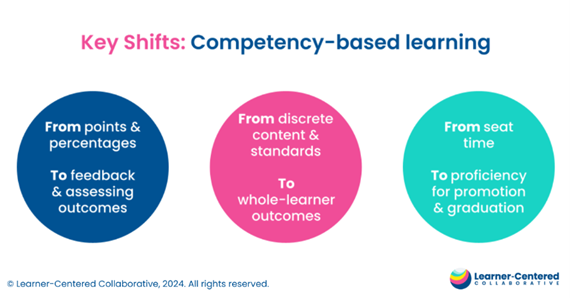
Many students approach their education with a narrow goal: study hard, ace the exam, and get an A in the class. It can feel disappointing when students seem to only care about what will be on the test or how they can bargain to bump up their grades, compared to learning and applying new knowledge to real-world experiences. Traditional grading systems tend to highlight performance above progress and prioritize short-term achievements over long-term growth. This approach not only confines deeper learning but also limits students’ understanding of what success in education truly means. Alternative grading methods that support critical thinking and meaningful reflection, like competency-based grading, can effectively promote student learning and enhance engagement.
Point-Chasing vs. Progress-Making: When Learning Takes the Lead
Traditional grading systems often:
Emphasize point accumulation rather than true comprehension
Include punitive consequences for errors without offering a chance to revisit/improve early coursework
Encourage a focus on “final” grades instead of continuous learning and growth
Traditional grading can also be inconsistent (“Traditional Grading Systems vs. Standards-Based Grading Systems” 2023). A student who only partially understands the content might pass with the application of extra credit or a grading curve, while another student who makes significant progress over time may still fail simply due to early struggles that cannot be counterbalanced. As educators in higher education, we recognize that learning isn’t always linear; so why do our grading practices assume it is?
Meeting Students Where They Are: What is Competency-Based Grading?
Competency-based grading promotes multiple opportunities for students to demonstrate proficiency in specific skills or learning outcomes instead of assigning a single score or high-stakes pass/fail grade to an assignment (Townsley and Schmid 2020). In addition to knowledge, this framework assesses expected student attitudes and skills in a progressive design that holds students accountable. It is important to define clear learning outcomes along with a constructive feedback process to guide future development toward mastery. Naturally, this approach shifts the focus from a final judgment to ongoing growth and improvement. If a student does not meet expectations for a certain skill, they aren’t faced with a permanent loss of points but instead could remediate and try again. (Hanson n.d.)
Putting Mastery into Motion: Strategies to Get Started
Transitioning from a traditional grading system can be a daunting task. Here are six helpful strategies to get started:
Start small. Unless the program is completing a comprehensive curriculum redesign, reworking your entire course all at once is not recommended and would likely overwhelm you and the students alike. Pilot competency-based grading by applying it to a single assignment or unit taught within the course.
Define clear learning outcomes. Identify the specific skills and competencies all students should be able to demonstrate. Ensure outcomes are specific, measurable, and student-centered. For example, “will demonstrate proper hand hygiene using aseptic technique” is preferable to “will understand proper hygiene practices”.
Use outcome-driven rubrics. Competency-based education closely aligns with backward design, so use the determined learning outcomes to build directly correlated rubrics. Focus on mastery, not points. Allow students to access the rubrics in advance. Describe what “competent” looks like by providing specific criteria with behavioral statements for different levels of achievement and provide routine formative feedback on how students can improve if they do not meet expectations. Some of the same assignments can be used, but the method of assessment changes.
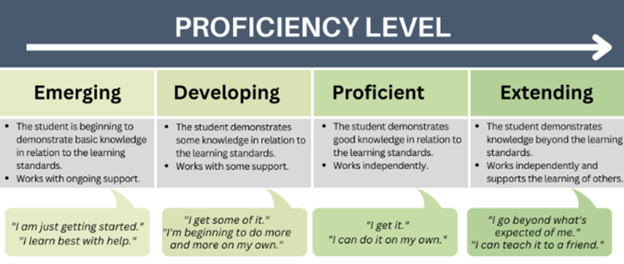
Use a 4-point scale (or similar) to assess student progress. Competency-based grading focuses on students demonstrating mastery of specific learning objectives rather than accumulating points. (“Extending Our View of Extending” 2022)
Plan for remediation activities. Incorporate opportunities for revision/resubmission attempts or re-demonstrations into the course schedule. For feasibility, set limits on the total number of resubmissions/re-demonstrations allowed or set a specific timeframe such as within one week of receiving faculty feedback.
Focus your feedback. Avoid commenting on everything and instead, try to highlight one or two priority areas to guide students toward targeted improvement and maintain a manageable workload. Offer timely individualized support and feedback based on each student’s needs. (Farah 2021; Townsley and Schmid 2020)
Troubleshooting the Transition
Challenges are expected to accompany any change but can usually be mitigated with some thoughtful planning. Although higher education seems to collectively be moving toward competency-based grading, some faculty may experience resistance from their faculty peers and learners. Being transparent by sharing the reason behind the change and how it will benefit students can help increase understanding and engagement from both parties. Providing real-world examples in this area and the powerful impact competency-based education has already had on learning is an influential bonus! Faculty may express valid concerns centered around the increased workload related to time and additional resource demands necessary for success. Since remediation takes time and effort from students and faculty alike, be sure to set clear limits on remediation assignments and the process for completion. Be the example you set for others by utilizing available resources and seeking out professional development opportunities to increase your knowledge. Several online tools, including assessment builders, feedback templates, and progress-tracking programs, can assist faculty in maintaining consistency and efficiency in competency-based grading implementation.
What You Gain When You Grade for Growth
After making the transition and offering a more personalized and reflective learning experience, students focus more attention on what they are learning as opposed to what grade they are getting. Their confidence and willingness to take academic risks increases while anxiety decreases without the fear of irreversible grade penalties taking up real estate in their mind. Instead of asking “How many points did I lose?”, students start asking “How can I improve or make that better?” – which is inspiring! Grading for growth isn’t about lowering academic standards. It’s about redefining meaningful learning and reshaping expectations. Minor changes can lead to major transformation. Take the first step and be prepared to marvel at what happens when students are empowered with the tools and encouragement to grow.
Lisa Pitzer, DNP, MSN, RN, CNE, CNE-cl, serves as an Assistant Professor of Nursing at Saint Francis Medical Center College of Nursing in Peoria, Illinois. In this role, she oversees the Nursing Resource Center Simulation Laboratory and provides instruction in fundamentals and medical-surgical nursing. Dr. Pitzer is a Certified Nurse Educator and Certified Academic Clinical Nurse Educator whose scholarly interests focus on simulation-based pedagogy, curricular innovation, and advancing student success in nursing education. She is an active member of the National League for Nursing, the American Association of Colleges of Nursing, and Sigma Theta Tau International Honor Society of Nursing.
Townsley, Matt and Deron Schmid. “Alternative Grading Practices: An Entry Point for Faculty in Competency-Based Education.” The Journal of Competency-Based Education 5, no. 3 (2020): 1–5. https://doi.org/10.1002/cbe2.1219.
The Knowledge Exchange Framework (KEF) is excellent in all kinds of ways.
It eschews the competitiveness of league tables. It provides a multi-faceted look at everything that is going on in the world of knowledge exchange. And it is nuanced in comparing similar kinds of institutions.
KEF is not overly bureaucratic and it is helpful for universities in understanding where they might improve their knowledge exchange work.
The KEF is the friend that would help you move house even if it isn’t the first one you would call for a gossip. It is nice, it is helpful, it is realistic on what is and isn’t working. In the very kindest way possible it is straightforward.
The problem is that the nuance of the KEF doesn’t make for sensational coverage. There isn’t an up and down narrative, there aren’t really winners and losers, and of course there is no funding attached. It is a mirror to the world of knowledge exchange that simply shows what is going on.
And if you dig deep enough the stories are good. Queen Mary University of London is doing a superb job at IP and commercialisation as well as public and community engagement all the while generating £760m of GVA. Birmingham Newman University is playing a significant role in local growth and regeneration through partnerships, placements, collaborations and consultancy. While the University of Plymouth has one of the most complete radar diagrams with a distinct focus on its maritime work.
Every single event about how the sector promotes its value discusses the need for universities to have a better story about their places, economic impact, and the tangible impact they make on people’s lives. The KEF is a single source of hundreds of such stories, but somehow it is not cutting through.
Perhaps, one of the reasons is because the consequences of doing badly (whatever badly means in the context of KEF) is very little. It is not the public shaming tool of the TEF, it is not the funding mechanism of REF, and it doesn’t attract very much media attention. It could have been so different. As Jo Johnson, then Science Minister, said at the launch of KEF
Our ambition is that the new KEF will become an important public indicator of how good a job universities are doing at discharging their third mission, just as the REF rewards excellence in research and the TEF rewards excellence in teaching and student outcomes.
The KEF does not reward anything, but it could (yes – its constituent parts are linked to HEIF but that isn’t quite the same thing.)
My favourite gains
Another model of funding distribution is possible. One of the major concerns about the REF is that it is becoming too complex. REF measures inputs and outputs, it looks at impact but not in the same way as KEF, and there is also the ongoing debate about People, Culture, and Environment, as a measure of research excellence.
To make the REF more manageable and make the KEF more meaningful perhaps it is time to add funding consequences to KEF and just shift the pressure a little bit. Previously, I have made the argument that one way of doing this would be to rationalise all of the funding mechanisms that bump into KEF:
As a starting point it would be sensible to rationalise HEIF allocations and KEF measurements. Without getting into the weeds at this stage a joint data set would likely draw from an enhanced HE-BCI survey, Innovate UK income, research income, journal data, and non-credit bearing course data from the Office for Students. The most straightforward way would be either to dispense with HEIF entirely and allocate the whole pot to KEF with a strengthened self-assessment element, like in REF, or use KEF as the sole basis for HEIF allocations. This would avoid both double counting funds and reduce administrative burden.
Given the government agenda around universities and economic contribution now might be the time to consider going further.
One measure could be to allocate a proper funding formula to KEF. In keeping with the spirit of KEF each university would still be organised into a cluster, ensuring like for like is being compared, and funding would be allocated on a formula basis depending on their contribution to each of the seven areas. Each area would not have to receive the same level of funding. Instead, the government could vary it from time to time depending on national priorities or alternatively universities could (in advance) make a pitch for their own growth priorities ensuring they devote energy to and are rewarded for where their strengths lie. This would also help with greater specialisation.
Simultaneously, the government could add in a more dynamic competition element that is tied to funding. For example, given the state of the economy it might make sense to provide greater reward for the institutions contributing to local growth and innovation. This then becomes a whole new kind of funding route with funding to support the things universities are good at and a gentle nudge toward the things government wish them to do.
Something changed
The trade-offs, and the arguments, would of course be significant. In a world of fiscal constraint one of the trade-offs would be reducing funding allocated through REF or through grants in order to fund KEF.
Reducing funding through REF may help to reduce some pressure on it but it isn’t clear that reducing the pot for exploratory research would be a net economic good in the long-term. Reducing grant funding would mean simply trading off one lever to direct research activity for another.
Simultaneously, adding in funding allocations to KEF would undoubtedly make it into a more high-pressure exercise which would then attract costs as universities looked to maximise their returns. The exercise would need to be carefully managed to, as far as possible, rely on public data and limited returns.
Nonetheless, it seems to be a wasted opportunity to have an exercise which is primed for measuring engagements between universities and wider society and economy, at precisely the time there seems to be a consensus this is a good idea, but with few levers to enhance this work. The benefit of looking at a funding allocation toward KEF could be a greater spread of providers rewarded for their work, greater focus on growth and social contribution, and greater attention on the work universities do alongside research and teaching.
The road to a new kind of KEF is long. However, if the debate about REF has taught us anything, it’s that trying to change a single exercise is exceptionally hard. If the current arrangements feel tired, and reform feels piecemeal, perhaps now is the time to look at the whole ecosystem and look at a system which prizes universities third mission as much as their other work.
Assistant Minister for Citizenship, Multicultural Affairs and International Education Julian Hill was promoted by Prime Minister Anthony Albanese after the May election. Picture: Jason Edwards
An international education framework will shape the “next phase of maturity” of the Albanese government’s vision of a quality-first, managed-growth tertiary education sector.
Please login below to view content or subscribe now.
Associate Professor Aaron Driver. Picture: Future Campus
Almost all employees at the University of New England (UNE) use AI each day to augment tasks, despite the wider sector slowly adopting the tech into its workforce.
Please login below to view content or subscribe now.
University of the Sunshine Coast pro-vice-chancellor (global and engagement) Alex Elibank-Murray and technology lead Associate Professor Rania Shibl share their experiences of partnerships with industry to enhance student experience in fast-changing fields.
Please login below to view content or subscribe now.