Federal policy challenges and a dwindling population of traditional-age students will make for a difficult year ahead for higher education, Moody’s Ratings predicted in a report issued last week.
The credit ratings agency predicted that revenue growth will trail behind previous years while expense growth will put a squeeze on operating margins, though strong investment returns should help buoy institutions’ financial position. Moody’s noted that federal policy challenges are also expected to “cause operational and governance stress” as the Trump administration continues to cut federal research funding and seeks to limit the number of international students attending U.S. colleges.
In March, just a few months after President Trump took office, the agency downgraded its outlook for the sector from stable to negative.
The report noted that the fall 2026 enrollment outlook is uncertain and that “fierce competition for students will increase as the market for students begins to shrink” due to the demographic cliff.
Overall revenue growth is projected to be 3.5 percent, down slightly from 3.8 percent in 2025. But anticipated growth will vary by institution type. Large, comprehensive, private universities are expected to see 4 percent revenue growth while their public peers will see 3.4 percent. Mid-sized private universities are expected to see the lowest revenue growth in the sector, at 2.3 percent.
Moody’s offered a bleak outlook for federal research funding.
“Federal funding for research grants and contracts will be stagnant, as a long period of continuous growth in federal research and development funding has leveled off and universities grapple with potential caps to indirect costs and ongoing grant cancellations,” Moody’s officials wrote. “While deep cuts to research are unlikely, we forecast modest declines in fiscals 2026 and 2027 to overall funding. These reductions will be concentrated in funding from the National Institutes of Health (NIH).”
Despite some concerns and a slowdown in the spring, spending from NIH and the National Science Foundation for fiscal year 2025 matched the previous year, Sciencereported last week, though both agencies awarded fewer new grants.
Other policy risks highlighted in the report include caps on graduate student loans; enforcement actions related to diversity, equity, and inclusion initiatives; the expansion of the endowment tax (which will only affect a limited number of wealthy institutions); regulatory changes to accreditation; and the elimination of TRIO and Hispanic Serving Institution grants.
The report also noted potential unknowns ahead, citing the Trump administration’s proposed Compact for Academic Excellence in Higher Education. While the proposal, which would provide preferential treatment for universities that adopt certain policy changes, has been rejected by most of the institutions it was offered to, the report noted that a revised proposal may come in 2026 following sector feedback.
Policy concerns highlighted in the report were not limited to the federal level.
“At the state level, some state legislatures are increasingly tying appropriations to specific policy and workforce development goals that can limit financial flexibility,” the report read. “State governments also maintain generally strong influence over public university governance through control of board membership. While state oversight is generally supportive of good governance and accountability, it can introduce political risk.”
Moody’s also pointed to various “idiosyncratic risks” ahead.
Those include potential cybersecurity breaches, severe weather, geopolitical unrest, legal issues, and growing costs for universities with Division I athletic programs, which the agency projected will spend more on sports facilities, compensation for players and buyouts for fired coaches.
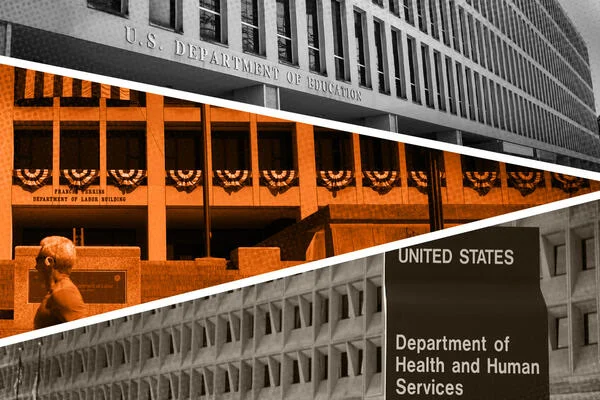
Dozens of the Education Department’s programs were scattered across Washington D.C. last week, but a few core components remain at the Lyndon B. Johnson Building on Maryland Avenue: the offices for civil rights, special education and federal student aid (FSA).
These three offices, particularly FSA, oversee some of the department’s most direct services to taxpayers—including the Pell grant, federal student loans, discrimination complaints and individualized education programs for students with disabilities—so moving them would likely be more complicated and controversial.
Since President Trump first took office, some of the more vocal pushback to his plan for shutting down the department has come from the parents, families and advocacy groups who depend on these offices. But other programs at ED, including those in the Office of Postsecondary Education, were outsourced to other agencies Tuesday through a series of six interagency agreements as part of a broader effort to diminish the department. And even though the three offices were spared in this latest round of dismantling, they may not be safe in the long run.
President Trump has talked about moving FSA to the Small Business Association and sending special education to the Department of Health and Human Services. Plus, as the Department of Justice has become increasingly involved in education issues, several experts anticipate OCR could be relocated there.
A senior department official told reporters last week that ED is “still exploring the best plan” for those offices and the programs they oversee.
In the meantime, here’s a rundown of what we know about Trump’s latest effort to dismantle ED.
Why is ED Doing This?
The Trump administration has been clear from the start: its “final mission” is to shut down the department. Officials touted this latest action as a key step toward that goal.
Even though ED is still going to oversee the programs, this move is a way for Trump officials to show they don’t need the department itself to ensure “the effective and uninterrupted delivery of services, programs, and benefits on which Americans rely,” as stated in Trump’s executive order.
don’t delete this space/it’s for the chart
Education Secretary Linda McMahon told department staff last week that it’s all part of an effort to “streamline bureaucracy” and “return power to the states.” But she acknowledged that the agreements are a temporary solution and that Congress will need to sign off eventually.
Further, she told staff that it’s important to explain to the American public that, in the long run, shutting down the department doesn’t mean getting rid of all its programs.
“So it is important how we message that,” McMahon said, citing survey data that showed the majority of Americans opposed shutting down the department but that changed when they learned the programs would remain. “Because honestly, folks, and I’m not trying to sugarcoat this, in the end of this the goal will be to have Congressional votes to close the Department of Education.”
This move comes after years of conservatives lambasting the department for being too woke. They, like McMahon, have said reducing the federal role in education will be a way to protect students’ and parents’ rights.
“Each of us in this room has a chance to be part of history,” McMahon said.
What’s Actually Changing?
Many higher education policy analysts say not much. Aside from outsourcing dozens of grant programs and adding extra steps to the award allocation process, little is expected to change (at least directly). Still, higher ed experts are divided on whether the funding system can survive such a transition.
Congress will still decide how much money is available and what it should go toward. And the Department of Education will still receive funding, post grant applications and set guidelines for the competitions. But now, rather than that money going directly from ED to institutions, it will be funneled through four other agencies: the Departments of Health, Interior, Labor, and State, which will then dole out the money to colleges and universities.
These agencies, particularly the Department of Labor and its Employment and Training Administration, will now be the ones to actually run the competition, decide who wins and allocate the funds. When colleges have questions about drawing down federal dollars or staying in compliance with department policies, it won’t be ED they contact.
don’t delete // space for chart
Why the Department of Labor?
Most of the higher education grant programs are heading to the Department of Labor, including TRIO, programs supporting historically Black colleges and universities and the Fund for the Improvement of Postsecondary Education.
This shift follows a growing push across the country to better align higher education with workforce demands. Some, including the Trump administration argue that it makes sense to move college grant programs to the Department of Labor, where the mission is improving “the welfare of the wage earners” and “advanc[ing] opportunities for profitable employment.”
Nineteen higher ed programs at moving to the Labor Department.
Photo by Andrew Harnik/Getty Images
One senior department official told reporters that if education is about creating the workers of tomorrow then “nowhere is it better housed than at the Department of Labor [which] thinks about this night and day.” In fact, the department has already integrated its Office of Career Technical and Adult Education with Labor and a handful of states have merged their departments of education and workforce. (During President Trump’s first term, officials briefly proposed merging Education and Labor, though that idea didn’t move forward.)
But critics fear that Labor won’t be able to effectively oversee grants for short-term, technical training programs, let alone broader initiatives focused on college access, equity and student success. Largely, they worry that the plan could sow confusion, weaken accountability measures and eventually lead to the consolidation of programs that are similar but not duplicative and intentionally separate.
Angela Hanks, a Democrat who previously served as ETA’s acting assistant secretary, said in a social media post that “it’s hard to describe” the “nonsensical” nature of what Trump and McMahon are doing and compared the transfer of power to “having a frog carry a camel on its back.”
Currently, Hanks said, the main youth-focused program at Labor serves about 130,000 students while TRIO alone serves about 870,000. The office would also take on even larger programs like Title I funding for low-income kids at K-12 schools, which serve up to 26 million students.
What’s in the Fine Print?
The interagency agreements do appear to maintain the operation of existing programs for now, but critics argue details both large and small in the text that add bureaucracy and confusion to the process rather than reducing it.
For example, while the seven grant programs for minority-serving institutions are still expected to continue, various parts are being sent off to different agencies. Four grants that involve Alaskan-, Native American–, Asian American– and Pacific Islander–serving institutions will be housed at the Department of Interior. Labor will oversee the remaining three, which support HBCUs as well as predominantly Black- and Hispanic-serving institutions.
Federal policy restricts some institutions from receiving multiple awards across different grant designations despite being eligible, but spreading out various MSI grants could still create complications. Historically, when deciding which grant program is the best fit or clarifying compliance standards, institutions could go to one office for the answers. Now, they may have to contact multiple different staffers.
Multiple higher ed experts have also expressed the concern that rather than cutting grant funds, which only Congress can do, the Trump administration may try to consolidate programs that are similar but not identical.
For example, CCAMPIS, a program focused on subsidizing child care for student parents, is being moved to HHS, which already oversees the Community Services and Child Care and Development Block Grants. These programs target a broader swath of low-income individuals and families, so college access advocates fear that if the funding pots are merged, it could pull grant dollars away from the student parents they were intended for.
Language describing such efforts to “integrate” programs appears in the announcement’s news release, as well as in the fact sheets and agreements. But legal experts say that’s what Congress was trying to avoid by creating ED, and they expect the agreements to face court challenges.
“The Department’s actions will expand federal involvement, rather than streamline it,” said Josie Eskow Skinner, a former general counsel attorney at ED who is now a partner at Sligo Law Group. “As a result of these agreements, states will now have to deal with the potentially conflicting or duplicative demands of multiple federal agencies with no central point of coordination or technical assistance.”
How Does It Align With Project 2025?
In a hearing held by the House Education and Workforce Committee the day after McMahon announced the interagency agreements, Rep. Suzanne Bonamici, an Oregon Democrat, said the Heritage Foundation’s Project 2025 “laid the groundwork for this illegal move of this program and shutting down the Department of Education.”
Project 2025, a sweeping 900-page manual, outlines a multitude of recommended changes across nearly all sectors of the federal government, including how to shut down ED. Following last week’s decision, the Trump administration has made several of the suggested changes including moving career education and postsecondary programs to Labor and transferring tribal college programs to the Interior Department. (Lindsey Burke, who now serves as ED’s deputy chief of staff for policy and programs, authored the manual’s education chapter.)
Still remaining on the Project 2025 to-do list include moving the Office for Civil Rights to the Department of Justice and giving Treasury control of federal student aid.
Trump has repeatedly denied involvement with the project, even though actions in the first few months closely follow the project’s recommendations.
But there’s one key way McMahon’s actions so far differ from Project 2025—she’s not making funding cuts or eliminating programs. Project 2025 recommends doing so through an act of Congress.
Join HEPI for a webinar on Thursday 11 December 2025 from 10am to 11am to discuss how universities can strengthen the student voice in governance to mark the launch of our upcoming report, Rethinking the Student Voice. Sign up now tohear our speakersexplore the key questions.
This blog was kindly authored by Dr John Cater, Chair of The Unite Foundation, and former Vice Chancellor of Edge Hill University.
It is the first blog in HEPI’s series with The Unite Foundation on how to best support care experienced and estranged students.
Today, the Unite Foundation launches its Blueprint for a #HomeAtUniversity, a guide to support universities in building a safe and stable home for care experienced and estranged students. Why?
Unite Students, our principal sponsor, operates with a clear awareness of commercial considerations and the expectations of its shareholders. Yet, from its earliest days, it has also been a business with a strong moral purpose: to provide homes for (mostly) young people in higher education as they transition from late teens into independent adulthood. Reflecting this commitment, more than a dozen years ago, Unite Students chose to fund a separate, free-standing charity – the Unite Foundation – to support care experienced and estranged students at university. A key part of this support has been the provision of free accommodation for a full three-year period, including vacations, for what is now almost 900 students.
But it is more than this. As our work develops, the Unite Foundation is committed to helping care experienced and estranged students build their own mutual support networks. To support this, we have been lobbying and working with policy-makers and higher education staff members to ensure that all of those who leave care at the age of eighteen do so with a rent guarantor, better enabling the transition into independent living and the labour market.
Progress is being made, but there remains much to do.
At present, there are some 17,000 care experienced and / or estranged students recorded as in higher education, but this figure would be three times higher if the progression rate from Level Three matched that of the host population.
To be clear, this is primarily a matter of opportunity, not ability.
Not surprisingly, even amongst those successful in accessing higher education, we see from OfS data that care experienced and estranged students also have lower continuation and completion rates, with withdrawals in the first year of study nearly double those of the student population as a whole.
But this understandably weaker performance can be turned around; independent research by Jisc for the Unite Foundation has shown that care leaver and estranged students in accommodation guaranteed and funded for three years by the Unite Foundation and its partners broadly matches the total population both in retention and in performance – eliminating the 13.4 percentage point discrepancy in the award of ‘good’ (1st and upper 2nd class honours) degrees. And, whilst the Unite Foundation scholarship is currently the only intervention evidenced at Office for Students’ Tier 2 level, the tide is flowing with us. We are seeing increased recognition of the importance that accommodation plays, both in addressing the basic needs of care experienced students as well as enabling greater progression and completion in higher education. This includes:
These all recognise the importance of accommodation in providing for a secure and stable experience.
We now have a duty to act to make this a reality.
The Blueprint
So what is our newly published Blueprint recommending?
Guaranteed safe and stable accommodation, year-round
A personal housing plan for each care experienced or estranged student
A record that regularly updates how care experienced and estranged students are progressing
The removal of the rent guarantor barrier
Optional early check-in and enhanced support on arrival and induction
Accommodation scholarships
We know that every university context is different and that each university will develop a safe and stable #HomeAtUniversity in a different way. As a result, for each of our recommended actions, we are building a bank of case studies, ‘how-to’ guides and other useful links to help institutions navigate their journey. Visit www.unitefoundation.org.uk/blueprint to find out more.
In supporting universities to build a #HomeAtUniversity, and commending the moral imperative that underpins this, we are also commending better recruitment – until we match sector norms, there are some 40,000 care leavers aged 18-21 that are not currently in higher education – better retention, better continuation, better degree results, better labour market outcomes. And for the University, retained tuition fee income, improved performance measures, including in your Access and Participation Plan, a contribution to your NECCL Quality Mark and Care Leaver Covenant Pledge and, most of all, the sense of providing the opportunity for those who have had fewer chances to fulfil their potential.
Where now?
We know that accommodation is a cross-institution issue, and, in the coming months, we will create Blueprint resources to support different stakeholders across universities, from finance directors, to student union reps, to widening access officers. From my experience as a long-standing Vice-Chancellor I know that this kind of roadmap, this Blueprint, is motivating in supporting complex institutions to move forward, changing lives and life chances. If you want to know more, do reach out to Kate Brown, Co-Director of the Unite Foundation.
by Sharif El-Mekki and Heather Kirkpatrick, The Hechinger Report November 25, 2025
By dismantling the Department of Education, the Trump administration claims to be returning control of education to the states.
And while states and local school districts are doing their best to understand the new environments they are working in, they have an opportunity amidst the chaos to focus on what is most essential and prioritize how education dollars are spent.
That means recruiting and retaining more well-prepared teachers with their new budget autonomy. Myriad factors affect student learning, but research shows that theprimary variable within a school’s control is the teacher. Other than parents, teachers are the adults who spend the most time with our children. Good teachers have been shown tosingularly motivate students.
And that’s why, amidst the chaos of our current education politics, there is great opportunity.
Until recently, recruiting, preparing and retaining enough great teachers has not been a priority in policy or funding choices. That has been a mistake, because attracting additional teachers and preparing them to be truly excellent is arguably the single biggest lever policymakers can use to demonstrate their commitment to high-quality public schools.
Related: Interested in innovations in higher education? Subscribe to our free biweekly higher education newsletter.
Great teachers, especially whole schools full of great teachers, do not just happen. We develop them through quality preparation and meaningful opportunities to practice the profession. When teachers are well-prepared, students thrive. Rigorous teacher preparation translates into stronger instruction, higher K-12 student achievement and a more resilient, equitable education system.
Teachers, like firefighters and police officers, are public servants. We rightly invest public dollars to train firefighters and police officers because their service is essential to the safety and well-being of our communities. Yet teachers — who shape our future through our kids — are too often asked to shoulder the costs of their own preparation.
Funding high-quality teacher preparation should be as nonnegotiable as funding other vital public service professions, especially because we face a teacher shortage — particularly in STEM fields, special education and rural and urban schools.
This is in no small part because many potential teaching candidates cannot afford the necessary education and credentialing.
Our current workforce systems were not built for today’s teaching candidates. They were not designed to support students who are financially vulnerable, part-time or first-generation, or those with caregiving responsibilities.
Yet the majority of tomorrow’s education workforce will likely come from these groups, all of whom have faced systemic barriers in accumulating the generational wealth needed to pursue degrees in higher education.
Some states have responded to this need by developing strong teacher development pathways. For example, California hascommitted hundreds of millions to growing the teacher pipeline through targeted residency programs and preparation initiatives, and its policies have enabled it to recruit and support more future teachers, including greater numbers of educators from historically underrepresented communities.
Pennsylvania hascreated more pathways into the education field with expedited credentialing and apprenticeships for high school students, and is investing millions of dollars in stipends for student teachers.
It has had success bringingmore Black candidates into the teaching profession, which will likely improve student outcomes: Black boys from low-income familieswho have a Black teacher in third through fifth grades are 18 percent more interested in pursuing college and 29 percent less likely to drop out of high school, researchshows. Pennsylvania also passed asenate billHYPERLINK “https://www.senatorhughes.com/big-win-in-harrisburg-creating-the-teacher-diversity-pipeline/”that paved the way for students who complete high school courses on education and teaching to be eligible for career and technical education credits.
At least half a dozen other states also provide various degrees of financial support for would-be teachers, includingstipends, tuition assistance and fee waivers for credentialing.
One example is aone-year teacher residency program model, which recruits and prepares people in historically underserved communities to earn a mster’s degree and teaching credential.
Opening new pathways to teaching by providing financial support has two dramatic effects. First, when teachers stay in education, these earnings compound over time as alumni become mentor teachers and administrators, earning more each year.
Second, these new pathways can also improve student achievement, thanks to policies that support new teachers in rigorous teacher educationprograms.
For example, the Teaching Academy model, which operates in several states, including Pennsylvania, New York and Michigan, attracts, cultivates and supports high school students on the path to becoming educators, giving schools and districts an opportunity to build robust education programs that serve as strong foundations for meaningful and long-term careers in education, and providing aspiring educators a head start to becoming great teachers. Participants in the program are eligible forcollege scholarships, professional coaching and retention bonuses.
California, Pennsylvania and these other states have begun this work. We hope to encourage other state lawmakers to seize the opportunities arising from recent federal changes and use their power to invest in what matters most to student achievement —teachers and teacher preparation pathways.
Sharif El-Mekki is founder & CEO of the Center for Black Educator Development in Pennsylvania. Heather Kirkpatrick is president and CEO Alder Graduate School in California.
This <a target=”_blank” href=”https://hechingerreport.org/opinion-funding-high-quality-teacher-preparation-programs-should-be-the-highest-priority-for-policymakers/”>article</a> first appeared on <a target=”_blank” href=”https://hechingerreport.org”>The Hechinger Report</a> and is republished here under a <a target=”_blank” href=”https://creativecommons.org/licenses/by-nc-nd/4.0/”>Creative Commons Attribution-NonCommercial-NoDerivatives 4.0 International License</a>.<img src=”https://i0.wp.com/hechingerreport.org/wp-content/uploads/2018/06/cropped-favicon.jpg?fit=150%2C150&ssl=1″ style=”width:1em;height:1em;margin-left:10px;”>
At first glance Liz Kendall may look like an odd choice for Secretary of State for Science, Innovation and Technology. She has never worked in science, she has rarely mentioned science directly in any intervention in her entire parliamentary career, and this is not a role with the kind of profile which will allow easy entry in any future leadership race.
Although covering a related brief has never been a disqualifying quality for any predecessors, her move from the Department for Work and Pensions following her failed welfare reforms felt more like a hasty exit than a tactical manoeuvre.
Her direct predecessor, Peter Kyle, often seemed more preoccupied with turning the UK into an “AI superpower” than he did the more tedious business of how the research ecosystem is governed and how it can be manipulated to fulfil the government’s ambitions. In truth, the business of research reform is not about more grand visions, frameworks, or strategies, but the rather grubbier work of deciding where to spend a finite amount of funding on an infinite amount of programmes.
The premise of her speech was that the growth of the UK economy is reliant on making the most of the UK’s R&D strengths. To get the most out of the UK’s R&D strengths Kendall believes the government can neither be too directive and must allow curiosity-driven research to prosper. It should also not be too permissive, funding must be directed toward government priorities particularly when it comes to translation and application.
The labelling of existing funds in new ways is in itself not a strategy for economic growth. Clearly, doing the same thing, with the same people, in the same ways, would lead to exactly the same outcomes with a different name. A bit like when international research became about making the UK a “science superpower” or when every ambitious research programme was a “moonshot” or relabelling every economic benefit produced through research as “levelling up”.
The boldest ambition of Kendall’s speech is perhaps the most understated. Kendall is committed to “doing fewer things better.” In a speech delivered at the same event by UKRI’s Chief Executive, Ian Chapman, this simple sentiment may have massive consequences.
Chapman’s view is that the UK lacks any of the natural resources advantages of its major international competitors. Instead, the UK maintains its competitiveness through the smart use of its knowledge assets even if he believes these are “undervalued and underappreciated.”
Chapman’s UKRI will be more interventionist. He will maintain curiosity driven research but warns that UKRI will not support the activities where it has no “right to win significant market-share in that sector,” and in backing spin-outs UKRI will be “much more selective.” The future being etched out here is one where there is much greater direction by government and UKRI toward funding that aligns with the industrial strategy and its mission for economic growth while maintaining a broad research base through curiosity driven research. Clearly, funding fewer programmes more generously means that some areas of research will receive less government funding.
The government’s approach to research is coalescing around its approach to governing more broadly. Like the industrial strategy the government is not picking winners as such but creating the conditions through which some desirable policy outcomes like economic growth have a better chance of emerging. It’s a mix of directing funding toward areas where the UK may secure an advantage like the doubling of R&D investment in critical technologies, addressing market failures through measures like the £4.5m for Women in Innovation Awards, and regulating to shape the market with the emphasis of economic growth and sustainability in UKRI’s new framework document.
Football’s coming home
In her speech Kendall likened the selective funding approaches to the selective sports funding of the Olympics. Alighting on a different sporting metaphor Chapman recalled the time a non-specific European team he supports (almost definitely Liverpool) came back from 3-0 down to win the European Cup as a reminder that through collective support researchers can achieve great things.
Perhaps, UK research has been more like the England men’s football team than it has the current Premier League champions. The right pieces in the wrong places with little sense of how the talent of individuals contribute to the success of the whole. In committing to funding fewer programmes better the government wants all its stars on the pitch in top condition. The challenge is that those who go from some funding to none are likely to feel their contributions to the team’s success have been overlooked
The Last Class continues to be shown across the country with people watching it in person, in community, and in theaters. It’s being shown on screens in 47 states and in Canada! By January we will be in all 50 states, thanks to you!
So, we’re excited to offer a one-time-only live online watchalong of the film — Monday, December 8 at 5:30 pm PT / 8:30 pm ET — with Prof. Reich joining us to speak before and after the film, and provide some commentary while it plays.
If you haven’t already seen The Last Class, the illuminating film about Robert Reich’s final semester of teaching (or even if you have), gather with friends for this special one-of-a-kind event!
Sign up for the watchalong now here, or by clicking this orange button:
We continue to prioritize in-person screenings, thrilled that the film is bringing people together. Later next year, we plan to offer the film online via “video on demand” and hopefully a streaming service.
Here’s what you need to know:
The watchalong is Monday, December 8 at 5:30 pm PT / 8:30 pm ET.
When you sign up you will be added to a special watchalong emaillist.
The morning of Monday, December 8, you will receive an email with a YouTube link.
At 5:30 pm PT/ 8:30 pm ET this link will go live with Prof. Reich, Heather, and Elliot.
Bob, Heather, and Elliot will offer some live commentary during the film (71 mins).
A short Q&A will follow.
When the event ends, the link for the film will no longer be watchable.
Signing up for the watchalong is FREE. But for those that can afford it, we will offer the opportunity to donate so that the film can be shared more widely.
Additional information: This is a LIVE event, so there will be no ability to pause or rewind the film while watching, sort of like television was in the olden days. If you sign up within an hour of the start time, your confirmation email will redirect you to the live YouTube link. The RSVP page will close 15 minutes after the film starts (5:45 pm PT), but the YouTube link will be live and accessible the whole time.
Please share this email or the signup link with others. There is no cap on total viewers and we hope to see as many of you as possible.
If you want us to answer a specific question about the film during the watchalong, you can start by adding your thoughts to the comments section below.
For many graduates in the creative industries, the question “what do you do?” has never had a simple answer.
A graduate might be holding down part-time work in a gallery, freelancing in digital design, tutoring on the side, stage managing in the summer, and selling their own work online. It’s a patchwork, a blend, a portfolio.
And yet when we measure their success through Graduate Outcomes, the official data collection exercise on graduate employment, they’re told to tick a single box. The reality of hybridity is flattened into the illusion of underemployment.
This is not a trivial issue. Policymakers rely on Graduate Outcomes (and reports based on the collection, like this year’s What do graduates do? out today) to make judgements about which subjects, courses and institutions are “succeeding” in employability terms. Yet in the creative arts, where portfolio working is both the norm and, in many ways, a strength, these categories misrepresent lived reality. The result is a story told back to government, employers and students in which creative graduates appear more precarious, less stable, and less successful than they often are.
Portfolio careers are current and they’re the future
The creative economy has been pointing towards this future for years. In What Do Graduates Do? , the creative arts overview that Elli Whitefoot and I authored, we found repeated evidence of graduates combining multiple sources of income, employment, freelancing, self-employment, often in ways that nurtured both security and creativity. The forthcoming 2025 overview by Burtin and Halfin reinforces the same point: hybridity is a structural feature, not a marginal quirk.
This hybridity is not inherently negative. Portfolio work can provide resilience, satisfaction and autonomy. As Sharland and Slesser argued in 2024, the future workforce needs creative thinkers who can move across boundaries. Portfolio careers develop precisely those capabilities. At the Advance HE Symposium earlier this year, I led a workshop on future-proofing creative graduates through AI, entrepreneurship and digital skills, all of which thrive in a portfolio setting.
Policy writers and senior leaders need to wake up quickly to realise that creative graduates are early adopters of what more of the labour market is beginning to look like. Academic staff, for example, increasingly combine research grants, teaching roles, consultancy and side projects. Tech and green industries are also normalising project-based work, short-term contracts and hybrid roles. In other words, the creative industries are not an outlier; they are a preview.
Why measurement matters
If the data system is misaligned with reality, the consequences are serious. Universities risk being penalised in performance frameworks like TEF or in media rankings if their graduates’ outcomes are deemed “poor.” Students risk being discouraged from pursuing creative courses because outcomes data suggests they are less employable. Policymakers risk designing interventions based on a caricature rather than the real graduate experience.
As Conroy and Firth highlight, employability education must learn from the present, and the present is messy, hybrid, and global. Yet our data systems remain stuck in a single-job paradigm.
The wider sector context is equally pressing. Graduate vacancies have collapsed from around 180,000 in 2023 to just 55,000 this year, according to Reed. Almost seven in ten undergraduates are now working during term-time just to keep going according to the latest student academic experience survey. And international graduates face higher unemployment rates, around 11 per cent, compared with 3 per cent for UK PGT graduates. The labour market picture is not just challenging, it is distorted when portfolio working is coded as failure.
Without intervention, this issue will persist. Not because creative graduates are difficult to track, but because our measurement tools are still based on outdated assumptions. It is therefore encouraging that HESA is taking steps to improve the Graduate Outcomes survey questionnaire through its cognitive testing exercise. I am currently working with HESA and Jisc to explore how we can better capture hybrid and portfolio careers. These efforts will help bridge the gap in understanding, but far more nuanced data is needed if we are to fully represent the complex and evolving realities of creative graduates.
So what should change?
Data collection needs to become more granular, capturing the combination of employment, self-employment, freelancing and further study rather than forcing graduates into a false hierarchy. Recognising hybridity would make Graduate Outcomes a more accurate reflection of real graduate lives.
One complicating factor is that students who do not complete a creative programme, for example, those who transfer courses or graduate from non-creative disciplines but sustain a creative portfolio, are even less likely to record or recognise that work within Graduate Outcomes. Because it isn’t linked to their area of study, they rarely see it as a legitimate graduate destination, and valuable evidence of creative contribution goes uncounted.
We also need to value more than salary. The “graduate premium” may be shrinking in monetary terms, but its non-monetary returns, civic participation, wellbeing, and resilience, are expanding. Research from Firth and Gratrick in BERA Bites identifies clear gaps in how universities support learners to develop and articulate these broader forms of employability.
Evidence must also become richer and longer-term. The work of Prospects Luminate, AGCAS CITG and the Policy and Evidence Centre on skills mismatches shows that snapshot surveys are no longer sufficient. Graduates’ careers unfold over years, not months, and portfolio working often evolves into sustainable, fulfilling trajectories.
Beyond the UK there are instructive examples of how others have rethought the link between learning and employability. None offers a perfect model for capturing the complexity of graduate working lives, but together they point the way. The Netherlands Validation of Prior Learning system recognises skills gained from outside formal education, Canada’s ELMLP platform connects education and earnings data to map real career pathways, and Denmarks register-based labour statistics explicitly track people holding more than one job. If the UK continues to rely on outdated, single-job measures, it risks being left behind.
Beyond the creative industries
This is not an argument limited to art schools or design faculties. The wider labour market is moving in the same direction. Skills-based hiring is on the rise, with employers in AI and green sectors already downplaying traditional degree requirements in favour of demonstrable competencies. Academic precarity is, in effect, a form of portfolio career. The idea of a single linear graduate role is increasingly a historical fiction.
In this context, the creative industries offer higher education a lesson. They have been navigating portfolio realities for decades. Rather than treating this as a problem to be solved, policymakers could treat it as a model to be understood.
The full beauty of graduate success
When we collapse a graduate’s career into a single tick-box, we erase the full beauty of what they are building. We turn resilience into precarity, adaptability into instability, creativity into failure.
If higher education is serious about employability, we need to update our measures to reflect reality. That means capturing hybridity, valuing breadth as well as salary, and designing policy that starts with the lived experiences of graduates rather than the convenience of categories.
Portfolio careers are not the exception. They are the shape of things to come. And higher education, if it is to remain relevant, must learn how to see them clearly.
Student carers – those juggling unpaid caring for family or friends, as well as student parents – can often feel invisible to their higher education provider. Their needs cut across multiple areas, including attendance, assessment, finances and mental health, with many (quietly) facing the complicated arithmetic of balancing time, money and labour.
It is not only UK-domiciled students that face these challenges. Little addressed in the academic literature, international student carers face challenges both similar to and distinct from those experienced by UK home students.
Similar and distinct
Student carers of all nationalities describe disrupted attendance when emergencies arise, lost concentration, as well as difficult trade-offs between paid work and academic engagement.
Uncertainty amplifies these pressures: some students simply choose not to disclose information about their caregiving because of fear of stigma; others do not trust staff to handle with care what is a personal and sensitive dimension of their lives; still others do not know where to seek support.
Identifying carers, therefore, is a necessary first step to providing support. However, it is not always straightforward – institutions commonly lack routine, reliable data on caring status, making targeted support ad hoc rather than systemic.
Yet international student carers face additional, distinctive barriers that make the same problems harder to resolve. Visa rules are an illustrative example. These restrict when dependants can accompany students and cap the number of hours most international students can work during term-time.
For instance, students on degree-level courses can generally work up to 20 hours per week, while those on foundation and pre-sessional English routes are limited to ten hours. Self-employment is not permitted, and internships or placements must be approved by the sponsor.
For those caring for family overseas, emotional load and logistical complexity are high: families divide care across borders, rely on remittances, and use digital tools to coordinate support at distance. For those caring for dependants present in the UK, the absence of recourse to public funds combined with the limitations set on working hours further intensify financial challenges. These are not abstract constraints – students I have spoken to flagged the restriction on working hours as a core stressor that diverted their attention from study.
Making it work
The UK policy context matters as it shapes what universities can and cannot do. While recent changes have tightened dependant rules for international students, universities still retain a significant degree of agency. These include proactive identification of student carers, flexible design of learning and assessment, targeted financial and career advice, as well as culturally sensitive outreach.
What does this look like in practice? First, it is time that institutions recognise that disclosure is not a single moment, but a process requiring trust. Rather than a “pray-and-hope” approach where students are asked to declare their caring status on a single form, universities should try to normalise conversations across the student lifecycle: in admissions, enrolment, welcome activities, academic tutorials and welfare checks. Staff training plays an important role here. Academic and professional services teams need concise guidance on how to spot signs of caring, how to ask sensitively, and how to go about making reasonable adjustments, be that through a Carer Passport or other means. This helps reduce the pressure on student carers to self-advocate.
Next, administrative burden needs to be reduced as much as possible – student carers are often acutely time poor. Tools like the just mentioned Carer Passport can help here by making informal agreements more formal and removing the need (and burden) of repeated disclosure.
Reasonable adjustments might include extended deadlines, alternative attendance arrangements, priority access to recorded lectures or seminar times. The design of such initiatives should not blindside carers, they should be involved in the development process. This co-production may also help tackle the trust deficit.
Third, financial and careers support must be tailored to visa realities. Generic money advice may be helpful, but is likely insufficient for international student carers’ needs, given the restrictions on working hours and access to benefits. One support route, if budgets allow, could be targeted bursaries, hardship funding that consider caring costs, and career advice that specifically addresses visa limits and limits of working hours. Partnerships with external funds and local community organisations could also be beneficial.
And finally, community can provide another support mechanism. Peer networks, carers’ groups and targeted social spaces allow student carers, particularly international ones who may be far from family networks, to share coping strategies and practical tips. These groups also provide powerful evidence to inform policy change within universities: student testimony should feed directly into institutional planning, not sit in a file.
The effort required
None of the above requires revolutionary or even radical institutional reinvention – though it does demand time and allocation of resources. That said, I would contend that the efforts are worth it for a couple of reasons.
The first is that supporting international student carers is simply a matter of fairness. Secondly, but of equal importance, universities that make study feasible for (international) student carers will stand a better chance of attracting and retaining talent that might otherwise never apply or withdraw.
The absence of international student carers means a loss of enriching perspectives in the classroom – and conversely their presence entails a stronger evidence base from which to build inclusive practice.
This audio is auto-generated. Please let us know if you have feedback.
Dive Brief:
Austin Independent School District’s board of trustees approved a plan Thursday evening to close 10 schools in the Texas district by the 2026-27 school year in the midst of ongoing enrollment declines.
The closures will impact nearly 3,800 students who will be reassigned to new schools in the district and the plan will cut 6,319 open seats, according to Austin ISD.
The move is expected to save the district $21.5 million, according to Austin ISD Superintendent Matias Segura during the Thursday board meeting. That amount more than covers the district’s budget deficit of $19.7 million this school year.
Dive Insight:
Segura said during the board meeting that developing and carrying out this school closure plan has been “a very difficult process.”
Most of the schools impacted by closures are at the elementary level, according to the district.
Segura also said he wished the district didn’t have to make this decision, “but the pressures are gargantuan.”
Austin ISD instructed 72,700 students across 113 schools in 2024-25.
When Austin ISD first announced it was considering school closures and consolidations earlier this year, Segura emphasized that the district lost over 10,000 students within the past decade, which led to a total of 21,000 empty seats.
While the district’s preliminary fall enrollment data has yet to be released by the Texas Education Agency, Austin ISD has said it’s likely that the number of students attending its schools will continue to drop.
In recent months the district considered several factors before proposing which schools should close, including size, condition, student enrollment and operational costs.
Elsewhere in Texas, Houston Independent School District laid off and reassigned hundreds of its teachers “to align” them “with student enrollment” as the district had previously projected a drop in enrollment by about 8,000 students this school year.
Houston ISD, which is under the leadership of the state, initially planned to announce a proposal this fall to close some schools during the 2026-27 school year. However, the district announced last week that Superintendent Mike Miles told principals he was no longer going to recommend any school consolidations to the board for 2026-27. There still may be a small number of consolidations needed in future years, the district said in a video update on Wednesday.
Texas’ districts student enrollment declines are part of a larger trend across states and districts nationwide, with the downward trajectory straining budgets tied to per pupil funding. Reasons for declining enrollment vary by state and district. An ongoing decline in birthrates has been a common factor while other education leaders have cited this year’s federal immigration crackdown and newer school choice policies for detracting students from attending their public schools.
This audio is auto-generated. Please let us know if you have feedback.
Dive Brief:
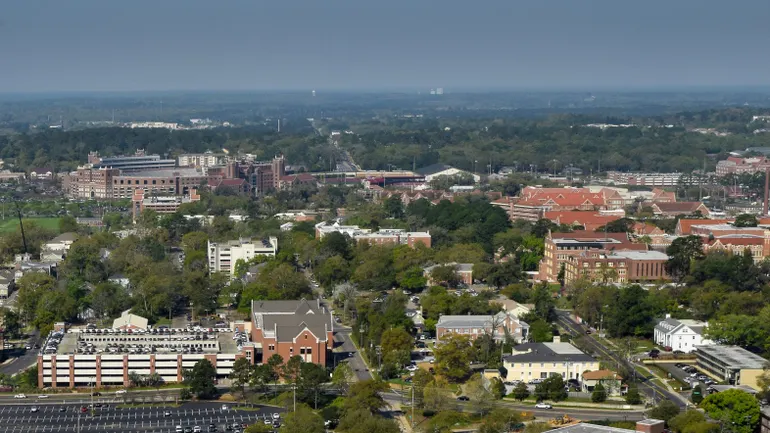
State University System of Florida institutionscollectively plan to terminate 18 academic programs and suspend another eight after reviewing how many degrees they award,Emily Sikes,the public system’s vice chancellor for academic and student affairs,said at a meeting last week with lawmakers.
In the review, SUSF officials identified 214 programs systemwide that they say are underperforming based on how many graduates they’ve produced in the past three years. System universities plan to continue at least 150 of those programs while consolidating another 30.
The large majority of underperforming programs, 68%, are in the liberal arts, education and science fields, including ethnic and cultural studies, foreign languages, philosophy and religious studies, and physical and social sciences programs.
Dive Insight:
As required by SUSF regulations, the 12-university system has conducted productivity reviews of degree programs every three to four years for roughly the past decade and a half, Sikes said.
Over that time, the system’s institutions have axed over 100 programs based on those reviews, she said. Most of those programs were cut in 2011, when the first such review yielded 492 programs deemed to be underperforming, leading university officials to terminate 73 of them.
In this year’s review, SUSF officials looked for bachelor’s programs graduating fewer than 30 students over the last three years,master’s programs awarding fewer than 20 degrees and doctorate programs with fewer than 10 graduates during that period.
Master’s programs made up 55% of the 214 that fell below graduate thresholds. But, Sikes added, there is a reason for that: SUSF universities often award master’s degrees to students who don’t complete doctoral programs so they have something to show for their time and effort.
Another 31% of the underperforming programs were bachelor’s, and 14% were doctorate.
For the eight programs set for suspension, the universities will stop enrolling students and “take a hard look” at either updating the curriculum to improve the program or deciding to wind it down, Sikes said.
While Florida’s university system has reviewed its program productivity for years, other states have begun mandating their public colleges trim their offerings along similar lines.
This summer, the Indiana Commission for Higher Education announced that six of the state’s public colleges planned to eliminate 75 programs, suspend another 101 and consolidate 232 others in response to a new state law.
In April, Indiana lawmakers introduced graduation quotas for public college programs, requiring a three-year average of at least 15 graduates for bachelor’s programs, 10 for associate degrees, seven for master’s programs and three for doctoral degrees. The quotas were part of a controversial last-minute bonanza of new higher ed policies that lawmakers baked into a budget bill this year.
The speed of the program cuts led to confusion and chaos for some Indiana faculty this summer. “Even tenured faculty are wondering, am I going to have a job in two months?” one faculty governance leader in Indiana told local media in June.
Ohio enacted a similar law this spring, called SB 1, which has led to dozens of proposed program cuts at the state’s public universities.