What are the limits of presidential power? How many
days has it been since President Trump’s TikTok ban moratorium went
into place? What is the state of the conservative legal movement?
And where did former FIRE president David French
go on his first date?
French and Sarah Isgur
of the popular legal podcast “Advisory
Opinions” join the show to answer these questions and
discuss the few free speech issues where they disagree with
FIRE.
Timestamps:
00:00 Intro
02:18 Origin story of “Advisory Opinions”
08:15 Disagreements between FIRE and AO
15:04 Why FIRE doesn’t editorialize on the content of
speech
24:27 Limits of presidential power
43:30 Free speech, the dread of tyrants
51:01 The prosecution of political figures
58:01 Cracker Barrel
01:00:09 State of the conservative legal movement
Enjoy listening to the podcast? Donate to FIRE today and
get exclusive content like member webinars, special episodes, and
more. If you became a FIRE Member
through a donation to FIRE at thefire.org and would like access to
Substack’s paid subscriber podcast feed, please email [email protected].
Welcome back to our fourth season. Time Flies. We’ve gone back to an audio only format ’cause apparently y’all are audio and bibliophiles and not videophiles, so we decided to chuck the extra editing burden. Other than that, though, it’s the same show. Bring you stories on higher education from all around the world. So, let’s get to it.
Today’s guest is Pedro Teixeira. He’s a higher education scholar from the University of Porto in Portugal, focusing to a large extent on the economics of education, but he also just finished a term as that country’s Secretary of State for higher education. That’s a position closer to a junior minister rather than a deputy minister, but it has elements of both.
I first met Pedro about 20 years ago, and I ran into him again this summer in Boston at the Center for International Higher Education’s biannual shindig, where he was giving the Philip Altbach lecture. And let me tell you, this was the best lecture I have listened to in a long time.
Two reasons for this. First, Pedro spoke about his experiences as a Secretary of State trying to negotiate a new funding formula with universities in that country. I won’t spoil the details, but one big highlight for me was that he was in the rare position of being a politician, trying to convince universities not to have a performance-based element in their funding formula. And second, he talked about the future of higher education in the face of possible falling returns to education due to wider adoption of artificial intelligence.
It was such a good talk, I knew my World of Higher Education podcast listeners would think it was great too. And while I couldn’t record it, I did do the next best thing. I invited Pedro to be our lead off guest for this season’s podcast. Let’s listen to what he has to say.
The World of Higher Education Podcast Episode 4.1 | From Funding Formulas to AI: Pedro Teixeira on Higher Education’s Next Challenges
Transcript
Alex Usher: Okay, so Pedro, you were an academic at CIPES (Centre of Research on Higher Education Policy) at the University of Porto, and you went from that to being a minister of state. That’s not an unfamiliar path in Portuguese higher education—Alberto Amal, I think, did something similar. But that move from academia to government, how big a shift was that? What did you learn, and what were you not expecting when becoming a minister of state?
Pedro Teixeira: I think you’re right in the sense that there are quite a few people who have done this, not only in Portugal but also in other parts of Europe, in different areas. And I think it’s always a bit of a challenge, because there’s this expectation that, since you’re an academic—and especially if you’re an expert on the topic—people expect you to have a solution for all the problems. And it’s not exactly like that.
At the same time, I think one is worried that what you do in office will be coherent with what you had advocated as an academic and with what you had written about specific topics. That’s challenging.
In some respects, I wasn’t very surprised by what I faced, because I had been involved in advisory roles and I knew people who had been in that kind of policy role. So I think I wasn’t—I mean, there were the things you expect, like the amount of work and the long days. But I never felt that was really the most difficult part. Of course, going through these things and living them is a little different than knowing them in the abstract.
But I think the main concern for me was the permanent pressures. You are always concerned with something, always worried either about the problems you have to deal with or the problems that will emerge.
What I was not so happy with was the lack of a sense of urgency in some of the actors, both on the government side and on the side of stakeholders in the sector. Because if you feel the problems are significant, you need to move forward—of course not rushing, but you do need to move forward.
On the positive side, I think the quality and dedication of staff was very important. Civil service is often criticized, but I found that very important. And the other thing that was also very important was the role of data and evidence, while at the same time you also need to develop arguments and persuade people about the points you’re trying to make.
Alex Usher: So what were those urgent issues? I know one of the big things you dealt with was a funding formula—and we’ll come to that later—but what, to your mind, were the other big urgent issues in Portuguese higher education at that time?
Pedro Teixeira: As we know, most people in their higher education system always think their system is very specific, very different from everyone else. But in fact, we know there are a lot of commonalities across education sectors.
In many ways, the challenges were the same ones that people describe as belonging to mass systems, or what others might call mature systems. One significant issue, of course, was the adverse demographic trends.
Another was the tension between, on the one hand, wanting to broaden access and enhance equity in the system, and on the other, facing enormous pressures toward stratification and elitism, with the system tending to reproduce socioeconomic inequalities.
There were also issues related to diversity versus isomorphism. On the one hand, people agree that in order for a mass system to function, it needs to be diverse. But there are pressures in the system that tend to push institutions toward mimicking or emulating the more prestigious ones.
The balance between missions is another challenge. This relates to that issue of isomorphism, because research has become so dominant in defining what higher education institutions do and how they see their mission.
And, of course, there were issues of cost and relevance: who should pay for higher education, and how can we persuade society to put more resources into a sector that, because it is a mass system, is already absorbing a significant amount of public funding?
Alex Usher: All right. On that point about demographics, I saw a story in one of the Portuguese newspapers this week saying that applications were down 15% this year. Is that a rapidly evolving situation? That seems like a lot.
Pedro Teixeira: No. There’s been a downward trend over the last three or four years, but because the number of applicants was bigger than the number of places, it didn’t disturb things much. Most of what we’re seeing now is actually due to the fact that in 2020, with the pandemic, exams for the conclusion of secondary education were suspended.
They were only reintroduced this year. That decision was taken at the end—actually by the government I was part of—at the beginning of 2023. But in order to give students and schools time to adjust, the change only applied to the students who were starting secondary education then. Those are the students who applied this year for higher education.
Basically, when you look at the data—we don’t yet have the numbers on how many graduated from secondary education—but the number of applicants is very much in line with what we had in 2019, which was the last year we had exams for the conclusion of secondary education.
And in fact, if you take into account the declining trend of the last three or four years, I would say it’s not a bad result. It actually means the system managed to compensate for those losses.
Alex Usher: Managed to absorb.
Pedro Teixeira: Yeah, yeah. But it’s also a signal for the sector in that respect.
Alex Usher: So let’s go back to the funding formula issue, because I know that was a big part of your tenure as Secretary of State for Higher Education. What was wrong with the old formula, and what did you hope to achieve with a new one?
Pedro Teixeira: There are two things. I think there were some issues with the old formula. It was designed in 2006, so 15 years had passed. The sector was very different by then—the situation, the challenges, everything had changed.
Also, like many formulas of that time, it was quite complicated, with many indicators and many categories for fields of study. That didn’t make the system very transparent. If you introduce too many indicators and variables, in many ways the message you want to convey is lost. A funding formula is supposed to be an instrument to steer the system.
But the larger problem was that this old formula hadn’t been applied for the last 12 years. When the Great Recession started around 2005–2010, the government suspended its application. Since then, the budgets of all institutions have evolved in the same way—same amount, same direction—regardless of their number of students or their performance.
So when we came into government in 2022, the situation was, in many cases, very unbalanced. Some institutions that had grown significantly didn’t have funding to match that growth. Others that had declined hadn’t seen any adjustments either.
The idea of having a new formula was preceded by an OECD review commissioned by the previous government, which we took over. Our idea was to design a simpler and more transparent formula that would form part of the funding system. In addition to the formula, we introduced funding contracts, focused mainly on institutions located in more peripheral regions of the country.
The idea was also to have a four-year period of gradual implementation of the new model and funding system. At the same time, this would correct some of the imbalances caused by not having applied any formula for 12 years.
Alex Usher: And how did institutions respond to those proposals? Were they on your side? Were there things they liked, and things they didn’t like? Universities don’t like change, after all.
Pedro Teixeira: On the other hand, I think a significant part of the sector was very keen to finally have some kind of formula—some set of rules that would be applied to the whole sector. Of course, some institutions were afraid that by reintroducing a formula, given their recent evolution, they might end up on the losing side.
But one of the key aspects of the process was that this was always seen as a formula, or a new system, that would be introduced within a pattern of growth in funding for the sector—not as a way of redistributing funds from some institutions to others. That made the process easier. It would have been much more difficult if we had been taking money from some institutions to give to others.
This required political commitment from the government, and it was very important to have the backing of the Prime Minister and the Minister of Finance. That meant we could correct imbalances without creating disruption for institutions.
I would say the main critical points were, first, the differentiation between sectors. We have a diverse education system with universities and vocational institutions. Then there was the question of whether to differentiate between regions. Our decision was to have a formula that applied in the same way to all regions, and then use funding contracts as additional resources targeted for strategic purposes—mainly for institutions located in more deprived or less populated regions.
Another point raised in discussions was fields of study. Everyone wants their own fields—or the ones in which they are strongest—to be better funded. But we really wanted to simplify the mechanism, and I think that helped.
Finally, there was the issue of performance indicators. We didn’t propose to introduce them from the start. Because we had gone so many years without a formula, we didn’t have consistent data, and moreover we wanted performance indicators to be developed collaboratively with institutions. The idea was that institutions themselves would decide which areas they wanted to focus on, which areas they wanted to contribute to, and therefore which indicators they wanted to be assessed by.
Because we decided that performance indicators would come in a second step, some institutions wanted them introduced earlier. That was also a point of discussion.
Alex Usher: I find that fascinating, because I don’t think I’ve ever heard of universities—maybe “demanding” is the wrong word—but being disappointed that there wasn’t enough performance-based funding in a system. Why do you think that was?
Pedro Teixeira: I’m not sure I was surprised, but it was significant that some institutions were pressing for it. In some ways, it could have been a strategic approach by certain institutions because they thought they would be on the winning side.
But I think it also has to do with the fact that this competitive, performance ethos has so deeply permeated higher education. At some point, I even said to some institutions: be careful what you wish for. Because in some cases, this could curtail your autonomy and increase the possibility of government interference in your ability to devise your own strategy.
Actually, I think that was, in many ways, the only real public criticism that came up. And that was quite interesting, to say the least.
Alex Usher: I want to shift the ground a little bit from Portugal to Boston. Two months ago, you gave the Philip B. Altbach Lecture at Boston College’s Center for International Higher Education. You devoted a lot of your talk to artificial intelligence and how it’s likely to change higher education. Could you tell us a little bit about your views on this?
Pedro Teixeira: That’s a fascinating topic. Of course, it’s an important issue for many people around the world and for many education institutions.
It’s fascinating because, to a certain extent, we’ve been nurtured by a view that has dominated over the last decades—that progress has been skill-biased. In previous waves of technological progress, the labor market tended to favor those with higher skills. Education was often seen as contributing to that, helping people be on the winning side, and the returns to more education and more skills seemed to confirm it.
My concern is that this wave may be slightly different. I’m not saying it will destroy a lot of jobs, but I am concerned that it may affect skilled and experienced workers in ways that previous waves did not.
We’ve already seen, and many of us have already experienced in our own jobs, that AI is performing certain tasks we no longer have to do. It’s also changing the way we perform other tasks, because it works as a collaborative tool.
So I think there is a serious possibility that AI—especially generative AI—will change the tasks associated with many jobs that today require a higher education degree. We need to pay attention to that and respond to it.
I worry that because education has been such a success story over the last half-century in many countries, there is a degree of complacency. People take a relaxed attitude, saying: “We’ve seen previous changes, and we didn’t experience so many problems, so we’ll be fine this time as well.”
I think there are quite a few aspects we need to change in our approach.
Alex Usher: And what might those areas be? Because I have to say, whenever I hear people discussing AI and radical change in the labor market, I think: that’s the stuff that’s actually hardest for higher education to deal with—or for any kind of education to deal with.
Education is often about teaching a corpus of knowledge, and there is no corpus of knowledge about AI. We’re all flailing blindly here—it’s totally new.
I think a lot about James Bessen and his book Learning by Doing. He was talking about how education worked during the Industrial Revolution in Manchester, and in other parts of England that were industrializing. Basically, when there’s a totally new technology, who are you going to get to teach new people? There’s no settled corpus of knowledge about it.
What do you think higher education institutions should be doing in that context?
Pedro Teixeira: One of the major concerns I have is that we tend to focus so much on the impact of digitalization and technology on science and technology fields. But we should be much more attentive to how it’s changing non-technical fields—health professions, the humanities, and the social sciences. These make up a very large part of higher education, and a very large part of the qualified workforce in many of our countries.
I think there are several things we need to do. The first is to rethink the balance between the different missions of higher education. At the moment, so much of the pressure and so many of the rewards are focused on missions other than education, teaching, and learning. We need to rebalance that. If institutions don’t commit themselves to education, it will be much more difficult for anything significant to happen at the basic level—among professors, programs, and so on.
If AI does affect more experienced workers, that means many people will need more support in terms of lifelong learning. They will need support in reskilling, and in some cases, in changing their professional trajectories. This is an area where many higher education institutions preach much more than they practice.
So I think we need to rethink how we allocate our efforts in education portfolios, moving more attention toward lifelong learning. So far, the focus has been overwhelmingly on initial training, which has been the core of the sector in many systems.
Finally, we would need to rethink—or at least introduce—changes at the level of initial training: the way we teach, the way we assess students, the way we train and retrain academic staff. None of this will be obvious. But in the end, it will all come down to how much institutions are committed to education as the prime mission of higher education.
Alex Usher: So even if AI is not a mass job killer—either now or in the future—we are seeing declining rates of return on higher education around the world. There’s massive graduate unemployment in China, quite a bit in India, and in the United States, for the first time, young graduates are less likely to be employed than non-graduates of the same age.
What does it mean for the higher education sector globally if rates of return decline? Are we heading for a smaller global higher education sector?
Pedro Teixeira: I tend to be cautious with some of these conclusions. We may be extracting too much from what could be transitional situations. We’ve seen in the past moments where there were problems adjusting supply and demand for graduates, and those didn’t necessarily lead to a permanent or structural situation where education became less relevant.
In countries like China and India, higher education systems have expanded tremendously in recent years. In some ways, what we’re seeing now is similar to what other countries experienced when they went through massive expansions and the economy couldn’t absorb the rising number of graduates as quickly as the education system was producing them.
It’s also not surprising that in many countries we’re seeing lower relevance of initial training—bachelor’s or first-cycle degrees. That’s a supply-and-demand issue. As systems move from elite to mass, that’s normal. But in many cases, we’ve seen a growing premium for postgraduate degrees and for continuing education. So I’d be cautious about concluding that education will become less and less relevant.
That said, I would repeat my concern about complacency. I don’t necessarily expect a decline in the sector, but perhaps a slower pattern of growth. That will be a challenge, because we’re coming out of decades of relentless growth in many education systems.
I also think we’ll see a broader scope in how we approach education and differences in higher education portfolios. It’s not that there aren’t many things we can do, but it will probably require us to rethink what we expect from professors and where institutions should focus their attention.
Alex Usher: Right. Pedro, thank you so much for being with us today.
Pedro Teixeira: My pleasure.
Alex Usher: And it just remains for me to thank our excellent producers, Sam Pufek and Tiffany MacLennan, and you, our listeners and readers, for joining us. If you have any questions or comments about today’s episode, or suggestions for future episodes, don’t hesitate to get in touch with us at [email protected].
Join us next week when our guest will be the University of Melbourne’s Andrew Norton. He’ll be talking about what lies ahead for Australian higher education under a second Labor government. Bye for now.
*This podcast transcript was generated using an AI transcription service with limited editing. Please forgive any errors made through this service.Please note, the views and opinions expressed in each episode are those of the individual contributors, and do not necessarily reflect those of the podcast host and team, or our sponsors.
A federal judge delivered a sweeping victory for academic freedom Wednesday, ruling that the Trump administration’s freeze of $2.2 billion in federal grant funds to Harvard University was illegal and unconstitutional.
U.S. District Judge Allison Burroughs determined that the administration imposed the funding freeze in retaliation for Harvard’s refusal to comply with demands that would have violated First Amendment protections, including ending diversity, equity, and inclusion programs and screening international students for ideological biases.
The ruling vacates all freezing orders affecting Harvard and bars Trump administration officials from enforcing those orders going forward.
The administration froze Harvard’s federal grants on April 14, just hours after the university rejected a list of ten demands. While only one demand related to antisemitism concerns, six others targeted ideological and pedagogical issues, including restrictions on who could lead, teach, and be admitted to the university, as well as what could be taught.
Judge Burroughs noted that the “swift termination” of funding occurred before the administration had learned anything substantive about antisemitism on campus or Harvard’s response efforts, suggesting the antisemitism concerns were “at best arbitrary and, at worst, pretextual.”
The funding freeze halted work on critical research projects spanning multiple fields, including studies on tuberculosis, NASA astronauts’ radiation exposure, Lou Gehrig’s disease, and a predictive model to help Veterans Administration emergency room physicians assess suicidal veterans. Burroughs ruled that none of these affected projects had any connection to antisemitism.
The American Association of University Professors (AAUP) celebrated the ruling as a landmark victory for higher education.
“This is a huge win for all of American higher education, for science, and for free and critical thought in this country,” said Dr. Todd Wolfson, National AAUP President. “Time and again, Trump has tried to restrict speech and cripple lifesaving university research. As today’s victory shows, Trump’s war on higher education is unconstitutional.”
Veena Dubal, National AAUP General Counsel, characterized the administration’s actions as “cynical and lawless, leveraging claims of discrimination to bludgeon critical research and debate.”
The Harvard AAUP chapter also praised the outcome. “This historic ruling underscores the importance of free inquiry, truth, and the rule of law in a democratic society,” said Kirsten Weld, AAUP-Harvard Faculty Chapter President.
Harvard President Dr. Alan Garber had previously stated that “no government — regardless of which party is in power — should dictate what private universities can teach, whom they can admit and hire, and which areas of study and inquiry they can pursue.”
The Education Department pushed back against the ruling through spokesperson Madi Biedermann, who criticized Burroughs as “the same Obama-appointed judge that ruled in favor of Harvard’s illegal race-based admissions practices” before the Supreme Court ultimately overturned those practices.
“Cleaning up our nation’s universities will be a long road, but worth it,” Biedermann said, suggesting the administration may continue its broader efforts to reshape higher education policies.
The ruling establishes important precedent for protecting academic freedom and research independence from political interference. Legal experts note that the decision reinforces constitutional limits on government retaliation against educational institutions for their speech, curriculum choices, and admissions policies.
AAUP leaders said that the victory demonstrates the importance of collective action in defending academic freedom, with faculty and administrators standing together against what they characterize as authoritarian overreach into university governance and research priorities.
Each year, Global Youth & News Media recognizes news organizations that are innovating in ways that include or help young readers and young journalists.
The France-based nonprofit, founded in 2018, seeks to reinforce connections between young people and news media.
This year, it held a global competition to find projects that could show how young people are helping news organizations survive in a world where too many of them are shutting down.
“I was looking at who was helping local news for a different project and noticed that nearly every journalism-related NGO I knew was doing something to help local news survive,” said Aralynn McMane, executive director at Global Youth & News Media. “And new nonprofits were emerging only for that purpose.”
The problem, though, was that she didn’t see much sharing of that knowledge. So one of the aims of the competition was to create cross-pollination — highlight projects that could be replicated by other organizations elsewhere and provide a forum for the sharing of lessons learned.
“This was a particularly satisfying competition for us because we found so many great win-win cases of meaningful youth-local news collaborations from all over the world with lessons for newsrooms most anywhere,” McMane said.
Can we fertilize the news deserts?
News Decoder is deeply concerned about the emergence of “news deserts”: localities that no longer have any news outlets as profit-driven corporate owners pull the plug on local newspapers.
A study in 2023 found that more news outlets in the UK were closing than were being launched. In Canada, between 2008 and 1 April 2025, more than 500 local news outlets closed in some 370 communities across the country, according to the Local News Map crowd-sourcing data initiative. Meanwhile, a report from the Brookings Institution found that in the United States in 2023, some 2.5 local news outlets folded every week.
That’s why I was honored to serve as one of 26 judges from 17 countries in the competition. While the entries taken as a whole gave me reason to hope, the winners left me inspired.
The competition found dozens of collaborations across six continents. They served to remind us of the vital public service mission local news organizations perform when they have the resources to do so.
Consider The Westsider in Melbourne, Australia. The staff there recognized the need for voters to be informed about the candidates in local elections and how they stand on important local issues. But to chase down dozens of candidates takes staffing that The Westsider doesn’t have. So with a small grant from a local journalism organization, the paper recruited 72 students from RMIT University to chase down every candidate running for a local office and ask them a series of questions. From that funding the paper produced a non-partisan voter’s guide.
Youth can tell important local stories.
Another standout was Phralipen of Croatia, who collaborated with Youth Roma Congress to produce stories about the Roma community through reporting, multilingual content and participatory journalism.
Then there was the Contra Costa Youth Journalism program in Northern California, a collaboration between the Contra Costa County Office of Education and Bay City News/Local News Matters, a news organization based in Berkeley, California. The program recruits and trains young people from underserved communities to be journalists and has published more than 70 stories from these areas as a result.
Katherine Rowlands, the founder and publisher of Bay City News and Local News Matters, said programs that bring young people into journalism are important.
“It is critical to train and inspire the next generation of journalists so we create a pipeline of future reporters to inform, question and make sense of the world,” Rowlands said. “It is also really important for us to include these younger voices in the journalism we do now so that we more accurately reflect our communities and bring their issues to the forefront.”
From Pakistan to Botswana, Bolivia to Tanzania, the competition identified news organizations finding ways to bring young people into their newsrooms to ensure that what young people do, and the issues that are important to them, are not left out of local news coverage. In the process, they are finding that for organizations that are short-staffed and short of funds, young people are a key resource that has been long overlooked.
The entries were graded on the impact on the local community and transferability — whether the project could easily be replicated by other news organizations in other places.
One thing we’ve learned at News Decoder — and which the results of this competition clearly showed — is that young people are eager to have their voices heard and see journalism as an effective way to do that.
News organizations can benefit from their passion and energy and also from the perspectives they bring.
The full list of winners
GOLD AWARD (most transferable, clearest on impact)
The Westsider with RMIT University (Australia)
Stamp Media (Belgium)
Phralipen and the local Roma community (Croatia)
The Greenline (Canada)
Časoris and Črni Vrh primary school (Slovenia)
Landshuter Zeitung/Mediengruppe Attenkofer podcast mies keck (Germany)
Bay City News Foundation with Contra Costa Youth Journalism (United States)
The Spotlight News with The University at Albany (United States)
SILVER AWARD (transferability and clarity of impact)
Back-to-school season arrives every year with a mixed bag of emotions for most educators, including anticipation and excitement, but also anxiety. The opportunity to catch up with friendly colleagues and the reward of helping students connect with material also comes with concern about how best to present and communicate that material in a way that resonates with a new classroom.
An annual challenge for K-12 educators is creating a syllabus that engages students and will be used throughout the year to mutual benefit rather than tucked in a folder and forgotten about. Today’s digital transformation can be a means for educators to create a more dynamic and engaging syllabus that meets students’ and parents’ needs.
While it can be overwhelming to think about learning any new education technology, the good news about a digital syllabi is that anyone who’s sent a digital calendar invite has already done most of the technical-learning legwork. The more prescient task will be learning the best practices that engage students and enable deeper learning throughout the year.
Step one: Ditch the PDFs and print-outs
Creating a syllabus that works begins with educators stepping into the shoes of their students. K-12 classrooms are full of students who are oriented around the digital world. Where textbooks and binders were once the tools of the trade for students, laptops and iPads have largely taken over. This creates an opportunity for teachers to create more dynamic syllabi via digital calendars, rather than printed off or static PDFs with lists of dates, deadlines, and relevant details that will surely change as the year progresses. In fact, many learning management systems (LMS) already have useful calendar features for this reason. Again, teachers need only know the best way to use them. The digital format offers flexibility and connectivity that old-school syllabi simply can’t hold a candle to.
Tips for creating an effective digital syllabus
Classroom settings and imperatives can vary wildly, and so can the preferences of individual educators. Optimization in this case is in the eye of the beholder, but consider a few ideas that may wind up on your personal best practices list for building out your digital syllabus every year around this time:
Make accessing the most up-to-date version of the syllabus as frictionless as possible for students and parents. Don’t attach your syllabus as a static PDF buried in an LMS. Instead, opt-in to the calendar most LMS platforms offer for the mutual benefit of educators, students, and parents. To maximize engagement and efficiency, teachers can create a subscription calendar in addition or as an alternative to the LMS calendar. Subscription calendars create a live link between the course syllabus and students’ and/or parents’ own digital calendar ecosystem, such as Google Calendar or Outlook. Instead of logging into the LMS to check upcoming dates, assignments, or project deadlines, the information becomes more accessible as it integrates into their monthly, weekly, and daily schedules, mitigating the chance of a missed assignment or even parent-teacher conference. Students and parents only have to opt-in to these calendars once at the beginning of the academic year, but any of the inevitable changes and updates to the syllabus throughout the year are reflected immediately in their personal calendar, making it simpler and easier for educators to ensure no important date is ever missed. While few LMS offer this option within the platform, subscription calendar links are like any hyperlink–easy to share in emails, LMS message notifications, and more.
Leverage the calendar description feature. Virtually every digital calendar provides an option to include a description. This is where educators should include assignment details, such as which textbook pages to read, links to videos or course material, grading rubrics, or more.
Color-code calendar invitations for visual information processors. Support different types of information processors in the classroom by taking the time to color-code the syllabus. For example, purple for project deadlines, red for big exams, yellow for homework assignment due dates. Consistency and routine are key, especially for younger students and busy parents. Color-coding, or even the consistent naming and formatting of events and deadlines, can make a large impact on students meeting deadlines.
Encourage further classroom engagement by integrating digital syllabus “Easter eggs.” Analog syllabi often contain Easter eggs that reward students who read it all the way through. Digital syllabi can include similar engaging surprises, but they’re easy to add throughout the year. Hide extra-credit opportunities in the description of an assignment deadline or add an invitation for last-minute office hours ahead of a big quiz or exam. It could be as simple as a prompt for students to draw their favorite animal at the bottom of an assignment for an extra credit point. If students are aware that these opportunities could creep up in the calendar, it keeps them engaged and perhaps strengthens the habit of checking their classroom syllabus.
While the start of the new school year is the perfect time to introduce a digital syllabus into the classroom, it’s important for educators to keep their own bandwidth and comfortability in mind. Commit to one semester with a digital syllabus and spend time learning the basic features and note how the classroom responds. From there, layer in more advanced features or functionality that helps students without being cumbersome to manage. Over time, educators will learn what works best for them, their students and parents, and the digital syllabus will be a classroom tool that simplifies classroom management and drives more engagement year-round.
Joep Leussink, AddEvent
Joep Leussink is the Head of Growth at AddEvent, a San Francisco-based platform that provides event and calendar marketing solutions. With a proven track record in driving growth for B2B SaaS companies from Series B to post-IPO, Joep leverages his expertise in demand generation and growth marketing to make AddEvent known and accessible to everyone.
Latest posts by eSchool Media Contributors (see all)
Northwestern University President Michael Schill announced his resignation Thursday, concluding a three-year tenure that brought record achievements alongside unprecedented federal challenges, including an ongoing $790 million funding freeze imposed by the Trump administration.
Schill, who became Northwestern’s 17th president in September 2022, cited the need for “new leadership to guide Northwestern into its next chapter” in his message to the campus community. His departure adds to a growing list of university presidents who have stepped down amid tensions with the federal government and campus controversies.
The resignation comes as Northwestern grapples with a federal funding freeze that began approximately four months ago, when the Trump administration halted $790 million in federal support. The action was reportedly connected to Title VI investigations, which examine discrimination in federally funded programs.
The frozen funds support what Northwestern describes as “innovative and life-saving research,” including development of the world’s smallest pacemaker and Alzheimer’s disease research. University officials warned that “this type of research is now at jeopardy” due to the funding suspension.
Northwestern joins other elite institutions facing similar federal actions, with universities like Cornell, Harvard, Columbia, and the University of Virginia experiencing funding freezes or leadership changes amid disputes over diversity programs and responses to Gaza-related campus protests.
During Schill’s tenure, Northwestern reached notable milestones while navigating significant challenges. Schill oversaw major academic initiatives, including the establishment of research centers like the Chan Zuckerberg Biohub Chicago and the NSF-Simons AI Institute for the Sky. He also championed free expression initiatives, launching the Litowitz Center for Enlightened Disagreement and establishing the President’s Advisory Committee on Free Expression and Institutional Speech.
However, his presidency was marked by significant controversies. Shortly after arriving on campus, Schill inherited a hazing scandal involving student-athletes, leading to new protective policies. More recently, he navigated campus tensions following the October 7, 2023, Hamas attack on Israel and subsequent protests.
Republican lawmakers, including House Education and Workforce Committee Chairwoman Elise Stefanik, had criticized Schill’s handling of campus antisemitism. Stefanik called his resignation “long overdue,” claiming he “failed to protect Jewish students” and “caved to the demands of the antisemitic, pro-Hamas mob.”
Northwestern officials counter that they have “fully cooperated with investigations by both the Department of Education and Congress” and implemented policy updates that resulted in a “dramatic decrease” in reported antisemitic incidents.
White House spokesperson Liz Huston said the Trump administration “looks forward to working with the new leadership, and we hope they seize this opportunity to Make Northwestern Great Again.”
The Northwestern Board of Trustees will name an interim president soon, with Schill continuing in his role until the transition is complete. Board Chair Peter Barris praised Schill’s leadership through “unparalleled challenges” and credited him with “lasting achievements that contribute robustly to Northwestern’s continued advancement.”
After stepping down, Schill plans to take a sabbatical before returning to teach and conduct research as a faculty member at Northwestern Pritzker School of Law.
Todd S. Nelson rose from academic beginnings—a B.S. from Brigham Young University and an MBA from the University of Nevada, Reno—to dominate the for-profit higher education space. Over nearly four decades, Nelson has amassed vast personal wealth leading University of Phoenix, Education Management Corporation (EDMC), and Perdoceo Education, even as each institution left embattled students and regulatory fallout in its wake.
Under Nelson’s leadership, Apollo Group (parent of University of Phoenix) mountains of revenue—$2.2 billion and over 300,000 students by 2006—coincided with a $41 million payday in that year alone. He resigned amid pressure over deceptive admissions practices.
Nelson’s move to EDMC in 2007 triggered another enrollment explosion—from 82,000 to over 160,000 students by 2011—propelled by federal student aid. Annual revenues reached nearly $2.8 billion, even as employees were alleged to be encouraged to enroll “anyone and everyone” to meet quotas. This aggressive focus on recruitment came with enormous personal compensation—approximately $13.1 million annually—while students endured mounting debt and dwindling outcomes.
A 2015 landmark settlement exposed EDMC’s alleged violations under the False Claims Act. The Justice Department accused the company of operating as a “recruitment mill,” illegally funneling federal funds through false certifications. EDMC agreed to pay $95.5 million in damages and forgive more than $102 million in student loans, affecting about 80,000 former students—averaging around $1,370 per student.Internal documents and court filings paint a grim picture: incentive-based pay for recruiters, breach of fiduciary duties, and a business model the trustee called “fundamentally fraudulent.”
Nelson’s chapter at Career Education Corporation (later Perdoceo) echoed the same script. Campuses shuttered, including Le Cordon Bleu and Sanford-Brown, left students stranded with untransferable credits—and yet Nelson’s compensation remained soaring. In 2019, he earned $7.4 million and held about $12 million in equity.
Whistleblower accounts from inside Perdoceo’s operations are damning. One former recruiter described pressure to enroll students “by any means necessary,” including coercive calls and emotional manipulation—often targeting vulnerable applicants with low income or lacking basic readiness. Despite those practices, Perdoceo reaped profits, with Nelson publicly touting revenue growth even as the Department of Education issued a formal notice in May 2021: thousands of borrower defense claims were pending against the company, alleging misrepresentations on credits, employment prospects, and accreditation.
Further regulatory investigations deepened through early 2022, focusing on recruiting, marketing, and financial aid practices—yet no executive accountability has followed.
The narrative that emerges is stark: Todd S. Nelson repeatedly led institutions to profit-fueled expansion using students’ federal dollars, while suppressing outcomes and exposing students to debilitating debt. Lawsuits, settlements, and investigative reports expose deceptive enrollment practices, false claims, and regulatory violations—but the executives—including Nelson—walk away with wealth and are rarely held personally responsible.
Sources
Wikipedia: Todd S. Nelson—compensation figures and resignation amid scrutiny.
TribLIVE: Allegations of “anyone and everyone” being enrolled to meet quotas under Nelson’s reign at EDMC.
Career Education Review: Insights on quality decline amid enrollment growth at EDMC and Perdoceo.
Department of Justice and NASFAA: 2015 EDMC settlement—$95.5 million damages, $102 million in loan forgiveness for hundreds of thousands.
Bankruptcy court filings: Allegations of fraudulent business model and incentive-driven recruitment.
Republic Report & USA Today: Whistleblower testimony on Perdoceo’s predatory recruiting tactics.
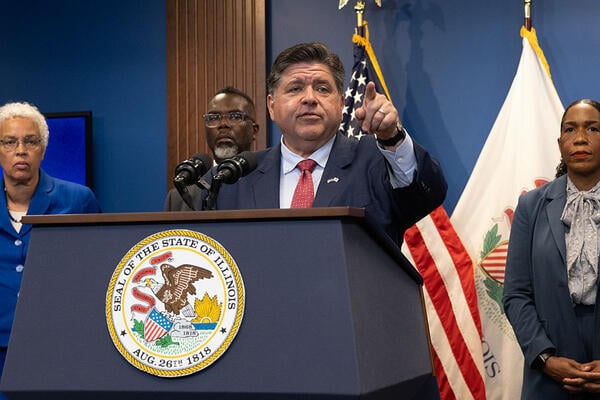
The U.S. Department of Justice sued Illinois on Tuesday over its policy to allow in-state tuition rates for undocumented students. Illinois is the fifth state targeted by such a lawsuit.
The DOJ filed a complaint in the Southern District of Illinois against the state, Gov. JB Pritzker, the state attorney general and boards of trustees of state universities. The complaint argues that it’s illegal to offer lower tuition rates to undocumented students if out-of-state citizens can’t also benefit.
Illinois passed a law in 2003 that grants in-state tuition to undocumented students who meet certain criteria. To qualify, students need to reside and attend high school in the state for three years, graduate from an Illinois high school, and sign an affidavit promising to apply to become a permanent resident as soon as possible. Pritzker then signed a bill into law last year that would loosen these criteria, starting in July 2026. Students will be able to pay in-state tuition rates if they meet one of two sets of requirements, including attending an Illinois high school for at least two years or a combination of high school and community college in the state for at least three years.
“Under federal law, schools cannot provide benefits to illegal aliens that they do not provide to U.S. citizens,” Attorney General Pamela Bondi said in a news release. “This Department of Justice has already filed multiple lawsuits to prevent U.S. students from being treated like second-class citizens—Illinois now joins the list of states where we are relentlessly fighting to vindicate federal law.”
In Texas and Oklahoma, the DOJ successfully ended in-state tuition for undocumented students; attorneys general in the two red states swiftly sided with the federal government’s legal challenges. Lawsuits against Kentucky and Minnesota are still ongoing.
This latest lawsuit will likely escalate the Trump administration’s battle with the state of Illinois. President Donald Trump has said he wants to send the National Guard to Chicago, a move that Pritzker forcefully pushed back on. Since Trump took office, Pritzker has been an outspoken critic.
April McLaren, deputy press secretary for the Illinois attorney general’s office, said officials are reviewing the case and have “no further comment.” Representatives at Eastern Illinois University, Northeastern Illinois University and Southern Illinois University, whose boards were among those named in the lawsuit, similarly told Inside Higher Ed that they can’t comment on pending litigation.
A spokesperson for the governor’s office defended the state’s policy and called the lawsuit “yet another blatant attempt to strip Illinoisans of resources and opportunities.”
“While the Trump Administration strips away federal resources from all Americans, Illinois provides consistent and inclusive educational pathways for all students—including immigrants and first-generation students—to access support and contribute to our state,” the spokesperson wrote in an email to Inside Higher Ed. “All Illinoisans deserve a fair shot to obtain an education, and our programs and policies are consistent with federal laws.”
The start of the new academic year has all eyes looking ahead. As we all know, prediction is very difficult, particularly about the future, as physicist Niels Bohr cheekily put it. At the same time, the future is already here—it is just unevenly distributed, as writer William Gibson said. In other words, while predictions are difficult, we have evidence of what we might expect. This essay applies those logics to higher education governance.
If predictions about the future are difficult, predictions about the future of governance might be outright foolish. Nevertheless, it is worth speculating and preparing.
On the Board’s Radar
Since higher education is in the headlines—if not the headline in the news—boards are likely to be more aware and informed of the issues and trends in higher education than they were in the past. This is particularly true because of federal action (I once would have said “policy,” but we are not seeing policy being made or even discussed) making news in The Wall Street Journal, The New York Times and other outlets read by trustees. Boards read about the Trump executive orders, drastic and devastating reductions in federal research funding, and attacks on institutional autonomy, as well as on specific universities: Harvard, Penn, Columbia, George Mason. The attacks on inclusion and student support for underrepresented groups (even the phrase “underrepresented groups”), DEI or its dismantling, and antisemitism are all subjects of conversations among trustees. Many are having parallel conversations in their corporate and law offices.
The demographic cliff—the long-foretold decline in the numbers of traditional-age students—has only gotten closer. Boards are worried about enrollment. There is concern over international students who are expected to seek alternatives other than the U.S.
For those universities with Division I athletics, there are complexities associated with name, image and likeness rights; the coaching hiring carousel; the transfer portal; and direct student athlete compensation. Boards like to be associated with winning.
Inflation over the past few years has made costs higher and budgets tighter. This means not only that there are fewer operational resources, but fewer dollars have gone into infrastructure. Therefore, deferred maintenance is growing and worrying many.
Then there is AI. As a Princeton University professor wrote in a recent article in The New Yorker, “The White House’s chain-jerk mugging feels, frankly, like a sideshow. The juggernaut actually barreling down the quad is A.I., coming at us with shocking speed.”
Underlining all of this is finances. For boards, particularly those at tuition-dependent institutions as well as those at research funding–dependent institutions, financial well-being is still king. It can and will continue to dominate board conversations. And in extreme cases, it risks becoming the only thing these boards care about.
Governance Crystal Ball
What does the above mean regarding the near-term future for governance? Before answering that question, I need to acknowledge the tremendous variation in boards and their composition as well as in the mission and geographic contexts in which they are operating. Governance generally is not governance locally. At the risk of overgeneralizing:
Expect more anxiety and energy in the board room. Board members feel the pressure on higher education and their institutions. Some boards will amplify that pressure and others will help dissipate it. Nevertheless, expect boards to be 1) well-read on higher education because it’s in the national headlines and 2) animated about what they are reading and how they are translating that into the institutional context.
Anticipate activist trustees and activist boards. In some instances, activism will be instigated by individual board members. Activist trustees as well as donors will likely continue to borrow approaches from their corporate brethren, driving agendas, trying to influence board composition, leveraging philanthropy and working behind the scenes. Ten years ago, the Harvard Business Review published an article about corporate activism. While there are clearly lessons to be learned and translated, the most striking part was that one named example of a corporate activist is now a familiar name to many in higher education after playing a key role in forcing the leadership change at Harvard University.
In other instances, the boards themselves (or at least a majority of members) may be activist. We have seen such examples in Florida, Idaho, Texas and Virginia. This is a different conversation altogether, when it is the full board as compared to individuals.
Increased questioning of the role if not value of faculty governance. Many more boards are likely to openly question the value of faculty governance and how it can be improved. They may have done this privately in the past, but don’t expect quiet conversations about faculty decision-making. Given the enrollment and other external pressures and the “entrenched problems” with higher education (real and perceived, thus the quotation marks), boards may increasingly ask what faculty governance has contributed and in extreme instances why it exists. Most do not have it, or anything substantially similar, in their professional lives.
A desire to consolidate power in the presidency. When the chips are down, corporate leaders may see their roles as being about making hard decisions, leading change and making unpopular choices to right their organizations. Captains of industry steer the ships under their charge. In higher education boardrooms, they then wonder why the college president—the institutional CEO—seems to have such comparatively little power in relation to their corporate peers. Often without realizing the differences in organizational contexts, they think that their approach to leadership, which typically works for them because they are successful (otherwise they most likely would not be trustees) should apply to colleges and universities. Presidents will be presented with corporate playbooks.
Increased focus on what is taught. The idea of viewpoint diversity will likely gain increased weight this year in board rooms. Boards may see it as part of their oversight role to ensure a range of ideas is being taught. This means that boards may be focusing on the curriculum and in some instances on the content of individual courses. This also means that boards may want to create new structures and centers, particularly those focused on conservative thought. This too requires much unpacking. Some boards will likely approach this issue with a genuine sense of inquiry and interest, with student learning at heart. Other boards—not so much.
Increased focus on how the curriculum is taught. Boards may be asking new and more pointed questions about how teaching and learning is conducted. The AI conversation may be driving some of this focus, but not all. Instructional costs, program enrollments, challenges of postgraduation employment and strained resources may also be behind their interest in curriculum.
More time on campus issues and on campus. I sense that all of these will mean that board members will be increasing their engagement with higher education trends and issues and also spending more time on or in close contact with the campus. I anticipate calls and texts to presidents and possibly others on campus will increase—first in response to the day’s headlines. And second because they will simply have more questions or solutions.
Near-Term Action Agenda for Campus Leaders
While the above are predictions, solid and careful preparation may suit presidents well. It’s best to take that umbrella rather than get caught out in the rain.
Make more time for governance. We all know the complexities and demands of presidential schedules. Yet, be prepared to increase the time dedicated to the board. Board engagement is something that for the most part only presidents can do. That will mean delegating other tasks and responsibilities to the team. One might consider extending the time of board meetings and creating ways to meet with the board between meetings (briefings and updates are good strategies). There will likely be more governance work to do; don’t let old meeting structures impede good governance.
Increase communication with board leaders and with the board as a whole. It’s better to shape the narrative of information rather than constantly respond. Increase regular communications; send out special messages. Be sure to spend more time helping the board understand what they need to know and appreciate.
Prepare the board for crises. We don’t know what will happen this year, but one can safely assume there will be crises of some magnitude across a range of institutions. Have a clear communications plan—know who speaks for the campus and who speaks for the board. Clarify the process for the board of how messages get crafted and vetted. Be clear on who will communicate to the individual trustees. Set expectations for which trustees will know what and when. Remind trustees of the importance of confidentiality. Finally, consider conducting tabletop activities in which the board can work through a crisis before one occurs.
Lay the foundation for discussions about faculty governance. Be prepared to explain and possibly defend the idea, its structures and the culture of shared decision-making. A simple point to remind the board is that making decisions and actually implementing them are two different things. While shared governance may result in slower decision-making processes, it expedites implementation and ensures a greater likelihood of success because faculty were involved and have a sense of ownership. Bring faculty into board conversations as experts and contributors. Demonstrate their value, which is more powerful than explaining their value.
Invest in board education. Board members will want to engage. So it’s best to prepare them to do so from the point of knowledge and information. If boards are going to question academic freedom, for example, get ahead of the inquiries.
Bolster the board chair. Chairs play exceedingly important roles in effective governance. These are volunteer roles in which they manage the board and its personalities; set governance expectations and run interference, when need be; facilitate meetings (again running interference when need be); and support the president and serve as a strategic thought partner.
Ensure you have a top-notch board professional. Just as chairs play pivotal roles, so do board professionals. Good ones are worth their weight in gold, as they work mostly behind the scenes on governance, but they also engage directly with trustees. And speaking of gold, do your best to ensure they have the resources needed to do their jobs.
Spend more time on the development of committee and board meeting agendas. Boards do much of their work through meetings. Make sure the president and the senior team are intentional about the content of the agendas, the anticipated outcomes of each meeting and the materials boards need to have informed discussions. This point should go without saying, but too many board agendas are rote, poorly framed and lack focus.
Finally, intentionally address issues of finances—again particularly for those tuition-dependent and research funding–dependent institutions. Boards will be concerned and want action: By addressing financial well-being intentionally, you can then get the board to focus on other strategic priorities without being distracted. Attending to trustee priorities is important, but ensuring a balanced board agenda will better play the long game needed right now.
Conclusion
This calendar year has been one like no other. A safe bet is to predict that this academic year will be no different. The ideas above may be alarmist. Many boards will continue to govern effectively and do so in ways consistent with past practices. For that be thankful. Other boards may take it upon themselves to look in the mirror and move forward in new, positive and more constructive ways. Be even more thankful for that. As one experienced general counsel said to me, “If trustees truly want to guide their institutions and make sure that their problem-solving and future planning decisions are the best they can be, they need to keep their governance blades sharp.”
Peter Eckel is a senior fellow and director of the Global Higher Education Management program at the University of Pennsylvania’s Graduate School of Education. He thanks two humans, a ChatGPT-generated novice board chair and a long-serving president for their feedback on the essay. The humans offered better insights, which could be due to the prompt writing or the caliber of the humans.