Author: admin

  • DOJ Sues Illinois Over In-State Tuition for Noncitizens

    DOJ Sues Illinois Over In-State Tuition for Noncitizens

    The U.S. Department of Justice sued Illinois on Tuesday over its policy to allow in-state tuition rates for undocumented students. Illinois is the fifth state targeted by such a lawsuit.

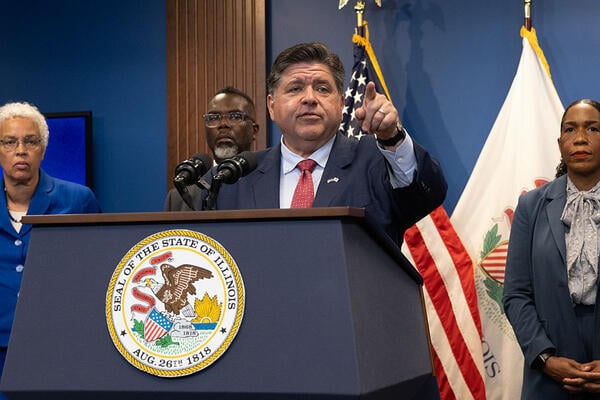
    The DOJ filed a complaint in the Southern District of Illinois against the state, Gov. JB Pritzker, the state attorney general and boards of trustees of state universities. The complaint argues that it’s illegal to offer lower tuition rates to undocumented students if out-of-state citizens can’t also benefit.

    Illinois passed a law in 2003 that grants in-state tuition to undocumented students who meet certain criteria. To qualify, students need to reside and attend high school in the state for three years, graduate from an Illinois high school, and sign an affidavit promising to apply to become a permanent resident as soon as possible. Pritzker then signed a bill into law last year that would loosen these criteria, starting in July 2026. Students will be able to pay in-state tuition rates if they meet one of two sets of requirements, including attending an Illinois high school for at least two years or a combination of high school and community college in the state for at least three years.

    “Under federal law, schools cannot provide benefits to illegal aliens that they do not provide to U.S. citizens,” Attorney General Pamela Bondi said in a news release. “This Department of Justice has already filed multiple lawsuits to prevent U.S. students from being treated like second-class citizens—Illinois now joins the list of states where we are relentlessly fighting to vindicate federal law.”

    In Texas and Oklahoma, the DOJ successfully ended in-state tuition for undocumented students; attorneys general in the two red states swiftly sided with the federal government’s legal challenges. Lawsuits against Kentucky and Minnesota are still ongoing.

    This latest lawsuit will likely escalate the Trump administration’s battle with the state of Illinois. President Donald Trump has said he wants to send the National Guard to Chicago, a move that Pritzker forcefully pushed back on. Since Trump took office, Pritzker has been an outspoken critic.

    April McLaren, deputy press secretary for the Illinois attorney general’s office, said officials are reviewing the case and have “no further comment.” Representatives at Eastern Illinois University, Northeastern Illinois University and Southern Illinois University, whose boards were among those named in the lawsuit, similarly told Inside Higher Ed that they can’t comment on pending litigation.

    A spokesperson for the governor’s office defended the state’s policy and called the lawsuit “yet another blatant attempt to strip Illinoisans of resources and opportunities.” 

    “While the Trump Administration strips away federal resources from all Americans, Illinois provides consistent and inclusive educational pathways for all students—including immigrants and first-generation students—to access support and contribute to our state,” the spokesperson wrote in an email to Inside Higher Ed. “All Illinoisans deserve a fair shot to obtain an education, and our programs and policies are consistent with federal laws.” 

    Source link

  • Trump Hijacks American Science and Scholarship (opinion)

    Trump Hijacks American Science and Scholarship (opinion)

    In a nearly daily barrage, President Trump and his MAGA forces heave fireballs at science and higher education. In the last weeks alone, the administration has been busy hurling a demand for a billion dollars from the University of California, Los Angeles; axing proven mRNA vaccine research; and demanding colleges submit expanded sex and race data from student applications, among other startling detonations. Amid the onslaught of these unsettling developments, it would be easy to miss the decisive change in conventional scientific and scholarly practice, one so vast that it threatens to overturn our revered American research achievements.

    On Aug. 7, Trump issued an executive order that uproots more than a half century of peer review, the standard practice for funding federal scientific grants. Taking approval out of the hands of experts, the new rule makes grant approval contingent upon the assent of political puppets who will approve only those awards the president finds acceptable.

    When I first came upon the order, I was immediately struck by how closely it resembles the unquestioned authority granted to senior political appointees in Soviet Russia and Communist China. As if dictated by commissars, the new rule requires officials to fund only those proposals that advance presidential priorities. Cast aside, peer review is now merely advisory.

    It took my breath away, suddenly realizing how completely threatening the new order is to the very foundations of the democratic practice of research and scholarship. As Victor Ambros, Nobel laureate and co-discoverer of microRNA, aptly put it, the order constitutes a “a shameless, full-bore Soviet-style politicization of American science that will smother what until now has been the world’s pre-eminent scientific enterprise.”

    Decades ago, long before I entered higher ed, I worked at a small publishing company in New York that translated Russian scientific and technical books and journals into English. As head of translations, I’d travel once or twice a year over many years to Moscow and Leningrad (now, once again, St. Petersburg) to negotiate with Soviet publishers to obtain rights to our English translations.

    One evening in the late ’60s, I invited a distinguished physicist to join me for dinner at a Ukrainian restaurant not far from my hotel in Moscow. We talked for some time openly over a bottle of vodka about new trends in physics, among other themes. As dinner drew to a close, he let his guard down and whispered a confidence. Mournfully, he told me he’d just received an invitation to deliver the keynote address at a scientific conference in England, but the Party official at his institution wouldn’t permit him to travel. I still remember the sense of being privy to a deep and troubling secret, reflected in the silence that followed and the palpable unease at the table. Shame enveloped him.

    Over a couple of dozen years of frequent trips to the Soviet Union and Communist China, I never met a single Party official. My day-to-day interactions were with administrators, editors, researchers and faculty who managed scientific publishing or were involved in teaching, research or other routine matters. The Party secretary remained hidden behind a curtain of power as in The Wizard of Oz.

    On one rare occasion in the 2010s, at a graduation ceremony at a local technical university in Beijing where I ran a couple of online master’s degrees in partnership with Stevens Institute of Technology, a student seated next to me in the audience drew near and identified a well-dressed official several rows ahead of us up front. “The Party secretary,” he revealed in hushed tones. I saw the officer later at the reception, standing by himself with a dour expression, as faculty, students and family members bustled about at a distance.

    One afternoon at that university in Beijing, I came upon a huddle of faculty in a corner office. As they chatted quietly among themselves in Mandarin, I took a seat at the far end of the room to give them privacy. But I could make out that a man in the group was disturbed, his face flushed and his eyes close to tears. Later, I approached one of the faculty members in the group with whom I’d grown close and asked what had troubled his colleague.

    “Oh,” he replied. “He often gets upset when the Party secretary objects to something we’re doing. He worries that our joint program is in jeopardy.”

    These personal reflections, based on my limited encounters with scientists and faculty, do not reveal the full extent of the control over scientific research exerted by Party functionaries. But if you compare the president’s new order with that of the Party’s authority in Soviet Russia and Communist China, you’ll find they’re all out of the same playbook.

    The order’s demand for political appointee approval takes decisions out of the hands of apolitical, merit-based peer-review panels. In the Soviet Union and China, adherence to the Party line and loyalty to the regime was (or is) paramount, with grant funds being used to advance ideological or state power. Similarly, the president’s order establishes a party line, stating that federal money cannot be used to support racial preferences, “denial … of the sex binary in humans,” illegal immigration or initiatives deemed “anti-American.”

    Relegating peer review is no small matter. It is at the center of modern science, distributing responsibility for evaluating scholarly work among experts, rather than holding this responsibility in the fist of authority. Even though peer review is under criticism today for its anonymity and potential biases, among other perplexing features, when researchers referee proposals, they nevertheless participate in a stirring example of collaborative democracy, maintaining the quality and integrity of scholarship—characteristics anathema to far-right ideologues.

    Of all the blasts shattering American science and higher education since the president assumed office in January, this executive order may be the most devastating. It is not one of Trump’s random shots at research and scholarship, but an assault on democracy itself.

    Source link

  • College Students With Kids More Likely to Lack Basic Needs

    College Students With Kids More Likely to Lack Basic Needs

    An estimated one in five college students is a parent, juggling coursework with caring for a dependent and, often, holding down a paid job. The competing priorities of working and caregiving students can put them at heightened risk for stopping out or quitting higher education, requiring additional investment from colleges and universities to help them succeed.

    A recent report from Trellis Strategies, using data from its Fall Financial Wellness Survey, identifies key trends among student caregivers, the role that time poverty can play in their academic pursuits and recommendations for additional supports.

    Who are caregiving students? Eighteen percent of respondents indicated they were a parent or guardian of a child, or approximately 9,500 of the survey’s 53,000-plus respondents. Seven percent of respondents said they were a caregiver to another individual, not a dependent, and 6 percent said they provided care for a child and another individual, identifying them as a double caregiver.

    Women were more likely to say they were caregivers (73 percent) than non-caregivers (55 percent), and more than twice as many Black students indicated they had caregiver (27 percent) or double-caregiver (34 percent) responsibilities, compared to non-caregivers (12 percent). Two-year students were more likely to report being a caregiver (25 percent) than their four-year peers (13 percent).

    A majority of non-caregivers in Trellis’s study were under 24 years old (84 percent), but caregivers were more evenly represented across age brackets from 18 to 45, representing a variety of identities and priorities. For example, younger caregivers were more likely to say they spent less than 20 hours per week providing care for their dependents, compared to their peers aged 25 to 40, but young parents were also more likely to say they missed at least one day of class due to a lack of childcare (32 percent), versus their peers in their early 30s (27 percent).

    Competing priorities: A high percentage of caregiving students are also employed; 71 percent worked while enrolled and 85 percent agreed it was important for them to support their family financially while in college. In addition to supporting themselves, caregiving students said they offered financial support to their spouse (34 percent), parents or guardians (24 percent), or other family members (22 percent).

    Affordability is a top barrier to student persistence nationally, but the cost of higher education can be an even greater burden for students with dependents. A 2014 report by EdTrust found that a student parent working a minimum-wage job would have to work 52 hours per week to afford both childcare and net tuition at a public four-year institution in the U.S.

    Caregiving students were also more likely to consider themselves a “worker that goes to school” (63 percent) than “a student who works” (37 percent)—the direct inverse of non-caregiving students, a majority of whom said they were a student who works (72 percent). Sixty-eight percent of student parents who were employed reported working more than 40 hours per week.

    “The time poverty caused by work and caregiving commitments can have a substantial impact on the student experience,” according to the report.

    The financial and personal pressures of being a caregiver can also impact a student’s academic performance; 24 percent of parenting students said they missed at least one day of class in the past semester due to a lack of childcare.

    Parenting students are more likely to report financial insecurity; 70 percent indicated they would have difficulty securing $500 in cash for an emergency expense. More than four in five caregivers said they’d run out of money at least once in the past year, and nearly 40 percent ran out of money eight or more times in the past year.

    Seventy-two percent of caregivers reported experiencing some level of basic needs insecurity, including food insecurity, housing insecurity or homelessness. Research from New America and the Princeton Eviction Lab published earlier this year found that student parents who faced eviction were 23 percent less likely to complete a bachelor’s degree and more likely to experience a lower quality of life.

    ED Cuts CCAMPIS for Some Colleges

    The Child Care Access Means Parents in School (CCAMPIS) program aims to provide campus-based childcare services for low-income student parents, but President Trump’s proposed 2026 budget would eliminate program funding.

    The Department of Education this week said it discontinued some grants for CCAMPIS because “they would have taught children about gender identity and racial justice and didn’t hire staff based on merit,” according to The Washington Post.

    Supporting success: Based on their findings, Trellis researchers believe institutional investment in caregivers could improve retention, academic success and degree completion for parenting students. They suggest collecting and disaggregating data on student enrollment to identify caregivers, including dependent-care expenses in students’ cost of attendance and providing priority registration for caregivers.

    Childcare remains a critical need, but institutions can help bridge the gap through on-campus facilities, sharing information about community childcare resources and referral services, and partnering with community organizations for support resources.

    We bet your colleague would like this article, too. Send them this link to subscribe to our newsletter on Student Success.

    Source link

  • Now Is the Time to Overhaul Federal Regulations

    Now Is the Time to Overhaul Federal Regulations

    Photo illustration by Justin Morrison/Inside Higher Ed | kyoshino/iStock/Getty Images

    The rise of generative artificial intelligence and the Trump administration’s deregulation push make now the right time to streamline and reduce federal scientific research regulations, argues a report the National Academies of Sciences, Engineering and Medicine published Wednesday.

    “At a time when the scientific enterprise is under a lot of pressure—we don’t want to pretend that’s not true—this is also a wonderful opportunity to streamline the workload not only of researchers, but of institutions and other individuals,” Alan Leshner, chair of the NASEM committee that produced the report, said at a public briefing. “We would be foolish not to take advantage of the policy climate that favors deregulation and unburdening our scientific enterprise from unnecessary, duplicative and uncoordinated rules and regulations.”

    The 125-page report, entitled “Simplifying Research Regulations and Policies: Optimizing American Science,” lays out a three-pronged framework to guide a cohesive national strategy toward implementing more economical regulations. Those prongs include harmonizing regulations and requirements across federal and state agencies and research institutions, ensuring that regulatory requirements match the risk related to the project, and using technology to make regulation-compliance processes more efficient.

    From there, the report offers a menu of 53 potential options across all aspects of research compliance, including research security, misconduct and grant management, designed for interagency adoption.

    It’s all part of an effort by the National Academies to seize this political moment and accomplish their long-standing goal of freeing scientists from the weight of often redundant, expensive and excessive regulations.

    Currently, researchers whose work is supported by grants from agencies such as the National Science Foundation, the National Institutes of Health and the Department of Defense spend more than 40 percent of their research time complying with each agency’s varying administrative and regulatory requirements, “wasting intellectual capacity and taxpayer dollars,” according to Federal Demonstration Partnership data cited in the report.

    “There’s no question that regulation is necessary to ensure that the science we produce is of the best quality, the highest integrity and is conducted with full accountability and transparency to the American public,” said Leshner, who has previously held leadership positions at the NIH and the NSF. “Having said that, the current regulatory environment has grown to a point that it’s actually hampering innovation.”

    Despite previous calls by the NASEM and other groups to reduce regulatory burdens on researchers, few of those plans have come to fruition. Instead, data from the Council on Government Relations (COGR) shows that 62 percent of the regulations and policies federal agencies adopted or changed since 1991 were issued from 2014 to 2024.

    For example, both the U.S. Department of Agriculture and the Office of Laboratory Animal Welfare regulate animal research, but in some cases, their requirements conflict.

    When a research project is subject to both agencies’ requirements, it can create “confusion, redundancy, and extra work,” the report says. “The natural result is for academic institutions to create additional requirements of their own to manage the complexity and risk of noncompliance stemming from regulatory complexity.”

    ‘An Urgency to This’

    Complying with inconsistent or redundant regulations also costs a lot for universities, which are now facing significant cuts to federal research funding. In 2022, COGR estimated that institutions receiving more than $100 million in federal research funds spent an estimated $1.4 million a year to comply with the NIH’s Data Sharing and Management Policy while smaller institutions spend just over $1 million a year.

    The burden of regulatory compliance can also further exacerbate research inequities.

    “Typically, the more underresourced institutions—regional state institutions, minority-serving institutions, HBCUs and tribal colleges—may not have as large of a research infrastructure or staff to handle some of the regulations that filter down from the federal level,” said Emanuel Waddell, committee member and chair of the nanoengineering department at North Carolina A&T State University. “When the infrastructure isn’t there to answer questions, that burden falls on the researchers themselves to seek out answers, and it takes away time from pursuing intellectual curiosity.”

    And with looming cuts to federal research budgets, including mass layoffs at the federal agencies that oversee research, members of the committee believe now is the time to reduce the cost of regulatory compliance if the United States wants to remain a competitive producer of scientific innovation.

    “There’s an urgency to this. We really have to get this done. Think about how constrained budgets are—we have $37 trillion debt in this country and it continues to grow,” said Kelvin Droegemeier, a member of the committee and a professor and special adviser to the chancellor for science and policy at the University of Illinois at Urbana-Champaign. “With relatively little cost, we can unlock a lot of money that is now being directed toward things which are not helpful and put that money toward doing research.”

    But making it happen will be up to the federal government.

    Matt Owens, president of COGR, urged federal policymakers in a statement Wednesday afternoon “to act this fall on the most actionable and timely of the options.”

    “If the administration and Congress are rightly interested in reducing regulatory burden and to promote scientific advancements, then they now have a clear roadmap for doing so efficiently and effectively,” he wrote. “What remains to be seen is whether federal policymakers will get behind the wheel, step on the gas, and accelerate through the finish line to fully deliver.”

    Source link

  • How the manufactured narrative of “failure” is distracting us from resolving the systemic problems holding back the study of Modern Languages – Part One.

    How the manufactured narrative of “failure” is distracting us from resolving the systemic problems holding back the study of Modern Languages – Part One.

    Author:
    Vincent Everett

    Published:

    This post was kindly written by Vincent Everett, who is head of languages in a comprehensive school and sixth form in Norfolk. He blogs as The Nice Man Who Teaches Languages at https://whoteacheslanguages.blogspot.com.

    We have to bring an end to the Culture Wars in “Modern Foreign Languages” in England. Since 2019 we have been convulsed in an internecine political fight over whether our subject is about Communication or Intellectual Conceptualisation. Of course, it’s both. The same goes for Literature, Linguistics, Content Integrated Language Learning (CLIL), and Culture. Likewise, we can encompass transactional travel language, personal expression, professional proficiency, creative or academic language. Teachers have all of these on their radar, and make decisions on how to select and integrate them on a daily basis.

    Our subject benefits from the richness of all these ingredients, and to privilege one or to exclude others, is to make us all the poorer. Teachers work in the rich and messy overlap between Grammar and Communication, engaging with pupils at every stage through their encounters with and progression through another language.

    Meanwhile, we have allowed the culture wars to allow us to be distracted from the very real problems facing our subject. The first is unfair grading at GCSE. The allocation of grades in languages is harsher than in their other subjects. Above a grade 3, this widens to a whole grade’s difference compared to a subject like History.

    The narrative that it is harder to succeed in languages is accurate. Not because of the difficulty of the course content or the exams, but because of the determination of the allocation of grades. It’s not accurate to say that this is a reflection of pupils’ progress or the quality of teaching compared to other subjects. That calibration has not been made. In fact, grades are not calibrated one subject to another. The only calibration that is made, is to perpetuate grading within the subject year on year.

    This was most famously set up in advance when we moved to a new GCSE in 2018. The unfair grading of the old GCSE was carefully and deliberately transferred across to the new GCSE. So pupils taking the new course and the new exam, even though it was proposed to be a better course and a better exam, had no chance of showing they could get better grades. Furthermore, where under the old A-G grading system, the difference between languages and other subjects had been around half a grade, the new 9-1 grading meant that the difference in the key area of grades 4 and above, was now stretched to a whole grade, because of the way the old grades were mapped onto the new ones.

    The lower grades given out in languages are a strong disincentive for take up at GCSE. There is the accurate narrative that pupils will score a lower grade if they pick languages, which acts as a deterrent not only for pupils, but also for schools. One way to score higher in league tables is to have fewer pupils taking MFL. There is also the inaccurate narrative that this is a reflection of the pupils’ own ability, the nation’s ability, or the quality of teaching. The allocation of grades is a historical anomaly perpetuated year-on-year, not a reflection of actual achievement.

    This is the biggest issue facing modern languages. It would also be the easiest to fix. Grade boundaries in other subjects are used in order to bring standards in to line. If an exam is too easy  or too hard, and many pupils score a high mark or a low mark, the grade boundaries are used to make sure the correct number of pupils get the grade. Except, that is, in modern languages, where the thresholds are used to make sure that grades are out of line with other subjects. Imagine if languages grades were allocated in line with other subjects, would there be a clamour of voices insisting they should be made more difficult?

    There is a very real danger of misinterpreting this manufactured narrative of “failure” in languages. It features in every report or proposal, but often instead of identifying it as an artificial anomaly, it is used to diagnose a deficit and prescribe a solution. Often this is a solution taken from the culture wars, ignoring the fact that schools and teachers are already expertly blending and balancing the elements of our subject.

    Unfair grading at GCSE is the greatest of our problems, and the easiest to sort out. In Part 2, I shall look at the trickier question of what happens post-16.

    Source link

  • Landmark free preschool program reaches too few kids

    Landmark free preschool program reaches too few kids

    In the 1980s, a public interest law group sued the state of New Jersey, saying that the way it funded education left its low-income, urban school districts at a disadvantage compared to wealthier, suburban districts.

    The lawsuit, Abbott v. Burke, yielded a number of different decisions, including a requirement that the state offer free, full-day, high-quality preschool for children ages 3 and 4 in 31 school districts.

    This new school year marks the 26th since the program was created. Researchers have found that children who attend the preschool program are better prepared for school later on, but enrollment has been dwindling. And with New Jersey leaders now focused on bringing preschool to all districts, supporters worry that the early learning program focused on children in low-income areas may not get the attention it needs.

    Park perk for kids

    Did you know every fourth grader and their family can get free admission to national parks, monuments and forests? The Sierra Club’s Outdoors for All program launched in 2015 and offers free passes each school year. Vouchers for students can be downloaded through the program’s official website. 

    This story about free preschool was produced by The Hechinger Report, a nonprofit, independent news organization focused on inequality and innovation in education. Sign up for the early childhood  newsletter.

    The Hechinger Report provides in-depth, fact-based, unbiased reporting on education that is free to all readers. But that doesn’t mean it’s free to produce. Our work keeps educators and the public informed about pressing issues at schools and on campuses throughout the country. We tell the whole story, even when the details are inconvenient. Help us keep doing that.

    Join us today.

    Source link

  • Nation’s Report Card at risk, researchers say

    Nation’s Report Card at risk, researchers say

    This story was reported by and originally published by APM Reports in connection with its podcast Sold a Story: How Teach Kids to Read Went So Wrong.

    When voters elected Donald Trump in November, most people who worked at the U.S. Department of Education weren’t scared for their jobs. They had been through a Trump presidency before, and they hadn’t seen big changes in their department then. They saw their work as essential, mandated by law, nonpartisan and, as a result, insulated from politics.

    Then, in early February, the Department of Government Efficiency showed up. Led at the time by billionaire CEO Elon Musk, and known by the cheeky acronym DOGE, it gutted the Department of Education’s Institute of Education Sciences, posting on X that the effort would ferret out “waste, fraud and abuse.”

    A post from the Department of Government Efficiency.

    When it was done, DOGE had cut approximately $900 million in research contracts and more than 90 percent of the institute’s workforce had been laid off. (The current value of the contracts was closer to $820 million, data compiled by APM Reports shows, and the actual savings to the government was substantially less, because in some cases large amounts of money had been spent already.)

    Among staff cast aside were those who worked on the National Assessment of Educational Progress — also known as the Nation’s Report Card — which is one of the few federal education initiatives the Trump administration says it sees as valuable and wants to preserve.

    The assessment is a series of tests administered nearly every year to a national sample of more than 10,000 students in grades 4, 8 and 12. The tests regularly measure what students across the country know in reading, math and other subjects. They allow the government to track how well America’s students are learning overall. Researchers can also combine the national data with the results of tests administered by states to draw comparisons between schools and districts in different states.

    The assessment is “something we absolutely need to keep,” Education Secretary Linda McMahon said at an education and technology summit in San Diego earlier this year. “If we don’t, states can be a little manipulative with their own results and their own testing. I think it’s a way that we keep everybody honest.”

    But researchers and former Department of Education employees say they worry that the test will become less and less reliable over time, because the deep cuts will cause its quality to slip — and some already see signs of trouble.

    “The main indication is that there just aren’t the staff,” said Sean Reardon, a Stanford University professor who uses the testing data to research gaps in learning between students of different income levels.

    All but one of the experts who make sure the questions in the assessment are fair and accurate — called psychometricians — have been laid off from the National Center for Education Statistics. These specialists play a key role in updating the test and making sure it accurately measures what students know.

    “These are extremely sophisticated test assessments that required a team of researchers to make them as good as they are,” said Mark Seidenberg, a researcher known for his significant contributions to the science of reading. Seidenberg added that “a half-baked” assessment would undermine public confidence in the results, which he described as “essentially another way of killing” the assessment.

    The Department of Education defended its management of the assessment in an email: “Every member of the team is working toward the same goal of maintaining NAEP’s gold-standard status,” it read in part.

    The National Assessment Governing Board, which sets policies for the national test, said in a statement that it had temporarily assigned “five staff members who have appropriate technical expertise (in psychometrics, assessment operations, and statistics) and federal contract management experience” to work at the National Center for Education Statistics. No one from DOGE responded to a request for comment.

    Harvard education professor Andrew Ho, a former member of the governing board, said the remaining staff are capable, but he’s concerned that there aren’t enough of them to prevent errors.

    “In order to put a good product up, you need a certain number of person-hours, and a certain amount of continuity and experience doing exactly this kind of job, and that’s what we lost,” Ho said.

    The Trump administration has already delayed the release of some testing data following the cutbacks. The Department of Education had previously planned to announce the results of the tests for 8th grade science, 12th grade math and 12th grade reading this summer; now that won’t happen until September. The board voted earlier this year to eliminate more than a dozen tests over the next seven years, including fourth grade science in 2028 and U.S. history for 12th graders in 2030. The governing board has also asked Congress to postpone the 2028 tests to 2029, citing a desire to avoid releasing test results in an election year. 

    “Today’s actions reflect what assessments the Governing Board believes are most valuable to stakeholders and can be best assessed by NAEP at this time, given the imperative for cost efficiencies,” board chair and former North Carolina Gov. Bev Perdue said earlier this year in a press release.

    The National Assessment Governing Board canceled more than a dozen tests when it revised the schedule for the National Assessment of Educational Progress in April. This annotated version of the previous schedule, adopted in 2023, shows which tests were canceled. Topics shown in all caps were scheduled for a potential overhaul; those annotated with a red star are no longer scheduled for such a revision.

    Recent estimates peg the annual cost to keep the national assessment running at about $190 million per year, a fraction of the department’s 2025 budget of approximately $195 billion.

    Adam Gamoran, president of the William T. Grant Foundation, said multiple contracts with private firms — overseen by Department of Education staff with “substantial expertise” — are the backbone of the national test.

    “You need a staff,” said Gamoran, who was nominated last year to lead the Institute of Education Sciences. He was never confirmed by the Senate. “The fact that NCES now only has three employees indicates that they can’t possibly implement NAEP at a high level of quality, because they lack the in-house expertise to oversee that work. So that is deeply troubling.”

    The cutbacks were widespread — and far outside of what most former employees had expected under the new administration.

    “I don’t think any of us imagined this in our worst nightmares,” said a former Education Department employee, who spoke on condition of anonymity for fear of retaliation by the Trump administration. “We weren’t concerned about the utter destruction of this national resource of data.”

    “At what point does it break?” the former employee asked.

    Related: Suddenly sacked

    Every state has its own test for reading, math and other subjects. But state tests vary in difficulty and content, which makes it tricky to compare results in Minnesota to Mississippi or Montana.

    “They’re totally different tests with different scales,” Reardon said. “So NAEP is the Rosetta stone that lets them all be connected.”

    Reardon and his team at Stanford used statistical techniques to combine the federal assessment results with state test scores and other data sets to create the Educational Opportunity Project. The project, first released in 2016 and updated periodically in the years that followed, shows which schools and districts are getting the best results — especially for kids from poor families. Since the project’s release, Reardon said, the data has been downloaded 50,000 times and is used by researchers, teachers, parents, school boards and state education leaders to inform their decisions.

    For instance, the U.S. military used the data to measure school quality when weighing base closures, and superintendents used it to find demographically similar but higher-performing districts to learn from, Reardon said.

    If the quality of the data slips, those comparisons will be more difficult to make.

    “My worry is we just have less-good information on which to base educational decisions at the district, state and school level,” Reardon said. “We would be in the position of trying to improve the education system with no information. Sort of like, ‘Well, let’s hope this works. We won’t know, but it sounds like a good idea.’”

    Seidenberg, the reading researcher, said the national assessment “provided extraordinarily important, reliable information about how we’re doing in terms of teaching kids to read and how literacy is faring in the culture at large.”

    Producing a test without keeping the quality up, Seidenberg said, “would be almost as bad as not collecting the data at all.”

    The Hechinger Report provides in-depth, fact-based, unbiased reporting on education that is free to all readers. But that doesn’t mean it’s free to produce. Our work keeps educators and the public informed about pressing issues at schools and on campuses throughout the country. We tell the whole story, even when the details are inconvenient. Help us keep doing that.

    Join us today.


    Source link

  • Graduate outcomes should present a bigger picture

    Graduate outcomes should present a bigger picture

    September marks the start of the next round of Graduate Outcomes data collection.

    For universities, that means weeks of phone calls, follow-up emails, and dashboards that will soon be populated with the data that underpins OfS regulation and league tables.

    For graduates, it means answering questions about where they are, what they’re doing, and how they see their work and study 15 months on.

    A snapshot

    Graduate Outcomes matters. It gives the sector a consistent data set, helps us understand broad labour market trends, and (whether we like it or not) has become one of the defining measures of “quality” in higher education. But it also risks narrowing our view of graduate success to a single snapshot. And by the time universities receive the data, it is closer to two years after a student graduates.

    In a sector that can feel slow to change, two years is still a long time. Whole programmes can be redesigned, new employability initiatives launched, employer engagement structures reshaped. Judging a university on what its graduates were doing two years ago is like judging a family on how it treated the eldest sibling – the rules may well have changed by the time the younger one comes along. Applicants are, in effect, applying to a university in the past, not to the one they will actually experience.

    The problem with 15 months

    The design of Graduate Outcomes reflects a balance between timeliness and comparability. Fifteen months was chosen to give graduates time to settle into work or further study, but not so long that recall bias takes over. The problem is that 15 months is still very early in most careers, and by the time results are published, almost two years have passed.

    For some graduates, that means they are captured at their most precarious: still interning, trying out different sectors, or working in roles that are a stepping stone rather than a destination. For others, it means they are invisible altogether, portfolio workers, freelancers, or those in international labour markets where the survey struggles to track them.

    And then there is the simple reality that universities cannot fully control the labour market. If vacancies are not there because of a recession, hiring freezes, or sector-specific shocks, outcomes data inevitably dips, no matter how much careers support is offered. To read Graduate Outcomes as a pure reflection of provider performance is to miss the economic context it sits within.

    The invisible graduates

    Graduate Outcomes also tells us little about some of the fastest-growing areas of provision. Apprentices, CPD learners, and in future those engaging through the Lifelong Learning Entitlement (LLE), all sit outside its remit. These learners are central to the way government imagines the future of higher education (and in many cases to how universities diversify their own provision) yet their outcomes are largely invisible in official datasets.

    At the same time, Graduate Outcomes remains prominent in league tables, where it can have reputational consequences far beyond its actual coverage. The risk is that universities are judged on an increasingly narrow slice of their student population while other important work goes unrecognised.

    Looking beyond the survey

    The good news is that we are not short of other measures.

    • Longitudinal Education Outcomes (LEO) data shows long-term earnings trajectories, reminding us that graduates often see their biggest salary uplift years into their careers, not at the start. An Institute for Fiscal Studies report highlighted how the biggest benefits of a degree are realised well beyond the first few years.
    • The Resolution Foundation’s Class of 2020 study argued that short-term measures risk masking the lifetime value of higher education.
    • Alumni engagement gives a richer picture of where graduates go, especially internationally. Universities that invest in tracer studies or ongoing alumni networks often uncover more diverse and positive stories than the survey can capture.
    • Skills data (whether through Careers Registration or employer feedback) highlights what students can do and how they can articulate it. That matters as much as a job title, particularly in a labour market where roles evolve quickly.
    • Case studies, student voice, and narratives of career confidence help us understand outcomes in ways metrics cannot.

    Together, these provide a more balanced picture: not to replace Graduate Outcomes, but to sit alongside it.

    Why it matters

    For universities, an over-reliance on Graduate Outcomes risks skewing resources. So much energy goes into chasing responses and optimising for a compliance metric, rather than supporting long-term student success.

    For policymakers, it risks reinforcing a short-term view of higher education. If the measure of quality is fixed at 15 months, providers will inevitably be incentivised to produce quick wins rather than lifelong skills.

    For applicants, it risks misrepresenting the real offer of a university. They make choices on a picture that is not just partial, but out of date.

    Graduate Outcomes is not the enemy. It provides valuable insights, especially at sector level. But it needs to be placed in an ecosystem of measures that includes long-term earnings (LEO), alumni networks, labour market intelligence, skills data, and qualitative student voice.

    That would allow universities to demonstrate their value across the full diversity of provision, from undergraduates to apprentices to CPD learners. It would also allow policymakers and applicants to see beyond a two-year-old snapshot of a 15-month window.

    Until we find ways to measure what success looks like five, ten or twenty years on, Graduate Outcomes risks telling us more about the past than the future of higher education.

    Source link

  • University of Kentucky Athlete Arrested After Infant Found Dead in Closet – Amid Kentucky’s Near-Total Abortion Ban

    University of Kentucky Athlete Arrested After Infant Found Dead in Closet – Amid Kentucky’s Near-Total Abortion Ban

    Lexington, KY (September 3, 2025) — A University of Kentucky student and athlete, 21-year-old Laken Ashlee Snelling—a senior member of the UK STUNT cheer team—has been arrested and charged in connection with the death of her newborn, authorities say.

    Allegations and Legal Proceedings

    Lexington police were called to a Park Avenue residence on August 27 after they discovered the unresponsive body of an infant hidden in a closet, wrapped in a towel inside a black trash bag. Snelling admitted to giving birth and attempting to conceal both the infant and evidence of the birth, according to arrest documents.

    Snelling faces three Class D felony charges:

    Each charge carries potential penalties of 1 to 5 years in prison and fines up to $10,000.

    At her first court appearance on September 2, Snelling pleaded not guilty and was released on a $100,000 bond, with the court ordering her to live under house arrest at her parents’ home in Tennessee. Her next hearing is scheduled for September 26.

    A preliminary autopsy by the Fayette County Coroner’s Office revealed that the infant was a boy, but the cause of death remains inconclusive. Officials confirmed that a thorough death investigation is ongoing.

    Context: Kentucky’s Near-Total Abortion Ban

    Kentucky currently enforces one of the nation’s most restrictive abortion laws. Since August 1, 2022, the state’s trigger law has rendered abortion completely illegal, except when necessary to prevent the pregnant individual’s death or permanent impairment of a major, life-sustaining bodily function. No exceptions are made for rape, incest, or fetal abnormalities.

    Attempts to challenge the ban have largely failed. A 2024 lawsuit disputing the near-total prohibition was voluntarily dismissed earlier this year, and the law remains firmly in place. Additionally, a constitutional amendment that would have explicitly declared that Kentucky’s state constitution does not protect abortion rights was rejected by voters in November 2022.

    Public Reaction and Additional Details

    Snelling, originally from White Pine, Tennessee, had built a public persona that included cheerleading and pageant appearances. Months earlier, she had posted on TikTok expressing a desire for motherhood—listing “having babies” among her life goals. Viral maternity-style photos—later removed from her social media—have intensified public scrutiny.

    A Broader National Context

    Snelling’s case arises within a wider national conversation about the legal and societal implications of criminal investigations following pregnancy outcomes. Since the repeal of federal protections for abortion rights, concerns have grown that miscarriages, stillbirths, or even self-managed abortions may now be subject to legal scrutiny—raising fears about reproductive autonomy and medical privacy.


    Sources

    • The Guardian: University of Kentucky athlete charged after dead infant found hidden in closet (Sept. 2, 2025)

    • People: Univ. of Kentucky STUNT Team Member Arrested After Allegedly Hiding Dead Newborn in Her Closet (Sept. 2, 2025)

    • TurnTo10: University of Kentucky athlete pleads not guilty to hiding newborn in closet (Sept. 2, 2025)

    • WWNYTV: College student pleads not guilty after dead infant found in closet (Sept. 3, 2025)

    • The Sun (UK): Laken Snelling cheerleader baby case (Sept. 2, 2025)

    • WKYT: Fayette County coroner releases autopsy results after infant found in closet (Sept. 3, 2025)

    • AP News: Kentucky abortion law lawsuit dismissed (2024)

    • Wikipedia: Abortion in Kentucky (updated 2025); 2022 Kentucky Amendment 2

    • New York Post: Kentucky cheerleader who hid newborn had listed “having babies” as life goal (Sept. 2, 2025)

    • Fox News: Kentucky athlete once posted about wanting babies (Sept. 2, 2025)

    • India Times: Viral maternity photos of Kentucky student after newborn death case (Sept. 2, 2025)

    • Vox: How abortion bans create confusion and surveillance risks (2025)

    Source link