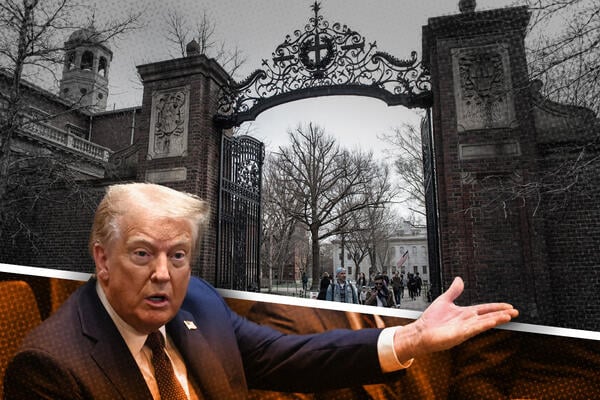
A federal judge in Boston ruled in favor of Harvard University Wednesday.
Photo illustration by Justin Morrison/Inside Higher Ed | Mandel Ngan and Joseph Prezioso/AFP/Getty Images
A judge ruled Wednesday that the Trump administration illegally froze more than $2 billion in research funding at Harvard University over how officials handled alleged campus antisemitism.
Judge Allison Burroughs of the U.S. District Court in Boston found that the federal government violated Harvard’s First Amendment rights and the U.S. Civil Rights Act in her 84-page opinion, writing, “We must fight against antisemitism, but we equally need to protect our rights, including our right to free speech, and neither goal should nor needs to be sacrificed on the altar of the other.” She added that Harvard is “currently, even if belatedly” taking action against antisemitism.
Harvard sued the Trump administration in April after the federal government froze $2.2 billion in funding when the Ivy League university rejected demands to enact a far-reaching slate of changes that would have overhauled admissions, governance, hiring and much more.
Burroughs, an Obama appointee, appeared skeptical of the Trump administration’s claims in a July hearing, telling government lawyers that they failed to back up claims Harvard did not appropriately address antisemitism. She also ruled against the administration in another case in June, temporarily blocking the government from halting Harvard’s ability to host international students.
Burroughs wrote Wednesday that “Harvard was wrong to tolerate hateful behavior for as long as it did,” but “the record … does not reflect that fighting antisemitism” was the “true aim” of the defendants and such efforts “cannot be accomplished on the back of the First Amendment.”
The ruling comes as rumors of a Harvard settlement with the federal government continue to swirl. The Trump administration has demanded a $500 million settlement that would force other changes to admissions and discipline policies, similar to agreements made by its Ivy League peers Columbia University and Brown University.
Harvard President Alan Garber said in a statement Wednesday that “the ruling affirms Harvard’s First Amendment and procedural rights, and validates our arguments in defense of the University’s academic freedom, critical scientific research, and the core principles of American higher education.”
Wednesday’s legal ruling also prompted celebration from free speech groups and others.
“Today, a federal court echoed what [the Foundation for Individual Rights and Expression] has said all along: The Trump administration trampled Harvard University’s First Amendment rights and broke civil rights law when it yanked billions in federal grants and contracts over alleged Title VI violations,” FIRE wrote in a statement.
“This is a huge win for all of American higher education, for science, and for free and critical thought in this country,” said Todd Wolfson, president of the American Association of University Professors. “Time and again, Trump has tried to restrict speech and cripple lifesaving university research. As today’s victory shows, Trump’s war on higher education is unconstitutional. We will continue to stand up and fight back against these attempts to dismantle our universities, terrify students and faculty, and punish hospitals and scientists for not bowing to authoritarianism. And we will win.”
The American Council on Education praised Burroughs’s ruling.
“We are pleased to see a federal court affirm what we always knew to be true: The Trump administration has ignored the law in pursuing politically motivated attacks on Harvard and other institutions,” said Peter McDonough, general counsel for ACE. “We urge the administration to abandon these harmful attacks and instead work to restore the partnership that has made colleges and universities the engine of American innovation for decades.”
Judging from the Department of Education’s response to the ruling, that seems unlikely.
“In an unsurprising turn of events, the same Obama-appointed judge that ruled in favor of Harvard’s illegal race-based admissions practices—which was ultimately overturned by the Supreme Court—just ruled against the Trump Administration’s efforts to hold Harvard accountable for rampant discrimination on campus,” spokesperson Madi Biedermann wrote in an emailed statement. “Cleaning up our nation’s universities will be a long road, but worth it.”
In a post on X, Education Secretary Linda McMahon added, “The Trump Administration is fully committed to appealing this erroneous decision and will ensure that new taxpayer funding is not invested at any university that steadfastly refuses to uphold civil rights for all students.”
Developed with the help of volunteer leaders and member institutions across the country, The Job Descriptions Index provides access to sample job descriptions for positions unique to higher education.
Descriptions housed within the index are aligned with the annual survey data collected by the CUPA-HR research team. To aid in the completion of IPEDS and other reporting, all position descriptions are accompanied by a crosswalk section like the one below.
Crosswalk Example
Position Number: The CUPA-HR position number BLS SOC#: Bureau of Labor Statistics occupation classification code BLS Standard Occupational Code (SOC) Category Name: Bureau of Labor Statistics occupation category title US Census Code#: U.S. Census occupation classification code VETS-4212 Category: EEO-1 job category title used on VETS-4212 form
***SOC codes are provided as suggestions only. Variations in the specific functions of a position may cause the position to better align with an alternate SOC code.
Sample Job Descriptions
Advancement Services, Prospect Researcher
Organizes and oversees the institution’s records relating to current and prospective donors, conducts research to discover prospects for gifts, and documents the association of these prospects with the college or university.
CROSSWALKS Position Number: 442120 BLS SOC # 13-1131 BLS Standard Occupational Code (SOC) Category Name: Fundraisers US Census Code # 0726 VETS-4212 Category: Prof
Under supervision, assists in cultivating and broadening alumni interest in and financial support of the university. Develops, strengthens, and implements both campus and regional alumni programs; plans and implements major homecoming and reunion events. May supervise support staff and/or a group of volunteers. Requires a bachelor’s degree. Senior level typically requires 2-3 years of related experience.
CROSSWALKS Position Number: 438100, 438110 BLS SOC # 27-3031 BLS Standard Occupational Code (SOC) Category Name: Public Relations Specialists US Census Code # 2825 VETS-4212 Category: Prof
Under supervision, assists in the administration and implementation of annual giving programs. Develops, oversees, and evaluates assigned area of the campaign; researches, visits, cultivates, solicits, and thanks prospective donors to annual fund; monitors content and substance of mailings to constituents and analyzes past responses; coordinates staff reunion development committees. May supervise support staff and/or a group of volunteers. Requires a bachelor’s degree. Senior level typically requires 2-3 years of fundraising experience.
CROSSWALKS Position Number: 437110, 437115 BLS SOC # 13-1131 BLS Standard Occupational Code (SOC) Category Name: Fundraisers US Census Code # 0726 VETS-4212 Category: Prof
Implements and coordinates a broad-based strategy of donor recognition, stewardship, and donor communications. Publishes and distributes stewardship reports on endowed funds. Manages donor gift acknowledgements and proactively identifies opportunities to communicate with donors and alumni. Plans and executes cultivation and stewardship events on campus and around the country. Manages communication between development staff and academic departments, interdisciplinary programs, and research centers.
CROSSWALKS Position Number: 437160 BLS SOC #: 13-1131 BLS Standard Occupational Code (SOC) Category Name: Fundraisers US Census Code: 0726 VETS-4212 Category: Prof
Responsible for providing information about the institution to students, faculty, and the public. Functions typically include news media relations; preparation or review of news releases and photographs; and preparation and distribution of newsletters, magazines, and other publications.
CROSSWALKS Position Number: 443140 BLS SOC #: 27-3023 BLS Standard Occupational Code (SOC) Category Name: News Analysts, Reporters, & Journalists US Census Code: 2860 VETS-4212 Category: Prof
Head, Communications/Marketing for College or School
Manages a designated college’s/ school’s communications function that is distinct from the institution’s central communications function. Engages in media relations, public information, public affairs, and publications. Develops communication strategies consistent with university/ school goals, objectives, and priorities, in consultation with university leadership and other appropriate individuals and groups.
CROSSWALKS Position Number: 443120 BLS SOC #: 13-1161 BLS Standard Occupational Code (SOC) Category Name: Market Research Analysts & Marketing Specialists US Census Code: 0735 VETS-4212 Category: Prof
Responsible for the identification, cultivation and solicitation of alumnae, parents, and friends of the institution capable of making gifts of $50,000 or more. Requires a bachelor’s degree. Senior level typically requires 2-3 years of related experience.
CROSSWALKS Position Number: 437120, 437125 BLS SOC # 13-1131 BLS Standard Occupational Code (SOC) Category Name: Fundraisers US Census Code # 0726 VETS-4212 Category: Prof
Identifies, cultivates and motivates donors to make significant gifts assisting them with gift planning strategies, financial and estate planning, tax law and real estate. Collaborates with all divisions/schools in the institution. Requires a bachelor’s degree. Senior level typically requires 2–3 years of experience in planned giving/development and/or a related field.
CROSSWALKS Position Number: 437135, 437140 BLS SOC # 13-1131 BLS Standard Occupational Code (SOC) Category Name: Fundraisers US Census Code # 0726 VETS-4212 Category: Prof
Responsible for nurturing top donor prospects and securing the institution’s largest gifts (typically in the $2M-$5M range). Works closely with the chief development/advancement officer, institutional executive officers, and academic deans to solicit principal top gift prospects and to secure and maintain top donor relations.
CROSSWALKS
Position Number: 437130
BLS SOC #: 13-1131
BLS Standard Occupational Code (SOC) Category Name: Fundraisers
US Census Code:0726
VETS-4212 Category: Prof
Ensures that institution’s brand identity is properly represented on goods and services. Protects and controls the use of institution’s name and marks on merchandise. Distributes and approves logo artwork; promotes products and designs consistent with the goals and image of the institution. Approves licenses, establishes/maintains cooperative relationships, and oversees royalty revenues. Manages market share of products in retail venues.
CROSSWALKS Position Number: 443150 BLS SOC # 13-1161 BLS Standard Occupational Code (SOC) Category Name: Market Research Analysts & Marketing Specialists US Census Code # 0735 VETS-4212 Category: Prof
Developed with the help of volunteer leaders and member institutions across the country, The Job Descriptions Index provides access to sample job descriptions for positions unique to higher education.
Descriptions housed within the index are aligned with the annual survey data collected by the CUPA-HR research team. To aid in the completion of IPEDS and other reporting, all position descriptions are accompanied by a crosswalk section like the one below.
Crosswalk Example
Position Number: The CUPA-HR position number BLS SOC#: Bureau of Labor Statistics occupation classification code BLS Standard Occupational Code (SOC) Category Name: Bureau of Labor Statistics occupation category title US Census Code#: U.S. Census occupation classification code VETS-4212 Category: EEO-1 job category title used on VETS-4212 form
***SOC codes are provided as suggestions only. Variations in the specific functions of a position may cause the position to better align with an alternate SOC code.
Sample Job Descriptions
Senior Technology Licensing Officer
Responsible for managing licensing projects and cases, including identifying and evaluating technologies with commercial potential and licensees for the technologies. Prepares invention summaries for marketing purposes and develops and implements marketing strategies for each technology. Drafts and negotiates licenses and other types of agreements, including material transfer, collaboration, and nondisclosure agreements.
CROSSWALKS Position Number: 476110 BLS SOC # 13-1199 BLS Standard Occupational Code (SOC) Category Name: Business Operations Specialists, All Other US Census Code # 0740 VETS-4212 Category: Prof
SAMPLE JOB DESCRIPTIONS Contract Administrator (The University of Maryland, College Park)
In 2023, Texas became one of the first red states to institute a sweeping ban on diversity, equity and inclusion in public colleges and universities.
Following pro-Palestinian protests and a police crackdown on an encampment at the University of Texas at Austin in 2024, the Texas Legislature this year passed another law restricting free speech on public campuses, including banning all expressive activities from 10 p.m. to 8 a.m.
The Legislature also this year passed a wide-ranging bill that allows public college and university presidents to take over faculty senates and councils, prohibits faculty elected to those bodies from serving more than two years in a row, and creates an “ombudsman” position that can threaten universities’ funding if they don’t follow that law or the DEI ban.
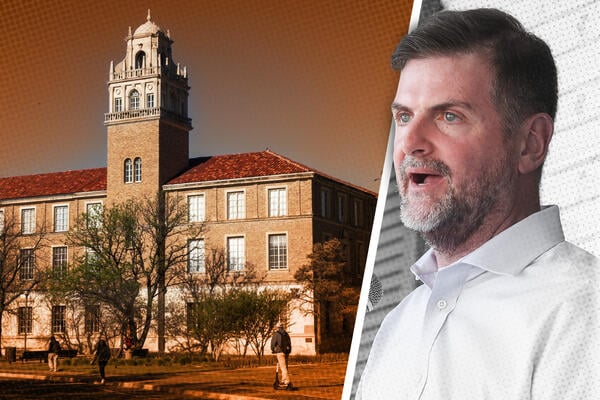
The lead author listed on all three laws is Sen. Brandon Creighton, chair of the Texas Senate education committee. Having overhauled higher ed statewide, he’s about to get the chance to further his vision at one large university system: On Thursday, the Texas Tech University System plans to name Creighton the “sole finalist” for the system chancellor and chief executive officer job.
His hiring by the system’s Board of Regents—whose members are appointed by the governor with confirmation from the Senate—marks another example of a Republican politician in a large red state, namely Texas and Florida, being installed as a higher ed leader. The trend reflects an evolution in how Republicans are influencing public universities, from passing laws to directly leading institutions and systems. For universities, having a former member of the Legislature in the presidency can help with lobbying lawmakers, but it could also threaten academic freedom and risk alienating faculty.
Creighton wasn’t the only, or even the highest-ranking, politician considered for the position, which historically pays more than $1 million a year. As The Texas Tribuneearlier reported, Rep. Jodey Arrington, chair of the U.S. House Budget Committee and shepherd of the One Big Beautiful Bill Act, which affected higher ed nationwide, was also in the running. Unlike Creighton, Arrington has worked in higher ed—specifically as a vice chancellor and chancellor’s chief of staff in the Texas Tech system. Arrington, who didn’t provide Inside Higher Ed an interview, issued a statement Sunday congratulating Creighton.
Faculty leaders offered a muted response to Creighton’s impending appointment. Neither the president of the Faculty Senate at the main Texas Tech campus, the president of the university’s chapter of the American Association of University Professors nor the state AAUP conference publicly denounced Creighton. In an emailed statement, the state conference said, “We have concerns about the future of academic freedom and shared governance in the Texas Tech University System given the positions Sen. Creighton has taken in the legislature.”
“We hope that Texas Tech’s strong tradition of shared governance and academic freedom continues so that Texas Tech can thrive,” the statement said.
Cody Campbell, the system board chair, said Creighton is “a fantastic fit with our culture and is clearly the best person for the job.” He added that he likes the higher ed legislation Creighton has passed. (Creighton was also lead author of a new law that lets universities pay athletes directly.)
“He shares the values of the Texas Tech University System,” Campbell said. Both the system and the wider community of Lubbock, where the main Texas Tech campus is located, are “conservative,” he said.
“We do not subscribe to the ideas around DEI and are supportive of a merit-based culture,” Campbell said, adding that Creighton is well positioned to continue the system’s growth in research, enrollment and academic standing.
For Creighton, the job could come with a big payout. Retiring Texas Tech system chancellor Tedd L. Mitchell made $1.3 million in 2023, ranking him the 12th-highest-paid public university leader in the country, according to The Chronicle of Higher Education’s database. The system didn’t respond to Inside Higher Ed’s open records request for Mitchell’s current contract in time for this article’s publication, and Campbell told Inside Higher Ed Creighton’s pay is “yet to be determined.”
“The contract or the compensation were never part of the discussion with any of the candidates,” Campbell said.
Creighton didn’t provide Inside Higher Ed an interview or answer written questions. But he appeared to accept the position in a post on X.
“Over the past six years, no university system in Texas has taken more bold steps forward,” he wrote. “Serving as Chairman of the Senate Education Committee and the Budget Subcommittee has been the honor of a lifetime—especially to help deliver that success for Texas Tech and its regional universities. I feel very blessed to have been considered for the role of Chancellor. There is no greater purpose I would consider than working to make generational changes that transform the lives of young Texans for decades to come.”
Cowing Faculty Senates
Campbell said he doesn’t recall whether Creighton and Arrington initially expressed interest in the position to the board or whether the board reached out to them. Dustin Womble, the board’s vice chair, declined to comment. Campbell said the board “actively recruited” some candidates.
“There wasn’t really a formal application process, necessarily,” he said. But dozens of candidates across the country expressed interest in the “high-paying position” leading a large system, he said.
The system says it has more than 60,000 students across five institutions and 20 locations, including one in San José, Costa Rica. The five institutions are Texas Tech (which has multiple campuses), Texas Tech Health Sciences Center (which also has multiple campuses), the separate Texas Tech Health Sciences Center El Paso, Angelo State University and Midwestern State University.
Asked about Creighton’s lack of higher ed work experience, Campbell said that wasn’t unusual for system chancellors, contrasting the position with those of the presidents who lead individual institutions on a day-to-day basis.
“Our past chancellor was a medical doctor, the chancellor before him was a state senator, the chancellor before him was a former U.S. congressman and a state politician; we’ve had businessmen in that position, we’ve had all different types of people,” Campbell said.
Aside from serving in the Senate for a decade and the state House for seven years before that, Creighton is an attorney.
Andrew Martin, the tenured art professor who leads the Texas Tech University main campus’s AAUP chapter, noted that “our chapter has actively opposed some of the legislation that Sen. Creighton has authored.”
“Our hope now is that Sen. Creighton, in apparently assuming the role of chancellor, will spend time learning more about the campuses in the TTU System and will meet as many students, faculty [and] administrators on our campuses as possible to see how these institutions actually operate day in and day out,” Martin said. “I’m not sure how clear that’s been from his perspective as a lawyer and legislator.”
Martin—who stressed that he was speaking for himself and colleagues he’s spoken to, but not on behalf of his university—said the AAUP is concerned with maintaining academic freedom for faculty and students, upholding tenure protections, and preserving the faculty’s role in determining curriculum, conducting research and exercising shared governance.
When the Legislature passed Senate Bill 37—the Creighton legislation that, among other things, upended faculty senates—Creighton issued a news release saying, “Faculty Senates will no longer control our campuses.” He said his legislation “takes on politically charged academic programs and ensures students graduate with degrees of value, not degrees rooted in activism and political indoctrination.”
Among other things, SB 37 requires university presidents to choose who leads faculty senates. Ryan Cassidy, a tenured associate librarian, was elected to lead the Texas Tech University main campus’s Faculty Senate before SB 37 took effect, and the institution’s president has allowed him to stay in that role.
Asked about Creighton being named chancellor, Cassidy said, “I haven’t really had time to reflect on it.”
Creighton’s bio on the Legislature’s website touts his conservative values outside of higher ed, too. “He has relentlessly hammered excessive taxation, pursued ‘loser pays’ tort reform, passed drug testing for unemployment benefits, stood up for Texas’ 10th Amendment rights and effectively blocked Obamacare’s Medicaid expansion,” the bio says.
Martin said Texas Tech aspires to become a member of the Association of American Universities, a prestigious group of top research universities, of which UT Austin and Texas A&M University are already members. That would be hard if faculty are “marginalized,” he said.
“You can’t get there without the huge investment of faculty,” he said.
This audio is auto-generated. Please let us know if you have feedback.
Dive Brief:
George Mason University’s governing board said late last week that it wants to negotiate with the Trump administration to resolve allegations that it violated civil rights law.
In late August, the U.S. Department of Education alleged that George Mason has illegally used race and other protected characteristics in hiring and promotions, a conclusion reached just six weeks after the agency announced a probe into the university.
An attorney for university President Gregory Washington, who is at the center of the probe, hasrepudiated the agency’s allegations, describing them as “a legal fiction.” Washington’s attorney will also be involved in talks with the Education Department, according to the board’s statement.
Dive Insight:
Over a period of weeks this summer, the Trump administration ramped up pressure on George Mason. The departments of Education and Justiceopened at least four probes between them into the university, often citing comment from Washington in support of diversity initiatives.
Washington’s attorney, Douglas Gansler, took the Education Department to task for how quickly it determined George Mason violated the law.
“It is glaringly apparent that the OCR investigation process has been cut short, and ‘findings’ have been made in spite of a very incomplete fact-finding process, including only two interviews with university academic deans,” Gansler wrote.
The attorney also described some of the evidence cited by the Education Department as “gross mischaracterizations of statements made by Dr. Washington” that didn’t lead to policy changes.
For example, when the Education Department concluded that George Mason violated civil rights law, it linked to a statement Washington made in 2021 in support of having faculty reflect the diversity of the student body and broader community. The department took the statement as expressing “support for racial preferencing” in hiring.
But, as Gansler highlighted, Washington specifically said in the statement that the diversity principles he was promoting were “not code for establishing a quota system.”
Gansler also warned the university’s board against requiring Washington to apologize, which was among the demands made by the Education Department. The lawyer pointed out that such an apology could open the university up to liability.
Through all of this, George Mason’s board of visitors — headed by Charles Stimson, who holds leadership positions at The Heritage Foundation, a right-wing think tank — has been relatively quiet.
To represent it in dealings with the Trump administration, the board hired Torridon Law, which was co-founded by William Barr,formerly U.S. attorney general during the first Trump administration. The firm also has several prominent Republican lawyers on staff.
In July, the university’s chapter of the American Association of University Professors voted no confidence in the board and called its response to the Trump administration’s actions to that point “inadequate and deeply troubling.”
And yet, in August — at a meeting that the AAUP chapter warned could set the stage for Washington’s ouster — George Mason’sboard voted to give the leader a raise.
Since then, Democrat members of a Virginia Senate committee have blocked six appointeesto George Mason’s board picked by the state’s Republican governor, Glenn Youngkin. The move has left the board of visitors without a quorum for conducting official business.
In announcing plans to negotiate with the Education Department, the board said Friday that it “remains committed to ensuring that George Mason complies with all federal civil rights law and remains hopeful that a favorable resolution can be reached.”
George Mason is just the latest in an expanding set of colleges targeted by the Trump administration over allegations related to racial preferencing, campus antisemitism and policies supporting transgender student athletes.
Developed with the help of volunteer leaders and member institutions across the country, The Job Descriptions Index provides access to sample job descriptions for positions unique to higher education.
Descriptions housed within the index are aligned with the annual survey data collected by the CUPA-HR research team. To aid in the completion of IPEDS and other reporting, all position descriptions are accompanied by a crosswalk section like the one below.
Crosswalk Example
Position Number: The CUPA-HR position number BLS SOC#: Bureau of Labor Statistics occupation classification code BLS Standard Occupational Code (SOC) Category Name: Bureau of Labor Statistics occupation category title US Census Code#: U.S. Census occupation classification code VETS-4212 Category: EEO-1 job category title used on VETS-4212 form
***SOC codes are provided as suggestions only. Variations in the specific functions of a position may cause the position to better align with an alternate SOC code.
Sample Job Descriptions
Athletics Trainer/Physical Therapist
Under the general supervision of the Head Athletic Trainer, provides physical therapy and assists in the prevention, care, and rehabilitation of athletic injuries. Provides trainer coverage of athletic activities, organizes orthopedic clinics, advises on prevention and care of athletic injuries, and team-teaches athletic training classes. Supervises student trainers. Typically requires: Bachelor’s degree, preferably in physical therapy or health science, and 1 – 3 years of related experience at the collegiate level. Certification as an athletic trainer desirable.
CROSSWALKS Position Number: 469110 BLS SOC # 29-9091 BLS Standard Occupational Code (SOC) Category Name: Athletic Trainers US Census Code # 3245 VETS-4212 Category: Prof
Coordinates all aspects of team defense, assesses players’ skills and assigns positions, evaluates own and opposition team capabilities to determine game strategy, instructs players in techniques of game, and assists with recruitment and retention of student athletes. Requires a bachelor’s degree in physical education, recreation, health, or related field or equivalent plus 4-5 years’ experience as an assistant coach or high school head coach. Must have knowledge of NCAA rules and regulations.
CROSSWALKS Position Number: 499280 BLS SOC #: 27-2022 BLS Standard Occupational Code (SOC) Category Name: Coaches and Scouts US Census Code: 2720 VETS-4212 Category: Prof
Responsible for developing, implementing, supervising and evaluating the overall academic services offered to student athletes to insure they strive to achieve their full academic potential. Also responsible for monitoring institutional compliance with NCAA/conference academic eligibility regulations for student-athletes in all sports. Typically requires: Bachelors degree and 3-5 years of related administrative experience.
CROSSWALKS Position Number: 400170 BLS SOC # 25-9030 BLS Standard Occupational Code (SOC) Category Name: Instructional Coordinators US Census Code # 2550 VETS-4212 Category: Prof
Responsible for developing, administering and monitoring the compliance system for maintaining institutional control for the school’s athletics program. Responsible for the comprehensive administration of all athletic compliance functions of the institution to ensure compliance with NCAA and other league rules and regulations, as well as pertinent governmental regulations. Responsibilities include, but are not limited to, monitoring recruiting activities, initial eligibility certification, continuing eligibility certification, financial aid administration, self reporting and rules education. Typically requires: Bachelors degree and 2 – 4 years of NCAA Compliance experience at an institution of higher learning.
CROSSWALKS Position Number: 427100 BLS SOC # 13-1041 BLS Standard Occupational Code (SOC) Category Name: Compliance Officers US Census Code # 0565 VETS-4212 Category: Prof
Responsible for all fund raising for athletic programs, including major gift cultivation and solicitation, capital campaigns, athletic club, premium seating programs, private suites, etc. Typically requires: Bachelors degree, 3- 5 or more years of college or university athletic fund-raising experience.
CROSSWALKS Position Number: 437150 BLS SOC # 13-1131 BLS Standard Occupational Code (SOC) Category Name: Fundraisers US Census Code # 0726 VETS-4212 Category: Prof
Responsible for advising the Athletic Director on all external affairs and overseeing the external relations program which includes advertising, promotions, marketing, communications, ticketing and public affairs for the entire department. Oversees all marketing and promotions fulfillment as well as game day operations and all media resources (television, radio, internet, etc.). Serves as liaison with sponsors and negotiate contracts between various marketing, promotion and advertising entities. Typically requires: Bachelors degree in related field; 5 years of management experience in a college or university athletic department; experience in developing and implementing strategies related to external affairs preferred.
CROSSWALKS Position Number: 468100 BLS SOC # 27-3031 BLS Standard Occupational Code (SOC) Category Name: Public Relations Specialists US Census Code # 0060 VETS-4212 Category: Prof
SAMPLE JOB DESCRIPTIONS
Head, Athletics Operations
Directs use, operation, and maintenance of all Institution athletic facilities and fields including stadiums, arenas, gymnasiums, pools, rinks and boathouses. Oversees administration of all events and establishes facilities revenue goals. Establishes long-range planning for facilities, identifies, assesses and addresses short- and long-term program needs in conjunction with staff members and coaches, and plans for and recommends technology improvements. Typically requires: Bachelor degree, with Master degree preferred; 8 or more years experience in facility and operation management; preferably athletic facility administration and operations experience desired.
CROSSWALKS Position Number: 457110 BLS SOC # 13-1199 BLS Standard Occupational Code (SOC) Category Name: Business Operations Specialists, All Other US Census Code # 0020 VETS-4212 Category: Prof
Directs the athletic training program for intercollegiate athletics and supervises the training room. Collaborates with coaching staff in developing conditioning, weight training and nutrition programs for athletes. Coordinates medical coverage for athletic events. Supervises Assistant Athletic Trainers/ Physical Therapists in the prevention, care, and rehabilitation of athletic injuries. Determines, with advice from a doctor, when and at what level an athlete can return to participation in a sport. Typically requires: Bachelors degree in physical therapy, athletic training or related field; 5 – 8 years of related experience and certification as an athletic trainer.
CROSSWALKS Position Number: 469100 BLS SOC # 29-9091 BLS Standard Occupational Code (SOC) Category Name: Athletic Trainers US Census Code # 3245 VETS-4212 Category: Prof
Directs intercollegiate and intramural athletic programs for men only. Responsible for scheduling and contracting for athletic events, employment and direction of athletic coaches, publicity, ticket sales, and equipment and facilities maintenance. Typically requires: Bachelor’s degree and 3-5 years of management experience in intercollegiate athletics.
CROSSWALKS Position Number: 468120 BLS SOC # 13-1199 BLS Standard Occupational Code (SOC) Category Name: Business Operations Specialists, All Other US Census Code # 2720 VETS-4212 Category: Prof
SAMPLE JOB DESCRIPTIONS
Head, Sports Information / Athletics Communications
Institutional representative to the media for all athletic activities. Manages preparation and dissemination of news releases, articles, videos, WEB updates and other communications about the institutions sports programs, including games and other events. Typically requires: Bachelors in journalism, public relations, marketing or related field; 3- 5 years of experience in sports journalism.
CROSSWALKS Position Number: 468110 BLS SOC # 27-3031 BLS Standard Occupational Code (SOC) Category Name: Public Relations Specialists US Census Code # 0050 VETS-4212 Category: Prof
Oversees all aspects of women’s athletic programs. Responsibilities typically include budget planning, resource allocation, scheduling and contracting for athletic events, coordination and/or administrative support for coaches of all women’s sports. Also provides academic support to all women student-athletes, to include monitoring of academic performance and attendance, tutoring, advising or referring to appropriate resources. In charge of gender equity within the Athletic Department and advises the director on all matters concerning Women’s Athletics and gender related issues. Typically requires: Bachelor’s degree and 4-7 years of experience in athletic department administration, coaching, counseling or related field.
CROSSWALKS
Position Number: 468130
BLS SOC # 13-1199
BLS Standard Occupational Code (SOC) Category Name: Business Operations Specialists, All Other
US Census Code #2720
VETS-4212 Category: Prof
Coordinates all aspects of team offense, assesses players’ skills and assigns team positions, evaluates own and opposition team capabilities to determine game strategy, and coaches or directs coaches to instruct players in techniques of game. Requires a bachelor’s degree in physical education, recreation, health, or related field or equivalent plus 4-5 years’ experience as an assistant coach or high school head coach. Must have knowledge of NCAA rules and regulations.
CROSSWALKS Position Number: 499270 BLS SOC #: 27-2022 BLS Standard Occupational Code (SOC) Category Name: Coaches and Scouts US Census Code: 2720 VETS-4212 Category: Prof
Supports coaches’ decision-making by organizing, analyzing, and presenting information. Attends sporting events and records data in real time. Audits and compiles official statistics and prepares reports for media. May be involved in resolution of disputed calls. Analyzes player performance and team strategy. Requires a bachelor’s degree in mathematics, statistical analysis, or computer science.
CROSSWALKS Position Number: 468150 BLS SOC # 15-2041 BLS Standard Occupational Code (SOC) Category Name: Statisticians US Census Code # 1230 VETS-4212 Category: Prof
Every year, prospective students and their families attend hundreds of open days at colleges and universities around the world. These events are more than just campus tours and presentations. They’re often the first real opportunity for students to picture themselves as part of your community. With so many options available, the challenge for institutions is clear: how do you create an open day that not only informs but also inspires?
While the essentials, like academic info sessions, tours, and welcome talks, set the foundation, the schools that stand out go further. They design experiences that feel memorable, personal, and true to their identity. With the right mix of creativity and strategy, your open day can shift from being just another stop on a student’s list to the moment they decide your institution is the right fit.
In this post, we’ll share 10 practical strategies to elevate your open days, whether you’re planning in-person events, virtual formats, or a blend of both. Drawing on real-world examples, including some from HEM’s own portfolio, we’ll explore how you can highlight what makes your institution unique, harness technology, and add thoughtful personal touches that resonate long after the event ends.
Struggling with enrollment?
Our expert digital marketing services can help you attract and enroll more students!
What Is an Open Day?
An open day is an event hosted by a college or university to give prospective students and their families the chance to experience the campus, meet faculty and staff, and learn more about academic programs and student life. Unlike brochures or websites, open days provide a first-hand look at the atmosphere of the institution. They typically include tours of facilities, information sessions, and opportunities to speak with current students and alumni. For many students, an open day is the key moment when they decide whether a school feels like the right fit for their academic and personal goals.
In the same vein, what are Application Days at universities? Application days are special events hosted by universities to help prospective students complete their applications on-site. These events often provide access to admissions staff who can guide applicants through the application process, answer questions about requirements, and sometimes even waive application fees.
In many cases, students may receive an admission decision more quickly if they apply during these events, making application days both supportive and efficient for applicants.
1. Showcase What Makes Your School Unique
Every institution has a defining strength, whether that’s a standout program, a strong industry network, or a vibrant campus culture. Open days work best when they put that strength front and center.
Build around your USP: If partnerships are key, invite industry reps to host networking booths or demos. If location is a highlight, include guided tours of nearby attractions. For research-driven schools, showcase labs or projects with real impact.
Spotlight distinctive opportunities: Feature sessions on co-op programs, study abroad, or unique facilities like observatories or art galleries.
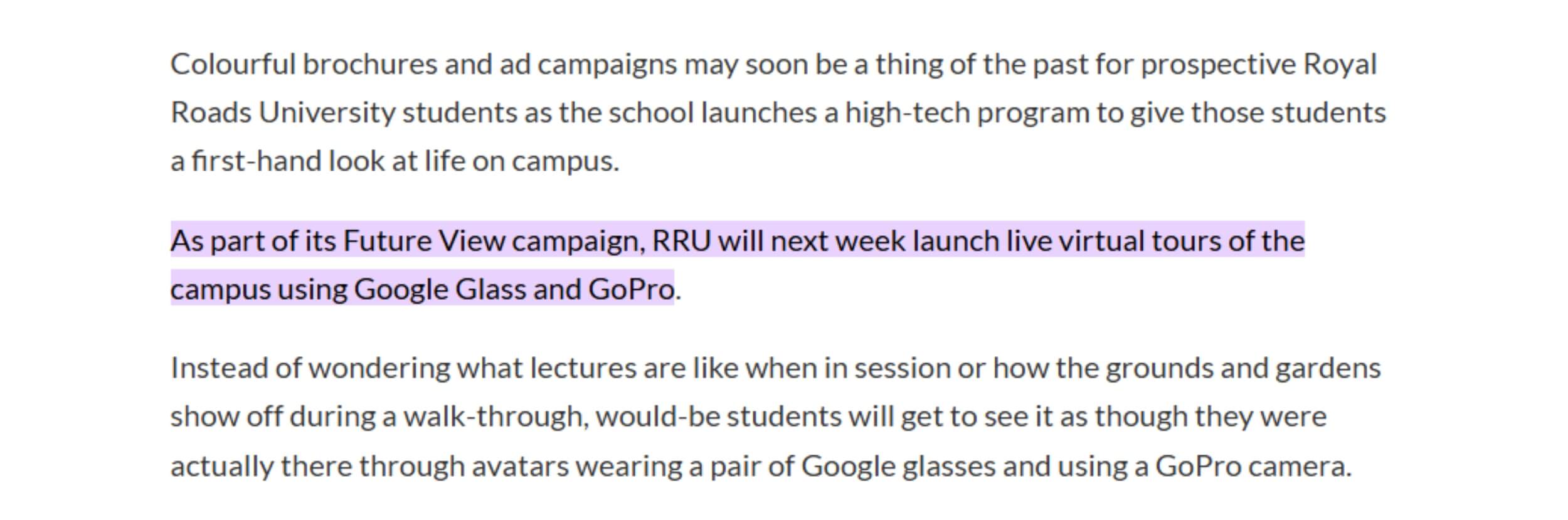
Example: Royal Roads University: This university played to its innovative reputation with a campaign called “Future View.” Instead of relying on traditional brochures, Royal Roads launched live virtual tours of its campus and classes using GoPro cameras and Google Glass. In other words, prospects could experience campus through a student’s eyes in real time. As part of the campaign, Royal Roads representatives strapped on GoPros and Google Glass to stream lectures, walking tours, and Q&As, giving would-be students a first-hand look at life at RRU.
Static presentations rarely capture the imagination. What sticks are experiences where prospects get to take part, experiment, and play an active role. Today’s students, especially Gen Z, respond best when an open day feels like something they can do, not just watch.
Classroom-style engagement: Replace long lectures with sample classes, workshops, or lab experiments where visitors actively participate, such as robotics builds or art jam sessions.
Campus showcase zones: Let departments display projects in interactive formats, flight simulators, artifact handling, or student performances.
Clubs and student life: Involve student groups with mini debates, telescope viewings, or sustainability scavenger hunts.
Virtual attendees: Use polls, VR tours, or guided avatars to replicate hands-on engagement online.
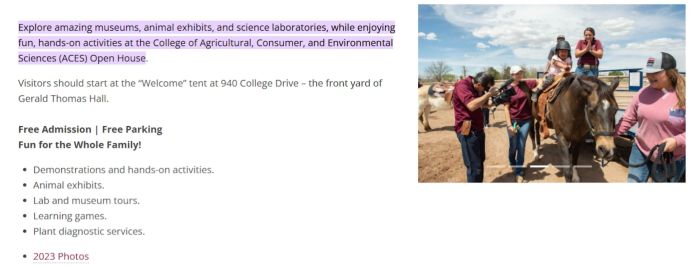
Example: The College of ACES at NMSU turned its open house into a family-friendly interactive fair. Visitors of all ages could roam through live animal exhibits, tour science labs and museums, and try their hand at various learning games and demonstrations at each stop. From petting zoo stations with the university’s farm animals to interactive science experiments, the event engaged guests on multiple levels.
Your current students are among the most persuasive voices you can showcase on open day. While visitors expect polished messaging from admissions staff, what they really value are honest, relatable insights from peers who have lived the experience. Student ambassadors should therefore be central to the day, whether in person or online, acting as welcoming guides, storytellers, and role models.
Train them with talking points, but give them freedom to share their journeys authentically, from why they chose your school to how they’ve navigated challenges. Their warmth and candor create a sense of trust that brochures and presentations can’t replicate.
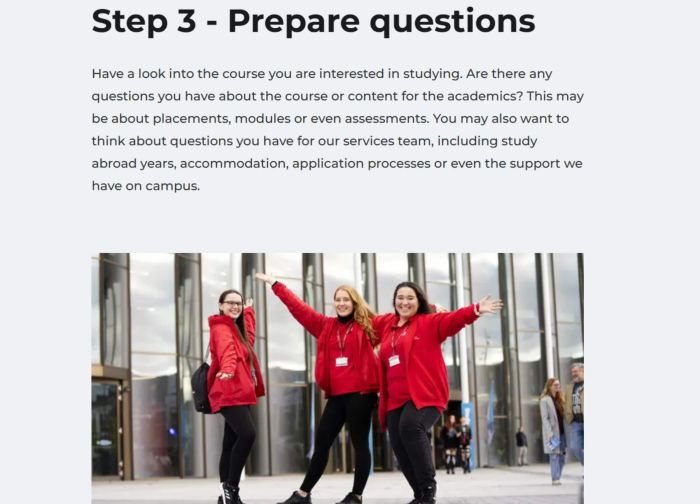
Example: University of Central Lancashire (UK):At UCLan’s open days, current students act as official ambassadors, easily spotted in their special red UCLan hoodies. These student ambassadors are stationed at campus entrances to give a warm welcome and directions, they lead campus and accommodation tours, and they hang around after info sessions to chat. Most importantly, they share authentic insights about their courses and social life – the kind of candid student-to-student advice that visitors crave. Attendees are encouraged to approach them with any question, no matter how trivial, making the whole experience feel peer-guided and relatable.
4. Involve Successful Alumni for Real-World Perspective
Current students show the “here and now” of campus life, but alumni networks embody the long-term value of your institution. Featuring graduates in your open day event gives prospects and their parents confidence that an education with you leads to meaningful outcomes.
Alumni panels, guest talks, or casual meet-and-greet stations can showcase diverse career paths, from industry and entrepreneurship to research and community impact. You might also pair alumni with specific program sessions. Imagine an engineering graduate now at a leading tech firm sharing how campus experiences prepared them for success. Even an “alumni corner” for informal chats helps visitors picture their own future through authentic stories.
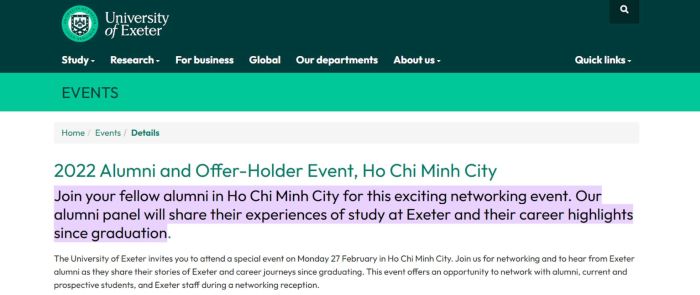
Example:The University of Exeter organized a special alumni networking event in Ho Chi Minh City for offer-holders (admitted prospective students) and local alumni. This “Alumni and Offer-Holder” gathering (27 Feb 2023) featured an alumni panel sharing personal stories about studying at Exeter and their career achievements since graduation. Prospective students and their parents were invited to network informally with these alumni and university staff over a reception.
Parents and guardians often play a decisive role in a student’s choice, so winning them over is just as important as impressing prospects. A strong open day provides dedicated spaces and sessions tailored to their concerns.
Consider running parent-specific info sessions while students explore elsewhere. These can cover housing, safety, tuition, financial aid, support services, and graduate outcomes, offering direct access to staff from each area. Comfortable lounges, refreshments, and a “Parent HQ” make them feel welcome and valued throughout the day. Printed or digital materials should also speak directly to their perspective, highlighting career outcomes, security measures, and student support systems.
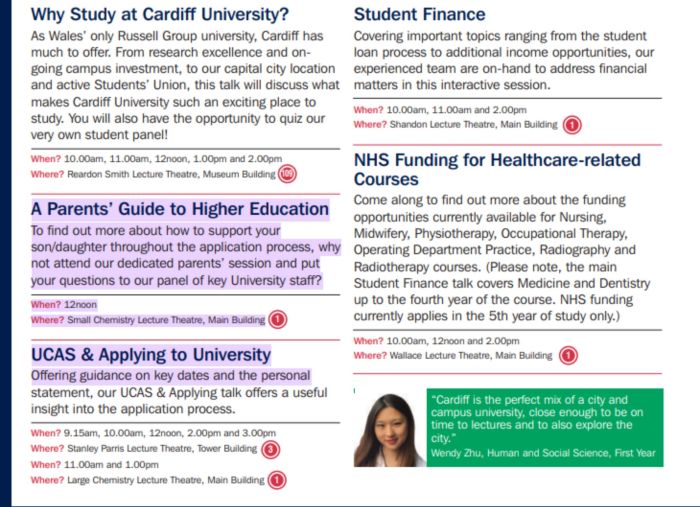
Example:At Cardiff University’s open day, for instance, they held a dedicated session titled “A Parents’ Guide to Higher Education,” where staff walked parents through supporting their child in the application process and beyond. Parents were invited to put their questions to a panel of university experts in finance, student support, and accommodation – essentially a frank Q&A just for them. The topics ranged from tuition fees and scholarship opportunities to the quality of campus facilities. This gave parents a chance to voice any worries in a forum designed for them, separate from their teens.
6. Personalize the Open Day Experience for Visitors
Students don’t all want the same thing from university open days, so personalization can make your event feel far more engaging. Use registration data to create tailored itineraries that reflect interests like intended major, extracurriculars, or career goals. Even simple touches, such as personalized name badges with a program of interest, help staff and ambassadors connect conversations to what matters most for each visitor.
Flexibility is also key. Offer a “choose your own adventure” approach where attendees pick sessions that align with their priorities, whether that’s a lab tour, a faculty panel, or a sports center visit. Train ambassadors to personalize on the fly, asking about interests and adjusting tours or recommendations accordingly.
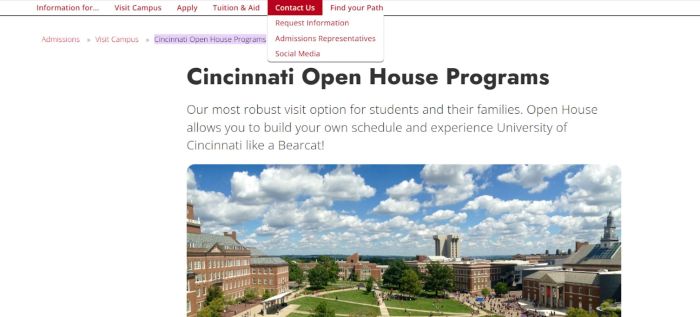
Example: University of Cincinnati (USA):UC has embraced personalization in a big way. Their Open House events are described as “build your own schedule” experiences where each family creates a custom itinerary for the day. Upon registering for UC’s “Bearcat Open House,” students are prompted to select which academic presentations, campus tours, and special topics interest them. On the day, there isn’t a rigid tour everybody follows; instead, visitors might have a list like: 10:00 AM College of Engineering tour; 11:15 Residence hall open rooms; 1:00 PM Financial Aid Q&A; 2:00 PM Meet the Gaming Club, etc., based on what they choose.
7. Embrace Virtual and Hybrid Open Days to Expand Your Reach
What is a virtual open day? A virtual open day is an online event where prospective students and their families can explore a university without visiting campus in person. Typically hosted on a digital platform, it may include live webinars with faculty, virtual campus tours, student Q&A panels, and one-on-one chats with admissions staff. The goal is to replicate the open day experience digitally, giving participants access to information, interaction, and a feel for campus life, no matter where they are in the world.
Virtual and hybrid open days have become a staple of higher education recruitment, offering accessibility and reach that in-person events alone can’t match. A dedicated virtual event, complete with faculty webinars, student panels, and one-on-one admissions chats, can engage global audiences who might not have the time or resources to travel. Virtual campus tours, whether self-guided or live-streamed, keep your school “open” year-round and give prospects a chance to explore at their own pace.
Hybrid formats add another layer of inclusivity. You might livestream your keynote sessions, run interactive live chats for online viewers, or capture campus highlights to share on demand afterward. Interactive elements like polls, breakout sessions, and virtual “booths” ensure remote participants remain engaged rather than passive viewers.
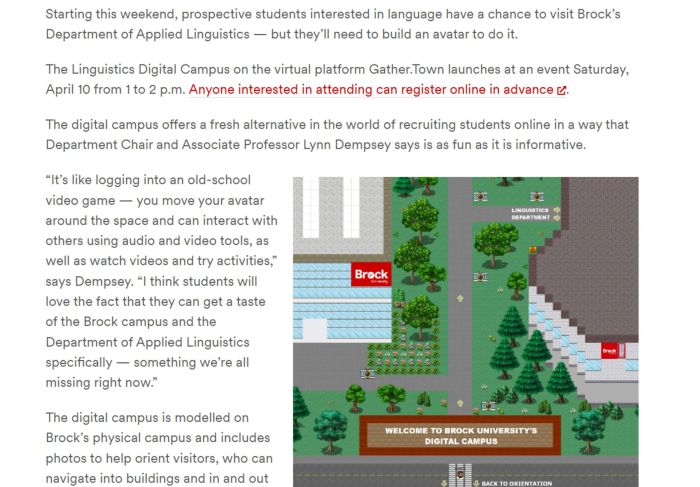
Example: Brock University (Canada):Brock University has been an early adopter of immersive virtual open day experiences. One innovative approach they took was building an interactive online open house in a 3D virtual environment. Using a platform similar to a retro video game interface, Brock recreated key parts of its campus digitally and let prospective students log in as avatars to explore. When prospects entered this virtual campus, a simulated student guide (an avatar controlled by a Brock student or staff) would greet them and offer to lead a tour. Visitors could navigate their avatar through hallways, into classrooms and labs, and even chat when they “bumped into” other avatars representing faculty or current students.
8. Harness Social Media for Pre-Event Buzz and Post-Event Engagement
A strong social media strategy can turn your open day from a single event into a shared experience that builds excitement before, during, and after. Start with a dedicated event hashtag and use it across all promotions, encouraging attendees to post their questions and experiences.
During the event, showcase live content: Instagram Stories, TikTok snippets, or a feed of hashtagged posts, to engage both in-person and virtual audiences. Afterward, curate user-generated content into a recap post or gallery, and follow up with a thank-you message paired with a clear call-to-action, such as “Book a chat with a student ambassador” or “Apply now.”
Example: Lancaster University (UK): Lancaster provides a masterclass in using student-driven social media to boost recruitment events. In 2020, with in-person events off the table, Lancaster University asked its student ambassadors to create a series of fun TikTok videos as ads to generate excitement for its online open days. Instead of polished commercials, these were authentic clips following TikTok trends. Think students doing campus tours set to music, quick dorm room tours, or tongue-in-cheek “day in the life” sketches. The result? The campaign blew past expectations: over 10 million impressions and 90,000+ clicks through to Lancaster’s open day info page.
Sometimes it’s the little extras that transform an open day from ordinary to unforgettable. First impressions matter, so think about how your visitors are welcomed the moment they arrive. Clear signage, friendly greeters, and a thoughtful welcome pack with a campus map, schedule, and small pieces of branded swag can immediately put families at ease.
Fun moments sprinkled throughout the day also make a difference. A student band playing in the quad, a scavenger hunt through key campus spots, or a quirky photo booth at the student life fair can lighten the mood and help prospects associate your institution with energy and creativity.
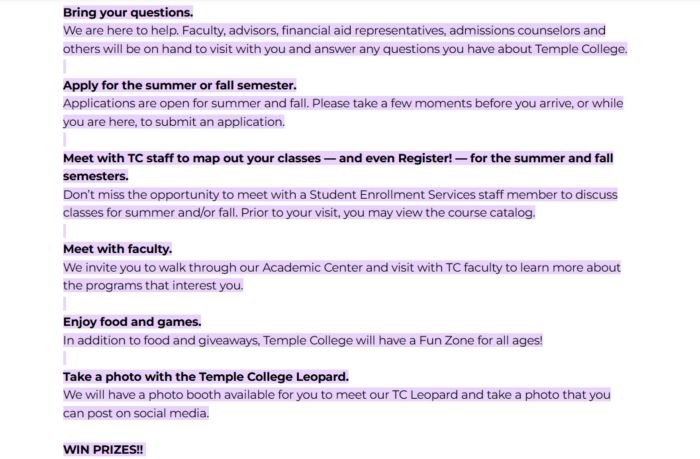
Example: Temple College (USA):This community college in Texas put a delightful twist on their open house by setting up a photo booth with their mascot, a leopard nicknamed “TC Leopard.” Students and families could pose with the costumed mascot and snap fun pictures – a perfect keepsake to take home and share on social media. Temple College even turned it into a mini-contest where participants could win small prizes for posting their mascot photos. The result was a lot of laughter, and every family left with a tangible memory (a photo print or a digital pic) of the day.
These kinds of small but meaningful touches linger in memory. Long after presentations fade, visitors will remember how welcome, entertained, and cared for they felt. That emotional connection can tip the scales when it comes time for students to make their final choice.
10. Follow Up and Continue the Conversation
An open day doesn’t end when the last tour wraps up. In fact, some of the most important work happens afterward. A thoughtful follow-up plan not only shows prospective students and parents that you value their visit, but also keeps the momentum going as they move closer to making a decision. Too many institutions stop at a generic “thank you for coming.” By going a step further, you stand out.
Send a prompt, personalized thank-you. Ideally, within 24-48 hours, shoot attendees an email (or even a text message, if they opted in). Make it more than just “Thanks for coming.” Use merge fields to include the student’s name and perhaps one detail from their registration or what they did.
For example: “Hi Alex, thank you for visiting our Open Day on Saturday! We hope you enjoyed the Biology lab tour and the sample lecture in psychology.” This level of detail shows that you noticed their presence. Then, include helpful next steps: links to apply, to book a one-on-one meeting, or to a video recap of the event.
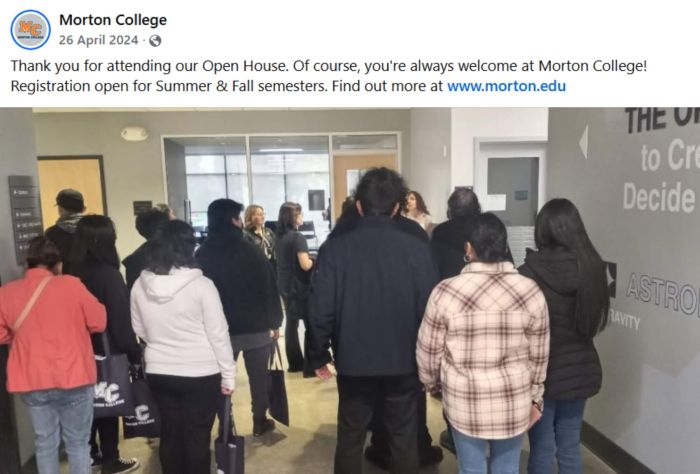
Example: Morton College (USA): This college nailed the follow-up game. Right after their open house, Morton College rolled out a one-two punch of follow-ups. They sent out personal thank-you emails to attendees, and at the same time, they put out a public thank-you on their social media pages. Importantly, it didn’t stop at gratitude – the post also included a next step, reminding students that registration was open for the upcoming semester and providing a link to get started.
Strong follow-up also means nurturing interest over time. Sharing student stories, reminders about upcoming deadlines, or invitations to future events extends the relationship beyond one day. In the end, what sets your open day apart is how well you continue to guide students once they’ve left campus.
From Open Day to Enrollment: Your Next Step
Open days (or open house events) are a cornerstone of student recruitment in higher education. They’re your chance to say, “Here’s who we are, here’s what makes us special, and here’s the community you could join.” By implementing these strategies, from showcasing your unique strengths, creating interactive experiences, and leveraging students/alumni, to embracing virtual formats, social media, personalization, and strong follow-up, you can elevate your open day from a routine tour into an unforgettable event that resonates with attendees long after they’ve gone home.
Remember, the goal isn’t just to convey information, but to make prospective students feel something: excitement about an academic program, a sense of belonging on campus, confidence that your school is the right fit, or the inspiration to take the next step towards enrollment. When you make your open days stand out, you ultimately make your institution stand out in a crowded higher education market.
Planning an exceptional open day does take effort and creativity, but the rewards are enormous. Many students cite campus visits and open days as the moment they “knew” which school was right for them. By following the approaches outlined above, you’ll increase the chances that your event is the one that wins their hearts. Good luck with your next open day event, and have fun making it one to remember!
Struggling with enrollment?
Our expert digital marketing services can help you attract and enroll more students!
Frequently Asked Questions
Question: What is an open day?
Answer: An open day is an event hosted by a college or university to give prospective students and their families the chance to experience the campus, meet faculty and staff, and learn more about academic programs and student life.
Question: What are Application Days at universities?
Answer: Application days are special events hosted by universities to help prospective students complete their applications on-site.
Question: What is a virtual open day?
Answer: A virtual open day is an online event where prospective students and their families can explore a university without visiting campus in person. Typically hosted on a digital platform, it may include live webinars with faculty, virtual campus tours, student Q&A panels, and one-on-one chats with admissions staff.
How Denison Edge partnered with Collegis to clarify brand identity, launch a content strategy, and rebuild its website to drive user growth.
Denison Edge, an initiative by Denison University, equips students, graduates, and professionals with in-demand, industry-relevant skills through stackable micro-credentials. To support ambitious enrollment goals and elevate its brand presence, Denison Edge turned to Collegis Education for strategic marketing support and a digital refresh. With a small internal team and big aspirations, Denison Edge sought to better articulate its value proposition and reach more prospective learners through a high-performing, content-rich website.
The Challenge
Denison Edge needed to amplify registrations for its non-credit programming while refreshing its brand presence to reflect its forward-thinking approach. The organization faced key limitations:
Limited internal marketing capacity
Lack of a cohesive brand voice
Outdated website UX and SEO
Urgent need to launch new high-demand programs in finance, marketing, analytics, and AI
Together, these challenges underscored the need for a strategic partner to help Denison Edge scale effectively and stand out in a competitive market.
The Solution
Collegis delivered a set of tailored services to expand visibility, support program growth, and enhance digital experience:
Brand Voice Workshop Facilitated an on-site session with university stakeholders to define a clear, compelling brand voice, behavior, and tone — establishing the foundation for all future communications.
Content Strategy Developed a comprehensive content roadmap, including a new blog, article templates, writing guide, and SEO-informed article concepts to empower internal marketing teams.
Website Strategy and Optimization Conducted in-depth UX and SEO audits pre- and post-launch, guiding the redevelopment of the Denison Edge website. The rebuilt site now delivers a seamless experience tailored to prospective learners and employers.
The Results: Stronger Presence, Measurable Growth
Within four months of relaunching the website, Denison Edge experienced marked improvements in site traffic and user engagement:
+21% YoY increase in total users
+16% YoY growth in sessions and new users
96% increase in Rental Space page traffic
1,284 sessions on new Registration page
310 sessions on new Business Immersion page
The top-performing pages — including Programs and Homepage — also achieved +16% YoY growth, confirming the success of the site redesign and content strategy.
Ashley Nicklay
Sr. Director – Student Lifecycle, Collegis Education
The Takeaway: Strategy and Storytelling Drive Digital Success
The Denison Edge case study illustrates the impact of aligning brand clarity, content strategy, and digital design. Through partnership with Collegis, Denison Edge built the foundation for ongoing growth — positioning itself as a leader in flexible, career-focused education.
Transform Your Digital Presence with Collegis
Want to grow visibility and enrollment for your programs? Contact Collegis to explore how brand and digital strategy can help you lead with confidence.
Let’s Start Writing Your Success Story
See what’s possible when strategy, creativity, and execution come together. Partner with Collegis to turn your challenges into outcomes worth sharing.
Facing challenges in enrollment, retention, or tech integration? Seeking growth in new markets? Our strategic insights pave a clear path for overcoming obstacles and driving success in higher education.
Unlock the transformative potential within your institution – partner with us to turn today’s roadblocks into tomorrow’s achievements. Let’s chat.
A new study reveals that while there is wide agreement that student engagement plays a vital role in learning, educators continue to face uncertainty about what engagement looks like, how best to measure it, and how to sustain it. Education Insights 2025–2026: Fueling Learning Through Engagementcaptures prevailing attitudes and beliefs on the topic of engagement from 1,398 superintendents, teachers, parents, and students from across the United States. Survey data was collected in May 2025 by Hanover Research on behalf of Discovery Education, the creators of essential PreK-12 learning solutions used in classrooms around the world.
“Discovery Education conducted the EducationInsights report to gain a deeper understanding of how engagement is defined, observed, and nurtured in K-12 classrooms nationwide, and we are thankful to the participants who shared their perspectives and insights with us,” said Brian Shaw, Discovery Education’s Chief Executive Officer. “One of the most important findings of this report is that engagement is seen as essential to learning, but is inconsistently defined, observed, and supported in K-12 classrooms. I believe this highlights the need for a more standardized approach to measuring student engagement and connecting it to academic achievement. Discovery Education has embarked on an effort to address those challenges, and we look forward to sharing more as our work progresses.”
Key findings of the Education Insights 2025–2026: Fueling Learning Through Engagementreport include:
Engagement is broadly recognized as a key driver of learning and success. 93% of educators surveyed agreed that student engagement is a critical metric for understanding overall achievement, and 99% of superintendents polled believe student engagement is one of the top predictors of success at school. Finally, 92% of students said that engaging lessons make school more enjoyable.
But educators disagree on the top indicators of engagement. 72% of teachers rated asking thoughtful questions as the strongest indicator of student engagement. However, 54% of superintendents identified performing well on assessments as a top engagement indicator. This is nearly twice as high as teachers, who rank assessments among the lowest indicators of engagement.
School leaders and teachers disagree on if their schools have systems for measuring engagement. While 99% of superintendents and 88% of principals said their district has an intentional approach for measuring engagement, only 60% of teachers agreed. Further, nearly 1/3 of teachers said that a lack of clear, shared definitions of student engagement is a top challenge to measuring engagement effectively.
Educators and students differ on their perceptions of engagement levels. While 63% of students agreed with the statement “Students are highly engaged in school,” only 45% of teachers and 51% of principals surveyed agreed with the same statement.
Students rate their own engagement much higher than their peers. 70% of elementary students perceived themselves as engaged, but only 42% perceived their peers as engaged. 59% of middle school students perceived themselves engaged in learning, but only 36% perceived their peers as engaged. Finally, 61% of high school students perceived themselves as engaged, but only 39% described their peers as engaged.
Proximity to learning changes impressions of AI. Two-thirds of students believe AI could help them learn faster, yet fewer than half of teachers report using AI themselves to complete tasks. Only 57% of teachers agreed with the statement “I frequently learn about positive ways students are using AI,” while 87% of principals and 98% of superintendents agree. Likewise, only 53% of teachers agreed with the statement “I am excited about the potential for AI to support teaching and learning,” while 83% of principals and 94% of superintendents agreed.
A complete copy of Education Insights 2025–2026: Fueling Learning Through Engagementcan be downloaded here.
On Wednesday, October 8 at 2:00 PM ET, Discovery Education is hosting a special, town hall-style webinar during which education leaders from across the nation will share their thoughts and insights on this report and its findings. Find more details and register for this event here.
About Discovery Education Discovery Education is the worldwide edtech leader whose state-of-the-art, PreK-12, digital solutions help educators engage all students and support higher academic achievement. Through award-winning multimedia content, instructional supports, and innovative classroom tools that are effective, engaging, and easy to use, Discovery Education helps educators deliver powerful learning experiences. Discovery Education serves approximately 4.5 million educators and 45 million students worldwide, and its resources are accessed in over 100 countries and territories. Through partnerships with districts, states, and trusted organizations, Discovery Education empowers teachers with essential edtech solutions that inspire curiosity, build confidence, and accelerate learning. Learn more at www.discoveryeducation.com.
This audio is auto-generated. Please let us know if you have feedback.
Dive Brief:
The U.S. Department of Justice is suing Illinois over state laws allowing certain undocumented college students to pay in-state tuition rates at public colleges and receive state-administered scholarships.
Under Illinois law, an undocumented student is eligible for in-state tuition if they attended a high school in the state for at least three years, graduated from high school or earned a GED in Illinois, and sign an affidavit saying they will apply to become a permanent U.S. resident as soon as possible.
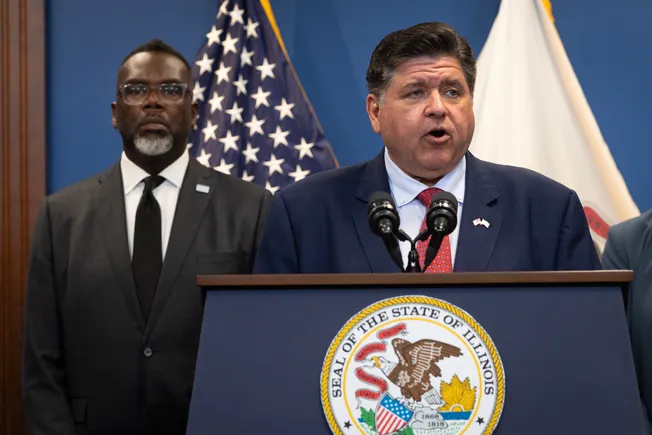
U.S. Attorney General Pamela Bondi on Tuesday argued that in-state tuition rates for undocumented students illegally provide benefits not offered to all U.S. citizens. A spokesperson for Illinois Gov. JB Pritzker’s office defended the policy on Wednesday, saying it is consistent with federal law.
Dive Insight:
As of May, Illinois was one of at least 25 states that, along with Washington, D.C., had policies making undocumented students eligible to pay in-state rates at some or all public colleges.
Over 27,600 undocumented students attended Illinois colleges in 2023, according to the Higher Ed Immigration Portal.
Illinois has had its in-state tuition policy for eligible undocumented students in place since 2003. And in 2011, the state General Assembly established the Illinois DREAM Fund Commission, which raises private donations to fund scholarships for those students.
Since June, the DOJ has sued at least five states, including Illinois, over the practice.
The same day the DOJ filed a lawsuit against Texas, the state attorney general’s office partnered with the department to ask the court to strike down the policy.A federal judge declared it unconstitutional shortly afterward,though civil rights groups are seeking to intervene and challenge the ruling.
In Oklahoma, the state attorney general similarly worked with the DOJ to end its policy, a request approved by a federal judge on Friday.Florida repealed its policy through legislation this year independent of federal intervention.
“This Department of Justice has already filed multiple lawsuits to prevent U.S. students from being treated like second-class citizens — Illinois now joins the list of states where we are relentlessly fighting to vindicate federal law,” Bondi said in a Tuesday statement.
Steven Weinhoeft, U.S. attorney for the Southern District of Illinois, similarly alleged that Illinois’ law unlawfully disadvantages the state’s citizens and uses tax funding to incentivize illegal immigration.
“Illinois has an apparent desire to win a ‘race to the bottom’ as the country’s leading sanctuary state,” he said in a statement. “Illinois citizens deserve better.”
Sanctuary jurisdictions, such as cities and states, are generally considered areas with policieslimiting local authorities’ cooperation with federal immigration enforcement efforts. Bondi has promised to “eradicate” such policies across the country.
Weinhoeft in February took over as the district’s attorney for Rachelle Aud Crowe, following Trump’s promise to fire all U.S. attorneys appointed by former President Joe Biden.
Unlike Texas and Oklahoma, Illinois is a solidly blue state, with Democratic control over the governor’s mansion and both chambers of the Legislature.And Pritzker has been one of the most outspoken opponents of President Donald Trump.
A spokesperson for the governor’s office called the lawsuit “yet another blatant attempt to strip Illinoisans of resources and opportunities.”
“While the Trump Administration strips away federal resources from all Americans, Illinois provides consistent and inclusive educational pathways for all students — including immigrants and first-generation students — to access support and contribute to our state,” the spokesperson said in an email Wednesday. “All Illinoisans deserve a fair shot to obtain an education, and our programs and policies are consistent with federal laws.”
The DOJ’s lawsuit names as defendants:
The state of Illinois.
Pritzker.
Illinois Attorney General Kwame Raoul.
Southern Illinois University’s board of trustees.
Rend Lake College’s board of trustees.
The University of Illinois’ board of trustees.
Chicago State University’s board of trustees.
Eastern Illinois University’s board of trustees.
Illinois State University’s board of trustees.
Northeastern Illinois University’s board of trustees.
Illinois Student Assistance Commission.
Illinois DREAM Fund Commission.
The University of Illinois system said Wednesday it is reviewing the complaint and had no comment. Chicago State said it does not comment on pending litigation. And Rend Lake declined to comment on the lawsuit, citing ongoing talks with its legal counsel.
The remaining colleges did not immediately respond to requests for comment Wednesday.
The difference between in-state and out-of-state tuition can be substantial.
In-state students who enrolled full time at Illinois State in fall 2025 paid $12,066 for a year of tuition.For out-of-state students, the cost was $24,132.
At Chicago State, new in-state students paid $352 per credit hour, while incoming out-of-state students paid $697.