A new study reveals that while there is wide agreement that student engagement plays a vital role in learning, educators continue to face uncertainty about what engagement looks like, how best to measure it, and how to sustain it. Education Insights 2025–2026: Fueling Learning Through Engagementcaptures prevailing attitudes and beliefs on the topic of engagement from 1,398 superintendents, teachers, parents, and students from across the United States. Survey data was collected in May 2025 by Hanover Research on behalf of Discovery Education, the creators of essential PreK-12 learning solutions used in classrooms around the world.
“Discovery Education conducted the EducationInsights report to gain a deeper understanding of how engagement is defined, observed, and nurtured in K-12 classrooms nationwide, and we are thankful to the participants who shared their perspectives and insights with us,” said Brian Shaw, Discovery Education’s Chief Executive Officer. “One of the most important findings of this report is that engagement is seen as essential to learning, but is inconsistently defined, observed, and supported in K-12 classrooms. I believe this highlights the need for a more standardized approach to measuring student engagement and connecting it to academic achievement. Discovery Education has embarked on an effort to address those challenges, and we look forward to sharing more as our work progresses.”
Key findings of the Education Insights 2025–2026: Fueling Learning Through Engagementreport include:
Engagement is broadly recognized as a key driver of learning and success. 93% of educators surveyed agreed that student engagement is a critical metric for understanding overall achievement, and 99% of superintendents polled believe student engagement is one of the top predictors of success at school. Finally, 92% of students said that engaging lessons make school more enjoyable.
But educators disagree on the top indicators of engagement. 72% of teachers rated asking thoughtful questions as the strongest indicator of student engagement. However, 54% of superintendents identified performing well on assessments as a top engagement indicator. This is nearly twice as high as teachers, who rank assessments among the lowest indicators of engagement.
School leaders and teachers disagree on if their schools have systems for measuring engagement. While 99% of superintendents and 88% of principals said their district has an intentional approach for measuring engagement, only 60% of teachers agreed. Further, nearly 1/3 of teachers said that a lack of clear, shared definitions of student engagement is a top challenge to measuring engagement effectively.
Educators and students differ on their perceptions of engagement levels. While 63% of students agreed with the statement “Students are highly engaged in school,” only 45% of teachers and 51% of principals surveyed agreed with the same statement.
Students rate their own engagement much higher than their peers. 70% of elementary students perceived themselves as engaged, but only 42% perceived their peers as engaged. 59% of middle school students perceived themselves engaged in learning, but only 36% perceived their peers as engaged. Finally, 61% of high school students perceived themselves as engaged, but only 39% described their peers as engaged.
Proximity to learning changes impressions of AI. Two-thirds of students believe AI could help them learn faster, yet fewer than half of teachers report using AI themselves to complete tasks. Only 57% of teachers agreed with the statement “I frequently learn about positive ways students are using AI,” while 87% of principals and 98% of superintendents agree. Likewise, only 53% of teachers agreed with the statement “I am excited about the potential for AI to support teaching and learning,” while 83% of principals and 94% of superintendents agreed.
A complete copy of Education Insights 2025–2026: Fueling Learning Through Engagementcan be downloaded here.
On Wednesday, October 8 at 2:00 PM ET, Discovery Education is hosting a special, town hall-style webinar during which education leaders from across the nation will share their thoughts and insights on this report and its findings. Find more details and register for this event here.
About Discovery Education Discovery Education is the worldwide edtech leader whose state-of-the-art, PreK-12, digital solutions help educators engage all students and support higher academic achievement. Through award-winning multimedia content, instructional supports, and innovative classroom tools that are effective, engaging, and easy to use, Discovery Education helps educators deliver powerful learning experiences. Discovery Education serves approximately 4.5 million educators and 45 million students worldwide, and its resources are accessed in over 100 countries and territories. Through partnerships with districts, states, and trusted organizations, Discovery Education empowers teachers with essential edtech solutions that inspire curiosity, build confidence, and accelerate learning. Learn more at www.discoveryeducation.com.
This audio is auto-generated. Please let us know if you have feedback.
Dive Brief:
The U.S. Department of Justice is suing Illinois over state laws allowing certain undocumented college students to pay in-state tuition rates at public colleges and receive state-administered scholarships.
Under Illinois law, an undocumented student is eligible for in-state tuition if they attended a high school in the state for at least three years, graduated from high school or earned a GED in Illinois, and sign an affidavit saying they will apply to become a permanent U.S. resident as soon as possible.
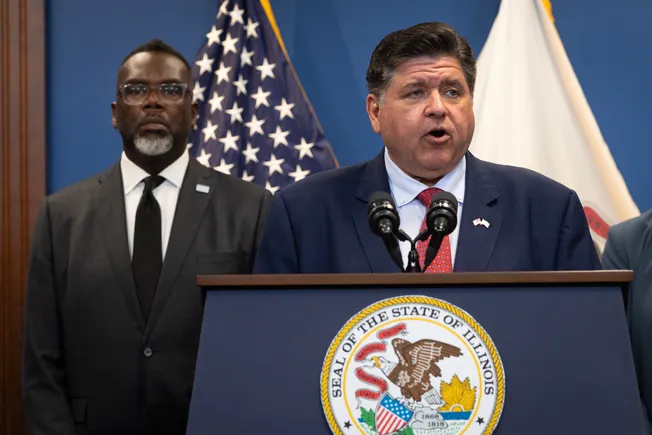
U.S. Attorney General Pamela Bondi on Tuesday argued that in-state tuition rates for undocumented students illegally provide benefits not offered to all U.S. citizens. A spokesperson for Illinois Gov. JB Pritzker’s office defended the policy on Wednesday, saying it is consistent with federal law.
Dive Insight:
As of May, Illinois was one of at least 25 states that, along with Washington, D.C., had policies making undocumented students eligible to pay in-state rates at some or all public colleges.
Over 27,600 undocumented students attended Illinois colleges in 2023, according to the Higher Ed Immigration Portal.
Illinois has had its in-state tuition policy for eligible undocumented students in place since 2003. And in 2011, the state General Assembly established the Illinois DREAM Fund Commission, which raises private donations to fund scholarships for those students.
Since June, the DOJ has sued at least five states, including Illinois, over the practice.
The same day the DOJ filed a lawsuit against Texas, the state attorney general’s office partnered with the department to ask the court to strike down the policy.A federal judge declared it unconstitutional shortly afterward,though civil rights groups are seeking to intervene and challenge the ruling.
In Oklahoma, the state attorney general similarly worked with the DOJ to end its policy, a request approved by a federal judge on Friday.Florida repealed its policy through legislation this year independent of federal intervention.
“This Department of Justice has already filed multiple lawsuits to prevent U.S. students from being treated like second-class citizens — Illinois now joins the list of states where we are relentlessly fighting to vindicate federal law,” Bondi said in a Tuesday statement.
Steven Weinhoeft, U.S. attorney for the Southern District of Illinois, similarly alleged that Illinois’ law unlawfully disadvantages the state’s citizens and uses tax funding to incentivize illegal immigration.
“Illinois has an apparent desire to win a ‘race to the bottom’ as the country’s leading sanctuary state,” he said in a statement. “Illinois citizens deserve better.”
Sanctuary jurisdictions, such as cities and states, are generally considered areas with policieslimiting local authorities’ cooperation with federal immigration enforcement efforts. Bondi has promised to “eradicate” such policies across the country.
Weinhoeft in February took over as the district’s attorney for Rachelle Aud Crowe, following Trump’s promise to fire all U.S. attorneys appointed by former President Joe Biden.
Unlike Texas and Oklahoma, Illinois is a solidly blue state, with Democratic control over the governor’s mansion and both chambers of the Legislature.And Pritzker has been one of the most outspoken opponents of President Donald Trump.
A spokesperson for the governor’s office called the lawsuit “yet another blatant attempt to strip Illinoisans of resources and opportunities.”
“While the Trump Administration strips away federal resources from all Americans, Illinois provides consistent and inclusive educational pathways for all students — including immigrants and first-generation students — to access support and contribute to our state,” the spokesperson said in an email Wednesday. “All Illinoisans deserve a fair shot to obtain an education, and our programs and policies are consistent with federal laws.”
The DOJ’s lawsuit names as defendants:
The state of Illinois.
Pritzker.
Illinois Attorney General Kwame Raoul.
Southern Illinois University’s board of trustees.
Rend Lake College’s board of trustees.
The University of Illinois’ board of trustees.
Chicago State University’s board of trustees.
Eastern Illinois University’s board of trustees.
Illinois State University’s board of trustees.
Northeastern Illinois University’s board of trustees.
Illinois Student Assistance Commission.
Illinois DREAM Fund Commission.
The University of Illinois system said Wednesday it is reviewing the complaint and had no comment. Chicago State said it does not comment on pending litigation. And Rend Lake declined to comment on the lawsuit, citing ongoing talks with its legal counsel.
The remaining colleges did not immediately respond to requests for comment Wednesday.
The difference between in-state and out-of-state tuition can be substantial.
In-state students who enrolled full time at Illinois State in fall 2025 paid $12,066 for a year of tuition.For out-of-state students, the cost was $24,132.
At Chicago State, new in-state students paid $352 per credit hour, while incoming out-of-state students paid $697.
What’s in a name? To Gallaudet University, quite a lot.
When the Gallaudet chapter of Students for Justice in Palestine protested the war in Gaza, Gallaudet moved swiftly to silence the group, neutering the SJP chapter’s social media presence and sending a campus-wide email condemning the group’s rhetoric. While they initially succeeded, swift action by FIRE and the social media company Meta ensured that free speech — and proper application of trademark law — won the day.
The leadup to last spring’s commencement ceremonies was a tense time at Gallaudet. Gallaudet SJP put up stickers across campus containing the phrase “from the river to the sea.” Many of these placements could fairly be considered vandalism by the university — and thus not protected by First Amendment principles. But rather than focus on where the stickers were placed, or where written materials should be placed, Gallaudet took a more troubling approach.
On May 22, the university released a video “community statement . . . affirming our values and addressing recent concerns.” In it, Provost Khadijat Rashid and President Roberta Cordano noted that the phrase “from the river to the sea” is “associated with rhetoric that promotes violence and hatred” and is “considered hate speech.”
Instead of specifying that the underlying speech is protected but the methods used (i.e., unauthorized stickering on university property) in communicating that speech were unacceptable, Gallaudet conflated the two, stating, “Antisemitism has no place at Gallaudet. These acts of vandalism are not protected speech.”
As FIRE has thoroughly explained, simply repeating the “river to the sea” slogan during a peaceful protest in the United States most certainly is protected speech, regardless of the dispute over whether it is also antisemitic. Gallaudet, which tells its community members it believes in “the principles of freedom of expression and open dialogue without fear of censorship or retaliation,” therefore promises to protect such speech in its own policies. Yet after threatening protected speech, Gallaudet’s leaders went on a curious digression:
We also want to address a source of confusion. A social media account [on Instagram] with the handle @sjpgallaudet uses the university’s name in its profile. This account does not represent a university-sanctioned student organization. The use of “Gallaudet” in this context is unauthorized, and the university filed a trademark infringement complaint [with Meta]. The social media handle has now been removed.
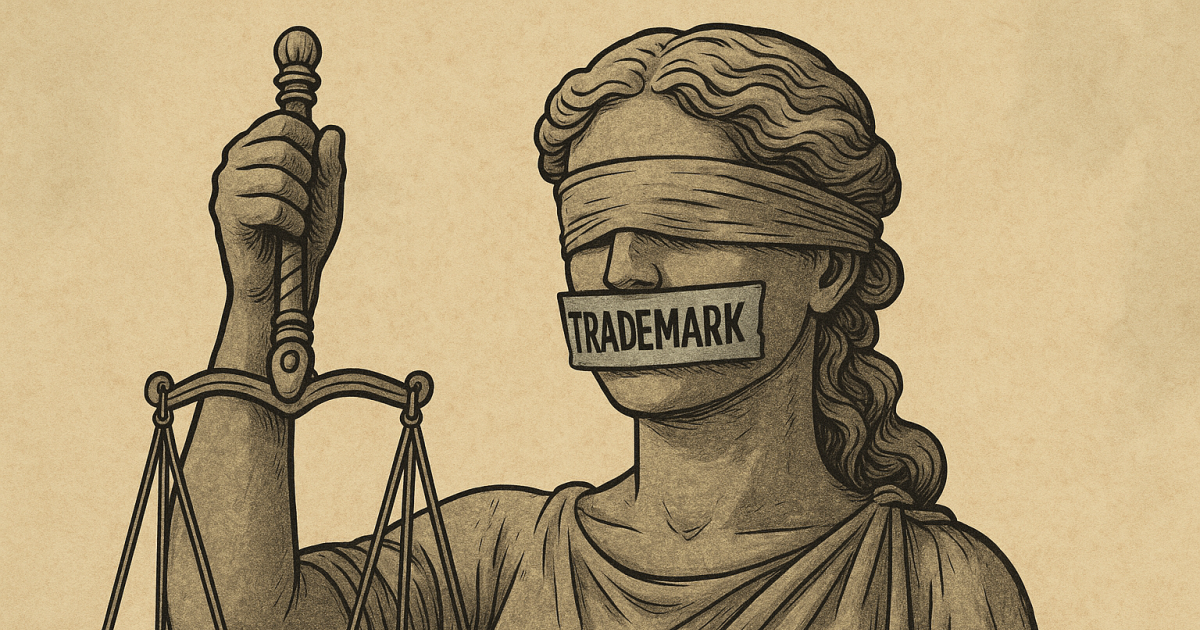
Trademark law (and corresponding Meta guidance) does allow parties with marks — such as distinctive names, logos, or even sounds, textures, or colors — to protect their creative works from infringers. But Gallaudet was stretching trademark law far beyond its bounds. In order to bring a trademark claim, rights holders generally need to show that other parties using their marks will cause confusion among consumers as to who is generating the content. In other words, Gallaudet can protect itself against would-be infringers who want to use its name to fool folks into thinking the infringer represents Gallaudet in some way. Posers beware, says the law.
But few if any social media users would think that a student group — especially one with a clear advocacy posture like SJP — represents a university just because the group references the name of the school where it operates. If someone actually exists who would assume Gallaudet officially sponsors the @sjpgallaudet Instagram handle, they would surely be dissuaded by the prominent message on the account saying: “GALLAUDET UNIVERSITY SHUTS DOWN STUDENTS FOR JUSTICE.” No likelihood of confusion, no trademark infringement.
Intellectual property rights cannot and should not be used to make unpopular speech go away.
FIRE made this simple point to Gallaudet in a June 3 letter, while also taking the time to carefully explain that “from the river to the sea” is protected by the university’s free speech promises. We received no reply, just crickets.
Fortunately, Meta proved significantly more helpful. On July 29, FIRE contacted Meta, urging the company to reinstate the @sjpgallaudet account. On Aug. 26, Meta wrote to FIRE explaining that, upon further review, its legal teams had determined that the account does not violate trademark guidelines, and reinstated it. Meta deserves praise in this case for thoroughly reassessing its earlier trademark determination and changing its decision accordingly.
Is saying ‘From the river to the sea, Palestine will be free’ protected speech under the First Amendment?
While the phrase may offend some listeners, feeling offended is hardly adequate cause to circumvent First Amendment protections for freedom of speech.
But Gallaudet, for its part, refuses to acknowledge its mistake or hostility toward student expression. This creates the troubling possibility that the university will again try to misuse trademark law to bully groups it doesn’t like, even if Meta is onto its shenanigans.
This is not the only time we’ve seen universities try to use their names to knock down perceived opponents. In July, FIRE blogged about a similar case involving Purdue University, where the independent student newspaper The Exponent published an editorial saying it would remove the names and images of pro-Palestinian activists from its website over concerns that the federal government would use them in its efforts targeting what the government called “pro-jihadist” speech.
In response, Purdue’s administration went on the offensive. The university told the publication, run by Purdue students since 1889, to stop using the name “Purdue” in its website address. Purdue also said it would stop circulating the paper and end preferential parking for its staff. As we noted at the time, Purdue’s decision made a mockery of trademark law and threatened independent journalism.
Purdue and Gallaudet surely won’t be the last higher-learning institutions to invoke trademarks to silence dissent. But FIRE will continue to call on universities to protect their marks in a way that respects the First Amendment.
Names are valuable to organizations, who have a right to protect their brands from abuse and safeguard consumers, donors, and passersby from confusion. Yet intellectual property rights cannot and should not be used to make unpopular speech go away.
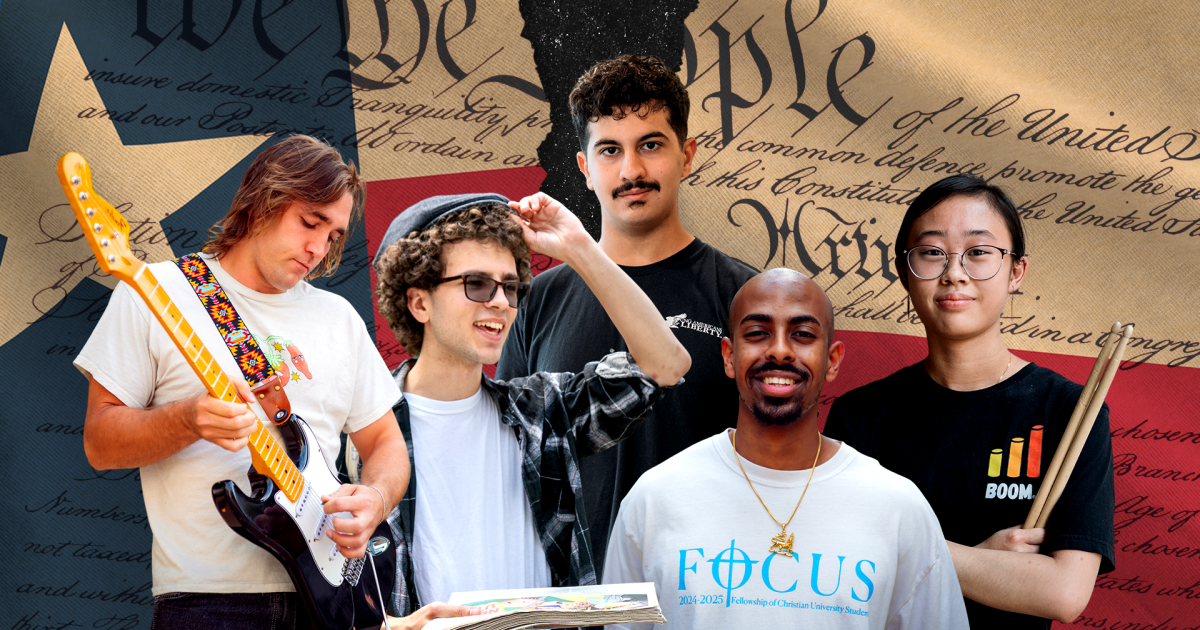
AUSTIN, Texas, Sept. 3, 2025 — The Foundation for Individual Rights and Expression filed a lawsuit today to stop enforcement of a new, unconstitutional law that turns every public university in Texas into a speech-free zone starting at 10 p.m. every day. FIRE is suing the University of Texas System on behalf of student musicians, journalists, political organizers, and religious students who span the ideological spectrum, all of whom the new Texas law threatens to silence.
“The First Amendment doesn’t set when the sun goes down,” said FIRE senior supervising attorney JT Morris. “University students have expressive freedom whether it’s midnight or midday, and Texas can’t just legislate those constitutional protections out of existence.”
In 2019, Texas was a national leader in protecting student speech, passing a robust law enshrining free speech on public university campuses. But after a series of high-profile protests over the Israeli-Palestinian conflict in 2024, the Texas legislature reversed course and passed Senate Bill 2972, transforming the speech-protective 2019 law into one mandating that the state’s public universities and colleges impose a host of sweeping censorship measures.
FIRE’s lawsuit is challenging two major provisions of the law, which went into effect on Sept. 1. The first requires public universities in Texas to ban all “expressive activities” on campus between the hours of 10 p.m. and 8 a.m., which the law defines as “any speech or expressive conduct protected by the First Amendment.”
That is a shocking prohibition of protected speech at public universities. Under the new law, universities now have the power to discipline students at nighttime for wearing a hat with a political message, playing music, writing an op-ed, attending candlelight vigils — even just chatting with friends.
“This law gives campus administrators a blank check to punish speech, and that authority will inevitably be used to target unpopular speech,” said FIRE attorney Adam Steinbaugh. “Administrators have plenty of ways to prevent disruptive conduct that do not involve such a broad censorship mandate.”
FIRE is also challenging the law’s mandate that universities ban student groups from a host of protected expression during the last two weeks of any semester or term, including inviting guest speakers, using amplified sound, or playing a drum. The Fellowship of Christian University Students at UT-Dallas, for example, would be unable to invite an off-campus minister to lead a prayer during finals.
“Our organization gives students on campus a place to worship with one another and hear from Christian leaders,” said FOCUS committee chair Juke Matthews. “For many of them, this is their church away from home. This law would yank away part of their support system right at the most stressful time of the term.”
If state officials and campus administrators want to regulate disruptive speech, the First Amendment demands that they narrowly tailor any such regulation. But Texas’ blanket ban makes no distinctions about the noise level or location of the expression. The Texas law would permit a tuba concert during finals weeks, but not one with drums. And the law exempts “commercial speech” from its sweeping bans on speech. So Texas students are free to advertise t-shirts featuring the First Amendment after hours… but could face discipline for wearing them.
FIRE is suing on behalf of a diverse group of students and student organizations whose speech the new Texas law will harm. Along with the UT-Dallas chapter of FOCUS, other plaintiffs include:
Young Americans for Liberty is an Austin-based national grassroots organization for students who want to advance the cause of liberty. Many of their student members at Texas universities engage in protests, petitions, and “Free Speech Balls” that traditionally take place during evening hours. FIRE is also representing an individual YAL member who attends UT-Austin and would personally face punishment for inviting YAL speakers in the final weeks of term or for sharing his political opinions at the wrong hour.
The Society of Unconventional Drummers is a registered student organization at UT-Austin that puts on performances throughout the term, including at the end of each semester. Texas’s arbitrary rule banning percussion the last two weeks of any semester would force the students to cancel one of their most popular shows.
Strings Attached is a student music group that holds public performances on UT-Dallas’s campus, including in the final two weeks of term. Some of their concerts take place after hours or during the day with sound amplification, both of which could fall afoul of the Texas law’s sweeping bans.
The Retrograde is a new, independent student newspaper that serves the UT-Dallas community. Whether it’s writing a story, emailing sources, editing a column, much of its staff’s newsgathering and reporting necessarily happens after Texas’ 10 p.m. free speech cutoff.
“Under these new rules, we’re at risk of being shut down simply for posting breaking news as it happens,” said Retrograde Editor-in-Chief Gregorio Olivares. “With that threat hanging over our heads, many student journalists across the UT system face the impossible decision between self-censorship and running a story that criticizes the powers on campus.”
FIRE’s clients will ask the U.S. District Court for the Western District of Texas to issue a preliminary injunction to prevent UT’s new speech bans from taking effect. The defendants in the lawsuit include the members of the UT System Board of Regents, UT System Chancellor John M. Zerwas, UT-Austin President Jim Davis, and UT-Dallas President Prabhas V. Moghe.
The Foundation for Individual Rights and Expression (FIRE) is a nonpartisan, nonprofit organization dedicated to defending and sustaining the individual rights of all Americans to free speech and free thought—the most essential qualities of liberty. FIRE recognizes that colleges and universities play a vital role in preserving free thought within a free society. To this end, we place a special emphasis on defending the individual rights of students and faculty members on our nation’s campuses, including freedom of speech, freedom of association, due process, legal equality, religious liberty, and sanctity of conscience.
CONTACT:
Alex Griswold, Communications Campaign Manager, FIRE: 215-717-3473; [email protected]
Hi all. Today, HESA is releasing the eighth edition of The State of Postsecondary Education in Canada, co-authored by myself and HESA’s Jiwoo Jeon and Janet Balfour. Many thanks to our partners – Pearson, Studiosity, Duolingo, Capio, Element451 and Riipen – for supporting this year’s edition.
You probably don’t need to actually read this year’s edition to know that the state of postsecondary education in Canada is a bit perilous. And the reason for this, quite simply, is that public funding for higher education has been stagnant for well over a decade now.
At one level, of course, it is possible to look at public funding in Canada and proclaim that nothing is wrong. As Figure 1 shows, public spending on higher education has stayed relatively constant over the past fifteen years in inflation-adjusted dollars. Individual provinces may have seen swings up or down in their spending, but collectively the ten provinces have spent a collective $20 billion/year or so on higher education since about 2011-12 (excluding transfer payments from the federal government), and the federal government has spent about $10 billion/year.
Figure 1: Federal and Provincial Own-Source Expenditures in Respect of PSE Institutions, Canada, in $2023, 2007-08 to 2023-24, in Billions
So, at one level it is possible to shrug off the problem. But that requires eliminating a lot of context. Let’s see how Canadian funding looks when we put it into various types of contexts.
If we describe public funding in per-student terms, as in Figure 2, what you see is a mixed picture. Total public funding per full-time equivalent domestic student has dropped by about 6% since 2009, and for university students by about 15%. Complicating this figure is the fact that per-student funding for college students has risen somewhat, however, this is due not to extra funding but rather to a very significant drop in the number of domestic students enrolled in colleges. Whether this is due to a reduction of interest in college programs among Canadians, or a deliberate move away from Canadian to international students on the part of colleges is difficult to answer, but in either event, the rise in funding per college student is a function of fewer students rather than more funding.
Figure 2: Per-student Spending by Sector, Canada, in $2023, 2007-08 to 2023-24
If we describe public funding as a percentage of the country’s economy, the picture looks significantly worse. Prior to the recession of 2008-09, public funding on postsecondary education was about 1.3% of GDP, which was substantially above the level seen across other industrialized countries (about 1.0%, according to the OECD). Briefly, that number popped up during the Great Recession, partly because spending increased but also partly because GDP stagnated. Since then, however, spending has stayed constant while GDP has grown. The result is that public spending on postsecondary has fallen to the OECD average of 1% – and the financial advantage our system once held over competitor nations has largely disappeared.
Figure 3: Public Spending on Postsecondary Education as a Percentage of GDP, in $2023, 2007-08 to 2023-24
We can also look at these figures in per-inhabitant terms. There was a point in the late 00s where Canada had about 33 million inhabitants and public sources spent $30 billion per year on postsecondary education. Fifteen years and seven million new inhabitants later, we’re still spending $30 billion per year. That results in a 21% reduction in spending on universities and colleges per inhabitant from public sources, as shown in Figure 4. In Figure 5, we look at postsecondary spending as a percentage of government budgets. Again, we see a case of spending on postsecondary institutions falling consistently because overall government expenditure is rising quickly. In the past fifteen years, aggregate provincial spending on postsecondary has fallen as a percentage of total provincial expenditures from 5.4% to just 3.3%; for federal spending it has fallen from 1.6% to just 1%.
Figure 4: Public Spending on Post-Secondary Education Institutions Per Inhabitant, in $2023, 2007-08 to 2023-24
Figure 5: Public Spending on Postsecondary Education Institutions as a Percentage of Total Government Spending, Federal and Provincial Governments, in $2023, 2007-08 to 2023-24
In other words: we have been able – just — to keep our public investments in higher education level with inflation. But we have only been able to do so because our population is larger, and our economy has grown over the last fifteen years, and we can do so with less relative effort. Had we kept up funding on a domestic per-student level with where it was in the immediate aftermath of the Great Financial crisis, post-secondary education system would have an extra $2.1 billion. If we had kept funding on postsecondary education level with overall population growth we would have invested another $7.3 billion. If we’d had funding for postsecondary institutions level with GDP growth we would have invested another $13.6 billion. And if we had kept it level with the overall growth in program spending, we would have invested another $19.1 billion. So, depending on the measure chosen, we are anywhere from $2-20 billion short of where we would be had we kept our spending levels of the late 00s/early 10s.
But, you say, isn’t this true everywhere? And aren’t we at least better than the United States?
It is certainly true that Canada is in a pattern that would seem familiar both to residents of Australia and the United Kingdom. These three countries have all followed roughly the same path over the past decade and a half, combining stagnant public funding with slightly growing domestic numbers, paid for by an absolute free-for-all with respect to international students paying market tuition rates. All three countries looked like they had made a good deal at least for as long as the international student boom lasted.
But take a look at our biggest competitor, the United States. During the financial crisis of 2008-9, funding for postsecondary institutions tumbled by over 10%. But then, in just the eight years between 2012 and 2020, funding for higher education grew by a third – from about $150B (US) per year to over $200B/year. In fact, for all we hear about cuts to funding under Trump (not all of which may come true, as at the time of writing the Senate seems quite intent at least on reversing the billions of proposed cuts to the National Institutes of Health), even if all the proposed cuts were to come through, total US spending on higher education would be roughly 20% higher than it was in 2008-09, while Canada’s would be more or less unchanged. And of course, in the United States domestic enrolments are falling, meaning that in per- student terms, the gap is even more substantial.
Figure 6: Indexed Real Public Spending on Postsecondary Institutions, Canada vs. US, 2011-12 to 2023-24 (2011-12 = 100)
In sum: Canada is not alone in seeing significant falls in higher education spending, but few countries have seen declines in quite as an across-the-board fashion, for quite as long, as we have. Canada began the 2010s with one of the best-funded tertiary education systems in the world, but, quite simply, governments of every stripe at both the federal and provincial levels have been systematically squandering that advantage for the past 15 years. We had a genuine lead in something, an advantage over the rest of the world. But now it is gone.
So much for the past: what about the future? Well, it depends a bit on where you stand. The federal Liberals came back to power on a platform which was the least science-friendly since 1988. They promised money for postsecondary education, but most of it was either for apprenticeship grant programs which they themselves had deemed poor value for money just last year, or for programs to switch apprenticeship training from public colleges to union-led training centres – as crass a piece of cash-for-union endorsements as one can imagine. (The only saving grace? The losing Conservatives promised the unions even larger bribes). What they promised for science, for direct transfers to public universities and colleges, was a pittance in comparison.
Moreover, following the election, in the face of a set of tariff threats from the Trump Administration, the federal and provincial governments united in a program of “nation-building” which revolved entirely around the notion that national salvation was to be found in programs which “produced more goods” and “gets them to markets” (i.e. non-US markets, meaning ports) more quickly. The idea that the country might pivot to services, to a more knowledge-intensive economy in which university and college research efforts might be seen as useful, was apparently not even considered. Rather, the country rushed head-first into the familiar – but in the long-term disastrous – role being hewers of wood and drawers of water.
Now, hewing wood and drawing water has traditionally been Canada’s lot, and one could argue that historically have not fared so very badly by focusing on this core competence. But it is worth remembering the Biblical origin of this phrase, in the book of Joshua. A group of Canaanites known as the Gibeonites had not been entirely truthful when signing a treaty with the returning Israelites; claiming to be a nomadic people rather than a settled one (which would have led to them being exterminated). When the Israelites discovered the deception, many wanted the Gibeonites killed; instead, Joshua decided that they should hew wood and draw water for the Israelites instead. That is to say, they fell into bondage. The political analogies in today’s Trumpian world should be obvious.
To return to higher education: things look pretty bleak. Investment is falling. Governments are unwilling either to spend more on higher education, or to permit institutions to generate money on their own through tuition fees. Their idea of economic growth is, at best, out of the 1960s: sell more natural resources to foreigners. The idea of making our way in the world as a knowledge or science powerhouse, a spirit that infused policymaking at both the federal and provincial level in the early 2000s, has simply disappeared. Colleges might see some boosts in funding over the coming years for vocational programming, although it’s likely that they will need to scrap with private-sector unions for the money; the likelihood is that universities will see real decreases in funding. The fate of the promised increase in research spending in the 2024 budget seems especially at-risk.
The path to a better Canada does not lie in becoming better hewers of wood and drawers of water. It lies in developing new industries based on cutting-edge knowledge and science. Spending on postsecondary students, on its own, does not guarantee that these new industries will come into existence. But the absence of spending on postsecondary education certainly guarantees that they will not.
The country has a choice to make. And right now, we seem to be choosing poorly.
Hamish Coates, Ellen Hazelkorn, Hans de Wit, Tessa Delaquil, and Angel Calderon
Hans de Wit, Ellen Hazelkorn and Hamish Coates are editors and Tessa DeLaquil is associate editor of Policy Reviews in Higher Education. Angel Calderon is a member of the PRiHE Editorial Board. This blog is based on their editorial for issue 2, 2025.
It often feels like there is lots more ranting and moaning than imagining and evidencing around higher education these days. With excellent policy research, it does not have to be this way.
The immediate post-millennium era was arguably a golden age for universities, with huge interest in massification, investment, especially in research, and institutional autonomy. But the global financial crisis followed a decade later by global pandemic shocked higher education into different worlds. Most countries still promulgate objectives for a sustainable and cost-efficient, equitable and accessible, high quality education system as the basis for growth. In OECD countries, however, assumptions that massification would on its own provide opportunities for everyone with mechanisms for social inclusion and social mobility are being heavily questioned. In developing and emerging economies, the challenge is meeting demand and being able to absorb graduates. Yet, too many countries and research-focused universities keep chasing ‘quick prestige’, leaving others to put up with disproportionately lower funding, as well as poorer facilities, resources and opportunities.
Wealth and opportunity inequalities are increasingly greater within rather than between countries. At the same time, questions about educational outcomes such as employability, skills gaps and skills mismatches and over-qualification which have been long ignored by academic communities as irrelevant, are gaining public and policy traction. Governments and industries document the shift away from credentials towards greater focus on competencies – what people can do with what they know – and alternative accreditation processes.
A few large countries are in the foothills of a demographic cliff, while others are (currently) privileged by demand. Traditional public systems in many countries face an identity crisis and appear too sluggish to grasp new opportunities. Parts of the private subsector are progressively active and more responsive to the needs of diverse and older learners and to competency-based learning, micro-credentials and other forms of just-in-time learning. Accordingly, the private sector is the fastest growing segment of postsecondary education worldwide.
Countries vary considerably in their ability to cover costs associated with policy objectives due to revenue challenges and competitive demands elsewhere within society and the economy, alongside student and public unease about cost. Certain systems promote a laissez-faire or marketised approach whereby individual colleges and institutions (public and private) pursue their own agendas, while others grasp at opportunities for a more strategic state-led approach. Countries are beginning to examine the opportunities of a more joined-up post-secondary tertiary system (Hazelkorn, 2025). As Piketty has written, “it is access to skills and diffusion of knowledge that allow inequality to be reduced both within countries and at the international level” (2020: 534). But funding a mass system is very different from one catering to a small minority especially at a time when geopolitical/geoeconomic power shifts reshape the global landscape.
Deglobalisation and populist nationalism are shaking these issues out differently around the world. In many countries, these tensions are contributing to a growing sense of people and communities being left behind, and to social unrest. The dominance of information technology over universities, challenging the value of graduates for entry-level work and of faculty, will spur heightened questioning of the value of higher education (Coates, 2017; The Guardian, 2025; Roose, 2025). While others look on in disbelief, there is a sense that this may not be a problem for higher education today, though it is likely to be so one day.
It is too easy to blame governments and other external stakeholders. What role has higher education played itself, and what role can it play into the future? Is the sector, especially the public side, sufficiently strategic, forward-looking and adaptable? What are the implications for the governance of the system and of its many institutions? Or is it wandering unchained in the global wilds? Universities praise themselves as being one of the world’s oldest and most enduring institution, but as Darwin said: “It is not the strongest of the species that survives, nor the most intelligent that survives. It is the one that is the most adaptable to change.”
Once, such questions may have been ludicrous to provoke at the outset of a Policy Reviews in Higher Education (PRIHE) editorial. Not anymore. Accordingly, in the balance of this editorial we sketch frontier topics which higher education can embrace to drive positive reform, then current journal contributions (Figure 1). We conclude with a call to engage and transform.
Figure 1: Current and frontier contributions
Any higher education policy zealot who has read Arnold Lobel’s brilliant treatise on Owl’s strange bumps in the bed (in which the Owl is afraid to go to sleep because of two strange bumps at the bottom of his bed, which are, in fact, his feet) (Lobel, 1982) understands that fear is created by running scared and can be tackled by uncovering and addressing matters in ways that unlock innovation and progress.
Policy Reviews in Higher Education plays this important role, though to date with fewer endearing drawings. Springing from inspiring intellectual dialogue with a member of the PRIHE Editorial Board and consequently guest author, Angel Calderon, we mark out a handful of narratives to carry forward policy research over the coming decades:
Moving beyond academic comfort communities
Handling looming demographic shifts and diversity
Addressing concerns about academic value
Creatively unpacking university clusterings and characteristics
Leaders who lead in smart ways.
Higher education researchers must explore how universities and the academics who comprise them can move beyond comfort communities. This means finding ways to move beyond conservative research literatures and straightjacketing bibliometrics, beyond discipline and collegial communities, beyond the academic treadmill, beyond the subsector itself, and beyond naval-gazing research. A doctorate followed by decades toiling in the same institution is no prudent recipe for forging broader cognitive or tangible engagement with enterprise and industry (public and private) and the broader world. How can career trajectories be redefined to evoke and even provoke experimentation, fertilisation, and broader contribution?
Policy researchers must find productive ways for helping universities handle looming demographic shifts. The Asian investment in higher education which has fuelled the last thirty years will plateau and in major instances decline. Smart countries and universities are already looking beyond increasingly risky ‘foreign and school-leaver markets’ at reconfigured alignments with career-inspiring work and adult life. As yet, however, few if any countries have policy and associated regulation or funding to spur new ventures and directions. Beyond the sensible need for regional or perhaps global ‘harmonisation’, what is the scope for more imaginative forward-thinking about the sort of institutional reconfigurations needed to deliver for societies in 2050? Also, universities continue to see international students as an alternative for demographic declines as well as for income generation, adopting imperialist approaches to new markets rather than anticipating global and local shifts. Internationalisation is still seen as an income source based on mobility flows, instead of as a possible change agent for innovation in education, research and service to society.
Genuine political concerns about academic quality and value are unlikely to be assuaged by fluffing up the fame of elite researchers who typically have little to do with students or voting communities. Graduate outcomes and relevance are some of the most pressing challenges for all governments pushing people to question the value of higher education and ensure it translates into good jobs. Broadening rankings to include topics like sustainability, while useful, misses the more substantial need to focus on local engagement rather than global striving. It is folly to think that all the ~88,000 higher education institutions (UNESCO, 2022: 12) should aspire to look the same. Pursuit of ‘world-class’ sameness is no substitute for critical research and delivery of more robust and compelling public information on value, quality of educational delivery and outcomes, and at the same time nuanced differentiation of the difference each and every institution can make. And arguably rankings bear increasing responsibility for distorting funding allocations and institutional/government priorities across many post-secondary systems.
Higher education sector growth in recent decades has spawned exciting, misunderstood and very important institutional and national configurations. There is an urgent need to creatively unpack university clusterings. Far too much time and money has been invested in studying groups characterised by bibliometric performance. More interestingly, there are university-defined groups, ranging from ‘presidents’ dinner clubs’ to disciplinary groups of nationally aligned associations. There are broader political, cultural and religious associations. There are groups connected through graduate or professional diasporas, or research connections. There is an emergent clustering of associations shaped by geopolitical/geoeconomic and national security imperatives. Ownership and tax-status has long been a means of shuffling universities into groups. What novel patterns and projections can be revealed?
With the intent of curating even more purposeful contributions, PRIHErecently launched a call for experts around the world to curate cognate collections on a high-impact policy contributions. These contributions which relate to hot topics in higher education policy seek to engage a group of scholars around important themes, and work with the journal and related networks to convene hybrid global seminars and deliver substantial insights on consequential frontier issues. PRIHE’s Editorial Board and Editors have spotlighted six shaping themes which raise questions, insights and issues to be addressed by policy, drawing on experiences from around the world. These include:
Proving contributions: Restoring public trust in higher education and universities
Emerging formations: Transnational, online and private higher education, regulation, ethics
Global challenges: Sustaining autonomy, academic freedom, purposeful research, independence
Lifelong learning: Valuing higher learning and skills across the lifespan, and
Valuing education: Raising the profile of large-scale teaching and learning.
Higher education in many if not most countries is confronting strong headwinds and needs strident thinking and reform rather than rent-seeking complacency. Carving out intellectual architectures to stimulate dialogue from disorder creates tailwinds for the tough work then required to create and promulgate the evidence which may sway policy and reform practice. In this editorial we have advanced a handful of non-ignorable developments as a guide for authorship, deliberation, and reforming practice.
Reference: Hazelkorn, E (2025) ‘Building a Unified Tertiary Education System. Trends and Propositions to Provoke Discussion, Trending Topics’ New Directions for Community Colleges Forthcoming.
Professor Ellen Hazelkorn is Joint Managing Partner, BH Associates. She is Professor Emeritus, Technological University Dublin.
Hamish Coates is professor of public policy, director of the Higher Education Futures Lab, and global tertiary education expert.
Hans de Wit is Professor Emeritus and Distinguished Fellow of the Boston College Center for International Higher Education, Senior Fellow of the international Association of Universities.
Tessa DeLaquil is postdoctoral research fellow at the School of Education at University College Dublin.
Angel Calderon is Director of Strategic Insights at RMIT University and expert on global tertiary education.
Nearly one-third of the nation’s K-12 U.S. public schools mandate mental health screening for students, with most offering in-person treatment or referral to a community mental health professional if a student is identified as having depression or anxiety, according to a new study.
About 40 percent of principals surveyed said it was very hard or somewhat hard to ensure that students receive appropriate care, while 38 percent said it was easy or very easy to find adequate care for students. The findings are published in the journal JAMA Network Open.
“Our results suggest that there are multiple barriers to mental health screening in schools, including a lack of resources and knowledge of screening mechanics, as well as concerns about increased workload of identifying students,” said Jonathan Cantor, the study’s lead author and a policy researcher at RAND, a nonprofit research organization.
In 2021, the U.S. Surgeon General declared a youth mental health emergency. Researchers say that public schools are strategic resources for screening, treatment, and referral for mental health services for young people who face barriers in other settings.
Researchers wanted to understand screening for mental health at U.S. public schools, given increased concerns about youth mental health following the challenges posed by the COVID-19 pandemic.
In October 2024, the RAND study surveyed 1,019 principals who participate in the RAND American School Leader panel, a nationally representative sample of K–12 public school principals.
They were asked whether their school mandated screening for mental health issues, what steps are taken if a student is identified as having depression or anxiety, and how easy or difficult it is to ensure that such students received adequate services.
Researchers found that 30.5 percent of responding principals said their school required screening of students with mental health problems, with nearly 80 percent reporting that parents typically are notified if students screen positive for depression or anxiety.
More than 70 percent of principals reported that their school offers in-person treatment for students who screen positive, while 53 percent of principals said they may refer a student to a community mental health care professional.
The study found higher rates of mental health screenings in schools with 450 or more students and in districts with mostly racial and ethnic minority groups as the student populations.
“Policies that promote federal and state funding for school mental health, reimbursement for school-based mental health screening, and adequate school mental health staff ratios may increase screening rates and increase the likelihood of successfully connecting the student to treatment,” Cantor said.
Support for the study was provided by the National Institute of Mental Health.
Other authors of the study are Ryan K. McBain, Aaron Kofner, Joshua Breslau, and Bradley D. Stein, all of RAND; Jacquelin Rankine of the University of Pittsburgh School of Medicine; Fang Zhang, Hao Yu, and Alyssa Burnett, all of the Harvard Pilgrim Health Care Institute; and Ateev Mehrotra of the Brown University School of Public Health.
RAND Health Care promotes healthier societies by improving health care systems in the United States and other countries.
eSchool Media staff cover education technology in all its aspects–from legislation and litigation, to best practices, to lessons learned and new products. First published in March of 1998 as a monthly print and digital newspaper, eSchool Media provides the news and information necessary to help K-20 decision-makers successfully use technology and innovation to transform schools and colleges and achieve their educational goals.
When one nation invades another as Russia did with Ukraine, or when one country attacks civilians and then in retaliation for attacks on its citizenry the other country launches disproportional violence, where does international law come in?
What good is international law if countries continue to violate its basic premises?
Even though going to war violates most international law, international humanitarian law (IHL) is designed to establish parameters for how wars can be fought.
So, paradoxically, while war itself is illegal except for under unusual circumstances such as when a country’s very existence is at stake, international humanitarian law establishes the dos and don’ts of what can be done during violent conflicts. (IHL deals with jus in bello, how wars are fought, not jus in bellum, why countries go to war.)
The basics of international humanitarian law have evolved over time.
The development of proportional response
One of the earliest sets of laws came out of ancient Babylon — which is now Iraq — around 1750 BC. The Hammurabi Code, named after Babylonian King Hammurabi, declared “an eye for an eye,” which was a precursor of the concept of proportional response.
Proportionality means if someone pokes out your eye, you cannot cut off his legs, hands and head and kill all his family and neighbors.
Most modern laws of war date from the U.S. Civil War and the Napoleonic wars in Europe. During the American Civil War, President Abraham Lincoln asked Columbia University legal scholar Franz Lieber to establish a code for conduct for soldiers during war.
At about the same time, after observing a particularly horrendous battle of armies fighting Napoleon, the Swiss Henry Dunant and colleagues founded the International Committee of the Red Cross which lay the groundwork for the Geneva Conventions, which govern how civilians and prisoners of war should be treated.
The basics of modern international humanitarian law can be found in the four Geneva Conventions of 1949 and their Additional Protocol of 1977. The purpose of the Conventions and Protocol is the protection of civilians by distinguishing between combatants and non-combatants and the overall aim of “humanizing” war by assuring the distinction between fighters and civilians.
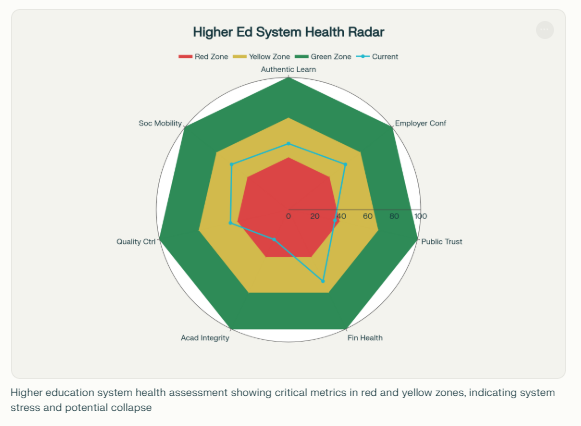
For years, higher education leaders have avoided one of the most uncomfortable questions in the field: What is the minimum threshold of authentic learning required to keep the system operational? That threshold exists — and recent data suggest we may have already crossed it. The warning signs are visible in eroding public trust, declining employer confidence, and a growing inability to authenticate credentials. What we are watching now is not a temporary disruption, but the managed decline of mass higher education as we have known it.
A truly viable education system has to deliver four essential functions. It must transmit knowledge — not only basic literacy, numeracy, and critical thinking, but also the domain-specific skills employers recognize, along with the ability to evaluate information in a democratic society. It must authenticate credentials by verifying learner identity, ensuring assessments are legitimate, maintaining tamper-proof records, and clearly differentiating between levels of competence. It must serve as a pathway for social mobility, providing economic opportunities that justify the investment, generating real wage premiums, and fostering professional networks and cultural capital. And it must have reliable quality assurance, with competent faculty, relevant curriculum, trustworthy measurement of learning outcomes, and external accountability strong enough to maintain standards.
Research into institutional collapse and critical mass theory shows that each of these functions has a minimum operational threshold. The authentic learning rate must exceed 70 percent for degrees to retain their signaling value. Below that point, employers begin to see the credential itself as unreliable. Estimates today range from 30 to 70 percent, depending on the institution and delivery method. Employer confidence must stay above 80 percent for degrees to remain the default hiring credential. When fewer than eight in ten employers trust the degree signal, alternative credentialing accelerates — something already underway as skills-based hiring spreads across industries. Public trust must also remain high, but Gallup’s 2023 data put confidence in higher education at just 36 percent, far below the survival threshold. On the financial side, stability is eroding, with roughly 15 percent of U.S. institutions at risk of closure and more failing each year.
Despite these trends, parts of the system still function effectively. Elite institutions with rigorous admissions, strong alumni networks, and powerful employer relationships continue to maintain credibility. Professional programs such as medicine, engineering, and law retain integrity through external licensing and oversight. Technical programs tied closely to industry needs still provide authenticated learning with direct employment pathways. Research universities at the graduate level preserve rigor through peer review, publication requirements, and close faculty mentorship. These pockets of quality create the illusion that the overall system remains sound, even as large portions hollow out.
But the cracks are widening. Public trust is at 36 percent. Fraud rates are climbing beyond detection capacity, with California’s rate estimated at 31 percent. Grade inflation is erasing distinctions between levels of achievement. Authentic learning appears to be hovering somewhere between 30 and 70 percent, putting the system in a yellow warning zone. Financially, the sector remains unstable, with 15 percent of institutions on the brink.
Higher education is also becoming sharply stratified. At one end are the high-integrity institutions that still maintain meaningful standards, a group that may represent just 20 to 30 percent of the market. In the middle are the credential mills — low-integrity schools operating on volume with minimal quality control, perhaps 40 to 50 percent of the market. On the other end, alternative providers such as bootcamps, apprenticeships, and corporate academies are rapidly filling the skills gap. This stratification allows the system to stagger forward while its core mission erodes.
Collapse becomes irreversible when several failure points converge. Employer confidence dropping below 50 percent would trigger mass abandonment of degree requirements. Public funding cuts, fueled by political backlash, would intensify. Alternative credentials would reach critical mass, making traditional degrees redundant in many sectors. A faculty exodus would leave too few qualified instructors to maintain quality. Rising student debt defaults could force the federal government to restrict lending.
The available evidence suggests the tipping point likely occurred sometime between 2020 and 2024. That was when public trust cratered, employer skepticism intensified, financial fragility spread, and the post-pandemic environment made fraud and grade inflation harder to contain. We may already be living in a post-viable higher education system, one where authentic learning and meaningful credentialing are concentrated in a shrinking group of elite institutions, while the majority of the sector operates as a credentialing fiction.
The question now is whether the surviving components can reorganize into something sustainable before the entire system’s legitimacy evaporates. Without deliberate restructuring, higher education’s role as a public good will vanish, replaced by a marketplace of unreliable credentials and narrowing opportunities. The longer we avoid defining the collapse threshold, the harder it will be to stop the slide.
Sources: Gallup, Inside Higher Ed, BestColleges, Cato Institute, PMC (National Center for Biotechnology Information), Council on Foreign Relations