Author: admin

  • FIRE statement on Pentagon investigation of video calling on troops to refuse illegal orders

    FIRE statement on Pentagon investigation of video calling on troops to refuse illegal orders

    On Nov. 24, the Pentagon announced it would initiate a review of Sen. Mark Kelly, a retired Navy captain. The announcement comes six days after Kelly and other elected officials released a video calling on U.S. troops to refuse illegal orders. The group did not identify any specific illegal orders. Notably, service members already take an oath to uphold the Constitution.

    The Pentagon’s decision follows a Truth Social post from President Trump, saying that the video was “SEDITIOUS BEHAVIOR, punishable by DEATH.” He later walked back the post, saying, “I would say they’re in serious trouble. I’m not threatening death, but I think they’re in serious trouble. In the old days, it was death. That was seditious behavior.”

    The following statement can be attributed to Greg Lukianoff, president and CEO of the Foundation for Individual Rights and Expression:

    The Pentagon’s actions are clear retaliation for something Sen. Kelly is entirely within his rights to say. America’s servicemembers already take an oath to uphold the Constitution, which includes not following illegal orders. The argument that the video’s message is sedition, or otherwise unprotected by the First Amendment, is flatly wrong.

    Source link

  • 21 Interactive Classroom Activities for College Students

    21 Interactive Classroom Activities for College Students

    How interactive are your classroom activities? Do you have less energy for class than you used to? Do you find student grades declining? And are the teaching methods you’ve always relied on not working as well as they once did? We spoke to two college instructors, Chris Merlo (Professor of Computer Science at Nassau Community College) and Monika Semma (who holds a Master’s Degree in Cultural Studies and Critical Theory from McMaster University). Their strategies for interactive classroom activities will energize your class and get the discussion moving again.

    Table of contents

    1. Why are interactive activities important?
    2. Assessment and evaluation
    3. 6 community-building activities
    4. 6 communication activities for college students
    5. Improve interactive learning with a flipped classroom
    6. 3 motivational activities for college students
    7. Project-based learning
    8. 6 team-building classroom activities for college students
    9. Interactive learning tools
    10. Interactive classroom activities, in short
    11. Frequently asked questions

    Why are interactive classroom activities important?

    Merlo, a computer science teacher, says that interactive classroom activities are not new to students, and one main reason why teachers have trouble connecting is that they fail to adapt to their students’ perspectives. Interactive classroom activities are now widely used across different school settings, helping to engage students at all educational levels.

    “My six-year-old son doesn’t find iPads amazing; to him, they’ve always just existed. Similarly, to a lot of students today, experiences like team exercises and flipped classrooms, while foreign to many instructors are not new.

    “If we care about reaching today’s students, who seem to have a different idea of student responsibilities than we had, perhaps we have to reach them on their terms. Adapting teaching methods to include interactive teaching strategies can foster greater student engagement, participation, and long-term retention.

    “In my thirties, I could still find a lot of similarities with my twenty-something students. But now, in my forties? Not so much. What I’ve started to realize is that it isn’t just the little things, like whether they’ve seen Ghostbusters. They haven’t. It’s the big things, like how they learn.”

    Semma, a former humanities Teaching Assistant, found that the chalk-and-talk approach failed on her first day in front of a class. “It was a lot like parallel parking in front of 20 people,” she said. “I looked more like a classmate. I dropped the eraser on my face whilst trying to write my name on the board. One of my students called me ‘mom.’”

    “I chalked it up to first day jitters, but that same quietness crept its way back into my classroom for the next tutorial, and the next tutorial and the next. While nearly silent in class, my students were rather vocal in the endless stream of emails that flooded my inbox. That way I knew they wanted to learn. I also knew that I had to find a way to make tutorials more engaging, such as using interactive activities to gauge the class’s knowledge and understanding.”From these experiences, Merlo and Semma now share some interactive classroom activities for students and for teachers that can turn a quiet classroom full of people unwilling to speak up to a hive of debate, making the student learning experience more collaborative for everyone. Many of these activities have been created to engage students in a fun way, and can be tailored to the specific content area or connected to today’s lesson. For example, case studies require students to analyze real-world scenarios to apply classroom concepts and foster critical thinking. Formative assessments, such as exit slips, encourage students to reflect on what they have learned today.

    Energize your college classroom and get discussions flowing. Download The Best Classroom Activities for College Courses to engage and motivate students.

    Assessment and evaluation

    Assessment and evaluation are essential parts of the interactive classroom, helping teachers understand where students are in the learning process and how lesson plans might need to be adjusted. Instead of relying solely on traditional tests, teachers can use interactive classroom activities to assess student understanding in a fun and engaging way. For example, incorporating games, quizzes, or group discussions allows students to demonstrate their knowledge while staying actively involved in the lesson.

    Teachers can also invite students to create their own assessments, such as writing practice test questions or designing a mini-quiz for their peers. This not only helps students review material but also gives them a sense of ownership over their learning. When students are involved in creating and evaluating content, they become more engaged and invested in the classroom experience. Interactive assessment methods, like peer review or collaborative games, make the learning process more dynamic and enjoyable for everyone. By weaving assessment and evaluation into interactive activities, teachers can create a classroom environment where students are motivated to participate and succeed.

    6 community-building activities

    1. Open-ended questions

    Chris Merlo: Open-ended questions don’t take any planning. All they take is a class with at least one student who isn’t too shy. I remember a class a few semesters ago that started with nine students. Due to a couple of medical conditions and a job opportunity, three of the students had to drop the semester. The problem was that these three students were the ones I counted on to ask questions and keep the class lively! Once I was left with six introverted people, conversations during class seemed to stop.

    By luck, I stumbled on something that got the students talking again. I said, “What has been the most difficult thing about [the project that was due soon]?” This opened the floodgates—students love to complain, especially about us and our demands. This one simple question led to twenty minutes of discussion involving all six students. Students share their thoughts and students discuss their perspectives with the entire class, making the activity engaging for everyone. I wasn’t even sure what a couple of these students’ voices sounded like, but once I gave them an open-ended opportunity to complain about an assignment, they were off to the races. A truly successful classroom activity.

    2. What’s wrong with this example?

    Chris Merlo: Students also love to find a professor’s mistakes—like me, I’m sure you’ve found this out the hard way. When I teach computer science, I will make up a program that, for instance, performs the wrong arithmetic, and have students find the bug. In a particularly quiet or disengaged class, you can incentivize students with five points on the next exam, or something similar. You can also reward the first student to find the correct answer, which encourages participation and adds a competitive element to the activity.

    If you teach history, you might use flawed examples that change a key person’s name, such as “King Henry VIII (instead of King John) signed the Magna Carta in 1215,” or match a person to an incorrect event: “Gavrilo Princip is considered to have fired the first shot in the Spanish Civil War (instead of World War I).” Beam these examples on the whiteboard, and let the students’ competitiveness drive them to get the correct answer before their classmates.

    3. Let students critique each other

    Chris Merlo: This can go badly if you don’t set some ground rules for civility, but done well, classroom activities like this really help open up collaborative learning. One of my colleagues devised a great exercise: First, give students about half of their class time to write instructions that an imaginary robot can understand to draw a recognizable picture, like a corporate logo, without telling students what will happen later. Then assign each student’s instructions to a randomly chosen classmate, and have the classmate pretend to be the robot, attempting to follow the instructions and draw the same logo. In this fun activity, students act as robots, physically following the written instructions created by their peers.

    After a few minutes, introduce a specific student who can share their results with the class, then ask their partner to share the initial instructions. This method gives students a chance to communicate with each other (“That’s not what I meant!”) and laugh and bond, while learning an important lesson.

    This exercise teaches computer science students the difficulty and importance of writing clear instructions. I have seen this exercise not only teach pairs of such students meaningful lessons but encourage friendships that extended beyond my classroom.

    Get students participating with these 45 classroom activities

    4. Pass the “mic”

    Monika Semma: As an instructor, it’s amazing how much information you can gather from a student-centered review session. Specifically, if you leave the review in the hands of your students, you can get an easy and thorough assessment of what is being absorbed, and what is being left by the wayside. The more you encourage participation, the more you’ll see where your class is struggling and the more comfortable students will become with course material. Interactive activities encourage students to communicate and share their conclusions, leading to better retention of information. During these sessions, students share their knowledge and insights with the entire class, making the review more engaging and collaborative. Here’s how to transform a standard review into one of your more popular classroom activities:

    • A week before the review, ask students to email you two to five key terms or theories that they feel they need to brush up on. Take all that data and compress it until you have a solid working list of what students want to review most.
    • In class, provide students with visual access to the list (I found writing all the terms on a chalkboard to be most effective). Instruct the class to have their notes out in front of them, with a pad of paper or blank Word document at their fingertips, and encourage them to take notes as the review is in progress.
    • A trinket of sorts (I highly recommend a plush ball), used as a “microphone,” helps to give students equal opportunity to direct the review without putting individuals on the spot too aggressively. The rules are simple: she or he who holds the “mic” can pick one term from the list and using their notes, can offer up what they already know about the term or concept, what they are unsure of, or what they need more elaboration on.
    • Actively listen to the speaker and give them some positive cues if they seem unsure; it’s okay to help them along the way, but important to step back and let this review remain student-centered. Once the speaker has said their piece, open the floor to the rest of the class for questions or additional comments. If you find that the discussion has taken a departure from the right direction, re-center the class and provide further elaboration if need be.
    • Erase each term discussed from the list as you go, and have the speaker pass (or throw) on the “mic” to a fellow classmate, and keep tossing the ball around after each concept/term is discussed.

    Students will have a tendency to pick the terms that they are most comfortable speaking about and those left consistently untouched will give you a clear assessment of the subjects in which your class is struggling, and where comprehension is lacking. Once your class has narrowed down the list to just a few terms, you can switch gears into a more classic review session. Bringing a bit of interaction and fun into a review can help loosen things up during exam time, when students and teachers alike are really starting to feel the pressure.

    5. Use YouTube for classroom activities

    Monika Semma: Do you remember the pure and utter joy you felt upon seeing your professor wheel in the giant VHS machine into class? Technology has certainly changed—but the awesome powers of visual media have not. Making your students smile can be a difficult task, but by channeling your inner Bill Nye the Science Guy you can make university learning fun again.

    A large part of meaningful learning is finding interactive classroom activities that are relevant to daily life—and I can think of no technology more relevant to current students than YouTube.

    A crafty YouTube search can yield a video relevant to almost anything in your curriculum and paired with an essay or academic journal, a slightly silly video can go a long way in helping your students contextualize what they are learning. For example, using videos featuring famous people can be a fun way to engage students and spark their interest in the lesson.

    Even if your comedic attempts plunge into failure, at the very least, a short clip will get the class discussion ball rolling. Watch the video as a class and then break up into smaller groups to discuss it. Get your students thinking about how the clip they are shown pairs with the primary sources they’ve already read.

    6. Close reading

    Monika Semma: In the humanities, we all know the benefits of close reading activities—they get classroom discussion rolling and students engaging with the material and open up the floor for social and combination learners to shine. “Close reading” is a learning technique in which students are asked to conduct a detailed analysis or interpretation of a small piece of text. It is particularly effective in getting students to move away from the general and engage more with specific details or ideas. As part of close reading, you can have students identify and analyze a key vocabulary word from the text, encouraging them to focus on its meaning and usage within the written passage.

    If you’re introducing new and complex material to your class, or if you feel as though your students are struggling with an equation, theory, or concept; giving them the opportunity to break it down into smaller and more concrete parts for further evaluation will help to enhance their understanding of the material as a whole.

    And while this technique is often employed in the humanities, classroom activities like this can be easily transferred to any discipline. A physics student will benefit from having an opportunity to break down a complicated equation in the same way that a biology student can better understand a cell by looking at it through a microscope.In any case, evaluating what kinds of textbooks, lesson plans and pedagogy we are asking our students to connect with is always a good idea.

    6 communication activities for college students

    Brainwriting

    Group size: 10 students (minimum)

    Course type: Online (synchronous), in-person

    This activity helps build rapport and respect in your classroom. After you tackle a complex lecture topic, give students time to individually reflect on their learnings. Have students write their responses to the guided prompts or open-ended questions before sharing them. Once students have gathered their thoughts, encourage them to share their views either through an online discussion thread or a conversation with peers during class time. Using exit tickets at the end of class helps teachers understand students’ learning and adjust plans accordingly.

    Concept mapping

    Group size: 10 students (minimum)

    Course type: Online (synchronous), in-person

    Collaborative concept mapping is the process of visually organizing concepts and ideas and understanding how they relate to each other. This exercise is a great way for students to look outside of their individual experiences and perspectives. Groups can use this tactic to review previous work or to help them map ideas for projects and assignments. You can also have students use concept mapping to organize key terms and concepts from a specific content area, reinforcing subject-specific vocabulary and understanding. For in-person classes, you can ask students to cover classroom walls with sticky notes and chart paper. For online classes, there are many online tools that make it simple to map out connections between ideas, like Google Docs or the digital whiteboard feature in Zoom.

    Debate

    Group size: Groups of 5–10 students 

    Course type: Online (synchronous), in-person

    Propose a topic or issue to your class. Group students together (or in breakout rooms if you’re teaching remotely) according to the position they take on the specific issue. Ask the groups of students to come up with a few arguments or examples to support their position. Write each group’s statements on the virtual whiteboard and use these as a starting point for discussion. For the debate, have the students line up so each student can take turns presenting their arguments, ensuring everyone has an equal opportunity to participate. A natural next step is to debate the strengths and weaknesses of each argument, to help students improve their critical thinking and analysis skills.

    Make learning active with these 45 interactive classroom activities

    Compare and contrast

    Group size: Groups of 5–10 students

    Course type: Online (synchronous), in-person

    Ask your students to focus on a specific chapter in your textbook. Then, place them in groups and ask them to make connections and identify differences between ideas that can be found in course readings and other articles and videos they may find. After the group discussions, have students share their findings with the rest of the group to encourage engagement and peer learning. This way, they can compare their ideas in small groups and learn from one another’s perspectives. In online real-time classes, instructors can use Zoom breakout rooms to put students in small groups.

    Assess/diagnose/act

    Group size: Groups of 5–10 students 

    Course type: Online (synchronous), in-person

    This activity will improve students’ problem-solving skills and can help engage them in more dynamic discussions. Start by proposing a topic or controversial statement. Then follow these steps to get conversations going. In online classes, students can either raise their hands virtually or use an online discussion forum to engage with their peers. 

    • Assessment: What is the issue or problem at hand?
    • Diagnosis: What is the root cause of this issue or problem?
    • Action: How can we solve the issue?

    Entry tickets

    Entry tickets are a simple yet powerful way to engage students right from the beginning of class. To use entry tickets, teachers write a question or prompt related to the day’s lesson on the board as students enter the classroom. Each student writes their response on an index card, which serves as their “ticket” to participate in the lesson. This interactive learning strategy encourages students to start thinking critically about the material before the lesson even begins.

    After collecting the entry tickets, teachers can invite students to share their answers with a partner, in small groups, or with the whole class. This sparks discussion, helps students connect prior knowledge to new concepts, and sets a collaborative tone for the rest of the lesson. Entry tickets can be used to review previous content, introduce new ideas, or quickly assess student understanding. By making entry tickets a regular part of your lesson plans, you create an interactive classroom environment where every student is engaged and ready to learn from the very start.

    Improve interactive learning with a flipped classroom

    The flipped classroom model transforms the traditional approach to teaching by having students learn foundational concepts at home and use class time for interactive activities. In this model, students watch videos, read articles, or review other materials before coming to class. Then, during class, teachers can focus on engaging students in hands-on projects, group discussions, and problem-solving exercises.

    This approach allows students to learn at their own pace outside of class and come prepared to participate in more meaningful, interactive learning experiences. Teachers can organize students into small groups to discuss topics, work through challenging problems, or collaborate on projects. The flipped classroom encourages students to take an active role in their learning, promotes deeper thinking, and makes class time more engaging for everyone. By shifting the focus from passive listening to active participation, teachers can create a classroom environment where students are excited to learn and work together.

    3 motivational activities for college students

    Moral dilemmas

    Group size: Groups of 3–7 students 

    Course type: Online (synchronous), in-person

    Provide students with a moral or ethical dilemma, using a hypothetical situation or a real-world situation. Have students act out the moral dilemmas to explore different perspectives and deepen their understanding. Then ask them to explore potential solutions as a group. This activity encourages students to think outside the box to develop creative solutions to the problem. In online learning environments, students can use discussion threads or Zoom breakout rooms.

    Conversation stations

    Group size: Groups of 4–6 students 

    Course type: In-person

    This activity exposes students’ ideas in a controlled way, prompting discussions that flow naturally. To start, share a list of discussion questions pertaining to a course reading, video or case study. Put students into groups and give them five-to-ten minutes to discuss, then have two students rotate to another group. The students who have just joined a group have an opportunity to share findings from their last discussion, before answering the second question with their new group. After another five-to-ten minutes, the students who haven’t rotated yet will join a new group, and the next student will participate in the ongoing discussion with their peers.

    This or that

    Group size: Groups of 5–10 students

    Course type: Online (synchronous or asynchronous), in-person

    This activity allows students to see where their peers stand on a variety of different topics and issues. Instructors should distribute a list of provocative statements before class, allowing students to read ahead. Then, they can ask students to indicate whether they agree, disagree or are neutral on the topic in advance, using an online discussion thread or Google Doc. In this activity, students choose their stance on each topic, which encourages active participation and ownership of their opinions. In class, use another discussion thread or live chat to have students of differing opinions share their views. After a few minutes, encourage one or two members in each group to defend their position amongst a new group of students. Ask students to repeat this process for several rounds to help familiarize themselves with a variety of standpoints.

    Project-based learning

    Project-based learning is a dynamic approach that puts students at the center of the learning process. In this model, students work in groups to tackle real-world projects that require them to research, problem-solve, and create something meaningful. Teachers design projects that align with learning objectives, allowing students to explore topics in depth and apply what they’ve learned in practical ways.

    Throughout the project, students are engaged in interactive learning as they collaborate, share ideas, and think critically about the subject matter. Teachers act as facilitators, guiding students and providing support as needed. By the end of the project, students present their findings or products, demonstrating their understanding and creativity. Project-based learning not only helps students develop important skills like teamwork and communication, but also makes the learning process more engaging and relevant. When students are actively involved in creating and presenting their work, they become more invested in their own learning journey.

    6 team-building classroom activities for college students

    Snowball discussions  

    Group size: 2–4 students per group

    Course type: Online (synchronous), in-person

    Assign students a case study or worksheet to discuss with a partner, then have them share their thoughts with the larger group. Use breakout rooms in Zoom and randomly assign students in pairs with a discussion question. After a few minutes, combine rooms to form groups of four. After another five minutes, combine groups of four to become a larger group of eight—and so on until the whole class is back together again. This process ensures that the activity eventually involves the entire class, promoting participation and collaboration among all students.

    Make it personal

    Group size: Groups of 2–8 students

    Course type: Online (synchronous), in-person

    Provide students with a moral or ethical dilemma, using a hypothetical situation or a real-world situation. Then ask them to explore potential solutions as a group. This activity encourages students to think outside the box to develop creative solutions to the problem. In online learning environments, students can use discussion threads or Zoom breakout rooms. Mystery Box encourages students to guess contents based on tactile clues, fostering critical thinking and observation skills, which can be a fun and engaging addition to such activities.

    After you’ve covered a topic or concept in your lecture, divide students into small discussion groups (or breakout rooms online). Using a fun way, such as having students share stories or create visual scenes, can encourage them to reflect on their personal connections to the material. Ask the groups questions like “How did this impact your prior knowledge of the topic?” or “What was your initial reaction to this source/article/fact?” to encourage students to reflect on their personal connections to the course concepts they are learning.

    Philosophical chairs

    Group size: 20–25 students (maximum)

    Course type: In-person

    A statement that has two possible responses—agree or disagree—is read out loud. Depending on whether they agree or disagree with this statement, students move to one side of the room or the other. This activity is similar to the Four Corners activity, where students move to different corners of the room based on their opinions, encouraging movement and discussion. After everyone has chosen a side, ask one or two students on each side to take turns defending their positions. This allows students to visualize where their peers’ opinions come from, relative to their own.

    Get more interactive classroom activities here

    Affinity mapping

    Group size: Groups of 3–8 students 

    Course type: Online (synchronous)

    Place students in small groups (or virtual breakout rooms) and pose a broad question or problem to them that is likely to result in lots of different ideas, such as “What was the greatest innovation of the 21st century?” or “How would society be different if  _*__* never occurred?” Ask students to generate responses by writing ideas on pieces of paper (one idea per page), on index cards for easy sorting and organization, or in a discussion thread (if you’re teaching online). Once lots of ideas have been generated, have students begin grouping their ideas into similar categories, then label the categories and discuss why the ideas fit within them, how the categories relate to one another and so on. Jigsaw problem solving activities allow students to work in groups to solve complex problems collaboratively. This allows students to engage in higher-level thinking by analyzing ideas and organizing them in relation to one another.

    Socratic seminar

    Group size: 20 students (minimum)

    Course type: In-person

    Ask students to prepare for a discussion by reviewing a course reading or group of texts and coming up with a few higher-order discussion questions about the text. As part of their preparation, have students create written questions to bring to the seminar. In class, pose an introductory, open-ended question. From there, students continue the conversation, prompting one another to support their claims with evidence from previous course concepts or texts. There doesn’t need to be a particular order to how students speak, but they are encouraged to respectfully share the floor with their peers.

    Concentric circles

    Group size: 20 students (maximum)

    Course type: In-person

    Students sit in two circles: an inner circle and an outer circle. Each student on the inside is paired with a student on the outside; they sit facing each other. Pose a question to the whole group and have pairs discuss their responses with each other. After three-to-five minutes, have students on the outside circle move one space to the right so they are standing in front of a new person. Pose a new question, and the process is repeated, exposing students to the different perspectives of their peers.

    Interactive learning tools

    Interactive learning tools are a game-changer for both teachers and students, making lessons more engaging and accessible. These tools include educational software, apps, games, and online resources that support interactive learning in the classroom. Teachers can use these tools to create fun and interactive lessons, quizzes, and activities that cater to different learning styles and abilities.

    For example, teachers might use online platforms to set up interactive whiteboards, host virtual labs, or facilitate discussion forums where students can share ideas and ask questions. Students can also use interactive tools to create their own content, such as videos, podcasts, or digital presentations, to show what they’ve learned. Incorporating interactive learning tools into your lesson plans not only makes learning more fun, but also encourages students to take an active role in their education. By embracing these tools, teachers can create a classroom environment where every student is engaged, motivated, and excited to learn.

    Interactive classroom activities, in short

    Final thoughts

    Making your classes more interactive should help your students want to come to class and take part in it. Giving them a more active role will give them a sense of ownership, and this can lead to students taking more pride in their work and responsibility for their grades. Project-based learning, where students work on a project over an extended period, can cultivate critical thinking and collaboration, further enhancing their engagement.

    Use these 45 classroom activities in your course to keep students engaged

    The flipped classroom model, where students watch lectures or read content at home, can also free up class time for interactive activities, making learning more engaging and participatory.

    A more interactive class can also make things easier for you—the more work students do in class, the less you have to do. Even two minutes of not talking can re-energize you for the rest of the class. Live polls and quizzes can also be used for instant feedback to keep students engaged during lessons. Additionally, interactive assessments, such as Top Hat’s interactive polls and quizzes, make learning fun and competitive, further enhancing student engagement.

    Plus, these six methods outlined above don’t require any large-scale changes to your class prep. Set up a couple of activities in advance here and there, to support what you’ve been doing, and plan which portion of your class will feature them.

    The reality remains that sometimes, students do have to be taught subject matter that is anything but exciting. That doesn’t mean that we can’t make it more enjoyable to teach or learn. Experiments and simulations, for example, provide hands-on activities that create immersive learning experiences and develop higher-order thinking skills. Hands-on projects can include activities like building models, conducting experiments, or creating art that illustrate key concepts. Improv activities help students engage in the learning process by encouraging thinking on their feet and collaboration. It may not be possible to incorporate classroom activities into every lecture, but finding some room for these approaches can go a long way in facilitating a positive learning environment.

    And let’s not forget, sometimes even an educator needs a brief departure from the everyday-ordinary-sit-and-listen-to-me-lecture regimen.

    Energize your college classroom and get discussions flowing. Download The Best Classroom Activities for College Courses to engage and motivate students.

    Frequently asked questions

    1. What are some effective interactive classroom activities for college students?
    Interactive classroom activities such as think-pair-share, live polling, and group problem-solving encourage students to engage deeply with course material. These activities also promote class discussion and help instructors pose meaningful class discussion questions to spark critical thinking.


    2. How do interactive classroom activities improve class discussion?
    Interactive classroom activities create opportunities for students to share diverse perspectives and collaborate on ideas. When students participate actively, class discussion becomes more dynamic, and instructors can build on these moments with targeted class discussion questions to deepen understanding.


    3. How can instructors use class discussion questions in interactive classroom activities?
    Instructors can integrate class discussion questions into interactive classroom activities like debates, case studies, and peer reviews. This approach encourages participation, strengthens communication skills, and ensures every student contributes meaningfully to the class discussion.


    Source link

  • You can’t eliminate real-world violence by suing over online speech

    You can’t eliminate real-world violence by suing over online speech

    With so much of our national conversation taking place online, there’s an almost reflexive tendency to search for online causes — and online solutions — when tragedy strikes in the physical world. The murder of Charlie Kirk was no exception. Almost immediately, many (some in good faith, and others decidedly less so) began to postulate about the role played by online rhetoric and polarization.

    Taking the stage at Utah Valley University to discuss political violence last week, Sens. Mark Kelly and John Curtis shared the view that social media platforms are fueling “radicalization” and violence through their content-recommendation algorithms. And they previewed their proposed solution: a bill that would strip platforms of Section 230 protections whenever their algorithms “amplify content that caused harm.”

    This week, the senators unveiled the Algorithm Accountability Act. In a nutshell, the bill would require social media platforms to “exercise reasonable care” to prevent their algorithms from contributing to foreseeable bodily injury or death, whether the user is the victim or the perpetrator. A platform that fails to do so would lose Section 230’s critical protection against being treated as the publisher of user-generated content — and injured parties could sue the platform for violating this “duty of care.”

    The debate over algorithmic content recommendation has been going on for years. Lower courts have almost universally held that Section 230 immunizes social media platforms from lawsuits claiming that algorithmic recommendation of harmful content contributed to terrorist attacks, mass shootings, and racist attacks. When faced with the question in 2023, the Supreme Court declined to rule on the scope of Section 230 — opting instead to hold the claims of algorithmic aiding and abetting at issue would not survive either way.

    Forcing social media platforms to do the dirty work of censorship on pain of expensive litigation and expansive liability is no less offensive to the First Amendment than a direct government speech regulation.

    But there’s an important question that usually gets lost in the heated debate over Section 230: Would such lawsuits be viable even if they could be brought?

    In a Wall Street Journal op-ed making the case for his bill, Sen. Curtis wrote, “We hold pharmaceutical companies accountable when their products cause injury. There is no reason Big Tech should be treated differently.”

    At first blush, this argument has an instinctive appeal. But it ultimately dooms itself because there is a reason to treat social media platforms differently. That reason is the First Amendment, which enshrines a constitutional right to free speech — a protection not shared by prescription drugs.

    Perhaps anticipating this point, Sen. Curtis argues that the Algorithm Accountability Act poses no threat to free speech: “Free speech means you can say what you want in the digital town square. Social-media companies host that town square, but algorithms rearrange it.” But free speech doesn’t only protect users’ right to post online free of government censorship; it also protects the editorial decisions of those that host those posts — including algorithmic “rearranging,” to use the senator’s phrase. As the Supreme Court recently affirmed in Moody v. NetChoice:

    When the platforms use their Standards and Guidelines to decide which third-party content those feeds will display, or how the display will be ordered and organized, they are making expressive choices. And because that is true, they receive First Amendment protection.

    The “rearranging” of speech is just as protected as the speech itself, as when a newspaper decides which stories to print on the front page and which letters to the editor to publish. That is no less true for social media platforms. In fact, the term “content-recommendation algorithm” itself points to its expressive nature. Recommending something is a message — “I think you would find this interesting.”

    The Moody Court also acknowledged the expressive nature of arranging online content (emphasis added): “Deciding on the third-party speech that will be included in or excluded from a compilation — and then organizing and presenting the included items — is expressive activity of its own.” Similarly, while dismissing exactly the kind of case the Algorithm Accountability Act would enable, the U.S. Court of Appeals for the Fourth Circuit held this past February: “Facebook’s decision[s] to recommend certain third-party content to specific users . . . are traditional editorial functions of publishers, notwithstanding the various methods they use in performing” them.

    The NO FAKES Act is a real threat to free expression

    In Congress, the “NO FAKES” bill claims to promise deepfake fixes, but their restrictions on expression would chill news, history, art, and everyday speech.


    Read More

    So the First Amendment is at least implicated when Congress institutes “accountability” for a platform’s arrangement and presentation of user-generated content, unlike with pharmaceutical safety regulations. But does it prohibit Congress from imposing the kind of liability the Algorithm Accountability Act creates?

    Yes. Two well-established principles explain why.

    First: As the Supreme Court has repeatedly made clear, imposing civil liability for protected speech raises serious First Amendment concerns.

    Second: Except for the exceedingly narrow category of incitement — where the speaker intended to spur imminent unlawful action by saying something that was likely to cause such action — the First Amendment demands that we hold the wrongdoer accountable for their own conduct, not the people whose words they may have encountered along the way.

    The U.S. Court of Appeals for the Fifth Circuit concisely explained why these principles preclude liability for “negligently” conveying “harmful” ideas:

    If the shield of the first amendment can be eliminated by providing after publication that an article discussing a dangerous idea negligently helped bring about a real injury simply because the idea can be identified as ‘bad,’ all free speech becomes threatened.

    In other words, faced with a broad, unmeetable duty to anticipate and prevent ideas from causing harm, media would be chilled into publishing, broadcasting, or distributing only the safest and most anodyne material to avoid the risk of unpredictable liability.

    For this reason, courts have — for nearly a century — steadfastly refused to impose a duty of care to prevent harms from speech. A few noteworthy examples are illustrative:

    • Dismissing a lawsuit alleging that CBS’ television programming desensitized a child to violence and led him to shoot and kill his elderly neighbor, one federal court wrote of the duty of care sought by the plaintiffs:

    The impositions pregnant in such a standard are awesome to consider . . . Indeed, it is implicit in the plaintiffs’ demand for a new duty standard, that such a claim should exist for an untoward reaction on the part of any ‘susceptible’ person. The imposition of such a generally undefined and undefinable duty would be an unconstitutional exercise by this Court in any event.

    • In a case brought by the victim of a gruesome attack alleging that NBC knew of studies on child violence putting them on notice that some viewers might imitate violence portrayed on screen, the court ruled:

    [T]he chilling effect of permitting negligence actions for a television broadcast is obvious. . . . The deterrent effect of subjecting [them] to negligence liability because of their programming choices would lead to self-censorship which would dampen the vigor and limit the variety of public debate.

    • Affirming dismissal of a lawsuit alleging that Ozzy Osbourne’s Suicide Solution caused a minor to kill himself, the court noted the profound chilling effect such liability would cause:

    [I]t is simply not acceptable to a free and democratic society to impose a duty upon performing artists to limit and restrict the dissemination of ideas in artistic speech which may adversely affect emotionally troubled individuals. Such a burden would quickly have the effect of reducing and limiting artistic expression to only the broadest standard of taste and acceptance and the lowest level of offense, provocation and controversy.

    • When the family of a teacher killed in a school shooting sued makers and distributors of violent video games and movies, the court rejected the premise of the suit:

    Given the First Amendment values at stake, the magnitude of the burden that Plaintiffs seek to impose on the Video Game and Movie Defendants is daunting. Furthermore, the practical consequences of such liability are unworkable. Plaintiffs would essentially obligate these Defendants, indeed all speakers, to anticipate and prevent the idiosyncratic, violent reactions of unidentified, vulnerable individuals to their creative works.

    In his op-ed, Sen. Curtis wrote, “The problem isn’t what users say, but how algorithms shape and weaponize it.” But the “problem” this bill seeks to remedy very much is what users say. A content recommendation algorithm in isolation can’t cause any harm; it’s the recommendation of certain kinds of content (e.g., radicalizing, polarizing, etc.) that the bill seeks to stymie.

    And that content is overwhelmingly protected by the First Amendment, regardless of whether the posts might, individually or in the aggregate, cause an individual to commit violence. When the City of Indianapolis created remedies for people who viewed pornography, the U.S. Court of Appeals for the Seventh Circuit rejected the municipality’s justification that pornography “perpetuate[s] subordination” and leads to cognizable societal and personal harms:

    [T]his simply demonstrates the power of pornography as speech. All of these unhappy effects depend on mental intermediation. Pornography affects how people see the world, their fellows, and social relations. If pornography is what pornography does, so is other speech.

    [ . . . ]

    Racial bigotry, anti-semitism, violence on television, reporters’ biases — these and many more influence the culture and shape our socialization. None is directly answerable by more speech, unless that speech too finds its place in the popular culture. Yet all is protected as speech, however insidious. Any other answer leaves the government in control of all of the institutions of culture, the great censor and director of which thoughts are good for us.

    And that’s why the Algorithm Accountability Act also threatens users’ expressive rights. There’s simply no reliable way to predict whether any given post might, somewhere down the line, factor into someone else’s independent decision to commit violence — especially at the scale of modern social media. Faced with liability for guessing wrong, platforms will effectively have two realistic choices: aggressively re-engineer their algorithms to bury anything that could possibly be deemed divisive (and therefore risky), or — far more likely — simply ban all such content entirely. Either road leads to the same place: a shrunken public square where whole neighborhoods of protected speech have been bulldozed.


    WATCH VIDEO: A warning label on social media? | So to Speak: The Free Speech Podcast

    “What a State may not constitutionally bring about by means of a criminal statute,” the Supreme Court famously wrote in New York Times v. Sullivan, “is likewise beyond the reach of its civil law.” Forcing social media platforms to do the dirty work of censorship on pain of expensive litigation and expansive liability is no less offensive to the First Amendment than a direct government speech regulation.

    Political violence is a real and pressing problem. But history has already taught us that trying to scrub away every potential downstream harm of speech is a dead end. And a system of free speech requires us to abstain from the temptation of trying in the first place.

    Source link

  • 2026 Spring Conference Cancellations and Substitutions

    2026 Spring Conference Cancellations and Substitutions

    2026 Spring Conference

    2026 Spring Conference Cancellations and Substitutions

    Use this form to cancel your conference registration or to designate a substitute attendee. See the conference registration policies for more information.

    The post 2026 Spring Conference Cancellations and Substitutions appeared first on CUPA-HR.

    Source link

  • The case for treating adults as adults when it comes to AI chatbots

    The case for treating adults as adults when it comes to AI chatbots

    For many people, artificial intelligence chatbots make daily life more efficient. AI can manage calendars, compose messages, and provide quick answers to all kinds of questions. People interact with AI chatbots to share thoughts, test ideas, and explore language. This technology, in various ways, is playing a larger and larger role in how we think, work, and express ourselves. 

    But not all the news is good, and some people want to use the law to crack down on AI.

    Recent news reports describe a wave of lawsuits alleging that OpenAI’s generative AI chatbot, ChatGPT, caused adult users psychological distress. The filings reportedly seek monetary damages for people who conversed at length with a chatbot’s simulated persona and reported experiencing delusions and emotional trauma. In one reported case, a man became convinced that ChatGPT was sentient and later took his own life. 

    These situations are tragic and call for genuine compassion. Unfortunately, if these lawsuits succeed, they’ll effectively impose an unworkable expectation on anyone creating a chatbot to scrub anything that could trigger its most vulnerable users. Everyone, even fully capable adults, would be effectively treated as if they are on suicide watch. That’s a standard that would chill open discourse.

    Adults are neither impervious to nor helpless before AI’s influence on their lives and minds, but treating them like minors is not the solution.

    Like the printing press, the telegraph, and the internet before it, artificial intelligence is an expressive tool. A prompt, an instruction, or even a casual question reflects a user’s intent and expressive choice. A constant across its many uses is human agency — because it is ultimately a person that ends up deciding what to ask, what responses to keep, what results to share, and how to use the material it develops. Just like the communicative technologies of the past, AI has the potential to amplify human speech rather than replace it, bringing more storytellers, perspectives, and critiques with it. 

    Every new expressive medium in its time has faced public scrutiny and renewed calls for government intervention. After the famous 1938 Orson Welles’ “War of the Worlds” radio broadcast about a fictional alien invasion, for example, the Federal Communications Commission received hundreds of complaints urging the government to step in. Many letters expressed fear that this technology can deceive and destabilize people. Despite the panic, neither the broadcaster nor Welles, who went on to cinematic fame, faced any formal consequences. As time went on, the dire predictions never materialized.

    Early panic rarely aligns with long-term reality. Much of what once seemed threatening eventually found its place in civic life, revolutionizing our ability to communicate and connect. This includes radio dramas, comic books, TV, and the early web. 

    The attorneys filing lawsuits against these AI companies argue that AI is a product, and if a product predictably causes harm, safeguards are expected, even for adults. But when the “product” is speech, that expectation meets real constitutional limits. Even when harm seemed foreseeable, courts have long refused to hold speakers liable for the psychological effects of their speech on people that choose to engage with it. For example, composing rap lyrics or televising reports of violence can’t get you sued for the effects of listening or viewing them, even if they trigger people to act out.

    This principle is necessary to protect free expression. Penalizing people for the emotional or psychological impact of their speech invites the government to police the ideas, too. Recent developments in the UK shows how this can play out. Under laws that criminalize speech causing “alarm or distress,” people in England and Wales can be fined, aggressively prosecuted, or both, based entirely on the state’s claimed authority to measure the emotional “impact” of what was said. That’s not a model we should import. 

    A legal framework worthy of a free society should reflect confidence in adults’ ability to pursue knowledge without government intrusion, and this includes the use of AI tools. Extending child-safety laws or similar liability standards to adult conversations with AI would erode that freedom.

    Government AI regulation could censor protected speech online

    A Texas teen’s AI deepfake ordeal inspired the Take It Down Act — but its vague wording risks sweeping censorship.


    Read More

    The same constitutional protections apply when adults interact with speech, even speech generated by AI. That’s because the First Amendment ensures that we meet challenging, misleading, or even false ideas with more speech rather than censorship. More education and debate are the best means to preserve adults’ ability to judge ideas for themselves. It also prevents the state from deciding which messages are too dangerous for people to hear — a power that, if granted, can and will almost certainly be abused and misused. This is the same principle that secures Americans’ right to read subversive books, hear controversial figures speak, and engage with ideas that offend others.

    Regulating adult conversations with AI blurs the line between a government that serves its citizens and one that supervises them. Adulthood presumes the capacity for judgment, including the freedom to err. Being mistaken or misguided is all part of what it means to think and speak for oneself.

    At FIRE, we see this dynamic play out daily on college campuses. These institutions of higher education are meant to prepare young adults for citizenship and self-governance, but instead they often treat students as if discomfort and disagreement are radioactive. Speech codes and restrictions on protests, justified as shields against harm, teach dependence on authority and distrust of one’s own resilience. That same impulse is now being echoed in calls for AI chatbot regulation.

    Yes, words can do harm, even in adulthood. Still, not every harm can be addressed in court or by lawmakers, especially not if it means restricting free expression. Adults are neither impervious to nor helpless before AI’s influence on their lives and minds, but treating them like minors is not the solution.

    Source link

  • School Specialty and College Football Playoff Foundation Celebrate Impact Across Schools Nationwide

    School Specialty and College Football Playoff Foundation Celebrate Impact Across Schools Nationwide

    New media center at North Dade Middle School marks milestone in initiative revitalizing learning environments to benefit the entire learning community

    GREENVILLE, WI– November 21, 2025 – School Specialty and the College Football Playoff (CFP) Foundation today announced the completion of a media center makeover at North Dade Middle School, marking the 100th learning space transformed in collaboration with the Extra Yard Makeover initiative. As a part of their nationwide effort to enhance learning environments for students and educators alike, the two organizations have now invested over $5 million into reinvigorating classrooms across the country.

    Miami will host the 2026 College Football Playoff National Championship in January, and as part of its legacy work in the community, the CFP Foundation has committed to delivering more than 30 Extra Yard Makeovers alongside School Specialty to revitalize innovation spaces across schools in Miami-Dade, Broward and Palm Beach counties. With this latest round of makeovers, the CFP Foundation will have helped enrich learning environments in every Miami-Dade middle school.

    “Changing our middle school libraries into modern learning spaces has had a tremendous impact on engagement and learning outcomes,” said Dr. Jose L. Dotres, Superintendent of Miami-Dade County Public Schools. “In addition to renovation, the transformation is an investment in our teachers, our students and our future. These new innovative spaces support hands-on learning for students of today and tomorrow, so they can develop greater curiosity for learning and lifelong skills.”

    These makeovers transform static spaces into flourishing learning environments, providing upgrades like flexible furniture, technology, supplies and even fresh paint or murals. Each school receives the School Specialty proprietary Projects by Design experience, which includes comprehensive consultations to determine the type of space that best supports students, educators and the broader school community. Past rooms made over include STEM labs, broadcast classrooms, libraries, media centers, makerspace rooms, teachers lounges, wellness spaces, sensory rooms, multi-purpose rooms, an esports room and a mariachi room.

    “The transformation of our media center is truly invaluable to our students and staff,” said Nicole Fama, Executive Director at Phalen Leadership Academies, which received a makeover in 2024. “We are profoundly grateful to the College Football Playoff Foundation and School Specialty for this investment. Before the media center, we lacked a space that truly fostered community. Now, everything happens here—from senior breakfasts and college athlete signing days to family game nights and teacher appreciation events. It has become the heart of our community, a space we didn’t realize we needed until it was here.”

    These makeovers serve to benefit both students and teachers, allowing schools to improve their offerings, inspire innovation and modern learning, and directly counter some of the top issues in education today.

    “Addressing teacher burnout and maximizing student engagement starts with the physical environment,” said Jeremy Westbrooks, Director of Strategic Account Development at School Specialty. “The physical classroom is an educator’s primary tool, and by modernizing these spaces, the CFP Foundation and School Specialty are delivering a critical resource that empowers teachers to stay focused on their students’ growth and long-term success.”

    “We’re proud to work alongside School Specialty to bring these meaningful makeover projects to life,” said Britton Banowsky, Executive Director College Football Playoff Foundation. “Their expertise in the design of the spaces and incredible generosity make it possible for us to turn vision into impact for teachers and students.”

    In addition to the CFP Foundation and School Specialty, these makeovers have been supported over the years by Bowl Games, Conference partners, Sponsors and host committees of each College Football Playoff National Championship. To date, makeovers have taken place in 18 states across 58 counties.

    To learn more about the College Playoff Foundation’s Extra Yard Makeover initiative, click here.

    To learn more about School Specialty, click here.

    About School Specialty, LLC 

    With a 60-year legacy, School Specialty is a leading provider of comprehensive learning environment solutions for the infant-K12 education marketplace in the U.S. and Canada. This includes essential classroom supplies, furniture and design services, educational technology, sensory spaces featuring Snoezelen, science curriculum, learning resources, professional development, and more. School Specialty believes every student can flourish in an environment where they are engaged and inspired to learn and grow. In support of this vision to transform more than classrooms, the company applies its unmatched team of education strategists and designs, manufactures, and distributes a broad assortment of name-brand and proprietary products. For more information, go to SchoolSpecialty.com.

    About the College Football Playoff Foundation

    The College Football Playoff (CFP) Foundation is the 501(c)3 non-profit organization serving as the community engagement arm of the College Football Playoff and works in partnership with institutions of higher education, sports organizations, corporations and non-profits to support educators and improve student outcomes. The purpose of the CFP Foundation lies in supporting PK-12 education by elevating the teaching profession. The CFP Foundation inspires and empowers educators by focusing its work in four areas: recognition, resources, recruitment and retention, and professional development. To learn more, visit cfp-foundation.org and follow Extra Yard for Teachers (@CFPExtraYard) on social media.

    Media Contact
    Jon Kannenberg
    [email protected]

    eSchool News Staff
    Latest posts by eSchool News Staff (see all)

    Source link

  • When young people ask big questions and seek answers

    When young people ask big questions and seek answers

    Cliffrene Haffner attended the African Leadership Academy (ALA) in South Africa during the Covid-19 pandemic. Her university applications were stalling and she felt stressed and anxious.

    “Life felt unstable, as if I were hanging by a thin thread,” Haffner said. But it was at ALA that she discovered News Decoder.

    “Joining News Decoder helped me rebuild my voice,” she wrote. “It created a place to write honestly and with purpose whilst supporting others in telling their stories. At a time when the world felt numb and disconnected, we used storytelling to bring back hope on campus by sharing our fears, thoughts and expectations.”

    At News Decoder, students work with professional editors and news correspondents to explore complicated, global topics. They have the opportunity to report and write news stories, research and present findings in global webinars with students from other countries, produce podcasts and sit in on live video roundtables with experts and their peers across the globe.

    Many get their articles published on News Decoder’s global news site.

    A different way of seeing the world

    Out of these experiential learning activities, they take away important skills valuable in their later careers, whatever those careers might be: How to communicate clearly, how to recognize multiple perspectives, how to cut through jargon and propaganda and separate facts from opinion and speculation.

    One milestone for many of these is our Pitch, Report, Draft and Revise process, which we call PRDR. In it, students pitch a story topic to News Decoder with a plan on how to research and report it. We ask them to identify different perspectives on problems they want to explore and experts they can reach out to for information and context.

    Then we guide them through a process of introspection, if the story is a personal reflection on their own experience, or a process of reporting and interviewing. News Decoder doesn’t promise students that their stories will get published at the end of the process. They have to work for that — revising their drafts until the finished story is clear and relevant to a global audience.

    One student who went through the process was Joshua Glazer, now a student at Emory University in the United States. Glazer came to News Decoder in high school as an exchange student in Spain with School Year Abroad.

    “I think the skills that I got out of that went on to really change the course of my education and how I view the world,” Glazer said. “Because when you step into the world of journalism you learn a different way of seeing the world.”

    Recognizing our biases

    Glazer learned that for journalism, he had to be less opinionated. “You have to really approach things kind of as they are in the world,” Glazer said. “And that is hard to do. That is not an easy skill that we can do as humans because we inherently have biases.”

    He said it challenged him to look inwards and recognize his biases and counter them with evidence.

    “So I think those skills have really changed the course of how I view having an argument with somebody because all of a sudden, you know, when you have an argument with someone, it’s all opinion,” he said.

    For Haffner, who is now a business administration student at Ritsumeikan Asia Pacific University in Japan, News Decoder reshaped how she and her peers understood storytelling.

    “It taught us to let go of rigid biases and to make authenticity the centre of our work,” Haffner said. “Students from different backgrounds found a space where their voices were heard, respected and valued. Our stories formed a shared map, each one opening a new room to explore, each voice strengthening the collective journey we were on. In that chaotic period, we created something meaningful together. Something bigger than us.”

    Working through the complexity of a topic

    Marouane El Bahraoui, a research intern at The Carter Center in the U.S. state of Georgia, also discovered News Decoder at the African Leadership Academy. At the time, he was interested in writing about the effectiveness of the Arab Maghreb Union — an economic bloc of five North African countries. He grew up in Morocco but didn’t want to approach the topic from a purely Moroccan perspective.

    “It was like a very raw idea,” he said.

    He pitched the story and worked with both News Decoder Founder Nelson Graves and correspondent Tom Heneghan to refine the idea. They guided him in the reporting and writing process.

    “One aspect that I liked a lot from my research was the people that I had the chance to talk to,” he said. “It was during Covid and I was just at home and I’m talking to, you know, professors in U.S. universities, I’m talking to UN officials, experts working in think tanks in D.C. and I was thinking oh those people are just so far, you can’t even reach them. And then you have a conversation with them and they’re just normal people.”

    He also found writing the story daunting. “It was a little bit overwhelming for me at the time,” he said. “You know, you’re not writing like an academic essay.”

    Graves encouraged him to write in a straightforward manner. In school, he had been taught to write in a beautiful way to impress.

    “From News Decoder, something I learned is to always keep the audience in mind who you are speaking to, who are you writing to,” he said.

    He took away the importance of letting readers make their own conclusions. “You’re not writing to tell the reader what to think,” he said. “You are writing to give them ideas and arguments, facts and leave the thinking for them.”

    Source link

  • Phil Honeywood, IEAA

    Phil Honeywood, IEAA

    Describe yourself in three words or phrases.
    Optimistic global citizen.

    What do you like most about your job?
    My job represents my life journey: teenage exchange student in Japan, government minister for multicultural affairs and higher education, and then running two international education colleges. The journey’s culmination being IEAA CEO!

    Describe a project or initiative you’re currently working on that excites you.
    As convenor of our National Council for International Education, advocating and negotiating with government to maximise exemptions (for all providers) from the recently imposed enrolment limits (caps) policy.

    What’s a piece of work you’re proud of – and what did it teach you?
    Travelling to India with our federal education minister, I pointed out to him that we could not promise that students who commence their Australian degree in our offshore campuses might then be guaranteed the opportunity to complete their course in Australia because of his government’s planned enrolment limits policy (caps) policy.

    This conversation directly led to successful negotiations to permit TNE students to, for the most part, not be counted in an education providers’ annual enrolment limit if they come to Australia to complete their studies. This experience taught me to keep travelling with relevant ministers whenever possible!

    What’s a small daily habit that helps you in your work?
    A triple shot flat white coffee (Melbourne being the coffee capital of the world) on my way to the office!

    What’s one change you’d like to see in your sector over the next few years?
    We need a concerted and coordinated public relations campaign that effectively educates the wider community on the benefits that world class international education delivers.

    What idea, book, podcast or conversation has stayed with you recently?
    My recent meeting in Beijing with China’s minister of education, Huai Jinpeng, reminded me that education is the most wonderful topic that builds bridges across cultures and breaks down misconceptions. 

    What’s one piece of advice you’d give to someone starting out in this field?
    Be willing to put your hand up for new job challenges as often as possible in our dynamic sector. However, if you are going to be a marketing and recruitment “road warrior” be kind to yourself and prioritise family as much as possible!

    Source link

  • How a small Oregon district turns data into action

    How a small Oregon district turns data into action

    This audio is auto-generated. Please let us know if you have feedback.

    Lessons In Leadership is an ongoing series in which K-12 principals and superintendents share their best practices as well as challenges overcome. For more installments, click here.

    Umatilla School District — a 1,500-student school system in eastern Oregon with a 72% Latino student population, 54% English learners and a 45% student poverty rate —  is setting the standard for effective, streamlined data management.

    As an educator in the district since 2000 and superintendent since 2007, Superintendent Heidi Sipe has seen Umatilla’s data systems evolve from pivot tables and spreadsheets to a mix of digital platforms tracking myriad data points for each student.

    This is a headshot of Heidi Sipe, superintendent of Umatilla School District in Umatilla, Ore.

    Heidi Sipe

    Permission granted by Heidi Sipe


    Part of the key, she says, is ensuring that there’s a common platform that consolidates student data points from other tools being used. This allows educators to look for trends and actionable data so they can identify students who may be at risk or need intervention plans, Sipe said.

    “We can check the efficacy of those supports and see if we need to make an adjustment or if we need to keep that going for that student to ensure their success,” Sipe told K-12 Dive.

    We recently caught up with Sipe to learn more about how the district uses that data to organize interventions, manages data anxiety, and helps parents understand the numbers.

    Editor’s Note: The following interview has been edited for brevity and clarity.

    K-12 DIVE: For many people, the idea of using data and processing data can be kind of daunting. When you’re introducing any sort of data tool to educators or school leaders or even parents, how do you get them comfortable with the idea of working with that data if they have any sort of anxiety about it or are overwhelmed?

    HEDI SIPE: I think part of the overwhelm is it’s kind of “Data, data everywhere, and not a drop to use.”

    The data points we’re using every month in our data team meetings are attendance — we track historical and last 30 days — and we also track disciplinary incidents, whether it be referrals or in-school suspension, out-of-school suspension, detentions.

    We also track grades in students’ core classes, as well as overall GPA and course pass rate. And then we track our MAP data in English reading, Spanish reading, mathematics, and English language usage. We track DIBELS at the elementary level — K-3 — for progress monitoring of students in their literacy development. We use a dyslexia screener through DIBELS, and then we also have some of our intervention programs that again are supplying more data.

    So when we have all of those various pieces at play, it can be really hard for a teacher to go platform to platform to platform to check the status of a student. But when all of that’s consolidated into one place, it goes from a situation of overwhelm to a quick snapshot based off of all those various pieces, which helps us make better-informed decisions for students.

    Let’s say you’re the classroom educator or the school principal, and you see in your data tools that a student is chronically absent or disengaged or their test scores are slipping, what are the first steps that you then take to put that data into action and figure out how to help that student?

    SIPE: We have a color-coded intervention list. So, anything that’s green, a teacher team can assign a student without any admin approval. If they’ve tried at least a few green interventions and they have monitored those for at least a couple of months, then they can move up and assign an orange level intervention, again without any admin approval.

    If that’s not working, they can assign a red intervention, and that would require admin approval. And then we also have various interventions where the admin can add it, and those are gray in our category. That’s things like an attendance letter to parents, a home visit an admin has done, etc., so the staff knows, “OK, here’s what the admin’s already doing for the student.”

    There may be nursing services and things like that which are happening, and they can also refer students for those types of things. If they notice a student is, perhaps, chronically absent, but it’s a student who keeps having ear infections or earaches, we have a partnership with a local doctor. If the parents are participating in that partnership, we can actually run the student to the doctor during school hours, with the parents’ permission, and make sure the kids are getting to those appointments and that we’re able to work with parents as partners in supporting that student and getting the medical attention they need so they can stay in school.

    Those types of partnerships happen because we can see that data. Those types of partnerships happen because families and teachers know these are the interventions available, and they can either request them from us or we can assign them. That’s really a helpful tool.

    It’s also really empowering to staff to be able to make those decisions. They’re working with the kids every day. They know what’s up.

    When staff — whether it’s school and district leaders or the classroom educators — are working with parents to help them make sense of their children’s data, what are some of the most effective ways they can help them do that?

    SIPE: So, my children are grown now. However, when they were younger, whatever they were experiencing seemed normal to me at the time, and wherever they were at seemed normal to me, because I wasn’t in any way comparing them to another child.

    But it’s another thing to realize, “Oh, goodness. My child’s really behind in this,” because they can see that comparative data.

    That helped me get more onboard when one of my children needed some interventions. And then it was very helpful for me to see those interventions work and see that child really take off as a really strong reader after those interventions. The teachers were able to show me, “Hang on, this is different than peers,” and then, “Here’s what we’re going to do about it.”

    That really helped me build trust in the teachers who were supporting my child.

    Source link

  • The Mis-education of Global Elites

    The Mis-education of Global Elites

    Across the United States, the U.K., Europe, and increasingly the Gulf States and East Asia, elite education has become a finishing school for rulers rather than a training ground for genuine public servants. These institutions—rich in endowment, selective in admission, steeped in prestige—construct worldviews that normalize inequity as efficiency, privatization as innovation, and austerity as necessity. Instead of interrogating the historical and structural forces that produce suffering, elite curricula often neutralize them, reducing political economy to management science and social justice to branding.

    This mis-education manifests in global leadership failures. The same graduates who enter parliaments, presidential cabinets, central banks, multinational boards, and international NGOs routinely oversee policies that accelerate inequality and erode the public sphere. Many come from universities with unparalleled research capacity and moral rhetoric, yet preside over housing crises, medical debt catastrophes, and planetary degradation. They authorize wars but rarely experience them. They tout meritocracy while gatekeeping opportunity. They celebrate entrepreneurship while dismantling public goods. Their philanthropic initiatives—often built from profits derived through tax avoidance, monopolization, and labor exploitation—give the appearance of benevolence without altering the underlying systems of harm.

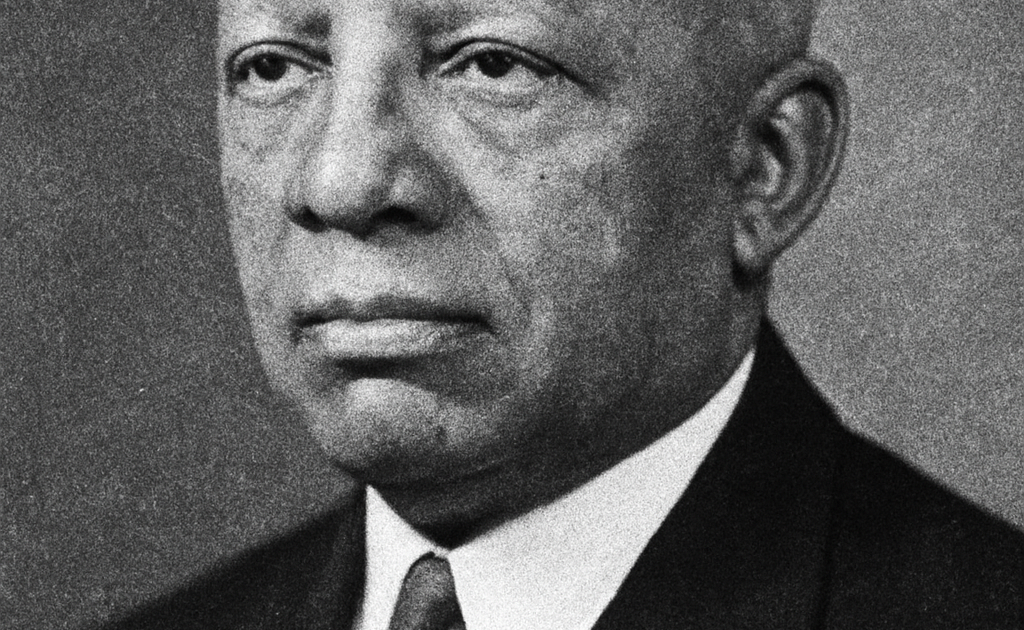
    Carter G. Woodson’s warning in The Mis-education of the Negro echoes eerily here: “When you control a man’s thinking you do not have to worry about his actions.” Global elites, educated into a narrow ideology that glorifies markets and hierarchy, do not need to be coerced into maintaining destructive systems—they do so voluntarily, believing themselves enlightened.

    Nowhere is this clearer than in the corporate education complex itself. Elite universities produce the analysts who rationalize austerity, the managers who coordinate privatization, the consultants who reengineer public institutions to mimic corporations, and the financiers who define the metrics of success. They also cultivate the ideological insulation that shields elites from accountability. When their policies trigger chaos, the explanation is never structural, only technical: markets corrected, externalities emerged, populists disrupted stability. The mis-education of elites ensures they cannot see failure as their own.

    Global institutions—from the IMF and World Bank to the UN and WTO—have mirrored this mindset. Their leaders, mostly trained in the same corridors of prestige, have promoted development models that prioritize capital mobility over community well-being, and foreign investment over local sovereignty. Even when faced with overwhelming evidence that structural adjustment, privatized healthcare, or financialization intensify human suffering, the elite worldview persists. The inability—or unwillingness—to imagine alternative systems is not an intellectual deficiency but the logical outcome of an education designed to reproduce power, not challenge it.

    Meanwhile, those most affected by global crises—workers, migrants, debtors, students, the poor—are told to adapt, innovate, or sacrifice. They are bombarded with entrepreneurial rhetoric and resilience talk while their material conditions worsen. Political leaders lament social fragmentation but continue to funnel wealth upward. University administrators speak of inclusion while expanding administrative hierarchies and outsourcing labor. Energy executives promise transitions while drilling new pipelines. Tech CEOs warn about misinformation while building the infrastructure that spreads it.

    The result is a world where the legitimacy of elites is evaporating. From Santiago to Paris, Lagos to Minneapolis, Delhi to London, mass movements are demanding accountability from institutions that have proven incapable of self-reform. The global backlash against inequality, authoritarianism, and corporate hegemony is not a misunderstanding—it is a recognition that the systems run by elites have failed.

    If there is to be a better world, the mis-education of elites must be confronted directly. That means transforming the mission of universities from prestige accumulation to public purpose; replacing managerialism with democratic governance; centering histories of resistance rather than merely histories of empire; teaching economic justice instead of market worship; and training leaders who measure success not by shareholder value or rankings but by human flourishing.

    Elites have long claimed exclusive expertise in solving the world’s problems. They have had centuries—and trillions—to prove it. They have failed miserably. A new generation of thinkers, activists, workers, and communities is already building the alternatives. Whether global elites choose to learn from them—or continue along their well-worn path of extraction and denial—will determine the next century.

    For now, the record is clear: the institutions that shaped the world’s most powerful people were never designed to create justice. And they haven’t.


    Academic Sources

    Baldwin, Davarian L. In the Shadow of the Ivory Tower: How Universities Are Plundering Our Cities. Bold Type Books, 2021.

    Bourdieu, Pierre. The State Nobility: Elite Schools in the Field of Power. Stanford University Press, 1996.

    Giroux, Henry A. Neoliberalism’s War on Higher Education. Haymarket Books, 2014.

    Harvey, David. A Brief History of Neoliberalism. Oxford University Press, 2005.

    Khan, Shamus Rahman. Privilege: The Making of an Adolescent Elite at St. Paul’s School. Princeton University Press, 2011.

    Mills, C. Wright. The Power Elite. Oxford University Press, 1956.

    Mkandawire, Thandika. “Institutional Monocropping and Monotasking in Africa.” UNRISD, 2007.

    Piketty, Thomas. Capital and Ideology. Harvard University Press, 2020.

    Saul, John Ralston. Voltaire’s Bastards: The Dictatorship of Reason in the West. Free Press, 1992.

    Sklair, Leslie. The Transnational Capitalist Class. Wiley-Blackwell, 2000.

    Stiglitz, Joseph E. Globalization and Its Discontents Revisited. W.W. Norton, 2017.

    Woodson, Carter G. The Mis-education of the Negro. Associated Publishers, 1933.

    Source link