Author: admin

  • Why Area Studies Matters (opinion)

    Why Area Studies Matters (opinion)

    Area studies, the interdisciplinary study of region-specific knowledge, is under threat in the United States. Some area studies programs are facing immediate dismantling by red-state legislatures. Others, at private universities or in blue states, are more likely to experience a slow decline through dozens of small cuts that may leave them untenable. While most area studies programs are small, their loss would ripple through a wide range of disciplines, impoverishing teaching, research and scholarship across the humanities and social sciences.

    Most contemporary area studies departments were developed and funded in part to meet perceived U.S. national security needs during the Cold War. Nonetheless, area studies programs have, from the outset, reached far beyond policy concerns. They should be saved, not (just) out of concern for the national interest, but because they are fundamental to our modern universities. Area studies have helped to pluralize our understanding of the drivers of history, the sources of literary greatness and the origins and uses of the sciences, enabling scholars to challenge narratives of “Western” normativity.

    As the second Trump administration has thrown federal support for area studies into question, some scholars have come to the field’s defense from the perspective of U.S. security and national interests. They have noted that cutting government funding for programs such as the Foreign Language Area Studies (FLAS) fellowships will linguistically and intellectually impoverish future cadres of policymakers. But in the present political landscape, in which the Trump administration has demonstrated little if any interest in maintaining the trappings of U.S. soft power, it seems unlikely that the federal government will restore funding for language education and the development of regionally specific knowledge. Their ability to contribute to U.S. soft power will not save area studies.

    The future of area studies lies beyond state security and policy interests and instead with the core mission of our universities. If we are to save area studies, we must admit—and celebrate—the fact that the benefits of area studies have never been just about U.S. national interests. Indeed, area studies have decisively shaped how scholarship and education are practiced on U.S. university campuses.

    Since the 1950s, area studies programs have quietly informed disciplinary practices across the humanities and social sciences, changing education even for students who never take courses offered by formal area studies departments. In part, this is because scholars educated through area studies programs teach in history, anthropology, political science, religious studies and a bevy of other programs that require a depth of linguistic and regional knowledge. These scholars introduce global, regional and non-Western knowledge to students at colleges and universities that may not host their own area studies programs, but that rely on the cultivation of regionally specific knowledge at institutions that have invested in and embraced the area studies model. Some of these scholars undertook area studies as their primary field of research. In other cases, including my own, they hold Ph.Ds. in other disciplines but would not have been able to conduct their research without access to the language and regionally specific courses offered by area studies programs at their universities.

    The influence of area studies stretches beyond this immediate impact on scholars and their students. Area studies scholars have insisted that there is just as much to be learned within Middle Eastern, Latin American or sub-Saharan African literature, histories and cultures as there is in Western European or the modern North American Anglophone traditions. At their best, area studies have reminded us that none of these formations or knowledge traditions exist in isolation, that there are no “pure” or untouched civilizations and that ideas and practices have always circulated and shaped each other, whether violently or peacefully. Certainly, many scholars knew and studied these realities well before the advent of the contemporary area studies model. Nonetheless, the presence of area studies in many prominent U.S. universities from the 1950s onward enabled a quiet but certain reckoning with historical scholarly exclusions and helped to internationalize U.S. campus communities.

    Federal and state cuts and institutional austerity are now reshaping university departments and programs across many disciplines. But area studies programs are especially at risk in part because they are excluded from some calls for the defense of the humanities or liberal arts that take an older, pre–area studies view of our shared cultural and historical knowledge. Even more troublingly, the far right is eager to claim and weaponize the humanities for itself. Its vision of the humanities, and of the liberal arts more generally, is one that not only rejects area studies, but also seeks to undo critical approaches to European and Anglophone literature and history. The far right portrays the humanities in triumphalist civilizational terms, imagining a fallacious pure Western (white) tradition that justifies contemporary forms of dominance and exclusion.

    Scholars within the fields that have seen increased interest from the far right are fighting their own battles against these imagined, reactionary pasts. But those of us within area studies—and fields that have been enriched by area studies—also have our part to play. We must refuse to concede to narratives of human history, literature, culture and politics that write out the experiences and contributions of non-European, non-Anglophone or nonwhite individuals and communities.

    The most extreme current threat to area studies, like many threats to the humanities and social sciences more generally, comes from hostile red-state legislatures. I completed an area studies M.A. in central Eurasian studies at Indiana University, a program that hosts languages such as Mongolian, Kurdish and Uyghur, which are rarely if ever taught at other institutions in North America. That program, like many of Indiana’s other vaunted area studies degrees (and many other programs) is currently slated for suspension with “teach-out toward elimination.”

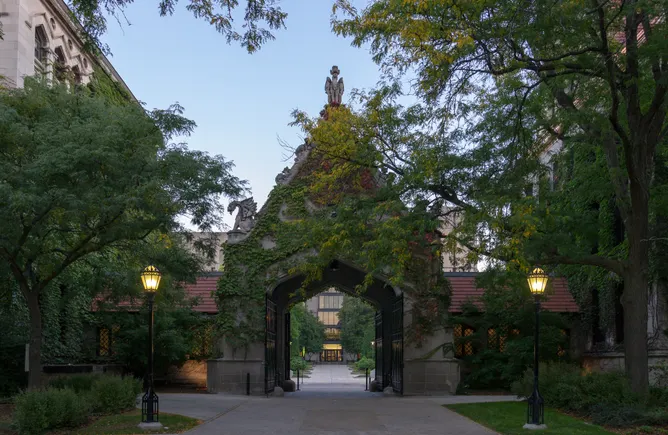
    Yet even institutions seemingly removed from such direct political pressure seem poised to reduce their engagement with area studies. I am now an assistant professor in South Asian languages and civilizations at the University of Chicago, a program that has produced renowned scholars of South Asia globally and offers languages ranging from Tibetan to Tamil. The university has proposed decreasing the number of departments within its Division of the Arts and Humanities and limiting offerings in language classes that do not regularly attract large numbers of students. These policies could result in significant cuts to relatively small area studies programs like my own. And none of these proposals are unique. Whether rapidly or slowly, universities across the country are walking back their commitments to area studies, especially the study of non-Western languages.

    There are actions that we, as area studies scholars, can take to ensure the longevity of our work. As we revel in the complexities of the regions we have chosen to study, we sometimes forget how unfamiliar they remain to many American undergraduate students. Unfamiliarity, however, should not mean inaccessibility. The Shahnameh or the Mahabharata may be less familiar to many of our students than The Iliad and The Odyssey, but there is no reason they should be less accessible. The study of modern sub-Saharan African histories or Southeast Asian languages is not intrinsically more esoteric than the study of modern North American histories or Western European languages. Our goal must be to welcome students into topics that seem unfamiliar and to share in their joy as what was once unfamiliar slowly becomes part of their system of knowledge.

    Likewise, one of the most significant challenges stemming from the Cold War foundations of area studies is that the discipline is often organized along a mid-20th century, U.S.-centric understanding of global political fault lines and cultural boundaries associated with nation-states. These boundaries, as many scholars have shown, do not always reflect how people experience and understand their own cultures and histories. Yet scholars in area studies have become increasingly adept at working beyond these boundaries. Many of us use the framework of area studies to challenge understandings of regional borders as natural, identifying forms of mobility and connectivity that upend assumptions built on the locations of modern lines on modern maps.

    Even as we make area studies more accessible and more reflective of transregional cultural worlds, area studies programs will never be moneymakers for U.S. universities. As the novelist Lydia Kiesling, a beneficiary of area studies and specifically of FLAS funding, noted in Time, “The market will never decide that Uzbek class is a worthwhile proposition, or that it is important for a K–12 teacher in a cash-strapped district to attend a free symposium on world history.” And so, in the absence of federal funding for these programs, any defense of area studies must ultimately come down to asking—begging!—our universities to look beyond the financial motives that seem to have overtaken their educational missions.

    Ultimately, area studies allows us to embrace, even revel in, cultural, social and linguistic particularity and specificity and, through understanding these differences, recognize our shared humanity. At their best, area studies programs help students and the public dismantle cultural hierarchies through knowledge of non-Western traditions that have depth and heterogeneity equal to that of their European and Anglophone counterparts. In our present moment, as a dizzying range of university programs are destroyed by right-wing legislatures or threatened by aggressive institutional austerity, it may seem futile to call for the preservation of this seemingly small corner of the U.S. intellectual universe. Yet in an era when governments, both in the U.S. and abroad, seem beholden to narrow and exclusionary nationalist interests, fields of study that center the pluralism within our shared global histories and cultures are needed in our universities more than ever.


    Amanda Lanzillo is an assistant professor in South Asian languages and civilizations at the University of Chicago.

    Source link

  • Guide Outlines Change Management for College Course Scheduling

    Guide Outlines Change Management for College Course Scheduling

    Timely college completion has benefits for both the student and the institution. Learners who graduate on time—within two or four years, depending on the degree program—hold less debt and have greater earnings potential because they’re able to enter the workforce sooner.

    National data reveals that only 17 percent of students at public two-year colleges complete a degree in two years, and 40 percent of students at public four-year institutions graduate on time. While a variety of personal challenges can limit students’ timely completion, institutional processes can also have an impact. According to the course scheduling software provider Ad Astra’s 2024 Benchmark Report, which included data from 1.3 million students, 26 percent of program requirement courses were not offered during the terms indicated in pathway guidance, leaving students without a clear road map to completion.

    A new resource from Ad Astra and Complete College America identifies ways institutions can reconsider class scheduling to maximize opportunities for student completion.

    What’s the need: Students report a need for additional support in scheduling and charting academic pathways; a 2024 Student Voice survey by Inside Higher Ed and Generation Lab found that 26 percent of respondents want their college to create or clarify academic program pathways. An additional 28 percent want their institution to introduce online platforms to help them plan out degree progress.

    Nontraditional students, including adult learners, parenting students and working students, are more likely to face scheduling challenges that can also impede their progress. A 2024 survey of online learners (who are primarily older, working and caregiving students) found that 68 percent of respondents considered time to degree completion a top factor in selecting their program and institution.

    But making the switch to a better system isn’t exactly a cakewalk for higher ed institutions, and establishing strong top-down policies can create its own hurdles. “Because leadership changes in organizations and institutions, because we get more and more students enrolling and registering, we still have to continue to reiterate this message about how important academic scheduling is,” said Complete College America president Yolanda Watson Spiva. “But we’re happy to do it because it still remains one of the best levers for helping students to persist and complete college.”

    Becoming a student-centered institution with predictable and flexible scheduling also benefits the institution because it means continuous enrollment, Watson Spiva said

    “Whether it’s Uber or Amazon, all these things are meant to make life easier, and yet for some reason, in higher ed, we haven’t caught up to that, that convenience is a major factor” in improving student enrollment and retention, Watson Spiva said. “Until we change our mindset in terms of embracing students as agents of change and having agency in and of themselves, I think we’re going to continue to grapple with this pervasive issue.”

    The new report is a playbook of sorts to help institutions prepare to make change, said Ad Astra’s president, Sarah Collins. “This is one of the next big things that institutions really need to get their arms around, I think, because it’s so culturally difficult and very big, very hairy and scary,” Collins said.

    How to make change: For institutions that want to do better and overhaul current practices, Ad Astra’s report provides starting points that administrators can consider, including:

    • Assessing the institution’s readiness for change, including current scheduling practices, faculty concerns and priorities, as well as the institution’s context, such as previous efforts and resource constraints. Administrators should identify existing inefficiencies, as well as resources and staff capacity, to implement and sustain change.
    • Being aware that making adjustments requires more than technical training; it also demands capabilities to engage in change leadership practices and sustained support to ensure changes are embedded into the institutional culture.
    • Celebrating and recognizing positive changes. Data and storytelling can measure impact as well as affirm how practices make a difference in student success.

    Evaluating the organizational structure of the institution is one key piece, Collins said, because colleges tend to be designed around a strategy rather than a student. Institutions should also prioritize data collection and distribution, because that’s a frequent sticking point in change-management practices.

    “Making sure that the data tells a story, convincing people to believe the data, making sure that the things you’re trying to measure are the things that actually matter and they actually map to the bigger thing you’re trying to accomplish,” Collins explained.

    Additionally, prioritizing the student voice in conversations about course scheduling can ensure that the institution is centered on learners’ needs. “It should not just be the traditional-age student,” Watson Spiva said. “It should also include post-traditional students—working learners, parenting learners—because their scheduling needs are going to be very, very diverse.”

    We bet your colleague would like this article, too. Send them this link to subscribe to our newsletter on Student Success.

    Source link

  • AI Companies Roll Out Educational Tools

    AI Companies Roll Out Educational Tools

    Fall semesters are just beginning, and the companies offering three leading AI models—Gemini by Google, Claude by Anthropic and ChatGPT by OpenAI—have rolled out tools to facilitate AI-enhanced learning. Here’s a comparison and how to get them.

    Each of the three leading AI providers has taken a somewhat different approach to providing an array of educational tools and support for students, faculty and administrators. We can expect these tools to improve, proliferate and become a competitive battleground among the three. At stake is, at least in part, the future marketplace for their products. To the extent educators utilize, administrators support and students become comfortable with one of the proprietary products, that provider will be at an advantage when those students rise to positions that allow them to specify use of a provider in educational institutions, companies and corporations across the country.

    Anthropic, the company that makes the series of Claude applications, announced on Aug. 21 “two initiatives for AI in education to help navigate these critical decisions: a Higher Education Advisory Board to guide Claude’s development for education, and three AI Fluency courses co-created with educators that can help teachers and students build practical, responsible AI skills.”

    The board is chaired by Rick Levin, former president of Yale and more recently at Coursera. Anthropic notes in the announcement, “At Coursera, he built one of the world’s largest platforms for online learning, bringing high-quality education to millions worldwide.” The board itself is populated with former and current leading administrators at Rice University, the University of Michigan, the University of Texas at Austin and Stanford, as well as Yolanda Watson Spiva, who is president of Complete College America. Anthropic says the board will “help guide how Claude serves teaching, learning, and research in higher education.”

    The three AI Fluency courses that Anthropic co-created with educators are designed to help create thoughtful practical frameworks for AI integration:

    AI Fluency for Educators helps faculty integrate AI into their teaching practice, from creating materials and assessments to enhancing classroom discussions. Built on experience from early adopters, it shows what works in real classrooms. AI Fluency for Students teaches responsible AI collaboration for coursework and career planning. Students learn to work with AI while developing their own critical thinking skills, and write their own personal commitment to responsible AI use. Teaching AI Fluency supports educators who want to bring AI literacy to their campuses and classrooms. It includes frameworks for instruction and assessment, plus curriculum considerations for preparing students for a more AI-enhanced world.”

    The courses and more are freely available at the Anthropic Learning Academy.

    Earlier last month, Google unveiled Guided Learning in Gemini: From Answers to Understanding: “Guided Learning encourages participation through probing and open-ended questions that spark a discussion and provide an opportunity to dive deeper into a subject. The aim is to help you build a deep understanding instead of just getting answers. Guided Learning breaks down problems step-by-step and adapts explanations to your needs—all to help you build knowledge and skills.”

    The Google Guided Learning project offers additional support to faculty. “We worked with educators to design Guided Learning to be a partner in their teaching, built on the core principle that real learning is an active, constructive process. It encourages students to move beyond answers and develop their own thinking by guiding them with questions that foster critical thought. To make it simple to bring this approach into their classrooms, we created a dedicated link that educators can post directly in Google Classroom or share with students.”

    Google announced an array of additional tools for the coming year:

    “We’re offering students in the U.S. as well as Japan, Indonesia, Korea and Brazil a free one-year subscription to Google’s AI Pro plan to help make the most of AI’s power for their studies. Sign-up for the free AI Pro Plan offer.

    Try new learning features in Gemini including Guided Learning, Flashcards and Study Guides. And students and universities around the world can get a free one-year subscription to a Google AI Pro plan.

    AI Mode in Google Search now features tools like Canvas, Search Live with video and PDF uploads.

    NotebookLM is introducing Featured Notebooks, Video Overviews and a new study panel; it’s also now available to users under 18.

    And to help students get the most out of all these new features, we’ve announced Google AI for Education Accelerator, an initiative to offer free AI training and Google Career Certificates to every college student in America. Over 100 public universities have already signed up. We’re also committing $1 billion in new funding to education in the United States over the next three years.”

    That brings us to OpenAI, which announced ChatGPT Study Mode on July 29, 2025. Noting ChatGPT’s overall leadership and success, OpenAI added, “But its use in education has also raised an important question: how do we ensure it is used to support real learning, and doesn’t just offer solutions without helping students make sense of them? We’ve built study mode to help answer this question. When students engage with study mode, they’re met with guiding questions that calibrate responses to their objective and skill level to help them build deeper understanding. Study mode is designed to be engaging and interactive, and to help students learn something—not just finish something.”

    The Study Mode function is available now in the Free, Plus, Pro and Team versions of GPT products providing an array of features:

    “Interactive prompts: Combines Socratic questioning, hints, and self-reflection prompts to guide understanding and promote active learning, instead of providing answers outright. Scaffolded responses: Information is organized into easy-to-follow sections that highlight the key connections between topics, keeping information engaging with just the right amount of context and reducing overwhelm for complex topics. Personalized support: Lessons are tailored to the right level for the user, based on questions that assess skill level and memory from previous chats. Knowledge checks: Quizzes and open-ended questions, along with personalized feedback to track progress, support knowledge retention and the ability to apply that knowledge in new contexts. Flexibility: Easily toggle study mode on and off during a conversation, giving you the flexibility to adapt to your learning goals in each conversation.”

    I encourage readers to visit each of the sites linked above to become familiar with the different ways Anthropic, Google and OpenAI are approaching providing support to educational institutions and individual instructors and learners. This is an opportunity to become more familiar with each of the leading AI providers and their apps. Now is the time to become experienced in using these tools that collectively have become the foundation of innovation and efficiency in 2025.

    Source link

  • Life at a modern university in 2025: the changing nature of study

    Life at a modern university in 2025: the changing nature of study

    This blog was kindly authored by Rachel Hewitt, Chief Executive, MillionPlus, the Association of Modern Universities

    Every year, surveys like HEPI’s Student Academic Experience Survey offer a snapshot of university life. But behind the charts and statistics is a changing story about what higher education looks like, especially at modern universities. These institutions are showing that studying in 2025 rarely follows a single, conventional route.

    Modern universities have long been known for their openness and ties to local communities. Now, they are also shaping a very different kind of student journey—one that does not always follow the traditional three-year residential degree. Instead, it reflects the realities of a diverse student body: people working while studying, commuting from home, caring for family, or building new careers later in life.

    Beyond the “traditional” student

    For many students at modern universities, higher education is less about stepping away from life for three years and more about weaving learning into a busy, complicated existence. As the Student Academic Experience Survey shows, almost half (45%) of modern university students are in paid employment—often out of necessity, not choice. Many are parents, carers, or career-changers. For these students, study isn’t a bubble; it’s one delicate strand in a web of responsibilities.

    For some, this results in a very different kind of campus life: less time spent living in halls, more commuting (40% travel over 10 miles) and a stronger pull between work, family and academic priorities.

    New models of participation

    While financial pressures for students and wider society remain acute—38% of students who need work can’t find it, and 30% say cost-of-living concerns affect their ability to focus—modern universities are adapting their teaching and support models. Many now offer blended delivery, intensive block teaching, alongside established flexible provision such as degree apprenticeships and part-time study. These approaches allow students to earn, care, and live at home while progressing towards qualifications.

    Supporting non-traditional students

    This is a student population that remains deeply committed to learning. Despite all the pressures, modern university students show up, participate, and persist. Approaching a fifth of students has caring responsibilities, comfortably higher than their peers at older institutions. Some 40% report that their tutors actively encourage class discussion and help them explore personal areas of interest. They value that their feedback is accessible and constructive, helping them improve and stay on track.

    While their circumstances may be more complex, their commitment to learning is strong. These students also place a high value on being heard and report a sense of belonging, often shaped by feeling that their opinions matter and that support services are there when needed. These aren’t just “nice to haves”—they’re essential in a system where so many are juggling competing demands.

    Their experience may look different from the “classic” university model, but it is no less valid.

    For institutions, the challenge is that this is all happening against a backdrop of unsustainable finances, with their resources being stretched increasingly thinly.

    The financial strain on universities

    While much of the conversation around student experience rightly focuses on individuals, universities across the sector are also under growing pressure, the reasons for which are by now well established. Modern universities typically receive less research funding and fewer philanthropic donations than many of their older counterparts, with their international student income potentially next on the chopping block if the government follows through on its proposed levy.

    They also face higher staff costs, with significant increases in pensions cost (recent changes to the Teachers’ Pension Scheme which modern universities are bound to offer are estimated to cost the sector £125 million per year) and this year are facing an 11% fall in Office for Students recurrent grants, compared to 5% at pre-92s. This is coupled with recent defunding of Level 7 apprenticeships, provision into which many modern universities had put significant investment to support the skills system. Yet they educate a high proportion of students from disadvantaged or underrepresented backgrounds, often with greater support needs.

    Balancing quality education with constrained budgets is becoming increasingly unsustainable. The financial model that underpins higher education in the UK is coming apart at the seams. These universities are doing vital work—widening participation, supporting local economies, and offering first and second chances—but they’re being asked to do more with less.

    The case for a new funding model

    The current system is simply not fit for purpose. If modern universities are to continue serving their students effectively—and if those students are to thrive—there needs to be a shift in how higher education is funded. This could mean more targeted government support, reforms to tuition fee and maintenance structures, or increased investment in student support services. In order to maintain a world-leading higher education sector, vital to help meet the government’s stated goals, there must be a clear strategy for higher education from Westminster and Holyrood. The sector waits in hope for the government’s promised HE reform package.

    Without change, inequality will be further entrenched and institutions that play a crucial role in social mobility will be immeasurably lessened. In 2025, with the support of their institutions, modern university students are doing everything they can to succeed. It’s time the system worked just as hard for them.

    Source link

  • Design Smarter, Teach Better: How Thoughtful Course Webpages Can Improve Online Learning – Faculty Focus

    Design Smarter, Teach Better: How Thoughtful Course Webpages Can Improve Online Learning – Faculty Focus

    Source link

  • China, Iran high-risk countries for research – Campus Review

    China, Iran high-risk countries for research – Campus Review

    Australia will “sharpen” efforts to crack down on university research deals being exploited for foreign interference or espionage by drawing up a list of “high risk” institutions to avoid arrangements with.

    Please login below to view content or subscribe now.

    Membership Login

    Source link

  • Sarah Bendall on good governance – Campus Review

    Sarah Bendall on good governance – Campus Review

    NSO First Assistant Ombudsman Sarah Bendall spoke to Campus Review editor Erin Morley about how student complaints reflect current sector issues, like governance, and how it will work with the Australian Tertiary Education Commission (ATEC).

    Please login below to view content or subscribe now.

    Membership Login

    Source link

  • Course changes spark student complaints – Campus Review

    Course changes spark student complaints – Campus Review

    Almost a third of student complaints received by the National Student Ombudsman (NSO) in its first seven months were related to course changes and design, NSO First Assistant Ombudsman Sarah Bendall said.

    Please login below to view content or subscribe now.

    Membership Login

    Source link

  • Have we taken our eyes off the postgraduate student experience?

    Have we taken our eyes off the postgraduate student experience?

    We know a lot about undergraduate student experience and how these students experience life at university, especially when it comes to considering a sense of belonging.

    However, our understanding of the postgraduate student experience is arguably lacking compared to what we know about the experiences of their undergraduate counterparts.

    Despite growing numbers and increasing strategic importance, postgraduate students remain largely invisible in both published research and institutional strategy.

    As Katharine Hubbard recently pointed out on Wonkhe, despite the large and diverse postgraduate population within UK higher education institutions the equity of outcomes conversation rarely extends to consider postgraduates. Amid financial pressures, universities are increasingly market-driven, often prioritising initiatives that enhance the undergraduate experience. Yet, in 2023-24, UK institutions awarded more postgraduate qualifications than undergraduate ones, generating what was (in 2022-23) an estimated £1.7 billion in income. So why aren’t we paying more attention to how they experience university?

    Working out the scenario

    There is growing recognition that the postgraduate taught (PGT) student experience is qualitatively distinct from that of undergraduates. Postgraduate taught courses, often one-year-long Master’s degrees, attract students with varying motivations and expectations, who may also be facing challenges in pursuing their studies. For example, PGT students often face compressed timelines, intense academic demands and limited opportunities for social and academic integration due to the short duration of their courses. They often return to study after time in the workforce and may be juggling additional responsibilities such as paid work, caregiving or visa constraints alongside their studies.

    A one-size-fits-all student support model applied to all taught students assumes some equivalence across the needs of undergraduate and postgraduate student cohorts, but we know that students are not homogenous. We need to approach the design and delivery of postgraduate courses without the assumptions that postgraduate students are inherently more autonomous or resilient as this can lead to a lack of tailored academic support, limited personal tutoring and underdeveloped community-building initiatives.

    This neglect is particularly concerning given the strategic importance of PGT students to institutional and national agendas: the development of skilled employment sectors, and investment in the research pipeline (not to mention the role PGT fees play in supporting) institutional finances. Yet, as has been shown in recent Advance HE-led Postgraduate Taught Experience Surveys, without adequate support, many PGT students report feeling isolated, academically underprepared or unsupported in navigating career pathways post-graduation.

    Reacting to wider trends

    The past decade has seen a boom in research into the undergraduate student experience, but efforts to understand the experience of PGT students is evidently lagging behind. For every single peer-reviewed article published on how postgraduate students experience belonging, thirteen are published on undergraduates. As a sector, what should we do about this?

    To address this imbalance, institutions need to recognise that postgraduate students are not undergraduate students; they have different expectations and therefore need to be responded to differently. Institutions need to stop trying to apply an undergraduate student experience lens to postgraduate student cohorts – let’s all look outside the lens.

    And we need to stop making assumptions about our postgraduate students and ask better questions. Who are our postgraduate students? How many are alumni? How many commute? How is information like this being used to shape the welcome and induction offering that is given to these students? This is all central to fully understanding the challenge.

    The hidden curriculum

    There is also a need to think about how information about specific postgraduate cohorts is being disseminated to the staff involved in teaching and supporting these cohorts? Our own surveys of PGT students have identified multiple examples of international students who have spent weeks navigating unfamiliar academic cultures and trying to decipher the “hidden curriculum” of academia.

    An example from one institution highlighted multiple international students believing that the institutional virtual learning environment “Blackboard” that they often heard being referred to, was an actual chalk-based blackboard that everyone else knew where it was located, except for them. That is not a failure of the students but of communication with them.

    Higher education institutions need to ensure that students experiencing the compressed timescales that many PGT students face, being enrolled on a year-long course, are still able to access equitable opportunities for student support, personal and professional development and career services. Lengthy wait times, drawn-out applications or referral processes are unlikely to meet the needs of students enrolled on the intensive and relatively short courses which reflect many PGT programmes. Postgraduate students still need the wrap around support that undergraduate students need!

    Postgraduate students are so much more than an extension of the undergraduate community. They are purposeful, motivated and diverse and form a vital component of the academic community. We need to ensure that we, as an academic community, are not taking our eyes off this crucial population of students who are essential both for the success of individual institutions and the wider sector as a whole.

    Source link

  • University of Chicago braces for job cuts amid effort to shed $100M in costs

    University of Chicago braces for job cuts amid effort to shed $100M in costs

    This audio is auto-generated. Please let us know if you have feedback.

    Dive Brief:

    • The University of Chicago is looking to cut $100 million in expenses after two years of deficits and “profound federal policy changes” under the Trump administration, according to university President Paul Alivisatos
    • In community messages Thursday, Alivisatos said that goal requires staff reductions. This year, the university plans to eliminate 100 to 150 staff jobs, including through layoffs, mostly tied to discontinuing university programs and activities. 
    • The institution also plans to reduce senior leadership roles, pause admissions for over a dozen Ph.D. and master’s programs, decrease the number of spots for doctoral students, scale back capital projects, and review its research spending with an eye toward potentially cutting some academic centers.

    Dive Insight:

    Like many university presidents in recent months, Alivisatos pointed to the past eight months of policy disruption under the Trump administration as having “created multiple and significant new uncertainties and strong downward pressure on our finances.”

    In that environment, “steps ahead have become much steeper in the face of proximate challenges,” Alivisatos said in a message to staff.

    University of Chicago already faced financial pressure from rising expenses before the year began. In fiscal 2024, the institution reported a $193.7 million operating deficit — even as its revenue grew. That shortfall represented an improvement from the year before, when it posted a $201.7 million deficit.

    Despite important progress that all of you worked so hard to contribute to over the last two years, our annual income still falls short of our expenses,” Alivisatos said in a message to faculty. “That is not something that we can allow to persist.”

    The university is taking a kitchen sink approach to its budget, reducing spending in multiple areas while also trying to ensure its core operations and services remain strong. But employee compensation remains the university’s largest expense and a major area for cutting. 

    University of Chicago Provost Katherine Baicker noted Thursday that the latest round of budget cuts will build on previous institutional efforts to reduce costs, which included voluntary retirements, layoffs and hiring freezes.

    The staffing cuts will be tied to specific activities and programs that the institution plans to end, rather than an across-the-board cut, the university said in a FAQ on the operational restructuring

    The aim is to do fewer things well, rather than doing the same things with fewer people,” it said.

    The university is not planning any faculty cuts, instead opting to maintain the current number after past years of growth. 

    However, the University of Chicago will pause Ph.D. enrollment of 19 programs for the 2026-27 academic year — nearly all of them in the liberal arts and humanities, including anthropology, political economics, English, theater, art history and public policy. The move has garnered national attention amid concerns the reduction could harm the academic landscape at the university and beyond.

    The University of Chicago is also rethinking its approach to campus construction. The institution can no longer afford to build primarily via debt financing, and newly established rules require philanthropic or other external support for building projects before starting them, according to Alivisatos. The university has “substantially” scaled down plans for a new engineering and science building, Alivisatos said.

    Source link