

September marks the start of the next round of Graduate Outcomes data collection.
For universities, that means weeks of phone calls, follow-up emails, and dashboards that will soon be populated with the data that underpins OfS regulation and league tables.
For graduates, it means answering questions about where they are, what they’re doing, and how they see their work and study 15 months on.
Graduate Outcomes matters. It gives the sector a consistent data set, helps us understand broad labour market trends, and (whether we like it or not) has become one of the defining measures of “quality” in higher education. But it also risks narrowing our view of graduate success to a single snapshot. And by the time universities receive the data, it is closer to two years after a student graduates.
In a sector that can feel slow to change, two years is still a long time. Whole programmes can be redesigned, new employability initiatives launched, employer engagement structures reshaped. Judging a university on what its graduates were doing two years ago is like judging a family on how it treated the eldest sibling – the rules may well have changed by the time the younger one comes along. Applicants are, in effect, applying to a university in the past, not to the one they will actually experience.
The design of Graduate Outcomes reflects a balance between timeliness and comparability. Fifteen months was chosen to give graduates time to settle into work or further study, but not so long that recall bias takes over. The problem is that 15 months is still very early in most careers, and by the time results are published, almost two years have passed.
For some graduates, that means they are captured at their most precarious: still interning, trying out different sectors, or working in roles that are a stepping stone rather than a destination. For others, it means they are invisible altogether, portfolio workers, freelancers, or those in international labour markets where the survey struggles to track them.
And then there is the simple reality that universities cannot fully control the labour market. If vacancies are not there because of a recession, hiring freezes, or sector-specific shocks, outcomes data inevitably dips, no matter how much careers support is offered. To read Graduate Outcomes as a pure reflection of provider performance is to miss the economic context it sits within.
Graduate Outcomes also tells us little about some of the fastest-growing areas of provision. Apprentices, CPD learners, and in future those engaging through the Lifelong Learning Entitlement (LLE), all sit outside its remit. These learners are central to the way government imagines the future of higher education (and in many cases to how universities diversify their own provision) yet their outcomes are largely invisible in official datasets.
At the same time, Graduate Outcomes remains prominent in league tables, where it can have reputational consequences far beyond its actual coverage. The risk is that universities are judged on an increasingly narrow slice of their student population while other important work goes unrecognised.
The good news is that we are not short of other measures.
Together, these provide a more balanced picture: not to replace Graduate Outcomes, but to sit alongside it.
For universities, an over-reliance on Graduate Outcomes risks skewing resources. So much energy goes into chasing responses and optimising for a compliance metric, rather than supporting long-term student success.
For policymakers, it risks reinforcing a short-term view of higher education. If the measure of quality is fixed at 15 months, providers will inevitably be incentivised to produce quick wins rather than lifelong skills.
For applicants, it risks misrepresenting the real offer of a university. They make choices on a picture that is not just partial, but out of date.
Graduate Outcomes is not the enemy. It provides valuable insights, especially at sector level. But it needs to be placed in an ecosystem of measures that includes long-term earnings (LEO), alumni networks, labour market intelligence, skills data, and qualitative student voice.
That would allow universities to demonstrate their value across the full diversity of provision, from undergraduates to apprentices to CPD learners. It would also allow policymakers and applicants to see beyond a two-year-old snapshot of a 15-month window.
Until we find ways to measure what success looks like five, ten or twenty years on, Graduate Outcomes risks telling us more about the past than the future of higher education.
Lexington, KY (September 3, 2025) — A University of Kentucky student and athlete, 21-year-old Laken Ashlee Snelling—a senior member of the UK STUNT cheer team—has been arrested and charged in connection with the death of her newborn, authorities say.
Lexington police were called to a Park Avenue residence on August 27 after they discovered the unresponsive body of an infant hidden in a closet, wrapped in a towel inside a black trash bag. Snelling admitted to giving birth and attempting to conceal both the infant and evidence of the birth, according to arrest documents.
Snelling faces three Class D felony charges:
Each charge carries potential penalties of 1 to 5 years in prison and fines up to $10,000.
At her first court appearance on September 2, Snelling pleaded not guilty and was released on a $100,000 bond, with the court ordering her to live under house arrest at her parents’ home in Tennessee. Her next hearing is scheduled for September 26.
A preliminary autopsy by the Fayette County Coroner’s Office revealed that the infant was a boy, but the cause of death remains inconclusive. Officials confirmed that a thorough death investigation is ongoing.
Kentucky currently enforces one of the nation’s most restrictive abortion laws. Since August 1, 2022, the state’s trigger law has rendered abortion completely illegal, except when necessary to prevent the pregnant individual’s death or permanent impairment of a major, life-sustaining bodily function. No exceptions are made for rape, incest, or fetal abnormalities.
Attempts to challenge the ban have largely failed. A 2024 lawsuit disputing the near-total prohibition was voluntarily dismissed earlier this year, and the law remains firmly in place. Additionally, a constitutional amendment that would have explicitly declared that Kentucky’s state constitution does not protect abortion rights was rejected by voters in November 2022.
Snelling, originally from White Pine, Tennessee, had built a public persona that included cheerleading and pageant appearances. Months earlier, she had posted on TikTok expressing a desire for motherhood—listing “having babies” among her life goals. Viral maternity-style photos—later removed from her social media—have intensified public scrutiny.
Snelling’s case arises within a wider national conversation about the legal and societal implications of criminal investigations following pregnancy outcomes. Since the repeal of federal protections for abortion rights, concerns have grown that miscarriages, stillbirths, or even self-managed abortions may now be subject to legal scrutiny—raising fears about reproductive autonomy and medical privacy.
The Guardian: University of Kentucky athlete charged after dead infant found hidden in closet (Sept. 2, 2025)
People: Univ. of Kentucky STUNT Team Member Arrested After Allegedly Hiding Dead Newborn in Her Closet (Sept. 2, 2025)
TurnTo10: University of Kentucky athlete pleads not guilty to hiding newborn in closet (Sept. 2, 2025)
WWNYTV: College student pleads not guilty after dead infant found in closet (Sept. 3, 2025)
The Sun (UK): Laken Snelling cheerleader baby case (Sept. 2, 2025)
WKYT: Fayette County coroner releases autopsy results after infant found in closet (Sept. 3, 2025)
AP News: Kentucky abortion law lawsuit dismissed (2024)
Wikipedia: Abortion in Kentucky (updated 2025); 2022 Kentucky Amendment 2
New York Post: Kentucky cheerleader who hid newborn had listed “having babies” as life goal (Sept. 2, 2025)
Fox News: Kentucky athlete once posted about wanting babies (Sept. 2, 2025)
India Times: Viral maternity photos of Kentucky student after newborn death case (Sept. 2, 2025)
Vox: How abortion bans create confusion and surveillance risks (2025)
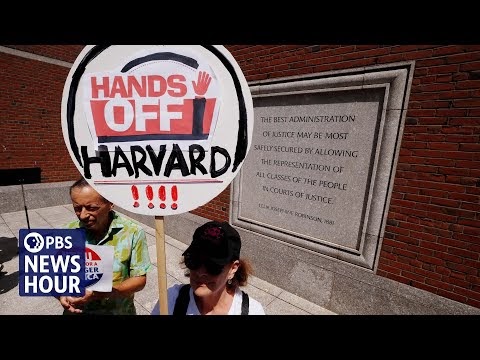
The Trump administration violated Harvard University’s First Amendment rights and didn’t follow proper procedures when it froze $2.2 billion of the university’s federal funding earlier this year, a federal judge ruled Wednesday.
U.S. District Judge Allison Burroughs also ruled that the federal government acted arbitrarily and capriciously when halting the funds. The judicial branch must ensure important research isn’t improperly terminated, she wrote, “even if doing so risks the wrath of a government committed to its agenda no matter the cost.”
Burroughs struck down the Trump administration’s freeze orders and grant termination letters, opening the door for Harvard’s funding to be reinstated. But a White House spokesperson said the Trump administration will immediately move to appeal the decision and keep Harvard “ineligible for grants in the future,” in apparent defiance of the ruling.
In April, the Trump administration froze $2.2 billion in multi-year grants and $60 million in multi-year contracts to Harvard, hours after the university’s leadership rebuked its demands for changes to its admissions, hiring, governance and campus policies.
The federal government carried out the freeze under the auspices of the Trump administration’s Joint Task Force to Combat Anti-Semitism, which has alleged that the Ivy League institution has not done enough to fight antisemitism on its campus. Subsequent grant termination letters from multiple federal agencies repeated those claims.
But Burroughs questioned that rationale in her decision Wednesday, saying a connection between the federal government’s stated motivations and actions was “wholly lacking.”
The evidence does not “reflect that fighting antisemitism was Defendants’ true aim in acting against Harvard,” the judge wrote in her 84-page ruling. “Even if it were, combatting antisemitism cannot be accomplished on the back of the First Amendment.”
U.S. Education Secretary Linda McMahon also told Harvard in a May 5 letter that it would cut the university off from all future research grants — an order that Burroughs also permanently blocked.
Burroughs also cast doubt on the Trump administration’s argument that its revocation of Harvard’s funding had nothing to do with university President Alan Garber’s refusal to comply with extensive federal ultimatums.
Among several wide-ranging requirements, the Trump administration sought to have Harvard hire a third party to audit programs and departments that it described as fueling “antisemitic harassment” or reflecting “ideological capture.” It also called for “meaningful governance reform” within the university, such as reducing the power of faculty engaged in activism.
The ultimatums and cut-off funds prompted Harvard to sue the federal government in April. It argued that the Trump administration violated its free speech by pulling funding for refusing to comply with viewpoint-based demands and that the government didn’t follow the proper procedures for terminating the grants.
Despite the Trump administration assertions that Harvard’s pulled funding was unrelated, Burroughs said its own members undercut its argument.
“Numerous government officials spoke publicly and contemporaneously on these issues, including about their motivations, and those statements are flatly inconsistent with what Defendants now contend,” the judge wrote.
Burroughs cited social media posts from President Donald Trump two days after the task force announced the funding freeze.
“Harvard is a JOKE, teaches Hate and Stupidity, and should no longer receive Federal Funds,” he wrote on April 16.
That post and others like it demonstrated that Trump’s ongoing concern was “untethered from antisemitism,” Burroughs said.
But a White House spokesperson doubled down on Wednesday, saying the federal government’s actions against the university are intended to “hold Harvard accountable.”
“To any fair-minded observer, it is clear that Harvard University failed to protect their students from harassment and allowed discrimination to plague their campus for years,” White House Assistant Press Secretary Liz Huston said in an email. Burroughs was “always going to rule in Harvard’s favor, regardless of the facts,” she added.
In late April, Harvard published two long-awaited reports about the climate of its Massachusetts campus — one on antisemitism and anti-Israeli bias and another on anti-Muslim, anti-Arab, and anti-Palestinian bias.
The reports found that Jewish, Israeli and Zionist students and employees at Harvard — along with their Muslim, Arab and Palestinian peers — at times felt shunned or harassed while at the university during the 2023-24 academic year.
“Harvard was wrong to tolerate hateful behavior for as long as it did,” Burroughs wrote before noting that the university is “currently, even if belatedly, taking steps it needs to take to combat antisemitism and seems willing to do even more if need be.”
But the federal government failed to consider this, the judge wrote.
“The agencies considered little, if any, data regarding the antisemitism problem at Harvard” and disregarded “substantial policy and other changes” the university enacted to address the issue, Burroughs said.
They also “failed to weigh the importance of any particular grant or to evaluate whether a particular grant recipient had engaged in antisemitic behavior before cutting off critical research,” she said.
Today, a federal court echoed what FIRE has said all along: The Trump administration trampled Harvard University’s First Amendment rights and broke civil rights law when it yanked billions in federal grants and contracts over alleged Title VI violations.
The worthy goal of combating unlawful anti-Semitic discrimination on campus cannot justify the flatly unlawful and unconstitutional means used by the Trump administration in this attempted hostile takeover, including demanding that Harvard impose ideological litmus tests and restrictive speech codes. Our government may not use civil rights laws as a pretext to violate the First Amendment.
Read FIRE’s amicus brief here.
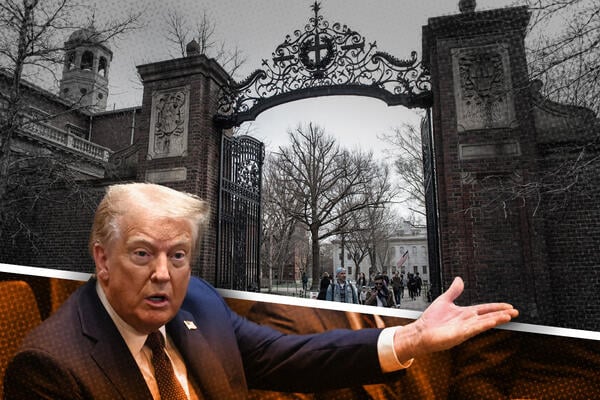
A federal judge in Boston ruled in favor of Harvard University Wednesday.
Photo illustration by Justin Morrison/Inside Higher Ed | Mandel Ngan and Joseph Prezioso/AFP/Getty Images
A judge ruled Wednesday that the Trump administration illegally froze more than $2 billion in research funding at Harvard University over how officials handled alleged campus antisemitism.
Judge Allison Burroughs of the U.S. District Court in Boston found that the federal government violated Harvard’s First Amendment rights and the U.S. Civil Rights Act in her 84-page opinion, writing, “We must fight against antisemitism, but we equally need to protect our rights, including our right to free speech, and neither goal should nor needs to be sacrificed on the altar of the other.” She added that Harvard is “currently, even if belatedly” taking action against antisemitism.
Harvard sued the Trump administration in April after the federal government froze $2.2 billion in funding when the Ivy League university rejected demands to enact a far-reaching slate of changes that would have overhauled admissions, governance, hiring and much more.
Burroughs, an Obama appointee, appeared skeptical of the Trump administration’s claims in a July hearing, telling government lawyers that they failed to back up claims Harvard did not appropriately address antisemitism. She also ruled against the administration in another case in June, temporarily blocking the government from halting Harvard’s ability to host international students.
Burroughs wrote Wednesday that “Harvard was wrong to tolerate hateful behavior for as long as it did,” but “the record … does not reflect that fighting antisemitism” was the “true aim” of the defendants and such efforts “cannot be accomplished on the back of the First Amendment.”
The ruling comes as rumors of a Harvard settlement with the federal government continue to swirl. The Trump administration has demanded a $500 million settlement that would force other changes to admissions and discipline policies, similar to agreements made by its Ivy League peers Columbia University and Brown University.
Harvard President Alan Garber said in a statement Wednesday that “the ruling affirms Harvard’s First Amendment and procedural rights, and validates our arguments in defense of the University’s academic freedom, critical scientific research, and the core principles of American higher education.”
Wednesday’s legal ruling also prompted celebration from free speech groups and others.
“Today, a federal court echoed what [the Foundation for Individual Rights and Expression] has said all along: The Trump administration trampled Harvard University’s First Amendment rights and broke civil rights law when it yanked billions in federal grants and contracts over alleged Title VI violations,” FIRE wrote in a statement.
“This is a huge win for all of American higher education, for science, and for free and critical thought in this country,” said Todd Wolfson, president of the American Association of University Professors. “Time and again, Trump has tried to restrict speech and cripple lifesaving university research. As today’s victory shows, Trump’s war on higher education is unconstitutional. We will continue to stand up and fight back against these attempts to dismantle our universities, terrify students and faculty, and punish hospitals and scientists for not bowing to authoritarianism. And we will win.”
The American Council on Education praised Burroughs’s ruling.
“We are pleased to see a federal court affirm what we always knew to be true: The Trump administration has ignored the law in pursuing politically motivated attacks on Harvard and other institutions,” said Peter McDonough, general counsel for ACE. “We urge the administration to abandon these harmful attacks and instead work to restore the partnership that has made colleges and universities the engine of American innovation for decades.”
Judging from the Department of Education’s response to the ruling, that seems unlikely.
“In an unsurprising turn of events, the same Obama-appointed judge that ruled in favor of Harvard’s illegal race-based admissions practices—which was ultimately overturned by the Supreme Court—just ruled against the Trump Administration’s efforts to hold Harvard accountable for rampant discrimination on campus,” spokesperson Madi Biedermann wrote in an emailed statement. “Cleaning up our nation’s universities will be a long road, but worth it.”
In a post on X, Education Secretary Linda McMahon added, “The Trump Administration is fully committed to appealing this erroneous decision and will ensure that new taxpayer funding is not invested at any university that steadfastly refuses to uphold civil rights for all students.”


Developed with the help of volunteer leaders and member institutions across the country, The Job Descriptions Index provides access to sample job descriptions for positions unique to higher education.
Descriptions housed within the index are aligned with the annual survey data collected by the CUPA-HR research team. To aid in the completion of IPEDS and other reporting, all position descriptions are accompanied by a crosswalk section like the one below.
Crosswalk Example
Position Number: The CUPA-HR position number
BLS SOC#: Bureau of Labor Statistics occupation classification code
BLS Standard Occupational Code (SOC) Category Name: Bureau of Labor Statistics occupation category title
US Census Code#: U.S. Census occupation classification code
VETS-4212 Category: EEO-1 job category title used on VETS-4212 form
***SOC codes are provided as suggestions only. Variations in the specific functions of a position may cause the position to better align with an alternate SOC code.
The post Job Descriptions – External Affairs appeared first on CUPA-HR.
Developed with the help of volunteer leaders and member institutions across the country, The Job Descriptions Index provides access to sample job descriptions for positions unique to higher education.
Descriptions housed within the index are aligned with the annual survey data collected by the CUPA-HR research team. To aid in the completion of IPEDS and other reporting, all position descriptions are accompanied by a crosswalk section like the one below.
Crosswalk Example
Position Number: The CUPA-HR position number
BLS SOC#: Bureau of Labor Statistics occupation classification code
BLS Standard Occupational Code (SOC) Category Name: Bureau of Labor Statistics occupation category title
US Census Code#: U.S. Census occupation classification code
VETS-4212 Category: EEO-1 job category title used on VETS-4212 form
***SOC codes are provided as suggestions only. Variations in the specific functions of a position may cause the position to better align with an alternate SOC code.
The post Job Descriptions – Extension Programs appeared first on CUPA-HR.
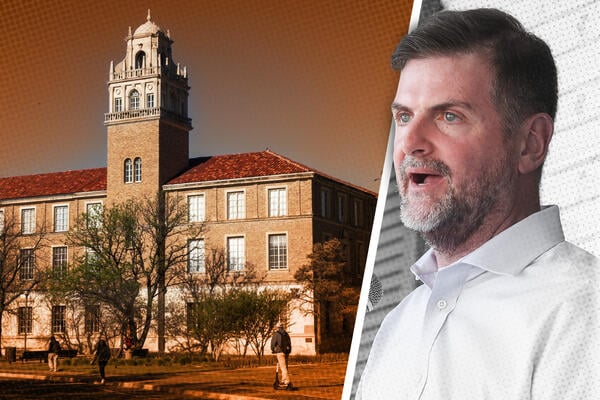
In 2023, Texas became one of the first red states to institute a sweeping ban on diversity, equity and inclusion in public colleges and universities.
Following pro-Palestinian protests and a police crackdown on an encampment at the University of Texas at Austin in 2024, the Texas Legislature this year passed another law restricting free speech on public campuses, including banning all expressive activities from 10 p.m. to 8 a.m.
The Legislature also this year passed a wide-ranging bill that allows public college and university presidents to take over faculty senates and councils, prohibits faculty elected to those bodies from serving more than two years in a row, and creates an “ombudsman” position that can threaten universities’ funding if they don’t follow that law or the DEI ban.
The lead author listed on all three laws is Sen. Brandon Creighton, chair of the Texas Senate education committee. Having overhauled higher ed statewide, he’s about to get the chance to further his vision at one large university system: On Thursday, the Texas Tech University System plans to name Creighton the “sole finalist” for the system chancellor and chief executive officer job.
His hiring by the system’s Board of Regents—whose members are appointed by the governor with confirmation from the Senate—marks another example of a Republican politician in a large red state, namely Texas and Florida, being installed as a higher ed leader. The trend reflects an evolution in how Republicans are influencing public universities, from passing laws to directly leading institutions and systems. For universities, having a former member of the Legislature in the presidency can help with lobbying lawmakers, but it could also threaten academic freedom and risk alienating faculty.
Creighton wasn’t the only, or even the highest-ranking, politician considered for the position, which historically pays more than $1 million a year. As The Texas Tribune earlier reported, Rep. Jodey Arrington, chair of the U.S. House Budget Committee and shepherd of the One Big Beautiful Bill Act, which affected higher ed nationwide, was also in the running. Unlike Creighton, Arrington has worked in higher ed—specifically as a vice chancellor and chancellor’s chief of staff in the Texas Tech system. Arrington, who didn’t provide Inside Higher Ed an interview, issued a statement Sunday congratulating Creighton.
Faculty leaders offered a muted response to Creighton’s impending appointment. Neither the president of the Faculty Senate at the main Texas Tech campus, the president of the university’s chapter of the American Association of University Professors nor the state AAUP conference publicly denounced Creighton. In an emailed statement, the state conference said, “We have concerns about the future of academic freedom and shared governance in the Texas Tech University System given the positions Sen. Creighton has taken in the legislature.”
“We hope that Texas Tech’s strong tradition of shared governance and academic freedom continues so that Texas Tech can thrive,” the statement said.
Cody Campbell, the system board chair, said Creighton is “a fantastic fit with our culture and is clearly the best person for the job.” He added that he likes the higher ed legislation Creighton has passed. (Creighton was also lead author of a new law that lets universities pay athletes directly.)
“He shares the values of the Texas Tech University System,” Campbell said. Both the system and the wider community of Lubbock, where the main Texas Tech campus is located, are “conservative,” he said.
“We do not subscribe to the ideas around DEI and are supportive of a merit-based culture,” Campbell said, adding that Creighton is well positioned to continue the system’s growth in research, enrollment and academic standing.
For Creighton, the job could come with a big payout. Retiring Texas Tech system chancellor Tedd L. Mitchell made $1.3 million in 2023, ranking him the 12th-highest-paid public university leader in the country, according to The Chronicle of Higher Education’s database. The system didn’t respond to Inside Higher Ed’s open records request for Mitchell’s current contract in time for this article’s publication, and Campbell told Inside Higher Ed Creighton’s pay is “yet to be determined.”
“The contract or the compensation were never part of the discussion with any of the candidates,” Campbell said.
Creighton didn’t provide Inside Higher Ed an interview or answer written questions. But he appeared to accept the position in a post on X.
“Over the past six years, no university system in Texas has taken more bold steps forward,” he wrote. “Serving as Chairman of the Senate Education Committee and the Budget Subcommittee has been the honor of a lifetime—especially to help deliver that success for Texas Tech and its regional universities. I feel very blessed to have been considered for the role of Chancellor. There is no greater purpose I would consider than working to make generational changes that transform the lives of young Texans for decades to come.”
Campbell said he doesn’t recall whether Creighton and Arrington initially expressed interest in the position to the board or whether the board reached out to them. Dustin Womble, the board’s vice chair, declined to comment. Campbell said the board “actively recruited” some candidates.
“There wasn’t really a formal application process, necessarily,” he said. But dozens of candidates across the country expressed interest in the “high-paying position” leading a large system, he said.
The system says it has more than 60,000 students across five institutions and 20 locations, including one in San José, Costa Rica. The five institutions are Texas Tech (which has multiple campuses), Texas Tech Health Sciences Center (which also has multiple campuses), the separate Texas Tech Health Sciences Center El Paso, Angelo State University and Midwestern State University.
Asked about Creighton’s lack of higher ed work experience, Campbell said that wasn’t unusual for system chancellors, contrasting the position with those of the presidents who lead individual institutions on a day-to-day basis.
“Our past chancellor was a medical doctor, the chancellor before him was a state senator, the chancellor before him was a former U.S. congressman and a state politician; we’ve had businessmen in that position, we’ve had all different types of people,” Campbell said.
Aside from serving in the Senate for a decade and the state House for seven years before that, Creighton is an attorney.
Andrew Martin, the tenured art professor who leads the Texas Tech University main campus’s AAUP chapter, noted that “our chapter has actively opposed some of the legislation that Sen. Creighton has authored.”
“Our hope now is that Sen. Creighton, in apparently assuming the role of chancellor, will spend time learning more about the campuses in the TTU System and will meet as many students, faculty [and] administrators on our campuses as possible to see how these institutions actually operate day in and day out,” Martin said. “I’m not sure how clear that’s been from his perspective as a lawyer and legislator.”
Martin—who stressed that he was speaking for himself and colleagues he’s spoken to, but not on behalf of his university—said the AAUP is concerned with maintaining academic freedom for faculty and students, upholding tenure protections, and preserving the faculty’s role in determining curriculum, conducting research and exercising shared governance.
When the Legislature passed Senate Bill 37—the Creighton legislation that, among other things, upended faculty senates—Creighton issued a news release saying, “Faculty Senates will no longer control our campuses.” He said his legislation “takes on politically charged academic programs and ensures students graduate with degrees of value, not degrees rooted in activism and political indoctrination.”
Among other things, SB 37 requires university presidents to choose who leads faculty senates. Ryan Cassidy, a tenured associate librarian, was elected to lead the Texas Tech University main campus’s Faculty Senate before SB 37 took effect, and the institution’s president has allowed him to stay in that role.
Asked about Creighton being named chancellor, Cassidy said, “I haven’t really had time to reflect on it.”
Creighton’s bio on the Legislature’s website touts his conservative values outside of higher ed, too. “He has relentlessly hammered excessive taxation, pursued ‘loser pays’ tort reform, passed drug testing for unemployment benefits, stood up for Texas’ 10th Amendment rights and effectively blocked Obamacare’s Medicaid expansion,” the bio says.
Martin said Texas Tech aspires to become a member of the Association of American Universities, a prestigious group of top research universities, of which UT Austin and Texas A&M University are already members. That would be hard if faculty are “marginalized,” he said.
“You can’t get there without the huge investment of faculty,” he said.
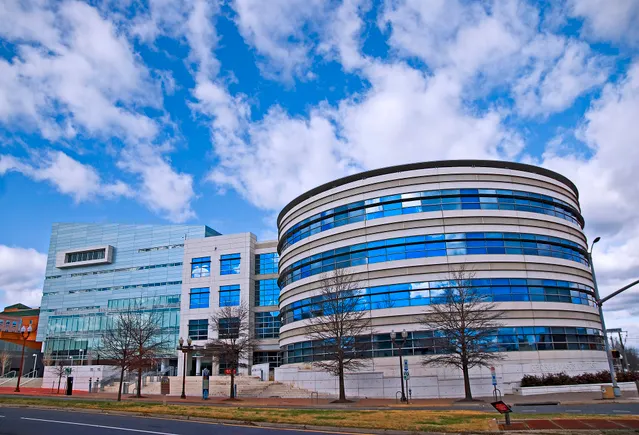
Over a period of weeks this summer, the Trump administration ramped up pressure on George Mason. The departments of Education and Justice opened at least four probes between them into the university, often citing comment from Washington in support of diversity initiatives.
Washington’s attorney, Douglas Gansler, took the Education Department to task for how quickly it determined George Mason violated the law.
“It is glaringly apparent that the OCR investigation process has been cut short, and ‘findings’ have been made in spite of a very incomplete fact-finding process, including only two interviews with university academic deans,” Gansler wrote.
The attorney also described some of the evidence cited by the Education Department as “gross mischaracterizations of statements made by Dr. Washington” that didn’t lead to policy changes.
For example, when the Education Department concluded that George Mason violated civil rights law, it linked to a statement Washington made in 2021 in support of having faculty reflect the diversity of the student body and broader community. The department took the statement as expressing “support for racial preferencing” in hiring.
But, as Gansler highlighted, Washington specifically said in the statement that the diversity principles he was promoting were “not code for establishing a quota system.”
Gansler also warned the university’s board against requiring Washington to apologize, which was among the demands made by the Education Department. The lawyer pointed out that such an apology could open the university up to liability.
Through all of this, George Mason’s board of visitors — headed by Charles Stimson, who holds leadership positions at The Heritage Foundation, a right-wing think tank — has been relatively quiet.
To represent it in dealings with the Trump administration, the board hired Torridon Law, which was co-founded by William Barr, formerly U.S. attorney general during the first Trump administration. The firm also has several prominent Republican lawyers on staff.
In July, the university’s chapter of the American Association of University Professors voted no confidence in the board and called its response to the Trump administration’s actions to that point “inadequate and deeply troubling.”
And yet, in August — at a meeting that the AAUP chapter warned could set the stage for Washington’s ouster — George Mason’s board voted to give the leader a raise.
Since then, Democrat members of a Virginia Senate committee have blocked six appointees to George Mason’s board picked by the state’s Republican governor, Glenn Youngkin. The move has left the board of visitors without a quorum for conducting official business.
In announcing plans to negotiate with the Education Department, the board said Friday that it “remains committed to ensuring that George Mason complies with all federal civil rights law and remains hopeful that a favorable resolution can be reached.”
George Mason is just the latest in an expanding set of colleges targeted by the Trump administration over allegations related to racial preferencing, campus antisemitism and policies supporting transgender student athletes.
Some universities, including Columbia and Brown, have paid hefty sums to settle allegations and have at least some of their federal research funding restored. The administration is also seeking some $500 million from Harvard University and $1 billion from the University of California, Los Angeles.