Author: admin

  • Later Wake-Up Call for Inside Higher Ed’s Daily News Update

    Later Wake-Up Call for Inside Higher Ed’s Daily News Update

    Loyal Inside Higher Ed readers who wake up to our daily newsletter will soon have an easier time finding each day’s edition in their crowded inboxes. 

    Starting Tuesday, Sept. 2, the Daily News Update will arrive between 5:30 and 6:00 a.m. Eastern, several hours later than the current 3:15 a.m. This may upset the morning routines of the handful of souls on the East Coast who rise before the sun, but for most readers, we hope this change means our newsletter is there at the top of your inbox when you log in, ready to inform your day.  

    Thank you for waking up with Inside Higher Ed

    Source link

  • Universities are not border agents – but they do have a duty

    Universities are not border agents – but they do have a duty

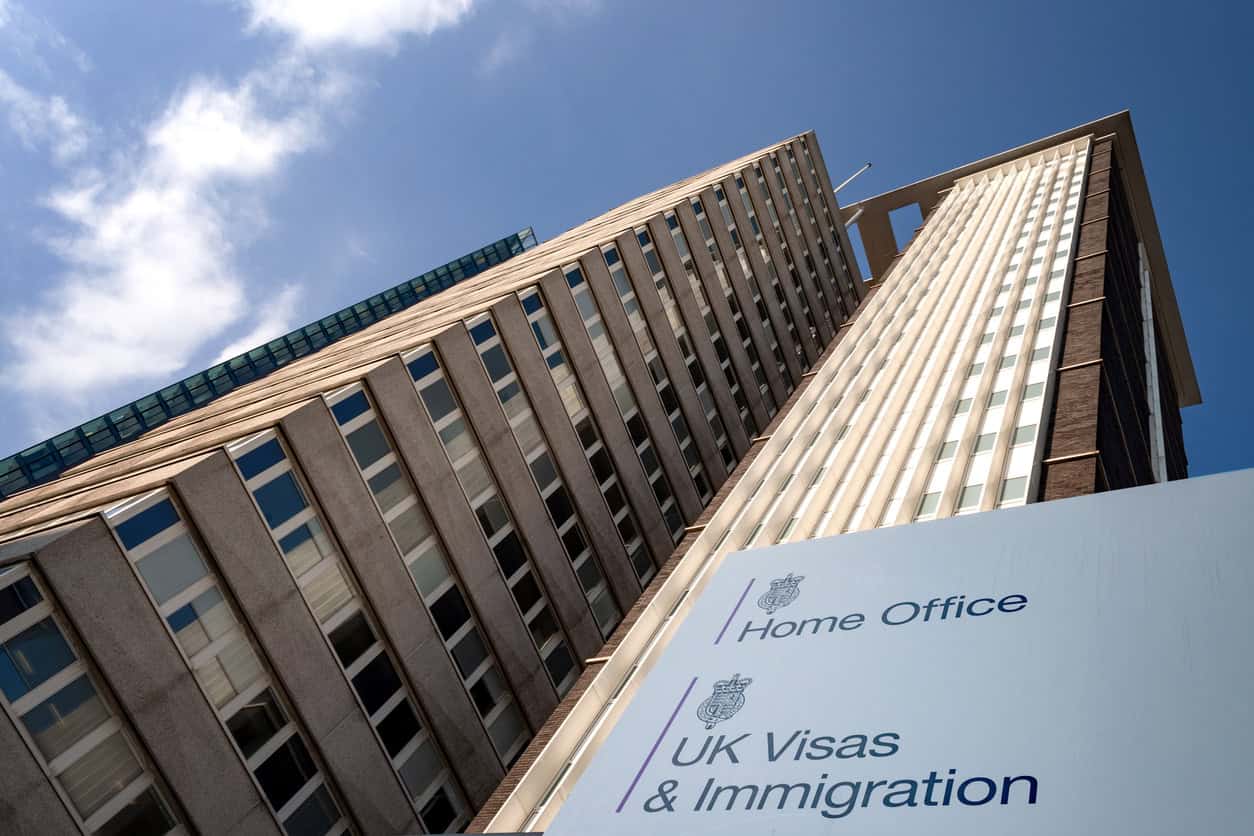
    As summer draws to a close, the UK finds itself in the grip of growing public frustration over the slow processing of asylum claims and the perceived misuse of the student visa system. With over 111,000 asylum applications recorded in the year to June 2025 – the highest number ever recorded in the UK – the pressure is growing on the UK government, local councils and public services to reduce both processing times and the cost of housing asylum seekers.

    Currently, the UK is facing a backlog of more than 106,000 asylum cases, including 51,0000 appeals, with average wait times stretching to 53 weeks. The use of hotels to accommodate asylum seekers – originally a temporary measure introduced by the last government – has become a flashpoint for anti-migrant protests nationwide.

    Spotlight on international education

    As the asylum debate intensifies, UK universities are increasingly being drawn into the spotlight. This is largely due to recent Home Office data revealing that 16,000 student visa holders claimed asylum in 2024 – more than any other visa category. Nearly 40% of these individuals had entered the UK legally from countries including Pakistan, Nigeria and Sri Lanka.

    These figures have already prompted the government to introduce a new wave of visa reforms in its Immigration White Paper, including reducing the post-study work entitlement from two years to 18 months and imposing sanctions on universities with high rates of post-study asylum claims. From September 2025, UK universities may face fines, public naming or even temporary bans on international student recruitment if they fail to meet new compliance standards.

    The risk of reputational fallout

    For universities already navigating considerable financial pressures, the implications of these restrictions could be severe. Just one year’s intake of international students contribute almost £42 billion annually to the UK economy and represent a vital segment of enrolments across the sector. The growing association between universities and fraudulent asylum claims nevertheless risks undermining public trust and casting doubt on the integrity of university admissions processes.

    This reputational risk also extends beyond domestic borders. If the UK is perceived globally as hostile or unpredictable in its treatment of international students, competitor destinations such as Canada, Australia and New Zealand may stand to gain from the UK’s inability to get its house in order and bring its asylum system under control. Moreover, the Graduate Route, once a cornerstone of the UK’s appeal to global talent, remains under constant threat of review, further fuelling uncertainty among prospective applicants.

    Lessons for the academic year ahead

    So, what should UK universities do in response to growing concerns about illegal immigration? First, universities must strengthen their admissions oversight. Higher education institutions must ensure robust financial and academic checks, particularly for applicants from high-risk regions, and be transparent about any shortcomings and plans for improvement to maintain government goodwill and reassure the public.

    Second, universities must continue to support vulnerable students wherever in the world they may come from. Not all asylum claims are opportunistic. With the world around us changing apace, some students face genuine threats to their lives from political upheaval, persecution or conflict. This means universities should be prepared to offer legal guidance and pastoral support to those at risk and add legitimacy to the asylum claims of those in genuine danger.

    Third, universities need to speak with a unified voice and collectively defend the value of international education. This includes countering populist narratives about fraudulent asylum claims and backdoor immigration with evidence-based accounts of how international students contribute to the economy, innovation and a flourishing society.

    Finally, universities should be prepared to step up and engage with their local communities. The distinction between economic migrants, asylum seekers and international students is sadly all-too-often blurred in public discourse and populist rhetoric. Yet, with their strong and vibrant international communities, universities can help clarify these differences and highlight the positive contributions of their international students and staff, including through stories of civic engagement, volunteering and career successes.

    Compliance calls

    With no quick fixes to the asylum system in sight and public protests continuing as we head into the autumn, UK universities must not allow fear and frustration to erode the foundations of international education. While universities are not border agents, they do have a duty to comply with the systems that enable them to remain places of learning, inclusion and opportunity for people from across the world.

    As we enter a new academic year, the challenge is therefore clear: UK universities must find ways to balance compassion with control, ensuring that future international admissions processes meet the expectations of both government and the society they serve.

    Source link

  • Getting it ‘right’ – a reflection on integrating Service Learning at scale into a large Faculty of Science and Engineering

    Getting it ‘right’ – a reflection on integrating Service Learning at scale into a large Faculty of Science and Engineering

    This blog was kindly authored by Professor Lynne Bianchi, Vice Dean for Social Responsibility & Equality, Diversity, Inclusion and Accessibility, at the University of Manchester

    I recently had the fortune to be part of a panel discussing the place of Service Learning in higher education, chaired by HEPI. My reflections before and since may inspire you to take time to think about your perspective on the nature and role of Service Learning in fast-changing university and civic landscapes. In its simplest sense, Service Learning is an educational approach that combines academic study with community service.

    In my role within a large science and engineering faculty, I have rallied our staff and students to think seriously about the features, advantages and benefits of Service Learning in science and engineering contexts. For our university, this teaching and learning approach isn’t new, with expertise in the biomedical sciences and humanities teaching us much about the way in which undergraduate students can create benefit for our local communities whilst enriching their own academic experiences.

    In this blog, I build on my own background as a teacher and higher education academic and draw on my experience in curriculum design when focusing on how we can provide authentic and impactful Service Learning experiences for our undergraduates.

    What do we mean by the ‘right’ learning experiences?

    It doesn’t take long working in this area to unearth a wide range of terms that are used interchangeably – from place-based learning, real-world learning, community-engaged learning, practice-based learning, critical urban pedagogy, industry-inspired learning and more. A gelling feature is that to get Service Learning working well there must be an authentic benefit to each party involved. The students should develop skills and understanding directly required within their degree, and the partner should have a problem explored, solved, or informed. In essence, the experience must lead to a ‘win-win’ outcome(s) to be genuine.

    In our context in science and engineering, we have envisioned Service Learning working well, and considered this to include when:

    For students:

    • Learning has relevance: work on a project, individually or in groups, is contextualised by a problem, issue or challenge that is authentic (as opposed to hypothetical).
    • Learning has resonance: developing and applying skills and knowledge to inform the problem, issue or project that dovetails with existing course specifications and requirements.

    For partners:

    • They are engaged: partners are involved in the design and delivery of the project to some extent. This may vary in the depth or level of engagement and requires both sides to appreciate the needs of each other.
    • They are enriching: partners identify real issues that matter and expose elements of the work environment that enrich students’ awareness of the workplace and career pathways.

    When is the right time for students to engage in service learning?

    I am still pondering this question as there are so many variables and options that influence the choice. Which year group should service learning drop into? Or, does a developmental over time approach suit better? Is Service Learning more impactful in the later undergraduate years, or should it be an integral part of each year of their experience with us? Realistically, there won’t be a one-size-fits-all all model, and there are benefits and challenges to each. What will need to underpin whichever approach we take, will be the focused need to elicit the starting points of our students, our staff and our partners in whichever context.

    Going from ‘zero to hero’ in Service Learning will require training and support for all parties. My experience working across the STEM sector for nearly three decades has taught me that no one partner is the same as another – what is a big deal to one can mean nothing to another. My thinking is that we need to see each person involved in the Service Learning experience as a core ‘partner’ and each has learning starting points, aspirations and apprehensions. Our role as programme leaders is to identify a progression model that appreciates that this is ‘learning’ and that scaffolds and key training will be required at different times – even within the process itself.

    What support will be required to mobilise this model at scale?

    In my early career at this university, I spent time within the Teaching & Learning Student Experience Professional Support teams, where I saw firsthand the integral way that any university programme relies on expertise in taking theoretical ideas into practice. The interplay between project management, planning, timetabling, eLearning, marketing and communications and student experience support teams, to name some, will have play such critical roles in achieving excellence in Service Learning. Working at scale in our faculty across 10 different discipline areas, will require integrated work with other faculties to harness the power of interdisciplinary projects and digital support for course delivery and assessment that can embrace an internal-external interface.

    Support for scaling up will also require a culture of risk-taking to be valued and championed. Over the introductory years, we need to provide a sense of supported exploration, a culture of learning and reflection, and an ethos where failure is rarely a negative, but an opportunity. Of course, science and engineering disciplines bring with them our obligations to accrediting bodies, and a close dialogue with them about ambition, relevance and need for this enriching approach needs to be clearly articulated and agreed so that any course alteration becomes a course invigoration rather than a compromise.

    Faculty culture and the way the university and the sector views and reviews SL will have a significant implication on practice and people feeling safe to innovate. As the university forges and launches its 2035 strategy the spaces for innovation and development are increasingly championed, and the months and years ahead will be ones to watch in terms of establishing a refreshed version of teaching and learning for our students.

    In closing this short exploration of Service Learning, I can feel a positive tension in the air – the excitement to work together to further invigorate our student experience whilst supporting our staff and partners to embrace varied new opportunities. The ‘getting it right’ story will have many chapters, many endings as the genres, characters and plots are there for us all to create – or more pertinently ‘co-create’! What drives me most to remain in this space of uncertainty for a while longer is the anticipation of creating experiences that truly make a difference for good. As our universities transform themselves over the coming years, I invite you to join us in the dialogue and development as we have so much to learn through collaboration.

    Source link

  • Serving to Lead: The Transformative Role of Servant Leadership in Higher Education – Faculty Focus

    Serving to Lead: The Transformative Role of Servant Leadership in Higher Education – Faculty Focus

    Source link

  • Serving to Lead: The Transformative Role of Servant Leadership in Higher Education – Faculty Focus

    Serving to Lead: The Transformative Role of Servant Leadership in Higher Education – Faculty Focus

    Source link

  • Enroll in the Beatles MA Online: Study Music History

    Enroll in the Beatles MA Online: Study Music History

    I recognise that specialist courses, ‘Star Wars’ Studies, or Soap Opera Studies, often attract significant criticism from discipline purists. However, having a focus, a passion, and a shared point of reference that engages students across a range of disciplines, including cultural studies, sociology, anthropology, and economics, is a way to engage interest and ensure motivation—exposing students to academic perspectives while having them study something that they’re already passionate about. One has to wonder why there aren’t more programmes like this, particularly at the postgraduate level.


    Get ready, Beatles fans! Soon, students will be able to ‘come together’ with fellow enthusiasts and scholars from around the world to study the Fab Four. The University of Liverpool is reviving its unique Master of Arts course on the Beatles, and this time, it will be offered fully online.

    Launching in September 2026, the part-time MA in The Beatles, Heritage, and Culture programme will delve deeply into the band’s lasting cultural and economic influence on Liverpool and its surrounding areas.

    This course isn’t just about the songs. It explores how the Beatles’ legacy continues to shape everything from urban planning and civic design to heritage, tourism, and the creative industries in their hometown. Students get a chance to see how four lads from Liverpool changed not only music but also the very landscape of their city.

    While the program is online, students have the option to add a special two-week experience in Liverpool. This module includes daily lectures and site visits to iconic Beatles locations. It’s presented as students’ chance to interact with lecturers, peers, and industry professionals, and see the history they’re studying firsthand.

    Dr. Holly Tessler, the Program Director, offering the program online will allow people from all over the globe to “study Liverpool’s unique Beatles environment, history and heritage from scholars and practitioners who are immersed in this work.”

    The University of Liverpool is a leading authority on the academic study of the Beatles. The university’s Department of Music staff are part of the City of Liverpool’s Beatles Legacy Group, where they help shape local policy on Beatles heritage and tourism. Dr. Tessler herself is the co-editor of The Journal of Beatles Studies, so students will be learning from those who literally write the book on the subject.

    Applications for the programme will open in October 2025.

    Here a link for more information: https://news.liverpool.ac.uk/2025/08/26/liverpools-beatles-ma-returns-in-distance-learning-format/

    Source link

  • VICTORY! University of North Texas system lifts drag ‘pause’ after FIRE/ACLU of TX letter

    VICTORY! University of North Texas system lifts drag ‘pause’ after FIRE/ACLU of TX letter

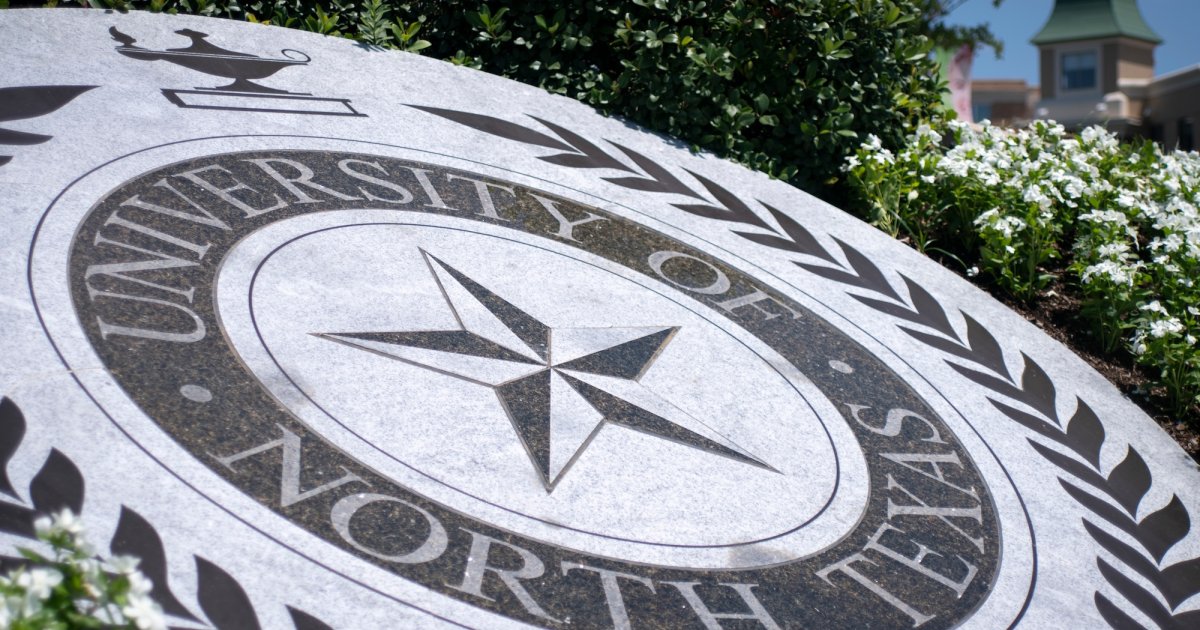
    DENTON, Texas, Aug. 28, 2025 — The University of North Texas system confirmed that it has lifted its “pause” on drag performances across its campuses, in response to a demand letter from civil liberties organizations informing the school that it was violating its students’ First Amendment rights.

    On March 28, UNT System Chancellor Michael Williams issued a system-wide directive announcing an immediate “pause” on drag performances on campus. Williams’ directive came days after a similar drag ban from the Texas A&M University System was blocked by a federal judge following a lawsuit from the Foundation for Individual Rights and Expression.

    On Aug. 14, FIRE and the American Civil Liberties Union (ACLU) of Texas sent a letter informing Williams that his “pause” violated the Constitution for the same reasons.

    “UNT cannot justify banning an entire class of protected expression from campus performance venues on the basis that such expression might cause offense,” the letter read. “In the same way that some people may not appreciate UNT allowing students, staff, or visitors to engage in prayer on campus or wear t-shirts supporting rival universities, the fear that such speech may be ‘offensive’ to some is not a constitutionally permissible reason to ban it.”

    Yesterday, the UNT Office of General Counsel responded to the FIRE/ACLU-TX letter and announced that in light of a recent decision from the U.S. Court of Appeals for the Fifth Circuit blocking yet another drag ban in Texas — this time at West Texas A&M University — “the UNT System’s temporary pause on drag performances has ended.”

    “If campus officials can silence expression simply because some find it ‘offensive,’ no one’s speech will be safe,” said FIRE Strategic Campaigns Counsel Amanda Nordstrom “Today it’s drag shows, but tomorrow it could be political rallies, art exhibits, or even bake sales. From West Texas to North Texas and any direction you look, the message is clear: drag is protected expression, and the show must go on.”

    “UNT repealed its drag ban following public backlash and legal pressure,” said ACLU of Texas Attorney Chloe Kempf. “As we and the courts have repeatedly made clear, banning drag is plainly unconstitutional. Drag is a cherished source of joy and liberation for the LGBTQIA+ community — and this reversal ensures students can once again freely express and celebrate their identities on campus.”


    The Foundation for Individual Rights and Expression (FIRE) is a nonpartisan, nonprofit organization dedicated to defending and sustaining the individual rights of all Americans to free speech and free thought—the most essential qualities of liberty. FIRE recognizes that colleges and universities play a vital role in preserving free thought within a free society. To this end, we place a special emphasis on defending the individual rights of students and faculty members on our nation’s campuses, including freedom of speech, freedom of association, due process, legal equality, religious liberty, and sanctity of conscience.

    CONTACT:

    Alex Griswold, Communications Campaign Manager, FIRE: 215-717-3473; [email protected]

    Kristi Gross, Press Strategist, ACLU of Texas: [email protected]

    Source link

  • How sure are you? | The Foundation for Individual Rights and Expression

    How sure are you? | The Foundation for Individual Rights and Expression

    Dinah Megibow-Taylor is a rising second-year at the University of Chicago while Eli Kronenberg is a rising junior at Northwestern University. Both are former FIRE summer interns.


    How sure are you of your own consciousness? Of the accuracy of your memory? Of the solar system’s shape?

    However well you think you know these things, there’s a chance you could be wrong, and learning to keep this in mind is crucial to maintaining a culture of civil discourse and free speech. How, you ask?

    This year, the FIRE summer interns took a poll, rating our certainty of God’s existence on a scale of 0 to 100%, and found that our responses averaged out to 49%.

    Early in our 10-week program, we had heard countless stories of previous intern classes embroiling themselves in heated political debates in the Tinker Room at the office of FIRE in Philadelphia, broadcasting their disagreements to the rest of the office. Yet from the get-go, our cohort took on a less confrontational dynamic, exemplified by one Friday when we decided to explore our religious beliefs. 

    As each intern expressed a level of certainty in the existence of God, something interesting happened: our conversation turned into an exercise of epistemic humility. The next Monday, one intern said she wanted to change her answer — from 100% certainty to 99%. This was a crucial reminder that even our most cherished beliefs should remain open to debate, for that simple 1% shift opened the door to a rich, good-faith ideological exchange. And it reminded us that even for basic factual matters, such as the earth being round or that one plus one makes two, there can be a dangerous element of outsourcing one’s knowledge to second-hand sources and centuries-old conclusions.

    After all, no less than the math gods Alfred North Whitehead and Bertrand Russell once tried to prove that one plus one makes two — and the result, their magnum opus Principia Mathematica, ended up being 379 pages long. The point is, even seemingly self-evident truths can be painfully difficult to actually prove, and many if not most of the things we assume to be true have never gone through such a rigorous process. As Russell once put it, “In all affairs, it’s a healthy thing now and then to hang a question mark on the things you have long taken for granted.”

    Similarly, in Plato’s Apology, Socrates famously declares himself wiser than a certain unnamed statesman because unlike the statesman, Socrates knew better than to be too sure of things. And, in J.S. Mill’s On Liberty, we find the line, “The beliefs which we have most warrant for, have no safeguard to rest on, but a standing invitation to the whole world to prove them unfounded.”

    That’s how safeguarding a touch of uncertainty, even when it comes to your most tightly held beliefs, can help promote a culture of free speech. Because people only become censorial when they are sure of themselves. But if you keep open the possibility that you might be wrong, and that the other person might be right, you are more likely to want to hear what they have to say.

    In his book Kindly Inquisitors, journalist Jonathan Rauch reminds us that nobody has perfect access to the truth. He refers to the refusal to seriously consider that you are wrong as intellectual fundamentalism. To avoid this trap, we look to FIRE President and CEO Greg Lukianoff’s summation of Mill’s argument for free speech. Mill says there are only three possibilities for any given belief, each of which lends itself to open and vigorous debate: you are totally right, you are totally wrong, you are partially right.

    If you are not entirely correct, it benefits you to hear from others who may have the puzzle pieces you are missing, and if you are entirely correct, hearing from critics may sharpen your argument and help you better spread the truth.

    Consider the case of Megan Phelps-Roper, who was raised in the Westboro Baptist Church, the granddaughter of the group’s founder. From the age of 5, Phelps-Roper held up crude signs declaring gay people worthy of death at the church’s notorious pickets, including at military funerals.

    “I believed what I was taught with all my heart,” Phelps-Roper said in a 2017 TED talk, “and I pursued Westboro’s agenda with a special sort of zeal.”

    Yet, over time, she began to interact with ideological opponents on the internet, and slowly came to question the church’s doctrine. She is now an outspoken critic, and speaks movingly about the importance of civil discourse and holding empathy for even those whose views we consider extreme. Her uplifting story demonstrates that it’s possible to be completely certain in one’s worldview, and then to have those beliefs flipped on their heads.

    Ask yourself, the last time you realized you were wrong about something, did you feel that you were wrong beforehand? Probably not, or you wouldn’t have held that belief. Yet you felt sure, all the same. What this teaches us is that our feeling of certainty is an unreliable counselor at best.

    One of our first tasks as interns was to familiarize ourselves with Judge Learned Hand’s “The Spirit of Liberty” speech. “The spirit of liberty is the spirit which is not too sure that it is right,” he professed. To be free is to be humble, to recognize our limitations, and to ceaselessly interrogate ourselves and each other.

    That spirit is alive and well in the Tinker Room.

    Source link

  • Trump administration proposes 4-year cap on international student visas

    Trump administration proposes 4-year cap on international student visas

    This audio is auto-generated. Please let us know if you have feedback.

    Dive Brief:

    • The Trump administration on Thursday proposed capping the length of time international students can stay in the U.S. at four years, regardless of the length of their studies, per a plan published in the Federal Register
    • International student visas, known as F visas, typically allows them to stay in the U.S. for as long as it takes to finish their programs. Bachelor’s and master’s degrees are typically designed to be completed in four years or less, but many Ph.D. programs tend to run longer.
    • The new rule would also affect J visas, which cover certain international students, as well as short-term college instructors and researchers. If finalized, holders of both types of visas would need to apply for extensions and undergo “regular assessments” by the U.S. Department of Homeland Security to stay in the country after four years.

    Dive Insight:

    Restricting the flow of noncitizens into the U.S. — international students included — is not a new focus for the Trump administration. During the last year of President Donald Trump’s first term, the agencies proposed the same cap on F and J visas. The Biden administration withdrew the proposal the following year.

    DHS and U.S. Immigration and Customs Enforcement argued Thursday that neither program gives federal authorities enough oversight over how long visa holders remain in the country.

    In the proposed rule, the agencies alleged that the lack of a fixed end date for F and J visas incentivizes fraud, and DHS said it has identified “many examples of students and exchange visitors staying for decades.” As of April, over 2,100 international students who first entered the country between 2000 and 2010 still hold an active F visa, DHS said.

    That’s a tiny share of the total number of international students the U.S. hosts. In 2023 alone, more than 1.6 million people entered the U.S. through F visas, according to DHS data. Over 500,000 people entered via J visas that year.

    A DHS spokesperson on Wednesday accused international students of “posing safety risks” and “disadvantaging U.S. citizens” — and accused past administrations of allowing them to stay in the country “virtually indefinitely.”

    “This new proposed rule would end that abuse once and for all by limiting the amount of time certain visa holders are allowed to remain in the U.S., easing the burden on the federal government to properly oversee foreign students and their history,” the spokesperson said in a statement.

    The proposal would also prohibit graduate students on F-1 visas from transferring to other institutions or “changing educational objectives,” along with adding similar restrictions for first-year students.

    Student advocates quickly panned the Trump administration’s plan, saying it would increase bureaucratic backlogs, deter international students from attending U.S. colleges and harm the country’s advancement. 

    Fanta Aw, CEO and executive director of NAFSA: Association of International Educators, said Wednesday that the change would also give federal agencies oversight over decisions that “have long been the domain of academia.”

    “This proposal will only increase the degree of government oversight without any evidence that the changes would solve any of the real problems that exist in our outdated immigration system,” Aw said in a statement.

    Aw also decried the proposal as a poorly considered draft that represents a “dangerous overreach by government into academia.”

    “These changes will only serve to force aspiring students and scholars into a sea of administrative delays at best, and at worst, into unlawful presence status — leaving them vulnerable to punitive actions through no fault of their own,” she said.

    Miriam Feldblum, president and CEO of the Presidents’ Alliance on Higher Education and Immigration, called the proposed rule an “unnecessary and counterproductive action.”

    She emphasized the increased paperwork and bureaucratic hurdles it would require of international students.

    “The rule would force them to regularly and unnecessarily submit additional applications to be able to stay in the country and fulfill requirements of their academic programs, imposing significant burdens on students, colleges and universities, and federal agencies alike,” Feldblum said in a Wednesday statement.

    Both Feldblum and Aw noted that international students are already one of the most closely monitored groups in the U.S.

    The DHS spokesperson on Wednesday also alleged that international students cost an “untold amount of taxpayer money.”

    Yet foreign students are often a financial boon for colleges — especially tuition-dependent ones — as they are more likely than U.S. residents to pay an institution’s full sticker price.

    In 2023, international college students contributed more than $50 billion to the U.S. economy, according to the U.S. Department of Commerce. 

    The proposal from DHS and ICE is open for public comment through Sept. 29.

    Source link

  • US proposes visa time limit rule to end “abuse” of system

    US proposes visa time limit rule to end “abuse” of system

    The proposed rule, announced by the Department of Homeland Security (DHS) on August 27, would upend the longstanding “duration of status” policy and enforce additional restrictions on students changing programs and institutions.  

    If finalised, the new rule would limit the length of time international students, professors and other visa holders can stay in the US, which DHS claims would curb “visa abuse” and increase the department’s “ability to vet and oversee these individuals”.  

    Trump initially put forward the proposal during his first administration, only for it to be withdrawn under Biden. In recent weeks, a rehashed version of the plans has been moving closer towards final approval.  

    Yesterday’s publication of the finalised proposal in the Federal Register was met with immediate denunciation by stakeholders who say it would place an undue administrative burden on students as well as representing a “dangerous government overreach”. Now the proposal is under a 30-day public comment period.  

    “These changes will only serve to force aspiring students and scholars into a sea of administrative delays at best, and at worst, into unlawful presence status – leaving them vulnerable to punitive actions through no fault of their own,” said NAFSA CEO Fanta Aw.  

    Under the rule, students could only remain in the US on a student visa for a maximum of four years and would have to apply for a DHS extension to stay longer.  

    The policy document reasons that 79% of students in the US are studying undergraduate or master’s degrees which are generally two or four-year programs, thus: “a four-year period of admission would not pose an undue burden to most nonimmigrant students”.  

    And yet, stakeholders have previously pointed out that the average time taken to complete an undergraduate degree – for both domestic and international students – exceeds four years, meaning that the majority of students would have to file for an extension to complete their studies.  

    Meanwhile, this reasoning does not consider postgraduate students on longer programs or the many students that go onto Optional Practical Training (OPT), who would have to apply for a visa extension as well as the work permit itself. 

    If finalised, master’s students would no longer be able to change their program of study, and first year students would be unable to transfer from the institution that issued their visa documents.   

    Alarmingly, the rule would hand power to the government to determine academic progress, with “a student’s repeated inability or unwillingness” to complete their degree, deemed an “unacceptable” reason for program extensions.  

    It would also limit English-language students to a visa period of less than 24 months, and the grace period for F-1 students, post-completion, would be reduced from 60 to 30 days.  

    Such far reaching provisions amount to “a dangerous overreach by government into academia,” said Aw, pointing out that international students and exchange visitors are already “the most closely monitored non-immigrants in the country.”  

    Government interference into the academic realm in this way introduces a wholly unnecessary and new level of uncertainty to international student experience

    Fanta Aw, NAFSA

    “For too long, past administrations have allowed foreign students and other visa holders to remain in the US virtually indefinitely, posing safety risks, costing untold amount of taxpayer dollars, and disadvantaging US citizens,” DHS said in a statement.  

    Framing the issue as one of national security, the department said it had identified 2,100 F-1 visa holders who arrived between 2000 and 2010 and have remained in status, becoming what DHS called “forever” students “taking advantage of US generosity”.  

    Putting this in perspective, commentators have highlighted that in 2023 alone there were 1.6 million F-1 visa holders in the US.  

    As well as imposing significant burdens on students and intruding on academic decision-making, the proposal would also place strain on federal agencies and increase the existing immigration backlog, warned Miriam Feldblum, CEO of the Presidents’ Alliance on Higher Education and Immigration.

    “International students deserve assurance that their admission period to the US will conform to the requirements of their academic programs,” said Feldblum, issuing a grave warning that the rule would further deter international students and “diminish” US competitiveness.  

    “At a time when the US is already facing declines in international student enrolment, we must do everything we can to keep the door open to these individuals, who are essential to our future prosperity,” she continued, alluding to recent falls in US visa issuance.  

    Since coming to office, a barrage of hostile policies from the Trump administration have erected unprecedented barriers for students hoping to study in the US, with a near-month long visa interview suspension earlier this summer still wreaking havoc on visa appointment availability around the world. 

    The latest government data revealed a 30% drop in student arrivals this July, with colleges bracing for a drastic drop in international student numbers for the upcoming year. If the decline continues, experts have warned of USD $7bn in damages to the US economy.  

    According to Aw, the proposed rule would “certainly” deter international students further, “without any evidence that the changes would solve any of the real problems that exist in our outdated immigration system”. 

    Appealing to Trump’s recent remarks pushing for a more-than doubling of the Chinese student population in the US, Aw urged the government to engage with the sector to ensure the US remained the “premier destination” for global talent while keeping the country “safe and prosperous”. 

    Source link