Author: admin

  • These 4 trends are shaping the 2025-26 school year

    These 4 trends are shaping the 2025-26 school year

    This audio is auto-generated. Please let us know if you have feedback.

    A new school year is upon us — and as with any year, the return to the classroom brings with it an array of challenges both novel and familiar.

    Shifting enrollments alone present existential challenges for many school systems as declining birth rates result in lower student populations, which public schools are now in greater competition to attract and retain. Compounding those challenges are newer hurdles like artificial intelligence and a changing federal policy landscape that are impacting approaches to teaching and learning.

    To help you unpack the obstacles and opportunities on the table this fall, here are four trends to watch in the 2025-26 school year.

    Enrollment crucial as budgets tighten

    As the new school year begins, fall enrollment numbers will be crucial for district budgets, said Marguerite Roza, a research professor and director of Georgetown University’s Edunomics Lab. 

    Due to federal COVID-19 emergency relief funds, many districts appeared to ignore the realities of their declining enrollment, she said. However, when relief funding dissipates and budgets tighten, districts need to keep a very close eye on their fall enrollment: Even if it’s just 1% lower or higher than forecasted, that will be “super important” for schools’ bottom lines, Roza said.

    For some districts, an influx of migrant students has offset declines in non-migrant student populations, Roza said. But that kind of enrollment growth is worth keeping an eye on, she said — especially amid the Trump administration’s heightened immigration enforcement policies. Though schools cannot record a student’s immigration status, a drop in English learners could be a signal of that change, she said.

    Additionally, districts should look for declines in kindergarten or at secondary grade levels, Roza said. If a district has fewer kindergarteners but strong high school enrollment, for instance, then it has a birthrate problem, she said. But if it’s a more widespread issue, it may be that people are moving out of the area.

    Growing school choice policies may also have an impact on enrollment down the line, Roza said.

    Some districts with significant and ongoing enrollment drops will also have to make tough decisions this school year about the future of their schools. For instance, district leaders in Atlanta, Austin and St. Louis public schools are all currently considering whether they should close or consolidate school buildings due to budget challenges and enrollment declines.

    Federal policy whiplash persists

    Schools continue to face the whiplash of the Trump administration’s drastic shift in and rapid enforcement of federal policies, which have included the withholding of federal funding in some cases. That’s especially true for districts’ policies related to LGBTQ+ issues as well as diversity, equity and inclusion.

    Whereas the Biden administration encouraged the inclusion and protection of transgender students, for instance, the Trump administration quickly and forcefully reversed course. Federal officials have so far made an example out of multiple education agencies — including in Maine, California, Minnesota and major districts in Northern Virginia — for what it says are violations of Title IX. Those violations have included allowing transgender students to play on women’s and girls’ sports teams.

    Schools have also been under the microscope for practices meant to level the playing field for Black and brown students, which the administration says are discriminatory against White and Asian students in some cases. In April, for example, the department launched an investigation into Chicago Public Schools for its “Black Students Success Plan.”

    Many civil rights organizations, teacher organizations and sometimes even school districts, however, have challenged the Trump administration’s policies, which they say have been made in some cases without going through the proper legal channels and violate students’ rights. As those cases work their way through the courts, policies continue to shift. In one case, key efforts by the administration to roll back DEI measures — including a requirement from the administration that asked districts to certify they are not incorporating DEI in their schools — were blocked by a judge in August, at the launch of the 2025-26 school year.

    Source link

  • Partnership? Students in Scotland need protection

    Partnership? Students in Scotland need protection

    It’s easy to trace differences in culture back much further – arguably right back to Bologna in 1088, and the Rectors of the Ancients in the 15th Century.

    But at the very least since 2003, students’ unions in England have looked North of the border jealously at a country so committed to student partnership that it created a statutory agency to drive it.

    Partnership at all levels thrives when there’s will, time, and frankly, money. It’s tougher to reflect the principles of students having power when times are tight – when the excel sheets no longer add up, when restructures have to be planned, and when cuts have to be crafted to the facilities and services that students have been inputting on for years.

    Beyond the potentially apocryphal stories of truly student-led institutions in ancient times, students in any system are bound to be treated as, and regard themselves as, at best junior partners – with, both at individual and collective levels, a significant power asymmetry.

    In such scenarios, when leaders spend their days choosing between any number of awful options, it’s often going to be the least institutionally risky path that’s taken. And the danger is that students – who previously might have relied on partnership to secure their interests – now really need protection instead.

    I spend quite a bit of time here lamenting the implementation of protection measures for students in England. But in conversations with students and their leaders in Scotland, I’m now finding myself repeatedly reflecting on the fact that at least, in England, there are some.

    3 months to open your email

    Take complaints. The Office of the Independent Adjudicator (OIA) doesn’t always generate the answer that student complainants would like – it often feels too distant, and at least temporally, hard to access.

    It also has a tendency to seek resolution when it’s sometimes justice that should prevail – and increasingly feels like providers are paying students off (often with NDAs for non-harassment complaints) before they get there.

    But in Scotland, students have to use the Scottish Public Services Ombudsman (SPSO). As I type, “due to an increase in the volume of cases” it is currently receiving, there is a delay of 12 weeks in allocating complaints to a reviewer.

    Some comfort that will be to the international PGT who has cause to complain in month 10 of their studies, only to have to encounter a complaint, an appeal, and then a further 12 weeks just to get the SPSO to open their letter. UKVI will have ensured they’re long gone.

    It’s clear that few get as far as the SPSO. When it investigates a complaint, it usually reports its findings and conclusions in what it calls a decision letter – and these findings are published as decision reports. Since May 2021, just ten have been published.

    Either students in Scotland have much less to complain about than their counterparts in England and Wales, or universities in Scotland are much better at resolving complaints, or this is a system that obviously isn’t working.

    Never OK

    Then there’s harassment and sexual misconduct. Just under a year ago Universities Scotland’s update on anti-harassment work suggested a system of protection that’s patchy at best.

    37 per cent of institutions weren’t working with survivors to inform their approach, 21 per cent didn’t have policies allowing for preventative suspension where necessary, and only 71 per cent of institutions had “updated their policies” following guidance from UUK on staff-student relationships – which could still mean all 19 universities are permitting staff to pursue students.

    Universities Scotland acknowledges that most identify funding as a barrier, but England’s regulator makes clear that providers “must” deploy necessary resources, with higher-risk institutions expected to invest more. If you can’t fund student safety properly, perhaps you shouldn’t be operating is the message in England.

    And there’s no sign that Scotland will be taking part in the prevalence research that’s been piloted in England.

    Cabinet Secretary Jenny Gilruth’s praise for Scotland’s “partnership approach” suggested either complacency or a failure to grasp that Scotland is sliding toward being significantly less robust than England in protecting students. When partnership fails to deliver safety, protection becomes essential – and on harassment, it feels like Scotland is failing to provide either adequately.

    Best practice should not be voluntary

    Or take mental health. While Wales has responded to parliamentary concerns about consistency by accepting recommendations for a “common framework for mental health support” backed by registration and funding conditions, Scotland continues to rely on voluntary approaches that deliver patchy outcomes.

    The Welsh government’s response to its Children, Young People and Education Committee shows what serious commitment looks like. New MEDR registration conditions will require clear expectations for student wellbeing, supported by data collection requirements, evaluation frameworks, and crucially, funding considerations built into budget allocations.

    There’s partnership rhetoric – but it’s partnership backed by regulatory teeth. Wales has grasped what Scotland appears to miss – that “best practice should not be voluntary” when student lives are at stake, as one bereaved parent told Westminster’s Petitions Committee.

    The Welsh approach is set to recognise that students need “parity of approach” and “consistency between departments, institutions, and academic teams” – something that purely voluntary frameworks cannot deliver.

    Scotland’s reliance on institutional goodwill for mental health provision increasingly looks naive. Maintaining flexibility for institutions to design services suited to their contexts, is one thing – but Wales will ensure baseline standards that students can depend on regardless of which university they attend.

    The contrast is stark – Wales will treat student mental health as a regulatory priority requiring systematic oversight, while Scotland appears content to hope that partnership alone in a context of dwindling funding will somehow deliver consistency. When partnership fails to protect the most vulnerable students, Wales will have built backup systems – Scotland has built excuses about funding pressures that Welsh universities face too.

    Promises promises

    Then there’s consumer protection – or, as I like to rebrand it, delivering on the promises made to students. It’s easy to assume that students in Scotland aren’t covered – but plenty do pay fees, and those that don’t are supposed to be protected too.

    But over two and a half years since the Competition and Markets Authority revised its guidance to universities on compliance, there seems to be a nationwide problem. Of the 16 universities I’ve looked at in Scotland, 15 still include contractual terms limiting liability in the event of a strike involving their own staff – something CMA has advised is unlawful, and which OfS is effectively enforcing in cases like Newcastle.

    In a year when strikes are more likely, why should students in Scotland not be afforded the same rights to the education they’ve signed up for than their English counterparts?

    The CMA also bans clauses that limit compensation for breach of contract to the total paid in fees – something that would be very attractive in Scotland for obvious reasons. Yet 14 of the country’s universities continue to publish contractual terms that apparently allow them to with impunity. Several have highly problematic clauses on in-contract fee increases too.

    And CMA’s guidance on “variation clauses” – that should not result in too wide an ability to vary the course or services that were offered when students signed up – looks like it’s been flouted too.

    I’m no lawyer, but most universities in Scotland seem to be affording themselves the right to pretty much change anything and everything – and when finances are as tight as they are, that means students and their complaints about cuts can be bottom of the risk register, if they feature at all.

    You’re the voice

    Or take student voice itself. The mandatory Learner Engagement Code required by the Tertiary Education and Research (Wales) Act 2022 could be transformative – moving from “should” to “must” with genuine comply-or-explain mechanisms, protected status for student representatives, and mandatory training on rights and responsibilities for all students. Or it could emerge as something weak and vague, disappointing everyone who fought to get student engagement into primary legislation.

    But at least there is one. At minimum, Wales recognises that student partnership requires legal backing, not just goodwill that evaporates when finances get tight. Scotland’s partnership model, for all its historical reputation, increasingly looks like an expensive way of avoiding the hard work of building systems that actually protect students when partnership fails.

    However flawed, students in England now have new rights over freedom of speech – including a right to not be stopped from speaking on the basis of “reputational impact” on the provider. Several Scottish universities seem to have extraordinarily wide exemptions for “disrepute” and “reputation” that are almost certainly in breach of the Human Rights Act.

    You could even, at a stretch, look at cuts and closures. For all the poor implementation and enforcement of a system designed to protect students when their campus, course, university or pathway is closed in England, at least the principle is in place. Student Protection Plans are required in Scotland by SAAS for private providers – but not of universities. Why?

    We voted against Brexit

    I could go on. Scotland regularly positions itself as more European than England, particularly in higher education where the “partnership approach” is often presented as evidence of continental-style governance. Scottish politicians invoke European models when defending their policies, suggesting Scotland’s collaborative approach mirrors sophisticated systems across the continent.

    Yet European student rights frameworks put Scotland to shame. In Serbia, students have the legal right to nutrition, rest and cultural activities. In Sweden, students enjoy the same workplace protections as employees under the Work Environment Act. In Lithuania, there’s a minimum amount of campus space allocated per student by law, and student representatives hold veto power over university senate decisions – if they use it, a special committee reviews the issue and a two-thirds majority is required to override.

    In Latvia, students’ unions receive at least 0.05% of the annual university budget by law, with legal rights to request information from any department on matters affecting students. In Poland, students have guaranteed rights to study programmes where at least 30 per cent of credits are elective, and universities must consult student governments when appointing managers with student affairs responsibilities. Student protests and strikes are specifically protected, with mediation rights.

    In the Netherlands, universities must inform the national confidential inspector whenever staff may have engaged in harassment involving students – and any staff hearing about allegations must report them to management. Spain mandates every university has an independent ombudsperson with statutory reporting duties. In Croatia, universities are legally obliged to provide students’ unions workspace, co-finance their activities, and offer administrative support. And Austrian students make up significant proportions of curriculum committees by statute, ensuring programmes remain flexible and career-relevant.

    Can I get the Bill

    It’s not as if there isn’t a legal vehicle that could improve things. The Tertiary Education and Training (Funding and Governance) (Scotland) Bill is weaving its way through the Scottish Parliament as we speak – but it couldn’t be weaker in protections for students if it tried.

    • Section 8 allows the new Council, when conducting efficiency studies, to consider “the extent to which the needs and interests of students are being met” and then issue recommendations to universities and colleges. But recommendations are not binding.
    • Section 11 amends the 2005 Act to require the Council, in exercising its functions, to “have regard to the desirability of protecting and promoting the interests of current and prospective learners.” Again, this is a duty on the Council, not directly on universities, and is about regard rather than enforceable standards.
    • Section 18 allows Scottish Ministers to designate private providers so that their students can access public student support. That’s a consumer-style protection, but it’s about access to funding rather than quality or rights.
    • Section 19–20 updates the rules around how student support is administered and delegated — but again, that’s more about machinery than protections.

    There’s no new regulatory framework for how universities behave towards students (on contracts, teaching quality, complaints handling, etc.). There are no rights conferred directly on students — no duty of fair treatment, no consumer protection-style obligations, no statutory complaints rights.

    Universities themselves are not made subject to enforceable duties in the Bill, beyond existing general oversight via the Funding Council. And while the Council can give guidance (section 10) and issue recommendations (section 8), institutions are only required to “have regard” rather than comply.

    Cakeism in Scotland

    Models of student partnership have served Scotland well over the decades – and should continue to. After all, learning outcomes take two to tango – and that’s true from the classroom right up the boardroom.

    But right now here in 2025, partnership often feels like a luxury for when rivers of money start flowing back in – and even the most well meaning and moral SMT or Court has a duty to protect the institution before it protects its students.

    Ultimately, partnership and protection should not feel like mutual exclusives, or something a country should choose. It’s perfectly possible, and in the current funding climate, deeply desirable, for students to have both.

    Scottish ministers – through a new section of the Funding and Governance Bill – should legislate to make it so.

    Source link

  • When Majors Matter

    When Majors Matter

    I’ll admit a pet peeve when writers set out two extreme views, attributed vaguely to others, and then position themselves in the squishy middle as the embodiment of the golden mean. It seems too easy and feeds the cultural myth that the center is always correct.

    So, at the risk of annoying myself, I’ve been frustrated with the discourse recently around whether students’ choice of majors matters. It both does and doesn’t, though that may be more obvious from a community college perspective than from other places.

    “Comprehensive” community colleges, such as my own, are called that because they embrace both a transfer mission (“junior college”) and a vocational mission (“trade school”). The meaning of a major can be very different across that divide.

    For example, students who major in nursing have the inside track at becoming nurses in a way that students who major in, say, English don’t. Welding is a specific skill. HVAC repair is a skill set aimed squarely at certain kinds of jobs. In each case, the goal is a program—sometimes a degree, sometimes a diploma or certificate—that can lead a student directly into employment that pays a living wage. In some cases, such as nursing, it’s fairly normal to go on to higher degrees; in others, such as welding, it’s less common. Either way, though, the content of what’s taught is necessary to get into the field.

    In many transfer-focused programs, the opposite is true. A student with the eventual goal of, say, law school can take all sorts of liberal arts classes here, then transfer and take even more. Even if they want to stop at the bachelor’s level, the first two years of many bachelor’s programs in liberal arts fields are as much about breadth as about depth. Distribution requirements are called what they’re called because the courses are distributed across the curriculum.

    At the level of a community college, you might not be able to distinguish the future English major from the future poli sci major by looking at their transcripts. They’ll take basic writing, some humanities, some social science, some math, some science and a few electives. And many receiving institutions prefer that students don’t take too many classes in their intended major in the first two years. Whether that’s because of a concern for student well-roundedness or an economic concern among departments about giving away too many credits is another question.

    Of course, sometimes the boundary gets murky. Fields like social work straddle the divide between vocational and transfer, since the field often requires a bachelor’s degree. Similarly, a field like criminal justice can be understood as police training, but it also branches into criminology and sociology. And business, a perennially popular major, often leads to transfer despite defining itself as being all about the market.

    The high-minded defense of the view that majors don’t matter is that student interest is actually much more important than choice of major. I agree strongly with that. I’d much rather see a student who loves literature study that than force herself to slog through an HVAC program, hating every moment of it. The recent travails of computer science graduates in the job market should remind us that there are no guaranteed occupations. Students who love what they study, or who just can’t stop thinking about it, get the most out of it. And after a few years, most adults with degrees are working in fields unrelated to their degrees anyway. To me, that’s a strong argument for the more evergreen skills of communication, analysis, synthesis, research and teamwork: No matter what the next hot technology is, people who have those skills are much more likely to thrive than people who don’t. A candidate’s tech skill may get them the first job, but their soft skills—not a fan of the term—get them promoted.

    I want our students to be able to support themselves in the world that actually exists. I also want them to be able to support themselves in the world that will exist 20 years from now. Technological trends can be hard to get right. Remember when MOOCs were going to change everything? Or the Segway? In my more optimistic moments, I like to think that bridging the divide between the liberal arts and the vocational fields is one of the best things community colleges can do. Even if that feels squishy and centrist.

    Source link

  • SUNY Expands Local News Collaborations for Student Learning

    SUNY Expands Local News Collaborations for Student Learning

    Over the past decade, local newsrooms have been disappearing from the U.S., leaving communities without a trusted information source for happenings in their region. But a recently established initiative from the State University of New York aims to deploy student reporters to bolster the state’s independent and public news organizations.

    Last year SUNY launched the Institute for Local News, engaging a dozen student reporting programs at colleges across the state—including Stony Brook University, the University at Buffalo and the University at Albany—to produce local news content. Faculty direct and edit content produced by student journalists for local media partners.

    This summer, the Institute sent its first cohort of journalism interns out into the field, offering 20 undergraduates paid roles in established newsrooms. After a successful first year, SUNY leaders plan to scale offerings to include even more student interns in 2026.

    The background: The Institute for Local News has a few goals, SUNY chancellor John B. King told Inside Higher Ed: to mobilize students to engage in local news reporting in places that otherwise may not be covered, to instill students with a sense of civic service and to provide meaningful experiential learning opportunities.

    News deserts, or areas that lack news sources, can impact community members’ ability to stay informed about their region. New York saw a 40 percent decrease in newspaper publications from 2004 to 2019, according to data from the University of North Carolina.

    Research from the University of Vermont’s Center for Community News found that over 1,300 colleges and universities are located in or near counties defined as news deserts, but last year nearly 3,000 student journalists in university-led programs helped those communities by publishing tens of thousands of stories in local news outlets.

    A 2024 study from the Business–Higher Education Forum found a lack of high-quality internships available for all college students, compared to the number of students who want to partake in these experiences. Research also shows students believe internships are a must-have to launch their careers, but not everyone can participate, often due to competing priorities or financial constraints.

    To combat these challenges, SUNY, aided by $14.5 million in support from the New York State budget, is working to expand internship offerings—including in journalism—by providing pay and funds for transportation and housing as needed.

    “We think having those hands-on learning opportunities enriches students’ academic experience and better prepares them for postgraduation success,” King said.

    The Institute for Local News is backed by funding from the Lumina Foundation and is part of the Press Forward movement.

    On the ground: Grace Tran, a rising senior at SUNY Oneonta majoring in media studies, was one of the first 20 students selected to participate in an internship with a local news organization this summer.

    Tran and her cohort spent three days at Governor’s Island learning about journalism, climate issues and water quality in New York City before starting their assignments for the summer. Tran worked at Capital Region Independent Media in Clifton Park as a video editor and producer, cutting interviews, filming on-site and interviewing news sources.

    “I wasn’t a journalism buff but more [focused on] video production,” Tran said. “But having this internship got me into that outlet, and it taught me so much and now I feel like a journalism buff.”

    In addition to exploring new parts of the region and digging deeper into news principles, Tran built a professional network and learned how to work alongside career professionals.

    “It’s my first-ever media job and there were no other interns there; it was just me with everyone else who’s been in this industry for such a long time,” Tran said. “It built a lot of [my] communication skills—how you should act, professionalism, you know, you can’t go to a site in jeans or with a bad attitude.”

    Meeting the other SUNY journalism interns before starting full-time was important, Tran said, because it gave her peers for feedback and support.

    What’s next: SUNY hopes to replicate this year’s numbers of 160 students publishing work and 20 summer interns through the Institute for Local News and expand internships in the near future, King said.

    The Institute for Local News is just one avenue for students to get hands-on work experience, King said. SUNY is building out partnerships with the Brooklyn and New York Public Library systems for internships, as well as opportunities to place interns with the Department of Environmental Conservation to focus on climate action.

    “We have a ways to go to get to our goal for every SUNY undergraduate to have that meaningful internship experience,” King said. “But we really want to make sure every student has that opportunity.”

    Do you have a career-focused intervention that might help others promote student success? Tell us about it.

    Source link

  • Embracing Transparency After a Rankings Scandal

    Embracing Transparency After a Rankings Scandal

    It’s college rankings season again, a time of congratulations, criticism and, occasionally, corrections for institutions and the organizations that rate them.

    Typically U.S. News & World Report, the giant of the college rankings world, unranks some institutions months after its results are published over data discrepancies that are usually the result of honest mistakes. But in rare instances, erroneous data issues aren’t mistakes but outright fraud. And when that happens, it can result in soul-searching and, ideally, redemption for those involved.

    That’s what happened at Temple University, which was rocked by a rankings scandal in 2018, when it became clear that Moshe Porat, the dean of Temple’s Richard J. Fox School of Business and Management, had knowingly provided false data to U.S. News for years in a successful effort to climb the rankings. Temple’s online master of business administration soared to No. 1—until the scheme was exposed. U.S. News temporarily unranked the program, the U.S. Department of Education hit Temple with a $700,000 fine and Porat was convicted of fraud.

    Since then, Temple has worked hard to restore its reputation. In the aftermath of the scandal, officials imposed universitywide changes to how it handles facts and figures, establishing a Data Verification Unit within the Ethics and Compliance Office. Now any data produced by the university goes through a phalanx of dedicated fact-checkers, whether it’s for a rankings evaluation or an admissions brochure.

    A Culture Shift

    Temple’s Data Verification Unit was introduced in 2019 amid the fallout of the rankings scandal.

    At first, it gave rise to “friction points,” as university officials were required to go through new processes to verify data before it was disseminated, said Susan Smith, Temple’s chief compliance officer. But now she believes the unit has won the trust of colleagues on campus who have bought in to more rigorous fact-checking measures.

    “It’s been an incredibly positive thing for Temple and I think for data integrity over all,” Smith said.

    Initially, Temple partnered with an outside law firm to verify data and lay the groundwork for the unit. Now that is all handled in-house by a small team that works across the university.

    While Smith said “the vast majority of mistakes” she sees “are innocent,” her team is there “to act as a sort of backstop” and to “verify that the data is accurate, that there’s integrity in the data.”

    The Data Verification Unit also provides training on best practices for data use and dissemination.

    University officials believe placing the Data Verification Unit under the centralized Office of Compliance and Ethics—which reports directly to Temple’s Board of Trustees—is unique. And some say the process has created a bit of a culture shift as they run numbers by the unit.

    Temple spokesperson Stephen Orbanek, who joined the university after the rankings scandal, said running news releases by the Data Verification Unit represented a “total change” from the way he was accustomed to operating. And while it can sometimes slow down the release of certain data points or responses to media requests, he said he’s been able to give reporters more robust data.

    He also noted times when Temple has had to pull back on marketing claims and use “less impressive” statistics after the Data Verification Unit flagged issues with materials. As an example, he cited a fact sheet put out by the university in which officials wanted to refer to Temple as a top producer of Fulbright scholars. But the Data Verification Unit insisted that a caveat was needed: The statistic pertained only to the 2022–23 academic year.

    Ultimately, Orbanek sees the Data Verification Unit as a boon for a more transparent campus culture.

    “The culture has just kind of shifted, and you get on board,” Orbanek said.

    Other Rankings Scandals

    Other universities have been less forthcoming about fixing their own data issues.

    In 2022, a professor called out his employer, Columbia University, for submitting inaccurate data to U.S. News, which responded by unranking the institution for a short time. Following the scandal and accusations of fraud by some critics, Columbia announced the university would no longer submit data to U.S. News. Officials argued that the rankings have outsize influence on prospective students but don’t adequately measure institutional quality.

    Yet Columbia still publishes large swaths of data, such as its Common Data Set. Asked how the university has acted to verify data in the aftermath of the rankings scandal, a spokesperson wrote by email that data is “reviewed by a well-established, independent advisory firm to ensure reporting accuracy” but did not respond to a request for more details on the verification processes.

    The University of Southern California also navigated a rankings scandal in 2022. USC provided faulty data to U.S. News for its Rossier School of Education, omitting certain metrics, which helped it rise in the rankings, according to a third-party report that largely blamed a former dean.

    U.S. News temporarily unranked Rossier; graduate students sued the university, accusing officials of falsely advertising rankings based on fraudulent data. That legal battle is ongoing, and earlier this year a judge ruled that the case can proceed as a class action suit.

    Officials did not respond to a request from Inside Higher Ed for comment on whether or how USC has changed the way it verifies data for use in rankings or for other purposes.

    U.S. News also did not respond to specific questions about if or how it verifies that information submitted by institutions to be used for ranking purposes is accurate. A spokesperson told Inside Higher Ed, “U.S. News believes that data transparency and internal accountability practices by educational institutions are good for those institutions and good for consumers.”

    Source link

  • Mary Baldwin President Suddenly Resigns

    Mary Baldwin President Suddenly Resigns

    Liz Albro Photography/iStock/Getty Images

    Mary Baldwin University president Jeff Stein resigned Tuesday after two years in the role, The News Leader reported. Fall classes at the formerly all-women private university in Staunton, Va., started Monday. 

    A university spokesperson told Inside Higher Ed that Stein resigned for personal reasons, and the university has not shared any other information about his departure.

    Stein was the first male president at Mary Baldwin since 1976 and assumed the role in 2023 after former president Pamela Fox retired. The university’s Board of Trustees appointed Todd Telemeco, who was the vice president and dean of Mary Baldwin’s Murphy Deming College of Health Sciences, as Stein’s permanent replacement. 

    “We thank Dr. Stein and his wife, Chrissy, for their two years of service to the University, and we wish them the best in their future endeavors. We are especially grateful for Dr. Stein’s ability to reinvigorate the connection between the University and our alumni,” board co-chairs Eloise Chandler and Constance Dierickx wrote in a statement. “This renewed energy in alumni relations has also contributed to significantly higher alumni giving rates.”

    Prior to becoming president at Mary Baldwin, Stein served as vice president for strategic initiatives and partnerships and an associate professor of English at Elon University in North Carolina.

    Source link

  • New York Passes Law Requiring Title VI Coordinators

    New York Passes Law Requiring Title VI Coordinators

    Photo illustration by Justin Morrison/Inside Higher Ed | howtogoto/iStock/Getty Images

    New York is mandating that all colleges in the state designate a coordinator to oversee investigations into discrimination on the basis of race, color, national origin and shared ancestry, which is prohibited under Title VI of the Civil Rights Act of 1964, Gov. Kathy Hochul’s office announced Wednesday.

    According to Hochul, the state is the first in the country to pass such a law.

    “By placing Title VI coordinators on all college campuses, New York is combating antisemitism and all forms of discrimination head-on,” she said in the press release. “No one should fear for their safety while trying to get an education. It’s my top priority to ensure every New York student feels safe at school, and I will continue to take action against campus discrimination and use every tool at my disposal to eliminate hate and bias from our school communities.”

    Many colleges have begun hiring for Title VI coordinator roles in the past several months in response to the surge in reports of antisemitism and Islamophobia following Hamas’s fatal Oct. 7, 2023 attack on Israeli civilians. In some cases, the Department of Education’s Office for Civil Rights required institutions to add these roles after finding that they failed to adequately address complaints of discrimination on their campuses.

    The State University of New York system had already mandated each of its campuses to bring on a Title VI coordinator by the fall 2025 semester.

    Source link

  • How Technology Can Smooth Pain Points in Credit Evaluation

    How Technology Can Smooth Pain Points in Credit Evaluation

    Earlier this month, higher education policy leaders from all 50 states gathered in Minneapolis for the 2025 State Higher Education Executive Officers Higher Education Policy Conference. During a plenary session on the future of learning and work and its implications for higher education, Aneesh Raman, chief economic opportunity officer at LinkedIn, reflected on the growing need for people to be able to easily build and showcase their skills.

    In response to this need, the avenues for learning have expanded, with high numbers of Americans now completing career-relevant training and skill-building through MOOCs, microcredentials and short-term certificates, as well as a growing number of students completing postsecondary coursework while in high school through dual enrollment.

    The time for pontificating about the implications for higher education is past; what’s needed now is a pragmatic examination of our long-standing practices to ask, how do we evolve to keep up? We find it prudent and compelling to begin at the beginning—that is, with the learning-evaluation process (aka credit-evaluation process), as it stands to either help integrate more Americans into higher education or serve to push them out.

    A 2024 survey of adult Americans conducted by Public Agenda for Sova and the Beyond Transfer Policy Advisory Board found, for example, that nearly four in 10 respondents attempted to transfer some type of credit toward a college credential. This included credit earned through traditional college enrollment and from nontraditional avenues, such as from trade/vocational school, from industry certification and from work or military experience. Of those who tried to transfer credit, 65 percent reported one or more negative experiences, including having to repeat prior courses, feeling limited in where they could enroll based on how their prior learning was counted and running out of financial aid when their prior learning was not counted. Worse, 16 percent gave up on earning a college credential altogether because the process of transferring credit was too difficult.

    What if that process were drastically improved? The Council for Adult and Experiential Learning’s research on adult learners finds that 84 percent of likely enrollees and 55 percent of those less likely to enroll agree that the ability to receive credit for their work and life experience would have a strong influence on their college enrollment plans. Recognizing the untapped potential for both learners and institutions, we are working with a distinguished group of college and university leaders, accreditors, policy researchers and advocates who form the Learning Evaluation and Recognition for the Next Generation (LEARN) Commission to identify ways to improve learning mobility and promote credential completion.

    With support from the American Association of Collegiate Registrars and Admissions Officers and Sova, the LEARN Commission has been analyzing the available research to better understand the limitations of and challenges within current learning evaluation approaches, finding that:

    • Learning-evaluation decision-making is a highly manual and time-intensive process that involves many campus professionals, including back-office staff such as registrars and transcript evaluators and academic personnel such as deans and faculty.
    • Across institutions, there is high variability in who performs reviews; what information and criteria are used in decision-making; how decisions are communicated, recorded and analyzed; and how long the process takes.
    • Along with this variability, most evaluation decisions are opaque, with little data used, criteria established or transparency baked in to help campus stakeholders understand how these decisions are working for learners.
    • While there have been substantial efforts to identify course equivalencies, develop articulation agreements and create frameworks for credit for prior learning to make learning evaluation more transparent and consistent, the data and technology infrastructure to support the work remain woefully underdeveloped. Without adequate data documenting date of assessment and aligned learning outcomes, credit for prior learning is often dismissed in the transfer process; for example, a 2024 survey by AACRAO found that 54 percent of its member institutions do not accept credit for prior learning awarded at a prior institution.

    Qualitative research examining credit-evaluation processes across public two- and four-year institutions in California found that these factors create many pain points for learners. For one, students can experience unacceptable wait times—in some cases as long as 24 weeks—before receiving evaluation decisions. When decisions are not finalized prior to registration deadlines, students can end up in the wrong classes, take classes out of sequence or end up extending their time to graduation.

    In addition to adverse impacts on students, MDRC research illuminates challenges that faculty and staff experience due to the highly manual nature of current processes. As colleges face dwindling dollars and real personnel capacity constraints, the status quo becomes unsustainable and untenable. Yet, we are hopeful that the thoughtful application of technology—including AI—can help slingshot institutions forward.

    For example, institutions like Arizona State University and the City University of New York are leading the way in integrating technology to improve the student experience. The ASU Transfer Guide and CUNY’s Transfer Explorer democratize course equivalency information, “making it easy to see how course credits and prior learning experiences will transfer and count.” Further, researchers at UC Berkeley are studying how to leverage the plethora of data available—including course catalog descriptions, course articulation agreements and student enrollment data—to analyze existing course equivalencies and provide recommendations for additional courses that could be deemed equivalent. Such advances stand to reduce the staff burden for institutions while preserving academic quality.

    While such solutions are not yet widely implemented, there is strong interest due to their high value proposition. A recent AACRAO survey on AI in credit mobility found that while just 15 percent of respondents report currently using AI for credit mobility, 94 percent of respondents acknowledge the technology’s potential to positively transform credit-evaluation processes. And just this year, a cohort of institutions across the country came together to pioneer new AI-enabled credit mobility technology under the AI Transfer and Articulation Infrastructure Network.

    As the LEARN Commission continues to assess how institutions, systems of higher education and policymakers can improve learning evaluation, we believe that increased attention to improving course data and technology infrastructure is warranted and that a set of principles can guide a new approach to credit evaluation. Based on our emerging sense of the needs and opportunities in the field, we offer some guiding principles below:

    1. Shift away from interrogating course minutiae to center learning outcomes in learning evaluation. Rather than fixating on factors like mode of instruction or grading basis, we must focus on the learning outcomes. To do so, we must improve course data in a number of ways, including adding learning outcomes to course syllabi and catalog descriptions and capturing existing equivalencies in databases where they can be easily referenced and applied.
    2. Provide students with reliable, timely information on the degree applicability of their courses and prior learning, including a rationale when prior learning is not accepted or applied. Institutions can leverage available technology to automate existing articulation rules, recommend new equivalencies and generate timely evaluation reports for students. This can create more efficient advising workflows, empower learners with reliable information and refocus faculty time to other essential work (see No.3).
    1. Use student outcomes data to improve the learning evaluation process. Right now, the default is that all prior learning is manually vetted against existing courses. But what if we shifted that focus to analyzing student outcomes data to understand whether students can be successful in subsequent learning if their credits are transferred and applied? In addition, institutions should regularly review course transfer, applicability and student success data at the department and institution level to identify areas for improvement—including in the design of curricular pathways, student supports and classroom pedagogy.
    2. Overhaul how learning is transcripted and how transcripts are shared. We can shorten the time involved on the front end of credit-evaluation processes by shifting away from manual transcript review to machine-readable transcripts and electronic transcript transmittal. When accepting and applying prior learning—be it high school dual-enrollment credit, credit for prior learning or a course transferred from another institution—document that learning in the transcript as a course (or, as a competency for competency-based programs) to promote its future transferability.
    3. Leverage available technology to help learners and workers make informed decisions to reach their end goals. In the realm of learning evaluation, this can be facilitated by integrating course data and equivalency systems with degree-modeling software to enable learners and advisers to identify the best path to a credential that minimizes the amount of learning that’s left on the table.

    In these ways, we can redesign learning evaluation processes to accelerate students’ pathways and generate meaningful value in the changing landscape of learning and work. Through the LEARN Commission, we will continue to refine this vision and identify clear actionable steps. Stay tuned for the release of our full set of recommendations this fall and join the conversation at #BeyondTransfer.

    Beth Doyle is chief of strategy at the Council for Adult and Experiential Learning and is a member of the LEARN Commission.

    Carolyn Gentle-Genitty is the inaugural dean of Founder’s College at Butler University and is a member of the LEARN Commission.

    Jamienne S. Studley is the immediate past president of the WASC Senior College and University Commission and is a member of the LEARN Commission.

    Source link

  • “Happiness Effect” of Higher Ed “Fades in Richer Places”

    “Happiness Effect” of Higher Ed “Fades in Richer Places”

    In recent decades, the extra money that graduates earn has been touted as a good reason to attend university. But that has recently come under scrutiny with evidence suggesting the graduate premium has fallen.

    And now two separate papers have found that another supposed benefit of higher education—increased lifetime happiness—is also not quite as straightforward as thought.

    A new study, which analyzed data from 36 countries, reveals that both higher education graduates and the rest of the population experience a steady increase in well-being as a country’s social and economic prosperity gradually improves.

    However, the well-being gains associated with higher education were found to “level off” when a country becomes more economically developed.

    Therefore, the paper argues that graduates in countries with lower GDP per capita experience greater relative gains in terms of economic security, social mobility, higher social status and life satisfaction—leading to a higher sense of well-being.

    In contrast, the “happiness advantage” of a university degree in countries with a higher GDP per capita is less pronounced.

    The paper suggests that stress and dissatisfaction can be caused by rising expectations, increased competition and a “relentless emphasis on achievement,” particularly among highly educated individuals.

    “Highly educated individuals in more prosperous countries are generally much happier than their counterparts in less prosperous countries, although they may be less happy than less educated individuals within their own country,” writes author Samitha Udayanga, a doctoral candidate at the University of Bremen.

    This suggests that the happiness derived from higher education tends to weaken in wealthier countries, he adds.

    A separate study published in June found that the level of happiness associated with completing college has quadrupled since the mid-1970s.

    The study of over 35,000 people in the U.S. showed that higher education has shifted over this time from contributing to happiness through occupations to improving wages.

    The “happiness return” of higher education increased over the 45 years of the study and remains higher than the happiness linked to not studying for a degree.

    But the researchers discovered it “nosedived” in 2021–22 during the COVID-19 pandemic. And satisfaction linked to postgraduate degrees has stalled since the 2000s.

    “University graduates in contemporary America have a certain chance of gaining monetary rewards [by] bypassing occupations, resulting in a relatively higher probability of feeling happy,” they said. “Meanwhile, the same mechanism rarely operates for advanced degree holders, whose happiness largely depends on their occupational attainment.”

    The paper concludes that the overall happiness premium for higher education at both the undergraduate and postgraduate level may “vanish once their economic rewards become less pronounced.”

    Source link

  • Extremist Group Claims Responsibility for “Swatting” Calls

    Extremist Group Claims Responsibility for “Swatting” Calls

    Aaron Ontiveroz/The Denver Post/Getty Images

    A person who goes by the name Gores online claimed responsibility for the flurry of so-called swatting calls made to colleges and universities over the past several days, Wired reported.

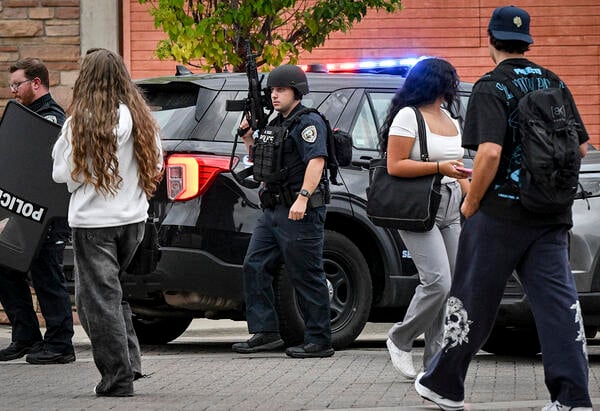
    Gores is the self-proclaimed leader of an online group called Purgatory, which is linked to a violent online extremist network called The Com, according to Wired. Alongside another Purgatory member called tor, Gores began placing fake calls to campus and local emergency services about active shooters about noon Aug. 21, the same day the University of Tennessee at Chattanooga and Villanova University received swatting calls. 

    As of Wednesday afternoon, Inside Higher Ed counted 19 confirmed swatting calls since Aug. 19, including at Mercer University, the University of Wisconsin at Madison, the University of Utah and the University of New Hampshire.

    Not all of the calls placed by Purgatory have been successful. In some cases, authorities correctly identified the calls as hoaxes. When the group placed a call to Bucknell University in Lewisburg, Pa., a researcher listening in on the call was able to alert the university. The FBI is investigating the uptick in swatting calls and has not publicly confirmed Purgatory’s involvement. Gores told Wired that the swatting spree will continue for another two months. 

    Purgatory offers to make swatting calls for as little as $20, though the price has increased to $95 since this recent campaign of calls began, according to Wired. Three members of Purgatory were arrested in 2024 and pleaded guilty earlier this year for threats made to a Delaware high school, a trailer park in Alabama, Albany International Airport, an Ohio casino and a private residence in Georgia. 

    Ashley Mowreader contributed to this article.

    Source link