Author: admin

  • Beyond efficiency: Building procurement agility in higher education

    Beyond efficiency: Building procurement agility in higher education

    Higher education leaders face a constant balancing act. Shifting enrollment, tightening budgets, and rapidly evolving technology create pressure to stay nimble while maintaining operational excellence. In this environment, procurement teams are playing a new strategic role, moving beyond cost-cutting to become enablers of institutional agility.

    The most agile institutions understand that procurement agility isn’t just about faster purchasing. It means building systems that anticipate needs, optimize every dollar in real time, and empower campus-wide decision-making. When procurement teams can redirect spending toward emerging priorities while maintaining compliance and transparency, they create institutional resilience: the ability to respond confidently to whatever comes next.

    Closing higher ed’s agility gap

    Traditional procurement creates bottlenecks precisely when agility is needed most: lengthy approval cycles that delay critical purchases, fragmented systems that prevent comprehensive spend analysis, and limited visibility that leaves leaders making decisions without complete financial data.

    The stakes are significant. With 25% of operating budgets flowing through procurement—possibly more for institutions with extensive outsourcing—efficiency directly impacts your ability to respond quickly to changing circumstances.[1]

    There’s encouraging momentum, though. In a survey of nearly 3,500 procurement and organizational leaders, 24% of senior leaders identified “becoming more agile or resilient” as a priority above reducing spend (19%).[2] This signals growing recognition that adaptability drives long-term institutional success more than cost-cutting alone.

    Five pillars of agile procurement

    So how can institutions actually close this agility gap? Many procurement leaders are turning to technology solutions, and for good reason. The right tools can magnify agility across campus operations, but only when they address the right fundamentals. These five pillars provide a framework for building procurement systems that enhance rather than hinder institutional responsiveness:

    Unified systems: Consolidated purchasing transforms how campuses operate, improving user experience, spend transparency, and analytics. Administrators should be able to track campus-wide purchasing patterns, identify savings opportunities, and make data-driven decisions across all departments. When the University of Washington (UW) consolidated purchasing across its numerous academic departments through a single master account, it gained the visibility and simplified management that had previously been impossible.

    Streamlined interfaces: A centralized purchasing interface removes manual work and complexity, allowing staff to focus on higher-impact activities while maintaining oversight. Ray Hsu, executive director of procurement services at the University of Washington, explains: “Imagine you’re managing the drama department and your scene shop needs to find ten different things to outfit your next production. Imagine how many different sources you visit to find costumes, supplies, and other items for that use case. Centralize that.”

    Aligned purchasing: The right tools enable alignment with shifting institutional priorities—sustainability goals, minority-owned businesses, compliance requirements—through preferred vendor selection in a way that’s frictionless for buyers. Hsu describes how this works at UW: “When people search for items, they don’t even know they’re searching for a sustainable product. It just comes up in their search results, supporting our policy without them having to be mindful of it.”

    Smart comparison: Pricing, delivery, and vendor comparison mechanisms help buyers to easily identify their most cost-effective options without searching multiple sources or juggling spreadsheets. Time saved on research translates to faster response when priorities shift.

    Real-time monitoring: Proactive systems flag overspending or policy compliance issues before they become problems, giving administrators the breathing room to focus on strategic opportunities.

    Real-world impact

    The University of Washington example illustrates how these pillars work together in practice. Beyond the streamlined purchasing process described earlier, the transformation also revealed deeper lessons about building sustainable agility.

    When UW decided to modernize its procurement, it faced a familiar challenge: staff were already purchasing from multiple vendors without central oversight. Instead of changing staff behavior, the university introduced a centralized system that preserved the flexibility departments valued while adding the visibility and control the university needed.

    “There’s a saying, ‘I want an Amazon-like experience.’ We thought, let’s just go get the real thing and bring Amazon to our campus,” Hsu recalls.[3]

    The shift delivered more than operational efficiency. “With Amazon Business Analytics, I can visualize information on an intuitive dashboard and have a conversation with my boss: ‘Here’s how we’re doing at a glance,’” says Hsu. That visibility changes how procurement conversations happen, moving from reactive problem-solving to proactive strategic discussions.

    Perhaps most importantly, UW discovered that agility doesn’t require forcing behavior change. When the right systems build compliance and best practices into everyday workflows, adoption happens naturally. The drama department gets what it needs faster. Sustainability goals are met through preferred policies. And procurement leaders gain the strategic insights they need to guide institutional priorities.

    Building sustainable agility

    Building more agility into your procurement operations starts with a few key fundamentals:

    Start with visibility into spend. Understand where your money goes. With 25% of operating budgets spent on goods and services, visibility is essential for agile resource allocation.[4]

    Centralize for control. As Hsu notes, “Chances are your internal customers are already buying from Amazon in a decentralized and unmanaged fashion. My suggestion is to centralize that management into a unified system.”

    Simplify user experience. Make compliance and best practices seamless. “Make it easy so it’s not a conscious decision—just part of their everyday buying experience,” advises Hsu.

    Focus on consolidation. Look for opportunities to consolidate processes. Listen to solution providers who are experts in this area and implement their suggestions when they make sense to your organization, Hsu adds.

    Agility as an institutional advantage

    Agile procurement enables both resource optimization and faster response to opportunities. The goal isn’t just efficient purchasing, but procurement that enhances decision-making.

    When procurement teams can redirect resources quickly, spot savings in real time, and adhere to campus purchasing policies, they free their institutions to focus on mission and seize opportunities as they arise.

    Learn how your peers are using Amazon Business to build procurement agility: business.amazon.com/education

    Source link

  • The Mis-education of Global Elites

    The Mis-education of Global Elites

    Across the United States, the U.K., Europe, and increasingly the Gulf States and East Asia, elite education has become a finishing school for rulers rather than a training ground for genuine public servants. These institutions—rich in endowment, selective in admission, steeped in prestige—construct worldviews that normalize inequity as efficiency, privatization as innovation, and austerity as necessity. Instead of interrogating the historical and structural forces that produce suffering, elite curricula often neutralize them, reducing political economy to management science and social justice to branding.

    This mis-education manifests in global leadership failures. The same graduates who enter parliaments, presidential cabinets, central banks, multinational boards, and international NGOs routinely oversee policies that accelerate inequality and erode the public sphere. Many come from universities with unparalleled research capacity and moral rhetoric, yet preside over housing crises, medical debt catastrophes, and planetary degradation. They authorize wars but rarely experience them. They tout meritocracy while gatekeeping opportunity. They celebrate entrepreneurship while dismantling public goods. Their philanthropic initiatives—often built from profits derived through tax avoidance, monopolization, and labor exploitation—give the appearance of benevolence without altering the underlying systems of harm.

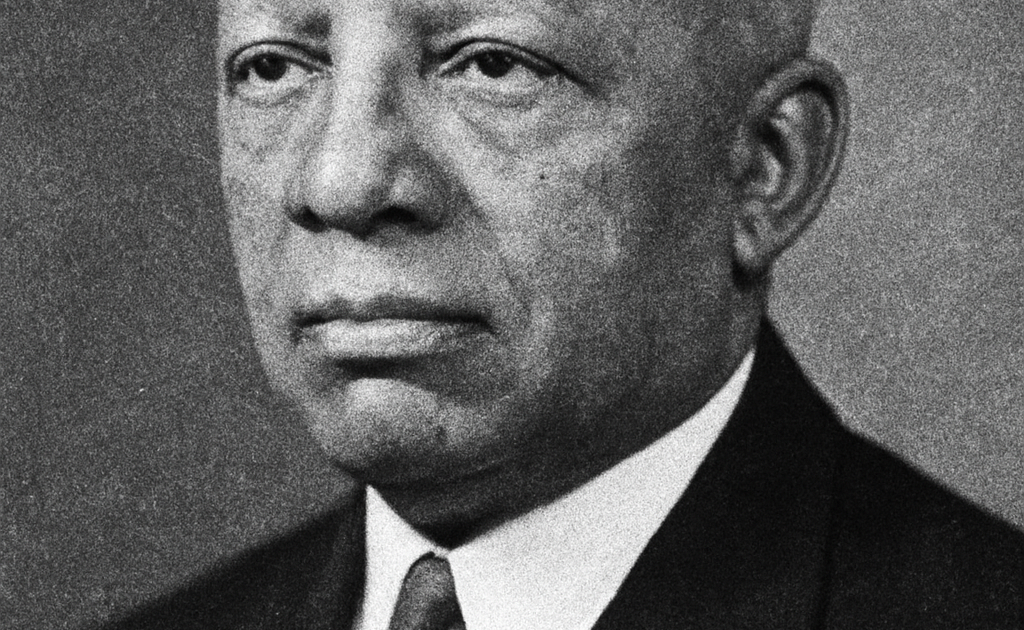
    Carter G. Woodson’s warning in The Mis-education of the Negro echoes eerily here: “When you control a man’s thinking you do not have to worry about his actions.” Global elites, educated into a narrow ideology that glorifies markets and hierarchy, do not need to be coerced into maintaining destructive systems—they do so voluntarily, believing themselves enlightened.

    Nowhere is this clearer than in the corporate education complex itself. Elite universities produce the analysts who rationalize austerity, the managers who coordinate privatization, the consultants who reengineer public institutions to mimic corporations, and the financiers who define the metrics of success. They also cultivate the ideological insulation that shields elites from accountability. When their policies trigger chaos, the explanation is never structural, only technical: markets corrected, externalities emerged, populists disrupted stability. The mis-education of elites ensures they cannot see failure as their own.

    Global institutions—from the IMF and World Bank to the UN and WTO—have mirrored this mindset. Their leaders, mostly trained in the same corridors of prestige, have promoted development models that prioritize capital mobility over community well-being, and foreign investment over local sovereignty. Even when faced with overwhelming evidence that structural adjustment, privatized healthcare, or financialization intensify human suffering, the elite worldview persists. The inability—or unwillingness—to imagine alternative systems is not an intellectual deficiency but the logical outcome of an education designed to reproduce power, not challenge it.

    Meanwhile, those most affected by global crises—workers, migrants, debtors, students, the poor—are told to adapt, innovate, or sacrifice. They are bombarded with entrepreneurial rhetoric and resilience talk while their material conditions worsen. Political leaders lament social fragmentation but continue to funnel wealth upward. University administrators speak of inclusion while expanding administrative hierarchies and outsourcing labor. Energy executives promise transitions while drilling new pipelines. Tech CEOs warn about misinformation while building the infrastructure that spreads it.

    The result is a world where the legitimacy of elites is evaporating. From Santiago to Paris, Lagos to Minneapolis, Delhi to London, mass movements are demanding accountability from institutions that have proven incapable of self-reform. The global backlash against inequality, authoritarianism, and corporate hegemony is not a misunderstanding—it is a recognition that the systems run by elites have failed.

    If there is to be a better world, the mis-education of elites must be confronted directly. That means transforming the mission of universities from prestige accumulation to public purpose; replacing managerialism with democratic governance; centering histories of resistance rather than merely histories of empire; teaching economic justice instead of market worship; and training leaders who measure success not by shareholder value or rankings but by human flourishing.

    Elites have long claimed exclusive expertise in solving the world’s problems. They have had centuries—and trillions—to prove it. They have failed miserably. A new generation of thinkers, activists, workers, and communities is already building the alternatives. Whether global elites choose to learn from them—or continue along their well-worn path of extraction and denial—will determine the next century.

    For now, the record is clear: the institutions that shaped the world’s most powerful people were never designed to create justice. And they haven’t.


    Academic Sources

    Baldwin, Davarian L. In the Shadow of the Ivory Tower: How Universities Are Plundering Our Cities. Bold Type Books, 2021.

    Bourdieu, Pierre. The State Nobility: Elite Schools in the Field of Power. Stanford University Press, 1996.

    Giroux, Henry A. Neoliberalism’s War on Higher Education. Haymarket Books, 2014.

    Harvey, David. A Brief History of Neoliberalism. Oxford University Press, 2005.

    Khan, Shamus Rahman. Privilege: The Making of an Adolescent Elite at St. Paul’s School. Princeton University Press, 2011.

    Mills, C. Wright. The Power Elite. Oxford University Press, 1956.

    Mkandawire, Thandika. “Institutional Monocropping and Monotasking in Africa.” UNRISD, 2007.

    Piketty, Thomas. Capital and Ideology. Harvard University Press, 2020.

    Saul, John Ralston. Voltaire’s Bastards: The Dictatorship of Reason in the West. Free Press, 1992.

    Sklair, Leslie. The Transnational Capitalist Class. Wiley-Blackwell, 2000.

    Stiglitz, Joseph E. Globalization and Its Discontents Revisited. W.W. Norton, 2017.

    Woodson, Carter G. The Mis-education of the Negro. Associated Publishers, 1933.

    Source link

  • Week in review: The beginning of the end for the Education Department?

    Week in review: The beginning of the end for the Education Department?

    This audio is auto-generated. Please let us know if you have feedback.

    Most clicked story of the week: 

    Trump administration officials took major steps toward dismantling the U.S. Department of Education last week, announcing they were moving several programs to other federal agencies. 

    Those include moving TRIO and Gear Up grants — programs that help low-income students prepare for and persist through college — to the U.S. Department of Labor, according to an agency fact sheet. Also moving to the Labor Department are grant programs that help higher education institutions bolster their academics and financial stability. 

    Number of the week: $740M+ 

    The amount billionaire philanthropist MacKenzie Scott has donated to colleges since mid-October. Scott is on another gifting spree, giving hundreds of millions of dollars to over a dozen historically Black colleges and universities and at least one tribal college. 

    Fall 2025 enrollment trends: 

    • A survey of 825 colleges found that their international enrollment declined 1% this fall, driven by a 12% drop in graduate students, according to the annual Open Doors report. Those institutions reported an even steeper decline — a whopping 17% drop-off — in foreign students attending U.S. colleges for the first time. 
    • The State University of New York system reported that its international enrollment declined 3.9% this fall, dropping to around 20,600 students. However, SUNY reported an overall enrollment increase of 2.9%, resulting in nearly 387,400 students and the system’s third straight year of growth. 
    • Meanwhile, Drexel University, a private nonprofit in Philadelphia, reported a roughly 19% decline in first-year enrollment this fall, dropping to some 1,900 students, according to The Philadelphia Inquirer. However, the research university’s overall headcount only dipped by roughly 1%, falling to roughly 20,900 students, with gains in graduate students offsetting some of the first-year enrollment dip.

    Texas State upholds professor firing: 

    • Texas State University’s governing board on Thursday upheld the decision to fire Thomas Alter, a tenured professor who it terminated after comments he made at a socialist conference went viral, according to News 4 San Antonio
    • In one video of the conference, Alter condemned “insurrectional anarchists,” according to The Texas Tribune. But a shorter, more widely circulated clip of his comments included only part of his ideas, showing Alter saying, “Without organization how can anyone expect to overthrow the most bloodthirsty, profit-driven, mad organization in the history of the world — that of the U.S.?”
    • Texas State University President Kelly Damphousse argued that Alter’s comments amounted to inciting violence. Alter in turn is suing the university, alleging his firing violates his free speech rights. 
    • The Texas State Employees Union condemned Thursday’s decision amid other political disciplinary actions against other faculty in the state. Union President Ilesa Daniels Ross described Alter’s termination to KVUE as part of a coordinated political effort in Texas “silencing educators, suppressing dissent, and turning our public institutions into tools of ideological control.”

    Source link

  • Why empowering students sets the best course for future success

    Why empowering students sets the best course for future success

    Key points:

    When middle school students make the leap to high school, they are expected to have a career path in mind so their classes and goals align with their future plans. That’s a tremendous ask of a teenager who is unaware of the opportunities that await them–and emerging careers that have yet to exist.

    Mentors, parents, and educators spend so much time urging students to focus on their future that we do them a disservice by distracting them from their present–their passions, their interests, their hobbies. This self-discovery, combined with exposure to various career fields, fuels students’ motivation and serves as a guidebook for their professional journey.

    To meet their mission of directing every student toward an individualized post-secondary plan, schools need to prioritize recognizing each student’s lifestyle goals. That way, our kids can find their best-fit career and develop greater self-awareness of their own identity.

    Give students greater autonomy over their career exploration

    The most problematic aspect of traditional career-readiness programs is that they’re bound so tightly to the classes in which a student excels.

    For example, a high schooler on a technology track might be assigned an engineer as a mentor. However, that same student may also possess a love for writing, but because their core classes are science-based, they may never learn how to turn that passion into a career in the engineering field, whether as a UX writer, technical editor, or tech journalist. 

    Schools have the opportunity to help students identify their desired lifestyle, existing strengths, and possible career paths. In Aurora Public Schools in Nebraska, the district partnered with our company, Find Your Grind, an ESSA Tier 2 validated career exploration program, to guide students through a Lifestyle Assessment, enabling them to discover who they are now and who they want to become. Through this approach, teachers helped surface personalized careers, mentors, and pathway courses that aligned with students’ lifestyle goals.

    Meanwhile, in Ohio, school districts launched Lifestyle Fairs, immersive, future-ready events designed to introduce students to real-world career experiences, industry mentors, and interactive learning grounded in self-discovery. Hilliard City Schools, for example, welcomed more than seventh-grade students to a Lifestyle Fair this past May

    Rather than rely on a conventional booth-style setup, Hilliard offered interactive activations that centered on 16 lifestyle archetypes, including Competitor, Explorer, Connector, and Entrepreneur. The stations allowed students to engage with various industry leaders and participate in hands-on activities, including rocket launch simulations and creative design challenges, to ignite their curiosity. Following the Fair, educators reported increased student engagement and a renewed enthusiasm for learning about potential career paths.

    Create a fluidity path for future success

    According to the World Economic Forum, by 2030, 97 million jobs will be displaced by AI, significantly impacting lower-wage earners and workers of color. At the same time, 170 million new jobs are expected to be created, especially in emerging fields. By providing students more freedom in their career exploration, educators can help them adapt to this ever-changing 21st-century job market.

    Now is the time for school districts to ensure all students have access to equitable career planning programs and work to close societal disparities that hinder professional opportunities. Instead of setting students on a predetermined pathway toward a particular field–which may or may not exist a decade from now–educators must equip them with future-proof and transferable core skills, including flexibility, initiative, and productivity, in addition to job-specific skills. As the job market shifts, students will be prepared to change direction, switch jobs, and pivot between careers. 

    In Hawaii, students are taking advantage of career exploration curriculum that aligns with 21st-century career and technical education (CTE) frameworks. They are better prepared to complete their Personal Transition Plans, which are required for graduation by the state, and have access to micro-credentials that give them real-world experience in different industries rather than one particular field.

    For decades, career planning has placed students in boxes, based on what the adults in their lives expect of them. Ensuring every child reaches their full professional potential means breaking down the barriers that have been set up around them and allowing them to be at the center of their own career journey. When students are empowered to discover who they are and where they want to be, they are excited to explore all the incredible opportunities available to them. 

    Latest posts by eSchool Media Contributors (see all)

    Source link

  • DOJ Sues California Over In-State Tuition for Noncitizens

    DOJ Sues California Over In-State Tuition for Noncitizens

    The U.S. Department of Justice sued the state of California on Thursday, challenging a state law that allows undocumented students to pay in-state tuition rates. The lawsuit also targets the California Dream Act, which offers state financial aid to undocumented students who meet certain requirements.

    The complaint, filed in the Eastern District of California, targets the state, Governor Gavin Newsom, state attorney general Rob Bonta, the University of California Board of Regents, the California State University Board of Trustees and the California Community Colleges’ Board of Governors.

    “California is illegally discriminating against American students and families by offering exclusive tuition benefits for non-citizens,” Attorney General Pamela Bondi said in a statement.

    California marks the sixth state the federal government has sued over such policies, but unlike some of the others, California plans to fight back. The state is home to more than 102,000 undocumented students, who have been permitted to pay in-state tuition rates since 2001 if they met certain requirements. Undocumented students have also been allowed to access state financial aid for more than a decade, according to the Higher Education Immigration Portal.

    Newsom has repeatedly pushed back on the Trump administration’s policies, including immigration crackdowns. The DOJ filed another lawsuit against the state on Monday, after Newsom signed a bill banning face coverings for federal immigration agents. The DOJ also recently sued Newsom and California Secretary of State Shirley Weber over the state’s redistricting plan.

    Bondi said in her statement that the DOJ will “continue bringing litigation against California until the state ceases its flagrant disregard for federal law.”

    But Newsom isn’t backing down.

    “The DOJ has now filed three meritless, politically motivated lawsuits against California in a single week,” Marissa Saldivar, a spokesperson for the governor’s office, said in a statement to Inside Higher Ed. “Good luck, Trump. We’ll see you in court.”

    By contrast, Texas and Oklahoma, faced with similar lawsuits this summer, swiftly sided with the DOJ, quashing in-state tuition benefits for their undocumented students. The Kentucky Council on Postsecondary Education also agreed to stop offering in-state tuition to noncitizens in September, a few months after the DOJ sued, but the legal battle is ongoing. A judge recently allowed a group of Kentucky undocumented students, represented by the Mexican American Legal Defense and Educational Fund, to intervene in the case. Legal fights in Minnesota and Illinois have also continued as the states defend their in-state tuition policies against DOJ challenges.

    The government argues that such laws violate a federal statutory provision that says undocumented people can’t receive higher ed benefits unless citizens are also eligible. The DOJ has asserted that states can’t permit undocumented students in a state to pay lower tuition rates while denying out-of-state citizens the same benefit. Proponents of California’s current policy argue it allows any nonresident who meets certain requirements—including spending three years in a California high school—to access in-state tuition, not just undocumented students.

    Rachel Zaentz, a spokesperson for the University of California system, said system leaders believe they’ve acted within the law.

    “For decades, the University of California has followed applicable state and federal laws regarding eligibility for in-state tuition, financial aid, and scholarships,” Zaentz said in a statement sent to Inside Higher Ed. “While we will, of course, comply with the law as determined by the courts, we believe our policies and practices are consistent with current legal standards.”

    California Community Colleges Chancellor Sonya Christian said in a similar memo that the system “will follow all legal obligations and fully participate in the judicial process alongside our state partners” but “statutes referenced in the lawsuit have been in place for many years and have been implemented in accordance with long-standing legal guidance.”

    “Although we cannot comment on ongoing litigation, our commitment remains unchanged: we will continue to ensure that all students who qualify under state law have access to an affordable, high-quality education,” Christian said. “We will also continue to comply fully with all current federal and state requirements.”

    Iliana Perez, executive director of the advocacy organization Immigrants Rising, called the latest lawsuit an “an affront to the decades of hard-fought student-led advocacy for equitable access to postsecondary education.” She also noted the challenge comes just a week before college applications are due at public four-year institutions in the state.

    “This challenge is a callous attempt to have students second-guess their dreams,” Perez said in a statement. “We have one message for this Administration; we will not be deterred!”

    Source link

  • Is Canada Still Among the Big 4 Overseas Student Recruiters?

    Is Canada Still Among the Big 4 Overseas Student Recruiters?

    A dramatic decline in international student numbers in Canada shows how internationalization globally is “evolving,” with the concept of the “big four” recruitment destinations seen as increasingly outdated.

    The country is on track to issue about 80,000 new study permits this year, way below the cap of 437,000 its federal government set for 2025.

    This has not stopped the cap being reduced even more, with the budget announced earlier this month confirming that it will be set at 155,000 next year—although the country could struggle to reach even this revised figure on the latest projections.

    Although the other members of the “big four”—the U.S., the U.K. and Australia—have also enacted policies that have brought down numbers, the fall in Canada has far surpassed anything happening elsewhere.

    Lil Bremermann-Richard, chief executive of Oxford International, said it shows how the country has moved to an “evolving” strategy that is more focused on aligning with housing and labor market capacity.

    “The government is moving toward a more managed, sustainable approach to welcoming international students rather than the rapid growth of recent years,” Bremermann-Richard said. “We’ll likely see a shift away from a clearly defined big four toward a broader group of preferred destinations as more countries expand their international education capacity and appeal.”

    The vast majority (82 percent) of Canadian universities reported fewer overseas undergraduate students this year, according to a new survey from NAFSA, Oxford Test of English and Studyportals published on Nov. 19. This was significantly more than in the U.S. (48 percent) and the U.K. (39 percent).

    Restrictive government policies were the biggest obstacle for 90 percent of Canadian institutions—compared with 85 percent in the U.S., 51 percent in the U.K. and just 19 percent across Asia.

    This was clearly having a knock-on effect on the university finances, with 60 percent of institutions anticipating budget cuts and half expecting staffing reductions in the next year.

    Canada still had close to a million international students in total when data was published earlier this year, compared with just under 500,000 in Germany, a country that has been rapidly increasing its overseas enrollments and could one day challenge the big four.

    Vincenzo Raimo, an independent international higher education consultant and visiting fellow at the University of Reading, said Canada was not leaving the international student recruitment business but that the business itself was changing.

    The idea of a big four is increasingly outdated in a more multipolar world where intra-regional mobility in Asia continues to increase and countries such as South Korea, Japan and Taiwan expand, he added.

    “Global student mobility is becoming far more distributed, as students seek value, safety, poststudy opportunities and predictability.”

    Alex Usher, president of Higher Education Strategy Associates, said many international students were not coming to Canada for an education but for a chance to immigrate.

    “No other country will give them that opportunity, and so no other country will benefit,” Usher said. “That’s a market that’s just going to dry up and blow away.”

    Master’s and Ph.D. students at public universities in Canada have recently been exempted from the study permit cap, showing that the government could be open to making changes.

    Janet Ilieva, founder of the Education Insight consultancy, said the budget’s policies to attract international doctoral students and postdoctoral fellows indicated a “clear shift towards attracting top talent.”

    Globally, the restrictions being implemented by the larger anglophone markets are prompting a redistribution, rather than a shrinkage, of global demand for international education, she added.

    “Inward-looking policies, coupled with geopolitical instability, rising economic uncertainty and regional conflicts, are increasing duty-of-care concerns,” she said. “This is nudging students toward studying in safer, closer locations.”

    Recent figures also showed that Canadian universities have just seven international branch campuses abroad—fewer than Ireland, Germany and the Netherlands, and well behind the U.S. (97), the U.K. (51) and others.

    Usher said this indicated that Canadian universities, and the governments that fund them, were “not very adventurous.”

    “During the boom times when international students were falling over themselves to come to Canada, there was no need for institutions to seek out extra cost and extra risk to teach international students.

    “I suspect we will [see more branch campuses in the future], but we have little tradition of doing so and we’re starting from way behind. A switch like that takes time.”

    Source link

  • Don’t Underestimate Value of a Human Network (opinion)

    Don’t Underestimate Value of a Human Network (opinion)

    This week is Thanksgiving in the United States, a time when many of us come together with family and friends to express gratitude for the positive things in our lives. The holiday season can also be a challenging time for those who are far from family and grappling with the prevalent loneliness of our modern era.

    Perhaps worse than missing the company of others over the holidays is being with family who hold different views and beliefs from your own. The fact is, though, that when we come together with a large, diverse group of people at events we are bound to find a variety of viewpoints and personalities in the room.

    People are complex and messy, and engaging with them is often a lot of work. Sometimes it seems easier to just not deal with them at all and “focus on ourselves” instead. Similarly, the vast amount of information available online often leads many graduate students and postdocs to think they can effectively engage in professional development, explore career options and navigate their next step on their own. Indeed, there are many amazing online tools and resources to help with a lot of this but only by engaging other people in conversation can we fully come to understand how various practices, experiences and occupations apply to us as unique beings in the world. Generic advice is fine, but it can only be tailored through genuine dialogue with another person, though some believe they can find it in a machine.

    Generative artificial intelligence (AI) technology has accelerated since the launch of ChatGPT in November 2022 and now many people lean on AI chatbots for advice and even companionship. The problem with this approach is that AI chatbots are, at least currently, quite sycophantic and don’t, by default, challenge a user’s worldview. Rather, they can reinforce one’s current beliefs and biases. Furthermore, since we as humans have a tendency to anthropomorphize things, we perceive the output of AI chatbots as “human” and think we are getting the type of “social” relationship and advice we need from a bot without all the friction of dealing with another human being in real life. So, while outsourcing your problems to a chatbot may feel easy, it cannot fully support you as you navigate your life and career. Furthermore, generative AI has made the job application, screening and interview process incredibly impersonal and ineffective. One recent piece in The Atlantic put it simply (if harshly): “The Job Market is Hell.”

    What is the solution to this sad state of affairs?

    I am here to remind readers of the importance of engaging with real, human people to help you navigate your professional development, job search and life. Despite the fear of being rejected, making small talk or hearing things that may challenge you, engaging with other people will help you learn about professional roles available to you, discover unexpected opportunities, build critical interpersonal skills and, in the process, understand yourself (and how you relate with others) better.

    For graduate students and postdocs today, it’s easy to feel isolated or spend too much time in your own head focusing on your perceived faults and deficiencies. You need to remember, though, that you are doing hard things, including leading research projects seeking to investigate questions no one else has reported on before. But as you journey through your academic career and into your next step professionally, I encourage you to embrace the fact that true strength and resilience lies in our connections—with colleagues, mentors, friends and the communities we build.

    Networks enrich your perspectives, foster resilience and can help you find not only jobs, but joy and fulfillment along the way. Take intentional steps to build and lean on your community during your time as an academic and beyond. Invest time, gratitude and openness in your relationships. Because when you navigate life’s challenges with others by your side, you don’t just survive—you thrive.

    Practical Tips for Building and Leveraging Networks

    For graduate students and postdocs, here are some action steps to foster meaningful networks to help you professionally and personally:

    Tip 1: Seek Diverse Connections

    Attend seminars, departmental events, professional conferences and interest groups—both within and outside your field.

    Join and engage in online forums, LinkedIn groups and professional organizations that interest you. Create a career advisory group.

    Tip 2: Practice Gratitude and Generosity

    Thank peers and mentors regularly—showing appreciation strengthens relationships, opens doors and creates goodwill.

    Offer help, such as reviewing your peers’ résumés, sharing job leads or simply listening. Reciprocity is foundational to strong networks.

    Tip 3: Be Vulnerable and Authentic

    Share struggles and setbacks. Vulnerability invites others to connect, offer advice and foster mutual support.

    Be honest about your goals; don’t feel pressured to follow predefined paths set by others or by societal norms.

    Tip 4: Leverage Formal Resources

    Enroll in career design workshops or online courses, such as Stanford University’s “Designing Your Career.”

    Utilize university career centers, alumni networks and faculty advisers for information and introductions.

    Tip 5: Make Reflection a Habit

    Set aside time weekly or monthly to review progress, map goals and consider input from your network.

    Use journaling or guided exercises to deepen self-insight and identify what you want from relationships and careers.

    Tip 6: Cultivate Eulogy Virtues

    Focus not just on professional “résumé virtues,” but also on “eulogy virtues”—kindness, honesty, courage and the quality of relationships formed.

    These provide lasting meaning and fuel deep, authentic connections that persist beyond job titles and paychecks.

    Strategies for Overcoming Isolation

    Graduate students and postdocs are at particular risk for isolation and burnout, given the demands of research and the often-solitary nature of scholarship. Community is a proven antidote. Consider forming small groups with fellow students and postdocs to share resources, celebrate milestones and troubleshoot professional challenges together. Regular meetings can foster motivation and accountability. These can be as simple as monthly coffee chats to something more structured such as regular writing or job search support groups. And, while online communities are not a perfect substitute for support, postdocs can leverage Future PI Slack and graduate students can use their own Slack community for help and advice. You can also lean on your networks for emotional support and practical help, especially during stressful periods or setbacks.

    Another practical piece of advice to build your network and connections is volunteer engagement. This could mean volunteering in a professional organization, committees at your institution or in your local community. Working together with others on shared projects in this manner helps build connections without the challenges many have with engaging others at purely social events. In addition, volunteering can help you develop leadership, communication and management skills that can become excellent résumé material.

    Networking to Launch Your Career

    Through the process of engaging with more people through an expanded network you also open yourself up to serendipity and opportunities that could enhance your overall training and career. Career theorists call this “planned happenstance.” The idea is simple: By putting yourself in community with others—attending talks, joining professional groups, volunteering for committees—you increase the odds that unexpected opportunities will cross your path. You meet people who do work you hadn’t considered, learn about opportunities before they’re posted and hear about initiatives that need someone with your skills earlier than most.

    When I was a postdoc at Vanderbilt University, I volunteered for the National Postdoctoral Association (NPA), starting small by writing for their online newsletter (The POSTDOCket), and also became increasingly involved in the Vanderbilt Postdoctoral Association (VPA). These experiences were helpful as I transitioned to working in postdoctoral affairs as a higher education administrator after my postdoc. Writing for The POSTDOCket as a postdoc allowed me to interview administrators and leaders in postdoctoral affairs, in the process learning about working in the space. My leadership in VPA showed I understood some of the needs of the postdoctoral community and could organize programming to support postdocs. I have become increasingly involved in the NPA over the past six years, culminating in being chair of our Board of Directors in 2025. This work has allowed me to increase my national visibility and has resulted in invites to speak to postdocs at different institutions, the opportunity to serve on a National Academies Roundtable, and I believe helped me land my current role at Virginia Tech.

    I share all this to reiterate that in uncertain job markets, it’s tempting to focus on polishing résumés or applying to ever more positions online. Those things can matter—but they’re not enough. Opportunities often come through both expanding your network and engaging with people and activities we care about. They can present themselves to you via your network long before they appear in writing and they often can’t be fully anticipated when you initially engage with these “extracurricular activities.” A good first step to open yourself up to possibilities is to get involved in communities outside your direct school or work responsibilities. Doing so will improve your sense of purpose, help you build key transferrable skills, increase your connections and aid in your transition to your next role.

    Your training and career should not be a solitary climb, but rather a collaborative, evolving process of growth and discovery. A strong community and network are critical to your longterm wellbeing and success. And, in a world where setbacks and uncertainty are inevitable, connection is the constant that turns possibility into progress.

    Chris Smith is Virginia Tech’s postdoctoral affairs program administrator. He serves on the National Postdoctoral Association’s Board of Directors and is a member of the Graduate Career Consortium—an organization providing a national voice for graduate-level career and professional development leaders.

    Source link

  • Embedding AI, not bolting it on

    Embedding AI, not bolting it on

    Over the weekend, we published a blog on the teacher training placement crisis.

    Today’s blog was kindly authored by Janice Kay, Director at Higher Futures, and former Provost and Senior Deputy Vice-Chancellor at the University of Exeter.

    We must become AI-first institutions.

    The Office for Students recently made a welcome intervention, encouraging universities to make “bold changes to adapt in this increasingly challenging environment.” And they’re right.

    But it begs the question: why aren’t we being bold? Why, as a sector, do we tend to squeeze AI tools into what we already do, instead of using this moment to completely rethink how we teach, how we support students, and how we assess?

    In short: how do we give our educators the confidence and the skills to think differently?

    Deliberate, purposeful workforce planning

    My argument is that we need to move from this slow, piecemeal adaptation towards something much more deliberate: an AI-first approach to workforce planning across the whole institution.

    Every role should have a clear expectation of AI competence, and every member of staff should be supported to reach it. That means embedding AI capability as a core institutional priority, not an afterthought. And yes, that also means some traditional job roles will change dramatically, and some will disappear altogether through automation.

    Where do we start? We start by understanding where we are. AI competency isn’t about everyone becoming data scientists, it’s about understanding the basics: what AI and large language models actually are, what they can and can’t do, how AI-driven analytics work, and how to use prompts effectively – from simple to sophisticated requests.

    Embedding digital skills into professional growth

    There are already some great examples of this kind of thinking. Take the University of Exeter. As part of its new Digital Strategy, it’s been assessing staff confidence and motivation in using digital tools. Over 41% of staff have engaged so far, with 778 self-assessments completed, a great base for building digital confidence across the organisation. But this also shows the need to be specific: the skills an educator needs are not the same as those of a programme administrator, or a student welfare advisor.

    Once we’ve established those levels of competency, the next step must be a serious, well-supported development programme. For example, educators might want to learn how to use AI tools that generate automated feedback, analyse discussion forums, or predict student engagement and dropout risk. Institutions can and should create incentives for staff to develop these skills. That might be through micro-credentials, workload allocation, and even promotion criteria. And, crucially, people need time – time to experiment, play, fail and learn. AI proficiency shouldn’t be an optional extra. It should be part of the job.

    We also need to be intentional about developing AI leaders. We can’t just leave it to chance. We should be identifying and empowering the people, both academics and professional staff, who can critically evaluate new technologies and embed them in ways that are ethical, pedagogically sound, and discipline specific. These are the people who can bring real meaning to personalisation in learning. And AI fluency shouldn’t just mean technical know-how. It needs to sit alongside learning science, assessment integrity and data ethics. As the recent Skills England report put it, we need technical, non-technical and responsibility skills.

    AI as a foundation, not a feature

    Ultimately, this is about structural change. We need to transform the AI competence of the higher education workforce, but that transformation must go together with how our institutions use AI and digital technologies themselves.

    AI systems should be built into academic and student workflows, not bolted on.

    The Kortext–Saïd partnership is a great example of this. It’s helping academics reimagine learning so that it becomes genuinely personalised. Embedding an AI assistant right into the virtual learning environment is reshaping how modules, materials and assessments are designed.

    As Mark Bramwell, CDIO of Saïd Business School put it, the partnership is:

    empowering our faculty and learning designers to create smarter, data-driven courses and giving our students a more adaptive, hyper-personalised and engaging learning environment.

    That’s exactly the kind of bold partnership we need more of, projects that not only enhance teaching and learning, but also build the AI skills and confidence our workforce needs to thrive in the future. What I want to do is move past the broad debate about whether we should adopt AI technologies. The question isn’t just if we adopt AI in higher education, but how, especially when it comes to our workforce.

    Join Janice Kay, Mark Bramwell and other key sector voices at Kortext LIVE on 11 February 2026 to discuss ‘Leading the next chapter of digital innovation’. Find out more and secure your seat here.

    Source link

  • I didn’t think I needed the help or advice, but a new literacy teaching coach from afar gave me the self-confidence I lacked

    I didn’t think I needed the help or advice, but a new literacy teaching coach from afar gave me the self-confidence I lacked

    by Thomas MacCash, The Hechinger Report
    November 24, 2025

    I was the only guy in my education classes at Missouri State University, and until this year I was the only male out of nearly 100 teachers in my school. My approach to teaching is very different, and more often than not was met with a raised brow rather than a listening ear.  

    I teach kindergarten, and there are so few men in early childhood education that visitors to my classroom tend to treat me like a unicorn. They put me in a box of how I am “supposed” to be as a male in education without knowing the details of my approach to teaching.  

    As a result, I’d grown skeptical about receiving outside help. When someone new came into my classroom to provide unsolicited “support,” my immediate thought was always, “OK, great, what are they going to cook up? What are they trying to sell me?” I’d previously had former high school administrators come into my classroom to offer support, but they didn’t have experience with the curriculum I used or with kindergarten. The guidance was well-intentioned, but not relevant. 

    Related: A lot goes on in classrooms from kindergarten to high school. Keep up with our free weekly newsletter on K-12 education.  

    My entire view of getting help and support changed when Ashley Broadnax, a literacy coach from New Orleans, nearly 700 miles away, came into my class in St. James, Missouri, population 3,900. Ashley works for The New Teacher Project, or TNTP, a nonprofit aiming to increase students’ economic and social mobility. Once a month for a full academic year, she came in to help us transition to a “science of reading” approach, as part of a special pilot program, the Rural Schools Early Literacy Collaborative. 

    I never thought I would love having a literacy coach and their feedback, but I now believe it is something that can work for many teachers. I hope that as Missouri and other states transition to new ways of teaching reading, more coaches will be available for others who could use the support. The state says that over 15,000 teachers may get trained in the science of reading to help build our knowledge of how children learn to read and what type of instruction is most effective.  

    Ashley had used the curriculum herself and was on hand to provide timely support. This was the first time I received relevant feedback from a former teacher who had firsthand experience with the lessons I was leading.  

    It completely changed my approach and my students’ learning. Although I come from a family of teachers — my mom, grandma and brother all taught — I had started teaching two weeks out of college, and I wasn’t familiar with the new reading curriculum and didn’t have a lot of self-confidence. 

    When Ashley came in for the very first visit, I knew working with her was going to be different. Even though she had never been to St. James, she was sensitive to the rural context where I’ve spent all my life. We’re 90 minutes southwest of St. Louis and a little over an hour southeast of Jefferson City, the state capital. In St. James, you may see a person on a horse riding past a Tesla a few times a year. I’ve seen this world of extremes play out in school open houses and in the learning gaps that exist in my kindergarten classroom.  

    Ashley had researched our community and was open to learning more about our nuances and teaching styles. She was also the first coach I’d met who actually had taught kindergarten, so she knew what worked and what didn’t. As a young teacher with a significant number of students with special needs, I really appreciated this.  

    Related: How coaches for teachers could improve reading instruction, close early academic gaps 

    Ashley provided me with a pathway to follow the new curriculum while also maintaining my unique approach to teaching. Everything came from a place of ensuring that teachers have what they need to be successful, rather than an “I know better than you do” attitude. She would let me know “I loved how you did this” and she’d ask, “Can you extend it in this way?” or tell me, “This was great, here’s how you can structure it a bit further.” 

    Not everything she did to help was profound. But her little tips added up. For example, the curriculum we used came with 10 workbooks for each student as well as stacks of literature, and I needed help integrating it into my lessons.  

    I soon noticed a shift in my ability to teach. I was learning specific ways to help students who were on the cusp of catching on, along with those who weren’t getting it at all.  

    Throughout the course of the year, we saw how our students were more quickly achieving proficiency in English language arts. In my school, according to the Missouri Department of Elementary and Secondary Education, the percentage of kindergartners reading on grade level went from 82 percent in the fall to 98 percent in the spring; the percentage of first graders on grade level went from 41 percent to 84 percent.  

    There were similar gains across the other schools in my county participating in the pilot program; one school had all of its kindergarten and first grade students demonstrate growth on reading assessments. Those students, on average, made gains that were more than double typical annual growth, TNTP found. 

    I attribute a great deal of this progress to the support from Ashley and her peers. I know I am a better educator and teacher for my students. Her support has made a change for the better in my grade and classroom. 

    Thomas MacCash is a kindergarten teacher at Lucy Wortham James Elementary in St. James, Missouri.  

    Contact the opinion editor at [email protected].  

    This story about literacy teaching coaches was produced by The Hechinger Report, a nonprofit, independent news organization focused on inequality and innovation in education. Sign up for Hechinger’s weekly newsletter.

    This <a target=”_blank” href=”https://hechingerreport.org/teacher-voice-im-a-new-male-kindergarten-teacher-in-rural-missouri-extra-support-made-a-huge-difference-to-my-class/”>article</a> first appeared on <a target=”_blank” href=”https://hechingerreport.org”>The Hechinger Report</a> and is republished here under a <a target=”_blank” href=”https://creativecommons.org/licenses/by-nc-nd/4.0/”>Creative Commons Attribution-NonCommercial-NoDerivatives 4.0 International License</a>.<img src=”https://i0.wp.com/hechingerreport.org/wp-content/uploads/2018/06/cropped-favicon.jpg?fit=150%2C150&amp;ssl=1″ style=”width:1em;height:1em;margin-left:10px;”>

    <img id=”republication-tracker-tool-source” src=”https://hechingerreport.org/?republication-pixel=true&post=113481&amp;ga4=G-03KPHXDF3H” style=”width:1px;height:1px;”><script> PARSELY = { autotrack: false, onload: function() { PARSELY.beacon.trackPageView({ url: “https://hechingerreport.org/teacher-voice-im-a-new-male-kindergarten-teacher-in-rural-missouri-extra-support-made-a-huge-difference-to-my-class/”, urlref: window.location.href }); } } </script> <script id=”parsely-cfg” src=”//cdn.parsely.com/keys/hechingerreport.org/p.js”></script>

    Source link

  • Everything is Awesome: Legos® to Teach Teamwork and Communication – Faculty Focus

    Everything is Awesome: Legos® to Teach Teamwork and Communication – Faculty Focus

    Source link