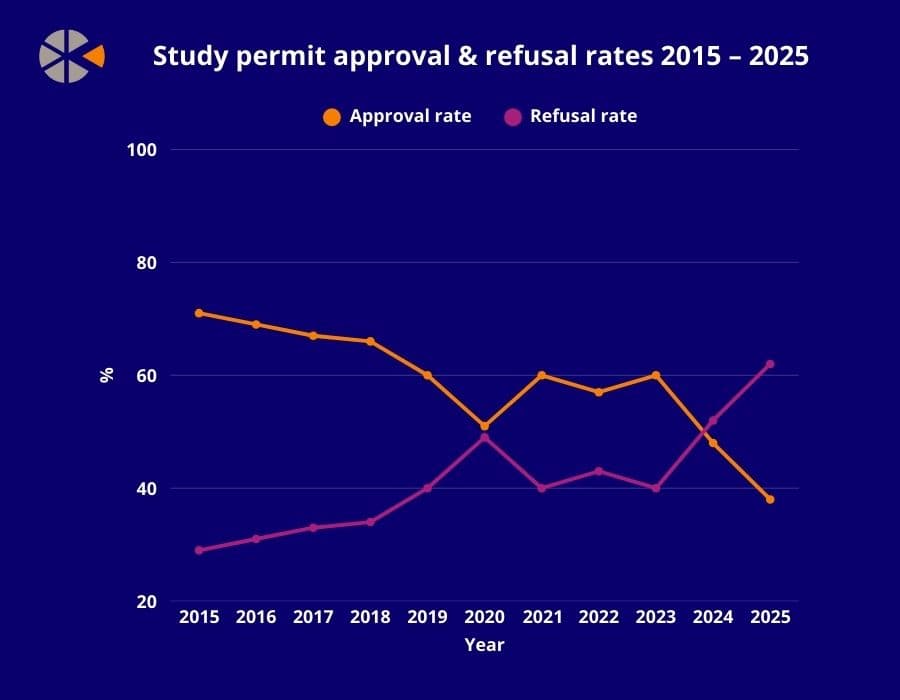
Government figures obtained by The PIE show 62% of applicants were refused a study permit from January to July this year, with record-high volumes “raising urgent questions about transparency and application readiness,” said ApplyBoard.
Despite a decade of relatively stable approval ratings hovering around 60%, rates have plummeted to 38% so far this year, down from 48% in 2024 following the implementation of Canada’s study permit caps.
“It’s clear that Immigration, Refugees and Citizenship Canada (IRCC) is applying far greater scrutiny to new applications,” Jonathan Sherman, vice president of sales & partnership at BorderPass told The PIE, pointing to a “fundamental shift” in government processing.
Data: IRCC
Indian students – who comprise 40% of Canada’s international student population – have been hardest hit by soaring refusals, with four out of five Indian students receiving rejections in Q2 2025, according to BorderPass.
Stakeholders have pointed to a glimmer of hope in overall approval ratings rising modestly this spring, though without a “dramatic shift,” Canada will only reach one fifth of the government’s international student target for the year, Sherman warned.
With institutions bracing for severe declines, ApplyBoard analysis has found the most common reason for reason for rejection in 2024 was the perception by IRCC officers that students wouldn’t leave Canada after their studies, cited in over 75% of cases.
“While reviewers at IRCC understand that some future students hope to gain work experience in Canada after graduation… the extensive use of this reason last year suggests that many are perceived as having permanent residency as their primary purpose, instead of study,” stated the report.
Financial concerns drove three of the top five refusal reasons, after Canada more than doubled its proof-of-funds requirements from $10,000 in 2023 to $20,635 in 2024.
Specifically, in 53% of cases, IRCC officers said they were unconvinced that applicants would leave Canada based on financial assets, alongside doubts about insufficient resources for tuition and living expenses.
“While new policy caps played a role, our full-year data points to recurring applicant challenges, particularly around financial readiness and immigration intent that are preventable with the right guidance and documentation,” said ApplyBoard.
The report highlighted the continuing decline of unspecified reasons for refusal, following IRCC adding officer decision notes to visa refusal letters last month, which was welcomed as a much-needed step in improving transparency.
Other reasons for refusal include the purpose of visit being inconsistent with a temporary stay and having no significant family ties outside Canada.
The data comes amid a major immigration crackdown in Canada, with temporary resident targets included in the latest Immigration Levels Plan for the first time, which aims to reduce temporary resident volumes to 5% of the population by the end of 2027 – a year later than the previous government’s target.
Many are perceived as having permanent residency as their primary purpose, instead of study
ApplyBoard
Approval rates are also below average for other temporary resident categories, but none so drastically as study permits, with just under half of all visitor visas approved so far this year, compared to a ten-year average of 64%.
After more than 18 months of federal policy turbulence, changing eligibility rules have likely contributed to the rise in study permit rejection rates.
Pressure to reduce IRCC backlogs and reach ambitious government targets could also be playing a role, according to immigration lawyers speaking to the Toronto Star.
As of July 31, over 40% of Canada’s immigration inventory was in backlog, including 56% of visitor visas, 46% of work visas and 23% of study visas, according to official data.
Following a swathe of new IRCC officer hires, Sherman said he expected to see improvements in consistency, though “processing backlogs may get worse before they get better,” he warned.
Amid the challenges, educators and advisers are doubling down on what applicants and institutions can do to ensure the best chance of success, with ApplyBoard warning that any incomplete or ineligible documentation can be grounds for refusal.
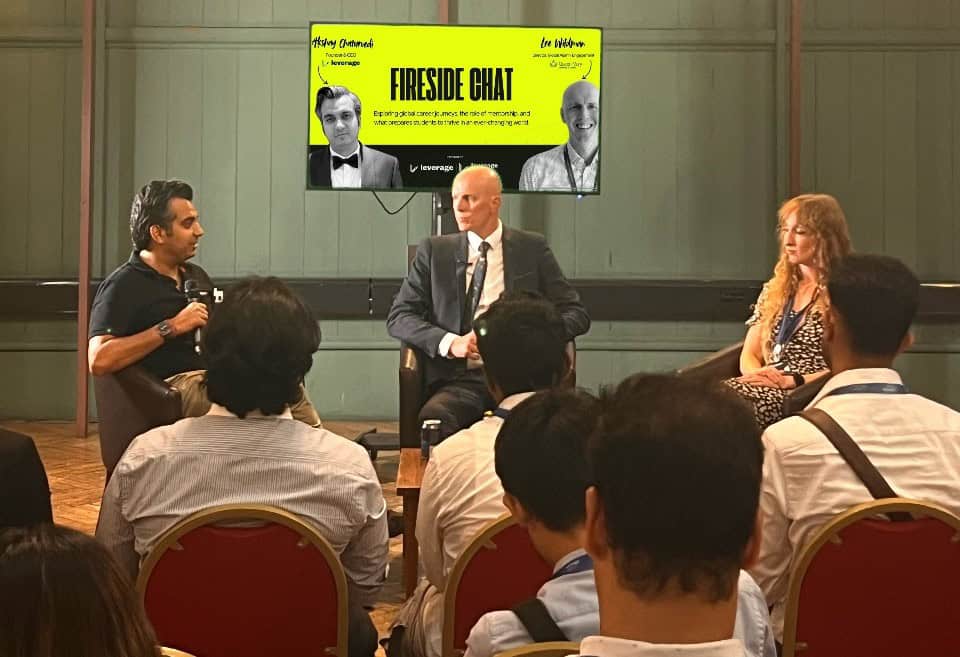
More than 600 international students studying across the UK came together at Queen Mary University of London last month for the second edition of Leverage Careers Day.
While a record 758,855 international students were enrolled in UK higher education in 2022/23, a 12% rise on the previous year, rising employer uncertainty, growing graduate anxiety, and an increase in job scams have made students more cautious in their professional choices.
The event saw students, who are now exploring opportunities in AI, data science, marketing, finance, and more, connect with top employers and industry leaders, to network, explore career pathways, and gain valuable career advice.
“We saw a remarkable breadth of interest from students across a range of disciplines, with data science and AI standing out as clear frontrunners. Many were especially drawn to AI-layered roles in marketing, creative industries, finance, and healthcare,” Akshay Chaturvedi, founder and CEO, Leverage, told The PIE News.
“At the same time, digital marketing and content strategy sparked strong interest of their own, driven by rising opportunities in the digital economy. Beyond these, students also gravitated towards specialized tracks for example in biotechnology, luxury management, automobile design, and culinary arts.”
For many international students, a successful career has long been the ultimate benchmark of achievement, and in the UK, standing out is crucial, with a sponsored job often seen as the true return on their significant investment in tuition and living costs.
Moreover, with over a quarter of UK employers unaware of the Graduate Route – which allows international students to work sponsor-free for up to two years but is set to be reduced to 18 months under the May 2025 immigration white paper and tied more closely to skill-based jobs – understanding the realities of today’s hiring market has become increasingly important.
“Employers aren’t just looking for textbook skills anymore — they’re looking for forward-thinking talent who can bring innovation to the table,” explained Lee Wildman, director, global engagement, Queen Mary University of London, who joined a fireside chat on mentorship, global exposure, and the skills needed in an ever-evolving world, alongside Chaturvedi and Rhianna Skeetes, international careers consultant at QMUL.
“What ideas do you have to take an organisation to the next level? Be prepared to sell yourself – not just in terms of what you’ve learned, but in terms of how you think.”
What excites me most is seeing students ask better, sharper questions about their careers – not just what job they’ll get, but how they’ll grow, how they’ll lead, and how they’ll stand out
Akshay Chaturvedi, Leverage
Adaptability was also highlighted as the “strongest tool in a student’s back pocket” by Jennifer Ogunleye, B2B communications lead at Google, who delivered a keynote urging students to look beyond job titles, and academic credentials, and focus on building a personal brand.
“There isn’t always a straightforward route into tech or any industry today – even those who were most in demand just a year ago are having to pivot,” noted Ogunleye.
“What matters more than ever is your personal brand: What are you passionate about beyond your job title? That’s what sets you apart from AI, from competition, from volatility.”
The event also brought together organisations such as Publicis Groupe, Reed Recruitment, Hyatt Place, Ribbon Global, and GoBritanya, which offered insights into student accommodation services across the UK and Ireland, giving students exposure to careers across creative, corporate, hospitality, and FinTech sectors.
The Westminster and Holborn Law Society also provided guidance to aspiring legal professionals on navigating local and international career pathways.
“Students today aren’t satisfied with just ‘getting a job’ anymore. They’re actively chasing careers that offer international mobility, cross-border exposure, and long-term growth,” stated Chaturvedi.
“That’s a significant shift, and quite refreshing so, given how only a few years back stability was often the top priority. Now, they want to thrive in industries that are constantly evolving every single day, with technology, globalization, and new market needs at play.”
Video Content Creation: Paid & Organic Strategies That Work
We’ve all seen the data: attention spans are shorter, competition for screen time is fierce and the Modern Learner expects a different kind of engagement. They crave content that’s authentic, dynamic and personal – and they’re scrolling past anything that feels like a generic ad.
EducationDynamics’ latest Engaging the Modern Learner Report confirms this: while platform preferences vary by age and learning style, the one constant is a demand for immersive, visually rich short-form video content. Most students engage daily across multiple platforms, drawn to experiences that are as dynamic as they are informative.
So, how do you cut through the noise and prove ROI in the digital environment that demands both innovation and efficiency? The answer is leveraging video marketing as a central pillar of your brand and reputation strategy to drive enrollment.
Explore how to create a strategic video marketing strategy that not only captures attention but also nurtures students from first impression to enrollment.
Why Video Marketing Works in Higher Education
Video is a fundamental part of how people consume information and make decisions. In 2024, the average user watched a staggering 17 hours of online video content per week and that number continues to climb. For higher education, this means meeting prospective students where they are—on platforms like TikTok, Instagram and YouTube.
These platforms are the new frontier for student recruitment, especially with the explosion of short-form video. With nearly 80% of U.S. consumers preferring to watch on their smartphones, the vertical format, quick entertainment and algorithmic reach of platforms like TikTok, Instagram Reels and YouTube Shorts make them ideal for grabbing attention in seconds.
Marketers are taking notice of video’s power. Data shows:
Short-form video delivers the highest ROI compared to other marketing trends.
It is expected to receive the most investment in 2025, especially in education, retail and tech industries.
Short-form video is one of the strongest tools in your marketing mix, capable of cutting through the noise and sparking genuine engagement. In a world where students spend 17 hours a week consuming video, grabbing even five seconds of their attention is a meaningful opportunity. The key is making that moment count.
According to our own analysis in the latest Landscape of Higher Education Report, 35% of education website visits start with organic search—proof that discoverability multiplies the value of your video. When short-form content is connected to both organic and paid strategies, it doesn’t just capture attention; it guides students from first impression to enrollment decision.
The Benefits of Video – Paid & Organic
Paid Video Content
Video ads stand out in crowded feeds. Unlike static images or carousel posts, video grabs attention through movement, sound and storytelling. With tools like Meta Ads Manager and TikTok Ads, brands can now target hyper-specific audiences with tailored messaging – delivered via immersive, full-screen video experiences.
Benefits:
Higher click through rates than static ads
Ability to tell stories, show product use, or highlight real people
Increase brand recall by using audio, visuals and emotions together
Great for retargeting campaigns, especially when optimized with engaging hooks and calls to action
Organic Video Content
Organic video content emphasizes authenticity and community. It’s less about polish and more about relatability — behind-the-scenes moments, student stories or candid campus life. These video marketing strategies build trust and long-term engagement, making them powerful tools for enrollment marketing and student recruitment.
Why it works:
Improves SEO by increasing time-on-page
Boosts algorithmic reach on platforms like Instagram and TikTok
Drives repeat engagement and builds emotional connection
Best Practices for Paid vs. Organic Video
Keep it short. People are scrolling fast; we want to make an impact quickly. Every second is geared towards driving action.
Brand quickly. Use your colors fonts and logo in the first few seconds. Viewers should recognize your brand immediately – even with the sound off.
Include a CTA. Every ad should include a direct action: “Apply Now,” “Learn More,” or “Sign Up Today”
Building a Video Marketing Strategy that Impacts the Entire Funnel
Video content marketing is one of the few tools that can guide a prospective student from first impression to enrollment decision. To maximize impact, institutions need a funnel built around higher education marketing strategies that meet students where they are.
Awareness: Sparking Interest
At this stage, students are just starting to explore their options and your goal is to spark interest.
Goal: Reach new audiences and build familiarity.
Content: Short, shareable videos that grab attention quickly.
Example: A trending audio track paired with clips of dorms, campus events and happy students. For a public university, this might be a 15-second TikTok showing the vibrant campus energy on a game day.
Consideration: Standing Out from the Competition
Now they’re weighing their choices and you want to stand out.
Goal: Educate and differentiate from competitors.
Content: Program highlights, student success stories and value callouts.
Example: A 30-second clip of a recent grad from your nursing program talking about how your clinical partnerships helped them land a job in a top hospital.
Pro Tip: EducationDynamics’ Engaging the Modern Learner Report shows that videos on TikTok and LinkedIn have a particularly strong influence on students’ school selection. Strategically placing content on these platforms ensures it reaches students at the moments that matter most.
Lead Generation: Driving Action
This is the moment to be clear and actionable.
Goal: Drive action.
Content: Deadline reminders, application steps and clear, direct messaging.
Example: A concise video ad titled “3 Days Left to Apply: Here’s How,” featuring a direct link to the application portal.
The key is sequencing: sharing the right type of video at the right time, on the platforms where your audience is most active. When done well, a video funnel doesn’t just catch attention. It builds trust, nurtures interest and guides students toward taking the next step.
Video Platform Tips & Attention Spans
Not all platforms reward video the same way and audience behavior changes depending on where they’re watching. To maximize results, adapt your video marketing strategy to each channel by tailoring both length and style. Here’s how to optimize:
Long-form videos perform well on LinkedIn.
Reels and TikToks should stay under 30 seconds.
On Facebook, the average attention span is 2 seconds – hook viewers immediately.
Use captions for accessibility and to reach viewers watching without sound.
Popular aspect ratios are 9:16 or 1:1.
Use trending audio when relevant.
Use engaging thumbnails and headlines.
A Word on Memes (for Organic)
Yes, memes. They might seem casual, but in the right context they can be powerful tools for connecting with students. Today’s learners are fluent in meme culture and meeting them where they are can make your brand feel more approachable and relatable.
Memes are effective because:
They feel familiar and fun
They increase watch time and engagement
They let you communicate messages (like deadlines or events) in unexpected ways.
When thoughtfully woven into your video marketing strategy, memes can add personality and make your institution feel more approachable — a subtle yet powerful way to support student recruitment. The key is staying on-brand and avoiding content that could be misinterpreted.
Tools for Video Creation
CapCut – Templates for quick, customizable videos.
If your university provides B-roll, use it—it instantly adds authenticity and grounds your content in your campus story. And before you hit publish, double-check each platform’s “safe zones” so headlines, calls-to-action and visuals land exactly where viewers can see them. Small details like this can be the difference between a video that blends in and one that captures attention.
Performance Metrics to Track
Whether running paid or organic campaigns, success in video content marketing depends on tracking the right metrics:
Views – How many people are watching.
Engagement – Clicks, likes and comments.
Watch Time – Are they sticking around?
Shares – A powerful driver of awareness.
Investing in your video strategy is an investment in your future students. Modern Learners expect content that is dynamic, engaging and tailored to how they explore, evaluate and make decisions about education. Short-form videos and authentic storytelling aren’t optional anymore. They are essential for capturing attention and building meaningful connections.
At EducationDynamics, our marketing and creative teams specialize in higher education marketing strategies that integrate video content marketing across channels to boost visibility, engagement and enrollment outcomes. Whether you’re looking for a higher education marketing agency to manage a comprehensive video marketing strategy or simply seeking inspiration from the latest video marketing examples, we help institutions connect the right message to the right student at the right time.
As a classroom teacher and district leader with over 26 years of experience, I’ve attended countless professional development (PD) sessions. Some were transformative, others forgettable. But one thing has remained constant: the need for PD that inspires, equips, and connects educators. Research shows that effective PD focuses on instructional practice and connects to both classroom materials and real- world contexts.
I began my teaching career in 1999 through an alternative certification program, eager to learn and grow. That enthusiasm hasn’t waned–I still consider myself a lifelong learner. But over time, I realized that not all PD is created equal. Too often, sessions felt like a checkbox exercise, with educators asking, “Why do I have to be here?” instead of “How can I grow from this?”
Here are some of my favorite PD resources and experiences:
edWeb
edWeb is free to join, and once you’re in, you can dive into as many sessions as you want. The service offers a live calendar of events or on-demand webinars covering a range of topics. Plus, the webinars come with CE certificates, which are approved for teacher re-licensure in states like New York, Massachusetts, Texas, Pennsylvania, Arkansas, Utah, and Nevada.
You can go deeper into the state-specific options with an interactive map. I also love the community aspect of the platform, as you can connect with peers and learn from experts on so many topics for all preK-12 educators.
Career Connect This summer, I attended the Discovery Education Summer of Learning Series at the BMW facility in Spartanburg, South Carolina, for a day-long professional learning event focused on workforce readiness and preparing students for evolving career landscapes. It was an energizing day being surrounded by passionate educators. One standout resource we dove into more deeply is Career Connect by Discovery Education. Career Connect is within Discovery Education Experience and is available to all educators in South Carolina by the Department of Education.
This is quickly becoming a priority tool in our district. With early access in the spring, we’ve integrated it across grade levels–from elementary STEM classrooms to our Career Center. The platform offers students live interactions with professionals in various fields, making career exploration both engaging and real. I witnessed this firsthand during a virtual visit with an engineer from Charlotte, N.C., whose insights captivated our students and sparked meaningful conversations about future possibilities.
Professional Development Hub The ASCD + ISTE professional learning hub offers sessions on innovative approaches and tools to design and implement standards-aligned curriculum. Each session is led by educators, authors, researchers, and practitioners who are experts in professional learning. Schools and districts receive a needs assessment, so you know the learning is tailored to what educators really need and want.
Tips for Meaningful PD With over 26 years of experience as a classroom teacher and district leader, I have participated in my fair share of professional learning opportunities. I like to joke that my career began in the late 1900s, but professional development sessions from those first few years of teaching now do feel like they were from a century ago compared to the possibilities presented to teachers and leaders today.
Over these decades I’ve seen a lot of good, and bad, sessions. Here are my top tips to make PD actually engaging:
Choose PD that aligns with your goals. Seek out sessions that connect directly to your teaching practice or leadership role.
Engage with a community. Learning alongside passionate educators makes a huge difference. The Summer of Learning event reminded me how energizing it is to be surrounded by people who lift you up.
Explore tech tools that extend learning. Platforms like Career Connect and others aren’t just add-ons–they’re gateways to deeper engagement and real-world relevance.
Professional development should be a “want to,” not a “have to.” To get there, though, the PD needs to be thoughtfully designed and purpose-driven. These resources above reignited my passion for learning and reminded me of the power of connection–between educators, students, and the world beyond the classroom.
Bucky Ware, School District of Newberry County
Bucky Ware is a Technology Integration Specialist and Public Information Officer for the School District of Newberry County with over 26 years of experience in education. A former English and Journalism teacher, he specializes in integrating instructional technology, leading professional learning, and fostering community engagement. Beyond his district role, Bucky serves on statewide advisory groups and professional associations, including the South Carolina Association for Educational Technology Board of Directors, SCASA Instructional Technology Roundtables, and the National School Public Relations Association.
Latest posts by eSchool Media Contributors (see all)
We are bombarded with information from news sites, friends, entertainment platforms and companies — through articles, messages, images, videos, ads and graphics. It can be difficult to know or even think about where the information is coming from.
Whether you realize it or not, this tsunami of information affects you: It shapes what you know about events, how you see the world and how you feel about people, issues and products.
In order to further understand big global issues such as climate change, and how it affects communities all over the world, it is helpful to understand how the media functions, what journalists do and how you can communicate about the climate crisis yourself.
The media can and, ideally, should perform a variety of critical functions in any society. It should:
• Keep the public informed of current events and issues;
• Foster informed debate and discussion on matters of public importance;
• Hold powerful governmental and private actors to account.
Where media falls short
In reality, the media often fails to do that in part because some foundational “building blocks” that keep media strong and independent have eroded. A World Bank How-To Guide on media development identifies five building blocks for a robust and independent media sector:
1. Infrastructure: Everything from transmission towers and cables, to news disseminators, to cell phone ownership should be publicly-owned or in a competitive landscape of corporate owners.
2. Professional Skills and Editorial Independence: A country must have enough journalism professionals trained to gather, produce and publish information according to ethical standards, and who are protected by law and policies from interference by governmental or business actors.
3. Financial Sustainability: Media organizations must have financially-sustainable business models that enable them to employ journalism professionals and fund the gathering, production and dissemination of news content.
4. Policy and Regulatory Environment: A country’s legal and policy framework must support and protect the gathering and disclosure of information, uphold editorial independence and protect journalists and their sources.
5. Civil Society and the Public: There must be a media-literate public, journalists’ unions and free press watchdogs to both protect the journalists doing their jobs and hold them to account for transgressions of ethical codes.
How healthy is your media ecosystem?
Many countries around the world lack some or all of the core building blocks of a robust media sector. As a result, the media content available in these countries is often poor, and the media fails to perform its good governance functions.
You can evaluate the state of the media sector in different countries by referring to a variety of online resources, including Reporters Without Borders’ World Press Freedom Index and the Media Ownership Monitor.
But even in places where the press seems to have a great deal of freedom, the media most people consume might be in the control of a very few corporate owners and some of those corporations are privately held by one person or family.
Can you think of some reasons why governments and families might have an interest in controlling the media?
The short answer is that owning media enables you to control the message. You can influence:
• What information is supplied;
• How much information is provided on any particular person, issue or topic; and
• How the information is presented.
A sustainable media ecoystem
In a sustainable media ecosystem both government and private media owners would fulfill the “good governance” functions discussed above: keeping the public informed, fostering debate and holding the powerful to account.
Media owners do this when they put institutional safeguards in place to ensure that the people it employs can report on issues without restraint or fear of repercussion.
This is essential because a journalist is the eyes and ears of the public. Few people have the time or energy or attention to keep an eye on all the things their government does or all the decisions corporations make that affect their lives.
That’s why historically people subscribed to newspapers and why people now follow news sites and journalists on social media. We rely on journalists to go out into the world to ask questions, observe what is happening and gather factual information to report it all back to us.
In practice, many media outlets fall short of this goal.
Profits and the press
One way reputable media organizations protect editorial independence separating the editorial aims of the organization from its profit making function; the organization’s business operations don’t interact with the employees who produce its media content. That leaves journalists free to pursue important news stories, even if doing so could hurt the media outlet’s ability to sell ads or risks losing subscribers.
By doing this, the media organization builds and maintains credibility; It becomes a place where people come for information they can rely on. This information helps them make important decisions about their lives. Is it a good time to buy a house? Can they feel safe where they live? Will they be able to keep their jobs or find new ones?
Unfortunately, many media owners have found that it might be more profitable in the short term to focus news coverage in a way that pleases core audiences and advertisers. That happens when media consumers decide they will pay only for information that aligns with their beliefs and reject media that contradicts what they wish to believe.
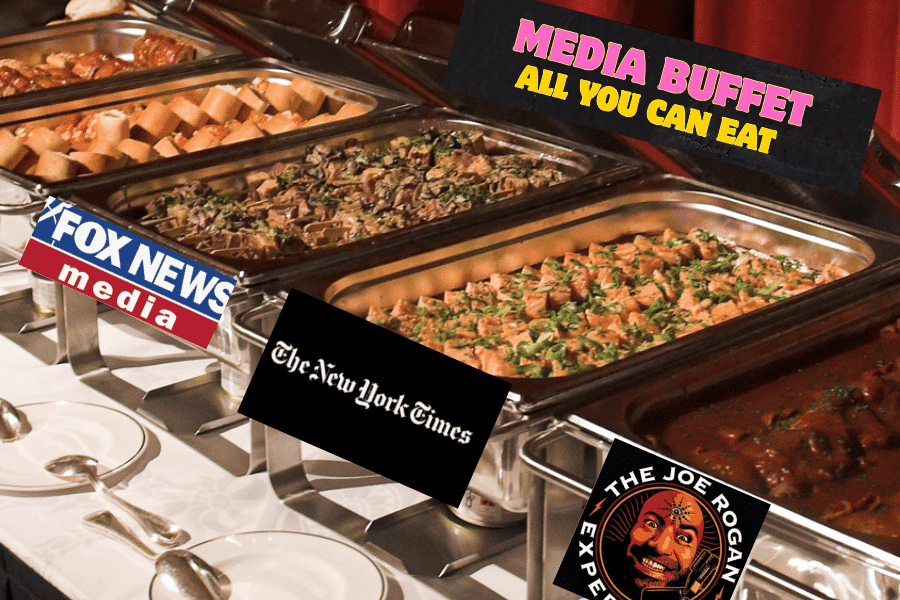
Ultimately, we have to think of the media ecosystem as a buffet you can go to for your meals. If too many people choose only the foods that satisfy their cravings for the sweet and salty, not only will their own health suffer, but the people who stock the buffet will start eliminating healthy foods altogether. What seems like a lot of choice in what you consume will end up as a lot of the same and none of it healthy.
So what can you do to support a healthier and sustainable media ecosystem?
Understand who owns the media you consume. Diversify the sources from where you get your information and seek out contrasting perspectives. If you can afford it, pay for subscriptions to outlets that have a record of independence. Support organizations that fight for a free and robust press.
As a consumer of media, you have power you can exercise. Media producers rely on you to read or listen to or watch what they produce. If you choose to do so, you support what they are doing. If you don’t, you tell them a different message altogether.
Questions to consider:
1. What is a media ecosystem?
2. How many information sites have you visited in the last three days? Can you list them?
3. Pick one of those sites. Can you figure out who owns it? Is that company based in your country?
This audio is auto-generated. Please let us know if you have feedback.
Dive Brief:
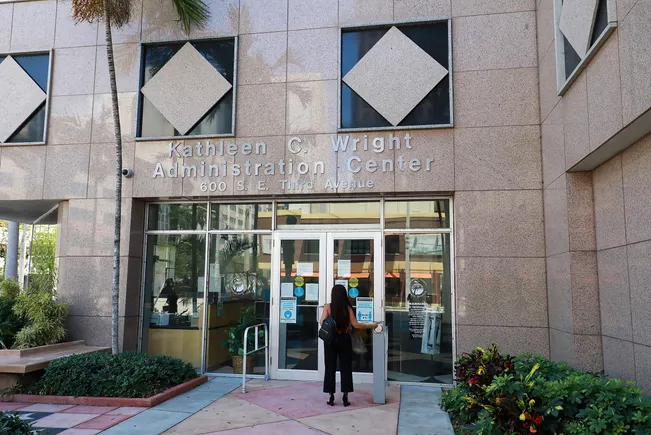
Broward County Public Schools announced plans to “address” 34 of its 239 schools for possible closures or consolidations during a Tuesday board meeting.
The pending plans come at a time when the large Florida district is reporting an enrollment decrease of 10,360 students, a count taken 10 days into the 2025-26 school year compared to the year prior. The district’s total enrollment, excluding charter schools, was 188,002 on Aug. 22.
The district also reported in July that 58 of its schools were below 70% capacity, including 39 elementary schools, 16 middle schools and 3 high schools.
Dive Insight:
As the sixth largest school district in the U.S., BCPS is not immune to a national trend of districts facing enrollment drops amid declining birthrates and growing school choice options.
In a May survey of current and former BCPS parents conducted by Hanover Research, the data found that about half of respondents — 53% — said they enrolled their children in a nontraditional schooling option because they wanted higher quality instruction. A third of families also cited smaller class sizes and another third indicated the availability of more programs. The district surveyed 8,983 parents who either had a child enrolled, formerly enrolled, or partially enrolled in a BCPS school.
The top two reasons parents said they unenrolled their children from BCPS was because they were dissatisfied with the district’s education quality (26%) and they were concerned about school safety (24%).
Among those who previously had a child enrolled or partially enrolled at BCPS, 20% said improved teacher quality through professional development would have made them more likely to stay. Some 18% also separately said better support for students with disabilities, improvements on handling school bullying, or strengthened safety and security measures would have encouraged them to keep their child in the district.
To retain families, the district is being advised based on the parent survey results to:
Track school climate and culture outcomes for improvements.
Offer more college and career readiness support.
Provide more support to teachers to improve the district’s education quality.
Tackle school safety issues and work to reduce bullying and harassment.
An August analysis by Bellwether, an education nonprofit, warns that more school closures and consolidation could be on the horizon in the coming months and years due to declining enrollment — ultimately leading to strained school budgets. Bellwether estimated that the total loss in revenue from declining enrollment at the nation’s largest 100 districts could total up to $5.2 billion based on 2023-24 school enrollment.
Ongoing student enrollment declines and the end of historic federal pandemic aidare causing school leaders to take a hard look at their staffing policies as district budgets tighten.
Using pandemic-era Elementary and Secondary School Emergency Relief dollars, schools nationwide hired more teachers despite overall student enrollment dropping, said Marguerite Roza, a research professor and director of Georgetown University’s Edunomics Lab.
Now, however, districts are considering more school closures and consolidations as a result of enrollment declines and a surge of school choice options that parents are using to send their kids to private or religious schools. And as the national birthrate drops, these enrollment trends could struggle to rebound.
Are teacher shortages in the rearview mirror?
Because some districts chose to hire despite declining enrollment, they are laying off staff or implementing hiring freezes and leaving open positions, Roza said.
Consequently, the conditions used to generally describe the teacher shortage have “reversed,” Roza said. “It doesn’t mean that every spot has been filled. It’s still hard to recruit and fill positions in rural districts. High-poverty schools have always had a hard time. Math positions and special ed have always been more scarce.”
The term “teacher shortage” is often used in a simplistic and rhetorical way that obscures the nuanced staffing challenges districts face, especially for certain STEM subjects and special education, said Thomas Dee, a professor at Stanford University’s Graduate School of Education.
In an analysis of student-teacher ratios nationwide between 2010 and 2022, Dee said that 2022 saw the lowest number of students per one teacher. The ratio fell from 16.4 to 15.4 in that 12-year period, he found.
“There are many more teachers per students than ever before in U.S. history,” Dee said.
A separate K-12 Dive analysis of student-teacher ratios in November 2024 also showed that 43 out of 50 states and Washington, D.C., had on average fewer students per teacher post-COVID-19 than before the pandemic.
Navigating staffing amid enrollment challenges
Arizona’s Deer Valley Unified School District is one district out of many nationwide facing enrollment-related budget hurdles as a result of declining birthrates and growing alternative schooling options for parents, said Curtis Finch, the district’s superintendent. Arizona was the first state to approve a universal school voucher program in 2022.
Deer Valley USD’s enrollment shrank by 1.5% between the 2021-22 and 2023-24 school years, dropping from 33,303 students to 32,803, according to state data.
“We’re at the tip of the educational experiment,” Finch said regarding the impact of Arizona’s school choice policy on public schools.
Last school year, Finch said, the district had to cut about 50 positions — most of which weren’t backfilled because of local and state funding budget constraints.
Still, he said, Deer Valley USD struggles to fill science, math and special education teaching roles.
What has helped with staffing issues, however, is the district’s two-year teacher prep program that trains anyone in the community with a bachelor’s degree to become a certified teacher through classes, training and working with a mentor. The grow-your-own program doesn’t require its graduates to teach in the district, but 95% of those who have completed the program do end up teaching at Deer Valley USD, Finch said.
About 160 teachers have gone through the program and filled in the district’s instructional gaps within the past three years, Finch said.
Other strategies that education finance researchers suggest for districts to consider in their hiring practices amid budget and enrollment challenges include scrutinizing their grow-your-own programs for a good return on investment, paying effective teachers more, firing ineffective uncertified teachers, and streamlining teacher certifications across state lines.
If there were broad, generic teacher shortages, then the big solution for schools would be to make the profession more attractive to draw in more teachers. “But that’s not the issue,” Dee said.
“The issue is hard-to-staff schools and hard-to-staff subjects,” which begs the ultimate question for Dee: “What can we do to get more high-quality teachers into the schools serving our most vulnerable students?”
Loyal Inside Higher Ed readers who wake up to our daily newsletter will soon have an easier time finding each day’s edition in their crowded inboxes.
Starting Tuesday, Sept. 2, the Daily News Update will arrive between 5:30 and 6:00 a.m. Eastern, several hours later than the current 3:15 a.m. This may upset the morning routines of the handful of souls on the East Coast who rise before the sun, but for most readers, we hope this change means our newsletter is there at the top of your inbox when you log in, ready to inform your day.
My column about gaslighting has drawn some criticism that I want to address. Noam Schimmel argues in his letter that “gaslighting” is a correct term to use when people face “hostile claims that their reported experiences are fabricated, exaggerated or made with malicious intent.” But we must always have debates about whether general claims of bigotry are exaggerated or understated, and we shouldn’t presume malicious intent from anyone.
Schimmel claims that “it is inimical to the respect and fulfillment of civil rights and human rights to focus on debating whether terms such as ‘gaslighting’ or ‘institutional discrimination’ are appropriate to describe real and widespread experiences of exclusion and abuse.” Actually, it’s never inimical to human rights to discuss the extent of forms of discrimination or to debate how we should describe bigotry. Free speech is essential to human rights, and that includes allowing people to deny that human rights are being violated, even if they are wrong.
In fact, gaslighting and institutional discrimination are radically different concepts. The latter describes an institutional failure to prevent discrimination by a legal standard, but gaslighting describes a kind of conspiracy theory that suggests everyone who questions these demands for censorship is plotting against recognition of an obvious truth about antisemitism.
Another letter in response to my column comes from William Mills IV, which I will post here in its entirety:
Gaslighting About Gaslighting
Yes, gaslighting is real even if it doesn’t involve turning down gas lights to drive someone crazy.
By William T. Mills IV, Ph.D.
In his opinion column on Wednesday, author John Wilson derides the author of an email he received accusing him of gaslighting when he referred to antisemitism at Harvard as a “myth.” In his rebuttal to a private email, Mr. Wilson says that he is not gaslighting because he is not literally turning down gas lights to drive his wife crazy, as the husband in the 1944 film Gaslight did. Interestingly, Mr. Wilson defends of his use of the word “myth” to describe antisemitism at Harvard, even though he is not literally referring to antisemitism at Harvard as, for example, a historic tale about a creator sending birds to retrieve mud from the bottom of a primordial ocean to form the earth. Of course, the use of the word “myth” does not denote the literal origin of the word but rather the meaning we all understand today.
So yes, in fact, claiming that antisemitism at Harvard is a “myth” is gaslighting readers, as it tells them a lie and denies that they are being told one. There is no other reason I can conceive of, at least not a charitable one, to tell people who watched antisemitism—that Harvard admitted to—with their own eyes that antisemitism is a “myth,” than to drive them insane.
Mr. Wilson says that “universities are not guilty of antisemitic discrimination if they allow free expression of hateful ideas.” And herein lies the problem. Yes, of course, free expression does not equal antisemitism. But having a stated policy against “bullying, harassment, intimidation” and not enforcing that policy when death is openly called for against Jewish students is antisemitism in its truest form. Protecting everyone except Jewish students from “bullying, harassment, intimidation” is the definition of antisemitic discrimination. The entire country watched this fact be highlighted by Rep. Elise Stefanik in her takedown of Harvard president Claudine Gay, but I suppose we are also expected to believe that the thing we watched with our own eyes wasn’t really happening. But it did happen, and Mrs. Gay [sic] is no longer the president because of it.
In his conclusion, Mr. Wilson laments the negative impact that using the term “gaslight” will have on intellectual discussion. But in reality, nothing could do more harm to “intellectual discussion” than telling people lies, then telling them they are not being lied to, and then telling them that they are not being lied to about not being lied to. The way to protect “intellectual discussion” is not to bar the use of the word “gaslight,” but rather to stop lying. Antisemitism is present at Harvard. Antisemitism is allowed by the administration at Harvard. Antisemitism at Harvard is not a myth.
William T. Mills IV, Ph.D.
Assistant Professor of Biology
Mount St. Mary’s University
The existence of antisemitism and other forms of bigoted beliefs is deplorable, but it is not evidence of antisemitic discrimination by a college if a college allows hateful beliefs on campus.
Mills may believe that Harvard is “protecting everyone except Jewish students,” but I see no evidence to support that claim, and a great deal of evidence that contradicts it.
One reason why we must have free speech in the fight against antisemitism and other isms is that it’s dangerous to allow presumptions of bigotry to dictate repression. Mills claims that “when death is openly called for against Jewish students is antisemitism in its truest form” which I think is true when it happens, but not necessarily true whenever the phrase “from the river to the sea” is uttered. Mills claims that my defense of free speech is gaslighting him, which is precisely my problem with the term.
Just like Mills and Schimmel, I think my critics are getting the facts wrong and have a false view of the world. I think they are in error, but unlike them, I don’t think they’re gaslighting me. I don’t think they’re intentionally telling lies or downplaying discrimination they know is real against other groups. I like they’re simply making mistakes, in their facts and values, concerning an issue they care about deeply. We can debate ideas and have strongly worded arguments without presuming that the people on the other side are bigoted and evil.
When people claim that denying bigotry or failing to silence bigotry is itself a form of bigotry, then we run the risk of creating a growing cycle of censorship—first the alleged bigots are to be punished, then anyone who defends the bigots and then any college that fails to silence the bigots. And that’s precisely the crisis of censorship we face in America today, where accusations of bigotry happening on campuses without proof of systematic discrimination are being used to punish colleges and seek suppression of free speech.
John K. Wilson was a 2019–20 fellow with the University of California National Center for Free Speech and Civic Engagement and is the author of eight books, including Patriotic Correctness: Academic Freedom and Its Enemies (Routledge, 2008), and his forthcoming book The Attack on Academia. He can be reached at [email protected], or letters to the editor can be sent to [email protected].
Faculty and administrators’ opinions about generative artificial intelligence abound. But students—path breakers in their own right in this new era of learning and teaching—have opinions, too. That’s why Inside Higher Ed is dedicating the second installment of its 2025–26 Student Voice survey series to generative AI.
About the Survey
Student Voice is an ongoing survey and reporting series that seeks to elevate the student perspective in institutional student success efforts and in broader conversations about college.
Some 1,047 students from 166 two- and four-year institutions, public and private nonprofit, responded to this flash survey about generative artificial intelligence and higher education, conducted in July. Explore the data, captured by our survey partner Generation Lab, at this link. The margin of error is plus or minus three percentage points.
See what students have to say about trust in colleges and universities here, and look out for future student polls and reporting from our 2025–26 survey cycle, Student Voice: Amplified.
Some of the results are perhaps surprising: Relatively few students say that generative AI has diminished the value of college, in their view, and nearly all of them want their institutions to address academic integrity concerns—albeit via a proactive approach rather than a punitive one. Another standout: Half of students who use AI for coursework say it’s having mixed effects on their critical thinking abilities, while a quarter report it’s helping them learn better.
Here are seven things to know from the survey, plus some expert takes on what it all means, as higher education enters its fourth year of this new era and continues to struggle to lead on AI.
Most students are using generative AI for coursework, but many are doing so in ways that can support, not outsource, their learning.
The majority of students, some 85 percent, indicate they’ve used generative AI for coursework in the last year. The top three uses from a long list of options are: brainstorming ideas (55 percent), asking it questions like a tutor (50 percent) and studying for exams or quizzes (46 percent). Treating it like an advanced search engine also ranks high. Some other options present more of a gray area for supporting authentic learning, such as editing work and generating summaries. (Questions for educators include: Did the student first read what was summarized? How substantial were the edits?)
Fewer students report using generative AI to complete assignments for them (25 percent) or write full essays (19 percent). But elsewhere in the survey, students who report using AI to write essays are somewhat more likely than those using it to study to say AI has negatively impacted their critical thinking (12 percent versus 6 percent, respectively). Still, the responses taken as a whole add nuance to ongoing discussions about the potential rewards, not just risks, of AI. One difference: Community college students are less likely to report using AI for coursework, for specific use cases and over all. Twenty-one percent of two-year students say they haven’t used it in the last year, compared to 14 percent of four-year students.
Performance pressures, among other factors, are driving cheating.
The top reason students say some of their peers use generative AI in ways that violate academic integrity policies is pressure to get good grades (37 percent over all). Being pressed for time (27 percent) and not really caring about academic integrity policies (26 percent) are other reasons students chose. There are some differences across student subgroups, including by age: Adult learners over 25 are more likely than younger peers to cite lack of time due to work, family or other obligations, as well as lack of confidence in their abilities, for example. Younger students, meanwhile, are more likely to say that peers don’t really care about such policies, or don’t connect with course content. Despite the patchwork of academic integrity policies within and across institutions, few students—just 6 percent over all—blame unclear policies or expectations from professors about what constitutes cheating with AI.
Nearly all students want action on academic integrity, but most reject policing.
Some 97 percent believe that institutions should respond to academic integrity threats in the age of generative AI. Yet approaches such as AI-detection software and limiting technology use in classrooms are relatively unpopular options,selected by 21 percent and 18 percentof students, respectively. Instead, more students want education on ethical AI use (53 percent) and—somewhat contradicting the prior set of responses about what’s driving cheating—clearer, standardized policies on when and how AI tools can be used. Transparency seems to be a value: Nearly half of students want their institutions to allow more flexibility in using AI tools, as long as students are transparent about it.
Fewer support a return to handwritten tests or bluebooks for some courses, though this option is more popular among students at private nonprofit institutions than among their public institution peers, at 33 percent versus 22 percent. Those at private nonprofit institutions are also much more in favor of assessments that are generally harder to complete with AI, such as oral exams and in-class essays.
Students have mixed views on faculty use of generative AI for teaching.
The slight plurality of students (29 percent) is somewhat positive about faculty use of AI for creating assignments and other tasks, as long as it’s used thoughtfully and transparently. This of course parallels the stance that many students want from their institutions on student AI use, flexibility underpinned by transparency.
Another 14 percent are very positive about faculty use of AI, saying it could make instruction more relevant or efficient. But 39 percent of students feel somewhat or very negatively about it, raising concerns about quality and overreliance—the same concerns faculty members and administrators tend to have about student use. The remainder, 15 percent, are neutral on this point.
Generative AI is influencing students’ learning and critical thinking abilities.
More than half of students (55 percent) who have used AI for coursework in the last year say it’s had mixed effects on their learning and critical thinking skills: It helps sometimes but can also make them think less deeply. Another 27 percent say that the effects have actually been positive. Fewer, 7 percent, estimate that the net effect has been negative, and they’re concerned about overreliance. Men—who also report using generative AI for things like brainstorming ideas and completing assignments at higher rates than their women and nonbinary peers—are also more likely to indicate that the net effect has been positive: More than a third of men say generative AI is improving their thinking, compared to closer to one in five women.
Students want information and support in preparing for a world shaped by AI.
When thinking about their futures, not just academic integrity in the present, students again say they want their institutions to offer—but not necessarily require—training on how to use AI tools professionally and ethically, and to provide clearer guidance on ethical versus misuse of AI tools. Many students also say they want space to openly discuss AI’s risks and benefits. Just 16 percent say preparing them for a future shaped by generative AI should be left up to individual professors or departments, underscoring the importance of an institutional response. And just 5 percent say colleges don’t need to take any specific action at all here. Adult students—many of whom are already working—are most likely to say that institutions should offer training on how to use AI tools professionally and ethically, at 57 percent.
Less popular options from the full list:
Integrate AI-related content into courses across majors: 18 percent
Leave it up to individual professors or departments: 16 percent
Create new majors or academic programs focused on AI: 11 percent
Connect students with employers or internships that involve AI: 9 percent
Colleges don’t need to take any specific actions around AI: 5 percent
On the whole, generative AI isn’t devaluing college for students—and it’s increasing its value for some.
Students have mixed views on whether generative AI has influenced how they think of the value of college. But 35 percent say there’s been no change, and 23 percent say it’s more valuable now. Fewer, 18 percent, say they now question the value of college more than they used to. Roughly another quarter of students say it has changed how they think about college value, they’re just not sure in what way. So college value hasn’t plummeted in students’ eyes due to generative AI—but the technology is influencing how they think about it.
‘There Is No Instruction Manual’
Student Voice poll respondent Daisy Partey, 22, agreed with her peers that institutions should take action on student use of generative AI—and said that faculty members and other leaders need to understand how accessible and potent it is.
Daisy Partey
“I’d stress that it’s super easy to use,” she said in an interview. “It’s just so simple to get what you need from it.”
Partey, who graduated from the University of Nevada at Reno in May with a major in communications and minor in public health, said using generative AI became the default for some peers—even for something as simple as a personal introduction statement. That dynamic, coupled with fear of false positives from AI-detection tools, generally chilled her own use of AI throughout college.
She did sometimes use ChatGPT as a study partner or search tool, but tried to limit her use: “Sometimes I’d find myself thinking, ‘Well, I could just ChatGPT it.’ But in reality, figuring it out on my own or talking to another physical human being—that’s good for you,’” she said.
As for how institutions should address generative AI, Partey—like many Student Voice respondents—advocated a consistent, education-based approach, versus contradictory policies from class to class and policing student use. Similarly, Partey said, students need to know how and when to use AI responsibly for work, even as it’s still unknown how the technology will impact fields she’s interested in, such as social media marketing. (As for AI’s impact on the job market for new graduates, the picture is starting to form.)
“Provide training so that students know what they’re going into and the expectations for AI use in the workplace,” she emphasized.
Another Student Voice respondent at a community college in Texas, who asked to remain anonymous to speak about AI, said she uses generative AI to stay organized with tasks, create flash cards for tests and exams, and come up with new ideas.
“AI isn’t just about cheating,” she said. “For some students, it’s like having a 24-7 tutor.”
Jason Gulya, a professor of English and media communications at Berkeley College who reviewed the survey results, said they challenge what he called the “AI is going to kill college and democratize all knowledge” messaging pervading social media.
That the majority of students say AI has made their degree equally or more valuable means that this topic is “extremely nuanced” and “AI might not change the perceived value of a college degrees in the ways we expect,” he added.
Relatedly, Gulya called the link between pressure to get good grades and overreliance on AI “essential.” AI tools that have been “marketed to students as quick and efficient ways to get the highest grades” play into a “model of education that places point-getting and grade-earning over learning,” he said. One possible implication for faculty? Using alternative assessment practices “that take pressure away from earning a grade and that instead recenter learning.”
Jill Abney, associate director of the Center for the Enhancement of Learning and Teaching at the University of Kentucky, said it makes “total sense” that students also report thattime constraints are fueling academic dishonesty, since many are “stretched to the limits with jobs and other responsibilities on top of schoolwork.” To this point, one of the main interventions she and colleagues recommend to concerned instructors is “scaffolding assignments so students are making gradual progress and not waiting until the last minute.”
On clarity of guidelines around AI use, Abney said that most instructors she works with have, in fact, “put a lot of time into crafting clear AI policies.” Some have even moved beyond course-level policies toward an assignment-by-assignment labeling approach, “to ensure clear communication with students.” Tools to this end include the university’s own Student AI Use Scale.
Mark Watkins, assistant director of academic innovation and lecturer of writing and rhetoric at the University of Mississippi, underscored that both faculty-set policies for student use of AI and expectations for faculty use of AI have implications for faculty academic freedom, which “should be respected.”
At the same time, he said, “there needs to be leadership and a sense of direction from institutions about AI integration that is guided. To me, that means institutions should invest in consensus-building around what use cases are appropriate and publish frameworks for all stakeholders,” including faculty, staff and administrators.” Watkins has proposed his own “VALUES” framework for faculty use of AI in education, which addresses such topics as validating and assessing student learning.
Ultimately, Abney said, it’s a good thing students are thinking about how AI is impacting their cognition—a developing area of research—adding that students tend to “crave shared spaces of conversation where they can have open dialogues about AI with their instructors and peers.”
That’s what learning about generative AI and establishing effective approaches requires, she said, “since there is no instruction manual.”
This independent editorial project is produced with the Generation Lab and supported by the Gates Foundation.