Author: admin

  • On Being a Black Anthropologist (opinion)

    On Being a Black Anthropologist (opinion)

    The one week my Yale graduate Anthropology 101 class spent studying Zora Neale Hurston’s Mules and Men felt like a glass of cool water on a hot summer day. Learning about her scholarship and her refusal to accept the way her white colleagues recentered whiteness through their research on nonwhite people reminded me of the anthropologists who first led me to the discipline.

    But the fact that Hurston was the sole Black woman anthropologist whose work we studied suggested that she was the only Black woman anthropologist whose work was worthy of the ivory tower. As if she was the only Black person committed to using the tools of anthropology to create knowledge about the people relegated to the Global South in ways that are mutually beneficial to the researcher and their interlocutors. Hurston’s singular inclusion in my graduate training paired with the general exclusion of Black and brown scholars aimed to pacify the problematics of anthropology without upending the infrastructure of a discipline that is in crisis.

    As my graduate school years continued, I grew increasingly disillusioned by the idea of a career in academia. Even though I had come to terms with a definition and practice of anthropology that felt useful, identifying as an anthropologist myself felt wrong. How could I proudly claim affinity to a discipline that knowingly promulgated the othering of Black and brown people around the world and within the discipline itself? The answer would come through my research on Black Capitalists, and through my own experience beyond grad school as a Black entrepreneur and Wall Street professional.

    My experience as a Ghanaian American on Wall Street at Goldman Sachs and JPMorganChase exposed me to the ways in which Black people use the tools of capitalism to create new outcomes centered on collective thriving. They led me to my definition of what it means to be a Black Capitalist: a Black person who is a strategic participant in capitalism with the intention to benefit from the political economy in order to create social good. What they were doing was complicated, contradictory and, for many, oxymoronic.

    To many, to be a Black Capitalist is to be in an identity crisis. Black studies scholars I’ve spoken to have gone so far as to say, “Black Capitalists don’t exist!” or “It’s impossible for any good to come from capitalism!” I’m usually taken aback by such rebuttals. Because if the Black people I spent hours talking to who identified themselves as Black Capitalists don’t actually exist in real life, are they fictions of my imagination? And is my own experience invalid? Black Capitalists are as real as the version of capitalism we experience today that aims to entrap us all. Black Capitalists are merely trying to get free and help others do the same while facets of society attempt to place limits on how they can narrate, and ultimately live, their own lives.

    Surely, one’s ability to disavow capitalism depends on what continent they are on, or come from. For the Black Capitalists I’ve spoken to who are from Africa, for example, it’s neither a matter of loving capitalism nor wanting to dismantle it. Living in and through capitalism is the reality of trying to build a life in countries that imperialist capitalist forces have already destroyed and continue to exploit. If they are to live their later years comfortably in their homeland, leaving it in the meantime is a requirement. And hustling in the Western world to achieve this dream is so often the method. So for them, much like it was for my mother, who emigrated to America from Ghana with the haunting knowledge that her family was counting on her and that “failure was not an option,” the question becomes: For our own collective thriving, how do we game a system that was founded on us as its pawns?

    So how are Black Capitalists using the tools of capitalism to create new outcomes that allow them to secure the bag and the people they care for? Their methods are as diverse as Black people themselves. But the common denominator between all of their practices is a focus on communal uplift.

    Some are strategizing throughout key industries within corporate America to develop sustainable initiatives that subversively promote diversity, equity and inclusion—especially in the wake of its demise. Some are leveraging grassroots approaches to build community-forward real estate clubs that make the dream of homeownership and passive income possible through the resources—money, credit, knowledge and social connections—that are shared among members.

    Others are teaching aspiring entrepreneurs in their community the fundamentals of effective entrepreneurship and shepherding them through the process of collectively buying successful small businesses formerly owned by white entrepreneurs. Some are using the skills they developed during their tenures on Wall Street to create investment firms on the African continent to help grow pan-African businesses focused on health care, technology and agriculture that generate value for the African consumer. Some of the companies these Black Capitalists are building are worth millions of dollars—even billions. Irrespective of the spaces Black Capitalists occupy, their impact in Black communities globally is invaluable in the fight to close the racial wealth gap that has Black people lagging behind across key wealth indicators including homeownership, small business ownership and financial health.

    But their existence is unnerving to both Black and white people alike, for very different reasons. For many Black people, the very idea of a Black Capitalist makes their toes curl, because when you’ve been on the wrong side of capitalism for so long—as its most valued commodity but never its greatest beneficiary—it’s hard to believe that another relationship to capitalism, or a more equitable version of it on our journey to collective liberation, is even possible.

    And for white people invested in upholding the racial hierarchy that shapes social, political and economic life, they worry and wonder what they are set to lose when Black people are organized and move as one unified body in an economic system that nurtures individualism. Both perspectives reveal the underlying truth that money and our obsession with it is a culture of its own. And this revelation presents a growing problem society has created but has yet to solve: What do we do when money becomes the dominant culture in a society wherein most people don’t have enough of it to live?

    In the face of paralyzing social anxiety about the expansiveness of Black life, anthropology’s superpower lies in its ability to use evidence from the human experience to upend our social scripts and create space for us to dream up new ways of being that are both scalable and sustainable. I realized that being a Black Capitalist and being a Black anthropologist were both seen as oxymorons. I now gravitate toward the spirit of Zora Neale Hurston and other exceptional Black anthropologists. I learned that I can be a different kind of anthropologist who uses the tools of anthropology, like ethnography, oral histories and participant observation, to tell new stories about Black life that are restorative, hopeful and reflective of the power Black people carry.

    But even so, my existence as a Black anthropologist is unnerving to “scholars” who benefit from and are invested in perpetuating the harms of traditional anthropology. To raise the standard of knowledge production to ensure it is created in community with those who play a role in developing it threatens the validity of how scholars have traditionally conducted research and the scholarship that is held in high esteem. It’s damning enough that anthropology is like a snake eating its tail. My presence is the proverbial pain in the discipline’s side—a reminder of the work that is needed to transform the discipline, and realize what anthropology can be, but has yet to become.

    Source link

  • Reimagining global student enrolment for the AI era

    Reimagining global student enrolment for the AI era

    These new pressures present a chance to rethink how we support students – not just through better systems, but through smarter, more student-centred strategies that prioritise access, equity, and long-term success for both students and institutions.

    Consider this: most institutions still manage their international enrolment efforts through a patchwork of spreadsheets, legacy systems designed for domestic student needs, and manual workflows. This is not for lack of effort, but because the data is inaccessible or buried in unusable formats, making it difficult for institutions to plan strategically, build diverse student cohorts, and respond to shifting market conditions. Your team should be supporting students face-to-face rather than spending days manually reviewing documents.  

    Meanwhile, students and their families have come to expect responsive, seamless, personalized experiences—which our sector is eager to meet, but not yet equipped to deliver.

    These aren’t just technical challenges, they’re barriers to accessibility. When processes like application review or document verification become bottlenecks, it’s students who face delays, uncertainty, and missed opportunities. 

    The answer isn’t just to digitize what already exists. Many institutions have already adopted CRMs, SIS platforms, and digital document tools, but most of these systems were built decades ago and designed for domestic workflows, often operate in silos, and create new complexities instead of solving old ones. 

    Instead, we need to reimagine how enrolment is managed from the ground up. That means moving from reactive to predictive approaches, from fragmented tools to unified ecosystems, and from gut-feeling decisions to ones guided by real-time insights. Experienced educators will always be central to the admissions process; the goal isn’t to replace their expertise, but to empower it with better data and clearer visibility.

    Imagine being able to forecast application volumes, visa approval rates, and enrolment yields with AI-powered precision. Imagine applicants receiving an offer letter in less time than it takes to walk across campus.

    By analyzing millions of data points from government sources, institutional history, and global market trends, your institution can make smarter investments and streamline decision-making. Routine processes can be automated without compromising quality or control. 

    This isn’t a distant future. It’s possible today with the right technology partner.

    The pressures of shrinking budgets, unpredictable policies, and outdated systems aren’t going away. But with the right tools, institutions can turn these challenges into opportunities for growth. And those who embrace this transformation early will gain a significant advantage in attracting and enrolling high-quality, diverse students.

    That’s why we built Capio. As an enterprise platform company focused on international enrolment management we’re pioneering solutions that transform how institutions approach students around the world. Our platform unifies enrolment intelligence, application management, and agent management, training, and compliance within a single end-to-end, AI-powered platform that empowers institutions throughout the international enrolment management journey. 

    Capio brings together everything institutions need to build smarter, more efficient international enrolment strategies on a global scale. From real-time market insights to precise planning tools, our platform replaces guesswork with clarity. 

    Our Insights Dashboard draws from diverse data sources to surface trends and opportunities in over 150 countries. The Application Management System ensures consistent, transparent processing throughout the complete admissions process, reducing student drop-off, and through our training platform,TrainHub, institutions can better engage and empower educational agents while maintaining alignment and ensuring compliance.

    As leaders in international education, we’re faced with a decision. We can continue to patch together solutions and hope to keep pace with growing complexity. Or, we can embrace the opportunity to build an intelligent infrastructure that transforms international enrolment.

    That choice is ours to make.   

    Find out more at www.capio.app.

    About the author:
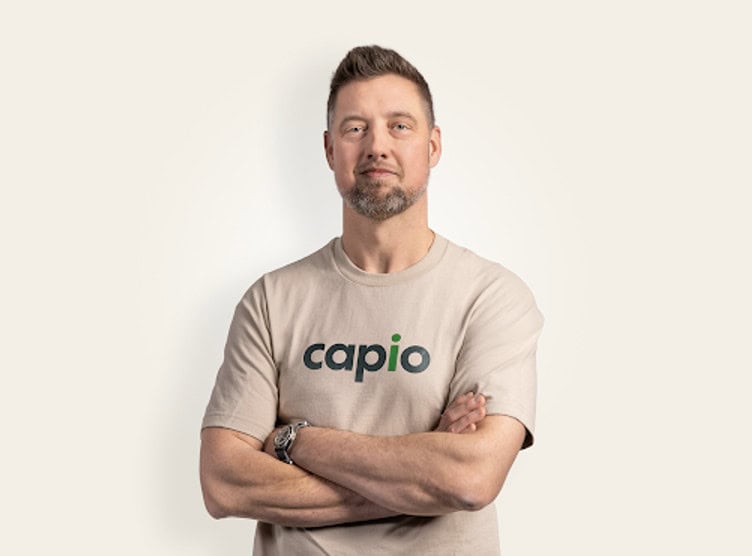
    Darin Lee is general manager of Capio, bringing over 20 years of experience in educational technology and digital transformation. Previously serving as CIO at the University of the Fraser Valley and VP Technology at Conestoga College, Darin has led major technological transformations across multiple Canadian institutions, giving him unique insight into the challenges and opportunities facing post-secondary institutions and international enrolment teams

    Source link

  • DHS Moves to Restrict How Long Foreign Students Can Stay

    DHS Moves to Restrict How Long Foreign Students Can Stay

    Photo illustration by Justin Morrison/Inside Higher Ed | aapsky/iStock/Getty Images | Chip Somodevilla/Getty Images

    After months of speculation, the Department of Homeland Security publicly released its plans to limit how long international students can stay in the United States—a proposal that advocates say will only add to uncertainty and chaos that this group is already facing.

    Currently, students can stay in the country as long as they are enrolled at a college or university. But the proposed rule released Wednesday would allow students to stay for the duration of their program, but no longer than four years. That isn’t enough time for students to complete a doctoral program, and it’s less time than the average student takes to complete a bachelor’s degree. Students who want to stay longer would have to seek authorization to extend their visa.

    The first Trump administration tried to make this change, which would roll back at 1991 rule known as duration of status. However, the Biden administration withdrew the proposal. Officials said in a news release that setting a fixed time for students on visas to stay would curb what they call abuses and allow the government to better oversee these individuals. Additionally, officials alleged that the current policy incentivizes international students to “become ‘forever’ students,” who are “perpetually enrolled in higher education courses to remain in the U.S.”

    DHS will take public comments on the proposal until Sept. 29. Before the agency can finalize the rule, it will have to review and respond to those comments.

    Advocates for international students have been sounding the alarm about this plan since DHS first sought approval in June to make the proposal, and those warnings continued this week now that the plan is public. Changing the rule, they say, would be another hurdle for international students who want to come to the United States. These others include vetting students’ social media profiles and more scrutiny on current visa holders. Since President Trump took office, the State Department has revoked 6,000 student visas.

    More than one million students from other countries enrolled in at a U.S. college or university in 2024, making up about 6 percent of the total student population. Experts predict the number of international students to drop off significantly this academic year.

    Fanta Aw, executive director of NAFSA, the association of international educators, said in a statement that the DHS proposal is a “bad idea” and “a dangerous overreach by government into academia.”

    “These changes will only serve to force aspiring students and scholars into a sea of administrative delays at best, and at worst, into unlawful presence status—leaving them vulnerable to punitive actions through no fault of their own,” Aw added.

    Miriam Feldblum, president and CEO of the Presidents’ Alliance on Higher Education and Immigration, described the proposal in a statement as “another unnecessary and counterproductive action aimed against international students and scholars.”

    “This proposed rule sends a message to talented individuals from around the world that their contributions are not valued in the United States,” she said. “This is not only detrimental to international students—it also weakens the ability of U.S. colleges and universities to attract top talent, diminishing our global competitiveness. International students, scholars, and exchange visitors contribute economically, intellectually, and culturally to American society. They drive innovation, create jobs, and advance groundbreaking research.”

    Source link

  • More Law Schools Embrace AI

    More Law Schools Embrace AI

    Photo illustration by Justin Morrison/Inside Higher Ed | Maxxa_Satori and PhonlamaiPhoto/iStock/Getty Images

    As more and more law firms integrate generative artificial intelligence into their practices, a growing number of law schools are preparing future lawyers to adapt.

    Nearly three years after OpenAI’s ChatGPT went mainstream—followed by Anthropic’s Claude, Google’s Gemini and a host of other similar platforms—some 30 percent of law offices are using AI-based technology tools, according to data published by the American Bar Association this past spring. While ChatGPT is the most widely used, legal research–specific tools, such as Thomson Reuters’ CoCounsel, Lexis+ AI and Westlaw AI, are also catching on in the sector.

    At the same time, 62 percent of law schools have incorporated formal opportunities to learn about or use AI into their first-year curriculum; 93 percent are considering updating their curriculum to incorporate AI education. In practice, however, many of those offerings may not be adequate, said Daniel W. Linna Jr., director of law and technology initiatives at Northwestern University’s Pritzker School of Law.

    “Law firms are starting to expect more and more that students will be exposed to this in law school,” he said. “But they also understand that the current reality is that not many law schools are doing much more than basic training. And some may not even be doing that.”

    AI-Savvy Will Have ‘Leg Up’

    At its best, experts believe AI has the power to make lawyers more efficient and accurate, as well as the potential to expand public access to legal services. But as fake citations and misquotes appearing in AI-generated legal filings have already shown, lawyers need more than access to these tools to get the most out of using them. They need to know how they work and recognize their limitations.

    “Law schools have to prepare students to be intentional users of this technology, which will require them to have foundational knowledge and understanding in the first place,” said Caitlin Moon, a professor and founding co-director of Vanderbilt Law School’s AI Law Lab. “We have to preserve that core learning process so that they remain the human expert and this technology complements and supports their expertise.”

    It’s not clear yet the extent to which AI will reshape the legal job market over the next several years, especially for new lawyers whose first jobs after law school have historically involved reviewing documents and conducting legal research—two areas where AI tools excel. According to one interpretation of a new report from Goldman Sachs on how AI could affect the workforce, 17 percent of jobs in the legal sector may be at risk.

    “Law firms on the cutting edge of innovation are certainly trying to figure out how leveraging this technology improves their bottom line,” Moon said. “For recent graduates, those who are coming into firms with an understanding and familiarity with AI have a leg up.”

    Pressure on Law Schools

    Regardless of what’s to come, all this uncertainty is putting pressure on law schools across the country to meet the moment, said Gary Marchant, faculty director of the Center for Law, Science and Innovation at Arizona State University’s Sandra Day O’Connor College of Law, which began offering an AI specialization last year.

    “It creates a requirement for law schools and law firms to train future lawyers differently, so that they learn some of the third- and fourth-year associate skills while they’re still in law school,” Marchant said. “Even if AI doesn’t advance any further, it’s already come so far that it’s transforming the practice of law, and it could change even more. Right now, the conclusion is that lawyers who know AI will replace lawyers who don’t know AI.”

    Recognition of that reality drove the University of San Francisco School of Law to become the first in the country to integrate generative AI education throughout its curriculum. Those efforts will be aided through partnerships with Accordance and Anthropic, the school announced last week.

    “AI is something every student needs to understand, no matter what kind of law they want to do,” said Johanna Kalb, dean of USF’s law school. “Given how quickly these AI tools are improving and becoming more specialized, each of these innovations is going to change what lawyers are being asked to do and what skills they really need.”

    While USF may be one of the few law schools with an AI curriculum mandate, 55 percent of programs offered specialized courses designed to teach students about AI in 2024, according to the most recent available ABA data.

    That percentage has likely increased over the past year, said Andrew Perlman, dean of Suffolk University Law School and a member of the ABA’s Task Force on Law and Artificial Intelligence.

    This fall Suffolk’s law school, which launched one of the country’s first legal technology programs nearly a decade ago, is requiring all first-year students to complete a custom generative AI learning track as part of its course on legal practice skills.

    “There was a lot of hesitation early on about how useful AI may be inside law practices, but there is now an increasingly widespread recognition that hiring lawyers who understand both the traditional methods of practicing law and have the ability to embrace AI is a useful combination,” Perlman said. “Training students with that new skill set is going to put our graduates in a better position to succeed in the long run.”

    Jacob Levine, a second-year student at Harvard Law School, got a taste of the demand for that balance during an internship at a law firm this summer.

    “AI was a tool that was present and using it was permitted, but there was a lot of emphasis on gauging the ability of the individual to be able to do the analytical work that’s expected of a young attorney,” he said. “It’s important to know how to use AI but not purely rely on it and use it blindly. A big part of being able to do that is knowing how to do everything yourself.”

    Source link

  • CUNY Plans to Buy Manhattan Campus

    CUNY Plans to Buy Manhattan Campus

    Cash-strapped Metropolitan College of New York is planning to sell its Manhattan campus to the City University of New York for $40 million, a regulatory filing first reported by Bloomberg shows.

    The two institutions signed a letter of intent on Monday, according to the regulatory filing, which notes that proceeds will be used to pay off a portion of MCNY’s $67.4 million outstanding debt. 

    MCNY agreed to sell the site last year as part of a forbearance agreement with bondholders.

    Metropolitan College of New York has struggled to keep up with debt in recent years and failed to maintain the agreed-upon ratio of liquid assets, according to a regulatory filing from July. The small college enrolled fewer than 500 students, according to the latest state data, and posted a deficit of more than $7 million in fiscal year 2023, publicly available financial data shows.

    CUNY is purchasing 101,542 square feet across three floors in the shared building, which officials told Bloomberg they intend to use as a temporary site for the Hunter-Bellevue School of Nursing amid ongoing construction projects. The sale will require approval from bondholders as well as Metropolitan College’s accreditor, the Middle States Commission on Higher Education.

    Source link

  • Universities are not border agents – but they do have a duty

    Universities are not border agents – but they do have a duty

    As summer draws to a close, the UK finds itself in the grip of growing public frustration over the slow processing of asylum claims and the perceived misuse of the student visa system. With over 111,000 asylum applications recorded in the year to June 2025 – the highest number ever recorded in the UK – the pressure is growing on the UK government, local councils and public services to reduce both processing times and the cost of housing asylum seekers.

    Currently, the UK is facing a backlog of more than 106,000 asylum cases, including 51,0000 appeals, with average wait times stretching to 53 weeks. The use of hotels to accommodate asylum seekers – originally a temporary measure introduced by the last government – has become a flashpoint for anti-migrant protests nationwide.

    Spotlight on international education

    As the asylum debate intensifies, UK universities are increasingly being drawn into the spotlight. This is largely due to recent Home Office data revealing that 16,000 student visa holders claimed asylum in 2024 – more than any other visa category. Nearly 40% of these individuals had entered the UK legally from countries including Pakistan, Nigeria and Sri Lanka.

    These figures have already prompted the government to introduce a new wave of visa reforms in its Immigration White Paper, including reducing the post-study work entitlement from two years to 18 months and imposing sanctions on universities with high rates of post-study asylum claims. From September 2025, UK universities may face fines, public naming or even temporary bans on international student recruitment if they fail to meet new compliance standards.

    The risk of reputational fallout

    For universities already navigating considerable financial pressures, the implications of these restrictions could be severe. Just one year’s intake of international students contribute almost £42 billion annually to the UK economy and represent a vital segment of enrolments across the sector. The growing association between universities and fraudulent asylum claims nevertheless risks undermining public trust and casting doubt on the integrity of university admissions processes.

    This reputational risk also extends beyond domestic borders. If the UK is perceived globally as hostile or unpredictable in its treatment of international students, competitor destinations such as Canada, Australia and New Zealand may stand to gain from the UK’s inability to get its house in order and bring its asylum system under control. Moreover, the Graduate Route, once a cornerstone of the UK’s appeal to global talent, remains under constant threat of review, further fuelling uncertainty among prospective applicants.

    Lessons for the academic year ahead

    So, what should UK universities do in response to growing concerns about illegal immigration? First, universities must strengthen their admissions oversight. Higher education institutions must ensure robust financial and academic checks, particularly for applicants from high-risk regions, and be transparent about any shortcomings and plans for improvement to maintain government goodwill and reassure the public.

    Second, universities must continue to support vulnerable students wherever in the world they may come from. Not all asylum claims are opportunistic. With the world around us changing apace, some students face genuine threats to their lives from political upheaval, persecution or conflict. This means universities should be prepared to offer legal guidance and pastoral support to those at risk and add legitimacy to the asylum claims of those in genuine danger.

    Third, universities need to speak with a unified voice and collectively defend the value of international education. This includes countering populist narratives about fraudulent asylum claims and backdoor immigration with evidence-based accounts of how international students contribute to the economy, innovation and a flourishing society.

    Finally, universities should be prepared to step up and engage with their local communities. The distinction between economic migrants, asylum seekers and international students is sadly all-too-often blurred in public discourse and populist rhetoric. Yet, with their strong and vibrant international communities, universities can help clarify these differences and highlight the positive contributions of their international students and staff, including through stories of civic engagement, volunteering and career successes.

    Compliance calls

    With no quick fixes to the asylum system in sight and public protests continuing as we head into the autumn, UK universities must not allow fear and frustration to erode the foundations of international education. While universities are not border agents, they do have a duty to comply with the systems that enable them to remain places of learning, inclusion and opportunity for people from across the world.

    As we enter a new academic year, the challenge is therefore clear: UK universities must find ways to balance compassion with control, ensuring that future international admissions processes meet the expectations of both government and the society they serve.

    Source link

  • Getting it ‘right’ – a reflection on integrating Service Learning at scale into a large Faculty of Science and Engineering

    Getting it ‘right’ – a reflection on integrating Service Learning at scale into a large Faculty of Science and Engineering

    This blog was kindly authored by Professor Lynne Bianchi, Vice Dean for Social Responsibility & Equality, Diversity, Inclusion and Accessibility, at the University of Manchester

    I recently had the fortune to be part of a panel discussing the place of Service Learning in higher education, chaired by HEPI. My reflections before and since may inspire you to take time to think about your perspective on the nature and role of Service Learning in fast-changing university and civic landscapes. In its simplest sense, Service Learning is an educational approach that combines academic study with community service.

    In my role within a large science and engineering faculty, I have rallied our staff and students to think seriously about the features, advantages and benefits of Service Learning in science and engineering contexts. For our university, this teaching and learning approach isn’t new, with expertise in the biomedical sciences and humanities teaching us much about the way in which undergraduate students can create benefit for our local communities whilst enriching their own academic experiences.

    In this blog, I build on my own background as a teacher and higher education academic and draw on my experience in curriculum design when focusing on how we can provide authentic and impactful Service Learning experiences for our undergraduates.

    What do we mean by the ‘right’ learning experiences?

    It doesn’t take long working in this area to unearth a wide range of terms that are used interchangeably – from place-based learning, real-world learning, community-engaged learning, practice-based learning, critical urban pedagogy, industry-inspired learning and more. A gelling feature is that to get Service Learning working well there must be an authentic benefit to each party involved. The students should develop skills and understanding directly required within their degree, and the partner should have a problem explored, solved, or informed. In essence, the experience must lead to a ‘win-win’ outcome(s) to be genuine.

    In our context in science and engineering, we have envisioned Service Learning working well, and considered this to include when:

    For students:

    • Learning has relevance: work on a project, individually or in groups, is contextualised by a problem, issue or challenge that is authentic (as opposed to hypothetical).
    • Learning has resonance: developing and applying skills and knowledge to inform the problem, issue or project that dovetails with existing course specifications and requirements.

    For partners:

    • They are engaged: partners are involved in the design and delivery of the project to some extent. This may vary in the depth or level of engagement and requires both sides to appreciate the needs of each other.
    • They are enriching: partners identify real issues that matter and expose elements of the work environment that enrich students’ awareness of the workplace and career pathways.

    When is the right time for students to engage in service learning?

    I am still pondering this question as there are so many variables and options that influence the choice. Which year group should service learning drop into? Or, does a developmental over time approach suit better? Is Service Learning more impactful in the later undergraduate years, or should it be an integral part of each year of their experience with us? Realistically, there won’t be a one-size-fits-all all model, and there are benefits and challenges to each. What will need to underpin whichever approach we take, will be the focused need to elicit the starting points of our students, our staff and our partners in whichever context.

    Going from ‘zero to hero’ in Service Learning will require training and support for all parties. My experience working across the STEM sector for nearly three decades has taught me that no one partner is the same as another – what is a big deal to one can mean nothing to another. My thinking is that we need to see each person involved in the Service Learning experience as a core ‘partner’ and each has learning starting points, aspirations and apprehensions. Our role as programme leaders is to identify a progression model that appreciates that this is ‘learning’ and that scaffolds and key training will be required at different times – even within the process itself.

    What support will be required to mobilise this model at scale?

    In my early career at this university, I spent time within the Teaching & Learning Student Experience Professional Support teams, where I saw firsthand the integral way that any university programme relies on expertise in taking theoretical ideas into practice. The interplay between project management, planning, timetabling, eLearning, marketing and communications and student experience support teams, to name some, will have play such critical roles in achieving excellence in Service Learning. Working at scale in our faculty across 10 different discipline areas, will require integrated work with other faculties to harness the power of interdisciplinary projects and digital support for course delivery and assessment that can embrace an internal-external interface.

    Support for scaling up will also require a culture of risk-taking to be valued and championed. Over the introductory years, we need to provide a sense of supported exploration, a culture of learning and reflection, and an ethos where failure is rarely a negative, but an opportunity. Of course, science and engineering disciplines bring with them our obligations to accrediting bodies, and a close dialogue with them about ambition, relevance and need for this enriching approach needs to be clearly articulated and agreed so that any course alteration becomes a course invigoration rather than a compromise.

    Faculty culture and the way the university and the sector views and reviews SL will have a significant implication on practice and people feeling safe to innovate. As the university forges and launches its 2035 strategy the spaces for innovation and development are increasingly championed, and the months and years ahead will be ones to watch in terms of establishing a refreshed version of teaching and learning for our students.

    In closing this short exploration of Service Learning, I can feel a positive tension in the air – the excitement to work together to further invigorate our student experience whilst supporting our staff and partners to embrace varied new opportunities. The ‘getting it right’ story will have many chapters, many endings as the genres, characters and plots are there for us all to create – or more pertinently ‘co-create’! What drives me most to remain in this space of uncertainty for a while longer is the anticipation of creating experiences that truly make a difference for good. As our universities transform themselves over the coming years, I invite you to join us in the dialogue and development as we have so much to learn through collaboration.

    Source link

  • Serving to Lead: The Transformative Role of Servant Leadership in Higher Education – Faculty Focus

    Serving to Lead: The Transformative Role of Servant Leadership in Higher Education – Faculty Focus

    Source link

  • Serving to Lead: The Transformative Role of Servant Leadership in Higher Education – Faculty Focus

    Serving to Lead: The Transformative Role of Servant Leadership in Higher Education – Faculty Focus

    Source link

  • Enroll in the Beatles MA Online: Study Music History

    Enroll in the Beatles MA Online: Study Music History

    I recognise that specialist courses, ‘Star Wars’ Studies, or Soap Opera Studies, often attract significant criticism from discipline purists. However, having a focus, a passion, and a shared point of reference that engages students across a range of disciplines, including cultural studies, sociology, anthropology, and economics, is a way to engage interest and ensure motivation—exposing students to academic perspectives while having them study something that they’re already passionate about. One has to wonder why there aren’t more programmes like this, particularly at the postgraduate level.


    Get ready, Beatles fans! Soon, students will be able to ‘come together’ with fellow enthusiasts and scholars from around the world to study the Fab Four. The University of Liverpool is reviving its unique Master of Arts course on the Beatles, and this time, it will be offered fully online.

    Launching in September 2026, the part-time MA in The Beatles, Heritage, and Culture programme will delve deeply into the band’s lasting cultural and economic influence on Liverpool and its surrounding areas.

    This course isn’t just about the songs. It explores how the Beatles’ legacy continues to shape everything from urban planning and civic design to heritage, tourism, and the creative industries in their hometown. Students get a chance to see how four lads from Liverpool changed not only music but also the very landscape of their city.

    While the program is online, students have the option to add a special two-week experience in Liverpool. This module includes daily lectures and site visits to iconic Beatles locations. It’s presented as students’ chance to interact with lecturers, peers, and industry professionals, and see the history they’re studying firsthand.

    Dr. Holly Tessler, the Program Director, offering the program online will allow people from all over the globe to “study Liverpool’s unique Beatles environment, history and heritage from scholars and practitioners who are immersed in this work.”

    The University of Liverpool is a leading authority on the academic study of the Beatles. The university’s Department of Music staff are part of the City of Liverpool’s Beatles Legacy Group, where they help shape local policy on Beatles heritage and tourism. Dr. Tessler herself is the co-editor of The Journal of Beatles Studies, so students will be learning from those who literally write the book on the subject.

    Applications for the programme will open in October 2025.

    Here a link for more information: https://news.liverpool.ac.uk/2025/08/26/liverpools-beatles-ma-returns-in-distance-learning-format/

    Source link