Author: admin

  • Are States Prepared for Workforce Pell?

    Are States Prepared for Workforce Pell?

    Thanks to the One Big Beautiful Bill Act becoming law this summer, workforce Pell is now a reality and federal aid dollars are expected to flow to low-income students in short-term programs as soon as next July.

    But now comes the hard work of figuring out which programs are eligible—and some states aren’t ready, according to a new report from the State Noncredit Data Project, which helps community college systems track data related to noncredit programs. Not all states collect the data needed to make that determination, and some offer programs that wouldn’t make the cut, the report concluded.

    Under the legislation, short-term programs need to meet certain requirements to qualify for Pell money. For example, state governors need to verify they align with high-skill, high-wage or in-demand jobs. Programs also must be able to build toward a credit-bearing certificate or degree program and be “stackable and portable across more than one employer” unless preparing students for jobs with just one recognized credential. They have to exist for at least a year and meet outcomes goals, including completion and job-placement rates of at least 70 percent. And programs can’t charge tuition higher than graduates’ median “value-added earnings,” or the degree to which their income exceeds 150 percent of the federal poverty line three years out of the program.

    But some states collect more data than others on community colleges’ noncredit education, which encompasses many of the programs likely to qualify for workforce Pell, according to the report. It based its findings on course and program-level data from eight states: Iowa, Louisiana, Maryland, New Jersey, Oregon, South Carolina, Tennessee and Virginia.

    “What we’re going to see is varying degrees of difficulty” for different states, said co-author Mark D’Amico, a higher education professor at University of North Carolina at Charlotte. “States that have more robust data on noncredit community college education are going to be at a little bit of an advantage.”

    The report found that most states track basic metrics such as the length of a program. But two out of the eight states had no state-level data on noncredit credential outcomes. Half of the states didn’t collect any data on labor market outcomes like earnings and employment rates. And multiple states didn’t keep track of whether students completed credentials or went on to pursue credit-bearing programs. The report emphasized that while individual institutions might have more detailed data on their programs, gaps in statewide data could create challenges as states work with institutions to prove their programs’ eligibility for workforce Pell.

    “Most states have some of the fundamental data,” D’Amico said, “but I think when it comes to the credentials’ labor market outcomes, completion, stackability, those are going to be a little bit more difficult to identify.”

    The report predicted that some states, like Iowa, Louisiana and Virginia, may have an easier time proving which programs meet the criteria because they already have state funding for noncredit programs that requires colleges to report relevant data. For example, Iowa includes noncredit education in its state funding formula for workforce training programs, and Louisiana has a state scholarship for such programs.

    Co-author Michelle Van Noy, director of the Education and Employment Research Center at Rutgers University, said states’ data infrastructure for noncredit programs is still a “work in progress,” but she’s seen “quite a progression” in recent years. She’s optimistic they’ll continue to improve.

    “It is my hope that Workforce Pell implementation can be done in a way that will support the broader development of data and quality systems for noncredit education and nondegree credentials within states,” Van Noy wrote in an email to Inside Higher Ed.

    But data isn’t the only issue. The report also found that typical noncredit programs weren’t necessarily long enough to meet the standards for workforce Pell. Except for lengthier workforce programs at the Tennessee Colleges of Applied Technology, the median number of hours for occupational training programs ranged from 15 hours in New Jersey to 100 hours in Virginia, falling short of the 150-hour, eight-week threshold. Institutions could group their courses into longer programs in the coming months. But it’s not yet clear if making such a change would affect the requirement that programs exist for at least a year.

    “Anyone that may be thinking that all of a sudden, all noncredit programs are going to be eligible, the data show that’s not the case,” D’Amico said. “We’ll see what happens over time.”

    The report offered a set of recommendations for how states can ready themselves for workforce Pell. For example, it urged state officials to take stock of which metrics they still need to collect to fall in line with the policy’s guardrails and encouraged state and college officials to work together to start identifying programs that could be eligible. The report also suggested colleges consider reconfiguring programs so noncredit offerings serve as on-ramps to credit-bearing programs and meet other structural requirements.

    Further details about how workforce Pell will work are going to be hashed out in a negotiated rule-making process this fall, but D’Amico said states shouldn’t wait for that.

    “I would use the guardrails now, use the data that they have now, to begin to do that pre-identification” so they have “a little bit of time to begin to fill some of those gaps in existing data,” D’Amico said.

    He also hopes states’ preparation for workforce Pell pushes forward “a larger conversation” they’re already having about the quality of short-term noncredit programs over all.

    The overarching goal is “ensuring that noncredit programs are designed well, have credentials associated with them linked to further education and are really designed in a way that’s going to be beneficial to students and ultimately help the local and state economies that these programs are going to serve,” D’Amico said.

    Source link

  • New York Passes Law Requiring Title VI Coordinators

    New York Passes Law Requiring Title VI Coordinators

    Photo illustration by Justin Morrison/Inside Higher Ed | howtogoto/iStock/Getty Images

    New York is mandating that all colleges in the state designate a coordinator to oversee investigations into discrimination on the basis of race, color, national origin and shared ancestry, which is prohibited under Title VI of the Civil Rights Act of 1964, Gov. Kathy Hochul’s office announced Wednesday.

    According to Hochul, the state is the first in the country to pass such a law.

    “By placing Title VI coordinators on all college campuses, New York is combating antisemitism and all forms of discrimination head-on,” she said in the press release. “No one should fear for their safety while trying to get an education. It’s my top priority to ensure every New York student feels safe at school, and I will continue to take action against campus discrimination and use every tool at my disposal to eliminate hate and bias from our school communities.”

    Many colleges have begun hiring for Title VI coordinator roles in the past several months in response to the surge in reports of antisemitism and Islamophobia following Hamas’s fatal Oct. 7, 2023 attack on Israeli civilians. In some cases, the Department of Education’s Office for Civil Rights required institutions to add these roles after finding that they failed to adequately address complaints of discrimination on their campuses.

    The State University of New York system had already mandated each of its campuses to bring on a Title VI coordinator by the fall 2025 semester.

    Source link

  • Higher Ed Join March on Wall Street to Defend DEI Programs

    Higher Ed Join March on Wall Street to Defend DEI Programs

    NEW YORK — The early morning mist hung over Lower Manhattan as buses began arriving from campuses across America. From Historically Black Colleges and Universities in the South to state flagships in the Midwest, from community colleges in New Jersey to Ivy League institutions in New England, students and faculty poured into New York City with a singular purpose: to stand with the Rev. Al Sharpton in defending diversity, equity and inclusion programs under siege.

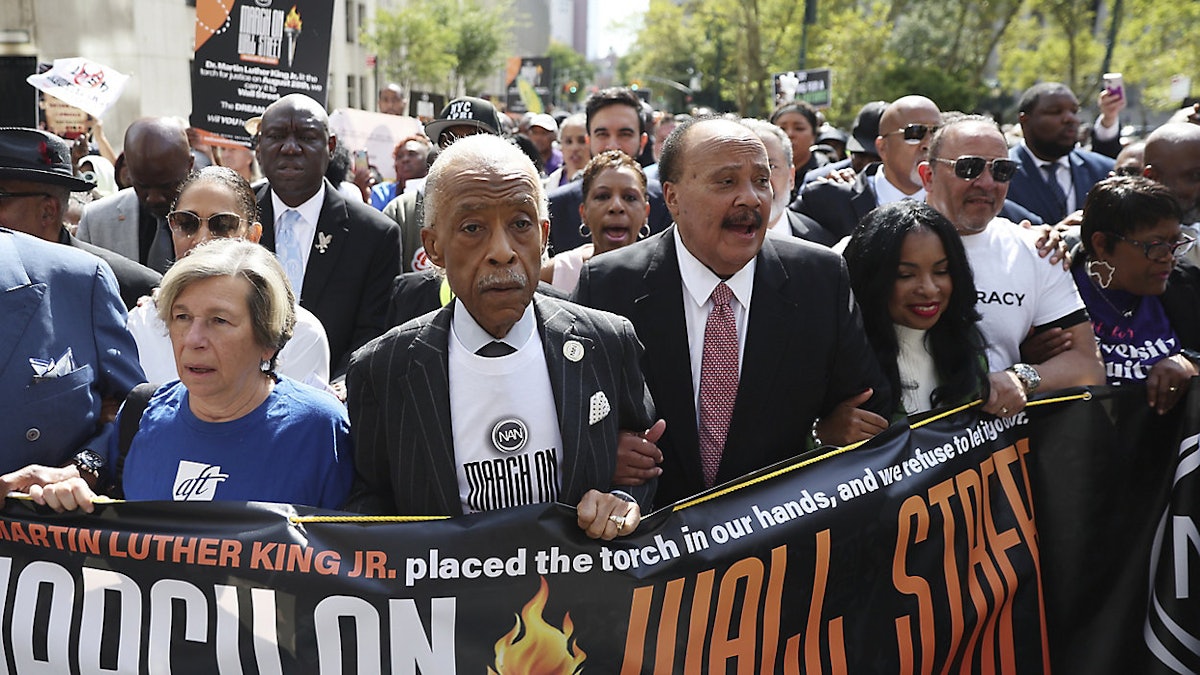
    Thursday’s “March on Wall Street” drew thousands to Manhattan’s Financial District, but among the clergy, labor and community leaders were hundreds of higher education advocates who had traveled from every corner of the nation, transforming the demonstration into an unlikely convergence of campus and community activism.

    The 45-minute march through downtown Manhattan carried special significance, timed to coincide with the anniversary of the Civil Rights-era March on Washington in 1963. But this time, the target wasn’t the nation’s capital—it was corporate America’s headquarters.

    “We come to Wall Street rather than Washington this year to let them know, you can try to turn back the clock, but you can’t turn back time,” Sharpton said as the demonstration began at New York’s popular Foley Square. 

    For the academics who joined the march, Sharpton’s words resonated with particular urgency. Since returning to the White House in January, President Donald J. Trump has successfully moved to end DEI programs within the federal government and warned schools to do the same or risk losing federal money.

    Dr. Harold Williams, an adjunct sociology professor from Philadelphia who had driven three hours with a van full of colleagues, clutched a handmade sign reading “Education is Democracy.”  

    “We’re watching the systematic destruction of everything we’ve worked to build,” said the 63-year-old educator, who was just one when his mother brought him to Washington, D.C. on August 28, 1963  to hear Dr. Martin Luther King, Jr., deliver his famous “I Have a Dream” speech.  “They’re not just cutting programs, they’re cutting the pathways that opened higher education to an entire generation of students.”

    Among the crowd that gathered near the African Burial Ground—the largest known resting place of enslaved and freed Africans in the country—Dr. Michael Eric Dyson’s voice carried the weight of history and the urgency of the present moment.

    The prominent Vanderbilt University professor and public intellectual delivered a rousing address along with a litany of other activists including Marc H. Morial of the National Urban League, Maya Wiley of the Leadership Conference on Civil and Human Rights, and Randi Weingarten of the American Federation of Teachers. 

    “Well, you know, people often ask, what was it like? They look at the grainy black and white photos of Martin Luther King Jr. and Ralph Abernathy and Rosa Parks and Ella Baker and Diane Nash and John Lewis. What was it like to be with them?” Dyson said in an interview with Diverse.  

    “Well, you know right now, these are the times that define us. These times to future generations will be remarkable. What did you do with the fascist presidency, with an authoritarian man, with an autocrat who was attempting to absorb for himself all the power that was not due him? Well, this is what it looks like.”

    Dyson’s words particularly resonated among the young activists in the crowd—students who had grown up during an era of increasing attacks on institutional knowledge and educational access.

    The logistics of moving academics from campuses nationwide told its own story of commitment. Many had used personal funds or organized fundraisers to join what some called an “academic pilgrimage” to stand with Sharpton and the broader civil rights community.  Howard University organized a busload from the nation’s capital.

    Jonah Cohen, 18, a freshman at City College of New York, said that he was energized by the public demonstration of activism.

    “This is our moment,” he said of the student turnout. “We are no longer accepting these attacks without a fight. We are fighting back against those who want to take us back to an uglier America. We see a better country.” 

    State Assembly Member Zohran Mamdani, the Democratic candidate in the upcoming New York City mayoral race, marched alongside some of the professors and students, embodying the coalition between academic and political leadership that advocates say is necessary to resist the rollbacks.

    The National Action Network’s strategy of encouraging consumer boycotts of retailers that have scaled back DEI policies resonated with many academics who said that they understood the connection between corporate and educational equity initiatives.

    “Corporate America wants to walk away from Black communities, so we are marching to them to bring this fight to their doorstep,” Sharpton said.


    Source link

  • ‘We Didn’t Start the Fire’: Is student activism dead?

    ‘We Didn’t Start the Fire’: Is student activism dead?

    Welcome back to the HEPI blog. Our apologies if you have missed your daily dose of higher education policy debate being delivered to your inbox, but we have been busy working on something new. Following our recent HEPI survey, we were thrilled that in addition to readers using HEPI to stay up to date with the latest in higher education policy, over 70% of our readership use HEPI’s research as an evidence and information base. Many colleagues also draw on this to inform strategic planning, develop good practice, or influence governmental and regulatory policy. As such, we have revamped the HEPI website, making it easier for you to find the trusted, evidence-based research we provide. You can now explore our reports, blogs and events by policy area and use the improved search function to find everything you need. We encourage you to visit the new site, and in the spirit of enthusiastic debate, to let us know what you think.

    Today’s blog was authored by Darcie Jones, former Vice President of Education at the University of Plymouth Students’ Union and current HEPI Intern.

    We Didn’t Start the Fire by Billy Joel, a karaoke classic. But most importantly a 40-year list of crises and cultural touch points, many of which still present in 2025. The tale of generational fatigue led me to think about the role students play in inheriting challenges they didn’t ignite but are trying to fight. As a sabbatical officer, I often heard ‘our students aren’t activists or political’, suggesting a view of apathy towards student activism. So is student activism dead, or does it need a new lens?

    Public perception of student activism often falls within a stereotype: paint throwing, glued to the M5, and generally privileged. In some ways that isn’t false, those activists do exist. Iconic movements such as climate strikes and large-scale encampments often dominate the narrative. It takes activists like these to stand-up, utilise their privilege and be radical to create public discourse. However, such dramatic imagery can cultivate scepticism: are students genuinely passionate or merely troublemakers? Maybe it is possible they can be both.

    HEPIs report There was nothing to do but take action’: The encampments protesting for Palestine and the response to them, documented ‘one of the most intensive periods of student protest since the Vietnam War.’ These encampments, born of frustration, helplessness and digital outrage, illustrated a moment when activism was unmistakably alive and visible on campuses. However, what happens to student activism when ‘radical activists’ take a break?

    What if student activism isn’t always headline worthy? What if it thrives quietly in the pages of student newspapers, or in the safe spaces built by student communities? Reframing of student activism recognises that while it can be revolutionary, student activism can also be impactful and behind the scenes.

    From investigative features on sector issues such as tuition fee hikes, to institutional procedural failures, student journalism shines a light where mainstream media may not. Written by (sometimes faceless) students, hard-hitting features highlight the feelings amongst the student community and utilises media presence to create institutional discourse and influence policy – all without having to leave their bedrooms. The importance of student newspapers in amplifying the voice of students on local or global issues can be seen sector wide, with The Tab, originally established at the University of Cambridge, now spanning across 29 UK universities.

    Community-led student spaces are an overlooked driver of cultural change. Student societies and support groups for those from marginalised backgrounds, such as LGBTQ+ societies, offer more than community. They lobby for inclusive institutional policies, host educational events and shape campus cultures from within. These groups offer a safe space for students to form authentic communities without marginalisation, in itself being a form of activism for students from certain cultures. Student groups show that impactful campaigning can be done with accessibility in mind, empowering silenced voices to speak up in ways that suit their needs.

    This is just a small example of the methods in which students portray activism within student communities. Overall, arguing that students ‘are not political’ erases all that students do to challenge political climates. Choosing to attend work over lectures, creating a student-led community larder to counteract student poverty, attending a pride parade – these are all political choices. This perspective broadens the activism spectrum: it is not just about visible spectacle – it is about sustained effort, relationship-building, and structural change in all forms.

    Moreover, it challenges the notion that activism is solely reactive. Instead, activism can be proactive and constructive, laying the groundwork for safer, more inclusive and better-informed environments.

    Therefore, student activism is not dead. It remains alive and evolving. Yes, fiery protests make headlines and are important to enact urgent change. But equally important are the quieter forms of resistance: the written word, shared personal experience, safe and inclusive spaces built one meeting at a time.

    Just as the fire ‘was always burning’, student activism continues – whether lighting bonfires or quietly tending embers in the corners of campus. Let’s not dismiss it when it is not loudly visible; instead, let’s recognise and foster it wherever it thrives.

    Source link

  • Better access to medical school shouldn’t need a deficit model

    Better access to medical school shouldn’t need a deficit model

    Patients benefit from a diverse healthcare workforce. Doctors, particularly those from disadvantaged and minoritised backgrounds, play a crucial role in advocating for what is best for their patients.

    The NHS recognises this, linking workforce diversity with increased patient satisfaction, better care outcomes, reduced staff turnover, and greater productivity.

    A promising start

    Efforts to widen participation in higher education began at the turn of the century following the Dearing report. Over time, access to medical schools gained attention due to concerns about its status as one of the most socially exclusive professions. Medical schools responded in 2014 with the launch of the Selecting for Excellence report and the establishment of the Medical Schools Council (MSC) Selection Alliance, representing admissions teams from every UK medical school and responsible for fair admissions to medical courses.

    With medical school expansion under government review, institutions face increasing pressure to demonstrate meaningful progress in widening participation to secure additional places. Although medicine programmes still lag in representing some demographic groups, they now align more closely with wider higher education efforts.

    However, widening participation policy often follows a deficit model, viewing disadvantaged young people as needing to be “fixed” or “topped up” before joining the profession. Phrases like “raising aspirations” suggest these students lack ambition or motivation. This model shifts responsibility onto individuals, asking them to adapt to a system shaped mainly by the experiences of white, male, middle-class groups.

    Beyond access

    To create real change, organisations must move beyond this model and show that students from diverse backgrounds are not only welcomed but valued for their unique perspectives and strengths. This requires a systems-based approach that rethinks every part of medical education, starting with admissions. In its recent report, Fostering Potential, the MSC reviewed a decade of widening participation in medicine. Medical schools across the UK have increased outreach, introduced gateway year courses, and implemented contextual criteria into admissions.

    Contextual markers recognise structural inequalities affecting educational attainment. Students from low socioeconomic backgrounds often attend under-resourced schools and face personal challenges hindering academic performance. Yet evidence shows that, when given the chance, these students often outperform more advantaged peers at university. Contextual admissions reframe achievements in light of these challenges, offering a fairer assessment of potential.

    Despite progress, access remains unequal. Although acceptance rates for students from the most deprived areas have increased, their chances remain 37 per cent lower than those from the least deprived areas. Research indicates that a two-grade A-level reduction is needed to level the playing field—an approach several schools now adopt. Other policies include fast-tracking interviews, test score uplifts, and alternative scoring for widening participation candidates.

    Not just special cases

    These processes, however, are often opaque and hard to navigate. Many applicants struggle to determine eligibility. With no single definition of disadvantage, medical schools use varied proxy indicators, often poorly explained online. This confusion disproportionately affects the students these policies aim to support; those without university-educated parents, lacking insider knowledge, and attending under-resourced schools.

    A commitment to transparency is vital but must go beyond rhetoric. Transparency means all medical schools clearly outline contextual admissions criteria in one accessible place, provide step-by-step guides to applicants and advisors, and offer examples of how contextual data influences decisions. Medical schools could collaborate to agree on standardised metrics for identifying widening participation candidates. This would simplify eligibility understanding, reduce confusion, and promote fairness.

    Tools like MSC’s entry requirements platform are a good start but must be expanded, standardised, and actively promoted to the communities that need them most. Genuine transparency empowers applicants to make informed choices, selecting schools best suited to their circumstances and maximising success chances. This also eases the burden on schools, advisors, and outreach staff who struggle to interpret inconsistent criteria.

    Ultimately, moving away from the deficit model toward an open, systems-based approach is about more than fairness. It is essential for building a medical workforce that reflects society’s diversity, improving patient care, strengthening the profession, and upholding the NHS’s commitment to equity and excellence.

    Source link

  • Ohio University to cut 11 academic programs to comply with new law

    Ohio University to cut 11 academic programs to comply with new law

    This audio is auto-generated. Please let us know if you have feedback.

    Dive Brief:

    • Ohio University plans to wind down 11 undergraduate programs and merge another 18 to comply with a new state law that sets minimum graduation thresholds. The university said Tuesday it would suspend admission to the programs upon receiving approval from the state higher education department. 
    • Signed in March, Ohio’s sweeping Advance Ohio Higher Education Act gave state colleges just months to determine which programs to cut. The law requires public institutions to eliminate any undergraduate program that issues fewer than five degrees annually over a three-year period.
    • At Ohio University, 36 programs fell below the allowed threshold. Along with the programs it plans to cut and merge, the university said it will request waivers to keep operating another seven.

    Dive Insight:

    With the passage of the new legislation, also known as SB 1, Ohio lawmakers made deep inroads into the academic operations of public colleges, asserting new state controls over decisions historically left to faculty and administrators. 

    The law bans diversity, equity and inclusion training, requires post-tenure review, prohibits full-time faculty from striking and even requires certain questions in student evaluations of professors. 

    SB 1 also created a policy that could wipe out dozens or even hundreds of academic programs if the experience of Ohio’s neighboring state is any gauge. 

    In Indiana, a similar policy with programmatic graduation thresholds — inserted into the most recent state budget bill has already put 75 degree programs on the chopping block. The state’s public colleges also moved to suspend another 101 programs and consolidate 232.

    As in Ohio, Indiana state colleges only had months to review their portfolios for cuts. That created uncertainty for many. 

    “Even tenured faculty are wondering, am I going to have a job in two months?” one faculty governance leader in Indiana told local media, describing “chaos and confusion” on campus. 

    At Ohio University, many programs slated to end have parallel programs that will continue. For example, the university is on track to suspend bachelor’s of arts degrees in chemistry, geological sciences, mathematics and physics, but it will continue offering bachelor’s of science degrees in those topics.

    Students currently enrolled in affected programs will be able to complete their degrees, the university said.

    Meanwhile, the institution is planning curricular changes to merge 18 programs with similar or overlapping degrees, most of them in the visual and performing and liberal arts such as instrumental music and several geography majors. 

    Ohio University requested waivers to keep open seven other programs, even though they fell below the thresholds. The institution said the degrees are unique, have undergone curriculum changes or meet workforce needs, the institution said.

    Earlier this year, the University of Toledo also announced it was suspending admissions to nine programs to comply with SB 1. 

    Some students in Ohio are protesting SB 1’s overall and widespread impacts on campuses in the state. A petition launched by the Ohio Student Association asserts that “students have lost not only programs, centers, and scholarships — but also the sense of community and support that made higher education in Ohio accessible, inclusive, and excellent.”

    The petition urged administrators at state colleges “not to overcomply with SB 1 — to act in the interest of students rather than in fear of the legislature,” adding that “institutional overcompliance furthers a broader political movement that seeks to erase the progress made toward justice in higher education.”

    The group called on campus stakeholders to wear black in protest of the bill and its impacts.

    Source link

  • Advanced manufacturing expansion opens CTE opportunities for rural schools

    Advanced manufacturing expansion opens CTE opportunities for rural schools

    This audio is auto-generated. Please let us know if you have feedback.

    Dive Brief:

    • Through strong industry partnerships and career and technical education, rural schools can equip their students for growing workforce needs in advanced manufacturing.
    • Advanced manufacturing in the U.S. is undergoing a period of rapid expansion, with an anticipated $1 trillion investment in projects, 63% of which is expected to be allocated to facilities near rural communities, according to an analysis from the McKinsey Institute for Economic Mobility.
    • The McKinsey Institute also surveyed nearly 1,500 rural high school students and recent graduates, finding that 8 in 10 would like career-connected learning and apprenticeship opportunities. However, only 5 in 10 reported having access to career-connected learning in high school, and only 3 in 10 had access to apprenticeships.

    Dive Insight:

    The report highlights that as advanced manufacturers expand into rural America, they play a crucial role in fostering strong relationships with local school systems.

    Advanced manufacturing industry experts and companies are seeking workers with foundational, technical and durable skills, the report found. However, there seems to be a short supply of these skill sets across the manufacturing labor pool.

    One cause of this shortage, the report argues, is a lack of strong, established collaborations between the industry and K-12 schools. The industry’s need for well-equipped future workers could also meet the needs of K-12 schools to expand students’ career opportunities.

    Research has found that taking CTE courses can lead to higher graduation rates and greater employment opportunities, which is why industry and rural schools can work together to provide K-12 students with the necessary education and technical skills to enter the incoming workforce, the report noted.

    To ensure that students are learning these high-demand skills, employers and industry associations should provide apprenticeships and other workplace learning opportunities for rural schools, as well as help create industry-relevant curricula, the report explained. A strong collaboration benefits not just schools and students, but companies that are also securing a pipeline of prepared workers.

    The report recommends that school systems work with local governments and organizations to build connections with employers. Through strong partnerships with industry professionals, schools can develop more effective, career-connected and evidence-based models, the report said.

    CTE courses provide students with hands-on, real-world skills for a defined set of careers, and an effective course focuses on skills in demand in the local market. As manufacturing investments grow in rural communities, the report said, schools could offer CTE courses that prepare students with technical and other STEM-based skills necessary in the advanced manufacturing field.

    The report also emphasized that industry partners should have regular interaction with students and touch base with them at regularly scheduled intervals. This ensures students are consistently aware of the different career pathways available to them. These interactions can evolve as students advance through different grades, shifting from informational to more tangible resources like apprenticeships, summer jobs and postsecondary scholarships later in high school.

    Beyond industry partnerships, state legislatures can also offer incentives for CTE programming through policies and funding, the report recommends. States are already providing these types of incentives, with 40 states collectively approving more than 150 policies focused on boosting CTE programming in 2024.

    Source link

  • How can schools launch sustainable drone programs?

    How can schools launch sustainable drone programs?

    This audio is auto-generated. Please let us know if you have feedback.

    Dive Brief:

    • Learning how to use a drone can help students develop hands-on STEM skills such as programming while also fostering interpersonal skills like collaboration and resilience, experts said.
    • However, for these programs to be sustainable at the middle and high school levels, educators must ensure they connect drone usage to real-world scenarios, collaborate with local business and government agencies, and make the curriculum engaging beyond the first year of instruction, educators said.
    • “Drones are used in so many industries now. It’s no longer just trying to build a robot arm, they’re being used in police work, agriculture, space, construction work, etc.,” said Louann Cormier, senior program manager of aerial drone competition at the Robotics Education & Competition Foundation. She encourages educators to simply “take the leap” if they are interested in incorporating drones into their classrooms.

    Dive Insight:

    For a sustainable and effective drone program, educators need to connect with students and demonstrate that this technology can be applied in the real world, said David Thesenga, a middle school science teacher at Dawson School, a private school in Colorado. 

    Cormier noted how learning with drones can open students’ eyes to pathways they hadn’t considered before.

    “There’s so many industries where [students] don’t think of STEM or they don’t think of technology, but now all of a sudden they do, and it just opened up opportunities to them,” said Cormier. “The more that you can connect with them on their own interest levels or something that they find fascinating, that’s your entry point.”

    Drones can be an expensive undertaking, Thesenga said, but schools don’t need to buy top-of-the-line drones. It’s actually about balance, explained Cormier, because cheap drones are not a great option either — they tend to break more easily and have function issues.  

    Cormier encourages districts to start with an entry-level educational drone, because they are safe and don’t require any sort of certification to use. A sustainable drone program also requires a good teacher or coach who’s invested in it, who’s going to stick around for a while and think about how this is done, Thesenga said

    Going beyond the classroom and training students for drone competitions can also make the program more sustainable long-term. Students not only get excited, but it also gives them something to strive for, Cormier said.

    Competitions also help educators give a focus to instruction. For beginning educators who may not know what to cover, the competition aspect includes specific tasks, and the curriculum aligns with what they’ll be judged on. It provides a pathway to start, and from there, educators become more confident and comfortable and can progress into instructing on other areas of the drone industry.

    A sustainable drone program also needs to keep students engaged as they progress through the different school levels, said Jenn DeBarge-Goonan, executive vice president of communications for Rocket Social Impact, which works with companies and nonprofits to develop social impact programs. 

    DeBarge-Goonan said that making sure there’s a new challenge each year as the program evolves ensures that a student in year three is not doing the same thing they did in years one and two.

    There are several ways to fund these programs, Thesenga and Cormier noted. When looking at grants, Thesenga highlighted that they are often not specifically drone-related. However, schools can fund drone programs through general classroom grants or education tech grants.

    Cormier recommends reaching out to local organizations that utilize drones, as they are typically invested in the expansion of drone usage and need people in their labor pipeline.

    Source link

  • 2 dead, 17 injured in Minneapolis school shooting

    2 dead, 17 injured in Minneapolis school shooting

    This audio is auto-generated. Please let us know if you have feedback.

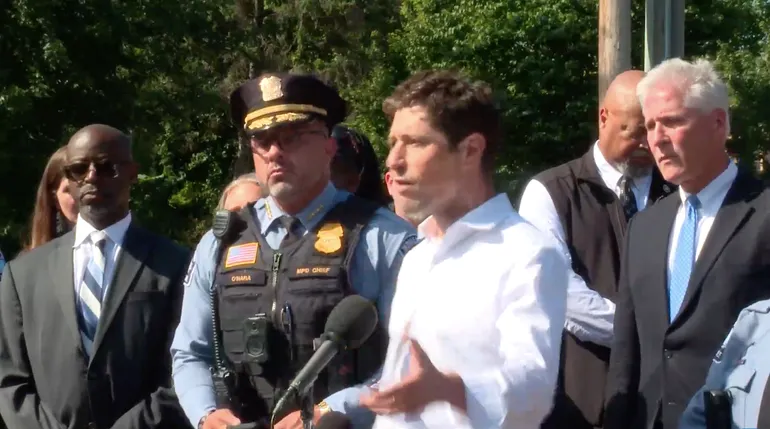
    Two children — ages 8 and 10 — are dead and 17 other people injured at a Minneapolis Catholic school after an active shooter opened fire Wednesday morning. Fourteen of the 17 injured are children, two of whom are currently in critical condition, according to the Minneapolis Police Department.

    The tragedy took place during the first week of classes for Annunciation School, a private pre-K-8 Catholic school with a little over 390 students, according to the National Center for Education Statistics. It occurred while dozens of children were attending religious mass at Annunciation Church, said Minneapolis Police Chief Brian O’Hara during a Wednesday press briefing.

    During the event, the shooter barricaded some doors to the church from the outside to keep students from leaving as he shot at children and churchgoers from outside the building, through the windows. O’Hara said a smoke bomb was found at the scene.

    That kind of “frontal assault” style attack at a school is “relatively rare” according to David Riedman, a school shooting expert who manages the K-12 School Shooting Database. A similar style of attack was seen at the Virginia Tech shooting in 2007, he said.

    “Most school shootings are insider attacks (current students) who commit a surprise attack when they are already inside the building,” said Riedman in a Wednesday analysis sent via email.

    It is unknown whether the shooter — who was in his early 20s and appears to have died by suicide during the attack — was a former employee or student of the school, said O’Hara.

    “Don’t just say this is about thoughts and prayers right now. These kids were literally praying.” said Minneapolis Mayor Jacob Frey during the Wednesday press event. “They should be able to go to school or church in peace without the fear or risk of violence, and their parents should have the same kind of assurance.”

    The Annunciation Church shooting is the 146th at a K-12 school so far in 2025, according to Riedman’s count.

    “These school shootings happen in all sizes of communities and in rural, suburban, and urban areas,” he said.

    School shootings reached all-time highs three years in a row between the 2021-22 to 2023-24 school years, according to Riedman’s K-12 School Shooting Database, which tracks anytime a gun is brandished with intent or when a bullet hits school property. The 2024-25 school year then saw a 22.5% decrease in school shootings compared to the prior school year.

    There were 254 total school shooting incidents in 2024-25, compared to the nearly 330 school shooting incidents in each of the school years between 2021-22 and 2023-24.

    Source link

  • Debating the Terms of Prejudice Is a Distraction

    Debating the Terms of Prejudice Is a Distraction

    To the Editor:

    John Wilson is right (“No One is Gaslighting You,” Aug. 20, 2025) that the term “gaslight” can be abused and manipulated in ways that are tendentious, ad hominem and not empirically sound, as can many words and phrases. 

    However, that’s not an argument against its reality as a social phenomenon and its pernicious impacts. One of the common features of prejudice and discrimination is their denial. That doesn’t make all reported allegations of prejudice and discrimination accurate and true, but it is a frequent characteristic of expressions of prejudice and discrimination to deny their existence. Whether or not such forms of discrimination and prejudice are institutional or systemic may be legitimately contested. But, even if they do not meet the definitions of those terms, when prejudice and discrimination are repeatedly and extensively encountered and consequently undermine equality, freedom and access to justice, it is inimical to the respect and fulfillment of civil rights and human rights to focus on debating whether terms such as “gaslighting” or “institutional discrimination” are appropriate to describe real and widespread experiences of exclusion and abuse.

    Rather, energy should be invested in correcting those alleged rights violations and reducing their prevalence and intensity, affirming human dignity, equity and equality, and respect for diversity. Like many forms of discrimination and racism, antisemitism is widespread in the United States. Sociological research shows that approximately one in four Americans holds substantially prejudiced anti-Jewish attitudes, including justification for discrimination and violence against Jewish Americans. Universities are not immune to these pejorative and harmful societal prejudices and beliefs; they reflect them. Elite institutions, including Harvard, are not ivory towers of moral virtue. Gaslighting is as real at universities as it is elsewhere and minorities—including Jews—experience it frequently. I have experienced it at my own university repeatedly and pervasively from different sectors of the university, including its leadership. Our new chancellor is trying to improve our campus climate and culture to ensure greater inclusion and respect for Jewish students, staff and faculty, but this will require substantial will and leadership, investment of resources, and the support of our university community as a whole.

    The dynamics of abusive behavior and behavior that enables abuse—including in contexts of domestic abuse but not exclusive to it—–are such that bigotry often manifests as a denial of empathy, care, trust and responsiveness to individuals reporting and experiencing its harms, and concurrent attacks on their character, honesty and rights and hostile claims that their reported experiences are fabricated, exaggerated or made with malicious intent.

    That should never be our response to harassment and discrimination that violate civil rights laws and undermine the ethos of our universities and their capacity to provide equal access to education without discrimination for everyone.

    Noam Schimmel is a lecturer in global studies at the University of California, Berkeley.

    Source link