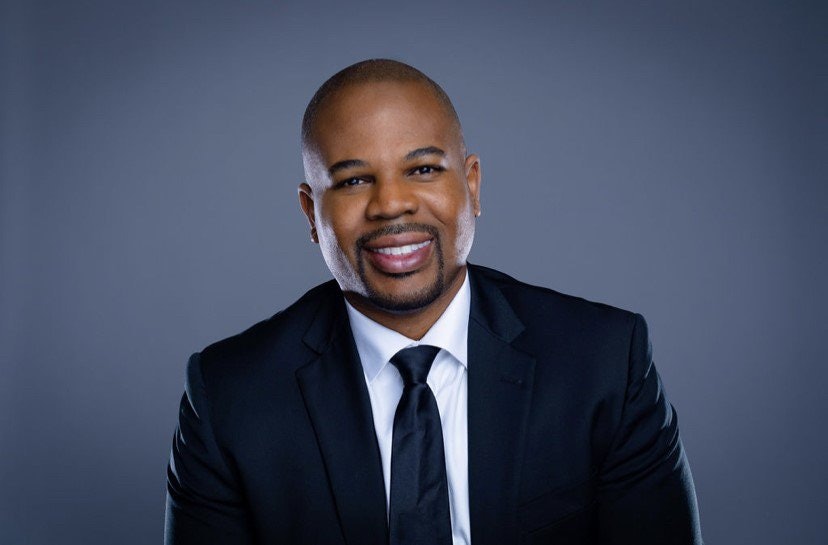
Dr. Emmanuel LalandeEmmanuel Lalande has been named Senior Vice President of Enrollment Strategy and Student Success at Columbia College Chicago. Lalande has over two decades of experience in enrollment and student development. He is joining Columbia from Voorhees University.
Lalande earned a bachelor’s degree in political science and a master’s degree in educational leadership at Delaware State University before going on to complete an EdD in organizational leadership at Nova Southeastern University.
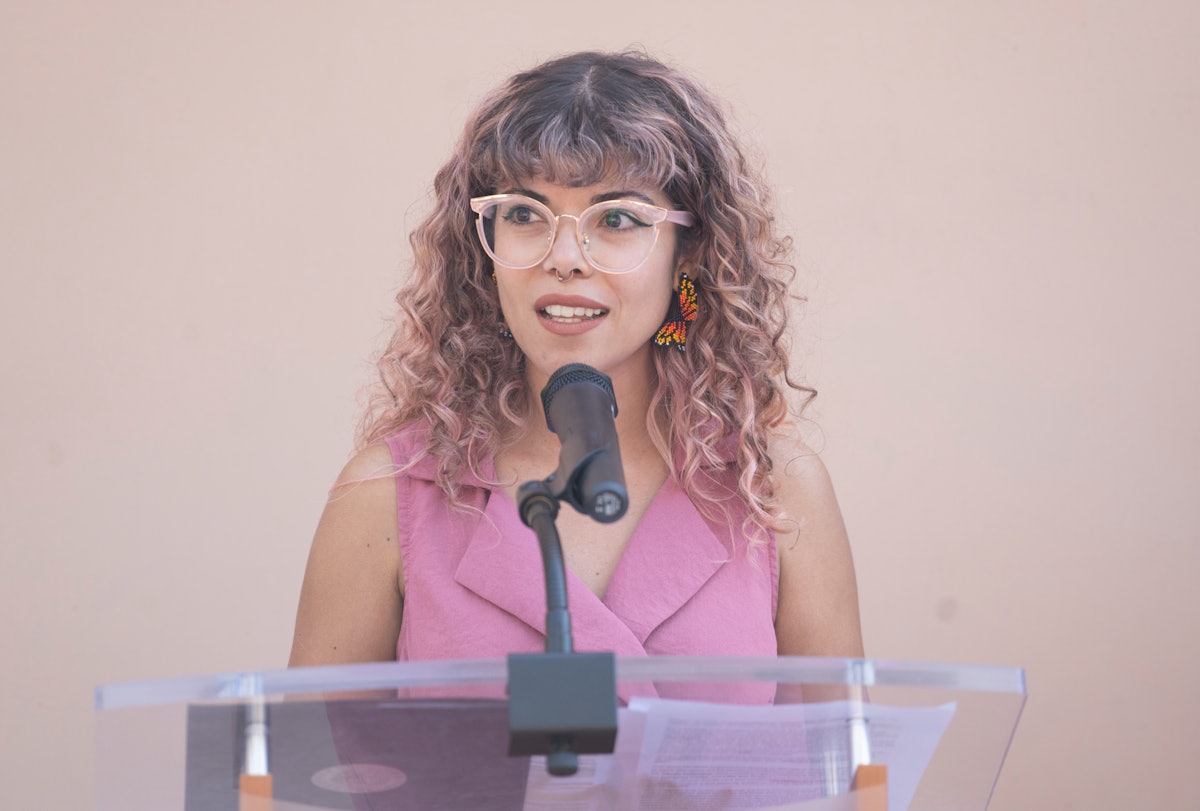
Dr. Marcela Rodriguez-Campo Through the work that I did as a director of a diversity office, I was always finding ways to make magic out of the least given how poorly our work was funded. Nonetheless, we did everything we could to pay folks for their time and labor. After finishing the planning of one of the largest state-wide events my team had ever hosted, a local artist we had collaborated with previously offered to return to our campus to offer my team a pour-painting workshop, for free. I was left stunned.
That’s too generous, right? Are you sure? Maybe we can dig up some funds or find a sponsorship?
No. I want to give this to your team as a thank you for the work that you all do. And for being a safe person folks can go to.
My eyes immediately welled up with tears: We were safe for her and now she wanted to keep our spirits safe in return. This is community care.
When people from historically marginalized communities enter the Ivory Tower as students, staff, or faculty, institutions actively work to estrange us from our communities. They teach us that our culture, our histories, our languages don’t matter, by rarely including us in the curriculum. They show us that our voices and our stories aren’t allowed to take up space there, when they ban our books, dismiss our questions, deny our realities, and reject our ways of knowing. They mold us into “professionals”, train us in Eurocentric research and teaching practices, and force us to subscribe to their ways of being in order to succeed and survive. They convince us that success will be measured by their standards, rather than those set forth by our communities.
Diversity, equity, & inclusion (DEI) offices are fundamentally about enacting an ethic of care that is culturally and politically grounded in the communities our students come from.
The Trump administration has deemed that a danger and threat to society. They are attempting to make us forget ourselves and pushing an agenda of historical amnesia. They are trying to make us forget that there is a whole world out there beyond the Ivory Walls that needs us to exist. Heartbreakingly enough, it is working. Once bold and visionary leaders are capitulating to authoritarianism and white supremacist ideology. As we see the far-reaching resistance to this now trending DEI-boogeyman, it is more important than ever that we remember our lineage, that we return to our communities, that we return to the river that offered us our first sips of liberation. So that we may continue to — as Toni Morrison taught us — move in the direction of freedom.
As we face persistent threats and attacks on our work, allow me to offer the DEI professionals and our student leaders a reminder: your community needs you and it needs you free, too. Let us learn from the lineage of our work and remember as our own continuous act of rebellion the river from which DEI pulls from.
Cultural centers and diversity offices did not come about placidly or because of the goodwill of institutions. They were fought for, demanded. They were created not because of the polite and demure requests of Students and Faculty of Color, but as a result of courageous boycotts, sit-ins, building occupations, protests, mobilization, and organizing of marginalized communities who recognized the second-class support they were receiving and who were inspired by the activism of the Civil Rights Movement of the 1960’s. Chicano students in East LA walked out of schools in droves to denounce the substandard education they were being given. They stepped out to demand better teachers, better learning conditions, more resources, and ethnic studies. In that same year a month later, Black students at Columbia University occupied Hamilton Hall to protest segregation and racism in higher education. Students collectively led a revolution through each act of resistance and refused to accept an education system that dehumanized and disrespected their community.
DEI is a byproduct of student activism. As Black cultural centers began opening, cultural centers for other community groups were created in the same vein, to offer safe spaces and resources to students from the margins. Cultural centers created spaces for students to develop a collective consciousness where they could find themselves and each other in a sea of white curriculum, culture, policies, and practices. They have historically supported the recruitment, retention, and graduation of marginalized student groups. Student and scholar activists’ radical visions of transforming higher education to equitably serve and empower students from the margins was stunted by institutional resistance that was coded as budgets, enrollment, and value add. Some of the same code words we hear today.
So, DEI was created as the compromise, a palatable option. One that checked some of the boxes, while not transforming the institution wholly. DEI was never intended to be the radical resolution student activists fought for.
The aggressive attack on DEI is the consequence of our ability to become effective, to reach a critical mass of folks nationally to question the status quo and the system enough to make the people in power uncomfortable. Whether DEI is banned for one presidency or two or forever, it was never meant to save us. We have to do that. Our communities have always done that. DEI was never going to be enough and at many institutions, it was never intended to be effective. We need to reclaim our agency and power and voices from the institutions who never loved us back anyway and recognize that there is so much more we could build with or without them in and with community. As this current moment and the highly organized right works to scare, intimidate, and paralyze us, the most critical thing we could be doing in this very moment is building community from within and especially from outside of our institutions.
Beloved, we are the global majority. And this current political moment is working hard and fast because it is the last opportunity to reset the scales. They are scared of the collective power and freedom we can tap into in our communities because our communities are our source. The very care that we offer to our students we first learned from our communities. The care we owe is to our communities. The reason we do this work is for our communities. The care we are searching for is in our communities. The resistance has begun and will continue to exist within our communities. Your work will likely need to evolve, as this work always has, so go ahead and evolve.
In Emergent Strategy by adrienne maree brown she shares this powerful wisdom on interdependence and community by Naima Penniman:
“When Hurricane Katrina slammed into the Gulf Coast, almost everything lost its footing. Houses were detached from their foundations, trees and shrubbery were uprooted, signposts and vehicles floated down the rivers that became of the streets. But amidst the whipping winds and surging water, the oak tree held its ground. How? Instead of digging its roots deep and solitary into the earth, the oak tree grows its roots wide and interlocks with other oak trees in the surrounding area. And you can’t bring down a hundred oak trees bound beneath the soil! How do we survive the unnatural disasters of climate change, environmental injustice, over-policing, mass-imprisonment, militarization, economic inequality, corporate globalization, and displacement? We must connect in the underground, my people! In this way, we shall survive” (p. 84–85).
We have left ourselves vulnerable because we have dug our roots deep in academia and have not rooted ourselves like the oak tree across our community. We must become an oak tree, rooting ourselves expansively, interdependently within community so that when they come for us– and they will– we will continue to stand. Whatever work we are able to do between now and the next attack on our work, let us reach towards the oak trees who seeded us and root ourselves to one another as we gear up for the struggle of our lifetime. It is the imperative of our lifetime to remember who we are and return to community.
When my institution quickly disposed of the legacy of the DEI professionals and students, community saved me. When they demonized me, targeted me, and worked to snuff out my fire, community reminded me of who I am. When the institution nearly convinced me that someone like me should not exist, community reminded me of the entire world that breathes and lives outside the ivory walls that needs me. Community rekindled my spirit and my hope, that even in the direst set of circumstances, my people make magic.
_____________________
Dr. Marcela Rodriguez-Campo is an educator and scholar-practitioner. She is a former DEI Director from a public four year institution. She is the founder of Co-Libre Education.
We’re marking World Water Week, a gathering in Sweden intended to solve water-related challenges such as droughts, floods and food security. Let’s invest in it.
Nearly 60% of student affairs professionals witnessed racism on their campuses in the past year, with one-third experiencing it directly, according to a new national study that exposes significant racial disparities in workplace conditions across higher education.
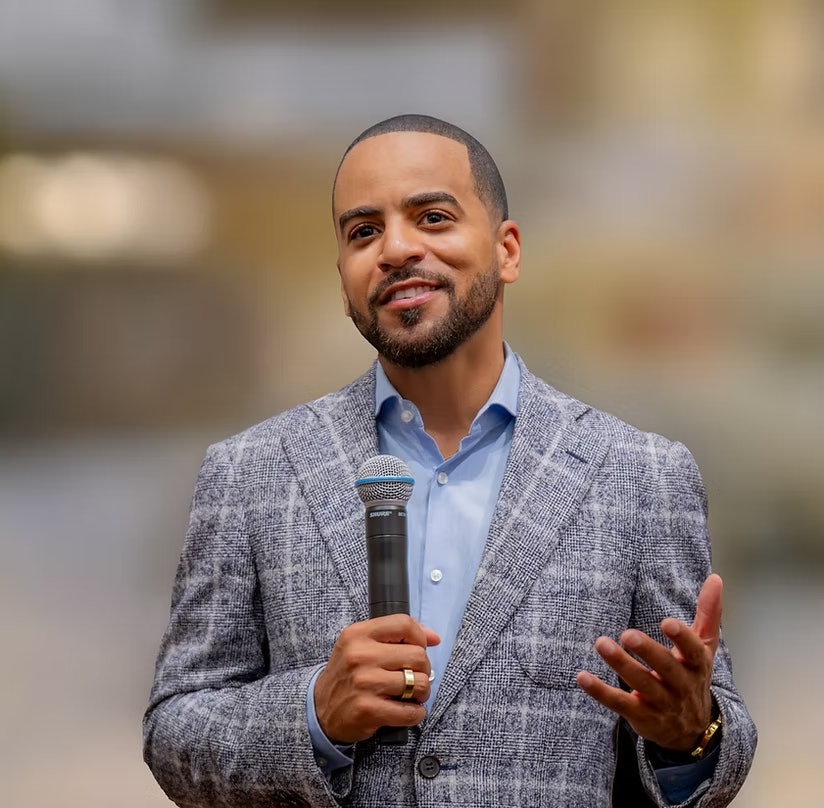
Dr. Royel M. JohnsonThe report, released by the USC Race and Equity Center, analyzed responses from 1,992 student affairs professionals at 73 colleges and universities who participated in the National Assessment of Collegiate Campus Climates Staff Survey between 2021-2023.
“When we look at over 2000 student affairs professionals across 73 institutions, we often see that student affairs professionals are really the backbone of our campuses, who are the first line of defense in supporting students and responsible for creating the conditions of belonging,” said Dr. Royal Johnson, a professor in the Rossier School of Education at the University of Southern California and director of the National Assessment of Collegiate Campus Climates in the USC Race and Equity Center. “But the same sort of realities that students are facing of race and discrimination, student affairs professionals are also being plagued with those same challenges.”
Black student affairs professionals reported the highest rates of direct racist experiences at 61%, followed by Asian (46%) and multiracial staff (46%). In contrast, only 17% of white professionals reported experiencing racism personally.
“Student affairs professionals are expected to champion equity and care for students, yet they often labor in environments that fall short of those same principles,” the researchers wrote.
In an interview with Diverse, Johnson noted that upwards of 60% of those surveyed reported experiencing racism and the lingering consequences, “whether it be the emotional toll and frustration associated with it, the distrust that emanates from it, their sense of mattering,” he added.
The perpetrators of racism came primarily from within institutions themselves. White staff members were the most common source of racist behavior (27% of respondents reported experiencing racism from white colleagues), followed by white students (22%) and white faculty (21%). Additionally, 22% experienced racism from external contacts such as vendors and community partners.
The emotional toll proved significant, with 72% of respondents reporting feelings of frustration and 50% experiencing anger as a result of racist incidents. More than a quarter (27%) said the experiences led to declines in mental health and emotional well-being.
Confidence in institutional commitment to diversity, equity and inclusion varied sharply by race. While half of white staff expressed strong confidence in their institution’s DEI commitment, only 30% of Black staff and 35% of Asian staff shared that view.
The workplace climate issues extended beyond racist incidents to broader patterns of exclusion and inequality. Less than half of all respondents felt they mattered at their institution, with Asian (33%) and Black (38%) professionals reporting the lowest rates of feeling valued.
Staff of color also reported significant barriers to advancement. Among Black professionals, 34% disagreed that they received equal opportunities for advancement compared to colleagues, while 32% of Hispanic/Latinx staff reported similar concerns. One in ten Black professionals said their perspectives were not valued at all in workplace decision-making processes.
“We know that staff of color have long struggled with equitable professional mobility kind of opportunities, or feel relegated to lower level, lower status kinds of roles,” Johnson explained, adding that the study represents “one of the more larger scale analysis that’s national in scope, that’s offering behind the scenes if you will, of the kind of racial realities that folks are experiencing.”
The study revealed gaps in institutional support systems as well. While 70% of staff of color and 81% of white staff learned about race through self-directed efforts, only about half received formal professional development from their institutions on racial topics.
During the survey period, which coincided with national discussions about anti-Asian hate crimes and police brutality against Black Americans, less than half of institutions addressed these issues. Only 42% of respondents said their leaders addressed anti-Asian hate crimes, while 50% said leaders addressed police brutality and racially motivated violence against Black people.
The findings come as student affairs faces broader retention challenges, with 39% of staff indicating they are likely to seek other employment within the next year, according to separate research by the College and University Professional Association for Human Resources.
The USC researchers offered seven recommendations for institutional action, including strengthening reporting mechanisms, embedding equity goals in staff evaluations, regularly assessing campus climate with disaggregated data, and ensuring transparent advancement pathways.
“Addressing racism in the workplace is not about individual resilience—it is about institutional responsibility,” the researchers concluded. “Without bold, sustained, and collective action, campuses risk losing the very professionals who are central to advancing their diversity and student success missions.”
The study’s sample included professionals from 28 two-year and 45 four-year institutions. The demographic breakdown was 54% white, 18% Hispanic/Latinx, 12% Black, 5% Asian, and 7% biracial or multiracial staff members.
The first few weeks of school are more than a fresh start–they’re a powerful opportunity to lay the foundation for the relationships, habits, and learning that will define the rest of the year. During this time, students begin to decide whether they feel safe, valued, and connected in your classroom.
In my work helping hundreds of districts and schools implement character development and future-ready skills programs, I’ve seen how intentionally fostering belonging from day one sets students–and educators–up for success. Patterns from schools that do this well have emerged, and these practices are worth replicating.
Here are three proven steps to build belonging right from the start.
1. Break the ice with purpose
Icebreakers might sound like old news, but the reality is that they work. Research shows these activities can significantly increase engagement and participation while fostering a greater sense of community. Students often describe improved classroom atmosphere, more willingness to speak up, and deeper peer connections after just a few sessions.
Some educators may worry that playful activities detract from a serious academic tone. In practice, they do the opposite. By helping students break down communication barriers, icebreakers pave the way for risk-taking, collaboration, and honest reflection–skills essential for deep learning.
Quick-think challenges: Build energy and self-awareness by rewarding quick and accurate responses.
Collaborative missions: Engage students working toward a shared goal that demands communication and teamwork.
Listen + act games: Help students develop adaptability through lighthearted games that involve following changing instructions in real time.
These activities are more than “fun warm-ups.” They set a tone that learning here will be active, cooperative, and inclusive.
2. Strengthen executive functioning for individual and collective success
When we talk about belonging, executive functioning skills–like planning, prioritizing, and self-monitoring–may not be the first thing we think of. Yet they’re deeply connected. Students who can organize their work, set goals, and regulate their emotions are better prepared to contribute positively to the class community.
Research backs this up. In a study of sixth graders, explicit instruction in executive functioning improved academics, social competence, and self-regulation. For educators, building these skills benefits both the individual and the group.
Here are a few ways to embed executive functioning into the early weeks:
Task prioritization exercise: Help students identify and rank their tasks, building awareness of time and focus.
Strengths + goals mapping: Guide students to recognize their strengths and set values-aligned goals, fostering agency.
Mindful check-ins: Support holistic well-being by teaching students to name their emotions and practice stress-relief strategies.
One especially powerful approach is co-creating class norms. When students help define what a supportive, productive classroom looks like, they feel ownership over the space. They’re more invested in maintaining it, more likely to hold each other accountable, and better able to self-regulate toward the group’s shared vision.
3. Go beyond the first week to build deeper connections
Icebreakers are a great start, but true belonging comes from sustained, meaningful connection. It’s tempting to think that once names are learned and routines are set, the work is done–but the deeper benefits come from keeping this focus alive alongside academics.
The payoff is significant. School connectedness has been shown to reduce violence, protect against risky behaviors, and support long-term health and success. In other words, connection is not a “nice to have”–it’s a protective factor with lasting impact.
Here are some deeper connection strategies:
Shared values agreement: Similar to creating class norms, identify the behaviors that promote safety, kindness, and understanding.
Story swap: Have students share an experience or interest with a partner, then introduce each other to the class.
Promote empathy in action: Teach students to articulate needs, seek clarification, and advocate for themselves and others.
These activities help students see one another as whole people, capable of compassion and understanding across differences. That human connection creates an environment where everyone can learn more effectively.
Take it campus-wide
These strategies aren’t limited to students. Adults on campus benefit from them, too. Professional development can start with icebreakers adapted for adults. Department or PLC meetings can incorporate goal-setting and reflective check-ins. Activities that build empathy and connection among staff help create a healthy, supportive adult culture that models the belonging we want students to experience.
When teachers feel connected and supported, they are more able to foster the same in their classrooms. That ripple effect–staff to students, students to peers–creates a stronger, more resilient school community.
Belonging isn’t a single event; it’s a practice. Start the year with purpose, keep connection alive alongside academic goals, and watch how it transforms your classroom and your campus culture. In doing so, you’ll give students more than a positive school year. You’ll give them tools and relationships they can carry for life.
Brandy Arnold, Wayfinder
Brandy Arnold is Chief Customer Officer at Wayfinder, where she supports schools nationwide in implementing character development and future-ready skills programs that help students thrive and lead purposeful lives.
Latest posts by eSchool Media Contributors (see all)
This audio is auto-generated. Please let us know if you have feedback.
Dive Brief:
Twenty four states and the District of Columbia are seeking to throw out a lawsuit challenging this summer’s delay of K-12 federal grant funding. A joint motion to dismiss was filed Monday by the coalition of states, led by California, and the Trump administration, with both parties agreeing that the balance of the remaining funds be released no later than Oct. 3.
The expected July 1 release of more than $6 billion in fundingwas delayed for several weeks due to a “programmatic review” by the White House’s Office of Management and Budget. OMB said an initial review found that “many of these grant programs have been grossly misused to subsidize a radical leftwing agenda.”
The funding delays impacted after-school programs, English learner services, academic supports, migrant student assistance, adult education and professional development. The inaction caused significant financial disruptions just as schools were finalizing staffing and programming for the upcoming school year, according to educators, families, lawmakers and education-related organizations.
Dive Insight:
The states’ lawsuit, State of California, et al. v. Linda McMahon, et al., was filed July 14 and said the “abrupt freeze is wreaking similar havoc on key teacher training programs as well as programs that make school more accessible to children with special learning needs, such as English language learners.”
President Donald Trump, U.S. Education Secretary Linda McMahon and OMB Director Russell Vought are named as defendants in the lawsuit, as are OMB and the U.S. Department of Education.
In a statement Monday, California Attorney General Rob Bonta said the assurance by the federal government that it will release the remaining funds resolved the states’ lawsuit.
“The Trump Administration upended school programs across the country when it recklessly withheld vital education funding just weeks before the school year was set to begin,” Bonta said. “Our kids deserve so much better than what this anti-education Administration has to offer, and we will continue to fight to protect them from this President’s relentless attacks.”
The Trump administration has said it wants to close the Education Department and give states more decision-making authority over federal K-12 spending.
The states’ lawsuit said that the funding freeze had violated federal funding statutes and regulations. In addition to the states’ lawsuit, a coalition of 14 school districts, parents, teachers unions and nonprofit organizations also sued the Education Department and OMB for withholding the K-12 federal funds. Both parties in that lawsuit — Anchorage School District, et al. v. U.S. Department of Education, et al. — also filed a joint motion to dismiss that lawsuit on Monday.
That motion said the second tranche of federal funding due to states should be available on or about Oct. 1.
This audio is auto-generated. Please let us know if you have feedback.
Dive Brief:
Albright Collegeis set to borrow $15 million from its $65 million endowment after receiving approval from its board of trustees.
In a Monday statement, the private Pennsylvania institution touted the board’s sign-off on the loan as a show of “confidence in Albright’s direction” and said it plans to use the capital to “strengthen the College, enhance enrollment, and secure Albright’s future.”
Albright projects a $10 million operating surplus for the 2025-26 fiscal yearafter recent years of expanding deficits and concerns about cash levels.
Dive Insight:
Borrowing from an endowment is often a red flag that a college is burning through its last available resources. In Albright’s case, the college says it is using the money to solidify a long-term turnaround.
Not long ago, the college was issuing signs of distress. When it requested legal permission to tap its endowment for capital, Albright noted that its net assets took a $46 million hit between 2022 and 2024. That pushed the college to take “significant measures to lower its deficit,” including cutting 53 employee positions, according to a Spotlight PA report.
In fiscal 2023, Albright reported a $20.3 million total deficit, well more than double the prior year’s deficit. Its deficit rose even higher, to $23.1 million in fiscal 2024.
Those fiscal woes followed years of enrollment declines. Between 2018 and 2023, fall headcount shrunk by nearly 15%, according to federal data.
For 2025, the college has 1,150 students, an increase of about 50 students compared to last year, while first-year and transfer enrollment increased 21.5% to 469 students, according to an Albright spokesperson.
As it sought capital to fund a turnaround, the college couldn’t find a bank loan with manageable interest rates. And so it turned to its endowment.
The $15 million loan will be drawn down as needed and “comes with a clear repayment plan that includes defined terms, scheduled payments, and quarterly reporting for full accountability and transparency,” Albright said. Per the authorization terms, the repayment period extends 20 years and the loan will carry a minimum of 3% interest.
It’s also being combined with major new gifts as well as $4 million in grant funding from the state Redevelopment Capital Assistance Program, according to the release.
With the new funding, Albright is investing in capital projects and deferred maintenance.The “centerpiece” of those improvements, it said, is an expansion and renovation of the college’scentral library. The building, which is over 60 years old, will get a student support and disability center, a writing and tutoring center, expanded cultural and technological resources, new conference space and a cafe.
With the investments, budget stabilization and recent enrollment growth, Albright sounded a triumphant note in announcing the loan, describing a “remarkable financial turnaround” and gearing up for growth ahead.
Many financial aid advisers are worried that the Trump administration’s latest effort to bolster identity verification in the student aid system could have unintended consequences. Instead of simply catching fraudulent grant applicants and borrowers, some fear that the verification process could also prevent real, eligible students from accessing public benefits.
Education Department officials, however, assure aid advisers that one of their top priorities is to distribute aid smoothly to the students who have a right to it, even as they protect the integrity of the taxpayer-funded programs.
In an electronic announcement published Aug. 12, Federal Student Aid officials said they would be checking the identities of an additional 300,000 aid applicants, on top of the 125,000 students already flagged in June. Some college advisers said they were alarmed by the sheer scale of the requests—especially given what they describe as a very tight timeline.
While aid officers generally support the concept of catching identity thieves, they fear that requiring students to complete the verification process so quickly could delay or even block aid access for some legitimate students, putting them in a financial hole. FSA says the program will eventually be automated, limited to first-time students and managed by agency officials. But at the moment, it’s a manual process that can affect students midway through their program; financial aid officers say it is becoming increasingly complicated and burdensome.
“Schools have been asking for help on how to find these people and prevent fraudulent identities from obtaining Title IV aid, so we’re very supportive of the Department of Ed’s attempts to assume responsibility,” said Karen McCarthy, vice president of public policy and federal relations at the National Association of Student Financial Aid Administrators. “Unfortunately, the timing and how long it took ED to get this off the ground means that it’s August … We are entering, if not already in, the season of really large-scale disbursement. If verification is outstanding, schools may have to hold disbursements for those students.”
The largest unknown seems to be what the consequences of an incomplete or overdue identity verification will be.
The majority of students in the latest wave of verification requests are returning to college and need to verify their identity for the 2024–25 academic year as well as secure their awards for 2025–26. But some were flagged solely for last academic year and in most instances have already graduated or stopped out, making it harder to track them down and complete the process.
Verification results for 2025–26 can be submitted up to 60 days after the data portal opens Aug. 31. At the same time, according to a Federal Register notice, verifications and any other changes to aid applications for 2024–25 must be completed by Sept. 13, making for a busy two weeks for students and aid officers.
Experts have raised a number of questions about whether missing this tight deadline for 2024 could have repercussions. Some fear it could block students from completing future identity verifications or receiving upcoming disbursements; others worry that aid already disbursed in 2024–25 will need to be retracted. Either way, they say, it could have a crippling effect on low-income students.
“There’s going to be a variety of impact,” one financial aid adviser said. “The monetary impact could be anything from a few hundred dollars to 10-, 15- or 20,000.”
However, the Office of Federal Student Aid told Inside Higher Ed that missing that deadline shouldn’t be a problem—except in rare situations.
Verifications for 2024 don’t have to be reported through the portal the same way upcoming 2025 ones do, one agency official said on background. Rather, aid officers just need to verify the student’s identity and determine internally whether a student’s 2024 aid should be awarded; therefore, “there’s no deadline that people are going to hit and fall afoul of,” he added.
And in the “rare” scenario where an institution discovers inaccuracies on a 2024 FAFSA form, the department said, colleges can reach out to FSA to ensure a student’s eligibility is not impacted.
‘We Are Not Blocking Students’
“If anyone has any examples of that Sept. 13 deadline actually being a blocker for students, we can move the deadline back, because we are here to make sure we are not blocking students,” the FSA adviser said. “There is no reason” a 2024 verification delay should affect a student’s ability to complete the 2025 process and have their award disbursed.
Department officials also noted that they have streamlined the process to reduce the administrative burden, cutting steps such as making students provide a statement of purpose or notarizing the verification.
And of the 300,000 aid applicants flagged in the most recent set of verification requests, the external vendor that helped identify them says that at least 50,000 are examples of fraud. The vendor is “very confident” that the other 250,000 are as well, the FSA official said, but the agency is playing it safe and having colleges check each case for good measure before stripping those recipients of aid.
Ellen Keast, the department’s deputy press secretary, said it’s all part of the agency’s “student- and taxpayer-first mentality.”
“We are committed to ensuring that every single dollar is spent on eligible students, not fraudsters,” she said. “This is not about putting a burden on postsecondary institutions; it’s about warning them, before they disburse both taxpayer money and their own, that the ‘student’ in front of them is most likely not a real person.”
But representatives from NASFAA and college financial aid officers are still not clear on how the process will play out.
Caleb Williams, director of enrollment management at Northern Arizona University, said that in addition to the typical verifications that occurred before the Trump administration’s new campaign was announced, selection rates for 2024–25 verification at his institution rose by 54 percent in June and another 13 percent in August. As he understands it, he added, a student “flagged for Identity verification cannot receive aid in any year until the process is completed.”
Meanwhile, Charles Mayfield, the director of financial assistance at Northwest Missouri State University, believes that if an institution misses the September deadline for 2024 verifications, it will not be able to reinstate any of last year’s aid. But it would still be able to complete the 2025 verification and process that year’s aid.
Mayfield hopes that the department will put out clarified guidance to relieve aid advisers’ confusion and explain exactly what the September deadline means, how it will be enforced and what the consequences will be for students. But like the staff at NASFAA, he said his greatest frustration is not the general need for clarification but its timing at the end of an academic year.
“These students have received financial aid for the whole academic year, and now it’s all going to be taken away, and they’re at risk of not being able to enroll for the next academic year,” he said. “In the industry, we all know that students who stop out are much less likely to finish their degree.”
It would be one thing if these concerns and challenges were specific to one college, Mayfair said, but when there are 15 or 20 colleges expressing the same confusion on a Listserv on the same day, the department should be more responsive.
“It feels like when something doesn’t go right, we have to prove to the FSA that it didn’t work the way it was supposed to,” he said. “And until we can outright prove that—using data that’s on their system, that they should already have access to—they won’t acknowledge it.”
McCarthy from NASFAA said that what the department told Inside Higher Ed about 2024 and 2025 verification being handled separately“sounds promising,” but as of Aug. 22 she hadn’t received the same notification from FSA.
Other smaller concerns, such as whether the system for flagging fraud is accurate and if the new portal is functional, also have yet to be addressed, she added.
“It’s an awful lot of work being pushed onto schools,” she explained. “So we want to make sure that it’s useful, beneficial work and that these are actual, really concerning applications, not sloppy work on the Department of Ed which then leads to delays for students.”
Anthony Gallonio has spent most of his career working in higher education admissions and financial aid, watching young people select, apply to and enroll in colleges. But when his daughter Grace received a cancer diagnosis 14 years ago, when she was a year old, he realized there was an underserved group of teens who needed support in college exploration: cancer patients.
“I remember looking at these kids coming in [to the hospital] thinking, ‘How are they doing it?’” Gallonio said. “Their lives are still going on, high school is taking place, college is still in the future. We know one missed application or one missed form or one missed deadline could mean the difference between getting into a school or not or getting tens of thousands of dollars in scholarships or not.”
In 2011, Gallonio established the National GRACE Foundation, a nonprofit that offers free information and advice on higher education for families of young people who survived childhood cancer. The group is supported by volunteers across the country who work in higher ed, illuminating the hidden curriculum to encourage student success.
The background: GRACE, named after Gallonio’s daughter and short for Growing, Recovering and Achieving a College Education, is designed to break down barriers to enrollment for childhood cancer survivors and support parents and caregivers navigating college applications and beyond.
“The whole goal has been to take the stress out of the college admissions and financial aid process for families who have a lot of stress going on and try to help them avoid the mistakes that I have seen over the years,” Gallonio said.
A 2019 study of 16,700 childhood cancer survivors found that about half graduated from college; those reporting chronic conditions were even less likely to complete a degree by age 25.
Many pediatric cancer survivors Gallonio works with aspire to careers in helping roles, including in health care, social services or research, he said. Getting into and through college is just the first step in that journey.
How it works: GRACE provides a range of services, including offering advice on financial aid, tracking upcoming deadlines, explaining confusing terminology or jargon, and highlighting various colleges and programs that might be a good fit for the student. A majority of the students and parents come from low- or middle-income families, and they often find the foundation through word of mouth or through partnerships with hospitals.
“I think about our services in the way that a family might hire college consultants, but we do it all for free,” Gallonio said. “That’s the group that we’re seeing—those folks who need help but also don’t have necessarily the resources to pay for [a consultant].”
GRACE volunteers also provide in-person and webinar events for parents and caregivers on topics like college costs and scholarships.
Once students are enrolled, GRACE supports their persistence by working as a liaison between institutions and families. They might appeal for more financial aid, for instance, or advocate for student supports through disability services offices. “We know what [families] are going through, we know what these school are going through, we kind of speak their language,” Gallonio said.
The organization has up to 30 volunteers at any point in the academic year, but “we are always looking for volunteers in the higher ed landscape—anywhere in the country, at any type of institution,” to provide counseling to pediatric cancer survivors, Gallonio said.
Building better: Since launching in 2011, GRACE has assisted over 300 young people in their pursuit of a college degree, and Grace, the foundation’s namesake, is “a happy and healthy 15-year-old,” Gallonio said. Families have also secured over $3 million in scholarships through the foundation’s advocacy work.
Olivia Falzone, a rising first-year student at the College of Charleston and cancer survivor, receives the Isabel Helen Farnum Scholarship from the National Grace Foundation.
Anthony Gallonio/National GRACE Foundation
Over the years, GRACE has expanded services beyond the Northeastern U.S., where Gallonio is located, to support prospective students from coast to coast. As the foundation’s reach has grown, so has its perspective on postsecondary education.
Initially, the focus was to help cancer patients have a good shot at a competitive institution. It has since expanded to highlight the value of higher education in any capacity and offer vocational or alternative pathway support as well.
“A lot of it has to do with breaking down that [college] can be done, that it can be affordable,” Gallonio said. “The stories that we hear about debt, about the $90,000 colleges—that’s not every college, and there are colleges in every state that a family can afford to go to.”
Gallonio is considering changing GRACE’s acronym to “Growing, Recovering and Continuing Education,” to reflect the wider range of pathways available to young people.
This fall, GRACE will launch a mobile application and webpage so prospective students and parents can explore colleges and universities’ disability services, careers and trades, financial aid information, and selectivity rates. The app also includes a personalized scholarship search service, allowing individuals to put in their information and receive tailored suggestions for scholarships to apply for.
“We try to make it a one stop,” Gallonio said. “We’re not charging them for usage or anything like that. Hopefully it saves our volunteers and us time.”
Members of the public have until Sept. 15 to weigh in on the National Institutes of Health’s plan to curb how much taxpayer money goes to journals to publish some federally funded research.
The agency, which is the nation’s largest funder of biomedical research, wants to do that by capping—or potentially disallowing—the amount of money it gives to NIH-funded researchers who want to make their work publicly accessible by paying publishers article processing charges. A July 30 request for information memo outlined five potential options, which the NIH says are all aimed at balancing the “feasibility of providing research results with maximizing the use of taxpayer funds to support research.”
Jay Bhattacharya, director of the NIH, has said the policy could be a mechanism for ending what he sees as the “perverse incentives” driving the $19 billion for-profit academic publishing industry and making it “much harder for a small number of scientific elite to say what’s true and false.”
But open-information advocates and experts who have reviewed the NIH’s proposed plans for capping the amount it will pay for article processing charges said it likely won’t reform academia’s incentive structure or rein in publishers, including some that charge academic researchers as much as $12,690 per article to make their work freely accessible to the public and more likely to get cited.
“It is important to keep in mind that any cap is a cap on the amount that can be budgeted to be paid from a grant. It is not a cap on what publishers can charge. What publishers charge may be influenced by a budget cap, but many other factors will also impact on that,” said Lisa Janicke Hinchliffe, a professor and coordinator for research professional development at the University of Illinois library. “It is more likely that a budget cap causes publishers that charge less to raise their fees—the ceiling will become the floor—than it is that publishers charging more will lower their fees.”
The proposal, which if adopted would go into effect Jan. 1, 2026, is aimed at addressing one of the many criticisms the Trump administration has made about federally funded academic research and the journals that publish the results.
In May, Robert F. Kennedy Jr., head of the Department of Health and Human Services, which oversees the NIH, said he was considering preventing federally funded scientists from publishing in leading medical journals and launching in-house journals instead, claiming without evidence that pharmaceutical companies control the journals.
Then, in July, the NIH sped up the implementation of a Biden-era rule requiring federally funded researchers to immediately make their research findings publicly accessible. And earlier this month, Bhattacharya criticized academia’s “publish or perish culture” in a statement about the NIH’s strategy for advancing its mission.
“It favors the promotion of only favorable results, and replication work is little valued or rewarded,” he wrote. “We are exploring various mechanisms to support scientists focused on replication work, to publish negative findings, and to elevate replication research.”
Given all of that context, the publisher fee cap plan is “more or less a warning shot across the bow that the NIH is serious about scholarly communication reform,” said Chris Marcum, who was assistant director for open science and data policy at the White House Office of Science and Technology Policy during the Biden administration. “The administration believes there’s massive market concentration held by just a few scholarly publishers, and they’re no longer going to subsidize the surplus revenues of those journals.”
While the Trump administration is far from alone in its criticism of big academic publishers—just six companies own 53 percent of academic journals—which rely on often-unpaid researchers and peer reviewers, Marcum said that even if the NIH adopted all five of the options it outlined to cap publisher fees, “it’s not comprehensive enough” to meet their stated goals.
“They could eliminate APCs and fix pricing, but the extremely useful tool that they have is influence over the universities,” he added.
For example, one of the options in the NIH’s proposal would increase limits on APCs if the journal paid peer reviewers, but Marcum said he’s concerned that could result in some peer reviewers trying to game the system to enrich themselves. Instead, he said, “if the NIH really wants to move the needle on this, they should think about other ways to compensate reviewers.” Some of those ideas could include giving peer reviewers credit toward their grant applications, including peer review as part of grant work or requiring universities that apply for NIH grants to include considerations for their researchers to engage in peer review.
Heather Joseph, executive director of the Scholarly Publishing and Academic Resources Coalition, said that though the NIH “can’t single-handedly reform the global system of academic research incentives, they can play a leadership role.”
But capping APCs isn’t the only—or most effective—option to make that happen.
“Rather than just limiting the amount of money that the NIH provides researchers to publish in a journal, it could say, ‘If you choose not to publish in a journal and do something else, we’ll provide money to do that,’ and support other mechanisms that allow researchers to break that incentive cycle,” Joseph said. “The NIH could reward them for communicating their findings early and often, making the global conversation of science dynamic in real time so that people can really benefit from it.”
The publishing industry is also not keen on the NIH’s attempt to control article processing charges.
A “free and competitive scholarly marketplace, including not-for-profit societies and other publishers, remains the most effective means of sustaining this vital sector, and bolstering our nation’s leadership position in the sciences,” Carl Maxwell, senior vice president for public policy for the Association of American Publishers, which has opposed open access expansion, wrote in an email to Inside Higher Ed.
“Models are now changing in the face of open access mandates, and AAP is analyzing the options put forth by NIH to identify the plan that will provide authors with maximum freedom to choose how to publish and communicate their work, while at the same time supporting the indispensable publication processes that deliver best-in-class, peer-reviewed articles.”