Author: admin

  • Student Affairs Staff Face Widespread Racism, Survey Finds

    Student Affairs Staff Face Widespread Racism, Survey Finds

    Nearly 60% of student affairs professionals witnessed racism on their campuses in the past year, with one-third experiencing it directly, according to a new national study that exposes significant racial disparities in workplace conditions across higher education.

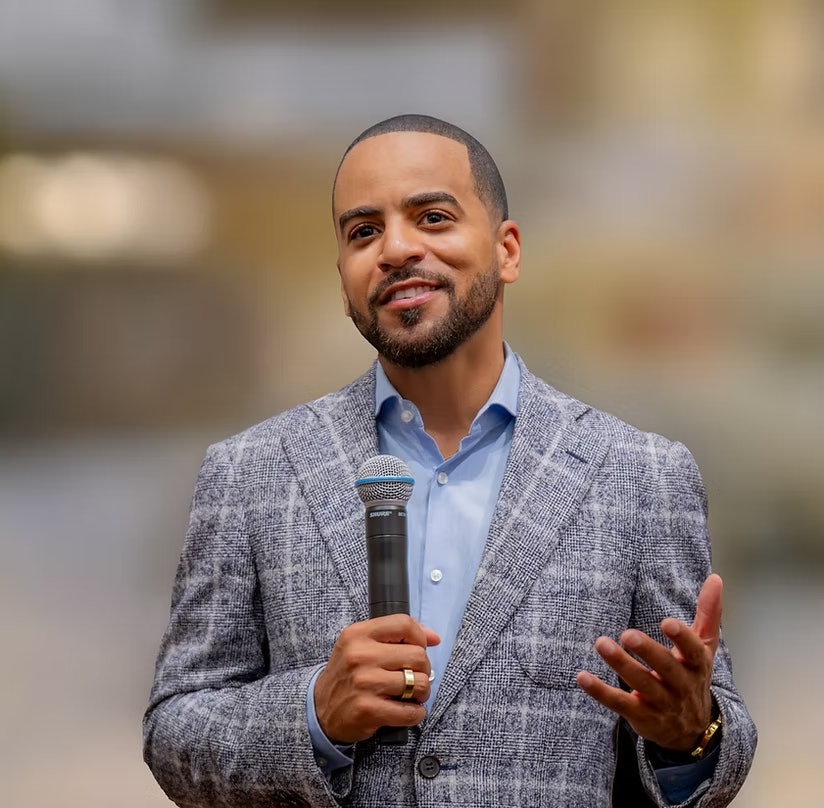
    Dr. Royel M. JohnsonThe report, released by the USC Race and Equity Center, analyzed responses from 1,992 student affairs professionals at 73 colleges and universities who participated in the National Assessment of Collegiate Campus Climates Staff Survey between 2021-2023.

    “When we look at over 2000 student affairs professionals across 73 institutions, we often see that student affairs professionals are really the backbone of our campuses, who are the first line of defense in supporting students and responsible for creating the conditions of belonging,” said Dr. Royal Johnson, a professor in the Rossier School of Education at the University of Southern California and director of the National Assessment of Collegiate Campus Climates in the USC Race and Equity Center. “But the same sort of realities that students are facing of race and discrimination, student affairs professionals are also being plagued with those same challenges.”

    Black student affairs professionals reported the highest rates of direct racist experiences at 61%, followed by Asian (46%) and multiracial staff (46%). In contrast, only 17% of white professionals reported experiencing racism personally.

    “Student affairs professionals are expected to champion equity and care for students, yet they often labor in environments that fall short of those same principles,” the researchers wrote.

    In an interview with Diverse, Johnson noted that upwards of 60% of those surveyed reported experiencing racism and the lingering consequences, “whether it be the emotional toll and frustration associated with it, the distrust that emanates from it, their sense of mattering,” he added. 

    The perpetrators of racism came primarily from within institutions themselves. White staff members were the most common source of racist behavior (27% of respondents reported experiencing racism from white colleagues), followed by white students (22%) and white faculty (21%). Additionally, 22% experienced racism from external contacts such as vendors and community partners.

    The emotional toll proved significant, with 72% of respondents reporting feelings of frustration and 50% experiencing anger as a result of racist incidents. More than a quarter (27%) said the experiences led to declines in mental health and emotional well-being.

    Confidence in institutional commitment to diversity, equity and inclusion varied sharply by race. While half of white staff expressed strong confidence in their institution’s DEI commitment, only 30% of Black staff and 35% of Asian staff shared that view.

    The workplace climate issues extended beyond racist incidents to broader patterns of exclusion and inequality. Less than half of all respondents felt they mattered at their institution, with Asian (33%) and Black (38%) professionals reporting the lowest rates of feeling valued.

    Staff of color also reported significant barriers to advancement. Among Black professionals, 34% disagreed that they received equal opportunities for advancement compared to colleagues, while 32% of Hispanic/Latinx staff reported similar concerns. One in ten Black professionals said their perspectives were not valued at all in workplace decision-making processes.

    “We know that staff of color have long struggled with equitable professional mobility kind of opportunities, or feel relegated to lower level, lower status kinds of roles,” Johnson explained, adding that the study represents “one of the more larger scale analysis that’s national in scope, that’s offering behind the scenes if you will, of the kind of racial realities that folks are experiencing.”

    The study revealed gaps in institutional support systems as well. While 70% of staff of color and 81% of white staff learned about race through self-directed efforts, only about half received formal professional development from their institutions on racial topics.

    During the survey period, which coincided with national discussions about anti-Asian hate crimes and police brutality against Black Americans, less than half of institutions addressed these issues. Only 42% of respondents said their leaders addressed anti-Asian hate crimes, while 50% said leaders addressed police brutality and racially motivated violence against Black people.

    The findings come as student affairs faces broader retention challenges, with 39% of staff indicating they are likely to seek other employment within the next year, according to separate research by the College and University Professional Association for Human Resources.

    The USC researchers offered seven recommendations for institutional action, including strengthening reporting mechanisms, embedding equity goals in staff evaluations, regularly assessing campus climate with disaggregated data, and ensuring transparent advancement pathways.

    “Addressing racism in the workplace is not about individual resilience—it is about institutional responsibility,” the researchers concluded. “Without bold, sustained, and collective action, campuses risk losing the very professionals who are central to advancing their diversity and student success missions.”

    The study’s sample included professionals from 28 two-year and 45 four-year institutions. The demographic breakdown was 54% white, 18% Hispanic/Latinx, 12% Black, 5% Asian, and 7% biracial or multiracial staff members.


    Source link

  • 3 steps to build belonging in the classroom

    3 steps to build belonging in the classroom

    Key points:

    The first few weeks of school are more than a fresh start–they’re a powerful opportunity to lay the foundation for the relationships, habits, and learning that will define the rest of the year. During this time, students begin to decide whether they feel safe, valued, and connected in your classroom.

    The stakes are high. According to the 2023 Youth Risk Behavior Survey, only 55 percent of students reported feeling connected to their school. That gap matters: Research consistently shows that a lack of belonging can harm grades, attendance, and classroom behavior. Conversely, a strong sense of belonging not only boosts academic self-efficacy but also supports physical and mental well-being.

    In my work helping hundreds of districts and schools implement character development and future-ready skills programs, I’ve seen how intentionally fostering belonging from day one sets students–and educators–up for success. Patterns from schools that do this well have emerged, and these practices are worth replicating.

    Here are three proven steps to build belonging right from the start.

    1. Break the ice with purpose

    Icebreakers might sound like old news, but the reality is that they work. Research shows these activities can significantly increase engagement and participation while fostering a greater sense of community. Students often describe improved classroom atmosphere, more willingness to speak up, and deeper peer connections after just a few sessions.

    Some educators may worry that playful activities detract from a serious academic tone. In practice, they do the opposite. By helping students break down communication barriers, icebreakers pave the way for risk-taking, collaboration, and honest reflection–skills essential for deep learning.

    Consider starting with activities that combine movement, play, and social awareness:

    • Quick-think challenges: Build energy and self-awareness by rewarding quick and accurate responses.
    • Collaborative missions: Engage students working toward a shared goal that demands communication and teamwork.
    • Listen + act games: Help students develop adaptability through lighthearted games that involve following changing instructions in real time.

    These activities are more than “fun warm-ups.” They set a tone that learning here will be active, cooperative, and inclusive.

    2. Strengthen executive functioning for individual and collective success

    When we talk about belonging, executive functioning skills–like planning, prioritizing, and self-monitoring–may not be the first thing we think of. Yet they’re deeply connected. Students who can organize their work, set goals, and regulate their emotions are better prepared to contribute positively to the class community.

    Research backs this up. In a study of sixth graders, explicit instruction in executive functioning improved academics, social competence, and self-regulation. For educators, building these skills benefits both the individual and the group.

    Here are a few ways to embed executive functioning into the early weeks:

    • Task prioritization exercise: Help students identify and rank their tasks, building awareness of time and focus.
    • Strengths + goals mapping: Guide students to recognize their strengths and set values-aligned goals, fostering agency.
    • Mindful check-ins: Support holistic well-being by teaching students to name their emotions and practice stress-relief strategies.

    One especially powerful approach is co-creating class norms. When students help define what a supportive, productive classroom looks like, they feel ownership over the space. They’re more invested in maintaining it, more likely to hold each other accountable, and better able to self-regulate toward the group’s shared vision.

    3. Go beyond the first week to build deeper connections

    Icebreakers are a great start, but true belonging comes from sustained, meaningful connection. It’s tempting to think that once names are learned and routines are set, the work is done–but the deeper benefits come from keeping this focus alive alongside academics.

    The payoff is significant. School connectedness has been shown to reduce violence, protect against risky behaviors, and support long-term health and success. In other words, connection is not a “nice to have”–it’s a protective factor with lasting impact.

    Here are some deeper connection strategies:

    • Shared values agreement: Similar to creating class norms, identify the behaviors that promote safety, kindness, and understanding.
    • Story swap: Have students share an experience or interest with a partner, then introduce each other to the class.
    • Promote empathy in action: Teach students to articulate needs, seek clarification, and advocate for themselves and others.

    These activities help students see one another as whole people, capable of compassion and understanding across differences. That human connection creates an environment where everyone can learn more effectively.

    Take it campus-wide

    These strategies aren’t limited to students. Adults on campus benefit from them, too. Professional development can start with icebreakers adapted for adults. Department or PLC meetings can incorporate goal-setting and reflective check-ins. Activities that build empathy and connection among staff help create a healthy, supportive adult culture that models the belonging we want students to experience.

    When teachers feel connected and supported, they are more able to foster the same in their classrooms. That ripple effect–staff to students, students to peers–creates a stronger, more resilient school community.

    Belonging isn’t a single event; it’s a practice. Start the year with purpose, keep connection alive alongside academic goals, and watch how it transforms your classroom and your campus culture. In doing so, you’ll give students more than a positive school year. You’ll give them tools and relationships they can carry for life.

    Latest posts by eSchool Media Contributors (see all)

    Source link

  • States, districts seek to end federal funding freeze lawsuits

    States, districts seek to end federal funding freeze lawsuits

    This audio is auto-generated. Please let us know if you have feedback.

    Dive Brief:

    • Twenty four states and the District of Columbia are seeking to throw out a lawsuit challenging this summer’s delay of K-12 federal grant funding. A joint motion to dismiss was filed Monday by the coalition of states, led by California, and the Trump administration, with both parties agreeing that the balance of the remaining funds be released no later than Oct. 3. 
    • The expected July 1 release of more than $6 billion in funding was delayed for several weeks due to a “programmatic review” by the White House’s Office of Management and Budget. OMB said an initial review found that “many of these grant programs have been grossly misused to subsidize a radical leftwing agenda.”
    • The funding delays impacted after-school programs, English learner services, academic supports, migrant student assistance, adult education and professional development. The inaction caused significant financial disruptions just as schools were finalizing staffing and programming for the upcoming school year, according to educators, families, lawmakers and education-related organizations. 

    Dive Insight:

    The states’ lawsuit, State of California, et al. v. Linda McMahon, et al., was filed July 14 and said the “abrupt freeze is wreaking similar havoc on key teacher training programs as well as programs that make school more accessible to children with special learning needs, such as English language learners.”

    President Donald Trump, U.S. Education Secretary Linda McMahon and OMB Director Russell Vought are named as defendants in the lawsuit, as are OMB and the U.S. Department of Education.

    In a statement Monday, California Attorney General Rob Bonta said the assurance by the federal government that it will release the remaining funds resolved the states’ lawsuit. 

    “The Trump Administration upended school programs across the country when it recklessly withheld vital education funding just weeks before the school year was set to begin,” Bonta said. “Our kids deserve so much better than what this anti-education Administration has to offer, and we will continue to fight to protect them from this President’s relentless attacks.”

    The Trump administration has said it wants to close the Education Department and give states more decision-making authority over federal K-12 spending.

    The states’ lawsuit said ​​that the funding freeze had violated federal funding statutes and regulations. In addition to the states’ lawsuit, a coalition of 14 school districts, parents, teachers unions and nonprofit organizations also sued the Education Department and OMB for withholding the K-12 federal funds. Both parties in that lawsuit — Anchorage School District, et al. v. U.S. Department of Education, et al. — also filed a joint motion to dismiss that lawsuit on Monday.

    That motion said the second tranche of federal funding due to states should be available on or about Oct. 1.

    Source link

  • Albright College declares ‘remarkable’ turnaround as it borrows $15M from endowment

    Albright College declares ‘remarkable’ turnaround as it borrows $15M from endowment

    This audio is auto-generated. Please let us know if you have feedback.

    Dive Brief:

    • Albright College is set to borrow $15 million from its $65 million endowment after receiving approval from its board of trustees. 
    • In a Monday statement, the private Pennsylvania institution touted the board’s sign-off on the loan as a show of “confidence in Albright’s direction” and said it plans to use the capital to “strengthen the College, enhance enrollment, and secure Albright’s future.”
    • Albright projects a $10 million operating surplus for the 2025-26 fiscal year after recent years of expanding deficits and concerns about cash levels.

    Dive Insight:

    Borrowing from an endowment is often a red flag that a college is burning through its last available resources. In Albright’s case, the college says it is using the money to solidify a long-term turnaround. 

    Not long ago, the college was issuing signs of distress. When it requested legal permission to tap its endowment for capital, Albright noted that its net assets took a $46 million hit between 2022 and 2024. That pushed the college to take “significant measures to lower its deficit,” including cutting 53 employee positions, according to a Spotlight PA report

    In fiscal 2023, Albright reported a $20.3 million total deficit, well more than double the prior year’s deficit. Its deficit rose even higher, to $23.1 million in fiscal 2024. 

    Those fiscal woes followed years of enrollment declines. Between 2018 and 2023, fall headcount shrunk by nearly 15%, according to federal data. 

    For 2025, the college has 1,150 students, an increase of about 50 students compared to last year, while first-year and transfer enrollment increased 21.5% to 469 students, according to an Albright spokesperson.

    As it sought capital to fund a turnaround, the college couldn’t find a bank loan with manageable interest rates. And so it turned to its endowment.

    The $15 million loan will be drawn down as needed and “comes with a clear repayment plan that includes defined terms, scheduled payments, and quarterly reporting for full accountability and transparency,” Albright said. Per the authorization terms, the repayment period extends 20 years and the loan will carry a minimum of 3% interest

    It’s also being combined with major new gifts as well as $4 million in grant funding from the state Redevelopment Capital Assistance Program, according to the release. 

    With the new funding, Albright is investing in capital projects and deferred maintenance. The “centerpiece” of those improvements, it said, is an expansion and renovation of the college’s central library. The building, which is over 60 years old, will get a student support and disability center, a writing and tutoring center, expanded cultural and technological resources, new conference space and a cafe. 

    With the investments, budget stabilization and recent enrollment growth, Albright sounded a triumphant note in announcing the loan, describing a “remarkable financial turnaround” and gearing up for growth ahead.

    Source link

  • Ohio State Restricts Decorations in Public Dorm Spaces

    Ohio State Restricts Decorations in Public Dorm Spaces

    Ohio State University has advised resident advisers to restrict all dorm floor and common room decor—as well as welcome programming for incoming students—to “Ohio State spirit themes” to avoid offending or alienating students. That means motifs like “retro video games and SpongeBob” motifs, which one outraged former RA on Reddit said they decorated with, won’t be allowed. 

    The move comes partly in response to SB1, a higher ed law Ohio passed in March that prohibits DEI, requires institutions to “demonstrate intellectual diversity” and mandates institutional neutrality on “controversial” subjects such as climate change, electoral politics, foreign policy, immigration, marriage and abortion.

    “SB1 was certainly a factor, but our goal is to create an open and welcoming environment for all students … including in our residence halls, as we build community throughout our spaces and programming,” Dave Isaacs, OSU communications and media relations manager, said in a statement shared with Inside Higher Ed. “And this was discussed with RAs during their orientation for the position.”

    Move-in activities are also required to be Buckeye-themed, including “necklace making and mug decorating,” the statement said.

    Students took to Reddit to pan the new decorating rules, with one commenter posting, “SB1 and university leadership has sucked the life out of literally everything.”

    “There were no comments supporting Ohio State’s decision,” the student newspaper, The Lantern, noted. “However, one user called on students to protest the state and national government over these decisions, rather than Ohio State’s administration.”

    Source link

  • Free College Admissions Counseling for Cancer Survivors

    Free College Admissions Counseling for Cancer Survivors

    Anthony Gallonio has spent most of his career working in higher education admissions and financial aid, watching young people select, apply to and enroll in colleges. But when his daughter Grace received a cancer diagnosis 14 years ago, when she was a year old, he realized there was an underserved group of teens who needed support in college exploration: cancer patients.

    “I remember looking at these kids coming in [to the hospital] thinking, ‘How are they doing it?’” Gallonio said. “Their lives are still going on, high school is taking place, college is still in the future. We know one missed application or one missed form or one missed deadline could mean the difference between getting into a school or not or getting tens of thousands of dollars in scholarships or not.”

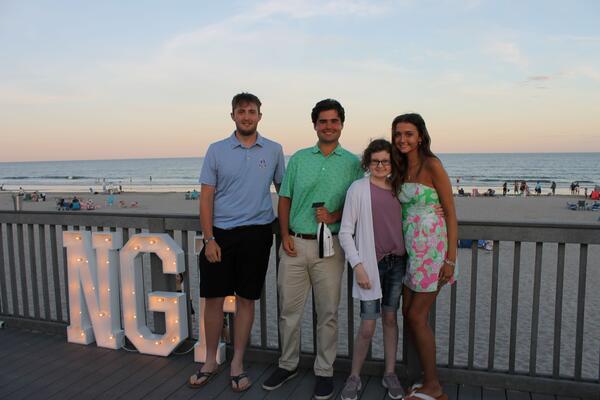
    In 2011, Gallonio established the National GRACE Foundation, a nonprofit that offers free information and advice on higher education for families of young people who survived childhood cancer. The group is supported by volunteers across the country who work in higher ed, illuminating the hidden curriculum to encourage student success.

    The background: GRACE, named after Gallonio’s daughter and short for Growing, Recovering and Achieving a College Education, is designed to break down barriers to enrollment for childhood cancer survivors and support parents and caregivers navigating college applications and beyond.

    “The whole goal has been to take the stress out of the college admissions and financial aid process for families who have a lot of stress going on and try to help them avoid the mistakes that I have seen over the years,” Gallonio said.

    A 2019 study of 16,700 childhood cancer survivors found that about half graduated from college; those reporting chronic conditions were even less likely to complete a degree by age 25.

    Many pediatric cancer survivors Gallonio works with aspire to careers in helping roles, including in health care, social services or research, he said. Getting into and through college is just the first step in that journey.

    How it works: GRACE provides a range of services, including offering advice on financial aid, tracking upcoming deadlines, explaining confusing terminology or jargon, and highlighting various colleges and programs that might be a good fit for the student. A majority of the students and parents come from low- or middle-income families, and they often find the foundation through word of mouth or through partnerships with hospitals.

    “I think about our services in the way that a family might hire college consultants, but we do it all for free,” Gallonio said. “That’s the group that we’re seeing—those folks who need help but also don’t have necessarily the resources to pay for [a consultant].”

    GRACE volunteers also provide in-person and webinar events for parents and caregivers on topics like college costs and scholarships.

    Once students are enrolled, GRACE supports their persistence by working as a liaison between institutions and families. They might appeal for more financial aid, for instance, or advocate for student supports through disability services offices. “We know what [families] are going through, we know what these school are going through, we kind of speak their language,” Gallonio said.

    The organization has up to 30 volunteers at any point in the academic year, but “we are always looking for volunteers in the higher ed landscape—anywhere in the country, at any type of institution,” to provide counseling to pediatric cancer survivors, Gallonio said.

    Building better: Since launching in 2011, GRACE has assisted over 300 young people in their pursuit of a college degree, and Grace, the foundation’s namesake, is “a happy and healthy 15-year-old,” Gallonio said. Families have also secured over $3 million in scholarships through the foundation’s advocacy work.

    Olivia Falzone, a rising first-year student at the College of Charleston and cancer survivor, receives the Isabel Helen Farnum Scholarship from the National Grace Foundation.

    Anthony Gallonio/National GRACE Foundation

    Over the years, GRACE has expanded services beyond the Northeastern U.S., where Gallonio is located, to support prospective students from coast to coast. As the foundation’s reach has grown, so has its perspective on postsecondary education.

    Initially, the focus was to help cancer patients have a good shot at a competitive institution. It has since expanded to highlight the value of higher education in any capacity and offer vocational or alternative pathway support as well.

    “A lot of it has to do with breaking down that [college] can be done, that it can be affordable,” Gallonio said. “The stories that we hear about debt, about the $90,000 colleges—that’s not every college, and there are colleges in every state that a family can afford to go to.”

    Gallonio is considering changing GRACE’s acronym to “Growing, Recovering and Continuing Education,” to reflect the wider range of pathways available to young people.

    This fall, GRACE will launch a mobile application and webpage so prospective students and parents can explore colleges and universities’ disability services, careers and trades, financial aid information, and selectivity rates. The app also includes a personalized scholarship search service, allowing individuals to put in their information and receive tailored suggestions for scholarships to apply for.

    “We try to make it a one stop,” Gallonio said. “We’re not charging them for usage or anything like that. Hopefully it saves our volunteers and us time.”

    We bet your colleague would like this article, too. Send them this link to subscribe to our newsletter on Student Success.

    Source link

  • AAUP Academic Freedom Statement Needs a Refresh (opinion)

    AAUP Academic Freedom Statement Needs a Refresh (opinion)

    I am a lifetime member of the American Association of University Professors. It is an organization that has done remarkable work in defending academic freedom for people who teach in this nation’s colleges and universities.

    But as I contemplate returning to teaching this fall, I worry that the AAUP’s understanding of academic freedom is dangerously behind the times. The AAUP’s understanding of academic freedom urgently needs updating to take account of dangers that could not have been contemplated in 1940 when its statement on academic freedom was issued.

    It is time for the organization to think anew about what academic freedom means and what must be done to protect it in an era when the federal government and some state governments are seeking to curtail it. We can understand why its failure to do has been problematic by taking a look at lawsuits filed by the AAUP and its campus-based chapters at universities that have been attacked by the Trump administration.

    But before looking at those suits, let me say a bit about the 1940 statement.

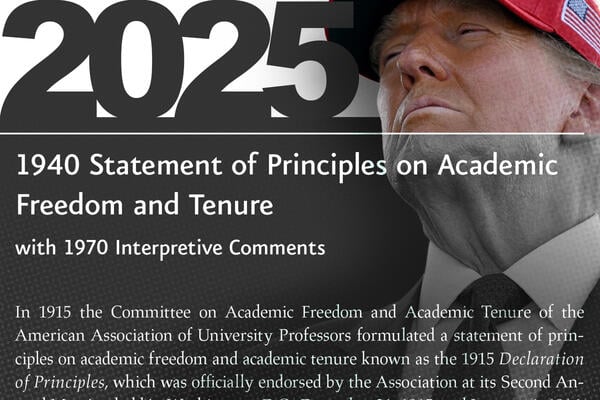
    The AAUP tells the story of its “Statement of Principles on Academic Freedom and Tenure” this way: “In 1915 the Committee on Academic Freedom and Academic Tenure of the American Association of University Professors formulated a statement of principles on academic freedom and academic tenure known as the 1915 Declaration of Principles … In 1940 … representatives of the American Association of University Professors and of the Association of American Colleges agreed on a restatement of the principles. This restatement is known to the profession as the 1940 Statement of Principles on Academic Freedom and Tenure.”

    Thirty years later, the AAUP considered updating the 1940 statement but ultimately decided not to undertake a wholesale revision. Instead, it added a series of “Interpretive Comments” to the existing document. Those comments, the AAUP explains, were intended to update the document in light of “the experience gained in implementing and applying it for over thirty years and of adapting it to current needs.”

    This history reminds us that the thinking guiding that statement goes back more than a century, to a time when the modern university was just taking shape. As Yale Law School professor Robert Post notes, “The American concept of academic freedom was forged early in the 20th century. It emerged from struggles between the newly professionalizing American professoriate and the governmental, business, and parochial powers that controlled American universities.”

    And it has been more than half a century since the AAUP’s influential statement on academic freedom was refreshed at all.

    The 1940 statement imagined that the main threat to the “full freedom” in research, teaching and extramural speech would come “from institutional censorship or discipline.” The statement was, in that sense, addressed not just to teachers and scholars, but to university administrators.

    That is why if they do not follow the principles laid out in the AAUP statement, they can be subjected to censure. As the AAUP explains it, censure is reserved for institutions “that, as evidenced by a past violation … are not observing the generally recognized principles of academic freedom and tenure approved by this Association.”

    I searched the censure list, looking for the Trump administration. Alas, it was nowhere to be found.

    Not surprising, because by the AAUP’s standards, the Trump administration cannot violate academic freedom except indirectly by pressuring higher educational institutions to do so on its behalf.

    To be fair, the AAUP has not been silent about what the administration has done since Jan. 20. In February, it joined a suit seeking to prevent the Trump administration “from using federal grants and contracts as leverage to force colleges and universities to end all diversity, equity, and inclusion programs, whether federally funded or not, and from terminating any ‘equity-related’ federal grants or contracts.”

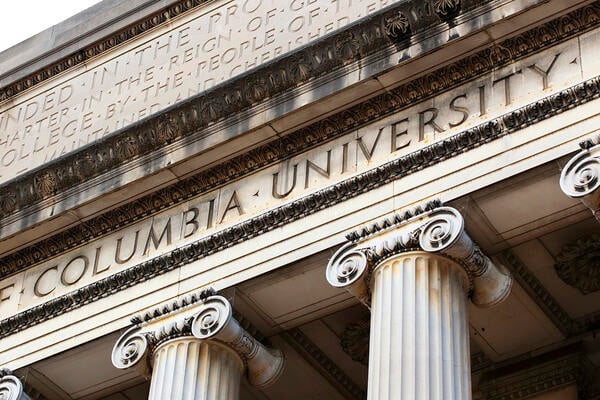
    In March, it sued the Trump administration for “unlawfully cutting off $400 million in federal funding for crucial public health research in an attempt to force Columbia University to surrender its academic independence.” As the AAUP noted, “This move represents a stunning new tactic: using cuts as a cudgel to coerce a private institution to adopt restrictive speech codes and allow government control over teaching and learning. “

    But here again, consonant with its existing approach to academic freedom, the focus was on what Columbia would do to its faculty.

    Also in March, the AAUP joined a lawsuit “seeking to block the Trump administration from carrying out large-scale arrests, detentions, and deportations of noncitizen students and faculty members who participate in pro-Palestinian protests and other protected First Amendment activities.” But note, the primary claim is about freedom of speech, not academic freedom.

    In April, the AAUP and its chapter at Harvard University sued “to block the Trump administration from demanding that Harvard University restrict speech and restructure its core operations or else face the cancellation of $8.7 billion in federal funding for the university and its affiliated hospitals.”

    Like the suit brought on behalf of Columbia University, it focused on what Harvard might do to restrict the academic freedom of those who teach and do research there.

    In one sense, this is a remarkable record for which the AAUP deserves enormous credit. But, as I pointed out in January, there are new threats to individual faculty members “to intimidate them into silence,” as Darrell M. West put it. It is time that the AAUP acknowledged them in its foundational statement on academic freedom.

    Protecting academic freedom now requires that colleges and universities not only refrain from abridging it themselves but that they take measures to protect and support members of their faculties in the face of governmental or other external threats targeting them directly. The AAUP should revise its 1940 statement to make clear that higher education institutions have an affirmative obligation to advance and protect academic freedom. Doing so would encourage recognition of academic freedom as a positive good in which the universities and their faculties have a joint interest.

    For colleges and universities, implementing that affirmative obligation requires, among other things, that they stand ready to provide legal assistance, make public statements of support and offer help in devising crisis communication strategies for faculty whose freedom in research, in teaching or in their use of academic expertise as citizens is threatened or abridged by external forces.

    That’s a big ask.

    It calls on universities to provide resources, spend reputational capital and stand behind faculty whose views administrators might not share. The university, in this new understanding, has to put itself more at risk to promote and protect academic freedom.

    Universities won’t do this easily, which is why the AAUP would play such an important role in advancing this goal. Redrafting the 1940 statement is a good place to start.

    As the history of its current statement suggests, the AAUP does not move easily or quickly to reconsider its principles. But the need is great, and the time for action is here. By meeting the challenge of the moment, the AAUP will once again demonstrate its essential role in the world of American higher education.

    Austin Sarat is the William Nelson Cromwell Professor of Jurisprudence and Political Science at Amherst College.

    Source link

  • Columbia Ends Some Teaching Roles for Grad Students

    Columbia Ends Some Teaching Roles for Grad Students

    DNY59/iStock/Getty Images

    Less than a month before the start of the semester, Ph.D. students at Columbia University in New York were told with little explanation that they would no longer be teaching this fall.

    The catalyst for this change is unclear. The university said it’s an effort to reduce the teaching load on Columbia graduate students and allow them to finish their degrees in six years rather than seven. The students said it’s a move to weaken the labor power of their union, which is in the middle of tense negotiations with the university to renew its contract, which expired June 30.

    The students, who are members of the graduate student union Student Workers of Columbia, will still be paid. However, instead of receiving a biweekly teaching stipend, they’ll get a lump sum at the start of the semester. To pay both the Ph.D.s and their replacements, “the cost to the university likely runs to millions of dollars,” estimated Michael Thaddeus, a mathematics professor at Columbia and vice president and acting president of the Columbia chapter of the American Association of University Professors. In July, Columbia agreed to a $221 million settlement with the federal government in order to restore hundreds of millions in federal research funding.

    Columbia has traditionally tapped sixth- and seventh-year graduate students to teach foundational courses and some of the undergraduate college’s Core Curriculum classes, which includes courses, like University Writing and Frontiers of Science, that all first-year students are required to take. The work is more time-consuming than a regular TA job; as the so-called instructors of record, the Ph.D. students must teach two two-hour lectures and attend a pedagogy seminar each week, on top of all of the reading and prep time that goes on behind the scenes. The workload sidelines their research and writing, a representative from SWC explained. But it offers valuable teaching experience, and Ph.D. candidates are usually guaranteed a seventh year of funding when they sign on to teach a core class.

    But this teaching expectation is unusually large for graduate students, according to Columbia officials.

    “Columbia doctoral students have typically been required to teach more than Ph.D. students at peer institutions, which often means delays in their time to degree,” a university spokesperson wrote in a statement to Inside Higher Ed. “After discussions with some departments about teaching requirements and instructional staffing, we have released some graduate students from teaching obligations for the fall—while continuing to offer them the same funding and benefits. These students will have more time to complete academic requirements or advance their dissertation research and writing.”

    Neither the students nor some faculty buy this explanation. Students say they didn’t receive any formal communication about changes to the graduate student teaching structure and that the move to dismiss or deny Ph.D.s from the teaching positions is an effort to undermine the labor power of the union, which had been planning a strike for the fall. As TAs and members of SWC, the students would still be able to participate in a work action, but it wouldn’t have as big an impact as lecturers walking out of class.

    More than 100 students are affected by this change, according to the union. Columbia officials said the figure was much lower but declined to share an exact figure and noted that the number of Ph.D. core instructors varies year to year.

    Columbia’s AAUP chapter denounced the university’s action in an Aug. 19 statement.

    “We do not agree with the claim that this step has been taken to help graduate students. Rather, it clearly has to do with the looming contract negotiations. The timing makes this clear,” said Thaddeus. “Students applied for preceptor positions back in November, and then they heard nothing at all for many months. If this were being done to help graduate students, then it would have made sense to notify them promptly.”

    The move will also damage the quality of Columbia’s doctoral and M.F.A. programs, Thaddeus argued.

    “Practical experience with setting assignments and exams, giving final grades, and so on is invaluable to those graduate students who pursue a career in teaching,” he added.

    One sixth-year Ph.D., who wished to remain anonymous to prevent retaliation from the university for speaking out, applied for a core teaching position in December. Over the next eight months, she received no communication about the position and finally received an offer for a TA position July 30. It wasn’t until Aug. 6, the day she was originally supposed to sign and return the teaching assistant appointment letter, that she heard back about the core position. She’d been rejected, the email said, and it included no explanation or information about the widespread changes to graduate teaching duties at Columbia.

    The abrupt change is “really disrupting people in the later stage of the program, like myself, who thought that this was not going to be my last year,” says the Ph.D. student. “Now I’m having to go on the academic job market basically at the last minute.”

    To fill the now-vacant teaching jobs, Columbia is recruiting for one-year lectureships and advertising the roles to adjuncts, postdocs and New York–based graduate students at other universities.

    “I wanted to share with you a posting we’ve just made for full-time lecturer positions teaching all across our Core curriculum—in Art, Music, Literature, and Contemporary Civilization—where we are expecting a larger entering class that we’d originally thought,” Columbia officials wrote in a message that was passed along to faculty at the University of Chicago and obtained by Inside Higher Ed. Columbia has also sent the position to Yale University.

    Source link

  • NIH Publisher Fee Cap Plan “Not Comprehensive Enough”

    NIH Publisher Fee Cap Plan “Not Comprehensive Enough”

    Members of the public have until Sept. 15 to weigh in on the National Institutes of Health’s plan to curb how much taxpayer money goes to journals to publish some federally funded research.

    The agency, which is the nation’s largest funder of biomedical research, wants to do that by capping—or potentially disallowing—the amount of money it gives to NIH-funded researchers who want to make their work publicly accessible by paying publishers article processing charges. A July 30 request for information memo outlined five potential options, which the NIH says are all aimed at balancing the “feasibility of providing research results with maximizing the use of taxpayer funds to support research.”

    Jay Bhattacharya, director of the NIH, has said the policy could be a mechanism for ending what he sees as the “perverse incentives” driving the $19 billion for-profit academic publishing industry and making it “much harder for a small number of scientific elite to say what’s true and false.”

    But open-information advocates and experts who have reviewed the NIH’s proposed plans for capping the amount it will pay for article processing charges said it likely won’t reform academia’s incentive structure or rein in publishers, including some that charge academic researchers as much as $12,690 per article to make their work freely accessible to the public and more likely to get cited.

    “It is important to keep in mind that any cap is a cap on the amount that can be budgeted to be paid from a grant. It is not a cap on what publishers can charge. What publishers charge may be influenced by a budget cap, but many other factors will also impact on that,” said Lisa Janicke Hinchliffe, a professor and coordinator for research professional development at the University of Illinois library. “It is more likely that a budget cap causes publishers that charge less to raise their fees—the ceiling will become the floor—than it is that publishers charging more will lower their fees.”

    The proposal, which if adopted would go into effect Jan. 1, 2026, is aimed at addressing one of the many criticisms the Trump administration has made about federally funded academic research and the journals that publish the results.

    In May, Robert F. Kennedy Jr., head of the Department of Health and Human Services, which oversees the NIH, said he was considering preventing federally funded scientists from publishing in leading medical journals and launching in-house journals instead, claiming without evidence that pharmaceutical companies control the journals.

    Then, in July, the NIH sped up the implementation of a Biden-era rule requiring federally funded researchers to immediately make their research findings publicly accessible. And earlier this month, Bhattacharya criticized academia’s “publish or perish culture” in a statement about the NIH’s strategy for advancing its mission.

    “It favors the promotion of only favorable results, and replication work is little valued or rewarded,” he wrote. “We are exploring various mechanisms to support scientists focused on replication work, to publish negative findings, and to elevate replication research.”

    Given all of that context, the publisher fee cap plan is “more or less a warning shot across the bow that the NIH is serious about scholarly communication reform,” said Chris Marcum, who was assistant director for open science and data policy at the White House Office of Science and Technology Policy during the Biden administration. “The administration believes there’s massive market concentration held by just a few scholarly publishers, and they’re no longer going to subsidize the surplus revenues of those journals.”

    While the Trump administration is far from alone in its criticism of big academic publishers—just six companies own 53 percent of academic journals—which rely on often-unpaid researchers and peer reviewers, Marcum said that even if the NIH adopted all five of the options it outlined to cap publisher fees, “it’s not comprehensive enough” to meet their stated goals.

    “They could eliminate APCs and fix pricing, but the extremely useful tool that they have is influence over the universities,” he added.

    For example, one of the options in the NIH’s proposal would increase limits on APCs if the journal paid peer reviewers, but Marcum said he’s concerned that could result in some peer reviewers trying to game the system to enrich themselves. Instead, he said, “if the NIH really wants to move the needle on this, they should think about other ways to compensate reviewers.” Some of those ideas could include giving peer reviewers credit toward their grant applications, including peer review as part of grant work or requiring universities that apply for NIH grants to include considerations for their researchers to engage in peer review.

    Heather Joseph, executive director of the Scholarly Publishing and Academic Resources Coalition, said that though the NIH “can’t single-handedly reform the global system of academic research incentives, they can play a leadership role.”

    But capping APCs isn’t the only—or most effective—option to make that happen.

    “Rather than just limiting the amount of money that the NIH provides researchers to publish in a journal, it could say, ‘If you choose not to publish in a journal and do something else, we’ll provide money to do that,’ and support other mechanisms that allow researchers to break that incentive cycle,” Joseph said. “The NIH could reward them for communicating their findings early and often, making the global conversation of science dynamic in real time so that people can really benefit from it.”

    The publishing industry is also not keen on the NIH’s attempt to control article processing charges.

    A “free and competitive scholarly marketplace, including not-for-profit societies and other publishers, remains the most effective means of sustaining this vital sector, and bolstering our nation’s leadership position in the sciences,” Carl Maxwell, senior vice president for public policy for the Association of American Publishers, which has opposed open access expansion, wrote in an email to Inside Higher Ed.

    “Models are now changing in the face of open access mandates, and AAP is analyzing the options put forth by NIH to identify the plan that will provide authors with maximum freedom to choose how to publish and communicate their work, while at the same time supporting the indispensable publication processes that deliver best-in-class, peer-reviewed articles.”

    Source link

  • Agencies Share Guidance on Foreign Threats at U.S. Colleges

    Agencies Share Guidance on Foreign Threats at U.S. Colleges

    Warning American colleges and universities about increasing foreign threats to research, a group of federal intelligence agencies and the Education Department released new guidance this week outlining how the institutions can better protect themselves.

    For example, the 40-page “Safeguarding Academia” bulletin in part encourages colleges and researchers to be transparent about who else is involved in a research project, noting that failing to disclose foreign collaborations could lead to sanctions. The agencies urged researchers to do their due diligence on any potential collaborators and outlined other cybersecurity best practices.

    “Protecting the integrity of U.S. research—while fostering international collaboration—is critical to maintaining a robust and secure research ecosystem,” the bulletin states. “Striking this balance is essential to preserving academic freedom, safeguarding researchers’ lifework, and ensuring that innovation continues to thrive in a secure and principled manner.”

    James Cangialosi, the acting director at the National Counterintelligence and Security Center, added in a statement that while American colleges conduct research key to the country’s global competitiveness and national security, “foreign adversaries are increasingly exploiting the open and collaborative environment of U.S. academic institutions for their own gain.”

    “Today’s bulletin highlights this evolving security threat and provides mitigation strategies that academic institutions can implement to better protect their research, their institutions, as well as their staff and students,” Cangialosi said. “With the new school year starting, it’s critical to get these materials in the hands of academic institutions now.”

    Source link