Author: admin

  • GMU President Refuses to Apologize, Rejects OCR Findings

    GMU President Refuses to Apologize, Rejects OCR Findings

    Bill O’Leary/The Washington Post via Getty Images

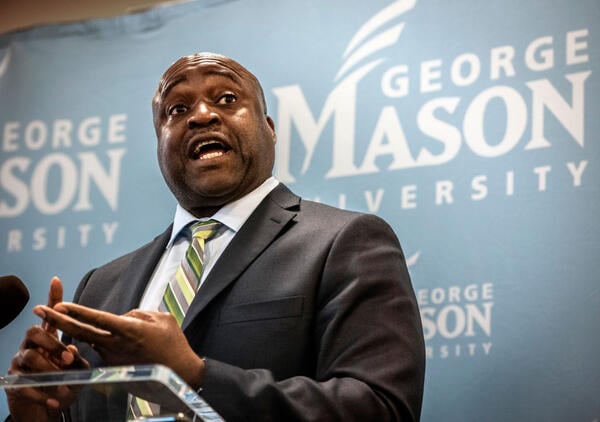
    George Mason University president Gregory Washington has rejected demands by the Department of Education’s Office for Civil Rights that he apologize for alleged discriminatory hiring practices, questioning the findings of an OCR investigation that accused him of implementing “unlawful DEI policies.”

    In a letter to GMU’s board Monday, Washington’s attorney, Douglas F. Gansler, alleged that OCR cut its fact-finding efforts short and only interviewed two university deans before reaching the conclusions the Department of Education published Friday. Gansler wrote that “OCR’s letter contains gross mischaracterizations of statements made by Dr. Washington and outright omissions” related to the university’s DEI practices.

    Gansler also accused OCR of selectively interpreting various remarks by Washington, the first Black president in GMU’s history.

    “To be clear, per OCR’s own findings, no job applicant has been discriminated against by GMU, nor has OCR attempted to name someone who has been discriminated against by GMU in any context. Therefore, it is a legal fiction for OCR to even assert or claim that there has been a Title VI or Title IX violation here,” Gansler wrote in a 10-page letter.

    ED has demanded changes at GMU and a personal apology from Washington.

    “In 2020, University President Gregory Washington called for expunging the so-called ‘racist vestiges’ from GMU’s campus,” Acting Assistant Secretary for Civil Rights Craig Trainor said in a statement released by the Department of Education last week. “Without a hint of self awareness, President Washington then waged a university-wide campaign to implement unlawful DEI policies that intentionally discriminate on the basis of race. You can’t make this up.”

    In his letter to the board, Gansler emphasized that under Washington’s leadership, GMU has complied with executive orders that cracked down on DEI programs and practices, pointing to recent changes such as the dissolution of GMU’s DEI office and restricting the use of diversity statements in hiring.

    “If the Board entertains OCR’s demand that Dr. Washington personally apologize for promoting unlawful discriminatory practices in hiring, promotion, and tenure processes, it will undermine GMU’s record of compliance. An apology will amount to an admission that the university did something unlawful, opening GMU and the Board up to legal liability for conduct that did not occur under the Board’s watch,” Gansler wrote. He added that admitting to such violations could bring about punitive action from other federal agencies, such as the Department of Justice.

    Washington’s rejection of an apology and dispute over the claims made by OCR comes shortly after speculation that GMU’s Board of Visitors—which includes numerous conservative political figures and activists appointed by Republican Virginia governor Glenn Youngkin—would fire him. Instead, the board gave Washington a raise after a lengthy closed-door meeting earlier this month that brought dozens of protesters out to show their support for the besieged president.

    Asked for a statement, GMU officials referred Inside Higher Ed to Gansler.

    ED did not immediately respond to a request for comment from Inside Higher Ed.
    Source link

  • Judge strikes down Minnesota dual enrollment program’s ban on faith statements

    Judge strikes down Minnesota dual enrollment program’s ban on faith statements

    This audio is auto-generated. Please let us know if you have feedback.

     Dive Brief:

    • A federal judge on Friday struck down a Minnesota law prohibiting colleges that require high school students to sign statements of faith from participating in a state dual enrollment program.
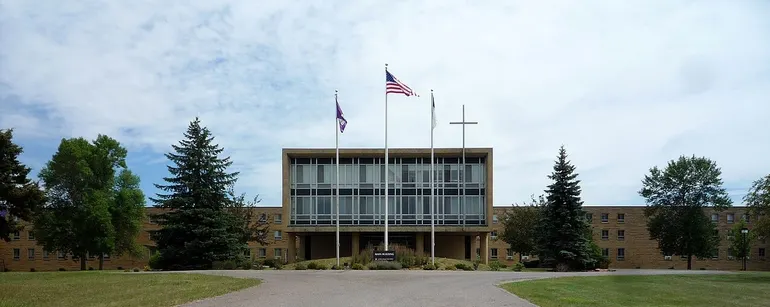
    • The University of Northwestern and Crown College, two conservative Christian institutions in Minnesota, sued the state in 2023 over the law which rendered them ineligible to participate in the Postsecondary Enrollment Options program. Both colleges require on-campus students to sign religious conduct agreements.
    • Siding with the colleges, U.S. District Judge Nancy Brasel ruled that Minnesota’s law infringed on their constitutional rights by making them choose between participating in the PSEO program and practicing their religion.

    Dive Insight:

    Since 1985, Minnesota’s PSEO program has allowed local high school students to earn college credit for nonsectarian coursework at participating colleges. The program is free for eligible students and reimburses colleges with fixed payments per credit hour.

    But a 2023 law, passed by the state’s Democrat-controlled Legislature, prohibited colleges from participating in the program if they require faith statements or make admission decisions based on “race, creed, ethnicity, disability, gender, or sexual orientation or religious beliefs or affiliations.”

    The University of Northwestern requires students and employees to sign a pledge to abstain from “same sex romantic intimacy.” And Crown’s student conduct policy does not allow involvement or promotion of “any sexual behavior outside the marriage of one man and one woman.”

    Both institutions, joined by three parents of high school students, sued the state the same day Democratic Gov. Tim Walz signed the legislation into law.

    The Minnesota Department of Education filed counterclaims, arguing that Crown and the University of Northwestern’s admissions policies for the PSEO program are unconstitutional.

    Early on in the case, Brasel blocked the state from enforcing the new law, allowing the colleges to continue enrolling PSEO students and earning state funds from the program while the case proceeded. Between the 2017-18 and 2022-23 academic year, the University of Northwestern received over $33.2 million from the program, and Crown received roughly $5.8 million.

    In her Friday ruling, Brasel sided with the colleges.

    “If the Schools’ eligibility to participate in PSEO is conditioned on not using faith statements as an admissions requirement, their free exercise in maintaining a campus community of like‐minded believers is burdened,” said Brasel, a Trump appointee. Families also lose their right to free exercise of religion if they can’t use the public benefit at “a school of their choice of like‐minded believers,” she said.

    The judge further wrote that if the state elects to fund private education, officials cannot disqualify private schools solely because they’re religious.

    Brasel also dismissed the state’s counterclaims Friday.

    The Minnesota Department of Education did not immediately respond to a request for comment Monday.

    The leaders of Crown and the University of Northwestern — Andrew Denton and Corbin Hoornbeek, respectively — celebrated the verdict Saturday.

    “This legislation has given us yet another opportunity to affirm our mission; we remain committed to equipping our students to grow intellectually and spiritually to serve effectively in their professions and give God-honoring leadership in the home, church, community, and world,” Hoornbeek said in a statement.

    The same day, Denton thanked the legislators who originally opposed the ban and said Crown was grateful for the law’s reversal.

    “The court made clear that Minnesota cannot single out high school students who want to attend a faith-centered institution,” he said. 

    Source link

  • What Multiple Intelligences Can Teach Us About Enrollment Marketing

    What Multiple Intelligences Can Teach Us About Enrollment Marketing

    Each student has a different way of perceiving, processing, and connecting with information.

    If you have ever wondered why one student peppers you with questions during a campus tour while another spends the visit sketching buildings, possibly giving your founder’s statue a comically large nose, you may have met what psychologist Howard Gardner calls multiple intelligences (Gardner, 1983, 1999).

    Gardner proposed that intelligence is not a single metric but a collection of capabilities: linguistic, logical-mathematical, spatial, musical, bodily-kinesthetic, interpersonal, intrapersonal, and naturalistic. Each shapes how a student processes the world and how they connect during the college search. If you have ever tried to woo a future engineer with poetic descriptions of ivy-covered halls, you know: some want facts, others want a vibe, and a few want to hear about your beekeeping club.

    From theory to practice

    In K–12 education, Gardner’s theory inspired teachers to differentiate instruction to meet students where they are. Teachers understand that linguistic learners thrive in storytelling and debate. Kinesthetic learners act out history. Visual-spatial thinkers create models and posters.

    Preferences also carry into decision-making. A student with strong interpersonal intelligence may thrive in group discussion, while an intrapersonal learner prefers reflection (Shearer, 2018).

    A colleague once hosted two prospective students on the same tour. One chatted nonstop with ambassadors about clubs. The other hung back, took notes, and later emailed questions about academics. Both left a positive impression, but they connected in entirely different ways. There is no one-size-fits-all approach.

    From classroom to campus tour

    This theory has clear enrollment applications (statistics are from the 2025 E-Expectations Report from RNL, Halda, and Modern Campus).

    • Bodily-kinesthetic learners may need to walk your campus to “get” it physically. Eighty percent of students visit in person, and 88% find visits helpful.
    • Visual-spatial learners may prefer your virtual tour; 77% use it, and 84% find it helpful.
    • Musical learners might connect emotionally through audio, pacing, or sound design in videos.
    • Interpersonal learners thrive in authentic conversations, one-on-one chats, and social media DMs. Twenty-seven percent follow colleges on social as an early outreach step; 37% do so for student life content.
    • Intrapersonal learners might prefer ROI tools, microsites, or downloadable guides.
    • Logical-mathematical learners value dashboards, calculators, and evidence-based outcomes. Financial aid calculators are used by 81% and rated helpful by 85%.

    When the fit feels off

    Each intelligence has a “no-thanks” zone:

    • Kinesthetic learners disengage from dense PDFs.
    • Visual-spatial thinkers lose interest in text-heavy pages.
    • Musical learners notice when tone and pacing are off.
    • Interpersonal learners tire of one-way communication.
    • Intrapersonal learners feel drained by busy group events.
    • Logical-mathematical thinkers want facts, not fluff.
    • Linguistic learners need narrative and nuance.
    • Naturalistic learners respond to sustainability stories, not generic city skylines.

    E-Expectations data confirm this. Sixty-three percent of students use Instagram, but only 53% see college content there, missing visual, musical, and interpersonal opportunities. Nearly half (45%) use AI chatbots, and 27% fill out inquiry forms afterward, showing these tools’ value for personalization (RNL et al., 2025).

    AI as a multiple intelligences tool

    AI chatbots can adapt content type, video, infographic, or ROI data, to match a student’s preference. After engaging with an AI assistant, 24% of students said they were more likely to apply, and 29% emailed admissions (RNL et al., 2025).

    This is not about tech for tech’s sake. It is about designing digital interactions that honor different learning and connecting methods.

    Matching intelligences to enrollment touchpoints

    Each intelligence represents a unique way of perceiving, processing, and connecting with information. Your emails, tours, and inquiry forms can spark curiosity or shut it down, depending on how well they align.

    Ask yourself:

    • Are you offering an “entry point” for every kind of learner?
    • Where are your blind spots?
    • What simple tweaks could widen the invitation?

    This is not about building eight separate funnels. It is about creating a flexible ecosystem where every student can find something that feels made for them.

    Multiple intelligences and enrollment touchpoints

    Intelligence Type How They Process and Connect Enrollment Strategies That Click Common Turnoffs
    Linguistic Love stories, strong narratives, nuanced language Student blogs, alum success stories, narrative-driven videos, compelling email subject lines Dry fact sheets with no story
    Logical-Mathematical Seek patterns, data, and ROI Cost calculators, outcome dashboards, program comparison tools Emotion-heavy marketing without evidence
    Visual-Spatial Think in images, layouts Virtual tours, interactive maps, infographics, campus photo galleries Text-heavy pages without visuals
    Musical Respond to rhythm, tone, sound Videos with thoughtful sound design, podcasts, and student performances Flat, monotone content
    Bodily-Kinesthetic Learn by doing, moving Campus tours, hands-on events, and fairs Long static presentations or PDFs
    Interpersonal Thrive in connection with others One-on-one ambassador chats, live Q&A, small group sessions, social DMs One-way mass communication with no response path
    Intrapersonal Reflective, self-directed Self-paced microsites, outcome quizzes, downloadable guides Crowded events, high-pressure group calls
    Naturalistic Connect through nature and real-world context. Sustainability initiatives, green campus tours, and community-based learning stories Generic marketing is disconnected from the environment.

    (Table adapted from Gardner 1983, 1999; RNL et al, 2025.)

    Final thought

    You do not need a degree in educational psychology to use multiple intelligences in enrollment strategy. You need to remember that students are cognitively and emotionally diverse (Gardner, 1983, 1999).

    The smartest move? Offer multiple ways to connect and then let students choose.

    Talk with our marketing and recruitment experts

    RNL works with colleges and universities across the country to ensure their marketing and recruitment efforts are optimized and aligned with how student search for colleges.  Reach out today for a complimentary consultation to discuss:

    • Student search strategies
    • Omnichannel communication campaigns
    • Personalization and engagement at scale

    Request now

    References

    Source link

  • FIRE statement on President Trump’s executive order to outlaw flag burning

    FIRE statement on President Trump’s executive order to outlaw flag burning

    On Aug. 25, President Donald Trump issued an executive order cracking down on flag burning, which is protected expressive activity under the First Amendment. During the signing, Trump remarked, “If you burn a flag, you get one year in jail.” The following statement can be attributed to FIRE Chief Counsel Bob Corn-Revere.


    President Trump may believe he has the power to revise the First Amendment with the stroke of a pen, but he doesn’t.

    Flag burning as a form of political protest is protected by the First Amendment. That’s nothing new. While people can be prosecuted for burning anything in a place they aren’t allowed to set fires, the government can’t prosecute protected expressive activity — even if many Americans, including the president, find it “uniquely offensive and provocative.”

    You don’t have to like flag burning. You can condemn it, debate it, or hoist your own flag even higher. The beauty of free speech is that you get to express your opinions, even if others don’t like what you have to say. 

    Your burning questions on flag burning

    The right to burn the American flag sparks heated debate, but the First Amendment protects flag burning in most cases.


    Read More

    Source link

  • Chinese officials force censorship of Thai gallery’s art exhibit about authoritarianism (proving the exhibit’s point)

    Chinese officials force censorship of Thai gallery’s art exhibit about authoritarianism (proving the exhibit’s point)

    Last year, FIRE launched the Free Speech Dispatch, a regular series covering new and continuing censorship trends and challenges around the world. Our goal is to help readers better understand the global context of free expression. Want to make sure you don’t miss an update? Sign up for our newsletter

    Exhibit on authoritarianism censored by authoritarians

    These days, repressive regimes are not content with just censoring their critics within their own borders. They also think they have the authority to determine what the rest of the world can see, hear, and say, which is how we wind up with news like the latest out of Thailand. 

    In late July, staff from China’s embassy visited the Bangkok Arts and Cultural Centre, along with local city officials to demand the censorship of the exhibition “Constellation of Complicity: Visualising the Global Machinery of Authoritarian Solidarity.” The gallery granted their demands and “removed pieces included Tibetan and Uyghur flags and postcards featuring Chinese President Xi Jinping, as well as a postcard depicting links between China and Israel.” Words including “Hong Kong,” “Tibet,” and “Uyghur” were redacted. But even this was not enough for the Chinese embassy, whose staff returned to seek further redactions and “reminded the gallery to comply with the One China policy.” 

    In a statement, China’s foreign ministry said Thailand’s quick action to pressure the gallery to censor “shows that the promotion of the fallacies of ‘Tibetan independence,’ ‘East Turkestan Islamic Movement,’ and ‘Hong Kong independence’ has no market internationally and is unpopular.” What it actually shows, though, is that the Chinese government often throws its weight around on the global scale — and gets its way. Authoritarians in the Academy, my new book out this month, documents precisely how China has attempted to enforce this kind of censorship in global higher education.

    The co-curators of the show, a married couple, have since fled Thailand, citing fears of retaliation by Thai authorities. They plan to seek asylum in the UK. 

    Palestine Action, internet speech, and the disastrous Online Safety Act rollout 

    As I explained in the last Dispatch, UK police are enacting a widespread crackdown on protests surrounding Palestine Action, a group banned under anti-terrorism legislation for damaging military planes in a protest. They’re not just arresting the group’s activists, but also any and all members of the public who express “support” for the group. That even includes a man who held up a sign of a political cartoon — one legally printed and available for sale in a Private Eye edition — that criticized the ban on Palestine Action, as well as an 80-year-old woman who was held for 27 hours for attending a protest.

    Pro-Palestinian activists protest outside the Royal Courts of Justice as a judge hears a challenge to the proscription of Palestine Action under the Terrorism Act. (Pete Speller / Shutterstock.com)

    These arrests were just drops in the bucket. Police arrested 532 protesters over one weekend this month, with all but 10 being arrested for words or signs “supporting” the banned group. “We have significant resources deployed to this operation,” Metropolitan Police posted on X. “It will take time but we will arrest anyone expressing support for Palestine Action.” Northern Ireland police also warned protesters that they could face prosecution.

    That’s not even the only troubling free speech scandal from UK police these past weeks. 

    Carmen Lau, a Hong Kong activist now living in the UK and still a target of censorship from the Chinese government, says Thames Valley police asked her to sign an agreement that she would “cease any activity that is likely to put you at risk” and “avoid attending” protests to limit the likelihood of overseas repression. Then a magistrate court overturned a gag order placed on a firefighter, suggesting that police officers were attempting to enforce a “police state.” Police raided the home of Robert Moss, a firefighter who won a wrongful termination challenge in 2023, over Facebook comments he’d posted about Staffordshire’s fire department, and then told him he must not only stay silent about leadership of the fire department, but was also not permitted to even discuss the investigation itself. 

    Meanwhile, overzealous police are far from the only problems facing internet speech in the UK. Looming even larger is the Online Safety Act, now in effect and wreaking havoc on the UK’s internet users and the companies and platforms they engage with online. A useful collection from Reason’s Elizabeth Nolan Brown shows how requirements that sites verify age for material “harmful to children” created some absurd fallout. Age-gated content has included an X post with the famous painting Saturn Devouring His Son, news about Ukraine and Gaza, and a thread about material being restricted under the act. 

    The Wikimedia Foundation’s challenge to certain regulations of the law failed this month, meaning many of its concerns about the act’s threats to the privacy of Wikipedia’s anonymous editors remain. But now, the message board site 4chan is pushing back, refusing to pay a fine already doled out for its noncompliance with the law. “American businesses do not surrender their First Amendment rights because a foreign bureaucrat sends them an email,” the site’s lawyers wrote in a statement.

    And to the UK citizens who understandably are uncomfortable with the burdensome and privacy-threatening process of age-verification just to use the internet, Secretary of State for Science, Innovation and Technology Peter Kyle warns: Don’t look for a workaround. Bizarrely, Kyle claimed adults verifying their age “keeps a child safe,” as if an adult’s VPN use somehow poses a risk to some child, somewhere. 

    Two women sentenced to a decade for printing anti-Hugo Chávez shirts 

    In what certainly looks like a case of entrapment, two Venezuelan women who run a T-shirt printing business were recently sentenced to 10 years in prison on charges of incitement to hatred, treason, and terrorism. They had accepted an order to print shirts featuring a photo of a protester destroying a statue of late Venezuelan President Hugo Chávez. The women were initially wary of taking the order — apparently, for good reason — but eventually accepted it from the insistent customer. While delivering the order, they were arrested by police, who also confiscated their equipment and inventory. 

    It’s not just in Venezuela. More censorship of political speech, protest, and journalism globally:

    • Ugandan authorities disappeared a student for weeks, and when public outcry finally forced them to explain his whereabouts, he “resurfaced” at a police station and was charged with “offensive communication” for intent “to ridicule, demean and incite hostility against the president” on TikTok.
    • Moroccan feminist activist Ibtissam Lachgar was arrested this month for posting a photo of herself wearing a shirt with the message, “Allah is Lesbian.” A public prosecutor cited her “offensive expressions towards God” and post “containing an offense to the Islamic religion.”
    • An Argentine legislator is being prosecuted for social media posts comparing Israel to the Nazi regime and calling it a “genocide state.” In 2020, Argentina adopted the International Holocaust Remembrance Alliance’s definition of antisemitism. (FIRE has repeatedly expressed concerns about codification of the IHRA definition and the likelihood it will censor or chill protected political speech.)
    • Belarusian authorities arrested dozens of activists and critics who took part in anti-government protests outside Belarus, in countries including the U.S. and UK.
    • Russian journalist Olga Komleva was sentenced to 12 years on “extremism” charges for her ties to the late Alexei Navalny and for spreading alleged fake news about the Ukraine invasion.
    • Cities across Canada have withdrawn permits for performances by Sean Feucht, a right-wing Christian singer and vocal supporter of President Trump, with one Montreal church facing a $2,500 fine for going forward with his concert. Montreal mayor Valérie Plante said, “This show runs counter to the values of inclusion, solidarity, and respect that are championed in Montreal. Freedom of expression is one of our fundamental values, but hateful and discriminatory speech is not acceptable in Montreal.”
    • Indonesian authorities are warning about the country’s regulations on flag desecration and respect for state symbols in response to a trend of citizens posting the Jolly Roger flag from the manga One Piece as a form of protest.
    • Six journalists, including four with Al Jazeera, were killed by an Israeli airstrike. The Israeli military accused one of the journalists, Anas al-Sharif, of being a Hamas cell leader, but the Committee to Protect Journalists says it “has made no claims that any of the other journalists were terrorists.”
    • A 34-year-old Thai security guard, originally sentenced to 15 years, will spend seven years in prison for Computer Crimes Act and lese-majeste violations for insulting the monarchy on social media.
    • statement from the U.S. and a number of European nations accused Iranian intelligence authorities of widespread plots “to kill, kidnap, and harass people in Europe and North America in clear violation of our sovereignty.”
    • Chinese officials in eastern Zhejiang province issued warnings to performers about material on gender relations in response to a comedian’s viral set about her abusive husband. “Criticism is obviously fine, but it should be … constructive rather than revolve around gender opposition for the sake of being funny,” the warning read.

    Book banning abroad

    Arundhati Roy waliking on village the road at Dwaraka, Kerala, Indi

    Arundhati Roy walking on village the road at Dwaraka, Kerala, India (Paulose NK / Shutterstock.com)

    Under the criminal code of 2023, Indian authorities in Kashmir banned over two dozen books, including those by novelist Arundhati Roy and historian Sumantra Bose. The books allegedly promote “false narratives” and “secessionism.” Selling or even just owning these books can result in prison time.

    This ban follows raids by Russian authorities of bookshops carrying titles from a list of 48 banned books, often those with LGBT themes. 

    Tech and the law

    • In enforcing its under-16 ban for social media, Australia reversed course and now will include YouTube in the group of platforms subject to the country’s age-gate ban.
    • French prosecutors are investigating Elon Musk’s X to see if the platform’s algorithm or data extraction policies violated the country’s laws.
    • Indian media outlets are disappearing past reporting amid “growing pressure from the Indian government to limit reporting critical of its policies.” One journalist told Index on Censorship that “404 journalism” is “becoming a new genre of journalism in India — stories that once were, but are now memory.”
    • A new law in Kyrgyzstan bans online porn to “protect moral and ethical values” in the country and “requires internet providers to block websites based on decisions by the ministry of culture”
    • Starting this autumn, Meta will no longer allow political or social issue ads on its apps within the EU, citing “significant operational challenges and legal uncertainties” from the forthcoming Transparency and Targeting of Political Advertising rules.
    • Qatar approved an amendment to a cybercrime law that criminalizes publishing or circulating images or videos of people in public places without their consent, raising an outcry from press freedom advocates. Offenders can face up to one year in prison and/or a fine of up to 100,000 Qatari riyals (about $27,500).

    More suppression in and outside Hong Kong, as Jimmy Lai’s trial nears its end

    Readers of the Free Speech Dispatch are likely aware of how grim the situation for free expression in Hong Kong has become in the past few years, and there are no improvements in sight. It even reaches globally. Late last month, officials issued arrest warrants for overseas activists, including those based in the U.S., for alleged national security law violations.

    In recent weeks within the city, eight of Hong Kong’s public universities signed an agreement announcing their intent to comply with Xi Jinping’s and mainland China’s governance, another conspicuous sign of academic freedom’s decline in the city. The Hong Kong International Film Festival cut a Taiwanese film from its schedule for failing to receive a “certificate of approval” from the city’s film censors. Then a teenager was arrested by national security police for writing “seditious” words in a public toilet. Police said the messages “provoked hatred, contempt or disaffection against” Hong Kong’s government.

    And the trial of Jimmy Lai, the 77-year-old media tycoon and founder of dissenting newspaper Apple Daily, is now reaching its conclusion. Lai, who is in poor health, has pleaded not guilty to charges of conspiracy to collude with foreign forces and conspiracy to publish seditious material in Apple Daily.

    In a troubling incident in an already disturbing case, a judge overseeing the case cited speech suppression in the U.S. to justify the prosecution of Lai. “People who were freely expressing their views on Palestine, they were arrested in England… [and] in the US,” Judge Esther Toh said in court last week. “It’s easy to say ‘la-di-da, it’s not illegal,’ but it’s not an absolute. Each country’s government has a different limit on freedom of expression.”

    It should be a warning sign to Americans when our government’s actions are cited abroad in favor of, not against, censorship.

    Source link

  • How Artificial Intelligence Is Reshaping College Planning

    How Artificial Intelligence Is Reshaping College Planning

    What does the latest research tell us about students using AI for college planning?

    If you have spent time with today’s high school students, you know their college search journey looks nothing like it did ten, or even five, years ago. A glossy brochure or a well-timed postcard still has a place. However, the first “hello” increasingly comes through a digital assistant, a TikTok video, or a quick artificial intelligence–powered search.

    Let us not pretend artificial intelligence (AI) is everyone’s new best friend. Some students are eager, some are eye-rolling, and plenty are stuck in the “maybe” camp. That mix of excitement and hesitation is real, and it deserves as much attention as hype.

    The data is clear: nearly half of students (45 percent) have already used a digital AI assistant on a college website, with usage peaking among 9th- and 10th-graders (RNL, Halda, & Modern Campus, 2025). At the same time, a full third of students nationwide have turned to tools like ChatGPT to explore colleges, scholarships, and even essay help (RNL & Teen Voice, 2025).

    This trend is playing out nationwide, with major news outlets reporting that AI chatbots are becoming a common part of the college application process, assisting students with everything from brainstorming essays to navigating deadlines (Singer, 2023).

    For many students, AI is not futuristic; it is already woven into how they imagine, explore, and narrow their choices. Recent reporting confirms that AI-driven college search platforms are helping more students, especially those without access to personalized guidance, find the right fit and expand their options beyond what they might have considered on their own (Greenberg, 2025).

    Beyond RNL: What other research shows

    The RNL findings fit a much bigger story about how AI changes education. Around the world, researchers are watching students test, tinker, and sometimes wrestle with what these tools mean for learning and planning.

    One line of research looks at predictive modeling. Recent studies have shown that AI-driven platforms can analyze student data, grades, extracurricular activities, and demographics to predict which students are likely to pursue college and which might need extra support (Eid, Mansouri, & Miled, 2024). By flagging students at risk of falling off the college pathway, these predictive systems allow counselors to intervene earlier, potentially changing a student’s trajectory.

    Another cluster of studies zeroes in on personalized guidance. Tools built around a student’s interests and goals can recommend classes, extracurriculars, and colleges that “fit” better than a generic list. This is especially important in schools where one counselor may juggle hundreds of students (Majjate et al., 2023).

    Meanwhile, students are already using AI, sometimes in ways that make their teachers nervous. A Swedish study added some nuance: the most confident students use AI the most, while those who are already unsure of their skills tend to hold back (Klarin, 2024). That raises real equity questions about who benefits.

    And not all students are fans. Some research highlights concerns about privacy, over-reliance, and losing the chance to build their problem-solving muscles. It is a reminder that skepticism is not resistance for resistance’s sake but a way of protecting what matters to them.

    On the institutional side, surveys suggest that many colleges are preparing to use AI in admissions, whether for transcript analysis or essay review. Recent coverage underscores that admissions offices are increasingly turning to AI tools to streamline application review, identify best-fit students, and even personalize outreach (Barnard, 2024).

    If all of this feels like a promise and a warning label, it is because it is. AI can democratize access to information, but it can also amplify bias. Students know that. And they want us to take their concerns seriously.

    Empower your leadership and staff to harness the power of AI.

    Don’t get left behind in the AI transformation for higher education. See how RNL’s AI Education Services can help your leaders and staff unlock the full potential of AI on your campus.

    Learn more

    Meet the pioneers, aspirers, resistors, and fence-sitters

    As revealed by our research in The AI Divide in College Planning (RNL & Teen Voice, 2025), not all students approach artificial intelligence the same way. Four personas stand out:

    • Pioneers are already deep in the mix, using artificial intelligence for research, essays, and scholarship searches. Many say it has opened doors to colleges they might not have even considered otherwise.
    • Aspirers are curious but want proof. They like the idea of scholarship searches or cost planning, but need easy, free tools and success stories before they commit.
    • Resistors lean on counselors and family. They are worried about accuracy and privacy, but might come around if an advisor they trust introduces the tool.
    • Fence-Sitters are classic “wait and see” students. A third might trust artificial intelligence to guide them through the application process, but the majority are still unsure.

    The takeaway? There is no single “artificial intelligence student.” Institutions need flexible strategies that welcome the eager, reassure the cautious, and do not alienate the skeptics.

    What happens after the chatbot says, “Hello“?

    One of the most striking findings from the E-Expectations study is that students rarely stop at the chatbot (RNL, Halda, & Modern Campus, 2025). After engaging with an AI assistant, they move. Twenty-nine percent email admissions directly, 28% click deeper into the website, 27% fill out an inquiry form, and almost a quarter apply.

    In other words, that little chat bubble is not just answering frequently asked questions. It is a launchpad.

    Personalization meets privacy

    Here is another twist. While most students (61%) want personalization, they want it on their terms. Nearly half prefer to filter and customize their content, while only 16% want the college to decide automatically (RNL, Halda, & Modern Campus, 2025).

    That is the sweet spot for artificial intelligence: not deciding for students but giving them the levers to design their journey.

    What this means for your enrollment teams

    • AI is not just a front-end feature but a funnel mover. Treat chatbot engagement like an inquiry. Have a system ready to respond quickly when a student shifts from chatting to acting.
    • Remember the personas. Pioneers want depth, Aspirers want reassurance, Resistors want trusted guides, and Fence-Sitters want time. Design communications that honor those differences instead of pushing one script for all.
    • Personalization is not about guessing. It is about giving students control. Build tools that let them filter, sort, search, and resist the temptation to over-curate their journey.
    • AI is a natural fit for cost and scholarship exploration. If you want to hook Aspirers, put AI into your net price calculators or scholarship finders.
    • Virtual tours and event registration bots should not feel like gimmicks. When done well, they can bridge the gap between interest and visit, giving students confidence before setting foot on campus.

    Download the complete reports from RNL and our partners to see what students are telling us directly:

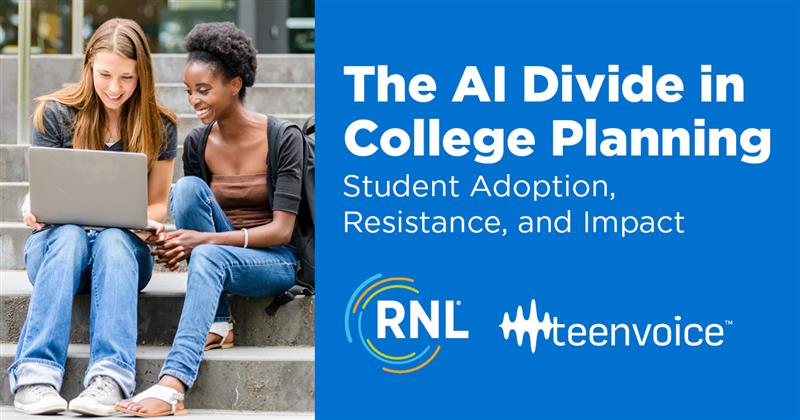
    Report: The AI Divide in College Planning, image of two female college students sitting on steps and looking at a laptop
    The AI Divide in College Planning
    References

    Source link

  • The End of the Traditional Student Era: Higher Ed’s New Enrollment Reality

    The End of the Traditional Student Era: Higher Ed’s New Enrollment Reality

    For decades, the term “traditional student” referred to an 18–22-year-old, full-time student living on campus and largely unencumbered by adult responsibilities. That definition may have been true in the past, but today, it’s holding institutions back. 

    Across the country, Gen Z students increasingly look like their older counterparts in how they approach higher education. They’re working while enrolled, choosing flexible learning formats, weighing cost against career ROI, and demanding that programs fit into — not disrupt — their lives. At the same time, adult learners remain a vital audience, and their motivations often mirror those of younger students. 

    For enrollment and marketing leaders, the takeaway is clear: Stop relying on outdated labels and start building strategies for the actual students you serve. 

    The blurred lines between traditional and adult learners 

    Recent Gallup-Lumina research shows that 57% of U.S. adults without a degree have considered enrolling in the past two years, and more than 8 in 10 say they’re likely to do so within the next five years. While adult learners have long valued affordability, flexibility, and career outcomes, these same factors now dominate Gen Z’s expectations. 

    Cost concerns are particularly telling, as highlighted by The CIRP Freshman Survey 2024. The study found that 56.4% of incoming first-year students reported some or major concern about paying for college, with even higher rates among Hispanic or Latino (81.4%) and Black or African American (69.6%) students. 

    Work and life responsibilities are also playing a growing role. Georgetown University’s Center on Education and the Workforce (CEW) reports that between 70-80% of undergraduate students are employed while enrolled, with about 40% working full-time.  

    For many, this isn’t a nice-to-have — it’s the only way they can afford school. 

    Why this matters for enrollment strategy 

    If your enrollment marketing still segments audiences primarily by age, you’re likely missing the mark. Here’s the reality: 

    • An 18-year-old commuter working 30 hours a week and taking hybrid classes might have more in common with a 35-year-old career changer than with a residential peer. 
    • Transfer and degree completer students (36.8 million Americans with some college but no credential) are often juggling similar priorities. 
    • Both groups respond to messaging that clearly connects program design to life balance, affordability, and employment outcomes. 

    The “traditional vs. adult” distinction no longer works for understanding motivations, predicting behaviors, or designing student experiences. 

    Ready for a Smarter Way Forward?

    Higher ed is hard — but you don’t have to figure it out alone. We can help you transform challenges into opportunities.

    4 Priorities that span generations 

    Regardless of age, today’s students share a core set of expectations that shape their enrollment decisions. These priorities now cut across the full spectrum of higher education audiences. 

    1. Affordability 

      The Gallup-Lumina report states that finances are among the most influential factors in enrollment decisions for unenrolled adults. Cost is also the top reason adults have stopped out of higher education and a leading reason current students consider doing so.  

      Gen Z mirrors this cost-conscious mindset, with many forgoing the traditional four-year route and embracing community colleges or transfer pathways as a lower-cost way to begin their degree journey.

      2. Flexible learning programs 

        Hybrid, online, and asynchronous options are no longer “adult learner perks” — they’re mainstream expectations. Traditional-aged students now seek flexible schedules to balance work, internships, and other commitments, mirroring adult learners. The pandemic accelerated digital comfort across age groups, making flexibility table stakes for recruitment. 

        3. Career outcomes 

          The Gallup-Lumina report shows that 60% of currently enrolled students cite expected future job opportunities as a “very important” factor in choosing to enroll. For stopped-out adult students, career prospects were also the top motivator. 

          Knowing this, institutions should ensure career outcomes are central to program design, marketing, and student advising. Those that clearly articulate skill alignment, employment pathways, and alumni success stories will attract and retain students. 

          4. Work-life balance 

            More students than ever are balancing jobs, caregiving, and other priorities with their academic responsibilities. For adult learners, this has always been true, but for traditional-aged students it’s increasingly the norm.  

            Institutions should respond by offering flexible schedules, targeted support, and streamlined services that help students balance academics with work and family demands. 

            Moving from segmentation to personalization 

            The solution isn’t to erase audience differences but to recognize that motivations and needs cut across age lines. Institutions should: 

            • Use behavioral and attitudinal data (not just demographics) to inform personas. 
            • Map programs to shared priorities, ensuring flexible formats and clear ROI messaging. 
            • Equip enrollment teams to surface emerging trends from student conversations. 
            • Invest in CRM and marketing automation to deliver personalized, timely outreach. 

            The opportunity for forward-thinking institutions 

            Institutions that adapt now can capture a larger share of a changing student market. Meeting the needs of today’s learners, who span generations, life stages, and responsibilities, requires more than minor adjustments. It calls for rethinking how programs are designed, marketed, and delivered to address shared priorities and remove persistent barriers. 

            Consider the following tactics: 

            • Retooling marketing messages to emphasize affordability, flexibility, and career outcomes. 
            • Rethinking program delivery models for a mixed audience. 
            • Breaking down internal silos between “traditional” and “adult learner” recruitment. 

            From outdated labels to modern enrollment strategies 

            The traditional student still exists, but they’re no longer the majority. Today’s demand for higher education comes from learners of all ages and circumstances. 

            The lines are blurred, and the labels are outdated. It’s time to create enrollment strategies that reflect today’s student realities and anticipate tomorrow’s opportunities. 

            Innovation Starts Here

            Higher ed is evolving — don’t get left behind. Explore how Collegis can help your institution thrive.

    Source link

  • Can College Presidents Tell Us the Truth?

    Can College Presidents Tell Us the Truth?

    “Truth? You can’t handle the truth!” Jack Nicholson’s Colonel Jessup in A Few Good Men captures the tension at the heart of American higher education: can college presidents confront veritas—the deep, sometimes uncomfortable truths about their institutions—or will they hide behind prestige, endowments, and comforting illusions?

    At the foundation of academia lies veritas, Latin for truth or truthfulness, derived from verus, “true” or “trustworthy.” Veritas is not optional decoration on a university crest; it is a moral and intellectual obligation. Yet 2025 reveals a system where veritas is too often sidelined: institutions obscure financial mismanagement, exploit adjunct faculty, overburden students with debt, and misrepresent outcomes to the public.

    The Higher Education Inquirer (HEI) embodies veritas in action. In “Ahead of the Learned Herd: Why the Higher Education Inquirer Grows During the Endless College Meltdown,” HEI demonstrates that truth-telling can thrive outside corporate funding or advertising. By reporting enrollment collapses, adjunct exploitation, and predatory for-profit practices, HEI holds institutions accountable to veritas, exposing what many university leaders hope will remain invisible.

    Leadership failures are a direct affront to veritas. Scam Artist or Just Failed CEO? scrutinizes former 2U CEO Christopher “Chip” Paucek, revealing misleading enrollment tactics and financial mismanagement that serve elite universities more than consumers. These corporate-style decisions in a higher education setting betray the very principle of veritas, prioritizing appearance and profit over educational integrity and human outcomes.

    Student journalism amplifies veritas further. Through Campus Beat, student reporters uncover tuition hikes, censorship, and labor abuses, demonstrating that veritas does not belong only to administrators—it belongs to those who seek to document reality, often at personal and professional risk.

    Economic and political realities also test veritas. In “Trumpenomics: The Emperor Has No Clothes,” HEI exposes how hollow economic reforms enrich a few while leaving the majority behind. Academia mirrors this pattern: when prestige is elevated over substance, veritas is discarded in favor of illusion, leaving students and faculty to bear the consequences.

    Structural crisis continues. In “College Meltdown Fall 2025,” HEI documents federal oversight erosion, AI-saturated classrooms with rampant academic misconduct, rising student debt, and mass layoffs. To honor veritas, leaders would confront these crises transparently, but too often they choose comforting narratives instead.

    Debt remains one of the clearest tests of institutional veritas. HEI’s The Student Loan Mess: Next Chapters shows how trillions in student loans have become instruments of social control. The Sweet v. McMahon borrower defense cases illustrate bureaucratic inertia and opacity, directly challenging the principles of veritas as thousands of debtors await relief that is slow, incomplete, and inconsistently applied.

    Predatory enrollment practices further undermine veritas. Lead generators, documented by HEI, exploit student information to drive enrollment into high-cost, low-value programs, prioritizing revenue over truth, clarity, and student welfare. “College Prospects, College Targets” exposes how prospective students are commodified, turning veritas into a casualty of marketing algorithms.

    Through all of this, HEI itself stands as a living testament to veritas. Surpassing one million views in July 2025, it proves that the public demands accountability, clarity, and honesty in higher education. Veritas resonates—when pursued rigorously, it illuminates failures, inspires reform, and empowers communities.

    The question remains: can college presidents handle veritas—the unflinching truth about student debt, labor exploitation, mismanagement, and declining institutional legitimacy? If they cannot, they forfeit moral and public authority. Veritas is not optional; it is the standard by which institutions must be measured, defended, and lived.


    Sources

    Source link

  • The Emperor Has No Clothes

    The Emperor Has No Clothes

    President Donald Trump calls himself a master of deals and a builder of wealth. But a closer look at his economic record shows otherwise. What passes as Trumpenomics is not a coherent strategy but a dangerous cocktail of trickle-down economics, tariffs, authoritarian force, and outright deception. The emperor struts confidently, yet his economic clothes are invisible.

    Trickle-Down Economics with Tariffs

    Trump’s policies leaned heavily on Arthur Laffer’s supply-side theories, promising that tax cuts for corporations and the wealthy would lift all boats. The 2017 Tax Cuts and Jobs Act slashed the corporate tax rate from 35% to 21%, showering disproportionate benefits on the top 1%. The Congressional Budget Office found that by 2025, households making under $30,000 would actually see tax increases, while millionaires reaped permanent benefits.

    At the same time, Trump imposed tariffs on China and other trade partners—despite claiming to be a free-market champion. Tariffs raised consumer prices at home, effectively acting as a hidden tax on working families. The Federal Reserve estimated that U.S. consumers and businesses bore nearly the full cost of Trump’s tariffs, with average households paying hundreds of dollars more each year for basic goods.

    Demanding Tributes from Other Nations

    Trump approached international trade less as economic policy and more as a tribute system. Nations that purchased U.S. arms, invested in Trump-friendly industries, or flattered his ego received preferential treatment. Those who did not were threatened with tariffs, sanctions, or military abandonment. His decision to reduce funding to NATO while deepening ties with Saudi Arabia, Qatar, and the UAE reflected this transactional worldview.

    Altering Economic Data and Scapegoating the Poor

    Trump consistently attempted to alter or spin economic data. When unemployment spiked during COVID-19, his administration pressured agencies to downplay the crisis. In some cases, career economists reported being silenced or reassigned for refusing to misrepresent figures.

    When numbers could not be manipulated, scapegoats were manufactured. Trump blamed immigrants, people of color, and the poor for economic stagnation, while targeting Medicaid recipients and the homeless as symbols of “decay.” Instead of addressing structural problems, his rhetoric diverted public anger downward, away from billionaires and corporations.

    Lie, Cheat, Steal

    Lawsuits and corruption have always been central to Trump’s business empire, and they carried over into his economic governance. From funneling taxpayer money into Trump-owned properties to bending trade policy for donors, his approach blurred the line between public service and private gain. The New York Times documented that Trump paid just $750 in federal income tax in 2016 and 2017, even as he claimed to be a champion of the American worker.

    Fourth Generation Warfare, AI, and Taiwan

    Trump’s economic worldview also bleeds into Fourth Generation Warfare (4GW)—the mixing of political, economic, and psychological operations. His chaotic handling of AI development, threats over Taiwan, and erratic China policy destabilized global markets. Uncertainty became a feature, not a bug: allies and rivals alike never knew if Trump’s economic positions were bargaining tools, retaliations, or improvisations.

    Authoritarianism at Home and Abroad

    At home, Trumpenomics relied on force and intimidation. He threatened to deploy the National Guard against protesters, treating dissent as an economic threat to be neutralized. Abroad, he backed Netanyahu’s expansionist policies while cutting aid to Europe, effectively reshaping U.S. alliances around authoritarian partners willing to pay for loyalty.

    Hostility Toward Higher Education

    Trump also targeted higher education, cutting research funding, undermining student protections, and ridiculing universities as bastions of “elitism.” The move was both political and economic: by weakening critical institutions, he expanded the space for propaganda and disinformation to thrive.

    The Emperor’s New Clothes

    Beneath the spectacle, Trumpenomics have left the US more unequal, more indebted, and more divided. The federal deficit ballooned by nearly $7.8 trillion during his first term—before COVID-19 relief spending. Inequality widened: by 2020, the richest 1% controlled more than 30% of the nation’s wealth, while median household income gains evaporated. Tariffs have raised costs, tax cuts hollowed out revenues, and corruption flourished.

    Trump’s economy was not built on strength but on illusion. Like the emperor in Hans Christian Andersen’s fable, Trump strutted in garments only his loyalists claimed to see. For everyone else, the truth was painfully visible: the emperor had no clothes.


    Sources

    • Congressional Budget Office, “The Distributional Effects of the 2017 Tax Cuts” (2018)

    • Federal Reserve Board, “Effects of Tariffs on U.S. Consumers” (2019)

    • The New York Times, “Trump’s Taxes Show Chronic Losses and Years of Income Tax Avoidance” (Sept. 27, 2020)

    • David Cay Johnston, It’s Even Worse Than You Think: What the Trump Administration Is Doing to America (2018)

    • Joseph Stiglitz, “Trump’s Economic Nonsense,” Project Syndicate (2019)

    Source link

  • Is gamification the key to achieving true inclusion in special education?

    Is gamification the key to achieving true inclusion in special education?

    Key points:

    For students with special needs, learning can often resemble a trek through dense woods along a narrow, rigid path–one that leaves little to no room for individual exploration. But the educational landscape is evolving. Picture classrooms as adventurous hunts, where every learner charts their own journey, overcomes unique challenges, and progresses at a pace that matches their strengths. This vision is becoming reality through gamification, a powerful force that is reshaping how students learn and how teachers teach in K–12 special education.

    Personalized learning paths: Tailoring the adventure

    Traditional classrooms often require students to adapt one method of instruction, which can be limiting–especially for neurodiverse learners. Gamified learning platforms provide an alternative by offering adaptive, personalized learning experiences that honor each student’s profile and pace.

    Many of these platforms use real-time data and algorithms to adjust content based on performance. A student with reading difficulties might receive simplified text with audio support, while a math-savvy learner can engage in increasingly complex logic puzzles. This flexibility allows students to move forward without fear of being left behind, or without being bored waiting for others to catch up.

    Accessibility features such as customizable avatars, voice commands, and adjustable visual settings also create space for students with ADHD, autism, or sensory sensitivities to learn comfortably. A student sensitive to bright colors can use a softer palette; another who struggles with reading can use text-to-speech features. And when students can replay challenges without stigma, repetition becomes practice, not punishment.

    In these environments, progress is measured individually. The ability to choose which goals to tackle and how to approach them gives learners both agency and confidence–two things often missing in traditional special education settings.

    Building social and emotional skills: The power of play

    Play is a break from traditional learning and a powerful way to build essential social and emotional skills. For students with special needs who may face challenges with communication, emotional regulation, or peer interaction, gamified environments provide a structured yet flexible space to develop these abilities.

    In cooperative hunts and team challenges, students practice empathy, communication, and collaboration in ways that feel engaging and low-stakes. A group mission might involve solving a puzzle together, requiring students to share ideas, encourage one another, and work toward a common goal.

    Gamified platforms also provide real-time, constructive feedback, transforming setbacks into teachable moments. Instead of pointing out what a student did wrong, a game might offer a helpful hint: “Try checking the clues again!” This kind of support teaches resilience and persistence in a way that lectures or punitive grading rarely do.

    As students earn badges or level up, they experience tangible success. These moments highlight the connection between effort and achievement. Over time, these small wins raise a greater willingness to engage with the material and with peers and the classroom community.

    Fostering independence and motivation

    Students with learning differences often carry the weight of repeated academic failure, which can chip away at their motivation. Gamification helps reverse this by reframing challenges as opportunities and effort as progress.

    Badges, points, and levels make achievements visible and meaningful. A student might earn a “Problem Solver” badge after tackling a tricky math puzzle or receive “Teamwork Tokens” for helping a classmate. These systems expand the definition of success and highlight personal strengths.

    The focus shifts from comparison to self-improvement. Some platforms even allow for private progress tracking, letting students set and meet personal goals without the anxiety of public rankings. Instead of competing, students build a personal narrative of growth.

    Gamification also encourages self-directed learning. As student complete tasks, they develop skills like planning, time management, and self-assessment, skills that extend beyond academics and into real life. The result is a deeper sense of ownership and independence.

    Teachers as learning guides

    Gamification doesn’t replace teachers, but it can help teach more effectively. With access to real-time analytics, educators can see exactly where a student is excelling or struggling and adjust instruction accordingly.

    Dashboards might reveal that a group of students is thriving in reading comprehension but needs help with number sense, prompting immediate, targeted intervention. This data-driven insight allows for proactive, personalized support.

    Teachers in gamified classrooms also take on a new role, both of a mentor and facilitator. They curate learning experiences, encourage exploration, and create opportunities for creativity and curiosity to thrive. Instead of managing behavior or delivering lectures, they support students on individualized learning journeys.

    Inclusion reimagined

    Gamification is not a gimmick; it’s a framework for true inclusion. It aligns with the principles of Universal Design for Learning (UDL), offering multiple ways for students to engage, process information, and show what they know. It recognizes that every learner is different, and builds that into the design.

    Of course, not every gamified tool is created equal. Thoughtful implementation, equity in access, and alignment with student goals are essential. But when used intentionally, gamification can turn classrooms into places where students with diverse needs feel seen, supported, and excited to learn.

    Are we ready to level up?

    Gamification is a step toward classrooms that work for everyone. For students with special needs, it means learning at their own pace, discovering their strengths, and building confidence through meaningful challenges.

    For teachers, it’s a shift from directing traffic to guiding adventurers.

    If we want education to be truly inclusive, we must go beyond accommodations and build systems where diversity is accepted and celebrated. And maybe, just maybe, that journey begins with a game.

    Latest posts by eSchool Media Contributors (see all)

    Source link