Author: admin

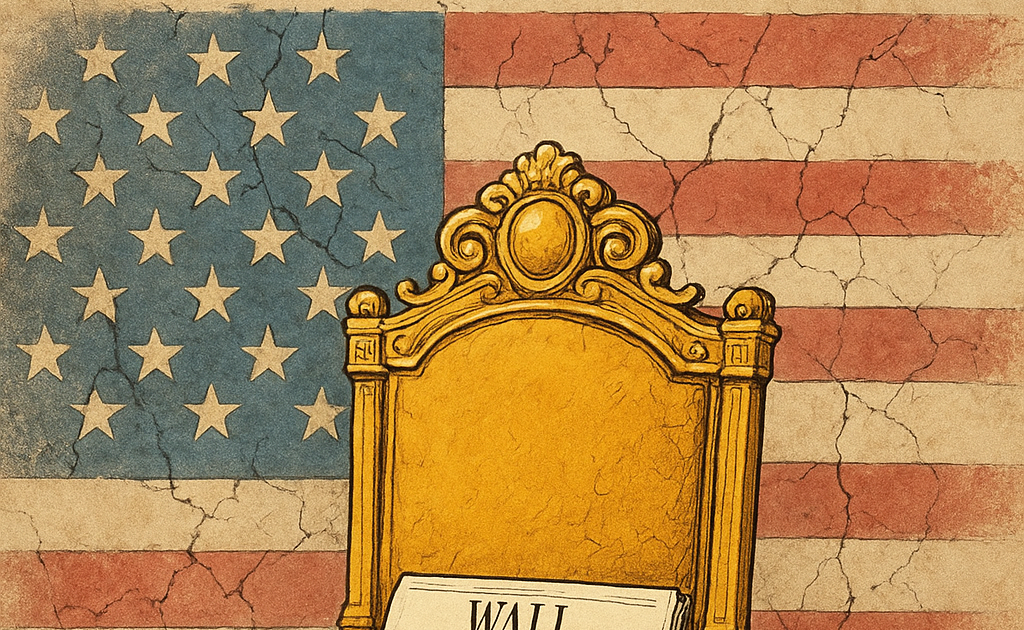
  • The Emperor Has No Clothes

    The Emperor Has No Clothes

    President Donald Trump calls himself a master of deals and a builder of wealth. But a closer look at his economic record shows otherwise. What passes as Trumpenomics is not a coherent strategy but a dangerous cocktail of trickle-down economics, tariffs, authoritarian force, and outright deception. The emperor struts confidently, yet his economic clothes are invisible.

    Trickle-Down Economics with Tariffs

    Trump’s policies leaned heavily on Arthur Laffer’s supply-side theories, promising that tax cuts for corporations and the wealthy would lift all boats. The 2017 Tax Cuts and Jobs Act slashed the corporate tax rate from 35% to 21%, showering disproportionate benefits on the top 1%. The Congressional Budget Office found that by 2025, households making under $30,000 would actually see tax increases, while millionaires reaped permanent benefits.

    At the same time, Trump imposed tariffs on China and other trade partners—despite claiming to be a free-market champion. Tariffs raised consumer prices at home, effectively acting as a hidden tax on working families. The Federal Reserve estimated that U.S. consumers and businesses bore nearly the full cost of Trump’s tariffs, with average households paying hundreds of dollars more each year for basic goods.

    Demanding Tributes from Other Nations

    Trump approached international trade less as economic policy and more as a tribute system. Nations that purchased U.S. arms, invested in Trump-friendly industries, or flattered his ego received preferential treatment. Those who did not were threatened with tariffs, sanctions, or military abandonment. His decision to reduce funding to NATO while deepening ties with Saudi Arabia, Qatar, and the UAE reflected this transactional worldview.

    Altering Economic Data and Scapegoating the Poor

    Trump consistently attempted to alter or spin economic data. When unemployment spiked during COVID-19, his administration pressured agencies to downplay the crisis. In some cases, career economists reported being silenced or reassigned for refusing to misrepresent figures.

    When numbers could not be manipulated, scapegoats were manufactured. Trump blamed immigrants, people of color, and the poor for economic stagnation, while targeting Medicaid recipients and the homeless as symbols of “decay.” Instead of addressing structural problems, his rhetoric diverted public anger downward, away from billionaires and corporations.

    Lie, Cheat, Steal

    Lawsuits and corruption have always been central to Trump’s business empire, and they carried over into his economic governance. From funneling taxpayer money into Trump-owned properties to bending trade policy for donors, his approach blurred the line between public service and private gain. The New York Times documented that Trump paid just $750 in federal income tax in 2016 and 2017, even as he claimed to be a champion of the American worker.

    Fourth Generation Warfare, AI, and Taiwan

    Trump’s economic worldview also bleeds into Fourth Generation Warfare (4GW)—the mixing of political, economic, and psychological operations. His chaotic handling of AI development, threats over Taiwan, and erratic China policy destabilized global markets. Uncertainty became a feature, not a bug: allies and rivals alike never knew if Trump’s economic positions were bargaining tools, retaliations, or improvisations.

    Authoritarianism at Home and Abroad

    At home, Trumpenomics relied on force and intimidation. He threatened to deploy the National Guard against protesters, treating dissent as an economic threat to be neutralized. Abroad, he backed Netanyahu’s expansionist policies while cutting aid to Europe, effectively reshaping U.S. alliances around authoritarian partners willing to pay for loyalty.

    Hostility Toward Higher Education

    Trump also targeted higher education, cutting research funding, undermining student protections, and ridiculing universities as bastions of “elitism.” The move was both political and economic: by weakening critical institutions, he expanded the space for propaganda and disinformation to thrive.

    The Emperor’s New Clothes

    Beneath the spectacle, Trumpenomics have left the US more unequal, more indebted, and more divided. The federal deficit ballooned by nearly $7.8 trillion during his first term—before COVID-19 relief spending. Inequality widened: by 2020, the richest 1% controlled more than 30% of the nation’s wealth, while median household income gains evaporated. Tariffs have raised costs, tax cuts hollowed out revenues, and corruption flourished.

    Trump’s economy was not built on strength but on illusion. Like the emperor in Hans Christian Andersen’s fable, Trump strutted in garments only his loyalists claimed to see. For everyone else, the truth was painfully visible: the emperor had no clothes.


    Sources

    • Congressional Budget Office, “The Distributional Effects of the 2017 Tax Cuts” (2018)

    • Federal Reserve Board, “Effects of Tariffs on U.S. Consumers” (2019)

    • The New York Times, “Trump’s Taxes Show Chronic Losses and Years of Income Tax Avoidance” (Sept. 27, 2020)

    • David Cay Johnston, It’s Even Worse Than You Think: What the Trump Administration Is Doing to America (2018)

    • Joseph Stiglitz, “Trump’s Economic Nonsense,” Project Syndicate (2019)
    Source link

  • Help Us Uncover the Best Investigative Stories from College Newspapers Across the Country

    Help Us Uncover the Best Investigative Stories from College Newspapers Across the Country

    In the shifting landscape of higher education, some of the most courageous and insightful journalism comes not from national outlets, but from the campus newspapers that quietly dig into the stories shaping student life, faculty struggles, and university governance.

    At the Higher Education Inquirer (HEI), we believe that student investigative reporting holds the key to revealing systemic problems and sparking meaningful change. Yet these stories too often remain local, unamplified, and overlooked beyond campus borders.

    That is why we are launching “Campus Beat”—a new series dedicated to curating and amplifying the best investigative research coming from college newspapers, whether from large flagship universities, small liberal arts colleges, or commuter-based community colleges.  

    Student reporters regularly expose tuition hikes, mismanagement, labor abuses, campus safety failures, and other urgent issues affecting millions of students and workers. These investigations often anticipate or push back against narratives set by university administrations and mainstream media. From uncovering adjunct faculty exploitation at large state schools to revealing discriminatory housing policies at private colleges, student journalists perform vital watchdog work under difficult conditions—limited resources, censorship, and often threats from administration.

    We want to highlight investigative or deeply reported pieces that expose systemic problems affecting students, faculty, or staff; illuminate trends in higher education policy or campus governance; tell stories of activism, resistance, or community impact; or offer data-driven or document-based reporting rather than opinion or commentary.

    We especially encourage reporters who have faced censorship or suppression to submit their work or share their experiences. Your voice is critical to uncovering truths that might otherwise be silenced.

    If you are a student journalist or adviser with an investigative story you are proud of, or if you know of exceptional reporting from your campus, please send us links or documents. Selected stories will be featured in our Campus Beat roundup, accompanied by context and analysis connecting them to the broader higher education landscape.

    By sharing and spotlighting the work of student journalists, HEI hopes to build bridges across campuses and contribute to a more informed, equitable conversation about the future of higher education. We invite student reporters, advisers, and readers alike to help us identify the stories that deserve national attention. Together, we can amplify voices too often unheard and push for the systemic change our colleges and universities desperately need.

    For submissions or questions, our email contact is [email protected].

    Source link

  • Is gamification the key to achieving true inclusion in special education?

    Is gamification the key to achieving true inclusion in special education?

    Key points:

    For students with special needs, learning can often resemble a trek through dense woods along a narrow, rigid path–one that leaves little to no room for individual exploration. But the educational landscape is evolving. Picture classrooms as adventurous hunts, where every learner charts their own journey, overcomes unique challenges, and progresses at a pace that matches their strengths. This vision is becoming reality through gamification, a powerful force that is reshaping how students learn and how teachers teach in K–12 special education.

    Personalized learning paths: Tailoring the adventure

    Traditional classrooms often require students to adapt one method of instruction, which can be limiting–especially for neurodiverse learners. Gamified learning platforms provide an alternative by offering adaptive, personalized learning experiences that honor each student’s profile and pace.

    Many of these platforms use real-time data and algorithms to adjust content based on performance. A student with reading difficulties might receive simplified text with audio support, while a math-savvy learner can engage in increasingly complex logic puzzles. This flexibility allows students to move forward without fear of being left behind, or without being bored waiting for others to catch up.

    Accessibility features such as customizable avatars, voice commands, and adjustable visual settings also create space for students with ADHD, autism, or sensory sensitivities to learn comfortably. A student sensitive to bright colors can use a softer palette; another who struggles with reading can use text-to-speech features. And when students can replay challenges without stigma, repetition becomes practice, not punishment.

    In these environments, progress is measured individually. The ability to choose which goals to tackle and how to approach them gives learners both agency and confidence–two things often missing in traditional special education settings.

    Building social and emotional skills: The power of play

    Play is a break from traditional learning and a powerful way to build essential social and emotional skills. For students with special needs who may face challenges with communication, emotional regulation, or peer interaction, gamified environments provide a structured yet flexible space to develop these abilities.

    In cooperative hunts and team challenges, students practice empathy, communication, and collaboration in ways that feel engaging and low-stakes. A group mission might involve solving a puzzle together, requiring students to share ideas, encourage one another, and work toward a common goal.

    Gamified platforms also provide real-time, constructive feedback, transforming setbacks into teachable moments. Instead of pointing out what a student did wrong, a game might offer a helpful hint: “Try checking the clues again!” This kind of support teaches resilience and persistence in a way that lectures or punitive grading rarely do.

    As students earn badges or level up, they experience tangible success. These moments highlight the connection between effort and achievement. Over time, these small wins raise a greater willingness to engage with the material and with peers and the classroom community.

    Fostering independence and motivation

    Students with learning differences often carry the weight of repeated academic failure, which can chip away at their motivation. Gamification helps reverse this by reframing challenges as opportunities and effort as progress.

    Badges, points, and levels make achievements visible and meaningful. A student might earn a “Problem Solver” badge after tackling a tricky math puzzle or receive “Teamwork Tokens” for helping a classmate. These systems expand the definition of success and highlight personal strengths.

    The focus shifts from comparison to self-improvement. Some platforms even allow for private progress tracking, letting students set and meet personal goals without the anxiety of public rankings. Instead of competing, students build a personal narrative of growth.

    Gamification also encourages self-directed learning. As student complete tasks, they develop skills like planning, time management, and self-assessment, skills that extend beyond academics and into real life. The result is a deeper sense of ownership and independence.

    Teachers as learning guides

    Gamification doesn’t replace teachers, but it can help teach more effectively. With access to real-time analytics, educators can see exactly where a student is excelling or struggling and adjust instruction accordingly.

    Dashboards might reveal that a group of students is thriving in reading comprehension but needs help with number sense, prompting immediate, targeted intervention. This data-driven insight allows for proactive, personalized support.

    Teachers in gamified classrooms also take on a new role, both of a mentor and facilitator. They curate learning experiences, encourage exploration, and create opportunities for creativity and curiosity to thrive. Instead of managing behavior or delivering lectures, they support students on individualized learning journeys.

    Inclusion reimagined

    Gamification is not a gimmick; it’s a framework for true inclusion. It aligns with the principles of Universal Design for Learning (UDL), offering multiple ways for students to engage, process information, and show what they know. It recognizes that every learner is different, and builds that into the design.

    Of course, not every gamified tool is created equal. Thoughtful implementation, equity in access, and alignment with student goals are essential. But when used intentionally, gamification can turn classrooms into places where students with diverse needs feel seen, supported, and excited to learn.

    Are we ready to level up?

    Gamification is a step toward classrooms that work for everyone. For students with special needs, it means learning at their own pace, discovering their strengths, and building confidence through meaningful challenges.

    For teachers, it’s a shift from directing traffic to guiding adventurers.

    If we want education to be truly inclusive, we must go beyond accommodations and build systems where diversity is accepted and celebrated. And maybe, just maybe, that journey begins with a game.

    Latest posts by eSchool Media Contributors (see all)

    Source link

  • Tutoring was supposed to save American kids after the pandemic. The results? ‘Sobering’

    Tutoring was supposed to save American kids after the pandemic. The results? ‘Sobering’

    Rigorous research rarely shows that any teaching approach produces large and consistent benefits for students. But tutoring seemed to be a rare exception. Before the pandemic, almost 100 studies pointed to impressive math or reading gains for students who were paired with a tutor at least three times a week and used a proven curriculum or set of lesson plans. 

    Some students gained an extra year’s worth of learning — far greater than the benefit of smaller classes, summer school or a fantastic teacher. These were rigorous randomized controlled trials, akin to the way that drugs or vaccines are tested, comparing test scores of tutored students against those who weren’t. The expense, sometimes surpassing $4,000 a year per student, seemed worth it for what researchers called high-dosage tutoring.

    On the strength of that evidence, the Biden administration urged schools to invest their pandemic recovery funds in intensive tutoring to help students catch up academically. Forty-six percent of public schools heeded that call, according to a 2024 federal survey, though it’s unclear exactly how much of the $190 billion in pandemic recovery funds have been spent on high-dosage tutoring and how many students received it. 

    Related: Our free weekly newsletter alerts you to what research says about schools and classrooms.

    Even with ample money, schools immediately reported problems in ramping up high-quality tutoring for so many students. In 2024, researchers documented either tiny or no academic benefits from large-scale tutoring efforts in Nashville, Tennessee, and Washington, D.C.

    New evidence from the 2023-24 school year reinforces those results. Researchers are rigorously studying large-scale tutoring efforts around the nation and testing whether effective tutoring can be done more cheaply. A dozen researchers studied more than 20,000 students in Miami; Chicago; Atlanta; Winston-Salem and Greensboro, North Carolina; Greenville, South Carolina; schools throughout New Mexico, and a California charter school network. This was also a randomized controlled study in which 9,000 students were randomly assigned to get tutoring and compared with 11,000 students who didn’t get that extra help.

    Their preliminary results were “sobering,” according to a June report by the University of Chicago Education Lab and MDRC, a research organization.

    The researchers found that tutoring during the 2023-24 school year produced only one or two months’ worth of extra learning in reading or math — a tiny fraction of what the pre-pandemic research had produced. Each minute of tutoring that students received appeared to be as effective as in the pre-pandemic research, but students weren’t getting enough minutes of tutoring altogether. “Overall we still see that the dosage students are getting falls far short of what would be needed to fully realize the promise of high-dosage tutoring,” the report said.

    Monica Bhatt, a researcher at the University of Chicago Education Lab and one of the report’s authors, said schools struggled to set up large tutoring programs. “The problem is the logistics of getting it delivered,” said Bhatt. Effective high-dosage tutoring involves big changes to bell schedules and classroom space, along with the challenge of hiring and training tutors. Educators need to make it a priority for it to happen, Bhatt said.

    Related: Students aren’t benefiting much from tutoring, one new study shows

    Some of the earlier, pre-pandemic tutoring studies involved large numbers of students, too, but those tutoring programs were carefully designed and implemented, often with researchers involved. In most cases, they were ideal setups. There was much greater variability in the quality of post-pandemic programs.

    “For those of us that run experiments, one of the deep sources of frustration is that what you end up with is not what you tested and wanted to see,” said Philip Oreopoulos, an economist at the University of Toronto, whose 2020 review of tutoring evidence influenced policymakers. Oreopoulos was also an author of the June report.

    “After you spend lots of people’s money and lots of time and effort, things don’t always go the way you hope. There’s a lot of fires to put out at the beginning or throughout because teachers or tutors aren’t doing what you want, or the hiring isn’t going well,” Oreopoulos said.

    Another reason for the lackluster results could be that schools offered a lot of extra help to everyone after the pandemic, even to students who didn’t receive tutoring. In the pre-pandemic research, students in the “business as usual” control group often received no extra help at all, making the difference between tutoring and no tutoring far more stark. After the pandemic, students — tutored and non-tutored alike — had extra math and reading periods, sometimes called “labs” for review and practice work. More than three-quarters of the 20,000 students in this June analysis had access to computer-assisted instruction in math or reading, possibly muting the effects of tutoring.

    Related: Tutoring may not significantly improve attendance

    The report did find that cheaper tutoring programs appeared to be just as effective (or ineffective) as the more expensive ones, an indication that the cheaper models are worth further testing. The cheaper models averaged $1,200 per student and had tutors working with eight students at a time, similar to small group instruction, often combining online practice work with human attention. The more expensive models averaged $2,000 per student and had tutors working with three to four students at once. By contrast, many of the pre-pandemic tutoring programs involved smaller 1-to-1 or 2-to-1 student-to-tutor ratios.

    Despite the disappointing results, researchers said that educators shouldn’t give up. “High-dosage tutoring is still a district or state’s best bet to improve student learning, given that the learning impact per minute of tutoring is largely robust,” the report concludes. The task now is to figure out how to improve implementation and increase the hours that students are receiving. “Our recommendation for the field is to focus on increasing dosage — and, thereby learning gains,” Bhatt said.

    That doesn’t mean that schools need to invest more in tutoring and saturate schools with effective tutors. That’s not realistic with the end of federal pandemic recovery funds.  

    Instead of tutoring for the masses, Bhatt said researchers are turning their attention to targeting a limited amount of tutoring to the right students. “We are focused on understanding which tutoring models work for which kinds of students.” 

    Contact staff writer Jill Barshay at 212-678-3595, jillbarshay.35 on Signal, or [email protected].

    This story about tutoring effectiveness was written by Jill Barshay and produced by The Hechinger Report, a nonprofit, independent news organization focused on inequality and innovation in education. Sign up for Proof Points and other Hechinger newsletters.

    The Hechinger Report provides in-depth, fact-based, unbiased reporting on education that is free to all readers. But that doesn’t mean it’s free to produce. Our work keeps educators and the public informed about pressing issues at schools and on campuses throughout the country. We tell the whole story, even when the details are inconvenient. Help us keep doing that.

    Join us today.

    Source link

  • When you feel sick but are embarrassed to say so

    When you feel sick but are embarrassed to say so

    When Annick Bissainthe was diagnosed with irritable bowel syndrome (IBS) in 2018 it destroyed her relationship with food and that affected her relationship with people. 

    She said it restricted social interactions and prevented her from doing activities she used to do before her diagnosis. “Like two days before, I would agree that, yes, I’m going to meet you at a certain point,” Bissainthe said. “But something happens one hour before that [gets me] sick and I can’t go anymore.”

    IBS is a common condition afflicting 5-10% of the world’s population but its symptoms are things few people want to talk about: abdominal pain, cramping, diarrhea, constipation, bloating and excessive gas. 

    Preventing these symptoms often requires adjustments to a diet. It is easy to explain to someone why you can’t eat certain foods if you are allergic to those foods. But many people find it embarrassing to explain that they can’t eat those foods because of an irritable bowel.  

    Dairy, added sugars and spices are among Bissainthe’s top triggers for IBS symptoms, but they comprised a large part of her diet prior to being diagnosed. 

    “Everyone else in your culture eats it,” said Bissainthe. “Food is not just about eating, but there’s also a sociocultural aspect 
 it’s difficult especially being in an environment where you’re not understood.” 

    Symptoms of IBS go untreated.

    IBS is particularly prevalent among young adults but often undiagnosed. Living with IBS as a young person can be especially difficult. “I was in my late 20s, so I was like, ‘I’m a healthy young adult but not able to eat [certain foods]’,” Bissainthe said. “I felt like my body was letting me down.”

    Dr. Miranda van Tilburg, professor of Health Systems Science at Methodist University in the U.S. state of North Carolina, said that IBS has no known physical cause, so it is often poorly managed, treatment efficacies vary widely and patients’ concerns are frequently dismissed. 

    “There are no tests that we can do, biomedical markers, no radiography, nothing we can do to look at your body and say, ‘You have IBS,’” van Tilburg said.

    Dr. Irma Kuliavienė, a gastroenterologist at the Lithuanian University of Health Sciences, said that while the symptoms are real and have biological underpinnings, unlike a tumor, they can’t be “seen” such through endoscopy or colonoscopy scans.

    Jeffrey Roberts, an IBS patient advocate, said that he often wondered whether he was the cause of his symptoms and if it would restrict what he could do in life. He said the diagnosis of IBS is often dismissed as “just IBS” or brushed off as “all in the head.”  

    In the media, when bowel problems are raised, it is often to produce laughs, he said. 

    No laughing matter

    Treating IBS as a joke can be detrimental to IBS patients’ mental health and quality of care. Van Tilburg said IBS can be the primary source of stress in someone’s life but telling people to reduce stress when they have these symptoms is counterproductive. 

    The reasons why IBS occurs are unclear, although several possible contributing factors have been proposed. They include the interaction between the gut and the brain, known as the gut-brain axis, and the gut microbiome — the ecosystem of microorganisms in your gut.

    Because many potential biological mechanisms could be at play, it is difficult to identify a common therapy that will work for everyone, Kuliavienė said.  

    Dr. Shefaly Shorey, associate professor at the National University of Singapore, said that talking about gastrointestinal symptoms such as flatulence, diarrhea and constipation is considered taboo, especially in many Asian cultures. Shorey was diagnosed with IBS in 2017 and said this avoidance of open conversations about bowel problems can hinder needed care. 

    “These are not glamorous topics to talk about,” Shorey said. Lack of support and acceptance, especially from family members, can lead IBS patients to avoid opening up about their symptoms. 

    Finding the right treatment

    In some countries, dieticians and access to lab tests are not widely available and that can also affect whether someone can get properly diagnosed. Van Tilburg said that a key first step to helping people who have IBS is for doctors and nurses to accept symptoms as genuine. “We need to do a better job of educating physicians on how to talk to these patients,” she said. 

    This is important because IBS is a chronic condition that many patients will deal with for life, and while there are different therapies that can help reduce or eliminate symptoms, there is no one-size-fits-all treatment.

    Extensive trial-and-error is often needed to find what approaches will work best for each individual, a process that requires close collaboration between the patient and practitioner. Bissainthe still lives with IBS but having tried so many different treatment options over the years, is better aware of what management strategies work for her.

    Kuliavienė said that to find the right treatment there needs to be a trusting relationship between doctor and patient.

    “When we talk with our patients, when we hear our patients, we can see which pathway is better and choose specific treatments for specific patients,” she said. 


    Questions to consider:

    1. What is irritable bowel syndrome?

    2. Why are people embarrassed to talk about IBS?

    3. What things are you embassed to talk about with a doctor? 


    Source link

  • Week in review: UCLA and other colleges move to cut costs

    Week in review: UCLA and other colleges move to cut costs

    Most clicked story of the week:

    A federal judge struck down the U.S. Department of Education’s Feb. 14 guidance that threatened to revoke federal funding for colleges and K-12 schools that practiced diversity, equity and inclusion efforts it considers illegal. In her decision, the judge ruled that the guidance unconstitutionally put viewpoint-based restrictions on academic speech and used overly vague language about what was prohibited.

    Number of the week: 6,000+

    The number of international student visas the U.S. Department of State has revoked so far this year. The agency terminated between 200 and 300 of the visas over allegations of support for terrorism, a spokesperson said.

    Staffing and investigations at the Education Department:

    • The Education Department will reinstate over 260 laid-off Office for Civil Rights employees in small groups every other week, following a federal judge’s order. The restoration of staff will take place from Sept. 8 through Nov. 3, according to court filings.
    • Almost three-quarters of financial aid administrators reported “noticeable changes” in the Federal Student Aid office’s communications and processing speed since the massive Education Department layoffs earlier this year, according to a survey from the National Association of Student Financial Aid Administrators. 
    • Despite the decrease in staff, the department has continued to open civil rights investigations, announcing one last week at Haverford College. The agency cited allegations that the small Pennsylvania institution hadn’t done enough in response to campus antisemitism. A federal judge dismissed a lawsuit against Haverford over similar allegations earlier this year.

    Budget cuts and restructuring: 

    • The University of California, Los Angeles paused faculty hiring through spring 2026 amid increasing attacks from the Trump administration and preexisting budget shortfalls. The public university is also consolidating its information technology teams, though it did not say if the process will include layoffs.
    • The University of Louisiana at Lafayette will cut its operational and auxiliary spending by 5%, a move its interim president cast as proactive rather than reactive, KADN reported. While the university’s revenue is strong, he said, costs exceed it. 
    • Milligan University, in Tennessee, will cut six academic programs this fall to keep pace with a changing college market, the private institution’s president told WJHL. The affected programs enrolled 28 students.

    Source link

  • Higher Education Inquirer : HEI Resources Fall 2025

    Higher Education Inquirer : HEI Resources Fall 2025

     [Editor’s Note: Please let us know of any additions or corrections.]

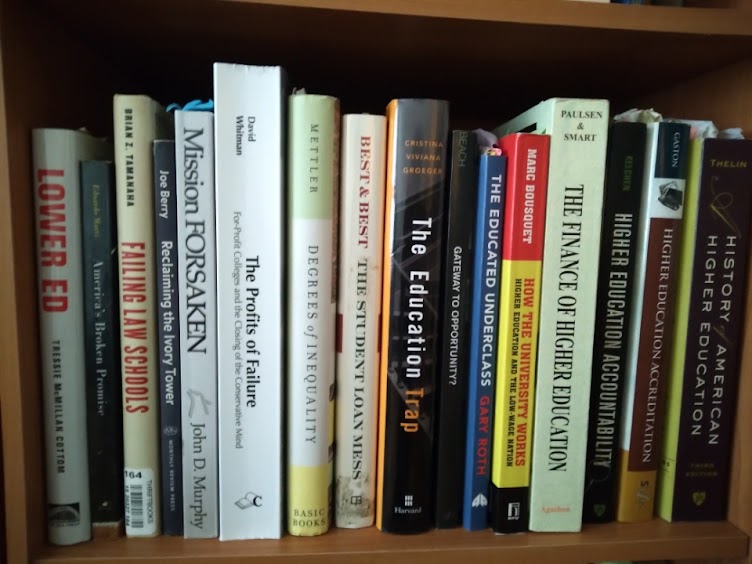
    Books

    • Alexander, Bryan (2020). Academia Next: The Futures of Higher Education. Johns Hopkins Press.  
    • Alexander, Bryan (2023).  Universities on Fire. Johns Hopkins Press.  
    • Angulo, A. (2016). Diploma Mills: How For-profit Colleges Stiffed Students, Taxpayers, and the American Dream. Johns Hopkins University Press.
    • Apthekar,  Bettina (1966) Big Business and the American University. New Outlook Publishers.  
    • Apthekar, Bettina (1969). Higher education and the student rebellion in the United States, 1960-1969 : a bibliography.
    • Archibald, R. and Feldman, D. (2017). The Road Ahead for America’s Colleges & Universities. Oxford University Press.
    • Armstrong, E. and Hamilton, L. (2015). Paying for the Party: How College Maintains Inequality. Harvard University Press.
    • Arum, R. and Roksa, J. (2011). Academically Adrift: Limited Learning on College Campuses. University of Chicago Press. 
    • Baldwin, Davarian (2021). In the Shadow of the Ivory Tower: How Universities Are Plundering Our Cities. Bold Type Books.  
    • Bennett, W. and Wilezol, D. (2013). Is College Worth It?: A Former United States Secretary of Education and a Liberal Arts Graduate Expose the Broken Promise of Higher Education. Thomas Nelson.
    • Berg, I. (1970). “The Great Training Robbery: Education and Jobs.” Praeger.
    • Berman, Elizabeth P. (2012). Creating the Market University.  Princeton University Press. 
    • Berry, J. (2005). Reclaiming the Ivory Tower: Organizing Adjuncts to Change Higher Education. Monthly Review Press.
    • Best, J. and Best, E. (2014) The Student Loan Mess: How Good Intentions Created a Trillion-Dollar Problem. Atkinson Family Foundation.
    • Bledstein, Burton J. (1976). The Culture of Professionalism: The Middle Class and the Development of Higher Education in America. Norton.

    • Bogue, E. Grady and Aper, Jeffrey.  (2000). Exploring the Heritage of American Higher Education: The Evolution of Philosophy and Policy. 
    • Bok, D. (2003). Universities in the Marketplace : The Commercialization of Higher Education.  Princeton University Press. 
    • Bousquet, M. (2008). How the University Works: Higher Education and the Low Wage Nation. NYU Press.
    • Brennan, J & Magness, P. (2019). Cracks in the Ivory Tower. Oxford University Press. 
    • Brint, S., & Karabel, J. The Diverted Dream: Community colleges and the promise of educational opportunity in America, 1900–1985. Oxford University Press. (1989).
    • Cabrera, Nolan L. (2024) Whiteness in the Ivory Tower: Why Don’t We Notice the White Students Sitting Together in the Quad? Teachers College Press.
    • Cabrera, Nolan L. (2018). White Guys on Campus: Racism, White Immunity, and the Myth of “Post-Racial” Higher Education. Rutgers University Press.
    • Caplan, B. (2018). The Case Against Education: Why the Education System Is a Waste of Time and Money. Princeton University Press.
    • Cappelli, P. (2015). Will College Pay Off?: A Guide to the Most Important Financial Decision You’ll Ever Make. Public Affairs.
    • Cassuto, Leonard (2015). The Graduate School Mess. Harvard University Press. 
    • Caterine, Christopher (2020). Leaving Academia. Princeton Press. 
    • Carney, Cary Michael (1999). Native American Higher Education in the United States. Transaction.
    • Childress, H. (2019). The Adjunct Underclass: How America’s Colleges Betrayed Their Faculty, Their Students, and Their Mission University of Chicago Press.
    • Cohen, Arthur M. (1998). The Shaping of American Higher Education: Emergence and Growth of the Contemporary System. San Francisco: Jossey-Bass.
    • Collins, Randall. (1979/2019) The Credential Society. Academic Press. Columbia University Press. 
    • Cottom, T. (2016). Lower Ed: How For-profit Colleges Deepen Inequality in America
    • Domhoff, G. William (2021). Who Rules America? 8th Edition. Routledge.
    • Donoghue, F. (2008). The Last Professors: The Corporate University and the Fate of the Humanities.
    • Dorn, Charles. (2017) For the Common Good: A New History of Higher Education in America Cornell University Press.
    • Eaton, Charlie.  (2022) Bankers in the Ivory Tower: The Troubling Rise of Financiers in US Higher Education. University of Chicago Press.
    • Eisenmann, Linda. (2006) Higher Education for Women in Postwar America, 1945–1965. Johns Hopkins U. Press.
    • Espenshade, T., Walton Radford, A.(2009). No Longer Separate, Not Yet Equal: Race and Class in Elite College Admission and Campus Life. Princeton University Press.
    • Faragher, John Mack and Howe, Florence, ed. (1988). Women and Higher Education in American History. Norton.
    • Farber, Jerry (1972).  The University of Tomorrowland.  Pocket Books. 
    • Freeman, Richard B. (1976). The Overeducated American. Academic Press.
    • Gaston, P. (2014). Higher Education Accreditation. Stylus.
    • Ginsberg, B. (2013). The Fall of the Faculty: The Rise of the All Administrative University and Why It Matters
    • Gleason, Philip. Contending with Modernity: Catholic Higher Education in the Twentieth Century. Oxford U. Press, 1995.
    • Golden, D. (2006). The Price of Admission: How America’s Ruling Class Buys its Way into Elite Colleges — and Who Gets Left Outside the Gates.
    • Goldrick-Rab, S. (2016). Paying the Price: College Costs, Financial Aid, and the Betrayal of the American Dream.
    • Graeber, David (2018) Bullshit Jobs: A Theory. Simon and Schuster. 
    • Groeger, Cristina Viviana (2021). The Education Trap: Schools and the Remaking of Inequality in Boston. Harvard Press.

    • Hamilton, Laura T. and Kelly Nielson (2021) Broke: The Racial Consequences of Underfunding Public Universities
    • Hampel, Robert L. (2017). Fast and Curious: A History of Shortcuts in American Education. Rowman & Littlefield.

    • Johnson, B. et al. (2003). Steal This University: The Rise of the Corporate University and the Academic Labor Movement
    • Keats, John (1965) The Sheepskin Psychosis. Lippincott.
    • Kelchen, R. (2018). Higher Education Accountability. Johns Hopkins University Press.
    • Kezar, A., DePaola, T, and Scott, D. The Gig Academy: Mapping Labor in the Neoliberal University. Johns Hopkins Press. 
    • Kinser, K. (2006). From Main Street to Wall Street: The Transformation of For-profit Higher Education
    • Kozol, Jonathan (2006). The Shame of the Nation: The Restoration of Apartheid Schooling in America. Crown. 
    • Kozol, Jonathan (1992). Savage Inequalities: Children in America’s Schools. Harper Perennial.
    • Labaree, David F. (2017). A Perfect Mess: The Unlikely Ascendancy of American Higher Education. Chicago: University of Chicago Press.
    • Labaree, David (1997) How to Succeed in School without Really Learning: The Credentials Race in American Education, Yale University Press.
    • Lafer, Gordon (2004). The Job Training Charade. Cornell University Press.  
    • Loehen, James (1995). Lies My Teacher Told Me. The New Press. 
    • Lohse, Andrew (2014).  Confessions of an Ivy League Frat Boy: A Memoir.  Thomas Dunne Books. 
    • Lucas, C.J. American higher education: A history. (1994).
    • Lukianoff, Greg and Jonathan Haidt (2018). The Coddling of the American Mind: How Good Intentions and Bad Ideas Are Setting Up a Generation for Failure. Penguin Press.
    • Maire, Quentin (2021). Credential Market. Springer.
    • Mandery, Evan (2022) . Poison Ivy: How Elite Colleges Divide Us. New Press. 
    • Marti, Eduardo (2016). America’s Broken Promise: Bridging the Community College Achievement Gap. Excelsior College Press. 
    • Mettler, Suzanne ‘Degrees of Inequality: How the Politics of Higher Education Sabotaged the American Dream. Basic Books. (2014)
    • Newfeld, C. (2011). Unmaking the Public University.
    • Newfeld, C. (2016). The Great Mistake: How We Wrecked Public Universities and How We Can Fix Them.
    • Paulsen, M. and J.C. Smart (2001). The Finance of Higher Education: Theory, Research, Policy & Practice.  Agathon Press. 
    • Rosen, A.S. (2011). Change.edu. Kaplan Publishing. 
    • Reynolds, G. (2012). The Higher Education Bubble. Encounter Books.
    • Roth, G. (2019) The Educated Underclass: Students and the Promise of Social Mobility. Pluto Press
    • Ruben, Julie. The Making of the Modern University: Intellectual Transformation and the Marginalization of Morality. University Of Chicago Press. (1996).
    • Rudolph, F. (1991) The American College and University: A History.
    • Rushdoony, R. (1972). The Messianic Character of American Education. The Craig Press.
    • Selingo, J. (2013). College Unbound: The Future of Higher Education and What It Means for Students.
    • Shelton, Jon (2023). The Education Myth: How Human Capital Trumped Social Democracy. Cornell University Press. 
    • Simpson, Christopher (1999). Universities and Empire: Money and Politics in the Social Sciences During the Cold War. New Press.
    • Sinclair, U. (1923). The Goose-Step: A Study of American Education.
    • Stein, Sharon (2022). Unsettling the University: Confronting the Colonial Foundations of US Higher Education, Johns Hopkins Press. 
    • Stevens, Mitchell L. (2009). Creating a Class: College Admissions and the Education of Elites. Harvard University Press. 
    • Stodghill, R. (2015). Where Everybody Looks Like Me: At the Crossroads of America’s Black Colleges and Culture. 
    • Tamanaha, B. (2012). Failing Law Schools. The University of Chicago Press. 
    • Tatum, Beverly (1997). Why Are All the Black Kids Sitting Together in the Cafeteria. Basic Books
    • Taylor, Barret J. and Brendan Cantwell (2019). Unequal Higher Education: Wealth, Status and Student Opportunity. Rutgers University Press.
    • Thelin, John R. (2019) A History of American Higher Education. Johns Hopkins U. Press.
    • Tolley, K. (2018). Professors in the Gig Economy: Unionizing Adjunct Faculty in America. Johns Hopkins University Press.
    • Twitchell, James B. (2005). Branded Nation: The Marketing of Megachurch, College Inc., and Museumworld. Simon and Schuster.
    • Vedder, R. (2004). Going Broke By Degree: Why College Costs Too Much.
    • Veysey Lawrence R. (1965).The emergence of the American university.
    • Washburn, J. (2006). University Inc.: The Corporate Corruption of Higher Education
    • Washington, Harriet A. (2008). Medical Apartheid: The Dark History of Medical Experimentation on Black Americans from Colonial Times to the Present. Anchor. 
    • Whitman, David (2021). The Profits of Failure: For-Profit Colleges and the Closing of the Conservative Mind. Cypress House.
    • Wilder, C.D. (2013). Ebony and Ivy: Race, Slavery, and the Troubled History of America’s Universities. 
    • Winks, Robin (1996). Cloak and Gown:Scholars in the Secret War, 1939-1961. Yale University Press.
    • Woodson, Carter D. (1933). The Mis-Education of the Negro.  
    • Zaloom, Caitlin (2019).  Indebted: How Families Make College Work at Any Cost. Princeton University Press. 
    • Zemsky, Robert, Susan Shaman, and Susan Campbell Baldridge (2020). The College Stress Test:Tracking Institutional Futures across a Crowded Market. Johns Hopkins University Press. 

    Activists, Coalitions, Innovators, and Alternative Voices

     College Choice and Career Planning Tools

    Innovation and Reform

    Higher Education Policy

    Data Sources

    Trade publications

    Source link

  • Letter From a Region of My Mind

    Letter From a Region of My Mind

    Working in journalism left Inside Higher Ed’s co-founder Doug Lederman little time to read for anything but information, so last summer, when he stepped away from 90-hour workweeks, he told me he wanted to watch less Netflix. I said, “Friend, you came to the right place.” Recommending reading is pretty much the only area where I can make solid contributions these days.

    I started Doug out with things I knew he’d like. Chad Harbach’s The Art of Fielding was an early favorite. I moved him along to Jess Walter’s Beautiful Ruins, The Friend by Sigrid Nunez, James (Percival Everett, not Henry), Meg Wolitzer’s The Interestings and loaded him onto the Louise Penny train.

    But just before I headed to D.C. last March for his official farewell party, I assigned him a novel I’d been wanting to reread and liked the idea of book-clubbing with him: John Williams’s beautiful and heartbreaking Stoner. I’ve often given Doug a hard time about—well, everything—but especially the fact that he’s never actually been in higher ed. He’s only peered in from outside with a reporter’s magnifying glass, exposing our flaws and fault lines, doing his essential duty as a journalist.

    When Doug asked me to work with him as a thought partner to create a newsletter for upper-level administrators, he wanted to bring tough love to leaders. He confessed to having a case of the fuck-its, disappointed that higher ed has been so slow to change and unwilling to take responsibility for some missteps. As we know, disappointment can only come from love, and is much harder for recipients to bear.

    I responded in my typically tactful fashion, asking him, “Who the fuck are you to have a case of the fuck-its? Do not speak to me of the fuck-its! Have you had to read millions of pages of academic monographs? Have you heard academics complain that their names were too small on book covers? Have you denied thousands of qualified applicants admission to their dream college, or sat through interminable Faculty Senate meetings group-copyediting policies? Have you taught classes that flop or graduate students who just can’t?”

    In other words, I told the co-founder of IHE he had little idea what it was like to be in higher ed, especially from the perspective of a faculty or staff member. Given his role and prominence in the industry, Doug’s attention is always sought after, a high-value treat. In our world, he is beef jerky, not a Milk-Bone.

    I thought it time for him to use his leisure reading to get a deeper understanding of what it’s like to be a regular professor. Not an oversize character like Morris Zapp (my old boss, Stanley) or even Lucky Hank Devereaux (or Lucky Jim).

    Stoner follows the fictional life and career of an English professor at the University of Missouri in the early part of the last century. Early in the novel, and just before the sinking of the Lusitania, the sharpest of a group of three young academics asks his fellows, “Have you gentlemen ever considered the question of the true nature of the University?”

    Mr. Stoner “sees it as a great repository, like a library or a whorehouse, where men come of their free will and select that which will complete them, where all work together like little bees in a common hive.” Mr. Finch, with his “simple mind,” sees it as “a kind of spiritual sulphur-and-molasses that you administer every fall to get the little bastards through another winter.” Finch goes on, naturally, to become a dean.

    But they are both wrong, claims the character named Masters. The university ”is an asylum …. a rest home, for the infirm, the aged, the discontent, the otherwise incompetent.” His self-diagnosis: ”I’m too bright for the world, and I won’t keep my mouth shut about it.” He concludes, ”But bad as we are, we’re better than those on the outside, in the muck, the poor bastards of the world. We do no harm, we say what we want, and we get paid for it.”

    The book, published in 1965, presents characters that feel so current and vibrant you can imagine having a cocktail with them. In the times we now find ourselves, Stoner may become popular again—but not for all the right reasons.

    I have friends who have long said they’re done reading things by dead white men. When Doug and I were in college, that was pretty much the entire curriculum, with the exception of the 19th century gals, an Emily Dickinson here, a Frederick Douglass there. This reluctance is understandable, given how long the canon excluded previously silenced voices. Yet, I don’t discriminate. Stoner offers profound insights into institutional structures that persist today.

    These thoughts were on my mind as I finished my reread just before our flight to D.C. to celebrate Doug’s retirement next chapter, where institutional structures of a different kind awaited us in marble and glass.

    We had half a day before the event and my husband, Toby, and I wanted to be tourists. It had not been my intention to speed-walk through four museums in five hours. (Toby could spend hours in front of one painting, but he loves me and is a good sport.)

    My childhood consisted of trips downstate to see grandparents in New York City, which often involved visits to museums. A favorite was the one that hosted the squid and the whale. Unconsciously, I bought into the primate visions described by Donna Haraway about hierarchies—her critique of how science museums construct narratives of power and evolution that shape our understanding.

    Fifty years later, I was eager to see what had changed. We started at Natural History, moved on to American History, then African American, and ended up at the Holocaust. In March 2025, this journey was not, it won’t surprise you to learn, an uplifting experience. The museums, like higher education itself, told a complex story of American identity that is now under dire threat.

    I sped through to parse the presentation. How did the curators choose to tell the stories, some of which I know well, and which, as an adult, I would always prefer to read? Since I began my career publishing books in American history at Oxford University Press, I’ve imbibed a decent amount of quality scholarship.

    When I became an acquisitions editor at Duke University Press in 1991, I was intrigued by the work of scholars like KimberlĂ© Crenshaw, Patricia Williams, Mari Matsuda, Derrick Bell and other theorists who used narrative to examine how our legal system perpetuated structural inequalities. Most people weren’t reading law journals back then, and it took a while for those ideas to make it into the mainstream

    Academe cranked open the curriculum to face historical truths not always self-evident: We are a country built on a commitment to diversity, equity and inclusion. At times we fell short of the mark, but the arc of the universe is long, and we were taught the direction in which it bends.

    Except. The rise to power documented in that last somber building we visited reads to me like a blueprint for what’s happening today. Before I could remember not knowing it, my father drilled into me that what it means to be a Jew is there’s always someone who wants to put you in an oven. That was made tangible by the numbers I saw tattooed on the arm of Great-Grandpa Max.

    How much longer will busloads of boisterous students milling around these repositories of culture be able to learn our history? When will the whitewashing take hold so that the ideas contained in the curators’ vision—in the works we’ve published since the latter part of the last century—are mummified?

    One of many chilling moments: coming on a small story I knew from the film Who Will Write Our History? Historian Emanuel Ringelblum organized Jews in the Warsaw Ghetto in 1939 to document unprecedented actions. He collected materials, placed them in milk cans and buried them throughout the city. The archive known as the Oneg Shabbat is housed in Jerusalem at Yad Vashem.

    It was impossible in March not to feel that my colleagues at IHE and other media outlets are busting their butts at a similar task: chronicling the last days of an era of inclusion.

    How long before these exhibits come down, replaced by gold toilets in buildings repurposed for hotels and casinos?

    Just as the bright shining moment of Camelot disappeared for a previous generation, many of us already look back on Hamilton with nostalgia. A too-quick tour of museums in our nation’s capital filled me with love for America and the things that made us great. When I left, all I felt was grief. What happens if we don’t rise to today’s challenge?

    This sobering experience in D.C. brought me back to my conversation with Doug about higher education’s resistance to change. A reading of Stoner should not feel as resonant and familiar as it does. Little about faculty structure and the ethos of academe has evolved in the last century.

    Walking through those endangered halls of American memory, what Doug has long been saying to leaders is urgent: We need more than just better storytelling about higher education—we need to fundamentally reimagine it. And we need to do it now.

    The buried milk cans of our moment will someday be unearthed. The articles, reports and assessments documenting higher education’s struggles will serve as testimony to what we did—or failed to do—in this critical period. My only hope is that they’ll reveal how colleges and universities finally broke free from institutional inertia to continue to do the work of educating our citizenry toward truth and justice for all.

    Note: This reflection was published March 22, 2025, as an issue of The Sandbox. I wanted to share it as part of my new column here for two reasons (and with apologies to subscribers). First, if you’ve been reading the news, you’ll see that I wish I’d been wrong. Just a week after this first came out, the dismantling began. And now we’re seeing a scrubbing of our nation’s history in essential cultural institutions and not just in D.C.

    Also, I got a ton of responses from readers thanking me for putting them onto Stoner. So now, you’re welcome, friends.

    Rachel Toor is a contributing editor at Inside Higher Ed and the co-founder of The Sandbox, a weekly newsletter that allows presidents and chancellors to write anonymously. She is also a professor of creative writing and the author of books on weirdly diverse subjects. Reach her here with questions, comments and complaints compliments.

    Source link

  • SCOTUS Ruling Has “Bleak Implications” for Researchers

    SCOTUS Ruling Has “Bleak Implications” for Researchers

    Photo illustration by Justin Morrison/Inside Higher Ed | SDI Productions/E+/Getty Images

    Hope is fading that federally funded researchers whose grants were terminated by the National Institutes of Health earlier this year will be able to resume their work as planned.

    On Thursday, the United States Supreme Court ruled 5 to 4 that any legal challenges to the grant terminations should be litigated in the Court of Federal Claims, not the federal district court system they’ve been moving through for months.

    It’s the latest twist in federally funded researchers’ legal fight to claw back nearly $800 million in medical research grants—though accounting for the multiyear grants that the NIH is refusing to fulfill puts that figure closer to $2 billion—the NIH terminated for running afoul of the Trump administration’s ideological priorities. Many of the grants funded programs that advanced diversity, equity and inclusion initiatives and research projects focused on topics such as LGBTQ+ health, vaccine hesitancy and racial disparities.

    Researchers sued the NIH in April and got a win in June when a federal district court judge in Massachusetts ordered the agency to reinstate the grants immediately. Although the NIH has since reinstated many of those grants, Scott Delaney, an epidemiologist at Harvard University and former lawyer who’s been tracking grant cancellations, told Inside Higher Ed that after Thursday’s ruling those reinstated grants will “almost certainly” be re-terminated. If that happens, “I don’t think they’ll get their money back.”

    That’s in part because the Supreme Court said researchers will have to re-file their lawsuits in federal claims court, which generally doesn’t have the power to issue injunctive relief that could keep grant money flowing during the litigation process. And it could take months or even years for the claims court to decide if researchers are owed damages.

    “Nobody has that kind of time. The nature of research is that you can’t just stop and restart it many months later,” said Delaney. “Folks have already had to do that once and many aren’t able to—they’ve had to lay off staff and lost contact with study participants. This additional delay probably renders the research unviable going forward.”

    Trump ‘Always Wins’

    Delaney is among numerous experts and advocates who say the decision is both a blow to the scientific research enterprise and the latest evidence that the Supreme Court is inclined to interpret the law to favor the Trump administration’s whims.

    “Make no mistake: This was a decision critical to the future of the nation, and the Supreme Court made the wrong choice,” the Association of American Medical Colleges said in a statement. “History will look upon these mass NIH research grant terminations with shame. The Court has turned a blind eye to this grievous attack on science and medicine, and we call upon Congress to take action to restore the rule of law at NIH.”

    Jeremy Berg, who served as director of the National Institute of General Medical Sciences from 2003 to 2011, said in an email to Inside Higher Ed that while “many (but not all) grants from the lawsuits that had been terminated have been reinstated at this point,” the big question the Supreme Court’s ruling raises now “is whether NIH will start to re-terminate them.”

    Although a 5-4 majority did agree on Thursday that the district can review NIH’s reasoning for the terminations and kept in place a court order blocking the guidance that prompted the cancellations, Berg said the mixed ruling is “potentially very damaging” because redirecting the case to a different court means “the stay blocking the required reinstatements could go into effect.”

    He added that Justice Ketanji Brown Jackson’s dissent sums up his interpretation of the ruling’s implications. “This is Calvinball jurisprudence with a twist,” Jackson wrote. “Calvinball has only one rule: There are no fixed rules. We seem to have two: That one, and this Administration always wins.”

    That’s how Samuel Bagenstos, a professor of law and public policy at the University of Michigan and former general counsel to the Department of Health and Human Services, interpreted the decision, too.

    “The message the courts sent yesterday is very strong that they are going to let the Trump administration shut down the grants right now and remit grantees to the really uncertain process of going to the Court of Federal Claims and potentially getting damages in the future,” he said in an interview with Inside Higher Ed Friday.

    “But that’s really cold comfort for the grantees,” Bagenstos added. “If they can’t get the grants restarted right now, they probably can’t continue their research projects, and the prospect of maybe getting damages in the future doesn’t keep those research projects alive. It’s a bad sign for the entire research community.”

    The NIH is far from the only federal agency that has canceled federal research grants that don’t align with the Trump administration’s ideologies. The National Science Foundation, the Education Department and the National Endowment for the Humanities are all facing legal challenges in federal district courts after freezing or canceling grants.

    And the Supreme Court’s ruling on the NIH’s terminations has implications for those cases, as well.

    “The message seems to be pretty clear that if you have an ongoing grant that’s been terminated and you want to go to court to keep the money flowing, you’re out of luck,” Bagenstos said. “It’s got very bleak implications for all researchers who are depending on continuing the flow of federal grants.”

    Source link

  • Federal Judge Rules in Favor of Religious Colleges in Minn.

    Federal Judge Rules in Favor of Religious Colleges in Minn.

    Religious colleges that require students to sign a faith statement cannot be shut out of a Minnesota program that funds the dual enrollment of high school students in the state’s public and private postsecondary institutions, a federal judge ruled Friday.

    U.S. District Judge Nancy Brasel’s ruling overturns a Minnesota law prohibiting Christian colleges that participate in the state’s 40-year-old Postsecondary Enrollment Options program from forcing students to pass a religious test. The state Education Department and LGBTQ+ advocates had sought such legislation for years on the grounds that faith statements discriminate against students who are not Christian, straight or cisgender. It finally passed in 2023, under a Democratic State Legislature.

    The families of several high school students seeking to earn credits at two Christian institutions in the state, Crown College and the University of Northwestern, then sued, arguing that the law violated their First Amendment right to religious freedom. The ban on faith statements was suspended while the legal battle played out.

    “This dispute requires the court to venture into the delicate constitutional interplay of religion and publicly-funded education,” Judge Brasel said in her 70-page ruling. “In doing so, the court heeds the Supreme Court’s instruction that the First Amendment gives special solicitude to the rights of religious organizations.”

    Brasel noted in her ruling that the two Christian colleges have received nearly $40 million to cover the costs of the PSEO program since the 2017–18 academic year; she wrote that the University of Northwestern admits about 70 percent of dual-enrollment applicants. Over all, some 60,000 high school students have benefited from PSEO, The Minneapolis Star Tribune noted.

    The Becket Fund for Religious Liberty, which represented the plaintiffs, applauded the decision.

    “Minnesota tried to cut off educational opportunities to thousands of high schoolers simply for their faith. That’s not just unlawful—it’s shameful,” said Becket senior counsel Diana Thomson, according to the Associated Press. “This ruling is a win for families who won’t be strong-armed into abandoning their beliefs, and a sharp warning to politicians who target them.”

    Source link