Author: admin

  • Fewer Young People See Math Skills as Very Important in Work

    Fewer Young People See Math Skills as Very Important in Work

    Higher education stakeholders have noted that math anxiety can hold students back from pursuing some disciplines or major programs, but a new analysis from Gallup finds that young Americans over all place less importance on math skills compared to the general population.

    While over half of all Americans rate math skills as “very important” in their work (55 percent) and personal (63 percent) lives, only 38 percent of young people (ages 18 to 24) said math skills are very important in their work life and 37 percent in their personal life, according to a December survey of 5,100 U.S. adults.

    The survey highlights generational divisions in how math skills are perceived, with adults older than 55 most likely to see math as very important compared to younger adults, and Gen Z least likely to attribute value to math skills.

    To Sheila Tabanli, a mathematics professor at Rutgers University, the low ratings point to a lack of perceived connection between math skills and career development, despite the clear correlation she sees.

    Tabanli said it can be hard to convince many Gen Z and Alpha students that math content is necessary for their daily lives, in part because access to information is so convenient and they can perform calculations on their phones or online.

    “We need to transition from focusing too much on the concept, the domain, the content—which we do love as math people, otherwise we wouldn’t be doing it for a living—but students don’t see that connection [to employable skills],” Tabanli said.

    When asked how important math skills were for the majority of the U.S. workforce, 40 percent of young adults rated having math skills as very important—the lowest rating of nine skills evaluated, including reading, language, technology and leadership, according to Gallup.

    Young people also rated the importance of math skills for the general workforce, as compared to their own lives, the lowest of all age cohorts. Adults ages 55 to 64 (71 percent) and 65 and older (68 percent) were most likely to say math is a very important skill for the general workforce.

    Most career competencies that colleges and universities teach, such as those by the National Association for Colleges and Employers, focus on broader skills—including critical thinking, leadership, communication and teamwork—as essential for workplace success. Math can teach students how to solve problems and engage with difficult content, which Tabanli argues are just as important for an early-career professional.

    One reason a young adult might not rate math skills highly is because many students face undue math anxiety or a skepticism about their own ability to do math, falling into the belief that they’re not “math people,” Tabanli said.

    In response, Tabanli believes professors should help students apply computational skills to their daily lives or link content to other classes to encourage students to invest in their math learning. While this may be an additional step for a faculty member to take, Tabanli considers it a disservice to neglect this connection.

    Professors can also strive to make themselves and the content more human and approachable by sharing information about their lives, their careers and why they’re passionate about the subject, Tabanli said.

    Source link

  • Letter From a Region of My Mind

    Letter From a Region of My Mind

    Working in journalism left Inside Higher Ed’s co-founder Doug Lederman little time to read for anything but information, so last summer, when he stepped away from 90-hour workweeks, he told me he wanted to watch less Netflix. I said, “Friend, you came to the right place.” Recommending reading is pretty much the only area where I can make solid contributions these days.

    I started Doug out with things I knew he’d like. Chad Harbach’s The Art of Fielding was an early favorite. I moved him along to Jess Walter’s Beautiful Ruins, The Friend by Sigrid Nunez, James (Percival Everett, not Henry), Meg Wolitzer’s The Interestings and loaded him onto the Louise Penny train.

    But just before I headed to D.C. last March for his official farewell party, I assigned him a novel I’d been wanting to reread and liked the idea of book-clubbing with him: John Williams’s beautiful and heartbreaking Stoner. I’ve often given Doug a hard time about—well, everything—but especially the fact that he’s never actually been in higher ed. He’s only peered in from outside with a reporter’s magnifying glass, exposing our flaws and fault lines, doing his essential duty as a journalist.

    When Doug asked me to work with him as a thought partner to create a newsletter for upper-level administrators, he wanted to bring tough love to leaders. He confessed to having a case of the fuck-its, disappointed that higher ed has been so slow to change and unwilling to take responsibility for some missteps. As we know, disappointment can only come from love, and is much harder for recipients to bear.

    I responded in my typically tactful fashion, asking him, “Who the fuck are you to have a case of the fuck-its? Do not speak to me of the fuck-its! Have you had to read millions of pages of academic monographs? Have you heard academics complain that their names were too small on book covers? Have you denied thousands of qualified applicants admission to their dream college, or sat through interminable Faculty Senate meetings group-copyediting policies? Have you taught classes that flop or graduate students who just can’t?”

    In other words, I told the co-founder of IHE he had little idea what it was like to be in higher ed, especially from the perspective of a faculty or staff member. Given his role and prominence in the industry, Doug’s attention is always sought after, a high-value treat. In our world, he is beef jerky, not a Milk-Bone.

    I thought it time for him to use his leisure reading to get a deeper understanding of what it’s like to be a regular professor. Not an oversize character like Morris Zapp (my old boss, Stanley) or even Lucky Hank Devereaux (or Lucky Jim).

    Stoner follows the fictional life and career of an English professor at the University of Missouri in the early part of the last century. Early in the novel, and just before the sinking of the Lusitania, the sharpest of a group of three young academics asks his fellows, “Have you gentlemen ever considered the question of the true nature of the University?”

    Mr. Stoner “sees it as a great repository, like a library or a whorehouse, where men come of their free will and select that which will complete them, where all work together like little bees in a common hive.” Mr. Finch, with his “simple mind,” sees it as “a kind of spiritual sulphur-and-molasses that you administer every fall to get the little bastards through another winter.” Finch goes on, naturally, to become a dean.

    But they are both wrong, claims the character named Masters. The university ”is an asylum …. a rest home, for the infirm, the aged, the discontent, the otherwise incompetent.” His self-diagnosis: ”I’m too bright for the world, and I won’t keep my mouth shut about it.” He concludes, ”But bad as we are, we’re better than those on the outside, in the muck, the poor bastards of the world. We do no harm, we say what we want, and we get paid for it.”

    The book, published in 1965, presents characters that feel so current and vibrant you can imagine having a cocktail with them. In the times we now find ourselves, Stoner may become popular again—but not for all the right reasons.

    I have friends who have long said they’re done reading things by dead white men. When Doug and I were in college, that was pretty much the entire curriculum, with the exception of the 19th century gals, an Emily Dickinson here, a Frederick Douglass there. This reluctance is understandable, given how long the canon excluded previously silenced voices. Yet, I don’t discriminate. Stoner offers profound insights into institutional structures that persist today.

    These thoughts were on my mind as I finished my reread just before our flight to D.C. to celebrate Doug’s retirement next chapter, where institutional structures of a different kind awaited us in marble and glass.

    We had half a day before the event and my husband, Toby, and I wanted to be tourists. It had not been my intention to speed-walk through four museums in five hours. (Toby could spend hours in front of one painting, but he loves me and is a good sport.)

    My childhood consisted of trips downstate to see grandparents in New York City, which often involved visits to museums. A favorite was the one that hosted the squid and the whale. Unconsciously, I bought into the primate visions described by Donna Haraway about hierarchies—her critique of how science museums construct narratives of power and evolution that shape our understanding.

    Fifty years later, I was eager to see what had changed. We started at Natural History, moved on to American History, then African American, and ended up at the Holocaust. In March 2025, this journey was not, it won’t surprise you to learn, an uplifting experience. The museums, like higher education itself, told a complex story of American identity that is now under dire threat.

    I sped through to parse the presentation. How did the curators choose to tell the stories, some of which I know well, and which, as an adult, I would always prefer to read? Since I began my career publishing books in American history at Oxford University Press, I’ve imbibed a decent amount of quality scholarship.

    When I became an acquisitions editor at Duke University Press in 1991, I was intrigued by the work of scholars like Kimberlé Crenshaw, Patricia Williams, Mari Matsuda, Derrick Bell and other theorists who used narrative to examine how our legal system perpetuated structural inequalities. Most people weren’t reading law journals back then, and it took a while for those ideas to make it into the mainstream

    Academe cranked open the curriculum to face historical truths not always self-evident: We are a country built on a commitment to diversity, equity and inclusion. At times we fell short of the mark, but the arc of the universe is long, and we were taught the direction in which it bends.

    Except. The rise to power documented in that last somber building we visited reads to me like a blueprint for what’s happening today. Before I could remember not knowing it, my father drilled into me that what it means to be a Jew is there’s always someone who wants to put you in an oven. That was made tangible by the numbers I saw tattooed on the arm of Great-Grandpa Max.

    How much longer will busloads of boisterous students milling around these repositories of culture be able to learn our history? When will the whitewashing take hold so that the ideas contained in the curators’ vision—in the works we’ve published since the latter part of the last century—are mummified?

    One of many chilling moments: coming on a small story I knew from the film Who Will Write Our History? Historian Emanuel Ringelblum organized Jews in the Warsaw Ghetto in 1939 to document unprecedented actions. He collected materials, placed them in milk cans and buried them throughout the city. The archive known as the Oneg Shabbat is housed in Jerusalem at Yad Vashem.

    It was impossible in March not to feel that my colleagues at IHE and other media outlets are busting their butts at a similar task: chronicling the last days of an era of inclusion.

    How long before these exhibits come down, replaced by gold toilets in buildings repurposed for hotels and casinos?

    Just as the bright shining moment of Camelot disappeared for a previous generation, many of us already look back on Hamilton with nostalgia. A too-quick tour of museums in our nation’s capital filled me with love for America and the things that made us great. When I left, all I felt was grief. What happens if we don’t rise to today’s challenge?

    This sobering experience in D.C. brought me back to my conversation with Doug about higher education’s resistance to change. A reading of Stoner should not feel as resonant and familiar as it does. Little about faculty structure and the ethos of academe has evolved in the last century.

    Walking through those endangered halls of American memory, what Doug has long been saying to leaders is urgent: We need more than just better storytelling about higher education—we need to fundamentally reimagine it. And we need to do it now.

    The buried milk cans of our moment will someday be unearthed. The articles, reports and assessments documenting higher education’s struggles will serve as testimony to what we did—or failed to do—in this critical period. My only hope is that they’ll reveal how colleges and universities finally broke free from institutional inertia to continue to do the work of educating our citizenry toward truth and justice for all.

    Note: This reflection was published March 22, 2025, as an issue of The Sandbox. I wanted to share it as part of my new column here for two reasons (and with apologies to subscribers). First, if you’ve been reading the news, you’ll see that I wish I’d been wrong. Just a week after this first came out, the dismantling began. And now we’re seeing a scrubbing of our nation’s history in essential cultural institutions and not just in D.C.

    Also, I got a ton of responses from readers thanking me for putting them onto Stoner. So now, you’re welcome, friends.

    Rachel Toor is a contributing editor at Inside Higher Ed and the co-founder of The Sandbox, a weekly newsletter that allows presidents and chancellors to write anonymously. She is also a professor of creative writing and the author of books on weirdly diverse subjects. Reach her here with questions, comments and complaints compliments.


    Source link

  • Howard President Steps Down, Former President Appointed Interim

    Howard President Steps Down, Former President Appointed Interim

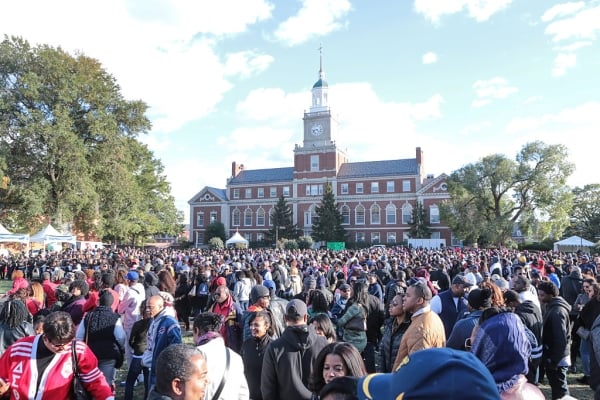
    Cheriss May/NurPhoto via Getty Images

    Howard University president Ben Vinson III will step down Aug. 31, two years after assuming the role and two weeks after the start of fall classes, university officials announced Friday. Former Howard president Wayne A. I. Frederick will serve as interim president. 

    “It has been an honor to serve Howard,” Vinson said in a statement. “At this point, I will be taking some time to be with my family and continue my research activities. I look forward to using my experiences as president to continue to serve higher education in the future.” 

    University officials declined to comment about why Vinson is leaving only two years after he took up the helm. During his tenure, the Washington, D.C.–based HBCU became an R-1 research institution and brought on several high-profile faculty, including journalist Nikole Hannah-Jones, author Ta-Nehisi Coates and historian Ibram X. Kendi. The university also hosted Kamala Harris’s election night watch party.

    But the past year has also brought its share of challenges. In May, the Trump administration proposed cutting Howard’s federal funding by $64 million in fiscal year 2026, bringing it back to its 2021 funding level. Over the summer, the administration took heat from students over surprise bills that appeared on their accounts when the university transitioned to a new student financial platform, and some students turned to crowdfunding to pay those bills. 

    “On behalf of the Howard University Board of Trustees, we extend our sincere gratitude to Dr. Vinson for his service and leadership as president,” board chair Leslie Hale said in a statement. “We extend our very best wishes to him in his future endeavors.”

    Frederick, who served as president of Howard from 2014 to 2023, will remain interim president while the board conducts a nationwide search for a permanent replacement.

    Source link

  • Censorship at Northwestern Worse After Dreger’s Resignation

    Censorship at Northwestern Worse After Dreger’s Resignation

    Ten years ago, on Aug. 24, 2015, Alice Dreger submitted her resignation as a tenured professor at Northwestern University’s Feinberg School of Medicine. Dreger was protesting the censorship of an academic journal at Northwestern called Atrium, for which she had served as guest editor of the 2014 issue with the theme “Bad Girls.” That edition included a controversial essay by disability rights advocate William Peace, who wrote about receiving oral sex from a nurse in the 1970s. Northwestern officials removed Atrium’s online issues for 14 months, restoring access to it only after Dreger announced she was going public about the censorship.

    Dreger wasn’t even the first professor to quit in protest over the censorship of Atrium. Kristi Kirschner, a clinical professor of medical humanities and bioethics, resigned in December 2014 because of the repression.

    But Northwestern demanded a new editorial board (including a public relations official) to oversee the journal in the future, which Dreger called a “censorship committee.” The faculty editors of Atrium refused to accept administrative control over its content, and it has never published another issue.

    Dreger recently wrote about her “disappointment (and that tablespoon of regret) at having accidentally caused the end of Atrium. For the magazine was such a gem.” But, of course, she didn’t cause the end of the journal—Northwestern administrators did by making unacceptable demands for control. The blame for censorship always must belong to the censor for suppressing controversy, and not the censored for causing controversy.

    Dreger’s resignation, and the censorship that prompted it, received much less attention than it deserved. This year is also the 10th anniversary of another case at Northwestern that was far more publicized: The Title IX investigation of Laura Kipnis over her essay “Sexual Paranoia Strikes Academe” that examined the case of a Northwestern professor accused of sexually assaulting a graduate student. Two students filed a complaint of retaliation against Kipnis over her writing, and the university cleared her after a lengthy investigation. While Kipnis obviously should never have been investigated for expressing her opinions on a case of campus sexual misconduct, she never suffered any official penalty or censorship.

    By contrast, the censorship of Atrium actually did lead to the demise of a respected academic journal (and the loss of the two professors who protested it). But while the Kipnis case fit a very popular narrative of politically correct leftists demanding suppression, the Atrium case exposed the reality on campus: Conservative censorship was more repressive but much less publicized than the trendy complaints about the PC police.

    Another example of this at Northwestern occurred in 2016, when political science professor Jackie Stevens was suspended and banned from campus after she complained that an administrator had yelled at her and slammed a door. Without any evidence and in violation of its due process policies, Northwestern officials contended that Stevens posed an immediate violent threat to the campus and forced her to undergo a psychological evaluation (which found no danger) before lifting the suspension and banishment. Stevens had been a harsh critic of the administration and was a leader of the successful faculty effort to prevent a retired general without a Ph.D. from being appointed head of an international studies program.

    Looking back at the Dreger resignation a decade ago, it’s hard to feel optimistic, because censorship on campus is even worse today. In the past year, Northwestern University’s actions have been some of the most repressive in the entire history of the institution. In February, Northwestern’s administration adopted the International Holocaust Remembrance Alliance definition of antisemitism, which the Foundation for Individual Rights and Expression has condemned because it “will chill campus speech.”

    One little-known example of Northwestern’s censorship is shockingly reminiscent of what happened to Atrium, except that it’s much worse. In February, Northwestern officials took down the entire website of the Gender and Sexuality Resource Center in response to President Donald Trump’s executive order “Ending Illegal Discrimination and Restoring Merit-Based Opportunity.” GSRC director Matt Abtahi didn’t go public about the censorship, but wrote an April 14 email to his staff to explain the removal of the website: “This last month working with the lawyers and senior leadership at NU has been particularly gutting.”

    He added, “The use of civil rights law and discrimination policy to advance these kinds of changes is alarming.” When Northwestern officials learned about the email, they immediately suspended Abtahi on April 18 and then fired him on April 29 and banned him from campus. Northwestern finally restored the GSRC website in May but censored all of the LGBTQ+ content. The censorship today is far worse than what happened to Atrium, which was finally restored online without censorship and no one was fired for questioning the repression.

    But even more appalling has been Northwestern’s violation of the rights of journalism professor Steven Thrasher. After Thrasher defended a student encampment in spring 2024 to prevent police from arresting protesters, Northwestern’s administration retaliated several months later in the wake of Northwestern president Michael Schill’s testimony before members of Congress who called Thrasher a “goon” and demanded his firing.

    Northwestern used its police powers to order Thrasher’s arrest, although the charges were immediately dismissed. In the fall of 2024, Northwestern suspended Thrasher from teaching for two quarters in violation of campus rules and claimed that he had violated professional norms by questioning the concept of “objectivity” in journalism. After a faculty committee cleared Thrasher of any wrongdoing, Northwestern was forced to reinstate him.

    However, Thrasher was up for tenure in 2025, and Northwestern denied him tenure. When Thrasher publicly criticized that decision and blamed it on retaliation for his criticism of Israel, Northwestern’s administration promptly banned Thrasher from teaching in the spring quarter and the entire 2025–26 academic year, declaring, “Your public lobbying, mischaracterizations and efforts to encourage pressure from groups complicate and compromise the process of tenure review, decision making, and appeal. Therefore, we are concerned about your presence with students in our community.”

    Obviously, criticizing the administration can never be grounds for banning a professor from the classroom for years without due process. Because tenure decisions are secretive, we don’t know if illegitimate, nonacademic judgments affected Thrasher’s case. But we do know that Northwestern’s excuses for twice suspending Thrasher are entirely illegitimate and violate basic norms of academic freedom.

    (Full disclosure: I’m a member of the Illinois AAUP’s Committee A on Academic Freedom and Tenure, and we wrote two letters to Northwestern, condemning its initial suspension of Thrasher and its second suspension of Thrasher that denied him the right to teach during his terminal year after being denied tenure.)

    Despite the extraordinary repression at Northwestern, where merely speaking out against the administration’s censorship can get you immediately banished, faculty and students are resisting efforts to silence dissent. On April 21, 2025, the entire faculty assembly at Northwestern voted 338 to 83 to support a resolution sponsored by the Northwestern AAUP (led by Jackie Stevens) that called upon the university to defend academic freedom, protect free speech and follow due process. But so far Northwestern refuses to back down from its embrace of censorship.

    As Dreger wrote 10 years ago, “An institution in which the faculty are afraid to offend the dean is not an institution where I can in good conscience do my work. Such an institution is not a ‘university,’ in the truest sense of that word.”

    Sadly, Dreger’s warning is going unheeded by Northwestern (and many other “universities”) that are part of a growing wave of repression on campus.

    John K. Wilson was a 2019–20 fellow with the University of California National Center for Free Speech and Civic Engagement and is the author of eight books, including Patriotic Correctness: Academic Freedom and Its Enemies (Routledge, 2008), and his forthcoming book The Attack on Academia. He can be reached at [email protected], or letters to the editor can be sent to [email protected].

    Source link

  • Racial Discrimination on Campus Where 4 of 5 Students Are White?

    Racial Discrimination on Campus Where 4 of 5 Students Are White?

    Administrators at the University of Missouri told a student organization that it could not proceed with a “Black 2 Class Block Party” because the event qualified as “unlawful discrimination.” Is it possible that students who are not Black complained of being denied access to the annual event in prior years? Probably not. This cancellation is one of numerous examples of how institutions are attempting to comply with the Trump administration’s anti-DEI agenda, as Inside Higher Ed reporter Jessica Blake noted in an article last Friday.

    U.S. Department of Education data shows that during the 2023–24 school year, 79 percent of undergraduates on the University of Missouri’s flagship campus were white. Black students were just 5 percent of the undergraduate student body. Put differently, nearly 19,000 students were white and fewer than 1,200 were Black. Numerically, there are not and have never been enough Black students there to create a climate of exclusion for their white counterparts. The same is true among professors—last school year, only 33 of 1,027 tenure-track faculty members at Mizzou were Black, according to statistics published online by the university’s Office of Institutional Research.

    Given these demographics, it seems implausible that collegians in the minority have enough power to routinely and unlawfully discriminate against their peers who comprise the majority. This could be confirmed via systematic analyses of discrimination complaints submitted to the university in recent years. When disaggregated by race, the data is unlikely to show that it is overwhelmingly white students who most often experience racism. Surely few, if any, complaints are about encounters with discrimination at Black student organization events.

    Activities like Mizzou’s annual welcome-week block party are important for Black students, as most will be expected to successfully navigate spaces where they are the only or one of just a few persons from their racial group in every course they take, sometimes in their entire academic majors. Some will be the lone Black students who live on their residence hall floors. In these and other spaces, too many will be met with racial stereotypes, microaggressions and, at times, explicit racial violence. Black student organization events afford them opportunities to meet others who can affirm their sense of belonging at the institution. They may also meet other Black students who can teach them how to navigate campus environments that are anti-Black and otherwise racist.

    The inclusion of “Black” in its title is what made this year’s block party suddenly and presumably discriminatory. Like historically Black colleges and universities, Black culture centers, and African American studies courses, Black student organization events have neither historically nor contemporarily been proven to be spaces that exclude people from other races. Mizzou and universities like it are considerably more likely to find evidence of racial discrimination in predominantly white sorority and fraternity recruitment and member-selection activities, as well as at parties on frat row, than at a student organization event that amplifies black culture.

    As previously noted, 5 percent of Mizzou undergraduates are Black. Noteworthy is that Black men are 2 percent of the student body, yet NCAA data shows that they comprised 62 percent of the football team and 56 percent of the men’s basketball team there last academic school year. Despite generating millions of dollars in revenue for the university, these student athletes and their same-race peers are not allowed to have events that have “Black” in the title.

    “Black college football and basketball players are the most powerful people of color on campus,” I wrote in a Washington Post article 10 years ago. At that time, Black student athletes at Mizzou threatened to skip a football game that would have resulted in a loss of more than $1 million in revenue. This threat was in response to institutional inaction on racism that Black collegians had long experienced there. Within days, the system president and the chancellor of the Columbia campus both resigned.

    Football and basketball players are as powerful there today as they were a decade ago. They can indeed resist anti-DEI efforts that disadvantage them and other students of color. But should they do so in response to a canceled welcome-week block party? Yes, because that one seemingly insignificant event is emblematic of a more expansive demonstration of anti-Blackness on their and other campuses at this time.

    The elimination of culturally resonant programs, centers and institutes, and offices denies Black students access to valuable relationships and resources that bolster their first-year transition experiences, sense of belonging, classroom and out-of-class engagement, academic performance, and retention. Some of the most enduring and transformative advancements for Black collegians in U.S. higher education emerged from student activism. Student athletes, student organization leaders and everyday students who are Black, along with allies and supporters from other racial groups, ought to refuse to allow anyone to mischaracterize activities and spaces as discriminatory just because “Black” is in the title.

    Source link

  • George Mason Must Not Comply With the Government’s Demands (opinion)

    George Mason Must Not Comply With the Government’s Demands (opinion)

    Bill O’Leary/The Washington Post via Getty Images

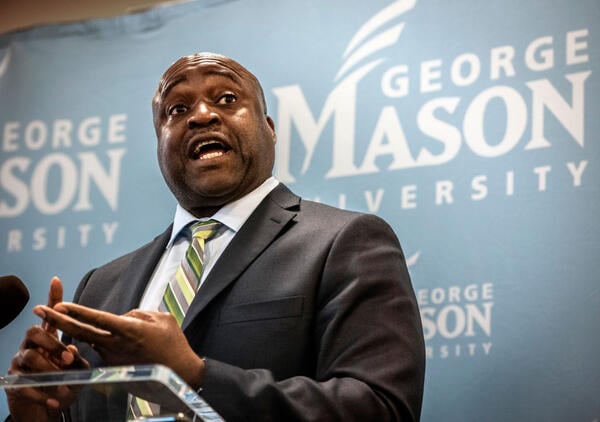
    On Aug. 22, the U.S. Department of Education’s Office for Civil Rights announced that George Mason University, led by President Gregory Washington, violated Title VI of the Civil Rights Act of 1964. The agency demanded an extraordinary remedy—President Washington must issue a personal apology, to be posted “prominently on the University website,” retract statements supporting diversity and abandon practices that even hint at equity-focused hiring. The message to George Mason, where I was a professor of public policy for nearly two decades, is clear: Equity is now presented as a civil rights violation.

    Title VI was meant to prevent discrimination, not to penalize institutions for recognizing that diversity matters. With courts allowing the consideration of diversity as one factor among many in holistic decisions, OCR’s stance appears to be a politically motivated shift away from long-standing interpretations—not a clear enforcement of the law. Just last week, a federal judge “struck down two Trump administration actions aimed at eliminating diversity, equity and inclusion programs at the nation’s schools and universities,” the Associated Press reported.

    Most alarming in OCR’s proposed resolutions is the demand for a personal apology from the university’s first Black president. Washington, who called for eliminating racist legacies on campus, is now being compelled to apologize for doing just that. This isn’t simply an institutional issue—it’s a deeply symbolic act that resembles public shaming of a leader of color for advocating inclusion. It evokes the disturbing history of targeting minority leaders through law and policy.

    This move against Mason is not an isolated incident; it is part of a broader effort to reshape public institutions. Consider the Trump administration’s recent attacks on the Smithsonian Institution. The president criticized the Smithsonian for highlighting slavery’s brutality and diversity in its exhibits, calling the museums “out of control” and “too woke.” He ordered a comprehensive review of Smithsonian content to align it with his vision of “American exceptionalism,” demanding changes to exhibits begin within 120 days.

    Here again, ideology replaces impartial curation. A common thread emerges: Whether in higher education or national museums, diversity and sincere historical reflection are viewed not as civic strengths but as transgressions. Institutional autonomy and academic governance are being subordinated to partisan narratives.

    Should we dismiss the department’s findings as another part of the culture wars? I worry the consequences are much more serious. If OCR’s interpretation of Title VI holds, even referring to diversity as a priority could trigger federal enforcement. Schools are feel compelled to eliminate inclusive programs, silence voices advocating for equity and adhere to a limited historical perspective—all out of fear of losing funding.

    That chilling effect would cripple higher education when it needs vibrancy most. Universities must remain havens of reasoned inquiry, honest history and inclusive excellence. When federal agencies start dictating not only policy but the exact language leaders must use, we enter coercive territory.

    GMU’s faculty, students, alums and board members must unite in opposition to OCR’s unjustified demands. The proposed resolution is not genuine compliance; it’s forced capitulation driven by intimidation. Institutions should not be compelled to apologize for standing up for the principles of true equal opportunity.

    This moment is a clarion call for universities. Yesterday, it was the University of Pennsylvania and Harvard, dragged through headline-grabbing investigations. It was New College of Florida, where political appointees dismantled DEI programs and faculty governance. It was the University of Virginia, accused by the Department of Justice of defying federal antidiscrimination laws. Today it is Mason. Tomorrow, it could be UCLA, Michigan, Wisconsin or any other institution that values diversity, equity and academic freedom. No campus—public or private, flagship or regional—should assume it is immune.

    George Mason should reject the department’s findings and oppose this injustice. Capitulation is not compliance; it’s surrender. If Mason yields, it will damage its credibility and encourage more attacks on higher education nationwide. When universities submit to politically motivated demands disguised as enforcement, they legitimize them and invite more. Silence will be perceived as complicity. Resistance is crucial to protecting the fundamental principles of higher education: autonomy, fairness and the freedom to teach and learn without political interference.

    This is not the first time universities have faced pressure to abandon their commitments to equity and truth. In the 1960s, Southern universities used “law and order” to oppose desegregation. In the 1980s and 1990s, Black faculty and administrators pushing for fair representation often faced vilification and political retaliation. Today, the same tactics are being used, only now they are masked in the language of “civil rights enforcement.”

    What is happening at Mason is part of that history. Title VI, a law born of the civil rights movement to expand opportunity, is being distorted into a tool to silence leaders of color and dismantle diversity initiatives. President Washington’s commitment to pursuing equity should be celebrated, not criminalized. Twisting Title VI into an instrument of ideological punishment and racial scapegoating should alarm everyone who values a democracy that depends on honest history, inclusive leadership and academic freedom.

    And let’s be honest: Coercing a university president to issue a scripted public apology isn’t enforcement—it’s extortion. It’s the same tactic organized crime always uses: Demand submission, humiliate and make an example of one victim to scare others. That has no place in a democracy, much less in higher education.

    The struggle now is the same as it was then: whether our universities will stay places of truth, inclusion and independent thought, or whether they will become tools of partisan control. Mason must choose the first. And the rest of us—in Virginia and across the country—must support it.

    James Finkelstein is professor emeritus of Public Policy at George Mason University

    Source link

  • SCOTUS Ruling Has “Bleak Implications” for Researchers

    SCOTUS Ruling Has “Bleak Implications” for Researchers

    Photo illustration by Justin Morrison/Inside Higher Ed | SDI Productions/E+/Getty Images

    Hope is fading that federally funded researchers whose grants were terminated by the National Institutes of Health earlier this year will be able to resume their work as planned.

    On Thursday, the United States Supreme Court ruled 5 to 4 that any legal challenges to the grant terminations should be litigated in the Court of Federal Claims, not the federal district court system they’ve been moving through for months.

    It’s the latest twist in federally funded researchers’ legal fight to claw back nearly $800 million in medical research grants—though accounting for the multiyear grants that the NIH is refusing to fulfill puts that figure closer to $2 billion—the NIH terminated for running afoul of the Trump administration’s ideological priorities. Many of the grants funded programs that advanced diversity, equity and inclusion initiatives and research projects focused on topics such as LGBTQ+ health, vaccine hesitancy and racial disparities.

    Researchers sued the NIH in April and got a win in June when a federal district court judge in Massachusetts ordered the agency to reinstate the grants immediately. Although the NIH has since reinstated many of those grants, Scott Delaney, an epidemiologist at Harvard University and former lawyer who’s been tracking grant cancellations, told Inside Higher Ed that after Thursday’s ruling those reinstated grants will “almost certainly” be re-terminated. If that happens, “I don’t think they’ll get their money back.”

    That’s in part because the Supreme Court said researchers will have to re-file their lawsuits in federal claims court, which generally doesn’t have the power to issue injunctive relief that could keep grant money flowing during the litigation process. And it could take months or even years for the claims court to decide if researchers are owed damages.

    “Nobody has that kind of time. The nature of research is that you can’t just stop and restart it many months later,” said Delaney. “Folks have already had to do that once and many aren’t able to—they’ve had to lay off staff and lost contact with study participants. This additional delay probably renders the research unviable going forward.”

    Trump ‘Always Wins’

    Delaney is among numerous experts and advocates who say the decision is both a blow to the scientific research enterprise and the latest evidence that the Supreme Court is inclined to interpret the law to favor the Trump administration’s whims.

    “Make no mistake: This was a decision critical to the future of the nation, and the Supreme Court made the wrong choice,” the Association of American Medical Colleges said in a statement. “History will look upon these mass NIH research grant terminations with shame. The Court has turned a blind eye to this grievous attack on science and medicine, and we call upon Congress to take action to restore the rule of law at NIH.”

    Jeremy Berg, who served as director of the National Institute of General Medical Sciences from 2003 to 2011, said in an email to Inside Higher Ed that while “many (but not all) grants from the lawsuits that had been terminated have been reinstated at this point,” the big question the Supreme Court’s ruling raises now “is whether NIH will start to re-terminate them.”

    Although a 5-4 majority did agree on Thursday that the district can review NIH’s reasoning for the terminations and kept in place a court order blocking the guidance that prompted the cancellations, Berg said the mixed ruling is “potentially very damaging” because redirecting the case to a different court means “the stay blocking the required reinstatements could go into effect.”

    He added that Justice Ketanji Brown Jackson’s dissent sums up his interpretation of the ruling’s implications. “This is Calvinball jurisprudence with a twist,” Jackson wrote. “Calvinball has only one rule: There are no fixed rules. We seem to have two: That one, and this Administration always wins.”

    That’s how Samuel Bagenstos, a professor of law and public policy at the University of Michigan and former general counsel to the Department of Health and Human Services, interpreted the decision, too.

    “The message the courts sent yesterday is very strong that they are going to let the Trump administration shut down the grants right now and remit grantees to the really uncertain process of going to the Court of Federal Claims and potentially getting damages in the future,” he said in an interview with Inside Higher Ed Friday.

    “But that’s really cold comfort for the grantees,” Bagenstos added. “If they can’t get the grants restarted right now, they probably can’t continue their research projects, and the prospect of maybe getting damages in the future doesn’t keep those research projects alive. It’s a bad sign for the entire research community.”

    The NIH is far from the only federal agency that has canceled federal research grants that don’t align with the Trump administration’s ideologies. The National Science Foundation, the Education Department and the National Endowment for the Humanities are all facing legal challenges in federal district courts after freezing or canceling grants.

    And the Supreme Court’s ruling on the NIH’s terminations has implications for those cases, as well.

    “The message seems to be pretty clear that if you have an ongoing grant that’s been terminated and you want to go to court to keep the money flowing, you’re out of luck,” Bagenstos said. “It’s got very bleak implications for all researchers who are depending on continuing the flow of federal grants.”

    Source link

  • The resumption of student loan payments means students will need new policies — and our help

    The resumption of student loan payments means students will need new policies — and our help

    After a three-year pause prompted by the pandemic, the clock on student loan repayments suddenly started ticking again in September 2023, and forbearance ended last September. For millions of borrowers like Shauntee Russell, the resumption of payments marked a harsh return to financial reality.  

    Russell, a single mother of three from Chicago, had received $127,000 in student loan forgiveness through the SAVE program, and had experienced profound relief at having that $632 monthly payment lifted from her shoulders. SAVE exemplified both the transformative power of debt relief and the urgent need to continue this fight — but now SAVE has been suspended. 

    Such setbacks cannot be the end of our story, as I document in my forthcoming book. The resumption of loan payments, while painful, must serve as a rallying cry rather than a surrender. We stand at a critical juncture. The Supreme Court’s devastating blow to former President Biden’s initial forgiveness plan and the ongoing legal challenges to programs like SAVE have left 45 million borrowers in a state of financial limbo. The fundamental inequities of our higher education system have never been more apparent.  

    Black students graduate with nearly 50 percent more debt than their white counterparts, while women hold roughly two-thirds of all outstanding student debt — a staggering $1.5 trillion that continues to grow. These aren’t just statistics; they represent systemic barriers that prevent entire communities from achieving economic mobility. 

    Related: Interested in innovations in higher education? Subscribe to our free biweekly higher education newsletter. 

    The students I interviewed while reporting on this crisis reveal the human cost of inaction. They include Maria Sanchez, a nursing student in St. Louis who skips meals to save money and can only access textbooks through library loans.  

    Then there is Robert Carroll, who gave up his dorm room in Cleveland and now alternates between friends’ couches just to stay in school.  

    These students represent the millions who are working multiple jobs, sacrificing basic needs and seeing their dreams deferred under the weight of financial pressure. 

    Yet what strikes me most is their resilience and determination. Despite these overwhelming obstacles, these students persist, driven by the same belief that motivated civil rights leaders like Congressman Adam Clayton Powell Jr. — that education is the pathway to economic empowerment and social justice. 

    The current political landscape, with Donald J. Trump’s return to the presidency and a Republican-controlled Congress, presents unprecedented challenges. Plans to dismantle key borrower protections and efforts to eliminate the Department of Education signal a dark period ahead for student debt relief.  

    But history teaches us that progress often comes through sustained grassroots organizing and innovative policy solutions at multiple levels of government and society. 

    State governments have an opportunity to fill the federal void through programs like Massachusetts’ Student Loan Borrower Bill of Rights and Maine’s Student Loan Repayment Tax Credit. 

    Universities must step up with institutional relief programs, as my own institution, Trinity Washington University, did when it settled $1.8 million in student balances during the pandemic. 

    The Black church, which has long understood the connection between education and liberation, continues to provide crucial support through scholarship programs. Organizations like the United Negro College Fund, the Thurgood Marshall College Fund and the National Association for Equal Opportunity in Higher Education remain vital pillars in making higher education accessible. 

    Still, individual, institutional and state efforts, while necessary, are not sufficient. We need comprehensive federal action that treats student debt as what it truly is: a civil rights issue and a moral imperative. The magnitude of the crisis — it affects Americans across every congressional district — creates unique opportunities for bipartisan coalition building. 

    Smart advocates are already reframing the narrative by replacing partisan talking points with economic arguments that resonate across ideological lines: workforce development, entrepreneurship and American competitiveness on the world stage.  

    When student debt prevents nurses from serving rural communities, teachers from working in underserved schools and young entrepreneurs from starting businesses, it becomes an economic drag that affects everyone.  

    Related: How Trump is changing higher education: The view from 4 campuses 

    The path to federal action may require creative approaches — perhaps through tax policy, regulatory changes or targeted relief for specific professions — but the political mathematics of 45 million impacted voters ultimately makes comprehensive action not just morally necessary, but politically inevitable.  

    Student debt relief is not about handouts — it’s about honoring the promise that education should be a ladder up, not an anchor weighing down entire generations; it’s about ensuring that Shauntee Russell’s relief becomes the norm, not the exception. The fight is far from over.  

    The young activists I met at the March on Washington 60th anniversary understood something profound: Their debt is not their fault, but their fight is their responsibility. They carry forward the legacy of those who came before them who believed that access to education should not depend on one’s family wealth, and that crushing debt should not be the price of pursuing knowledge. 

    The arc of history still bends toward justice — but in this era of political resistance, we must be prepared to bend it ourselves through sustained organizing, innovative policy solutions and an unwavering commitment to the principle that education is a right, not a privilege reserved for the wealthy. 

    The resumption of payments is not the end of this story. It’s the beginning of the next chapter in our fight for educational equity and economic justice. And this chapter, like those before it, will be written by the voices of the millions who refuse to let debt define their destiny. 

    Jamal Watson is a professor and associate dean of graduate studies at Trinity Washington University and an editor at Diverse Issues In Higher Education. 

    Contact the opinion editor at [email protected]. 

    This story about student loan payments was produced by The Hechinger Report, a nonprofit, independent news organization focused on inequality and innovation in education. Sign up for Hechinger’s weekly newsletter.

    The Hechinger Report provides in-depth, fact-based, unbiased reporting on education that is free to all readers. But that doesn’t mean it’s free to produce. Our work keeps educators and the public informed about pressing issues at schools and on campuses throughout the country. We tell the whole story, even when the details are inconvenient. Help us keep doing that.

    Join us today.

    Source link

  • After Hechinger story, Illinois passes law requiring hospitals to connect parents of premature infants with life-changing therapies

    After Hechinger story, Illinois passes law requiring hospitals to connect parents of premature infants with life-changing therapies

    Illinois hospital staff will soon be required by law to refer parents of severely premature infants to services that can help prevent years of intensive and expensive therapy later, when the children are older. The new law follows reporting from The Hechinger Report that exposed how hospitals often fail to connect many eligible parents to these opportunities for their children after they leave neonatal intensive care units.

    Earlier this year, Hechinger contributor Sarah Carr wrote about how, across the country, far too few parents are made aware of the kinds of therapies their babies are entitled to under federal law. Such early intervention services can ultimately reduce the need for these children to require costly special education support as schoolchildren. 

    Carr noted: “Federal law says children with developmental delays, including newborns with significant likelihood of a delay, can get early intervention from birth to age 3. States design their own programs and set their own funding levels, however. They also set some of the criteria for which newborns are automatically eligible, typically relying on qualifying conditions like Down syndrome or cerebral palsy, extreme prematurity or low birthweight. Nationally, far fewer infants and toddlers receive the therapies than should. The stats are particularly bleak for babies under the age of 1: Just 1 percent of these infants get help. Yet an estimated 13 percent of infants and toddlers likely qualify.”

    After the Hechinger Report story was published, Illinois state Rep. Janet Yang Rohr authored legislation to require that hospitals distribute materials informing parents of premature and low birth weight babies about their eligibility for early intervention therapies. The bill also required that hospitals make a nurse or physical therapist available to explain these rights to families.

    Related: Young children have unique needs and providing the right care can be a challenge. Our free early childhood education newsletter tracks the issues. 

    “The problem is that these families often don’t know about these services,” Yang Rohr said last spring, after her chamber passed the bill. “So this bill improves that early intervention process by requiring NICU staff to share information about these services and requires hospital staff to write a referral to these programs for families that are eligible.”

    Illinois Representative Janet Yang Rohr Credit: ILGA

    Illinois Gov. JB Pritzker signed that bill into law earlier this month. It takes effect in January. 

    Carr also wrote: “The stakes are high for these fragile, rapidly growing babies and their brains. Even a few months of additional therapy can reduce a child’s risk of complications and make it less likely that they will struggle with talking, moving and learning down the road. In Chicago and elsewhere, families, advocates and physicians say a lot of the failures boil down to overstretched hospital and early intervention delivery systems that are not always talking with families very effectively, or with each other hardly at all. ‘They really put the onus of helping your child get better outcomes on you,’ said Jaclyn Vasquez, an early childhood consultant who has had three babies of her own spend time in the NICU.”

    “Early intervention is life-changing for many families, as these programs provide critical services and therapies as children develop,” Illinois state Sen. Ram Villivalam said when the bill was sent to Pritzker. “But, these services can only benefit those they are able to reach, which means uplifting the program and expanding its outreach to those who need it is imperative.”

    Contact editor Nirvi Shah at 212-678-3445, securely on Signal at NirviShah.14 or via email at [email protected].

    This story about premature infants was produced by The Hechinger Report, a nonprofit, independent news organization focused on inequality and innovation in education. Sign up for the Hechinger newsletter.

    The Hechinger Report provides in-depth, fact-based, unbiased reporting on education that is free to all readers. But that doesn’t mean it’s free to produce. Our work keeps educators and the public informed about pressing issues at schools and on campuses throughout the country. We tell the whole story, even when the details are inconvenient. Help us keep doing that.

    Join us today.

    Source link

  • Bringing C.H.A.O.S to Chaos: Syllabi with an AI Usage Policy – Faculty Focus

    Bringing C.H.A.O.S to Chaos: Syllabi with an AI Usage Policy – Faculty Focus

    Source link