Author: admin

  • A Strategic Blueprint for University Administrators

    A Strategic Blueprint for University Administrators

    The higher education sector is navigating an era of rapid change. Shifting demographics, declining traditional enrollment and evolving workforce needs are redefining the value proposition for universities. Coupled with budget and staffing pressures, it can seem daunting to university leaders to understand how to begin the transformation that universities are being asked to undertake.

    Workforce-relevant credentials, such as microcredentials, certificates and industry-aligned badges, are emerging as strategic tools to expand institutional reach, respond to employer demand and deliver measurable career impact for learners. These can be delivered separately from your degree curriculum, embedded within the degree pathway or both.

    Universities face stagnant enrollments, skepticism about ROI and mounting pressure to innovate. Traditional degree pathways alone are no longer enough to address these headwinds. This blueprint provides university leaders with a road map to implement credentialing initiatives that align with market demand, institutional mission and long-term sustainability.

    The Why: Building the Case Internally

    Building the internal case to expend the time and energy to realign curricular offerings can be daunting at times of resource scarcity. But the reality is that from an enrollment perspective, it’s simply good planning to be looking ahead and identifying new markets for your institution. And the population that holds the most promise of growth for higher education today is the adult learner—a segment that is growing fast.

    These students are often midcareer professionals, job changers or individuals seeking rapid upskilling. They may already have a bachelor’s degree or a workforce credential, or they may be a part of the 43.1 million learners with some credit but no degree. Of those, 37.6 million represent working-age adults under the age of 65. These learners will value short, targeted, career-aligned learning experiences that fit into busy lives. How are you identifying and connecting with these learners and who are the employer partners that you can engage with?

    By integrating stackable, workforce-relevant credentials into academic offerings, institutions can diversify revenue, attract new learners and showcase agility in meeting labor market needs. Graduates gain targeted skills, boosting employability and alumni engagement. Their success positions the university as a trusted partner for every career stage.

    How to Start

    Exploring innovative credentialing is a great tool in your strategic enrollment management planning toolbox. Such initiatives can be supportive of your enrollment goals and also provide some answers to the public questions around the ROI for their tuition dollars. You might be well on your way on the journey to strengthening the connection between learning and the workforce, or you might be just beginning. The reality is that educational institutions may already have some of the building blocks in place, and a slight shift in how you package and document your educational programs could put you on the right path.

    While any credential could be industry-aligned, it might be easiest to begin with smaller, incremental credentials, either independently or aligned to current degree programs. For adult learners, short, skill-based and industry-aligned programs offer an immediate career payoff while potentially stacking toward degrees.

    A well-designed workforce offering needs to be aligned with industry-trusted credentials and certifications and should ultimately layer with your traditional academic programs and offer a clear connection to employment-relevant skills. Investing in this work today will create short-term enrollment gains and help you to build long-term relationships with learners and employers who will turn to you again and again to meet their upskilling needs. These will also speak to your undergraduate degree learners (and their parents) by creating a direct link to return on investment.

    Defining Workforce-Relevant Credentials

    • Degree: Academic credential or qualifications awarded to a learner who has successfully completed a specified course of study in a particular field or discipline.
    • Certificate: Official documentation indicating completion of purposefully collected coursework to signify understanding of a narrow subject or topic. May also confirm acquisition of specific skills.
    • Microcredential: Competency or skills-based recognition that allows a learner to demonstrate mastery and learning in a particular area. Less than a full degree or certificate; it is a segment of learning achievement or outcome. Should be certified by a recognized authority.
    • Badge: Digital visual representation that recognizes skills, achievements, membership affiliation and participation.

    Build a Cross-Campus Team

    To successfully build new innovative credentials requires a collaborative approach, the creation of a planning team that aligns academic, enrollment, tech, marketing and employer-engagement strategies holistically. At a minimum, this includes faculty, the registrar’s office, enrollment management, your continuing-education division, education technology and your finance officer.

    A second layer to support learner success should also include advising, student services and career services. Chosen well, this team will be key to help ensure that you maintain compliance with accreditation or governance requirements in addition to designing an attractive and relevant program. Building the internal case across the campus with these leaders will help you to create the buy-in required to balance innovation and agility with compliance.

    Aligning Credentials With Institutional Mission

    Any workforce credentials offered by an institution should support and complement, not compete with, existing degree pathways. To ensure this alignment, consider embedding programs within academic departments and continuing education units. Be sure to involve faculty early to ensure rigor, buy-in and shared governance.

    And don’t forget to map credentials to degree pathways for seamless learner progression. Make it easy for an adult learner to become a lifelong learner. Innovative credentials can serve as entry ramps to degree programs, be embedded into degrees or stand alone. Start with pilots and focus on high-demand, high-return fields.

    Consider Technology

    Ultimately, when making learning and credential platform decisions, you should seek to prioritize interoperable, learner-centered technologies that enhance the portability of records and improve coordination across institutions. Digital solutions that prioritize transparency, accuracy and accessibility help to create a more connected and responsive learning ecosystem, ensuring that learners can move seamlessly through their educational and career pathways, with their achievements recognized and understood wherever they go.

    Building the Adult Learner Pipeline

    As in any new program, you must do your research. Review your institution’s most recent environmental scan to support prioritization of your best opportunities. If that scan is not current or doesn’t include market intelligence that leverages labor market analytics and employer feedback, you will need to collect that information to ensure offerings are demand-driven.

    • Outreach and messaging. Frequently, the effectiveness of the institution’s communications with prospective and current students comes under scrutiny: the quality of technology, the delivery modes, timing, the content and the coordination. Prepare for these concerns by outlining what the college is currently doing and who the stakeholders are. Messaging for innovative credentials will be inherently different than messaging for a degree. Promote credentials as high-value, low-barrier entry points for upskilling or career change.
    • Leveraging partnerships. Consider your service area and inventory your partnerships. Collaborate with employers, workforce boards and government agencies to co-design, fund or endorse programs. Convene regional advisory councils to keep offerings aligned with workforce trends. It is important that these relationships are current and agile so that credentials can respond to shifting workforce needs in real time. Explore grants, workforce investment funds and employer cost-sharing opportunities that may help defray your costs and those of your learners.
    • Developing support structures. All learners need support, which might need to look somewhat different for adult learners than your traditional degree support. Offer advising, prior learning assessment and flexible credit pathways to maximize learner success.
    • Considering assessment and data collection. Nationally, there is a call for more transparency and more data that proves ROI. This means that more data collection from learners up front and better tracking of outcomes will be required. Data collection in the workforce credential space will give you valuable experience that you can apply to your degree programs as federal student aid requirements shift toward proving workforce outcomes.

    A Call to Action for Institutional Leaders

    Universities that strategically embrace workforce-relevant credentials will not only meet the needs of today’s learners but also strengthen employer partnerships and stand out in a crowded market. It’s more than launching new programs. It’s about reimagining the university as a future-facing institution that delivers lifelong value. The time to act is now: Start small, scale smart and lead with vision.


    Source link

  • Rise of the Incompetents (opinion)

    Rise of the Incompetents (opinion)

    As an English composition instructor, I’m prone to doomscrolling articles (written primarily by other English composition instructors) about the uses, advantages and dangers of large language models in college classrooms. I think my colleagues, focused on concerns about plagiarism, policing and the tenability of our own employment (all pressing issues in their own rights), may be ignoring the greater threat that text-generation technology poses to our democratic institutions, the judgment of our electorate and the competence of our workforce.

    In one of the articles I found myself scrolling, John Villasenor, writing for the Brookings Institution, suggested that LLMs would lead to “the democratization of good writing.” I was surprised to see that description. The ChatGPT-produced assignments I see on a weekly basis are rarely mistakable for “good.”

    More to the point, research suggests that uniform style and content will not produce a level playing field of competent writers but, more likely, a ceiling of barely capable thinkers. In a study published by Nature Human Behaviour, researchers discovered that “reliance on ChatGPT … reduces the diversity of ideas in a pool of ideas,” to the degree that “94 percent of ideas from those who used ChatGPT ‘shared overlapping concepts.’”

    Academics like Vered Shwartz at the University of British Columbia have also raised concerns that if North American models “assume the set of values and norms associated with western or North American culture, their information for and about people from other cultures might be inaccurate and discriminatory.”

    A diversity of perspective, experience, talent and know-how are required to run and maintain a healthy democratic society. That civic diversity cannot be replicated by machines, and it would be severely damaged by voter rolls consisting of former students educated in the art of outsourcing their mental faculties to chat bots.

    AI proponents are quick to point out historical instances of educators running about like headless chickens at the inventions of keyboards, calculators, pen and ink. I would go further: Socrates opposed the act of writing itself, which he believed would “introduce forgetfulness into the soul of those who learn it.”

    We remember this quote because Plato wrote it down. It is a fallacy to conflate those examples with the full replacement (sometimes called “assistance”) of human thought by LLMs. Pens, keyboards and even Gutenberg’s printing press democratized writing in that they made it simpler for a greater number of human beings to convey themselves. In contrast, “AI” technology does not make writing easier for writers: At best it makes them readers—at worst, copy-pasters. LLMs pull words from data centers filled with the ideas of other writers, whose work is to a large degree not credited or paid for (even children will tell you that’s called theft). The result is akin to regurgitated vomit.

    To create this essay, I applied Microsoft Word’s red squiggly lines to spot my misspellings. I’ve always been a poor speller (ask my middle school teachers), but the words I produce, the mistakes I make, are still my own, and the reason I make them is tied to my human experience as a communicator. Whether I learn from those mistakes or simply press “fix” and doom myself to repeat them is a conscious choice I make every time I write.

    Of course, the choices don’t end there. I also decided how to approach the topic; what references to pull; how to order my paragraphs (both before and after I wrote them); what idioms, metaphors and introductory language to use; where to place hooks and callbacks; what to title the piece; and how to utilize grammar and punctuation to express my sassy indignation. These are vital skills for students to practice, not because they’re required in every profession, but because they emphasize executive function and cognitive reasoning. Writers are responsible for what they write, speakers for what they say, leaders for what they decide and voters for whom they elect. This in and of itself is reason enough to teach actual writing.

    Another common argument of writers who unironically propose supplanting their own perspectives with generative AI summaries is that the traditional method of teaching writing caters to what Villasenor calls an “inherently elitist” system. To their credit, this is true. In his guide Writing With Power (Oxford, 1998), the esteemed rhetoric and composition professor Peter Elbow, who passed away earlier this year, explained,

    Grammar is glamour … the two words just started out as two pronunciations of the same word … If you knew grammar you were special … But now, with respect to grammar, you are only special if you lack it. Writing without errors doesn’t make you anything, but writing with errors …makes you a hick, a boob, a bumpkin.”

    The fact that we have raised the bar for ourselves is a sign of intellectual progress. Yes, gaps continue to exist (I taught ESL for several years), but I wouldn’t be so quick to concede the higher ground of achievement. Besides, while knowing one’s split infinitives and dangling modifiers is not a prerequisite for civic engagement, an innate, perhaps unconscious understanding of collective grammar norms is still required for reading, and this is true for every written language, in all of its forms (including memes and text messages).

    We should be wary of the faux-populist sentiment behind arguments like this. A willful naïveté is required, I think, to suggest that the products of LLM parent companies (Google, Meta, OpenAI, Microsoft) foster equitable principles.

    Even more dangerous is the tactic of deriding the abilities and wisdom of specialists and academics who seek rare and valuable knowledge. This has been and remains a frequent trick of authoritarians, which is why educators should be concerned by the visibly cozy relationship many of these tech companies have fostered with the Trump administration.

    Both thematically and practically, this partnership, forged in campaign contributions, public appearances and the elimination of internal dissent (see: Jeff Bezos and The Washington Post), represents a threat to the university system. The Trump White House, intent on canceling research grants, deporting students and revoking accreditation, has very clearly demonstrated its opposition to “the elites” of academia. Ignorant consumers, like ignorant voters, are easier to manipulate, and ignorance thrives when education falters. Trump stated his preference clearly in a Nevada campaign event back in 2016:

    We won with young. We won with old. We won with highly educated. We won with poorly educated. I love the poorly educated!”

    According to a Pew Research Center analysis, Trump won the non-college-educated population by a 14-point margin (56 to 42 percent) in the 2024 presidential election, double his margin from 2016. The bad-actor alliance between Trump and big tech companies is no coincidence. They do not want you to write because they do not want you to think.

    The falseness of LLM-generated content is a perfect fit for the reality-rejecting ethos of the Trump administration. Back in April, the White House was accused of outsourcing its world-altering tariff calculations to ChatGPT. In May, the Health and Human Services secretary, Robert F. Kennedy Jr., published a report that experts discovered was filled with what appeared to be AI-generated false citations.

    These people have access to the greatest resources known to mankind. Why are they operating like bumfuzzled freshmen, submitting sloppy work at the 11th hour? Check the roster. The head of the Environmental Protection Agency has no experience working with the environment. The secretary of education is not an educator. The head of the Department of Housing and Urban Development is a former football player. The secretary of homeland security has never served in either an intelligence or defense capacity. RFK Jr. is a lawyer, not a doctor. Donald Trump is a reality TV star and convicted felon with six bankruptcies and numerous failed businesses to his name. If there is a better example of the Peter Principle in action on Planet Earth today, I don’t know it.

    Jason Stanley, an expert on fascism previously at Yale University and now at the University of Toronto (he was spurred by the Trump administration’s actions to leave the country), identified “anti-intellectualism” as a signature feature in fascist movements.

    As he writes, “Fascist politics seeks to undermine public discourse by attacking and devaluing education, expertise and language. Intelligent debate is impossible without an education with access to different perspectives, a respect for expertise when one’s own knowledge gives out, and a rich enough language to precisely describe reality.”

    As Americans, we are in real danger of voluntarily submitting our cognitive faculties to LLMs for the sake of convenience, thereby weakening our ability to express truth and sort it from falsehood, a dilemma we already face with the advent of social media, extremist “news” networks and both foreign- and domestic-born disinformation. It is easier to give up than to resist. It is easier to delegate than to work hard. Aldous Huxley, author of Brave New World, knew this well. In a 1949 letter to George Orwell, he predicted,

    Within the next generation, I believe that the world’s rulers will discover that infant conditioning and narco-hypnosis are more efficient, as instruments of government, than clubs and prisons, and that the lust for power can be just as completely satisfied by suggesting people into loving their servitude.”

    Our mothers gave us sage advice when we were children; they said, “Don’t take candy from strangers.” Like a creep in a white van, LLMs represent nebulous actors with nefarious purposes. In addition to stealing from countless unattributed human writers, companies like Meta and Google have demonstrated a careless—if not outright vampiric—interest in our personal data.

    The availability of this technology is equally pervasive. There’s a van on every street corner and the driver says that I can save 30 minutes of work by outsourcing it to Gemini. Why shouldn’t I? Isn’t this a benefit to me as an employee? Game theory suggests otherwise—if all competitors offload their work in the same manner, none of them get ahead. In a recent working paper published by the National Bureau of Economic Research, economists Anders Humlum and Emilie Vestergaard found that “AI chatbots have had no significant impact on earnings or recorded hours in any occupation.”

    Perhaps a more important question is this: Where do we imagine that 30 minutes goes? The rise of “AI” has yet to instigate a four-day workweek, and it is unlikely to do so. Since the Industrial Revolution—from black lung to Black Friday—American workers have learned that innovations in productivity rarely manifest as increased pay or shorter work hours.

    In the United States, labor conditions have improved only when collective action demanded it from lawmakers. Such was the case with Roosevelt’s New Deal in the 1930s. On their own, the steam engine, spinning jenny, desktop computer and mobile phone failed to reduce the need for workers to be productive. Rather, they set new production standards, profiting company shareholders. Line graphs of U.S. worker salaries and CEO earnings versus inflation over time bear this out quite strikingly.

    Big tech corporations are currently installing LLM apps in every corner of our daily lives, degrading the accuracy of search engines, making it harder to reach human customer service representatives and filling the internet with identical templates and “slop.” This may be profitable for wealthy investors, but it is not progress for average Americans. Moreover, as has been reported by Business Insider and Time, among many others, this rapid incursion represents a serious threat to the livelihood of employees across multiple sectors. Micha Kaufman, founder and CEO of Fiverr, a multinational company offering an “AI-enhanced” platform connecting freelancers and businesses, said back in April that “AI is coming for your jobs. Heck, it’s coming for my job too.”

    I imagine Kaufman can afford to lose his job. Can you? In the short term, corporate bosses may favor compliant employees who hastily enter prompts into LLMs, a skill that might take as much as a few hours of guesswork to develop. But leadership requires competence. Leaders make decisions, carry responsibility and know what to do when systems go down. If a 50-foot wave comes careening over your boat, whom do you want at the helm—a captain with years of sailing experience or one who is very good at asking AI what to do?

    Every time I enter a new classroom on the first day of the semester, I look across the desks and wonder which of my pupils will be a part of the next big thing. Which of them will enter government service? Which of them will teach in my place when I’m gone?

    Educators should not relent in pushing their students beyond the bounds of incompetence. Our collective goal should remain as it always has been—to inspire students to struggle and learn from that struggle, thereby forging new, more capable identities. I want my students to make something of themselves. What a disservice I’d do if, instead, I taught them how to delegate their potential to a machine.

    Noah B. Goldsher is a first-year seminar and first-year writing instructor at Quinnipiac University.

    Source link

  • Most Students Affected by OBBBA Student Loan Changes

    Most Students Affected by OBBBA Student Loan Changes

    Photo illustration by Justin Morrison/Inside Higher Ed | Feverpitched/iStock/Getty Images

    The majority of current college students—61 percent—surveyed recently say that several changes to the federal student loan system that became law earlier this summer will directly impact them, according to a new poll from U.S. News & World Report.

    The key changes that students expect to affect them include caps on how much students can borrow, the elimination of some income-based repayment plans and the end of Grad PLUS loans.

    The poll, which surveyed 1,190 graduate and undergraduate students earlier this month, asked students about what various provisions in the One Big Beautiful Bill Act would mean for them. Many respondents (38 percent) said they would have to take out private loans to balance the effects of the law, while others (35 percent) said they may not be able to finish college at all. About a quarter said they were even considering joining the military to help pay for college.

    “I wanted to go to medical school, but now I won’t,” one student wrote, according to U.S. News.

    At the same time, one in five students said they were unaware of the changes to students loans, while another 39 percent said they were “fuzzy on the details” of the OBBBA. Twenty-two percent said they understood the law but not how they will personally be affected.

    Some students also reported supporting the bill’s provisions; about one in five students said they approved, respectively, of loan caps for graduate students, caps for medical and law students, and the elimination of certain income-based repayment plans. Slightly fewer, 17 percent, approve of eliminating Grad PLUS loans.

    About 63 percent of students said they reached out to their financial aid offices for help navigating the bill’s effects, and three-quarters of those students found their financial aid offices helpful. About half of students (51 percent) also reported that their universities had been transparent about the effects of the OBBBA.

    Source link

  • A Look at WashU’s Continuing Education Program

    A Look at WashU’s Continuing Education Program

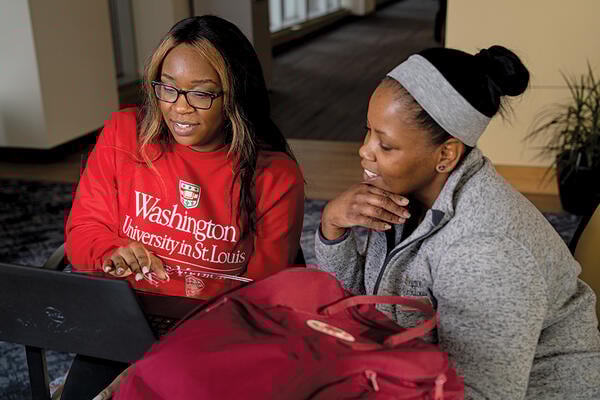
    Continuing-education programs are one way for colleges and universities to provide targeted offerings and credentialing opportunities for alumni, adults in the region lacking postsecondary education and the local workforce. They also provide flexible support offerings, recognizing the competing identities and responsibilities adult learners hold.

    The School of Continuing and Professional Studies at Washington University in St. Louis houses certificate programs, undergraduate and graduate degrees, prison education initiatives, and lifelong learning courses for adults in retirement.

    In the most recent episode of Voices of Student Success, host Ashley Mowreader speaks with Sean Armstrong, dean of the School of Continuing and Professional Studies, to talk about the program’s goals and ways the school uplifts adult learners of all types.

    An edited version of the podcast appears below.

    Q: Most people know WashU; it’s a pretty well-known institution in the U.S. But what is CAPS and what is the mission, and [who are] some of the students that you’re serving?

    Sean Armstrong, dean of the school of continuing and professional education at Washington University in St. Louis

    Washington University in St. Louis

    A: Let me start with definitions. First, Washington University in St. Louis, we’ll call WashU. Continuing and Professional Studies, we’ll call CAPS. Nontraditional or adult learners, we call modern learners here—those for whom school is not their only priority. And then noncredit, we call professional credit because we don’t like “nons.” I think calling anything a “non” is just a negative, and it seems to say it doesn’t matter. So those are the terms that we use.

    The program itself is an opportunity for modern learners to access Washington University in a way that they may not have been able to before. This university started out close to 100 years ago, and it was kind of a niche type of school, accessible to certain individuals but not broadly accessible. So our goal is to make this school broadly accessible. Many of our programs are based on regional workforce needs and, of course, [are for] those who find themselves in the category of some college, no degree, and they would like to return and complete their degree.

    Q: Can you talk a little bit more about the students who enroll? When it comes to demographics or general trends that you see among the people who enroll in CAPS, what are those?

    A: Over 80 percent of our students are employed full-time; I think over 50 percent have multiple jobs. Over 90 percent have families, whether that means they have children or they’re caring for an adult, a parent or older age demographic. I would say 80 percent of our students fall in the 25 to 49 age range. We do have some that are younger, and of course, we have some that are older, but [most] fall squarely in that range. Many of them are looking to find a way back because they want to advance or shift gears and enter another career. The bedrocks [of industry] here in St. Louis are health care, emerging technologies like data, and leadership and management.

    Q: I like the focus that you placed on career. One, these students are already working—they know what it’s like to be in the workforce and be employed—compared to maybe some of our traditional undergraduate students. But two, they have a very clear career goal, and they’re looking to do something different with their lives.

    I wonder if you can talk about that paradigm where it’s not that they need a job, it’s that they want a different job, or that they’re looking to do something maybe tangential or in a higher-paid role.

    A: I think being aspirational doesn’t stop when you’re 22 years old. That’s why we have lifelong learning, and our role is to meet people where they are and to create pathways that lead them to their goals.

    We call ourselves partners in student success. We don’t see ourselves as necessarily the educator or the school; we want to be a partner. We want to talk about what your goals are, what your motivations are, and then try to use the resources within the university and within the community to build that pathway to where you want to go.

    Q: I just want to say it’s been great listening to the word choice that you all are using, like a “partner,” a “modern learner” and not using “noncredit.” Is that an institutional initiative or is that something you’re passionate about, the idea of using asset-based language?

    A: I am super passionate about it. I think the institution has adopted it as well. I can’t say what the language was before I arrived, but I’ve been using a lot of it here.

    A lot of it has been to change the perception of the students who enroll within CAPS and the perception of the individuals in our community who are coming to us. I don’t want anybody to be viewed in a negative light, one, and I don’t think there needs to be a comparison between learners, right? They’re all learners, they all have aspirations and we’re all here to support them. I think of all of this as “We are all in this.”

    Q: Let’s talk about some of the programs. What’s the most popular degree offering that you all have, or nondegree offering?

    A: The bachelor of science in integrated studies is a degree program that has many different areas of study and certificate options. That is a popular program because this is really dedicated as a some college, no degree type of program. We accept up to 85 transfer credit hours in this program, which is super generous. It’s not something I want to change, and hope I don’t have to, for various reasons, but it allows us to really be open to students.

    WashU is a writing school. It is a school that wants you to be able to communicate clearly, either through writing or speaking. And so our writing and communication courses, there is an assessment that we do to see where individuals are, and then to help them build the skill to be able to be successful in our courses. So that’s a really popular one.

    Our certificates, you know, I try to put my finger on which ones [are popular], because I think our certificate enrollments have doubled in the last year, and we’re trying to understand why.

    Our certificates serve two purposes. One, they’re skill-based, so they’re an opportunity for someone to learn a skill within a year and then have that credential and move on. But they’re also stackable to a bachelor’s degree, so if somebody has some college, no degree, or maybe they have an A.A. [associate of arts] degree, they want to earn their certificate because they’re not feeling too confident about entering into a bachelor’s degree program, this is a really good way for them to be able to do that. We’ll begin to uncover this year as to why that’s so popular, but it’s been going gangbusters.

    And then I have to tell you about our “heart” programs. We market them as our community programs, but they’re programs that are central to our heart. They’re our prison education program, our English language program, our master of arts in teaching and learning, and our OSHA Lifelong Learning Institute program.

    The four of those are really community-based. Prison education, we offer face-to-face degree programs in two prisons in Missouri and re-entry support for individuals who are returning home. In our English language program, we offer opportunities for individuals who are international students to communicate clearly, present clearly. But we also had an opportunity to turn that program towards the community, for individuals who lack the English skills to be a good fit for a job—you have to communicate clearly on any job. So we had individuals who were here that had medical degrees and wanted to work in the medical field, and so we’re helping them to be able to bridge that gap.

    I mentioned our master of arts in teaching and learning; teaching is just necessary. So we’re trying to do all that we can to be helpful, especially here in the St. Louis region. And then our OSHA Lifelong Learning Program offers opportunities for individuals who are over 50 to continue learning for the rest of their lives.

    Q: That’s awesome. I have a personal passion for lifelong learner classes because they’re so niche and there are so many different ways to engage the community there.

    You talked a little about the community engagement piece of CAPS, but I wonder if we can dig into that a bit more. You know, WashU has historically been very selective in who it admits and how it relates to the St. Louis community as a whole. How does this further that town-and-gown relationship and encourage St. Louisans to see themselves as part of WashU?

    A: Our focus is on the region and on individuals who really don’t have the option of being a residential student. They have to be either part-time, some of them are three-quarter time, but they cannot live on campus. That’s not an option, because they just have other things going on. And so that’s our niche. That’s kind of the gap that we’ve been able to fill.

    I am happy to say that WashU has been very supportive, very enthusiastic about that population of students. Again, we don’t compare. I think the WashU residential students are probably some of the brightest students I’ve met in my career, probably top 1 or 2 percent from around the world. And I’m not trying to say our students are not, but you know that they’re not 18, either.

    They’re 30 years old with two children and other obligations. Household operations is a real thing, trying to figure out what needs to get paid and what doesn’t. That’s not to say our residential students don’t have those types of concerns, but for our [CAPS] students, it is something that can sometimes challenge how they appear in our setting.

    Q: There was a study by Trellis Strategies that found a majority of community college students or those enrolled part-time were more likely to consider themselves workers who are students and not necessarily students who are workers. It sounds like that’s the population you’re talking about, where their education is important to them, but there are other things that are ranking towards the top first.

    You serve a variety of adults in a variety of different contexts. What is that like for you, as the dean of a school like this, to wear all these hats and engage with all these different types of programs and support mechanisms to encourage student success?

    A: I’ve always liked the full-spectrum model of adult education. We’ve seen bits and pieces—the community college, of course, has a piece. Typically, school districts will have a piece, universities will have a piece. I’ve always liked, “OK, there’s really no job too small if there’s a need in the region. So let’s attack all of it.”

    I think that vision starts with me, and of course, I’m kind of the mad scientist sometimes, but the support and the passion for the individuals that I work with are really what makes this happen. It’s interesting because we were talking the other day in a leadership team meeting, and I said, “I think one of the questions I am going to ask in interviews from now on is, ‘How does it make you feel to help somebody? Does it make you feel good, or is it just you’ve checked the box?’” And I think, for the most part, in our organization, it makes people feel good to do this type of work.

    Q: Absolutely. What are some of the challenges in the work that you do?

    A: Time is our biggest challenge. There are things that people needed yesterday, and we’re just unable to create a program as quickly as the need arises or has arisen. There are people who are finding out about us and wish they had known about us a year ago, and so we’re behind the gun on that. But really, it’s time for us. I think we are ready to do, as I think my daughter would say, we’re ready to do the most in any given circumstance.

    Q: One initiative that we didn’t talk too much about that I want to highlight is Extend(Ed) and this idea of equipping professionals to advance in their career. Can you talk a little bit about that initiative and how it works?

    A: Sure. Extend(Ed) is the professional credits—the noncredit space is what it’s typically called, but we call it professional credits. I call it creative solutions for workforce needs. It’s a model that I see us offering 100-plus short-term courses or programs in within the next, I’d say, 18 months.

    We’re looking at synchronous opportunities, asynchronous opportunities, and they’ll be online mostly. I think there’ll be some that’ll be based on an employer’s needs. We’re working with a few employers on creating programs that they asked for. And they’ll be co-created, which is key, because I never want somebody to leave and say, “We didn’t really get what we wanted.” It was like, “Oh, we discussed this.”

    So we’ll be on-site delivering that particular program. Extend(Ed) allows us to be really creative and really responsive to the needs of industry or even community organizations. And they’re affordable. We’re trying to make them as affordable as possible.

    Q: Who are the faculty in this work?

    A: They’re subject-matter experts, so they are working in the field. They’re doing the work on a day-to-day basis, so they’re able to link what students are learning in the text with real life and what they’re doing at work, and I think our students really appreciate that.

    We’ve had students who have enrolled with us, who were our residential students, who also appreciate the perspective of the faculty that teach for us, and also the students and their real-world experiences also. It creates a different dimension of diversity, I think, within the classroom, and maybe an elevated level of conversation when you’re talking about, “I do this on a daily basis.”

    One question I like to ask students—our students in particular—is “Is there anything that you learned in the classroom last week that you were able to apply recently?” And they all say yes, and they’ll say, “this thing,” so it’s pretty cool.

    Q: What’s next for CAPS? What are some of your goals for this upcoming academic year?

    A: I mentioned one with Extend(Ed). I think we want to deepen partnerships. Partnerships are central to what I do. It’s in my background; a really deep knowledge of how to create partnerships has been what my career has been all about for the past 25 years, and so I want to continue to do that in St. Louis. And then we always strive to improve student success and student service. So that’s another area that we’d like to ensure that we keep top of mind.

    Q: Are your student support services similar to those for residential students or how do they look different?

    A: It’s slightly different. Our model is based on the coaching model, and so there is more of the directive “Here are the courses that you will need to take in order to graduate.” But where the traditional student affairs or student support for a residential student would be based on a living and learning community, ours is more based on the how-to.

    Our students are more confronted with, “I don’t know if this is the right time to go back, but I need to.” And then there might be some impostor syndrome also. So we’re focused on how to be successful—What was your motivation for doing all of this?—and then reminding students of that motivation as we guide them along that path.

    Q: I wonder if you have any advice or insight for others who work in this space, either in higher education broadly or in continuing education spaces, encouragement on how to do this work well or a lesson you’ve learned doing this work.

    A: One lesson that I’ve learned is to talk to all of your surrounding organizations to understand what their role is in the space. When we talk about some college, no degree [students], the first thing I say is “There’s no competition among us, because that population is so large that if we ran at double our capacity, we wouldn’t be able to meet the need.” So it might be better for us to look at what we all are doing. If we want to establish swim lanes, we can. If there are ways that we can collaborate, we should. And that would be the one advice that I’d give people who are, depending on the population, some college, no degree is definitely one of those, but really to partner with one another, collaborate on student success.

    Get more content like this directly to your inbox.

    Source link

  • Tex. Boards Abolish Faculty Senates, Create Toothless Councils

    Tex. Boards Abolish Faculty Senates, Create Toothless Councils

    Photo illustration by Justin Morrison/Inside Higher Ed | BraunS, malerapaso and vi73777/iStock/Getty Images

    The University of Texas System Board of Regents voted Thursday to disband the system’s long-standing faculty senates in compliance with Senate Bill 37, the sweeping Texas higher education law that gives university boards and presidents control over faculty governing bodies.

    The UT board also voted Thursday to create faculty advisory groups, which will “perform the work of faculty governance bodies”—such as reviewing degree requirements, suggesting curricular changes, coordinating campus events and revising the faculty handbook—while keeping all decision-making power in the hands of the administration.

    The University of Houston system Board of Regents did the same Thursday, voting to create faculty councils that will “provide structured, meaningful avenues for faculty to help shape academic priorities, strengthen excellence and contribute to decisions that guide our future,” a university spokesperson said in a statement.

    But the groups won’t give the faculty independent representation or any real power. In accordance with SB 37, the board bylaws now state, “a faculty council is advisory only and may not be delegated the final decision-making authority on any matter.”

    As of June 20, any faculty governing body in Texas—whether it’s a senate, council or advisory group—may not exceed 60 members unless otherwise decided by the board, and every college or school within the university must be represented by at least two members, SB 37 dictates. The university president will appoint at least one of the representatives from each college or school within the institution, while the faculty elects the others, meaning that as many as 30 members could be chosen by the president.

    The president will also choose the presiding officer, associate presiding officer and secretary for each group. Appointees may serve for six years before taking a mandatory two-year break from the group, while faculty-elected representatives may only serve for two years before the two-year break.

    While the new groups are still faculty bodies, they won’t “authentically speak with the faculty voice,” said Mark Criley, a senior program officer in the department of academic freedom, tenure and governance at the American Association of University Professors. “No matter who is selected, the process by which they’re selected matters. We learned when we’re in elementary school—the teacher didn’t appoint the class president, the principal didn’t appoint them, this was one of our first exercises in representation. You choose the people who will speak for you in an institutional body.”

    Across the state, college and university system boards are taking different approaches to scrapping and reshaping their faculty senates. The Alamo Colleges District Board of Trustees voted earlier this month to consolidate the faculty senates at each of the five campuses into one group of up to 35 members. Previously, the five senates comprised 114 voting members.

    While the Texas State University system board gave presidents the ability to create new faculty groups, it did not approve a new faculty governing body at its Aug. 14 meeting and will let the existing senate lapse on Sept. 1, the deadline set by SB 37. Texas A&M University regents are expected to vote on their approach to the new law at their Aug. 27 board meeting, The Austin American-Statesman reported.

    Even as university governing boards design their toothless, SB 37–compliant groups, two professors at the University of Houston on Monday unveiled what they’re calling the Faux Faculty Senate. “I know that people feel that faculty senates are kind of arcane … but it’s a part of civil society,” said David Mazella, an associate professor in the English Department at the University of Houston and president-elect of the faux senate. “[SB 37] is an antidemocratic bill that essentially eliminates the faculty voice in order for the state to directly control what we do.”

    The faux senate is largely symbolic; it won’t replicate any of the governing functions of the now-defunct 100-member senate, Mazella said. Instead, it will serve as an off-campus meet-up for faculty to socialize and talk about ongoing issues in Texas higher education. “Even getting to a faculty cafe is really difficult, so giving people an opportunity [to talk] that is not in a university space feels really important to us,” Mazella said.

    He and his co-creator, María González, also an associate professor of English at Houston, plan to start hosting events in October, though nothing concrete has been scheduled. Without support from the university, the money to host these events will come from Mazella’s and González’s own pockets. They’re looking for a space in the Houston area that’s “not too gross, but not too expensive,” said Mazella, for their first faux senate convening.

    Source link

  • Cracking the South Asia recruitment challenge – why the right partner matters

    Cracking the South Asia recruitment challenge – why the right partner matters

    For international universities and colleges, South Asia – and particularly India – represents one of the largest and fastest-growing student recruitment markets in the world. The potential is undeniable, but the reality is complex.

    Navigating multiple languages, diverse cultures, varied academic systems, and rapidly shifting student trends requires more than just an occasional visit or a handful of agent agreements.

    Finding the right partner in this environment is not just important – it’s essential.

    The challenge: a crowded and complex market

    South Asia’s education recruitment ecosystem is vast. Students are spread across metropolitan hubs and smaller regional cities, each with different aspirations, financial capabilities, and destination preferences. The agent network is equally varied – from well-established consultancies to smaller, informal setups.

    For many institutions, this creates two critical challenges:

    1. Transparency – Ensuring that the institution’s brand is represented accurately and ethically across the market.
    2. Visibility – Reaching the right students, in the right regions, with the right message.

    Without an in-market presence and strong, vetted networks, institutions often struggle to build trust and sustain engagement at scale.

    Why a local strategic partner is essential

    Working with a dedicated South Asia marketing partner bridges this gap. The right partner acts as the institution’s eyes, ears, and voice on the ground – maintaining brand integrity while expanding outreach.

    A strong local partner can:

    • Streamline agent management – Recruiting, training, and monitoring a reliable network of student recruitment agents.
    • Strengthen market visibility – Ensuring the institution’s programs are consistently promoted to the right audience across multiple regions.
    • Provide real-time market intelligence – Sharing insights on policy changes, student preferences, and competitor activity.
    • Enhance conversion rates – By ensuring that marketing efforts and agent networks are well-aligned with institutional goals.

    Navigating multiple languages, diverse cultures, varied academic systems, and rapidly shifting student trends requires more than just an occasional visit or a handful of agent agreements

    Landmark Global Learning — one roof, complete solutions

    With over 18 years of experience, Landmark Global Learning offers international universities and colleges a single-window solution for the South Asia market. Our approach is built on:

    • Established networks – A trusted, long-standing network of trained recruitment agents across India and other South Asian countries.
    • Transparent operations – Clear reporting, ethical representation, and measurable results to ensure partner confidence.
    • Regional expertise – Deep understanding of both Tier-1 and Tier-2 cities, allowing institutions to tap into emerging student segments.
    • Targeted outreach – Combining on-ground events, digital campaigns, and institutional tie-ups to maximise visibility.

    Whether a university is entering the South Asia market for the first time or looking to strengthen its footprint, Landmark provides the infrastructure, relationships, and market knowledge to make it happen efficiently.

    Maximising visibility in the right way

    One of the biggest pain points for international institutions is getting noticed by the right students. Many spend time and resources on generic campaigns that fail to reach high-intent applicants.

    At Landmark, we focus on:

    • Localised marketing strategies tailored to different student demographics.
    • Partnerships with schools, colleges, and education fairs that bring direct engagement opportunities.
    • Digital targeting that aligns with student search behaviour in the region.

    The result? Increased brand presence, better-qualified leads, and stronger enrolments.

    A partnership for long-term growth

    In an increasingly competitive global education market, institutions cannot afford to be invisible in a region as critical as South Asia. The right partner ensures not only market entry but also sustained growth, brand protection, and student success.

    With its proven track record, extensive network, and commitment to transparency, Landmark Global Learning stands ready to be that partner – delivering all the solutions international universities need, under one roof.

    A journey of impact and vision

    From a small consultancy in Punjab to being the first student recruitment company listed on the Bombay Stock Exchange, Landmark Global Learning’s journey is a testament to resilience, vision, and a relentless focus on student success.

    With over 35,000 successful admissions and partnerships across 200+ global institutions, our mission remains clear: to bridge the gap between talent and opportunity. What started 18 years ago with a single office is today a network of 15+ branches across India, making international education accessible even in Tier-2 and Tier-3 cities.

    For me personally, education has never been just a business – it’s a passion to transform lives. I began this journey as a young professional balancing multiple jobs, driven by a belief that ‘education is not just about admissions – it’s about creating futures.’ That belief continues to guide us as we embrace innovation, whether through AI-driven counseling tools, school partnerships from Grade 9 onwards, or full-spectrum student support covering admissions, accommodation, education loans, and career guidance.

    At Landmark, we don’t just send students abroad; we shape futures — with integrity, innovation, and care.

    About the author: Jasmeet Singh Bhatia is the founder and director of Landmark Immigration, with over 18 years of experience in international education and immigration consulting. A study visa expert and PR strategist, he has mentored thousands of students in achieving academic and career goals abroad. Known for his principle-based approach and strong industry partnerships, he continues to shape global futures through personalised guidance and strategic insight.

    Source link

  • TRIO helps low-income students get to and through college. Trump wants to end it

    TRIO helps low-income students get to and through college. Trump wants to end it

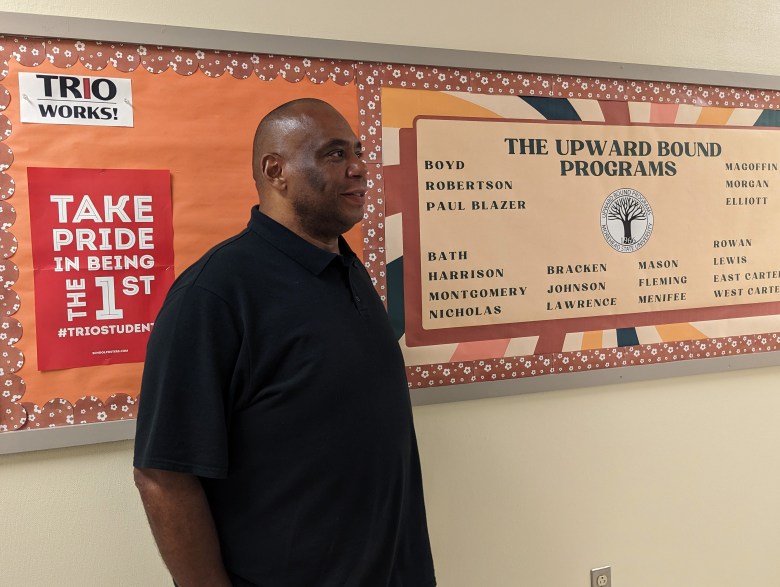
    MOREHEAD, Ky. — The summer after ninth grade, Zoey Griffith found herself in an unfamiliar setting: a dorm on the Morehead State University campus.

    There, she’d spend the months before her sophomore year taking classes in core subjects including math and biology and electives like oil painting. 

    For Griffith, it was an opportunity, but a scary one. “It was a big deal for me to live on campus at the age of 14,” she said. Morehead State is about an hour from her hometown of Maysville. “I was nervous, and I remember that I cried the first time that my dad left me on move-in day.”

    Her mother became a parent as a teenager and urged her daughter to avoid the same experience. Griffith’s father works as a mechanic, and he frowns upon the idea of higher education, she said. 

    And so college back then seemed a distant and unlikely idea.

    But Griffith’s stepsister had introduced her to a federal program called Upward Bound. It places high school students in college dorms during the summer, where they can take classes and participate in workshops on preparing for the SAT and financial literacy. During the school year, students get tutoring and work on what are called individual success plans.

    Upward Bound students test the robots they built in their robotics class – evaluating for programming and mechanical issues. Credit: Photo courtesy of the Upward Bound Programs

    It’s part of a group of federal programs, known as TRIO, aimed at helping low-income and first-generation students earn a college degree, often becoming the first in their families to do so. 

    So, thanks to that advice from her stepsister, Kirsty Beckett, who’s now 27 and pursuing a doctorate in psychology, Griffith signed up and found herself in that summer program at Morehead State. Now, Griffith is enrolled at Maysville Community and Technical College, with plans to become an ultrasound technician.

    Related: Interested in more news about colleges and universities? Subscribe to our free biweekly higher education newsletter.

    TRIO, once a group of three programs — giving it a name that stuck — is now the umbrella over eight some dating back to 1965. Together, they serve roughly 870,000 students nationwide a year.

    It has worked with millions of students and has bipartisan support in Congress. Some in this part of the Appalachian region of Kentucky, and across the country, worry about students who won’t get the same assistance if President Donald Trump ends federal spending on the program. 

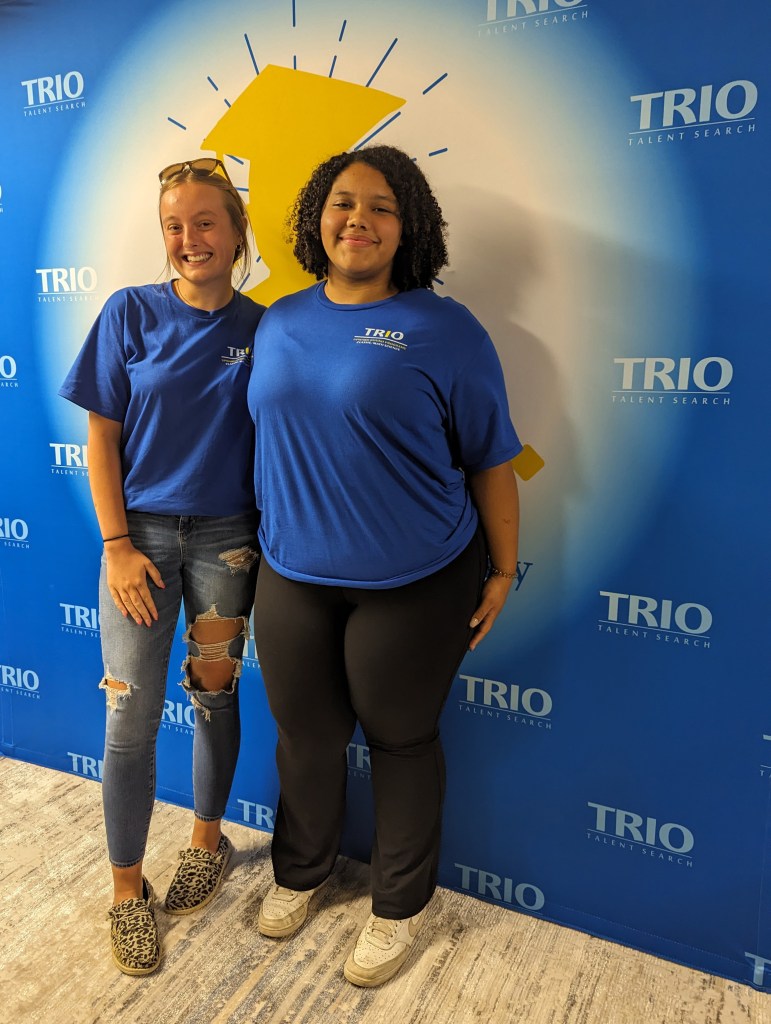
    Students Zoey Griffith, left, and Aniyah Caldwell, right, say the Upward Bound program has been life-changing for them. Upward Bound is one of eight federal programs under the TRIO umbrella. Credit: Michael Vasquez for The Hechinger Report

    A White House budget proposal would eliminate spending on TRIO. The document says “access to college is not the obstacle it was for students of limited means” and puts the onus on colleges to recruit and support students.

    Advocates note that the programs, which cost roughly $1.2 billion each year, have a proven track record. Students in Upward Bound, for example, are more than twice as likely to earn a bachelor’s degree by age 24 than other students from some of the nation’s poorest households, according to the Council for Opportunity in Education. COE is a nonprofit that represents TRIO programs nationwide and advocates for expanded opportunities for first-generation, low-income students.

    For the high school class of 2022, 74 percent of Upward Bound students enrolled immediately in college — compared with only 56 percent of high school graduates in the bottom income quartile. 

    Upward Bound is for high school students, like Griffith. Another TRIO program, Talent Search, helps middle and high school students, without the residential component. One called Student Support Services (SSS) provides tutoring, advising and other assistance to at-risk college students. Another program prepares students for graduate school and doctoral degrees, and yet another trains TRIO staff.

    A 2019 study found that after four years of college, students in SSS were 48 percent more likely to complete an associate’s degree or certificate, or transfer to a four-year institution, than a comparable group of students with similar backgrounds and similar levels of high school achievement who were not in the program. 

    “TRIO has been around for 60 years,” said Kimberly Jones, the president of COE. “We’ve produced millions of college graduates. We know it works.”

    Related: Tracking Trump: His actions to dismantle the Education Department, and more

    Yet Education Secretary Linda McMahon and the White House refer to the programs as a “relic of the past.” 

    Jones countered that census data shows that “students from the poorest families still earn college degrees at rates far below that of students from the highest-income families,” demonstrating continued need for TRIO.

    McMahon is challenging that and pushing for further study of those TRIO success rates. In 2020, the U.S. Government Accountability Office found that even though the Education Department collects data on TRIO participants, “the agency has gaps in its evidence on program effectiveness.” The GAO criticized the Education Department for having “outdated” studies on some TRIO programs, and no studies at all for others. Since then, the department has expanded its evaluations of TRIO. 

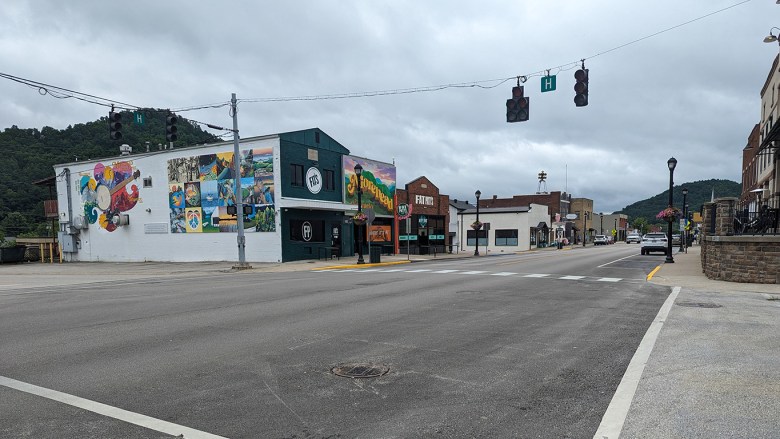
    East Main Street in Morehead, Kentucky, just outside of Morehead State’s campus. Credit: Michael Vasquez for The Hechinger Report

    During a Senate subcommittee hearing in June, McMahon acknowledged “there is some effectiveness of the programs, in many circumstances.”

    Still, she said there is not enough research to justify TRIO’s total cost. “That’s a real drawback in these programs,” McMahon said. 

    Now, she is asking lawmakers to eliminate TRIO spending after this year and has already canceled some previously approved TRIO grants. 

    Related: A big reason rural students never go to college: No one recruits them 

    “What are we supposed to do, especially here in eastern Kentucky?” asked David Green, a former Upward Bound participant who is now marketing director for a pair of Kentucky hospitals.

    Green lives in a region that has some of the nation’s highest rates of unemployment, cancer and opioid addiction. “I mean, these people have big hearts, they want to grow,” he added. Cutting these programs amounts to “stifling us even more than we’re already stifled.”

    Green described his experience with TRIO at Morehead State in the mid-1980s as “one of the best things that ever happened to me.” 

    He grew up in a home without running water in Maysville, a city of about 8,000 people. It was on a TRIO trip to Washington, D.C., he recalled, that he stayed in a hotel for the first time. Green remembers bringing two suitcases so he could pack a pillow, sheets and comforter — unaware the hotel room would have its own.

    He met students from other towns and with different backgrounds. Some became lifelong friends. Green learned table manners, the kind of thing often required in business settings. After college, he was so grateful for TRIO that he became one of its tutors, working with the next generation of students. 

    TRIO’s all-encompassing nature makes it unique among college access programs, said Tom Stritikus, the president of Occidental College, a private liberal arts college in Los Angeles. He was previously president of Fort Lewis College, a public liberal arts school in Colorado with a large Native American student population. At both institutions, Stritikus said, he witnessed the effectiveness of TRIO’s methods, which he described as a “soup to nuts” menu of services for at-risk students trying to be the first in their families to earn degrees.

    After participating in the Upward Bound program, David Green has had a successful career, becoming a community leader in his hometown of Maysville, Kentucky. Credit: Michael Vasquez for The Hechinger Report

    Jones, of the Council for Opportunity in Education, said she is cautiously optimistic that Congress will continue funding TRIO, despite the Trump administration’s request. The programs serve students in all 50 states. According to the COE, about 34 percent are white, 32 percent are Black, 23 percent are Hispanic, 5 percent are Asian, and 3 percent are Native American. TRIO’s guidelines require that a majority of participants come from families making less than 150 percent of the federal poverty level. For a family of four living in the contiguous United States, that’s a max of $48,225 a year.

    Related: How Trump is changing higher education: The view from 4 campuses

    In May, Rep. Mike Simpson, an Idaho Republican, called TRIO “one of the most effective programs in the federal government,” which, he said, is supported by “many, many members of Congress.” 

    In June, Sen. Shelley Moore Capito, a Republican from West Virginia and a former TRIO employee, spoke about its importance to her state. TRIO helps “a student that really needs the extra push, the camaraderie, the community,” she said. “I’ve gone to their graduations, and been their speaker, and it’s really quite delightful to see how far they’ve come, in a short period of time.”

    TRIO survived, with its funding intact, when the Senate appropriations committee approved its budget last month. The House is expected to take up its version of the annual appropriations bill for education in early September. Both chambers ultimately have to agree on federal spending, a process that could drag on until December, leaving TRIO’s fate in Congress uncertain. 

    While lawmakers debate its future, the Trump administration could also delay or halt TRIO funding on its own. Earlier this year, the administration took the unprecedented step of unilaterally canceling about 20 previously approved new and continuing TRIO grants.

    At Morehead State, leaders say the university — and the region it serves — need the boost it receives from TRIO: While roughly 38 percent of American adults have earned at least a bachelor’s degree, in Kentucky, that figure is only 16 percent. And, locally, it’s 7 percent, according to Summer Fawn Bryant, the director of TRIO’s Talent Search programs at the university. 

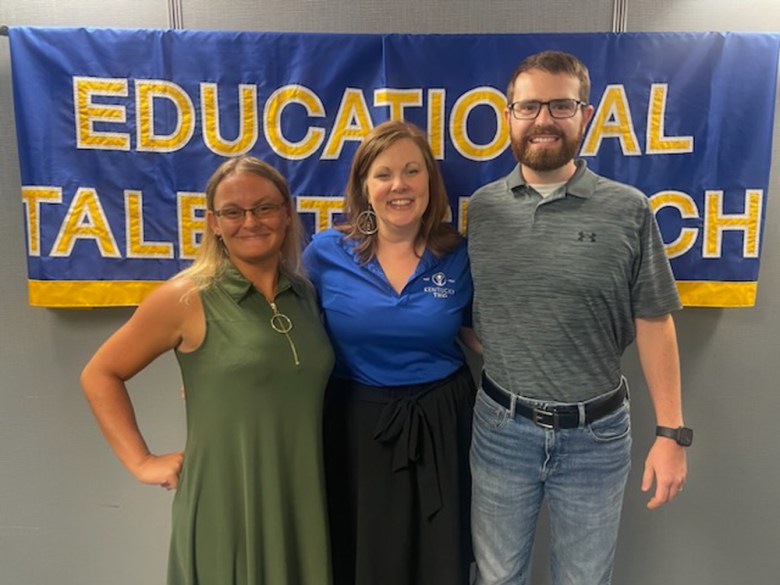
    Summer Fawn Bryant, center, is director of TRIO’s Talent Search programs at Morehead State University in Kentucky. She stands with former TRIO students Alexandria Daniel, left, and Blake Thayer, right. Credit: Photo courtesy of Summer Fawn Bryant

    TRIO works to counter the stigma of attending college that still exists in parts of eastern Kentucky, Bryant said. A student from a humble background who is considering college, she said, might be scolded with the phrase: Don’t get above your raisin’.

    “A parent may say it,” Bryant said. “A teacher may say it.” 

    She added that she’s seen time and again how these programs can turn around the lives of young students facing adversity. 

    Students like Beth Cockrell, an Upward Bound alum from Pineville, Ky., who said her mom struggled with parenting. “Upward Bound stepped in as that kind of co-parent and helped me decide what my major was going to be.” 

    Cockrell went on to earn three degrees at Morehead State and has worked as a teacher for the past 19 years. She now works with students at her alma mater and teaches third grade at Conkwright Elementary School, about an hour away.

    In a few years, 17-year-old Upward Bound student Isaac Bocook plans to join the teaching ranks too — as a middle school social studies teacher. Bocook said he was indecisive about what to study after high school, but he finally figured it out after attending a career fair at Morehead State’s historic Button Auditorium. 

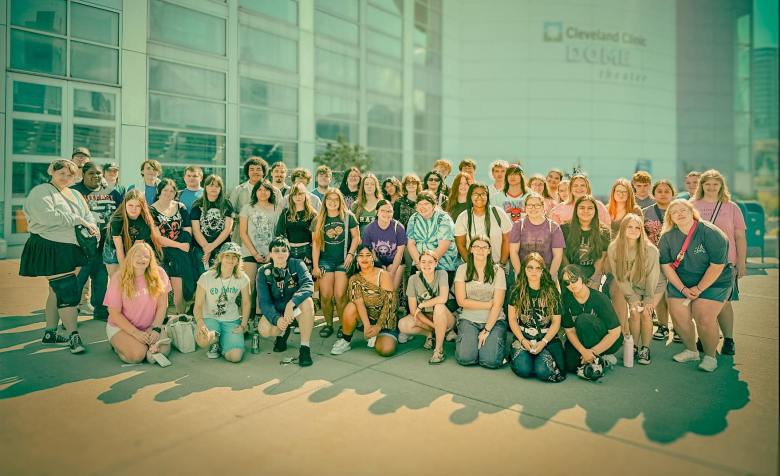
    Upward Bound students visit the Great Lake Science Center in Cleveland for the end-of-summer educational trip. Credit: Photo courtesy of the Upward Bound Programs

    Bocook lives in Lewis County, with just under 13,000 residents and a single public high school. At Morehead State’s TRIO program, Bocook met teenagers from across the entire region, which he said improved his social skills. TRIO also helped him with all kinds of paperwork on the pathway to adulthood. Filling out financial aid forms. Writing scholarship applications. Crafting a resume.

    “I’m just truly grateful to have TRIO, as sort of like a hand to hold,” Bocook said.

    His need for guidance is similar to what students at Morgan County High School in West Liberty, Kentucky, experience, said Lori Keeton, the school guidance counselor. The challenge facing these first-generation students, she said, is that “you just simply don’t know what you don’t know.”

    As the sole counselor for 550 students, Keeton doesn’t have time to help each student navigate the complex college-application process and said she worries that some of her students will apply to fewer colleges, or no colleges at all, if TRIO disappears. 

    TRIO’s Talent Search program serves about 100 students at her high school, and roughly another dozen are part of Upward Bound. Each program has a dedicated counselor who visits regularly to guide and assist students.

    Related: From gangs to college

    Sherry Adkins, an eastern Kentucky native who attended TRIO more than 50 years ago and went on to become a registered nurse, said efforts to cut TRIO spending ignore the long-term benefits. “Do you want all of these people that are disadvantaged to continue like that? Where they’re taking money from society? Or do you want to help prepare us to become successful people who pay lots of taxes?”

    As Washington considers TRIO’s future, program directors like Bryant, at Morehead State, press forward. She has preserved a text message a former student sent her two years ago to remind her of what’s at stake.

    After finishing college, the student was attending a conference on child abuse when a presenter showed a slide that included the quote: “Every child who winds up doing well has had at least one stable and committed relationship with a supportive adult.”

    “Forever thankful,” the student texted Bryant, “that you were that supportive adult for me.”

    Contact editor Nirvi Shah at 212-678-3445, securely on Signal at NirviShah.14 or via email at [email protected]

    This story about TRIO was produced by The Hechinger Report, a nonprofit, independent news organization focused on inequality and innovation in education. Sign up for the Hechinger newsletter.

    The Hechinger Report provides in-depth, fact-based, unbiased reporting on education that is free to all readers. But that doesn’t mean it’s free to produce. Our work keeps educators and the public informed about pressing issues at schools and on campuses throughout the country. We tell the whole story, even when the details are inconvenient. Help us keep doing that.

    Join us today.

    Source link

  • Transforming Classroom Discussions with Communication Practices from Health Coaching – Faculty Focus

    Transforming Classroom Discussions with Communication Practices from Health Coaching – Faculty Focus

    Source link

  • Transforming Classroom Discussions with Communication Practices from Health Coaching – Faculty Focus

    Transforming Classroom Discussions with Communication Practices from Health Coaching – Faculty Focus

    Source link

  • Mizzou Calls Black 2 Class Event Example of “Discrimination”

    Mizzou Calls Black 2 Class Event Example of “Discrimination”

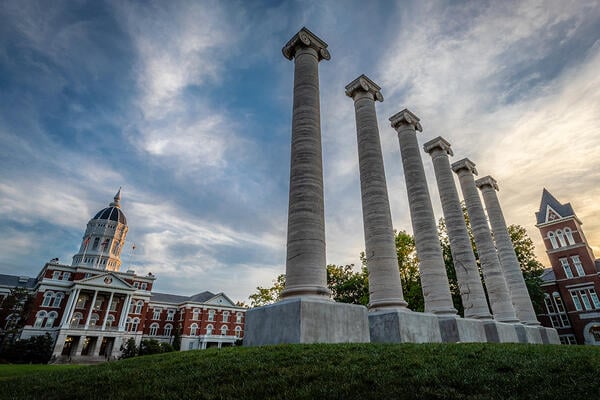
    For the second year in a row, a Black student group at the University of Missouri is facing pushback from administrators over their attempt to hold a back-to-school event with the word “Black” in the name.

    The Legion of Black Collegians, a long-standing Black student government at Mizzou, had planned to host the on-campus Black 2 Class Block Party this week, but the group said in a social media post Wednesday that university administrators had canceled it.

    A university spokesperson told Inside Higher Ed that Mizzou is “committed to fostering an environment free of unlawful discrimination,” and that the name of the event “suggested it was race exclusive.”

    Likewise, Mizzou President Mun Choi added in a statement that “when holding events using university facilities, student organizations must avoid excluding individuals based on race.”

    This follows a similar dispute last year, when the university changed the name of a similar LBC event from the Welcome Black BBQ to the Welcome Black and Gold BBQ, a nod to the university’s colors. This year, LBC declined to participate, letting university officials know in July.

    Student success experts and advocates for racial minority groups say the tension at Mizzou is just one example of an ongoing change in campus cultures nationwide. As various pieces of anti-DEI legislation take effect in red states and the Trump administration attempts to crack down on practices of so-called liberal indoctrination across the country, many students of color could lose access to vital hubs of cultural recognition, they say.

    “There’s no question that the political context, the messaging from this administration and the confluence of what’s happening at state levels are extremely influential for white universities, who are often public schools that take public money,” said Eric Duncan, a policy director with EdTrust. “We’re not surprised, but we’re disappointed in what’s happening to Black students at Missouri.”

    In addition to publicizing the cancellation, LBC also noted on Instagram that incidents of racism and hate speech on campus are on the rise and demanded that the institution schedule a town hall meeting within 60 days, publicly condemn racial harassment and send out an annual notification explaining the college’s antidiscrimination policies.

    “Let’s be clear,” the student group wrote. “These actions are a deliberate act of erasure … Recreational spaces for students of all identities are CRUCIAL.”

    Choi said the university “will not respond to demands.” A university spokesperson later told Inside Higher Ed that the university is “not aware of increased discrimination against Black students on campus.”

    Amaya Morgan, the current LBC president, said she met with Choi and other administrators to discuss the cancellation on Thursday afternoon—a meeting the university later said was confidential and declined to comment on.

    In an effort to avoid federal scrutiny, universities across the country have canceled events and closed diversity centers following Trump’s ban on race-based programming and activities. A federal judge recently struck down one such order from the Department of Education, but in many cases colleges have already complied. Some institutional leaders have indicated they have few good options except to keep their heads down.

    But for Morgan, the priority is for the university “to have our back.”

    “We know we can’t do anything about the block party now,” she said, adding that racially driven harassment must still be addressed. “Obviously what we’re doing to prevent discrimination right now is not working. So we’re asking, how can we work toward a solution? That is why those demands were listed out like that.”

    Colleges Put ‘a Lot at Stake’

    Decisions to close minority student centers, shut down ethnic group–based organizations and cancel culturally specific events are not new and started before Trump took office. News organizations and nonprofit groups have been tracking such actions, especially in Republican-led states, since the Supreme Court blocked the consideration of race in college admissions in 2023.

    For example, colleges in Utah closed cultural centers and the University of Iowa terminated LGBTQ+ and Latino living-learning communities. Mizzou axed its Inclusion, Diversity and Equity Division in summer 2024 along with certain race-based scholarships and first-year student success programs like the Mizzou Black Men’s and Women’s Initiatives.

    As a Black man who attended two predominantly white institutions, Duncan, of EdTrust, said that by shuttering these parts of campus life, universities are putting “a lot at stake.” For underrepresented students, many of whom are also first-generation, these programs are critical to retention and degree completion, adding that there’s evidence—anecdotal and data-based—to prove it.

    “When Black and brown students and different cultures step onto college campuses, a lot of times they’re looking for signals of inclusivity. ‘Is this a place that I belong?’” Duncan said. “Removing [these welcoming and affirming spaces] not just passively, but by coming out and saying, ‘We don’t support this,’ is a signal to people that maybe this is not a space of belonging for me.”

    Shaun Harper, a professor of education, public policy and business at the University of Southern California, echoed Duncan’s remarks. He pointed to a paper he published in 2013 that showed that it’s critical for Black students at predominantly white institutions to connect and teach one another how to navigate environments filled with microaggressions, racism and loneliness. Black student groups were key to this, the qualitative data showed.

    Harper added that just because something is run by a Black student organization doesn’t make it exclusive to other learners.

    “There’s never been a sign on the Black culture center door that says, ‘Blacks only.’ If white students, Asian students, Latino students and others, Indigenous students, wanted to come to those spaces, they were always welcome,” he said. “The reason why I’m so annoyed is that anybody who has ever attended [an event like Mizzou’s barbecue] knows that they are not discriminatory, divisive spaces. In fact, they’re spaces that are familial.”

    A History of Racial Tension

    As Mizzou’s LBC once again draws attention to what they call a lack of representation on campus, the university is also approaching the 10-year anniversary of protests that rocked the campus and made national headlines in November 2015.

    One student went on a hunger strike to draw attention to racism on campus, and other students camped out on the quad in solidarity. Eventually, the football team joined the efforts. The strike ended when two university leaders resigned on the same day.

    When Inside Higher Ed asked university administrators how they had addressed the campus climate since then, university spokesperson Christopher Ave said, “It is difficult to accurately measure the campus climate.” But he pointed to a record number of applications from prospective students, the increase in the percentage of underrepresented students and an improved retention rate on campus—all of which, he said, “illustrate that students want to attend and continue their education at the University of Missouri.”

    Ave added that calling off the block party doesn’t mean that the university also considers its Black cultural center or LBC as examples of discrimination.

    “This decision was based on the circumstances of this event, which was promoted with a name that suggested it was race exclusive and contrary to [federal civil rights law],” he said. “Each event or program must be considered on its own in context and the decision on this event does not dictate what will happen in any other circumstance.”

    Morgan from LBC declined to comment on whether they were seeking aid from outside groups to hold events like the block party off campus. The primary goal, she said, is to “protect the safety of Black students moving forward.”

    “I’ll be honest, I don’t have a very clear path forward, but I know that as a Legion, we will still continue to do whatever we can to make sure that students are heard and make sure that our identities are heard and seen,” she said. “As a Legion, we have existed for nearly 60 years. Excuse my language, but there’s absolutely no way in hell that we [will] go, especially not under my watch.”


    Source link