Author: admin

  • Mizzou Calls Black 2 Class Event Example of “Discrimination”

    Mizzou Calls Black 2 Class Event Example of “Discrimination”

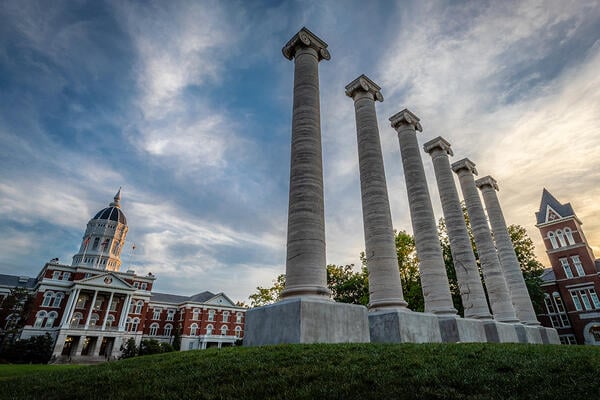
    For the second year in a row, a Black student group at the University of Missouri is facing pushback from administrators over their attempt to hold a back-to-school event with the word “Black” in the name.

    The Legion of Black Collegians, a long-standing Black student government at Mizzou, had planned to host the on-campus Black 2 Class Block Party this week, but the group said in a social media post Wednesday that university administrators had canceled it.

    A university spokesperson told Inside Higher Ed that Mizzou is “committed to fostering an environment free of unlawful discrimination,” and that the name of the event “suggested it was race exclusive.”

    Likewise, Mizzou President Mun Choi added in a statement that “when holding events using university facilities, student organizations must avoid excluding individuals based on race.”

    This follows a similar dispute last year, when the university changed the name of a similar LBC event from the Welcome Black BBQ to the Welcome Black and Gold BBQ, a nod to the university’s colors. This year, LBC declined to participate, letting university officials know in July.

    Student success experts and advocates for racial minority groups say the tension at Mizzou is just one example of an ongoing change in campus cultures nationwide. As various pieces of anti-DEI legislation take effect in red states and the Trump administration attempts to crack down on practices of so-called liberal indoctrination across the country, many students of color could lose access to vital hubs of cultural recognition, they say.

    “There’s no question that the political context, the messaging from this administration and the confluence of what’s happening at state levels are extremely influential for white universities, who are often public schools that take public money,” said Eric Duncan, a policy director with EdTrust. “We’re not surprised, but we’re disappointed in what’s happening to Black students at Missouri.”

    In addition to publicizing the cancellation, LBC also noted on Instagram that incidents of racism and hate speech on campus are on the rise and demanded that the institution schedule a town hall meeting within 60 days, publicly condemn racial harassment and send out an annual notification explaining the college’s antidiscrimination policies.

    “Let’s be clear,” the student group wrote. “These actions are a deliberate act of erasure … Recreational spaces for students of all identities are CRUCIAL.”

    Choi said the university “will not respond to demands.” A university spokesperson later told Inside Higher Ed that the university is “not aware of increased discrimination against Black students on campus.”

    Amaya Morgan, the current LBC president, said she met with Choi and other administrators to discuss the cancellation on Thursday afternoon—a meeting the university later said was confidential and declined to comment on.

    In an effort to avoid federal scrutiny, universities across the country have canceled events and closed diversity centers following Trump’s ban on race-based programming and activities. A federal judge recently struck down one such order from the Department of Education, but in many cases colleges have already complied. Some institutional leaders have indicated they have few good options except to keep their heads down.

    But for Morgan, the priority is for the university “to have our back.”

    “We know we can’t do anything about the block party now,” she said, adding that racially driven harassment must still be addressed. “Obviously what we’re doing to prevent discrimination right now is not working. So we’re asking, how can we work toward a solution? That is why those demands were listed out like that.”

    Colleges Put ‘a Lot at Stake’

    Decisions to close minority student centers, shut down ethnic group–based organizations and cancel culturally specific events are not new and started before Trump took office. News organizations and nonprofit groups have been tracking such actions, especially in Republican-led states, since the Supreme Court blocked the consideration of race in college admissions in 2023.

    For example, colleges in Utah closed cultural centers and the University of Iowa terminated LGBTQ+ and Latino living-learning communities. Mizzou axed its Inclusion, Diversity and Equity Division in summer 2024 along with certain race-based scholarships and first-year student success programs like the Mizzou Black Men’s and Women’s Initiatives.

    As a Black man who attended two predominantly white institutions, Duncan, of EdTrust, said that by shuttering these parts of campus life, universities are putting “a lot at stake.” For underrepresented students, many of whom are also first-generation, these programs are critical to retention and degree completion, adding that there’s evidence—anecdotal and data-based—to prove it.

    “When Black and brown students and different cultures step onto college campuses, a lot of times they’re looking for signals of inclusivity. ‘Is this a place that I belong?’” Duncan said. “Removing [these welcoming and affirming spaces] not just passively, but by coming out and saying, ‘We don’t support this,’ is a signal to people that maybe this is not a space of belonging for me.”

    Shaun Harper, a professor of education, public policy and business at the University of Southern California, echoed Duncan’s remarks. He pointed to a paper he published in 2013 that showed that it’s critical for Black students at predominantly white institutions to connect and teach one another how to navigate environments filled with microaggressions, racism and loneliness. Black student groups were key to this, the qualitative data showed.

    Harper added that just because something is run by a Black student organization doesn’t make it exclusive to other learners.

    “There’s never been a sign on the Black culture center door that says, ‘Blacks only.’ If white students, Asian students, Latino students and others, Indigenous students, wanted to come to those spaces, they were always welcome,” he said. “The reason why I’m so annoyed is that anybody who has ever attended [an event like Mizzou’s barbecue] knows that they are not discriminatory, divisive spaces. In fact, they’re spaces that are familial.”

    A History of Racial Tension

    As Mizzou’s LBC once again draws attention to what they call a lack of representation on campus, the university is also approaching the 10-year anniversary of protests that rocked the campus and made national headlines in November 2015.

    One student went on a hunger strike to draw attention to racism on campus, and other students camped out on the quad in solidarity. Eventually, the football team joined the efforts. The strike ended when two university leaders resigned on the same day.

    When Inside Higher Ed asked university administrators how they had addressed the campus climate since then, university spokesperson Christopher Ave said, “It is difficult to accurately measure the campus climate.” But he pointed to a record number of applications from prospective students, the increase in the percentage of underrepresented students and an improved retention rate on campus—all of which, he said, “illustrate that students want to attend and continue their education at the University of Missouri.”

    Ave added that calling off the block party doesn’t mean that the university also considers its Black cultural center or LBC as examples of discrimination.

    “This decision was based on the circumstances of this event, which was promoted with a name that suggested it was race exclusive and contrary to [federal civil rights law],” he said. “Each event or program must be considered on its own in context and the decision on this event does not dictate what will happen in any other circumstance.”

    Morgan from LBC declined to comment on whether they were seeking aid from outside groups to hold events like the block party off campus. The primary goal, she said, is to “protect the safety of Black students moving forward.”

    “I’ll be honest, I don’t have a very clear path forward, but I know that as a Legion, we will still continue to do whatever we can to make sure that students are heard and make sure that our identities are heard and seen,” she said. “As a Legion, we have existed for nearly 60 years. Excuse my language, but there’s absolutely no way in hell that we [will] go, especially not under my watch.”
    Source link

  • SCOTUS Says NIH Doesn’t Have to Restore Canceled Grants

    SCOTUS Says NIH Doesn’t Have to Restore Canceled Grants

    iStock Editorial/Getty Images Plus

    The United States Supreme Court is allowing the National Institutes of Health to cut nearly $800 million in grants, though it left the door open for the researchers to seek relief elsewhere.

    In a 5-to-4 decision issued Thursday, the court paused a Massachusetts district court judge’s June decision to reinstate grants that were terminated because they didn’t align with the NIH’s new ideological priorities. Most of the canceled grants mentioned diversity, equity and inclusion goals; gender identity; COVID; and other topics the Trump administration has banned funding for. The district judge, in ruling against the administration, said he’d “never seen racial discrimination by the government like this.”

    Justice Amy Coney Barrett wrote that the district court “likely lacked jurisdiction to hear challenges to the grant terminations, which belong in the Court of Federal Claims,” with which Justices Clarence Thomas, Samuel Alito Jr., Neil Gorsuch and Brett Kavanaugh agreed.

    “The reason is straightforward,” Kavanaugh wrote. “The core of plaintiffs’ suit alleges that the government unlawfully terminated their grants. That is a breach of contract claim. And under the Tucker Act, such claims must be brought in the Court of Federal Claims, not federal district court.”

    The court’s emergency order came after more than a dozen Democratic attorneys general and groups representing university researchers challenged the terminations in federal court.

    “We are very disappointed by the Supreme Court’s ruling that our challenge to the sweeping termination of hundreds of critical biomedical research grants likely belongs in the Court of Federal Claims,” the American Civil Liberties Union, which is part of the legal team that is suing the NIH over the grant terminations, wrote in a statement Thursday evening. “This decision is a significant setback for public health. We are assessing our options but will work diligently to ensure that these unlawfully terminated grants continue to be restored.”

    Earlier this month, higher education associations and others urged the court to uphold the district court’s order, arguing that the terminations have “squandered” government resources and halted potentially lifesaving research.

    “The magnitude of NIH’s recent actions is unprecedented, and the agency’s abrupt shift from its longstanding commitments to scientific advancement has thrown the research community into disarray,” the groups wrote in an Aug. 1 brief. “This seismic shock to the NIH research landscape has had immediate and devastating effects, and granting a stay here will ensure that the reverberations will be felt for years to come.”

    Chief Justice John Roberts, who often sides with the conservative justices, joined liberal justices Ketanji Brown Jackson, Sonia Sotomayor and Elena Kagan in a dissent.

    “By today’s order, an evenly divided Court neuters judicial review of grant terminations by sending plaintiffs on a likely futile, multivenue quest for complete relief,” Jackson wrote. “Neither party to the case suggested this convoluted procedural outcome, and no prior court has held that the law requires it.”

    However, Barrett joined Roberts, Jackson, Sotomayor and Kagan in agreeing that the district court can review NIH’s reasoning for the terminations, and the justices kept in place a court order blocking the guidance that led to cancellations.

    “It is important to note that the Supreme Court declined to stay the District Court’s conclusion that the NIH’s directives were unreasonable and unlawful,” the ACLU said in a statement. “This means that NIH cannot terminate any research studies based on these unlawful directives.”

    Source link

  • Haverford College faces Education Department investigation into antisemitism

    Haverford College faces Education Department investigation into antisemitism

    This audio is auto-generated. Please let us know if you have feedback.

     Dive Brief:

    • The U.S. Department of Education is investigating Haverford College in Pennsylvania over allegations the institution hasn’t done enough to respond to campus antisemitism.
    • The department cited unspecified “credible reporting” that senior leaders at the small liberal arts college told Jewish students who reported harassment that they should not expect to be safe, instead telling them to be brave.
    • Haverford is the latest college facing a federal investigation into antisemitism as the Trump administration seeks to exert increasing control over the higher education sector.

    Dive Insight:

    The Education Department’s investigation into Haverford focuses on Title VI of the Civil Rights Act, which bars discrimination based on race, color or national origin at institutions that receive federal funds.

    “Like many other institutions of higher education, Haverford College is alleged to have ignored anti-Semitic harassment on its campus, contravening federal civil rights law and its own anti-discrimination policies,” Craig Trainor, the department’s Acting Assistant Secretary for Civil Rights, said in a Wednesday statement.

    A spokesperson for Haverford confirmed Thursday that the college had received a copy of the complaint and is reviewing it.

    In May, Republican lawmakers called the leaders from three colleges, including Haverford, before the House education committee to discuss how they’ve responded to allegations of antisemitism on their campuses. Committee Chair Tim Walberg said he called Haverford to testify because relatively small colleges were “seeing shocking rises in anti-Jewish incidents and rhetoric” and “antisemitism has taken root at Haverford College.

    Haverford President Wendy Raymond told legislators that the roughly 1,500-student college hadn’t “always succeeded in living up to our ideals” but that she remained “committed to addressing antisemitism and all issues that harm our community members.”

    Haverford’s handling of campus tensions since the Oct. 7, 2023, Hamas attack on Israel and the ensuing Middle East conflict have received mixed responses from students.

    In 2024, a group of Jewish Haverford students, faculty, alumni and parents sued the college over allegations it failed to protect Jewish students and ensure students could participate in classes “without fear of harassment if they express beliefs about Israel that are anything less than eliminationist.” 

    Despite questions about the student lawsuit, Raymond declined to discuss individual reports of alleged antisemitism or disciplinary actions with lawmakers.

    The plaintiffs amended their lawsuit in January after U.S. District Judge Gerald McHugh dismissed the case, but he again granted Haverford’s request to dismiss the complaint in June. McHugh ruled that the students’ arguments failed to meet the threshold for a Title VI claim, including by failing to show that the college had “deliberate indifference” to antisemitism.

    While Plaintiffs paint a picture of a stressful campus climate for Jewish students, many of the incidents pled fall within the protection of the First Amendment,” McHugh wrote in his decision. He also said the plaintiffs did not demonstrate a “concrete educational impact” resulting from the alleged incidents.

    Other Jewish students defended Haverford in an op-ed in the college’s independent student newspaper, saying the college teaches them “to engage critically with different viewpoints.” The op-ed, published prior to Raymond’s testimony, also criticized the House education committee, alleging it was weaponizing antisemitism and calling the scheduled hearing “unmistakably an excuse to target the most vulnerable people on our campus.” 

    Source link

  • More UChicago Ph.D. Programs Will Pause Admissions

    More UChicago Ph.D. Programs Will Pause Admissions

    Jacek Boczarski/Anadolu/Getty Images

    The University of Chicago’s Arts and Humanities Division is now pausing new Ph.D. student admissions for the 2026–27 academic year across all departments except philosophy and one program within the music department. The move expands on last week’s announcement from the dean that about half of all departments would pause admissions, while the rest would reduce the number of admissions.

    The departments that won’t be accepting Ph.D. students now include art history, cinema and media studies, classics, comparative literature, East Asian languages and civilizations, English language and literature, Germanic studies, linguistics, Middle Eastern studies, Romance languages and literatures, Slavic languages and literatures, and South Asian languages and civilizations, plus the music department’s ethnomusicology and history and theory of music programs.

    The Social Sciences Division has also announced it will not admit Ph.D. students into four programs in 2026-27: anthropology, political economy, social thought, and conceptual and historical studies of science. The UChicago Crown Family School of Social Work, Policy and Practice had earlier announced it was pausing Ph.D. admissions and the Harris School of Public Policy said it was pausing admissions for the Harris Ph.D. (in public policy studies), the political economy Ph.D. and the master of arts in public policy with certificate in research methods.

    The announcements reflect how the deeply indebted university is responding to budget issues. But UChicago is just one of multiple highly selective universities—including Boston University and the University of Pennsylvania—that have announced over the past year that they were freezing or scaling back Ph.D. admissions and programs amid financial pressures and other factors.

    UChicago had formed committees of faculty and staff to plan over the summer for changes within the Arts and Humanities Division. But on Aug. 12, division dean Deborah Nelson announced the initial pause, stressing that “this decision is not the recommendation of any committee.”

    Then on Wednesday, Nelson wrote a new email, obtained by Inside Higher Ed, announcing a revised plan “based on the strong recommendation of the PhD committee and department chairs.”

    “After the announcement last week, I met with all department chairs and consulted with the faculty-led committee on PhD programs,” Nelson wrote. “Nearly all faculty leadership agreed that instead of admitting students to only a select number of departments, they preferred a broader pause for the division so we can spend time this coming year to collectively assess and better navigate the challenges we face.”

    A department chair who asked not to be named confirmed to Inside Higher Ed that chairs met with the dean last Friday to discuss the pause, and most department chairs agreed it should be applied throughout the division to allow for more collaborative work during the academic year on the future of Ph.D. education at UChicago.

    Nelson also wrote in her Wednesday email that she “heard from many faculty that the initial decision caught them off guard. The timing of my initial announcement about PhD cohorts was partly driven by deadlines to submit information to software platforms that would have made semi-public our decisions to open or close applications to programs. And I wanted to make sure our community knew about these decisions first.”

    In an email, a university spokesperson simply said, “As Dean Nelson noted in her email, the decision to revise the plan for PhD admissions in the Arts & Humanities Division for academic year 2026-27 was based on the strong recommendation of the PhD committee and department chairs. Crown, Harris and SSD have also made announcements regarding pauses in PhD admissions for the 2026-2027 academic year.”

    Clifford Ando, the Robert O. Anderson Distinguished Service Professor of Classics, History and the College, told Inside Higher Ed Thursday that “we easily have the resources to support the humanities without inflicting cuts disproportionate to the humanities’ role in creating the financial crisis.”

    “We are in the unique position of being a well-resourced university that has been so reckless with our resources that we now have to make decisions as if we were a poor one,” Ando said.

    Source link

  • ACTIVE SHOOTER” at Villanova University was a “cruel hoax.

    ACTIVE SHOOTER” at Villanova University was a “cruel hoax.

    News sources in the Philadelphia area were alerted today that there was an active shooter at Villanova University. Students received text messages and rushed for safety. About two hours later, the university President Rev. Peter M. Donohue called it a “cruel hoax.”

    Campus hoaxes are not mere pranks. They are crimes and a dangerous reflection of a society where the line between reality and rumor blurs under the shadow of violence. Each false alarm chips away at the sense of security that universities promise their students. Until the United States addresses the root causes of both gun violence and the culture of fear it breeds, campus hoaxes will remain part of higher education’s uneasy reality.

    The Broader Context: America’s Culture of Violence

    The threat of harm is not abstract. In the U.S., campus shootings have become a recurring tragedy: Virginia Tech (2007), Northern Illinois University (2008), Umpqua Community College (2015), and Michigan State (2023), among many others. This context makes hoaxes especially dangerous: police and students cannot know in the moment whether the threat is real. A single misstep could cost lives.

    Accountability and Prevention

    Universities and local authorities have begun tracking and prosecuting hoaxes and swatting calls, but enforcement is difficult. Prevention may require better technology, coordinated responses, and clear communication with students. Most importantly, it requires addressing the broader conditions that make both real shootings and hoaxes possible: widespread access to firearms, untreated mental illness, and a culture desensitized to violence.

    Source link

  • Education Department plans return of laid-off OCR employees

    Education Department plans return of laid-off OCR employees

    This audio is auto-generated. Please let us know if you have feedback.

    Dive Brief:

    • The U.S. Department of Education said it plans to bring back more than 260 Office for Civil Rights staff that it cut as part of its March reduction in force, returning groups of employees to the civil rights enforcement arm in waves every two weeks Sept. 8 through Nov. 3. 
    • The department’s Aug. 19 update was filed as required by a federal judge’s order in Victim Rights Law Center v. U.S. Department of Education directing that the Education Department be restored to “the status quo” so it can “carry out its statutory functions.” 
    • Since March, the Education Department has been paying the OCR employees about $1 million per week to sit idle on administrative leave, according to the update.

    Dive Insight:

    The update, filed in U.S. District Court for the District of Massachusetts, comes as a U.S. Supreme Court emergency order in a separate but similar case allowed the agency to move forward with mass layoffs across the entire department, rather than just OCR.

    That case — New York v. McMahon— was overseen by the same judge who ordered on June 18 that OCR be restored to its former capacity.

    Last week, Judge Myong Joun said he stood by his OCR order regardless of the Supreme Court’s decision in New York v. McMahon because the students who brought the Victim Rights Law Center case have “unique harms that they have suffered due to the closure of the OCR.”

    In March, the Education Department closed seven of its 12 regional offices as part of the layoffs that impacted 1,300 staffers across the entire department.

    Civil rights and public education advocates, as well as lawmakers and education policy experts warned that such a significant slash to OCR would compromise students’ civil rights and compromise their equal access to education that OCR is meant to protect.

    In April, the Victim Rights Law Center case was brought by two students who “faced severe discrimination and harassment in school and were depending on the OCR to resolve their complaints so that they could attend public school,” said Joun in his Aug. 13 decision.

    The Education Department’s update this week that it is returning OCR employees to work is in compliance with Joun’s decision.

    After Joun ordered the Education Department in the New York case to restore the department more broadly, the administration filed an emergency appeal with the Supreme Court to push the RIF through.

    The department did not respond by press time to K-12 Dive’s inquiry as to whether it intends to likewise appeal the Victim Rights Law Center decision to the Supreme Court.

    Source link

  • UCLA consolidates IT, pauses faculty hiring as Trump administration seeks $1B payment

    UCLA consolidates IT, pauses faculty hiring as Trump administration seeks $1B payment

    This audio is auto-generated. Please let us know if you have feedback.

    Dive Brief:

    • The University of California, Los Angeles has paused faculty hiring for the next academic year and is consolidating its cross-campus information technology teams as the public institution weathers financial attacks from the Trump administration on top of existing budget woes. 
    • In a community message Wednesday, two top UCLA leaders said they will “be prudent in making organizational changes, and do so in close collaboration with leaders across campus.” UCLA did not immediately answer questions Thursday about whether the IT consolidation will include layoffs.
    • The announcement follows a message late last week from Chancellor Julio Frenk, who noted the Trump administration is seeking $1 billion from the university over antisemitism allegations primarily related to a protest encampment on UCLA’s campus in 2024. 

    Dive Insight:

    In their message, UCLA Provost Darnell Hunt and Chief Financial Officer Stephen Agostini said the university was working with University of California system leaders to restore some $584 million in research funding cut off by the Trump administration. 

    “Our immediate priority is to sustain the research enterprise,” the officials said. “We are doing this via a thorough review process, grant by grant, alongside campus deans and faculty members.” 

    The funding cut followed U.S. Department of Justice allegations that UCLA broke civil rights law by not doing enough to protect Jewish and Israeli students from harassment. 

    At the center of those allegations was a spring 2024 pro-Palestinian protest encampment that UCLA leaders initially allowed to continue amid efforts to balance speech rights and campus safety. Less than a week later, they called police to break up the encampment. 

    The Justice Department has also launched a probe into whether the UC system discriminates against employees by allowing an antisemitic, hostile work environment. 

    Since Columbia University agreed to pay the federal government $221 million to settle similar allegations related to antisemitism, the Trump administration has reportedly sought payments from other high-profile colleges in its crosshairs. 

    Frenk recently panned the government’s effort to extract $1 billion from UCLA.

    “I want to be clear: The costs associated with this demand, if left to stand, would have far-reaching consequences,” Frenk said in a statement last week. “The impacts to society are very real, as it could threaten our ability to conduct life-saving and life-changing research. But the impacts to our university are just as real.”

    Last week, a federal judge ordered the National Science Foundation to restore grant funding potentially amounting to hundreds of millions of dollars. U.S. District Judge Rita Lin ruled that the cuts, made after the Justice Department announced its allegations, violated a prior court order in a lawsuit filed by UC researchers over mass grant terminations by the administration. 

    Even before the faceoff with the Trump administration, UCLA was shifting toward austerity as the wider UC system grappled with deficits. In fiscal 2024, UCLA posted an operating loss of $144.2 million, a sharp downturn from its positive operating income of $159.6 million the year before.

    Hunt and Agostini noted the university had already cut administrative unit budgets by 10%, started a hiring review process and curtailed travel spending. 

    The officials said that existing efforts to streamline and save money in the university’s operations have become a subject of “immediate and urgent focus” given the financial environment. 

    The IT reorganization is part of those efforts. The move involves consolidating teams distributed across UCLA’s campus. The goal is to “boost our cybersecurity readiness; ensure more equitable access to high-quality IT services; and free up resources to elevate teaching, research and innovation,” Hunt and Agostini said. 

    Source link

  • Humanizing Higher Ed Data: The Strategic Power of Student Digital Twins

    Humanizing Higher Ed Data: The Strategic Power of Student Digital Twins

    Higher education institutions are overflowing with data, yet many still struggle to turn that information into actionable insight. With systems siloed across admissions, academics, student support, and alumni relations, it’s hard to get a clear picture of the student journey — let alone use that data to enhance engagement or predict outcomes.

    Enter the “digital twin”: a transformative framework that helps institutions centralize, contextualize, and humanize student data. More than a dashboard or data warehouse, a student digital twin creates a living, dynamic model that reflects how students interact with your institution in real time. It’s the difference between looking at data and understanding a student.

    The data disconnect holding higher ed back

    Disconnected data is one of the most persistent obstacles facing colleges and universities. Key information is often trapped in different systems — student information systems (SIS), learning management systems (LMS), customer relationship management (CRM) tools, financial aid platforms, and more.

    This fragmentation makes it difficult to:

    • Personalize student communications
    • Identify at-risk students in time to intervene
    • Support seamless transfers or cross-departmental collaboration
    • Harness emerging technologies like generative AI

    The result? Missed opportunities, inefficient outreach, and limited visibility into student experiences.

    Demystifying the student digital twin

    A digital twin is a virtual representation of a physical entity. In higher education, that entity is the student. The student digital twin brings together behavioral, academic, and operational data to create a comprehensive, contextual profile of each learner.

    Unlike a static dashboard or data warehouse, a digital twin captures relationships, sequences, and interactions. It enables institutions to:

    • Visualize student journeys across systems
    • Model future scenarios
    • Generate predictive insights
    • Power real-time personalization

    Most importantly, a digital twin humanizes data by shifting the focus from systems to students.

    What makes it work: The Connected Core® architecture

    At Collegis, the digital twin is powered by Connected Core — a composable, cloud-native platform built specifically for higher education. The architecture includes:

    • Integrated data fabric: A higher ed-specific data layer that unifies SIS, LMS, CRM, and more.
    • Packaged business capabilities: Modular features like lead scoring, advising nudges, and financial aid workflows.
    • Composable platform: A low-code development environment that allows institutions to customize workflows and experiences.

    Together, these elements create an agile foundation for digital transformation and continuous improvement.

    Ready for a Smarter Way Forward?

    Higher ed is hard — but you don’t have to figure it out alone. We can help you transform challenges into opportunities.

    Use cases that drive institutional impact

    Digital twins aren’t theoretical. They’re already delivering measurable value across the student lifecycle. With real implementations across enrollment, student success, and digital engagement, Collegis partners are proving just how powerful a connected data foundation can be.

    These examples show how the digital twin moves from concept to impact:

    • AI lead prioritization: By integrating digital journey signals with CRM intelligence, one partner increased inquiry-to-appointment conversion by 38%.
    • Transfer credit evaluation: AI-driven transcript assessments delivered >85% accuracy in early evaluations, reducing friction for prospective students.
    • AI-powered website search: Semantic search functionality improved engagement by 250% during pilot testing, enhancing conversion potential.

    These outcomes demonstrate how digital twins don’t just aggregate data — they activate it.

    Implementation, integration, and ROI

    One common question we encounter about this concept is, “Can’t we do this with our own data warehouse?” The answer is not really.

    Data warehouses are optimized for reporting, not real-time personalization. The digital twin’s networked model is designed for operational use, enabling advisors, marketers, and faculty to act in the moment.

    Collegis typically helps institutions realize value within three to six months. Whether starting with a marketing use case or building a full student model, we work with partners to:

    • Identify quick wins
    • Integrate priority data sources
    • Build a data model tailored to their institution

    Why Collegis — and why now?

    Unlike generic analytics platforms, Connected Core is purpose-built for higher education. It’s not a retrofitted enterprise tool. The following features make it unique from other offerings:

    • AI-native and human-centered: It’s designed to deliver explainable, actionable insights.
    • Composed, not constrained: It’s flexible enough to integrate with legacy systems and custom-built tools.
    • A strategic partnership: Collegis provides not just the technology, but the advisory services and data talent to ensure sustained success.

    Start humanizing your student data

    The digital twin helps institutions shift from reactive reporting to proactive engagement. It empowers colleges and universities to not only understand their students better, but to serve them more effectively.

    Ready to explore how a student digital twin could transform your data strategy? Contact us to request a demo!

    Innovation Starts Here

    Higher ed is evolving — don’t get left behind. Explore how Collegis can help your institution thrive.

    Source link

  • EaseMyTrip enters sector with almost 50% stake in Planet Education

    EaseMyTrip enters sector with almost 50% stake in Planet Education

    As part of its diversification drive, the travel platform has formed a strategic alliance with Planet Education to forge its path into international study tourism. 

    According to an exchange filing by EaseMyTrip last year, the company acquired its stake in the study-abroad organisation by purchasing shares from existing shareholders through the issuance of fully paid-up equity shares of EaseMyTrip worth INR 39.20 crore (approximately £3.5 million).

    While EaseMyTrip, a publicly listed company on India’s National Stock Exchange (NSE) and Bombay Stock Exchange (BSE), will provide Planet Education with access to its customer base and technological capabilities, the travel platform is expected to gain from Planet Education’s 25 years of experience in the international education sector, including expertise in counselling, university placements, and visa assistance.

    Leveraging Planet Education’s expertise, we aim to simplify the process of visas and documentation for students, making it hassle-free
    Nishant Pitti, EaseMyTrip

    “Every year, lakhs of students pursue higher education in countries like the USA, Canada, the UK, Australia, Singapore, New Zealand, and Ireland. Our acquisition in Planet Education is a strategic step to enter the burgeoning international study tourism, allowing us to offer a seamless, end-to-end experience that integrates both education and travel services for our customers,” said Nishant Pitti, CEO & co-founder, EaseMyTrip.

    “Leveraging Planet Education’s expertise, we aim to simplify the process of visas and documentation for students, making it hassle-free. We see immense potential in Planet Education’s model and are excited to combine our tech-driven capabilities with their expertise to create enhanced value for our valued customers.”

    “[The] proposed alliance would be a perfect synergy for expansion and growth of businesses of both the entities whereby wide network of Planet Education in form of its presence across the country and EaseMyTrip’s presence through its online platform for travel and tourism will be facilitating each other’s line of business and thereby achieving growth in the businesses,” stated Sanket Shah, founder, Planet Education. 

    Meanwhile, Planet Education founder Sanket Shah said the partnership marked “a perfect synergy for expansion” and the growth of both businesses.

    While this marks the first investment by an Indian travel platform in an international education provider, several travel companies over the years have introduced services aimed at India’s growing outbound student population, which is expected to reach 2.5 million by 2030.

    Just last year, BookMyForex, a subsidiary of another leading travel platform MakeMyTrip, launched a promotional campaign offering cashback on forex cards and tuition fee transfers for students planning to study abroad.

    Moreover, in 2023, MakeMyTrip rolled out a series of student-focused collaborations, teaming up with airlines to provide additional baggage allowances and special fares, with banks to extend exclusive credit card discounts on bookings, and with travel accessory brands to offer concessions.

    “We are delighted that this integrated offering will lead to economy and convenience for the student cohort travelling abroad, especially to destinations such as the USA, Canada, Europe, the United Kingdom, Australia, and New Zealand,” stated Saujanya Shrivastava, COO, Flights, Holidays, and Gulf Cooperation Council, MakeMyTrip.

    Source link

  • Iron Cage or Golden Handcuffs? (Glen McGhee and Dahn Shaulis)

    Iron Cage or Golden Handcuffs? (Glen McGhee and Dahn Shaulis)

    Max Weber’s “iron cage” described a world where bureaucratic rationality and capitalist structures governed life so thoroughly that individuality and freedom were diminished. Today, Americans still live in that cage, bound by debt, hierarchy, and rules that channel human energy into impersonal systems. Alongside the cage sits another metaphor: the “golden handcuffs.” Unlike the coercion of bureaucracy, golden handcuffs represent the comfort and stability of jobs, mortgages, and benefits that discourage mobility. Taken together, iron and gold shape a society increasingly stuck in place.

    Nowhere is this more visible than in the experience of younger generations. Student loan debt has become one of the most powerful bars of the iron cage. For decades, policymakers sold higher education as the ticket to mobility, yet the financing model has left tens of millions of Americans burdened with obligations that stretch across lifetimes. Parents still paying their own loans now watch their children borrow again, creating a cycle of indebtedness that limits family formation, delays homeownership, and stifles geographic mobility. College graduates often cannot take risks—whether by starting a business, moving to a new city, or pursuing meaningful but lower-paid work—because debt service makes such choices impossible. The American promise of education as liberation has become, for many, education as shackles.

    Layered onto this cage is the massive growth of what anthropologist David Graeber called “bullshit jobs”—roles that exist less to create value than to maintain bureaucratic appearance and control. Whole sectors of the economy are filled with paper-pushers, compliance officers, middle managers, and customer service agents who know that their work adds little or nothing to society. Yet these jobs proliferate because they keep the system running, providing salaries and benefits that workers can’t easily abandon. Here lie the golden handcuffs: people remain in unfulfilling work not because they love it, but because the alternative—losing health insurance, defaulting on loans, or risking homelessness—is too dangerous. In effect, workers trade freedom for security, their ambitions dulled by the constant calculation of what can be risked and what cannot.

    The Wall Street Journal recently documented how job-switching and geographic mobility have fallen to historic lows. For many, the causes are high housing costs, limited relocation packages, and rising mortgage rates. But behind those immediate factors lie deeper structures. Student loan debt reduces the willingness to gamble on uncertain opportunities. Bullshit jobs, however empty, offer just enough stability to keep people locked in place. Older generations, insulated by home equity or pensions, may experience the golden handcuffs as a form of protection, but their children and grandchildren feel more of the iron cage, inheriting debts and diminished opportunities while being funneled into roles that drain meaning from their labor.

    The intergenerational effect is stark. Families once imagined that each generation would surpass the last, but mounting evidence shows downward mobility as the norm. Debt and immobility mean that the youngest workers face worse prospects than their parents, often despite higher levels of formal education. The cage has become hereditary, reinforced by golden handcuffs that reward those already inside while barring others from entry.

    The consequences reach far beyond individual frustration. A society of debt-burdened, risk-averse workers chained to meaningless jobs loses dynamism, creativity, and the possibility of real progress. Economic innovation falters when people cannot afford to move, switch jobs, or challenge existing hierarchies. Civic life suffers when millions are too tired or precarious to participate fully. What Weber described as the cold rationality of bureaucracy now fuses with financialization and corporate incentives to produce both stagnation and quiet despair.

    The question is not only whether Americans are trapped in iron cages or bound by golden handcuffs, but who profits from these arrangements. Student loan servicers, corporate employers, and real estate interests all benefit from a population too indebted, too constrained, and too risk-averse to push back. Unless there is structural change—through debt relief, meaningful labor reform, and a housing policy that restores mobility—the chains will only tighten, passed from one generation to the next.

    The iron cage and the golden handcuffs are not metaphors in tension; they are metaphors in partnership, binding Americans simultaneously by force and by comfort. Together they describe a society that promises freedom while delivering entrapment, and a generation that is learning the hard way that education, work, and home are less ladders to opportunity than carefully designed systems of control.


    Sources

    Max Weber, The Protestant Ethic and the Spirit of Capitalism (1905).

    “Understanding Max Weber’s Iron Cage,” ThoughtCo. https://www.thoughtco.com/understanding-max-webers-iron-cage-3026373

    “Nobody’s Buying Homes, Nobody’s Switching Jobs—and America’s Mobility Is Stalling,” Wall Street Journal, August 14, 2025. https://www.wsj.com/economy/american-job-housing-economic-dynamism-d56ef8fc

    David Graeber, Bullshit Jobs: A Theory (2018).

    Steven J. Davis and John Haltiwanger, “Dynamism Diminished: Housing Markets and Business Formation,” AEA Research (2024). https://www.aeaweb.org/research/charts/dynamism-diminished-housing-markets

    “The Intergenerational Burden of Student Loan Debt,” Brookings Institution, October 2021. https://www.brookings.edu/research/the-intergenerational-burden-of-student-loan-debt/

    Source link