Author: admin

  • Iron Cage or Golden Handcuffs? (Glen McGhee and Dahn Shaulis)

    Iron Cage or Golden Handcuffs? (Glen McGhee and Dahn Shaulis)

    Max Weber’s “iron cage” described a world where bureaucratic rationality and capitalist structures governed life so thoroughly that individuality and freedom were diminished. Today, Americans still live in that cage, bound by debt, hierarchy, and rules that channel human energy into impersonal systems. Alongside the cage sits another metaphor: the “golden handcuffs.” Unlike the coercion of bureaucracy, golden handcuffs represent the comfort and stability of jobs, mortgages, and benefits that discourage mobility. Taken together, iron and gold shape a society increasingly stuck in place.

    Nowhere is this more visible than in the experience of younger generations. Student loan debt has become one of the most powerful bars of the iron cage. For decades, policymakers sold higher education as the ticket to mobility, yet the financing model has left tens of millions of Americans burdened with obligations that stretch across lifetimes. Parents still paying their own loans now watch their children borrow again, creating a cycle of indebtedness that limits family formation, delays homeownership, and stifles geographic mobility. College graduates often cannot take risks—whether by starting a business, moving to a new city, or pursuing meaningful but lower-paid work—because debt service makes such choices impossible. The American promise of education as liberation has become, for many, education as shackles.

    Layered onto this cage is the massive growth of what anthropologist David Graeber called “bullshit jobs”—roles that exist less to create value than to maintain bureaucratic appearance and control. Whole sectors of the economy are filled with paper-pushers, compliance officers, middle managers, and customer service agents who know that their work adds little or nothing to society. Yet these jobs proliferate because they keep the system running, providing salaries and benefits that workers can’t easily abandon. Here lie the golden handcuffs: people remain in unfulfilling work not because they love it, but because the alternative—losing health insurance, defaulting on loans, or risking homelessness—is too dangerous. In effect, workers trade freedom for security, their ambitions dulled by the constant calculation of what can be risked and what cannot.

    The Wall Street Journal recently documented how job-switching and geographic mobility have fallen to historic lows. For many, the causes are high housing costs, limited relocation packages, and rising mortgage rates. But behind those immediate factors lie deeper structures. Student loan debt reduces the willingness to gamble on uncertain opportunities. Bullshit jobs, however empty, offer just enough stability to keep people locked in place. Older generations, insulated by home equity or pensions, may experience the golden handcuffs as a form of protection, but their children and grandchildren feel more of the iron cage, inheriting debts and diminished opportunities while being funneled into roles that drain meaning from their labor.

    The intergenerational effect is stark. Families once imagined that each generation would surpass the last, but mounting evidence shows downward mobility as the norm. Debt and immobility mean that the youngest workers face worse prospects than their parents, often despite higher levels of formal education. The cage has become hereditary, reinforced by golden handcuffs that reward those already inside while barring others from entry.

    The consequences reach far beyond individual frustration. A society of debt-burdened, risk-averse workers chained to meaningless jobs loses dynamism, creativity, and the possibility of real progress. Economic innovation falters when people cannot afford to move, switch jobs, or challenge existing hierarchies. Civic life suffers when millions are too tired or precarious to participate fully. What Weber described as the cold rationality of bureaucracy now fuses with financialization and corporate incentives to produce both stagnation and quiet despair.

    The question is not only whether Americans are trapped in iron cages or bound by golden handcuffs, but who profits from these arrangements. Student loan servicers, corporate employers, and real estate interests all benefit from a population too indebted, too constrained, and too risk-averse to push back. Unless there is structural change—through debt relief, meaningful labor reform, and a housing policy that restores mobility—the chains will only tighten, passed from one generation to the next.

    The iron cage and the golden handcuffs are not metaphors in tension; they are metaphors in partnership, binding Americans simultaneously by force and by comfort. Together they describe a society that promises freedom while delivering entrapment, and a generation that is learning the hard way that education, work, and home are less ladders to opportunity than carefully designed systems of control.


    Sources

    Max Weber, The Protestant Ethic and the Spirit of Capitalism (1905).

    “Understanding Max Weber’s Iron Cage,” ThoughtCo. https://www.thoughtco.com/understanding-max-webers-iron-cage-3026373

    “Nobody’s Buying Homes, Nobody’s Switching Jobs—and America’s Mobility Is Stalling,” Wall Street Journal, August 14, 2025. https://www.wsj.com/economy/american-job-housing-economic-dynamism-d56ef8fc

    David Graeber, Bullshit Jobs: A Theory (2018).

    Steven J. Davis and John Haltiwanger, “Dynamism Diminished: Housing Markets and Business Formation,” AEA Research (2024). https://www.aeaweb.org/research/charts/dynamism-diminished-housing-markets

    “The Intergenerational Burden of Student Loan Debt,” Brookings Institution, October 2021. https://www.brookings.edu/research/the-intergenerational-burden-of-student-loan-debt/

    Source link

  • Education Department plans return of laid-off OCR staffers

    Education Department plans return of laid-off OCR staffers

    This audio is auto-generated. Please let us know if you have feedback.

    Dive Brief:

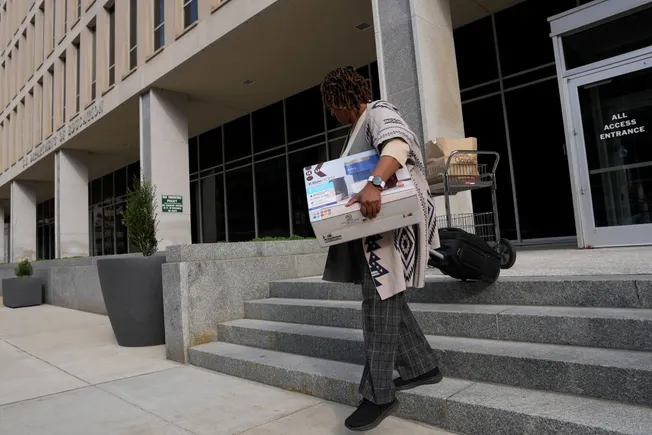
    • The U.S. Department of Education said it plans to bring back more than 260 Office for Civil Rights staff that it cut as part of its March reduction in force, returning groups of employees to the civil rights enforcement arm in waves every two weeks Sept. 8 through Nov. 3. 
    • The department’s Aug. 19 update was filed as required by a federal judge’s order in Victim Rights Law Center v. U.S. Department of Education directing that the Education Department be restored to “the status quo” so it can “carry out its statutory functions.” 
    • Since March, the Education Department has been paying the OCR employees about $1 million per week to sit idle on administrative leave, according to the update.

    Dive Insight:

    The update, filed in U.S. District Court for the District of Massachusetts, comes as a U.S. Supreme Court emergency order in a separate but similar case allowed the agency to move forward with mass layoffs across the entire department, rather than just OCR.

    That case — New York v. McMahon— was overseen by the same judge who ordered on June 18 that OCR be restored to its former capacity.

    Last week, Judge Myong Joun said he stood by his OCR order regardless of the Supreme Court’s decision in New York v. McMahon because the students who brought the Victim Rights Law Center case have “unique harms that they have suffered due to the closure of the OCR.”

    In March, the Education Department closed seven of its 12 regional offices as part of the layoffs that impacted 1,300 staffers across the entire department.

    Civil rights and public education advocates, as well as lawmakers and education policy experts warned that such a significant slash to OCR would compromise students’ civil rights and compromise their equal access to education that OCR is meant to protect.

    In April, the Victim Rights Law Center case was brought by two students who “faced severe discrimination and harassment in school and were depending on the OCR to resolve their complaints so that they could attend public school,” said Joun in his Aug. 13 decision.

    The Education Department’s update this week that it is returning OCR employees to work is in compliance with Joun’s decision.

    After Joun ordered the Education Department in the New York case to restore the department more broadly, the administration filed an emergency appeal with the Supreme Court to push the RIF through.

    The department did not respond by press time to K-12 Dive’s inquiry as to whether it intends to likewise appeal the Victim Rights Law Center decision to the Supreme Court.

    Source link

  • Has Canada reached a “turning point” in study permit approvals?

    Has Canada reached a “turning point” in study permit approvals?

    • After months of high study permit refusal rates, stakeholders welcome a more successful second quarter of 2025.
    • But concerns remain about the overall volume of approvals – especially as students from key market India continue to struggle to secure study permits.
    • Meanwhile, approvals from Ghana surge over 200% compared to Q1 of 2025.

    The IRCC data, compiled by BorderPass, showed that while Canadian study permit applications dipped in Q2 2025, the number of approvals increased by 4,450 – leading to a 10% increase in the overall approval rating. 

    “The encouraging sign is that June saw the highest approval rate of the year at 39%, which could point to a modest improvement in the second half of the year,” Jonathan Sherman, vice-president of sales & partnerships at BorderPass told The PIE News. 

    After record low approval ratings in Q1, stakeholders have welcomed the rise in approvals, though serious concerns remain about overall volumes.  

    “Just 31,580 permits were approved in the first half of 2025. IRCC’s published target for the year is about 300,000, which means at the current pace we will only reach around 20% of the goal unless there is a dramatic shift,” warned Sherman.  

    After Canada’s implementation of the study permit cap in 2024, the approval rate dropped from 67% in 2023 to 45% in 2024. So far in 2025, approvals for new study permits (excluding extensions) are tracking at 31%.  

    One of the most striking trends is India’s continued decline, with data showing study permit approvals falling another 7% in Q2 to just 20%, reflecting a “fundamental shift in how IRCC is assessing these applications”, said Sherman.  

    This stands in sharp contrast to the more than 80% approval rates for Indian students just a few years ago, “reflecting a fundamental shift in how IRCC is assessing these applications”, said Sherman.  

    The widening gap between universities and colleges also stood out in the data, a difference that Sherman said was “reshaping the international education market in Canada”.  

    Among the top 20 institutions by volume, university approvals have dropped from 63% in 2024 to 53% so far in 2025, but colleges have seen a steeper fall from 60% to 28%.  

    Colleges have felt the heaviest impact of federal policy changes, including the study permit cap and the new field of study restrictions for post-graduation work permits.  

    Despite a major win for the college sector in March this year when PGWP eligibility was expanded for degree students at colleges, these institutions have still been the hardest hit by the changes, with many of their programs no longer eligible for a work permit.  

    “That said, colleges that are focusing on programs with clear labour market outcomes such as health, technology, and skilled trades are showing better results,” noted Sherman.  

    “The institutions that carefully vet applicants for immigration quality and program alignment are also proving more resilient,” he advised.  

    At the current pace we will only reach around 20% of IRCC’s published target unless there is a dramatic shift

    Jonathan Sherman, BorderPass

    Alongside students from India, Iranian students also experienced volatility, with the country’s approval rating falling by more than 50% from Q1. In contrast, Ghana saw its approval rating surge by 225% on the previous quarter. 

    The approval rating for Chinese students – who make up Canada’s second largest international student cohort – saw stable growth, surpassing 65% approval, and South Korea remained a consistent top performer with approvals at more than 85%.  

    “Smaller markets like Vietnam, Nepal and Nigeria are also moving – some positively, some unpredictably – creating both new opportunities and risk. For many DLIs, this means rethinking region-based strategies in real time,” advised the BorderPass report

    As well as seeing variations across institution type and source market, a large number of IRCC officers were hired and trained in the first half of 2025, which Sherman said had “introduced some inconsistency in decision making as new processing are applied”. 

    “On this note, we are hearing that processing backlogs may get worse before they get better,” he warned.

    Overall: “It is clear that IRCC is applying far greater scrutiny to new applications,” said Sherman, with the gap between high- and low-performing institutions becoming ever wider.  

    Specifically, by investing in application intelligence, thoroughly reviewing documents, confirming travel readiness and working with legally backed partners, some institutions have seen approval rates more than double the national average, according to Sherman.  

    Source link

  • What Trump’s education cuts mean for literacy

    What Trump’s education cuts mean for literacy

    This podcast, Sold a Story, was produced by APM Reports and reprinted with permission.

    There’s an idea about how children learn to read that’s held sway in schools for more than a generation – even though it was proven wrong by cognitive scientists decades ago. Teaching methods based on this idea can make it harder for children to learn how to read. In this new American Public Media podcast, host Emily Hanford investigates the influential authors who promote this idea and the company that sells their work. It’s an exposé of how educators came to believe in something that isn’t true and are now reckoning with the consequences – children harmed, money wasted, an education system upended.

    Episode 14: The Cuts

    Education research is at a turning point in the United States. The Trump administration is slashing government funding for science and dismantling the Department of Education. We look at what the cuts mean for the science of reading — and the effort to get that science into schools.

    This podcast, Sold a Story, was produced by  APM Reports and reprinted with permission.

    The Hechinger Report provides in-depth, fact-based, unbiased reporting on education that is free to all readers. But that doesn’t mean it’s free to produce. Our work keeps educators and the public informed about pressing issues at schools and on campuses throughout the country. We tell the whole story, even when the details are inconvenient. Help us keep doing that.

    Join us today.

    Source link

  • Mental health screeners help ID hidden needs, research finds

    Mental health screeners help ID hidden needs, research finds

    Key points:

    A new DESSA screener to be released for the Fall ‘25 school year–designed to be paired with a strength-based student self-report assessment–accurately predicted well-being levels in 70 percent of students, a study finds.  

    According to findings from Riverside Insights, creator of research-backed assessments, researchers found that even students with strong social-emotional skills often struggle with significant mental health concerns, challenging the assumption that resilience alone indicates student well-being. The study, which examined outcomes in 254 middle school students across the United States, suggests that combining risk and resilience screening can enable identification of students who would otherwise be missed by traditional approaches. 

    “This research validates what school mental health professionals have been telling us for years–that traditional screening approaches miss too many students,” said Dr. Evelyn Johnson, VP of Research & Development at Riverside Insights. “When educators and counselors can utilize a dual approach to identify risk factors, they can pinpoint concerns and engage earlier, in and in a targeted way, before concerns become major crises.”

    The study, which offered evidence of, for example, social skills deficits among students with no identifiable or emotional behavioral concerns, provides the first empirical evidence that consideration of both risk and resilience can enhance the predictive benefits of screening, when compared to  strengths-based screening alone.

    In the years following COVID, many educators noted a feeling that something was “off” with students, despite DESSA assessments indicating that things were fine.

    “We heard this feedback from lots of different customers, and it really got our team thinking–we’re clearly missing something, even though the assessment of social-emotional skills is critically important and there’s evidence to show the links to better academic outcomes and better emotional well-being outcomes,” Johnson said. “And yet, we’re not tapping something that needs to be tapped.”

    For a long time, if a person displayed no outward or obvious mental health struggles, they were thought to be mentally healthy. In investigating the various theories and frameworks guiding mental health issues, Riverside Insight’s team dug into Dr. Shannon Suldo‘s work, which centers around the dual factor model.

    “What the dual factor approach really suggests is that the absence of problems is not necessarily equivalent to good mental health–there really are these two factors, dual factors, we talk about them in terms of risk and resilience–that really give you a much more complete picture of how a student is doing,” Johnson said.

    “The efficacy associated with this dual-factor approach is encouraging, and has big implications for practitioners struggling to identify risk with limited resources,” said Jim Bowler, general manager of the Classroom Division at Riverside Insights. “Schools told us they needed a way to identify students who might be struggling beneath the surface. The DESSA SEIR ensures no student falls through the cracks by providing the complete picture educators need for truly preventive mental health support.”

    The launch comes as mental health concerns among students reach crisis levels. More than 1 in 5 students considered attempting suicide in 2023, while 60 percent of youth with major depression receive no mental health treatment. With school psychologist-to-student ratios at 1:1065 (recommended 1:500) and counselor ratios at 1:376 (recommended 1:250), schools need preventive solutions that work within existing resources.

    The DESSA SEIR will be available for the 2025-2026 school year.

    This press release originally appeared online.

    eSchool News Staff
    Latest posts by eSchool News Staff (see all)

    Source link

  • How consistent communication transformed our school culture

    How consistent communication transformed our school culture

    Key points:

    When I became principal of Grant Elementary a decade ago, I stepped into a school community that needed to come together. Family involvement was low, staff morale was uneven, and trust between school and home had to be rebuilt from the ground up.

    Early on, I realized the path forward couldn’t start and end in the classroom. We needed to look outward to families. Our goal wasn’t just to inform them. We needed to engage them consistently, with care and transparency.

    That meant changing how we communicated.

    A shift toward authentic partnership

    We made a schoolwide commitment to open up communication. That included using a digital platform to help our team connect with families more frequently, clearly, and consistently.

    With our platform, we could share classroom moments, highlight student growth, reinforce positive behavior, and build relationships, not just exchange information. Importantly, it also supported two-way communication, which was key to creating real partnership.

    The impact was visible right away. Families felt more connected. Teachers felt more supported. And students were proud to share their progress in ways that resonated beyond school walls.

    That foundation has become central to how we approach culture-building today.

    5 ways better communication deepened engagement

    A decade later, we’ve learned a lot about what it takes to build a strong school-home connection. Here are five strategies we’ve used to increase trust and engagement with our families:

    1. Strengthen student-teacher relationships
    Real communication depends on a two-way dialogue, not one-way blasts. It’s about building relationships. During the pandemic, for example, students submitted photos of artwork, short reflections, or voice notes through the platform we use. Even in isolation, they could stay connected to teachers and classmates and feel seen. That continuity gave them a sense of belonging when they needed it most.

    2. Reinforce positive behavior in real time
    Our school uses a digital point system tied to schoolwide expectations. Students can earn points and use them at our “Dojo Store,” a reward system named by our students themselves. From spirit week participation to classroom challenges, this approach helps students stay motivated while reinforcing a culture of positivity and pride.

    3. Build trust through direct, personal updates
    Many of our families speak different home languages or come from diverse cultural backgrounds, so building trust is something we focus on every day. One of the most impactful ways we’ve done that is by using ClassDojo, which is both direct and secure, while feeling personal–not formal or distant. When families receive messages in a language they understand, and know they’re coming straight from our school team, it helps them feel connected, informed, and valued.

    4. Share classroom stories, not just grades
    One of the most powerful changes we made was giving families a window into classroom life. Teachers regularly post photos, lesson highlights, and messages recognizing growth, not just achievement. Kids go home excited to show what was shared. And even those parents who can’t attend in-person events still feel part of the learning experience.

    5. Keep communication simple and accessible
    Ease of use matters. Even staff members hesitant about technology embraced our system once they saw how it strengthened connections. It became part of our school’s rhythm, like a digital bulletin board, messaging app, and family newsletter all in one. And because everything lives in one place, families aren’t scrambling to find information.

    What we gained

    This shift didn’t require an overhaul. We didn’t start from scratch or invest in a complex system. We just chose one easy-to-use platform families already loved, committed to using it consistently, and focused on relationships first.

    Today, that platform is still part of our daily practice. But the tool was never the end goal–we were trying to build connections.

    What we’ve gained is a more unified school community. We’ve seen more proactive family involvement, stronger student ownership, and a deeper sense of belonging across our campus.

    Families are informed. Teachers are supported. Students are celebrated.

    Looking ahead

    As we continue to evolve, we’ve learned that consistent, authentic communication isn’t a “nice to have.” It’s a foundational part of any school culture built on trust.

    If you’re leading a school or district and looking to increase family engagement, my biggest advice is this: Pick an accessible platform families are already familiar with and enjoy using. Use it consistently. And let families in–not just when it’s required, but when it matters.

    That’s where trust begins.

    Latest posts by eSchool Media Contributors (see all)

    Source link

  • You’re not on the list

    You’re not on the list

    The pause in accepting applications to the Office for Students register is to be lifted on 28 August and, as Jim Dickinson notes, new providers now have a whole set of extra conditions that will apply to them.

    As was spotted at the consultation, it will become odd that 430 or so “old” providers have less stringent rules than those who join the register afresh. OfS is very clear – the new rules protect students and taxpayers.

    Meanwhile DfE is suggesting raising the stakes of the register by requiring both larger providers who teach via franchise, and those who want to deliver courses funded by the Lifelong Learning Entitlement (LLE) to join the register..

    Why a Register?

    One of the enduring regulatory mechanisms of English higher education is the list or register. From the outset of the regulated and funded system after the First World War there’s been a list that you needed to be on. These were invariably linked to hierarchies of status and funding. There were criteria with serious cut-offs: getting on the UGC funding list, making the list to be one of the colleges of advanced technology, or one of the polytechnics, or one of the colleges to be incorporated (and funded by PCFC) or to be allowed onto the HEFCE list.

    The intention with the OfS register was slightly different. It was both more encompassing, many more providers were due to join, including those that didn’t want funding (or the encumbrances of funding) as there was no opt out. But it turned out that you could opt out; many providers have existed (some might say flourished) outside the register via the franchise route. Even benefits that were supposed just to be for those on the register – say the use of “university” in your title – have been granted to providers not on the register.

    What’s recently vanished is the idea of a new (possibly lighter touch) category of registration for providers to offer the LLE. Back at the start of the OfS a registered (basic) category fell away. Given concerns about the behaviour of a few providers in the current registration categories, an Approved-lite wasn’t plausible.

    Consultation

    As you’d expect, the OfS says “We have decided to implement our proposals in broadly the form on which we consulted” There are tweaks, of course, particularly splitting out the initial tests on governance and management. These are at the heart of many of the problems we’ve seen – in particular how governance interacts with directors who may also be the proprietors of a for-profit business.

    Being on the register is a major kitemark: the guarantee of quality. The framing of the new conditions is that the old ones weren’t sufficient. We can see that the Department for Education has been working around the register – the replacement for the DET (the FE training course, which was the source of many problems) being limited to providers with degree awarding powers, and those without TEF Gold and Silver going through a tougher process to run LLE modules.

    A group of providers who have previously tried to get on the register will have to try again. OfS has stopped formally refusing applications.

    We can see some of the providers who now franchising were refused in the past and so could the Public Accounts Committee (who were not amused). OfS took the unusual step of publishing a case note on Oxford Business College’s application to register, clearly indicating there was no way they were getting on the list, but only after OBC had withdrawn their application and DfE turned off the funding taps. It’s worth noting that OBC’s purported governance arrangements (including a former VC as its chair) seemingly vanished away when it started to unravel. OfS has reduced the period before you can apply again, but it’s clear they want to stop half-baked applications.

    Leaving the Register

    There remains an issue in that it turns out that that threat of being removed from the register isn’t much of a threat if you are exiting HE and entering administration. OfS used the formulation “The provider no longer wishes to access the benefits of OfS registration” for the first colleges that left, Applied Business Academy as “The provider is no longer able to provide higher education” and Brit College as “The provider will no longer seek to meet the conditions required to remain registered as a higher education provider in England”. Brit, another registered provider, has had its courses de-designated by the DfE.

    If the loophole of providing HE while not being on the register is closed, then there will be plenty of pressure on the system. We’ve seen plenty of complaints about the time it takes to register and we will need to see whether OfS’ proposals make this better. OfS’s performance data does not record a time taken to resolve an application, but we’ve seen some take four years. Clearly they think that some providers are under-prepared for the registration process and also that they want to speed up the refusal (or forced withdrawal) process.

    We can only see some of the issues that OfS and DfE are dealing with; these new conditions and processes are designed to close loopholes. As an example, we saw OfS refuse registration to Spurgeon’s College because its finances were poor, only to have to admit them a few months later after they had secured a loan. Spurgeon’s is now in administration. There’s increased requirements for financial information in the application process. It’s hard to look at the list of prohibited behaviours linked to C5 on student fairness without imagining a lot of these have been reported to OfS at some point.

    Gas panic

    The OfS register sits in the background – on the web site this is literally the case as it lurks under “for providers” and “regulatory resources”. The way it manifests itself could do with a spruce up – the web version is marked in “beta” mode (as it has from 2022) and parts of the functionality and data need an overhaul. Checking the OfS register is never quite like looking up whether your engineer has a safe gas certificate, but an increasing number of students have found their HE experience has blown up.

    It’s hard to argue against protecting students and taxpayers, but the 429 providers already on the register should take a look at these conditions As Jim Dickinson notes there’s a challenge here on fairness for all providers and it’s hard to imagine that OfS won’t want to see both the fairness and governance and management aspects of the new E conditions apply to all providers pretty soon.

    Source link

  • Financial aid administrators report disruptions since Education Department layoffs

    Financial aid administrators report disruptions since Education Department layoffs

    Dive Brief: 

    • A large majority of financial aid administrators, 72%, say they’ve experienced “noticeable changes” in the Federal Student Aid office’s communications, responsiveness and processing timelines since the U.S. Department of Education’s mass layoffs in March

    • That’s according to a July survey conducted by the National Association of Student Financial Aid Administrators. The results also show that “federal support channels for students are breaking down,” including through issues with call centers, NASFAA said. 

    • These disruptions are hampering colleges’ ability to assist students, it said. “Unless federal service channels stabilize, the aid system risks becoming less accessible, less predictable, and less trusted by the very students it is intended to serve,” it added. 

    Dive Insight: 

    When the Education Department moved to lay off roughly half its staff in March, student advocates voiced concerns that the agency wouldn’t have enough workers to carry out core functions, including financial aid services. 

    NASFAA’s survey builds on those concerns. The survey found that higher shares of financial aid administrators surveyed in July said they are experiencing delays and a lack of communication from the Education Department than those polled just two months before. 

    For instance, 59% of officials surveyed in May said they had experienced disruptions in the Federal Student Aid office’s responsiveness, communication and processing timelines — a number that has since jumped to 72%.

    Ellen Keast, deputy press secretary at the Education Department, sharply rebuked the survey. 

    “It is an embarrassment for NASFAA to release a ‘survey’ that blatantly parrots falsehoods and is not representative of the higher education community nor the American people’s overwhelming charge for change,” Keast said in an emailed statement Wednesday. “Clearly, NASFAA is peddling a false narrative to preserve the status quo.”

    An Education Department official accused the survey of having methodological shortcomings. The official pointed to the survey’s response rate — completed by over 549 institutions — saying that represents less than 10% of the roughly 5,800 colleges that work with Federal Student Aid. 

    The official also said questions spurred respondents to report negative experiences and that those polled were overrepresented by administrators working at nonprofit and public four-year colleges, which the agency accused as being the most likely to oppose the Trump administration. 

    Additionally, the official said the mass layoffs did not impact FAFSA staff or Federal Student Aid’s ability to serve customers. 

    Melanie Storey, president and CEO of NASFAA, said in a statement that the survey reflects “the real, everyday experiences of financial aid professionals.”

    “To dismiss these concerns as fabricated or political undermines the expertise of those working directly with students every day, eager to deliver on the promise of postsecondary education, and shows that the administration is not interested in working with experts in the field to achieve the best results for students; instead, it is focused on advancing its own agenda,” Storey said. 

    In the survey, 32% of respondents said they’ve experienced processing delays for the Free Application for Federal Student Aid since May. 

    Earlier this month, the Education Department began beta-testing for the 2026-27 FAFSA form. So far, more than 1,000 students have completed the form, according to a department official. 

    Meanwhile, 49% of financial aid administrators have experienced processing delays with the e-App, the application colleges submit to the Education Department to participate in federal financial aid programs. Among colleges that submitted the e-App, 63% said in July that it still had not been processed. 

    More students are reaching out to their financial aid offices, according to the survey. Sixty percent of administrators said they’ve seen spikes in student questions about the Education Department’s services in the July poll, compared with 45% who said the same in May. 

    While several respondents said students were confused about the FAFSA process or federal aid, not all officials specified whether the inquiries were related to the Education Department’s mass layoffs or other recent federal changes.

    Republicans recently made sweeping changes to the student loan system through their massive domestic policy bill signed into law in July. That includes consolidating the student loan repayment programs into just two options and phasing out Grad PLUS loans, which allow graduate and professional students to borrow up to the cost of attendance. 

    Critics have noted that the Education Department will have to carry out the vast policy changes mandated by the bill with about half the workforce it had before President Donald Trump retook office. 

    U.S. Education Secretary Linda McMahon has framed the layoffs as the first step to Trump’s goal of eliminating the Education Department and shifting its duties elsewhere — a change that would require congressional approval. 

    A federal judge initially blocked the Education Department’s mass layoffs, but the U.S. Supreme Court lifted that order in July while litigation challenging their legality proceeds.

    Source link

  • New York City workplace shooting exposes building security weaknesses

    New York City workplace shooting exposes building security weaknesses

    This audio is auto-generated. Please let us know if you have feedback.

    Last month’s mass shooting in New York City, like every mass shooting incident, is yet another wake-up call to education leaders and school safety experts about how to better protect their buildings and therefore the students and staff inside. This story, from our sister publication Facilities Dive, provides insight into how commercial facilities operators are responding, with takeaways for the education sector.

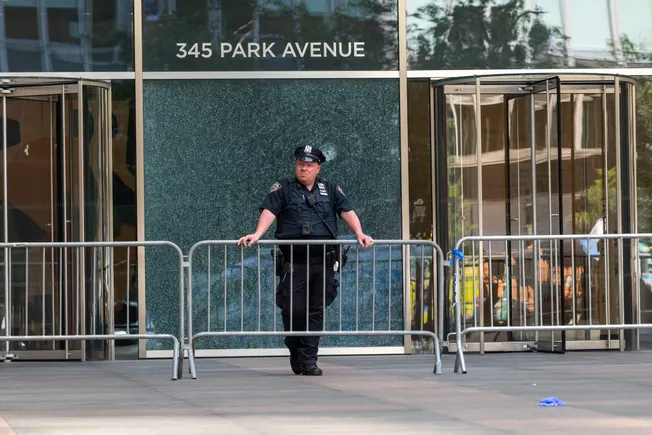
    The mass shooting that took place in Midtown Manhattan last month, which resulted in the deaths of a police officer and three others, puts a spotlight on how building operators can protect occupants in the face of armed assailants. The incident makes clear that access control is a critical factor, but not all access systems are the same, security specialists say. 

    Prior to the assailant entering the office skyscraper’s lobby and beginning his attack, cameras at 345 Park Avenue flagged the approaching gunman as a potential threat, Reuters reported

    A still frame of closed circuit television footage the outlet obtained, time-stamped just over a minute before police received the first emergency call about the shooting, shows a man holding an assault-style rifle at his side. The photo shows a yellow box around the figure generated by the building’s security system, which analyzes live video feeds for threats requiring instant action. The system was supposed to alert guards at the front security desk, a former federal official told Reuters.

    Protecting building occupants in the case of an emergency starts with access control, especially in the case of an active shooter, according to Josh Sullivan, chief operating officer of the ALIVE Active Shooter Survival Training Program, which shares best practices with organizations on responding to threats. 

    “Access control and the physical security measures in place can prevent a lot of things from happening in the first place,” Sullivan said. “There are multiple ways. No. 1, they have systems out there, like the one that was in place [at 345 Park Avenue] that just didn’t get used properly.” 

    Software is available that can connect to cameras, identify threats and lock down access controls, doors and other systems, Sullivan said. The software can also notify local authorities or call 911.  

    “Those things save valuable time,” he said. In some cases, the software automatically provides the security system login to the emergency dispatchers, who can provide it to the first responders, giving them “access to the camera’s live feed, more plans and to where things are in the building.”

    The technology is only part of the equation, however, Matthew Dumpert, global leader of enterprise security risk management at financial and risk advisory firm Kroll, told Reuters. “It takes significant resources, alarms to notify people [and] training to recognize it,” he said. 

    Considering the rate of active threats today, allocating those resources and having a plan is increasingly important for facilities managers, Sullivan says. 

    The OSHA general duty clause says that employers must take reasonable actions to ensure the safety of employees or guests from recognized hazards that are “likely to cause death or serious physical harm.” 

    “An active shooter, unfortunately in today’s world, is a common hazard,” Sullivan said. “It’s No. 3 overall in any workplace as the cause of injury or death. In healthcare and education, it’s No. 1.” 

    Stagnant technologies leave gaps in security

    Many organizations use access control technologies that are outdated, improperly configured or insecure, according to Tina D’Agostin, CEO of Alcatraz AI, a company that provides facial authentication hardware and software solutions to enterprise clients. 

    “When you look at what is deployed today, 90% of it is still badges and proximity cards,” said D’Agostin, noting that the first access card technology was released in 1983, with little innovation since. “Imagine using a TV or phone from the ’80s. That’s essentially what we’re doing in access control. In no other area of life would that be allowed to happen.” 

    Among their weaknesses, these cards can be easily cloned, she said.

    Facility managers might want to look at other technologies, including mobile technologies and biometric-based systems, she said. Each has its pros and cons, she said. 

    Among their cons, mobile devices are carried, just like an access card, so they can be lost, and using biometrics requires a trade-off between friction and convenience, she said. 

    Separate from these issues is the problem of tailgating, where unknown actors follow authorized employees or occupants into a space, bypassing access controls. 

    Source link

  • Education Department uses Skrmetti case to bolster Title IX policy

    Education Department uses Skrmetti case to bolster Title IX policy

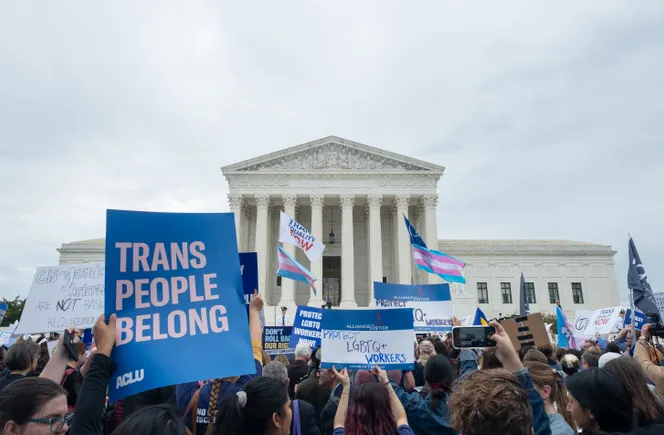
    Just a week after the U.S. Supreme Court ruled to restrict gender-affirming medical care for transgender minors in June, the U.S. Department of Education began citing that decision in findings related to transgender access to athletics. 

    Although the high court’s ruling in U.S. vs. Skrmetti did not directly involve education civil rights law, the Trump administration has relied on it to bolster its stance that Title IX can be used to exclude transgender students from teams aligning with their gender identities.

    The Supreme Court’s decision said a person’s identification as “transgender” is distinct from their “biological sex.” However, it did not touch on whether discrimination against transgender people amounts to sex-based discrimination.

    But the Education Department’s Office of Civil Rights is using the decision to inform Title IX cases that have excluded transgender students from protections against sex-based discrimination. The decision’s use in OCR policy is leading to double-takes from Title IX experts, although one said district leaders may not have to change anything for now since the Supreme Court has placed a transgender athletics case on its docket for the next term.

    The Trump administration has cited the Skrmetti case in at least two OCR cases related to transgender access to athletics. 

    In a June 25 press release, OCR cited the case in its finding that the California Department of Education and California Interscholastic Federation violated Title IX by discriminating against girls and women after the state allowed transgender students to play on girls’ sports teams.

    “On June 18, 2025, the Supreme Court upheld a Tennessee law banning certain medical care for minors related to treating ‘gender dysphoria, gender identity disorder, or gender incongruence,’” OCR said in its news release. “In so holding, the Supreme Court acknowledged that a person’s identification as ‘transgender’ is distinct from a person’s ‘biological sex.’” 

    The department also cited the case in its July 27 finding that five large Northern Virginia school districts, including Fairfax County Public Schools, discriminated on the basis of sex when they allowed transgender students to access facilities aligning with their gender identities.

    “There has been a little bit of a selective stretching,” said Kayleigh Baker, an advisory board member for the Association of Title IX Administrators. Baker and other ATIXA attorneys routinely work with school districts to train them on education civil rights laws. 

    “The four corners of the Supreme Court opinions have sort of been extrapolated and sort of merged together with this administration’s interpretation in a couple of arenas. And it seems like this is another one of those,” Baker said. 

    Jay Worona, partner at law firm Jaspan Schlesinger Narendran, said the Education Department did something similar with the Supreme Court’s 2023 SFFA v. Harvard decision banning race-conscious admissions. 

    Worona said in an email that the administration has used the case to argue that “K-12 school districts violate civil rights protections of students when they enact policies and engage in practices advancing DEI [diversity, equity and inclusion] despite the Supreme Court’s decision in that case only applying to higher education institutions.” 

    In February, the agency issued a Dear Colleague letter to prohibit the consideration of race in many more aspects of educational programming, including “financial aid, scholarships, prizes, administrative support, discipline, housing, graduation ceremonies, and all other aspects of student, academic, and campus life.” 

    “Although SFFA addressed admissions decisions, the Supreme Court’s holding applies more broadly,” the Education Department said in its letter to districts. “At its core, the test is simple: If an educational institution treats a person of one race differently than it treats another person because of that person’s race, the educational institution violates the law.” 

    Source link