Author: admin

  • Students sitting on floor in ANU tutorials – Campus Review

    Students sitting on floor in ANU tutorials – Campus Review

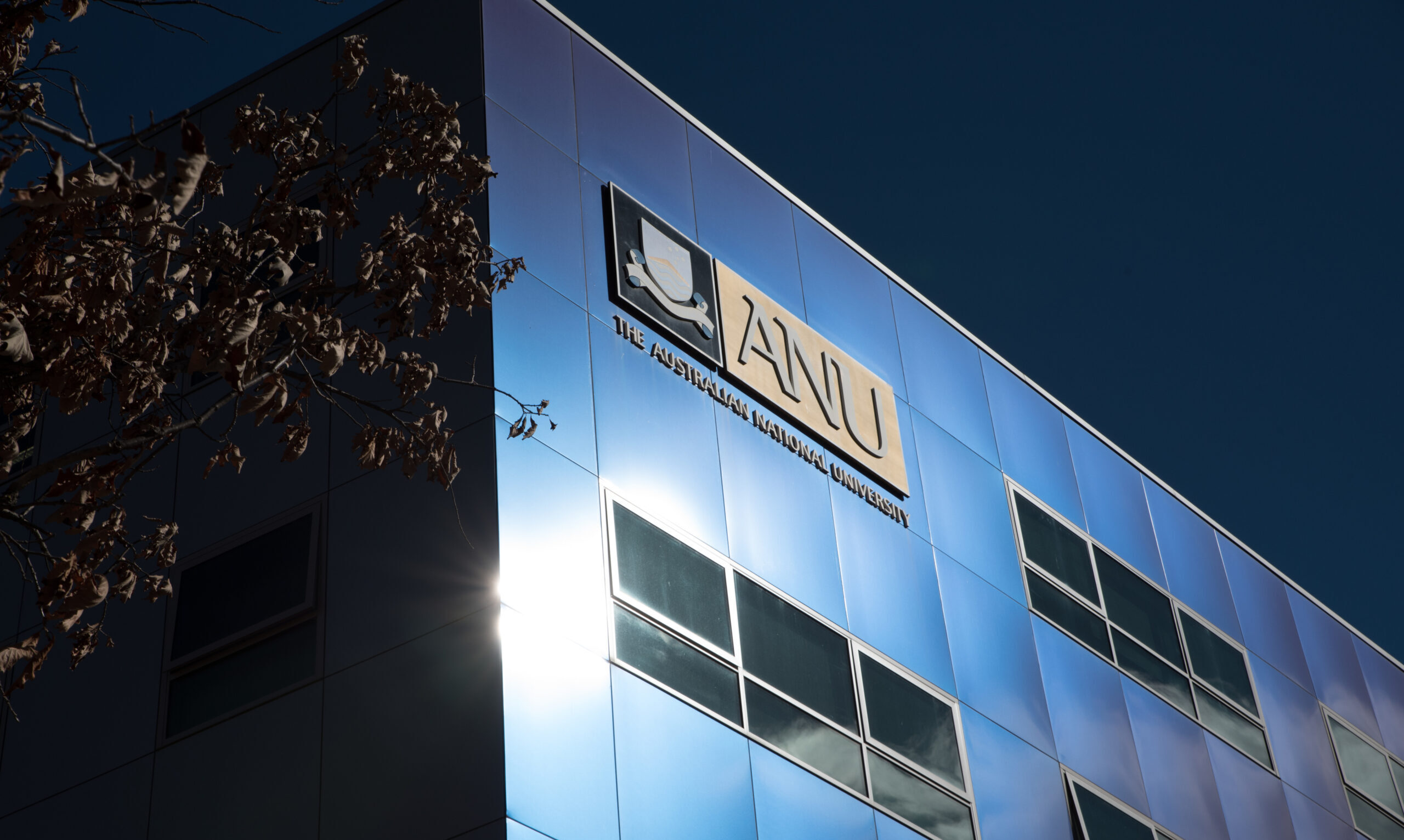
    The Education and Employment Committee has heard Australian National University (ANU) students are forced to sit on the floor in overpacked tutorials as a result of budget cuts in its $250m restructure.

    Please login below to view content or subscribe now.

    Membership Login

    Source link

  • How to offer academic asylum to scholars at risk

    How to offer academic asylum to scholars at risk

    Since President Trump rolled out executive orders to eliminate DEI programmes and began to unpick the funding infrastructure of American research, a number of countries have offered safe haven to academics currently working in the USA.

    As rector of Vrije Universiteit Brussel, Jan Danckaert, noted:

    American universities and their researchers are the biggest victims of this political and ideological interference. They’re seeing millions in research funding disappear for ideological reasons.

    From Singapore and Australia to Norway and Belgium, governments and individual universities around the globe are seizing the opportunity to attract the top American minds. For scholars fearful of their government’s policy direction on academic freedom, such as those working in gender studies, on vaccine research or climate change, the situation is urgent.

    At risk academics

    Yet this is nothing new. The Council for At-Risk Academics (CARA) has helped researchers escape persecution and conflict for almost a century, bringing the likes of Nikolaus Pevsner, Max Born and Albie Sachs to safety in Britain. Conceived in response to the Nazi assault on universities, CARA drove Britain’s scholarly rescue mission in the 1930s. At the same time, a parallel movement began in the USA. The Institute for Advanced Study was created at Princeton, with Albert Einstein appointed as the first Fellow in 1932. Other European academics such as Paul Dirac and Emmy Noether soon followed.

    Just as German scientists sought academic freedom in the USA and UK in the 1930s, now American scholars are beginning to cross the Atlantic in the other direction. In France, Aix-Marseille University received around 300 applications for its Safe Place for Science initiative, which aims to offer 15 million Euro to support research across the next three years. The first eight researchers arrived in France in June, with up to 20 expected by the beginning of the new academic year.

    The UK’s universities meanwhile seem mired in a funding crisis due to financial models all too dependent on precarious markets of international students, leading to shrinking budgets, staff layoffs and even the looming possibility of full-blown bankruptcy. Offering cash and “academic asylum” to any foreign academics in these straitened circumstances is unlikely to be seen as a priority. And yet Institutes for Advanced Study, or IASs, already provide the necessary infrastructure and perhaps the fastest means of response.

    What is an Institute for Advanced Study?

    Princeton’s Institute remains remarkable: since its inception, visitors have been selected solely on the basis of academic ability, regardless of gender, race or religion; its mission of Advanced Study centres the “curiosity-driven pursuit of knowledge” as a good in itself, with no view to practical application or the expectation of meeting predetermined goals. This approach, and the inherent interdisciplinarity of bringing together researchers across the sciences, arts and humanities, inspired counterparts around the world, including the UK’s first IAS at the University of Edinburgh in 1969. Other UK universities with an IAS now include Warwick, Loughborough, Durham, Stirling, UCL and Birmingham.

    These Institutes vary in size and scope but all share Princeton’s founding mission of untrammelled academic freedom for blue-sky thinking. Interdisciplinarity is the scholarly keystone of Advanced Study. Researchers from diverse disciplines and career stages form a community of practice, which may also encompass artists, journalists, community activists and others who likewise benefit from a reflective, supportive, non-hierarchical environment in which to work. Conversations and serendipitous encounters in such an environment can be the “source from which undreamed-of utility is derived” in the words of Abraham Flexner, founder of Princeton’s IAS.

    What can these institutes offer?

    Amid difficult economic times, approaches to knowledge production have become ever more instrumental, with research increasingly valorised for its capacity to be commercialised or to have some form of impact beyond the academy. However, an overemphasis on applied research risks circumscribing the conceptual imagination that underscores so many scientific advances. The curiosity-driven IAS approach can be a necessary corrective to instrumentalism, bolstering a healthy research culture.

    From their inception in the 1930s, IASs have also always had a moral mission to support colleagues around the world when threatened by conflict, displacement or, in the case of the new wave of populist governments, by illiberalism. For those escaping war and trauma, such institutes form quiet places of refuge, rehabilitation and recovery. A small institute can be agile enough to respond to urgent need when research is threatened, where a whole department is less able to pivot. It is worth noting that recent programmes for Ukrainian scholars and their families have tended to emerge from IASs, along with bespoke schemes for researchers from Palestine, Syria, Hungary or Türkiye – and now perhaps America.

    Lastly, opportunities for career advancement have reduced across the whole university sector, nationally and internationally. Early-career scholars in particular face an impossibly precarious work environment, and staff development programmes are often the first casualty of cuts to expenditure. Whilst contracted research – as PDRA on a senior scholar’s project – can be an important stepping stone in the early stages of an academic career, there is a need for more funded opportunities to support independent research at postdoctoral level. IASs are one of very few means by which such research can flourish. Each year, hundreds of global scholars are appointed to IAS Fellowships at postdoctoral and more senior levels.

    Given the polycrises facing the sector, turning us inward, perhaps it is necessary to reconsider higher education as a global commons. In doing so, universities must embrace their particular responsibilities as places of sanctuary, of fundamental knowledge production and as incubators for the next generation of scholarship. The concept of Advanced Study was created to foster innovation across all these areas in a time of persecution.

    Now more than ever, Institutes devoted to that transformative potential could be the vehicle for promoting the highest standards of international collaboration, extending a hand to academics at risk in the global south and north, including our American counterparts.

    Source link

  • University of Iowa launches ‘proactive’ committee to hunt for revenue and boost efficiency

    University of Iowa launches ‘proactive’ committee to hunt for revenue and boost efficiency

    This audio is auto-generated. Please let us know if you have feedback.

    Dive Brief:

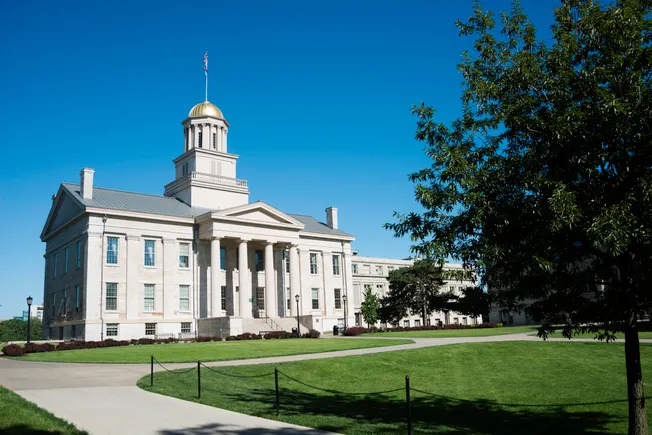
    • The University of Iowa has assembled a massive universitywide committee to explore new revenue opportunities and ways to boost efficiency, the public institution announced last week. 
    • Dubbed “Resparc” short for Revenue and Efficiencies Strategic Plan Action and Resource Committee — the group includes nearly 100 faculty, staff and officials from 35 units across the institution. 
    • Subcommittees will explore specific areas such as philanthropy, academic programs and financial operations. Those teams will develop proposals for increasing revenue and improving operations for Resparc’s leadership and ultimately for University of Iowa’s president and provost.

    Dive Insight:

    The university framed its new initiative as forward-looking, meant to ensure University of Iowa “maintains its strong financial trajectory for years to come,” rather than having to wrestle reactively with challenges as they happen. 

    “By launching this effort from a position of financial health, the university will be able to build upon its success at a time when higher education is navigating significant disruption, from the anticipated demographic enrollment cliff to a decline in public trust and growing financial constraints,” the university said in its announcement. 

    Iowa’s flagship university is growing. By fall 2024, its total faculty and staff had increased 5.1% year over year to 27,795 employees, while enrollment grew 2.4% to 32,199 students

    The university’s total assets and revenues have also been steadily rising in recent years. In fiscal 2024, its operating income — which does not include state appropriations, certain grants and contacts, investment income or gifts — stood at $36.8 million. The positive operating income stands in contrast to that of the many public universities with operating losses before those sources of revenue are factored in. 

    But University of Iowa officials acknowledged the challenges rippling across the higher ed landscape, including an anticipated decline in the traditional college-age population

    In Iowa specifically, the number of high school graduates is projected to decline by 4% from 2023 to 2041, according to the latest estimates from Western Interstate Commission for Higher Education. 

    University of Iowa has also seen its expenses jump along with the rest of the higher ed world, adding new financial constraints. Between fiscal years 2022 and 2024, its total operating expenses rose 15.7% to $5 billion. 

    The Trump administration’s aggressive moves to limit federal research funding could pose additional pressure. In 2024, University of Iowa brought in $315 million in federal research funding. The Trump administration has now terminated grants to the university worth roughly $14.3 million and having $9.7 million still left to be paid out, according to a Center for American Progress analysis of U.S. Department of the Treasury data. 

    Against that backdrop, many institutions — public and private — are cutting back spending and shrinking their employee base, both through layoffs and attrition. But University of Iowa officials say Resparc is different. 

    In a FAQ page, the university said the efficiency-seeking efforts are “a proactive planning effort, not a response to a budget crisis.” It states that the goal “is to find ways to work smarter, improve processes, reduce administrative burdens, and better leverage our collective resources and technology.”

    Resparc is led by Emily Campbell, associate vice president for operations and decision support, and Sara Sanders, dean of the university’s liberal arts and sciences college. 

    Campbell and engineering dean Ann McKenna oversee the initiative’s revenue teams, while Sanders and Peter Matthes, vice president for external relations and senior advisor to University of Iowa President Barbara Wilson, oversee the efficiency group.

    Source link

  • American Sororities: Class, Race, Gender, and the Return of "Tradition"

    American Sororities: Class, Race, Gender, and the Return of "Tradition"

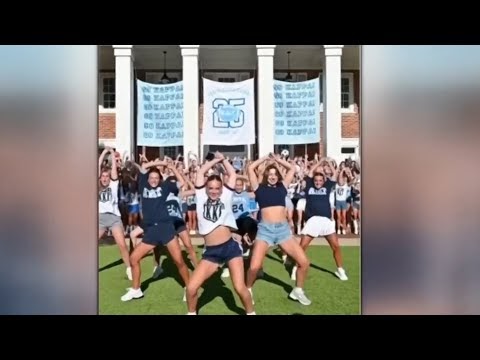
    At flagship universities across the United States, predominantly white sororities remain popular institutions. They offer young women a ready-made community, social capital, and access to alumni networks. But behind this appeal lies a system that reinforces race, class, and gender hierarchies—at a time when women’s rights are being rolled back nationally.
    Race and Class Tradition: Who Belongs, Who Does Not
    Sororities are not only racially homogeneous but also heavily skewed by class. Recruitment practices, legacy ties, and financial obligations ensure that sorority life remains a domain for the affluent.
    At Princeton University, 77% of sorority members are white, compared with 47% of the student body overall.
    Socioeconomic trends are even starker. In 1999, 31% of Greek-affiliated students at Princeton identified as middle-class, but by 2024 that number had dropped to 14%. Over the same period, those identifying as upper-class doubled from 14% to 28%.
    At the University of Mississippi, 48% of high school graduates in the state were Black in 2021, but only 8% of first-year students at Ole Miss were Black. White-dominated Greek life continues to thrive in this climate of underrepresentation.
    A multi-campus study found 72% of Greek members identified as middle- or upper-middle class, compared with just 6% from low-income families.
    These figures reveal how sororities work to reproduce the advantages of affluent white families. Membership offers exclusive networking, internships, and social connections—often denied to working-class students, students of color, and first-generation college students.
    Gender Tradition

    Sororities also sustain a vision of femininity rooted in conformity, beauty standards, and heteronormativity. Social events are structured around fraternities, placing men as hosts and leaders, while sorority women serve as companions or supporters.
    While some sororities claim empowerment through philanthropy and sisterhood, the cultural framework continues to emphasize women’s value through appearance and deference, not leadership. This pattern reflects broader societal pressures to restore traditional gender roles.
    The Broader Context: The Right to Choose Lost
    The Supreme Court’s 2022 reversal of Roe v. Wade has had profound consequences for women in the U.S.
    More than 25 million women of reproductive age now live in states with abortion bans or severe restrictions.
    States with the most restrictive abortion laws show a 7% increase in maternal mortality overall, and 51% higher rates where laws require procedures only from licensed physicians.
    The loss of Roe’s protections especially harms women of color and low-income women, who already face barriers to healthcare and mobility.
    Against this backdrop, sororities’ popularity at flagship universities is revealing. These organizations celebrate conformity to class privilege and traditional gender expectations, while millions of women outside those circles see their reproductive freedoms curtailed. The alignment of sorority culture with conservative visions of femininity makes them more than relics of tradition—they become cultural reinforcers of the very inequalities deepening in U.S. society.
    Why Class Matters
    Social class is at the heart of the issue. Sororities provide access to powerful networks that translate into internships, job placements, and lifelong advantages. These networks overwhelmingly serve the wealthy and exclude those already disadvantaged by race, class, and gender.
    At a time when women’s bodily autonomy is under political attack, the popularity of predominantly white sororities signals how elite spaces continue to consolidate privilege for a narrow group of women—while the majority face shrinking freedoms and growing precarity.
    Sources
    Princeton Greek life demographics (tcf.org)
    Princeton Class of 2024 socioeconomic trends (dailyprincetonian.com)
    University of Mississippi racial disparities (hechingerreport.org)
    National Greek life class survey (vox.com)
    Women under abortion bans: 25 million affected (americanprogress.org)
    Abortion bans and maternal mortality (sph.tulane.edu

    Source link

  • State Department has revoked over 6,000 student visas this year

    State Department has revoked over 6,000 student visas this year

    This audio is auto-generated. Please let us know if you have feedback.

    Dive Brief: 

    • The U.S. Department of State has so far revoked over 6,000 international student visas in 2025 over allegations that the students had overstayed their visas or broken laws, an agency spokesperson said via email Tuesday. 
    • The spokesperson attributed about 4,000 of the visa revocations to law violations, such as alleged support for terrorism, assault, driving under the influence, and burglary. 
    • The Trump administration’s attacks on international students have contributed uncertainty to the higher education landscape. International enrollment could plummet by 150,000 students this fall, which would amount to a 15% overall decline, according to a recent analysis from NAFSA: Association of International Educators. 

    Dive Insight: 

    The State Department’s news, which was first reported by Fox News, suggests that the Trump administration is continuing to use an arsenal of tactics against international students, including revoking their visas over claims they support terrorist groups. 

    Those allegations have been at the heart of several high-profile cases where the Trump administration has sought to deport international students or green card holders. The U.S. Department of Homeland Security, for instance, claimed that Tufts University doctoral student Rümeysa Öztürk had engaged in activities “in support of Hamas” when the administration detained her and sought her deportation in March. 

    However, the State Department had determined days before she was detained that the government lacked evidence that she had made public statements in support of a terrorist group, The Washington Post reported in April. 

    In a May court ruling, a federal judge said the only specific reason DHS cited to justify Öztürk’s detention was her co-byline on a student newspaper op-ed. The piece criticized Tufts’ administration over its response to student government resolutions for the institution to divest from Israel and “acknowledge the Palestinian genocide.”

    Öztürk, who has not been charged with a crime, was released in May while her case proceeds. 

    The State Department spokesperson said the agency has revoked roughly 200 to 300 student visas over terrorism-related claims. The spokesperson said the actions were taken under a section of the Immigration and Nationality Act that bars people from receiving visas if they have engaged in or support terrorist activities. 

    The spokesperson did not immediately reply to questions asking for further details about the terrorism-related allegations or whether the students who faced visa revocations were convicted of the alleged crimes. 

    The Foundation for Individual Rights and Expression filed a lawsuit against the Trump administration earlier this month over its use of the Immigration and Nationality Act to attempt to deport student visa holders. The complaint alleges that the federal government has infringed on students’ First Amendment and due process rights by using the statute to target their speech. 

    The Trump administration has taken other actions to tighten international student enrollment as well. For one, a State Department policy announced June 18 requires student visa applicants to make their social media accounts public so government agents can review them.

    Consular officers have been asked to review the profiles for “hostile attitudes” toward the U.S. — a vague mandate that “creates significant discretionary power in visa determinations that will no doubt lead to inconsistencies in implementation,” according to a June post from NAFSA.

    Source link

  • IFP Survey on Upcoming Immigration Rules

    IFP Survey on Upcoming Immigration Rules

    IFP Survey on Upcoming Immigration Rules Affecting H-1B, F-1, J-1 and OPT

    The Institute for Progress (IFP) is conducting an H-1B employer survey with economist Michael Clemens (George Mason University/Peterson Institute). We know this topic is of significant interest for many CUPA-HR leaders and encourage you to forward this link to those with information needed to complete the survey.

    The survey is designed to document how upcoming immigration rulemakings could affect universities and other employers, including proposals to:

    • eliminate “duration of status” admissions for F-1 and J-1 visa holders,
    • institute a weighted lottery for H-1B petitions,
    • rescind Optional Practical Training (OPT), and
    • revise required wage levels for H-1B filings.

    Two of these proposals — ending duration of status for F-1/J-1 holders and creating a weighted H-1B lottery — have already cleared the Office of Information and Regulatory Affairs (OIRA) review and could be published imminently; the others are anticipated.

    By generating a strong university response, IFP and its partners (including the U.S. Chamber of Commerce and American Immigration Lawyers Association) aim to provide data showing the costs and negative impacts of these rules. The survey closes September 8, 2025, though the deadline may be extended depending on the federal comment period.

    You can preview the survey questions before completing the survey.

    Source link

  • Survey on Upcoming Immigration Rules

    Survey on Upcoming Immigration Rules

    IFP Survey on Upcoming Immigration Rules Affecting H-1B, F-1, J-1 and OPT

    The Institute for Progress (IFP) is conducting an H-1B employer survey with economist Michael Clemens (George Mason University/Peterson Institute). We know this topic is of significant interest for many CUPA-HR leaders and encourage you to forward this link to those with information needed to complete the survey.

    The survey is designed to document how upcoming immigration rulemakings could affect universities and other employers, including proposals to:

    • eliminate “duration of status” admissions for F-1 and J-1 visa holders,
    • institute a weighted lottery for H-1B petitions,
    • rescind Optional Practical Training (OPT), and
    • revise required wage levels for H-1B filings.

    Two of these proposals — ending duration of status for F-1/J-1 holders and creating a weighted H-1B lottery — have already cleared the Office of Information and Regulatory Affairs (OIRA) review and could be published imminently; the others are anticipated.

    By generating a strong university response, IFP and its partners (including the U.S. Chamber of Commerce and American Immigration Lawyers Association) aim to provide data showing the costs and negative impacts of these rules. The survey closes September 8, 2025, though the deadline may be extended depending on the federal comment period.

    You can preview the survey questions before completing the survey.

    Source link

  • ED Clamps Down on Student Voting Work

    ED Clamps Down on Student Voting Work

    Aaron Jackendoff/SOPA Images/LightRocket via Getty Images

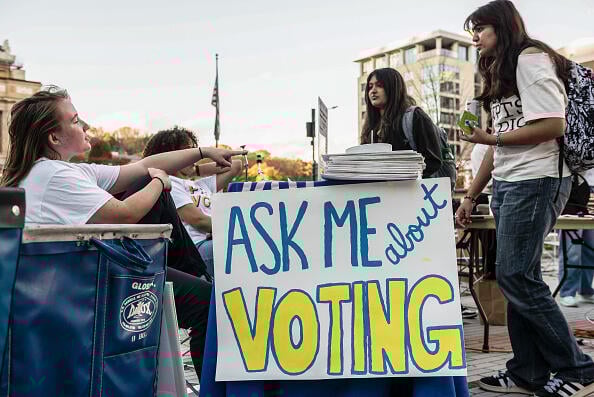
    The Department of Education released guidance Tuesday discouraging colleges from using Federal Work-Study funds to pay students to work on voter registration efforts and other activities it deems political.

    The department announced the change to work study provisions in a Dear Colleague letter signed by acting assistant ED secretary Christopher McCaghren.

    “Jobs involving partisan or nonpartisan voter registration, voter assistance at a polling place or through a voter hotline, or serving as a poll worker—whether this takes place on or off campus—involve political activity because these activities support the process of voting which is a quintessential political activity whereby voters formally support partisan or nonpartisan political candidates by casting ballots,” McCaghren wrote. 

    He emphasized in the letter that ED “encourages institutions to employ students in jobs that align with real-world work experience related to a student’s course of study whenever possible.” 

    Education Secretary Linda McMahon echoed that sentiment in a Tuesday social media post, writing that the department is “done funding political activism on college campuses!” She added, “Under the Trump Administration, taxpayer dollars will be used to prepare students for the workforce.”

    McCaghren’s letter also warned colleges about “aiding and abetting voter fraud.” 

    While institutions are required to make a “good faith effort to distribute voter registration forms to students,” they should refrain from distributing such materials to students they believe are ineligible to vote in state or federal elections, according to the letter.

    The move comes as President Donald Trump has announced plans to overhaul how elections are conducted before the upcoming midterms next year, including barring certain voting machines and mail-in voting, though he does not have the authority to make such changes.

    Source link

  • 4 ways to transform your classroom through playful gamification 

    4 ways to transform your classroom through playful gamification 

    Key points:

    Every educator hopes to instill a lifelong love of learning within their students. We strive to make each lesson engaging, while igniting a sense of curiosity, wonder, and discovery in every child.

    Unfortunately, we don’t always succeed, and recent reports suggest that today’s students are struggling to connect with the material they’re taught in school–particularly when it comes to STEM. While there are many potential culprits behind these numbers (shortened attention spans, the presence of phones, dependency on AI, etc.), educators should still take a moment to reflect and strategize when preparing a new lesson for their class. If we truly want to foster a growth mindset within our students, we need to provide lessons that invite them to embrace the learning process itself.

    One way to accomplish this is through gamification. Gamification brings the motivational elements of games into your everyday lessons. It increases student engagement, builds perseverance, and promotes a growth mindset. When used strategically, it helps learners take ownership of their progress and encourages creativity and collaboration without sacrificing academic rigor.

    Here are just 4 ways that educators can transform their classroom through playful gamification:

    1. Introduce points and badges: Modern video games like Pokémon and Minecraft frequently use achievements to guide new players through the gaming process. Teachers can do the same by assigning points to different activities that students can acquire throughout the week. These experience points can also double as currency that students can exchange for small rewards, such as extra free time or an end-of-year pizza party.
    2. Create choice boards: Choice boards provide students with a range of task options, each with a point value or challenge level. You can assign themes or badges for completing tasks in a certain sequence (e.g., “complete a column” or “complete one of each difficulty level”). This allows students to take ownership of their learning path and pace, while still hitting key learning targets.
    3. Host a digital breakout: Virtual escape rooms and digital breakouts are great for fostering engagement and getting students to think outside the box. By challenging students to solve content-based puzzles to unlock “locks” or progress through scenarios, they’re encouraged to think creatively while also collaborating with their peers. They’re the ideal activity for reviewing classwork and reinforcing key concepts across subjects.
    4. Boss battle assessments: This gamified review activity has students “battle” a fictional character by answering questions or completing tasks. Each correct response helps them defeat the boss, which can be tracked with points, health bars, or progress meters. This engaging format turns practice into a collaborative challenge, building excitement and reinforcing content mastery.

    When implemented correctly, gamification can be incredibly fun and rewarding for our students. With the fall semester drawing closer, there has never been a better time to prepare lessons that will spark student curiosity, creativity, and critical thinking.

    We can show our students that STEM learning is not a chore, but a gateway to discovery and excitement. So, get your pencils ready, and let the games begin.

    Latest posts by eSchool Media Contributors (see all)

    Source link

  • Most students, educators use AI–but opinions differ on ethical use

    Most students, educators use AI–but opinions differ on ethical use

    Key points:

    As generative AI continues to gain momentum in education each year, both its adoption and the attitudes toward its use have steadily grown more positive, according to a new report from Quizlet.

    The How America Learns report explores U.S. student, teacher, and parent perspectives on AI implementation, digital learning and engagement, and success beyond the classroom.

    “At Quizlet, we’ve spent nearly two decades putting students at the center of everything we do,” said Quizlet CEO Kurt Beidler. “We fielded this research to better understand the evolving study habits of today’s students and ensure we’re building tools that not only help our tens of millions of monthly learners succeed, but also reflect what they truly need from their learning experience.”

    AI becomes ubiquitous in education
    As generative AI solutions gain traction in education year over year, adoption and attitudes towards the technology have increased and improved. Quizlet’s survey found that 85 percent of respondents–including high school and college teachers, as well as students aged 14-22–said they used AI technology, a significant increase from 66 percent in 2024. Of those respondents using AI, teachers now outpace students in AI adoption (87 percent vs 84 percent), compared to 2024 findings when students slightly outpaced teachers.

    Among the 89 percent of all students who say they use AI technology for school (up from 77 percent in 2024), the top three use cases are summarizing or synthesizing information (56%), research (46 percent), and generating study guides or materials (45 percent). The top uses of AI technology among teachers remained the same but saw significant growth YoY: research (54 percent vs. 33 percent), summarizing or synthesizing information (48 percent vs. 30 percent), and generating classroom materials like tests and assignments (45 percent vs. 31 percent).

    While the emergence of AI has presented new challenges related to academic integrity, 40 percent of respondents believe that AI is used ethically and effectively in the classroom. However, students are significantly less likely to feel this way (29 percent) compared to parents (46 percent) and teachers (57 percent), signaling a continued need for education and guidelines on responsible use of AI technology for learning.

    “Like any new technology, AI brings incredible opportunities, but also a responsibility to use it thoughtfully,” said Maureen Lamb, AI Task Force Chair and Language Department Chair at Miss Porter’s School. “As adoption in education grows, we need clear guidelines that help mitigate risk and unlock the full potential of AI.  Everyone–students, educators, and parents–has a role to play in understanding not just how to use AI, but when and why it should be used.”

    Digital learning demands growth while equity gap persists
    Just as AI is becoming a staple in education, survey results also found that digital learning is growing in popularity, with 64 percent of respondents expressing that digital learning methods should be equal or greater than traditional education methods, especially teachers (71 percent).

    Respondents indicated that flexibility (56 percent), personalized learning (53 percent), and accessibility (49 percent) were the most beneficial aspects of digital learning. And with 77 percent of students making sacrifices, including loss of sleep, personal time, and missed extracurriculars due to homework, digital learning offers a promising path toward a more accommodating approach. 

    While the majority of respondents agreed on the importance and benefits of digital learning, results also pointed to a disparity in access to these tools. Despite nearly half (49 percent) of respondents agreeing that all students in their community have equal access to learning materials, technology, and support to succeed academically, that percentage drops to 43 percent for respondents with diagnosed or self-identified learning differences, neurodivergent traits, or accessibility needs.

    Maximizing success for academic and real-world learning
    While discussion around AI and education has largely focused on use cases for academic learning, the report also uncovered an opportunity for greater support to help drive success beyond the classroom and provide needed resources for real-world learning.

    Nearly 60 percent of respondents believe a four-year college degree is of high importance for achieving professional success (58 percent). However, more than one-third of students, teachers, and parents surveyed believe schools are not adequately preparing students for success beyond the classroom.

    “As we drive the next era of AI-powered learning, it’s our mission to give every student and lifelong learner the tools and confidence to succeed, no matter their motivation or what they’re striving to achieve,” said Beidler. “As we’ve seen in the data, there’s immense opportunity when it comes to career-connected learning, from life skills development to improving job readiness, that goes well beyond the classroom and addresses what we’re hearing from students and teachers alike.”

    The top five skills respondents indicated should be prioritized more in schools are critical thinking and problem solving (66 percent), financial literacy (64 percent), mental health management (58 percent), leadership skills (52 percent), and creativity and innovation (50 percent).

    This press release originally appeared online.

    eSchool News Staff
    Latest posts by eSchool News Staff (see all)

    Source link