Denmark’s world-leading success in commercializing research should not be written off as a one-off confined to the country’s booming weight loss drug industry, a Nobel-winning scientist has argued.
Since Novo Nordisk’s diabetes treatment Ozempic was sold as weight-loss drug Wegovy, the Danish biotech company has quickly grown into one of the world’s biggest companies and Denmark’s largest single corporate taxpayer, contributing almost $4 billion in corporate taxes in the year ending March 2025—about half of the country’s total corporate take.
A further $3.8 billion in income taxes—which can reach up to 56 percent for higher earners—was also collected from Novo Nordisk staff in 2024.
That success has led to major interest in how Denmark’s model of combined strong fundamental and applied research paid off so spectacularly and whether it can be replicated, although some pundits have wondered whether the serendipitous discovery of Ozempic—whose roots lie in research on snake venom—represents a one-shot for its industrial science sector.
Speaking to Times Higher Education, however, the Nobel laureate Morten Meldal, who is professor of chemistry at the University of Copenhagen, said Novo Nordisk’s story should not be seen as an outlier in Danish research but one of many prosperous science-based companies based in the country of just six million people.
“Novo Nordisk is the result of Denmark’s system—its success is directly attributable to how our society operates: We have high taxes, but those taxes result in huge tax-exempt industrial foundations funding science and creating opportunities for both academic and industrial success. That is why Novo Nordisk happened in Denmark,” said Meldal, who won the Nobel Prize for chemistry in 2022.
While Novo Nordisk—whose $570 billion valuation last year was famously larger than Denmark’s entire GDP—has captured the interest of research policymakers, it should be understood in a wider context of sustained investment in research from industry, he added.
“Look at Novozymes, Maersk, Carlsberg—if you consider how much our companies invest in research, it is far more than the government. Novo Nordisk has the blockbuster product now, but it arrived within the context of our system—there are lots of companies doing well by commercializing research.”
Noting the advances made by U.S.-based Eli Lilly, which has two medications—Mounjaro and Zepbound—approved for use by American regulators, Meldal predicted that Novo Nordisk’s undisputed advantage in this area will eventually be eroded. But Denmark’s system will produce other big science success stories, said the biochemist, who leads the synthesis group in the chemistry department at the Carlsberg Laboratory.
“We have won so much with Novo Nordisk, but its scientific success is the rule, not the exception,” he said, underlining the importance of basic research to create the opportunities of tomorrow.
Denmark’s success in research has an even simpler root, continued Meldal, who was speaking at the annual Lindau Nobel Laureate Meeting held in southern Germany last month.
“The best investment that any country can make is education; the payback on this is huge, and that allows for other investments, such as science. To do this you need our high-tax system and a government dedicated to long-term success of the entire society,” he said.
“My advice to any country who wants Denmark’s system of science is simple: Pay your taxes with joy and ask for return on investment for the community.”
Ever since 15 private colleges and universities teamed up to launch the Common App 50 years ago, the college admissions form has shifted practices and technology to meet the changing needs of institutions and students.
For instance, the latest iteration of the application, which opened Aug. 1 for the 2026–27 academic year, has what the organization calls a “refreshed look” and a new question that allows students to share their experiences with working at a paid job or taking care of their siblings. Common App, the nonprofit that runs the portal, piloted the Responsibilities and Circumstances question over the last three years, which showed in part “the importance of giving students space—beyond the personal essay—to share how these factors have shaped their high school experience,” the organization wrote in its innovation guide.
Common App is continuing to build out its Direct Admissions program, in which eligible students get an admissions offer before they actually apply. In its second year, 119 institutions have participated in the initiative and more than 700,000 students received offers.
Nearly 1.5 million first-time applicants completed the Common App in the 2024–25 cycle, submitting more than 10 million applications, according to a report released this week. That included just over 571,000 first-generation students—a 14 percent increase compared to the previous cycle. The Common App is aiming to continue to increase the number of applicants who are first-generation and from low- or middle-income households as it seeks to close equity gaps.
For this current cycle, more than 1,100 institutions are participating in the Common App, which includes 10 community colleges—yet another change for the organization aimed at ensuring students know about the available opportunities.
As the organization marks its 50th anniversary, CEO Jenny Rickard sat down with Inside Higher Ed to talk about how the Common App has changed over the years and what’s next. The conversation has been edited for clarity and length.
Q: How has the founding and the history of Common App influenced the organization today?
Jenny Rickard has led Common App since 2016.
A: The thing about Common App that is unique is how its mission actually has not changed over the 50 years of history. It still is an organization that is governed by our members. The mission has always been to simplify the admission process to enable more students to gain access to higher education. So the idea of trying to simplify the college application process by collaborating and working with all the different stakeholders in the admission process—that include students, applicants, school counselors and, obviously, admission officers—is how we go about developing this application, and it’s critically important that we listen to all of those different constituencies. Over the 50 years of Common App, what has changed is technology and the demand for higher education has continued to grow over that time. Just as the times have changed, we’ve expanded the types of institutions that we serve. As a result of that, the students and the different high schools or secondary schools that we’re able to reach.
Q: As the demographics of who is attending college have changed, Common App has made an effort to adjust to that, such as working to better serve financially independent students. So what are the biggest demographic shifts happening now and that you see coming in the applicant pool over the next few years? And how are you looking to accommodate and invest in those changes?
A: I think one of the main challenges over the past 50 years has actually been reaching different socioeconomic groups. So our moon shot that we launched to close our gap in the income bands of students using Common App shined a light on the access challenges that higher ed has faced. And some of the initiatives that we have launched are to address that gap—70 percent of the students using Common App to apply to college are from above the national median income and 30 percent are below. And that’s something that has been pretty constant in the college admissions space. We’re working through some of the initiatives that we’ve launched to reach out to more low- and middle-income students who may not think that college is something that’s possible for them, to let them know it is possible and you can go to college, and colleges would love to see you there.
So it’s trying to go beyond addressing some of what I’d call the logistical barriers that students face to apply to college and get to some of the social and economic barriers that students face in applying to college. The main theme of what we’re trying to accomplish these days is expanding access to students who have felt that higher education may not be attainable for them.
Q: One of those initiatives is direct admissions. Why is that something you wanted to invest in and how’s the program going?
A: There are students who won’t even create a Common App account because they fear that rejection. And so one of the things that we’re working on is, how do we give students the positive reinforcement that you are going to be able to find a college? There are colleges that would love to enroll you. That can then inspire them to not only perhaps apply to some of the colleges that are reaching out to them, but also maybe think more broadly about where they might want to go to school and understand that they have some agency in this process.
How we went about doing our direct admission work was inspired by the state of Idaho that had launched a program to let high school students know about the state institutions that they could get into. And we looked at that and thought, “Wow, what could Common App do nationally to help students in states that may not have a direct admission program, but also be able to expose them to the 1,100 colleges and universities that are members of this nonprofit membership association?”
We did three different pilots to email students. We worked on the language and tried to understand from the student perspective what they were experiencing. We worked with our member colleges to understand the process from their vantage point as well as school counselors to see what might work best for their students and how to support them in this effort. And after the three pilots, we decided we could scale it and also enhance the technology so that we went beyond an email notification.
Once they’re in Common App, they can now have a dashboard to see which schools would already admit them if they just continued in the process with those institutions. Every year, we make enhancements to the process as we learn from all the different stakeholders about which aspects are supporting students the best and which are supporting the institutions the best.
Q:And the number of institutions participating in the direct admissions program is going to increase to more than 200 this fall, correct?
A: I found it overwhelming, in a really great way, that we reached out to over 700,000 individual students with direct admission offers last year. Thinking about the scale that we have and being able to provide that positive reinforcement to help encourage students to continue in the admission process and be able to attain higher education is really exciting.
Q: Certain elements of the admissions process are under scrutiny, such as concerns about standardized tests. I recently wrote about a report led by a Common App researcherthat found letters of reference for some minority groups tend to skew shorter. What do you make of those debates and how do you think college admissions will change over the next several years?
A: As technology changes and institutions look at their own way of doing their admission processes, we will continue to work with our members to understand what they are experiencing and what they are wanting in order to enroll the classes of students that they want and who will thrive on their campuses. We have a common platform, but there is also flexibility by institutional type, as well as a section for colleges to have their own questions beyond what’s on the common form. That format has provided the flexibility for us to be able to have a very diverse group of members, and also in welcoming associate’s degree–granting community colleges to the platform.
We’ve been constantly evolving as the higher education environment has evolved, as technology has evolved. When you look back at Common App 50 years ago, its technology inspiration was the photocopier, and the idea was a really great idea of admissions deans seeing that they were asking some similar questions, maybe they could streamline this process for students. And then floppy disks came along, and admissions officers and college counselors said, “We need to move into this floppy disk area.” And they quickly pivoted when the internet came out, and in 1998 launched the first online application. So we will continue to evolve. Obviously, with artificial intelligence, we’re looking into how this can assist in the process.
Q: Common App has reams of data about students’ applications, and the organization has worked to make that information more easily available. What do you see as Common App’s role in the world of higher ed research?
A: We were very grateful to the Gates Foundation who, over five years ago, awarded us a grant to create a data warehouse so that we could share nationally about trends in the college application process and help shine a light on areas where there are differences across institutions and across students. So you pointed to that research about how recommendations for some populations of students aren’t as strong as others. What does that mean? And is that a reflection of the students? Is it a reflection of the secondary schools that they might attend?
Because when you think about the great diversity of colleges, the diversity of secondary schools is that much more, and the opportunities that students have [are] so different, and being able to really highlight what that means from a student access perspective is critically important for all of us to try to make sure that students have the same level of opportunities.
So investing in that data warehouse—and that investment from the Gates Foundation—is something that has really transformed us, not just only from the research reports that we’re able to do but also during COVID, we were able to see right away that first-generation college students’ applications had really dropped off. And we were able to alert all of our members that COVID was really having an impact on first-generation college students and [look into] what we could all do to try to mitigate that negative impact.
It also has been important for us to be able to understand how students are persisting within the Common App, and to help us enhance the system to try to ensure that students are not only able to start an application but to complete the application. And we’ve been able to collaborate with organizations like the National Student Clearinghouse to see if students are persisting in college. We have beenable to add the texture that the admission application provides to the clearinghouse data to understand more about student behavior, not only in Common App but also in college.
I see that as all critical in terms of informing our broad community about the kinds of changes we might need to make or things that we might want to stop doing because it’s not helping the situation. The data has really just shined a light on a number of the challenges in the admission process and informed us about ways that we might be able to mitigate those challenges. Direct admission is one of those.
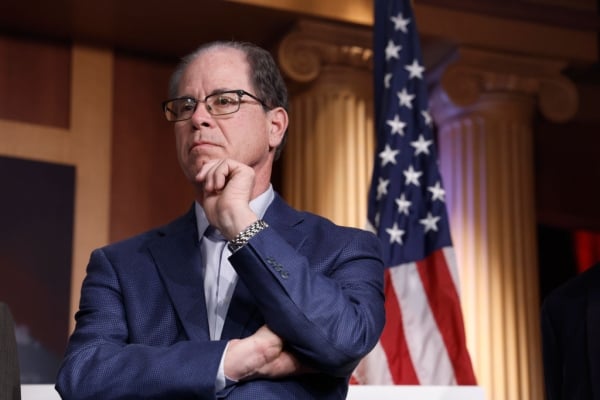
Gov. Braun has appointed the entire board at Indiana University.
Anna Moneymaker/Staff/Getty Images North America
This article has been updated to reflect changes to WFYI’s original reporting
Indiana governor Mike Braun said that Indiana University’s Board of Trustees should “take action” if allegations that President Pamela Whitten plagiarized her doctoral dissertation are true, WFYI reported.
Braun’s comments this week came in response to reporter questions about the plagiarism allegations. A report earlier this year found parts of her dissertation, published in 1996, appeared to plagiarize other academic research. IU officials brushed off that report, telling media outlets that the university investigated the plagiarism allegations in the summer of 2024 and determined the claims had no merit. But last week, a local newspaper reported new findings that indicate Whitten copied other research.
Braun, a Republican, said at a press event that he expects the board “to get on that right away,” responding to the hypothetical about the Whitten allegations. He didn’t specify how the trustees should look into the charges.
IU’s board is entirely appointed by Braun, following a change to how trustees are selected earlier this year. Previously, the governor appointed six members while three others were elected by alumni. But a provision in Indiana’s latest budget bill now gives the governor full power over who serves on the board, which he quickly exercised, selecting new trustees in June and July.
IU did not respond to a request for comment from Inside Higher Ed.
Gov. Braun has appointed the entire board at Indiana University.
Anna Moneymaker/Staff/Getty Images North America
This article has been updated to reflect changes to WFYI’s original reporting
Indiana governor Mike Braun said that Indiana University’s Board of Trustees should “take action” if allegations that President Pamela Whitten plagiarized her doctoral dissertation are true, WFYI reported.
Braun’s comments this week came in response to reporter questions about the plagiarism allegations. A report earlier this year found parts of her dissertation, published in 1996, appeared to plagiarize other academic research. IU officials brushed off that report, telling media outlets that the university investigated the plagiarism allegations in the summer of 2024 and determined the claims had no merit. But last week, a local newspaper reported new findings that indicate Whitten copied other research.
Braun, a Republican, said at a press event that he expects the board “to get on that right away,” responding to the hypothetical about the Whitten allegations. He didn’t specify how the trustees should look into the charges.
IU’s board is entirely appointed by Braun, following a change to how trustees are selected earlier this year. Previously, the governor appointed six members while three others were elected by alumni. But a provision in Indiana’s latest budget bill now gives the governor full power over who serves on the board, which he quickly exercised, selecting new trustees in June and July.
IU did not respond to a request for comment from Inside Higher Ed.
As rumors swirl that Harvard University will soon capitulate to the Trump administration and pay a $500 million fine, it’s important to speak out against university officials who bow down to authoritarianism. I’ve argued for why Columbia and Brown were wrong to settle, how their agreements endanger academic freedom, and why these agreements leave universities more vulnerable to future attacks by the Trump regime.
But it is also important to reiterate the fact that the reasons cited by the Trump administration for why Harvard must pay this money are lies. The Trump administration’s assertion that Harvard has committed antisemitic discrimination against Jews is a series of falsehoods fabricated by an antisemitic president and his obedient bureaucrats who seek to punish their perceived political enemies on fraudulent grounds.
On June 30, 2025, the Trump administration’s Joint Task Force to Combat Anti-Semitism issued the finding that “Harvard University is in violent violation of Title VI.” No one knows what a “violent” violation is, since this bizarre term has never been used before, but the result was inevitable. Since Harvard had already been punished for imagined antisemitism far more harshly than any college in American history, with billions of dollars in grants cut off without due process, the finding of guilt was an inevitable ex post facto determination.
Still, it’s important to examine this absurd finding of antisemitism at Harvard in depth, because it sets a standard that all colleges will be expected to obey, and because it requires the worst attacks on free speech ever ordered by the federal government.
Most of the government’s report comes not from any investigation of its own, but from Harvard’s own self-examination of antisemitism on campus. The Trump administration’s Notice of Violation against Harvard is almost comical for its lack of evidence of any wrongdoing committed by Harvard.
The Trump administration concluded, “We find that these and other actions contributed to a hostile environment for Jewish and Israeli students at Harvard,” citing a large number of cases of people engaged in peaceful expression, including several silent “study-in” protests at Harvard libraries. Incredibly, Harvard’s unjustifiable repression of silent, nondisruptive protests, which included banning dozens of students and faculty from the library, was used by the government as evidence that Harvard has done too little to protect Jewish students.
When carrying a piece of paper into a library is punished by Harvard, it’s a travesty. When Harvard punishes its students and faculty for carrying a piece of paper into a library and this is cited by the government as insufficiently repressive of free speech, it’s a disaster.
This also shows why Harvard may be willing to cut a deal with the government, despite the humiliation required to bow down before Trump: The repression demanded by the Trump regime is precisely what the Harvard administration has inflicted upon its students and faculty and wants to expand. Censorship is not an unfortunate side effect of any deal with Trump; it may be Harvard’s goal to use this agreement to provide an excuse for crushing dissent even more than it already has.
The other primary evidence against Harvard cited by the Trump administration was a 2024 Harvard survey of 2,295 students, faculty and staff that found 61 percent of Jewish respondents felt there were academic or professional repercussions for expressing their political beliefs, and 15 percent of Jewish respondents said they did not feel physically safe on campus. But the Notice of Violation completely omits the fact that the same survey found that a much higher proportion of Muslims feared professional repercussions (92 percent) and feared for their physical safety (47 percent).
The surveys indicate that Islamophobia at Harvard is a far worse problem than antisemitism. Yet Harvard hasn’t taken any significant actions against Islamophobia, and Harvard hasn’t adopted a new definition of Islamophobia to prohibit double standards in criticizing Muslim nations. And the Trump administration has done nothing despite the far greater fears expressed by Muslims at Harvard.
Is there antisemitism at Harvard? Sure, there’s antisemitism everywhere, just as there is racism, sexism, Islamophobia, homophobia, transphobia and every other form of bigotry. But we don’t hold universities responsible for banning these ideas under threat of massive government retaliation. In fact, we demand exactly the opposite: Colleges must protect hateful ideas and refuse to censor them.
Far from being “deliberately indifferent” to antisemitism as the Notice of Violation claims, Harvard has bent over backward to suppress free speech, ban protests, denounce its own students and faculty, and punish people without due process, all in the name of censoring criticism of Israel. It’s difficult to name an American college that has done more to suppress free speech in the name of fighting “antisemitism” than Harvard, but no amount of repression will ever satisfy the Trump regime.
I don’t want people to think that Harvard as an institution is free from antisemitism. Harvard has indeed engaged in antisemitism and deserves condemnation for doing so. In April, Harvard administrators banned Jews from holding a Passover seder, by far the most clear-cut example of institutional antisemitism at Harvard. Banning Jews from conducting a religious ceremony on campus is clearly antisemitic. But in this case, Harvard’s antisemitism was directed at Jews critical of Israel, so naturally the Trump administration completely ignores it.
Even though it’s wrong for Harvard to try to suppress Jewish religious activities for political reasons, this isolated example of antisemitic repression would not justify a government investigation, let alone a finding of a “violent violation.” Private colleges should have wide discretion to make bad decisions, even those that violate their own standards of free expression and the religious rights of their students, without being subjected to government penalties.
Likewise, the anti-Palestinian bias evident in Harvard’s repression of pro-Palestinian protests on campus is also a clear double standard and violation of Title VI’s rules protecting students based on national origin. But moral criticism, not government control, is the best way to fix the problem.
I’ve argued that the repressive demands made against Harvard by the Trump regime are a blueprint for the obedience all colleges will be required to observe. The same is true of the fake “antisemitism” finding against Harvard, which provides a model for what future Title VI “investigations” will be. The government will make a list of every protest and controversial view expressed on a campus, quote a few right-wing students looking for a Columbia-style payday about how they are trembling in fear at hearing ideas they don’t like, and conclude that the university failed to do enough to protect the sensitive feelings of conservative students against the horrors of being criticized.
Although this charade of antidiscrimination law has begun with the Trump administration pretending to care about antisemitism, it won’t be long before men start complaining about the hostile environment caused by feminists, white guys express their fear of anyone uttering the word “diversity” and, of course, all the straight people and devout Christians who are oppressed by the gays. If this kind of ridiculous evidence of “harassment” is accepted against a university for allowing free speech, then it can be equally applied by the Trump administration to any college that permits students and faculty to criticize right-wing dogmas about race, gender or sexuality.
If Harvard submits to the Trump administration, it will be endangering its own finances, abandoning the values of academic freedom and betraying its students and faculty. But even worse, Harvard’s obedience will give the Trump administration license to pursue every college, for every implausible reason, until they submit.
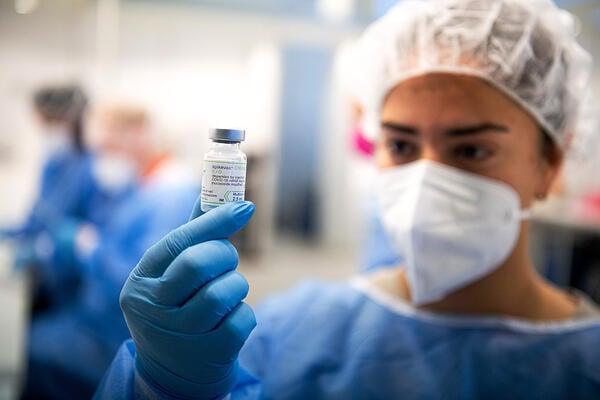
Academic researchers are worried that the government’s plans to stop investing in the development of messenger RNA vaccines, a technology university scientists first used to help develop the COVID-19 vaccines, will undermine the United States’ standing as a global leader in biomedical research and development.
As promising as mRNA technology may be for treating a range of maladies, including numerous types of cancer and autoimmune diseases, its role in developing the COVID vaccine has thrust it into a political crossfire, fueled by the Trump administration’s smoldering criticisms of the Biden administration’s handling of the pandemic.
Last week, Robert F. Kennedy Jr., director of the Department of Health and Human Services, who frequently cites misinformation about vaccines and other public health issues, announced that the department is winding down mRNA vaccine research under the Biomedical Advanced Research and Development Authority and canceling $500 million worth of contracts and grants with numerous biotech companies and Emory University in Atlanta.
“We reviewed the science, listened to the experts, and acted,” Kennedy, a lawyer by training, said in a statement, claiming that “thedata show these vaccines fail to protect effectively against upper respiratory infections like COVID and flu. We’re shifting that funding toward safer, broader vaccine platforms that remain effective even as viruses mutate.”
Jeff Coller, director of the RNA Innovation Center at Johns Hopkins University, whose own graduate student helped develop Moderna’s COVID vaccine, said that “mRNA technology is incredibly misunderstood by the public and many of our politicians.”
Despite that, “the science has always been consistently clear about the powerful medical benefits of the mRNA platform,” he said. “It’s saved millions of lives, is incredibly safe, has huge potential and will revolutionize medicine in the next 100 years. Yet, we’re ceding American leadership in this technology.”
The half-a-billion-dollar cut comes at the same time that the Trump administration has withdrawn support for federally funded scientific research that doesn’t align with its ideological views, including projects focused on vaccine hesitancy, LGBTQ+ health and climate change.
According to a report from STAT News, the 181-page document Kennedy cited as his evidence that mRNA vaccines aren’t safe or effective references disputed studies written by other skeptics of COVID mitigation protocols, including stay-at-home orders and vaccines.
In his op-ed, Bhattacharya acknowledged that mRNA is a “promising technology” that “may yet deliver breakthroughs in treating diseases such as cancer,” but that “as a vaccine intended for broad public use, especially during a public health emergency, the platform has failed a crucial test: earning public trust.”
“Unfortunately, the Biden administration did not manage public trust in the coronavirus vaccines, largely because it chose a strategy of mandates rather than a risk-based approach and did not properly acknowledge Americans’ growing concerns regarding safety and effectiveness,” he wrote.
‘Political Shot Across the Bow’
The vast majority of scientists agree that the mRNA-based COVID vaccine—which was created in record time as a result of President Donald Trump’s Operation Warp Speed, launched in 2020—is generally safe and effective.
“I’m concerned about [the cut] weakening our country and putting us at a disadvantage,” said an mRNA researcher who asked to remain anonymous out of fear of retaliation. “The promise of mRNA is almost limitless, and I’d like to see those advances being made in this country. But currently it seems those advances are more likely to come from Europe and Asia. I’m also worried about the impact this could have on our economy—this is a growing field of industry.”
Coller, of Johns Hopkins, said Kennedy’s decision to withdraw funding for mRNA vaccine research has more than financial implications.
“It was a political shot across the bow of the entire research community, both in industry and academia,” Coller said. “What it says is that the government doesn’t want to support this technology and is going to make sure it doesn’t happen. If you’re an academic thinking about starting a new program in mRNA medicines, don’t waste your time.”
And now it will be even easier for political whims to drive the government’s scientific research priorities. Last week, Trump issued an executive order that will put political appointees—rather than subject-matter experts—in charge of federal grant-making decisions.
Heather Pierce, senior director for science policy and regulatory counsel at the Association of American Medical Colleges, said that while Kennedy’s decision won’t end all of the nation’s mRNA research, “the indication that a certain technology or scientific area won’t be pursued regardless of the progress made so far is worrisome as a concept.”
That’s in part because “when we unilaterally close the door on a specific type of research or technology, we don’t know what would have come from that,” she said. “It’s not to say that every research project using every technology and scientific tool will necessarily lead to a cure or breakthrough, but the initial funding of these projects shows that there was promise that made it worth exploring.”
Both Kennedy and Bhattacharya have said the government will continue to support research on other uses of mRNA technology unrelated to infectious disease vaccines. But experts say separating those research areas isn’t so simple.
“They’re all interconnected,” said Florian Krammer, a professor of vaccinology at the Icahn School of Medicine at Mount Sinai. “If you take away funding in the infectious disease space and innovation doesn’t happen there, it’s also not happening in other spaces where mRNA technology is used.”
That will create a “huge problem for researchers,” he added, “because a lot of fields are using this technology, and if it’s not moving forward, it closes doors.”
On a recent vacation in the southwest portion of Ireland, as I was slogging away, trying to get the bicycle I was peddling up a reasonably daunting hill, I started thinking about generative AI.
I was thinking about generative AI because my wife, who is quite fit, but historically not as a strong a biker as I am, had disappeared into the distance, visible only because we were on twisting roads and she was several switchbacks ahead.
She also powered past my older brother, who competes in triathlons, and (I was told later) a French couple that muttered some apparent swears in their native language. Ultimately, she arrived only three or four minutes ahead of me at the top-of-the-hill way station, but as I huffed and puffed the final couple hundred yards, down to my next-to-lowest gear, moving at a just-above-walking pace, the gap felt enormous.
If you haven’t figured it out, my wife was riding an e-bike, while I was on a conventional (though very nice) bike. For the most part, the biking was very doable, but there were moments where I was not entirely sure I could or should keep peddling.
But I made it! Because we were touring with Backroads, an active vacation company, there was a delicious snack waiting for me at the top, which I enjoyed with great relish, knowing that I’d burned quite a few calories with many more to come that day.
I believe those French riders might’ve said something about “cheating” by using an e-bike, but this is obviously a case where what is cheating is in the eye of the beholder and significantly dependent on what you’re valuing about the experience.
If the point of our Ireland cycling vacation was to expend maximum effort on physical activities while cycling around the southwestern Ireland countryside, using an e-bike would prevent you from achieving your objective. But this is not the point of these kinds of trips. Yes, we have a desire to be active, outside and engaged, but the point is to use these methods to experience the place we’ve traveled to, and if—as happened to me a different day—you are perspiring so hard that the sweat dripping into your eyes has temporarily blinded you, it is tough to say that you are maximizing the experience.
Having the “best” vacation on this kind of trip is often a matter of balance. At times, I actively wished for the boost an e-bike could’ve given me. Other times, particularly on a day where we did 60 miles, and my brother and I were the only ones doing the whole itinerary, and we managed to go fast enough on the closing stretch to beat the Backroads van back to the hotel, I was thrilled with what it felt like to put my full physical effort behind the task.
I think my body paid for that big effort for a couple of days afterward, but I don’t regret it.
Like I said, it’s a matter of balance and values.
The e-bikes are great because they made it easier for my wife and me to ride together. The bottom-level boost had her toasting me up the hills, but on the flats, we were essentially the same speed, with us both working at levels we were comfortable with. The e-bike isn’t a motorcycle. You are still working plenty hard at the lower levels of boost.
But at the higher levels, you might find yourself speeding through the itinerary, as a group of four gentlemen in our group seemed to do, frequently arriving at our stopping points 20 minutes ahead of the rest of us.
I was thinking of generative AI because of the different lenses through which you can look at the use of an e-bike in the context of a bike-touring vacation.
You could see it as supplementary, allowing someone to experience something (like the view from a particular peak) that they wouldn’t otherwise unless they substituted something entirely nonbiking, like a car.
You could see it as substitutive, removing effort in exchange for feeling less tired and taxed at the end of the day.
You could see it as cheating, as those French riders did.
Because I don’t bike all that often at home, my primary “training” for the trip has been my regular Peloton rides, and for sure, those helped. My metrics on the stationary bike suggested I was well prepared. And I was, but well prepared doesn’t mean you aren’t going to face some very challenging moments.
There were several times—like that sweat-pouring-down-my-face period—where I would have gladly kicked in an e-bike boost in order to reduce my effort to conserve something for a different aspect of the trip, e.g., not being exhausted over dinner. But at no point did I need the boost to continue or finish the route, and if I was so inclined, Backroads is happy for you to hop in the van and get a ride the rest of the way.
I’m stubborn enough to not do that, but knowing myself, there were many times when an e-bike boost wouldn’t have been necessary or even desirable, when I would’ve switched it on in order to alleviate some measure of present discomfort. If it’s available, why not use it?
This would have signaled a shift in the values I initially brought to the trip. Whether or not it should be viewed as a betrayal or merely a change with its own benefits is a more complicated question, but at least for this trip, I was glad to not have the temptation.
I like to look at my opportunities to travel through the lens of experience. We aren’t going somewhere to check a box, but instead to literally spend time in a different place doing different things than our regular routines. I often know that I’ve had a good trip by the number of pictures I take—the fewer the better, because it means I was too absorbed in the experience to bother reaching for my phone to document something.
As we consider how to teach in a world where students have a superpowered e-bike instantly and constantly available, I’ve found looking at learning through the lens of experience is helpful, because focusing on the experience is a good way of identifying the things we should most value.
For my focus, writing, it seems almost irrefutable that if we want students to develop their writing practices, they should be doing the work without the assistance. The work must be purposeful and focused on what’s important in a given experience, but if that’s been achieved, any use of a boost is to miss out on something important. Learning is about riding up that hill under your own steam.
For writing especially, it’s axiomatic that the more you can do without the boost, the more you could potentially do with the boost.
Perhaps more importantly, the more you do without the boost, the greater knowledge you will gain about when the boost is truly an aid or when it is a way to dodge responsibility.
Figuring out where these lines must be drawn isn’t easy, and ultimately, because of the nature of school and the fact that students should be viewed as free and independent actors, the final choice must reside with them.
But we can act in ways that make the consequences of these choices and the benefits to opting for unboosted ride as apparent and inviting as possible.
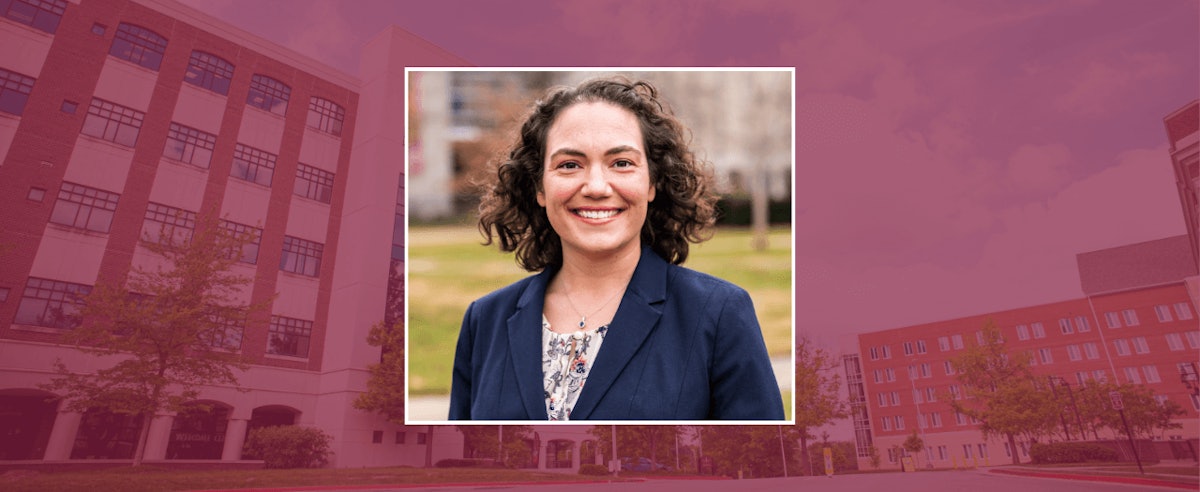
Anne M. Cizmar has been named associate dean of research administration at Eastern Kentucky University. This newly created role will support EKU’s strategic research initiative, aimed at building a holistic and scalable infrastructure to support the growth of sponsored research for faculty, staff and students across the university. Cizmar will oversee pre-award management, post-award administration and grant compliance. She will play a key role in enhancing EKU’s research environment through collaboration, transparency and innovation across all academic and administrative divisions.
Cizmar earned a Ph.D. in government and politics from the University of Maryland, College Park, where she specialized in American politics and quantitative research methods. She joined the Department of Government at EKU in 2011 and was promoted to professor of political science in 2022. She served as the Master of Public Administration program coordinator from 2020 to 2023. She serves as an active member of the university community through various committee roles, including vice chair of the Essential Education Transformation Committee.
The Trump administration on Friday released a proposed rule that would exclude organizations deemed to have a “substantial illegal purpose” from the Public Service Loan Forgiveness program, a move that could disqualify thousands of borrowers working for advocacy and legal aid organizations from having their student debt canceled.
The Notice of Proposed Rulemaking, published in the Federal Register and scheduled to take effect July 1, 2026, follows President Trump’s March executive order directing the Department of Education to revise PSLF eligibility criteria. The proposed changes would give the Secretary of Education broad authority to determine which employers qualify for the program that has provided loan forgiveness to more than one million public servants.
Under the proposed rule, organizations could lose PSLF eligibility for activities including “aiding or abetting violations of Federal immigration laws,” “engaging in a pattern of aiding and abetting illegal discrimination,” or “engaging in violence for the purpose of obstructing or influencing Federal Government policy.” The Department would use a “preponderance of evidence” standard to make determinations, and employers found ineligible would face a 10-year waiting period before they could regain qualifying status.
The rule specifically targets several types of activities the administration considers problematic, including providing certain medical treatments to transgender minors, assisting with immigration cases, and various forms of protest activity that result in state law violations such as trespassing or disorderly conduct.
Kristin McGuire, President and CEO of Young Invincibles, characterized the proposal as “continuing its attacks on education, deliberately targeting advocacy organizations whose work doesn’t align with its ideological agenda.”
“By using a distorted and overly broad definition of ‘illegal activities,’ the Trump administration is exploiting the student loan system to attack political opponents,” McGuire said. “This is an illegal move by the administration; eligibility for Public Service Loan Forgiveness (PSLF) is defined by law, not political ideology.”
The proposed rule emerged from a contentious negotiated rulemaking process that concluded in July without consensus. According to the Department’s documentation, the negotiator representing civil rights organizations dissented from the draft regulations, preventing the committee from reaching agreement.
The Department of Education estimates the rule would result in budget savings of $1.537 billion over 10 years by reducing the number of borrowers who achieve loan forgiveness. Administrative documents suggest the changes could affect borrowers in multiple sectors, including legal services, healthcare, social work, and education.
Organizations operating under shared federal tax identification numbers could see entire agencies lose eligibility if one component is found to engage in disqualifying activities. The rule includes provisions allowing the Secretary to separate organizations under shared identifiers, but grants ultimate authority to the Department to make such determinations.
The proposed rule draws heavily on the Internal Revenue Service’s “illegality doctrine,” which denies tax-exempt status to organizations with substantial illegal purposes. The Department argues this approach ensures consistency across federal agencies and prevents taxpayer funds from subsidizing activities the government aims to prevent.
Employers would be required to certify on PSLF application forms that they do not engage in activities with substantial illegal purpose. Those who fail to provide such certification would immediately lose qualifying status.
The rule includes safeguards requiring notice and opportunity to respond before final determinations, and allows employers to maintain eligibility if they submit approved corrective action plans before losing qualification.
According to the Department’s regulatory impact analysis, implementation would cost between $1.5 million and $3 million annually during the first two years. The analysis acknowledges that compliance costs for employers would vary significantly, with larger organizations potentially facing higher expenses for legal consultation and operational adjustments.
The Department projects reduced confusion among borrowers due to clearer eligibility criteria, though it acknowledges potential disruptions during the transition period. The analysis notes that borrowers working for disqualified employers would need to find new positions with qualifying organizations to continue progress toward loan forgiveness.
The proposed rule will undergo a 30-day public comment period following publication in the Federal Register on August 18. The Department must review all submitted comments before issuing a final rule.
If implemented as proposed, the new eligibility requirements would apply only to activities occurring on or after July 1, 2026. Borrowers whose employers lose qualifying status would receive notification from the Department and would no longer earn qualifying payment credit while employed by those organizations.
The Public Service Loan Forgiveness program, established in 2007, allows borrowers to have remaining federal student loan balances canceled after making 120 qualifying monthly payments while working full-time for eligible government agencies or qualified nonprofit organizations. The program has faced criticism and administrative challenges since its inception, with many borrowers initially denied forgiveness due to complex eligibility requirements.
Young Invincibles and other advocacy organizations indicated they plan to submit detailed comments opposing the rule and may pursue legal challenges if the final version proceeds as proposed.
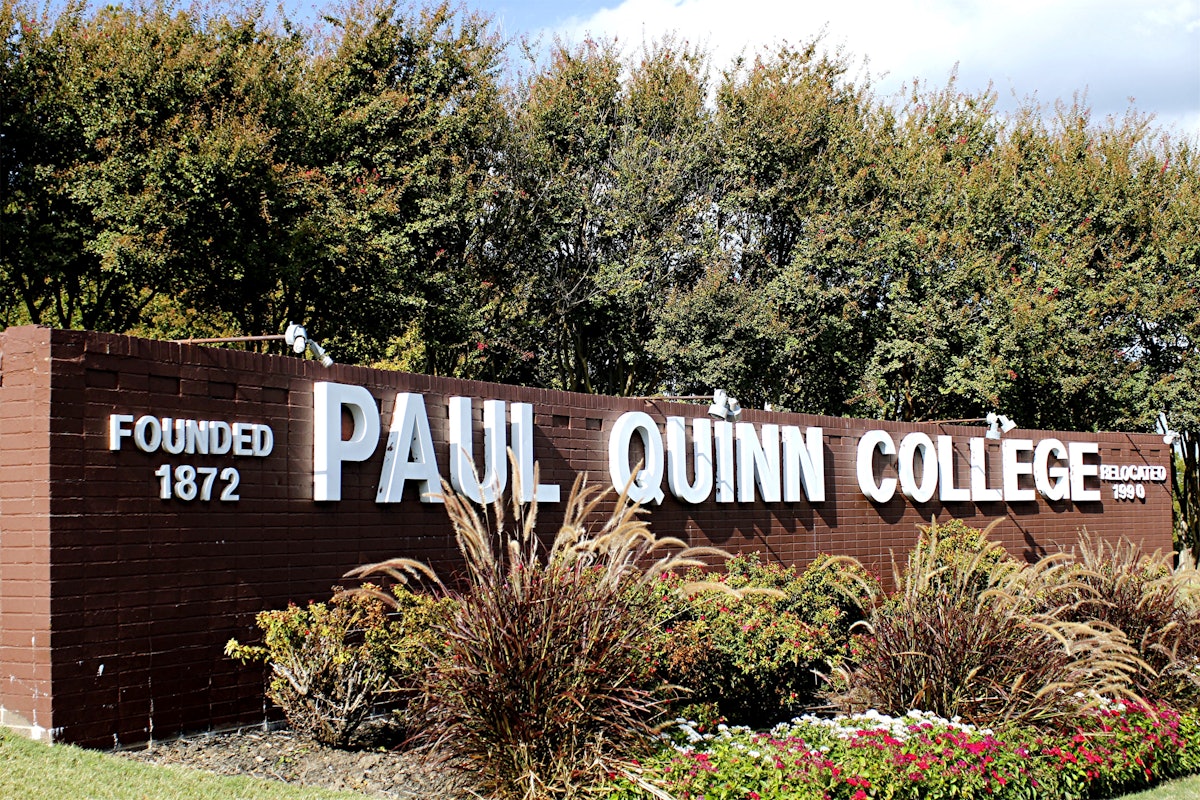
Cynt Marshall The Dallas Mavericks and Paul Quinn College have announced a partnership that establishes the nation’s first NBA team-sponsored sports management major at a historically Black college or university. The innovative “Mavs Sports Management Major” officially launched Friday with an opening convocation featuring former Mavericks CEO Cynt Marshall as the keynote speaker.
The program, formally titled “Leadership, Innovation, Sports Management, Technology, Entrepreneurship, and Networking” (LISTEN), represents a significant investment in diversifying the sports industry pipeline while addressing educational equity in higher education.
Paul Quinn College, Dallas’s only HBCU, will integrate the new major into its existing curriculum structure, with students receiving comprehensive support that includes Target-sponsored care packages containing dorm essentials and other student necessities.
The program distinguishes itself through extensive real-world application opportunities. Students will engage with Mavericks executives through weekly guest lectures and participate in hands-on projects addressing actual business challenges facing the organization. The curriculum includes case study analysis, creative brief development, and student-led presentations proposing solutions to current Mavericks business scenarios.
Beyond classroom learning, the partnership includes campus engagement initiatives with sponsored events throughout the academic year, entrepreneurship support through integration into the Mavs Business Assist program, and a planned residence hall renovation featuring custom Mavericks-designed murals.
The collaboration aligns with the Mavericks’ “Take ACTION!” initiative, which specifically targets racial inequities and promotes sustainable change in North Texas. Sports management and administration have long struggled with representation issues, particularly in executive and leadership positions.
According to industry data, while Black athletes comprise significant portions of professional sports rosters, representation drops dramatically in front office and management roles. This program aims to address that pipeline gap by providing structured pathways from education to industry entry.