Author: admin

  • Weaving digital citizenship into edtech innovation

    Weaving digital citizenship into edtech innovation

    Key points:

    What happens when over 100 passionate educators converge in Chicago to celebrate two decades of educational innovation? A few weeks ago, I had the thrilling opportunity to immerse myself in the 20th anniversary of the Discovery Educator Network (the DEN), a week-long journey that reignited my passion for transforming classrooms.

    From sunrise to past sunset, my days at Loyola University were a whirlwind of learning, laughter, and relentless exploration. Living the dorm life, forging new connections, and rekindling old friendships, we collectively dove deep into the future of learning, creating experiences that went far beyond the typical professional development.

    As an inaugural DEN member, the professional learning community supported by Discovery Education, I was incredibly excited to return 20 years after its founding to guide a small group of educators through the bountiful innovations of the DEN Summer Institute (DENSI). Think scavenger hunts, enlightening workshops, and collaborative creations–every moment was packed with cutting-edge ideas and practical strategies for weaving technology seamlessly into our teaching, ensuring our students are truly future-ready.

    During my time at DENSI, I learned a lot of new tips and tricks that I will pass on to the educators I collaborate with. From AI’s potential to the various new ways to work together online, participants in this unique event learned a number of ways to weave digital citizenship into edtech innovation. I’ve narrowed them down to five core concepts; each a powerful step toward building future-ready classrooms and fostering truly responsible digital citizens.

    Use of artificial intelligence

    Technology integration: When modeling responsible AI use, key technology tools could include generative platforms like Gemini, NotebookLM, Magic School AI, and Brisk, acting as ‘thought partners’ for brainstorming, summarizing, and drafting. Integration also covers AI grammar/spell-checkers, data visualization tools, and feedback tools for refining writing, presenting information, and self-assessment, enhancing digital content interaction and production.

    Learning & application: Teaching students to ethically use AI is key. This involves modeling critical evaluation of AI content for bias and inaccuracies. For instance, providing students with an AI summary of a historical event to fact-check with credible sources. Students learn to apply AI as a thought partner, boosting creativity and collaboration, not replacing their own thinking. Fact-checking and integrating their unique voices are essential. An English class could use AI to brainstorm plot ideas, but students develop characters and write the narrative. Application includes using AI for writing refinement and data exploration, fostering understanding of AI’s academic capabilities and limitations.

    Connection to digital citizenship: This example predominantly connects to digital citizenship. Teaching responsible AI use promotes intellectual honesty and information literacy. Students can grasp ethical considerations like plagiarism and proper attribution. The “red, yellow, green” stoplight method provides a framework for AI use, teaching students when to use AI as a collaborator, editor, or thought partner–or not at all.This approach cultivates critical thinking and empowers students to navigate the digital landscape with integrity, preparing them as responsible digital citizens understanding AI’s implications.

    Digital communication

    Technology integration: Creating digital communication norms should focus on clarity with visuals like infographics, screenshots, and video clips. Canva is a key tool for a visual “Digital Communication Agreement” defining online interaction expectations. Include student voice by the integration and use of pictures and graphics to illustrate behaviors and potentially collaborative presentation / polling tools for student involvement in norm-setting.

    Learning & application: Establishing clear online interaction norms is the focus of digital communication. Applying clear principles teaches the importance of visuals and setting communication goals. Creating a visual “Digital Communication Agreement” with Canva is a practical application where students define respectful online language and netiquette. An elementary class might design a virtual classroom rules poster, showing chat emojis and explaining “think before you post.” Using screenshots and “SMART goals” for online discussions reinforces learning, teaching constructive feedback and respectful debate. In a middle school science discussion board, the teacher could model a respectful response like “I understand your point, but I’m wondering if…” This helps students apply effective digital communication principles.

    Connection to digital citizenship: This example fosters respectful communication, empathy, and understanding of online social norms. By creating and adhering to a “Digital Communication Agreement,” students develop responsibility for online interactions. Emphasizing respectful language and netiquette cultivates empathy and awareness of their words’ impact. This prepares them as considerate digital citizens, contributing positively to inclusive online communities.

    Content curation

    Technology integration: For understanding digital footprints, one primary tool is Google Drive when used as a digital folder to curate students’ content. The “Tech Toolbox” concept implies interaction with various digital platforms where online presence exists. Use of many tools to curate content allows students to leave traces on a range of technologies forming their collective digital footprint.

    Learning & application: This centers on educating students about their online presence’s permanence and nature. Teaching them to curate digital content in a structured way, like using a Google Drive folder, is key. A student could create a “Digital Portfolio” in Google Drive with online projects, proud social media posts, and reflections on their public identity. By collecting and reviewing online artifacts, students visualize their current “digital footprint.” The classroom “listening tour” encourages critical self-reflection, prompting students to think about why they share online and how to be intentional about their online identity. This might involve students reviewing anonymized social media profiles, discussing the impression given to future employers.

    Connection to digital citizenship: This example cultivates awareness of online permanence, privacy, responsible self-presentation, and reputation management. Understanding lasting digital traces empowers students to make informed decisions. The reflection process encourages the consideration of their footprint’s impact, fostering ownership and accountability for online behavior. This helps them become mindful, capable digital citizens.

    Promoting media literacy

    Technology integration: One way to promote media literacy is by using “Paperslides” for engaging content creation, leveraging cameras and simple video recording. This concept gained popularity at the beginning of the DEN through Dr. Lodge McCammon. Dr. Lodge’s popular 1-Take Paperslide Video strategy is to “hit record, present your material, then hit stop, and your product is done” style of video creation is something that anyone can start using tomorrow. Integration uses real-life examples (likely digital media) to share a variety of topics for any audience. Additionally, to apply “Pay Full Attention” in a digital context implies online viewing platforms and communication tools for modeling digital eye contact and verbal cues.

    Learning & application: Integrating critical media consumption with engaging content creation is the focus. Students learn to leverage “Paperslides” or another video creation method to explain topics or present research, moving beyond passive consumption. For a history project, students could create “Paperslides” explaining World War II causes, sourcing information and depicting events. Learning involves using real-life examples to discern credible online sources, understanding misinformation and bias. A lesson might show a satirical news article, guiding students to verify sources and claims through their storyboard portion. Applying “Pay Full Attention” teaches active, critical viewing, minimizing distractions. During a class viewing of an educational video, students could pause to discuss presenter credentials or unsupported claims, mimicking active listening. This fosters practical media literacy in creating and consuming digital content.

    Connection to digital citizenship: This example enhances media literacy, critical online information evaluation, and understanding persuasive techniques. Learning to create and critically consume content makes students informed, responsible digital participants. They identify and question sources, essential for navigating a digital information-saturated world. This empowers them as discerning digital citizens, contributing thoughtfully to online content.

    Collaborative problem-solving

    Technology integration: For practicing digital empathy and support, key tools are collaborative online documents like Google Docs and Google Slides. Integration extends to online discussion forums (Google Classroom, Flip) for empathetic dialogue, and project management tools (Trello, Asana) for transparent organization. 

    Learning & application: This focuses on developing effective collaborative skills and empathetic communication in digital spaces. Students learn to work together on shared documents, applying a “Co-Teacher or Model Lessons” approach where they “co-teach” each other new tools or concepts. In a group science experiment, students might use a shared Google Doc to plan methodology, with one “co-teaching” data table insertion from Google Sheets. They practice constructive feedback and model active listening in digital settings, using chat for clarification or emojis for feelings. The “red, yellow, green” policy provides a clear framework for online group work, teaching when to seek help, proceed cautiously, or move forward confidently. For a research project, “red” means needing a group huddle, “yellow” is proceeding with caution, and “green” is ready for review.

    Connection to digital citizenship: This example is central to digital citizenship, developing empathy, respectful collaboration, and responsible problem-solving in digital environments. Structured online group work teaches how to navigate disagreements and offers supportive feedback. Emphasis on active listening and empathetic responses helps internalize civility, preparing students as considerate digital citizens contributing positively to online communities.

    These examples offer a powerful roadmap for cultivating essential digital citizenship skills and preparing all learners to be future-ready. The collective impact of thoughtfully utilizing these or similar approaches , or even grab and go resources from programs such as Discovery Education’s Digital Citizenship Initiative, can provide the foundation for a strong academic and empathetic school year, empowering educators and students alike to navigate the digital world with confidence, integrity, and a deep understanding of their role as responsible digital citizens.

    In addition, this event reminded me of the power of professional learning communities.  Every educator needs and deserves a supportive community that will share ideas, push their thinking, and support their professional development. One of my long-standing communities is the Discovery Educator Network (which is currently accepting applications for membership). 

    Latest posts by eSchool Media Contributors (see all)

    Source link

  • Students for Fair Admissions drops lawsuits against West Point, Air Force Academy

    Students for Fair Admissions drops lawsuits against West Point, Air Force Academy

    This audio is auto-generated. Please let us know if you have feedback.

    Dive Brief:

    • Students for Fair Admissions has dropped its lawsuits against the U.S. Military Academy at West Point and the U.S. Air Force Academy over race-conscious admissions — practices that are no longer in effect at either institution under the Trump administration.
    • Both academies axed admissions goals based on race, ethnicity and gender shortly after President Donald Trump’s defense secretary, Pete Hegseth, took office. 
    • SFFA had filed the lawsuits after the U.S. Supreme Court in 2023 sided with the anti-affirmative action group in its landmark ruling banning race-conscious admissions at colleges but allowed the practice to continue at military academies.

    Dive Insight:

    In a footnote to Chief Justice John Roberts’ majority opinion in Students for Fair Admissions v. Harvard — the case that ultimately ended decades of race-conscious admissions — the court said the decision did not address the practice at the nation’s military academies.

    While no military academy had been party to the case, the court effectively created a carve-out for race-conscious admissions at the institutions “in light of the potentially distinct interests that military academies may present.”

    In a friend-of-the-court brief to that case, the Biden administration wrote that “the Nation’s military strength and readiness depend on a pipeline of officers who are both highly qualified and racially diverse — and who have been educated in diverse environments that prepare them to lead increasingly diverse forces.”

    After the ruling came down, SFFA soon filed legal challenges against military academies and their race-conscious admissions policies. 

    In its 2023 complaint against West Point, SFFA alleged, “Instead of admitting future cadets based on objective metrics and leadership potential, West Point focuses on race.” 

    The lawsuit further argued: “West Point has no justification for using race-based admissions.” 

    SFFA’s cases against West Point and the Air Force Academy, along with another one against the U.S. Naval Academy, were in progress when Trump retook the presidency in January. 

    The group quickly found it had an ideological ally in the new administration, whose policies reflect SFFA’s goals.

    Hegseth banned race-based admissions at the nation’s military academies in January, days after being sworn in. In doing so, Trump’s defense secretary described diversity initiatives as “incompatible with the values of DoD,adding that “the DoD will strive to provide merit-based, color-blind, equal opportunities to Service members but will not guarantee or strive for equal outcomes.”

    Hegseth has gone much further than just rejecting race-conscious admissions at the academies. Under his leadership, the Pentagon ordered the military academies to purge hundreds of books from their libraries that deal with racism and gender issues, a move that has sparked outcry as well as lawsuits and at least one reversal.

    In June, the Justice Department and SFFA asked that the group’s lawsuit against the Naval Academy be declared moot, after that institution dropped race-conscious admissions under Hegseth’s directive. The case was under appeal at the time, after a federal judge upheld the institution’s policies in December. In July, an appeals court dismissed the case in response to the request from SFFA and the Justice Department.

    SFFA President Edward Blum said in a June statement, “We applaud this extraordinary accomplishment by the President and the Department of Defense which restores the colorblind legal covenant that binds together our military institutions.”

    Source link

  • Iowa board approves course policy change after stripping anti-DEI references

    Iowa board approves course policy change after stripping anti-DEI references

    This audio is auto-generated. Please let us know if you have feedback.

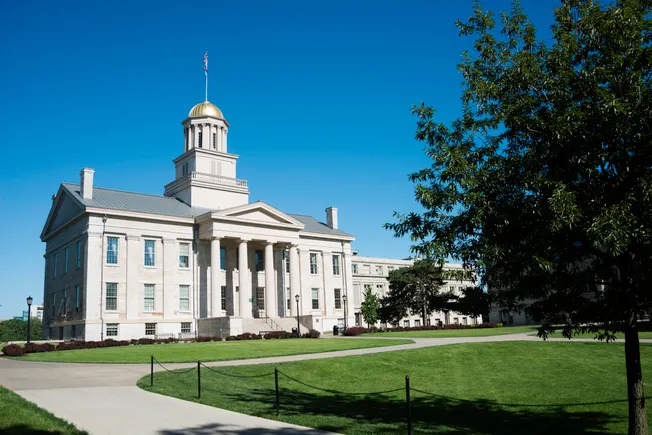
    The Iowa Board of Regents on Tuesday approved a policy change that requires public university faculty to “present coursework in a way that reflects the range of scholarly views and ongoing debate in the field.” 

    Under the change, effective immediately, the board will also audit the three universities it oversees — the University of Iowa, Iowa State University and the University of Northern Iowa — at least every two years for compliance with the new directive.

    The policy change significantly revises the original proposal’s language, which included references to diversity, equity and inclusion and critical race theory. Tuesday’s 7-1 vote came after public pushback over that proposal and two postponements by the board to approve the policy.

    The initial version of the proposal would have barred Iowa university academic programs from requiring courses containing “substantial content that conveys DEI or CRT.” As examples of DEI, it lists systemic oppression, anti-racism, social justice, and unconscious or implicit bias. Universities would have been able to apply to regents for exemptions.

    The wide-reaching language prompted criticism from academic groups, students and those who argued it would undermine free speech.

    In one example, five state educator groups launched a joint petition urging “the Iowa Board of Regents to firmly reject efforts to restrict what students can learn.” The petition, which does not address the updated policy, noted that the original language would have affected at least a dozen academic programs. 

    “Students in certain fields — such as social work and nursing — would have been at a special disadvantage, since those professions’ standards require graduates to show competency in various topics banned under the policy,” it said.

    Board President Sherry Bates said the regents delayed the vote at their July meeting so they could review the policy. The board then set a special August meeting for the vote.

    In the intervening weeks, the board released a new version of the proposal. The updated language — which ultimately passed Tuesday — states that “faculty may teach controversial subjects” when relevant to course content, but they must present such topics from multiple and opposing viewpoints.

    “University teachers shall be entitled to academic freedom in the classroom in discussing the teachers’ course subject, but shall not introduce into the teaching controversial matters that have no relation to the subject,” the updated version says.

    It also states that students’ grades should reflect their “mastery of course content and skills,” not their “agreement or disagreement with particular viewpoints expressed during instruction or in their work.”

    ‘What exactly is controversial, and who will decide?’

    The new policy addresses how topics are taught rather than what is taught, Regent Robert Cramer argued.

    “Personally, I don’t want any of the DEI/CRT woke left stuff being taught in our classes,” he said. “But this policy is not my personal beliefs.

    But Regent Nancy Dunkel, the sole member of the board to vote against the policy, raised concern about the ambiguity of the policy’s language.

    “What exactly is controversial, and who will decide? Can anyone declare something as controversial?” she asked. She also noted that the policy change in and of itself has become controversial among Iowa constituents. 

    Dunkel further raised questions about the requirement for faculty to present a range of viewpoints.

    “If a professor has to present both sides to an issue, does that mean a marketing professor must also include anti-capitalist arguments to students?” she asked. “Do anti-evolution arguments have to be presented in biology classes? How do we present both sides of the Holocaust?”

    The board voted immediately after Dunkel’s comments.

    ‘I will not be passive’ 

    The regents also made clear to Iowa’s three universities — the leaders of which joined Tuesday’s meeting — that they have been put on notice regarding DEI efforts.

    Two of Iowa’s public universities have become a talking point among conservative media outlets. In recent weeks, conservative outlets and anti-DEI watchdog groups published a series of videos — the most recent of which was released Sunday — that appear to show two officials at the University of Iowa and one at Iowa State discussing how they could work around state DEI restrictions.

    Source link

  • DOJ sets sights on George Washington University

    DOJ sets sights on George Washington University

    This audio is auto-generated. Please let us know if you have feedback.

    The U.S. Department of Justice on Tuesday accused George Washington University of being “deliberately indifferent” to harassment of Jewish, American-Israeli and Israeli students and faculty. 

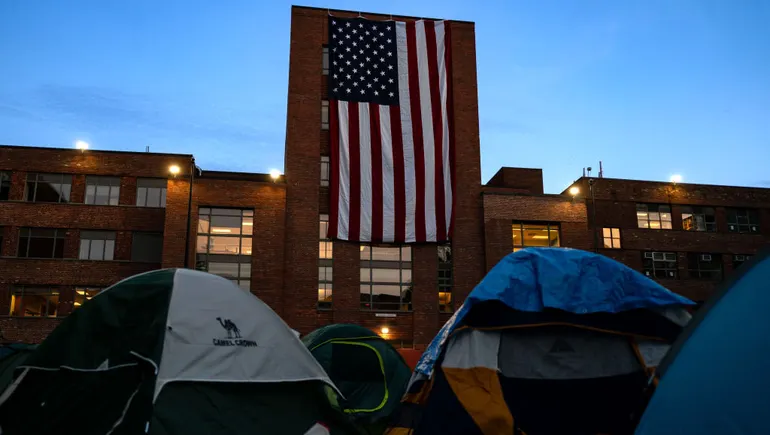
    The Justice Department, in an agency notice, cited a pro-Palestinian encampment on GWU’s University Yard for two weeks during the spring 2024 term. The District of Columbia Metropolitan Police Department cleared the encampment on May 8, arresting nearly three dozen people in the process. 

    About a week earlier, MPD had refused the university’s request to clear the encampment, and Police Chief Pamela Smith said the department had no plans to remove the demonstrators as long as they were peaceful. When police eventually cleared out the encampment, MPD cited a “gradual escalation in the volatility of the protest.”

    The Justice Department has now accused GWU of violating Title VI, which bars federally funded institutions from discriminating on the basis of race, color or national origin. 

    GWU is the latest university under fire from the Trump administration for allegedly not doing enough to protect students and employees from antisemitism. 

    These accusations are often followed by threats that colleges will lose vast swaths of their federal funding unless they adopt sweeping policy changes. Some Jewish lawmakers have accused President Donald Trump of weaponizing antisemitism to attack colleges

    The Trump administration is looking to negotiate with GWU, as it has with other institutions in its crosshairs. The notice of violation states that the Justice Department is offering to enter a “voluntary resolution agreement” with the university. 

    In the notice, the Justice Department alleges GWU leaders were deliberately indifferent to several incidents. 

    It says one Jewish student described “being surrounded, harassed, threatened, and then ordered to leave the area immediately by antisemitic protesters.” In another instance, the notice says a Jewish student holding up an Israeli flag near the encampment was surrounded by protesters who had linked arms “for the purpose of restricting the Jewish student’s movements.”

    In a public statement on Tuesday, GWU said it is reviewing the Justice Department’s notice. 

    “GW condemns antisemitism, which has absolutely no place on our campuses or in our civil society,” the university said in the statement. “Moreover, our actions clearly demonstrate our commitment to addressing antisemitic actions and promoting an inclusive campus environment by upholding a safe, respectful, and accountable environment.”

    The Trump administration recently hit the University of California, Los Angeles with similar accusations. 

    In late July, the Justice Department alleged that UCLA had also violated civil rights law. Like with GWU, Trump administration officials pointed to a pro-Palestinian encampment erected in the spring 2024 term that university officials cleared after about a week. 

    The Trump administration quickly suspended $584 million in federal funding, a move that brought University of California system leaders to the negotiating table in hopes of restoring the money. 

    However, UC President James Milliken said in a statement on Aug. 6 that the funding cuts “do nothing to address antisemitism” and accused the Trump administration of ignoring both the system and UCLA’s efforts to combat antisemitism. 

    Just two days later, the Justice Department proposed a settlement with the university — a whopping $1 billion penalty

    Milliken issued a quick and blunt rebuke. “As a public university, we are stewards of taxpayer resources and a payment of this scale would completely devastate our country’s greatest public university system as well as inflict great harm on our students and all Californians,” he said in an Aug. 8 statement.

    Source link

  • FIRE Reacts — Where does Harvard go from here? With Larry Summers

    FIRE Reacts — Where does Harvard go from here? With Larry Summers

    2025 has not been kind to Harvard.

    To date, the Trump administration has
    revoked nearly $3 billion in research funding to the
    university
    , demanding violations of free speech, academic
    freedom, and institutional autonomy in return for restoring the
    funding. In response, Harvard
    filed a lawsuit
    , raising First Amendment claims.

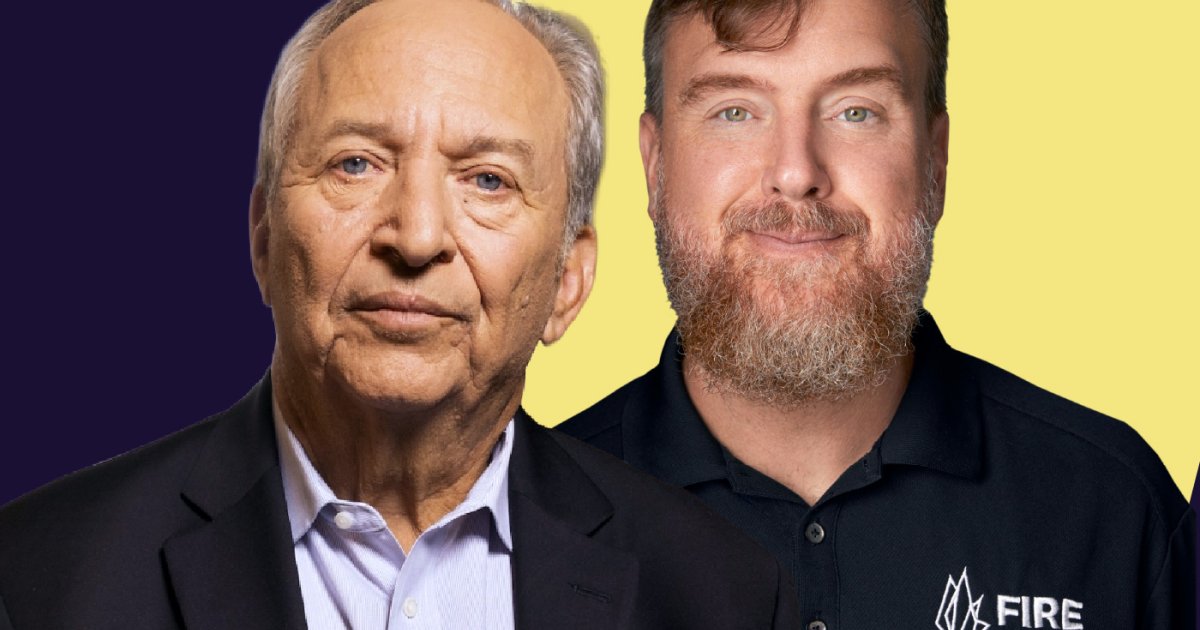
    Helping us unpack all things Harvard are:

    Timestamps:

    00:00 Intro

    02:32 Harvard’s disputes with the Trump
    administration

    08:29 The need for internal reforms at Harvard

    42:50 Institutional neutrality debate

    46:16 IHRA definition of anti-Semitism

    01:01:28 Latest update on potential Harvard-Trump
    administration settlement

    Enjoy listening to the podcast? Donate to FIRE today and
    get exclusive content like member webinars, special episodes, and
    more. If you became a FIRE Member
    through a donation to FIRE at thefire.org and would like access to
    Substack’s paid subscriber podcast feed, please email [email protected].

    Show notes:

    Source link

  • Columbia Capitulated, Other Institutions Should Not

    Columbia Capitulated, Other Institutions Should Not

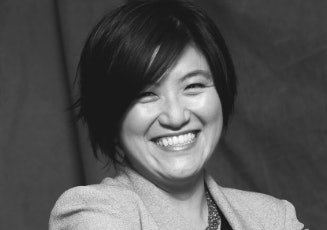
    Jin Hee LeeColleges and universities play a critical role in American democracy. By bringing together young adults, faculty, and employees to live and learn in a shared educational setting, higher education institutions shape the future citizens and leaders of our country. But they can only achieve this mission if their campuses reflect the multiracial society that we all live in. Unfortunately, Columbia’s recent settlement with the Trump administration calls into question whether it can fulfill its educational mission to foster a dynamic learning environment for its campus community. Given longstanding problems with unfair underrepresentation and academic exclusion, Black students and faculty likely will bear the brunt of this troubling settlement. Other colleges and universities must not make the same mistake.

    Columbia’s settlement agreement with the Trump administration gives the federal government unprecedented oversight into the university’s operations. Under the agreement, Columbia will allow administration officials to review, and potentially reject, any effort by the university to advance equal opportunity through admissions, hiring, and promotion. Notably, these conditions advance the administration’s express agenda to suppress and ban efforts to ensure an inclusive and welcoming educational environment for Black students and faculty, thereby preventing them from fully contributing their expertise and lived experiences to the larger campus community.

    Such unprecedented scrutiny by the federal government is especially troubling given the administration’s flawed interpretation of our constitution and civil rights laws in recent guidance issued by the U.S. Department of Justice. For example, the Trump administration believes that programs open to people of all races, such as those geared towards first-generation college students or rural areas, are unlawful if they are intended to break down unfair barriers to equal access and opportunities for disadvantaged students, including disadvantaged students of color. Thus, according to the administration, higher admissions or hiring rates of Black students and faculty, following the implementation of more equitable practices that do not rely on any applicant’s race or ethnicity, could expose Columbia to legal sanctions pursuant to the Department of Justice’s inaccurate interpretation of equal protection and civil rights laws.

    The settlement also causes Columbia to be subsumed into the Trump administration’s campaign to silence lawful protest and target immigrant communities. It requires Columbia to increase the number of employees trained and authorized to arrest and remove students for protesting in ways that the administration or Columbia, in their full discretion, deem inappropriate. Based on the settlement, student groups are subject to “sanction . . . including by defunding, suspending, or de-recognizing them” for “discriminatory conduct,” which threatens erasure of affinity spaces for underrepresented groups given the administration’s inaccurate understanding of “discrimination.”Student groups that express views disfavored by the Trump administration or Columbia’s leadership are particularly at risk. If an international student is arrested during a protest, the agreement requires Columbia to notify the Department of Homeland Security and disclose their identity.

    Such government interference with campus protest, which has been integral to expressions of dissent and the free exchange of ideas throughout American history, undoubtedly will chill the speech of many students and faculty, thus eroding their First Amendment rights. It is particularly ironic that the settlement agreement requires student protesters, including those wearing masks, to identify themselves upon request, while masked ICE officers can abduct and detain college students without even charging them with a crime. As a consequence of the agreements’ terms, Columbia’s campus will become less welcoming to students, including Black students, who already struggle with discrimination and exclusion. This, in turn, will deter many talented students and faculty from joining Columbia’s campus, thereby degrading the university’s reputation and academic scholarship.

    Other colleges and universities must not follow Columbia’s capitulation. Instead of being centers of learning, where people from diverse backgrounds can engage in a free flow of ideas, opinions, and perspectives, the current administration seeks to use these institutions to actualize an undemocratic vision of an America, where dissent is silenced and resources and opportunities are hoarded for the wealthy and powerful. In many ways, this cynical vision of America aims to turn back the clock to an era, not so long ago, when institutions of higher learning were reserved for the privileged few and either explicitly or implicitly excluded Black students and faculty as unwelcome and undeserving outsiders.

    ___________

    Jin Hee Lee is director of strategic initiatives at the Legal Defense Fund (LDF), where she leads a department that integrates litigation, policy, organizing, communications, research, and public education to advance community-centered racial justice advocacy—most notably through the Pro Truth Initiative.


    Source link

  • Two upcoming HELU events (Higher Ed Labor United)

    Two upcoming HELU events (Higher Ed Labor United)

    Who’s Afraid of the Big Bad Bill? Higher Ed Fights Back!
    Monday, August 18 at 7:30 PM ET / 6:30 CT / 5:30 MT / 4:30 PT

    Join HELU leaders and organizers for our upcoming webinar “Who’s Afraid of the Big Bad Bill: Higher Ed Fights Back” on Monday, August 18th at 7:30 PM ET / 6:30 CT / 5:30 MT / 4:30 PT. We’ll be joined by Sara Garcia, a policy analyst for Senator Bernie Sanders on the Health, Education, Labor and Pensions Committee (HELP). Sara will walk us through the parts of the bill that will affect higher education and discuss what’s possible in terms of pushing back. Thomas Gokey of the Debt Collective will discuss how the myriad changes to student lending will affect student borrowers and we will end with discussion and call to act in the fall with our colleagues across the country and fight back against the attacks on higher education in the United States.

    Higher ed workers – staff, faculty, university healthcare workers, facilities & maintenance workers, research assistants, academic advisors, students; in short, anyone who works on a campus – must come together as a united front to defend higher education as a public good. Higher ed must be fully-funded, with living wages and job security for everyone working on campus. We must look into the next four years with courage, determination, solidarity, and long-term strategy. Register for the August 18 webinar here.

    This event is closed to the press.

    Source link

  • No amount of evidence will ever convince an idiot.

    No amount of evidence will ever convince an idiot.

    “No amount of evidence will ever convince an idiot.”  

    The line isn’t from Mark Twain—even though it’d suit him. Twain never said it, and there’s no trace of it in his writings. But whoever coined it understood power all too well: facts alone are meaningless to those determined to ignore them. And in 2025, that truth is playing out in plain sight across American higher education.

    The facts are everywhere—reports, audits, testimonies, and the lived experiences of students and educators. None of it matters to people who have decided not to care.

    At Columbia University, a settlement with the Trump administration came with strings attached—strict oversight, curriculum controls, and banned diversity language—to restore frozen research funds.

    UCLA found itself in the same position. Federal grants were suspended until administrators agreed to policy overhauls, including limitations on transgender student protections.

    George Mason University is under investigation for alleged antisemitism, discriminatory hiring, and biased scholarships. The board responded by cutting many DEI programs despite protests from faculty and students.

    At the federal level, the Trump administration is using its power to dismantle diversity programs and demand race-neutral admissions reporting. Hundreds of schools are under scrutiny, forced to comply with executive orders that critics say are tools of political coercion.

    Meanwhile, Brown University and UPenn face antitrust investigations over suspected collusion in tuition pricing. The House Judiciary Committee is demanding records and threatening legislative action.

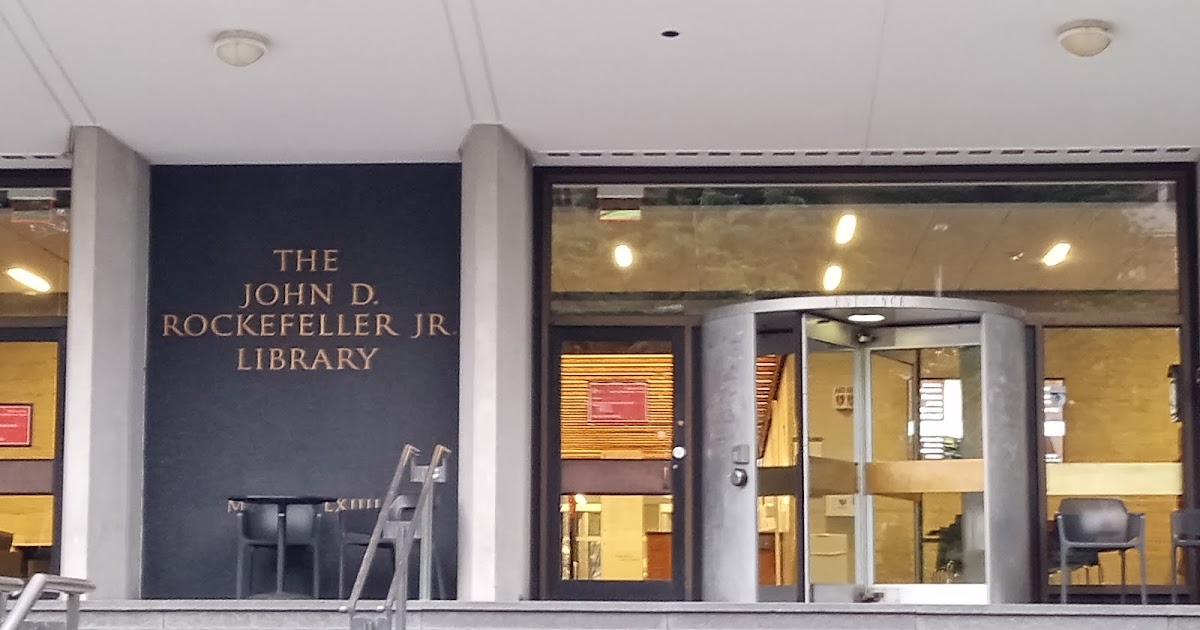
    [John D. Rockefeller Library at Brown University]

    And elite institutions like Cornell, Yale, and Northwestern are pouring record sums into lobbying to defend their interests while the ground shifts under them.

    The facts will never be enough for those committed to pretending. They will twist them, bury them, or dismiss them entirely. And when cornered, they will change the subject.

    So the fight has to be more than proof. It has to be naming names and following the money. It has to be connecting the data to real lives—students losing hope, educators barely surviving, towns left hollow. It has to be relentless pressure from coalitions that cannot be ignored.

    You cannot win an argument with someone whose position is built on denial. But you can make that denial costly. You can bring the harm into the light where it cannot be hidden. You can outlast the spin.

    If evidence alone won’t move them, then the truth has to be carried in voices too loud to be silenced.


    Sources:

    Source link

  • Why FIRE is suing Secretary of State Rubio — and what our critics get wrong about noncitizens’ rights

    Why FIRE is suing Secretary of State Rubio — and what our critics get wrong about noncitizens’ rights

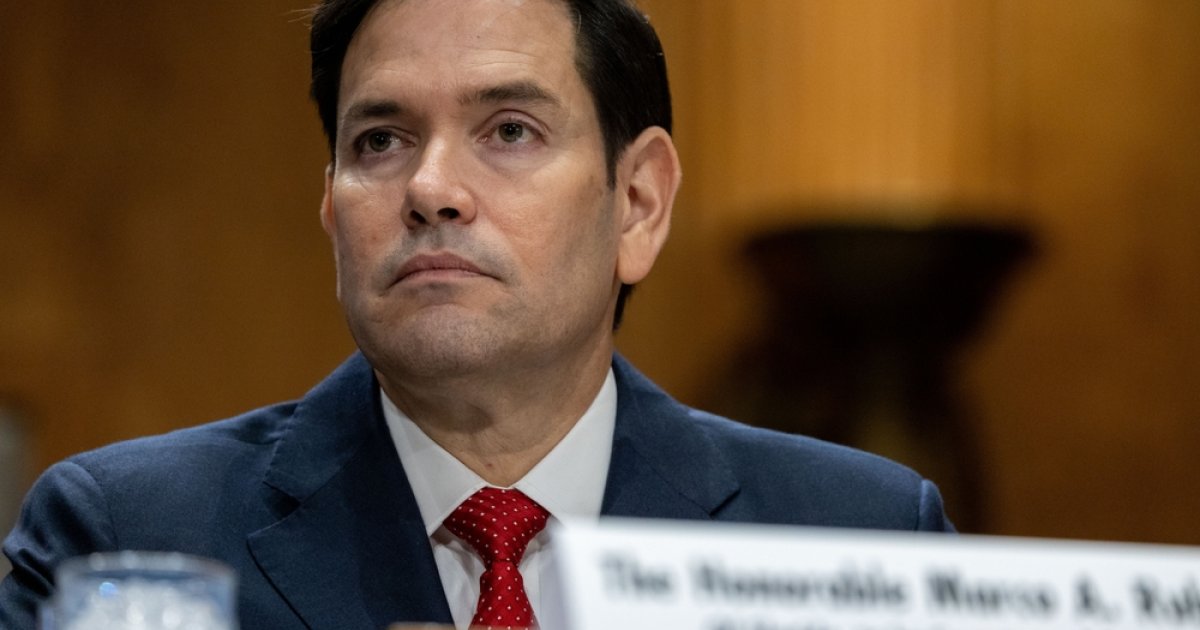
    FIRE is suing Secretary of State Marco Rubio to challenge two federal immigration law provisions that give him unchecked power to revoke legal immigrants’ visas and deport them just for speech protected by the First Amendment.

    And yes, we knew full-well we’d get blowback. You don’t exactly file a First Amendment lawsuit against a cabinet member without knowing it will be unpopular with parts of the American public.

    But for nonpartisan free speech defenders, that comes with the job.

    One of our plaintiffs is the student-run paper The Stanford Daily, where writers on student visas are turning down assignments related to the war in Gaza because they fear reporting on it could endanger their immigration status. We are also representing two legal noncitizens who engaged in pro-Palestinian speech and now fear being deported.

    Some of the questions we’ve received have been quite thoughtful. Others, however, are mistaken on the premises. So let’s clear the air.

    Happy to help, Obsequious Deacon. The First Amendment in the Constitution’s Bill of Rights prohibits the government from “abridging the freedom of speech,” without any distinction between citizens and aliens. If the U.S. government is acting against someone on U.S. soil, the Constitution applies.

    Remember, our liberties don’t spring from the kindness of government, but are inherent to each and every individual. The First Amendment presumes there is free speech, and is simply a restriction against government infringement of it. This recognition is what makes the American experiment exceptional and worth defending.

    This has been firmly established by the Supreme Court in a long line of cases. In Bridges v. Wixon (1945), the Court made clear that under the protection of the First Amendment, “Freedom of speech and of the press is accorded aliens residing in this country.”

    Or take it from Justices Antonin Scalia and Ruth Bader Ginsburg, who famously disagreed on a lot! Here they discuss how even immigrants not here legally (which isn’t the case in this lawsuit, where the plaintiffs are here on visas) enjoy the protection of the First Amendment.

    Additionally, in Yick Wo v. Hopkins (1886), the Court said the Equal Protection Clause of the Fourteenth Amendment applies to “all persons” in the country, not just citizens. In Plyler v. Doe (1982), the Court struck down a Texas law that denied public education to undocumented children, explaining that undocumented immigrants are still “persons” under the Constitution.

    The same goes for due-process protections. In Wong Wing v. United States (1896), the Court ruled that noncitizens accused of crimes are entitled to Fifth and Sixth Amendment protections, including due process and the right to a jury trial. And in Zadvydas v. Davis (2001) and Sessions v. Dimaya (2018), the Court has since affirmed that due process applies to everyone in the United States, including noncitizens.

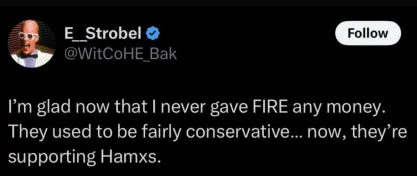
    E_Strobel X post

    We’ve never been conservative, liberal, or any other political label. We’re nonpartisan defenders of the First Amendment.

    Before we expanded our mission to defend free speech everywhere, we focused on college campuses where censorship, in recent decades, has overwhelmingly come from the left of the speaker. As a result, we often found ourselves challenging liberal administrators and defending the rights of conservative and moderate studentsprofessors, and speakers. But we don’t care about the viewpoint involved. FIRE’s motto is, “If it’s protected, we’ll defend it.”

    As for the claim that we support Hamas, defending someone’s right to speak is not the same as endorsing what they say. Defending the speech of ideological allies and opponents is the foundation of any principled defense of free expression.

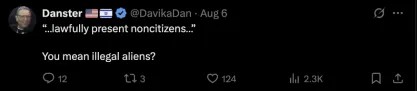
    Danster X post

    No. The terms “lawful” and “illegal” are opposites, of course. The “lawfully present noncitizens” mentioned first are legally allowed to be in the country while the “illegal aliens,” by definition, are not. That said, the First Amendment applies to everyone on U.S. soil. This is America, and you shouldn’t have to prove your citizenship before offering an opinion. 

    Think of it this way, would you be comfortable if a Democratic administration deported Canadian Jordan Peterson for his speech or a European student whose Ph.D. research concentrated on proving the Wuhan lab leak theory of Covid’s origins? We hope not.

    Mark W. Smith/#2A Scholar X post

    The censorship of noncitizens affects Americans, too. If international students and green-card holders have to censor themselves out of fear, we stand to lose many ideas as a result. Should John Oliver have been forced to censor his criticism of the Iraq War on The Daily Show before he became a U.S. citizen? Should British politician Nigel Farage have been prohibited from criticizing Joe Biden during last year’s Republican National Convention? Of course not, and Americans interested in hearing their perspectives would have been all the worse for it. 

    If you’re having a conversation with someone, you deserve to hear their full opinion, not one sanitized to avoid retaliation from government censors. And if the current administration’s actions don’t worry you, just imagine the other side wielding the same power.

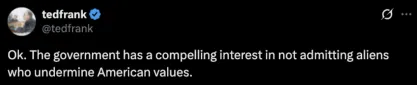
    tedfrank X post

    Bear in mind our lawsuit and this discussion are not about admitting noncitizens, the focus is throwing people who are already here legally out of the country for protected speech. As our preliminary injunction brief explained (check out footnote 7), the law has long distinguished the discretion afforded in determining whom to allow into the country from permissible considerations when attempting to deport someone legally here. Our client The Stanford Daily is suing Rubio because its noncitizen student writers are afraid to practice basic journalism for fear they could be deported. That’s not very American.

    Another problem here is there is not exactly universal agreement on what constitutes “American values.” Quite the contrary, it’s frequently been misused to silence dissent, which is ironic because the most fundamental of American values is to protect dissent in what increasingly seems to be the uniquely American belief that all people should be free to fully speak their minds.

    Source link