This HEPI guest blog was kindly authored by Cheryl Watson, VP of Education, UK at TechnologyOne
While you are here, don’t forget to complete the survey on HEPI’s work. It will only take a few minutes and will help inform our future output. You can access the survey here.
Why we need to redesign student life around inclusion, access and equity
There’s no such thing as a typical student anymore. Today’s students are more diverse, stretched, and balancing financial pressures alongside study, care, and work responsibilities.
Yet many university systems still assume a narrow definition of who students are and how they live. As participation widens, institutions face a challenge: equity of access no longer guarantees equity of experience.
Universities have made real progress in widening access, but many aspects of student life are still designed around an outdated, one-size-fits-all model. For non-traditional students, the cost of that mismatch can be significant.
The Minimum Income Standard for Students 2024 (MISS24) report, developed by the Centre for Research in Social Policy (CRSP) at Loughborough University and published by HEPI and TechnologyOne, revealed that students under financial stress or managing additional responsibilities are more likely to struggle with engagement, persistence, and success.
The myth of the ‘traditional student experience’
The image of the ‘traditional’ student – financially supported, living on campus, and attending in person full-time – is increasingly out of step with reality. According to HEPI and Advance HE, 68% of students now work part-time to support themselves.
Others commute long distances, care for family members or study while managing health conditions. Yet academic and campus life often centres around those with time, money and flexibility, creating barriers for others.
Who are non-traditional students?
‘Non-traditional’ students are those whose lives don’t neatly align with the structures of traditional university study. This includes:
commuters who travel in from home each day, often at significant personal cost;
students from low-income households, for whom maintenance loans fall well short;
mature-age students, carers, or those with parenting responsibilities;
students living with disabilities or chronic health conditions; and
first-in-family students, navigating systems and expectations without precedent.
These students comprise a significant portion of the sector. Meeting their needs should not be seen as an add-on, but as essential to building a fairer system.
The hidden barriers reshaping student life
Rigid timetables, inflexible systems, and unclear support structures can turn everyday aspects of student life into barriers. For students juggling work, care or long commutes, these barriers can add stress and negatively impact attendance, engagement, and overall well-being.
The people I know that commute, it’s mostly because they couldn’t afford to live or it would be way more expensive for them to live in student accommodation because they live so close.
I worked with someone, and she’d be in Uni all day from 9 am to 5 pm because she might have something that started at 9am and then finished at 6pm, because the timetable is not synced up.
Accommodation contracts and payment schedules often clash with student loan timings, leaving some students short on essentials or reliant on overdrafts and food banks. These are not isolated challenges but systemic issues that call for sector-wide solutions.
Building a fairer future for higher education
To build a fairer, more inclusive higher education system, universities and policymakers need clear evidence on what effective support looks like.
The upcoming Minimum Income Standard for Students 2025 (MISS25) report – a follow-up to MISS24 with HEPI – will provide that evidence, offering the most detailed picture yet of the true cost of participating in university life for first-year students living in purpose-built accommodation.
It will help the sector understand what it takes for students to stay afloat, take part fully, and succeed, particularly for those managing disabilities, low incomes, or additional responsibilities.
What students say they need to succeed
Focus groups from the MISS25 research highlight that students need time, flexibility and support that reflects their real lives. Financial pressure and scheduling conflicts can limit their ability to join societies, attend events, or fully participate in academic life.
‘We just need time and space to breathe’
Many students described university life as overwhelming, mostly because of how tightly packed, inflexible, and unsupported it can feel. Rigid schedules and disconnected systems create extra strain, especially for students who need to manage work, transport, or health appointments.
As the report will show, even students receiving the maximum maintenance loan must work long hours every week just to meet a minimum standard of living.
‘It’s hard to join in when you’re just trying to survive’
Participating in societies, sports, and social life is a vital part of the university experience. But for many, the rising cost of living means opting out is the only option.
This impacts wellbeing, confidence, and the chance to build networks that support success.
These challenges are often most acute in the first year, when students are building social connections and learning to navigate university systems for the first time.
‘Uni should be built around real students, not ideal ones’
Students shared how university systems don’t match their realities. Timetables that assume all-day availability, unclear payment schedules, and expectations around placements can all create friction for students managing extra responsibilities or financial pressures.
To support success, universities need to understand and address these gaps.
Why inclusive design must be the next priority
The barriers many students face are design challenges, not a matter of individual resilience. Inclusive design means creating flexible timetables, accessible learning environments, and clear, consistent support structures that work for all learners.
When these systems are in place, students can focus on learning and contributing to their communities, rather than constantly navigating obstacles.
Rethinking support beyond financial aid
While financial support is still crucial, students need systems that align with their lives to reduce unnecessary stress and uncertainty. Predictable processes, transparent communication, and flexible learning options are all part of enabling participation and success.
Explore the full MISS25 report
The upcoming Minimum Income Standard for Students 2025 report (MISS25) offers a data-driven roadmap for a more inclusive student experience. Sign up to receive a copy of the report to explore the findings and discover how better insight can drive better outcomes across your institution.
TechnologyOne is a Partner of HEPI. TechnologyOne is a global Software as a Service (SaaS) company. Their enterprise SaaS solution transforms business and makes life simple for universities by providing powerful, deeply integrated enterprise software that is incredibly easy to use. The company takes complete responsibility to market, sell, implement, support and run solutions for customers, which reduce time, cost and risk.
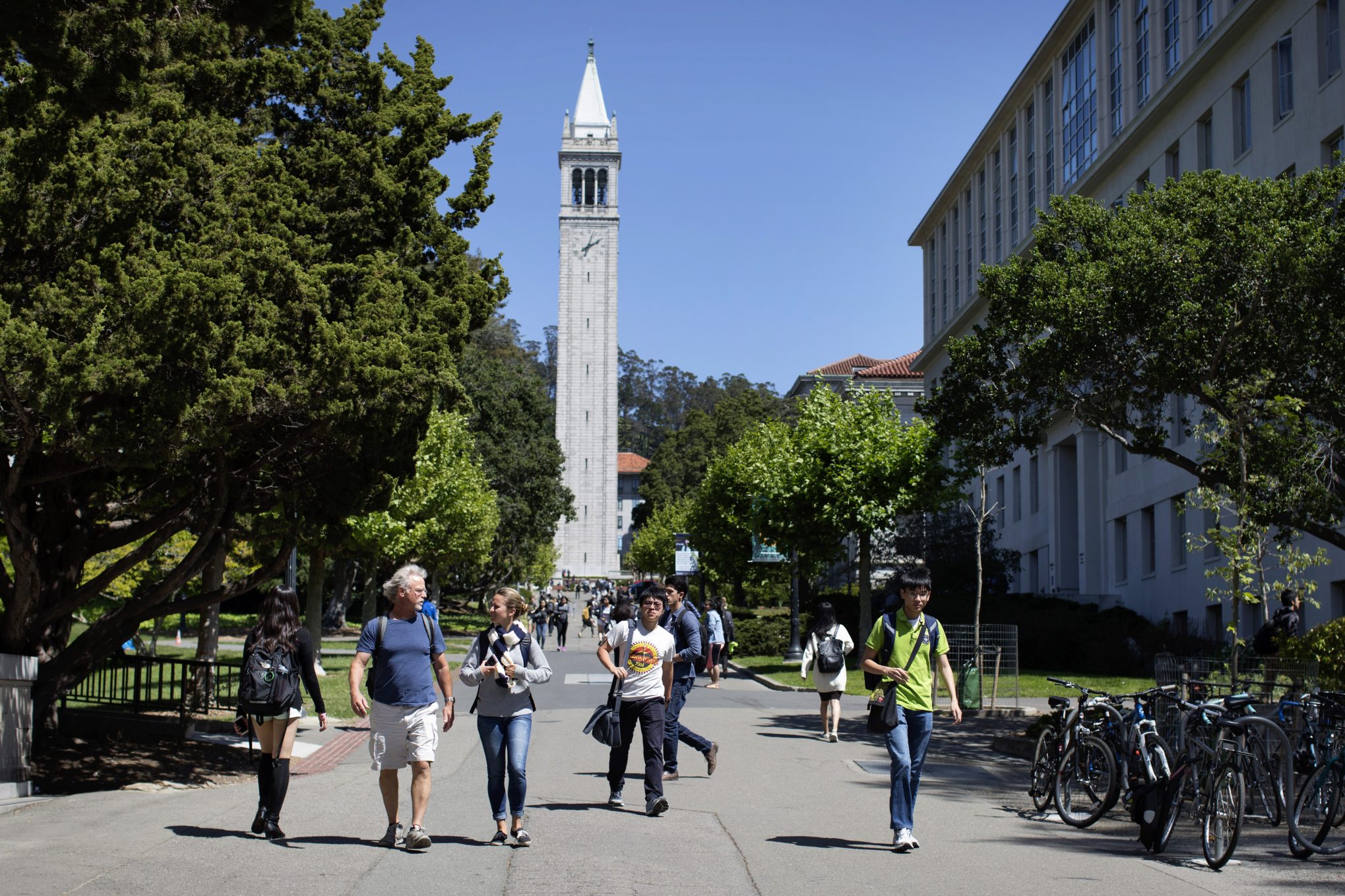
As the first in my family to attend college, I felt a profound commitment to excel academically and gain admission to a top university. Growing up amid the hustle and bustle of Silicon Valley, I always envisioned a bright future ahead, with college at the forefront of my goals since elementary school.
At my Title I elementary and middle schools, student-to-teacher ratios were even higher than those listed online. There was a lack of classroom technology and resources like history textbooks. Our two middle school counselors each managed students by the hundreds, making it nearly impossible for them to keep track of individual academic progress and educational goals. Afterward, I attended a private high school, thanks to support from my family. Our caring teachers made the effort to get to know each student, and dedicated counselors advocated for me when it mattered most.
Yet when conversations about college came around, navigating the complex system was difficult. I had to chart my own path to success through independent research, often looking at data that was scattered and inconsistent. It hindered my ability to educate myself on college-going rates, costs, outcomes and employment prospects post-graduation.
Related: Interested in innovations in higher education? Subscribe to our free biweekly higher education newsletter.
Limited resources available at many underserved schools across the nation make it a more challenging environment for students to get support and excel, thus limiting their true academic potential.
In my senior year of high school, after gaining newfound confidence while serving as a commissioner at-large in my county’s youth commission, I decided to try to challenge the status quo in higher education through the power of data and find a way to speak up for other first-generation students who find themselves interacting with systems not designed with their experiences in mind. My mentors at a regional food bank where I volunteered shaped me to lead with confidence and heart.
When I received my admission letter from the University of California, Berkeley, I felt deeply honored to earn a place at one of the world’s leading research and teaching institutions.
I am now an advisory board member of the recently formed California Cradle-to-Career Data System, the state’s longitudinal system that connects education and career outcomes data in one central place. I have learned firsthand that the resources available for students to gauge their potential postgraduate earnings often rely on self-submitted data or estimates, rather than on an accurate overview of college and career outcomes.
As part of this work, I am now helping my state’s leaders develop tools like the Student Pathways dashboard, which provides insights on the higher education options available to students after high school.
The tool provides information on a single website for everyone to access at any time. By streamlining access to this data, it allows students and the adults helping them to easily pinpoint which types of degrees or certifications are right for them, which may lead to employment opportunities where they live and which colleges or universities the students’ classmates are headed to.
Students need access that can help them map out their futures — whether they hope to attend college, earn a certificate or enter the workforce directly after high school. Using data in the pathways tool can clarify how others have navigated to and through college and hopefully help students chart their own paths.
As the youngest advisory board member, I have the opportunity to provide proposals and recommendations from a student’s perspective on how the system can engage with communities to make its data more accessible. Community engagement involves ensuring that Californians are aware of the data system, can understand and interpret the available data and have an opportunity to share their feedback.
I often think about how the countless hours I spent trying to find information to help guide my goals and decision-making were both a burden and barrier to attending college. I know firsthand how the power of data can help build a successful future.
Today, many first-generation and low-income college students do not have the opportunity to assess which pathways will yield the most fruit. I’m confident that with accessible facts and data for our decision-making, we can confidently forge the paths that will bring our dreams to life.
Mike Nguyen is a rising junior studying business administration and science, technology, and society at the Haas School of Business at the University of California, Berkeley. This piece was written in collaboration with Alexis Takagi, a basic needs coordinator at Santa Clara University. Both Nguyen and Takagi are advisory board members of the California Cradle-to-Career Data System.
The Hechinger Report provides in-depth, fact-based, unbiased reporting on education that is free to all readers. But that doesn’t mean it’s free to produce. Our work keeps educators and the public informed about pressing issues at schools and on campuses throughout the country. We tell the whole story, even when the details are inconvenient. Help us keep doing that.
Last August, Republican Rep. Gino Bulso looked out at a room filled with dozens of fellow state lawmakers as he touted new legislation he had just helped become a reality in Tennessee. Under the law, a fetal ultrasound or a video of a computer-animated fetus developing in the womb had become mandatory viewing for students in the state’s sex education classes.
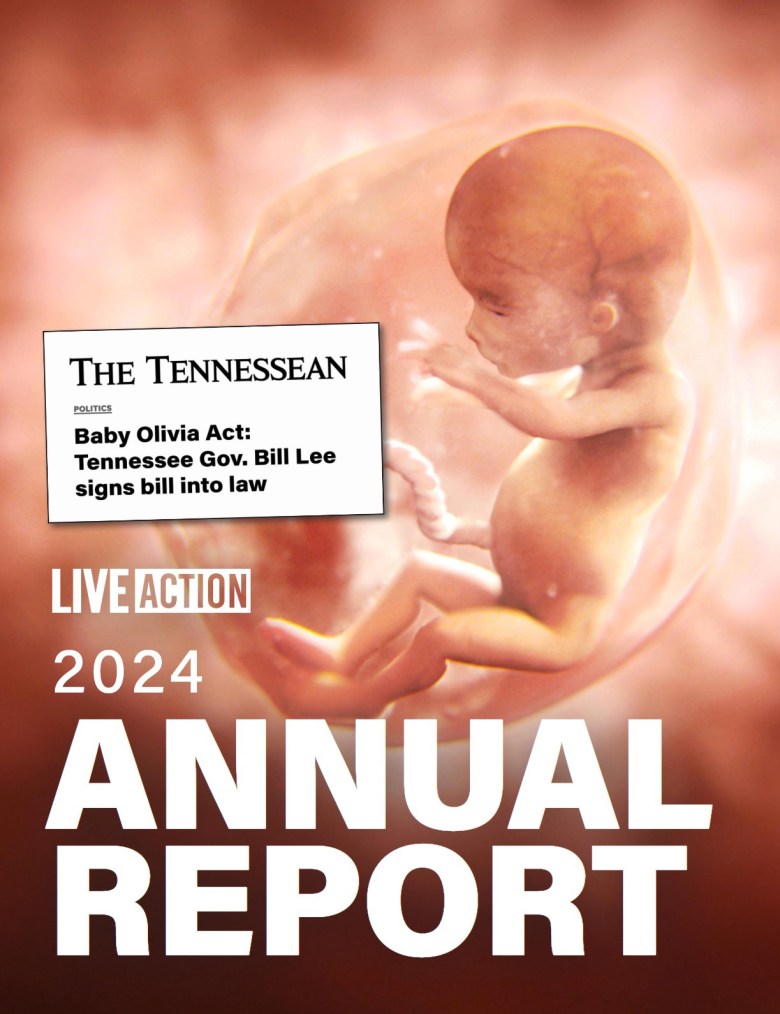
Bulso was there at the request of the event’s host, anti-abortion advocacy nonprofit Live Action. The group had gathered legislators from across the country to provide them “with the policy information and persuasion strategies they need to end abortion,” according to its annual report.
Bulso’s panel, “The Agenda for Life in Schools and Beyond,” focused on how he had successfully shepherded his bill into becoming the second so-called fetal development education law in the country.
When lawmakers returned to their home states after the Live Action event, The Hechinger Report found, at least 10 of them sponsored bills similar to Bulso’s, in some cases proposing that students as young as third grade watch fetal development videos. Another legislator who introduced such a bill had sent his chief of staff and wife to the event. And the volume of legislation stemming from the gathering may be higher: Live Action keeps its list of attendees private, though many lawmakers posted about the event on social media or were featured in Live Action’s promotional materials.
Since 2023, when North Dakota became the first state to pass fetal development education legislation, anti-abortion lawmakers in more than 20 additional states have proposed such bills; 6 of those states, including Bulso’s, have passed them. As a result, this fall, nearly 4 million children will attend school in a state that requires them to watch a video or ultrasound of a fetus in the womb during sex education classes. And this year, legislators in four states tried to go even further: Their proposals would have required students to view depictions of abortions, including computer-animated videos.
After the fall of Roe v. Wade in 2022, public schools have become an increasingly important battleground in the fight over abortion rights. Even though 12 states now ban abortion in all circumstances, the number of procedures has increased nationwide since the Supreme Court’s decision to overturn Roe.Public support for abortion rights has also risen. Many anti-abortion advocates hope that getting their message in front of students can help them win the hearts and minds of young people and change these trends in the long run.
While critics, including medical professionals and some parents, say that the fetal development education materials being introduced to schools are manipulative and little more than propaganda, Live Action and other groups that produce them maintain they are medically accurate and unbiased. Experts in sex education and abortion policy say a related problem is the dearth of sex education in schools — students, on average, receive only about six hours during their high school years — that creates a vacuum for anti-abortion groups to move into.
“They’re attempting to reach children at an age where I would assume most haven’t been exposed to issues of an abortion,” says Alisa Von Hagel, a political science professor at University of Wisconsin-Superior who has studied the strategies of the anti-abortion movement. “They’re attempting to be the first to imprint this quote, unquote ‘knowledge’ or opinion about these issues.”
During a debate earlier this year in the Arkansas Senate, Republican Sen. Alan Clark referred to his state’s proposal as “one of the most important pro-life bills that’s ever come before us.” He also said, “It will shape the minds of kids from now on.”
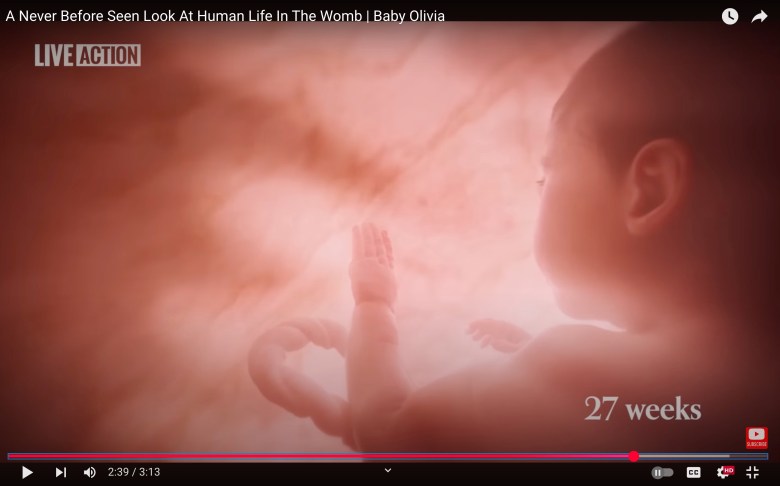
The proposal would have required showing a video created by Live Action to students starting in sixth grade. In the video, titled “Meet Baby Olivia,” a narrator tells the viewer that life begins at conception and says the fetus, named Baby Olivia, begins playing and exploring as early as 11 weeks.
In an annual report, Live Action noted that its “Meet Baby Olivia” video caused a “37-point shift towards the pro-life perspective among viewers.” The organization also highlighted the impact its materials can have on kids, in particular, to help “instill a reverence for life as children at impressionable ages develop their world view.”
Tennessee state Rep. Gino Bulso sponsored the nation’s second fetal development education law. He credits the anti-abortion group Live Action with helping him get it passed. Credit: George Walker IV/AP Images
Both Bulso and Noah Brandt, Live Action’s vice president of communications, have said the only goals of Baby Olivia and fetal development education are to teach and inform students — but they also expected it to leave an impression. “It is intuitive that, after watching that, people would be less likely to support abortion on demand,” Brandt said.
Live Action’s work to connect with students is also part of playbooks for other anti-abortion organizations. Take Heartbeat International, for example, a group that supports clinics known as “crisis pregnancy centers,” which provide limited medical care and encourage people not to have abortions. Heartbeat also offers in-person and online training, including one program on how to “Change the Nation with Pro-life Education,” featuring specific tactics for working with public schools. One speaker at Heartbeat’s 2023 national conference described performing an ultrasound on a pregnant woman in front of public school students to “plant a seed of life.”
Before creating “Meet Baby Olivia,” Live Action was best known for anti-abortion campaigns and undercover stings against Planned Parenthood, and largely worked outside of policymaking. But as the organization has grown in recent years, it has begun to coordinate directly with legislators.
Live Action held its inaugural lawmaker summit in 2022, two months after Roe was overturned. The following spring, North Dakota passed a fetal development education law, the nation’s first.
Many proposed fetal development education bills mention the video “Meet Baby Olivia” by name. Critics say that the video is designed to manipulate the viewer’s emotions, while its creator, Live Action, says it is accurate. Credit: Live Action
By 2024, the summit had doubled in size to host 70 lawmakers at a four-star hotel in Chapel Hill, North Carolina. Lawmakers attended panel discussions titled “Saving Our Children and Helping Their Mothers” and “Communications and Persuasion: Winning the Messaging War.” Live Action also screened its abortion videos, including “Meet Baby Olivia.”
On his panel, Bulso walked through every step of creating Tennessee’s law, from filing the bill to committee deliberations to its eventual passage. He gave Live Action credit for providing him with resources to help make the case that “Meet Baby Olivia” was scientifically accurate.
Most of the proposed fetal development education bills don’t prescribe a specific video, but many suggest the Baby Olivia video. Two bills in Texas do mention alternatives: A 1983 film by PBS’s NOVA called “The Miracle of Life” and a video produced by the St. John Paul II Life Center, a crisis pregnancy center.
Said Brandt, it’s up to “lawmakers, school board members, teachers, that kind of thing, to try to make prudential judgments about, ‘Is the actual resource I’m using a good resource to accomplish the goal that I’ve been tasked to accomplish?’”
“Meet Baby Olivia” in particular, has been sharply criticized by medical experts since Live Action released the video in 2021. Many doctors have raised concerns about its language and portrayal of the timeline of fetal development. Parents and students in Fargo, North Dakota, used arguments such as these to convince the school district to use a different video to meet the state law.
“The Baby Olivia video is designed to manipulate students’ emotions rather than to share objective facts about embryonic and fetal development,” Nisha Verma, senior advisor of reproductive health policy and advocacy for the American College of Obstetricians and Gynecologists, said in a statement. “The video attempts to advance anti-abortion policies such as fetal personhood and uses non-scientific language about conception, pregnancy, embryos, and fetuses to evoke an emotional response.”
Live Action maintains the video is medically accurate — and has its own roster of anti-abortion doctors who endorse it, including a handful who collaborated with the organization on the video’s creation.
The approval of some medical professionals was part of the appeal of “Meet Baby Olivia” and another Live Action video series called “What Is Abortion?” for New Hampshire Rep. John Sellers, another Republican who attended the group’s lawmaker summit. The series shows a computer rendering of three different points in the pregnancy process.
Since 2023, getting fetal development education into public schools has been a priority for the anti-abortion group, Live Action. Credit: Live Action
In January, Sellers filed two bills to make Live Action’s videos required viewing for New Hampshire students — including college students in the case of “Meet Baby Olivia.” Both bills, however, faced opposition: Nearly 700 residents officially recorded their objection with the state or submitted testimony opposing the fetal development bill, and 1,080 registered their opposition to the abortion video legislation. By comparison, the number of residents who registered in favor was 23 and 30, respectively.
Many of those who submitted written testimony called the bill an attempt to indoctrinate students; Sellers maintained the legislation was nonpolitical. “We’re just trying to get the information out to the kids so they’re educated,” he said in an interview. “I don’t know how you indoctrinate somebody with the truth of the development of life … or the truth that these are the types of procedures of abortions. I can’t see that being indoctrination.”
Sellers said further that he hoped education could help people “make a better decision of, ‘Should I get an abortion or not?’”
Several people who opposed Sellers’ bills agreed that the videos contained some factual information and that topics such as fetal development and abortion could be useful to learn about in schools, but it was the presentation of the information — and that it came from an anti-abortion group — that worried them, they explained.
“My biggest concern is that it’s set up to come from a moralistic and fear-based place as opposed to a medical or wellness model,” said Stephanie Vazzano, a therapist who lives in New Hampshire who submitted written testimony opposing the abortion video bill. “They do have some facts. When you watch them you can be really seduced by those facts … but then these other things get slipped in.”
During the hearing for his bills, Sellers repeatedly said he was open to other abortion videos being shown but didn’t know of any. This lack of alternativeshas allowed Live Action to succeed in getting into schools so far, said Mary Ziegler, a law professor at University of California-Davis and author of several books on the history of abortion debates. “Part of what they’ve exposed is that there are gaps in the way we’ve done sex education,” she points out. “There’s truth in the sense that sex education programs across the board, including those favored by progressives, don’t have enough information about pregnancy, childbirth, abortion or fetal development.”
In many ways, Live Action’s efforts — as well as those of Heartbeat International and other organizations working to reach K-12 students — are a response to groups that run comprehensive sex education programs. Five states require comprehensive sex education, and individual districts in other states also provide it. These programs typically cover an array of topics including contraception, gender identity, consent, and options if one becomes pregnant. Planned Parenthood offers such a program to schools and has become the single-largest provider of sex ed nationwide.
“I’m sympathetic if someone says we wouldn’t want any organization that has any point of view creating any materials for our public school system,” Brandt of Live Action said. “But I would just say that’s not the reality that’s happening across the country. It’s tough to find curriculum that is from a group that no one would oppose.”
Even some anti-abortion Republicans have drawn a line at directly promoting the use of Live Action materials in public schools. Among them is Arkansas Sen. Breanne Davis, who led the opposition to a bill that specifically called for “Meet Baby Olivia” to be shown in schools. She raised concerns about requiring content from “a political advocacy group.” Davis said in an interview, “That’s just out of bounds for what we should be putting into law.”
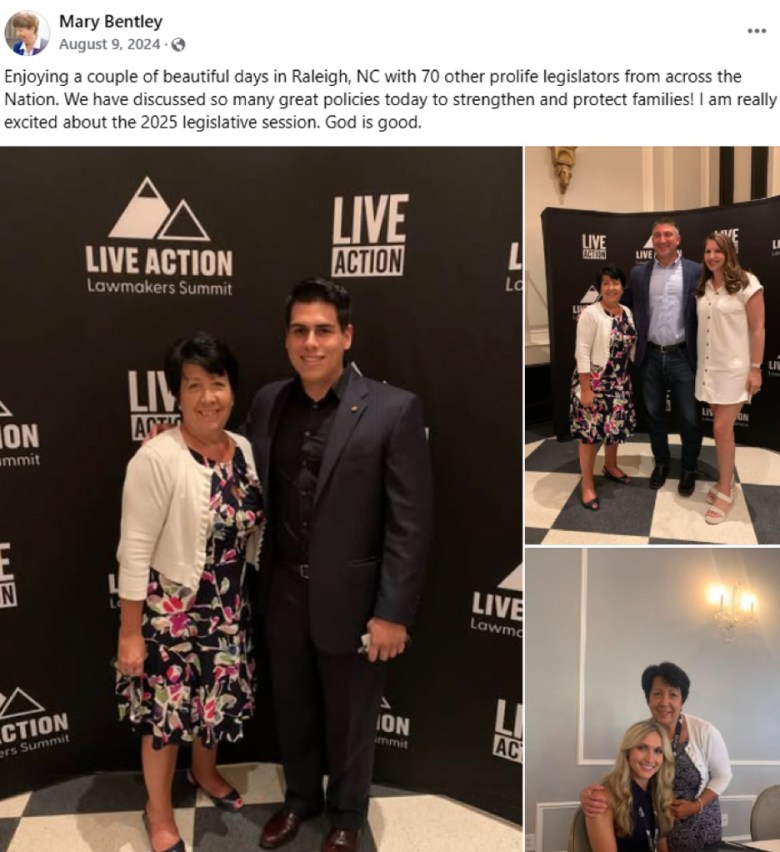
At least 11 state legislators who attended Live Action’s Lawmaker Summit, including Arkansas Rep. Mary Bentley, introduced fetal development legislation during the 2025 legislative session. Credit: Facebook
In hearings, Arkansas representative and bill sponsor Mary Bentley argued it would be easier and better for school districts to be told which video to use rather than have to make that determination themselves. She remains staunchly in support of the Baby Olivia video: “I think it’s so good to help kids understand the process of fetal development,” she said. “I just assumed that it would get the support that we needed in the most pro-life state in the nation.”
Davis proposed a competing bill, one that would require the Arkansas department of education to adopt standards for age-appropriate fetal development education, including showing an ultrasound, in the future. No video would be required, but districts could still show one, such as “Meet Baby Olivia,” if they chose to.
In the end, Bentley’s bill died and Davis’s legislation was signed into law in April.
For Brandt, of Live Action, the law falls short of what he considers the “gold standard” of fetal development education, but “We’re happy that they passed some version of it,” he said. “That is definitely better than nothing, and maybe can even be improved upon in the future.”
Contact investigations editor Sarah Butrymowicz at [email protected] or on Signal: @sbutry.04.
The Hechinger Report provides in-depth, fact-based, unbiased reporting on education that is free to all readers. But that doesn’t mean it’s free to produce. Our work keeps educators and the public informed about pressing issues at schools and on campuses throughout the country. We tell the whole story, even when the details are inconvenient. Help us keep doing that.
In his criminally underread 1978 book The Grasshopper, the philosopher Bernard Suits takes seriously the science-fiction commonplace that, once robots are doing everything for us, humans will have to find something else to do.
His response is that we’d play, living lives of leisure, like Aesop’s grasshopper, and engaging in activities with a lusory attitude: living playfully, engaging in activities not because we have to, but because we want to. Fully-automated luxury play! As much as I could easily play videogames all day, work isn’t going anywhere any time soon. But the rise of AI in education has prompted me to revisit this topic.
Universities are, quite rightly, thinking very carefully about what their staff and students do with AI, emphasising the ways in which it can enhance, and perhaps even replace, aspects of our work. But there are separate, parallel questions: what can’t AI do for us, and what shouldn’t it do? And what are we going to do with all the time it saves us?
Doing and being seen to have done
Human lives are full of experiences, and there’s a danger with the rise of AI that we weaken our connection with the actual doing of things. AI might help us to plan a holiday itinerary, book a hotel or draft a jealousy-inducing social media post (or even deepfake pics from a holiday that didn’t happen), but it can’t go on holiday for us. And similarly, in learning environments, whilst it can enhance learning, overreliance on AI runs the risk of hollowing out the experiential core of learning and leaving students not having actually done anything.
A real challenge for educators is to know how to get students to understand the value of experience in a world that incentivises taking shortcuts. I lead Rise at Manchester Met: a co-curricular programme that is designed to draw together all the things that students do that aren’t their degree, and our team works hard to help students to understand that they are more than their degree subject.
The traditional catch-all term for this is “extra-curricular” – it’s the things that students do in addition to the curricula they are following. But in practice “co-curricular” is a more accurate term. “Co” indicates that activity happens alongside and with the curriculum. There is a crossover in the experiences that students are having. Picture the curriculum and co-curricular activities as two streams that are sometimes totally divergent, sometimes parallel, and often overlapping in productive ways.
Identity shapes participation
Students don’t stop being students when they engage in co-curricular activities, but similarly they don’t stop being a community organiser, or a hockey player, or a freelance arts journalist, when they’re in the classroom. My doctoral thesis argued that half of the “game” of higher education is students understanding how they can bring their own identities to transform their participation, and “position-switch” between roles. The co-curricular is at its most powerful when these distinct identities and experiences begin to transform and enhance each other.
Moving from “extra” to “co” also challenges the primacy of the core curriculum as the foundation of student experience, and acknowledges that, for many of our students, “student” might not be their primary identity. We must accept that, for some students, their co-curricular activity might be more engaging, more relevant and more career-focused than their core degree programme. For others, the stuff they are doing outside their degree programme might be necessary and unavoidable, and will often pre-date their involvement at university; paid-work and caring responsibilities tend to take precedence over lectures, and there may be ways to make this count too.
However, when you type “co-curricular” into your search engine of choice, you won’t really see university websites. It’s a term that, at present, seems to be owned by the upper-end of British private boarding schools. In a sense this stands to reason; pupils essentially live in these schools during term time, and activities take place as part of their wider life at school. Here “co-curricular” is an expectation, and provides the social and cultural capital building for which British private schools are famous.
This conceptual dominance raises an issue of social justice, though. There is a sense that all of the “extra” stuff, at both schools and universities, is the domain of students who are privileged enough to take part, and who have the time and resources to make it happen. Working outside the curriculum is too often seen as a privilege for the privileged, and effectively becomes self-fulfilling as students with the free time to volunteer reap the developmental benefits of volunteering their time. Other students are already on the back foot when it comes to claiming their share of experience.
Embarrassment of riches
Rise was set up to challenge this narrative, by giving students time and resource to develop their social capital in flexible ways, and to recognise developmental activities that might not have traditionally been included under the extra-curricular umbrella. There’s a broader conversation to be had in the sector, not about how we encourage already busy students to do more, but about how we encourage students to recognise their learning beyond the curriculum.
In Manchester and beyond, the skills pendulum seems to swinging once more away from digital skills and towards “soft skills” – again, reflecting AI’s dominance of education conversations. Co-curricular space has a valuable contribution to make to developing empathy, critical thinking and interacting with other human beings. It is, ultimately, about sharing experiences, and the more we can expand this, the more everyone will benefit.
Students will have experiences outside of their degree programmes whether we design for it or not, but a renewed emphasis on co-curricular activity would allow them (and us) to understand that formal education settings don’t have a monopoly on learning and development. We worry so much about students being “time-poor”; what happens if we understand this as “experience-rich” instead, and recognise their learning accordingly?
In an AI-dominated dystopia, the co-curricular might be where we find the last vestiges of human experience in higher education. Being more optimistic, in a Grasshopper-influenced utopia, we’d all have the time to luxuriate in human experience. Co-curricular space provides insight into what this might look like, and gives students ways to develop away from the curriculum that might speak to future possibilities.
Interested in thinking more about co-curricular experience? At Manchester Met we’re pulling together a cross-sector group of HE professionals working in co-curricular space, and we’d love your input. Click here to sign up for updates.
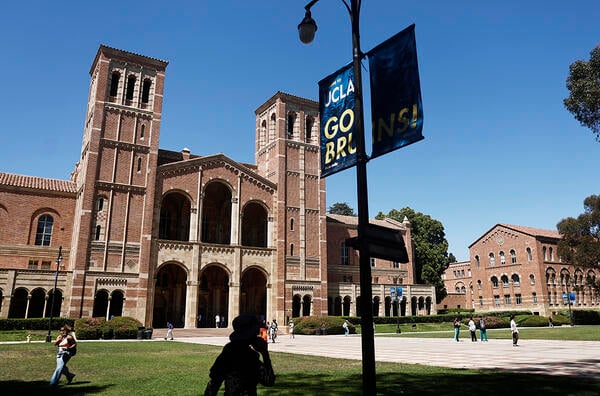
The Trump administration announced last week it was freezing federal grants for another prestigious research university. But this time, it wasn’t a private institution.
It was the University of California, Los Angeles, and if the UC system doesn’t make a deal with the federal government, campuses across one of the nation’s largest public higher education systems might incur the administration’s further punishment. State leaders condemned the funding freeze, and faculty at UCLA are urging university administrators to fight. But the university has said little about how it plans to respond to the administration.
The Department of Justice has been investigating the University of California system for months—looking into alleged antisemitism, alleged use of race in admissions and “potential race- and sex-based discrimination in university employment practices.” The agency’s investigations into the broader UC system are still ongoing, but last week, the DOJ told system officials it had made a finding regarding one campus and demanded a quick response.
“The Department has concluded that UCLA’s response to the protest encampment on its campus in the spring of 2024 was deliberately indifferent to a hostile environment for Jewish and Israeli students in violation of the Equal Protection Clause and Title VI,” the letter said. (Title VI of the Civil Rights Act of 1964 prohibits universities that receive federal funding from discriminating based on shared ancestry, including antisemitism.)
The letter didn’t specifically say what the Trump administration wants UC to do now about its alleged failure to handle a pro-Palestine encampment that ended more than a year ago, and that UCLA itself dismantled a week after its creation. The DOJ didn’t provide Inside Higher Ed further information Monday, but U.S. attorney general Pam Bondi’s news release accompanying the DOJ letter suggests the Trump administration wants significant concessions.
“Our investigation into the University of California system has found concerning evidence of systemic anti-Semitism at UCLA that demands severe accountability from the institution,” Bondi said. “This disgusting breach of civil rights against students will not stand: DOJ will force UCLA to pay a heavy price for putting Jewish Americans at risk and continue our ongoing investigations into other campuses in the UC system.”
Just hours before the DOJ’s announcement, UCLA had announced that it was paying $6.45 million to settle a lawsuit from Jewish students over reported antisemitism associated with the encampment. But that wasn’t enough to assuage the federal government.
The DOJ letter said the department “seeks to enter into a voluntary resolution agreement with the university to ensure that the hostile environment is eliminated and reasonable steps are taken to prevent its recurrence.” It asked the UC officials to contact a special counsel by today if they were “interested in resolving this matter along these lines,” providing an email address and a nonfunctional nine-digit phone number for them to contact. The agency is prepared to sue by Sept. 2 “unless there is reasonable certainty that we can reach an agreement.”
That July 29 letter wasn’t the end of it. In the week between then and today’s deadline for UC to contact the DOJ, multiple federal agencies said they’re cutting off grants to UCLA. The total amount is unclear—other media have reported numbers exceeding $300 million.
It’s reminiscent of what happened at Columbia and Harvard Universities. But unlike with those private institutions, the Trump administration hasn’t published an overarching demand letter for how it wants UCLA to change its ways, whether in admissions, student discipline or otherwise.
A spokesperson for the Department of Health and Human Services, which includes the National Institutes of Health, responded to Inside Higher Ed’s requests for information on how much in NIH grant funding has been canceled and why with a two-line response attributed to an unnamed HHS official: “We will not fund institutions that promote antisemitism. We will use every tool we have to ensure institutions follow the law.”
A National Science Foundation spokesperson wrote in an email that the NSF “informed the University of California, Los Angeles that the agency is suspending awards to UCLA because they are not in alignment with current NSF priorities and/or programmatic goals.” The spokesperson didn’t specify which priorities or which goals, and his email didn’t mention antisemitism.
The Department of Energy went beyond allegations of antisemitism in its letter to UCLA, saying that “UCLA engages in racism, in the form of illegal affirmative action” and UCLA “endangers women by allowing men in women’s sports and private women-only spaces.”
Mia McIver, executive director of the national American Association of University Professors, said what’s happening is the “Trump administration is extending its pattern of attacking higher education faculty, staff and students more broadly outward from the Ivy League universities into the public sector.” McIver, who taught at UCLA for a decade, said the administration intends to “exercise pervasive control over colleges and universities in every region of every different sort of institution.”
“It is the federal government using levers of power that are completely unrelated to the underlying allegations,” McIver said. “Cutting off research for diabetes, cancer, heart disease will not improve the safety of Jewish faculty and students on campus and will not address antisemitism.”
‘Enough Is Enough’
What does the UC system plan to do? A spokesperson deferred comment to UCLA, which also didn’t provide interviews Monday or answer written questions. The UC system spokesperson did forward a statement Friday from system president James B. Milliken, who started in his new job Aug. 1—just after the grant freezes.
Milliken called “the suspension this week of a large number of research grants and contracts” at UCLA “deeply troubling,” though “not unexpected.”
“The research at UCLA and across UC more broadly saves lives, improves national security, helps feed the world, and drives the innovation economy in California and the nation,” he said. “It is central to who we are as a teaching and learning community. UC and campus leadership have been anticipating and preparing for the kind of federal action we saw this week, and that preparation helps support our decisions now.”
He didn’t, however, say what the decisions would be.
Also Friday, California governor Gavin Newsom, a potential 2028 presidential candidate and an ex officio member of the UC Board of Regents, released a statement calling it “a cruel manipulation to use Jewish students’ real concerns about antisemitism on campus as an excuse to cut millions of dollars in grants that were being used to make all Americans safer and healthier.”
“This is the action of a president who doesn’t care about students, Californians, or Americans who don’t comply with his MAGA ways,” Newsom said.
UCLA chancellor Julio Frenk said in a video on X Friday that “we share the goal of eradicating antisemitism. It has no place on our campus or in our society.” He said his wife is the daughter of a Holocaust survivor, and his paternal grandparents left Germany in the 1930s after being “driven out of their home by an intolerable climate of antisemitism and hate.”
“These experiences inform my own commitment to combating bigotry in all its forms, but a sweeping penalty on lifesaving research doesn’t address any alleged discrimination,” Frenk said. He said, “We have contingency plans in place,” though he didn’t elaborate.
In a petition, the UCLA Faculty Association’s Executive Board criticized UCLA administrators for their past “anticipatory obedience” to the federal government, which it said “has not prevented Trump administration attacks.”
“UCLA’s anticipatory obedience has put itself in a place of weakness and we must instead choose to stand up,” the association wrote. “We do not have to bend to the Trump administration’s illegitimate and bad-faith demands. UCLA is a state university, with the financial backing and moral support of the fourth-largest economy in the world.”
The association demanded that UC “demonstrate our strength as the world’s largest university system and reject the malicious demands of the Trump administration,” adding that “each university that falters legitimates the Trump administration’s attacks on all of our institutions.”
It called for UC to fight the administration in court, to use unrestricted endowment funds to “help keep our university’s mission intact” and to work with Newsom and state lawmakers to get financial support. The petition ended with a call for university administrators to not “sacrifice our strengths and our community, deeply nurtured and protected for over 100 years, to a deeply callous and unfair federal administration that will only ask for more.”
Meanwhile, Faculty for Justice in Palestine at UCLA said in a statement that “Israel continues to tighten its US-enabled siege of Gaza, where the calculated denial of humanitarian assistance is causing mass starvation amid ongoing aerial bombing. The theatrics of the Trump administration, echoed by UCLA, are part of a larger attempt to cover up this genocidal catastrophe in which all of us, and our university, are complicit.”
McIver urged the UC system not to cut deals like Columbia and Brown Universities have.
“There are always alternatives,” she said, “and every deal that is cut makes it harder for those who are downstream of the deal to continue resisting these attacks.”
“The Trump administration is aiming to control colleges and universities at all levels in all states, and every settlement that is reached basically contributes to that goal,” she said. “And so there has to be a point at which everyone across the country stands up and says, ‘Enough is enough, we’re not going to tolerate this extortion, you can’t hold our campuses hostage and we’re not going to take it anymore.’”
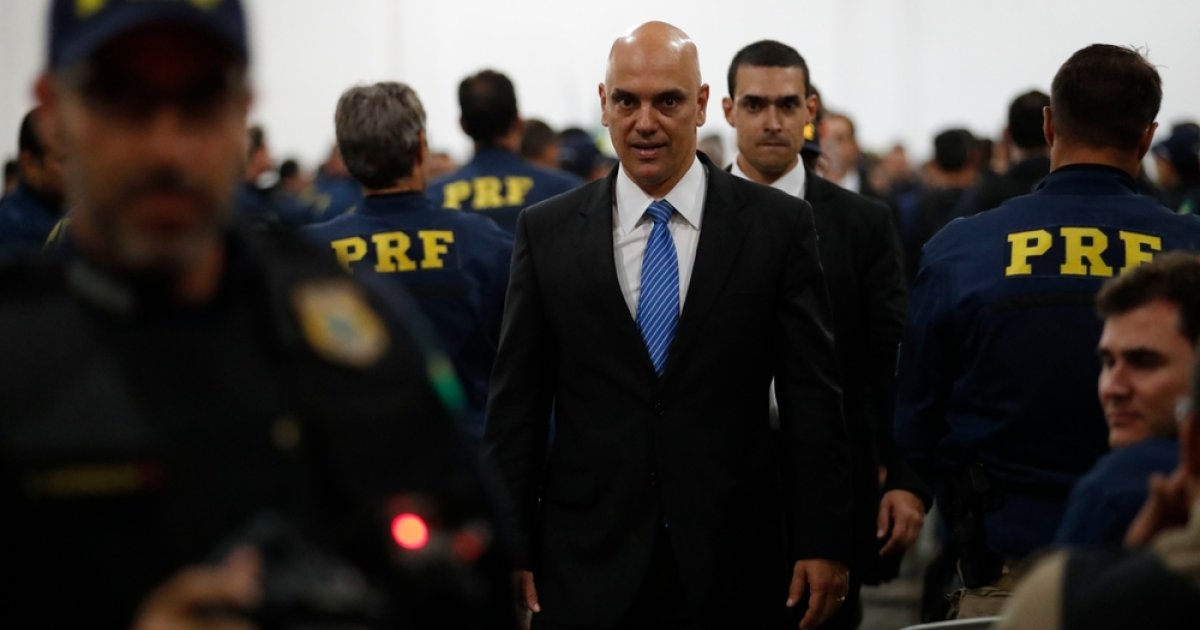
Alexandre de Moraes, the polarizing Brazilian Supreme Court Justice, is no friend to free speech. Though he is a popular figure within Brazil among those who see him as a protector of democracy, he has aggressively wielded his authority to censor, especially on the internet, with little transparency.
From his position in Brazil’s Supreme Court, de Moraes has doggedly pursued wide swaths of speech and speakers off and on the internet, as well as the tech companies hosting them. In a highly public incident last year, Brazil blocked X — and even threatened VPN users accessing it with massive fines — over the company’s noncompliance with de Moraes’ orders.
The actions of de Moraes, and Brazil’s Supreme Court more broadly, have repeatedly drawn the ire of the Trump administration. But chief among President Trump’s grievances is the prosecution of his political ally, former Brazilian President Jair Bolsonaro, who is accused of attempting a coup to overturn his 2022 election loss to President Luiz Inácio Lula da Silva.
How has the Trump administration responded?
Last month, the administration enacted a series of punishments against Brazil’s leadership and de Moraes specifically. In a July 30 executive order, Trump announced tariffs and other sanctions due to Brazil’s prosecution of Bolsonaro and other actions that “conflict with and threaten the policy of the United States to promote free speech and free and fair elections at home and abroad.” The order follows Trump’s weeks-earlier threat of tariffs over the “witch hunt” against Bolsonaro.
Secretary of State Marco Rubio also revoked the visas of de Moraes “and his allies on the court” and their families. And under the Global Magnitsky Human Rights Accountability Act, usually reserved for the most serious human rights abuses, the Department of the Treasury announced sanctions targeting any of de Moraes’s U.S. assets.
Unprincipled, partisan free speech advocacy is no free speech advocacy at all
There is plenty to debate about how to best protect free speech on the global internet, and around the world more generally, and what actions the United States can take in its defense. But, even though Brazil’s adversarial relationship with free expression is deeply alarming, it’s impossible to ignore the incongruity of the Trump administration putting itself in the position of diagnosing and treating government censorship.
Physician, heal thyself.
The opening months of Trump’s second term in office have offered a nonstop, headspinning bonanza of violations, threatened and enacted, against Americans’ First Amendment rights.
I write regularly in the Free Speech Dispatch about the myriad threats to freedom of expression, from Russia to the UK to India to Hong Kong. It’s painfully, brutally clear we need leadership to push back against the wave of global repression that threatens all of our rights. But that leadership must practice what it preaches and avoid simply using concerns about free speech as a pretext to fight partisan political battles. On both counts, this administration has failed.
You will make no converts to the free speech cause by proving right the critics who suspect its advocates are guided by partisan aims, not principled ones. Instead, you will breed cynicism and harm the very cause you claim to support.
This same posturing marred Vice President JD Vance’s objections to European censorship, an ugly trend that’s in dire need of principled critiques. Instead, Vance claimed that under Trump, the “new sheriff in town,” the administration “may disagree with your views, but we will fight to defend your right to offer them in the public square.”
The ugly reality is that the U.S. is rapidly ceding its moral authority to criticize foreign governments’ censorship, like that emanating from Brazil’s Supreme Court, when its own president and agencies are gleefully flouting the First Amendment and free speech principles day in and day out.
Perhaps most baffling was the administration’s objection to the Brazilian government’s targeting of Paulo Figueiredo, a Brazilian journalist, and “U.S. resident, for speech he made on U.S. soil.” Readers may also be able to think of some more government officials targetingimmigrants legally residing in the U.S. for protected speech made on U.S. soil — and they’re doing so from our White House and State Department, not thousands of miles away.
Global censorship is a real challenge, and it’s only getting worse. But until the U.S. removes the censorial beam from its own eye, we may find that other nations are unmoved by our criticisms and cures. Or, they may perhaps even be interested in doling them out to us.
On May 26, 2023, Iowa Gov. Kim Reynolds signed into law Senate File 496, which requires the removal of book depicting “sex acts” from school libraries and classrooms. A federal judge initially blocked the law, citing potential unconstitutional application and the removal of books with “undeniable political, artistic, literary, and/or scientific value.” However, an appeals court later overturned the block.
The following statement is from FIRE attorney Greg Greubel.
Last Friday, FIRE filed a friend-of-the-court brief in the U.S. Court of Appeals for the Eighth Circuit in Penguin Random House LLC v. Robbins, a case challenging Iowa’s sweeping book ban law, SF496. The law, passed in May 2023, banned public schools from carrying any books that depict a “sex act,” which was broadly defined.
Our brief urges the court to affirm the district court’s order blocking enforcement of the law, which has already forced school districts to purge hundreds of books from library shelves — including classics by George Orwell, Walt Whitman, and William Faulkner — simply because their works contain passages that fall under the law’s broad definition of a “sex act.” The law imposes harsh penalties on educators who fail to comply, threatening not only their jobs but also their professional licenses.
FIRE argues that Iowa’s law ignores centuries of hard-won lessons about the value of free expression and the dangers of government censorship. We explain that public-school libraries are not instruments of government speech, but unique institutions that serve as repositories of knowledge and forums for intellectual exploration. Attempts to impose top-down, politically motivated control over their collections violate students’ First Amendment right to access information.
FIRE is proud to stand in support of students, educators, and authors. The government should not have the power to dictate which ideas are permissible in school libraries — especially not through the blunt force of censorship.
My erstwhile wise and worldly readers will remember that I wrote this column for many years, trying to shed light on the inner workings of public higher education in hopes of making things better.
In 2023, my career took an unexpected turn, and I found myself working at a public policy think tank in another part of the country. Though I’m proud of the work we did there, ultimately, it just wasn’t me. I’ve returned to the world of community colleges, this time as VPAA at Westmoreland County Community College, near Pittsburgh. Being back in public higher education feels right, and being within driving distance of family again makes a difference.
So, in the two years away, did I miss anything?
When I stepped away, the public discourse around higher education involved deciding how much of it should be free and how much student debt should be forgiven. Colleges proudly trumpeted their commitments to diversity and inclusive student success. Harvard and its counterparts enjoyed massive public prestige and had more money than they knew what to do with. (I was known to comment that Harvard was wildly unrepresentative of American higher education, which is still true.) Debates around academic integrity tended to focus on whether it was reasonable to use detection software to figure out if students plagiarized from existing websites. The president of the United States openly lauded community colleges, and not only because his wife worked at one.
Hmm. I might need to update a few things.
I regularly included stories about family, partly because they’re fun to share, but mostly to make the point that men, too, need to own the implications of being working parents. I’m happy to report that the main characters are still around, and thriving. The Wife and I had our 26th wedding anniversary this year. The Boy (!) is 24, living in New York City, working in a clinical research lab and applying to medical schools. The Girl (!) is 21, a rising senior in college, and writing papers that earn effusive praise from her professors. Even Penny, our dog, is still around, making new friends wherever she goes.
The new job started before we found a house in Pennsylvania, so we’ve been staying in an apartment. Our previous houses had sliding doors that led to the backyard, so Penny learned that when she needed to go outside, she’d stand by the sliding door. In the apartment, the sliding door opens onto a second-floor balcony; the first time Penny stepped out there, she looked confused and even a little betrayed.
Since then, we’ve found a house, so we’ll be moving over the next few weeks. It has a backyard, so sanity will be restored to Penny’s world.
I’m unspeakably grateful to WCCC for letting me back into the world I’ve spent much of my adult life trying to help. And I’m grateful to Sara Custer at Inside Higher Ed for letting me unretire the jersey and bring “Confessions” back to life. Inspired by Jon Stewart’s example, I’m setting a goal of posting twice a week, as opposed to the four or five posts per week from before.
So, to my longtime readers: It’s great to see you again! And to new readers: Welcome! I hope we can make some sense of what has abruptly become a much more complicated field. The students, as always, are worth it. And as before, reader questions are welcome at deandad (at) gmail (dot) com. See you soon!
Paid search marketing has always played a central role in how students find and engage with colleges and universities. But how students search and what they expect from the experience has fundamentally changed. Today’s Modern Learners are digital-first and highly discerning, which raises the stakes for any higher education marketing strategy, especially when it comes to search visibility. Modern Learners are not just typing in keywords; they’re asking complex questions and increasingly expect fast, relevant answers that feel tailored to their individual goals.
In this new reality, search is no longer just a tool; it is your institution’s reputational front door. For many students, the first impression comes from your search presence—whether your institution appears at all, and what shows up when it does. This moment shapes how they perceive your brand and can influence their decision to engage further.
With advancements such as Google’s AI Overview and AI Mode, the line between paid and organic results is disappearing. These features pull from multiple sources to deliver a single, curated response designed to satisfy intent rather than merely match keywords. This means your search strategy can no longer operate in silos. Paid and organic efforts must work in tandem, and both need to be structured around how students actually search, not how institutions are used to marketing.
Yet, many institutions still rely on legacy paid search strategies that are fragmented and overly focused on isolated keywords. These outdated tactics often miss the nuance of modern search behavior, leading to underperformance and missed opportunities.
This is especially critical during a time when marketing budgets are under pressure and visibility is harder to earn. To remain competitive, higher ed marketers need to reimagine paid search not as a list of bid terms or ad placements, but as a strategic channel that influences both enrollment outcomes and institutional reputation. What’s at stake isn’t just performance. It’s how your brand is perceived in the channels that matter most.
Intent Is the New Currency of Paid Search
Paid search has long been valued for its ability to deliver results quickly and cost-effectively. But in today’s environment, true efficiency means more than just driving volume through simply targeting the right keywords. Today, successful campaigns are built around understanding and aligning with the why behind a student’s search, not just the what.
That’s where intent becomes essential. Intent reveals what a prospective student is trying to accomplish, what stage of the decision process they’re in and what they expect from their educational experiences. With today’s AI-powered platforms, marketers can now interpret and respond to this intent with greater precision than ever before.
Modern tools like Performance Max—Google’s fully automated, goal-based ad campaign—and Broad Match—its flexible keyword matching option—draw from a range of real-time signals like device type, browsing behavior, location, and time of day. These platforms use that context to determine not just who to reach, but how and when to deliver the most relevant message.
This shift is especially important when engaging adult and online learners. These prospective students often search in short, focused bursts across devices and platforms. Intent-based targeting helps ensure your message appears at the right moment, when a prospective student is most open to taking the next step.
The benefit goes beyond smarter targeting. Institutions that embrace intent-based strategies often see improved efficiency, stronger lead quality and a higher return on investment. More importantly, they’re creating a search experience that meets students where they are.
For higher education marketers, this requires a mindset shift. Paid search is no longer about chasing keywords or building lengthy lists of terms. It’s about reading behavior, responding with context and building relevance. Those who adapt to this new model will be better positioned to influence outcomes and build lasting brand reputations.
Why Over-Segmentation Hurts AI Performance
Aligning with student intent requires more than new tools—it requires rethinking how campaigns are structured. That’s where over-segmentation becomes a critical barrier. Not long ago, higher education marketing professionals found success by keeping campaigns tightly focused. You’d build detailed audience segments, carefully tailor your messaging and control every aspect of targeting. It worked well in a time when more control often meant better results.
That playbook doesn’t hold up in today’s AI-driven paid media environment. In fact, over segmentation actively holds your campaigns back.
AI performs best when it’s given space to learn and optimize. It needs strong signals, such as first-party data, clear conversion goals and smart bidding strategies, to work effectively. Overly narrow targeting and rigid parameters create inefficiencies and limit performance.
That’s why marketers should focus less on segmentation and more on supplying clear, meaningful data that helps AI reach the right students and drive outcomes like increased inquiries and stronger application intent.
At the same time, student journeys have changed. Modern Learners aren’t moving through the funnel in linear paths. Ther research process is fast-paced and shaped by real-life pressures like work schedules, finances and family responsibilities.
Prospective students don’t just want more content—they want information that’s relevant to their needs and arrives when it matters most. Modern paid media strategies must move beyond simple demographics to focus on behaviors, intent and how students search.
Transforming Strategy Into Results
As search evolves, so too must the role of the higher ed marketer. In today’s AI-driven landscape, students are exploring their options in more nuanced ways. To keep pace, marketing strategies must shift from keyword-first thinking to approaches that prioritize context, content and the student journey. Here’s how forward-thinking teams are putting that into action:
AI works best when it has strong signals to learn from. That means it’s often more effective to group campaigns by intent rather than breaking them up by individual programs or markets. For example, grouping similar programs together can help your budget go further by focusing on where there’s actual search demand, even if it means less control over specific program-level results.
Content That Works Harder
When you’re working in a keywordless environment, your content does the targeting. Search platforms rely on your landing pages, headlines and descriptions to understand what you offer and who you want to reach. That’s why clear, relevant content is critical. The schools seeing the best results are the ones creating content that aligns with what students are actually searching for.
Making the Most of First-Party Data
Performance Max campaigns are especially powerful when they’re fueled by high-quality first-party data. Feeding in enrollment signals, audience segments and behavioral insights allows AI to deliver more personalized outreach across platforms. This enhances reach and efficiency without compromising targeting precision.
Scaling with AI Max and Broad Match
New tools like AI Max are opening doors to even more automation. AI Max combines broad match, keywordless targeting and AI-generated creative to help schools reach students in AI-driven placements. Paired with the right paid search strategy, Broad Match helps your content appear in the natural, conversational queries students actually use.
Aligning Paid and Organic Strategies
The strongest higher education marketing strategies bring paid search marketing and organic search marketing under one roof. When teams align on landing pages, keywords and messaging, both channels amplify each other—driving more qualified traffic, improving conversions and boosting visibility across search results. This gives AI clearer context and helps create a smoother experience for students.
Continuous Testing and Learning
AI doesn’t mean putting things on autopilot. The best results come when marketers stay involved—testing creative, improving landing pages and updating their audience signals. All of that helps the AI learn and get better over time.
When campaigns are built around clear intent and fueled by rich data and relevant content, AI moves beyond automation—it becomes a strategic partner. This empowers institutions to reach the right students with precision, reduce wasted spend and create meaningful connections that drive enrollment success.
Harness AI to Amplify Your Team’s Impact
AI isn’t here to replace your marketing team. Instead, it helps them work smarter and focus on what really matters. AI tools take care of the routine tasks like adjusting bids, testing creative and targeting audiences in real time. This gives your marketers more time to concentrate on strategy, keeping your brand consistent, understanding student journeys and improving conversions.
This partnership between marketers and AI is the future of higher ed marketing. Adapting your strategy to today’s search landscape helps strengthen both your enrollment pipeline and your brand foundation.
At EducationDynamics, we think differently about AI’s potential to power higher education marketing teams by combining creativity, data-driven insight and technology to drive meaningful growth.
This is more than just a new way to run campaigns. It’s a shift toward meeting students more effectively—aligning enrollment and brand goals in a way that builds trust, boosts visibility and drives lasting success.
Five years after the start of the pandemic, one of the most surprising ways that school has profoundly, and perhaps permanently, changed is that students aren’t showing up. Here are some insights from a May symposium at the American Enterprise Institute where scholars shared research on the problem of widespread absenteeism.
1. Chronic absenteeism has come down a lot from its peak in 2021-22, but it’s still 50 percent higher than it was before the pandemic.
Roughly speaking, the chronic absenteeism rate nearly doubled after the pandemic, from 15 percent of students in 2018-19 to a peak of almost 29 percent of students in 2021-22. This is the share of students who are missing at least 10 percent, or 18 or more days, of school a year. Chronic absenteeism has dropped by about 2 to 3 percentage points a year since then, but was still at 23.5 percent in 2023-24, according to the most recent AEI data.
Related: Our free weekly newsletter alerts you to what research says about schools and classrooms.
Chronic absenteeism is more than 50 percent higher than it used to be. There are about 48 million public school students, from kindergarten through 12th grade. Almost 1 in 4 of them, or 11 million students, are missing a lot of school.
2. High-income students and high achievers are also skipping school.
Absenteeism cuts across economic lines. Students from both low- and high-income families are often absent as are high-achieving students. Rates are the highest among students in low-income districts, where 30 percent of students are chronically absent, according to AEI data. But even in low-poverty districts, the chronic absenteeism rate has jumped more than 50 percent from about 10 percent of students to more than 15 percent of students. Similarly, more than 15 percent of students in the highest-achieving school districts (the top third) are chronically absent, up from 10 percent in pre-pandemic years.
“Chronic absenteeism affects disadvantaged students more often, but the rise in chronic absenteeism was an unfortunate tide where all boats rose,” said Nat Malkus, deputy director of education policy studies at AEI.
The data show strikingly large differences by race and ethnicity, with 36 percent of Black students, 33 percent of Hispanic students, 22 percent of white students, and 15 percent of Asian students chronically absent. But researchers said once they controlled for income, the racial differences were not so large. In other words, chronic absenteeism rates among Black and white students of the same income are not so disparate.
3. Moderate absenteeism is increasing.
Everyone is missing more school, not just students who are frequently absent. Jacob Kirksey, an associate professor of education policy at Texas Tech University, tracked 8 million students in three states (Texas, North Carolina and Virginia) from 2017 to 2023. Half had “very good” absentee rates under 4 percent in 2019. By 2023, only a third of students were still going to school as regularly. Two-thirds were not.
“A lot of students who used to miss no school are now missing a couple days,” said Ethan Hutt, an associate professor at the University of North Carolina at Chapel Hill, who noticed the same phenomenon in the North Carolina data that he studied. “That’s just become the norm.”
4. Many students say they skip because school is ‘boring.’
Researchers are interviewing students and families to try to understand why so many kids are skipping school.
Kevin Gee, a professor of education at the University of California, Davis, analyzed surveys of elementary, middle and high school students in Rhode Island from 2016 to 2024. He found that more students are reporting missing school for traditionally common reasons: not getting enough sleep and illness.
After the pandemic, parents are more likely to keep their kids home from school when they get sick, but that doesn’t explain why absenteeism is this high or why physically healthy kids are also missing so much school.
Gee found two notable post-pandemic differences among students in Rhode Island. Unfinished homework is less of a reason to skip school today than it used to be, while more elementary school students said they skipped school because “it’s boring.”
Researchers at the symposium debated what to do about school being boring. Some thought school lessons need to be more engaging for students who may have shorter attention spans. But others disagreed. “I think it’s OK for school to be boring,” said Liz Cohen, a research fellow at the Johns Hopkins Institute for Education Policy. “We need to adjust expectations that school should be as exciting as ‘Dora the Explorer’ all the time.”
5. Mental health issues contribute to absenteeism.
Morgan Polikoff, a professor of education at the University of Southern California, has also analyzed surveys and noticed a “strong connection” between mental health struggles and chronic absenteeism. It was unclear if the increase in mental illness was triggered or exacerbated by the pandemic, or if it reflects anxiety and depression issues that began before the pandemic.
He’s interviewing families and teenagers about why they’re absent, and he says he’s seeing high levels of “disengagement” and mental illness. Parents, he said, were often very concerned about their children’s mental health and well-being.
“Reading the transcripts of these parents and kids who are chronically absent is really difficult,” said Polikoff. “A lot of these kids have really severe traumas. Lots of very legitimate reasons for missing school. Really chronic disengagement. The school is not serving them well.”
6. Showing up has become optional.
Several researchers suggested that there have been profound cultural shifts about the importance of in-person anything. Seth Gershenson, an economist and associate professor of public affairs at American University, suggested that in-person school may seem optional to students in the same way that going to the office feels optional for adults.
“Social norms about in-person attendance have changed, whether it’s meeting with the doctor or whatever,” said Gershenson, pointing out that even his graduate students are more likely to skip his classes. “We’re going to be absent now for reasons that would not have caused us to be absent in the past.”
At the same time, technology has made it easier for students to skip school and make up the work. They can download assignments on Google Classroom or another app, and schedule a video meeting with a classmate or even their teacher to go over what they missed.
“It is easier to be absent from school and make up for it,” said USC’s Polikoff. In his interviews, 39 of the 40 families said it was “easy” to make up for being absent. “People like that everything is available online and convenient. And also, there is absolutely no question in my mind that doing that — which is well-intentioned — makes it much easier for people to be absent.”
The numbers back that up. Gershenson calculated that before the pandemic, skipping 10 days of school caused a student to lose the equivalent of a month’s worth of learning. Now, the learning loss from this amount of absenteeism is about 10 percent less; instead of losing a month of school, it’s like losing 90 percent of a month. Gershenson said that’s still big enough to matter.
And students haven’t felt the most severe consequence: failing. Indeed, even as absenteeism has surged, school grades and graduation rates have been rising. Many blame grade inflation and an effort to avoid a high school dropout epidemic.
7. Today’s absenteeism could mean labor force problems tomorrow.
Academic harm may not be the most significant consequence of today’s elevated levels of chronic absenteeism. Indeed, researchers calculated that returning to pre-pandemic levels of chronic absenteeism would erase only 7.5 percent of the nation’s pandemic learning losses. There are other more profound (and little understood) reasons for why students are so far behind.
More importantly, the experience of attending school regularly doesn’t just improve academic performance, researchers say. It also sets up good habits for the future. “Employers value regular attendance,” said Gershenson. He said employers he has talked to report having trouble finding reliable workers.
“There’s much more than test scores here,” Gershenson said. “This is a valuable personality trait. It’s part of a habit that gets formed early in school. And we’ve definitely lost some of that. And hopefully we can bring it back.”
Next week, I’ll be writing a follow-up column about how some schools are solving the absenteeism puzzle — at least with some students — and why the old pre-pandemic playbooks for reducing absenteeism aren’t working as well anymore.
The Hechinger Report provides in-depth, fact-based, unbiased reporting on education that is free to all readers. But that doesn’t mean it’s free to produce. Our work keeps educators and the public informed about pressing issues at schools and on campuses throughout the country. We tell the whole story, even when the details are inconvenient. Help us keep doing that.