Author: admin

  • Universities Meet Just a Fraction of Demand for AI Training

    Universities Meet Just a Fraction of Demand for AI Training

    Interest in artificial intelligence training is soaring, but only a fraction of the demand is being met by higher education, according to a new report.

    Nearly 57 million people in the U.S. are interested in learning AI-based skills—with about 8.7 million currently learning, the higher education marketing and research firm Validated Insights estimates.

    Two-thirds of them are doing so independently through videos, online reading and other learning resources, and a third are doing so via a structured and supervised learning program. However, just 7,000 (0.2 percent) are learning AI via a credit-bearing program from a higher education institution.

    This is despite enrollment in AI courses growing quickly in recent years. According to the report, the first bachelor’s degree in the subject was launched by Carnegie Mellon University in 2018.

    Over the next five years, enrollment in AI programs at colleges and universities grew 45 percent annually. The report found that approximately 1 percent of institutions now offer a master’s degree in AI, 2.5 percent a bachelor’s degree and 3 to 5 percent offer a nondegree program.

    SUNY’s University at Buffalo saw enrollment in its master’s degree in AI grow over 20 times from 2020 to 2024, from five to 103 students.

    “Based on the data, there was sizable existing interest and demand for professional and workplace education and training in AI and AI-related areas, but we probably haven’t seen anything yet,” said Brady Colby, head of market research at Validated Insights.

    “According to survey data and hiring trends, this market, the AI education and training market, is positioned for incredible, maybe explosive, growth.”

    Validated Insights said ed-tech companies have seized the opportunity and are serving more than 99 percent of those looking to upskill in AI. Just 14 months after the launch of ChatGPT, enrollment in generative AI courses on platforms like Coursera and Udemy had grown to 3.5 million.

    “Given the expected very high demand for learning AI, that so few existing learners are in credit programs is an important thing to know,” said Colby.

    “It’s not necessarily a warning for colleges and universities as it may be a blast of opportunity. If for-credit, degree-granting institutions can sync their programs and reach this massive pool of interested students, the rewards could be excessive—for the students and schools alike.”

    Estimates published by Statista suggest that the aggregate market for AI in the U.S. in 2025 is worth $74 billion.

    Source link

  • Faculty Are Latest Targets of Higher Ed’s AI-ification

    Faculty Are Latest Targets of Higher Ed’s AI-ification

    Photo illustration by Justin Morrison/Inside Higher Ed | Dougall_Photography and gazanfer/iStock/Getty Images

    Last week, Instructure, which owns the widely used learning management system Canvas, announced a partnership with OpenAI to integrate into the platform native AI tools and agents, including those that help with grading, scheduling, generating rubrics and summarizing discussion posts.

    The two companies, which have not disclosed the value of the deal, are also working together to embed large language models into Canvas through a feature called IgniteAI. It will work with an institution’s existing enterprise subscription to LLMs such as Anthropic’s Claude or OpenAI’s ChatGPT, allowing instructors to create custom LLM-enabled assignments. They’ll be able to tell the model how to interact with students—and even evaluate those interactions—and what it should look for to assess student learning. According to Instructure, any student information submitted through Canvas will remain private and won’t be shared with OpenAI.

    Steve Daly, CEO of Instructure, touted Canvas’s AI push as “a significant step forward for the education community as we continuously amplify the learning experience and improve student outcomes.” But many faculty aren’t convinced that integrating AI into every facet of teaching and learning is the answer to improving the function and value of higher education.

    “Our first job is to help faculty understand how students are using AI and how it’s changing the nature of thinking and work. The tools will be secondary,” said José Antonio Bowen, senior fellow at the American Association of Colleges and Universities and co-author of the book Teaching With AI: A Practical Guide to a New Era of Human Learning. “The LMS might make it easier, but giving people a couple of extra buttons isn’t going to substitute for training faculty to build AI into their assignments in the right way—where students use AI but are still learning.”

    The AI-ification of Canvas is just one of the latest examples of the technology’s infiltration of higher education amid predictions that the technology will reshape and shrink the job market for new college graduates.

    Earlier this year, the California State University system announced a partnership with a slate of tech companies—including Microsoft, OpenAI and Google—to give all students and faculty access to AI-powered tools, in part to equip students with the AI skills employers say they want. In April, Anthropic unveiled Claude for Education, which it designed specifically for college students. One day later, OpenAI gave college students free access to ChatGPT Plus through finals. Soon after, Ohio State University launched an initiative aimed at making every graduate AI “fluent” by 2029. And this week, OpenAI released Study Mode, a version of ChatGPT designed for college students that acts as a tutor rather than an answer generator.

    Faculty Unsurprised, Skeptical

    Few faculty were surprised by the Canvas-OpenAI partnership announcement, though many are reserving judgment until they see how the first year of using it works in practice.

    “It was only a matter of time before something like this happened with one of the major learning management systems,” said Derek Bruff, associate director of the Center for Teaching Excellence at the University of Virginia. “Some of the use cases they’ve talked about make sense to me and others make less sense.”

    Having Canvas provide a summary of students’ discussion posts could be a helpful time saver, especially for a larger class, though it doesn’t seem like “a game-changer,” he said. But he’s less sure that using the chat bot to evaluate student interactions, as Instructure suggests, could provide faculty with useful learning metrics.

    “If students know that their interactions with the chat bot are going to be evaluated by the chat bot and then perhaps scored and graded by the instructor, now you’re in a testing environment and student behavior is going to change,” Bruff said. “You’re not going to get the same kind of insight into student questions or perspective, because they’re going to self-censor.”

    Faculty, including the thousands who work for the more than 40 percent of higher ed institutions across North America that use Canvas, will have the option to use some or all of these new tools, which Instructure says it won’t charge extra for.

    Those who choose to use it run the risk of “digital reification,” or “locking faculty and students into particular tools and systems that may not be the best fit for their educational goals,” Kathryn Conrad, an English professor at the University of Kansas who researches culture and technology, said in an email. “What works best for student learning is challenge, care and attention from human teachers. Drivers from outside of education are pushing yet another technological solution. We need investment in people.”

    But as higher education budgets keep shrinking, faculty workloads are growing—and so is the temptation to use AI to help alleviate it.

    “I worry about the people who are living out of their car, teaching at three institutions, trying to make ends meet. Why wouldn’t they take advantage of a system like Canvas to help with their grading?” said Lew Ludwig, a math professor and former director of the Center for Learning and Teaching at Denison University. “All of a sudden AI is going to be grading the work if we’re not careful.”

    But that realization could push students to rely more and more on generative AI to complete their coursework without fully grasping the material—and give cash-strapped administrators another justification to increase faculty workloads. Such scenarios run the risk of further devaluing a higher education system that’s already facing scrutiny from lawmakers and consumers.

    “Students are starting to graduate into a new economy, where just having a piece of paper hanging on their wall isn’t going to mean as much anymore, especially if they leaned heavily on AI to achieve that piece of paper,” Ludwig said. “We have to make sure our assignments are impactful and meaningful and that our students understand why in some instances we may not want them to use AI.”

    Despite Instructure’s claims that this new version of Canvas will enhance the learning process in the age of AI, a recent survey by the American Association of University Professors shows that most faculty don’t believe AI tools are making their jobs easier; 69 percent said it hurts student success.

    Britt Paris, co-author of the report and associate professor of library and information science at Rutgers University, said she doesn’t expect that to change with the introduction of an AI-powered LMS.

    “In the history of educational technology there has never been an instance of large-scale … data-intensive corporate learning infrastructure that has met the needs of learners,” she said. “This is because people are nuanced in how they learn. The goal with these technologies is to make money, not [to] support people’s unique learning, teaching and working styles.”

    Source link

  • HHS Accuses Harvard of Thwarting Investigations

    HHS Accuses Harvard of Thwarting Investigations

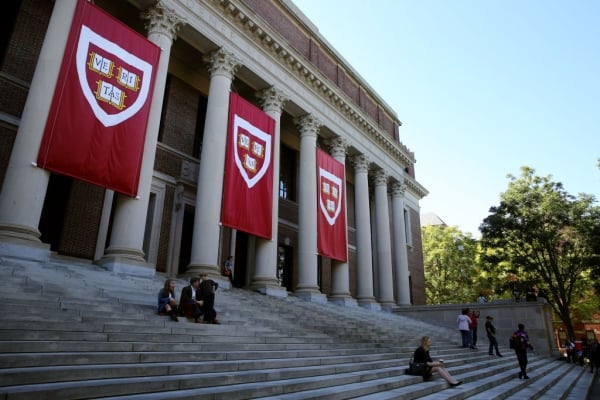
    The Trump administration has accused Harvard University officials of failing to comply with an ongoing civil rights investigation into alleged campus antisemitism, The Boston Globe reported.

    The U.S. Department of Health and Human Services said in a letter to Harvard president Alan Garber that it was referring the civil rights investigation to the U.S. Department of Justice, which it is permitted to do in cases where “compliance under Title VI cannot be obtained voluntarily.” 

    The letter, written by Paula Stannard, director of the HHS Office for Civil Rights, also referenced legal actions taken by Harvard, which has fought back against frozen federal research funding and other matters.

    “Rather than voluntarily comply with its obligations under Title VI, Harvard has chosen scorched-earth litigation against the Federal government,” Stannard wrote. “The parties’ several months’ engagement has been fruitless.”

    Harvard did not respond to a request for comment from Inside Higher Ed.

    The letter comes as Harvard is reportedly considering a $500 million settlement with the Trump administration to close current investigations and unfreeze $2 billion in federal research funding. Harvard is reportedly mulling a settlement even though a judge appears to view its case favorably.

    If Harvard settles, it will add to the list of wealthy and highly visible institutions that have yielded to the Trump administration’s demands in recent weeks. Columbia University agreed to far-reaching changes and a $221 million settlement to restore federal funding and close investigations into antisemitism on campus that stemmed from pro-Palestinian protests in 2024. Brown University also struck a deal with the Trump administration to restore $510 million in research funding, agreeing to various concessions but no payout to the federal government.

    As a potential settlement with the Trump administration looms, some Harvard faculty members sent a letter to the president and board, urging Garber to push back on what they called “the Trump administration’s assault on the vibrancy and inclusiveness of U.S. higher education.”

    Signed by multiple well-known scholars, the letter exhorted Garber not to “compromise core university and academic-freedom values that generations before us have worked to define and sustain,” and to resist ceding power to the federal government over hiring and admissions.

    Source link

  • Video Allegedly Showing U of Iowa Promoting DEI Sparks Probe

    Video Allegedly Showing U of Iowa Promoting DEI Sparks Probe

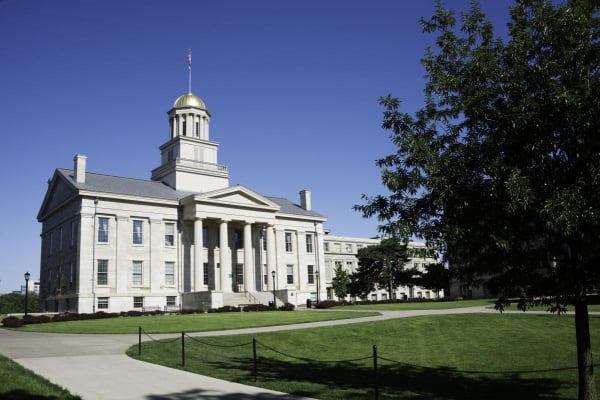
    Following a complaint by Iowa governor Kim Reynolds, the state attorney general’s office is investigating a video that allegedly shows a University of Iowa administrator saying the institution is still promoting diversity, equity and inclusion, despite the state’s ban.

    Fox News Digital published a story earlier this week based on what it called an “undercover video,” which shows a woman identified as Drea Tinoco, assistant director for leadership and student organization development at the university, saying, “On behalf of my office, we’re still going to talk about DEI, we’re still going to do all the DEI things.”

    The story doesn’t specify who recorded the video or whether they were working for Fox or another entity. The conservative group Accuracy in Media has released similar videos allegedly revealing employees skirting DEI prohibitions in other states, but AIM president Adam Guillette said the video isn’t from his organization.

    In the video, dated July 2, the woman also says, “DEI and student organizations and all of that, it is real, it still exists, we’re still doing DEI work.” Though it’s not in the clip, Fox also reported that Tinoco called Reynolds, a Republican, “cuckoo bananas.”

    Tinoco didn’t respond to Inside Higher Ed’s requests for comment Thursday. In an email, a university spokesperson didn’t confirm or deny whether the video is real or whether Tinoco is the person shown in it, saying, “Personnel matters are considered confidential.”

    Last year, Reynolds signed legislation banning DEI at public universities. In a statement Tuesday, Reynolds said, “I’m appalled by the remarks made in this video by a University of Iowa employee who blatantly admits to defying DEI restrictions I signed into law on May 9, 2024.”

    She filed a complaint with Attorney General Brenna Bird, another Republican, who announced her office is investigating. University president Barbara Wilson additionally told the Iowa Board of Regents Wednesday that her institution has “launched an immediate and comprehensive investigation.”

    Source link

  • Senate Appropriators Reject Trump’s Education Dept. Cuts

    Senate Appropriators Reject Trump’s Education Dept. Cuts

    Senate Republicans are planning to protect the Pell Grant program, keeping the maximum grant award at $7,395 for the coming academic year, despite the Trump administration’s proposal to lower it to $5,710.

    The rejection of Pell Grant cuts at a key committee markup Thursday is just the latest rebuke from congressional appropriators as lawmakers in both chambers have appeared wary of President Trump’s plans to shutter offices, gut programs and generally reshape the federal government.

    In addition to protecting $22.5 billion for Pell, the GOP also spared TRIO, campus childcare subsidies and numerous other programs that Trump had proposed zeroing out. It also set new staffing standards for the recently gutted Department of Education, increased funding for medical research by $400 million and rejected the National Institutes of Health’s attempt to cap indirect research cost reimbursements at 15 percent. The legislation also restricts other efforts at NIH to change how grants are awarded, though Democrats say “more needs to be done to protect NIH research programs.”

    Over all, the Department of Education is going to receive $79 billion and the NIH will get $48.7 billion. In comparison, Trump had requested $66.7 billion for ED and $27.5 billion for NIH.

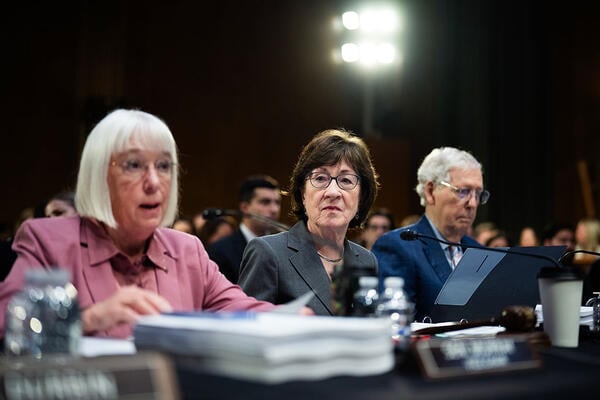
    Committee chair Sen. Susan Collins, a Maine Republican, said she was proud of the legislation that advanced Thursday, calling it a bipartisan effort to fund the health and education of American families. She noted that “the appropriations process is the key way that Congress carries out its constitutional responsibility for the power of the purse.”

    But Democrats, while overall supportive, noted that they’ve had to make a number of compromises already and warned that Trump could still attempt to make unilateral changes moving forward.

    “These are not the bills I would have written on my own, but nonetheless they represent serious bipartisan work to make some truly critical investments in our country and families’ future,” said Sen. Patty Murray, a Washington Democrat and ranking member of the committee. Still, she added, this is only half the battle. “The fact of the matter is we have an administration right now that is intent on ignoring Congress, breaking the law and doing everything it can without transparency to dismantle programs and agencies.”

    The Trump administration has repeatedly frozen or cut grant funding, largely declining to spend money that Congress appropriated—moves that Murray and others have decried as illegal. More recently, the administration waited weeks before sending critical funding to states that supports after-school programs, migrant education and adult education. About $7 billion was affected, and colleges had to scramble to find a way to fill the funding gaps before Trump’s Office of Management and Budget finally released the money last week. Meanwhile, colleges are still waiting for the Education Department to open up grant applications for millions in funds.

    At NIH, grant cancellations and other changes have slowed the flow of research funding to colleges. Earlier this week the administration briefly paused all new grant awards, infuriating congressional Democrats. Over all, since Trump took office, the biomedical research agency has cut more than 4,000 grants at 600 institutions totaling somewhere between $6.9 billion and $8.2 billion.

    Beyond the grant cuts, the Trump administration recently clawed back money that had been allocated to public broadcasting, using a legislative process called rescission. The president is expected to propose a second rescission package in the months to come, this time targeting education dollars. Democrats have warned that using rescissions to change the budget could endanger talks on fiscal year 2026 spending.

    So while higher ed lobbyists typically look to the Senate’s spending plan as the framework for what to expect in the final bill, Trump’s willingness to test the limits of executive power complicates the picture.

    Still, the Senate’s proposals for the NIH as well as the Education Department, which funds a number of programs at the previous year’s level, is a victory for advocates who spent months warning that Trump’s budget cuts would be devastating for students and research.

    “We are not surprised by what we’ve seen. The Senate often works more bipartisanly together, and that was reflected in the markup today,” said Emmanual Guillory, senior director of government relations at the American Council on Education. “In this political environment, flat funding is a win. It’s not ideal, but it is us being mindful of the current realities that we’re in and the financial constraints that we’re in, especially with the upcoming rescissions package that’s supposed to include education.”

    That said, Guillory noted that he’s bracing for deeper cuts from the House, which has yet to release its education and health spending proposals.

    “I could see the House having a bit more influence [than most years past], as they have had more influence so far this Congress,” he said.

    Seeking Guardrails

    Democrats did try to amend the bill in order to establish guardrails that would retroactively address Trump’s funding cuts and protect the fiscal year 2026 appropriations from a similar ambush.

    Sen. Dick Durbin, an Illinois Democrat, proposed reinstating all college grants frozen or retracted since Jan. 28, with the exception of those pulled due to financial malfeasance. He highlighted how, in Chicago, the cuts have halted infant heart defect research and then ran through a lengthy list of other medical projects affected in other senators’ districts.

    “This could happen to any of your states’ research centers. It could hurt any of your families,” he argued.

    Later, Sen. Chris Murphy of Connecticut, one of the few Democrats who did not support the bill, sought an inspector general report into whether the Department of Education’s civil rights office is properly following statutes when investigating discrimination complaints and issuing discipline.

    The Department of Education’s OCR, along with other agencies, has launched dozens of investigations into alleged civil rights violations at colleges and universities. Those inquiries haven’t followed the required statutory procedures, but colleges have lost funding and faced other consequences.

    Murphy proposed withholding OCR funding until the appropriations committee received the IG’s report.

    “My worry is simply that the president is going to ignore the will of Congress that is present in this legislation,” he said. “If this does become normalized—if the president of the United States gets to deny funds to universities because they don’t like political viewpoints of the student body or of the faculty—that is a Pandora’s box that is hard to ever again close.”

    Sen. Shelley Moore Capito, the West Virginia Republican who leads the education and health subcommittee, shot down both proposals, calling Murphy’s amendment “contrary to the point of the [OCR] office” and Durbin’s “too broad.”

    “I think every administration has the prerogative to implement new goals and priorities,” she said.

    Source link

  • Breaking the Bar: how can university graduates enter elite professions?

    Breaking the Bar: how can university graduates enter elite professions?

    This blog was authored by Charlotte Gleed, who is undertaking an internship at HEPI this summer. Charlotte is a BA History Graduate from Jesus College, Oxford and holds a Graduate Diploma in Law, supported by the Exhibition Scholarship from the Honourable Society of the Inner Temple. Following this internship, Charlotte will be studying an MPhil in Education: Knowledge, Power, and Politics at Emmanuel College, Cambridge.

    ‘Barristers: they make coffee, don’t they?’

    A family member said this to me recently. Not thinking much of it, I laughed and replied, ‘not quite, the ones who wear the wig and gown and bang the stick’. This conversation got me thinking: why is it that some professions seem so far removed from everyday life that not only does the possibility of entry appear distant, but what a person does in that profession is misunderstood? The English Bar falls in this category.

    The Bar is the profession of barristers, a set of specialist legal advocates who represent parties usually in courts or tribunals. The Bar has historically been a profession preserved for the elite. The requirement of high grades from top-ranked universities, together with financial instability during legal studies and in practice, compound this assumption. However, there can be an alternative narrative. As social mobility schemes arise, universities develop closer ties with the profession, and the availability of scholarships widen, there is a real opportunity to change the composition of the Bar.

    Fortunate to be a product of these changes, my journey to the Bar has highlighted three main obstacles for university graduates. First, the precarious financial situation. We are all aware that higher education of any form is expensive, even with government-backed student loans. However, further vocational study required for the Bar stretches student finances considerably. The cost of the Bar Vocational Course ranges from £12,640 to £20,220. Unless supported by family, scholarships and/or private bank loans, the costs can be both difficult to justify and even harder to deliver.

    Second, it is increasingly clear that a law degree alone is no longer sufficient. For students who complete an LLB or BA Jurisprudence, competition is so fierce that postgraduate study – a master’s or equivalent – is beneficial. For students who study a non-law undergraduate degree, the Graduate Diploma in Law (GDL) is necessary. The cost of the law conversion course, ranging from £7,150 to £13,590 dependent on region and university provider, exacerbates the gap between those who can afford the additional university costs and those who cannot.

    Third, the essence of the Inns of Court is strikingly akin to an Oxbridge college. Each aspiring and practising barrister across England and Wales chooses membership of one of four Inns: Middle Temple, Inner Temple, Lincoln’s Inn, and Gray’s Inn. This is both a blessing and a curse for university graduates. A blessing because its magic and mystery is something to aspire to; a curse because its majesty can be intimating and can feel exclusionary. One barristers chambers, Essex Court Chambers, have partnered with the Social Mobility Foundation to improve accessibility to the commercial Bar. This is a welcomed step. But more needs to be done.

    What is the solution? Postgraduate study needs investment. The aggregate £12,000 postgraduate loan available from the government goes some way. Yet, this amount falls short of most postgraduate course fees and does not include maintenance costs. If university is to be a true social leveller, access to more advanced levels of higher education must be supported – and funded. Furthermore, the Honourable Society of the Middle Temple and Inner Temple interview all applicants for both their GDL and Bar Course scholarships. This is a start. It is advantageous to students who have not attended prestigious schools or universities with a raft of academic prizes and extra-curriculars to be seen and heard. Interviews for all scholarship candidates is one way to level the playing field. Together with links between university careers services, student societies, and mentorship schemes, this could be an era of genuine collaboration between students, universities, and professions.

    Education pays. But it cannot pay if access to elite professions, and its required higher education courses, is hindered in the first place.

    Source link

  • The details behind the first national school voucher program

    The details behind the first national school voucher program

    After decades of trying, conservatives this year succeeded in creating the first national school voucher program.

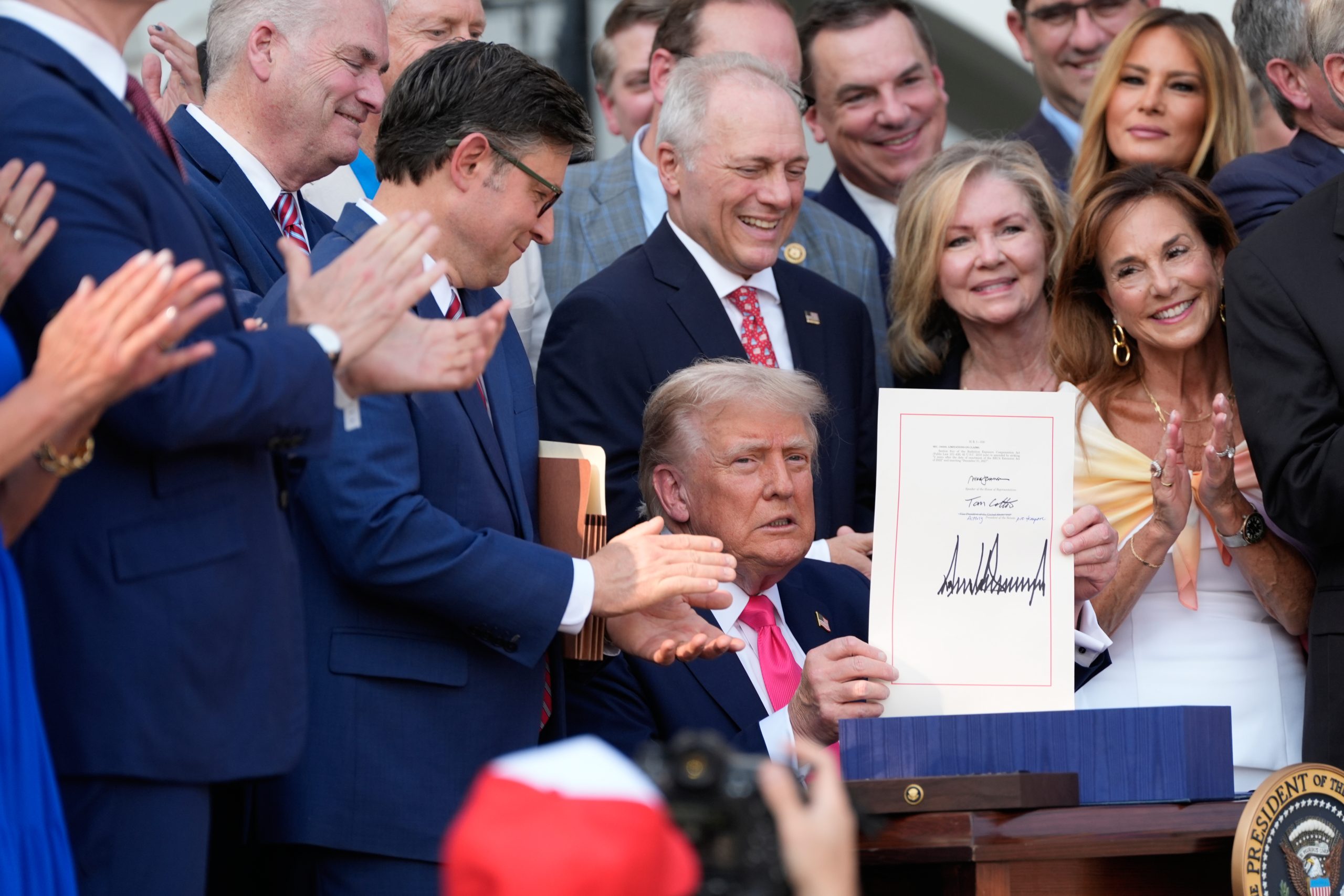
    The Republican megabill that President Donald Trump signed into law in July will establish new tax credit scholarships for families to use at private schools, including religious ones — a long-held goal of school privatization advocates who argue parents should get taxpayer support if they want to opt out of their neighborhood school.

    Under the “big, beautiful bill,” donors can receive dollar-for-dollar tax credits of up to $1,700 for contributions to scholarship-granting nonprofits. Those groups then distribute the money to families seeking help paying for private school, tutoring and other educational expenses. 

    The program, while significant, is less expansive than in earlier drafts of the legislation. Previous versions gave donors larger tax credits — a match up to $5,000 or 10 percent of their income, whichever is greater — and mandated that all states participate rather than allowing them to opt in. 

    Related: A lot goes on in classrooms from kindergarten to high school. Keep up with our free weekly newsletter on K-12 education.

    Here are 10 things to know about the program. If you have other questions or there’s more you’d like to know, write to us: [email protected].

    When does it start?

    Jan. 1, 2027. Families have until then to research where they might want to spend a scholarship — and if the school in mind even plans to accept one. Taxpayers who want to contribute to support the scholarships can do so beginning in late 2026.  

    How will the scholarships work?

    The law opens the door to churches, universities, education nonprofits, rotary clubs and potentially even public schools (more on that below) to accept and distribute donations for the program. These “scholarship-granting organizations,” or SGOs, can keep up to 10 percent of the donations for administrative costs.

    In some states with existing scholarship programs, families apply with a third-party contractor that works with eligible schools and selects students for awards. Other states allow religious groups and other nonprofits to create and manage their own scholarship funds. The federal bill gives states wide flexibility to make those sorts of decisions about how the program is administered, experts say.

    Who’s eligible for the scholarships?

    To qualify, students need to check these boxes: They must be eligible to attend a public school, their state must opt in to the program, and their families must earn no more than three times the area median income — a threshold that would include households with incomes nearing $500,000 in some parts of the United States.

    Students who already attend private school qualify, since they are eligible for public school, even if they don’t attend one. The scholarships also may cover home-schoolers. (Keep reading for more on that.)

    How much money will families receive? 

    While the bill set a $1,700 cap on how much individual donors can contribute through their taxes, it’s unclear whether it limits how much an individual student could collect in scholarships.

    In theory, a student could apply for several scholarships. An SGO might also offer a scholarship that reimburses a family for all costs associated with attending their preferred school. In states that already offer similar school choice programs, a student might be able to collect scholarships from both the new program and the existing state program. Still, the average cost of private school tuition is roughly $13,000, so even students who combine several scholarships may not receive enough to cover the full cost of attending.

    The Treasury Department is expected to issue regulations on the program, and we may not know these kinds of details until it does. 

    Related: Arizona gave families public money for private schools. Then private schools raised tuition

    What can the scholarship money be used for?

    Quite a lot. The legislation suggests that families could use the money not only to help pay for private school tuition, but also for room and board, services for students with disabilities, transportation, tutoring, and school supplies like books, computers and uniforms. 

    The rules may depend on the individual state and its definition of an “eligible school.” In some states, home schooling might qualify students for the scholarships, but in other states it might not, said Robert Enlow, president of EdChoice, a pro-school choice group.  

    It’s also possible that public schools could charge scholarship students — as some do with home-schoolers — for services like tutoring, special education or advanced courses. 

    So students can use the money at public schools? How would that work? 

    Yes, potentially. In some states, schools already charge activity or participation fees for non-enrolled students who want to join clubs and sports. Marguerite Roza, director of the Edunomics Lab at Georgetown University, said some states may write their own rules that allow schools to extend the menu of services they could charge for.

    Meanwhile, most school districts — roughly 4 in 5 — already partner with foundations that raise money to help students with transportation, school supplies and basic needs. Both Enlow and Roza said they expected nonprofits and districts to partner on finding ways to tap the federal scholarship dollars as well.

    “Imagine you could have a public school foundation going out and helping with transportation and books and computers and tutors and all sorts of stuff, right?” Enlow said. “The potential is huge.”

    Will all private schools accept the scholarships? 

    No, private schools are not required to accept the scholarships, and many states that offer school choice don’t require private schools to participate. Private schools generally can accept or reject a student for any reason, whether they have a scholarship or not.

    In Arizona, for example, the tax credit program provided scholarships to students at 348 schools last year. More than 400 private schools operated in the state as of 2022.

    Related: Tracking Trump: His actions to dismantle the Education Department, and more 

    Which states will participate?

    Roughly 21 states — including Arizona, Georgia and Montana — offer their own tax credit scholarships, according to the group EdChoice, so it’s expected they would opt into the federal program. Conservative lawmakers in North Carolina already introduced a bill to allow families there to take part in the federal scholarships. 

    If public schools can benefit too, even Democratic governors may consider joining the program, said Roza.

    “Ultimately if the state can open this to summer camp and tutoring, obviously there would be a lot of pressure to unlock so much money with this,” she said.

    How much will the scholarships cost the government?

    It depends on how many taxpayers claim the credit. 

    While an earlier version of the bill would have capped the tax credits at $10 billion a year, the final legislation contains no such limit — so the exact amount in lost revenue won’t be known until much later. That said, an analysis by the nonpartisan Joint Committee on Taxation found that the legislation would cost the Treasury up to $4 billion per year.

    Others think the cost will be higher. The Institute on Taxation and Economic Policy, a left-leaning research group, placed its projection closer to $51 billion, while Roza estimated the cost at $28 billion per year. Still, she hesitated to count that as a direct loss to K-12 funding. “It’s new money in the sense that it doesn’t go into or out of the federal pie,” Roza said.

    What’s been the reaction to the plan? 

    Critics, including teachers unions and many education experts, have been quick to raise alarms about the voucher program, arguing that it’s a handout for wealthy families and will harm public schools by reducing funding for them.

    “It’s the centerpiece of the Great American Heist — a privatization scheme wrapped in tax policy,” Denise Forte, president of the left-leaning nonprofit EdTrust, said at a hearing before the Senate Democratic Caucus in July. 

    Advocates for the separation of church and state worry about the program channeling money from government coffers to religious schools, while disability advocates note that private schools are not required to serve students with disabilities.

    Some supporters of school vouchers, meanwhile, wish the legislation had gone further.

    “This is a very positive program for taxpayers in America. You can help families get better education and claim a tax credit for it,” said EdChoice’s Enlow. “It’s going to benefit middle- and low-income families.” But he added, “It’s not as generous as we would like, which is universal.”

    Others are focused now on encouraging states to participate in the program. “The fight doesn’t end with the passing of the bill,” said Sydney Altfield, national director of Teach Coalition, which advocates for Jewish schools to get access to government funding. “States must opt into the program.”

    Contact staff writer Neal Morton at 212-678-8247, on Signal at nealmorton.99, or via email at [email protected].

    This story about school voucher programs was produced by The Hechinger Report, a nonprofit, independent news organization focused on inequality and innovation in education. Sign up for the Hechinger newsletter.

    The Hechinger Report provides in-depth, fact-based, unbiased reporting on education that is free to all readers. But that doesn’t mean it’s free to produce. Our work keeps educators and the public informed about pressing issues at schools and on campuses throughout the country. We tell the whole story, even when the details are inconvenient. Help us keep doing that.

    Join us today.

    Source link

  • The Collaborative AI Classroom: Teaching Students to Work With, Not Against, AI Tools – Faculty Focus

    The Collaborative AI Classroom: Teaching Students to Work With, Not Against, AI Tools – Faculty Focus

    Source link

  • The Collaborative AI Classroom: Teaching Students to Work With, Not Against, AI Tools – Faculty Focus

    The Collaborative AI Classroom: Teaching Students to Work With, Not Against, AI Tools – Faculty Focus

    Source link