Author: admin

  • Medr is embracing its collaborative role

    Medr is embracing its collaborative role

    “You have two ears, one mouth – use them in that proportion.”

    The words of my mother seem to have gained relevance and resonance for me, as I reflect at the end of my tenure as CEO responsible for overseeing the launch of Medr, the new tertiary funding and regulatory body in Wales.

    As we arrive at our first birthday as an organisation, my mother’s words ring true in the approach we have tried to nurture with partners to help tackle the challenges and embrace the opportunities facing the sector.

    And this is perhaps particularly true during the well-established perfect storm of headwinds facing our higher education institutions at present, prompting understandable deliberations and concern around staffing, provision and campus restructuring.

    Wonkhe readers will be well versed in the plethora of pressures facing even the most long-established and most renowned universities across the UK. Put simply, the pressures of increasing costs are currently not being met by an increase in income for too many, and our institutions in Wales are no different (further context and a Medr perspective were provided to the Senedd’s Children, Young People and Education Committee a few short weeks ago, if it’s of interest).

    For the long-term viability of the post 16 sector to thrive in Wales, finding strategic, joined-up solutions is imperative. As a regulator and funder and having engaged extensively with the sector since day one, our analysis is that no institution in Wales is at immediate risk of collapse, but that medium-term outcomes do cause us concern if well thought-through changes are not made.

    Beyond “competition with a smile”

    What’s also clear to us in Wales is that many of these pressures are also affecting other parts of the tertiary sector – local authorities, schools, further education colleges, apprenticeship providers, adult education providers as well as universities and everything in between.

    This, however, can create opportunities.

    Back to the words of my mother – “two ears and one mouth” – during our first year of operation as Medr, we have had to quickly get on top of the tertiary issues in Wales. In Stephen Covey’s words, we must “seek first to understand”. We must understand the extent and context of the challenges and why certain actions are being proposed. Through a genuine commitment to engaging with a range of stakeholders and considering how we can facilitate a culture of listening, learning and collaborating across the post-16 sector, we have a great opportunity to build on the solid foundations of a shared ambition and purpose to build resilience for the future.

    Being a regulator and a funder is not an end in itself. To be honest, I had underestimated the importance of our role in convening and facilitating conversations between different stakeholders whilst respecting institutional autonomy. Colleagues must be bored of me telling the story of an ex-colleague of mine who challenged me after a meeting when I talked about collaboration. He said:

    Do you mean collaboration? Or are you talking about competition with a smile?

    We’ve all been there! We smile and nod in a meeting when we talk about working together – and then go back to our respective ranches and nothing changes.

    However, if we genuinely place learner need ahead of institutional need, we have an opportunity to create a system that is better than the sum of its parts. Don’t get me wrong, as a former CEO of a post-16 provider, I’m fully aware of the accountability to a governing body and the need to protect the viability of the organisation. But I also acknowledge that I was probably more comfortable in exploring growth and new opportunities, rather than thinking about stopping some things we did because someone else was in a better place to provide that service to our community or region. Collaboration is also not an end in itself – there is no point in collaborating if it just appeases everybody but doesn’t improve the breadth or quality of provision for learners or improves the system as a whole.

    A course through the headwinds

    At Medr, we have tried to live our values and engage, listen and collaborate with the sector. For example, our first strategic plan has developed considerably through consultation. We have recently launched a consultation on our draft regulatory framework, a hugely important piece of work for the sector, and we will continue to listen throughout that process.

    What I hope shines through in that work, and which I equally hope isn’t lost in wider discussions around headwinds and pressures, is the positive everyday impact that all parts of the tertiary sector have on our learners and our communities. I have a huge respect for the learner focussed people who work in our wonderfully diverse post-16 sector. Developing that mutual respect amongst all parts of the sector is vital if we are to develop a better system in the future that can tackle some of the challenges, such as the numbers not in education, employment or training, and our desire to improve participation rates in higher levels of learning.

    This isn’t easy. If it was, we would have solved these challenges by now. It has taken decades to create these issues and they won’t be solved overnight. And true collaboration – not competition with a smile! – takes time to build trust, requires a great deal of commitment along with a good dollop of inspiring and tenacious leadership.

    Yes, it’s challenging – but therein lies opportunity for innovation. In my experience, when the going gets tough, leaders demonstrate two basic types of behaviour. They either sharpen the elbows and dig in and become even more competitive or they reach out to others and work collectively to find joined up solutions to problems. To achieve the latter, we need to look at ways we can remove the barriers to this approach. Get it right and we can build prosperous futures for our learners and the tertiary education system and for Wales.

    There may often be differing views on how best to achieve outcomes but by working together to identify challenges and opportunities, consulting and engaging in solution-based conversations that benefit our learners, we can and will overcome them. Nelson Mandela said that education is “the most powerful weapon you can use to change the world” – we are fortunate in Wales to have some brilliant people coming together to try to deliver that change for good.

    Indeed, the name Medr itself is not an acronym. It’s a Welsh word which roughly translated straddles ability, skill and capacity. It’s a name that acts as a reminder of what we’re here to achieve: to ensure all learners can access opportunities to learn new skills and expand their opportunities for the greater good.

    And, of course, that greater good extends beyond learners and their immediate surroundings. I continue to be impressed by the work many of our universities deliver through groundbreaking research and innovation. Research Excellence Framework recently recognised 89 per cent of Welsh research as internationally excellent or world leading in its impact. Successful recent spin-outs such as Draig Therapeutics are further examples of world-class research leading to significant impacts of R&I and serve as a reminder that our universities are critical to our economy, society and culture – both now and in the future.

    And we are very proud too of our commitment to the Welsh language. The legislation identifies the Coleg Cymraeg Cenedlaethol as the designated advisor to Medr on Welsh language delivery in the post-16 sector. Our two organisations have developed a strong working relationship and through engagement with the sector, we will deliver a national plan for Welsh language delivery.

    Reaching out

    All this can all only be successfully achieved by working together. It is easy to be a spectator sniping from the sidelines but we must focus on having the right people and systems in the arena to make positive collaborative change. Across the board we must think beyond borders – sectoral, governmental, regional, national and international – listening to and reaching out to others with similar challenges to us. I am heartened by the willingness we’ve seen across the tertiary sector to do just this.

    For our part we will continue to facilitate progress by working with stakeholders to understand risks and plans, provide support and challenge based on different situations, ensure governments are well-informed and understand the challenges and opportunities as early as possible – and a whole host besides. It’s both an opportunity and a duty to bring people together and think about how we can do things differently and how we can do things better.

    I’ll finish where I started, by talking about my Mam and my upbringing. Growing up in an area that would be described as “socially deprived”, and losing my Dad while still at primary school, it’s very clear to me now the difference a few key educational touchpoints made to my life. I was fortunate to have some teachers along my journey who could see something in me when I couldn’t see it myself. Medr wants to be part of ensuring that such positive educational experiences can be felt by all.

    Medr is celebrating its first birthday. We are new kids on the block. And as I hand over to the excellent James Owen, Medr’s new CEO, I recognise that we have launched at a particularly challenging time for the sector.

    But among all the noise around business resilience, longevity and political headwinds, it’s absolutely imperative that every conversation comes back to what is right for our learners, the ones who will determine our future successes or failures. Now the exciting bit begins. If we work together to get the system right for our learners – and that’s absolutely at the forefront of what we are trying to shape at Medr – the rest can and will stem from there.
    Source link

  • Justice Department threatens federal funding for colleges over DEI policies

    Justice Department threatens federal funding for colleges over DEI policies

    This audio is auto-generated. Please let us know if you have feedback.

    Dive Brief: 

    • The U.S. Department of Justice released guidance Wednesday that threatens to strip grant funding from colleges and other federally funded institutions over what the agency deems unlawful diversity, equity and inclusion practices. 
    • The agency’s memo targets a sweeping set of practices, including offering race-based scholarship programs, allowing transgender women to access bathrooms that correspond with their gender identity and having identity-based lounges or study spaces on campus — even if they are open to all. 
    • But the nine-page memo goes a step further, saying even neutral criteria — such as recruitment strategies targeting certain regions — could be deemed unlawful if the Justice Department determines they are chosen because of their demographic composition.

    Dive Insight: 

    The Justice Department’s memo comes after a federal judge temporarily blocked similar guidance from the U.S. Department of Education that broadly targeted diversity, equity and inclusion programs at federally funded colleges and K-12 schools. The order came in response to a lawsuit that alleged the guidance “radically upends” federal antidiscrimination laws. 

    The guidance from the Justice Department illustrates the major shift in how the agency under President Donald Trump approaches enforcement of civil rights laws, with officials now targeting programs that were often actually launched to fight systemic discrimination. 

    Earlier this month, the National Urban League declared a “state of emergency” for antidiscrimination policies, calling the Trump administration’s overhaul of the Justice Department’s enforcement priorities “an existential threat” to civil rights laws, according to The Associated Press. 

    Like the Education Department’s blocked guidance, the Justice Department’s new memo warns that government officials could pull federal funding from institutions that don’t comply. That threat comes at the same time the agency has ramped up investigations into colleges over their diversity initiatives and their responses to antisemitism on campus. 

    The DOJ memo contains examples of practices it lists as “unlawful” and says could lead to federal funding being revoked, as well as a list of recommendations, which it says are not mandatory, to avoid “legal pitfalls.”

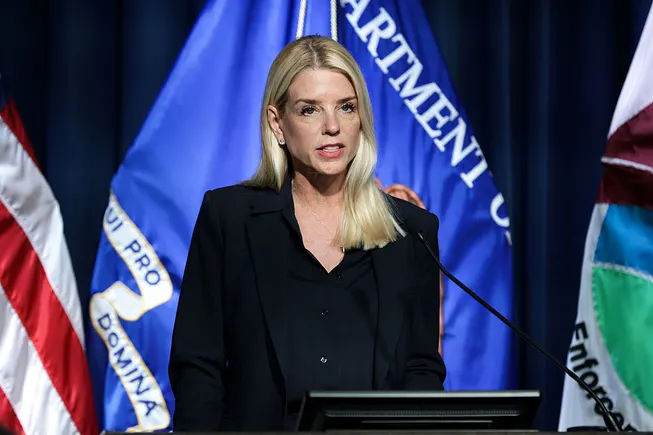
    “This Department of Justice will not stand by while recipients of federal funds engage in illegal discrimination,” U.S. Attorney General Pamela Bondi said in a Wednesday statement. “This guidance will ensure we are serving the American people and not ideological agendas.”

    As examples of unlawful practices, the agency highlighted race-based scholarships or programs, including mentorship programs or leadership initiatives reserved for members of certain racial groups. 

    The memo could upend admissions. It recommends colleges end programs “designed to achieve discriminatory outcomes” even if they have “facially neutral” criteria, such as targeting scholarships to certain regions to increase enrollment or participation among certain racial groups. 

    “Instead, use universally applicable criteria, such as academic merit or financial hardship, applied without regard to protected characteristics or demographic goals,” the memo said. 

    The memo also takes aim at what it describes as “unlawful proxies” for race and sex. As an example, the memo calls out universities that ask job applicants “to demonstrate ‘cultural competence,’ ‘lived experience,’ or ‘cross-cultural skills’ in ways that effectively evaluate candidates’ racial or ethnic backgrounds rather than objective qualifications.”

    The Justice Department also flagged diversity statements — which typically ask job or graduate student candidates to explain their experience and commitment to diversity and inclusion initiatives — as potentially unlawful if they advantage “those who discuss experiences intrinsically tied to protected characteristics.” The memo said the same of asking for statements from applicants about “obstacles they have overcome,” a common essay prompt for college applications. 

    State lawmakers have likewise targeted diversity statements, with many outlawing public colleges from requiring them in job or admission applications. 

    The memo also said failing to “maintain sex-separated athletic competitions and intimate spaces” could violate federal law. The Justice Department’s examples of those violations include allowing transgender women to use bathrooms, showers, locker rooms and dormitories designated for women, as well as allowing them to compete in women’s athletic events. 

    And it mentions college lounges or other spaces designated for specific groups, such as a “BIPOC-only study lounge.” 

    “Even if access is technically open to all, the identity-based focus creates a perception of segregation and may foster a hostile environment,” the memo stated. “This extends to any resource allocation — such as study spaces, computer labs, or event venues — that segregates access based on protected characteristics, even if intended to create ‘safe spaces.’”

    It also takes aim at diversity training, giving the example of requiring teachers at K-12 schools to complete a DEI training that includes statements such as “all white people are inherently privileged” or touching on “toxic masculinity.” 

    The memo says such trainings could violate civil rights laws “if they create a hostile environment or impose penalties for dissent in ways that result in discriminatory treatment.”

    Source link

  • Linda McMahon and the College Meltdown

    Linda McMahon and the College Meltdown

    July 2025 was not simply a busy month for the U.S. Department of Education—it was a deliberate and coordinated effort to reshape higher education in line with the political goals of the Trump administration. Under the leadership of Education Secretary Linda McMahon, the Department issued a torrent of investigations, policy changes, and legal maneuvers aimed at asserting control over universities and redefining the role of postsecondary education in American life.

    What emerged was not the repair of a broken system, but the acceleration of a political project: to narrow the mission of higher education, undermine its independence, and punish institutions that resist the administration’s agenda.

    A Month of Directives

    The month began with the Department entering a resolution agreement with the University of Pennsylvania over Title IX violations (July 1). By July 2, the administration had concluded a negotiated rulemaking session focused on reshaping the Public Service Loan Forgiveness program—signaling that student aid reforms would now be filtered through political priorities rather than bipartisan consensus.

    On July 4, the One, Big, Beautiful Bill Act was signed into law. This sweeping legislation gave the administration a mandate to implement provisions on accreditation, federal aid restrictions, civil rights compliance, and so-called “viewpoint neutrality.” Within two weeks, McMahon’s team was already implementing key parts of the bill, using it to alter the rules that govern financial aid eligibility and institutional recognition.

    “Civil Rights” Enforcement as a Political Strategy

    Throughout the month, the Department launched a wave of investigations under Title VI and Title IX. But the choice of targets raised concerns. Rather than focus on systemic discrimination or long-standing legal violations, the Department directed its attention toward cases that aligned with conservative cultural concerns.

    • On July 8, an investigation was opened into the Connetquot Central School District after it banned a Native American logo.

    • On July 10, George Mason University became the subject of a Title VI probe.

    • On July 23, five universities were flagged for offering scholarships that allegedly favored foreign-born students.

    • By July 25, five Northern Virginia school districts were found in violation of Title IX.

    Harvard, Columbia, Duke, the University of Michigan, and Brown University were all pulled into scrutiny, with Columbia agreeing to pay $200 million and submit to new data-reporting requirements. These actions may appear to be standard enforcement but taken together they reflect a pattern of choosing high-profile or politically charged institutions as symbolic examples.

    The use of federal compliance tools to pressure institutions seen as ideological opponents is not unprecedented—but under McMahon, it has become routine.

    Policy Realignment and Workforce Redirection

    On July 10, the Department announced the termination of federal aid for undocumented students, marking a sharp reversal from past practices. Just five days later, the Department entered into a new partnership with the Department of Labor to promote workforce training, part of a longer-term effort to reorient higher education toward narrow economic outcomes rather than liberal arts or civic development.

    While such initiatives are framed as “efficiency” or “innovation,” the underlying message is clear: colleges that do not align themselves with federal job-training goals or cultural expectations may find their access to funding, recognition, and legal protections limited.

    Restructuring the System

    The Supreme Court’s decision on July 14 to permit a reduction in federal staffing has further empowered the Department to cut or replace internal personnel. By July 24, two new negotiated rulemaking committees were established, tasked with translating the One, Big, Beautiful Bill into enforceable rules. These committees will likely define the next phase of McMahon’s agenda—on issues like accreditation, financial eligibility, foreign influence, and institutional autonomy.

    At the state level, the Department approved Missouri’s new pilot assessment program on July 31, continuing a pattern of promoting alternatives to standardized federal oversight. Meanwhile, state education officials were encouraged (July 29) to request waivers from burdensome federal requirements—an invitation to bypass regulations established under previous administrations.

    What This Means for Higher Education

    The July timeline reflects not just a burst of administrative activity, but a broader strategy to centralize decision-making power and reshape the ideological landscape of U.S. higher education. The Department has moved away from serving as a neutral enforcer of civil rights and federal law, and toward acting as a gatekeeper for cultural and political conformity.

    Colleges that emphasize diversity, global engagement, or progressive research are increasingly viewed with suspicion. Those that fail to meet the administration’s evolving definition of compliance may face costly investigations, public shaming, or the loss of federal support.

    The term “College Meltdown” once referred to financial instability, enrollment declines, and the erosion of public trust. Under Linda McMahon, it now also refers to a deliberate restructuring of the postsecondary system—where ideological alignment may determine institutional survival as much as financial solvency.

    Sources:

    • U.S. Department of Education, July 2025 public statements and press releases

    • One, Big, Beautiful Bill Act, signed July 4, 2025

    • Columbia University settlement, July 23, 2025

    • Supreme Court ruling on federal workforce reductions, July 14, 2025

    • Negotiated Rulemaking updates from the Office of Postsecondary Education

    • Brown University agreement with the Department of Education, July 30, 2025

    Source link

  • Senate committee rejects K-12 grant consolidations in FY 26 bill

    Senate committee rejects K-12 grant consolidations in FY 26 bill

    This audio is auto-generated. Please let us know if you have feedback.

    The U.S. Senate Appropriations Committee on Thursday approved a bipartisan fiscal year 2026 K-12 education bill that would prevent the executive branch from removing Title I and special education programs to agencies outside the U.S. Department of Education. The legislation also rejects several other funding reforms proposed by the Trump administration.

    The bill would require timely awarding of formula grants by the Education Department to states and districts. For several weeks in July, the Education Department and the White House’s Office of Management and Budget withheld $6.2 billion in grant funding that states and districts expected access to starting July 1.

    That funding at pre-approved FY 2025 spending levels was released after the Trump administration conducted a “programmatic review” and added “guardrails” to ensure the funds would not violate executive orders or administration policy, a senior administration official at OMB told K-12 Dive in an email July 25.

    Educators, parents, education organizations, and Republican and Democratic lawmakers had pressured the administration to make the funds available, citing that the disruption in funds was causing school program cuts, canceled contracts and staff layoffs. 

    In total, the Senate Appropriations Committee recommends funding the Education Department in FY 26 at $79 billion, according to the bill text. That’s $12.3 billion more than President Donald Trump’s proposal of $66.7 billion. In the current fiscal year, the Education Department is funded at $78.7 billion. 

    “The bill also supports families by investing in education and affordable child care, which promotes financial stability for working parents and benefits our economy,” said Appropriations Committee Chair Sen. Susan Collins, R-Maine.

    The proposed education budget — which was included in funding legislation for the U.S. Departments of Labor, Health and Human Services, and related agencies — passed the committee in a 26-3 vote. 

    “Our bills reject devastating cuts — and reject many of this administration’s absurd proposals — like dismantling the Department of Education,” said Sen. Patty Murray, D-Wash., vice chair of the Senate Appropriations Committee, in her opening remarks. 

    “We all know President Trump cannot dismantle the Department of Education or ship education programs to other agencies. Authorizing laws prevent that. Appropriations laws prevent that,” Murray said. 

    Trump has said he wants to reduce the size and scope of the federal government and give states and localities more fiscal decision-making authority while reducing bureaucracy. 

    In March, Trump signed an executive order to shutter the Education Department to the “maximum extent appropriate.” Congress, however, would need to approve the closing of the agency.

    Maintaining separate formula grants

    The Trump administration’s budget proposed a new K-12 Simplified Funding Program that would merge 18 current competitive formula funding grant programs into one $2 billion formula grant program. The administration said the SFP would spur innovation and give states more spending flexibility and decision-making power.

    The Senate Appropriation Committee instead rejected that plan by keeping the formula grants separate. The Senate plan would provide a $50 million increase over FY 2025 spending for both Title I-A funding for low-income schools and districts, and for special education services under the Individuals with Disabilities Education Act.

    The bill would maintain current spending levels, except for a few reductions, across other K-12 formula and competitive grant programs targeting improvements in teaching and learning, according to a bill summary from Murray’s office. 

    Other notable spending proposals from the Senate Appropriations Committee FY 26 bill include:

    • The Office for Civil Rights would maintain level spending at $140 million.
    • The Institute of Education Sciences would be funded at $793 million, level with the FY 25 budget. 
    • Title I and IDEA would be funded at $18.5 billion and $15.2 billion, respectively. The two grant programs make up the largest share of funding for K-12 at the Education Department.
    • Under the HHS portion of the legislation, the committee recommends increasing funding for the early childhood learning programs Head Start and the Child Care and Community Block grant by $85 million each to $12.4 billion and $8.8 billion, respectively. 

    The Senate Appropriations bill will now be considered by the House and full Senate. FY 26 starts Oct. 1.

    Source link

  • Penny Schwinn Drops Out of the Running for Ed Department’s Deputy Role – The 74

    Penny Schwinn Drops Out of the Running for Ed Department’s Deputy Role – The 74

    Updated

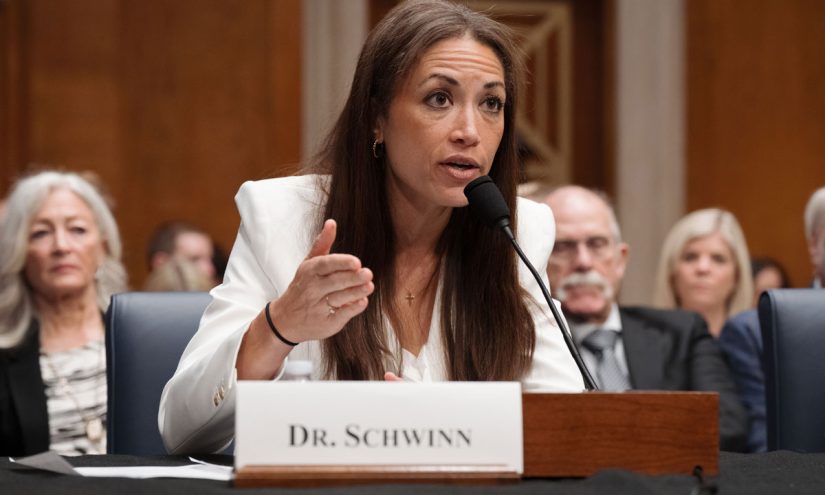
    Penny Schwinn, in line to serve as second in command of the U.S. Department of Education, has withdrawn from the nomination, Education Secretary Linda McMahon announced Thursday.

    Instead, the former Tennessee education commissioner will take on a different role for the department.

    “I am grateful to Dr. Schwinn for her commitment to serving students, families, and educators across the nation,” McMahon said in a statement. “Penny is a brilliant education mind and I look forward to continuing working with her as my chief strategist to make education great again.”

    Schwinn, in a statement, said she gave the decision “thoughtful consideration” and said she will  “remain committed to protecting kids, raising achievement and expanding opportunity  —  my lifelong mission and north star.”

    Considered a champion for improving reading outcomes and high-dosage tutoring, Schwinn was among President Donald Trump’s early picks for department posts. Many perceived her as a more bipartisan choice than others joining the administration, but among Tennessee conservatives, many who felt she was too liberal, opposition to her nomination was strong.

    The timing of Schwinn’s withdrawal couldn’t be worse, according to some conservatives. 

    “Her decision to remove herself from consideration to become deputy secretary hurts students, educators, and the Trump administration,” said Jim Blew, co-founder of the Defense of Freedom Institute, a think tank. “Secretary McMahon has been charged by Congress and the president with huge tasks under the One Big Beautiful Bill and several urgent executive orders.”

    As head of the Education Department, McMahon is striving to turn more authority over education to the states. It’s now unclear who will step into the deputy position and take the lead on the state’s requests for more flexibility over education funding. At least two states, Iowa and Oklahoma, have already submitted requests for block grants, and Indiana is currently gathering comments from the public in preparation for a similar proposal. Kirsten Baesler, North Dakota’s long-time education chief, is currently awaiting confirmation to be assistant secretary for elementary and secondary education at the department. In February, she joined 11 other GOP chiefs in asking McMahon for greater freedom to direct education funds toward state-level needs.

    Controversies and questions over Schwinn’s conservative qualifications have followed her for years. Far-right groups, including Moms for Liberty, said her past support for equity initiatives, like hiring more teachers of color, was evidence that she was not a good fit for an administration determined to eliminate such programs. Others remained angry over Schwinn’s pandemic-era plan to conduct “well-being” home visits. Even though she scrapped the plan, parents and members of the legislature considered it an example of government overreach.

    More recently, Steve Gill, a conservative commentator in Tennessee, reported that while she was deputy superintendent of the Texas Education Agency, Schwinn recommended individuals who advocate for comprehensive sex education, including abortion rights, to advise the state on health curriculum. 

    Gill told The 74 he shared his TriStar Daily article about her stance on these issues with Tennessee Sens. Marsha Blackburn and Bill Hagerty, as well as the state’s congressional delegation. Blackburn, who is expected to run for governor next year, was considered a possible no vote for Schwinn.

    According to Gill, Blackburn’s office “has been working tirelessly behind the scenes with the White House, Secretary Linda McMahon and Majority Leader [John] Thune to block the confirmation.”

    But Madi Biedermann, spokeswoman for the department, said the agency “strongly disagrees with that characterization.”

    Republican Sen. Marsha Blackburn from Tennessee was expected to vote no on Penny Schwinn’s confirmation. (Anna Moneymaker/Getty Images)

    Blew said it’s unfortunate that politics got in the way, noting that Schwinn’s experience in both blue and red states would have brought valuable expertise to the Ed Department role. In addition to her jobs in Tennessee and Texas, Schwinn founded a charter school in Sacramento and also served in the Delaware Department of Education.

    “It’s sad that a handful of demagogues are standing in the way of giving Secretary McMahon the team she needs to succeed,” he said.

    Others praised Schwinn’s record of prioritizing the science of reading in Tennessee schools and directing COVID relief funds toward tutoring.

    “This is a setback for all who want to see Washington slashing red tape, advancing literacy and fighting for common sense values,” said Rick Hess, director of education policy studies at the conservative American Enterprise Institute.

    For some critics, Schwinn’s business ventures since leaving the top spot in Tennessee two years ago raised questions as she waited to appear before the Senate education committee. 

    In June, a day ahead of her joint hearing with three other nominees, The 74 reported that shortly after Trump tapped her for the job, she registered a new education consulting business in Florida, New Horizon BluePrint Group, with a longtime colleague. Before Schwinn filed ethics paperwork with the federal government, her sister replaced her as a manager on the business. 

    When a reporter from The 74 asked questions about the new project, Donald Fennoy, her colleague and a former superintendent of the Palm Beach County School District, dissolved the business.

    Ethics experts say candidates for an administration post often distance themselves from new business entanglements to avoid any appearance of a conflict, but Schwinn has faced accusations of poor judgment before.

    While she was in Texas, the state agency signed a $4.4 million no-bid contract in 2017 with a software company where she had a “professional relationship” with a subcontractor, according to a state audit. And in Tennessee, the education agency made an $8 million deal in 2021 with TNTP, a teacher training organization where her husband Paul Schwinn was employed at the time. Lawmakers considered the deal a “huge conflict.

    “Ethics was a crucial concern,” said J.C. Bowman, executive director and CEO of Professional Educators of Tennessee, a non-union organization. He was among those who sent letters to the Senate, asking them to remove her from consideration. “Her personal business interests and possible conflicts could potentially influence educational decisions in ways that many found difficult to overlook.”

    Clarification: An earlier version of this story mischaracterized the role Penny Schwinn will take on in lieu of serving as the deputy education secretary. Schwinn will be taking on an advisory role at the Education Department.


    Get stories like these delivered straight to your inbox. Sign up for The 74 Newsletter

    Source link

  • How will the India-UK Vision 2035 impact education?

    How will the India-UK Vision 2035 impact education?

    The India–United Kingdom Comprehensive Economic and Trade Agreement (CETA), negotiations for which began in January 2022, was finalised on July 24, with UK Prime Minister Keir Starmer and Indian Prime Minister Narendra Modi calling it a ‘step-change’ in bilateral relations. 

    While the trade deal covers a wide range of areas, including tariff reductions, market access, mobility, and investment protection, aimed at delivering a £4.8bn annual boost to the UK economy and an estimated USD $9-10bn in export growth, the two Prime Ministers also endorsed the India-UK Vision 2035, “reaffirming their shared commitment to unlocking the full potential of a revitalised partnership”.

    Although technology, innovation, defence, and climate action are key pillars of India-UK cooperation under the Vision 2035 framework, education remains central to the shared goal of developing a skilled, future-ready talent pool to tackle global challenges and drive a sustainable future, according to a policy statement released alongside the FTA signing.

    In a first, both countries are launching an annual ministerial India-UK Education Dialogue, which will include reviews of mutually recognised qualifications and knowledge-sharing through joint participation in platforms such as the UK’s Education World Forum and India’s National Education Policy initiatives. 

    The launch of the ministerial dialogue also comes as UK universities increasingly recognise the potential of establishing academic and research-focused branch campuses in India.

    Just this Tuesday, the University of Bristol joined a growing list of UK institutions that have received approval to open campuses in India under the University Grants Commission’s Foreign Higher Educational Institutions (FHEI) regulations.

    Bristol’s Mumbai campus, slated to launch in Summer 2026, will offer undergraduate and postgraduate programs in data science, economics, finance and investment, immersive arts, and financial technology.

    Once operational, Bristol, ranked 51st globally, will become the highest-ranked British university to establish a campus in India, surpassing the University of Southampton, which launched its Gurugram campus earlier this month with classes beginning this August.

    Though Modi has welcomed the establishment of British campuses in India, calling it a “new chapter in the education sector of both countries”, some UK universities are facing flak at home “for seeking fortunes in India” amid ongoing financial woes and domestic job cuts.

    However, with universities like Bristol positioning their India campus as a hub for students, researchers, and industry to shape a better future, the Vision 2035 framework also underscores the India-UK Green Skills Partnership, an initiative focused on equipping young people in both countries with future-ready skills.

    The partnership aims to bridge skill gaps and enable joint initiatives, such as centres of excellence, climate-focused ventures, and courses and certifications in areas such as sustainability. 

    Moreover, the Vision 2035 framework also “encourages exchange and understanding among youth and students” to strengthen the success of existing initiatives like the Young Professionals Scheme (YPS) and the Study India Programme.

    While the YPS, launched in February 2023, is designed as a reciprocal visa scheme enabling British and Indian citizens aged 18-30 to live, work, travel, and study in each other’s country for up to two years, it has so far been largely one-sided. 

    Over 2,100 visas were issued to Indian nationals in 2023, while no such data is available for UK nationals going to India – suggesting participation has been minimal.

    But on the educational front, with UK universities setting up campuses in India and more exchange opportunities emerging, British students may also be encouraged to study in the South Asian country, Alison Barrett, country director India at the British Council, said in a recent interview with Financial Express.

    Once the FTA is ratified, the responsibility will shift to business organisations, institutions, and industry leaders to bring it to life
    Amarjit Singh, India Business Group

    Furthermore, a recent article by Bhawna Kumar, Acumen’s director of TNE and institutional partnerships, and Nikunj Agarwal, the company’s consultant in research and TNE, highlighted the pivotal role of India’s National Education Policy in shaping the FTA and the Vision 2035. 

    “Chapter 8B of the FTA (UK Schedule of Commitments) places no restriction on UK providers offering higher education services (CPC 923) in India. This opens doors for UK universities to expand through various TNE models such as joint degrees, dual degrees, and campus partnerships,” they noted, citing the example of University of Birmingham’s joint master’s programs with IIT Madras in Data Science and Artificial Intelligence, and Sustainable Energy Systems, as a key example. 

    “Chapter 14 of the FTA aligns closely, promoting joint R&D, researcher exchanges, and institutional partnerships in areas like digital innovation, clean energy, agriculture, and healthcare mirroring NEP’s multidisciplinary agenda,” they added. 

    While the Vision 2035 framework appears robust on paper, the authors point out several implementation challenges that remain pressing, chief among them being regulatory alignment, visa bottlenecks, and the slow pace of progress on mutual recognition agreements. 

    “Establishing a Joint Education and Skills Council, co-chaired by senior officials from both countries, would institutionalise cooperation, monitor delivery, and resolve bottlenecks in real time,” they suggested. 

    While the trade deal does not explicitly mention international students, CETA is expected to broaden “high-quality employment pathways” for young Indians by easing access to the services market and facilitating short-term mobility for skilled talent across sectors such as IT, healthcare, finance, and the creative industries. 

    Each year, up to 1,800 Indian chefs, yoga instructors, and classical musicians would be able to work in the UK temporarily under CETA. 

    Additionally, Indian workers will benefit from the Double Contribution Convention (DCC), which will exempt them and their employers from UK National Insurance contributions for up to three years.

    Will CETA stand the test of time in delivering benefits to students and professionals? Amarjit Singh, CEO, India Business Group, believes it can but only with a collaborative approach to ensure its long-term success.

    “The UK-India partnership is respected across party lines. While the 2030 Roadmap was negotiated last year, the framework has been in the making for nearly a decade. There is broad consensus not to jeopardize this progress,” Singh told The PIE News. 

    Though CETA has been signed by both countries, it still requires ratification by their respective parliaments, a process expected to take another six to 12 months.

    “Once the FTA is ratified, the responsibility will shift to business organisations, institutions, and industry leaders to bring it to life. That’s where we need more awareness, active engagement, and a bit of hand-holding to realise its full potential.” 

    Source link

  • IRCC adds officer decision notes to visa refusals

    IRCC adds officer decision notes to visa refusals

    Announcing the news on July 29, Immigration, Refugees and Citizenship Canada (IRCC) said the move supported its “commitment to… transparency” and, in theory, has been hailed as welcome news for prospective students, institutions and representatives.  

    “This is a welcome step that many of us in the sector have long advocated, however how it is actually implemented remains to be seen,” director of global engagement at the University of British Columbia, Philipp Reichert, told The PIE News.  

    The move is intended to provide greater transparency and clarity in IRCC’s decision-making, giving applicants a better understanding of the reasons for their visa refusal, and reducing the need to submit Access to Information Requests (ATIR) or file Judicial Reviews challenging visa decisions.  

    And yet, “the real test will be whether these officer decision notes provide meaningful detail, rather than generic statement, to support informed reapplications”, said Reichert.  

    Given the frustration of applicants and representatives who previously received template refusal letters, Canadian immigration lawyer Will Tao said it was “largely justifiable” that colleagues had generally reacted positively to the news.  

    However, heeding caution, Tao raised concerns “that having letters which provide only the summary of the final decision, the ‘last entry notes’ so to speak, may not move us forward very much”.

    Just two days into the new policy, early examples of IRCC decision notes are already circulating among educators and immigration lawyers, with Reichert calling them “disappointingly brief and surface-level”. 

    Stakeholders have stressed that the policy will only be effective if decision notes meaningfully explain how an officer reached their conclusion. “Transparency without clarity risks being a missed opportunity,” warned Reichert. 

    In the policy’s early phase, decision notes are being provided with visa refusal letters for study permits, work permits, visitor visas and extensions, with more application types to be added over time.

    The change comes amid rising sector concerns over the falling study permit approval rate which dropped from 60% in 2023 to 48% in 2024, meaning half of all prospective international students were denied entry to Canadian institutions last year.  

    What’s more, the declining approval rate comes as the pool of applicants is shrinking due to the federal cap on international students – a trend that has surprised some stakeholders who had expected the applicant pool to have become stronger.  

    As approval rates have fallen, a growing number of international students are relying on information requests to obtain basic information about the reasons for refusal, as well as appealing the decision through judicial reviews.  

    If implemented correctly, clear officer decision notes could reduce the number of ATIP requests and judicial reviews by addressing some of the uncertainty that drives these decisions.  

    Superficial or templated notes are unlikely to make a significant difference to JR volumes

    Philipp Reichert, University of British Columbia

    Not only would this make for a fairer process, but it would also lower the administrative burden and costs on the IRCC system and “create a smoother experience for everyone involved”, noted Reichert.  

    “However, this will depend heavily on the quality of the information provided. Superficial or templated notes are unlikely to make a significant difference to Judicial Review volumes,” said Reichert.  

    Based on initial examples, Tao said the notes so far had provided “merely the same boilerplate language” except without the disclosure of the use of Chinook (the IRCC’s software system), triage and timestamp information, which, he warned, would make it difficult to uncover bulk decision-making.  

    At the same time, commentators have highlighted that it is still “early days”, with Tao suggesting that the use of tools including IRCC GPT could drive more case-specific refusal reasons over time. 

    Notably, the change comes as the IRCC is planning to de-platform its case management system (GCMS) altogether, meaning that the officer notes could be all that applicants can access in the new Digital Platform Modernisation, ‘DPM 3’, due to be rolled out across IRCC’s temporary resident visa program next year.  

    Though until that happens: “my clients will likely still need to file ATIPs and also judicial review decisions telling the court full reasons were not received,” said Tao.  

    Source link

  • Sonia De La Torre | Diverse: Issues In Higher Education

    Sonia De La Torre | Diverse: Issues In Higher Education

    Dr. Sonia De La Torre Sonia De La Torre has been named Vice President of Student Services at Fullerton College.

    De La Torre most recently served as Dean of Student Equity at Long Beach City College. She previously served as the Associate Dean of Student Support Services and Director of Student Success and Support Services at Long Beach City College. Prior to her tenure in the California Community College system, she held leadership roles in student affairs at Scripps College and in academic support within the University of California system.

    De La Torre holds a Bachelors of Arts degree from University of California, Davis, a Master of Science degree in Educational Counseling and Guidance from California State University, San Bernardino and a Doctorate in Educational Leadership from California State University, Long Beach. 

    Source link

  • Visa Processing Delays Could Cost U.S. Universities $7 Billion and 60,000 Jobs This Fall

    Visa Processing Delays Could Cost U.S. Universities $7 Billion and 60,000 Jobs This Fall

    Recent disruptions to student visa processing could trigger a 30-40% decline in new international student enrollment this fall, potentially costing the U.S. economy $7 billion and more than 60,000 jobs, according to a new analysis by NAFSA: Association of International Educators and JB International.

    The preliminary projections, based on SEVIS and State Department data, paint a stark picture for higher education institutions that have come to rely heavily on international students for both revenue and academic diversity. The analysis predicts an overall 15% drop in international enrollment for the 2025-26 academic year, which would reverse years of steady growth in this critical sector.

    “This analysis, the first to calculate the potential economic impact of fewer international students on cities and towns across the country, should serve as a clarion call to the State Department that it must act,” said Dr. Fanta Aw, executive director and CEO of NAFSA. “The immediate economic losses projected here are just the tip of the iceberg.”

    The projected decline stems from a confluence of policy changes and administrative challenges that have created significant barriers for prospective international students:

    Visa Interview Suspension: Between May 27 and June 18, 2025, student visa interviews were paused during the peak issuance season—precisely when students needed to secure visas for fall enrollment. When interviews resumed on June 18, consulates received a directive to implement new social media vetting protocols within five days, but with minimal guidance.

    Appointment Bottlenecks: Reports indicate limited or no visa appointment availability in key countries including India, China, Nigeria, and Japan. India and China alone represent the top two sources of international students to the United States, while Nigeria ranks seventh and Japan 13th among sending countries.

    Declining Visa Issuance: F-1 student visa issuance dropped 12% from January to April 2025 and plummeted 22% in May 2025 compared to the same period in 2024. While June 2025 data has not been published, the analysis suggests a possible 80-90% decrease based on the identified disruptions.

    Travel Restrictions: A June 4, 2025 executive order imposed restrictions on nationals from 19 countries, with reports suggesting another 36 countries could be added. These restrictions alone threaten $3 billion in annual economic contributions and more than 25,000 American jobs.

    The economic implications extend far beyond university campuses. International students contributed $46.1 billion to the U.S. economy in 2024-25 and supported nearly 400,000 jobs across various sectors including housing, dining, retail, and transportation.

    The projected 15% enrollment decline would reduce international student economic contributions to $39.2 billion in 2025-26, down from an expected $46.1 billion. This represents not just a loss to individual institutions, but to entire communities that have built economic ecosystems around international education.

    “Without significant recovery in visa issuance in July and August, up to 150,000 fewer students may arrive this fall,” the report warns, highlighting the narrow window remaining for policy corrections.

    Beyond immediate economic impacts, education leaders worry about long-term consequences for American higher education’s global competitiveness. International students contribute to research innovation, provide diverse perspectives in classrooms, and often remain in the United States after graduation, filling critical roles in STEM fields and other high-demand sectors.

    The timing is particularly concerning given increased competition from other English-speaking countries like Canada, Australia, and the United Kingdom, which have positioned themselves as more welcoming alternatives for international students.

    To mitigate what NAFSA calls a “devastating outcome,” the organization is urging Congress to direct the State Department to take two immediate actions:

    1. Provide expedited visa appointments and processing for all F-1 and M-1 students and J-1 exchange visitor visa applicants
    2. Exempt F and M students as well as J exchange visitors from current travel restrictions affecting nationals from 19 countries, while maintaining required background checks and vetting

    The report argues that these policy changes could help institutions avoid the projected enrollment cliff and preserve the economic benefits that international students bring to American communities.

    For institutions planning fall enrollment, the report suggests the need for contingency planning and advocacy efforts to address visa processing challenges. With the traditional summer months representing the final opportunity for students to secure visas for fall enrollment, time is running short for policy interventions.


    Source link

  • Black Women Reach Record State Legislative Representation Despite Persistent Gaps at Higher Levels

    Black Women Reach Record State Legislative Representation Despite Persistent Gaps at Higher Levels

    Black women achieved record-high representation in state legislatures and made historic gains in the U.S. Senate in 2025, according to a new report tracking their political progress over the past decade.

    Senators Lisa Blunt Rochester of Delaware and Angela Alsobrooks of Maryland.The “Black Women in American Politics 2025” report, released by Higher Heights Leadership Fund and the Center for American Women and Politics at Rutgers University, documents significant advances for Black women in elected office while highlighting continued underrepresentation at the highest levels of government.

    Black women now hold 401 state legislative seats nationwide, representing 5.4% of all state legislators and 16.2% of all women state legislators. This marks a 67.1% increase from 240 seats in 2014, when the organizations began tracking these statistics.

    The most dramatic change occurred in the U.S. Senate, where two Black women now serve simultaneously for the first time in American history. Angela Alsobrooks of Maryland and Lisa Blunt Rochester of Delaware both won open seats in the 2024 election, doubling Black women’s representation in the upper chamber.

    “This year also marks the first time in history that two Black women serve together in the United States Senate,” Alsobrooks and Blunt Rochester wrote in the report’s foreword. “That milestone is not a coincidence; it’s a culmination. It’s the result of investments made, barriers challenged, and generations of Black women who refused to be sidelined.”

    At the congressional level, 29 Black women currently serve as voting members, including 27 in the House and two in the Senate. This represents nearly double the 15 Black women who served in Congress when tracking began in 2014. All current Black congresswomen are Democrats except for the two senators.

    The 2024 election cycle was particularly significant because Vice President Kamala Harris became the first Black woman to head a major-party presidential ticket. Though Harris lost the election, her 107-day campaign raised $81 million in its first 24 hours and nearly doubled Democratic voter enthusiasm, according to the report.

    Black women also made notable gains in municipal leadership. Three new Black women became mayors of major cities: Cherelle Parker in Philadelphia, Sharon Tucker in Fort Wayne, and Barbara Lee in Oakland. Eight Black women now serve as mayors of the nation’s 100 most populous cities, matching their proportion of the U.S. population.

    However, significant representation gaps persist at higher levels. No Black woman has ever served as governor, and Black women remain underrepresented in statewide executive offices. Currently, 10 Black women serve in such positions nationwide, including four lieutenant governors, two attorneys general, two secretaries of state, one auditor, and one controller.

    The report notes that 34 states have never elected a Black woman to statewide executive office. Since 2014, only 25 Black women have ever held such positions across 17 states.

    “In our nation’s 249-year history, a Black woman has never served as governor of a state or as president of the United States,” the senators wrote. “That reality is a stark reminder that our work is not done.”

    The growth in Black women’s representation has occurred almost exclusively among Democratic officeholders. The report documents only seven Black Republican women state legislators nationwide and notes that all Black congresswomen are Democrats.

    State-level representation varies significantly by region. Maryland leads with Black women comprising 18.6% of state legislators, followed by Georgia at 17.4%. Conversely, five states have no Black women in their legislatures: Hawaii, Idaho, Montana, North Dakota, and South Dakota.

    The report also highlights institutional leadership gains. Twenty Black women now hold state legislative leadership positions, including six who lead their chambers. In Congress, Black women hold over 22% of House Democratic leadership positions.

    Looking ahead, the organizations identify opportunities for continued growth. Virginia Lieutenant Governor Winsome Earle-Sears, a Republican, is running for governor in 2025 and could become the first Black woman governor in U.S. history if successful. Additionally, over 200 statewide offices will be up for election in 2026.

    This marks the eighth iteration of the annual report series, which began in 2014 and has been published in 2015, 2017, 2018, 2019, 2021, and 2023. The comprehensive analysis tracks Black women’s political participation across federal, state, and local levels, providing the most detailed picture available of their representation in American politics.

    Source link