Author: admin

  • VP Online Enrollment, Integrated Marketing Solutions, Carnegie

    VP Online Enrollment, Integrated Marketing Solutions, Carnegie

    The last time we caught up with Shankar Prasad, he was telling us about his new role as chief strategy officer at Carnegie. Shankar reached out, saying that he is recruiting for the key role of Carnegie’s VP of online enrollment and integrated marketing solutions. As I’m on the lookout to share information with our community about roles at the intersection of learning, technology and higher education change, this job seemed perfect. Shankar graciously agreed to answer my questions about the role.

    Q: What is the mandate behind this role? How does it help align with and advance the company’s strategic priorities?

    A: Carnegie’s Online Program Experience (OPX) business line is an important growth area. The company aims to be the premier provider of integrated marketing and enrollment solutions for online programs. The mandate of the VP of online enrollment and integrated marketing solutions is to build and own the sales plan for this OPX business, drive revenue growth, and ensure that Carnegie’s full suite of services (research, strategy, digital marketing, lead generation, creative and website development) are successfully cross‑sold to new and existing clients.

    The job description states that the VP will “lead our sales strategy and execution to achieve our revenue targets,” shape the OPX growth strategy, and establish Carnegie as the premier provider of online program solutions in higher education. To do this, the VP must create the OPX sales plan, drive sales, meet goals and targets, and deliver growth through new clients and client‑expansion opportunities across Carnegie’s entire suite of services.

    This work aligns closely with Carnegie’s strategic priorities. The company positions itself as a leader in higher education marketing and enrollment strategy and emphasizes human‑centered, data‑driven solutions. By spearheading integrated marketing and enrollment solutions for online programs, the VP advances this mission—ensuring that Carnegie’s OPX offerings evolve with market trends, deliver measurable results and reinforce the organization’s leadership position. The role also requires thought leadership, cross‑team collaboration and partnerships, which support Carnegie’s focus on innovation and authentic human connections

    Q: Where does the role sit within the company’s structure? How will the person in this role engage with other units and leaders across the company?

    A: The VP of online enrollment and integrated marketing solutions is Carnegie’s leader of integrated sales for OPX. The position sits within the company’s growth and revenue organization and is accountable for the sales plan, revenue forecasting and team performance. The description notes that the VP “owns the development of all sales pursuits related to OPX” and partners closely with the SVP of marketing and the chief growth officer to develop messaging, positioning and proposals. This indicates that the role reports into or collaborates with senior leadership on growth strategy and marketing alignment.

    The role is highly cross‑functional. It requires partnering with marketing and business development to support inbound and new business pursuits and providing training and support to sales representatives in those divisions. The VP must collaborate with leaders of all business units to share feedback and optimize the OPX solution for clients.

    Day to day, the person will work with colleagues in sales, account management, production, senior strategists, client success, executive sales and enrollment strategy. They will also work with growth team members to craft proposals and coordinate with the marketing leader on business development materials and events. Additionally, the VP manages OPX revenue forecasting and ensures visibility across all accountable parties. This matrixed engagement means the VP acts as a connector between sales, marketing, product and leadership, ensuring that OPX solutions are delivered seamlessly and that market feedback informs strategic decisions.

    Q: What would success look like in one year? Three years? Beyond?

    A: In the first 12 months, success would involve laying the groundwork for a high-performing OPX sales organization. The VP should build and execute a sales plan, recruit or train a team, and cultivate strong relationships with marketing, business development and other unit leaders. Key milestones would include securing new OPX clients and expanding revenue from existing accounts, delivering on initial sales goals, instituting accurate revenue forecasting and establishing Carnegie as a respected thought leader at conferences and webinars.

    Three years: By year three, the VP should have turned OPX into a mature, scalable business line. The sales plan would be continuously optimized based on market feedback and the team would be driving sustained revenue growth across Carnegie’s services. Market penetration should be evident through a diversified client base, with high renewal and upsell rates. The VP should have built a strong network of external relationships and should be contributing to product evolution by monitoring industry trends and competitor activity. Measurable outcomes might include year‑over‑year revenue growth outpacing the market, higher average contract values and expanded partnerships or acquisitions that enhance the OPX offering.

    Beyond (five-plus years): Over a longer horizon, success would mean that the OPX division is a significant growth engine for Carnegie and a well‑recognized market leader. The VP will have built a resilient, data‑driven sales organization capable of adapting to changes in the higher education landscape. They may spearhead new offerings or strategic acquisitions and could play a central role in broader company leadership. The division’s revenue contribution might warrant further expansion into related services or international markets, ensuring Carnegie remains at the forefront of online program marketing and enrollment strategy.

    Q: What kinds of future roles would someone who took this position be prepared for?

    A: The VP of online enrollment and integrated marketing solutions oversees sales strategy, team leadership, revenue forecasting and cross‑functional collaboration. With 10-plus years of experience required in higher education enrollment and marketing for online programs, the role prepares someone for broader executive positions. Potential future roles could include:

    • Chief growth officer or chief revenue officer, because the VP manages revenue planning, sales execution and cross‑unit coordination.
    • General manager or president of a business unit, given the experience in developing a business line, building teams and driving profitability.
    • Chief marketing officer or chief commercial officer: The position demands collaboration with marketing leadership and deep knowledge of enrollment strategy.
    • Consulting or strategic advisory roles in higher education marketing and enrollment strategy, leveraging expertise in market trends, client relationships and integrated solutions.
    • Entrepreneurial leadership roles within the higher ed technology and services space, capitalizing on the growth mindset, executive presence and strategic thinking emphasized in the qualifications.

    By leading a high‑growth, cross‑disciplinary sales organization, the VP will develop a skill set that translates to senior leadership roles not only within Carnegie but across the broader higher education services sector.


    Source link

  • Pay Attention to “The Manhattan Statement” (opinion)

    Pay Attention to “The Manhattan Statement” (opinion)

    Earlier this month, the Manhattan Institute released a statement with a proposed “new contract” for higher education and called on President Trump to write the terms of that contract into “every grant, payment, loan, eligibility, and accreditation” and then revoke federal funding for colleges and universities if they aren’t following them. To maintain public funding, universities would, for example, have to “advance truth over ideology,” “cease their direct participation in social and political activism,” and “adhere to the principle of colorblind equality, by abolishing DEI bureaucracies, disbanding racially segregated programs, and terminating race-based discrimination in admissions, hiring, promotions, and contracting.”

    Another term of the proposed contract would require universities to enact “swift and significant penalties, including suspension and expulsion, for anyone who would disrupt speakers, vandalize property, occupy buildings, call for violence, or interrupt the operations of the university.”

    You may be thinking: Well, think tanks and political actors publish things like this all the time. What’s the big deal?

    This proposed list of reforms was led by the Manhattan Institute’s Christopher Rufo, who has been the architect of many of the attacks on higher ed that we have seen come out of the White House and the Department of Education over the last six months.

    But what is more concerning is it was signed by Congresswoman Virginia Foxx—former chair of the House Education and Workforce Committee who oversaw the first subpoena sent to a higher education institution under the pretext of fighting antisemitism on campus. It was also endorsed by Education Secretary Linda McMahon, who posted on X to congratulate the Manhattan Institute for “envisioning a compelling roadmap to restore integrity and rigor to the American academy!”

    All this brings to mind Project 2025—an initiative led by another conservative think tank, the Heritage Foundation, which Democrats warned the American people about before the election and that has since been largely followed as a policy agenda for the Trump administration. You may remember that the education chapter of this conservative platform was written by the director of Heritage’s Center for Education Policy, Lindsey Burke—the same person now serving as the deputy chief of staff for policy and programs at the U.S. Department of Education.

    As predicted, the policy proposals in Project 2025 mirror those being pursued by the current leadership at the Department of Education. Providing universities more flexibility on accreditation; rescinding the Biden administration’s Title IX regulations; eliminating the disparate impact standard in civil rights cases; phasing out existing income-driven repayment plans; eliminating GEAR UP; transferring programs from the Office of Career, Technical and Adult Education to the Department of Labor; and capping indirect cost rates for federal science grants are just a few of the policies in Project 2025 that have started to come to fruition in the Trump administration.

    We now have another road map that college leadership and policymakers need to be ready to push back on. As noted above, the Manhattan Institute’s agenda is comprised of pledges for colleges and universities that include ending participation in social and political activism; abolishing diversity, equity and inclusion programs; ending race-based decisions in hiring, promotions and contracting; and enacting restrictions on free speech. In other words, it is a road map for a new level of federal interference into the administration of colleges and universities. It is not a road map for reforms that will help students. Rather, it is an attempt to undermine the independence of our higher ed institutions by dictating policies—those based on a specific political ideology—in exchange for federal funding.

    What’s next? Just like the proposals in Project 2025, Christopher Rufo’s proposals have had a pretty good track record of being implemented by the Trump administration. If the past is prologue, we can expect to see new language in program participation agreements that ties Title IV funds to restrictions on academic freedom; new accreditation rules that prohibit standards around diversity, equity and inclusion; and certifications sneaked into grant terms and conditions that threaten strict penalties for activities that do not align with this administration’s ideology.

    Higher education institutions have been far from perfect, and some may even have drifted from their missions of serving all students in the best way possible. But what students deserve is a reform agenda that leads to student success, college completion and strong postsecondary outcomes. That is the agenda that should be endorsed by our nation’s leading education official. What the Manhattan Institute is proposing is not an agenda that is in our country’s best interest.

    We need an agenda that makes access to a college degree or credential of value affordable and accessible. We need an agenda that allows a range of viewpoints to thrive across college campuses and fosters intellectual diversity. We need an agenda that ensures college campuses are inclusive communities and that they serve all students, and we should have a contract between the federal government and colleges and universities that protects investments in our nation’s future and success—not one that threatens disinvestment and opens the door for political interference and federal intrusion.

    Amanda Fuchs Miller served as the deputy assistant secretary for higher education programs at the U.S. Department of Education in the Biden-Harris administration. She is the president of Seventh Street Strategies, which advises higher ed institutions, nonprofit organizations and foundations on policy and advocacy strategies.

    Source link

  • DOJ Says UCLA Violated Jewish Students’ Civil Rights

    DOJ Says UCLA Violated Jewish Students’ Civil Rights

    The U.S. Department of Justice issued a notice to the University of California, Los Angeles, on Tuesday alleging that it violated civil rights law. The move came just hours after the university announced a $6.45 million settlement to end a lawsuit brought by Jewish students over allegations of antisemitism last year.  

    “The Department has concluded that UCLA’s response to the protest encampment on its campus in the spring of 2024 was deliberately indifferent to a hostile environment for Jewish and Israeli students in violation of the Equal Protection Clause and Title VI,” the notice read. It also said an investigation into the University of California system is ongoing.

    The message made no mention of the settlement; UCLA divided the funds between the plaintiffs and Jewish advocacy and community organizations. The settlement also said the university cannot exclude Jewish students or staff from educational facilities and opportunities “based on religious beliefs concerning the Jewish state of Israel.” (Jewish student plaintiffs argued they were barred by pro-Palestinian protesters from entering certain areas of campus.)

    According to the federal notice, UCLA now has until Aug. 5 to contact the DOJ to seek a voluntary resolution agreement “to ensure that the hostile environment is eliminated and reasonable steps are taken to prevent its recurrence.” DOJ officials said they’re prepared to file a complaint in federal district court by Sept. 2 “unless there is reasonable certainty that we can reach an agreement in this matter.”

    “Our investigation into the University of California system has found concerning evidence of systemic anti-Semitism at UCLA that demands severe accountability from the institution,” Attorney General Pamela Bondi said in a statement. “This disgusting breach of civil rights against students will not stand: DOJ will force UCLA to pay a heavy price for putting Jewish Americans at risk and continue our ongoing investigations into other campuses in the UC system.”

    Source link

  • Service Portfolios Make Service Visible (opinion)

    Service Portfolios Make Service Visible (opinion)

    Another academic year is fast approaching, and with it another promotion and tenure cycle in which faculty members will prepare dossiers for promotion. Some, but not all, universities have detailed instructions on what and what not to include in the dossier. At many research institutions, the service section consists of a list of committees on which the faculty member has served with little information about the nature of their participation. Having managed promotion and tenure at multiple institutions, I know that faculty members are often told to check the service boxes and move on.

    Yet, the pandemic and its aftermath threw into high relief what most faculty members already knew: Faculty service is a mission-critical portion of workloads and highly undervalued by our institutions. We also know that mission-critical workload is unevenly allocated to and carried out by some faculty members while others either refuse to participate, focus their service outside the institution for the profession or participate as free riders while others pull their load. This leads to conversations about “service slacking” and “service shaming.” Articles abound with useful suggestions on how to address the uneven distribution of service, including advice on how to say no. And the Faculty Workload Equity project, part of an NSF ADVANCE award to the University of Maryland, provides important tools to better understand the contours of differential workloads and ways to create transparency around them.

    This conversation is not new; Joya Misra and colleagues suggested in 2011 that changing the culture around service is essential in order to find ways to distribute the workload more evenly and to develop reward mechanisms for doing critical service in mission-central areas like curricular reform or student outcomes assessment. More than 10 years later, this conversation seems to have stalled. Properly recognizing the value of service would be a good way to restart it.

    Articulating the Value of Service

    Let me start with a story. About 15 years ago, I co-chaired my institution’s reaccreditation bid with the North Central Association of Colleges and Schools. We were tasked, among other things, with collecting information about how our faculty engaged in outreach to our community. Our campus survey about community engagement came back with pitifully little data. We realized that we needed to excavate the information. After visits to lots of faculty meetings, we had an amazingly rich list of ways our faculty were engaging with schools, nonprofits and local governments in our area. To my question about why these activities didn’t appear in any university document, faculty members universally replied that they didn’t think anyone cared.

    As Cullen C. Merrit recently argued, service and engagement activities are ways that the academy provides value to society at large. I agree. Yet we cannot value or demonstrate the impact of what we don’t document.

    To that end, colleges can launch a service portfolio that faculty can submit as part of promotion and performance-review processes. The service portfolio documents the range of service activities for each faculty member, as well as success metrics that demonstrate their impact on students, other faculty and the institutional mission. Identifying impact is a first step in increasing the value our institutions place on service activities and establishing fairer systems of allocation and rewards.

    The Service Portfolio

    Before you stop reading because no one wants to do more service work, a service portfolio can help bring attention to the value of work by demonstrating the impacts and outcomes. Indeed, some universities and colleges already have faculty members provide such information about service; others make suggestions about how to craft a promotion and tenure service and engagement dossier.

    As with a teaching portfolio, a service portfolio is a structured assemblage of contributions to mission-critical activities around student and faculty success (e.g., mentoring, curriculum development, professional development) and engagement with local and regional communities (e.g., support for K–12 education, support for local governmental and nongovernmental agencies).

    Service portfolio guidelines could begin by listing elements of the stated mission or the strategic planning goals at the department, college/school and institution levels. In consultation with department chairs or deans, faculty members would then select those elements to which they contribute through their service activities. In addition to describing their contributions, faculty could describe outcomes and impacts either in terms of future goals or what can already be measured.

    For example, a faculty member might want to prioritize curriculum development or faculty mentoring. In that case, we might expect them to serve locally or institutionally in those areas, to engage in professional development opportunities, or to develop community engagement activities related to their specializations. A focus on value requires that the service portfolio identify the impacts or expected outcomes of each activity. For example, participation in a curriculum revision might result in higher learning outcomes or lower DFW rates. Faculty mentoring can result in improved teaching outcomes, enhanced research productivity and an improved work environment.

    There are numerous advantages of a service portfolio over the current way of counting the number of committees on which we serve. First, faculty members can gain agency in the way that they shape and narrate their own contributions to the institutional mission through service. Agency is a motivating factor that might encourage yet more engagement. Faculty members will have a harder time free riding on a committee when they must articulate their contributions and when those contributions are then reviewed by departmental peers. Equity-minded faculty members and chairs/heads will be better able to track individual contributions and ensure that service is equitably allocated. And chairs and departmental colleagues who are impressed with a particular faculty member’s service contributions will be better positioned to suggest that recognition or reward for those contributions may be in order.

    To be sure, putting together a service portfolio will require extra time, something that faculty members do not have lots of. But the relatively small time commitment can result in significant benefits to faculty and to the institution. Intentional and agentic shaping of service and engagement workloads can ensure that mission-critical work is accomplished in a visible way and can be assessed for impact. Perhaps most importantly, a service portfolio gives information and tools to our colleagues to amplify impactful and valuable activities.

    Beth Mitchneck is professor emerita in the School of Geography, Development and Environment at the University of Arizona.

    Source link

  • Grant Applications for Campus Childcare Put on Hold

    Grant Applications for Campus Childcare Put on Hold

    Eveline McPhee, a 39-year-old mother of two, has been a dental assistant in northern Massachusetts for nearly 15 years. And while she’s long aspired to upgrade that title to dental hygienist, for most of her career that goal seemed unattainable.

    With a full-time job, managing classes seemed arduous, and without a job she and her husband wouldn’t be able to afford day care and after-school programs.

    But that all changed last year when an admissions officer at Mount Wachusett Community College told McPhee about Child Care Access Means Parents in School, or CCAMPIS—a $75 million federal grant program designed to help low-income parents in college pay for childcare both on and off campus. McPhee enrolled last fall and is on track to graduate in 2026.

    “I have a 9-year-old son, and they paid for him to go to camp this summer so that I can take an intensive course in the dental hygiene program,” McPhee said. “I definitely would not have been able to go back to school without CCAMPIS.”

    Now the future of the program is cloudy.

    Applications for this year’s CCAMPIS grants—which typically open in May and close by the end of July—have yet to be announced, leaving thousands of student parents in limbo.

    Multiple think tank fellows and student advocacy representatives said they’ve been reaching out to the Trump Department of Education for more information since the spring, but the response is always “We’ll open it soon.” Similar circumstances have been reported for other basic needs programs included under FIPSE, the Fund for the Improvement of Postsecondary Education.

    Neither the Department of Education nor Republican committee chairs in the House and the Senate responded to Inside Higher Ed’s request for comment.

    With the new academic year quickly approaching, the lack of funds leaves many colleges and universities with major budget gaps.

    Until last month, Mount Wachusett’s childcare finances looked grim; CCAMPIS funding was set to run out on Sept. 30. But Ann Reynolds, the student support adviser who runs the program, had seen all the headlines about the Trump administration’s funding freezes and anticipated the delay. (Last year, the Biden administration chose not to open the grant to new applicants, but it sent out a clear notice in advance and allowed existing awardees to reapply.) She reached out to a local philanthropy and secured $94,000 to carry McPhee and about a dozen other student parents through graduation.

    “We could see the writing on the wall, so to speak,” Reynolds said. “And it’s lifted a great weight from my student parents’ shoulders.”

    Not all colleges were so forward-thinking. Many students, including future enrollees at Mount Wachusett, will have to take out additional loans—or drop out and try to repay the loans they already have without a college degree.

    “We’re seeing a lot of students raising children coming to school now, so our need is greater,” Reynolds said. “But we can’t take in new students.”

    Without the grants, which have had bipartisan support in Congress for years, historically underfunded institutions, including community colleges and minority-serving institutions, will be cash-strapped. Some may be forced to cut staffing or eliminate services entirely.

    “Given all the other funds from the U.S. Department of Education that have been frozen or subject to political games in the last few months, the community is right to worry,” said Bryce McKibben, senior director of policy and advocacy at Temple University’s Hope Center for Student Basic Needs. “This doesn’t serve anyone—certainly not taxpayers. The administration should announce a competition or award continuation grants immediately.”

    ‘A Vicious Cycle’

    Most experts speculate the delay is occurring for one of two reasons: Either the department lacks the capacity to meet this statutory requirement since it laid off half its staff in March, or it is intentionally withholding the dollars as part of a broader effort to claw back education funding through a process known as rescission.

    The latter option would require congressional approval. But the president already won enough votes to pass one rescission package earlier this month, and policy analysts say it’s likely he’ll try to do it again. (Trump’s proposed budget for fiscal year 2026 axes CCAMPIS and FIPSE completely.)

    Either way, Theresa Anderson, a senior education and labor fellow at the Urban Institute, a nonpartisan think tank, said the delay symbolizes a larger restriction on college access.

    This is a “well-documented agenda pattern and strategy” of the Trump administration, she explained. “It represents further disinvestment and disinterest in helping people access the necessary training, education and credentialing programs that states recognize are necessary to development of the workforce.”

    Tanya Ang, executive director of the Today’s Student Coalition, an adult learner advocacy group, described the situation as putting the leaders of critical student support services “up against a brick wall.”

    “If students are going to school, we want them to finish, because that’s going to ensure they can get a job and start a long-term career that will provide a strong return on investment,” Ang explained. Cutting off access to childcare “creates a vicious cycle that will hurt not just them and their children as individuals but, honestly, our economy.”

    Critics have long argued that CCAMPIS is a duplicate program, suggesting that the Child Care and Development Block Grant, which is run by the Department of Health and Human Services, fulfills a similar purpose. But higher education experts say that’s simply not the case.

    CCDBG, they say, supports broad, state-level childcare subsidies, predominantly allocated to parents who work full-time. CCAMPIS, on the other hand, is more targeted and serves student parents, many of whom can’t meet the work requirements attached to the block grant.

    “CCAMPIS was really important to not only be able to fill childcare needs in a way that was very flexible for colleges, but also to allow for additional wraparound supports that are incredibly important to support persistence,” Anderson said. It helps student parents “build meaningful community connections, not only with staff of the college, but also with each other.”

    At Mount Wachusett, Reynolds said student parents who participate in the CCAMPIS program have one of the highest completion rates among any demographic, at 73 percent. So she hopes that even a sliver of the current operation will survive past its current end date in 2027.

    When asked what she would tell the Trump administration if she had the chance, McPhee said she was worried people were losing the opportunity to get ahead.

    “I wanted to do better for my family, and this allowed me to do that,” she said. “To not be able to provide that for people moving forward, it’s just not what this country is about. It’s wrong, and I don’t really understand why they would do it.”

    Source link

  • HACU Seeks to Fight Lawsuit Targeting HSIs

    HACU Seeks to Fight Lawsuit Targeting HSIs

    The Hispanic Association of Colleges and Universities, represented by the civil rights organization LatinoJustice PRLDEF, recently filed a motion to intervene in a lawsuit that takes aim at Hispanic-serving institutions.

    The lawsuit was brought against the U.S. Department of Education by the state of Tennessee and Students for Fair Admissions, the advocacy group whose lawsuits against Harvard and the University of North Carolina at Chapel Hill resulted in the U.S. Supreme Court ruling against affirmative action in college admissions. The lawsuit claims the federal designation for HSIs, which requires 25 percent Latino enrollment, is discriminatory and therefore unconstitutional.

    HACU, an association representing HSIs, argued in its motion that it should become a party to the lawsuit to stand up for the constitutionality of the HSI program. The organization suggested the Education Department is unlikely to vigorously defend the federal designation while it’s in the process of dismantling itself.

    Antonio R. Flores, president and CEO of HACU, said the lawsuit “directly undermines years of advocacy by our founding members that led the federal government to formally recognize HSIs in 1992.”

    “The HSI program is a vital engine of educational excellence, workforce readiness and opportunity for all students attending these exemplary learning communities,” Flores said in a statement. “HACU joins in defending the policies and resources HSIs need to educate and serve 5.6 million students from all backgrounds nationwide.”

    Source link

  • Who’s listening to the TNE student experience?

    Who’s listening to the TNE student experience?

    Transnational education (TNE) is an increasingly prominent feature in the UK higher education landscape. The sector now has more than 600,000 TNE students, who study outside the UK for awards made by UK providers. Growth in the number and diversity of TNE students shows no sign of stopping. This has implications for institutional strategy and for the UK’s global reputation. At the same time, it asks us to consider the quality of the TNE student experience.

    The 2024 HEPI report recommends practical ways to increase public understanding of the TNE student experience. These include: wider engagement with the Quality Assurance Agency’s Quality Enhancement of Transnational Education (QE-TNE) scheme; and greater use of external surveys of TNE students. Jisc’s new report focuses on the digital experience of TNE students and staff.

    Things rarely stay still for very long in the TNE world. What has changed in the six months between the two reports, and what can we learn now?

    • In April, the Higher Education Statistics Agency (part of Jisc) published the latest aggregate offshore record. There were 621,065 UK TNE students in 2022-23, an increase of 8 per cent on the previous year. The total number of TNE students has grown every year since the current record was established in 2019-20. This trend looks set to continue, with India attracting particular recent attention. The government’s revised International Education Strategy is expected to have a renewed emphasis on TNE growth.
    • Meanwhile, at home, higher education providers face financial headwinds, combined with a potentially unfavourable policy environment for international students in the UK. Is TNE part of the answer? TNE projects are notoriously complex and have long lead-in times, making the direct impact on a provider’s bottom line hard to gauge. But many providers recognise the long-term strategic value of TNE projects, and are ready to invest even at a time of financial uncertainty for the sector.
    • April also saw a change of mind by two regulators: the Office for Students in England, and Medr in Wales. They jointly paused the development of TNE data sets based on individual student records, a requirement that would have been excessively burdensome on providers. Instead, there will be an expanded aggregate offshore record, such as was already planned in Scotland and Northern Ireland. In the absence of more granular data, it is all the more important that we find ways to understand the quality of the TNE student experience.

    One aim of the HEPI report was to give a higher profile to TNE students in the policy agenda. This month’s Jisc report maintains the profile of TNE students by summarising the known digital challenges to global educational delivery from the perspective of 21 UK higher education providers. Digital is central to the success of all TNE students: whether learning in classrooms, dialling in or in asynchronous online modes of study. In every case, technology is woven throughout curriculum delivery and beyond. Jisc found that:

    • In aiming to deliver an equitable learning experience, we cannot assume that connectivity, digital resource access and prior digital experience in host countries is the same as in the UK
    • Intermittent access to the internet is common in many countries, often due to disrupted electricity supply. Technology infrastructure is especially vulnerable during times of extreme weather, natural disaster, civil unrest or war
    • Challenges associated with accessing digital resources and learning materials are common. They can be caused by software or publisher licensing restrictions, export control laws and/or host country restrictions
    • Significant fees can be charged for TNE student access to software or e-publications. This reflects how publishers define a student as ‘belonging’ to an institution
    • There are cultural differences in expectations related to how digital is used to support learning, teaching and assessment
    • Cultural differences also create challenges in understanding and adapting to UK academic norms associated with academic integrity, copyright, plagiarism, effective use of AI and assessment rubric
    • The digital skills and capabilities expected of HE students and staff can differ between countries and cultures

    The report also summarises how Jisc, Universities UK International, British Council and The Quality Assurance Agency for Higher Education are working together to support the sector to better understand the quality of the TNE student experience, and so support effective and successful global educational delivery.

    This month’s Jisc report is the first of two on the TNE student and staff digital experience. The second report will summarise the views of over 4,800 TNE students and 400 staff, across 50 instances of global delivery. It will be published in October 2025 and launched at the Universities UK International TNE conference.

    Source link

  • More comprehensive EDI data makes for a clearer picture of staff social mobility

    More comprehensive EDI data makes for a clearer picture of staff social mobility

    Asking more granular EDI questions of its PGRs and staff should be a sector priority. It would enable universities to assess the diversity of their academic populations in the same manner they have done for our undergraduate bodies – but with the addition of a valuable socio-economic lens.

    It would equip us more effectively to answer basic questions regarding how far the diversity in our undergraduate community leads through to our PGT, PGR and academic populations, as well as see where ethnicity and gender intersect with socio-economic status and caring responsibilities to contribute to individuals falling out of (or choosing to leave) the “leaky” academic pipeline.

    One tool to achieve this is the Diversity and Inclusion Survey (DAISY), a creation of Equality, Diversity and Inclusion in Science and Health (EDIS) and the Wellcome Trust. This toolkit outlines how funders and universities can collect more detailed diversity monitoring data of their staff and PGRs as well as individuals involved in research projects.

    DAISY suggests questions regarding socio-economic background and caring responsibilities that nuance or expand upon those already in “equal opportunities”-type application forms that exist in the sector. DAISY asks, for example, whether one has children and/or adult dependents, and how many of each, rather than the usual “yes” or “no” to “do you have caring responsibilities?” Other questions include the occupation of your main household earner when aged 14 (with the option to pick from categories of job type), whether your parents attended university before you were 18, and whether you qualified for free school meals at the age of 14.

    EDI data journeys across the sector

    As part of an evolving data strategy, UCAS already collects several DAISY data points on their applicants, such as school type and eligibility for free school meals, with the latter data point is gaining traction across the university sector and policy bodies as a meaningful indicator for disadvantage.

    Funders are interested in collecting more granular EDI data. The National Institute for Health and Care Research (NIHR), for example, invested around £800 million in the creation of Biomedical Research Centres in the early 2020s. The NIHR encouraged the collection of DAISY data specifically on both the researchers each centre would employ and the individuals they would research upon, in the belief (see theme four of their research inclusion strategy) that a diverse researcher workforce will make medical science more robust.

    The diversity monitoring templates attached to recent UKRI funding schemes similarly highlight the sector’s desire for more granular EDI data. UKRI’s Responsive Mode Scheme, for example, requires institutions to benchmark their applicants against a range of protected characteristics, including ethnicity, gender, and disability, set against the percentage of the “researcher population” at the institution holding those characteristics. The direction of travel in the sector is clear.

    What can universities do?

    Given the data journeys of UCAS and funding bodies, it is sensible and proportionate, therefore, that universities ask more granular EDI questions of their PGRs and their staff. Queen Mary began doing so, using the DAISY toolkit as guide, for its staff and PGRs in October 2024, alongside work to capture similar demographic data in the patient population involved in clinical trials supported by Queen Mary and Barts NHS Health Trust.

    While we have excellent diversity in our undergraduate community, we see less in our PGR and staff communities, and embedding more granular data collection into our central HR processes for staff and admissions processes for PGRs allows us to assess (eventually, at least, given adequate disclosure rates) how far the diversity in our undergraduate population leads through to our PGT, PGR and academic population.

    Embedding the collection of more granular EDI data into central HR and admissions systems required collaboration across Queen Mary’s Research Culture, EDI, and HR teams, creating new information forms and systems to collect the data while ensuring it could be linked to other datasets. The process was also quickened by a clinical trials unit in our Faculty of Medicine & Dentistry who had piloted the collection of this data already on a smaller scale, providing a proof of concept for our colleagues in HR.

    EDI data and the PGR pipeline

    Securing the cooperation of our HR and EDI colleagues was made easier thanks to our doctoral college, who had already incorporated the collection of more granular EDI data into an initiative aimed at increasing the representation of Black British students in our PGR community: the STRIDE programme.

    Standing for “Summer Training Research Initiative to Support Diversity and Equity”, STRIDE gives our BAME undergraduate students the opportunity to undertake an eight-week paid research project over the summer, alongside a weekly soft skills programme including presentation and leadership training. Although the programme has run annually since 2020 with excellent outcomes (almost 70 per cent of the first cohort successfully applied to funded research programmes), incorporating more granular EDI questions into the application form for the 2024 cohort of 425 applicants highlighted intersectional barriers to postgraduate study faced by our applicants that would have been obscured had we only collected basic EDI data.

    Among other insights, 47 per cent of applicants to STRIDE had been eligible at some point for free school meals. This contrasts with our broader undergraduate community, 22 per cent of whom were eligible for free school meals. Some 55 per cent of applicants reported that neither of their parents went to university, and 27 per cent reported that their parents had routine or semi-routine manual jobs. Asking questions beyond the usual suite of EDI questions allows us here to picture more clearly the socio-economic and cultural barriers that intersect with ethnicity to make entry into postgraduate study more difficult for members of underrepresented communities.

    The data chimed with internal research we conducted in 2021, where we discovered that many of the key barriers to our undergraduates engaging in postgraduate research were the same as those who were first in family to go to university, namely lack of family understanding of a further degree and lack of understanding regarding the financial benefits of completing a postgraduate research degree.

    Collecting more granular EDI data will allow us to understand and support diversity that is intersectional, while enabling more effective assessment of whether Queen Mary is moving in the right direction in terms of making research degrees (and research careers) accessible to traditionally underrepresented communities at our universities. But collecting such data on our STRIDE applicants makes little sense without equivalent data from our PGR and academic community – hence Queen Mary’s broader decision to embed DAISY data collection into its systems.

    The potential of DAISY

    As Queen Mary’s experience with STRIDE demonstrates, nuancing our collection of EDI data comes with clear potential. Given adequate disclosure rates, collecting more granular EDI data makes possible more effective intersectional analyses of our PGRs and staff across our sector, and helps understand the social mobility of our PGRs and staff with more nuance, leading to a clearer image of the journey that those from less privileged social backgrounds and/or those with caring responsibilities face across our sector.

    More broadly, universities will always be crucial catalysts of social mobility, and collecting more granular data on socio-economic background alongside the personal data they already collect – such as gender, ethnicity, religion and other protected characteristics – is a logical and necessary next step.

    Source link

  • Brown Strikes Deal With Trump Administration

    Brown Strikes Deal With Trump Administration

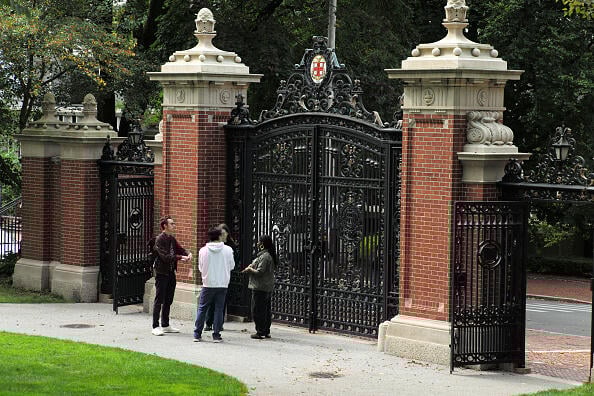
    Jonathan Wiggs/The Boston Globe via Getty Images

    Brown University has struck a deal with the Trump administration to restore about $510 million in frozen federal research funds in exchange for various concessions but no payment, officials announced Wednesday.

    The federal government will restore millions in frozen research funding and settle investigations over allegations of campus antisemitism, according to the agreement. While Brown will not pay out a settlement to resolve the complaints like its Ivy League counterpart Columbia University did, the university pledged $50 million over the next decade to state workforce development efforts in Rhode Island.

    Brown is the second university to cut a deal with the Trump administration since Columbia reached a similar agreement last week. Trump officials said the Columbia settlement would be a template for their talks with other colleges, though other higher ed experts argued the deal was unlawful and represented a threat to the sector at large. (Harvard University, which has also been in the administration’s crosshairs over alleged antisemitism, has reportedly considered a settlement of up to $500 million to resolve its ongoing dispute.)

    Still, Brown agreed to multiple other changes. They include adopting the Trump administration’s definitions of male and female, not performing gender-affirming surgeries on minors or prescribing them puberty blockers, providing admissions data to the federal government, and conducting a campus climate survey and sharing the results with the federal government. Brown also agreed to codify prior changes officials announced to combat discrimination on campus.

    The deal does not include restrictions on campus curriculum or programs.

    “At its core, the agreement preserves the integrity of Brown’s academic foundation, and it enables us as a community to move forward after a period of considerable uncertainty in a way that ensures Brown will continue to be the Brown that our students, faculty, staff, alumni, parents and friends have known for generations,” President Christina Paxson said in a statement.

    Brown announced the agreement shortly after the university took out a $500 million loan, which could have helped plug research funding holes or fund a protracted legal battle. The university also borrowed $300 million in April after the Trump administration froze research funding over allegations of antisemitism connected to pro-Palestinian protests.

    The funding freeze, along with other changes in federal policy, has hit the university hard, and officials warned in June of the potential for “deep financial losses.”

    Education Secretary Linda McMahon celebrated the deal, asserting in a statement that the agreement would protect Jewish students from antisemitism as well as women’s sports.

    “Restoring our nation’s higher education institutions to places dedicated to truth-seeking, academic merit, and civil debate—where all students can learn free from discrimination and harassment—will be a lasting legacy of the Trump administration, one that will benefit students and American society for generations to come,” McMahon wrote in a social media post.

    Source link

  • Northwestern University cuts 425 jobs in face of federal funding pressure

    Northwestern University cuts 425 jobs in face of federal funding pressure

    Dive Brief:

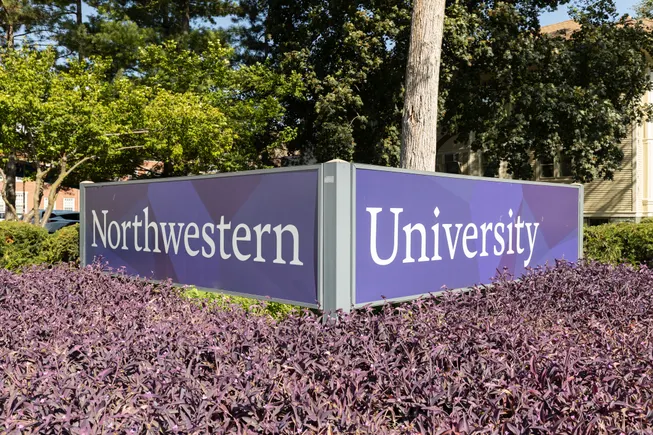
    • Northwestern University plans to cut about 425 staff jobs— amounting to roughly 5% of the private nonprofit’s staffing budget — senior leaders said Tuesday in a community message. 
    • Nearly half of the jobs are vacant, while others will be cut through layoffs, which administrators are working to complete within 48 hours of the announcement. 
    • The Illinois university is navigating a host of financial challenges, including federal research funding cuts and a potentially higher endowment tax under the Republicans’ new spending law.

    Dive Insight:

    In their message Tuesday, Northwestern President Michael Schill, Provost Kathleen Hagerty and Chief Financial Officer Amanda Distel described recent months as “among the most difficult in our institution’s 174-year history.”

    About a month and a half ago, the same group of officials said the university faced “an increasing strain” on its finances from both looming federal policy changes and increasing expenses.

    At the time, they rolled out a series of austerity measures, including a pause on employee raises, a hiring freeze for faculty and staff, health insurance changes, reduced capital spending, and lowered budgets for academic and administrative units. 

    While the university has cut nonpersonnel budgets by 10%, employee costs make up 56% of Northwestern’s total annual spending. “We still are left with a budgetary gap that cannot be bridged without cutting personnel costs,” the officials said. 

    The layoffs announced this week represent “a drastic step that causes pain and anxiety both for the individuals whose lives are affected, but also for our entire community, and we do not take it lightly,” they said. They also noted that schools and units were given discretion in making cuts and asked to “think strategically”  to minimize the impact to units, workers, students and the university.

    Northwestern is among the prominent universities targeted by the Trump administration through probes into their responses to antisemitism on campus by the U.S. departments of Education and Health and Human Services

    The university, however, has reported an 88% year-over-year decline in complaints of antisemitic discrimination or harassment as of November 2024.

    Nonetheless, the Trump administration in April reportedly froze $790 million funds to Northwestern. Although the university at the time hadn’t received official notification of a targeted freeze from the government, it saw around 150 stop-work orders and grant terminations from federal agencies by May 1.

    Last week, The Wall Street Journal reported via an anonymous source that the Trump administration was in talks with Northwestern and other universities about possible deals that would involve a hefty fine to resolve the investigations. The news followed Columbia University’s controversial settlement with the government requiring a $221 million payment in return for the government restoring most of its research funding.

    In an op-ed published in The Daily Northwestern on Tuesday, a group of Northwestern faculty described such fines as a “ransom” and called on university leadership to “resist the administration’s attack on fundamental democratic principles by refusing to ‘make a deal’ with the administration.” 

    Source link