Columbia’s Agreement: A Win for Authoritarianism
Elizabeth Redden
Fri, 07/25/2025 – 03:00 AM
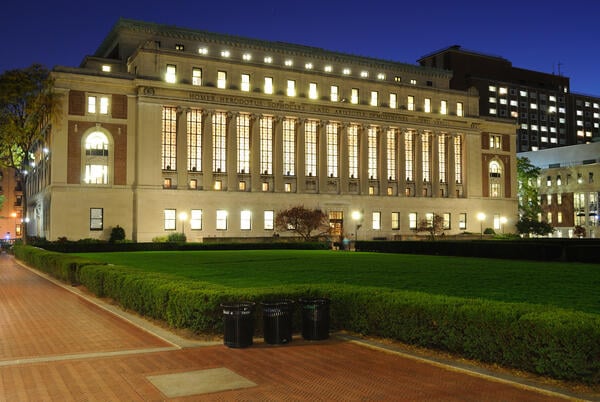
The disastrous deal between Columbia and the federal government only strengthens illiberal rule behind a façade of liberal values, Austin Sarat writes.

Columbia’s Agreement: A Win for Authoritarianism
Elizabeth Redden
Fri, 07/25/2025 – 03:00 AM
The disastrous deal between Columbia and the federal government only strengthens illiberal rule behind a façade of liberal values, Austin Sarat writes.

A majority of students say they interned to gain skills for career advancement in their desired field or role.
Frazao Studio Latino/E+/Getty Images
Employers, college leaders and policymakers have shown growing interest in skills-based hiring for college graduates, and in considering students’ demonstrated learning rather than their major program or degree. This trend signals a need for more hands-on or experiential learning before a student graduates, rather than on-the-job training.
A recent report from Strada shows that students also see this gap; a majority of those surveyed opted to participate in work-based learning to prepare them for a chosen profession or improve their odds as a job candidate.
Report authors also note opportunities for institutions to enhance on-campus experiences to better equip students for the world of work, such as providing professional networking, soft skill development and mentorship.
State of play: Increasingly, employers are emphasizing skills learned in higher education over content, citing a need for students to be adaptable and responsive to the evolving workplace. The drive toward skills-based hiring also stems in part from degree inflation and a re-leveling of jobs that actually require postsecondary education.
For students, this means a smaller share of entry-level positions require a bachelor’s degree. But some employers still screen by demonstrated skills, such as those gained through internships, rather than grades.
Not every student is able to participate in an internship. A 2025 survey from Handshake found that 12 percent of students have not participated in an internship and do not expect to do so before they graduate. Barriers to participation include caregiving responsibilities, limited access to internship opportunities or needing to work for pay. A 2024 report from the Business-Higher Education Forum found that students of color, first-generation students and community college students were less likely than their peers to secure an internship.
The National Association of Colleges and Employers (NACE) published research in May pointing to the benefit of experiential learning for early career outcomes; students who engaged in work-based learning were more likely to say they had better-than-expected career progress, higher salaries and greater general career satisfaction, compared to their peers who lacked an internship.
Strada’s National Survey of Work-based Learning includes 2,000 responses from seniors at four-year colleges and universities in the U.S. The study was fielded between October and December 2024.
The study: Strada’s survey found that 65 percent of students participate in work-based learning to gain experience or skills in a specific career or their chosen profession. This echoes Handshake’s survey from early this year, which found that 87 percent of students pursue internships to build valuable skills.
“Today’s students are much more likely to view their experiences as instrumental rather than exploratory,” according to the Strada report.
Thirteen percent said they selected work-based learning experiences as an exploration of work, and approximately 8 percent said their main purpose was to land a job at their host organization.
Students saw paid internships and undergraduate research as most valuable for improving their standing as candidates for future jobs. Practicums were also rated highly, which could include clinical experiences in the health professions or student-teaching roles. Unpaid internships, project-based learning, on-campus jobs and off-campus jobs were seen as less valuable.
Among students who participated in multiple experiential learning opportunities, 81 percent ranked their most valuable experience as at least a seven out of 10. One in four respondents gave that experience a 10 out of 10.
Students who rated their experiences highly were also more likely to say they expanded their professional networking as participants. Students who worked as paid interns or unpaid interns were most likely to say they expanded their professional network.
Practicum participants were most likely to say they gained technical skills relevant to their career goals, followed by project-based learning participants and paid interns. Those working on- or off-campus jobs were least likely to report technical skill development.
By comparison, interns were most likely to report learning broad skills, also called enduring or soft skills.
On- and off-campus job experiences were rated lowest among respondents for a variety of factors, including value added to their persona as a job applicant, increased technical or durable skills, professional networking and mentorship.
Role of higher ed: Past surveys have shown that students believe their institution has a role to play in giving them internship experience.
A winter 2023 survey from Inside Higher Ed and College Pulse found that 62 percent of students believe their career center should help them get an internship. A 2024 Student Voice survey found that 48 percent of respondents think their institution should focus on helping students find internships and jobs, and 38 percent believe colleges should focus more on helping students prepare for internship and career success.
Students say faculty should also help in this process; one in five Student Voice respondents indicated professors are at least partially responsible for helping students find internships.
Strada’s report includes recommendations for colleges and universities such as:
How does your college or university prepare students for the world of work? Tell us more.
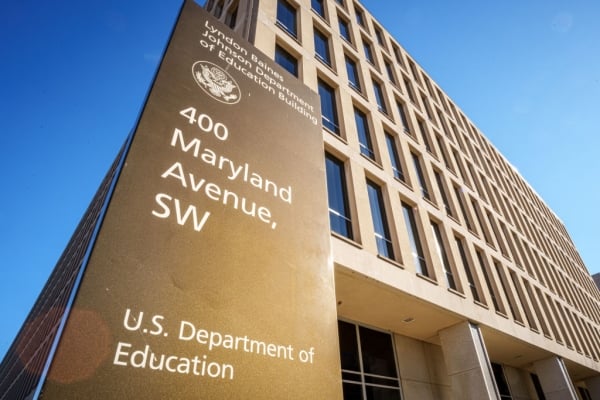
The Education Department is moving quickly to carry out the higher ed changes in the recently passed One Big Beautiful Bill Act.
The agency announced Thursday that it will convene two advisory committees to weigh in on changes to the rules and regulations for the federal student loan program, institutional and programmatic accountability, and the Pell Grant program. Officials wrote in the announcement that this round of rule-making was necessary to implement the changes in the One Big Beautiful Bill as well as “other administration priorities.”
Many of the higher ed provisions in the legislation take effect July 1, 2026, and several experts have raised concerns about whether that’s enough time for the department to put in place the necessary regulations and guidance. Among other changes, the law ends the Graduate PLUS loan program, caps loans for graduate and professional students, and expands the Pell Grant to workforce training programs that run between eight and 15 weeks.
To revise the regulations, the department is following its lengthy and complicated process known as negotiated rule making, which involves bringing together stakeholders to review proposed changes and then listening to public comment on the plan.
One group, which the department is calling the Reimagining and Improving Student Education (RISE) Committee, will focus on the student loan regulations, including creating new repayment plans and giving colleges the ability to limit how much students can borrow. The RISE Committee will meet twice in September and November for week-long sessions to negotiate policy revisions. If the committee doesn’t reach a consensus, the department is free to move forward with its own proposal, which would still be subject to public comment.
The other policy changes in the law will fall to the other panel, known as the Accountability in Higher Education and Access through Demand-driven Workforce Pell (AHEAD) Committee. That includes implementing the new earnings test, which requires programs to prove their graduates earn more than an adult with a high school diploma or risk losing their access to student loans, as well as revising the eligibility criteria for Pell grants to exclude students who get a full ride. The AHEAD committee will meet in December and January for week-long sessions.
Both committees will include student borrowers, legal assistance organizations and representatives from various types of institutions, among other stakeholder groups. None specifically include the financial aid administrations who will play a key role in rolling out these changes on college campuses.
To kick off the rule-making process, the department will hold a virtual public hearing from 9 a.m. to 4 p.m. Aug. 7. More information is available on the department’s website.

Authors have until the end of August to opt out.
SvetaZi/iStock/Getty Images
Johns Hopkins University Press (JHUP) is the latest academic publisher to announce plans to license its books to train proprietary large language models. According to an email JHUP sent to authors Tuesday, those who want to opt out of the licensing agreement have until Aug. 31 to sign an addendum to their contracts; otherwise their work is fair game.
The move comes as Johns Hopkins University—the nation’s largest spender on university-based research and development—is facing big budget holes created by the Trump administration’s sweeping cuts to federal grants.
“While we do not anticipate huge financial gain for individual books, the cumulative revenue [from LLM licensing deals] would be meaningful for Johns Hopkins University Press and our mission,” read the email sent to authors. “As we anticipate contraction in the higher-education market, these funds can help to sustain our important work as a non-profit publisher.”
While JHUP is not currently operating at a deficit, its executive director, Barbara Kline Pope, said in an email to Inside Higher Ed that the publisher is “exploring how our financial model may need to evolve over the coming years.” Pope did not answer Inside Higher Ed’s specific questions about which company or companies it plans to license book content to, but said that it’s “currently exploring partnerships with both general AI companies and those focused on specialized content and inference models like Retrieval-Augmented Generation,” which can incorporate external information sources to enhance the authority of an LLM’s response.
The press maintains a backlist of about 3,000 titles and publishes roughly 150 new books a year by faculty and other experts in fields such as public health, science, higher education and the humanities. It told authors that they can expect to receive “modest” returns of less than $100 per title per license.
While JHUP did not provide a specific dollar figure for how much revenue it expects to generate from the licensing agreement, some of the biggest scholarly publishers have already proven that there’s money to be made in licensing content to AI companies.
In the two-plus years since generative artificial intelligence tools have gone mainstream, major for-profit academic publishers, including Wiley and Informa (Taylor & Francis’s parent company), have signed agreements with AI companies. While some optimistic authors and observers have said such deals mean well-researched, accurate data will be used to train AI models, others have pushed back. Last summer, authors were outraged after Taylor & Francis failed to notify them before selling their work to Microsoft for $10 million. By the end of 2024, Taylor & Francis reported a $75 million profit as a result of the sale, which boosted its underlying revenue growth from 3 percent to 15 percent in one year, according to Bloomberg.
In addition to JHUP, other nonprofit publishers are jumping on the AI bandwagon—or at least thinking about it. Last year, Oxford University Press confirmed it was working with AI companies to develop LLMs, while the university itself launched a five-year partnership with OpenAI this past spring. Cambridge University Press is still in the process of weighing AI licensing agreements, though it’s also given authors the opportunity to opt out of any future AI-related aggregation efforts. Massachusetts Institute of Technology Press said in November that multiple AI companies have approached about a licensing agreement; it responded by asking authors for their input and has not publicly announced a deal.
In its notice to authors this week, JHUP said it spent the last year weighing the possibility of licensing its works to train LLMs. In addition to potential financial gain, the press explained that it is deciding to move forward now because an LLM licensing agreement would make authors’ work more discoverable by their intended readers, create some guardrails around content use amid increasing concerns that major LLM companies are already scraping pirated versions of JHUP’s book content, and make a stronger legal case that such companies should be required to pay for access to the publisher’s content.
Sharon Ann Murphy, a history and classics professor at Providence College in Rhode Island who signed two contracts with JHUP long before the rise of LLMs, said she was not surprised—but nonetheless upset—by the notice from JHUP, which includes language from the opt-out addendum. It requires authors who don’t want to license their work to acknowledge that in addition to not receiving any AI-related royalties, “the sales and reach of the Work may suffer as a result of or in relation to the fact that Hopkins Press will not exercise AI Rights with respect to the Work.”
Murphy said she interpreted JHUP’s opt-out clause to mean that authors “are agreeing that they’re going to lose revenue because of this and Hopkins has no responsibility to protect us.”
Murphy is also skeptical of JHUP’s claims in its email to authors that if LLMs adopt technologies that credit the sources of AI-generated response, it will give readers the ability “to identify and click through to the original source” and is “the best way to continue to engage with readers and disseminate (authors’) work widely.”
“They’re saying that somehow this will promote our work, but that’s a specious argument. That’s not how AI models work,” Murphy said. “Academic presses are operating on shoestring budgets, but this seems really short-sighted. Academic presses are in the business of creating real knowledge, but AI is in the business of hallucinating and making stuff up.”
Annette Windhorn, a spokesperson for the Association of University Presses, wrote in an email to Inside Higher Ed that she’s not sure just how many academic presses have agreed to license their content to AI companies.
“An internal query to member presses more than a year ago did reveal that a number of presses had been approached by a variety of companies, but almost none were at that time actually considering an agreement and many presses were deferring initial decision points to university counsel,” she wrote. “Our members are following developments closely, but moving with caution in areas that may impact their authors’, their institutions’, or their own rights and responsibilities.”

The Trump administration threw its hat in the ring Thursday amid growing debates over how best to manage compensation for college athletes, issuing an executive order titled Saving College Sports.
It comes just over 24 hours after House Republicans in two separate committees advanced legislation concerning the same topic.
“The future of college sports is under unprecedented threat,” the order stated. “A national solution is urgently needed to prevent this situation from deteriorating beyond repair and to protect non-revenue sports, including many women’s sports, that comprise the backbone of intercollegiate athletics, drive American superiority at the Olympics … and catalyze hundreds of thousands of student-athletes to fuel American success in myriad ways.”
Ever since legal challenges and new state laws drove the National Collegiate Athletic Association to allow student-athletes to profit off their own name, image and likeness in 2021, America has entered a new era that many refer to as the wild west of college sports.
Lawmakers have long scrutinized this unregulated market, arguing that it allows the wealthiest colleges to buy the best players. But a recent settlement, finalized in June, granted colleges the power to directly pay their athletes, elevating the dispute to a new level. Many fear that disproportionate revenue-sharing among the most watched sports, namely men’s football and basketball, will hurt women’s athletics and Olympic sports including soccer and track and field.
By directing colleges to preserve and expand scholarships for those sports and provide the maximum number of roster spots permitted under NCAA rules, the Trump administration hopes to prevent such a monopolization.
The order also disallows third-party, pay-for-play compensation that has become common among the wealthiest institutions and booster clubs, and mandates that any revenue-sharing permitted between universities and collegiate athletes should be implemented in a manner that protects women’s and nonrevenue sports.
Many sports law experts are skeptical about the order, suggesting it’s unlikely to move the needle and might create new legal challenges instead.
However, Representative Tim Walberg, a Michigan Republican and chair of the Education and Workforce Committee, thanked the president for his commitment to supporting student-athletes and strengthening college athletics.
“The SCORE Act, led by our three committees, will complement the President’s executive order,” Walberg said. “We look forward to working with all of our colleagues in Congress to build a stronger and more durable college sports environment.”

l’ll acknowledge my bias: I teach at a large urban college that recently received an HSI grant. Nearly all my students are students of color, with roughly half being Hispanic. Many are the first in their families to enroll in college. Most of their parents were not born in the U.S. We are amongst the 20% of all colleges in the U.S. that are eligible to apply for an HSI grant, which are made available through the Higher Education Act of 1965 (Title III and Title V).
Why did we apply for this grant? State funding per student to public HSIs is $6,396.59 compared to $15,526.13 for non-HSIs. The ongoing disparities in postsecondary educational attainment based on race and ethnicity reveal more about a deficit in public policy to address the equitable distribution of resources and less about the ability of students of color to obtain a college degree. Despite modest gains over time, gaps in attainment continue. 28% of the Hispanic population in the U.S. received an associate degree or higher compared to 48% of the white population. The average graduation rate in four-year postsecondary institutions was 52% for Hispanic students compared to 65% for white students. HSI grants are made available in part to narrow this gap in college outcomes amongst Hispanic students.
What is my college doing with its HSI grant? To advance retention, persistence, and specific course completion, the grant will improve the First Year Seminar, provide professional develop with a focus on culturally responsive pedagogy, integrate tutoring, peer mentoring, academic and career coaching, and target intervention in gateway courses.
Many HSI-eligible colleges look like mine, but not all. They are two and four-year public and private non-profit institutions that are under-resourced, become eligible to apply when their undergraduate enrollment reaches 25% Hispanic and at minimum 50% receive some form of financial aid. The rising number of colleges eligible for HSI grants reflects the growth of the Hispanic population in the U.S. Between 2010 and 2022, the Hispanic population accounted for 34 percent of the overall increase in the U.S. population. Hispanic participation in colleges and universities rose from 14 percent in 2010 to 20 percent in 2022.
Several characteristics are common across institutions designated as HSIs. First, Hispanics tend to enroll in HSI-designated colleges more than non-HSIs. This is largely due to Hispanic students wanting to enroll in a college close to their community. Second, Hispanic students attending HSIs are often the first in their family to seek a college degree. Third, Hispanic students enrolled in HSIs on average graduated from high schools with large classroom sizes, disproportionate levels of racially minoritized student populations, and lower standardized test scores. Many argue that HSIs offer such students an opportunity to participate in postsecondary education that they would not otherwise have.
Evidence-based research demonstrates the ROI on the federal government’s investment in HSIs. When colleges receive HSI grants, there is a positive effect on Hispanic students. I found that grant receipt increases Hispanic bachelor’s degree completion by nearly 30 percent and associate degrees by almost 25 percent. In another study, we found a 10% increase in Hispanic students obtaining STEM associate’s degrees. We also found benefits for non-Hispanic students, with an 11% increase in the number of those students receiving STEM associate’s degrees. This echoes another study focusing on the initial year HSI STEM grants were awarded with the authors finding HSI STEM grant receipt directly led to an 8% increase in Hispanic students receiving such degrees in community colleges.
I doubt the architects of this recent lawsuit challenging HSI funding have ever spoken to someone who graduated from an HSI. I teach a graduate course on minority serving institutions (MSIs). Nearly all my students are students of color from the New York City metropolitan area. Most attended different MSIs as undergraduates. While experiences vary, most extol the virtues of having attended an MSI. They speak to the level of support they received, the power of being surrounded my others who shared their background, the willingness of HSIs and other MSIs to welcome students’ families and community to campus, amongst many other characteristics that made them glad they chose an HSI or MSI over a PWI.
It is important to evaluate the effectiveness of postsecondary programs funded through tax-payer dollars. Yet recent political antagonism directed towards higher education looks more like red meat being tossed to appease the red base as opposed to thoughtful, evidence-based decision-making. Acknowledging the effectiveness of HSI funding and similar efforts would weaken the core animating principle of the current Republican mission to decimate political support for such programs and reduce the existence of government more broadly.
Dr. William Casey Boland is an assistant professor in the Marxe School of Public and International Affairs at Baruch College-City University of New York.
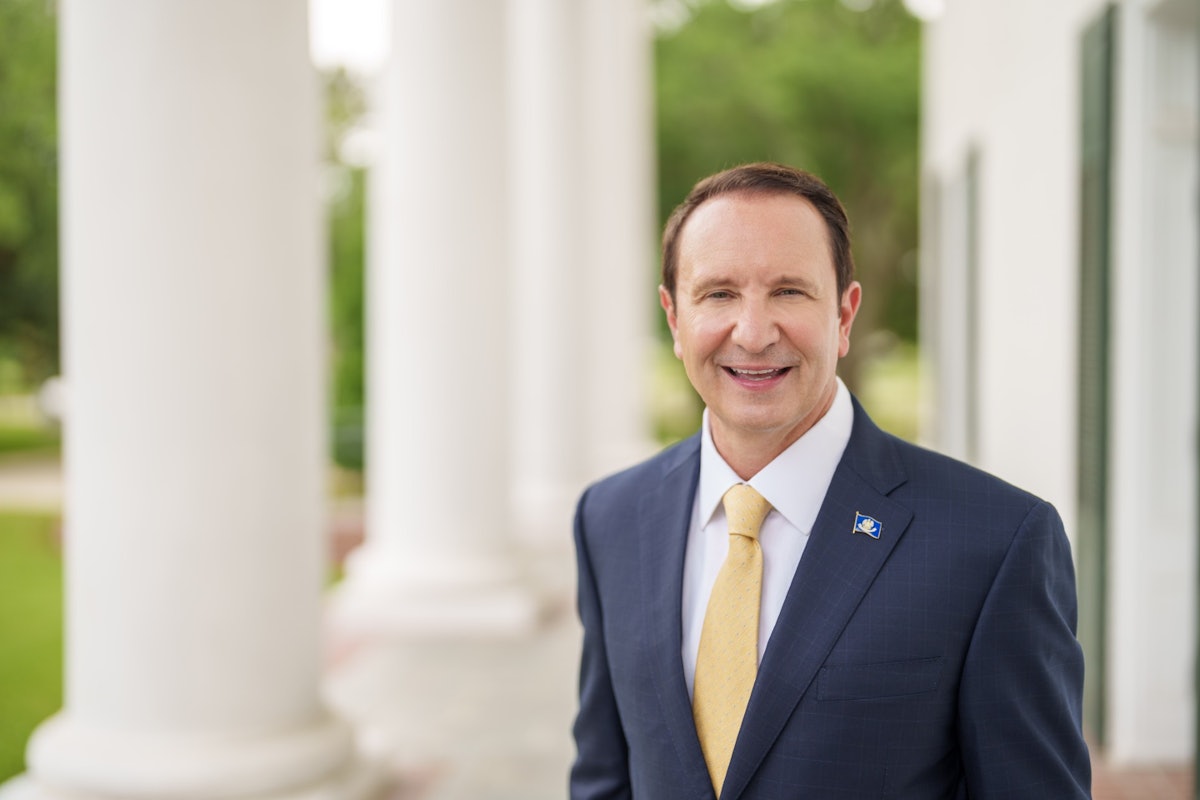
The new commission is currently seeking expedited approval from the U.S. Department of Education to serve as an official accreditor responsible for maintaining quality standards at colleges and universities. This development represents a direct challenge to the Southern Association of Colleges and Schools Commission on Colleges, the traditional accrediting body that currently evaluates institutions across Louisiana and ten other Southern states including Alabama, Florida, Georgia, Kentucky, Mississippi, North Carolina, South Carolina, Tennessee, Texas and Virginia.
The formation of this alternative accrediting body stems from growing tensions between conservative politicians and established accreditors. These conflicts have centered on traditional accreditors’ standards related to diversity, equity and inclusion initiatives, as well as their requirements for safeguards designed to limit external political influence in public higher education governance.
Landry’s executive order establishes a Task Force on Public Higher Education Reform charged with developing recommendations for implementing the new commission. The task force will specifically focus on creating a pilot program for dual accreditation, allowing Louisiana schools to maintain authorization from both the new commission and the Southern Association simultaneously.
The governor highlighted the ideological motivations behind the move in his announcement.
“This task force will ensure Louisiana’s public universities move away from DEI-driven mandates and toward a system rooted in merit-based achievement,” Landry said.
Florida Governor Ron DeSantis, who helped launch the original commission, articulated similar sentiments when announcing the new accreditor in June.
“[The Commission for Public Higher Education] will upend the monopoly of the woke accreditation cartels, and it will provide institutions with an alternative that focuses on student achievement, rather than the ideological fads that have so permeated those accrediting bodies over the years,” DeSantis declared.
The practical implementation of this new accrediting system faces a significant hurdle, as U.S. Department of Education approval is mandatory before any institution accredited solely by the new commission can receive federal financial aid. This requirement could potentially affect students’ access to federal funding programs if the transition is not handled carefully.
The composition of Louisiana’s new task force reflects the governor’s significant influence over the state’s higher education leadership structure. With the exception of Commissioner of Higher Education Kim Hunter Reed, every task force member has been directly appointed by Landry or his conservative legislative allies. The task force includes Board of Regents Chairwoman Misti Cordell, University of Louisiana System Board Chairman Mark Romero, LSU System Board Chairman Scott Ballard, Southern University System Board Chairman Tony Clayton, Louisiana Community and Technical College Systems Chairman Tim Hardy, Senate Education Committee Chairman Sen. Rick Edmonds, and House Education Committee Chairwoman Rep. Laurie Schlegel.
Additionally, Landry has appointed his executive counsel Angelique Freel and Commissioner of Administration Taylor Barras to the task force, with the option for them to send designees in their place. The governor retains the authority to select three additional task force members, further consolidating his influence over the group’s composition and direction.
This level of gubernatorial control over higher education governance represents a recent shift in Louisiana’s political landscape. Last year, Landry successfully advocated for legislative changes that granted him direct appointment power over the chairs of the state’s five higher education boards, positions that were previously elected from within the boards’ memberships. An earlier version of this legislation would have extended Landry’s authority to include direct hiring of university system presidents, but this provision was ultimately removed due to concerns that such concentration of political power could jeopardize existing accreditation status.
The task force operates under a compressed timeline that reflects the urgency Landry places on this initiative. The group must convene its inaugural meeting no later than August 31 and maintain a regular schedule with meetings occurring at least once every two months. The task force faces a deadline of January 30, 2026, to submit its comprehensive recommendations for implementing the new accrediting system in Louisiana.
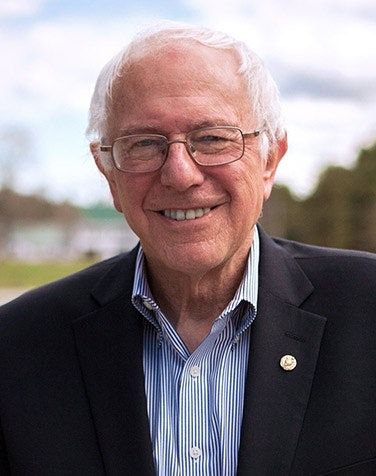
The Pay Teachers Act, co-sponsored by eight Democratic senators including Elizabeth Warren and Ed Markey, would establish the first federal mandate for teacher salaries and represents the most ambitious federal intervention in educator compensation in decades.
“Just four hedge fund managers on Wall Street make more money in a single year than every kindergarten teacher in America combined—over 120,000 teachers,” Sanders said. “No public school teacher in America should make less than $60,000 a year.”
The legislation comes as schools nationwide face unprecedented staffing shortages, with nearly 200,000 teaching positions either vacant or filled by underqualified educators. According to the bill’s findings, 38% of teachers nationwide earn less than $60,000 annually, with starting teachers averaging $44,530.
Maria Gonzalez, a third-grade teacher from Arizona who testified at the town hall, said she drives for Uber on weekends and tutors after school to pay rent.
“My students ask why I look tired. How do I tell them their teacher can’t afford to live in the community where she teaches?”
The crisis extends beyond low pay. Twenty-one percent of elementary and middle school teachers’ families rely on public assistance programs including Medicaid, food stamps, and the Earned Income Tax Credit, according to a University of California, Berkeley study cited in the legislation. Additionally, 44% of public school teachers quit within five years, and 17% worked multiple jobs during the 2020-2021 school year.
The comprehensive bill would cost approximately $400 billion over five years, funded through mandatory appropriations. Beyond the $60,000 minimum salary requirement, the legislation would triple Title I funding, provide teachers with at least $1,000 annually for classroom supplies, and mandate that paraprofessionals and education support staff earn at least $45,000 annually or $30 per hour.
States would have four years to implement the salary requirements, with extended timelines available for states demonstrating substantial financial need. The bill also includes $50 billion annually for career ladder programs allowing teachers to advance without leaving the classroom.
The teacher shortage disproportionately affects schools serving students of color and low-income communities, which are four times more likely to employ uncertified teachers than schools with low minority enrollment, according to federal civil rights data cited in the legislation.
James Williams, a high school mathematics teacher from North Carolina, told the town hall that his salary purchased “a decent life” 15 years ago but now forces him to choose between car repairs and classroom supplies.
The legislation faces significant political obstacles with Republicans controlling the House. GOP lawmakers have criticized the massive federal spending, while some education policy experts question federal involvement in traditionally state and local compensation decisions.
Major education unions endorsed the proposal. American Federation of Teachers President Randi Weingarten called it “a crucial federal investment to help sustain the teaching profession,” while National Education Association Vice President Princess Moss praised it as legislation that “invests in our students, educators, and public schools.”
Sanders criticized recent Republican legislation that he said provides “$900 billion in tax cuts to large, profitable corporations and a $1 trillion tax cut to the top 1%” while cutting over $300 billion in education funding. The Trump administration is also withholding nearly $5.5 billion in congressionally appropriated education funding, according to Sanders and his colleagues.
“If we can provide over a trillion dollars in tax breaks to the top 1% and large corporations, please don’t tell me that we cannot afford to make sure that every teacher in America is paid at least $60,000 a year,” Sanders said.

It has never been more important for providers across the sector to show that access and participation activities have an impact. With resources stretched, we need to know the work we are doing is making a measurable difference. New research from HEAT reveals a series of powerful findings:
These findings provide compelling evidence that the work being done across the sector to widen participation is not only reaching the right students but changing trajectories at scale. Crucially, this latest research includes previously unavailable controls for student-level prior attainment — adding new rigour to our understanding of outreach impact. You can read the full report on our website.
What’s next for national-level research?
Our ability to generate this kind of national evidence is set to improve even further thanks a successful bid to the Office for Students (OfS) Innovation Fund. Through a collaboration with academics at the Centre for Education Policy and Equalising Opportunities (CEPEO) at the UCL Institute of Education, HEAT will lead on the development and piloting of a pioneering new Outreach Metric, measuring providers’ broader contribution to reducing socio-economic gaps in HE participation. More details about this project can be found here, and we look forward to sharing early findings with the sector in 2026.
Local-level evaluation is just as important
While national analyses like these are essential to understanding the big picture, the OfS rightly continues to require providers to evaluate their own delivery. Local evaluations are critical for testing specific interventions, understanding how programmes work in different contexts, and learning how to adapt practice to improve outcomes. Yet robust evaluation is often resource-intensive and can be out of reach for smaller teams.
This is where use of a sector-wide system for evaluation helps – shared systems like HEAT provide the infrastructure to track student engagement and outcomes at a fraction of the cost of building bespoke systems. Thanks to a decade of collaboration, we now have a system which the sector designed and built together, and which provides the tools necessary to deliver the evaluation that the OfS require providers to publish as part of their Access and Participation Plans (APP).
We’re also continuing to improve our infrastructure. Thanks to a second successful bid to the OfS Innovation Fund we are building system functionality to support providers to use their tracking data when evaluating their APP interventions. This includes an ‘automated comparator group tool’ that will streamline the process of identifying matched participant and non-participant groups based on confounding variables. By reducing the need for manual data work, the tool will make it easier to apply quasi-experimental designs and generate more robust evidence of impact.
Next steps – sharing through publication
With all these tools at their disposal, the next step is to support the sector to publish their evaluation. We need shared learning to avoid duplication and siloed working. HEAT is currently collaborating with TASO to deliver the Higher Education Evaluation Library (HEEL), which will collect, and share, intervention-level evaluation reports in one accessible place for the first time. By collating this evidence, the HEEL will help practitioners and policymakers alike to see what works, what doesn’t, and where we can improve together.
If we want to continue delivering meaningful progress on access and participation, we need both meaningful, critical local evaluation and powerful national insights. Centralised data tracking infrastructure can give the sector the tools it needs to do both.