Author: admin

  • Why should we care about cuts to funding for science education?

    Why should we care about cuts to funding for science education?

    Key points:

    The Trump administration is slashing the funding for new projects focused on STEM education and has terminated hundreds of grants focused on equitable STEM education. This will have enormous effects on education and science for decades to come.

    Meaningful science education is crucial for improving all of our lives, including the lives of children and youth. Who doesn’t want their child or grandchild or neighbor to experience curiosity and the joy of learning about the world around them? Who wouldn’t enjoy seeing their child making careful observations of the plants, animals, landforms, and water in their neighborhood or community? Who wouldn’t want a class of kindergartners to understand germ transmission and that washing their hands will help them keep their baby siblings and grandparents healthy? Who doesn’t want their daughters to believe that science is “for them,” just as it is for the boys in their classroom?

    Or, if those goals aren’t compelling for you, then who doesn’t want their child or grandchild or neighbor to be able to get a well-paying job in a STEM field when they grow up? Who doesn’t want science itself to advance in more creative and expansive ways?

    More equitable science teaching allows us to work toward all these goals and more.

    And yet, the Department of Government Efficiency has terminated hundreds of grants from the National Science Foundation that focused squarely on equity in STEM education. My team’s project was one of them.  

    At the same time, NSF’s funding of new projects and the budget for NSF’s Education directorate are also being slashed.

    These terminations and drastic reductions in new funding are decimating the work of science education.

    Why should you care?

    You might care because the termination of these projects wastes taxpayers’ hard-earned money. My project, for example, was 20 months into what was intended to be a 4-year project, following elementary teachers from their teacher education program into their third year of teaching in classrooms in my state of Michigan and across the country. With the termination, we barely got into the teachers’ first year–making it impossible to develop a model of what development looks like over time as teachers learn to engage in equitable science teaching.

    You might care because not funding new projects means we’ll be less able to improve education moving forward. We’re losing the evidence on which we can make sound educational decisions–what works, for whom, and under what circumstances. Earlier NSF-funded projects that I’ve been involved with have, for example, informed the design of curriculum materials and helped district leaders. Educators of future teachers like me build on findings of research to teach evidence-based approaches to facilitating science investigations and leading sense-making discussions. I help teachers learn how they can help children be change-makers who use science to work toward a more just and sustainable world.  Benefits like these will be eliminated.

    Finally, you might care because many of the terminated and unfunded projects are what’s called NSF Early Career Awards, and CAREER program funding is completely eliminated in the current proposed budget. CAREER grants provide crucial funding and mentoring for new researchers. A few of the terminated CAREER projects focus on Black girls and STEM identity, mathematics education in rural communities, and the experiences of LGBTQ+ STEM majors. Without these and other NSF CAREER grants, education within these fields–science, engineering, mathematics, data science, artificial intelligence, and more, from preschool through graduate school–will regress to what works best for white boys and men.

    To be sure, universities have some funds to support research internally. For the most part, though, those funds are minimal. And, it’s true that terminating existing projects like mine and not funding new ones will “save” the government some money. But toward what end? We’re losing crucial evidence and expertise.

    To support all children in experiencing the wonder and joy of understanding the natural world–or to help youth move into high-paying STEM jobs–we need to fight hard to reinstate federal funding for science and science education. We need to use every lever available to us–including contacting our representatives in Washington, D.C.–to make this happen. If we aren’t successful, we lose more than children’s enjoyment of and engagement with science. Ultimately we lose scientific advancement itself.
    Latest posts by eSchool Media Contributors (see all)

    Source link

  • Elite Power, Higher Education, and Political Ambition

    Elite Power, Higher Education, and Political Ambition

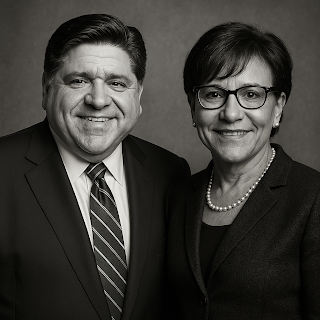
              [JB and Penny Pritzker] 

    The Pritzker family stands as a symbol of wealth, influence, and access in American public life. From the luxury of Hyatt Hotels to the boardrooms of private equity and the highest ranks of government, their reach extends across economic sectors and institutional spheres. But beneath the carefully managed public image lies a troubling contradiction—one that implicates higher education, for-profit exploitation, and national politics.

    Penny Pritzger

    Penny Pritzker, a former U.S. Secretary of Commerce and current trustee of Harvard University, has been a key figure in shaping education policy from elite perches. She also had a working relationship with Vistria Group, a private equity firm that now owns the University of Phoenix and Risepoint. These two entities have been central to the subprime college industry—profiting from the hopes of working-class students while delivering poor outcomes and burdensome debt.

    Pritzker’s relationship with Vistria runs deeper than simple association. In the late 1990s, she partnered with Vistria co-founder Marty Nesbitt to launch The Parking Spot, a national airport parking venture that brought them both business success and public recognition. When Nesbitt founded Vistria in 2013, he brought with him the experience and elite networks formed during that earlier partnership. Penny Pritzker’s family foundation—Pritzker Traubert—was among the early funders of Vistria, helping to establish its brand as a more “socially conscious” private equity firm. Although she stepped away from any formal role when she joined the Obama administration, her involvement in Vistria’s formation and funding set the stage for the firm’s expansion into sectors like for-profit education and healthcare.

    Vistria’s acquisition of the University of Phoenix, and later Risepoint, positioned it as a major player in the privatization of American higher education. The firm continues to profit from schools that promise economic mobility but often deliver student debt and limited job prospects. This is not just a critique of business practices, but a systemic indictment of how elite networks shape education policy, finance, and outcomes.

    Penny’s role as a trustee on the Harvard Corporation only sharpens this contradiction. Harvard, a university that markets itself as a global champion of meritocracy and inclusion, remains silent about one of its trustees helping to finance and support a firm that monetizes educational inequality. The governing body has not publicly addressed any potential conflict of interest between her Harvard role and her involvement with Vistria.

    JB Pritzger

    These contradictions are not limited to Penny. Her brother, J.B. Pritzker, is currently the governor of Illinois and one of the wealthiest elected officials in the country. Though he has no documented personal financial stake in Vistria, his administration has significant ties to the firm. Jesse Ruiz, J.B. Pritzker’s Deputy Governor for Education during his first term, left state government in 2022 to take a top leadership position at Vistria as General Counsel and Chief Compliance Officer.

    This revolving-door dynamic—where a senior education policymaker transitions directly from a progressive administration to a private equity firm profiting from for-profit colleges—underscores the ideological alignment and operational synergy between the Pritzker political machine and firms like Vistria. While the governor publicly champions equity and expanded public education access, his administration’s former top education official is now helping manage legal and compliance operations for a firm that extracts value from struggling students and public loan programs.

    J.B. Pritzker has announced plans to run for a third term as governor in 2026, but many observers believe he is positioning himself for a 2028 presidential campaign. His high-profile public appearances, pointed critiques of Donald Trump, and increased visibility in early primary states all suggest a national campaign is being tested. With his vast personal wealth, Pritzker could self-fund a serious run while drawing on elite networks built over decades—networks that include both his sister’s role at Harvard and their shared business and political allies.

    Elites in US Higher Education, A Familiar Theme 

    What emerges is a deeply American story—one in which the same elite networks shape both the problems and the proposed solutions. The Pritzkers are not alone in this dynamic, but their dual influence in higher education and politics makes them a case study in elite capture. They are architects and beneficiaries of a system in which public office, private equity, and nonprofit institutions converge to consolidate power.

    The for-profit education sector continues to exploit regulatory gaps, marketing expensive credentials to desperate individuals while avoiding the scrutiny that traditional nonprofit colleges face. When private equity firms like Vistria acquire troubled institutions, they repackage them, restructure their branding, and keep extracting value from public loan dollars. The government lends, students borrow, and investors profit. The people left behind are those without political clout—low-income students, veterans, working parents—who believed the marketing and now face debt with little return.

    Harvard’s silence, University of Phoenix’s reinvention, the rebranding of Academic Partnerships/Risepoint, and J.B. Pritzker’s ambitions all signal a troubling direction for American democracy. As more billionaires enter politics and public institutions become more dependent on private capital, the line between public service and private gain continues to erode.

    The Higher Education Inquirer believes this moment demands not only scrutiny, but structural change. Until elite universities hold their trustees accountable, until political candidates reject the influence of exploitative industries, and until the public reclaims its voice in higher education policy, the Pritzker paradox will continue to define the American experience—where access to opportunity is sold to the highest bidder, and democracy is reshaped by those who can afford to buy it.

    Sources

    – U.S. Department of Education College Scorecard

    – University of Phoenix outcome data (IPEDS, 2024)

    – Harvard University governance and trustee records

    – Vistria Group investor reports and public filings

    – Wall Street Journal, “America’s Second-Richest Elected Official Is Acting Like He Wants to Be President” (2025)

    – Associated Press, “Governor J.B. Pritzker positions himself as national Democratic leader” (2025)

    – Vistria.com, “Marty Nesbitt on his friendship with Obama and what he learned from the Pritzkers”

    – Politico, “Former Obama Insiders Seek Administration’s Blessing of For-Profit College Takeover” (2016)

    – Vistria Group announcement, “Jesse Ruiz Joins Vistria as General Counsel and CCO” (2022)

    Source link

  • Can the information you share be trusted?

    Can the information you share be trusted?

    “If you see that a person has lied in the past you should carefully consider whether it is a good idea to trust them,” Jonas said. 

    3. Find other sources that seem to be reporting the same thing.

    “Sometimes you will find that different sources interpret the same event very differently,” Jonas said. “Think about which sources you should trust more.”

    Information in research articles, journalistic publications or academic experts and institutions are generally more reliable than blog contributors or social media posts, Jonas said. 

    Be a bit skeptical, too, she said, when a publication or podcast or post seems to mix information with emotion and see if you can separate out factual reporting with opinion.

    Incorporating this healthy skepticism and adopting a system for verifying information will help you build a reputation for credibility and reliability. This is useful not just in your reporting, Jonas said, but in your daily life, as well. 


    Questions to consider:

    1. What is meant by a system of verification?

    2. Why should you check for information about the author of an article or post you read?

    3. How can a healthy skepticism be useful in your daily life?


    Source link

  • Ransomware attacks in education jump 23% year over year

    Ransomware attacks in education jump 23% year over year

    This audio is auto-generated. Please let us know if you have feedback.

    Dive Brief:

    • Ransomware attacks against schools, colleges and universities rose 23% year over year in the first half of 2025, according to a report from Comparitech, a cybersecurity and online privacy product review website.
    • The six months saw 130 confirmed and unconfirmed ransomware attacks against educational institutions, with an average ransom demand of $556,000.
    • Education was the fourth-most-targeted sector during the first half of 2025, behind business, government and healthcare, according to Comparitech.

    Dive Insight:

    Schools have become a popular target for hackers thanks to a combination of increased digitization, the robust amount of student and staff data, and a lack of cybersecurity resources. Some 82% of K-12 schools in the U.S. experienced a cyber incident between July 2023 and December 2024, according to a March report from the nonprofit Center for Internet Security.

    In one of the most prominent recent known examples,a 19-year-old agreed to plead guilty in May to allegedly hacking and extorting student information system provider PowerSchool for $2.85 million. The incident resulted in the leaking of sensitive data of 10 million teachers and more than 60 million students. School districts also received extortion threats in relation to the cyberattack, and more than 100 school systems sued PowerSchool over the breach.

    One challenge of tracking cyberattacks is that incidents aren’t always disclosed by the organization targeted or the ransomware group that attacks. As a result, the Comparitech report said, figures are likely to change as more information is released and incidents are confirmed.

    Comparitech labels a ransomware attack as “confirmed” when the impacted organization publicly reports a ransomware incident or acknowledges a cyberattack that aligns with a ransomware group’s claim.

    As school districts try to navigate these threats and attacks, some of the leading preventative measures include investing in cybersecurity insurance and incorporating multifactor authentication for accessing files.

    Once a breach is discovered, experts recommend determining what external help is needed, whether from cyber incident support teams or private vendors, and alerting law enforcement — including the FBI and entities such as the Department of Homeland Security’s U.S. Computer Emergency Readiness Team. The FBI advises against paying ransoms, as doing so can encourage further cyberattacks and doesn’t guarantee that stolen data will be returned or that access to critical systems will be restored.

    Source link

  • This college campus may be literally underwater sooner than you think

    This college campus may be literally underwater sooner than you think

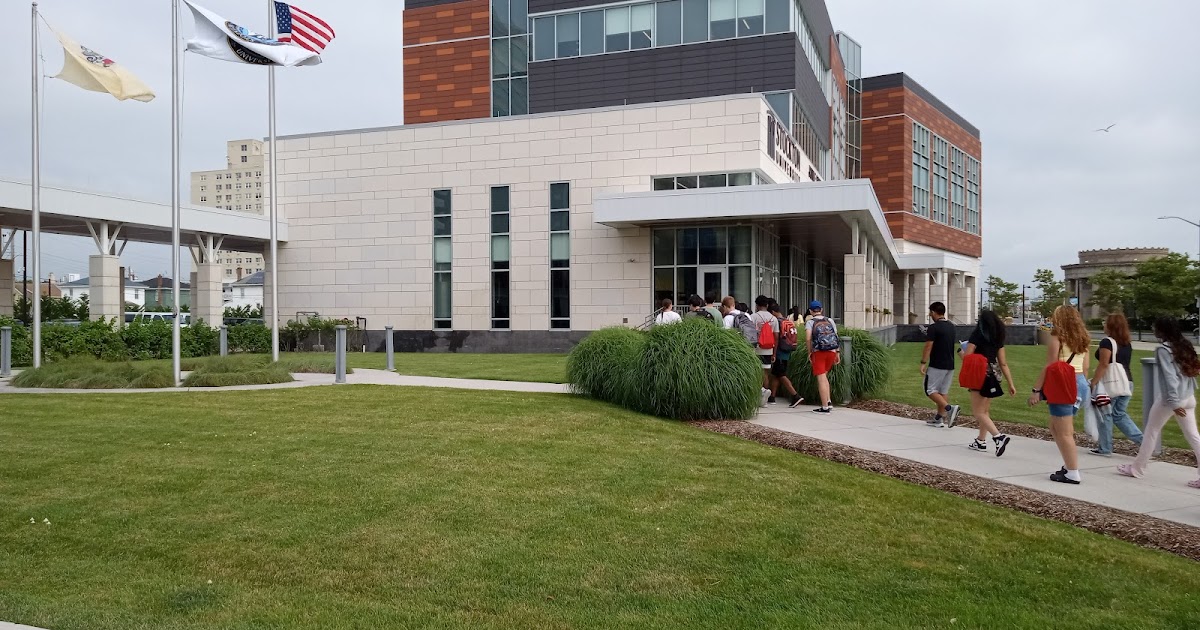
    Stockton University’s Atlantic City campus may be treading water—literally and figuratively. Built in 2018 on a stretch of reclaimed land in the South Inlet neighborhood, the coastal satellite of Stockton University sits just a few hundred feet from the Atlantic Ocean. With scenic views and beachfront access, it was marketed as a fresh vision for higher education: experiential learning by the sea.

    But according to Rutgers University’s Climate Impact Lab and corroborated by NOAA sea level rise projections, that vision may be short-lived. In less than 50 years, large portions of the campus could be underwater—possibly permanently. In fact, with high tide flooding already happening more frequently in Atlantic City and sea levels expected to rise 2 to 5 feet by 2100 depending on emissions, climate change poses an existential threat not just to Stockton’s Atlantic City facilities, but to the broader idea of oceanfront higher education.

    The Science: Rutgers’ Stark Warning

    Rutgers’ 2021 “New Jersey Science and Technical Advisory Panel Report” projected sea level rise in the state could exceed 2.1 feet by 2050 and 5.1 feet by 2100 under high emissions scenarios. Even under moderate mitigation efforts, the sea is projected to rise 1.4 to 3.1 feet by 2070, placing critical infrastructure—including roads, utility networks, and public buildings—at risk. Stockton’s coastal campus is among them.

    A Teachable Crisis

    For students and faculty in environmental science, public policy, and urban planning, Stockton’s Atlantic City campus is both classroom and case study. Professors can point to flooding events just blocks away as real-time lessons in sea level rise, coastal erosion, and infrastructure vulnerability. Students witness firsthand the tension between development and environmental limits.

    Yet these lived experiences also raise ethical questions. Is the university preparing students for the reality of climate displacement—or is it merely weathering the storm until the next round of state funding? Are public institutions being honest about the long-term risks students will face, not just as residents but as debt-burdened alumni?

    In many ways, Stockton’s presence in Atlantic City epitomizes the “climate denial by development” that characterizes so much U.S. urban planning: Build now, mitigate later, and leave tomorrow’s collapse for someone else to manage.

    No Easy Retreat

    Climate adaptation strategies in Atlantic City have been slow-moving, expensive, and often controversial. Proposed solutions—such as sea walls, elevating roads, and managed retreat—require enormous financial and political capital. There’s also no consensus on how to preserve equity in a shrinking, sinking city.

    For Stockton University, retreating from the Atlantic City campus would be politically and financially damaging. The expansion was celebrated with ribbon-cuttings and bipartisan support. Pulling back now would mean acknowledging a costly miscalculation. Yet failing to plan for relocation or phased withdrawal could leave students and taxpayers on the hook for an underwater investment.

    According to the New Jersey Coastal Resilience Plan, Atlantic County—home to Stockton’s main and satellite campuses—is one of the most climate-exposed counties in the state. And Stockton isn’t just sitting in the floodplain; it’s training the very people who will be tasked with managing these emergencies. It has both a responsibility and an opportunity to lead, not just in mitigation but in public reckoning.

    Lessons for Higher Ed

    Stockton is hardly the only university caught between mission and market. Across the U.S., colleges and universities are pouring resources into branding campaigns and capital projects that ignore—or actively obscure—the long-term environmental risks. Climate change is often treated as a course offering, not an existential threat.

    In Universities on Fire, Bryan Alexander outlines how climate change will fundamentally reshape the higher education landscape—from facilities planning to enrollment, from energy consumption to curriculum design. He warns that campuses, particularly those located near coasts or in extreme heat zones, face not just infrastructural threats but institutional crises. Rising waters, wildfires, hurricanes, and population shifts will force universities to rethink their physical footprints, economic models, and public obligations.

    Yet few accreditors or bond-rating agencies have accounted for climate risk in their evaluations. Endowments continue to fund construction in flood-prone areas. Boards of trustees prioritize expansion over retreat. And students, many of whom are first-generation or low-income, are seldom told what climate vulnerability could mean for the real value of their degrees—or the safety of their dormitories.

    As sea levels rise and climate models grow more precise, Stockton’s Atlantic City campus may become a symbol—not just of poor urban planning, but of an education system unprepared for the world it claims to be shaping.

    What Comes Next?

    For now, Stockton continues to expand its Atlantic City footprint, even as new reports suggest that this part of the Jersey Shore may be uninhabitable or cost-prohibitive to protect in a few decades. The university has proposed additional student housing and even a new coastal research center. But each new building reinforces the same flawed logic: that short-term gains outweigh long-term collapse.

    At some point, Stockton University—and many other coastal institutions—will have to decide whether to keep investing in property that’s literally slipping into the sea, or to model the kind of resilience and foresight they claim to teach.

    Because this is not just a sustainability issue. It’s a justice issue. It’s a debt issue. It’s a survival issue.

    And it’s happening now.

    Sources

    Bryan Alexander. Universities on Fire: Higher Education in the Climate Crisis. Johns Hopkins University Press, 2023.

    NJ Department of Environmental Protection. Resilient NJ: Statewide Coastal Resilience Plan. 2020.

    Rutgers University. New Jersey Climate Change Resource Center.

    U.S. Army Corps of Engineers. Back Bay Study – New Jersey.

    New Jersey Future. “Climate Risks and Infrastructure in Atlantic County.”

    Stockton University. Strategic Plan 2025: Choosing Our Path.

    NOAA. State of High Tide Flooding and Sea Level Rise 2023 Technical Report.

    Source link

  • Strong budgeting, revenue flexibility key to weathering K-12 financial storm, says Moody’s

    Strong budgeting, revenue flexibility key to weathering K-12 financial storm, says Moody’s

    This audio is auto-generated. Please let us know if you have feedback.

    Dive Brief:

    • School districts with strong budget management and the ability to raise revenue, in addition to state funding access, will be able to better weather the financial storm exacerbated by recent federal changes in education policy, according to a Moody’s Ratings’ report released last week. 

    • A significant increase in state aid could stave off effects from shrinking federal support under the Trump administration. However, any states’ plans to bolster school funding may be scrapped to adapt to other federal policy changes such as reduced Medicaid or disaster recovery funding. 

    • School districts in most states have an average ability to increase revenue. Districts in Arizona, Kansas, Michigan, New Mexico, Nevada and Oklahoma have more limited revenue-raising flexibility than other states, the report said.

    Dive Insight:

    Districts have faced financial turmoil in the past few months, as the Trump administration continues to change course on federal funding that was expected to be available for districts.

    The administration withheld pandemic aid reimbursements, for example — a decision it then walked back. It also recently delayed $6.2 billion in federal K-12 grants, only part of which the administration has said it would release so far

    States with a greater dependence on federal funding “will translate into additional credit pressure if federal funding is reduced,” the report said. Arizona and Oklahoma, for example, rely on federal funding for more than 20% of their K-12 budgets.

    Overall, the federal government provides 13.6% of total K-12 funding, according to the Education Data Initiative.

     Additional changes on the federal level will impact school district budgets such as an expansion in school choice — with the nation’s first federal school voucher program available nationwide established through the “One Big, Beautiful Bill.” The major tax and spending package was narrowly passed by Congress and signed by President Donald Trump earlier this month. 

    “This shift could result in enrollment being redirected to alternatives outside traditional K-12 districts,” the Moody’s report says. 

    In another Moody’s report released in April, the financial outlook and research organization showed that states are unlikely to fill gaps left by the federal government changes, leaving districts with a “limited menu of options.”

    “While many states have indeed increased their K-12 education funding, whether these efforts will fully offset the impact of reduced federal support remains uncertain,” said Gregory Sobel, senior analyst and vice president at Moody’s Ratings, in an email to K-12 Dive. Sobel said that “while state support is growing, it may not be sufficient to fully counterbalance the combined effects of reduced federal aid and heightened competition.”

    Districts are already feeling the blowback from federal-level changes. 

    About 85% of superintendents said they have existing contracts previously paid with federal funds that are currently being withheld, forcing them to backfill with local dollars, according to a survey released Tuesday of nearly 630 district leaders across 43 states. 

    As a result of these spending changes, nearly three quarters of surveyed districts will have to scrap academic services for students, such as tutoring and before or after-school programming, according to the poll conducted by AASA, the School Superintendents Association. Half of superintendents said they will have to make labor cuts, including in special education.

    “This isn’t a future problem; it’s happening now,” one superintendent said in the survey. “Our budget was set with these funds in mind. Their sudden withholding has thrown us into chaos, forcing drastic measures that will negatively impact every student, classroom, and school in our district.”

    Source link

  • Test yourself on this week’s K-12 news

    Test yourself on this week’s K-12 news

    This audio is auto-generated. Please let us know if you have feedback.

    How well did you keep up with this week’s developments in K-12 education? To find out, take our five-question quiz below. Then, share your score by tagging us on social media with #K12DivePopQuiz.

    Source link

  • Education Department issues AI priorities. But what if the agency closes?

    Education Department issues AI priorities. But what if the agency closes?

    This audio is auto-generated. Please let us know if you have feedback.

    Dive Brief:

    • The U.S. Department of Education sent a “Dear Colleague” letter on Tuesday to district and state leaders encouraging and guiding them on how to integrate artificial intelligence in schools through existing federal grants. 
    • The letter signed by U.S. Education Secretary Linda McMahon said that grantees may use federal funds to use AI to enhance high-quality curriculum tools, high-impact tutoring, and college and career pathway advising.
    • The department briefly also outlined its principles for responsible AI use in schools. Those principles affirmed that AI K-12 initiatives should be educator-led, ethical, accessible for those with disabilities, transparent in the way new tools are rolled out, and in compliance with federal data privacy laws.

    Dive Insight:

    The department’s new AI guidance comes at a time when the future of federal oversight of ed tech and K-12 cybersecurity policies remains unclear, given that the Trump administration shuttered the Education Department’s Office of Educational Technology in March and has continued to move toward its plan to dismantle the agency.

    On Monday, the Education Department also published a proposed rule in the Federal Register regarding its priorities for using discretionary grant programs to support AI use in schools. The public comment period on the regulatory proposal is open until Aug. 20. 

    Under the proposal, those seeking federal grant funding for AI projects in schools would need to include a focus on at least one of the following goals:

    • Embed AI literacy skills into classroom lessons to ultimately improve students’ educational outcomes.
    • Provide educators with professional development in foundational skills for computer science and AI with instruction on how to responsibly use new technologies.
    • Partner with states or school districts to offer high school students dual enrollment credentialing opportunities for postsecondary or industry-recognized credentials in AI. 
    • Support and develop evidence for appropriate ways to integrate AI into education.
    • Use AI to support services for students with disabilities.
    • Tap into AI to improve teacher training and evaluation
    • Use AI tools to reduce time-intensive administrative tasks

    Meanwhile, over 400 school district leaders sent a letter to Congress last week asking for lawmakers to restore federal leadership for K-12 cybersecurity and ed tech.

    The letter, led by the Consortium for School Networking, pointed to funding cuts at the Cybersecurity and Infrastructure Security Agency that led to the discontinuation of K-12 cybersecurity programs offered through the Multi-State Information Sharing and Analysis Center. The move, they wrote, consequently took away “critical threat intelligence, incident response, and coordination services that many school systems depend on to protect against ransomware and other attacks.”

    OET’s closure also left a major hole in guidance for states and districts on key issues such as responsible AI use, digital design, digital access and cybersecurity strategy, the letter said. The district leaders also called for Congress to reinstate staffing for the office. 

    CoSN CEO Keith Krueger said district technology leaders are increasingly worried that AI will be used for cyberattacks against schools. He added that the demand for more K-12 resources to protect schools from cybersecurity threats is “incredible.”

    For instance, the Federal Communications Commission in November 2024 received $3.7 billion in requests for federal funds to help protect district networks. The applications were for a $200 million FCC cybersecurity pilot program.

    But the bottom line, Krueger said, is that if the Trump administration fulfills its promise to close the Education Department, “who exactly is going to help school districts with cybersecurity, for instance, or AI?”

    Source link

  • Christy Chancy Bridges | Diverse: Issues In Higher Education

    Christy Chancy Bridges | Diverse: Issues In Higher Education

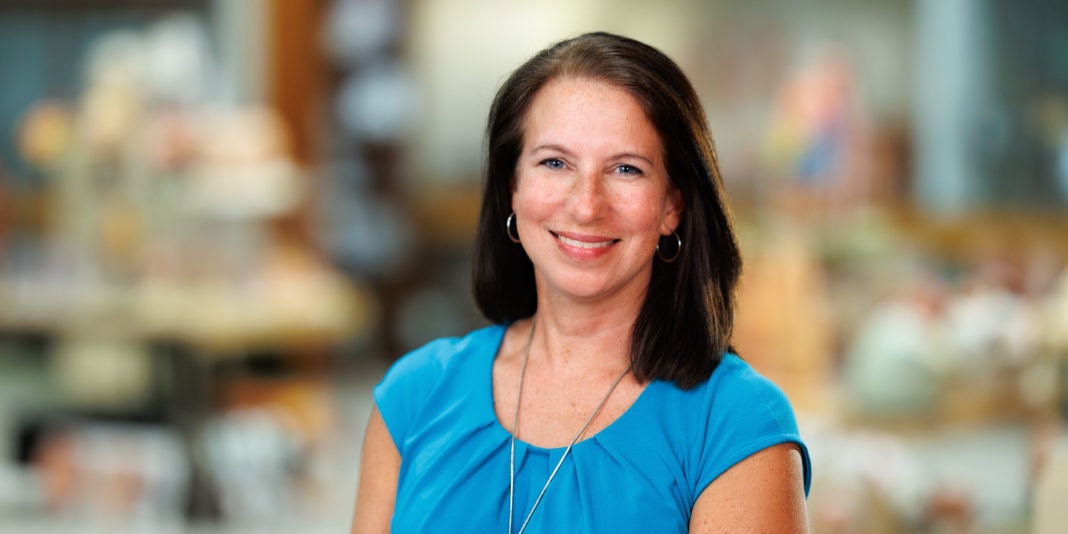
    Dr. Christy Chancy BridgesChristy Chancy Bridges has been appointed associate dean of graduate programs at Mercer University School of Medicine.

     Bridges, a professor of histology, also served as director of MUSM’s Ph.D. in biomedical sciences program and had been serving as interim chair of the biomedical sciences department since 2022. She served as director of the Master of Science in preclinical sciences program from 2018-25. She joined the MUSM faculty in 2006.

    Bridges earned her bachelor’s degree in biology from Berry College and her Ph.D. in cellular biology from the Medical College of Georgia at Augusta University. She completed postdoctoral training at the Medical College of Georgia in the Department of Biochemistry and Molecular Biology and at MUSM in the Department of Biomedical Sciences.

    Source link

  • Johns Hopkins Press Plans to License Books to Train AI

    Johns Hopkins Press Plans to License Books to Train AI

    SvetaZi/iStock/Getty Images

    Johns Hopkins University Press (JHUP) is the latest academic publisher to announce plans to license its books to train proprietary large language models. According to an email JHUP sent to authors Tuesday, those who want to opt out of the licensing agreement have until Aug. 31 to sign an addendum to their contracts; otherwise their work is fair game.

    The move comes as Johns Hopkins University—the nation’s largest spender on university-based research and development—is facing big budget holes created by the Trump administration’s sweeping cuts to federal grants.

    “While we do not anticipate huge financial gain for individual books, the cumulative revenue [from LLM licensing deals] would be meaningful for Johns Hopkins University Press and our mission,” read the email sent to authors. “As we anticipate contraction in the higher-education market, these funds can help to sustain our important work as a non-profit publisher.”

    While JHUP is not currently operating at a deficit, its executive director, Barbara Kline Pope, said in an email to Inside Higher Ed that the publisher is “exploring how our financial model may need to evolve over the coming years.” Pope did not answer Inside Higher Ed’s specific questions about which company or companies it plans to license book content to, but said that it’s “currently exploring partnerships with both general AI companies and those focused on specialized content and inference models like Retrieval-Augmented Generation,” which can incorporate external information sources to enhance the authority of an LLM’s response.

    The press maintains a backlist of about 3,000 titles and publishes roughly 150 new books a year by faculty and other experts in fields such as public health, science, higher education and the humanities. It told authors that they can expect to receive “modest” returns of less than $100 per title per license.

    While JHUP did not provide a specific dollar figure for how much revenue it expects to generate from the licensing agreement, some of the biggest scholarly publishers have already proven that there’s money to be made in licensing content to AI companies.

    In the two-plus years since generative artificial intelligence tools have gone mainstream, major for-profit academic publishers, including Wiley and Informa (Taylor & Francis’s parent company), have signed agreements with AI companies. While some optimistic authors and observers have said such deals mean well-researched, accurate data will be used to train AI models, others have pushed back. Last summer, authors were outraged after Taylor & Francis failed to notify them before selling their work to Microsoft for $10 million. By the end of 2024, Taylor & Francis reported a $75 million profit as a result of the sale, which boosted its underlying revenue growth from 3 percent to 15 percent in one year, according to Bloomberg.

    In addition to JHUP, other nonprofit publishers are jumping on the AI bandwagon—or at least thinking about it. Last year, Oxford University Press confirmed it was working with AI companies to develop LLMs, while the university itself launched a five-year partnership with OpenAI this past spring. Cambridge University Press is still in the process of weighing AI licensing agreements, though it’s also given authors the opportunity to opt out of any future AI-related aggregation efforts. Massachusetts Institute of Technology Press said in November that multiple AI companies have approached about a licensing agreement; it responded by asking authors for their input and has not publicly announced a deal.

    In its notice to authors this week, JHUP said it spent the last year weighing the possibility of licensing its works to train LLMs. In addition to potential financial gain, the press explained that it is deciding to move forward now because an LLM licensing agreement would make authors’ work more discoverable by their intended readers, create some guardrails around content use amid increasing concerns that major LLM companies are already scraping pirated versions of JHUP’s book content, and make a stronger legal case that such companies should be required to pay for access to the publisher’s content.

    Sharon Ann Murphy, a history and classics professor at Providence College in Rhode Island who signed two contracts with JHUP long before the rise of LLMs, said she was not surprised—but nonetheless upset—by the notice from JHUP, which includes language from the opt-out addendum. It requires authors who don’t want to license their work to acknowledge that in addition to not receiving any AI-related royalties, “the sales and reach of the Work may suffer as a result of or in relation to the fact that Hopkins Press will not exercise AI Rights with respect to the Work.”

    Murphy said she interpreted JHUP’s opt-out clause to mean that authors “are agreeing that they’re going to lose revenue because of this and Hopkins has no responsibility to protect us.”

    Murphy is also skeptical of JHUP’s claims in its email to authors that if LLMs adopt technologies that credit the sources of AI-generated response, it will give readers the ability “to identify and click through to the original source” and is “the best way to continue to engage with readers and disseminate (authors’) work widely.”

    “They’re saying that somehow this will promote our work, but that’s a specious argument. That’s not how AI models work,” Murphy said. “Academic presses are operating on shoestring budgets, but this seems really short-sighted. Academic presses are in the business of creating real knowledge, but AI is in the business of hallucinating and making stuff up.”

    Annette Windhorn, a spokesperson for the Association of University Presses, wrote in an email to Inside Higher Ed that she’s not sure just how many academic presses have agreed to license their content to AI companies.

    “An internal query to member presses more than a year ago did reveal that a number of presses had been approached by a variety of companies, but almost none were at that time actually considering an agreement and many presses were deferring initial decision points to university counsel,” she wrote. “Our members are following developments closely, but moving with caution in areas that may impact their authors’, their institutions’, or their own rights and responsibilities.”

    Source link