Author: admin

  • This college campus may be literally underwater sooner than you think

    This college campus may be literally underwater sooner than you think

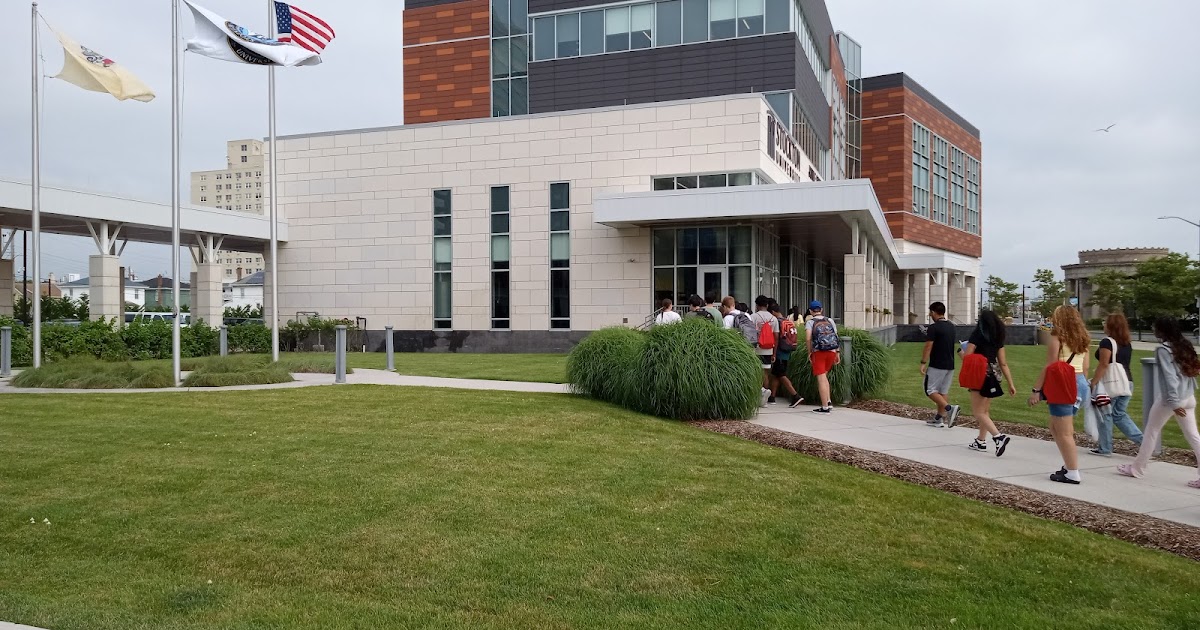
    Stockton University’s Atlantic City campus may be treading water—literally and figuratively. Built in 2018 on a stretch of reclaimed land in the South Inlet neighborhood, the coastal satellite of Stockton University sits just a few hundred feet from the Atlantic Ocean. With scenic views and beachfront access, it was marketed as a fresh vision for higher education: experiential learning by the sea.

    But according to Rutgers University’s Climate Impact Lab and corroborated by NOAA sea level rise projections, that vision may be short-lived. In less than 50 years, large portions of the campus could be underwater—possibly permanently. In fact, with high tide flooding already happening more frequently in Atlantic City and sea levels expected to rise 2 to 5 feet by 2100 depending on emissions, climate change poses an existential threat not just to Stockton’s Atlantic City facilities, but to the broader idea of oceanfront higher education.

    The Science: Rutgers’ Stark Warning

    Rutgers’ 2021 “New Jersey Science and Technical Advisory Panel Report” projected sea level rise in the state could exceed 2.1 feet by 2050 and 5.1 feet by 2100 under high emissions scenarios. Even under moderate mitigation efforts, the sea is projected to rise 1.4 to 3.1 feet by 2070, placing critical infrastructure—including roads, utility networks, and public buildings—at risk. Stockton’s coastal campus is among them.

    A Teachable Crisis

    For students and faculty in environmental science, public policy, and urban planning, Stockton’s Atlantic City campus is both classroom and case study. Professors can point to flooding events just blocks away as real-time lessons in sea level rise, coastal erosion, and infrastructure vulnerability. Students witness firsthand the tension between development and environmental limits.

    Yet these lived experiences also raise ethical questions. Is the university preparing students for the reality of climate displacement—or is it merely weathering the storm until the next round of state funding? Are public institutions being honest about the long-term risks students will face, not just as residents but as debt-burdened alumni?

    In many ways, Stockton’s presence in Atlantic City epitomizes the “climate denial by development” that characterizes so much U.S. urban planning: Build now, mitigate later, and leave tomorrow’s collapse for someone else to manage.

    No Easy Retreat

    Climate adaptation strategies in Atlantic City have been slow-moving, expensive, and often controversial. Proposed solutions—such as sea walls, elevating roads, and managed retreat—require enormous financial and political capital. There’s also no consensus on how to preserve equity in a shrinking, sinking city.

    For Stockton University, retreating from the Atlantic City campus would be politically and financially damaging. The expansion was celebrated with ribbon-cuttings and bipartisan support. Pulling back now would mean acknowledging a costly miscalculation. Yet failing to plan for relocation or phased withdrawal could leave students and taxpayers on the hook for an underwater investment.

    According to the New Jersey Coastal Resilience Plan, Atlantic County—home to Stockton’s main and satellite campuses—is one of the most climate-exposed counties in the state. And Stockton isn’t just sitting in the floodplain; it’s training the very people who will be tasked with managing these emergencies. It has both a responsibility and an opportunity to lead, not just in mitigation but in public reckoning.

    Lessons for Higher Ed

    Stockton is hardly the only university caught between mission and market. Across the U.S., colleges and universities are pouring resources into branding campaigns and capital projects that ignore—or actively obscure—the long-term environmental risks. Climate change is often treated as a course offering, not an existential threat.

    In Universities on Fire, Bryan Alexander outlines how climate change will fundamentally reshape the higher education landscape—from facilities planning to enrollment, from energy consumption to curriculum design. He warns that campuses, particularly those located near coasts or in extreme heat zones, face not just infrastructural threats but institutional crises. Rising waters, wildfires, hurricanes, and population shifts will force universities to rethink their physical footprints, economic models, and public obligations.

    Yet few accreditors or bond-rating agencies have accounted for climate risk in their evaluations. Endowments continue to fund construction in flood-prone areas. Boards of trustees prioritize expansion over retreat. And students, many of whom are first-generation or low-income, are seldom told what climate vulnerability could mean for the real value of their degrees—or the safety of their dormitories.

    As sea levels rise and climate models grow more precise, Stockton’s Atlantic City campus may become a symbol—not just of poor urban planning, but of an education system unprepared for the world it claims to be shaping.

    What Comes Next?

    For now, Stockton continues to expand its Atlantic City footprint, even as new reports suggest that this part of the Jersey Shore may be uninhabitable or cost-prohibitive to protect in a few decades. The university has proposed additional student housing and even a new coastal research center. But each new building reinforces the same flawed logic: that short-term gains outweigh long-term collapse.

    At some point, Stockton University—and many other coastal institutions—will have to decide whether to keep investing in property that’s literally slipping into the sea, or to model the kind of resilience and foresight they claim to teach.

    Because this is not just a sustainability issue. It’s a justice issue. It’s a debt issue. It’s a survival issue.

    And it’s happening now.

    Sources

    Bryan Alexander. Universities on Fire: Higher Education in the Climate Crisis. Johns Hopkins University Press, 2023.

    NJ Department of Environmental Protection. Resilient NJ: Statewide Coastal Resilience Plan. 2020.

    Rutgers University. New Jersey Climate Change Resource Center.

    U.S. Army Corps of Engineers. Back Bay Study – New Jersey.

    New Jersey Future. “Climate Risks and Infrastructure in Atlantic County.”

    Stockton University. Strategic Plan 2025: Choosing Our Path.

    NOAA. State of High Tide Flooding and Sea Level Rise 2023 Technical Report.

    Source link

  • Ransomware attacks in education jump 23% year over year

    Ransomware attacks in education jump 23% year over year

    This audio is auto-generated. Please let us know if you have feedback.

    Dive Brief:

    • Ransomware attacks against schools, colleges and universities rose 23% year over year in the first half of 2025, according to a report from Comparitech, a cybersecurity and online privacy product review website.
    • The six months saw 130 confirmed and unconfirmed ransomware attacks against educational institutions, with an average ransom demand of $556,000.
    • Education was the fourth-most-targeted sector during the first half of 2025, behind business, government and healthcare, according to Comparitech.

    Dive Insight:

    Schools have become a popular target for hackers thanks to a combination of increased digitization, the robust amount of student and staff data, and a lack of cybersecurity resources. Some 82% of K-12 schools in the U.S. experienced a cyber incident between July 2023 and December 2024, according to a March report from the nonprofit Center for Internet Security.

    In one of the most prominent recent known examples,a 19-year-old agreed to plead guilty in May to allegedly hacking and extorting student information system provider PowerSchool for $2.85 million. The incident resulted in the leaking of sensitive data of 10 million teachers and more than 60 million students. School districts also received extortion threats in relation to the cyberattack, and more than 100 school systems sued PowerSchool over the breach.

    One challenge of tracking cyberattacks is that incidents aren’t always disclosed by the organization targeted or the ransomware group that attacks. As a result, the Comparitech report said, figures are likely to change as more information is released and incidents are confirmed.

    Comparitech labels a ransomware attack as “confirmed” when the impacted organization publicly reports a ransomware incident or acknowledges a cyberattack that aligns with a ransomware group’s claim.

    As school districts try to navigate these threats and attacks, some of the leading preventative measures include investing in cybersecurity insurance and incorporating multifactor authentication for accessing files.

    Once a breach is discovered, experts recommend determining what external help is needed, whether from cyber incident support teams or private vendors, and alerting law enforcement — including the FBI and entities such as the Department of Homeland Security’s U.S. Computer Emergency Readiness Team. The FBI advises against paying ransoms, as doing so can encourage further cyberattacks and doesn’t guarantee that stolen data will be returned or that access to critical systems will be restored.

    Source link

  • Strong budgeting, revenue flexibility key to weathering K-12 financial storm, says Moody’s

    Strong budgeting, revenue flexibility key to weathering K-12 financial storm, says Moody’s

    This audio is auto-generated. Please let us know if you have feedback.

    Dive Brief:

    • School districts with strong budget management and the ability to raise revenue, in addition to state funding access, will be able to better weather the financial storm exacerbated by recent federal changes in education policy, according to a Moody’s Ratings’ report released last week. 

    • A significant increase in state aid could stave off effects from shrinking federal support under the Trump administration. However, any states’ plans to bolster school funding may be scrapped to adapt to other federal policy changes such as reduced Medicaid or disaster recovery funding. 

    • School districts in most states have an average ability to increase revenue. Districts in Arizona, Kansas, Michigan, New Mexico, Nevada and Oklahoma have more limited revenue-raising flexibility than other states, the report said.

    Dive Insight:

    Districts have faced financial turmoil in the past few months, as the Trump administration continues to change course on federal funding that was expected to be available for districts.

    The administration withheld pandemic aid reimbursements, for example — a decision it then walked back. It also recently delayed $6.2 billion in federal K-12 grants, only part of which the administration has said it would release so far

    States with a greater dependence on federal funding “will translate into additional credit pressure if federal funding is reduced,” the report said. Arizona and Oklahoma, for example, rely on federal funding for more than 20% of their K-12 budgets.

    Overall, the federal government provides 13.6% of total K-12 funding, according to the Education Data Initiative.

     Additional changes on the federal level will impact school district budgets such as an expansion in school choice — with the nation’s first federal school voucher program available nationwide established through the “One Big, Beautiful Bill.” The major tax and spending package was narrowly passed by Congress and signed by President Donald Trump earlier this month. 

    “This shift could result in enrollment being redirected to alternatives outside traditional K-12 districts,” the Moody’s report says. 

    In another Moody’s report released in April, the financial outlook and research organization showed that states are unlikely to fill gaps left by the federal government changes, leaving districts with a “limited menu of options.”

    “While many states have indeed increased their K-12 education funding, whether these efforts will fully offset the impact of reduced federal support remains uncertain,” said Gregory Sobel, senior analyst and vice president at Moody’s Ratings, in an email to K-12 Dive. Sobel said that “while state support is growing, it may not be sufficient to fully counterbalance the combined effects of reduced federal aid and heightened competition.”

    Districts are already feeling the blowback from federal-level changes. 

    About 85% of superintendents said they have existing contracts previously paid with federal funds that are currently being withheld, forcing them to backfill with local dollars, according to a survey released Tuesday of nearly 630 district leaders across 43 states. 

    As a result of these spending changes, nearly three quarters of surveyed districts will have to scrap academic services for students, such as tutoring and before or after-school programming, according to the poll conducted by AASA, the School Superintendents Association. Half of superintendents said they will have to make labor cuts, including in special education.

    “This isn’t a future problem; it’s happening now,” one superintendent said in the survey. “Our budget was set with these funds in mind. Their sudden withholding has thrown us into chaos, forcing drastic measures that will negatively impact every student, classroom, and school in our district.”

    Source link

  • Test yourself on this week’s K-12 news

    Test yourself on this week’s K-12 news

    This audio is auto-generated. Please let us know if you have feedback.

    How well did you keep up with this week’s developments in K-12 education? To find out, take our five-question quiz below. Then, share your score by tagging us on social media with #K12DivePopQuiz.

    Source link

  • Education Department issues AI priorities. But what if the agency closes?

    Education Department issues AI priorities. But what if the agency closes?

    This audio is auto-generated. Please let us know if you have feedback.

    Dive Brief:

    • The U.S. Department of Education sent a “Dear Colleague” letter on Tuesday to district and state leaders encouraging and guiding them on how to integrate artificial intelligence in schools through existing federal grants. 
    • The letter signed by U.S. Education Secretary Linda McMahon said that grantees may use federal funds to use AI to enhance high-quality curriculum tools, high-impact tutoring, and college and career pathway advising.
    • The department briefly also outlined its principles for responsible AI use in schools. Those principles affirmed that AI K-12 initiatives should be educator-led, ethical, accessible for those with disabilities, transparent in the way new tools are rolled out, and in compliance with federal data privacy laws.

    Dive Insight:

    The department’s new AI guidance comes at a time when the future of federal oversight of ed tech and K-12 cybersecurity policies remains unclear, given that the Trump administration shuttered the Education Department’s Office of Educational Technology in March and has continued to move toward its plan to dismantle the agency.

    On Monday, the Education Department also published a proposed rule in the Federal Register regarding its priorities for using discretionary grant programs to support AI use in schools. The public comment period on the regulatory proposal is open until Aug. 20. 

    Under the proposal, those seeking federal grant funding for AI projects in schools would need to include a focus on at least one of the following goals:

    • Embed AI literacy skills into classroom lessons to ultimately improve students’ educational outcomes.
    • Provide educators with professional development in foundational skills for computer science and AI with instruction on how to responsibly use new technologies.
    • Partner with states or school districts to offer high school students dual enrollment credentialing opportunities for postsecondary or industry-recognized credentials in AI. 
    • Support and develop evidence for appropriate ways to integrate AI into education.
    • Use AI to support services for students with disabilities.
    • Tap into AI to improve teacher training and evaluation
    • Use AI tools to reduce time-intensive administrative tasks

    Meanwhile, over 400 school district leaders sent a letter to Congress last week asking for lawmakers to restore federal leadership for K-12 cybersecurity and ed tech.

    The letter, led by the Consortium for School Networking, pointed to funding cuts at the Cybersecurity and Infrastructure Security Agency that led to the discontinuation of K-12 cybersecurity programs offered through the Multi-State Information Sharing and Analysis Center. The move, they wrote, consequently took away “critical threat intelligence, incident response, and coordination services that many school systems depend on to protect against ransomware and other attacks.”

    OET’s closure also left a major hole in guidance for states and districts on key issues such as responsible AI use, digital design, digital access and cybersecurity strategy, the letter said. The district leaders also called for Congress to reinstate staffing for the office. 

    CoSN CEO Keith Krueger said district technology leaders are increasingly worried that AI will be used for cyberattacks against schools. He added that the demand for more K-12 resources to protect schools from cybersecurity threats is “incredible.”

    For instance, the Federal Communications Commission in November 2024 received $3.7 billion in requests for federal funds to help protect district networks. The applications were for a $200 million FCC cybersecurity pilot program.

    But the bottom line, Krueger said, is that if the Trump administration fulfills its promise to close the Education Department, “who exactly is going to help school districts with cybersecurity, for instance, or AI?”

    Source link

  • Christy Chancy Bridges | Diverse: Issues In Higher Education

    Christy Chancy Bridges | Diverse: Issues In Higher Education

    Dr. Christy Chancy BridgesChristy Chancy Bridges has been appointed associate dean of graduate programs at Mercer University School of Medicine.

     Bridges, a professor of histology, also served as director of MUSM’s Ph.D. in biomedical sciences program and had been serving as interim chair of the biomedical sciences department since 2022. She served as director of the Master of Science in preclinical sciences program from 2018-25. She joined the MUSM faculty in 2006.

    Bridges earned her bachelor’s degree in biology from Berry College and her Ph.D. in cellular biology from the Medical College of Georgia at Augusta University. She completed postdoctoral training at the Medical College of Georgia in the Department of Biochemistry and Molecular Biology and at MUSM in the Department of Biomedical Sciences.

    Source link

  • Education Dept. Prepares for “Big, Beautiful Bill” Changes

    Education Dept. Prepares for “Big, Beautiful Bill” Changes

    The Education Department is moving quickly to carry out the higher ed changes in the recently passed One Big Beautiful Bill Act.

    The agency announced Thursday that it will convene two advisory committees to weigh in on changes to the rules and regulations for the federal student loan program, institutional and programmatic accountability, and the Pell Grant program. Officials wrote in the announcement that this round of rule-making was necessary to implement the changes in the One Big Beautiful Bill as well as “other administration priorities.”

    Many of the higher ed provisions in the legislation take effect July 1, 2026, and several experts have raised concerns about whether that’s enough time for the department to put in place the necessary regulations and guidance. Among other changes, the law ends the Graduate PLUS loan program, caps loans for graduate and professional students, and expands the Pell Grant to workforce training programs that run between eight and 15 weeks.

    To revise the regulations, the department is following its lengthy and complicated process known as negotiated rule making, which involves bringing together stakeholders to review proposed changes and then listening to public comment on the plan.

    One group, which the department is calling the Reimagining and Improving Student Education (RISE) Committee, will focus on the student loan regulations, including creating new repayment plans and giving colleges the ability to limit how much students can borrow. The RISE Committee will meet twice in September and November for week-long sessions to negotiate policy revisions. If the committee doesn’t reach a consensus, the department is free to move forward with its own proposal, which would still be subject to public comment.

    The other policy changes in the law will fall to the other panel, known as the Accountability in Higher Education and Access through Demand-driven Workforce Pell (AHEAD) Committee. That includes implementing the new earnings test, which requires programs to prove their graduates earn more than an adult with a high school diploma or risk losing their access to student loans, as well as revising the eligibility criteria for Pell grants to exclude students who get a full ride. The AHEAD committee will meet in December and January for week-long sessions.

    Both committees will include student borrowers, legal assistance organizations and representatives from various types of institutions, among other stakeholder groups. None specifically include the financial aid administrations who will play a key role in rolling out these changes on college campuses.

    To kick off the rule-making process, the department will hold a virtual public hearing from 9 a.m. to 4 p.m. Aug. 7. More information is available on the department’s website.

    Source link

  • UNC System Mandates Reports on DEI Compliance

    UNC System Mandates Reports on DEI Compliance

    The University of North Carolina System’s Board of Governors issued a memorandum requiring each of the system’s 17 campuses to develop a subcommittee to evaluate the campus’s compliance with the system’s anti-diversity, equity and inclusion policy, The Assembly reported.

    They have until Sept. 1 to show how they have complied with the policy, which cancelled previous DEI guidance and mandated neutrality from administrators on political and social issues. As a result of that policy, UNC campuses reported that they laid off dozens of staffers, moved 131 people to new positions, and redirected $16 million in DEI spending to student success and wellbeing programs.

    According to the memo, the reviews should include briefings with chancellors about employees whose jobs were changed as a result of the DEI ban.

    “These confidential reviews should compare an individual’s prior position to his or her new responsibilities, including how the employee’s performance in that role has changed, and what safeguards exist to ensure an employee’s previous responsibilities do not continue in the present role,” the memo states. “Confidential briefings from the chancellor on any disciplinary action taken against personnel should occur at this time as well.”

    The memo comes after four UNC employees were secretly filmed by a conservative nonprofit discussing circumventing DEI restrictions; three of those employees are no longer employed by their universities.

    Source link

  • Trump Aims to Save College Sports with Executive Order

    Trump Aims to Save College Sports with Executive Order

    The Trump administration threw its hat in the ring Thursday amid growing debates over how best to manage compensation for college athletes, issuing an executive order titled Saving College Sports.

    It comes just over 24 hours after House Republicans in two separate committees advanced legislation concerning the same topic.

    “The future of college sports is under unprecedented threat,” the order stated. “A national solution is urgently needed to prevent this situation from deteriorating beyond repair and to protect non-revenue sports, including many women’s sports, that comprise the backbone of intercollegiate athletics, drive American superiority at the Olympics … and catalyze hundreds of thousands of student-athletes to fuel American success in myriad ways.”

    Ever since legal challenges and new state laws drove the National Collegiate Athletic Association to allow student-athletes to profit off their own name, image and likeness in 2021, America has entered a new era that many refer to as the wild west of college sports.

    Lawmakers have long scrutinized this unregulated market, arguing that it allows the wealthiest colleges to buy the best players. But a recent settlement, finalized in June, granted colleges the power to directly pay their athletes, elevating the dispute to a new level. Many fear that disproportionate revenue-sharing among the most watched sports, namely men’s football and basketball, will hurt women’s athletics and Olympic sports including soccer and track and field.

    By directing colleges to preserve and expand scholarships for those sports and provide the maximum number of roster spots permitted under NCAA rules, the Trump administration hopes to prevent such a monopolization.

    The order also disallows third-party, pay-for-play compensation that has become common among the wealthiest institutions and booster clubs, and mandates that any revenue-sharing permitted between universities and collegiate athletes should be implemented in a manner that protects women’s and nonrevenue sports.

    Many sports law experts are skeptical about the order, suggesting it’s unlikely to move the needle and might create new legal challenges instead.

    However, Representative Tim Walberg, a Michigan Republican and chair of the Education and Workforce Committee, thanked the president for his commitment to supporting student-athletes and strengthening college athletics.

    “The SCORE Act, led by our three committees, will complement the President’s executive order,” Walberg said. “We look forward to working with all of our colleagues in Congress to build a stronger and more durable college sports environment.”

    Source link

  • Columbia’s Agreement: A Win for Authoritarianism

    Columbia’s Agreement: A Win for Authoritarianism

    Columbia’s Agreement: A Win for Authoritarianism

    Elizabeth Redden

    Fri, 07/25/2025 – 03:00 AM

    The disastrous deal between Columbia and the federal government only strengthens illiberal rule behind a façade of liberal values, Austin Sarat writes.

    Byline(s)

    Source link