Author: admin

  • Justin Amash | The Foundation for Individual Rights and Expression

    Justin Amash | The Foundation for Individual Rights and Expression

    Throughout his career, former Congressman Justin Amash
    has been a strong advocate for freedom of speech, writing that “The
    value of free speech comes from encountering views that are
    unorthodox, uncommon, or unaccepted…Free speech is a barren
    concept if people are limited to expressing views already widely
    held.”

    In this special live episode, filmed in front of 200+
    high schoolers attending FIRE’s Free Speech Forum at American
    University in Washington, D.C., Amash takes questions from the
    audience and discusses his upbringing, his political career, the
    state of American politics, and how the Constitution guided his
    work in Congress.

    Earlier this year, Congressman Amash
    joined
    FIRE’s Advisory Council.

    Timestamps:

    00:00 Intro

    03:30 Upbringing

    06:21 Law school

    13:15 Time in Congress

    15:59 Why Amash publicly explained each of his
    votes

    26:30 On being the first libertarian in Congress

    30:57 Connection between his principles and free
    speech

    33:10 Trump’s first impeachment

    42:48 Dealing with pushback from constituents

    46:03 Term limits for members of Congress?

    55:25 How high schoolers can pursue a career in
    politics

    59:45 Has there been a regression in First Amendment
    protections?

    01:07:32 What Amash is up to now

    01:08:06 Outro

    Enjoy listening to the podcast? Donate to FIRE today and
    get exclusive content like member webinars, special episodes, and
    more. If you became a FIRE Member
    through a donation to FIRE at thefire.org and would like access to
    Substack’s paid subscriber podcast feed, please email
    [email protected].

    Source link

  • Live with former Rep. Justin Amash

    Live with former Rep. Justin Amash

    Throughout his career, former Congressman Justin Amash has been a strong advocate for freedom of speech, writing that “The value of free speech comes from encountering views that are unorthodox, uncommon, or unaccepted…Free speech is a barren concept if people are limited to expressing views already widely held.”

    In this special live episode, filmed in front of 200+ high schoolers attending FIRE’s Free Speech Forum at American University in Washington, D.C., Amash takes questions from the audience and discusses his upbringing, his political career, the state of American politics, and how the Constitution guided his work in Congress.

    Earlier this year, Congressman Amash joined FIRE’s Advisory Council.

    Timestamps:

    00:00 Intro

    03:30 Upbringing

    06:21 Law school

    13:15 Time in Congress

    15:59 Why Amash publicly explained each of his votes

    26:30 On being the first libertarian in Congress

    30:57 Connection between his principles and free speech

    33:10 Trump’s first impeachment

    42:48 Dealing with pushback from constituents

    46:03 Term limits for members of Congress?

    55:25 How high schoolers can pursue a career in politics

    59:45 Has there been a regression in First Amendment protections?

    01:07:32 What Amash is up to now

    01:08:06 Outro

    Enjoy listening to the podcast? Donate to FIRE today and get exclusive content like member webinars, special episodes, and more. If you became a FIRE Member through a donation to FIRE at thefire.org and would like access to Substack’s paid subscriber podcast feed, please email [email protected].

    Source link

  • Blursday Socials Are Reborn! First One on Tuesday, July 29th –

    Blursday Socials Are Reborn! First One on Tuesday, July 29th –

    For folks who have missed Blursdays, they’re back and better than ever. The first one is coming up fast on Tuesday, July 29th at 11:30 AM – 12:30 PM ET.

    Here’s the deal: The Empirical Educator Project (EEP), now under 1EdTech, has been rebranded as 1EdTech Learning Impact Labs. This name change is important because, unlike EEP, 1EdTech can drive change right into the EdTech ecosystem. Accordingly, Blursdays have been renamed 1EdTech Learning Impact Labs Live (or LIL Live). Lots of old friends, some new ones, and a renewed focus on driving change. Our first guest is Unizin CEO Bart Pursel, who has two concrete, actionable proposals for us:

    • We know interleaving works as a teaching practice. The data are clear. Why don’t we create cross-platform interoperability standards that make it easy to implement the same interleaving methods across different LMSs, courseware systems, etc.?
    • We know that course design can significantly impact whether students change their majors. Why don’t we make it easy to analyze the impact of course designs on major changes?

    Bart has already presented these ideas to the 1EdTech community at our Learning Impact conference. Now I’ve asked him back to speak with…well…you. You can weigh in on what you need. You can help shape the 1EdTech community’s perspective on these topics. And you can still enjoy the old Blursday camaraderie.

    How to join

    We’ll be using Engageli. For those who haven’t been to a Blursday and haven’t used the platform before, Engageli is a virtual learning platform designed to foster active learning and engagement in live and asynchronous learning environments. You don’t need to pre-register for Learning Impact Labs Live; just click the link to access the classroom lobby on the scheduled day and time. Sign-up will take a minute or two, so please allow yourself time if you can. Here are the steps:

    • Input your email address and receive a verification code
    • Once you input the verification code, edit your learner name to your first and last name
    • Check your audio and video settings
    • Select Join classroom

    Please feel free to watch this quick video before our session to get a feel for Engageli classroom!


    Reader Interactions

    Source link

  • Union seeks delay in Education Department layoffs

    Union seeks delay in Education Department layoffs

    This audio is auto-generated. Please let us know if you have feedback.

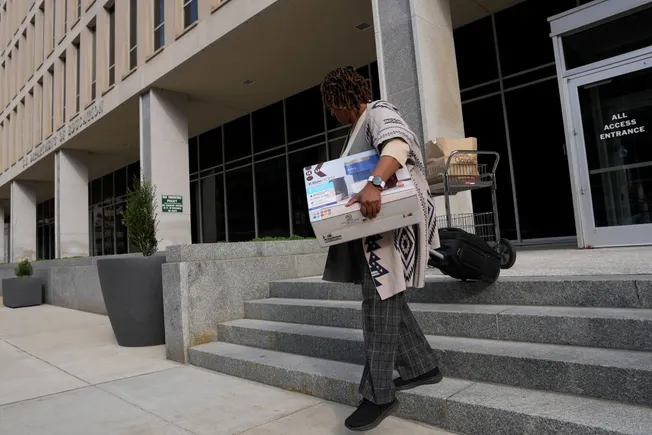
    U.S. Department of Education employees caught in the Trump administration’s reduction in force say they are being terminated against the terms of their bargaining agreement. The union representing them, American Federation of Government Employees Local 252, is seeking to delay the department’s termination date as a result. 

    It filed a grievance against the department on Wednesday, claiming the new Aug. 1 termination date only gives employees two weeks rather than the required 60-day notice. The department put in place the new termination date after a recent U.S. Supreme Court decision greenlighting the layoffs.

    On July 14, the Supreme Court allowed the department to move forward with a mass termination of over 1,000 employees originally announced in March. The department, in turn, notified employees that their new separation date was Aug. 1 rather than the previously announced date of June 9 — which got delayed due to the legal challenges. 

    The union claims, however, that the department must re-start its RIF process — which requires longer notice than two weeks and a briefing — since it walked back its March RIF due to blocks from the lower courts.

    During that time, the department sent RIF’d employees multiple emails over the course of a few months saying they were planning for the employees’ reentry into the office, the AFGE Local 252 grievance document says. “We are actively assessing how to reintegrate you back to the office in the most seamless way possible,” a June 6 email from the department told employees on administrative leave. 

    The Education Department, however, says its termination date set two weeks after the Supreme Court’s decision complies with the 60-day notice period required within the collective bargaining agreement. 

    “The CBA does not specify that the agency must provide 60 consecutive days’ notice,” said Madi Biedermann, deputy assistant secretary for communications, in an email to K-12 Dive. “ED is now providing affected employees with, in total, more than 60 days’ notice.” 

    The union’s grievance is the latest wrinkle in the Trump administration’s efforts to wind down the department, which have been met with resistance and criticism from former department employees, lawmakers and some public education advocates concerned about the agency’s effectiveness with only half of its staff remaining. 

    While these wrinkles unfold, the department has been spending $7 million in taxpayer dollars per month to pay workers on leave.

    That dollar amount is only for 833 of the 962 laid-off Education Department workers that the union represents and whom it was able to reach for its analysis. Thus, much more than $7 million is actually being spent per month to keep the more than 1,300 laid-off employees on payroll.

    Source link

  • Smile for the surveillance state

    Smile for the surveillance state

    Nora Mitchell is a rising 2L at Drexel University and a FIRE Summer Intern.


    On July 7, Barnard College settled a lawsuit from students who claimed the institution had failed to address student accounts of anti-Semitism on campus. In the settlement, Barnard agreed to establish a Title VI Coordinator position, sever communication with the student group Columbia University Apartheid Divest, and prohibit the use of face masks during campus protests — a move that is becoming increasingly popular across college campuses. 

    Mask bans are quickly becoming a new frontline in the nationwide battle over campus expression. Barnard’s agreement follows a controversial decision earlier this year in which Columbia University agreed to ban masks at protests, among other measures, in exchange for the release of $400 million in frozen federal funding. Columbia’s move came just days after President Donald Trump declared on Truth Social that he would end federal funding for any school that “allows illegal protests,” adding: “NO MASKS!”

    While some institutions like Columbia and Barnard impose strict rules prohibiting masks, policies at other colleges and universities allow face coverings to be worn unless students are violating law or school policy, or if officials ask for them to be removed. 

    For example, California State University’s time, place, and manner policy allows wearing masks on university property as long as students do not “attempt to hide or disguise their identity from the university official” when violating university policy. In Texas, the recently passed Senate Bill 2972 bans face coverings during protests at public colleges, undermining the state’s efforts to protect student speech rights back in 2019.  

    Placing a preemptive, blanket requirement on all protesters to identify themselves to college administrators — untethered to engaging in misconduct — risks discouraging students and faculty from speaking their minds. Instead of these speech-chilling bans, universities should limit their policies to seeking the identification of those who violate university policies or the law.

    From the Boston Tea Party to Occupy Wall Street, protesters have historically used face coverings to protect their identities from public violence, doxxing, and retaliation from employers and government officials. More recently, using masks to avoid identification has become associated with protesters advocating for Palestinian rights. Given the threats coming from school administrations and the U.S. government, activists may feel it necessary to take precautions to avoid revealing their identities and becoming targets for their expression.

    Sometimes people just want to be able to express themselves without concern for what their family, friends, the general public, or the government may think.

    So why are schools and local authorities putting so much effort into banning masks? The answer is control. When people have fewer protections, they face a higher risk of being penalized for their speech. That’s a risk that many are afraid to take.

    Legal and ethical backlash is building against mask bans

    Politicians claim mask bans are about stopping crime. But the real effect is to make dissent more costly and dangerous — especially when tied to hot-button issues like the Israeli-Palestinian conflict.

    Officials in Nassau County, New York, for example, signed a mask ban into law in August 2024 aimed at discouraging crime and anti-Semitic acts. According to CBS News, violating the law is considered a misdemeanor punishable by a year in jail or a $1,000 fine. Critics of the ban point out that, even with religious and health-related exemptions, the new policy gives authorities the power to question anyone wearing a mask — a power that can easily be abused. 

    So to Speak Podcast Transcript: ‘Shouting fire,’ deepfake laws, tenured professors, and mask bans

    The FIRE team discusses Tim Walz’s controversial comments on hate speech and “shouting fire in a crowded theater.” We also examine California’s AI deepfake laws, the punishment of tenured professors, and mask bans.


    Read More

    lawsuit challenged the mask ban in Nassau County by contending that the law could lead to discrimination against individuals with disabilities. A judge dismissed the case a month later, ruling that the law included sufficient exemptions. However, even with health-related exemptions, there remains a risk of the law being used to silence protesters. In fact, among the first arrests made under the ordinance was an individual who was peacefully protesting while wearing a keffiyeh.  

    It’s no wonder there has been backlash from students and the public over these sweeping policies. In February, a student government representative at Columbia sent out a poll to students asking their opinions on campus security and the potential mask ban. The findings, published by the Columbia Spectator, showed that nearly three-quarters of respondents do not support mask bans.  

    Critics have been challenging the legal basis of anti-mask policies on and off campus, highlighting the possibility for discrimination and infringement on First Amendment rights. After all, masks can be used for a variety of purposes, from protecting one’s health to protesting anonymously to dressing up on Halloween. It shouldn’t be assumed that all mask-wearers intend to commit a crime. Sometimes people just want to be able to express themselves without concern for what their family, friends, the general public, or the government may think. Many uses of masks are inherently expressive. That means banning them raises constitutional concerns.

    What’s the legal precedent for mask bans on campus?

    The history of mask bans in the United States is complicated. The Supreme Court has never directly commented on whether banning masks during expressive activities infringes on First Amendment rights, and jurisdictions are split on the matter.

    In many states, mask bans gained popularity between the 1920s and 1950s in response to actions of the Ku Klux Klan. For example, in Church of the American Knights of the Ku Klux Klan v. Kerik, KKK members challenged a New York anti-mask law when the group’s parade permit was denied because of planned mask-wearing. Despite the group’s argument that the masks were a form of expression, the U.S. Court of Appeals for the Second Circuit held that the masks worn by KKK members added “no expressive force to the message portrayed by the rest of the outfit.” Since the robes and hoods that were part of their uniforms could easily communicate to others that they were part of the Klan, the court concluded the “expressive force of the mask is, therefore, redundant.” 

    Similarly, in State v. Miller, another case involving the KKK, the Supreme Court of Georgia upheld a state mask ban because “the statute distinguishe[d] appropriately between mask-wearing that is intimidating, threatening or violent and mask-wearing for benign purposes.”

    In contrast, in American Knights of the Ku Klux Klan v. City of Goshen, the U.S. District Court for the Northern District of Indiana struck down the city’s mask ban, holding the “United States Constitution protects a group’s speakers the right to anonymity when past harassment makes it likely that disclosing the members would impact the group’s ability to pursue its collective efforts at advocacy.”

    Likewise, in Ghafari v. Municipal Court for San Francisco, California’s First Appellate District struck down the state’s mask law when it was used to arrest members of the Iranian Students’ Association who were peacefully protesting outside the Iranian Consulate in San Francisco. The students were covering their faces while protesting out of concern that the Iranian government would retaliate against them or their family members.

    If people aren’t allowed to use tools to protect their identities when speaking out, many voices will be silenced.

    While some states have deemed mask restrictions unconstitutional, others still have them in place. For example, the state of Virginia still has a law passed in the 1950s that prohibits wearing face masks in public spaces with a few exceptions for health and religious reasons. 

    Despite the conflicting case precedent, it is safe to say that any full mask ban with no exceptions is likely unconstitutional. This is for a variety of reasons: health concerns, religious protections, and the right to anonymous speech. 

    The history of constitutional protections for anonymous expression

    The Supreme Court has consistently upheld the right to engage in anonymous speech. In the 1960 case Talley v. California, civil rights activist Manuel Talley was arrested and fined after distributing handbills on a sidewalk in Los Angeles. The handbills called for the boycott of merchants who carried products from manufacturers who refused to extend equal employment opportunities to racial minorities. Though the handbills included the name of the organization Talley was representing, law enforcement officers found them to be in violation of a Los Angeles City ordinance banning the distribution of handbills without an author’s name. 

    The Supreme Court declared the ordinance was unconstitutional, holding that it was overbroad and not narrowly tailored to its suggested purpose of “identify[ing] those responsible for fraud, false advertising and libel.” In his opinion for the Court, Justice Hugo Black stated that “[a]nonymous pamphlets, leaflets, brochures and even books have played an important role in the progress of mankind,” highlighting the importance of these works in securing American independence.

    What to make of anti-mask laws and mask-required laws? — First Amendment News 429

    First Amendment News is a weekly blog and newsletter about free expression issues by Ronald K. L. Collins and is editorially independent from FIRE.


    Read More

    Thirty-five years later in McIntyre v. Ohio Elections Commission, the Supreme Court upheld protections for anonymous speech when a resident of Westerville, Ohio, was fined for distributing anonymous handbills in opposition to her local school district’s request for a tax levy. Overturning Ohio’s election law that prohibited the distribution of anonymous campaign literature, the Court held that First Amendment protection for anonymous speech extends to “core political speech.” In doing so, the Court acknowledged that anonymous speech serves “to protect unpopular individuals from retaliation — and their ideas from suppression — at the hand of an intolerant society.”

    Despite this precedent, higher courts haven’t really addressed the role that masks play in protecting speech in our modern world where phones and cameras are always watching. If courts want to preserve free expression, they should keep in mind the many threats that individuals face when speaking in public. If people aren’t allowed to use tools to protect their identities when speaking out, many voices will be silenced.

    What does this mean for college campuses?

    Since mask bans on college campuses are a newer issue, it’s unclear how courts may react. Still, we know a few things for sure. First, any public university policy must be viewpoint neutral and narrowly tailored toward achieving a specific and important government goal. Also,  anti-mask policies must include exceptions for individuals with disabilities or religious customs that involve wearing face coverings. 

    But narrow tailoring also means universities cannot ban mask-wearing in ways that unnecessarily burden protected activity, such as anonymous protest. It is not a crime to peacefully protest while wearing a mask to avoid retaliation, and a blanket prohibition that includes such activity would raise serious constitutional issues.

    That said, school can restrict masks in certain situations. For instance, schools can prohibit masks while committing crimes or violent acts, violating school rules, or engaging in unprotected speech. And if you’re breaking the law, law enforcement can absolutely ask for identification.

    Is dissent the real target?

    Protesting in today’s world is different than it was before. When we leave our homes, we enter a space that is always being watched — not just by individuals walking around with their phones, but also by security cameras and surveillance technology. These are serious things for modern protesters to consider, especially when having a video go viral can bring severe and disproportionate consequences, such as losing your scholarship, your job, or even your visa. In this way, mask bans empower both police and private actors to suppress dissent. 

    A lack of anonymity can also amplify the “chilling effect,” in which people self-censor out of concern that they will violate some type of law, regulation, or social norm. According to FIRE’s 2025 College Free Speech Rankings, the chilling effect can be a problem for students across the political spectrum, with 34% of very conservative students and 15% of very liberal students reporting that they self-censored “very” or “fairly” often. 

    Masks are one way of combating this problem. For example, a student who wishes to participate in a pro-life rally may be more comfortable doing so if they can wear a mask and avoid being judged or harassed by their peers. Similarly, students and faculty may feel more free to voice their concerns about their school administration if they are able to wear masks. In an interview for CNN, an anonymous Columbia student going by the name “Maria” told reporters that she would no longer be participating in protests on campus due to the new policies adopted by the university. She stated she is “staunchly aware of how militarized and surveilled [the] campus is now,” and is fearful of retaliation. With mask bans becoming increasingly popular, this will likely be a growing sentiment among students. 

    Masks are an important tool for dissent and expression, both on and off campus. Even if sometimes ineffective in the face of advanced technology, masks provide a last line of defense for individuals who want to peacefully engage in public expression, giving them a small but important sense of security and anonymity. With recent reports of students being arrested for merely engaging in protected speech on their campuses, it is more important than ever to defend the right to anonymous speech.

    Source link

  • Unfriending on Social Media with Author, Sarah Layden

    Unfriending on Social Media with Author, Sarah Layden

    When Sarah Layden shared her satire piece, ‘Unfriend Me Now’ on her LinkedIn profile, I reached out right away about her appearing on The Social Academic interview series. She wrote ‘Unfriend Me Now’ after reading research from Floyd, Matheny, Dinsmore, Custer, and Woo, “If You Disagree, Unfriend Me Now”: Exploring the Phenomenon of Invited Unfriending, published in American Journal of Applied Psychology.

    Sarah Layden is the author of Imagine Your Life Like This, stories; Trip Through Your Wires, a novel; and The Story I Tell Myself About Myself, winner of the Sonder Press Chapbook Competition.

    Sarah Layden professional headshot
    Sarah Layden

    Her short fiction appears in Boston Review, Blackbird, McSweeney’s Internet Tendency, Best Microfiction 2020, and elsewhere. Her nonfiction writing appears in The Washington Post, Poets & Writers, Salon, The Millions, and River Teeth, and she is co-author with Bryan Furuness of The Invisible Art of Literary Editing.

    She is an Associate Professor of English at Indiana University Indianapolis.

    Source link

  • FIRE statement on Columbia University’s settlement with Trump administration

    FIRE statement on Columbia University’s settlement with Trump administration

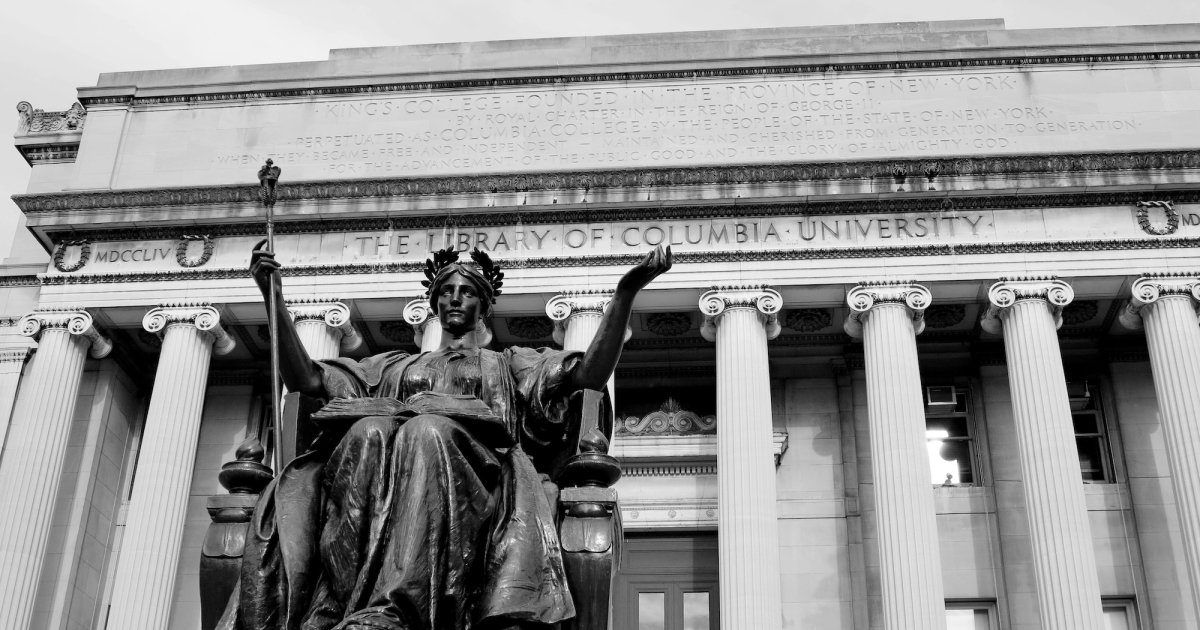
    On July 24, 2025, Columbia University announced that it reached an agreement with the Trump administration to restore federal funding that was revoked over allegations of its handling of anti-Semitism on campus. As part of the deal, Columbia will pay a fine and change numerous campus policies related to campus protests, including restrictions on demonstrations and new disciplinary procedures.

    The following statement can be attributed to FIRE Legal Director Will Creeley.


    FIRE sounded the alarm months ago about the administration’s blatant disregard for federal law in its response to allegations of discrimination at Columbia. Yesterday’s agreement can’t be separated from the unlawful pressure campaign that produced it.

    The reforms themselves require Columbia students to commit to laudable values like free inquiry and open debate. But demanding students commit to vague goals like “equality and respect” leaves far too much room for abuse, just like the civility oaths, DEI statements, and other types of compelled speech FIRE has long opposed.

    Source link

  • PBLWorks Announces its 2025 Award Winners

    PBLWorks Announces its 2025 Award Winners

    Novato, CA – The Buck Institute for Education (dba PBLWorks), a national provider of professional development and curriculum for high-quality Project Based Learning (PBL), has announced the recipients of its 2025 PBL Champions and John Larmer “JL” Lifelong Learning Awards.

    The recipients were honored during the organization’s 2025 PBL World conference in Napa Valley, California.

    The 2025 PBL Champions

    The PBL Champions program recognizes an individual, a school, and a school district that have demonstrated a commitment to PBL; have done quality, lasting work; and have shown evidence of impact on students. The 2025 recipients are:

    • District PBL Champion: Lynn Public Schools in Lynn, Massachusetts

    This 16,000-student district is transforming teaching and learning through its implementation of PBL. In a little over a year, the team at Lynn established high-functioning district and school leadership teams and trained a cadre of educators who have designed more than 70 projects for students. The district has implemented PBL at all seven of its secondary schools with a goal of having all students participate in two or more high-quality PBL experiences per year by the end of the 2029-30 school year.

    • School PBL Champion: University Prep Academy (UPA) High School in Detroit, Michigan

    University Prep Schools (UPrep) stands among Detroit’s earliest and longest-running charter school networks. Known for its unwavering commitment to student success, UPrep (UPA) has proudly upheld its signature “90/90 promise”—ensuring that at least 90% of students graduate from high school and 90% of those graduates go on to enroll in college. UPA teachers and leaders have leveraged PBL as a way that empowers students to be a part of the future of their city – from working on keeping their unhoused population warm in the winter through a physics project on heat transfer, to urban gardens that allowed students to provide farm-to-table food to local food pantries and shelters. PBL has opened their eyes to the challenges students face, encouraged them to see and explore those challenges through the lens of solutionists, and has brought UPA closer to the community it serves.

    • Individual PBL Champion: Kim Mishkin, Head of School at the Hudson Lab School (HLS) in Hastings, New York

    Kim Mishkin has been instrumental in embedding Project Based Learning as the foundation of the school’s curriculum. As both an educator and school leader, she has built structures, cultivated partnerships, and championed interdisciplinary, real-world learning experiences that empower students and educators alike. Through her leadership, HLS has become a model for how schools can integrate PBL at every level, ensuring that learning is not just about content, it is about empowering students to be problem-solvers, leaders, and changemakers.

    The John Larmer “JL” Lifelong Learning Award

    The John Larmer “JL” Lifelong Learning Award, named after PBLWorks’ Senior Fellow John “JL” Larmer, recognizes educators who are impacting and expanding the work of Project Based Learning. A significant advocate and thought leader in the field, JL has dedicated decades to advancing high-quality PBL and is the author of several foundational books that have shaped how educators design and facilitate high-quality PBL. This award celebrates those who carry forward that legacy with passion, purpose, and an unwavering commitment to deeper learning. The 2025 recipients are:

    • Rue Graham, Project Based Learning lead advisor and coach at the Pagosa Peak Open School, Archuleta County School District in Pagosa Springs, Colorado
    • Stephanie Tuttle, fourth grade teacher at Fairfield Elementary School, Rockbridge County Public Schools in Rockbridge, Virginia

    “Project Based Learning is an incredibly powerful way to engage students and ignite their passion for learning – and it all starts with having administrators and teachers who are committed to its success,” said PBLWorks CEO Bob Lenz. “Our awards programs recognize the incredible passion and hard work demonstrated by schools, districts, and individuals in implementing PBL. Congratulations to our 2025 award recipients!”

    About PBLWorks

    The Buck Institute for Education/ PBLWorks believes that all students, especially Black and Brown students, should have access to high-quality Project Based Learning to deepen their learning and achieve success in college, career, and life. Its focus is on building the capacity of teachers to design and facilitate high-quality Project Based Learning, and on supporting school and system leaders in creating the conditions for these teachers to succeed with all students.

    eSchool News Staff
    Latest posts by eSchool News Staff (see all)

    Source link

  • Education at Risk: The Fallout from the Trump Administration’s Education Cuts

    Education at Risk: The Fallout from the Trump Administration’s Education Cuts

    A new report from Sen. Elizabeth Warren’s (D-MA) office outlines the far-reaching consequences of the Trump administration’s efforts to defund and dismantle the U.S. Department of Education.

    Education at Risk: Frontline Impacts of Trump’s War on Students draws on responses from 12 national education organizations—including the American Council on Education—to paint an unsettling picture of disrupted services, rising costs for students, and weakened civil rights enforcement.

    Among the report’s key findings:

    • Federal student aid operations are faltering. Layoffs at the Education Department’s (ED) office of Federal Student Aid have caused website outages, delayed financial aid, and left thousands of borrower complaints unanswered. ACE warned that such disruptions can prevent students from enrolling or staying in college, increasing the likelihood they’ll take on more debt to finish their degrees.
    • Graduate and low-income students are being squeezed. The administration’s “Big Beautiful Bill” eliminates Grad PLUS loans, caps borrowing for parents, and replaces income-driven repayment plans with costlier alternatives, which is expected to reduce access and increase hardship for first-generation and financially vulnerable students.
    • Civil rights enforcement is eroding. ED’s Office for Civil Rights has lost nearly half its staff and closed seven regional offices. With over 22,000 complaints filed in 2024 alone, remaining staff are overwhelmed, and students facing discrimination are left without a path to resolution. ACE and others note the long-term danger of weakened oversight, especially for students with disabilities.
    • Essential education data are disappearing. The National Center for Education Statistics now has just three employees. Longstanding surveys like the Integrated Postsecondary Education Data System (IPEDS) and College Scorecard are at risk, threatening everything from institutional benchmarking to accreditation.
    • Programs for students with disabilities are being dismantled. Key oversight and transition programs have been cut or reassigned to agencies like the departments of Health and Human Services and Labor, which lack educational expertise. Advocates warn this could roll back decades of progress toward inclusive education.
    • Education functions are being scattered across agencies. Proposals to move federal student loans to the Small Business Administration or Department of the Treasury and civil rights enforcement to the Department of Justice raise serious concerns about cost, efficiency, and legal access. As ACE noted, scattering the department’s core responsibilities could reintroduce the very fragmentation ED was created to fix.

    The report concludes that the cumulative effect of these actions threatens to leave millions of students without access to basic services, data, and legal protections at a time when they need them most.

    Read the full report here.


    If you have any questions or comments about this blog post, please contact us.

    Source link

  • Top Hat Acquires OpenClass IP and Welcomes Founder to Team

    Top Hat Acquires OpenClass IP and Welcomes Founder to Team

    Top Hat’s engineering team is gaining a valuable new voice with the addition of Alec Kretch, whose work and experience sits at the intersection of technical innovation and learning science. As the founder of OpenClass—an AI-powered platform that helps educators design meaningful, mastery-based assignments—Kretch is a strong advocate for using assessment as a tool for learning rather than simple measurement. The acquisition of OpenClass’s intellectual property, along with Kretch’s appointment to Top Hat’s engineering team, will support Top Hat’s continued investment in discipline-specific solutions and in expanding the company’s capabilities around authentic assessment. These efforts align with a growing institutional focus on career readiness and helping students build practical skills they can carry into life after graduation

    “Alec has shown how technology can help educators create richer, more effective learning experiences through relevant, real-world application,” said Maggie Leen CEO of Top Hat. “His work with OpenClass aligns closely with our focus on supporting instructors with tools that encourage deeper thinking and meaningful student engagement.”

    OpenClass was originally developed to help computer science instructors create authentic assignments, where students solve in-browser coding problems and receive immediate, actionable feedback. While built with programming in mind, the underlying approach is broadly applicable across disciplines. Authentic assessment encourages students to apply what they’ve learned in practical contexts, fostering critical thinking, creativity, and lasting understanding in ways traditional assignments often fall short. This kind of learning experience is especially vital as students increasingly look to higher education to build the skills they’ll need to succeed in their future careers.

    Over the past few years Top Hat has expanded innovation across many disciplines. Aktiv Chemistry, for example, which the company acquired in 2022, offers interactive tools designed to meet the unique needs of chemistry educators and learners. Offering personalized, authentic assessments that reflect the real-world scenarios students will face in their careers supports Top Hat’s mission to spark better teaching and more meaningful learning.

    “Top Hat is the gold standard for evidence-based learning platforms,” said Kretch. “We share a vision for the future of higher education—one that’s equitable, personalized, and focused on helping students develop real skills. I’m excited to help bring the best of OpenClass to more instructors and learners.”

    Source link