Author: admin

  • Unfriending on Social Media with Author, Sarah Layden

    Unfriending on Social Media with Author, Sarah Layden

    When Sarah Layden shared her satire piece, ‘Unfriend Me Now’ on her LinkedIn profile, I reached out right away about her appearing on The Social Academic interview series. She wrote ‘Unfriend Me Now’ after reading research from Floyd, Matheny, Dinsmore, Custer, and Woo, “If You Disagree, Unfriend Me Now”: Exploring the Phenomenon of Invited Unfriending, published in American Journal of Applied Psychology.

    Sarah Layden is the author of Imagine Your Life Like This, stories; Trip Through Your Wires, a novel; and The Story I Tell Myself About Myself, winner of the Sonder Press Chapbook Competition.

    Sarah Layden professional headshot
    Sarah Layden

    Her short fiction appears in Boston Review, Blackbird, McSweeney’s Internet Tendency, Best Microfiction 2020, and elsewhere. Her nonfiction writing appears in The Washington Post, Poets & Writers, Salon, The Millions, and River Teeth, and she is co-author with Bryan Furuness of The Invisible Art of Literary Editing.

    She is an Associate Professor of English at Indiana University Indianapolis.

    Source link

  • FIRE statement on Columbia University’s settlement with Trump administration

    FIRE statement on Columbia University’s settlement with Trump administration

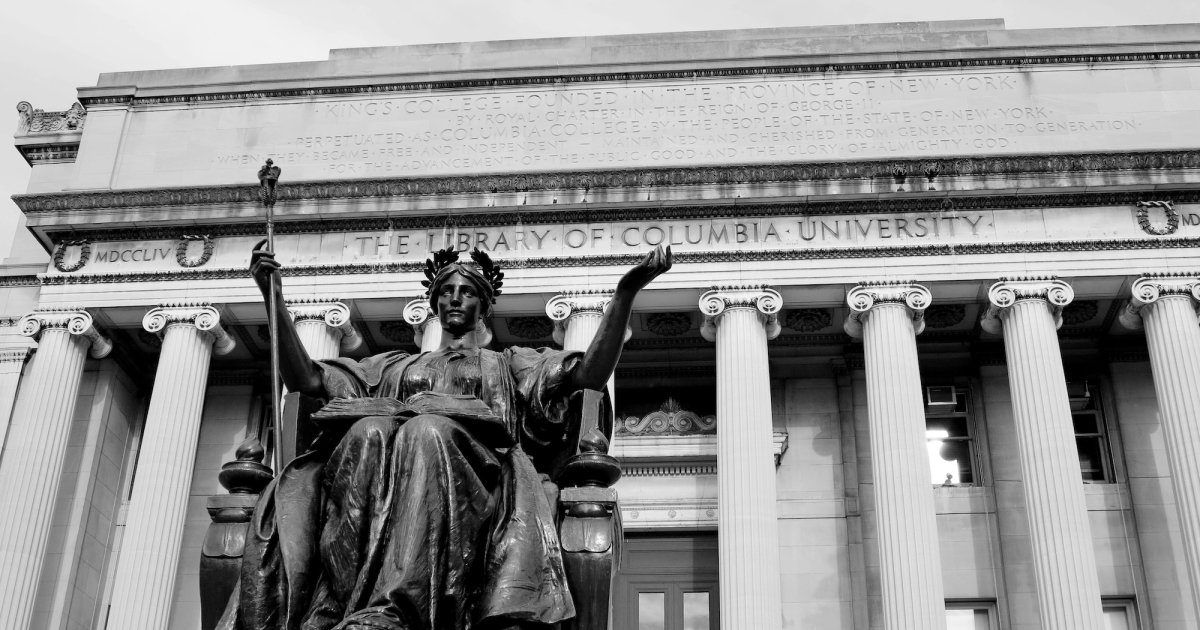
    On July 24, 2025, Columbia University announced that it reached an agreement with the Trump administration to restore federal funding that was revoked over allegations of its handling of anti-Semitism on campus. As part of the deal, Columbia will pay a fine and change numerous campus policies related to campus protests, including restrictions on demonstrations and new disciplinary procedures.

    The following statement can be attributed to FIRE Legal Director Will Creeley.


    FIRE sounded the alarm months ago about the administration’s blatant disregard for federal law in its response to allegations of discrimination at Columbia. Yesterday’s agreement can’t be separated from the unlawful pressure campaign that produced it.

    The reforms themselves require Columbia students to commit to laudable values like free inquiry and open debate. But demanding students commit to vague goals like “equality and respect” leaves far too much room for abuse, just like the civility oaths, DEI statements, and other types of compelled speech FIRE has long opposed.

    Source link

  • PBLWorks Announces its 2025 Award Winners

    PBLWorks Announces its 2025 Award Winners

    Novato, CA – The Buck Institute for Education (dba PBLWorks), a national provider of professional development and curriculum for high-quality Project Based Learning (PBL), has announced the recipients of its 2025 PBL Champions and John Larmer “JL” Lifelong Learning Awards.

    The recipients were honored during the organization’s 2025 PBL World conference in Napa Valley, California.

    The 2025 PBL Champions

    The PBL Champions program recognizes an individual, a school, and a school district that have demonstrated a commitment to PBL; have done quality, lasting work; and have shown evidence of impact on students. The 2025 recipients are:

    • District PBL Champion: Lynn Public Schools in Lynn, Massachusetts

    This 16,000-student district is transforming teaching and learning through its implementation of PBL. In a little over a year, the team at Lynn established high-functioning district and school leadership teams and trained a cadre of educators who have designed more than 70 projects for students. The district has implemented PBL at all seven of its secondary schools with a goal of having all students participate in two or more high-quality PBL experiences per year by the end of the 2029-30 school year.

    • School PBL Champion: University Prep Academy (UPA) High School in Detroit, Michigan

    University Prep Schools (UPrep) stands among Detroit’s earliest and longest-running charter school networks. Known for its unwavering commitment to student success, UPrep (UPA) has proudly upheld its signature “90/90 promise”—ensuring that at least 90% of students graduate from high school and 90% of those graduates go on to enroll in college. UPA teachers and leaders have leveraged PBL as a way that empowers students to be a part of the future of their city – from working on keeping their unhoused population warm in the winter through a physics project on heat transfer, to urban gardens that allowed students to provide farm-to-table food to local food pantries and shelters. PBL has opened their eyes to the challenges students face, encouraged them to see and explore those challenges through the lens of solutionists, and has brought UPA closer to the community it serves.

    • Individual PBL Champion: Kim Mishkin, Head of School at the Hudson Lab School (HLS) in Hastings, New York

    Kim Mishkin has been instrumental in embedding Project Based Learning as the foundation of the school’s curriculum. As both an educator and school leader, she has built structures, cultivated partnerships, and championed interdisciplinary, real-world learning experiences that empower students and educators alike. Through her leadership, HLS has become a model for how schools can integrate PBL at every level, ensuring that learning is not just about content, it is about empowering students to be problem-solvers, leaders, and changemakers.

    The John Larmer “JL” Lifelong Learning Award

    The John Larmer “JL” Lifelong Learning Award, named after PBLWorks’ Senior Fellow John “JL” Larmer, recognizes educators who are impacting and expanding the work of Project Based Learning. A significant advocate and thought leader in the field, JL has dedicated decades to advancing high-quality PBL and is the author of several foundational books that have shaped how educators design and facilitate high-quality PBL. This award celebrates those who carry forward that legacy with passion, purpose, and an unwavering commitment to deeper learning. The 2025 recipients are:

    • Rue Graham, Project Based Learning lead advisor and coach at the Pagosa Peak Open School, Archuleta County School District in Pagosa Springs, Colorado
    • Stephanie Tuttle, fourth grade teacher at Fairfield Elementary School, Rockbridge County Public Schools in Rockbridge, Virginia

    “Project Based Learning is an incredibly powerful way to engage students and ignite their passion for learning – and it all starts with having administrators and teachers who are committed to its success,” said PBLWorks CEO Bob Lenz. “Our awards programs recognize the incredible passion and hard work demonstrated by schools, districts, and individuals in implementing PBL. Congratulations to our 2025 award recipients!”

    About PBLWorks

    The Buck Institute for Education/ PBLWorks believes that all students, especially Black and Brown students, should have access to high-quality Project Based Learning to deepen their learning and achieve success in college, career, and life. Its focus is on building the capacity of teachers to design and facilitate high-quality Project Based Learning, and on supporting school and system leaders in creating the conditions for these teachers to succeed with all students.

    eSchool News Staff
    Latest posts by eSchool News Staff (see all)

    Source link

  • Education at Risk: The Fallout from the Trump Administration’s Education Cuts

    Education at Risk: The Fallout from the Trump Administration’s Education Cuts

    A new report from Sen. Elizabeth Warren’s (D-MA) office outlines the far-reaching consequences of the Trump administration’s efforts to defund and dismantle the U.S. Department of Education.

    Education at Risk: Frontline Impacts of Trump’s War on Students draws on responses from 12 national education organizations—including the American Council on Education—to paint an unsettling picture of disrupted services, rising costs for students, and weakened civil rights enforcement.

    Among the report’s key findings:

    • Federal student aid operations are faltering. Layoffs at the Education Department’s (ED) office of Federal Student Aid have caused website outages, delayed financial aid, and left thousands of borrower complaints unanswered. ACE warned that such disruptions can prevent students from enrolling or staying in college, increasing the likelihood they’ll take on more debt to finish their degrees.
    • Graduate and low-income students are being squeezed. The administration’s “Big Beautiful Bill” eliminates Grad PLUS loans, caps borrowing for parents, and replaces income-driven repayment plans with costlier alternatives, which is expected to reduce access and increase hardship for first-generation and financially vulnerable students.
    • Civil rights enforcement is eroding. ED’s Office for Civil Rights has lost nearly half its staff and closed seven regional offices. With over 22,000 complaints filed in 2024 alone, remaining staff are overwhelmed, and students facing discrimination are left without a path to resolution. ACE and others note the long-term danger of weakened oversight, especially for students with disabilities.
    • Essential education data are disappearing. The National Center for Education Statistics now has just three employees. Longstanding surveys like the Integrated Postsecondary Education Data System (IPEDS) and College Scorecard are at risk, threatening everything from institutional benchmarking to accreditation.
    • Programs for students with disabilities are being dismantled. Key oversight and transition programs have been cut or reassigned to agencies like the departments of Health and Human Services and Labor, which lack educational expertise. Advocates warn this could roll back decades of progress toward inclusive education.
    • Education functions are being scattered across agencies. Proposals to move federal student loans to the Small Business Administration or Department of the Treasury and civil rights enforcement to the Department of Justice raise serious concerns about cost, efficiency, and legal access. As ACE noted, scattering the department’s core responsibilities could reintroduce the very fragmentation ED was created to fix.

    The report concludes that the cumulative effect of these actions threatens to leave millions of students without access to basic services, data, and legal protections at a time when they need them most.

    Read the full report here.


    If you have any questions or comments about this blog post, please contact us.

    Source link

  • Top Hat Acquires OpenClass IP and Welcomes Founder to Team

    Top Hat Acquires OpenClass IP and Welcomes Founder to Team

    Top Hat’s engineering team is gaining a valuable new voice with the addition of Alec Kretch, whose work and experience sits at the intersection of technical innovation and learning science. As the founder of OpenClass—an AI-powered platform that helps educators design meaningful, mastery-based assignments—Kretch is a strong advocate for using assessment as a tool for learning rather than simple measurement. The acquisition of OpenClass’s intellectual property, along with Kretch’s appointment to Top Hat’s engineering team, will support Top Hat’s continued investment in discipline-specific solutions and in expanding the company’s capabilities around authentic assessment. These efforts align with a growing institutional focus on career readiness and helping students build practical skills they can carry into life after graduation

    “Alec has shown how technology can help educators create richer, more effective learning experiences through relevant, real-world application,” said Maggie Leen CEO of Top Hat. “His work with OpenClass aligns closely with our focus on supporting instructors with tools that encourage deeper thinking and meaningful student engagement.”

    OpenClass was originally developed to help computer science instructors create authentic assignments, where students solve in-browser coding problems and receive immediate, actionable feedback. While built with programming in mind, the underlying approach is broadly applicable across disciplines. Authentic assessment encourages students to apply what they’ve learned in practical contexts, fostering critical thinking, creativity, and lasting understanding in ways traditional assignments often fall short. This kind of learning experience is especially vital as students increasingly look to higher education to build the skills they’ll need to succeed in their future careers.

    Over the past few years Top Hat has expanded innovation across many disciplines. Aktiv Chemistry, for example, which the company acquired in 2022, offers interactive tools designed to meet the unique needs of chemistry educators and learners. Offering personalized, authentic assessments that reflect the real-world scenarios students will face in their careers supports Top Hat’s mission to spark better teaching and more meaningful learning.

    “Top Hat is the gold standard for evidence-based learning platforms,” said Kretch. “We share a vision for the future of higher education—one that’s equitable, personalized, and focused on helping students develop real skills. I’m excited to help bring the best of OpenClass to more instructors and learners.”

    Source link

  • How the FY25 funding freeze impacts students across America

    How the FY25 funding freeze impacts students across America

    This press release originally appeared online.

    Key points:

    Communities across the nation began the budget process for the 2025-2026 school year after Congress passed the FY25 Continuing Resolution on March 14, 2025. Historically, states receive these funds on July 1, enabling them to allocate resources to local districts at the start of the fiscal year. 

    Even though these funds were approved by Congress, the Administration froze the distribution on June 30. Since that time, AASA, The School Superintendents Association, has advocated for their release, including organizing hundreds of superintendents to meet with offices on the Hill to share information about its impact, the week of July 7.  

    On July 16, the Office of Management and Budget (OMB) announced that Title IV-B or 21st Century funds (afterschool funds) would be released. AASA’s Executive Director issued a statement about the billions of dollars that remain frozen

    To gather more information about the real-world effects on students across America, AASA conducted a survey with its members. 

    From July 11th to July 18th, AASA received responses from 628 superintendents in 43 states.

    Eighty-five percent of respondents said they have existing contracts paid with federal funds that are currently being withheld, and now have to cover those costs with local dollars.

    Respondents shared what will be cut to cover this forced cost shift: 

    • Nearly three out of four respondents said they will have to eliminate academic services for students. The programs include targeted literacy and math coaches, before and after school programming, tutoring, credit recovery, CTE and dual enrollment opportunities.
    • Half of respondents reported they will have to lay off teachers and personnel. These personnel include those who work specifically with English-language learners and special education students, as well as staff who provide targeted reading and math interventions to struggling students.
    • Half of respondents said they will have to reduce afterschool and extracurricular offerings for students. These programs provide STEM/STEAM opportunities, performing arts and music programs, and AP coursework. 
    • Four out of five respondents indicated they will be forced to reduce or eliminate professional development offerings for educators. These funds are used to build teachers’ expertise such as training in the science of reading, teaching math, and the use of AI in the classroom. They are also used to ensure new teachers have the mentors and coaching they need to be successful.  

    As federal funding is still being withheld, 23 percent of respondents have been forced to make tough choices about how to reallocate funding, and many districts are rapidly approaching similar inflection points.  

    Notably, 29 percent of districts indicated that they must have access to these funds by August 1 to avoid cutting critical programs and services for students. Twenty-one percent of districts will have to notify parents and educators about the loss of programs and services by August 15.  

    Without timely disbursement of funding, the risk of disruption to essential educational supports for children grows significantly.

    As one superintendent who completed the survey said, “This isn’t a future problem; it’s happening now. Our budget was set with these funds in mind. Their sudden withholding has thrown us into chaos, forcing drastic measures that will negatively impact every student, classroom, and school in our district. We urgently need these funds released to prevent irreparable harm to our educational programs and ensure our students get the quality education they deserve.” 

    Latest posts by staff and wire services reports (see all)

    Source link

  • Navigating back-to-school anxiety: A K-12 success guide

    Navigating back-to-school anxiety: A K-12 success guide

    Key points:

    The anticipation of a new school year brings a complex mix of emotions for both students and teachers in K-12 education. As the 2025-2026 academic year approaches, experiencing anxiety about returning to the classroom is a natural response to change that affects everyone differently.

    From elementary students facing new classroom environments to high school teachers preparing for curriculum changes, these feelings manifest uniquely across age groups. Young children often worry about making new friends or adjusting to new teachers, while older students grapple with academic performance pressures and social dynamics. Teachers face their own challenges, including meeting diverse student needs, implementing new edtech tools and digital resources, and maintaining high academic standards while supporting student well-being.

    Early identification of anxiety symptoms is crucial for both educator and student success. Young children might express anxiety through behavioral changes, such as becoming more clingy or irritable, while older students might demonstrate procrastination or avoidance of school-related topics. Parents and educators should remain vigilant for signs like changes in sleeping patterns and/or eating habits, unusual irritability, or physical complaints. Schools must establish clear protocols for identifying and addressing anxiety-related concerns, including regular check-ins with students and staff and creating established pathways for accessing additional support when needed.

    Building strong support networks within the school community significantly reduces anxiety levels. Schools should foster an environment where students feel comfortable expressing concerns to teachers, counselors, or school psychologists. Regular check-ins, mentor programs, and peer support groups help create a supportive school environment where everyone feels valued and understood. Parent-teacher partnerships are essential for providing consistent support and understanding students’ needs, facilitated through regular communication channels, family engagement events, and resources that help parents support their children’s emotional well-being at home.

    Practical preparation serves as a crucial anxiety-reduction strategy. Teachers can minimize stress by organizing classrooms early, preparing initial lesson plans, and establishing routines before students arrive. Students can ease their transition by visiting the school beforehand, meeting teachers when possible, and organizing supplies. Parents contribute by establishing consistent routines at home, including regular sleep schedules and homework times, several weeks before school starts. Schools support this preparation through orientation events, virtual tours, welcome videos, and sharing detailed information about schedules and procedures well in advance.

    The importance of physical and emotional well-being cannot be overstated in managing school-related anxiety. Schools should prioritize regular physical activity through structured PE classes, recess, or movement breaks during lessons. Teaching age-appropriate stress-management techniques, such as deep breathing exercises for younger students or mindfulness practices for older ones, provides valuable tools for managing anxiety. Schools should implement comprehensive wellness programs addressing nutrition, sleep hygiene, and emotional regulation, while ensuring ready access to counselors and mental health professionals.

    Creating a positive classroom environment proves essential for reducing anxiety levels. Teachers can establish predictable routines, clear expectations, and open communication channels with students and parents. Regular class meetings or discussion times allow students to express concerns and help build community within the classroom. The physical space should consider lighting, noise levels, and seating arrangements that promote comfort and focus. Implementing classroom management strategies that emphasize positive reinforcement and restorative practices rather than punitive measures helps create a safe space where mistakes are viewed as learning opportunities.

    Technology integration requires careful consideration to prevent additional anxiety. Schools should provide adequate training and support for new educational technologies, introducing digital tools gradually while ensuring equitable access and understanding. Regular assessment of technology needs and challenges helps schools address barriers to effective use. Training should encompass basic operational skills, digital citizenship, online safety, and responsible social media use. Clear protocols for technology use and troubleshooting ensure that both students and teachers know where to turn for support when technical issues arise.

    Professional development for teachers should focus on managing both personal and student anxiety through trauma-informed teaching practices and social-emotional learning techniques. Schools must provide regular opportunities for skill enhancement throughout the year, incorporating both formal training sessions and informal peer learning opportunities. Creating professional learning communities allows teachers to share experiences, strategies, and support, while regular supervision and mentoring provide additional support layers.

    Long-term success requires commitment from all stakeholders–including administrators, teachers, support staff, students, and families–working together to create a supportive educational environment where everyone can thrive in the upcoming 2025-2026 school year.

    Latest posts by eSchool Media Contributors (see all)

    Source link

  • An award recognizes the importance of youth journalism

    An award recognizes the importance of youth journalism

    On 18 July, U.S. legislators voted to rescind more than one billion dollars in funding previously allotted to the Public Broadcasting Service (PBS), a nonprofit network of television and radio stations partly funded by the U.S. government.  

    The cuts put at risk educational and training programs geared to young people across the country. 

    That’s why an award from Global Youth & News Media to PBS News Student Reporting Labs is so significant. 

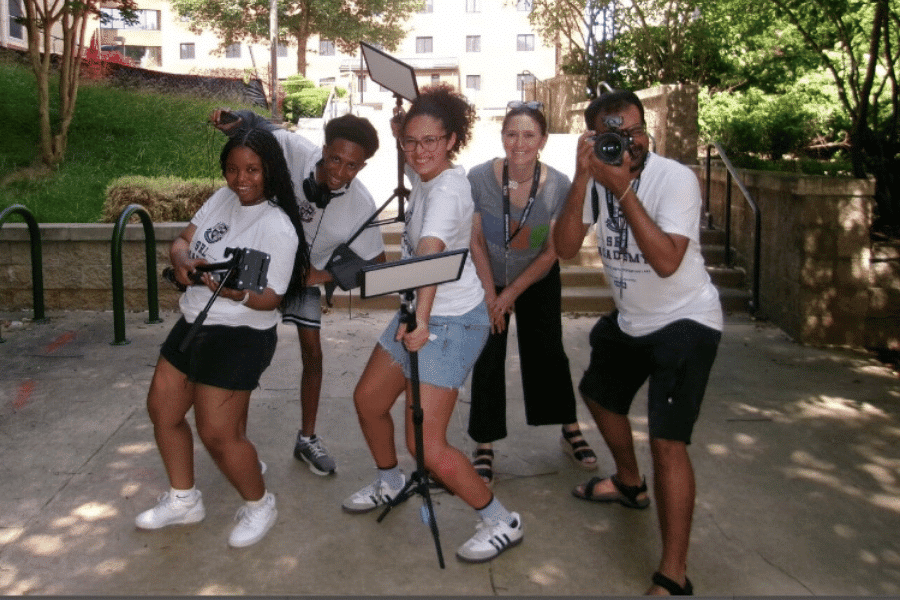
    Student Reporting Labs (SRL) is a U.S.-based journalism training program for young people and their educators. On 23 July, Global Youth & News Media, a France-based nonprofit dedicated to encouraging and honoring news media engagement with the young, awarded SRL its Prize for Outstanding Achievement in Journalism.

    “This award is in recognition of the program’s impactful history and determination to continue its unmatched work to introduce young people throughout the United States to local broadcast journalism,” said Aralynn McMane, executive director of Global Youth & News Media. “In voting to bestow this award, our board was unanimous and adamant about the need to shine a spotlight on Student Reporting Labs to remind the world of what short-sighted politics risks destroying in the wake of defunding public broadcasting.”

    The importance of youth journalism

    This is only the second time the Global Youth & News Media board has bestowed such an honorary award. The first was in 2018 for joint live coverage of the March For Our Lives anti-gun demonstration by The Guardian US with Eagle Eye News student reporters from Marjory Stoneman Douglas High School in Florida, which had seen the killing of 18 people at the school just three weeks prior. 

    Founded in 2009 by Leah Clapman, then the managing editor of education at PBS NewsHour, Student Reporting Labs has helped build broadcast and journalism programs in thousands of secondary schools across all 50 states. 

    The program connects them with over 40 public television stations and local news organizations to bring their story to local audiences. SRL empowers the next generation of storytellers by providing free training fellowships and workshops to students and educators across the country and around the world. In all, more than 125,000 students have participated in the program. 

    SRL also reaches more than 10,000 educators via a free learning platform StoryMaker. StoryMaker provides teachers with instruction materials and lessons to help students think critically, explore their curiosity about the world and engage in their communities. 

    The SRL program was established “on the premise that some stories are best told by young people,” Clapman, now full-time executive director of SRL, wrote in a briefing last week. ”This is especially true in this moment of rapid change and disruption. In this challenging time, we’re leaning in to perseverance and service rather than despair.”

    Mentoring teens to tell important stories

    Clapman wrote that newsrooms can benefit from the important perspectives, experiences and insights that teens have and that these perspectives can help news organizations tell more nuanced and complete stories about issues that affect students.

    One such teenager that the Student Reporting Labs trained was award-winning alumna Mary Williams, who joined the program in 2015 and interned at her local PBS station in Ohio. 

    “Now when I see the news, it’s personal,” she said. “The economy, education system and the Earth’s current state aren’t just my parents’ problems to worry about. They’re mine, too.”

    The Global Youth & News Media Prize for journalism this year focused on youth collaborations that help local news media survive. The rest of the laureates were chosen by an international expert jury and will be announced in the coming weeks. News Decoder, which trains and encourages young people to develop global perspectives in storytelling, is a partner in the award and helped judge the entries. 

    News Decoder Educational News Director Marcy Burstiner said that it is more important than ever to recognize the important work young journalists are doing. 

    “It seems that in the United States and elsewhere there is a war on journalism and truth telling,” Burstiner said. “I used to tell my students that it was a myth that you needed a thick skin to be a journalist. But these days, you do.”

    But every year, News Decoder finds more and more young people stepping up to the challenge, Burstiner said. 

    “They aren’t afraid to tell the important stories that need to be told,” she said. “But people need to support the organizations like PBS News Student Reporting Labs that help and encourage young people to be truth tellers.”

    Source link

  • Higher Education’s Complicity in War and Fossil Capital

    Higher Education’s Complicity in War and Fossil Capital

    In a time of global climate catastrophe, endless war, and mounting social unrest, the American higher education system—ostensibly a sanctuary of ethics and enlightenment—has shown its allegiance not to peace or justice, but to power. The presidents of elite universities, their boards of trustees, and their wealthiest donors now stand exposed as key cogs in a machinery that profits from genocide, fossil fuel destruction, and war profiteering. They are not simply bystanders to global injustice; they are its enablers and its beneficiaries.

    The Role of University Presidents

    University presidents, many with backgrounds in business or law rather than academia, have become institutional CEOs rather than moral stewards. Their silence—or worse, their euphemistic statements—in the face of war crimes and environmental devastation reveals not neutrality but complicity. As students protest U.S.-backed wars and apartheid policies abroad, these leaders respond not with dialogue, but with surveillance, mass arrests, and the suppression of speech.

    The university president today is less a defender of academic freedom and more a manager of reputational risk. In the face of genocide in Gaza or mass civilian deaths in Yemen, many presidents remain silent or offer carefully crafted non-statements that betray the moral bankruptcy at the heart of neoliberal academia. Their true constituents are not students or faculty—but the donors and trustees who demand institutional alignment with corporate and political interests.

    Trustees as Enforcers of the Status Quo

    University trustees are often drawn from the ruling class: hedge fund managers, defense contractors, fossil fuel executives, and venture capitalists. These are not individuals selected for their commitment to education or the common good. They are chosen precisely because of their wealth and their proximity to power.

    Their presence on governing boards ensures that universities continue to invest in private equity, fossil fuels, and weapons manufacturers. They help enforce austerity for faculty and students while protecting multi-million-dollar endowments from divestment campaigns. When students call for cutting ties with Israeli defense contractors or fossil fuel companies, it is trustees who push back the hardest.

    Donors as Puppeteers

    Donors exert a quiet but overwhelming influence on policy, curriculum, and campus climate. Mega-donors like Stephen Schwarzman, Kenneth Griffin, and Leonard Lauder have given hundreds of millions to name buildings, shape public discourse, and suppress dissent. Often, these donations come with invisible strings—ideological conditions that shift the priorities of entire departments or shut down lines of critical inquiry.

    In the case of fossil fuels, large gifts from oil and gas interests help sustain “energy centers” at top institutions, which in turn push pro-industry research and obstruct climate activism. In terms of war, donations from defense industry executives or foreign governments with poor human rights records ensure a steady normalization of militarism on campus.

    Even genocide, once a line that no institution dared cross, is now rendered a matter of “complex geopolitics” by the same donors who pour money into think tanks and academic centers that sanitize ethnic cleansing and apartheid.

    Genocide and the Academy

    It is no longer possible to ignore the role of elite institutions in justifying or supporting genocidal policies. When universities accept grants and partnerships with governments or corporations involved in mass displacement, ethnic cleansing, or indiscriminate bombing, they become accomplices in atrocity.

    During the ongoing Israeli siege of Gaza, for example, several major U.S. universities have contracts or investments tied to Israeli defense firms or U.S. arms manufacturers whose weapons are used against civilians. Students calling for divestment face violent repression, police brutality, and academic retaliation. The pursuit of justice is punished. The preservation of power is prioritized.

    Fossil Fuels and the Death Economy

    Despite decades of research proving the existential threat of fossil fuels, many university endowments remain deeply invested in oil, gas, and coal. The divestment movement, led primarily by students, has scored some victories—but these are often cosmetic. Institutions may pull direct holdings while maintaining exposure through private equity or index funds.

    Fossil fuel interests also shape research agendas, sponsor misleading “carbon capture” or “clean energy” projects, and silence environmental whistleblowers. Professors who speak out risk losing funding. Departments that challenge fossil capital are marginalized. The truth, as always, is inconvenient.

    War as a University Business Model

    Finally, the war economy permeates American higher education at every level. Defense contracts support engineering departments. ROTC programs and military recruiting are embedded in campus life. Universities run weapons labs, receive funding from DARPA, and participate in Department of Defense research initiatives. The “military-academic-industrial complex” is not an abstraction—it is the everyday reality of higher ed.

    Many of these contracts directly support weapons development used in current conflicts. And as with fossil fuels, the system is built to insulate the university from moral scrutiny. War is framed as “security research.” Genocide is called “a contested political issue.” Exploitation is rendered invisible through language.

    Toward a Reckoning

    The American university must decide: Will it continue to serve as a laundering machine for violence, fossil capital, and authoritarian control? Or can it reimagine itself as a truly democratic institution—answerable not to trustees and donors, but to the communities it serves?

    That transformation will not come from the top. It will come from students occupying campus lawns, adjuncts organizing for fair wages, and the public demanding transparency and divestment. The reckoning is long overdue.

    Until then, university presidents, trustees, and donors will remain what they have become: polished stewards of empire, cloaked in Ivy and moral evasion.

    The Higher Education Inquirer continues to investigate the political economy of higher ed, exposing how institutions prioritize power and profit over people and planet.

    Source link

  • Kansas Colleges Say Employees Can’t List Pronouns in Emails

    Kansas Colleges Say Employees Can’t List Pronouns in Emails

    Kansas public university leaders have ordered employees to remove “gender-identifying pronouns or gender ideology” from their email signatures. The officials say they’re complying with new state prohibitions against diversity, equity and inclusion.

    In March, the Republican-controlled Kansas Legislature passed Senate Bill 125, a nearly 300-page piece of budget legislation. The following month, Gov. Laura Kelly, a Democrat, signed it into law. A spokesperson from the governor’s office didn’t respond to Inside Higher Ed’s request for comment on why.

    According to a few lines on page 254, the Kansas secretary of administration must certify that all state agencies—including colleges and universities—have eliminated all positions, policies, preferences and activities “relating to diversity, equity and inclusion.”

    SB 125 also specifically requires the secretary to certify that agencies have “removed gender identifying pronouns or gender ideology from email signature blocks on state employee’s [sic] email accounts and any other form of communication.” The law doesn’t define DEI or gender ideology.

    Kansas isn’t the first state with a GOP-controlled legislature this year to pass nonfinancial public higher ed provisions by inserting them into budget legislation. Among other things, Indiana lawmakers required faculty to undergo “productivity” reviews and post syllabi online, and Ohio lawmakers stressed that boards of trustees have “final, overriding authority to approve or reject any establishment or modification of academic programs, curricula, courses, general education requirements, and degree programs.”

    Ross Marchand, program counsel at the Foundation for Individual Rights and Expression, told Inside Higher Ed the new Kansas law is unconstitutional.

    “No one knows how to interpret this, and it’s overly broad,” Marchand said. “And both of these issues are fatal for First Amendment purposes.”

    Citing the law, the Kansas Board of Regents issued guidance in June directing universities to comply by the end of this month. On July 9, Kansas State University provost Jesse Perez Mendez wrote to K-State’s campuses that “all faculty, staff and university employees—including student employees—are asked to review and update their signature blocks accordingly.”

    On Tuesday, the University of Kansas’s chancellor, provost and chief health sciences officer wrote to KU’s campuses that “all employees shall comply with this directive by removing gender-identifying pronouns and personal pronoun series from their KU email signature blocks, webpages and Zoom/Teams screen IDs, and any other form of university communications.”

    The leaders also warned against efforts to circumvent the ban.

    “Your KU email account is your only official means for sending emails related to your employment at the university,” they wrote. “Do not use an alternate third-party service, such as Gmail, to conduct university business or communications.”

    They told supervisors that “employees who have not complied with the new proviso by July 31 should be reminded of it and the deadline.” They told supervisors to contact human resources about those who continue to refuse—while also telling KU community members to “please consider submitting a Support and Care referral” if they “know of a student, staff, or faculty member who needs assistance as a result of this new requirement.”

    A KU spokesperson shared the university’s new policy banning pronouns from email signatures. While it broadly says it applies to “all employees and all affiliates that use ku.edu and kumc.edu email addresses,” it also says “this policy shall not apply to or limit or restrict the academic freedom of faculty.”

    Joseph Havens, a KU undergraduate student researcher who has he/him/his listed in his email signature, said fellow students are unhappy with the order and are now adding their pronouns in protest. He said he doesn’t know how this will go over after July 31, but “I’m kind of excited to see the drama.”

    Havens said listed pronouns help people to avoid assumptions, and helped him personally to avoid misgendering a professor. “It seems very likely to me that the university’s hands are tied on this,” he said. But “in a lot of ways it feels like they agree with it.”

    KU is “in some way complicit,” he said.

    Source link